


Latest News

Editorial, Opinion

COVID-19 threatens McGill students’ financial security

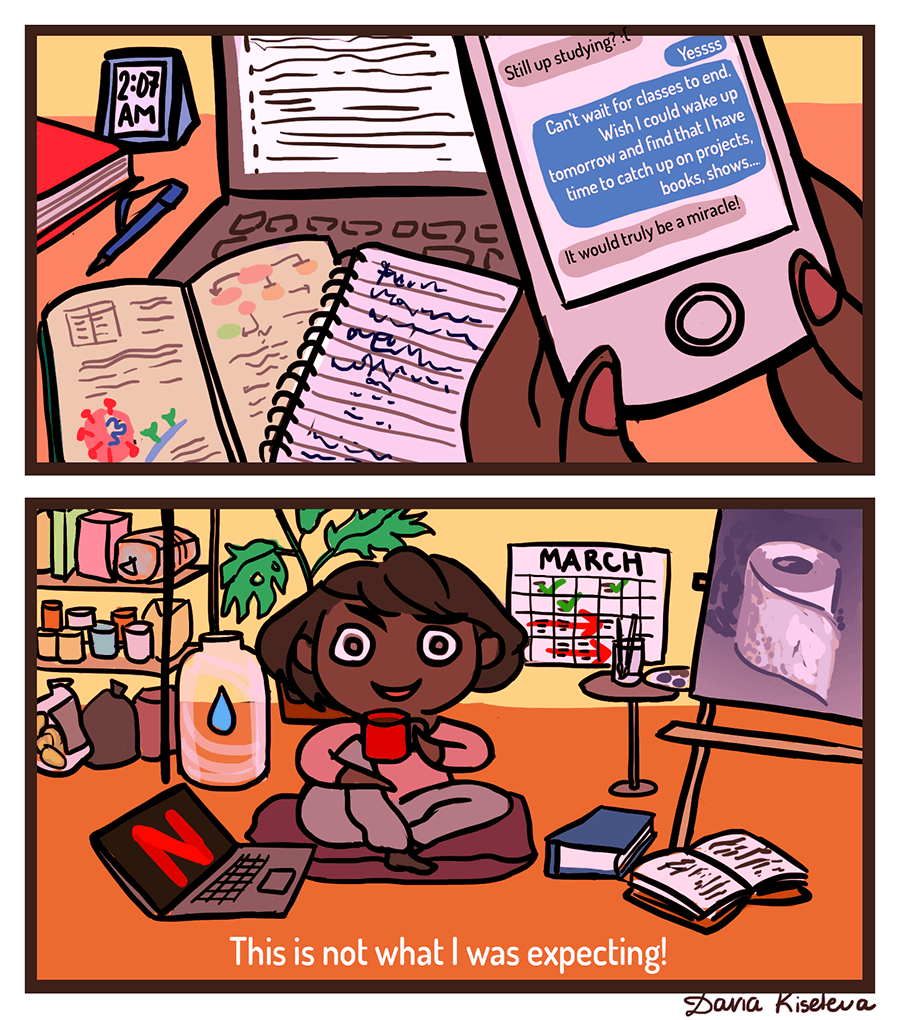
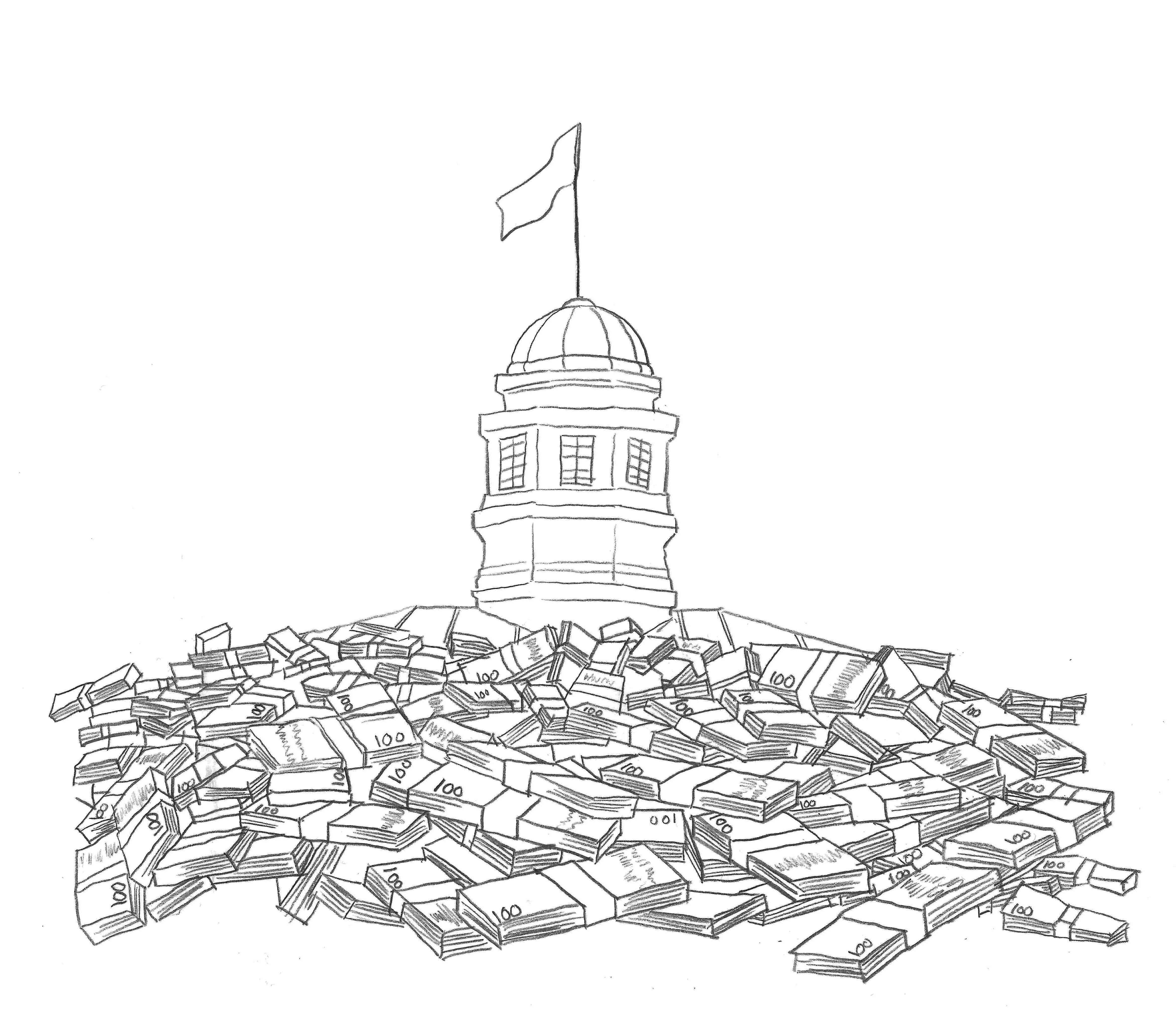
As a result of COVID-19, Quebec Premier François Legault has mandated that non-essential businesses and services shut down until at least April 13, leaving many McGill students without work. The cancellation of student internships and entry level jobs have left self-supported students without an income to pay for their tuition, rent, and groceries. Due to their inability to make a living wage and pay for housing, many students will likely need to drop out of McGill if loans and financial aid cannot cover their tuition fees. The McGill administration must take students’ financial crises into consideration in the coming months and develop strategies to accomodate students struggling financially during, and after this pandemic.

The economic crisis that has accompanied the COVID-19 pandemic will continue to negatively impact the McGill community. In Canada, employment insurance claims have already reached nearly 1 million, and experts are anticipating a recession that could surpass that of 2009. Not only will many students not be able to pay rent and tuition, but even more will have to deal with the stress of family members being laid off. In a tighter financial climate, companies and organizations may be less willing to fund graduate research in an effort to save money putting both graduate students and their supervisors in a financially difficult position.It is also not a burden borne equally: Asian businesses were the first to suffer, even before the pandemic directly affected North America, as a result of discriminatory attitudes and racist fears from customers.

The federal and provincial governments have taken steps to support those in financial crisis. Canadian residents who make over $5000 a year are eligible for financial support under the Canada Emergency Response Benefit Act. However, not all international students will be eligible to receive aid, considering some may not have worked extensively enough to earn $5000 over the last year while also completing their degree. The McGill administration should clarify these rules and processes to McGill students. While McGill has been sending out daily updates regarding campus closure and course work, they have yet to acknowledge the economic challenges that students are facing. The university must provide more updates on what these obstacles are and what McGill will be doing to support students who are struggling financially.

As a small measure to assist students during this time, the administration has waived interest and late payment fees. Moreover, following the cancellation of several internships, the Arts Internship Office extended the application deadline for the Arts Undergraduate Research Internship Awards (ARIA). However, while research remains an option for some students to replace summer internships or work, it may also be difficult for students to find professors who are willing to work in conjunction with them while campus is closed. 

McGill is also offering emergency funding to students with immediate financial need. However, with so many students out of work, the university will need to find more ways to either reduce tuition fees or increase financial aid. The administration could also consider delaying due dates for tuition fees.

While the Quebec rental board has suspended eviction hearings, students have been called to take part in a rent strike in solidarity with all Montrealers who cannot pay rent at this time. McGill’s now-empty residence buildings could be offered as subsidized housing to students who can no longer pay rent during the summer, once social distancing recommendations allow for it. 

Students who are struggling financially should contact the McGill Scholarships and Student Aid Office for more information and financial assistance. Moreover, students should continue to reach out to friends and peers for support during this emotionally draining time. To help prevent the spread of COVID-19, students must also continue to practice social distancing and washing their hands; preventing the spread of the disease will mitigate the effects of the coming recession, dampening financial consequences for the most drastically affected.


Arts & Entertainment, Film and TV

When this is all over, let’s go to the movies

“We have corn!” said Ethan Everly, U3 Mechanical Engineering and president of Peel Street Cinema as he listed some of the allures of the group’s live movie screenings.

Popcorn is just one element of a movie theatre’s ambience. Of course, it can be made in the comfort of an apartment, but the joy of eating a bag of movie-theatre kernels is not quite matched by shovelling Orville Redenbacher’s into one’s mouth alone in a bedroom.

When opting to forgo the experience of a “live” movie screening for a more solitary experience, other pleasures are lost. Movie theatres provide richer social and aesthetic experiences than those offered by watching films alone, on a laptop or a small TV screen. 

“I think when you go watch a movie on a big screen […] in a theatre, there’s a certain ambience to it that you don’t get when you’re at home,” Everly said. “It’s nice to have a separate space where you can relax, turn off your brain, and not think about the outside world.”

For the introverted film lover, taking a trip across town and sitting next to a group of strangers might not be the most enticing proposition, but the benefits of this experience far outway its cons.

“It’s nice to watch movies with other people and to laugh together, even if they’re strangers,” Everly said. “It just makes the movie better. It’s like watching a funny YouTube video. Obviously it’s going to be better if you have people to share that laughter with.”

Peel Street Cinema is a McGill club that hosts weekly film screenings and discussions. These free events take place at 3475 rue Peel, and students are encouraged to attend and discuss the wide selection of films. Recent screenings include Eve’s Bayou; Paris, Texas; and Pleasantville

Students seem eager to attend. Everly and Charlie Mascia, U2, Arts, VP internal of Peel Street Cinema, noted how much the club has grown in the past few months.

“We probably had about 25, 30 people coming to screenings this semester on a slow week, [and a] slow week last year would’ve been like 4 or 5,” Mascia said. “Often people who aren’t in their first year will come to a screening and say, ‘I can’t believe I didn’t know about this before!’”

This lack of awareness seems to be a common thread of screenings: There are plenty of opportunities for McGill students to visit these spaces, but students often don’t know or take advantage of them.

“I think people want to be immersed in some sort of film culture, but they don’t quite know how, even though it’s all around them,” Ara Osterweil, Associate Professor of World Cinema and Cultural Studies at McGill University, said. “Going to movies is a way of being a part of a conversation. A lot of students will come to my office and say ‘We want to be filmmakers!’ But when I ask them where they go to the movies or what their film culture is, they don’t really have an answer.” 

Spaces like Peel Street Cinema, which offer affordable and diverse programming, have seen their attendance drop in recent years. Despite being a classic and widely beloved tradition, movie theatre attendance as a whole has fallen as well.

The numbers tell a complicated story. Since 1980, ticket sales increased in North America, peaking at 1.56 billion sold continent-wide in 2002. Since then, sales have dropped, despite a steady increase in box office revenue..  

“It’s expensive to see a movie these days,” Everly said. “Theatres really aren’t accessible if you have to pay 20-plus dollars for a ticket and popcorn. I feel like Cineplex has become increasingly expensive. Cinema du Parc is really great, though.”

Cinema du Parc, located in the Galeries du Parc mall at the corner of Parc and Prince Arthur, offers a student rate of $9.75 for McGill and Concordia students and a $5 rate for everyone on the last day of a film’s run. The theatre’s catalog emphasizes independent movies and presents a variety of foreign films as well. The fresh programming and low prices have made Cinema du Parc a staple of film fans in the McGill community for decades.

“It really is right in the [Milton-Parc neighbourhood] and has great programming, often in English,” Osterweil said. “It even has that great seven-pass movie card. I don’t know if students take advantage of it. I like to bring them there, but I don’t know how much they go on their own. I hope they do.” 

For the McGill movie buff, the pursuit of a like-minded community can be a challenging one. Cultural studies, the largest film-oriented program at McGill, seats only 85 students in its introductory course, ENGL 275, while Psychology seats 650 in PSYC 100. The constraints of classroom discussion make spaces like Cinema du Parc and Peel Street Cinema crucial to allowing these students to feel part of a film community.

“I think McGill students would benefit a lot from going to movies,” Osterweil said. “There seems to be a tendency for McGill students to just go from their apartment […] to campus and rarely get out into the greater Montreal area. When I take students to Cinema Moderne, they’re so happy to be there. And I’m glad to expose them to it, but I feel like if they went more often, they wouldn’t feel so confined. They’d also feel like they were participating in the cultural life of Montreal.” 

Beyond the social and cultural benefits of movie theatres, there is also an aesthetic benefit to watching a film on a big screen. Aude Renaud-Lorrain, interim director of Cinema Moderne, an independent theatre in the Mile-End, highlights the technological capacity of the theatre, especially when compared with the usual student set-up.

“Better quality is a great reason to go to a cinema, especially for students who likely won’t have the equipment for a home theatre,” Renaud-Lorrain said. “Instead they’ll have their phone or their laptop, which really isn’t the same experience. Cinema Moderne is very equipped in terms of technology […] I think that people realize that if you’re really looking forward to seeing a film, you want to enjoy it in a cinema where the quality of the sound and the image will be really strong.”

Indeed, films that rely heavily on experimental visual elements cannot be fully appreciated if viewed on small devices with headphones. Furthermore, films with difficult plots and unique characteristics demand to be discussed and debated after the fact. It’s hard to do that seriously alone in an apartment. Thankfully, Cinema Moderne tries to provide space for those discussions to happen.

“We have this small, intimate theatre, but we also have the café-bar where people can have a drink, and where conversation can continue after films. That’s really an important part of our identity,” Renaud-Lorrain said.

At a university where the creatively-inclined can often feel isolated, film lovers should take advantage of the opportunities around them. The aesthetic and social benefits to seeing movies in theatres are vast, and the experience timeless. Of course, we cannot do any of this now, being distanced in our homes and relegated to the realms of individual screens. But perhaps the surge of apps like Zoom and Netflix Party reflect a universal truth: Movies together are better than movies alone. When all this is over, let’s support the theatres that make them happen.   

Support Cinéma Moderne by renting movies online at https://www.cinemamoderne.com/en/, or donate directly at https://orora.smartsimple.ca/ex/ex_Evtpage.jsp?token=HQ4HSRMGZVhaQRBeXxNbQlNXbQ%3D%3D&parentids=2377655&lang=2.

Donate to the Canadian Cinema Workers Fund at https://www.gofundme.com/f/canadian-cinema-worker-fund

Student Life, The Viewpoint

The unexpected irony of self-isolation

Before COVID-19 forced the shutdown of public institutions and non-essential services, my life followed a stable routine. On most days, if I wasn’t already gone for an early shift at work, I would get to McGill at around 9:00 am for my morning classes, spend my free time at the library catching up on assignments, attend extracurriculars after class, and finally return home anywhere between 9:00 pm and midnight. The notion of a routine disappears from our minds by virtue of its chronic occurrence: The more we do something, the less we notice—or try to change the fact—that we do it all the time. A routine only grows more pernicious when it distracts us from the things we’re missing out on. Never in my regimen, during my four years at McGill, had I prioritized socialization. So consumed by a pace of life that emphasized work and success, my time at McGill, if anything, only enabled my solitude.

I live with my family. In the days following the university’s closure and the federal government’s physical distancing mandate , I sequestered myself in my bedroom with the door shut. A full day could go by, and I would not leave my room, save for a handful times. Consequently, I barely spoke to anyone, family or friends. My reflex was to keep social contact to an aggravating minimum; my brother might come in to talk only to be met with curt responses and indifferent expressions. None of my actions were warranted or proportionate to the conditions of our new circumstances. My reaction was not towards my family’s conduct, but rather to the simple prospect of their uninterrupted presence, which had become so unfamiliar so as to become completely alien.

Someone’s degree of extraversion should not be scrutinized extensively, but acceptance should not downplay its deleterious effects either. In the moments when I paid attention to my social isolation, I rationalized my behaviour by reassuring myself of its volitional quality; social isolation wasn’t something to be worried about because I had chosen to be alone. But the truth is that you can’t make a distinction between loneliness and solitude when it pervades most of your life. Or, more poignantly, the distinction becomes worthless.

Choosing to interact with my family became irrelevant as self-isolation became our new, collective routine. The smooth passing of each day, for a time, was predicated on our ability to get along with each other. Two weeks since the municipal shutdown, though, each day has instead become an opportunity to try new things together, or to simply listen and talk to each other. My guess is that this may be a reality for many families across the globe. Where, once, my neighbourhood streets were empty, I now see siblings playing basketball together, parents taking walks with their dogs, or groups of runners jogging down the street while respecting rules of social distancing. I’ve never seen my neighbourhood more alive.

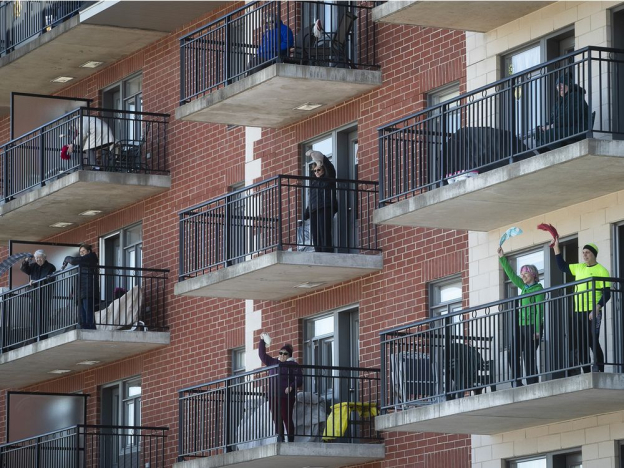
It would be wrong to call COVID-19’s unveiling of our collective loneliness a silver lining; there are far better events that could teach us to be more sociable than the ensuing global pandemic that is occuring. Admittedly, we are dealing with far greater issues than our capacity to get along with each other. Nevertheless, every day, a growing number of videos pop up online showing our resourceful drive for connectedness at a time when we’re being forced to be more isolated than ever. In cities across Europe, residents are giving impromptu concerts on their balconies; on Instagram, celebrities are holding livestreams for millions of fans; friends are holding dinner parties via FaceTime; concerned Montrealers are volunteering to run errands for the elderly and immunocompromised. 

Regardless of their manifestations before COVID-19, everyone’s routines have been disrupted. In their absence, acts of altruism and moments for reflection have emerged. Amidst our hopes for normalcy, we’re rediscovering the scope of our shared experiences, good or bad. Coming together—figuratively—has never been so important.

Commentary, Opinion

The SAQ is an essential service

Alcohol consumption is often considered a university tradition: Drinking is embedded in much of student social life, culture and events. However, Quebec Premier François Legault’s decision to deem the Société des alcools du Québec (SAQ) an essential service amid province-wide shut-downs to curb the spread of the COVID-19 pandemic is not about student life, but alcohol-dependent Quebecers. If liquor stores close, people with alcohol use disorder (AUD),  would likely put additional strain on an already overburdened healthcare system. During the global pandemic, when hospital beds, medical resources, and time have become precious currency, it is essential that liquor stores remain open to minimize the number of people admitted to hospitals.

A survey conducted by the Canadian Centre on Substance Use and Addiction found that three per cent of Canadians reported behaviour aligned with AUD in 2012 and that 18 percent of the general population exceeded Canada’s Low-Risk Drinking Guidelines (LRDG) in 2017. The LRDG recommends no more than 10 drinks a week for women, with no more than two drinks a day most days; and 15 drinks a week for men, with no more than three drinks a day most days. If SAQs across the province closed, many Quebec residents with alcohol dependencies would likely be forced into withdrawal.

The physical dependency that often accompanies AUD can make sudden withdrawal from alcohol a potentially fatal medical emergency. Many heavy drinkers are mentally and physically dependent on alcohol because, over time, their brain chemistry adjusts to compensate for alcohol latency in their system. Mild withdrawal symptoms can include shaking, sweating, vomiting, insomnia, anxiety, and headaches. Severe alcohol withdrawal can include hallucinations and seizures. The most severe and life-threatening symptom of withdrawal is called delirium tremens (DTs), a state in which the brain can have trouble regulating the body’s circulation or breathing, and which creates a risk of heart attack, stroke, and death. 

Between 2015 and 2016, hospitalizations that were wholly caused by alcohol consumption and alcohol harm totalled roughly 77,000, compared with about 75,000 hospitalizations for heart attack in the same year. Further, hospitalizations for alcohol harm often cost more than other hospitalizations largely as a result of the longer lengths of stay: A person recovering from alcohol harm requires an average of 11 days in hospital, compared with 7 days for a typical in-patient stay. An influx of people requiring treatment for alcohol harm would be an unsustainable burden for the Canadian healthcare system amidst this pandemic. 

While McGill’s two-week semester hiatus may have prompted more drinking among students due to the reduced academic strain, it is critical that students drink responsibly to avoid any risk of hospitalization. It is also important to recognize that McGill students or members of the McGill community may struggle with alcohol dependency: The implementation of social distancing measures has put additional strain on addiction recovery services. It is crucial that McGill students recognize the incessant efforts of addiction recovery services and harm reduction centres.

Closing liquor stores could have other lethal impacts outside of the issue of overburdening hospitals. People who are physically dependent on alcohol, but cannot access any, may start consuming surrogate alcohol, or products that contain alcohol but are not safe to be consumed by humans, such as hand sanitizer, mouthwash, and perfume. 

Although the decision to keep the SAQ open is not a black and white issue, it is the right choice amidst the global COVID-19 pandemic effort: Hospitals must be able to maintain regular operations while also being able to handle a potential influx of people with COVID-19, and creating withdrawal-induced hospitalizations as a result of liquor store closures would be counterproductive. At this critical juncture in history, minimizing the number of people admitted to hospitals i must remain a priority. If you are a McGill student who is seeking help with alcohol or substance use, the McGill Wellness Hub has compiled resources and support online. 

Science & Technology

Student-led Face-Shield Initiative seeks support and materials

Personal protective equipment (PPE) is essential for health care workers on the front line in the fight against COVID-19. As the number of global cases continues to increase, hospitals are experiencing shortages of basic medical equipment, most notably protective face shields, plastic guards that protect doctors and nurses from infectious material.

Panic buying in the early days of the COVID-19 outbreak made face masks a scarce resource. Since then, recent increases in hospitals’ demand for PPE has pushed the already fragile face shield supply chain to the brink of collapse. Face shields provide an important second line of defense for medical professionals, helping to extend the masks’ lifetime if they need to be reused. 

A team of undergraduate students from McGill, Concordia, and Queen’s University have developed an innovative solution to address Montreal’s mask shortage. Using 3D printing technology and a free, open-source design for face shields, the students have started printing ready-to-use shields from their bedrooms.

Thomas Bâby, U1 Engineering, is one of the McGill students leading the initiative.

“Right now, after speaking with medical personnel at one Montreal hospital, we learned that they are in dire need of face shields,” Bâby said in an interview with The McGill Tribune. “We will need to distribute to more hospitals and clinics in Montreal [in order to meet demand].”

In just four days, the operation grew from producing only a few dozen face shields per day to well over 100, with the potential to increase production with support from local manufacturers. Already, the team of students has been in contact with automotive producers, who have agreed to lend printers and materials for the project.

Canada is not alone in its lack of PPE. Hospitals in other highly industrialized countries, such as the United States and Italy, have already started running out of masks, putting front line health care workers at a greater risk of infection. 

The student-led team is not alone in their decision to take the production of vital medical equipment into their own hands. Earlier this month, an Italian engineering start-up began 3D printing respirator parts to address the absence of basic life-support equipment currently plaguing Italy’s hospitals.

Cyril Mani, U1 Engineering, expressed concerns unique to the Montreal team.

“We are limited by the quantity of material that we have access to,” Mani said. “We are a bunch of students. We don’t have financial backing from the people that decide to join us. If people can afford to help us make just one [visor], it is good enough, but to reach our goal of more than 200 [visors] per day, it becomes a question of where these materials will come from.”

Mani and his colleagues have set up a supply chain in collaboration with the McGill University Health Centre (MUHC), one of the many hospitals in Montreal that have received COVID-19 patients. All printed face shields are assembled by the team of students and disinfected under the supervision of medical professionals. Produced at a cost of less than $1 per unit, the students have managed to create a viable piece of PPE that is both safe and cost-effective, a feat of logistical prowess that many national governments are still struggling to achieve. 

Still, Mani is asking private companies and the public to join forces to increase support for their initiative. 

“We could be using [3D printers] to print, in real-time, the shields that will protect our nurses and our doctors and actually save lives,” Mani said. “We need the public libraries and private corporations that have access to these printers and materials to contact us. We have the supply chain ready. We can assemble it for them. We just need more people to be aware of what we are doing.”

For more information about how you can help, consult the project’s Google Drive resources. The team is looking for those with access to laser cutters or 3D printers, as well as manufactures who can supply raw materials. They also accept donations to help purchase materials and support production costs.

Commentary, Opinion

McGill students should care about the Bernie Sanders campaign

The border guard gruffly asked which presidential candidate I supported after I mentioned that I was crossing the US-Canada border to work in the primaries of the US presidential election.

When I told him, his eyebrows shot up. Bernie Sanders? The socialist?

I have discussed the primaries with many fellow McGill students since being in New Hampshire to volunteer for the Feb. 11 election, and my political leanings have been met with persistent skepticism.  For me, my choice of candidate for the 2020 election is personal. Reading about the failures of both neoliberalism and Third Way solutions had already cemented my conviction that something radically different was necessary, but seeing Sanders embody this necessary paradigm shift by articulating the most anti-war position of all the Democratic candidates—despite the risk it posed in the culture of chauvinism that is American politics—clinched it. 

A question I have often gotten since canvassing for Bernie is ‘What is in it for a Canadian?’

There could not possibly be more at stake in this election for Canadians, especially for this generation of McGill students. Young Americans already realize this—exit polls for many primary elections thus far often have Sanders leading Biden in support from young voters by double-digit margins. Western governments—many ostensibly left-wing—summarily failed to prioritize a return to full employment after the 2008 Great Recession, instead engaging in austerity measures and deficit demagoguery. This, evidently, has given rise to a generation of millennials and zoomers disillusioned with the Overton window on economic policy.

A shift in the global terms of debate under a Sanders presidency, reversing the decades of neoliberal dogma driving wealth inequality trends in Canada and elsewhere, would do much to ensure that evidence-based policy is prioritized here instead of blind faith in the free market.

Sanders points to this inequality as the root cause of a contemporary anti-safety net; his campaign regularly touts the fact that 49 per cent of new wealth goes to the top one per cent. Many would argue that such calamitous misdistributions of wealth can only be resolved through global measures, and a Sanders administration that already supports wealth taxes would be the most drastic step in that direction since Franklin Roosevelt in 1935. 

In this respect, Canadians can no longer pretend that electing progressive governments at home will be enough. Wealth inequality occurs across national borders and is the result of international, not national, global economic systems too easily manipulated by elites for personal gain. This should not only be a prevalent concern for people who might seek to live, work, or attend graduate school in the United States but also a priority for McGill students who, as members of an influential intellectual community, care about reducing global poverty and injustice. 

While addressing wealth inequality might be Sanders’ forte, his relevance to our generation of Canadians only grows outside of economics. In the face of rising global right-wing populism, the victory of a movement known for championing social justice would be especially heartening in a province still ruled by a government that openly discriminates against religious minorities. An endorsement of Sanders from the Sunrise Movement, a leading environmentalist grassroots organization, is clear proof that, equipped with the Green New Deal, he is the candidate to take on one of the most pressing existential threats of our time: climate change. And perhaps most tellingly, the systematic failure of the healthcare infrastructure in the United States to respond to the recent COVID-19 pandemic has made it clear that Sanders’ policies are not only preferable but vital.

As the next generation of McGill-trained workers, professionals, and leaders in this world, we can’t afford to be insular. While the electoral prospects of the Sanders campaign have dwindled since I came back from New Hampshire in February, the growth of the Democratic Party’s progressive wing is encouraging. With time running out, whoever the Americans elect in the coming election cycles affects not only our generation but also the ones to come. We should start acting like it.

Creative

Forbidden fruits and vegetables

In her feature, Multimedia Editor Sarah Ford narrates her experience with Pollen Food Syndrome, an allergy to raw fruits and vegetables. She illuminates some of the safety issues and accessibility concerns, and looks at ways we can best support those with severe food allergies.

Video by Sarah Ford.

Features

Secret gardens

There are two seasons in Montreal: Winter and construction, or so goes the decades-old adage uttered by so many bitter locals. Save for its all-too-short summer, the city can often feel like a harsh and even inhospitable place to live. Given that its human residents often feel beaten down by Montreal’s conditions, it is hard to imagine that such a city could be a host to anything more delicate. However, hidden among its littered, pothole-ridden, poorly paved streets, there exists a handful of hidden oases where fresh produce of all kinds grows plentifully year-round.

Read the latest issue

Read the latest issue