Staff producer Alex Hinton and contributor Zoe Lubetkin meet with Montreal photography studios and film photographers to explore their take on the resurgence of analogue photography.
Video my Alex Hinton and Zoe Lubetkin

Published by the SPT, a student society of McGill University

 urban child
November 15, 2025
urban child
November 15, 2025
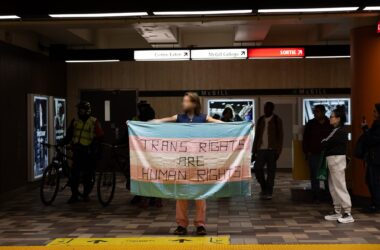 Hundreds attend counter-protest for transgender rights, in photos
September 30, 2025
Hundreds attend counter-protest for transgender rights, in photos
September 30, 2025
 Students protest for Palestine at Parliament, in photos
June 21, 2025
Students protest for Palestine at Parliament, in photos
June 21, 2025
Staff producer Alex Hinton and contributor Zoe Lubetkin meet with Montreal photography studios and film photographers to explore their take on the resurgence of analogue photography.
Video my Alex Hinton and Zoe Lubetkin
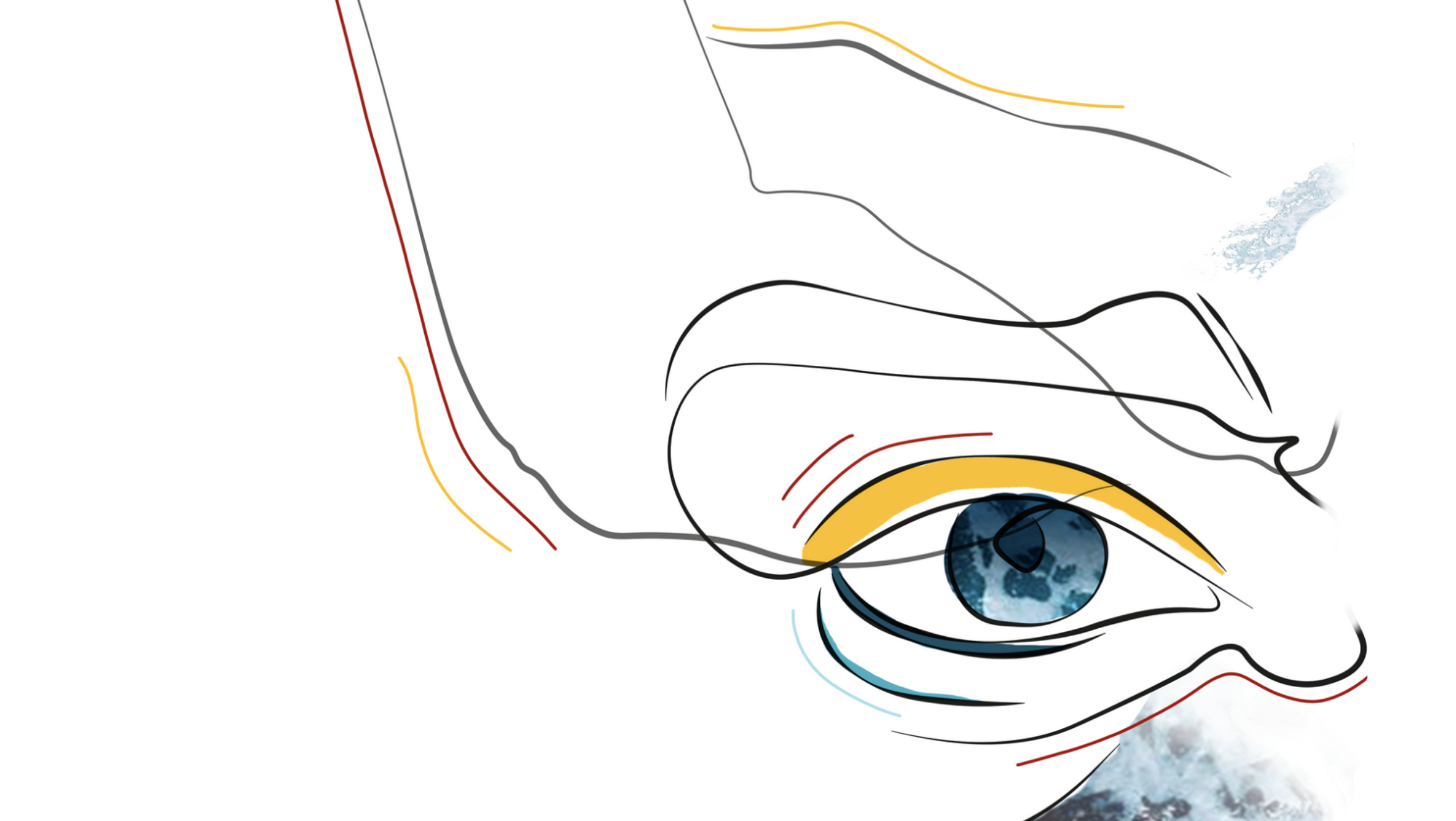
 How can I show you I’m doing better if there’s nothing good for me to do?
April 13, 2026
How can I show you I’m doing better if there’s nothing good for me to do?
April 13, 2026
 Your health, your problem
April 8, 2026
Your health, your problem
April 8, 2026
 On becoming Chinese
March 30, 2026
On becoming Chinese
March 30, 2026

A mountain undergoes several rounds of deterioration and decay over time. Piece by piece, the cliffs chip away and the rocks weather, but when the snow settles and the trees fill in, the mountain, continues to stand strong. Such is the spirit of Camille Vibert, a second-year alpine skier from Orillia, Ontario, who is a natural-born athlete and a symbol of fortitude to those around her. The RSEQ Rookie of the Year has faced and conquered several hurdles over her career, and when it comes to the question of her legacy, she is only just getting started.
“I didn’t really have high expectations for [skiing] last year,” Vibert said in an interview with The McGill Tribune. “I just kind of wanted to continue [skiing] and have fun with it, just love it again. [But] then I ended up having a pretty solid season, so yeah, […] the ceiling’s pretty high.”
Vibert credits her confidence and success, in large part, to the many obstacles that have shaped her competitive personality over the years.
“[I] would always get mad at card games,” Vibert said. “[I was] just always fighting for everything. I wanted to be the best at everything. But when I was 13, I was diagnosed with type 1 diabetes. I had to be independent, even more so than I already was. It was difficult, of course, but it made me more responsible as a person. So, that was what really shaped me as a person—not wanting to give up, ever.”
Vibert maintained this drive throughout high school, excelling in several sports. Her talent in skiing eventually earned her a spot on the provincial ski team. Her time with the team was tumultuous, however, as she suffered a career-threatening ACL and meniscus tear in her very first race.
“I didn’t really mesh well with [the coaches] and [then] […] there were also all the injuries,” Vibert said. “After a while […], I [realized] that I wasn’t really [skiing] for me but for others and their expectations.”
Vibert worked her way back to health, ready to take her next big step. With the aim of rediscovering her passion for skiing, she chose to continue her career at McGill.
“I wasn’t really enjoying skiing for a while but wanted to rediscover my love for it,” Vibert said. “McGill has a competitive skiing program plus […], I’ve always wanted to explore in Montreal, [..] so it was a no-brainer really. My grandpa would be proud that I’m practicing my French, though.”
As for her life outside of sports, McGill has been quite a ride for the skier.
“Oh, it’s so busy,” Vibert said. “I am a very social person, and […] I just love going out and enjoying all the events like Hype [Week] and Carnival. But it’s obviously hard to balance with everything. Skiing, I find, helps me manage my time. The added pressure just forces me to keep things in check, and I sort of just need to keep going, going, going, or […] else I just shut down.”
With a month remaining before the RSEQ championship at Mount Stoneham on Mar. 13 and 14, Vibert remains calm and composed.
“I have a bit more expectations for this year [and] just a little more pressure, but honestly, I just want to have fun with skiing,” Vibert said. “It’s just really fun, and I’m happy to be able to be doing it while studying.”
Life after graduation remains an open-ended question. She has professed a love for psychology but has promised to remain an active sportsperson. Despite the lingering uncertainty, one thing seems clear: Vibert will continue to conquer every obstacle in her way.
“It’s kind of funny because my brother, when I first got diagnosed with diabetes, he [came] to me and he [said], ‘Your pancreas is a quitter, but you’re not,’” Vibert said. “So, that’s sort of my motto. If life knocks you down, you just gotta keep getting back up.”
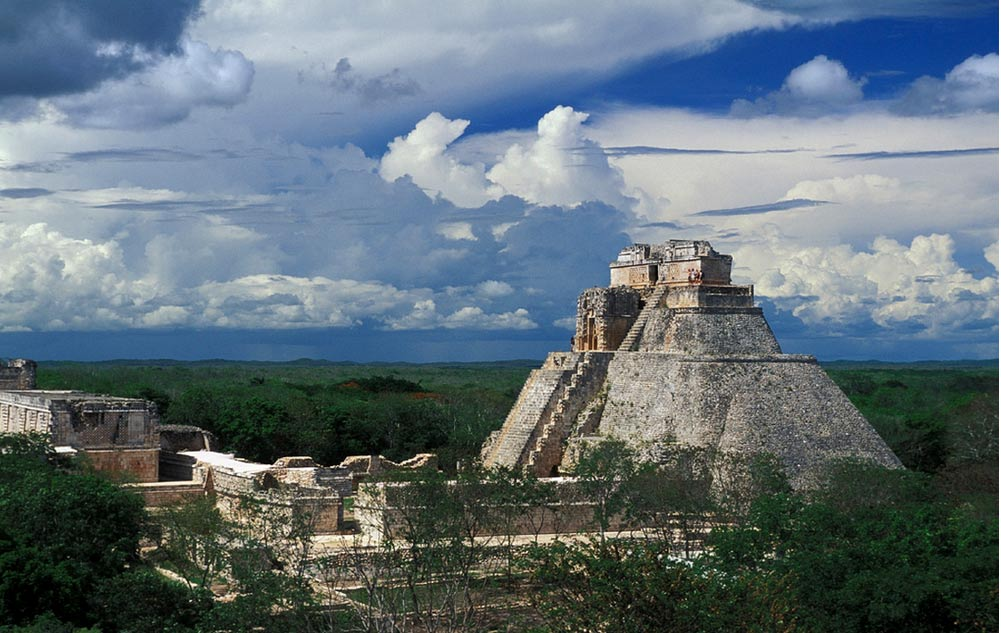
Approximately 4,000 years ago, in modern-day southern Mexico and Central America, the Mayan civilization arose and, in due time, spread. Over thousands of years, the Mayans developed a highly sophisticated urban society, numbering 19 million people at its peak. The Mayans built and thrived in dense, teeming metropolises, erecting giant limestone pyramids that continue to draw throngs of tourists to this day. Yet, when the Spanish arrived in the 16th century, they found a landscape dotted with empty cities and opulent ruins. For years, the demise of the Maya puzzled scientists and historians alike.
Scientists now believe that a series of droughts beginning in the eighth century AD, exacerbated by the effects of deforestation, pushed the Mayans toward collapse. Crops failed, cities fell, and the people fled to the coast.
Today, new field methods are allowing scientists to peer into the past to better understand not only the factors leading to the Mayan collapse, but the enduring consequences of their actions, all the more unsettling in light of ongoing efforts to curb climate change.
The capacity of trees to sequester carbon is well understood: Reforestation on a mass scale has been touted time and time again as a crucial measure against global heating. However, the role that soils play in carbon cycling remains relatively under-researched despite the fact that the soils of the world hold over twice as much carbon as the atmosphere. When trees are felled or burned to make way for pasture or crop land, much of the carbon held in the trees and soil is released into the atmosphere. Some postulate that this release of sequestered carbon can be countered with the regrowth of previously denuded forest. However, a study published in Nature Geoscience in 2018 suggests otherwise.
Peter Douglas, an assistant professor in McGill’s Department of Earth and Planetary Sciences, was part of the team analyzing plant wax lipids in lakebed sediments for the study. These organic molecules, produced by plants, have a tendency to bind to minerals within the soil before they are eventually washed away.
Douglas found a curious discrepancy between the ages of the plant waxes and the sediments that they were found in. The team discovered that this gap varied greatly from one period of time to the next; on the whole, the plant waxes were far older than the sediment.
“Basically, [the plant wax lipids] give us a picture of how long carbon is sitting in soils,” Douglas said in an interview with The McGill Tribune. “Soils are a huge carbon reservoir on the planet [….] But we don’t really know how that kind of storage reservoir changes over time, especially on long time scales. What we found is that it really decreased a lot over the course of Mayan history.”
Douglas believes that the findings indicate that Mayan deforestation sped up the movement of soil carbon into lake beds: The soil retained carbon for far less time than it had prior.
“What is perhaps even more interesting is that when the Maya had major depopulation and the forest grew back, the age of the carbon didn’t go back up,” Douglas said. “The soils did not regain their capacity to store carbon on long time scales.”
This means that reforestation, while helpful in recapturing atmospheric carbon, might not be quite the silver bullet some have hoped. In the meantime, further research on long-term soil carbon storage capacity is in order.
“For the time being, scientists are unaware if this is a widespread phenomenon,” Douglas said.
If so, it does not bode especially well for humanity. According to Douglas, the findings suggest that it might take a very long time, upwards of thousands of years, to fully rebalance carbon storage levels in soils. In the meantime, one can only hope that our own civilization will avert the fate faced by the Maya.
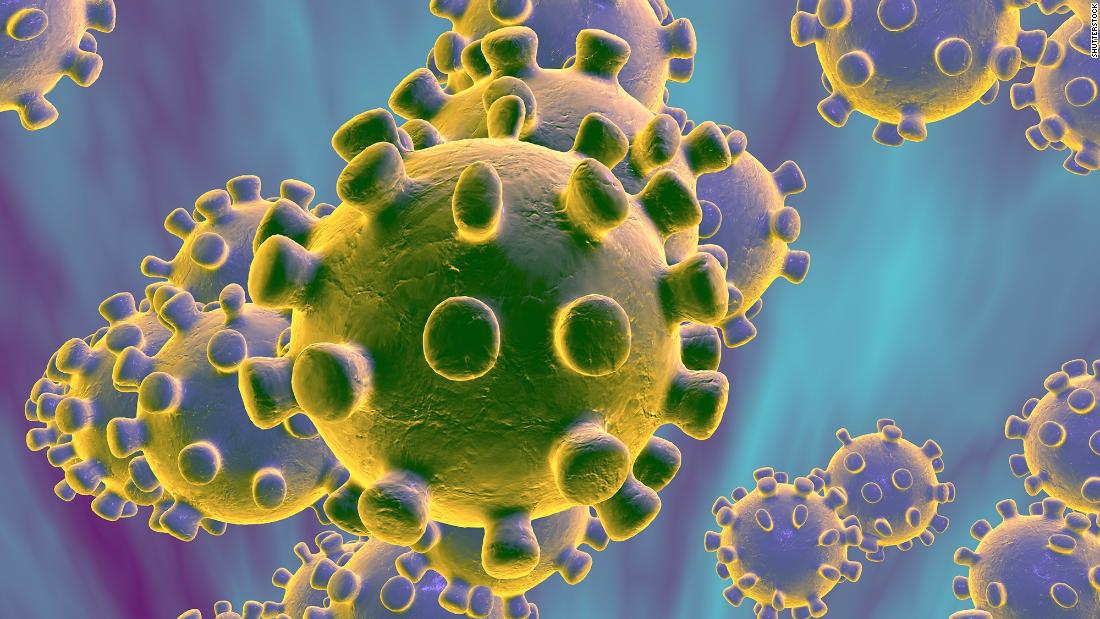
The World Health Organization (WHO) designated the novel Coronavirus (2019-nCoV) outbreak a public health emergency on Jan. 30, garnering increased attention from world leaders and national public health agencies. As concerns over the spread and severity of a wider 2019-nCoV outbreak continue to grow, researchers around the globe are working to understand the virus and develop new treatments as quickly as possible.
On Dec. 31, China announced a small outbreak in the city of Wuhan of 27 patients with viral pneumonia. The first entire genome of the virus was sequenced on Jan. 10, and by Jan. 23, the Coalition for Epidemic Preparedness Innovations (CEPI) had announced that they were expecting to have a vaccine available within 16 weeks. While confirmed 2019-nCoV cases had skyrocketed past 11,000 by the end of the month, many countries established strong quarantine measures and were working on new methods to fight the virus.
International and national health agencies’ immediate strategies to fight the ongoing spread of 2019-nCoV stand in stark contrast with previous global responses to past outbreaks. Dr. Brian Ward, a professor in the Department of Medicine at McGill, expressed his approval of how health officials have responded to the novel coronavirus. Ward cited increased preparedness in vaccine development frameworks and international cooperation as the major reasons for this early success.
“2014 and 2015 was a watershed [in the Ebola outbreak],” Ward said in an interview with The McGill Tribune. “The West-African Ebola outbreak was a big deal, because the pattern up until then had been an explosion [of a given infectious disease], followed by a scrambling to mobilize millions of dollars to get manufacturers to produce a vaccine, and then the virus was gone [before vaccines could return a profit].”
Prior to the 2014-15 Ebola outbreak, international strategies were largely focussed on ongoing threats to public safety, with little funding going towards the development of vaccines for diseases that had not yet infected humans.
In the wake of that crisis, several governments and funding agencies identified the need for a centralized plan for developing and deploying new vaccines to prevent dangerous viruses and bacteria from entering the human population. CEPI was founded in Norway in 2017 as an international partnership of philanthropic and governmental foundations that agreed to direct continued funding to research for vaccine development.
Before the 2019-nCoV outbreak in December, CEPI had already developed partnerships with labs working on vaccines for MERS Coronavirus, a close cousin of 2019-nCoV. Therefore, a framework was already in place for fast-tracking the development of vaccines for the new outbreak.
Another important factor in formulating a rapid response to 2019-nCoV has been the cooperation of countries involved in the epidemic response. Ward commented on the increased transparency of the Chinese government to release information about the new virus, including its genome sequence, very early on in the outbreak.
“[China had an] ‘anti-precedence’ with SARS where [the Chinese government] held back information,” Ward said. “With Zika, there was considerable reticence on the part of the Brazilians to release strains. The Indonesian government has stated as a policy that […] you can be thrown in jail for trying to carry an influenza virus out of the country in anything but your lungs.”
National laboratories are typically wary to provide information about novel pathogens because they have the potential to benefit from the sales of new pharmaceuticals and can immediately protect their citizens. Countries are thus economically and politically disincentivized from sharing specimens with others so long as they can control the outbreak.
The 2019-nCoV outbreak has already killed over 300 people and is likely to kill many more before the infection can be contained. However, lessons learned from previous epidemics and recent advancements in science may help researchers overcome what could otherwise be a devastating pandemic, both in China and around the world.
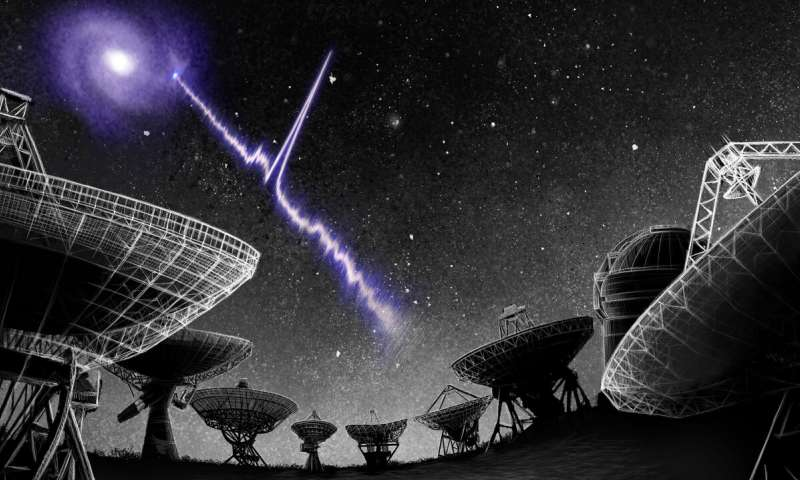
On Jan. 6, McGill astronomers tracked down one of the brightest known repeating signals in the universe to a specific part of a galaxy just seven light years wide. The signal, called a Fast Radio Burst (FRB), was first detected in part by the Canadian Hydrogen Intensity Mapping Experiment (CHIME) telescope, a research collaboration between several McGill researchers and astrophysicists around the country.
FRBs interest astronomers because their origins and properties are not well understood. In astrophysical terms, brightness describes the apparent electromagnetic energy emission of some cosmic object when viewed from Earth. Essentially, this means that very bright signals correspond to high-energy events like stars going supernova. The event must be particularly high energy if it is coming from very far away. However, it is still unknown what event or events FRBs correspond to.
FRBs have an incredible amount of light energy packed into regions spanning only a few light years across. These bursts, which last less than five milliseconds, have surprised several astronomers. In fact, when the first one was discovered in 2007, there were doubts that it was even real.
Shriharsh Tendulkar, former postdoctoral fellow in the Department of Physics at McGill and a co-author of the FRB article published in the journal Nature, discussed the possible sources of FRBs and the many questions that these strange interstellar phenomena pose to researchers.
Tendulkar first explained that FRBs are similar to pulsars, magnetized rotating neutron stars that similarly emit immense amounts of light radiation.
“FRBs are a trillion times more powerful [than pulsars],” Tendulkar wrote in an email to The McGill Tribune. “We have no idea how to physically make bursts that are this bright and this frequent.”
By improving their understanding of FRBs, researchers seek to better postulate what kinds of cosmological objects emit them. So far, astronomers have categorized different types of FRBs into those that repeat and those that do not so that they can compare them and learn from their differences.
The next step after discovering an FRB is to localize it within a galaxy. Localization places the signal within an environment where only certain stars, gases, and other cosmological objects exist. The process allows astronomers to reason about what created the signal. Researchers have already localized a repeating FRB and several non-repeating FRBs to very different host environments. A few non-repeating FRBs have been discovered in large elliptical galaxies where few young stars are being formed. In contrast, the first localized repeating FRB was found in a dwarf galaxy with an abundance of young stars.
The FRB that CHIME discovered, however, was emanating from a completely new environment, different from those where previous FRB signals have been found.
“We discovered [the FRB] to be in a large spiral galaxy, where there are young stars but the gas is not as pure as in a dwarf galaxy,” Tendulkar said. “This means that whatever is forming these FRBs should be able to form in a lot of different environments.”
According to Tendulkar, the ability of FRBs to originate from diverse environments is just the beginning of what this newly documented radio burst can teach scientists about where electromagnetic energy comes from in space. The recently discovered FRB is the closest such signal to Earth and provides the opportunity for new avenues of research. Specifically, researchers can look more closely at the amount of energy released in the burst and electron and magnetic field distribution around the source. They could possibly even study corresponding bursts that travel at other frequencies, such as infrared radiation or X-rays.
Tendulakr noted that the following months will be a crucial period in understanding FRBs.
“We will be able to study [the FBR] in far greater detail than previously known,” Tendulkar said. “We are now in the process of submitting many proposals to different telescopes to meticulously study this FRB and its environment.”

Allergies always seemed so simple: Here’s a list of foods and environmental factors that you should avoid, since your body treats them like enemies.
Dr. Christine McCusker, an associate professor in the Faculty of Medicine at McGill, is the Director of the Division of Allergy & Immunology at the Montreal Children’s Hospital. She pointed out that, 30 years ago, the predominant idea to explain allergies was that the body treats allergens as enemies when they are really ‘innocent.’ However, since that time, researchers have discovered that the immune system is always responding to intruders. In the case of allergies, it activates the ‘threatening’ response for some people and the ‘non-threatening’ response for others.
“In fact, if I eat a nut [and] I’m not allergic, my immune system [still] activates, recognizes what I’m eating, and makes an immune response,” McCusker said. “[…. The] type of immune response it makes is different from the type that you make. So instead of an on-off switch, you make [an allergic response, or] you don’t make [an allergic response], it’s actually a toggle switch [….] You go left, you go right.”
Though our typical surroundings in Canada are far cleaner and more hygienic than they were in, say, the 19th century, many allergists believe that the presence of parasites has led some bodies to create this kind of allergic response.
“If you now have a Godzilla against a human being, which is kind of the scale of difference of what a parasite will look like to the little white blood cells that is trying to fight it, your normal methods of killing or suppressing or getting rid of [it are] not going to work very well,” McCusker said. “So we actually have a system that promotes a certain population of white blood cells that […] are ‘bombers.’ And what they do is, when they’re activated properly, they run over to the microbe, and they log bombs at it. And the microbe becomes very unhappy and or dies, and it’s problem solved.”
When allergic patients trigger that immune system response, their body activates histamine, a chemical involved in immune response and physiological function. Signs and symptoms of allergic reactions include hives and swelling, both of which arise from an abundance of histamine.
McCusker and many other allergists believe that allergies develop in the first few years of life as a result of a change in environment after birth. For example, when proteins irritate a child’s skin and cause eczema, or visible irritation of the skin, the body learns to respond to these same proteins when they are ingested in foods later in life.
Anaphylaxis is a commonly used term to describe a severe and potentially deadly allergic reaction. According to McCusker, the likelihood of death from anaphylaxis for allergic patients is around the same as a lightning strike, and it is difficult to predict.
“Unfortunately, I can’t tell you [by] looking at you,” McCusker said. “Are you the person who’s going to walk into that restaurant, have an accidental exposure, and die? Or are you going to walk into that restaurant, have an accidental exposure, get an itchy mouth, have a few hives, feel like crap, and have to use your EpiPen?”
McCusker urges allergic patients who have been prescribed an EpiPen to always carry it with them, whether or not they plan to eat anything. EpiPens contain epinephrine, a hormone that narrows blood vessels and opens airways, helping to temporarily reverse the signs and symptoms of an allergic reaction.
Ultimately, McCusker concluded that it is important for those with allergies to tell their friends about how serious their allergies can be.
“One of the biggest problems […] that people […] who have allergies [get wrong] is […] being nervous about disclosing their allergies [and] to talk to friends and say ‘Listen, if I’m not feeling well, you’re coming with me,’” McCusker said.

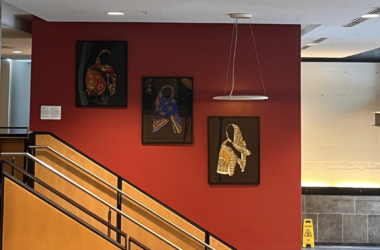 ‘Kanga I, II, III’ brings Projections: SANKOFA’s afrofuturist vision to Trottier
June 23, 2026
‘Kanga I, II, III’ brings Projections: SANKOFA’s afrofuturist vision to Trottier
June 23, 2026
 Know Your Artist: Theodore A. Harris
May 27, 2026
Know Your Artist: Theodore A. Harris
May 27, 2026
 The forgotten history of the Montreal coffeehouse
April 7, 2026
The forgotten history of the Montreal coffeehouse
April 7, 2026
In the middle of the 2006 film Click, audiences realized just how fascinated Adam Sandler is with the comedy of bodily functions: From farting to vomiting, he’s joked about it all. But in Click, he reassures his parents his ‘schmekel’—in a nod to Sandler’s Jewish heritage, he uses Yiddish slang for ‘penis’—has gotten bigger since he was smaller. And when they tell him it could not have gotten smaller, he kibbitzes back. He’s a little miffed.
Sandler movies, while oft accused of being vehicles for dumb product-placement, are also silly and sweet coming-of-age stories. The Adam Sandler character is a clown, and as he runs through his emotions, he searches to prove his manhood in the only way he knows how. He bumbles around, sad, angry, and often innocently charming. While the rest of the world mourns Sandler’s Oscar snub for Uncut Gems, I want to reflect upon his roots. And, so, for two whole weeks, I watched those characters run around on screen to find the perfect Sandler flick for every mood, occasion, or whim.
Adam Sandler is a master of schmaltz. Click, which is It’s a Wonderful Life but with Sandler and mid-aughts technology, is the best example. Released at a pivotal point in Sandler’s career, the film marks his transition toward stories of fatherhood. As Sandler speeds through his life with the help of a universal remote handed to him by the always-committed Christopher Walken, we watch music swell and tears fall. We also watch Sandler fart on David Hasselhoff and eat Twinkies.
Zohan is an Israeli soldier-turned-hairdresser/sex worker comedy, and it is as stupid and silly as the premise sounds. At the core of the film, Sandler does a somehow-convincing Israeli accent, turning in a committed performance in what Sandler has professed to be his dream role. Watching him punch, kick, run, and even charm his way around New York City as his hairdresser alter-ego, Scrappy Coco, is absurdly funny and kind of cathartic all at once.
Happy Gilmore also straddles that fine line of hilarity, rocking between angry outbursts and dopey romanticism: Sandler yells through his intercom, angry at his now ex-girlfriend, before mumbling sweet nothings in hopes she’ll return.
“I’m sorry, babe, I didn’t mean that either,” Happy says. “I just yell sometimes because I get so scared, scared of being a nobody.”
The nineties are quite clearly Sandler’s best period, with his films ranking high atop the list of the most childish many have ever seen. Big Daddy involves Sandler encouraging the Sprouse twins, both playing one boy à la Olsen-Full House, to essentially parent themselves in order to appear responsible and win back his ex-girlfriend.
Billy Madison is possibly the dumbest movie ever made: It’s about a grown man who speaks with a baby affect and must earn his inheritance by speeding through grade school. But, really, its idiocy is its charm.
“My friends or parents would be like, ‘I don’t know. It just seems stupid,’ Andy Samberg told Jesse David Fox of Vulture. “I would always say, ‘Yeah, but [the actors] know it’s stupid. That’s the difference.’”
The tongue-in-cheek nature of Sandler films is done on purpose, and it’s all for our amusement. I deluged my roommate with Adam Sandler movies for nearly two weeks. By the end, I figured he was ready to look at me and say the final line of the most quotable moment in Billy Madison, but he does not. Because he does not think this movie made him dumber; we agree that these movies are legitimately funny.
“Everyone in this room is now dumber for having listened to it,” the school principal tells Billy about a trivia contest answer he provided. “I award you no points, and may God have mercy on your soul.”
May God have mercy on my soul. I did watch Jack and Jill, after all.
 Critics must balance linguistic priorities with human impact when discussing Air Canada’s faux pas
April 7, 2026
Critics must balance linguistic priorities with human impact when discussing Air Canada’s faux pas
April 7, 2026
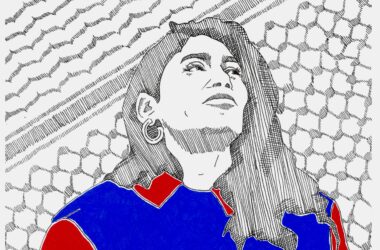 The pattern behind Hassan’s denial of entry
April 7, 2026
The pattern behind Hassan’s denial of entry
April 7, 2026
Any sentence that begins with ‘I don’t want to sound racist but,’ will, in fact, be racist. I have heard this, and many other racist and xenophobic things, daily since the news of the coronavirus began spreading on campus.
Not many students can claim that they have not come across tweets or memes making light of the virus and those affected in the Wuhan district of China. After overhearing a student expressing disgust toward Chinese students’ dietary patterns, I realized that the conversations around coronavirus were not rooted in its swift spread, but rather in students’ assumption that their peers from East Asia now pose a threat to their safety. Angry tweets and instagram stories spitting derogatory terms about Chinese people can make people think about how quickly safe spaces can become unsafe in today’s world.
The racist discourse about coronavirus stems from the pervasive, historical belief that immigrants pose a health risk by bringing in ‘germs.’ The panic surrounding coronavirus on campus has lead to racial profiling, which is only sensationalised by ludicrous humour. The panic villifies racialized groups on campus and equates non-white difference with danger. The grave impact of misinformed perceptions needs to be understood and such conversations need to stop.
On Jan. 30, the World Health Organization (WHO) declared the outbreak of the novel coronavirus a global health emergency. Since the virus spread to over 15,000 people causing 350 deaths, many countries have imposed travel restrictions on travellers from mainland China. Where travel advisories and airport screenings can be compartmentalized as measures pertinent to ensuring the health and safety of people around the world, racist discourse and derogatory memes feed into a bigger problem—sensational xenophobia.
“The panic surrounding coronavirus on campus has lead to racial profiling, which is only sensationalised by ludicrous humour. The panic villifies racialized groups on campus and equates non-white difference with danger.”
Thirty per cent of McGill’s student body is comprised of international students, 3171 of whom are from China. Montreal is the sixth best student city in the world, but this does not mean the city is safe for students of colour. Social media outlets have made it easier for unchecked information and myths to result in confirmation bias about certain groups being associated with the virus. One example of this is a video from 2016 which showed a YouTuber eating bat soup, and resurfaced this past week: This video has added to the sensational racism by falsely claimed to be set in Wuhan—the epicentre of the novel coronavirus outbreak
The discourse surrounding coronavirus completely overlooks the socioeconomic context of the outbreak. Like those in many countries around the world, wet markets in China do not follow health and safety regulations, or can face bureaucratic barriers in establishing firm regulatory systems. Sensationalized racism assigns blame that persists across borders and influences global narratives. Such narratives parallel the Severe Acute Respiratory Syndrome (SARS) outbreak in 2003 and Ebola in 2014—both of which were plagued with transmission myths and racism.
As we take precautionary measures and race to lay our hands on a coveted pack of surgical masks, which are currently in short supply across Canada, let us find in ourselves the courage to defend anyone who is treated unfairly and give support to anyone whose loved ones are actually highly exposed to the virus. Students can all acknowledge that, at times, they may have been bystanders in racist dialogue. Sometimes, disconcertingly, yet quietly, swiping away at the memes; other times, burying ourselves in our computers when overhearing some people make very problematic remarks; and at others, calling-out people right away when conversations steer towards the origins of the virus.
Racism is no longer merely an uncomfortable conversation with a xenophobe, it can manifest as a meme retweeted by a member of your group project who thinks enjoying Corona beer is now funny; it is sensationalized jokes about the food one eats because it not a Western dish. People must hold themselves to a higher standard of decency when discussing the coronavirus, or any global epidemic, and hold others accountable as well.

Content warning: Mentions of sexual assault and grief.
There is no doubt that Kobe Bryant’s death on Jan. 26 shocked the world. The immediate outpouring of praise from athletes, journalists, and fans alike is a testament to his reach as a basketball player and a person. At the same time as these posts were being shared, another story was being told. It was one that put the events of Kobe’s 2003 rape case at the centre of the plot, a point that Kobe’s character arc could never move beyond.
When a sporting legend dies, the reaction is immediate, visceral, and global. The story that people began building when the athlete was alive suddenly becomes a myth, and everyone seems to have been told a different version. We learn all too quickly that this legacy is beyond anyone’s control, and as people begin to recount their own narratives, they stop holding space for others’. A multitude of single narratives emerge, and each author believes themselves to have written the truth.
All humans are flawed and complicated. But a figure with the legendary status of Kobe Bryant is no longer human in the eyes of the masses. As we forget the humanity of the athlete who died, we also forget the humanity of the individuals that they affected.
The woman who accused Kobe of raping her in 2003 became a plot point in his story. Many adoring Kobe fans treat her as everything from the one-time mistake of a hot-headed young player to the monster who attempted to ruin the career of one of the most inspirational athletes of all time. That she could be a woman, now well into her thirties, with a life full of all the trials and tribulations that human existence entails, is absent from the thoughts of many. This woman, and plenty of other survivors, have been forced to watch the flood of love and support for Kobe, who was able to leave the events of that rape case behind him in 2003, neatly packaged as a “dark period” in his life. They have likely found themselves with their own experiences at the forefront of their minds again, but what is important is that each of these survivors is human.
Everyone who looked up to Kobe is equally human. Personal stories of being inspired by one of the greatest athletes in the world are valid, and admiration of Kobe’s devotion to his children is perfectly normal. Grief and mourning for someone who had been such a constant throughout the entirety of many young people’s lives is an entirely understandable, and human, response.
During the time of grieving, it is often difficult to talk about the less polished parts of someone’s story. People argue that the moment of death is an inappropriate time to discuss past actions of the deceased. It can also, for others, create a desire to zero in on a single decision without acknowledging that everyone has their own relationship to the now-mythic figure. Ultimately, we need to remember that there is no universal experience with someone as influential as Kobe Bryant. Now is the time to remember all of Kobe’s legacy. We may not treat him as such, but he was human and, as all humans are, he was complicated. There is no one part of Kobe’s legacy that should be lifted over others, and there is no part that should be silenced. Make space for survivors in your life to have their own feelings about his legacy, while also acknowledging that a generation lost a childhood hero. There is no single truth or correct reaction.