


Latest News

Basketball, Sports

Growth of international basketball on display at FIBA World Cup

The 2019 FIBA World Cup concluded on Sept. 15, sending a traditionally dominant American team home with a lowly seventh-place finish. This loss came as a shock to USA Basketball and ended a 58-game winning streak dating back to 2006, leaving many fans wondering what has happened to Team USA.

A lack of coaching, funding, or injuries did not sow the seed of this loss: It was an absence of elite talent. The US team featured only one NBA all-star, Kemba Walker. Team Canada suffered from a similar problem with top players like Jamal Murray and Andrew Wiggins opting out of the World Cup. While American and Canadian fans may be disappointed with the results, they, as basketball fans, should welcome this outcome as a sign of a thriving future for the sport, both internationally and in the NBA. 

This is not the first major slump in enthusiasm for international basketball. In 1988, Team USA suffered a devastating loss to the Soviet Union after sending only collegiate players. In response, however, the iconic 1992 “Dream Team” formed just four years later, including legends like Michael Jordan, Magic Johnson, and Larry Bird. Many fondly look back on the “Dream Team,” which handily won games by an average of 40 points, as the most dominant basketball team ever. 

The fact that Team USA is not effortlessly pummelling opponents any more is not a bad sign for basketball fans worldwide; it signals an era of competition worth watching. During Team USA’s historic 1992 run, there were only 26 international players in the NBA. Today, there are 118, including top-tier talent such as 2018-19 MVP Giannis Antetokounmpo. This makes for far more compelling and competitive play, both in internationally and during the NBA season.

The mass dropout from international play also reflects a change in the mentality of professional athletes. As the NBA grows, players are becoming more than just athletes, taking on roles as brand representatives and content creators. Building a brand requires an enormous amount of time and availability, but it helps athletes ensure a future after their basketball careers come to an end. 

Sports science has also changed the offseason. Top NBA talent can play as many as 98 games per season, and they are finally taking the time to recover from the intense physical pressure by limiting exertion both during the regular season and the summer. For example, former Raptor Kawhi Leonard blazed a trail last season, averaging 34 minutes per game in 60 regular season games. After this Raptors’ victory, Leonard chose to opt out of summer play and rest his body, focusing instead on his long-term health. By choosing to let the offseason truly be just that, players are ensuring that, when the time comes, they can go all in to compete for a championship. 

Looking at the success Leonard and other veteran stars have had on and off the court, it is understandable why young players are declining opportunities to play for their national teams, instead focusing on individual training and recovery. For players like the Denver Nuggets’ Jamal Murray, the decision to forego representing Canada at the FIBA World Cup gave him the chance to legitimately prepare to contend for a Western Conference title and protect against serious injury

Top NBA talent opting out also opens up the floor for lesser-known international players to shine. Canadian fans were treated to the play of Kevin Pangos and Kyle Wiltjer, two skilled Canadian athletes who compete overseas in two of the top basketball leagues outside of North America.

While it is always fun for fans to watch their favourite athletes play and see their flags represented on the podium, it is time to look at basketball as an all-year international sport. With a return to parity in the international game, basketball fans should be excited for this new era of more competitive play. 
Editorial, Opinion

Climate activism requires institutional support

On Sept. 27, Montreal will host one of the most significant climate activism events of the year. Greta Thunberg, a 16-year-old Swedish climate activist of notable internet fame, will be in Montreal to lead a march protesting governmental and institutional inaction on climate change. Since Thunberg is expected to lead the protest, Friday’s march may even be better attended than last year’s. In preparation, educational institutions such as Concordia University, Dawson University, Cégep du Vieux Montréal, and the Commission scolaire de Montréal, Montreal’s largest school board, have all cancelled classes to allow students to participate in the march. However, on Sept. 17, McGill students received an email from Provost and Vice-Principal (Academic) Christopher P. Manfredi stating that McGill would not be cancelling classes on the 27th, but that he would be asking professors to be flexible about attendance to accommodate students who wish to attend. 

Despite McGill’s ‘commitments’ to sustainability that Manfredi cites in his email, the McGill administration should reconsider their decision and cancel classes on the 27th. Manfredi is correct in implying that students could still feasibly attend the climate march without facing harsh academic consequences. Additionally, in a McGill senate meeting on Sept. 18, Dean of Students Christopher Buddle commented on the importance of the “rebellious” nature of strikes. 

However, the significance of the statement made by the upcoming climate march will not derive from the ‘rebellious’ act of students skipping class to protest. The global climate strike should not focus on the aesthetics of a student walk-out: Instead, it should be centered around substantial institutional change in order to combat the most formidable global problem of this century. 

Climate change is not a political issue. Instead, it is a humanitarian crisis that disproportionately impacts people of colour and developing areas, including Northern Canada: Climate change has had specifically devastating impacts on Indigenous communities, and the same can be said for other historically oppressed and disadvantaged groups on a global scale. Sustainability and global climate activism requires a more intersectional approach that continues to acknowledge that people of colour are often the most vulnerable to climate change’s consequences.

McGill has an ethical responsibility not only to facilitate student efforts to combat climate change, but to make its own attempts as well. McGill has taken strides toward achieving sustainability over the last decade. However, it would not be true to say that these actions are proportional to McGill’s $1.65 billion capacity. As of Fall 2019, even after two Board of Governors members resigned in protest, McGill has still refused to divest from fossil fuels. As a leading establishment, McGill influences federal and provincial politics, sets examples for other universities, and creates precedents of moral responsibility in the way that prioritizes its values. In their continued refusal to divest, as well as their decision to not cancel classes on Friday, the McGill administration is sending a clear message: They do not take climate change seriously enough.

While it would be uplifting to see McGill reverse its decision, it seems unlikely that they will do so. That being the case, the Arts Undergraduate Society (AUS) is holding a general assembly on Sept. 25 at 6:00 p.m. in Leacock 132 that, if passed, would enact a student strike in protest of McGill’s decision to not cancel classes. The quorum requires 500 members to pass the motion, meaning that student members of AUS must attend in-person for the motion to succeed. 

Finally, groups like Climate Justice Action McGill (C-JAM) and Divest McGill, with their weekly Friday protest in front of the James Administration building last semester, serve as the foundation for consistent climate activism on McGill campus. More students who are passionate about climate issues should consider joining or supporting these groups in order to reinvigorate regular activism on campus. While structural or institutional changes are absolutely vital to addressing climate change as a global problem, students shouldn’t neglect their individual contributions. Climate change is a challenge that requires a collective response.

Off the Board, Opinion

The neighbour I knew

One night in August of 2012, I was torn from my sleep when gunshots rang through the air. I remember the rest of the night in pieces—my mom jumping on my bed to peer out my window over the driveway, sitting on my living room couch as my dad called the police, and later that night, sitting in the back of a police car, entranced by the fuzzy voices coming through the radio. It wasn’t until the next morning that my mum sat my brother and I down and explained that our next-door neighbour, John*, had been killed.

Although shocked, my brother and I reacted calmly. We hadn’t known him well; my parents had been aware that he was involved with gangs and advised the two of us to stay away from him. But my memory of John was very different from the headlines that emerged the next day, which used words like “aggressive” and listed off crimes in which he had been implicated. To us, he was the guy that showed us how to make snowballs with our bare hands so that they stayed together, whose ex-girlfriend would let us play with her three puppies, and who once tipped my brother $18.50 for a cup of lemonade he sold at a stand. We remembered him as a kind person, albeit a bit of an enigma.

This is not a defense of any of the gang-related acts he allegedly committed, but rather an outline of the ways in which my vision of John contrasted with the rest of society’s. Reading stories and watching the news the following day, I saw a picture of a totally different man than the one I thought I’d known, leaving me wondering whether it was possible to separate his kindness from the bad things that he was accused of. 

As I started high school the following week, I continued to struggle to reconcile the image of John in my head with the one that the rest of the world saw. Friends and acquaintances who had known about the situation eagerly asked for details about that night, expecting brutal ones. They seemed disappointed when I revealed what I knew, which, as an innocent 12-year-old, amounted to exactly nothing. 

Over the following weeks, as my mum and a number of other neighbours cleaned out his apartment, I slowly gained more and more tiny glimpses into John’s life: A complicated security system, a series of scales, and tools for tinning your own fish all were packaged up before disappearing, just like his physical presence next door and my memories of him.

As time went on, I struggled to decide whether it was okay for me to remember someone who had caused incalculable damage as a good person. People are morally complex, and it was not up to me to judge someone I barely knew. I’d like to think that his kindness to my brother and I wasn’t a one-off thing.  Limiting one’s perception of a person to a single facet of their identity is dangerous, and for me, it worked in both ways: His good deeds didn’t deny his crimes, and his crimes didn’t define him as a human.

When I think back to the small things, like how he’d yell at drivers who drove down our street too quickly because of all the children who lived nearby, it’s easy for me to forget about the more serious circumstances of his life. When I think of John now, I’m reminded of the importance of regarding people holistically as complex beings, whose isolated actions shouldn’t be judged without acknowledging their larger context.

*Names have been changed

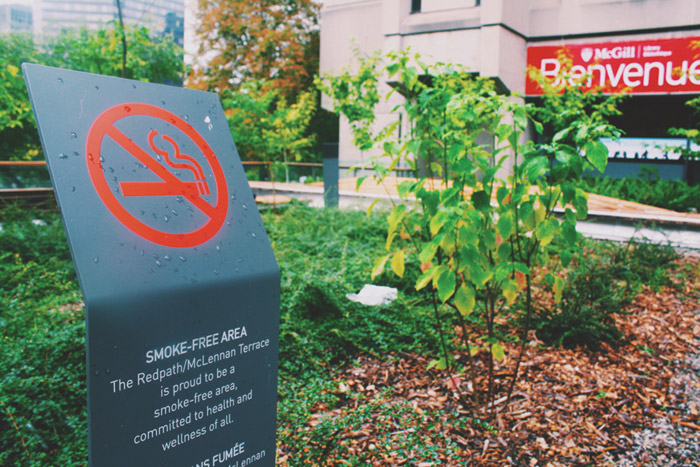
no-smoking sign outside mclennan library
Commentary, Opinion

Stepping off of (vape) cloud nine

Like a category five hurricane making landfall midsummer, swirling clouds of mango-flavoured e-cigarette vapour have descended upon North American university campuses. The vape is becoming as ubiquitous today as cigarettes were 60 years ago. Advertising themselves as safer alternatives to smoking cigarettes, products such as the Juul exploded onto the global market unhindered by the stigma against tobacco products. As one might expect, as the vaping phenomenon has grown, government regulation has inevitably followed. Last year, McGill introduced a new policy that made its campuses largely smoke (and vape)-free. Some applaud the move, while others denounce it as an overreach of authority, but few understand that the policy could not have been avoided given McGill’s legal obligations and economic concerns.

E-cigarettes have become so popular with young people that the companies that manufacture them have been accused of peddling to youth on purpose. Besides the many flavours the pods come in, vapes are both stylish and inconspicuous, while every “hit” carries the promise of a headrush the likes of which no cigarette could ever provide. Nicotine vapes do not contain most of the 69 carcinogens found in tobacco, but the accelerating popularity of e-cigarettes has stimulated concern among medical professionals nonetheless. Not only does one Juul pod have as much nicotine as 20 cigarettes, but the United States Food and Drug Administration (FDA) does not require e-liquid manufacturers to disclose all of the ingredients in their products. This is problematic because research has suggested that some chemicals that are not listed, such as acetals, can cause irritation and other health issues.

The present ambiguity concerning the health risks posed by vaping using e-cigarettes has been a driving force behind regulatory measures. This month, the FDA actually lambasted Juul for illegal marketing practices, alleging that the company broke the law “by selling or distributing them as modified risk tobacco products without an FDA order in effect that permits such sale or distribution”. Moreover, there are so many knock-off products that it’s unclear if people actually know what they’re “hitting.” Suspicious products such as these have been implicated in as many as six deaths in the United States, although many of the vapes in question contained oils containing cannabinoids such as delta-9 tetrahydrocannabinol (THC) and other substances.

McGill is not coming after your Juul just because they want to prevent you from giving yourself cancer: The institution is required by law to do so. Under the Tobacco Control Act, the Act To Bolster Tobacco Control, and departmental guidelines within the Quebec Ministry of Health and Social Services, McGill could not have the power to allow vaping to proliferate even if it wanted to. As a public institution, it must comply with these laws, which require universities to establish a smoke-free environment indoors and in doorways. Students are lucky that they can vape at all. 

In addition to having to abide by government law, McGill has a vested economic interest in making sure that it is not associated with the spread of vaping. McGill is public, but it functions as a private institution in that it relies heavily on donations from alumni. Because it manages its own finances, McGill needs to market itself in a certain way to encourage support from donors. Considering the widespread public outcry against vaping, allowing it to proliferate on campus would be detrimental to the university’s public standing. 

An outright prohibition on vaping would be nearly impossible to enforce. In fact, while students technically cannot vape everywhere right now, the fact that people still do vape all around campus should serve as a reminder that there is a difference between what the rules say and how they are actually enforced. After all, according to the McGill Tribune’s survey last year, 47 per cent of those who use e-cigarettes do not adhere to the McGill Smoking Policy. 

Allowing vaping to go completely unrestrained is unreasonable. Students can still smoke or vape at designated areas, which is better than banning it altogether. McGill gets a bad rep for cracking down on vaping, but the administration is being about as lenient as it can afford to be, considering the legal and practical boundaries it faces. 

Commentary, Opinion

Our place in saving the Amazon

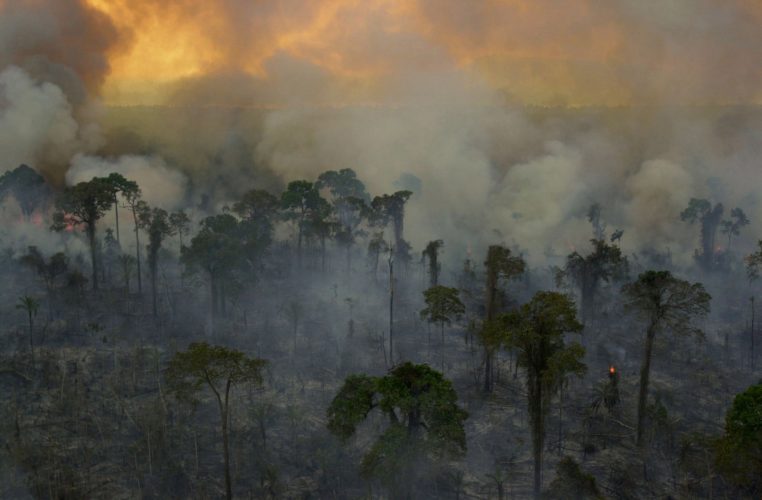
The Amazon rainforest is burning, right now. In fact, about 12 football fields worth of rainforest will have burned by the time you’re done reading this article. By 2020, the entire rainforest will be gone if action isn’t taken immediately. 

Over 75,000 wildfires are currently burning in Brazil, with around 40,000 of them actively destroying the rainforest, which marks an 80 per cent increase in wildfires since last year. While wildfires may seem like a natural disaster, in the case of the Amazon rainforest, the devastation is human-made as it is being caused by complicated and unjust political and economic circumstances in the region. It’s crucial that students take individual action and encourage their peers to get involved in order to collectively work to combat this issue as, not only do climate issues affect the regions they occur within, but they affect the future of every individual on the planet. 

Among the many political leaders who have failed to put the climate at the forefront of their agendas is Brazil’s President Jair Bolsonaro. Under the Bolsonaro’s government, penalties for illegal deforestation have been weakened, allowing individuals to burn down sections of the rainforest with no personal consequences. While Brazilian laws protect Indigenous territories, and such peoples have fought for years to protect the Amazon, the far-right Bolsonaro government has turned a blind eye to illegal logging on Indigenous lands to encourage farming. For this reason, many of Brazil’s Indigenous territories have been seized and burned in order to benefit the farming industry.

For cattle farmers, this lack of regulation is a positive; as the demand for beef continues to rise,  having the option to regularly burn down forested land to clear more space for cattle farms serves as a huge advantage. Consequently, over 90 per cent of the land that has been cleared in the Amazon since 1970 has been used to raise livestock for the meat industry. In order to halt this unnecessarily rapid rate of deforestation, McGill students must make a conscious effort to decrease their meat consumption. Though it can be difficult to break habits, it would be much more difficult to live on an inhabitable planet. If we continue to allow the rainforests to burn, there will be no future on this Earth.

The fires that are rapidly destroying the Amazon in Brazil and throughout the region in South America need to be stopped. If this ecosystem is lost, so will be millions of animal and plant species. The Earth will also lose billions of trees that work to reduce pollutants such as carbon dioxide, which will accelerate the rate of climate change. Though environmental issues such as the destruction of the Amazon often feel like distant problems, they happen every day, even here at McGill. Currently, McGill University itself is complicit in the acceleration of climate change as it continues to maintain its holdings in tar sands and fossil fuel companies and  remains associated with companies lobbying for the Plan Nord, a Quebec government strategy that plans to exploit natural resources in northern Quebec. McGill students must realize that it is important to take climate action to bring attention to both local and international environmental injustices.


Though the Amazon crisis is a large-scale problem, every individual has the capability to encourage structural political, economic, and social change. The public can condemn politicians who deny the importance of protecting the Amazon and build a community of resistance by spreading the importance of this issue. On Aug. 23, Brazil President Bolsonaro sent 43,000 troops to combat the fires after a week of being criticized by the public and threatened with trade sanctions by some leaders of the G7. On Aug. 26, G7 leaders pledged to offer over $20 million to fight the fires that are spreading across South America, with President Bolsonaro deciding to accept aid after an initial rejection. By sending emails and letters to elected officials, protesting, and speaking out on social media, society has the power to convince world leaders to put climate justice at the forefront and protect the environment. 

Every individual has the ability to make a change, with the most simple act being to support environmentally-conscious industries and buy sustainable products. The public must also support the Indigenous peoples who are risking their lives to protect the Amazon. By getting educated on how to help, speaking out, contacting politicians, supporting NGOs and environmentalist groups, and supporting Indigenous-oriented and created petitions, the Brazilian government will be pressured to rightfully return Amazonian land back to the Indigenous peoples who will protect it.

Everyone has the power to help save the Amazon, and therefore, a responsibility to do what they can to help. In order to take a first step in combating this environmental issue, make sure to attend the Global Climate Strike: McGill Contingent on Sept. 27. 

Martlets, Soccer, Sports

Martlet soccer suffers 2-0 defeat to UdeM

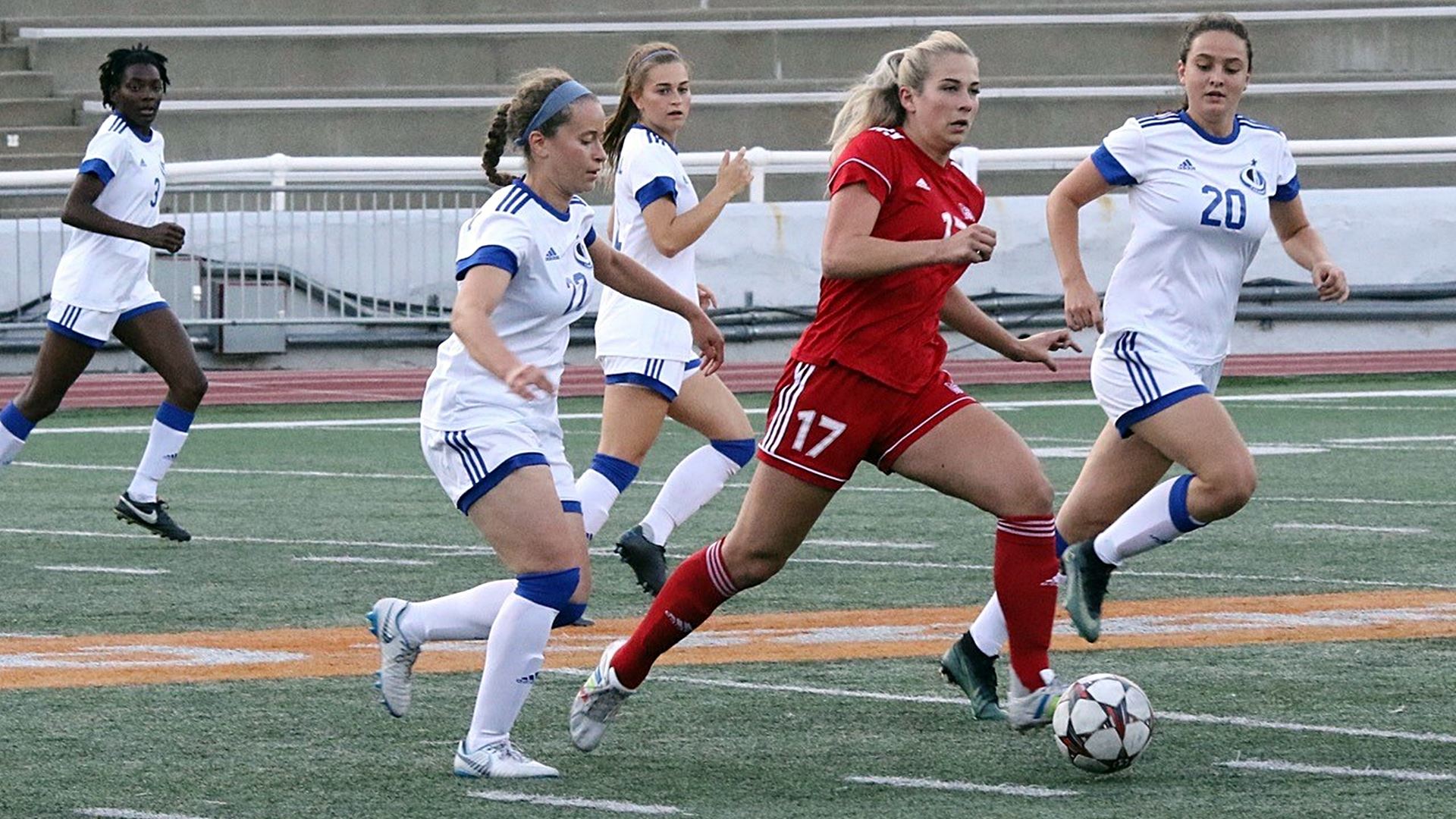
On Sept. 19 at Percival Molson Stadium, Martlet soccer (3–3–0) hosted the Université de Montréal (UdeM) Carabins (4–1–1). A goal in each half was enough to end a promising McGill two-game winning streak midway through the season. 

This matchup, which has developed into a cross-city rivalry, saw yet another close match end in the Carabins’ favour. Coach Jose-Luis Valdes lamented the opportunity to defeat UdeM. 

“I think we played quite well,” Valdes said. “We moved the ball around […] and combined for some good passes. Even though [UdeM] did not have control of the ball, they capitalized on the two [to] three chances we gave them and [scored] some good goals.” 

McGill started strong, testing a struggling UdeM defence on the wings. Third-year forward Hannah Todd nearly put McGill on the scoresheet with a miss-hit cross five minutes into the game, but the Carabins’ keeper recovered well to deny the Martlets a goal. The visitors then settled in, forcing plays down the right wing. With 26 minutes gone, McGill nearly conceded the first goal of the match as a long-range shot from a Carabins midfielder bounced off the post. Eight minutes later,  UdeM put a similar shot past second-year keeper Annabelle Matysiak to take the lead. The resolute Carabins held off the McGill resurgence, and the hosts ended the first half trailing by one goal. 

“[Coach Valdes’s] instructions were to secure more balls,” third-year forward Ariane Ducharme said. “He advised us to […] switch flanks [and] make sure [we] unsettle them.”  

The Martlets returned after the break with newfound energy, passing well in the final third as they searched for the equalizer. A defence-splitting through ball from first-year midfielder Sara Smyth in the 55th minute set up first-year forward Liliane Lefebvre with an opportunity in the box, but she was unable to convert. McGill’s offensive momentum was interrupted in the 69th minute when a defensive error left a Carabins forward with only the keeper to beat. Evrard reacted well, however, coming off her line to secure the ball. The Martlets responded two minutes later with a dazzling run by third-year forward Giovanna Tiberio, whose shot was just wide of the goal. Tiberio was back at it again in the 79th minute with an effort that narrowly hit the post. UdeM added a late goal off another defensive lapse in the McGill backline, putting the game beyond reach for the home side. 

The Martlets remain winless against the Carabins in 15 straight games dating back to 2016. Despite the loss, Valdes remained optimistic. 

“On the field […], we had three rookies and a couple of second-year players,” Valdes said. “[They have] matured well over the season […] and combined well in the second half.” 

The team’s energy and spirit was on display as the Martlets fought hard to restore balance, putting up a strong defence against the fourth ranked team in Canada. The Martlets are undergoing a rebuild after the departure of several key starters last year, but remain optimistic about their playoff chances this season. They play the Sherbrooke Vert et Or (0–4–1) on Sept. 22, followed by a homecoming game against the UQAM Citadins (5–0–0) Sept. 27. 


Moment of the game: 

Third-year forward Giovanna Tiberio’s mesmerizing dribble from the half line, skipping past two UdeM defenders before launching a missile toward the far-post, could have flipped the game had the ball found the back of the net. 

Quotable:

Homecoming […] is always emotional, but we have to remain focused. Play the 90 [minutes] and celebrate after.” – Third-year forward Ariane Ducharme on the pressures of the upcoming homecoming game. 

Stat Corner:

The Martlets registered four shots in the second half, putting significant pressure on the Carabins defence for 45 minutes. 

Creative

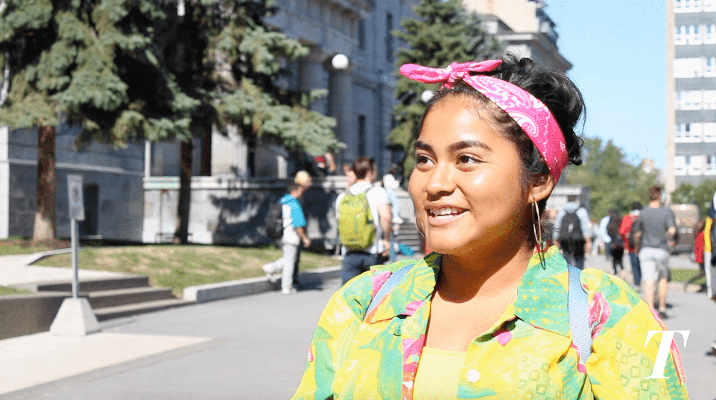
Word on the Y | What is the best/worst part about being back at McGill?

With the beginning of the semester in full force, The McGill Tribune took to the Y to ask students what they love (and hate) about being back at McGill for the fall.

Video by Sarah Ford and Aidan Martin

Free speech
Commentary, Opinion

Use your own words

As classes begin anew, the term ‘fake news’ has re-entered the vocabulary of many liberal arts students and professors alike. Even in legitimate contexts—such as calling out doctored journalism or describing viral conspiracy theories—the use of the term is deplorable. Over the past few years, arguments have been made for the term to be dropped from mainstream vocabulary. Due to its varied meanings, ‘fake news’ lacks the power to reprove harmful practices. Moreover, using a term popularized by political extremists is an implicit, if unintended, accommodation of their views into the mainstream discourse; it puts legitimate reporting and propaganda on a level playing field. These issues justify removing the term from academic discussions of post-truth politics; furthermore, they indicate a problem directly relevant to any student intent on becoming a conscientious citizen. ‘Fake news’ works as a mental shortcut to replace disagreements about truth with the relative simplicity of posers and mistaken articles.

Within academia, there is a debate about whether humans can be certain about facts discovered through science and logic. Research either progresses towards a comprehensive picture of the world or it uncovers more reasons to be skeptical about our own knowledge. In the past several decades, western society has tended towards the latter.

Scepticism about human understanding of the world influences the political realm and underlies the ‘fake news’ problem. News floods people with information each day and challenges their ability to process it and form individual opinions. On social media, stories designed to capture attention smother nuanced and honest reporting. The use of ‘fake news,’ in its first meaning,  has surged because of the incentive for journalists to replace complex facts with compelling stories that readers can easily consume. A 2004 study from the University of Alberta demonstrated that two major Canadian newspapers, The Globe and Mail and The National Post, framed elections as fights and downplayed policy issues, presumably in order to attract their audiences’ attention. 

A more serious problem, however, arises when the term is used to avoid consideration of opposing views. ‘Fake news’ has a second meaning, used primarily by extremely right-wing political participants, to convey a lack of trust in media reporting, climate and other science, and claims made by those of differing opinions. This practice invites a world lacking in common agreement about truth and honesty. This highlights uncertainty and encourages people to replace hard problems with easy answers. These simplifications come in the form of ‘news’ that picks facts to fit arguments and scapegoats vulnerable people to sidestep nuanced analysis. 

Addressing the ‘fake news’ problem is vital if political polarization is to be reduced. The problem continues to be concealed, however, as people gravitate toward simpler language and avoid the difficult conversations required to debunk the term. When people hear ‘fake news,’ their brains prefer to deal with the straightforward idea that they can picture in their head—someone sitting at a computer typing a fake story—rather than the disagreement about truth underlying our social divisions that cannot be visualized. The upcoming Canadian federal election will provide a clear opportunity for people to see leaders avoid difficult arguments by resorting to scepticism about their opponent’s sources and biases. This is behaviour that any aspiring political participants should avoid. 

Scepticism, especially in an academic context, can be useful to identify logical flaws or criticize established ideas. In this case, scepticism about facts undermines society’s ability to solve common problems. Students are bombarded with information, on social media and on campus, that obscures the truth. The term ‘fake news’ removes the problem of having to work hard to cooperate and figure out a common truth that everyone agrees on. It is easier for people to claim that opponents are wrong because they see fake facts on the internet, rather than critically assessing their own information and debating opponents about serious disagreements. Every student must put effort into civic issues, political participation, and rigorous research if polarization and division is to be averted.


Features

All that for a sandwich?

On a sunny Friday afternoon, I stood at the corner of Saint-Laurent and Napoleon. The line at Schwartz’s Hebrew Delicatessen was 30, maybe 40, people deep. Just outside the door to the 61-seat restaurant, first opened in 1928, the line went down the block: Customers were waiting all the way to the street corner for the fabled smoked meat sandwiches.

Hockey, Sports

McGill women’s hockey dominates in season opener

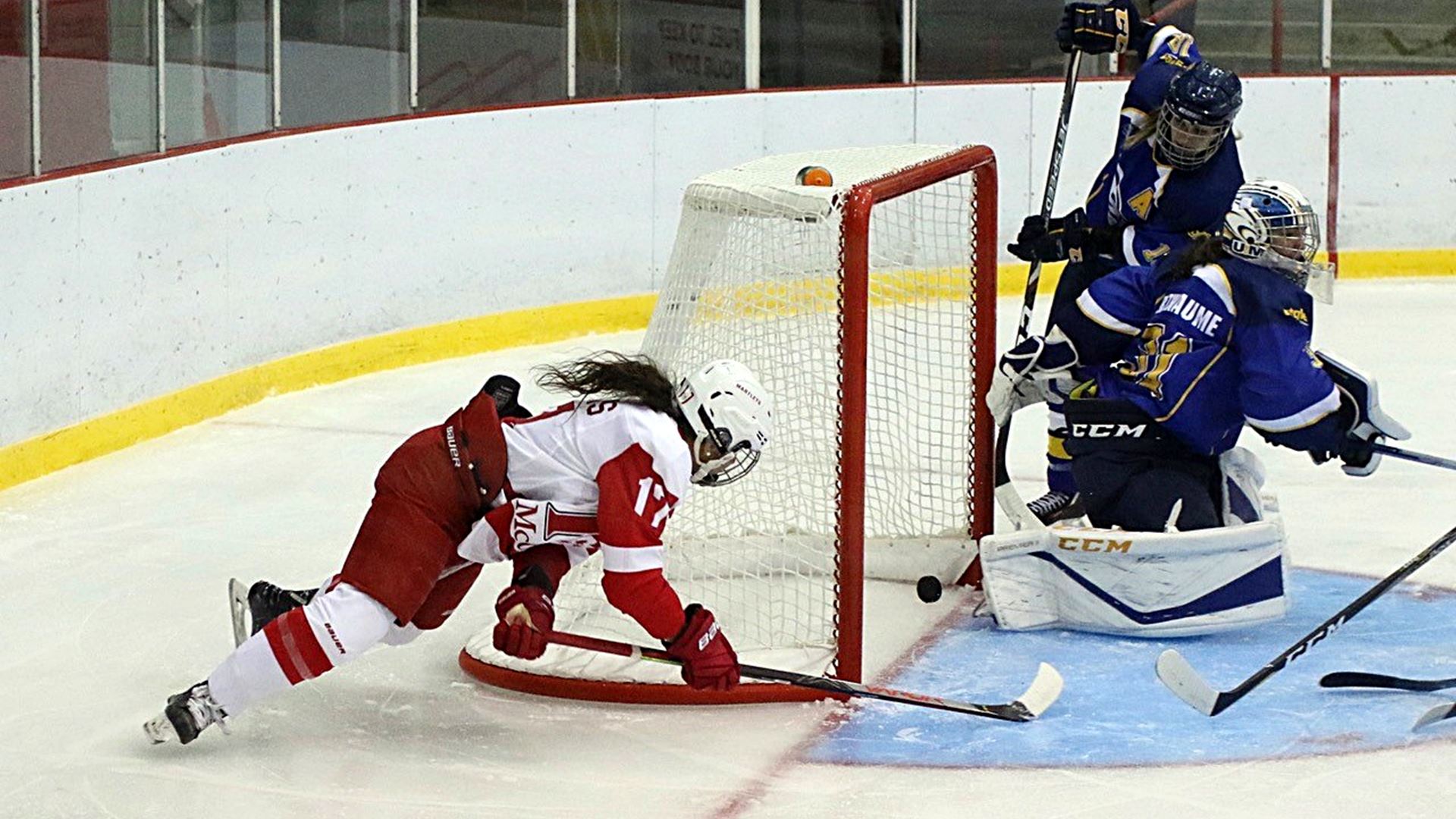
On Sept. 13,  Martlet hockey (10) opened its season against Moncton’s Aigles Bleues (01) with a decisive 41 victory. The Martlets hoped to set the tone for the rest of the season and are now looking to carry this game’s winning energy forward.

“It was a great game to get our cohesion going on the ice,” fourth-year forward Lea Dumais said. “We had a lot of energy.”

McGill came out strong: Third-year forward Kellyane Lecours opened the scoring just five minutes into the game with a wrap-around goal assisted by third-year centre Marika Labrecque. Less than a minute later though, Moncton answered with a goal of their own. That would be the only one of the Bleues’ 12 shots that got past first-year goaltender Andrea Lacroix Le Gall

The Martlets dominated the game throughout the second period, putting pressure on the Moncton defence all period long. Just under 15 minutes into the period, after several quality chances, McGill took the lead again with a goal from Dumais, assisted by fourth-year centre Jade Downie-Landry and first-year forward Anna MacCara.

The home side was off to another quick start in the third period with a goal from Downie-Landry, assisted by MacCara and fifth-year defenceman Kate Devries four minutes in. Back-and-forth play ensued, until Moncton was called for a delay of game penalty halfway through the period. The Martlets took full advantage of the powerplay with a goal from Labrecque, assisted by Downie-Landry and Dumais. 

The first game of the season was a chance for the team to see how they play together and set a benchmark for what’s working and what still needs to be improved. With this dominant performance, the Martlets are hopeful for the season to come.

“It was good for our first game of the season; we had some good energy,” third-year defenceman Samantha McCluskey said. “We just [have to] build on it.” 

Fourth-year centre Nicole Howlett echoed this optimistic sentiment.

“We just have to keep the energy [of the first game going] against Guelph because that’s a bigger game,” Howlett said.

As to what still needs improvement, the general consensus seemed to be in the defensive zone.

“We’ve been focusing on our D-zone a lot because that’s how we create our O-zone,” said Dumais. “[We need to] focus on the little things [like communication and] playing a disciplined game.” 

The Martlets finished the weekend with a 30 win against Guelph. The team plays next on Sept. 20 in Toronto against Queen’s University.


Moment of the Game:

Third-year forward Kellyane Lecours put McGill ahead five minutes into the game with a wrap-around, Bobby Orr-esque goal off the assist from third-year centre Marika Labrecque. 

Quotable:

“This team has a lot of potential. We already have a lot of cohesion, a lot of support from everyone on the team including the coaches, so we’re really excited to keep moving forward in the season and creating something special” – Fourth-year forward Lea Dumais on how she thinks the upcoming season will go.

Stat Corner:

McGill remains undefeated against Moncton with their all-time record coming to 800. They have outscored Moncton 455 since their first meeting 12 years ago.

Read the latest issue

Read the latest issue