


Latest News

Soccer, Sports

Manchester United finally seeing bright future with Solskjær

“Three years of excuses and it’s still crap,” read the banner that one sullen fan unfurled in the Old Trafford stands. It was December 1989, and Sir Alex Ferguson was at a career low, with Manchester United supporters and the media alike calling for his dismissal. Little did the naysayers know, Ferguson’s tenure would continue for another 23 years as he would shrug off his early trials to lead the club to 38 trophies over his next two decades in charge. 

Since Ferguson’s retirement in 2013, his successors at the Manchester soccer club have struggled to live up to his long-term success. Four managers in as many years have followed, with fans quick to pin the blame for poor results on those in charge. But the story of Ferguson’s early struggles suggests that new managers are being unfairly scapegoated by the club’s supporters.

In soccer, coaches enjoy their own following among fans as they move from club to club. Data indicate that management tenures in soccer are shorter than other major sports by nearly a fifth, as both fans and club executives tend to place much of the blame on coaches for their team’s poor performance. 

Much of the research on the subject, however, suggests that firing managers is not the solution for struggling clubs. A recent analysis by The Economist showed that even the most overachieving managers struggled to sustain performance after switching clubs. While noting exceptions to the rule, such as Jurgen Klopp and Diego Simeone, their findings suggest that most coaches do not to increase their teams’ expected point totals by more than one or two. In comparison, the addition of a standout player can bring about a near double-digit point difference. Studies of recent seasons in France’s Ligue 1 have similarly shown that the arrivals of new managers do not correlate with significant increases in season point totals. And, in what will perhaps be the most shocking revelation to armchair critics, research on the Eredivisie, the top-tier soccer league in the Netherlands, suggests that mid-season firings do not bring about lasting improvements in performance. There is evidence to support a honeymoon phase, however, during which time players are motivated to impress the new boss.

Luckily for Manchester United fans, a new era may well be on the horizon. The appointment of Ole Gunnar Solskjær, a longtime player under Ferguson, as manager last December quickly brought the club 14 wins from their subsequent 19 games. After years of focus on defence under José Mourinho and Louis van Gaal, a return to the attacking style reminiscent of the “Busby Babes” has reinvigorated the club’s players and supporters. The signings of Dan James, Aaron Wan-Bissaka, and Harry Maguire suggest that the club has returned to its philosophy of developing young British players, and their exciting early performances are even more encouraging with all three being nominated for August’s Player of the Month award.

Fans still seem to be supporting Solskjær for now. The stands rang with choruses of “Ole’s at the wheel / Tell me how good does it feel?” after Manchester United knocked Paris Saint-Germain out of the Champions League in March 2019. Things could still go awry, but with the culture changing and the doom-and-gloom sentiments done away with, United fans’ good feelings may just be warranted for the seasons to come.

Research Briefs, Science & Technology

Artificial intelligence is paving the way for less invasive surgical training

Repeated practice is necessary to achieve mastery, which is no exception for surgical residents who often train directly on patients for four to six years. However, in this hands-on learning environment, even a minor mistake can be serious. To protect against such fatalities, a McGill research team constructed a solution.

The implementation of competency-based surgical education, along with advances in virtual reality, has resulted in the development and utilization of virtual reality-based surgical simulators,” Rolando Del Maestro, professor emeritus in neuro-oncology at McGill, said in an interview with The McGill Tribune

The Neurosurgical Stimulation and Artificial Intelligence Learning Centre recently published a study in JAMA Network Open. A collaboration between McGill clinical investigators, the study involved Del Maestro, educators in the Faculty of Medicine, and computer scientists specializing in artificial intelligence and machine learning. 

The study introduces a virtual setting of surgical operation that can be used to accurately assess a surgeon’s performance level. It uses NeuroVR, one of the most advanced simulators in neurosurgery, which can accurately mimic the visual and tactile cues that surgeons receive during an operation.

“In the aviation industry, […] pilots are trained utilizing high fidelity simulations with haptic feedback [technology that can create an experience of touch],” Del Maestro said. “These simulation systems have improved safety [and] decreased human errors. Our research is focused on the utilization of these technologies.” 

In the study, research participants, which included medical students, residents, and attending neurosurgeons, were asked to remove realistic brain tumours in virtual simulations. A machine learning algorithm, known as the k-nearest neighbours (KNN) algorithm, then classified participants’ performances as that of a medical student, junior or senior resident, or attending neurosurgeon. 

When assessing surgical performance, researchers took 270 factors, such as hand movements, the level of force applied through an instrument, and the amount of bleeding from the incision, into account. After the participants performed the virtual neurosurgery simulations, the researchers transformed the raw data of performance into a quantifiable dataset of these factors that might affect surgical performance. Using machine learning algorithms, they ran multiple simulations to achieve the highest accuracy of evaluating surgical performance.

If the machine learning algorithm misclassified the surgical performance of a participant (for example, if it categorized the work of a medical student as that of a neurosurgeon), the research team identified the algorithm as inaccurate. In the end, the algorithm accurately assessed participants’ surgical performance 90 per cent of the time, with only five misclassified individuals out of 50 participants. This virtual platform for evaluation can thus provide budding surgeons an opportunity to identify their areas of improvement without putting a patient at risk. 

Artificial intelligence fused with these high-fidelity surgical simulators can enhance present models of surgical education by providing opportunity where learners can not only acquire advanced surgical techniques, but do so in environments without the limitations imposed by operating rooms,” Del Maestro said.

Research at the intersection of artificial intelligence and surgical education has been progressing rapidly. Currently, the research group has been able to develop a curriculum for medical students and residents that heavily incorporate virtual reality simulators. 

“The future of surgical education is undergoing a revolution spearheaded by virtual reality and artificial intelligence technology, which will complement present teaching methods,” Del Maestro said. “These systems can be utilized by any profession which requires the utilization of expert bimanual skills, which also encompass such areas as dentistry and nursing.”

Student Life

Mom, can you come pick me up?

As the add-drop period ends, the 2019–2020 school year is officially in full swing. This realization can be daunting for many students, especially those starting their first year at McGill. For these newcomers, reality is likely sinking in as the excitement of starting post-secondary education is replaced with the pains of the frosh flu; evenmore, settling into life away from home can feel exhausting. However, it is important to remember that students everywhere have experienced homesickness, and that there are several ways to alleviate the yearning for familiarity. 

For most students, residence life can be intimidating, and it is often easier to hide in your dorm room than to get to know those around you. Luckily, McGill floor fellows are there to break the ice and start the conversations for those feeling too shy, so it’s a good idea to attend residence events and floor gatherings.

Lily Zhang, U2 Arts and current floor fellow in McConnell Hall, emphasizes the importance of attending these events. 

 “After the first few weeks of school, it is easy to look around and think [that] everyone has established a group, but rarely is that the case.” Zhang said. “I encourage anyone to come to my floor teas and other events because they’re a great opportunity to find people you click with and to feel less homesick [….] Being open to new experiences is definitely the best thing you can do for yourself.”  

Residence events are the perfect way to meet other first years who are all experiencing the same uneasiness. By making connections with peers, you can start to feel more comfortable around campus and the city. This can be especially beneficial for international students, for whom adjustment to university life in a new country can pose different challenges: Adjusting to the cold weather, an unfamiliar language, or even just new foods can be daunting. Vincent King, U3 Arts, found that getting involved in student societies with other international students was a great tool in adjusting to life abroad. 

“After growing up in the Caribbean, moving to Montreal was definitely an adjustment,” King said. “I think [that] taking the initiative to find communities like the CSS [Caribbean Student Society] and Alpha Epsilon Pi was one of the best things I could’ve done. It helped me spend time with other students that could relate to my situation while making new friendships and memories. It’s like having a bit of home here at school.” 

Although it is important to get outside and get involved, it is also vital to have a place of your own to return to. Decorating your dorm room can seem like a trivial task. However, it can greatly ease symptoms of homesickness. Putting up pictures of home and surrounding yourself with mementos and personal items often helps make a dorm room feel less temporary. Additionally, some students find it reassuring to hang up a calendar with dates to return home for holidays marked. Planning visits or phone calls with family and friends, in moderation, and having scheduled trips home to look forward to further helps curve homesickness. 

In allocating a set amount of time to keep in touch with life at home, one can shift their perspectives and actually use homesickness to their advantage, a strategy that Ciara Corbett, U4 Education and former floor fellow, found to be quite helpful. 

“I’ve always tried to shift my feelings of homesickness to feelings of gratitude because [being homesick means that] I have something worth missing,” Corbett said. “Homesickness is common across the board [….] It’s okay to miss home, but try your best to take advantage of the new things university has to offer and, ultimately, the time will pass.”

Student Life

From the viewpoint: Distance makes the heart grow fonder

I first started dating my boyfriend during winter break of my second year at McGill. He was a close friend from high school, studying in Vancouver. I was heading back to McGill soon, and so we had to contend with the fact that we would be entering our relationship at a distance, which was definitely intimidating. The first semester was pretty rough, as we were both busy and rarely had time to talk, but seeing each other in person again in the summer made the time apart worth it. Throughout my third year at McGill, we communicated mainly over Facebook Messenger or Skype, and saw each other only during winter break and over the summer. 

Now that summer is over and school is starting up again, many university students will face the difficulty of leaving their partners in other cities, provinces, or even countries. Long-distance relationships in university are very common: According to Maclean’s, 75 per cent of students have been in a long-distance relationship at some point during university. Today, in our social media-powered society, it is easier—and faster—than ever to stay connected with someone who is far away. 

However, even with the advantages that technology offers us, long-distance relationships remain challenging to maintain. Just being away at university can feel isolating and stressful, and since long-distance relationships lack the physical component of other romantic partnerships, they require additional communication between partners. In my experience, when I am stressed about something, my boyfriend is generally good at comforting me if I am with him; however, he found it much harder to do so over the phone.

 “Personally, […] I don’t think that doing long distance is ideal,” Erica Zhu, U4 Science, said in an interview with The McGill Tribune. “I definitely don’t think this is something that people can do [forever], especially if there’s no [immediate] end in sight.”

Indeed, the stereotypes associated with doing long-distance relationships may scare off many young couples. Feelings of loneliness, lack of physical intimacy, growing apart are all challenges that many people face when in a long-distance relationship. 

Of course, that isn’t to say that all long-distance couples are destined for heartbreak. They can, in fact, establish unique bonds irrelevant to close distance relationships. For instance, a study by Cornell University found that long-distance relationships lends themselves to more intimate communication. Though couples communicate less on a daily basis, they are more inclined to share meaningful feelings to each other. In fact, a 2013 study by Queen’s University found that couples in long-distance are just as satisfied as couples who live close to each other, and that individual characteristics are much better predictors of relationship quality than distance. 

“It’s definitely possible to […] still feel close and not live completely separate lives,” Zhu said. “I think it’s all about finding activities that you like to do together [.…] You can [stream] movies together on this app called Rabb.it. I also find that sending care packages or snail mail is a really good way to feel connected.”

For me, I enjoyed Skype calling my boyfriend while doing work or studying. Finding little ways to spend time together or show gestures of appreciation can go a long way in allowing long-distance relationships flourish. Interestingly, there are some unexpected upsides to it as well. Seeing my boyfriend only every four months has made me appreciate our time together and has helped us grow closer. Despite the difficulties we face, long-distance has ultimately only made us stronger.

Student Life

Alternatives to Schulich and the McLennan-Redpath complex

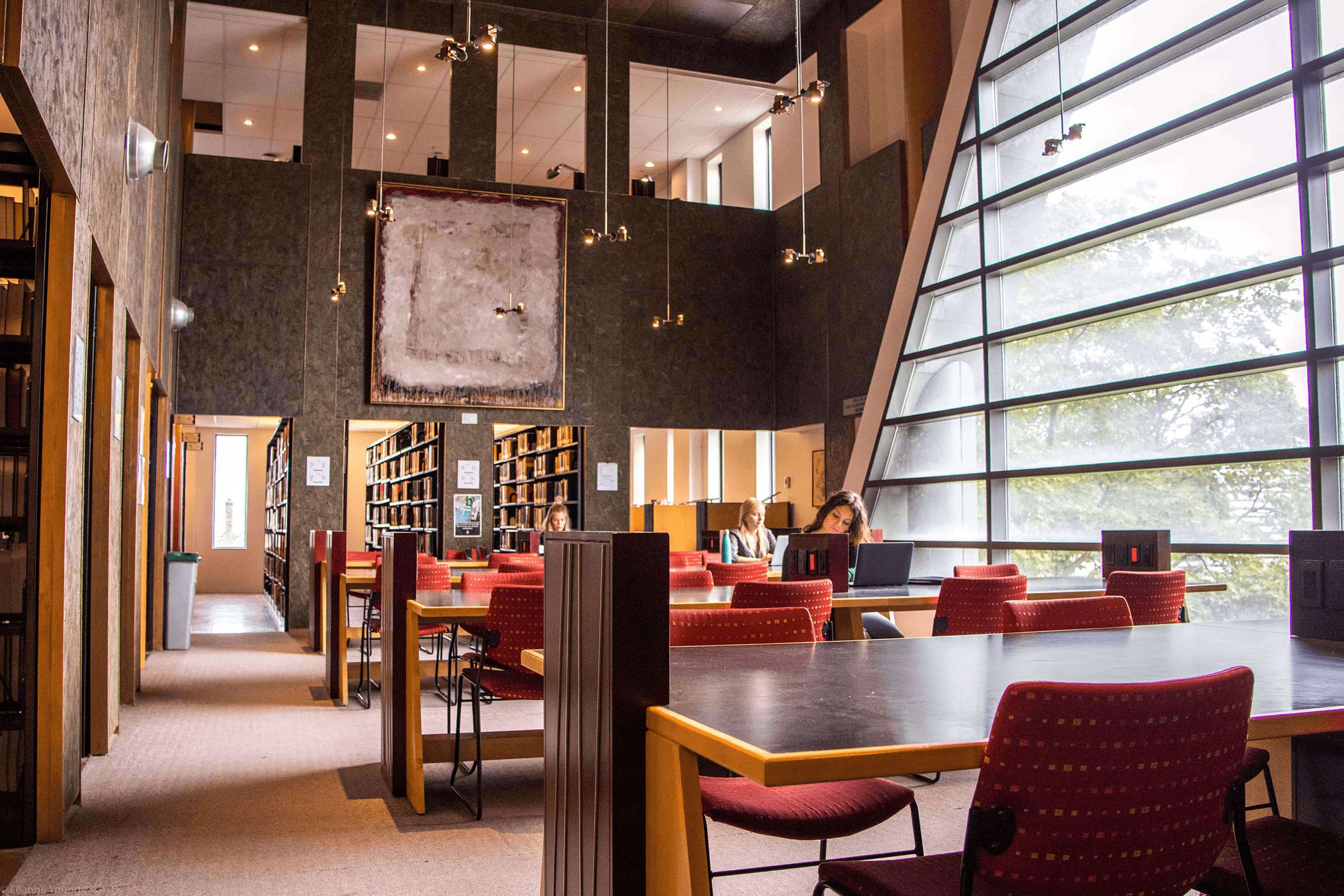
As the numerous orange cones indicate, construction is going on all over campus, including inside the Schulich library. This mid-sized mammoth recently closed for renovations, and many students have yet to find a new home or place to study (and sometimes cry, too). Although additional study spaces have been unveiled in the McLennan-Redpath library, there are also other alternatives available on campus.

1. Birks Reading Room

On the building’s second floor, you will find a small and quiet study haven. Filled with wooden furniture, fascinating old books, and live plants, it makes a snug study spot. Take advantage of this well-lit space on days when the weather is a bit gloomy. Be warned: You do have to take your shoes off. However, this provides you with ample opportunity to show off your cool socks. While its stiff looking chairs might not be enticing, and its strict ‘no food’ rule may dismay some hungry students, it’s the perfect place to go if you love to study in quiet, cozy spaces!

Location: Second floor of the William and Henry Birks Building (3520 Rue University)

Hours: 9 a.m.–5 p.m. (Weekdays)

2. Marvin Duchow Music Library

This gem is another great study spot on campus. Located on Sherbrooke Street, the library conveniently neighbours a Starbucks. Its calm environment and moderate noise level make this space great for concentrated studying. Also, it’s a music library, so de-stress with music! Be sure to take advantage of the piano on the third floor and play your stress away.

Location: Elizabeth Wirth Music Building (527 Sherbrooke Street West)

Hours: 9 a.m.11 p.m. (Monday to Thursday); 9 a.m.6 p.m. (Friday); 10 a.m.6 p.m. (Saturday); 12 p.m.11 p.m.(Sunday)

3. Nahum Gelber Law Library

The library is reminiscent of the set of the American television show Suits, but you won’t find Louis, Donna or Harvey Specter; you will find law students hard at work. Above the first floor, it’s pretty quiet. Look at the law students and be motivated to be productive! Note that ibrary hours might change during the semester, so stay informed. And, beware: It is located at the top of Peel, so getting there is a bit of a hike.

Location: 3660 Peel Street

Hours: 9 a.m.11 p.m. (weekdays); 10 a.m.11 p.m. (weekends)

4. Islamic Studies Library

Equally as comforting as the Birks Reading Room, the Islamic Studies Library is bigger and strikingly beautiful. Head over here if you would like to escape into a world of antiquity, and during the winter months, take advantage of its warmth and coziness. Fortunately, you don’t have to take your shoes off, but don’t worry: You can still wear your cool socks.

Location: 3458 McTavish

Hours: 8:30 a.m.–4:30 p.m. 

5. Geographic Information Centre (GIC)

Located on the fifth floor of the Burnside building, the GIC is often overlooked by students.  It is a happier alternative to studying in the building’s dungeon-like basement. However, you can still descend from GIC to visit the Soupe Café and try their famous grilled cheese sandwiches and soups. It’s much quieter than McLennan, with fewer people in the mornings. Come here if you’re looking for a productive start to your day.

Location: 805 Sherbrooke Street West

Hours: 8:30 a.m. 9 p.m. (MondayThursday); 12:00 p.m.– 6:00 p.m. (weekends)

6. McConnell Engineering

If you are not an engineering student (or even if you are), you might be surprised to find McConnell on this list. Along most of their hallways are study tables and benches with outlets and ample lighting. There are also microwaves in the cafeteria downstairs. Clearly it was made for people who spend many hours studying. Note that after hours it is only open to engineering and computer science students.

Location: 3480 Rue University.

Hours: 7:00 a.m.–10 p.m. (Monday– Thursday); 7:00 a.m.– 6:00 p.m. (Friday)

McGill, News

Esteemed McGill professor Desmond Morton passes away

On Sept. 3, the McGill community lost 81-year-old Desmond Morton, an esteemed author and professor whose contributions as a ‘historian of conflict’ earned him numerous accolades. Morton was the Hiram Mills Professor in the Department of History and Classical Studies at McGill since 1998. Antonia Maioni, the Dean of the Faculty of Arts, remembers him as an educator who could engage any audience. 

“In him, students not only saw a true scholar of the past, but a narrator who brought history alive for them,” Maioni said. “He could tell you where Wolfe and Montcalm were at every moment of the Battle of the Plains of Abraham.”

Born in Calgary in 1937, Morton attended the Collège Militaire Royal de St-Jean, the Royal Military College of Canada, Keble College at Oxford University, and the London School of Economics. Prior to teaching, Morton served in the Canadian Army for ten years. In 2004, he received the Canadian Forces Decoration for his service. He was also active in the Ontario New Democratic Party from 1964 to 1966 as the party’s assistant secretary.

In 1994, Morton assumed the position of founding director of the McGill Institute for the Study of Canada (MISC), which is dedicated to scholarship concerning Canadian history and politics. He laid the foundation of the institute’s success by embracing an interdisciplinary approach to his field. Antoia Maioni, who served as the director of MISC after Morton, describes taking over his position. 

“He wasn’t a big man, but he left big shoes to fill,” Maioni said. 

Throughout his life, Morton wrote over 35 books on the social, military, and political history of Canada. Although he was a historian, he was careful to not isolate the study of history from other disciplines. Elsbeth Heaman, 2017-2018 director of  MISC describes the influence Morton had on her.

“Des always had one foot in academia, one in the military, and the third in public life,” Elsbeth Heaman said.“He delivered that to McGill students. I was on the edge of it, but I still felt its wonders.” 

After his retirement in 2004, he continued his involvement at McGill as a professor emeritus. Morton’s lectures rarely involved traditional presentations; instead, he would display battleground scenes and speak about their details.

“In some respects, he had a very old-fashioned way of teaching.” Heaman said. “But it was also [centered around his students] and it felt timeless,” Heaman said. 

Morton’s work did not go unrecognized. In 1985, he was named a Fellow of the Royal Society of Canada, and he later became an Officer of the Order of Canada. For his efforts to promote history in the public sphere, Morton was also recognized with the Pierre Berton Award by the Governor General. 

McGill Professor of Urban Media Studies Will Straw, said that, despite Morton’s prominence, he never gave up his enthusiastic willingness to talk to anyone. 

“He was quite the famous guy, but if a student or visitor from another country came into the institute, he would sit and talk to them without the impression that he was trying to cut it short,” Straw said. 

Morton was known by his colleagues as an inquisitive man who did not believe in easy, straightforward answers. Heaman describes what Morton’s answer to a question as simple as ‘What is the day of Canada’s independence?’. 

Des’ answer never was July 1,” Heaman said. “It was part of a larger picture that was remarkably skeptical about the greater narratives that are passed onto us about Canada.” 

To Morton, studying history was not only a matter of the past; it was intertwined with the future. 

“He always had an idea of where he wanted Canada to go, not only where it had been,” Heaman said. “That’s hard to come by in a historian.” 

In the wake of Morton’s passing, McGill treasures his contributions to the discipline of history. He will be deeply missed by his colleagues and students.  

“I go to a lot of dinners—we all do. I always wanted to be sitting next to Desmond Morton,” Maioni said.

Student Life

Saint–Laurent 101

Whether you are a first year or otherwise, navigating nights out in Montreal can prove to be quite tricky and an honest testament to one’s patience. Home to infamous locations such as Tokyo, Suwu, and Cafe Campus, Saint Laurent tends to be an obvious choice for many McGillians on any given night of the week. While this bustling street’s close proximity to campus seems to fuel a constant flow of students, becoming a Saint Laurent pro takes time and practice. Apart from the obvious must-brings: ID (definitely), money (probaby), friends (hopefully), The McGill Tribune has also compiled a list of the essentials that will make any night out on Saint Laurent a success. 

A good pair of shoes 

Going out at night sometimes inclines students to get out of their school clothes and put on something they deem more appropriate for dancing. Think twice before grabbing those chunky platforms and go instead for a reliable pair of shoes. The floors of Saint Laurent bars, clubs, and restaurants are flooded with substances ranging from garbage to spilled drinks. Not to mention the fact that no venue seems to actually have enough room for its supposed capacity, so consider stepped toes a rite of passage. Advice: Opt for a darker pair of closed toe shoes that are already slightly beaten up. Your feet and bank account will thank you. 

Hand sanitizer 

See the above description of club floors. There are about five million billion trillion bacteria in the world and this city at night is no exception. 

A toonie for 2Chow

2Chow noodles have sustained students on St.Laurent since the dawn of time—or, for however long it has been a clubbing hot-spot. There’s nothing more distressing than having a nagging feeling of hunger magnify immediately upon exiting a club. Suddenly, the overpriced and undercooked pizza joints seem like a delectable four-course meal. However, there’s absolutely no need to break the bank to satisfy hunger cravings. Head on over to the multiple 2Chow stands nestled along the street and get your dose of a delicious and debatably nutritious snack. 

GPS tracker on your phone 

A downside to a night out in a bustling student town is the unavoidable likelihood that at some point a phone will be misplaced or taken. To avoid having to whine to parents or make the unappealing trek to Best Buy to purchase another costly device, use your phone’s GPS tracker. iPhone and Android users have the luxury of being able to rely on a built-in GPS, namely Find iPhone and Find My Device, respectively. Other phone users might find it useful to download an external GPS tracker so that in the unfortunate case where a phone does goes missing, you can locate it within a matter of a few clicks. 

Your dignity 

Last but certainly not least, this final essential for a night out is applicable to both first years discovering their limits and fourth years attempting to retread familiar mistakes. In an age where social media is as accessible and widespread as it is, one would imagine that people would be more conscious of their actions. However, everyone has made mistakes, and a big part of being at university is learning to confront those mistakes head on, hopefully with an eventual laugh. I recommend following the 75-15-10 method: Keep it 75 per cent classy, 15 per cent sassy, and 10 per cent trashy.

Arts & Entertainment, Music

Carly Rae Jepsen “cuts to the feeling” at her MTELUS show

Once assumed a one-hit wonder and now a cult-status pop queen, Carly Rae Jepsen delivered an unforgettable performance at MTELUS Sept. 12 as part of the Dedicated tour. In recent years, Canadian-born Jepsen has appealed to mainstream and indie listeners alike, first with the release of 2015’s E•MO•TION and now with Dedicated, which dropped in May 2019. Simple, yet melodically rich, retro, but not overly nostalgic, Jepsen’s performance was a vibrant celebration of love in all its forms. 

The concert opened with the pulsing electronic bassline of a recent single off of Dedicated, “No Drug Like Me.” The sultry track marked a significant departure from the staple bubblegum-peppiness of her previous albums. The opening line, “Take me to the limit / hold me down there,” sung in sotto voce, set the tone for the rest of the night, which would crescendo to an explosion of emotion and energy, both onstage and in the crowd.

Fittingly, the next song was the title track of E•MO•TION, followed by “Run Away with Me,” E•MO•TION’s opener. These two songs epitomize Jepsen’s lyrical creativity: Rather than narrating the specifics of a relationship, she calls out to an unnamed love interest, exclaiming “Baby, take me to the feeling.” This direct address expresses her longing for connection, a sentiment that is intimate yet universal. It’s the lyrical equivalent of reading a horoscope: You determine the song’s significance, which makes it even more poignant in application.

Jepsen’s performance reflected the frankness of her music as well. There were no backup dancers, no costume changes—Jepsen herself wore a colourful jumpsuit with glow-in-the-dark plastic barrettes. Accompanying her onstage were three band members providing live accompaniment, a surprising addition considering the predominantly synthy, studio-produced sound of her music. Jepsen kept the commentary in between tracks to a minimum, but she did reveal that “Julien,” the eponymous subject of Dedicated’s opener, is from Montreal, adding, “Julien, if you’re here tonight, please don’t call me.” Considering both the ambiguity and sincerity of her lyrics, this no-frills performance seemed characteristically Carly Rae.

Songs on the setlist ranged from radio-hits like “Call Me Maybe” to lesser-known B-sides like “Store” and “Cry.” Regardless of each song’s popularity, audience members passionately shouted along to the performance. 

Not all of Jepsen’s songs focus on crushes and new love. Towards the end of the concert, she played “Boy Problems” and “Party for One” back to back. Neither song deals with budding romance; rather, the tracks explore the process of overcoming heartbreak with the help of friends and self-love. These songs deliver a beacon of positivity in the midst of loneliness or rejection. As opposed to the longing for romantic affection expressed in many of her tracks, the love Jepsen receives from friends and herself becomes the source of the songs’ optimism. There is certainly some irony to a crowded venue shouting along to “Party for One,” but above all, the song was a highlight of the concert. 

Jepsen finished the concert with “Cut to the Feeling,” one of her most popular songs, released as a single and featured on RuPaul’s Drag Race. It was the perfect ending. A straightforward pop tune in both music and message, the song delivers what it describes: Unadulterated feelings of love, positivity, and joy for everyone in the room. Jepsen’s music is everything right with pop today: No matter the subject of our emotions, Carly Rae Jepsen provides the soundtrack for any moment of love in our lives.

McGill, News

Sackler family accused of instigating the opioid crisis donated $3.9 million to McGill

The Sackler family, McGill donors and owners of a pharmaceutical company with ties to the opioid crisis, declared bankruptcy on Sept. 15. Between 2014 and 2017, McGill received a total of $3,888,078 from The Sackler Foundation to advance research and education, including the establishment of the Sackler Program for Epigenetics and Psychobiology. 

After acquiring Purdue Pharma in 1952, the company trademarked OxyContin, the brand name for a powerful pain-killer oxycodone, in 1996. To maximize sales, the company offered benefits for doctors who prescribed the drug to their patients, which contributed to OxyContin’s rise to become the most commonly abused medications in the US. The Sacklers have made an estimated $13 billion off of the opioid crisis, and are currently facing a litany of lawsuits over allegedly disregarding laws to increase their worth.

According to the Canadian government, the opioid crisis took 11,577 lives in Canada between Jan. 2016 and Dec. 2018. 

The Sacklers have made contributions to numerous museums and universities, including McGill, Cornell University, and King’s College London. As of May 2019, major museums such as the Solomon R. Guggenheim Museum, the Metropolitan Museum of Art, and the Tate Modern have refused donations from the family due to their role in perpetuating the opioid crisis. 

Dr. Michael Meaney is the co-founder of the Sackler Program of Epigenetics and Psychobiology of McGill.

“The McGill donation was arranged through Ilene Sackler Lefourt who is a practicing child psychologist and director of the Sackler Lefcourt Centre for Child Development, which employs purely psychological programs for mothers and children to promote optimal early child development,” Meaney wrote in an email to The McGill Tribune. “It was this interest that prompted the investment in the McGill research.”

Despite the ongoing lawsuits tying the Sackler family to the opioid crisis, Meaney believes in the importance of distancing the family’s charity work from the recent allegations. 

“I know Ilene Sackler Lefcourt to be a person sincerely dedicated to promoting the mental health of mothers and children,” Meaney wrote. “The bottom line here is that we are dedicated to a public mission and promoting child health and development. That priority trumps all other considerations in my mind.”

According to Senior Communications Officer James Martin, McGill has not received further donations from the Sackler Family since 2016.

“The Sackler Program for Epigenetics & Psychobiology at McGill University was established through a donation from the Sackler Foundation and has not now nor ever has had any association with Purdue Pharma,” Martin wrote in an email to the Tribune

McGill’s Gift Acceptance Policy outlines the ethical requirements for the school to adhere to when accepting donations. 

Examples of reasons for the refusal of a proposed gift include: gift could compromise the University’s public image, reputation or commitment to its mission and values; gift is from an individual or organization whose philosophy and values could be considered inconsistent with those of the University; donor applies unacceptable restrictions or conditions on the gift; gift may have come from illegal or unethical activities…” the policy reads.

The Sackler Foundation has now halted philanthropic donations and given up the ownership of Purdue Pharma since the publicization of their connection to the opioid crisis.

Science & Technology

Carbon offsets: A controversial way to fight climate change

At McGill, a university that boasts a large international student body and faculty, it is no surprise that many people rely on air travel to return for the start of the semester. Globally, the number of annual airline passengers in the past 15 years has more than doubled, increasing from 1.9 billion in 2004 to 4.3 billion in 2018. Worryingly, the transportation sector, particularly the airline industry, is the fastest-growing emitter of greenhouse gases and, thus, a major contributor to climate change.

As individuals and institutions seek to reduce their carbon footprint, many turn to purchasing carbon offsets, sold by independent companies such as Carbon Offset Reserve and Plan Vivo. Carbon offsetting is a way of counteracting carbon emissions: By purchasing carbon offsets, parties provide funding for greenhouse gas reduction projects and activities. Carbon offset projects include renewable energy programs, methane capture from landfills or farms, and carbon sequestration projects such as reforestation. 

While carbon offsetting represents a quick fix to mitigating climate change, McGill Climate Officer Aileen Rivers explained that it should not be viewed as a panacea nor as an excuse to ignore the environmental effects of daily decisions. Indeed, some have even argued that offsetting allows us to consume guilt-free, similar to the Catholic church’s notorious promise to absolve sins through the sale of indulgences.

“It is important to be clear that carbon offsetting brings companies or a person back to the baseline they were already at,” Rivers said in an interview with The McGill Tribune. “It does not reduce emissions any further from the level they were at to begin with.” 

Rivers detailed that, while offsetting is a good strategy, it should be used in conjunction with lifestyle changes rather than in isolation. This is especially important because it is not always possible to ensure that the purchased offset will have a beneficial effect since the carbon market varies widely in quality. 

In fact, some offsets are thought to have no net climate benefit. For example, protecting forests in a certain location might simply shift logging to a forest in another area. Among other criteria, high-quality offsets should be accurately quantified, verified by a third party, and involve stakeholders. Certain offset projects are endorsed according to these criteria by organisations like Gold Standard.

McGill recently received $1.8 million in government funding to reduce energy consumption and decrease total energy emissions by 18 per cent by 2022. With the goal of becoming carbon neutral by 2040, McGill is supporting community members who want to purchase offsets for unavoidable emissions through the creation of an offset selection committee that accounts for the necessary criteria to classify an offset as high quality. In theory, this will ensure that the offset is successful, and that no negative consequences arise. 

Though offsets are important, Rivers suggests small lifestyle changes to reduce environmental impact in the long term, such as using public transport when possible, reducing power usage, and avoiding travelling by plane. If air travel is necessary, however, people should choose economy seating and direct flights, since packing in more passengers and reducing takeoffs and landings increases fuel efficiency. Eating locally and reducing the consumption of animal products are also key to decreasing greenhouse gas emissions.

“I believe it is a fallacy that individual choices cannot make a difference,” Rivers said. “Little things aggregate and lead to something more significant.” 

Rivers also recommends using a personal emissions calculator to target which lifestyle changes are most needed. By implementing small changes and being held accountable, these small adjustments will accumulate to bigger lifestyle transitions.

Read the latest issue

Read the latest issue