

Latest News

Men's Varsity, Sports

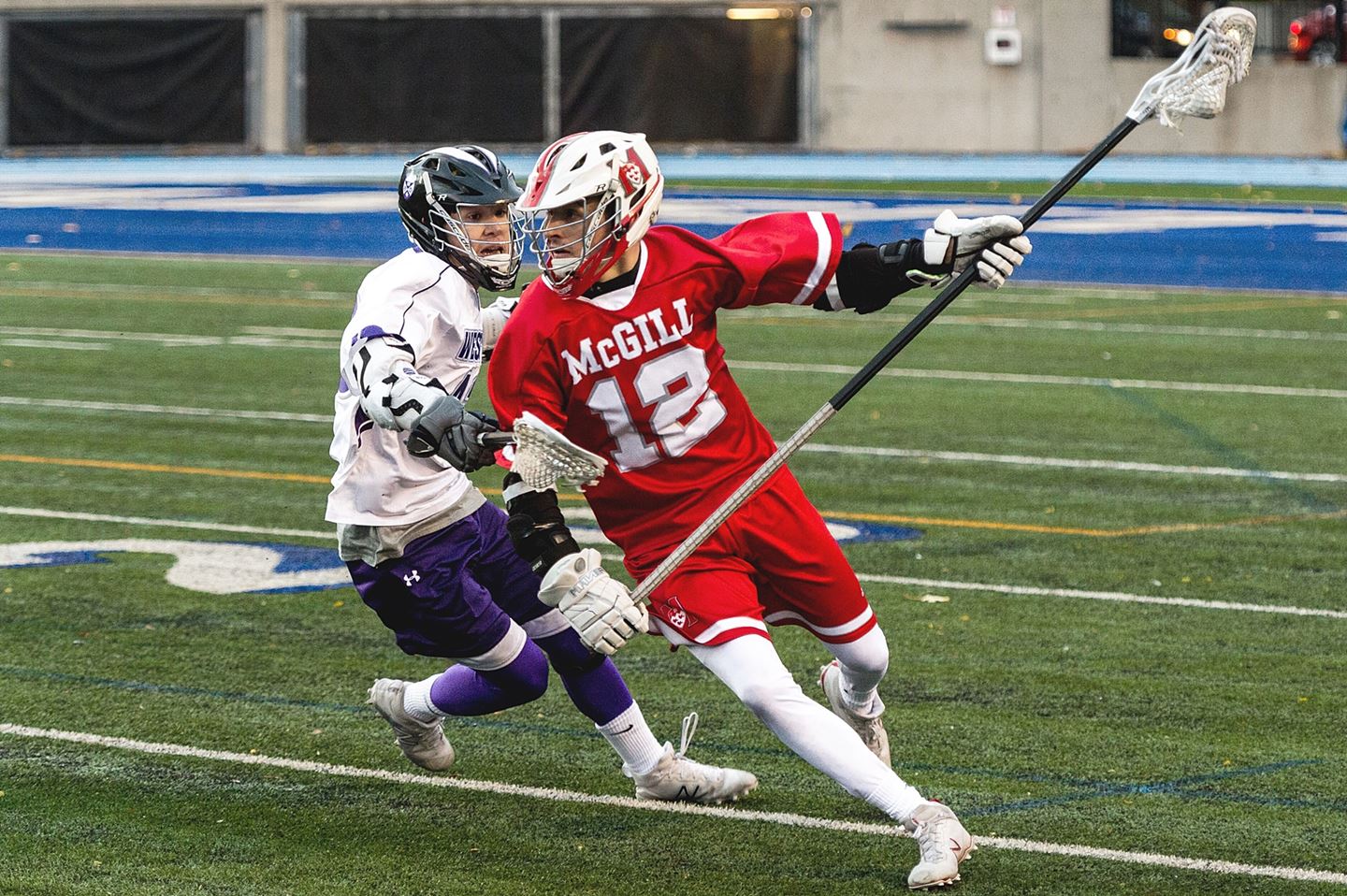
McGill men’s lacrosse beats Trent in second OT

The Sept. 14 afternoon matchup between the McGill men’s lacrosse team (20) and the Trent University Excalibur (21) was a thrilling early-season affair. McGill showed tremendous character and perseverance to beat Trent 87 in double overtime.

The action started quickly when fourth-year defenceman Connor Plante caught a sailing pass and ran half of the field to open scoring for McGill. The cheers were short-lived, however, as Trent evened the score in the fourth minute. Seconds later, the home crowd was on its feet again when second-year long-stick midfielder Ethan Forgrave converted a passing sequence into another goal for McGill. 

The Trent defence tightened after the excitement of the game’s opening minutes. The rest of the first half favoured the away side as the Excalibur dominated possession, shots, and goals. McGill trailed 63 at half-time.

“We came out okay, but then they scored a lot of goals, and it was the first time this year where we had our backs against the wall,” Defensive Coach Nick Soubry said. “It took us a while for us not to overthink things.”           

At the start of the second half, McGill made a substitution in the net, replacing first-year goalkeeper Steven Pelliccione with his older brother, third-year goalkeeper David Pelliccione, to tighten the McGill defence. Second-year midfielder Andrew Chase then eventually scored an impressive goal from a seemingly impossible angle, cutting Trent’s lead down to two. A minute later, third-year attackman Colton Campbell ran over multiple defenders to score with a cannon shot. However, Trent added to their advantage with under two minutes left in the third quarter to make it 7–5. 

McGill started the fourth quarter aggressively with the Campbell-Chase connection making it a one-point margin once again. Chase then completed his hat-trick to level the score at 77, while Pelliccione successfully rebuffed Trent’s attack. But, with only two seconds left in the game, Trent scored what would have been the decisive point; however, the referees disallowed the goal due to a crease violation, and the game went to overtime.

“[David Pelliccione] made some really big saves, which gave the guys confidence,” Soubry said, commending the substitute goalie’s performance after the game. “When you get toward the end of the game, and the goalie makes a big stop, the team gets very hyped and energetic.”  

In the first period of golden-goal overtime, Trent dominated the ball, but McGill’s defence did not budge. In the second period, Trent continued to attack, and McGill appeared to be in trouble. But, with a minute left, fourth-year defenceman Tanner Baldin intercepted the ball and darted across the field to score the game-winning goal.

McGill will square off with the Gee-Gees (0-1) in Ottawa on Sept. 21. 


Moment of the Game:

In his defensive zone, fourth-year defencemen Tanner Baldin stretched out his stick to intercept a horizontal pass. He then sprinted to the opposite net to smash home the game-winner.

Quotable:

“We’re going to throw a party for the rookies tonight, and then get back to work on Monday.” – Third-year defender Roland Moellenberg on the team’s post-victory plans. 

Stat Corner:

McGill and Trent have finished in the top two of the CUFLA’s Eastern Conference every year since 2016. McGill is now the only remaining undefeated team in the conference.  

McGill, News

Getting to know McGill’s Morgan Arboretum

On Sept. 14, McGill’s Morgan Arboretum forest reserve held its annual open house, giving students an opportunity to experience a unique part of the Macdonald campus. With activities including the monarch butterfly launch and a birds of prey flight show, visitors had the opportunity to learn more about the local flora and fauna found at the Arboretum.

Before being donated to McGill in 1945, the land that the Arboretum occupies today was owned by a famous Montreal family, the Morgans, known for their Quebec department store chain. Today, the Arboretum is maintained and run primarily by operations manager Scott Pemberton. 

“[The Morgans] used the land for recreational purposes, for walks, for horses and buggy trails, to produce firewood for housing, and to produce maple syrup just for fun,” Pemberton said. 

The family donated the land to McGill hoping that it would be maintained by the university. McGill has repurposed  it as a resource for students throughout Montreal with an interest in forestry and conservation, such as Bryanna Pilkington, an environmental geography major at Concordia University and staff member at the Arboretum. 

“[At the Arboretum], we get a diverse view of what nature means in the 21st century,” Bilkington said. “We have these places where you can come and be in the outdoors, but it’s more of this conservationist view where you have humans and nature together.” 

Students involved in field work at the Arboretum remove invasive species and collect samples for research studies. 

“[The Arboretum] is basically a living classroom or a living laboratory,” Pemberton said. “[There is research] across schools, all the major universities have projects and classes here as do all of the CÉGEPs and secondary schools in the area, they all use the arboretum.” 

The forest reserve is also a place for the public to come and interact with a host of interesting plants and animals, many of which are native to the area. Naturalist Sarah Dixon explained how the Morgan Arboretum serves as a unique experience to its visitors.

“[The Arboretum] is big enough to be […] a functional ecosystem,” Dixon said. “There is enough room for animals to behave naturally [….] It’s possible to walk 20 feet and [go from] one habitat to another which means [that] there is just an incredible diversity of animals.” 

The annual open house and other public events such as workshops, astronomy events, and guided walks hosted by McGill provides an opportunities to emphasize the importance of conservation and a chance to show off a unique resource. Pilkington also believes that events such as these are important for educating people on climate change and conserving biodiversity. 

 “It’s a social relationship thing of being able to educate,” Pilkington said.  “If you come at it through this fun event, you have the opportunity to teach people about these things that are a little bit hard to talk about.” 

For those looking to learn more about the local environment or to get away from the city, the Arboretum is open to both volunteer work and visitation year round.

“One of the beautiful things about the Arboretum is that it is a well kept secret,” Pemberton said. “We don’t have thousands of visitors every day, so you can really find some peace and tranquility in the wild nature at the Arboretum.”


McGill, News

First wave of students completes sexual violence prevention training

Over the summer, McGill released an online sexual violence prevention course called “It Takes All of Us” to its first wave of students, with incoming first years gaining access as early as June 2019. Eventually, all students and staff will be required to complete the course. 

“”It Takes All of Us” is a learning program that strives to increase awareness of sexual violence, to ensure that [we base our] campus culture [on] respect and consent, and to help create a community free of sexual violence,” Associate Provost (Equity and Academic Policies) Angela Campbell wrote in an email to the McGill Tribune

The program consists of four modules, covering topics such as consent, alcohol and drug use, and sexual assault statistics. The course begins by exploring the many ways sexual violence can manifest, followed by a primer as to what genuine consent looks like. Bystander intervention is explored in the third module, and the course concludes by providing resources and advice for supporting survivors.

“I was a little hesitant at first. Generally, I find [that these programs are] very watered-down,” Margaret Askey, U0 Arts, said. “But, I found [that] the way they managed to explain nuanced concepts while also being respectful and mindful of students who have experienced sexual assault […] is a really important part of the program.”

All students who attended frosh, including upper year coordinators and leaders were required to complete “It Takes All of Us” in August.

“It gave me a little peace of mind,” Askey said. “[The mandatory training] means [that everyone at Frosh] at least gets introduced to the concept of consent. I think I can take for granted that most people I interact with in my social circles understand the basics of consent […] but I don’t think that’s the case for most students. And I don’t think that’s the case for students who come from social climates where sexuality is less discussed.”

Still, Askey also felt that drinking culture also had to be addressed for Frosh to be a truly safe environment for first years.

“I think that in tandem with this consent [program], [McGill] could do a lot more work around the drinking culture of Frosh [….] I knew students who attended the Arts Faculty Frosh had rallies at 6:00 am and partied until the wee hours of the morning, only to take a power nap and wake up and do it all again.”

Mengyu Chang, U0 Arts, was concerned that it was easy to bypass the contents of the course. 

“We need to complete [“It Takes All of Us”] to enter Frosh, so some people maybe did not read it very carefully or patiently,” Chang said.

“I heard plenty of other [first year students] talk about how they would play the module, walk into the next room, […] and then come back and guess on the questions,” Askey said.

However, Campbell believes such concerns about students rushing through the course may be unwarranted.

“We have found that McGill students are broadly supportive of and committed to efforts to raise awareness and increase supports for people impacted by sexual violence,” Campbell wrote. “We are aware of the IT issue of ‘fast forwarding’ and we’re examining various solutions to address it. Please note that someone cannot actually leave the room and let the module play since it must be advanced by the user.”

The course is expected to be released Sept. 23 for upper-year students and faculty. Students and staff will receive access to different versions.

“Both [courses] are largely the same,” Campbell wrote. “The staff/faculty version stresses the Policy Against Sexual Violence’s prohibition of romantic or sexual relations between teaching staff and students under their authority or influence.”

Commentary, Opinion

Bill 21: Impractical on paper and in practice

Bill 21, a law enacted by the Quebec government that prohibits public sector employees from wearing visible religious symbols, caused public outrage by disproportionately affecting religious minorities such as Muslims, Jews, and Sikhs. Introduced this past May, there was no shortage of speculation concerning how problematic the implementation of this bill would be. Since the law came into effect in September, Montrealers have been faced with the reality of the bill’s consequences: The implementation of Bill 21 has proven to be even more troublesome and divisive than its initial introduction.

Bill 21 did not include a specific plan detailing what enforcement would look like. Catherine Beauvais-St-Pierre, president of the alliance of teachers in Montreal, explained that school boards are learning how to apply Bill 21 day-by-day, as they were not given any instructions. One of the most ambiguous parts of the bill is the ‘grandfather clause’, which permits public servants who wore religious symbols before the law was passed to continue to do so as long as they remain in the same position. This means that there is no room for these people to move up in the workplace or change jobs should they wish to continue wearing religious attire. They are left having to choose between their careers and their right to religious expression.  

Bill 21 was introduced to the people of Québec as promoting secularism and aiming to remove all physical elements of religious belief from the public sector. Unfortunately, the bill’s actual execution has had the opposite effect. As a result, public servants like teachers are put in an uncomfortable position, being asked intrusive questions about their faith. Religious attire has become dangerously political, leaving many Quebecers part of religious minorities constantly aware that they are ‘stuck in the middle of this debate,’ putting them at odds with those who support Bill 21 and creating tension in workplaces.

The discomfort felt in the workplace by those wearing religious attire carries over from the workplace to everyday life. Once exposed to strangers on the street, this discomfort becomes fear. This feeling is best expressed by Amrit Kaur, a Montreal resident and teacher who wears a dastar and feels that people are looking at her differently on the street now, the first time she has ever felt uncomfortable in Montreal due to her religion. 

Hate crimes and xenophobic violence are increasingly being linked to Bill 21. Although Francois Legault, Quebec’s premier under the CAQ, has refused to acknowledge the link between the rise in violence with Bill 21, the two cannot be entirely separated. Bill 21 may not be the sole catalyst, but it has emboldened those who already held racist attitudes. The increasing rate of hate crimes in this province toward Muslims has coincided perfectly with the introduction of Bill 21. In any case, the CAQ’s statements when it comes to the effects of their legislation have been quite ignorant, which was demonstrated when a government agent stated very confidently that Bill 21 has created no tension or division.  

“Although Francois Legault, Quebec’s premier under the CAQ, has refused to acknowledge the link between the rise in violence with Bill 21, the two cannot be entirely separated.”

The administration at McGill has released a meek 125-word statement about Bill 21 simply stating that they welcome diversity and are concerned that the law will affect some students’ lives. They did not mention that there are specific groups of students being disproportionately affected and have yet to acknowledge that the bill has been put into effect. McGill needs to support its students and ensure they are feeling safe on-and-off campus. This message may have been enough to make those in the administration feel better about themselves but it is not enough for students. To quote the Students’ Society of McGill University (SSMU)’s statement, McGill needs to “publicly condemn the proposed bill and to provide meaningful support systems for the affected students […] to make campus as safe and equitable as possible.”

McGill, News

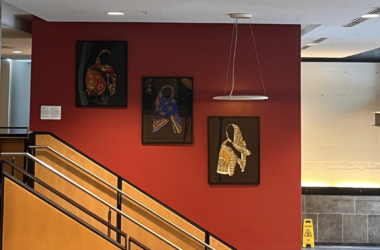
McGill launches ninth annual Indigenous Awareness Weeks

McGill’s ninth annual Indigenous Awareness Weeks (IAW) launched on Sept. 16. The theme this year is “matriarchy and Indigenous languages,” inspired partly by the United Nations proclamation of 2019 as the International Year of Indigenous Languages. Indigenous Education Advisor Janelle Kaperski spearheaded the organization of 12 of the 16 IAW events, taking place Sept. 1627. She explained the lens through which Indigenous languages will be exhibited this year.  

“I believe that Matriarchy and Indigenous languages are inextricably linked,” Kasperski said. “There’s no way you can talk about one without the other as many of us have learned our languages from strong women in our lives.”

IAW 2019 will feature a variety of events including workshops, panel discussions, keynote speakers from across Canada, and the 19th Annual McGill Pow Wow hosted by McGill’s First People’s House. Although IAW provides an opportunity for the McGill community to learn about Indigenous cultures, Kasperski emphasizes that the goal has always been to highlight Indigenous excellence. 

“[The purpose of IAW has] always [been] to celebrate Indigenous successes and provide space and a platform for Indigenous voices, knowledges, sharing, and really to highlight how important [these are] on campus,” Kasperski said. “I believe that’s what [IAW] is and what it always has been and that’s what it will continue to be.”

The Student’s Society of McGill University’s (SSMU) Indigenous Affairs Commissioner Tomas Jirousek pointed out the lack of physical space available for Indigenous staff and students on campus and hopes that IAW can help increase campus expressions of indigeneity. 

“There are very few expressions of indigeneity on campus,” Jirousek said. “IAW helps break that a little bit, whether it’s physically hanging banners, whether it’s actually having the physical spaces occupied by Indigenous knowledge holders, that helps disrupt this type of neoliberal [and] colonial learning environment.”

Jirousek highlights the importance of solidarity by referring to a collaboration with McGill’s Black Students’ Network (BSN) on a panel discussion examining the impact of colonial power on both black and Indigenous students.

“[The event is] speaking specifically to solidarity within colonial context as people of colour,” Jirousek said. “Black students and Indigenous students both face a variety of unique challenges whether it be economic, pedagogically-based, any other conditions which may create barriers to black and Indigenous students accessing post-secondary institutions.”

Founded in  2011 by Associate Director of the First People’s House Allan Vicaire, the McGill IAW started as only four days of celebrations, but has since expanded to two weeks after Kasperski began planning the event in 2018. Although Kasperski hopes for IAW to be a full month, there are challenges that come with extending the celebrations.

“When I first started the position, [IAW] was one week and immediately my thought was that, why don’t I have a month?” Kasperski said. “I know we have Black History Month [and] LGBTQ2I+ Month, but [when I initially] started, it was not feasible to be able to expand [IAW] to a month. To know that it’s in September is really difficult because there has been so much orientation. There were very specific reasons that the people before me chose this month. It is the fall equinox and an important time of year for many Indigenous nations [and] peoples”

Vicaire believes that it is not just about extending the length of IAW, and Indigenous issues should not be limited to set dates, but instead  discussed throughout the year.

“We should be infusing Indigenous people’s issues in all areas during the year,” Vicaire said. “We can’t just stop at one week or two weeks. We always have to be mindful about Indigenous peoples because we are the original peoples of this land.”

Arts & Entertainment, Film and TV

Birds of Passage is a disappointing misrepresentation of Wayuu culture

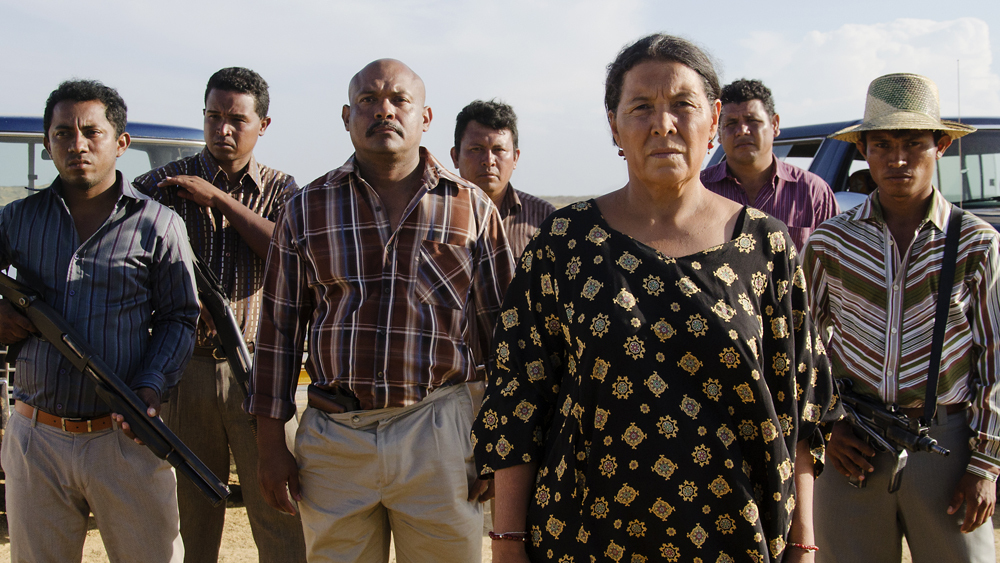
Birds of Passage lives in the moral grey area between cultural accuracy and creative license. On Sept. 20, in conjunction with the Centre for Oral History and Digital Storytelling, Concordia University screened the 2018 Colombian film, which depicts violence within Wayuu communities, and invited Wayuu leader Jakeline Romero to speak about Wayuu representation in Birds of Passage

Birds of Passage provides a hefty dose of violence and tragedy. Based on a true story, the film’s five distinct acts focus on a Wayuu community that becomes involved in international drug trafficking during the ‘90s. The film follows its protagonist, Rapayet (José Acosta), as he is thrust into the daunting role of leading a drug empire. Rapayet must reckon with the constant discord among the Wayuu and the inevitable war that ensues within the formerly peaceful group. 

The narrative is elevated by the beautiful scenery the La Guajira region, featuring sprawling deserts, beaches, and dense forests. Once drug money starts to roll in, however, they erect massive houses in the middle of endless sand. Though entertaining and visually astounding, much of the film’s drama depicts inaccurate and harmful representations of the Wayuu.

“Sometimes people say that reality goes beyond fiction, but in this case it is the opposite,” Romero said in a brief lecture following the screening. “How do I feel? It’s my second time watching [Birds of Passage] and I’m frustrated because the Wayuu is a living culture, [we are] not fiction like Avatar. It’s frustrating because when talking about real people, [the individuals depicted] are affected.” 

Romero explained that, not only are the Wayuu far less violent than they are portrayed, but the film butchers many of the simple facts of Wayuu culture: Since the Wayuu have a matrilineal culture, it would have been impossible for Rapayet to be in power. Furthermore the filmmakers completely misrepresented many of the culture’s wartime codes and rituals. Fundamental plot elements were exaggerated or fabricated entirely.

“This is a historical period that existed, but it was not [true] that [the events depicted were] carried out solely by the Wayuu people. It was much bigger than that, it was just that [the Wayuu] were part of the transit of the drugs,” Romero said. 

Romero expressed satisfaction at seeing some aspects of her culture accurately portrayed, but understands that the details the film succeeded in portraying are not what audiences will remember about Birds of Passage

“As a Wayuu I can appreciate many things about the film, but the general audience will not see those things,” Romero said. She observed that even the remarkable beauty of the film could not be attributed entirely to its filmmakers.

“The movie may be beautiful, but that’s because La Guajira is a beautiful place,” she said.

While Birds of Passage succeeds aesthetically, the misrepresentation of its subjects discredits much of the film’s content: Those details that initially seemed illuminating were in fact misleading. Romero’s perspective shed light on the realities of Wayuu life during the period when the film takes place; realities which perhaps would not have lent themselves as well to a Hollywood style movie. 

Considering the level of familiarity most  Western audiences likely have with the Wayuu people, many viewers may take for granted Birds of Passage’s inconsiderate portrayals of the communities it depicts. Despite the aesthetically appealing cinematography and superficially entertaining narrative of the film, Birds of Passage lacks an understanding of Romero’s culture that would have made the plot far more compelling. 

Arts & Entertainment

Soul Sessions celebrates communal creativity

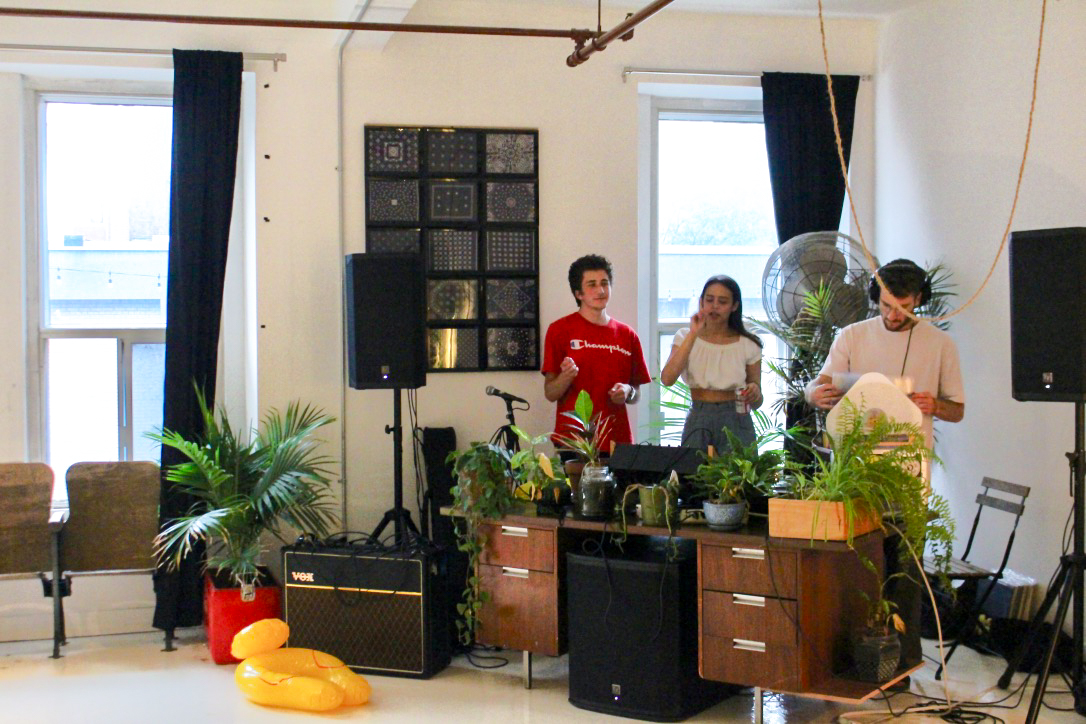
Soul Sessions, a mixed media vernissage produced in collaboration with École Publique, a Montreal student artist’s collective, and Turning Point, a musical distributor/collective, celebrated the diverse talents of the city. The event featured a bizarre but wonderful combination of painting, photography, film, and live art. On the eve of the Sept. 7 event, every inch of Deneb.es, a music venue located on Saint-Laurent boulevard, was filled with artworks and other curiosities—from a barber’s chair sitting conspicuously by the door to a bowling ball painted to look like a person wearing a ski mask. 

Visual artist Pamela Andonian was one of several artists taking part in live painting as the guests milled around the gallery. 

“It’s my first time painting in front of people,” Andonian said. “Watching someone else paint is so entertaining, it’s like watching a sports game.” 

Andonian’s canvas featured a cross-legged woman, her face and chest unfinished but still bursting with character. 

“I’m very often drawing this woman, not exactly a self-portrait, but an extension of myself,” Andonian said, pausing to take in her painting from a distance. 

Two short films were being projected onto a wall in the middle of the venue. One, entitled If We Had Met Sooner by Joshua Lennon, Alexa Rhynd, and Isaac Vaccaro, was a brief but effective series of shots of a man and a woman, never on screen at the same time but with an implied emotional connection. The film emulates the style of a long forgotten home video, evoking a feeling of nostalgic regret from its unnamed, unspeaking characters. The other, Bagstory by AKRE productions, was lighthearted and unambiguous compared to its counterpart. The film focusses on the peculiar journey of the eponymous bag. The small black purse transferred hands from character to character, and with each transaction, the audience’s curiosity about what may be inside gets more intense. 

Ana Maria Marcu was the artist responsible for one of the most vivid and personal works showcased at the event. Marcu projected an original film onto a lively, colourful painting entitled nudité, oiseau, & arc-en-ciel (libération), by Mephisto Bates. The film showed a split screen, one side depicting Ana at her most raw and vulnerable, quietly crying while browsing her phone, the other showing her at her most empowered and joyful, dancing by herself, completely content. The film depicted a wealth of complex emotions into just a few minutes. It’s impact was elevated by the space itself, a small area secluded from the other works with white walls covered in colourful painted shapes. The resulting effect is a uniquely nostalgic and childlike atmosphere, reminiscent of simpler times, that contrasts the tone of the film. 

Despite the multidisciplinary nature of Soul Sessions and École Publique, the vernissage connected a broad artistic community.

“It’s a place for any kind of artist– filmmakers, visual artists, anything—to share their work all in the same place,” Tristan Surman said, one of École Publique’s organizers. 

Even the music, DJ’d by members of Turning Point, contributed to the overall atmosphere, inviting viewers to stay and watch the artists at work for hours. École Publique hopes to host plenty more events that celebrate local artists, each time with new talent and an entirely different ambiance. 

Science & Technology

The applications of graphene at McGill and beyond

Imagine a future where cell phones can be charged in seconds and tablets roll up like newspapers. As scientists delve deeper into the field of nanoscience, developments like these appear more possible than ever. 

Nanoscience is the study of matter at the nanoscopic level, or nanoscale. Consequently, scientists and engineers can study nanomaterials, such as nanotubes and nanogold, at the molecular level to reveal their unique properties.

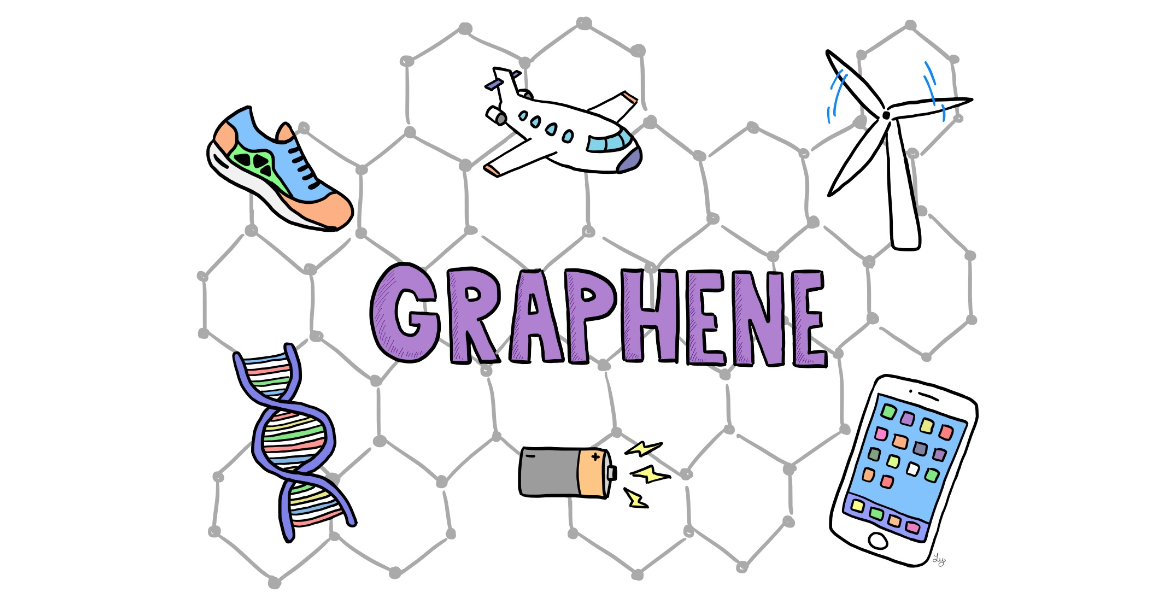
One such material is graphene, which is often referred to as a “wonder material.” Discovered by researchers at the University of Manchester in 2004, graphene is a single layer of graphite, which makes up materials such as pencil lead. Graphene is an allotrope, or form of the element carbon. The carbon atoms are arranged in a hexagonal, honeycomb-like structure, giving rise to important properties such as thermal conductivity, elasticity, and chemical inertness. 

Due to its unique physical and chemical properties, graphene demonstrates fascinating traits. It is the lightest, thinnest, and strongest carbon allotrope and was the first human-made two-dimensional material to be isolated. Despite being one atom thick, it is 200 times stronger than steel and is the lightest, most conductive human-made material on Earth. It thus has the potential to be applied to many different fields, although it is still in the early stages of development.

“As with any new technology, it takes time to commercialize a product, and not many [graphene products] are on the market yet,” Raed Abdo, a Master’s student in Electrical Engineering, wrote in an email to The McGill Tribune. “However, we can expect to see it soon in different applications, including battery sensors, coatings, and construction.”

Indeed, graphene has numerous applications. For example, scientists at the University of Manchester have created a graphene coating that could protect cars and ships from rust. Graphene’s thinness and sensitivity to chemicals has led to the design of graphene membranes to purify water, keep food fresh for longer, and identify harmful substances in the agricultural industry, which allows farmers to protect crops accordingly. Additionally, because it is capable of filtering out nuclear waste and salt, graphene could provide clean drinking water to millions of people in developing countries. 

Water quality monitoring is an extremely important application of graphene, and one that is being pursued by McGill researchers. Along with PhD candidate Ibrahim Fakih and Professor Thomas Szkopek, Abdo recently launched UltraSense, a start-up that uses low-cost, high-resolution chemical sensors composed of graphene to monitor water quality. 

Furthermore, graphene’s high flexibility and strength make it an ideal candidate for use in implant and tissue engineering technology, as it can withstand and adapt to biological forces. It can even be programmed to target specific tissue, such as cancer cells, to effectively deliver drugs. Graphene has also been used in running shoes, since it is more resistant to wear and tear. At McGill, Szkopek’s lab has designed graphene-based headphones that showcase exemplary sound quality. 

However, despite graphene’s benefits, Abdo noted that there are some challenges.

“Graphene is just a single layer of carbon atoms, so it is a challenge to make large-scale devices without degrading the quality of the graphene,” Abdo said.

Other difficulties include biological compatibility, toxicity, and stability, as well as the financial challenges associated with obtaining large amounts of graphene, which is not currently produced at an industrial scale. Though there is promising new research on sustainably producing graphene with bacteria, Abdo warns against over-reliance on the material.

“While graphene is indeed a unique material, we should not force it into our daily lives just for the sake of it,” Abdo said. “We can use it in applications that improve existing technologies, and that takes time.”

Arts & Entertainment, Theatre

Home Theatre Productions is a welcome addition to the Montreal theatre community

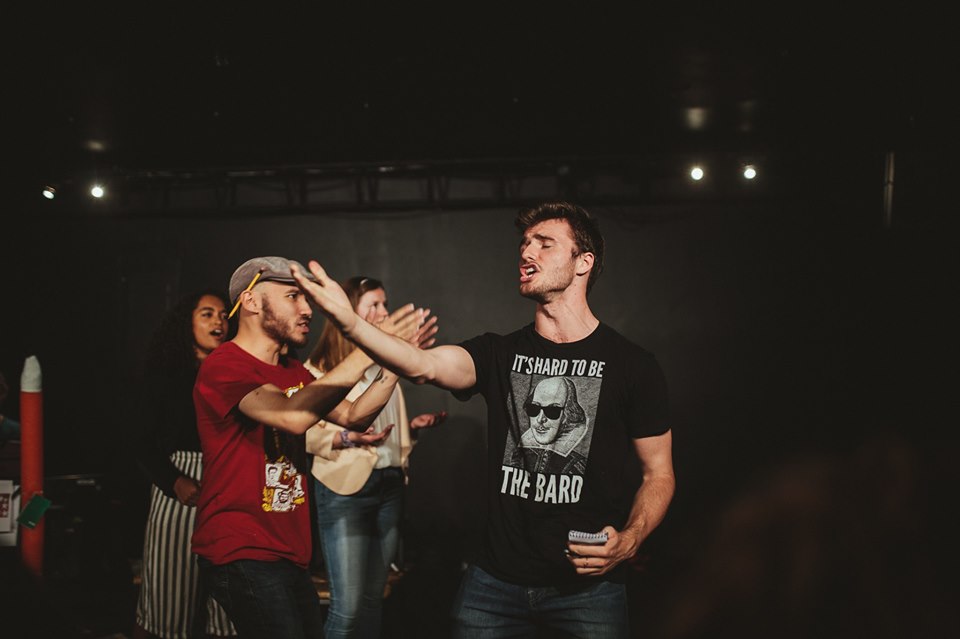
Title of Show,  Home Theatre Productions’ inaugural project, debuted on Sept. 12 at the Mainline Theatre. Those in attendance on opening night saw the intimate space packed with friends of the cast and crew, members of the community, and theatre fans alike, leaving nary an empty seat. The excitement in the room was palpable, for the evening marked not only the show’s premier but the beginning of something brand new for the Montreal theatre community. 

“I kind of came up with the idea around September of last year,” Steven Greenwood, director of Title of Show and founding member of Home Theatre Productions, said in an interview with The McGill Tribune. “In order to do a Fringe Show you need a company, so I was like ‘oh, okay, I’ll just start a company,’ but then I was like ‘what if I actually started a company?’” 

A Cultural Studies PhD candidate and course lecturer at McGill, Greenwood has been greatly involved in McGill’s theatre community. He has worked as a director and dramaturge with Player’s Theatre as well as the Arts Undergraduate Theatre Society (AUTS). Despite his enthusiasm for student theatre, Greenwood hoped to create a space for those seeking a challenge beyond university productions.  

“There’s this weird gap in between student theatre and professional theatre, and a lot of students, once they’ve graduated, don’t know how to manage that,” Greenwood said, “I think that [Home Theatre Productions] could be a good in-between space for that. I think it’s also cool to get students off campus and out into the community.” 

Being a lover of ‘lowbrow culture’ himself, Greenwood says he wanted to create an accessible space within the often exclusive realm of theatre,  

“I love theatre, but I always have trouble finding plays I want to do because I love pop culture stuff, I love superheroes and detective stories, and stuff you don’t see on the stage a lot,” Greenwood said. “A lot of times, theatre can feel like a space where […] you need to know who Brecht is, or Becket, and there’s this whole cultural literacy that’s expected of people [in order to participate.] I kind of just wanted to break all that down.”

Title of Show fulfills this mandate to a tee. The story follows Jeff (Eric Lee), Hunter (Cathal Rynne), Heidi (Maya Lewis), and Susan (Mary Looney) as they attempt to write and produce the very one-act musical that they are currently performing for entry into the New York Musical Theatre Festival. What ensues is a hilariously meta meditation on the trials of creative collaboration and the importance of following your dreams. With musical accompaniment from pianist “Larry” (Zach Ripka), stage management and production by Cheyenne Cranston, and set design by Lucas Amato, the show was a heartwarming and triumphant first production for Home Theatre.

Cranston, Amato, and Greenwood, Home Theatre’s three permanent members, hope to mount four shows per year as a company, further establishing their ties to the community by producing plays by local playwrights. Open calls will be held to students, graduates, and members of the community for both acting and backstage opportunities.  

“We want to be as open as possible to as many different people as possible,” Greenwood said. 

Home Theatre Productions will be holding auditions Sept. 19—21 for their upcoming “Late Night Double Feature” event. The show will feature two original one-act plays, with dates and location to be announced. Theatre geeks and novice fans alike will be welcomed warmly.


Science & Technology

Faculty of Science presents the 28th edition of Soup and Science

From Sept. 9—13, the Faculty of Science hosted Soup and Science, a semesterly event where professors briefly present their research and talk with students at Redpath Museum.

The expanding universe

Pouya Jafarian

Contributor

Jonathan Sievers, a professor in the Department of Physics and researcher at the McGill Space Institute, shared his research on galaxy expansion. Sievers started by throwing a basketball in the air and letting it fall back into his hand.

“If, on its way up, this ball accelerated, slowed down, reaccelerated, and finally fell down, you would be shocked, wouldn’t you?” Sievers asked. “Well, it seems that our universe is expanding in this manner.”

Sievers explained that the rate at which the universe grows is not constant at all. This strange phenomenon is associated with dark energy, a form of energy thought to drive the expansion of the universe.  

The evidence for this phenomenon comes from the observation that distant galaxies appear more red than expected . This distortion in colour indicates that the wavelength of light travelling from a distant galaxy is longer than its value when emitted. This shows the expansion of the universe, since it suggests that the source of light is moving away from the observer.

To escape human-created radio interference and properly observe this expansion, Sievers has expanded his research to remote Marion Island, which lies between South Africa and Antarctica.

Inter-group biases

Sara Eldabaa

Contributor

Jordan Axt, a professor in the Department of Psychology, presented his work on inter-group biases. In his research, he observes whether research participants are more likely to select physically attractive individuals for a fake honour society over “uglier” people holding the same credentials. 

Axt found that attractive applicants were indeed more likely to be accepted than less attractive ones when the two were equally qualified. The same was true when the two groups were equally unqualified. This bias occurred because the participants, who implicitly relied upon the candidate’s image to reach a decision, had lower standards for the attractive group.

The results of this study exemplify how biases can easily become ingrained, and how one’s perceived attractiveness—which they have little control over—can significantly influence their opportunities.

Axt has previously demonstrated that other biases, such as in-group favouritism and political affiliation, influence judgement. In the future, he hopes to study whether the perception of one’s own attractiveness influences their tendency to evaluate others based on attractiveness.

How planets form

Daria Kiseleva

Contributor

Eve Lee, an assistant professor in the Department of Physics, gave an overview of her research on planet formation. 

She explained that, generally, planets begin forming when electrostatic forces, which are created by interacting positive and negative charges, stick tiny dust particles together. Gravitational attraction and collisions allow for the formation of rocky planets the size of Earth. To reach the size of gas giants like Jupiter, a rocky planet must also build a very thick atmosphere.

However, outside of the solar system, researchers have observed a variety of unexpected phenomena. For example, they have found that some planets much larger than Earth orbit their central stars at a significantly closer distance, while others reduce their size by shrinking their atmosphere. 

Lee’s team uses knowledge of thermodynamics to do analytical calculations and create computer simulations of planet formation. 

“What my research group is really looking at is how common our solar system is and just how lucky are we to live on a planet that has just the right conditions to harbour life,” Lee said.

Read the latest issue

Read the latest issue