

Latest News

McGill, News

Contract negotiations between McGill and MUNACA at impasse

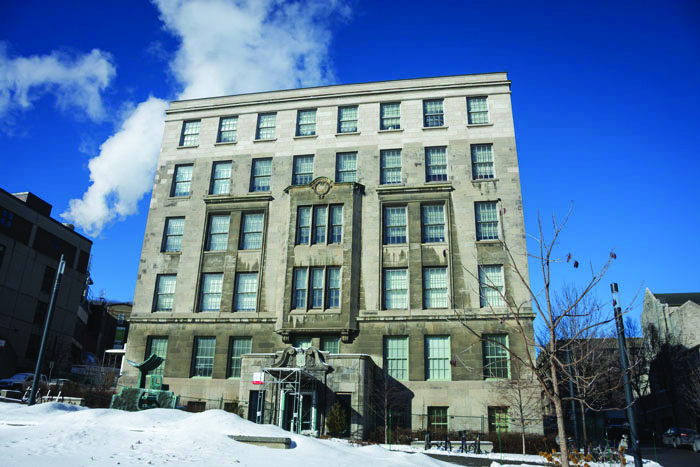
Negotiations between McGill University’s Non-Academic Certified Association (MUNACA)—a union that represents nearly 2,000 support staff employees—and the university’s administration have reached a standstill after McGill’s most recent contract offer left MUNACA representatives unsatisfied. The contract between the two has not been updated since it expired late November 2018.

In an interview with The McGill Tribune, Thomas Chalmers, president of MUNACA, explained that McGill’s salary offer, which is “close to being final” is unfair for MUNACA members. 

“According to their latest offer, [McGill said] there is not much room to move,” Chalmers said. “They offered a 1.5 per cent increase for three years over each year, which is well below the cost of living [….] The cost of living [would be a] 3.5 per cent [increase]. I think that’s a huge difference.”

Nancy Crowe, MUNACA vice-president (VP) Labour Relations, added that the low salary offer causes an imbalance in the negotiations, favouring McGill.

“The expectation […] is that we move toward them [in our offer], not the other way around,” Crowe said. “[It is] clear that discussion stops if [we] don’t reduce our demands.” 

McGill media relations officer Frédérique Mazerolle provided a statement about the impasse on McGill’s behalf, which reads that both parties have met extensively to create a new contract. 

“Following the MUNACA union drive which resulted in a new MUNACA bargaining unit, parties have met regularly with the aim to conclude a first collective agreement (i.e. under the new bargaining unit),” Mazerolle wrote in an email to the Tribune. “While details cannot be shared at this time given the ongoing negotiations with MUNACA union leadership, discussions will continue in January in presence of a conciliator appointed by the Ministry of Labour pursuant to a request filed by McGill.”

Chalmers expressed uncertainty that the conciliation will help overcome the dispute between the two parties.

“Hopefully the conciliator will be able to bring the parties together, but there is a significant difference [in what the two want],” Chalmers said. “We’re not talking about a strike yet, there are other things we can do in terms of pressure tactics [….] Nobody wants a strike […] but also nobody is ready to be treated like shit.”

With MUNACA members forced to do in-person work during the COVID-19 Omicron variant surge, Crowe feels that issues between the McGill administration and its employees have been exacerbated.

“We now have people working in a library, not in the back of Service Point, where there is no one to serve,” Crowe said. “We have admin staff in a wellness centre for which students have no access [….] We’re dealing right now with [McGill’s] disregard for the health and safety of our members during this rapid spread of Omicron.”

Fanta Ly is the president of the Association of McGill University Support Employees (AMUSE), a union representing approximately 1,500 employees, most of whom are students. She is disappointed with how McGill is treating its employees, particularly the floor fellows who live in student residences, amidst the Omicron wave.

“[McGill] had issued contracts for floor fellows even when they knew the semester was going to be online and then withdrew those contracts,” Ly said. “Some of [the floor fellows] had already relocated to Montreal, and [McGill] did that very last minute.” 

Representatives from MUNACA and AMUSE both cited Workday, an HR software McGill implemented in August 2020, as an ineffective platform for payroll. 

“It was such a mess when it was implemented that thousands of people weren’t paid for a substantial amount of time,” Crowe said.

Reflecting on the negotiations and the struggles that employees and unions are facing, Crowe spotlighted the essential role employees play in ensuring McGill’s smooth functioning. 

“I would frame this […] as a typical worker’s struggle,” Crowe said. “We are support staff, we make this university run, we’re on campus, our members are working [….] McGill works because we do.”


Science & Technology

Tribune Explains: The Omicron variant

Over the past few weeks, there has been a surge of coronavirus cases around the world. As of Dec. 21, it was estimated that the new Omicron variant accounted for more than 80 per cent of total cases in Montreal. The variant was first detected in South Africa on Nov. 24, and on Nov. 26, it was designated as a variant of concern by the World Health Organization (WHO). 

What are the symptoms of Omicron?

Common symptoms include body and muscle aches, headaches, sore throat, runny nose, fever, and fatigue. These symptoms are similar to those of the common cold for some people. Like previous variants, symptoms such as fever and nasal congestion are common, but the loss of taste and smell are less prevalent among Omicron patients than they are among the older variants. In most cases, especially if a patient has no underlying health conditions, the symptoms are milder than previous variants, making it hard to track cases as infected people are more likely to either ignore the symptoms or assume it is the common cold. However, there has still been a concerning rise in hospitalizations in Canada since Omicron took off, with the unvaccinated making up the majority of intensive care unit admissions.

What are the mutations present in the Omicron variant?

Compared to the original SARS-CoV2-strain, the Omicron variant has 50 additional mutations. Thirty-two of these mutations are found on the virus’s spike proteins. The spike proteins allow the virus to enter the body and spread. Fifteen of these mutations are found in the receptor binding domain of the spike protein. These mutations make it easier for the virus to bind to the ACE2 receptors, infect cells and replicate—making it a faster spreading variant. A study conducted by researchers in Hong Kong corroborated this finding, showing that the Omicron variant replicated 70 times more quickly in the upper airways compared to the Delta variant. However, additional studies show that Omicron fails to replicate in the lungs because it cannot interact with TMPRSS2—a protein found on the surface of the lungs. This is good because infection of the lungs leads to more severe disease. 

Dr. Brian Ward is a professor in McGill’s Faculty of Medicine and Health Sciences whose research involves monitoring the evolution and development of vaccines. 

“Most of us working in the field believe that massive exposure due to the Omicron variant will trigger the transition from ‘pandemic’ to ‘endemic’ phases of the outbreak.” Ward wrote in an email to The McGill Tribune

A Danish study recently showed that people who received the booster shot were 56 per cent less likely to be infected than those who received two doses.  

How effective are vaccines against micron? Will routine boosters be necessary?

“Pandemic viruses tend to evolve to lower virulence, bad when they first appear and then progressive declines in virulence,” Ward wrote. “In some cases, this is driven by adaptation of the virus to a population with high levels of immunity.”

It is important to note that vaccines protect the body against viruses by making the body produce not only antibodies, but T-cells that recognize the virus. When a COVID-19 vaccine is administered, the antibodies and T-cells recognize the spike protein and will bind to the spike protein and “neutralize” the virus. 

Compared to the antibodies, T-cells are slower to form. However, they offer longer-lasting protection and prevent severe infection. 

The mutations in the Omicron spike protein allow it to evade the antibodies generated from the vaccine but not the T-cells. This means that the antibodies are no longer able to recognize and bind to the spike proteins of new variants. However, the more antibodies you have, the greater the chance the antibodies will recognize the virus. The antibodies from people who received the booster were 25 times more likely to bind to the virus than those that did not receive the booster. 

One question of particular concern is whether boosters would need to be administered yearly. Jorg Fritz, a professor in the Department of Microbiology and Immunology, speculates that this may become the case.
“Given the current high viral circulation rate and low vaccination rate overall worldwide it is very likely that we will need an annual booster shot for the years ahead,” Fritz wrote in an email to The McGill Tribune. “The booster shots might need ‘adaptation’ to include antigenicity of novel circulating viruses (e.g. Omicron, or newly arising variants that might appear and transmit highly).”

(NASA)
Science & Technology

A selection of 2021’s top advances in science

Content Warning: Mention of traumatic injury.

In 2021, despite the pandemic continuing to wreak havoc on society, scientists continued to break boundaries in diverse fields of research. The McGill Tribune highlights four remarkable advances that occurred over the past year, while we were busy wondering whether the pandemic will ever come to an end. 

World’s first double arm and shoulder transplant 

On Jan. 13, an Icelandic man named Felix Gretarsson underwent the world’s first double arm and shoulder transplant. The 15-hour surgery took place in Lyon, France and involved medical teams from four different hospitals. In 1998, Gretarsson, 48, was working as an electrician when he mistakenly grabbed a 11,000-volt live line which projected him nine metres down onto ice, leaving him with a broken neck and shoulder, and setting both his arms on fire. More than 20 years after the accident, Gretarsson had the opportunity to undergo this high-risk, first-of-its-kind surgery. Fortunately, it was a success. Based on the approximation that nerves grow one millimetre per day on average, the doctors expected him, in the best-case scenario, to be able to move his elbows after one year, and his hands after two years. But Gretarsson is making incredible progress and has already surpassed the doctors’ predictions. According to his last update on Instagram, just nine months after the surgery, he was already able to move his right forearm and fingers. 

A helicopter on Mars

On Feb. 18, NASA’s Perseverance rover landed on Mars. Its mission: To look for signs of ancient microbial life and to search for evidence of past habitability on the red planet. What’s even more special about it, however, is that the rover transported in its belly another vehicle: Ingenuity. Ingenuity is a helicopter capable of flying in Mars’s thin atmosphere that has a density of about 1.2-1.5 per cent of Earth’s atmosphere at sea level. It weighs only four pounds and has carbon-fibre blades that can spin at up to 2,400 rpm, significantly faster than a helicopter on Earth that typically spins at 225 to 550 rpm. Ingenuity was designed to fly for up to 90 seconds per flight, to distances of about 300 metres and heights of up to 4.5 metres off the ground. Its first Mars flight on Apr. 19 was a success, and so were the 17 ones thereafter. It is indeed mind-blowing to think that little more than a century after the Wright Brothers’ first flight here on Earth, humans are now flying a helicopter on a planet hundreds of millions of kilometres away. 

Human-monkey hybrid embryo 

A team of American and Chinese scientists managed to create human-monkey hybrid embryos for the very first time. They did so by injecting monkey embryos with human stem cells, which successfully grew into hybrid embryos. Human-animal hybrid embryos, also known as chimera, are a useful technology that can potentially be used to grow human organs for transplant. It is important to understand that developed embryos would not lead to half-human, half-animal creatures, but rather to animals with human cells in some parts of their body—for instance, in a specific organ of interest. Before the creation of the first human-monkey embryo, other human-animal hybrids such as human-cow and human-pig embryos already existed. For instance, scientists in Japan are using human-pig embryos to grow pigs with human organs that can be transplanted into a patient. The research team that created the human-monkey embryos did not intend to implant them into a monkey uterus and it is highly unlikely that these embryos will ever be used directly for organ production. However, observing crosstalk between human and monkey cells in the embryo, two very closely related species, could provide valuable information to improve the ability to fine-tune human cell migration in other human-animal hybrid embryos. 

Oldest sequenced genome to date

Before 2021, the oldest DNA to have been sequenced was that of a horse bone from the Yukon Territory in Canada. Its estimated age lies somewhere between 560,000 and 780,000 years old. In 2021, evolutionary geneticist Love Dalén of the Swedish Museum of Natural History broke a record by sequencing a genome estimated to be 1.65 million years old. The sample came from mammoth teeth excavated in Siberia in the 1970s by Russian paleontologist Andrei Sher. The permafrost-preserved teeth had severely damaged and fragmented DNA, but thanks to advances in DNA sequencing technologies and bioinformatics, the DNA fragments were successfully sequenced and reordered. The sequence information indicated that the teeth belonged to a mammoth from an entirely new and previously undiscovered lineage.

Arts & Entertainment, Books, Film and TV

What we liked this winter break

The return to class, whether online or in person, following the holiday season is a frustrating yet familiar struggle for McGill students. As per tradition, the Arts and Entertainment team used their time off to take in lots of exciting TV, movies, and books. Here’s the best of what we liked this winter break.

My Body by Emily Ratajkowski – Isy Stevens

My Body a memoir by Emily Ratajkowski, describes the model’s rise to fame in the male-dominated, and often toxic, fashion industry. Through a series of essays, Ratajkowski explores topics that include the internalization of the male gaze, the power of externalized sexuality, and the dark side of the “momager” phenomenon. Ratajkowski’s writings reveal a surprising shrewdness and vulnerability, subverting assumptions that social media personas like herself are vapid and one-dimensional. Although much of the memoir’s content will resonate deeply with readers, Ratajkowski did miss a major opportunity to examine her own role in perpetuating the harmful beauty standards she condemns. Nevertheless, My Body is an insightful read that should provoke important discussions among us all. 

A Discovery of Witches by Rebecca Harkness – Courtney Squires 

Rebecca Harkness crafts an adult, dark-academia version of the fantasy novels that shaped our generation’s childhoods, weaving romance, magic, and scatterings of historical alchemy together in the first novel of the All Souls trilogy. Set in the delightfully dreary university town of Oxford, A Discovery of Witches follows Diana Bishop, a magic-avoidant witch who discovers a long lost book and, of course, a vampire. Despite a somewhat predictable plot, Harkness carefully cultivates an aesthetic that will reignite any fantasy-lover’s past aches at not receiving a Hogwarts letter. An accompaniment to my annual holiday Harry Potter marathon, the popularity of A Discovery of Witches is an example of how magical fiction can mature alongside its readers, with new books emerging to replace ones we’ve outgrown. As we enter our third year of the pandemic, A Discovery of Witches provides a bout of much-needed escapism. 

Succession Season 3 – Louis Lussier-Piette

From its synopsis only, Succession gives the impression of a bland show specifically designed for Desautels students, but it is able to to transcend clichés in the most surprising ways. Described by some as the corporate Game of Thrones, Succession centres one dysfunctional family of Wall Street billionaires dealing with issues ranging from tax fraud controversies to third-degree murder. Showrunner Jesse Armstrong constructs characters complex and relatable enough that the audience can’t help but root for them despite their questionable moral standing. After ending its second season on a cliffhanger two years ago, Succession came back for a third season and delivers narrative twists more akin to a Greek tragedy than a TV series, acclaimed by both critics and fans. With its genius writing, impeccable cinematography, and hair-raising soundtrack, Succession checks all the marks, making it one of the best shows on TV right now. 

Licorice Pizza – Arian Kamel

While the rest of the world was recoiling from the Vietnam War and Watergate in the 1970s, the San Fernando Valley felt like its own little world. Paul Thomas Anderson’s latest triumph, Licorice Pizza, follows the lovesick Alana (Alana Haim) and Gary (Cooper Hoffman) as they explore the valley. Contrary to expectations, it is exactly these first-time actors’ inexperience that makes their performances a joy to watch, as their raw acting blurs the boundary between actor and character. Alana and Gary test out different callings, while a wide array of eccentric figures enter their lives like Sean Pean’s charismatic Hollywood star or Bradley Cooper’s batshit crazy hairdresser. Each job or situation seems so full of potential, yet ends up subverted and befuddled. Nonetheless, Alana and Gary continue and try something new again, hoping to finally find their place in the valley and in the world. It’s a shock when the film ends, since it felt so real and so warm that I’d hoped it never would.

Arts & Entertainment, Film and TV

‘Anxious People’ is underwhelming as a TV series

Content warning: Mentions of suicide, drug addiction, and violence

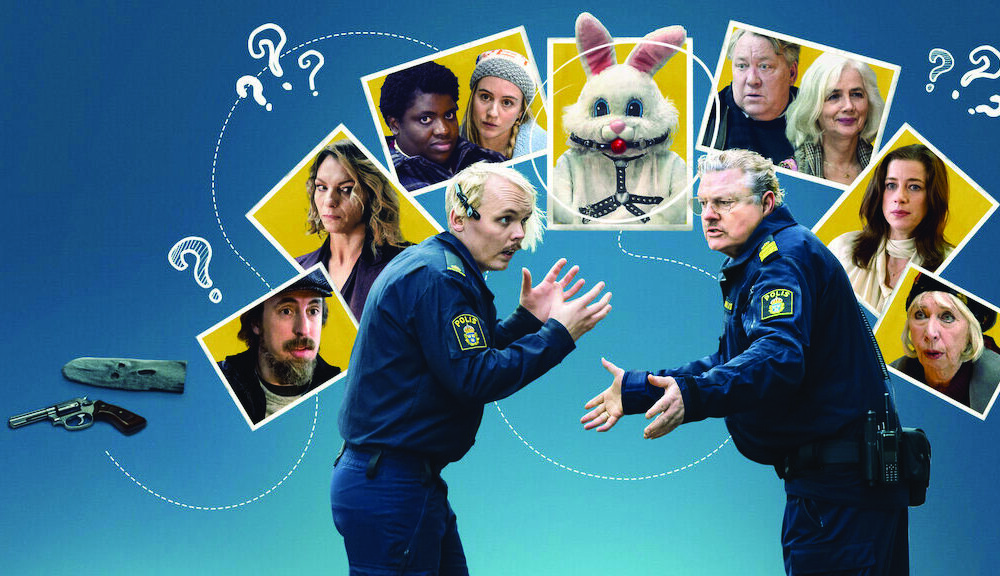
Being a bank robber isn’t easy. From attempting to rob a cashless bank, to accidentally taking eight lovable yet bizarre people hostage at an open house, Anxious People’s anti-hero has found himself in a no-win situation. However, as police storm the building to rescue the frazzled hostages, the bank robber is nowhere to be found. It is this central question that plagues the police throughout the six episodes: Where did he go? 

Based on Fredrik Backman’s 2020 novel, Anxious People follows local police father-and-son duo Jim (Dan Ekborg) and Jack (Alfred Svensson) as they attempt to make sense of this seemingly nonsensical hostage crisis. While the book focusses on the characters who were taken hostage, the Swedish-language limited series spends more time on the police investigation, for which the cops are wildly unequipped. Their incompetence adds humour to the narrative, such as when Jack runs out during a haircut with a trailing hairstylist and Jim steals several pizzas from a local pizzeria to hand-deliver a meal to the armed bank robber—one of his bizarre requests.

The informal and unorganized nature of the duo balances with the heavier themes of trauma and redemption within the show. At its core, Anxious People is a story about getting second chances and coping with life’s messiness. After failing to prevent a man’s suicide when he was 12, Jack strives to help those in need and prove his competency as a police officer, despite living in his father’s shadow. On the other hand, Jim is more concerned with helping his daughter—who struggles with addiction—than working on the case. As Jim sees it, nothing got stolen and nobody got hurt (except for a hostage’s bloody nose and Jack being hit in the eye with a lime); therefore, there is no need to search for the missing robber. 

Unfortunately, while Jim and Jack are compelling characters, their prevalence in the six episode series limits any exploration of the eight complex characters who Backman created in the novel. For example, married couple Anna-Lena (Marika Lagercrantz) and Roger (Leif Andrée) have little in common besides their joint hobby of flipping apartments. After Anna-Lena undermines her husband by hiring Lennart (Per Andersson) to creatively lower the asking price, Roger struggles to trust his wife. Yet the real communication issue is between the show and audience, as real—and fictional—relationships are not magically fixed in a single afternoon, especially with limited verbal interactions between husband and wife. Similarly, the series neglects to show the novel’s most compelling love story, the one of Lennart and Zarah (Anna Granath). As a straight-laced wealthy lawyer, Zarah is wildly different from Lennart, who is paid to create chaos. While in the novel the two kindle a delightful slow-burn romance, the series expects its audience to root for the couple without revealing their original chemistry. 

These rushed storylines are almost insulting to the characters that Backman creates in his novel, whose actions and motives are well explained—not to mention highly entertaining, even without the television visuals. Although the actors make the best out of a questionable situation with top-notch physical comedy, it’s hard to achieve a full emotional range while being constricted by a weak script and rushed pace.

By neglecting to round out these eight pivotal characters, the series turns hollow, relying on two cop characters who Backman created to be about as complex as the average sidekick. As a show, the narrative loses its focus, resulting in an underwhelming story that fails to reach its potential. 

News, The Tribune Explains

Tribune explains: COVID-19 restrictions and the Winter 2022 semester

What government directives have been put in place, and what do they mean for McGill?

Quebec Premier François Legault announced on Dec. 16 that high schools and post-secondary schools must operate remotely until Jan. 10. Stricter capacity limits on non-essential businesses and services, as well as tighter limits on the sizes of gatherings, were also implemented. As daily case counts rapidly grew to over 15,000, however, Legault tightened the province-wide restrictions even further and imposed a  curfew from 10 p.m. to 5 a.m.

Legault’s Dec. 30 announcement also included the extension of virtual learning. Schools are now required to remain remote until Jan. 17. and indoor gatherings are banned. In light of the announcement, McGill informed students and staff that instruction would be online until Jan. 24 with the exception of “Tier 1” activities, which resumed on Jan. 10. 

“Tier 1 activities are educational activities that are extremely difficult to conduct online, and include critical teaching laboratories, clinical activities, project courses, various activities in music, and other experiential in-person components of courses,” McGill media relations officer Frédérique Mazerolle wrote in an email to The McGill Tribune.

On-campus testing

The Quebec government has implemented restrictions on who can be tested for COVID-19. As of Jan. 4, those eligible for a PCR tests include people showing symptoms of COVID-19, healthcare workers, hospital visitors and staff, those working with more vulnerable communities, and members of those communities. 

McGill’s on-campus rapid test pilot project that focussed primarily on testing asymptomatic people, has thus been suspended until further notice.

What does this mean for students in McGill residences?

Because of limitations on gatherings, students can only have one guest from within their residence in their room at a time. Additionally, students cannot socialize with others in their residence past the curfew, and are expected to stay in their rooms during curfew hours. Similar to the beginning of last semester, external guests—including guests from other McGill residences—are not allowed. 

All dining halls are now takeout only, and common rooms and gyms are closed. These restrictions aim to prevent people from gathering in indoor spaces.

How will library services be impacted?

Library services will be available virtually until Jan. 23. Pickup services—requesting a book through the library website and retrieving it from a designated location—and the HathiTrust Emergency Temporary Access Service (ETAS) started on Jan. 10. 

Most of the library’s physical spaces will be closed until Jan. 23. However, starting Jan. 10, students will be able to study at Study Hubs in the Redpath and Nahum Gelber Law libraries without prior booking. The spaces at Redpath are open from 9 a.m. to 8 p.m. on weekdays and from 10 a.m. to 5 p.m. on weekends, while the spaces at the law library are open on weekdays from 9 a.m. to 5 p.m.

Students will have access to flex spaces, which allow talking and eating with sufficient social distancing, on both campuses. The downtown flex space, located at Campus 1, is open on weekdays from 8 a.m. to 6 p.m. and the flex space at the Macdonald Campus, which is in the Macdonald Stewart Building, is open on weekdays from 8 a.m. to 5 p.m.

What mental health supports are available to students?

The pandemic itself and the restrictions on social life that come with it have taken a toll on the mental health of university students. Staff and administrators have reiterated the mental health resources that McGill has to offer.
“We would urge any student in need of support to reach out to one of the mental health resources available to them, such as the Wellness Hub, Local Wellness Advisors, and Keep.meSAFE,” wrote Mazerolle.

Laughing Matters, Opinion

Scenes from a conference

To prepare their readers for online conferences, The McGill Tribune unearthed scenes from various breakout rooms and class discussions over the last five years

Gender Studies

Yeah, I mean, and this is just speaking from experience, Judith Butler might be projecting a bit, don’t you think? Like we get that you perform as a member of the diverse LGBTQ community, but there’s got to be deeper meaning there. I actually used to do improv on Thursday nights at the Second City, the one in Toronto; it’s pretty exclusive if you run in improv circles, so performance is just in my blood. Here are my questions: Who is Butler performing to? Can I get a ticket to see them in action? And that obviously connects to moving hands from chest to head the world around us because there are stages and gender and women, of course.

History

No, I don’t know the date when the Treaty of Paris was signed, but I’ll tell you something more useful. I totally recognize my position of influence as a student of history, because like we study the wars and the fights for justice. It’s not just the past—it’s the present, it’s the future. I’m not so sure everyone knows that, we aren’t that simple, right. One thing I’m becoming increasingly aware of is that just because colonialism ended doesn’t always mean that it has though. So, what do we need to do? I’ll leave you with that food for thought. Maybe you could look at our history and get back to us?

English Literature

Toni Morrison, wow what an author? Right, guys? And what a name? Toni? Must have been a risk in the 1970s. polite laughter. So what was up with that woman killing her baby or whatever? That’s child abuse, and that is wrong. Period. Full stop. I’ve supported children my entire life, always taken on this sort of proto-father role, no exceptions. Did that just happen in Ohio or is that an American thing? The movie was good though. Did you know Oprah’s an actor and not just a Black woman who likes butter in her coffee? And she has a book club?

International Development Studies

We have to be reasonable here. If we accept that the purpose of development is to enact change, we have to reconsider what change and development actually mean, wouldn’t you think? What if there are some reasons that inequalities are in place? Like, that’s the economy? Isn’t that just inevitable? My point is, who am I to interfere, right? I’m, of course, only talking about Europe. That’s not true of the Middle East, Africa, most of Asia, and South America though, as they need us! If you remember correctly and pay attention to the news, you would remember that we as Canadians, as citizens of this country, set the best example for the world. 

Political Science

If I could just––and I’m not going to say play the devil’s advocate, that’s bad now, I guess liberals just get what they want––speak to another perspective that is much-needed in this setting and in this cultural milieu, or cancel-culture environment if you’d put it that way, is that politicians make mistakes. Makes eye contact with every member in the conference. That’s life. That’s reality. That’s, therefore also, what politics is. Just to kind of circle back to my own life, I’ve started to realize that, like what noted theorist John Rawls says, dramatic pause we live in a society, and that hurts politics, because society links to politics and back to society. 

Philosophy

I’m not going to lie, I had a pretty busy weekend. I won’t bore you with the details, but I was in the audience when Slavoj Zizek debated McGill alum Jordan Peterson, so I’d consider that an extraordinary reason for not doing the reading. I’d beg this question: What if there were 500 people instead of 5 people in the trolley problem? I’ve seen The Good Place a few times, even though I don’t think Jameela Jamil’s funny, and thus I’d argue that numbers and ethics matter in real life, especially when we are alive.

Arts & Entertainment, Film and TV

‘Don’t Look Up’ is a bad joke with no punchline

With a laughably talented cast and a whopping $75-million budget, Netflix’s original film Don’t Look Up generates lofty expectations that it ultimately fails to meet. The film follows astronomers Kate Dibiasky (Jennifer Lawrence) and Dr. Mindy (Leonardo DiCaprio)’s attempt to warn the U.S. government and general public about a comet large enough to cause mass extinction barrelling toward earth. By extension, it aims to provide social commentary on how a global population responds to, or simply ignores, crises such as the COVID-19 pandemic and climate change. Over the course of the film, the protagonists’ concern for the future of the human species meets humorously grudging resistance from characters that walk a precarious line of clichés. Don’t Look Up emphasizes the danger of apathy, and media-fuelled politics’ twisting of facts—even as morbid as imminent extinction—into headlines palatable for public consumption. The forced humour and supersaturated clichés detract from the film’s political punch, and bury the moral of the story. 

Directed and produced by Adam McKay, the film’s impressive cast and contemporary relevance have attracted much buzz. Regardless of which celebrity’s appearance they anticipated, viewers flocked to Netflix’s streaming platform, amassing over 111 million hours of watch-time in the film’s first two days of release. From a laissez-faire U.S. president (Meryl Streep), to incessantly positive news hosts (Cate Blanchett and Tyler Perry), to a socially anxious billionaire (Mark Rylance), the characters are distinct in their portrayal, yet trite in their stock. 

The film’s characters border on the annoying and one-dimensional. Scattered cameos of other actors—such as Ariana Grande’s musical appearance—provide little purpose other than shock value and name recognition. Numerous political allusions are made, though the most obvious is that of the U.S. president and her chief of staff, who bear semblance to the Trump family. Although Streep’s performance as the U.S. President is comedic, it is cartoony—and her son (Jonah Hill) simply fulfills the stereotype of the bland, spoiled rich kid. However, Timothée Chalamet provides genuine comic relief, and rumours that he improvised much of his role are believable. The two protagonists, Kate and Dr. Mindy, manage to narrowly subvert stereotypes: Their frustration evokes sympathy, and their flaws and character development feel authentic. 

Still, after two agonizingly slow hours of brain-numbing dialogue, perhaps the most redeemable scene is the last one. It is a well executed balance of calmness and dread, aptly conveying the Everything-Is-Totally-Fine mindset with a biblical nod to the Last Supper. In the simplicity of the dinner party, an almost uncomfortable feeling of acceptance radiates out, allowing for a perfectly melancholy ending. As the rest of the film leaned heavily into satire, here it feels like it’s finally giving up, just like its characters. It is the one scene where jokes are not unnaturally forced into the script and viewers are not spoon-fed political allusions. It stands out as a different caliber of cinematography than the rest of the film.


Ironically, the film itself experiences the same struggles as its protagonists, as its own execution distracts from the main message: We are all going to die if we don’t do something soon. Don’t Look Up was advertised as a political comedy, and though jokes are littered throughout the script, it simply is not very funny. Whether intentional or not, the failed humour of the film acts as a thinly veiled coping mechanism for the societal collapse it alludes to. But as jarring as Kate’s profane explosion on live television was, it seems that seeing Timothée Chalamet sport a mullet or one too many of Jonah Hill’s cringe-worthy remarks is enough to steal the media spotlight. So, like the Dibiasky comet, it seems the moral of this film has gone right over most people’s heads.

Commentary, Opinion

Ask for an extension, I dare you

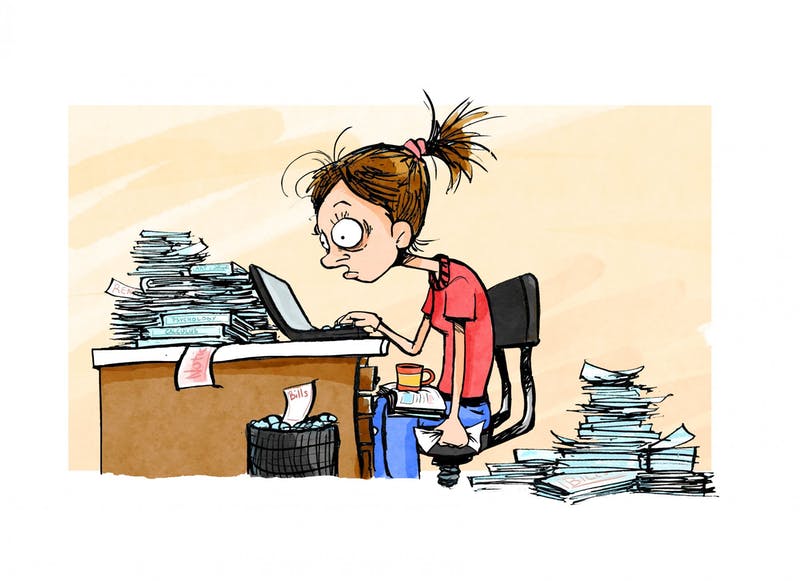
With finals period now a distant memory and the add/drop period beginning, stress levels are subsiding as students leave the last semester behind. However, between harsh syllabi guidelines and stigma surrounding asking for help, asking for extensions is often the last thing students want to do. In a competitive atmosphere where prestige is valued over mental health, McGill fosters a toxic environment where students are reluctant to ask for extensions. But as we enter the new semester, hindsight is key—be it 20/20 or in 2022, and students should not hesitate to ask for extensions when they need them. 

In many syllabi, asking for extensions is explicitly discouraged, with strict requirements in place to prevent students from pursuing them. Professors often plan out a grading schedule ahead of time, leaving students responsible to manage their own time for assignments. Especially in the midst of a pandemic, where health-care systems are already overwhelmed, medical notes might not be as easily accessible or be the doctor’s first priority. On top of this, assignment deadlines seem firm, unbendable, and unapproachable, contributing to the idea that professors are unwilling to provide any sort of leniency. This generalization, however, cannot be made for all professors; many of them are understanding and happy to extend deadlines. 

A blanket overstatement of formality seems to be a common theme: Students often feel dissuaded from even emailing their professors. And the immense level of scrutiny and effort that students put into writing their emails is rarely matched by their professors. Though understandable, this kind of attitude deters newer university students from asking for help, clarification, or expansion of lesson material. 

McGill, a university filled with overachieving students who are constantly being chased by the threat of academic burnout, is, at its core, a breeding ground for competition. A level of academic prestige, derived from the common high school mantra, “Professors won’t be this lenient in university!” often prevents students from feeling like it is okay to ask for help. Aside from being academically isolating, especially during the pandemic, a competitive atmosphere like McGill demands the impossible: Get perfect grades, and do it all by yourself.

Furthermore, with thousands of the best students from across Canada—and the world—competing for top grades, asking for an extension carries with it an academic stigma. Because everyone else is assigned the same deadline, if a student cannot make that deadline, it can falsely perpetuate the idea that they are somehow less competent than the others. Asking for extensions should be normalized, as there are often factors out of students’ control, whether mental, physical, or situational, that might affect their ability to complete an assignment on time. 

Students need to do their part to combat this toxic academic environment and understand that asking for help is not a sign of weakness. Beyond individual efforts, students should voice concerns to their faculty’s curriculum committees, or the Students’ Society of McGill University (SSMU)’s VP University Affairs. Talk about supporting students throughout the pandemic has suffered from hollow and inconsistent follow through. Students should ask for extensions when they need them, raise awareness in committees that have the possibility to make substantial changes—such as re-instating the S/U policy—and push their student leaders to advocate for their needs. 

McGill, News

Return to remote learning leaves students feeling ‘demotivated’

On Dec. 31, Fabrice Labeau, McGill’s Deputy Provost (Student Life & Learning), sent an email to the McGill community announcing that all learning except for Tier 1 activities would be held online until Jan. 24. Tier 1 activities include clinical activities, project courses, and various activities in music. This announcement follows recent health measures, including closing dining rooms and enforcing a curfew from 10 PM to 5 AM, which the Quebec Government implemented to help slow the spread of the Omicron coronavirus variant.

Basile Guichard, U3 Arts and executive director at Player’s Theatre, said he was ‘saddened’ when he heard that the second semester of his last year at McGill would be starting online.

“I felt so hopeful last semester where most of my classes were in person and we could enjoy the library and have in-person extracurriculars.” Guichard wrote in an email to //The McGill Tribune//. “I am very hopeful that we’ll be back in person, and [that] by the time the spring comes back, we as a community can enjoy Montreal and McGill fully.”

Some students are skeptical of a return to in-person teaching by Jan. 24. Marco Kim, U3 Arts and president of the  Mcgill Students’ Anime Club, will have spent half of his time at McGill online by the time he graduates. Kim expects online classes to last until the end of February, considering the highly infectious nature of the Omicron variant.

“It is very demotivating to miss out on such a large part of what I consider essential to the university experience” Kim wrote to the //Tribune//. “But what can be done? McGill does not have the power to stop the Omicron variant, only discretion in how to react to it. This is not how university was supposed to go, but we must endure as best we can.”

Sophie Hart, U4 Arts and founder of Mobilizing for Milton Parc (M4MP), explained she was surprised that it had taken McGill this long to shift to online schooling, especially when many universities in Ontario had already called off in-person exams and rescheduled them for the new year.

“I think it’s unacceptable that they kept exams in person for the entire exam period even when Montreal entered a state of emergency,” Hart said. “It seems like McGill is always multiple steps behind other universities’ safety measures, which puts students and staff at risk. I hope we stay online until I graduate in April.” 

McGill student groups have found ways to adapt and keep members engaged through posting on social media and conducting events over Zoom. Kim explained that an important part of the Anime Club is the social interaction that it offers. Since the start of online teaching in 2020, they have become accustomed to hosting events online, often through Discord. SSMU (Students’ Society of McGill) have been responsive and have helped clubs through their adaptation. 

“We will just go back to what we were doing in Fall 2020, not much will change.” Kim wrote. “We have adequate online resources for our events, though these are largely independent of McGill.The use of the SSMU email has been helpful though.”

Hart explained that she does not feel comfortable asking volunteers at M4MP to do in-person volunteering. However, volunteers will continue to prepare meals in their respective homes for The Open Door and other community serving organizations when requested.  

“There’s less of a connection between volunteers and neighbours which is what we intend to build.” Hart wrote. “It’s extremely unfortunate, but the safety of our community is our first priority.” 

Guichard finds that, despite difficulty staying motivated and optimistic during these times, he is comforted by the knowledge that he is not the only one going through this. 

“I find comfort and resilience in my peers. This pandemic is something that, for better or for worse, is going to make all of us stronger and more ready for our futures.” Guichard said. “To the first-years, I want to say, don’t be discouraged, you’ll be able to have the ‘university experience’ before you know it.”  

Read the latest issue

Read the latest issue