
Latest News

Arts & Entertainment, Comedy

Hasan Minhaj brings digital-age comedy to Just for Laughs

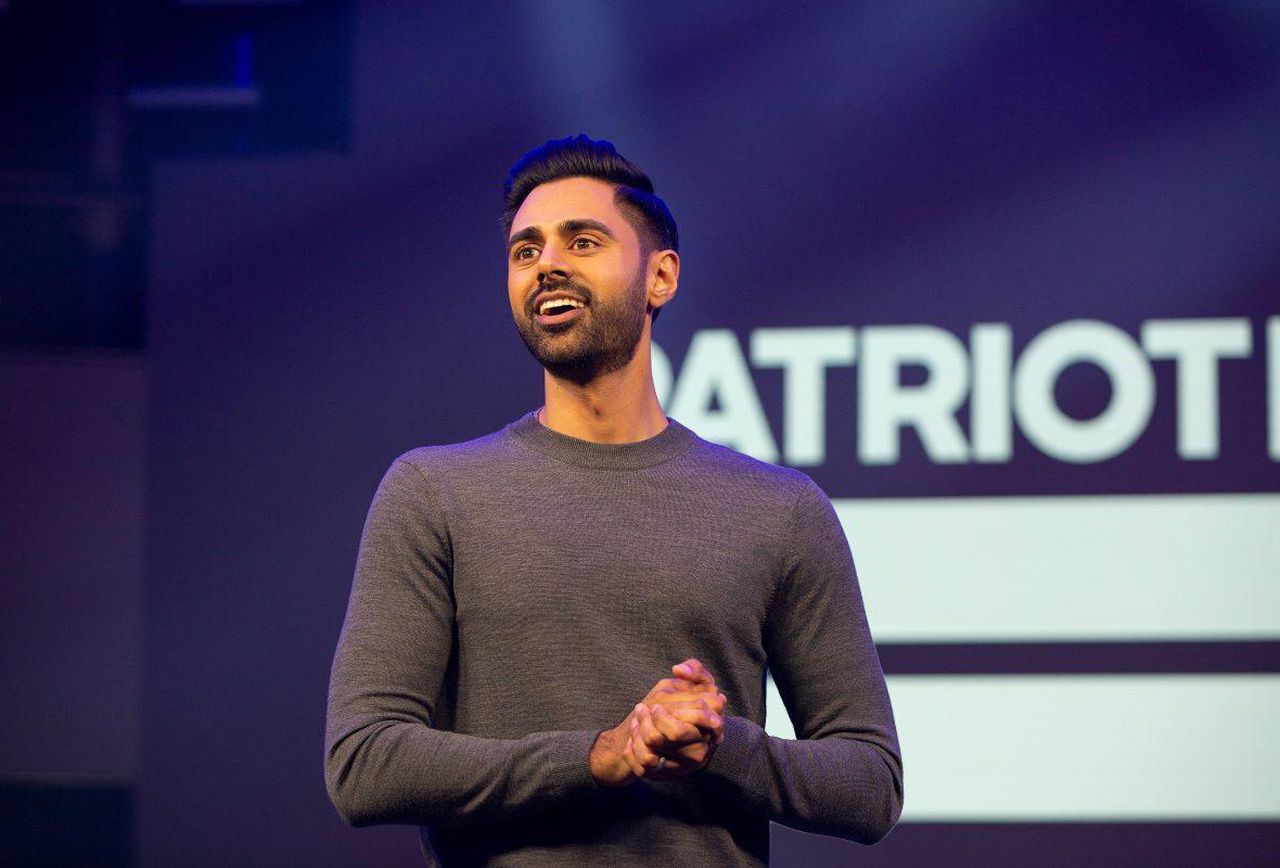
When Hasan Minhaj, host of Netflix’s Patriot Act, takes the Just for Laughs stage on July 26, he will likely surround himself with LED screens. It’s slowly becoming a trademark of his sets: From his parody news comedy to his standup special Homecoming King, information-dense visualizations are everywhere.

“Look at the way we live our everyday lives,” Minhaj said in an interview with The McGill Tribune. “We are constantly flagging through and deep-diving for information through LED screens every single day. You’re probably talking to me on your iPhone while you’re looking [at] questions on a MacBook as you have multiple tabs open in your Mozilla or Google Chrome browser.”

Early on, Netflix producers and critics expressed concerns to Minhaj about the format of his show. 

“[People asked me,] ‘Is it going to be too much for people to take in?’” Minhaj said. “And I was like, ‘No, people watch The Avengers on TV while they are Tweeting [and] texting a friend.’ This is just the way we live our lives now. This is the way people consume and think about information.”

Given that Patriot Act is streamed online, Minhaj makes an effort to discuss subjects that are timely and relevant, but also able to withstand the test of time. In a recent episode about internet access inequality, he joked about basketball player Kevin Durant’s recent leg injury, which sparked a loud reaction from his surprised audience.

“I like that dance between timely and timeless,” Minhaj said. “I love the feeling that you can hear [in] the audience when we did that Kevin Durant joke. It was the day after it happened, so people were like ‘Ooh.’ But internet inequality is […] a relatively evergreen topic, [and] the fight for it has been going for a really long time […] I love that dance. I’m a big fan of blurring those lines.”

In Minhaj’s third appearance at Just for Laughs, he will definitely bring the same energy that won Patriot Act so many fans. While Minhaj does not do cold monologue jokes on Patriot Act, his ability to dive quickly and deeply into a subject while building rapport with his audience will prove valuable to making a memorable gala.

“I knew [that] when we click on a piece of content, whether it’s a sports highlight on House of Highlights or just like a clip from SNL, we just want to get to the show,” Minhaj said. “We get right into the story because I know [that] when you’re clicking in, that is the viewer’s expectation. This isn’t the era of having to fill time because you have a time slot and you’re a one-hour variety show. I think we are seeing an end to that era.”

And, after all, returning to Montreal and performing at Just for Laughs is a meaningful and lasting mark in Minhaj’s career.

“I’m really excited to come back up and be a part of the festival,” Minhaj said. “The last time I was there, I was doing Homecoming King, and the time before that I was doing “New Faces,” and so the festival has kind of been at every critical inflection point of my career.”


The Hasan Minhaj Gala will take place in Salle Wilfrid-Pelletier at Place des Arts on July 26 at 9:45 p.m. 

Arts & Entertainment, Comedy

Spotlight: “The Nasty Show” at Just for Laughs

Just for Laughs’ annual Nasty Show will return to the MTELUS Theatre from July 17 to 27, with a full bill of raunchy, envelope-pushing, and hilarious acts. The McGill Tribune compiled some highlights-to-be from the upcoming show. 

Bonnie McFarlane

Gabe Nisker, Features Editor

Bonnie McFarlane knows that nut allergies are dangerous: When she performed a joke about escaping her marriage by causing an allergic reaction in her husband on a late-night show, she earned the attention of many allergy-affected families.

“They kept saying, you know, nut allergies are very serious,” McFarlane said in an interview with The McGill Tribune.. “And my response is, yes, that’s why I used it that way in that joke. I wanted it to kill my husband.”

McFarlane likes to tread in more dangerous waters and joke about serious topics. She names her favourite kind of joke as ‘the mislead’: She’ll start with one premise and hit the audience with an unexpected punchline.

“I really like writing jokes, and I have a very specific thing in my head when I’m writing jokes,” McFarlane said. “I like to go on stage to do it word-for-word […] I like to have the right word in the punchline exactly every time.”

McFarlane, originally from Cold Lake, Alberta, estimates that she has appeared at the Just For Laughs festival around a dozen times. In addition to her appearances on The Nasty Show this year, she will also have the chance to play fast and loose with a more improvised style: Alongside her husband, comedian Rich Vos, McFarlane will co-host Would You Bang Him?, a comedic game show where four female comics watch male comedians do a brief set each and ultimately decide, based on each of the men’s performances, whether they would have sex with any of them. 

“I don’t want my husband to find this out, but female comics talk a lot about who they would have sex with and who they wouldn’t have sex with,” McFarlane said. “I was like, ‘one day that would be a great game show.’ I told Rich about it and he was like “Yeah, let’s do it” and so we started doing the show. It’s so fun and hilarious. It’s stupid and it’s sexist. We call it a slut-shaming game show.”


Comedian CP

Sophie Brzozowski, Arts & Entertainment Editor

Chris ‘Comedian CP’ Powell has pretty much always known that he’s funny. Ten years and a lifetime ago, following one fateful open-mic night where he earned a standing ovation, Powell left a successful career as an advertising executive in Detroit to pursue comedy full-time. 

“I loved advertising,” CP said in an interview with the Tribune. “I loved the opportunities it gave me [.…] The only thing was that I just wanted the credit. I just wanted people to know that I was the guy who was funny, [that] I was the guy who was making this stuff. So comedy was a way for me to get that instant gratification from my audience and have them connected directly to my brainpower.”

Even over the phone, CP projects confidence and charisma, and in the years since he first began performing, he’s earned every ounce of hubris. Alongside a successful stand-up career, CP has also made waves in television since relocating to Los Angeles, California. Most recently, in 2018, Powell sold a pilot to the television network Adult Swim. The show, titled Ol Bud’s ANU Football Weekly, is a hilarious dive into the corrupt and lawless world of college football. 

CP insists, however, that stand-up will forever be his preferred medium of expression: The stage is the place where he feels most at home. Powell says he’s looking forward to taking full advantage of the no-holds-barred environment that The Nasty Show will no doubt provide.

“[Comedians are] the ones [who] are supposed to say the stuff that everybody else can’t say. It’s my job to say these things that everybody is thinking. That’s what you’re paying me for!” 

The Nasty Show will take place at MTELUS Theatre from July 17 to 27. Visit hahaha.com for more information on showtimes.

Arts & Entertainment, Comedy

Spotlight: “The Ethnic Show” at Just For Laughs

Billed to near-perfection with names from around the world, The Ethnic Show hopes to bring diversity to the mainstage at this year’s Just for Laughs Festival. The show will take place at Club Soda Theatre from July 12 to 25, and feature an exciting group of comedians. Here are two of The McGill Tribune’s highlights from the upcoming show. 

Robby Hoffman

On stage, one thing is for sure: Robby Hoffman will be herself.

“I just am. I just am whatever I am. If they want to bill me as whatever they want to bill me as, that’s fine,” Hoffman said in an interview with the Tribune. “[There are] no expectations. I go off the rails often. If something hits me, I go with it. [….] I just am the most me that I can be at these shows and that might surprise people.”

In addition to her appearance on The Ethnic Show, Hoffman will also host the Early Evening Show, her spin on the late-night show format—its 7:30 p.m. start time being just one of several twists.

“I like to be in bed,” Hoffman said. “I like to take a bath, I like to slap on a pad at the end of the day and get the flow going. The late-night space, I mean, who wants to be up at 11:35? I’d rather go home, have dinner, watch a show, take a bath, and go to sleep. It’s like I’m a 97-year-old stuck in my young body.”

Hoffman’s impulsive, and in-the-moment, creativity has been a guiding force throughout her career. For example, the first time she hosted her Early Evening Show, she entered singing “Shalom Aleichem,” a traditional Jewish song as a nod to her heritage. Hoffman claims her performance has revitalized the song’s success.

“Turns out that everybody likes ‘Shalom Aleichem,’ and I think it’s on Billboard now,” Hoffman said. “We resurfaced it and brought it back to the number one hit that it deserves.”

Anthony DeVito

Anthony DeVito knows Train, the rock band. He knows them personally and he knows their music, too; he was quick to pick a favourite song. 

“I’m a ‘Meet Virginia guy’,” DeVito said. “I like the original hits that got them there […] ‘Calling All the Angels’ was enormous. I didn’t even know they sang that really until, I guess, I became friends with them.”

DeVito met Train lead singer Pat Monahan when he asked DeVito to perform on the band’s cruise ship; Monahan had seen one of DeVito’s performances on television, and decided then and there that DeVito was one of his favourite comedians. The offer came as a bit of a surprise to DeVito, and as a result, he spent the entire cruise with a surreal, uncomfortable feeling.

“I hadn’t been on TV except for that one thing,” DeVito said. “Maybe I had done Adam Devine’s House Party [by then], but there was really no reason for anyone to be like, ‘Is that Anthony DeVito?’”

Maybe this year, someone will recognize the New York-based comedian as he returns to the Just for Laughs Festival for the third time. Devito promises to dig into his wealth of personal material each night and to give audiences a great—and unique—show.

“I’m super excited to come back this year and spend even more time in Montreal and at the festival,” DeVito said. “I couldn’t be happier.”

The Ethnic Show will take place from July 12 to 25 at Club Soda Theatre. Visit hahaha.com for more information on showtimes.

climate
Commentary, Opinion

Canada’s plastic ban could intensify the climate crisis

A week prior to declaring a national climate emergency, the federal government announced a ban on single-use plastics starting in 2021. While bans like this aid in protecting aquatic ecosystems and improving sustainability, they may serve more as a distraction than an effective solution. Announcing a state of emergency serves to paint Canada as an environmental advocate. Yet, without targeted policies and regulations, this announcement will not only be insufficient, but even serve to exacerbate the climate crisis.

Many consumers were happy to say goodbye to plastic straws and bags, as giving them up is a small behavioural adjustment that contributes to preserving the planet. However, environmental conservation policy is not effective climate change policy. Plastic bans may, in fact, serve to amplify our ‘single action bias’: Some experts believe that, in committing to a simple action, people allow themselves to feel as though they contributed to a solution, thus dissuading themselves from further, and much needed, action. 

Populations around the world witness the threat of plastic pollution first-hand. The excess of single-use plastic pollution affects marine ecosystems, coastal communities, and infiltrates the world’s deepest oceans. In fact, some reports estimate that, by 2050, there will be more plastic in the ocean than fish. While re-evaluating plastic consumption is a critical step in conserving oceans, it should not be conflated with proper policy to address global climate change. 

For years, plastic has been perceived as the epitome of waste and pollution: However, other climate threats of greater magnitude are not as visible and are often underestimated. Carbon, an inconspicuous compound, is a greenhouse gas that serves as the leading contributor to climate change, alongside methane and nitrous oxide. These unassuming, essentially invisible compounds slow down and trap heat in the atmosphere that would otherwise escape to space as part of the earth’s radiation budget

While many of these gases are natural and even required to sustain life on earth, the influx of anthropogenic greenhouse gases has caused irreparable damage to earth’s climate. To effectively curb emissions and reduce large-scale climate changes, policies need to be geared towards behaviours that will limit reliance on carbon and other greenhouse gases. Climate policy needs to be systematically integrated on a larger scale.

Moreover, while protecting aquatic ecosystems is vital to long-term sustainability, climate change can only be tackled by addressing the source of the problem: Greenhouse gas emissions from electricity, transportation, and agriculture. Canada is acting as a global pioneer in banning single-use plastic at the national level, however, until the country halts subsidies to fossil fuels and ceases to support pipelines that increase greenhouse gas emissions, the country will continue to encourage behaviour that jeopardizes the vitality of all life. 

Similarly, McGill’s recent ban on plastic water bottles seems laudable until recognizing that the school still profits from fossil fuels. Despite a 2018 recommendation from the Senate to divest, the school continues to retain holdings in corporations that produce, refine, and transport goods from the Canadian tar sands.

Ideally, plastic bans will not be seen as the final tool to tackling climate change. Instead, students and Canadians, in general, can use these bans as a catalyst to challenge institutions to divest from fossil fuels and work to properly reduce future climate impacts. Students should use Canada’s single-use plastic ban as a reminder to be environmentally-conscious on a daily basis, while simultaneously urging stakeholders like McGill to decarbonize the economy and reduce consumption. Several groups exist in and around campus that foster collective action initiatives to instigate change in Montreal, such as Divest McGill and Climate Justice Montreal.

 While it is tempting to believe that the simplest policy answer is the right one, this logic cannot be applied within the framework of climate action, where systemic change is necessary, not only in the future, but right now.


McGill, News

In conversation with honorary McGill degree recipient Paul Farmer

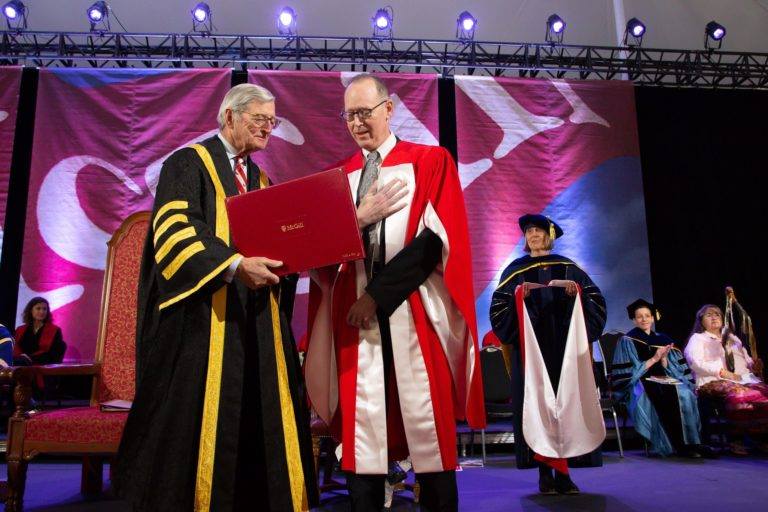
Doctor Paul Edward Farmer, or ‘Doktè Paul’ as his Haitian patients call him, is a medical anthropologist, physician, and professor at the Harvard School of Global Health and Medicine. He’s one of 14 people receiving an honorary degree this year, which are the highest honour McGill’s Senate can confer. Farmer is a co-founder of Partners in Health (PIH), an organization that provides treatment to populations with some of the worst access to healthcare services.

After graduating from Duke University, Farmer spent a gap year in Haiti and was appalled by the quality of healthcare for the poor and marginalized communities there. His experience in Haiti led him to co-found PIH in 1987. Starting with one small clinic in rural Haiti, PIH has expanded across ten countries, opening and running hospitals and clinics in countries like Lesotho, Peru, and Sierra Leone.

 Farmer visited McGill to receive his honorary degree and sat down with The McGill Tribune for an interview. The transcript has been edited for clarity and length.  

Q: How would you describe PIH?

 A: PIH is a series of sister organizations. Each of them is focused on addressing the burden of disease, as well as gaps in the health system. In the language we cooked up as students, and we still haven’t gotten rid of it in the mission statement we were trying to make a preferential option for the poor, or otherwise marginalized. We try to do more for them than anybody else. 

 Q: You travel a lot between Haiti, Rwanda, prisons in Siberia, and Harvard. Can you tell me a bit about that?

A:  Not in 30-something years has it been about where I go. In Siberia, for example, what I saw was not the absence of a healthcare system, or the absence of healthcare professions. The collapse of a lot of social institutions following the end of the Soviet Union led to a lot of crime, which led to an epidemic of incarceration, which led to huge epidemics of tuberculosis. That’s radically different from rural Rwanda, where you had vaccine-preventable illness among children, high mortality, and epidemic disease. What unites all of those places, as well as Boston, is that there are health disparities in all of them.

Q: You majored in Biochemistry, but you switched into medical anthropology in your fourth year. Can you tell me a bit about medical anthropology and what fueled that switch?

A: I had no idea what medical anthropology was. I took medical anthropology because it had the word “medical” in it. In that class, you had to write a research paper, so I went to Duke Hospital, and they let me into the emergency room, and I was looking at health disparities, focusing on race, insurance status, and patterns of utilization. I learned that, particularly for African Americans, people were using the emergency room for primary care, for any kind of issue, because they didn’t have easy access to the healthcare system. It was a real revelation and got me launched into the field before I went to Haiti.

 Q: You’ve received a lot of backlash for treating patients who have developed resistance to multiple drugs because medication is too expensive, with your critics arguing that the money could be better invested on prevention. What’s inherently wrong with this utilitarian approach in medicine?

A: I don’t know why that gets to be called utilitarian. To me, it’s a lot worse than that — it’s stupid. Especially tuberculosis, an airborne disease. In Siberia, what happens when you don’t treat drug resistant strains? They spread. I’m also very grateful for anthropology. When you’re told something is expensive, the first thing we should be asking is, “why?” By the time we heard the arguments about drug resistant tuberculosis and HIV drugs, we already knew to be suspicions of cost-related claims. It’s not like diamonds are put into TB medication.

Q: Mountains in Haiti are referred by the locals as “having teeth,” a testament to the steep and tough climbs; You have also made these climbs yourself in order to serve patients. Do you think that in order to provide good care you have to, in some way, suffer alongside the patient?

A: The idea that you should seek out your own privation in order to serve others — I don’t feel that way. But being attentive to other people’s problems and letting that wound you, I think that’s a very good thing to do. I don’t think it comes naturally to us, to imagine yourself in another person’s position.

Q: What are some lessons that you have learned in Haiti that Canada and the United States can learn from?

A: Training community health workers and rolling out a lot of services to prevent illnesses, and to address illness through a huge number of community health workers. Another is to focus on health equity. 

Q: You’ve frequently mentioned that Lord of the Rings is your favourite book series. One quote from the series that a lot of McGill students might relate to is “Short cuts make long delays”. Could you speak to that and how it has applied to you?

A: I have read it so many times I had to switch to reading it in Spanish. A shortcut around, for example, drug resistant tuberculosis, or trauma care, or mental health, or cancer care, makes for long delays. And that means people perish in that delay. But sometimes shortcuts are good.

Other honorary degree recipients this spring include Nobel Laureate and physicist John Kosterlitz, jazz improviser Pat Metheny, as well as gene-editing pioneer Emmanuelle Charpentier.

Montreal, News, Private

Quebec legislature passes controversial secularism bill

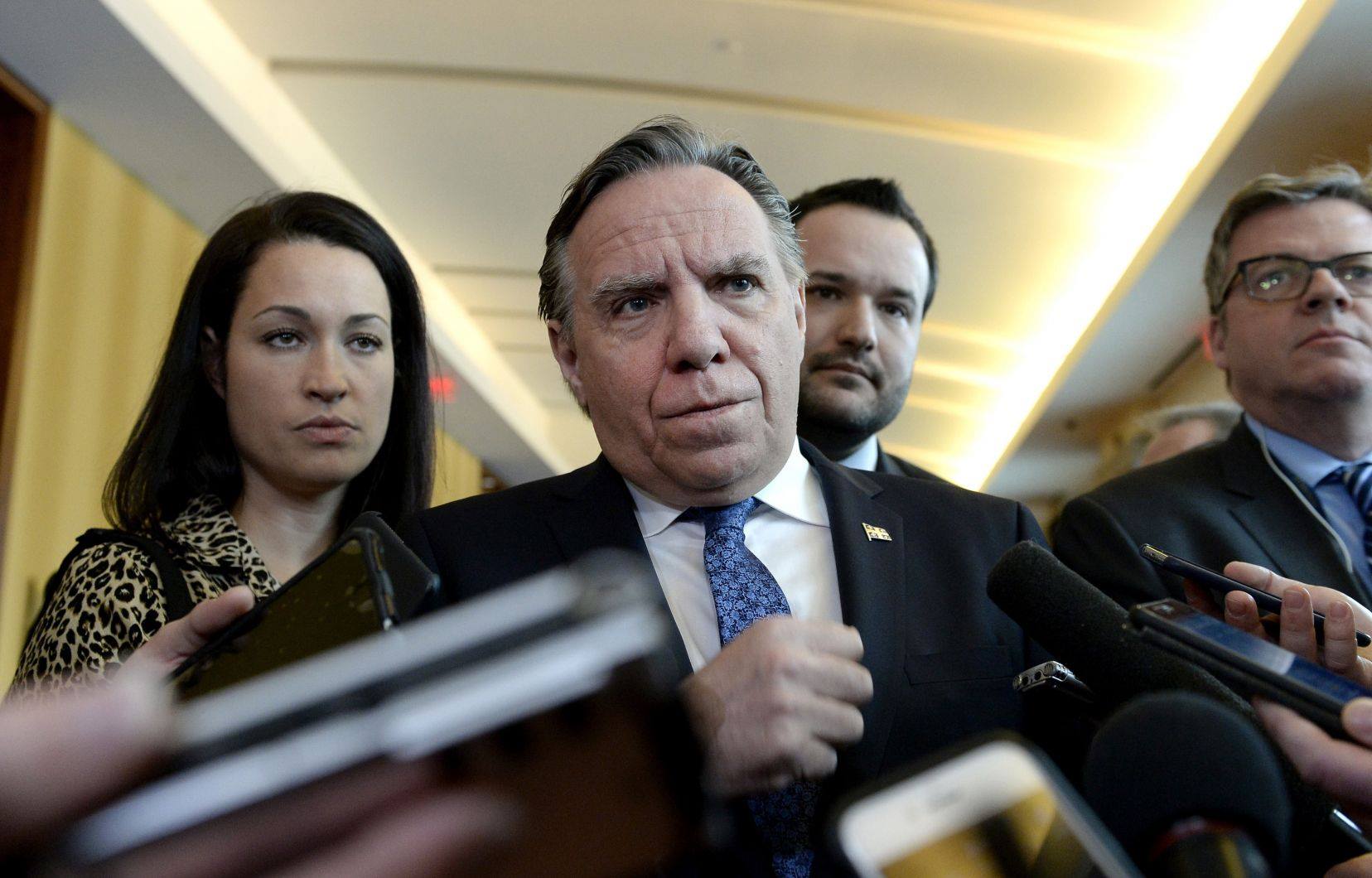
After a marathon 16-hour debate, the Coalition Avenir Québec (CAQ) passed Bill 21, an Act respecting the laicity of the State, late at night on June 16. The new law is designed to promote state secularism by prohibiting public sector employees from displaying religious symbols while working. The bill affects teachers, police officers, and lawyers employed by Quebec, among other professions, and enforces penalties for non-compliance.

At McGill, the law will have consequences for students in programs like education, who seek to enter the public sector in the future. In April, numerous school districts and Montreal borough mayors rejected the bill on principle, prompting the addition of a clause which allows unspecified “disciplinary measures” for employees who do not comply.

The act follows in the footsteps of Bill 62, which also aimed to promote laïcité, a French concept of secularism, by preventing people wearing face coverings from accessing public services. 

Bill 21 prompted an outpouring of activism from McGill students and community organizers in Quebec. On April 4, the Education Undergraduate Society (EdUS) denounced the bill, and the following day, the Students’ Society of McGill University (SSMU) released a statement accusing the bill of “[granting] further legitimacy to racist and xenophobic bigotry.”

“[EdUS] stands in solidarity with all current and future teachers who are impacted by this bill,” a statement by the EdUS reads. “We are extremely upset by the fact that this may prevent our peers from becoming teachers, and we support the [English Montreal School Board] and [Lester B. Pearson School Board]’s decisions to not enforce this bill.”

Following the passage of the bill, Provost of Student Life and Learning Christopher Manfredi released a short statement regarding its role at the university. 

“While the law will not change our policies and practices, we are concerned that it will affect and unnecessarily restrict some of our students’ future employment opportunities,” Manfredi wrote.

Kareem Hammami, U1 Arts and Science, is one of many McGill students who have taken to the streets to voice opposition. Hammami helped organize an protest on April 12 outside of the Ministry of Immigration to increase pressure on the government to abandon the bill.

“This debate has been going on for ten years, […] at first, it was deliberately targeted at Muslims,” Hammami said. “Just the language they used at the time was targeted at Muslims […] and now [the CAQ] is trying to broaden the language to make it seem like its better, but it’s still discrimination. It still excludes people from society.”

While the Canadian Charter of Rights and Freedoms prohibits discrimination on the grounds of religion, the law invokes Section 33 of the Charter, commonly referred to as the notwithstanding clause, a provision which enables law  to override certain rights prescribed in the Charter. In April, the Canadian Bar Association called for Quebec to remove the use of the clause from the law, arguing that the courts need to be able to examine the bill’s constitutionality in order to determine if it should be struck down.

“In history, whenever you invoke the notwithstanding clause, you lose the next election,” Hammami said. “Considering this is something that was pretty popular with [the CAQ’s voter] base, it might actually work in their favour. But I hope history plays out the way it has [in the past].”

Aziz Choudry, a professor in the Department of Education who specializes in anti-racist education, expressed skepticism towards the motivations behind the bill. 

“I think we should really be quite critical of the notion of laïcité, in […] both laïctié as a concept, and how its used politically,” Choudry said. “The bill itself ultimately has racist and discriminatory kinds of effects.”

While the CAQ has claimed that the bill is not specific in its targeting of religious minorities, it is regarded by many as disproportionately affecting Muslim, Jewish, and Sikh citizens, whose religious symbols tend to be more visible than those of other religions.

“We’ve had this long history of obsessing [over] what Muslim women wear, and folks from Jewish, Sikh, or other communities as well,” Choudry said. “And what this ultimately does is [serve] to be a form of social exclusion. I think that a fundamental thing that lies at the heart of this is the racism and discrimination that’s built into [the bill’s] justification. The invoking of laïcité is something that we need to actually unpack, rather than just take it a surface level of being a neutral, secular concept.”

Commentary, Opinion

In defense of spending the summer outside Montreal

In the weeks leading up to the end of the Winter semester, many students field questions regarding their summer plans and the answers often only come after long months of searching for the right job or internship. As in every city, a long list of factors can influence where Montreal students choose to spend the season. During the summer, Montreal is filled with festivals, concerts, and other seasonal events such as the Montreal International Jazz FestivalPiknic Électronik, and Montreal Pride, as well as a multitude of restaurants showcasing sunny and social patios. For many, winter in this city can be a dark few months, so it seems like everyone would want to stick around and get the most out of the too-brief period of warm weather it offers. However, even after braving a long season of icy sidewalks and sub-zero temperatures, some students rightfully choose to leave Montreal when the mercury starts to creep up again. While this move is often met with criticism by die-hard Montreal summer fans, leaving town for a few months to process the pent-up stress of the school year is a valid act of self-care.

Some students may choose to leave Montreal because they feel that they need a mental break from university life. For those whose mental health has suffered during their studies, or even those who have tired of a city that they used to enjoy, a change of scenery may be necessary. Leaving town for the season can equate to leaving overwhelming and stressful memories of the school year behind, even if only for a few months. That can do a lot of good for students who associate Montreal with mountains of schoolwork. 

However, students may also leave for other reasons. The ever-present language barrier can be a factor for those whose potential lack of French may inhibit their search for summer employment. A need to make money during the summer can push non-Francophone students to leave Montreal for work, especially if they are supporting themselves financially. Others may be more comfortable in French and still end up working in Montreal for a variety of reasons, one of which being that working in a non-native language can be intimidating. Others who come from outside Canada may take summer as a valued and rare opportunity to see family and friends from home. For students who are fresh off of a stressful exam season, going home to work can be a welcome dose of familiarity. 

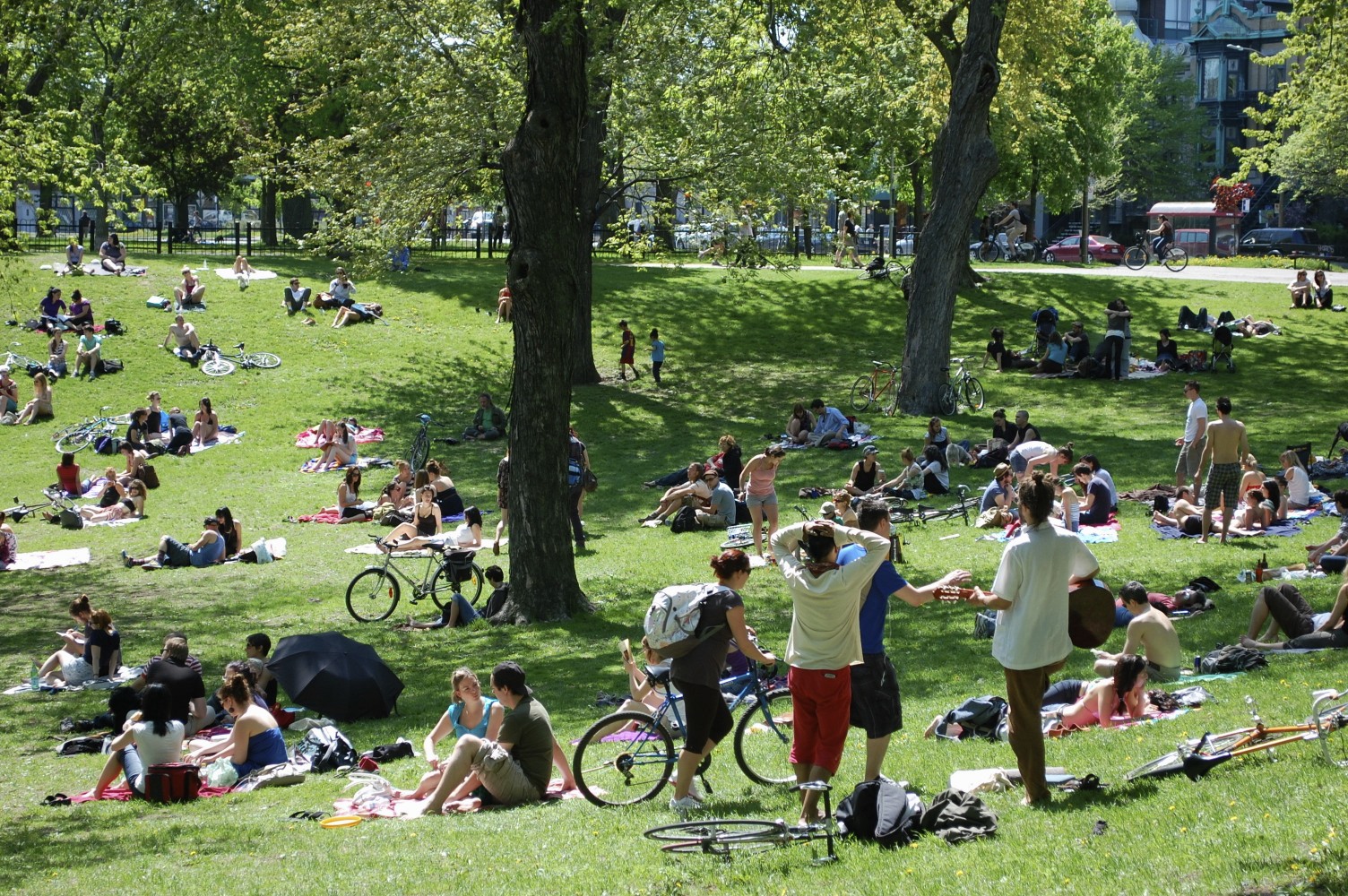
Despite these things, there are some factors that may entice students to stay here. Given all of Montreal’s summer-specific activities, it is nearly impossible to be bored during the summer. I spent last summer in the city, jogging through Parc La Fontaine and seeing a microcosm of the city’s population sitting on the freshly cut grass, each with an assortment of picnic snacks and drinks; my mouth watered at each food truck that I passed as my wallet somberly begged me to resist the temptation. For people who enjoy these things, staying in Montreal might be an easy decision.   

As magical as Montreal may be in the summer, with people taking full advantage of the sunny days and warmer temperatures, staying here during this time isn’t for everyone. For many students, the positive aspects of being here in the summer do not outweigh the valid reasons for leaving, and that’s ok. Spending a summer in Montreal is not necessarily better than spending a summer anywhere else. To return in the fall feeling refreshed and mentally healthy, students should do what is right for themselves, even if that means being away for a few months. Take some time this summer to be elsewhere—the city isn’t going anywhere. 

Science & Technology

Biological crisis forces species to adapt or go extinct

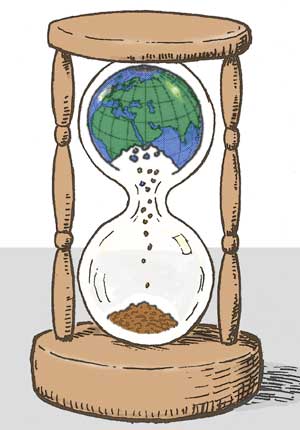
An extensive report released last month warns that unsustainable human activities, such as agricultural expansion and marine pollution, are accelerating species extinction rates and causing the fastest loss of biodiversity in human history. Authored by the Intergovernmental Science-Policy Platform on Biodiversity and Ecosystem Services (IPBES), the foremost body for issues at the intersection of wildlife and society, the report is a stark reminder that humans are not the only population threatened by environmental crises. 

The report estimates that, as of 2019, over one million animal species are at risk of extinction. Simultaneously, increasing levels of pollution and human alterations to land and sea habitats in the form of urbanization, agricultural conversion, and environmentally destructive fishing methods pose an exceedingly dire threat to Earth’s biodiversity.  

“The biological crisis requires transformative change across economic, social, and technological factors,” said IPBES Chair Robert Watson in a speech to the seventh session of the IPBES Plenary. “Only if we start now, at every level from local to global, can nature be conserved, restored, and used sustainably.”

Almost 200 years after the industrial revolution began, conservationists are seeking such transformational change in response to an unprecedented loss in biodiversity.

“Some organisms adapt quite well to human pressures, in particular those that have large population sizes and short generation times,” Kai Chan, a lead author of the IPBES report, said in an interview with The McGill Tribune. “But there are lots of cases of species that are not well positioned to adapt fast enough.”

However, species’ inability to adapt to large-scale environmental change is not the only factor contributing to their decline. 

“All of this has to be understood within the context of an ecosystem,” Chan said. “Some species can adapt to changing conditions yet do so at the expense of other species.” 

Ecosystems consist of complex interactions between organisms and their environment. The effects of species extinction therefore extend not only to groups of directly threatened organisms, but to all plants and animals.

As a result of human-induced environmental changes, the ancient system of checks and balances that supports life on Earth has been devastatingly perturbed. Genetic diversity, which under normal circumstances counterbalances some of these fluctuations, is now decreasing at a notable rate.

“It is not just the loss of species that is problematic, it is the loss of their genetic diversity that limits the potential for evolution,” Andrew Hendry, a professor in the Department of Biology and contributing author to the IPBES report, said in an interview with the Tribune

Research has shown that there has been a 5.4 to 6.5 per cent decline in the genetic diversity of populations since the industrial revolution. 

“We need to maintain genetic variation within species because that genetic variation allows them to respond adaptively to environmental change,” Hendry said. “Evolution will hold the system in a stable state for longer than if you did not have evolution. At some point, if the system were to collapse, it is going to have a much harder time recovering because you have lost a lot of variation that is well suited for other conditions.” 

Environmental changes induced by human activity are creating conditions that result in what scientists call rapid evolutionthe ability of animals to adapt much more quickly than the millions of years it normally takes for genetic mutations to accumulate. The rate at which rapid evolution is occuring has become a novel issue for conservationists as they attempt to track and understand how species will adapt to a changing climate. 

For scientists to adequately address the impending disappearance of animal populations, such as the 40 per cent of amphibian species currently at risk of extinction, they must first understand the types of changes that are occurring within ecosystems. 

“Monitoring these biological, evolutionary changes are as important for informed policy decisions as are cases of ecological change,” a section of the IPBES report reads. “Strategies then can be designed to influence evolutionary trajectories so as to protect vulnerable species.” 

Ecologists are now working to create more accurate models of rapid evolution that include complex changes in ecosystem dynamics. A point of difficulty in this task is trying to adequately simulate a continuously changing system, one which, due to human interference, continues to be affected by accelerated evolution. 

“A shifting of paradigms is definitively part of what will need to happen,” Chan said. “The question is whether the paradigm will shift before the damage is done, or if it will occur as a consequence.” 


McGill, News

Black Students’ Network holds first-ever ‘Black Grad’

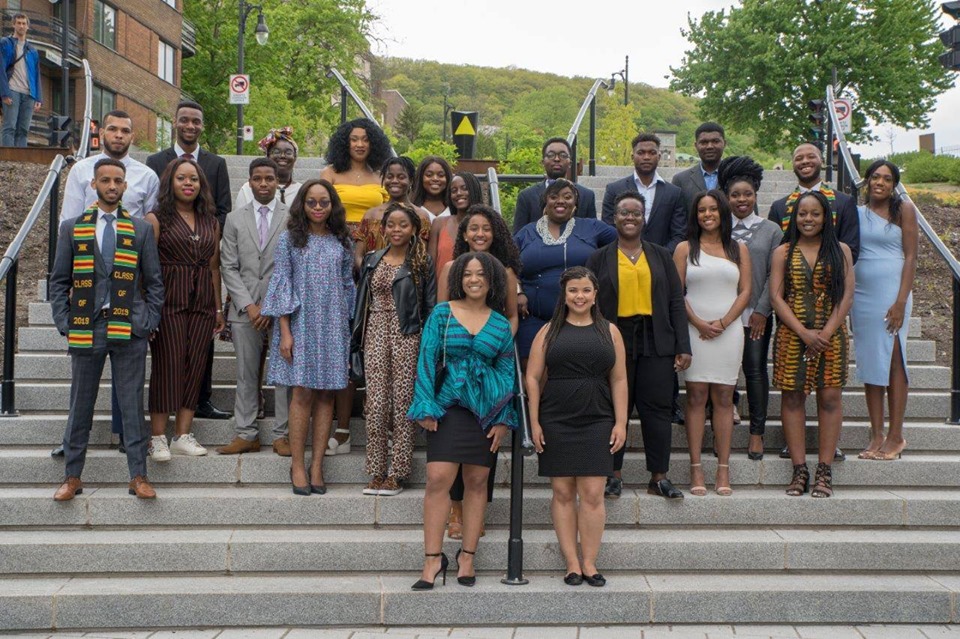
On May 29, the Black Students’ Network of McGill (BSN) hosted their first annual Black Graduation ceremony. Held in collaboration with the McGill Black Alumni Association (MBAA), the Joint Board-Senate Committee on Equity (JBSCE), and the Subcommittee on Racialized and Ethnic Persons (REP), the event aimed to foster community and celebrate the achievements of Black graduates. In addition to the ceremony, the BSN launched a Seeds of Change campaign to aid in current and future commemoration ceremonies. At the ceremony, Christelle Tessono, U3 Arts and outgoing President of BSN, explained the role of Black Grad in supporting Black achievements.

“The purpose of Black Grad is to celebrate historical, but also contemporary achievements from Black students,” Tessono said. “We really want to emphasize that we have a long history at McGill. […We want] to assert our space on campus […and] we believe in the celebration of [Black] successes and our history.”

Other universities in Canada, like the University of Toronto (U of T), hold similar Black graduation celebrations. U of T held its first Black graduation ceremony in June 2017, following the example of Harvard University and others in the United States. When Tessono came to McGill, she did not find the same type of ceremony on campus, prompting her to use her platform as BSN President to organize the event.

“Black Grad is a testimonial to and recognition of these struggles as well as a celebration of these graduates who have, against all odds, not only surmounted these obstacles, but now are ready to lead and inspire others,” a statement from the BSN read.

Some have expressed disdain toward similar ceremonies at Harvard and U of T via social media, stating that they are too exclusive. Tessono expressed how Black Grad is not restrictive nor a form of segregation, but instead a public and inclusive celebration of Black legacies at McGill.

“[Black Grad] is not a seperate celebration,” Tessono said. “It is [in addition] to the events happening at convocation [….] We are not trying to separate ourselves, we are celebrating and commemorating our history.”

The graduation celebration included speeches from Christelle Dosa, the president of the MBAA; and Heldden Byumvuhore, community organizer at Project Genesis. Dr. Adelle Blackett, professor of law and McGill Canada research chair in transnational labour law and development, delivered a speech and introduced the keynote speaker, Dr. Dorothy Williams, PhD’16; Dr. Williams is a historian and educator specializing in Black Canadian history. Brittany Williams, BCL/LLB ‘19 and class valedictorian, also addressed the crowd.

During the ceremony, the BSN announced that Andreann Asibey, BA ’19, and former Student’s Society of McGill University (SSMU) Equity Commissioner, former BSN President (2017-2018), and outgoing McGill African Students’ Society (MASS) President, would be the inaugural recipient of the Mariame Kaba Prize in Leadership & Community Service. The award honours Mariame Kaba, a McGill University graduate, educator, activist and founder of multiple organizations like Project NIA, Chicago Freedom School, and Chicago Taskforce on Violence Against Girls and Young Women. Recipient of this award receive a minimum of $1,000 in recognition of their commitment to community service. Mohammed Odusanya, U3 Arts and outgoing Advocacy Coordinator at the BSN, expressed the importance of creating space to honor Black students and their achievements.

“We wanted to celebrate the accomplishments of Black students,” Odusanya said. “[…] The reason why we felt like it was important to highlight, because, at convocation […] you don’t always see [accomplishments] like social justice commitments or [community building] being awarded or celebrated by any academic institution.”

With McGill’s bicentennial celebration next year, Tessono believes that McGill should prioritize commemorations of Black history, and to address the systemic factors which may limit the enrolment and success of Black communities at McGill, to improve for the future. Additionally, Tessono explains that Montreal’s Black communities are not adequately represented at McGill.

“[McGill’s bicentennial] is a great opportunity to start [putting Black students] on the agenda,” Tessono said. “[McGill should] collect data on the number of Black students they have [….] We want more scholarships, more community involvement, [and] more enrolment from Black students at McGill, even from Montreal.”

Arts & Entertainment, Music

‘Sunday Service’ is a sonic delight crippled by contradiction

At 9:00 a.m. on the morning of Easter Sunday, Kanye West led the first public ‘Sunday Service‘ from atop a grassy hill at Coachella. This unconventional, but overtly Christian take on Easter was not the artist’s foray into the spiritual: Accessible only to those on a Hollywood guest list, weekly ‘Services’ in which Kanye, a full band, and The Samples Choir perform renditions of gospel classics and the artist’s hits started in early 2019. The spiritual content of the show suggests that Kanye might be attempting to incorporate a new humility into his work. However, Kanye has inextricably tied this project to a cultish worship of himself. Although sonically convincing, the performance only further highlighted Kanye’s narcissism—Sunday Service seems to indicate that Kanye wants his audience to be fulfilled by his own spiritual fulfillment. In this way, Kanye’s musical worship is really a worship of Kanye.

The music itself, if temporarily removed from its chief orchestrator, was funky and mesmerizing. The sounds jumped from restrained harp sequences to the vocal drama of gospel, and even to the wavy vibes of soulful house. Such a combination—sometimes astro-jazz tangents, sometimes rap—may be Kanye suggesting a vastness of spiritual potential in all music. This eclectic medley composed a musical feast that evades easy characterization. The sound was experimental and playful, recalling Sun Ra’s Arkestra or The Orb. Kanye’s debut of the song ‘Water’ was feeble and shaky, especially when compared to a powerful rendition of ‘Family Feud,’ which segued into gospel collective in ‘Otis.’ But, the music, however enthralling, is besmirched by its conductor.

At the top of the hill, Kanye seemed to stylistically project himself onto the performers below him: Each musician and dancer wore a uniform of Yeezy-branded mauve sweat-poncho and track pants. Far below and corralled behind gates, spectators gazed up at the hill as if they were intruding upon some sort of otherworldly seance. The fact that Kanye’s performance took place atop a mountain, out of spectators’ reach, quickly sullied any notions that this was not an exclusive event. The show climaxed with Kanye openly crying in rapture and then crouching before his disciples in silent prayer for several minutes.

This scene represents the degree to which spirituality at ‘Sunday Service’ is not something for the audience to tap into or an end found through the music, but rather a product to consume itself. Such physical and theatrical displays of faith, although perhaps genuine, serve only to commodify and create a spectacle of the very spirituality that Kanye attempts to make accessible through music. This most literally manifested in Kanye’s ‘Church Clothes’ line of merchandise for sale at the show including a sweatshirt with the words ‘Holy Spirit’ on its chest.

The entire event was streamed through a circular peephole lens, which is indicative of the degree to which the audience was meant to be peering in on Kanye’s religious experience from the outside; it was as if he merely granted rights to a sneak-peek, looking through a keyhole but without a key, at his relationship with God. Kanye, who has both titled an album ‘Yeezus’ (splicing his name with Jesus’s) and choreographed this quasi-Christian ceremony, seems unsure about whether he wants to be a god or venerate one. His act seeks the establishment of a new Church of Kanye in which congregants are expected to prostrate before Kanye’s spirituality rather than experience their own. His display of self-worship, although not hard on the ears, further muddies Kanye’s creative genius with narcissism.

Read the latest issue

Read the latest issue