Latest News

Local Stories, Student Life

At rock bottom? It might be time to dig a little deeper!

It is a truth universally acknowledged that all great stories of the world require adversity. In critical times of civil unrest and political despair, it can feel like an act of hard faith in the face of a cruel joke to believe things might truly improve. We get so invested in loving a world that seems to not love us back that we grow resentful and tired. The will to change is a lost art—as students, we feel too small for our ambitions and too restless for our own good. 

Sophia Mugford, U2 Science, spoke about despair as a catalyst for change in an interview with The Tribune

“Grief is an expression of compassion,” she said. “It’s the mirrored other side of the coin of love to be hurt and lost at times. Without these feelings, you don’t get the anger you need to confront the unjust feelings of unfairness and sadness needed to move forward and enact change.”

Addressing transgender rights activism particularly, Mugford highlighted that giving in to despair means giving up on living authentically. 

“The greatest form of protest is to live,” Mugford said. “Being open to the truth of who you are and commanding space is a life-saving act for people like you.” 

Fear, too, can be a powerful tool in mobilizing communities, acting as a wake-up call to action.

Coming from a science background where politics are often less front-and-center in the classroom, Apollo Goderich, U3 Science, pointed out that activism and solidarity has the power to pull students out of the daily grind and into engaged communities. 

“You have to keep focusing on schoolwork like nothing is happening. It’s isolating and reminds you of the city’s apathy [….] When we talk with each other, we cultivate understanding—we share our anger and suffering,” Goderich stated.

The weight of the ecological crisis has driven many members of Gen Z to question whether bringing children into this world is ethical, given our grim environmental outlook. However, Rebecca Solnit, an American writer, is quick to rebut that in her experience, many activists who face the realities of the climate crisis daily are people with family and children—for whom they hope to secure a better, liveable future. This defeatist surrender reveals Gen Z’s uniquely nihilistic doubts for a prosperous future generation—it’s not uncommon to hear friends and siblings say, “We don’t even want another generation.”

Setareh Setayesh, U3 Science, however, delineates between optimism and actionable hope. 

“You can’t just have blind hope and optimism that everything will be okay—it’s satiating but it’s not fuel,” Setayesh told The Tribune. “People need to recognize the urgency, we don’t need to be comfortable and optimistic, we need to be hopeful and opportunistic.” 

Hopelessness is an emotion masked with false hope. We push things away and hope they will change, when change is an active participatory performance of will. We need to live with despair and try to understand it intimately to find ways out of it. Grief is an act of merciless, unsentimental love which spares no one. We owe it to ourselves and future generations to create a better world, working through our despair and grief to find a way forward. 

Recalling her Fundamentals of Global Health class, Setayesh recalled Thunberg’s words: “Once we start to act, hope is everywhere. So instead of looking for hope, look for action. Then, and only then, hope will come.”

Campus Spotlight, Student Life

A brief history of student activism at McGill

Students have always been the heartbeat of social and political movements, using their voices to tackle injustices. From civil rights to environmental issues, student activism has been a driving force in shaping reform and revolution. 

In 1985, McGill became the first Canadian university to divest from businesses with connections to South Africa during apartheid. This monumental decision was the result of persistent pressure from student groups and movements on campus, highlighting the power of student voices and the ethical responsibilities of educational institutions. McGill’s action encouraged other universities in the region to follow suit. 

In 2006, McGill was the first university to divest from enterprises tied to Burma (Myanmar) in response to the country’s political situation and violations of human rights. The Burma Solidarity Collective responded to injustices against the Burmese people by campaigning for four years to prevent money from going to Burma’s military rulers. Their efforts paid off: Over 1,500 students and 100 tenured faculty members signed petitions supporting the divestment, which were presented to the Board of Governors

More recently, in 2023, the McGill Board of Governors voted to divest from all direct holdings in fossil fuel companies listed in the Carbon Underground 200 (CU200), with implementation set to begin in 2024 and complete by 2025. Divest McGill, an environmental justice campaign advocating since 2012, played a key role in urging the university to confront the climate crisis by withdrawing its investments from the fossil fuel industry. This milestone was achieved through relentless student mobilization, including a 12-day occupation of the McCall MacBain Arts Building in 2022. 

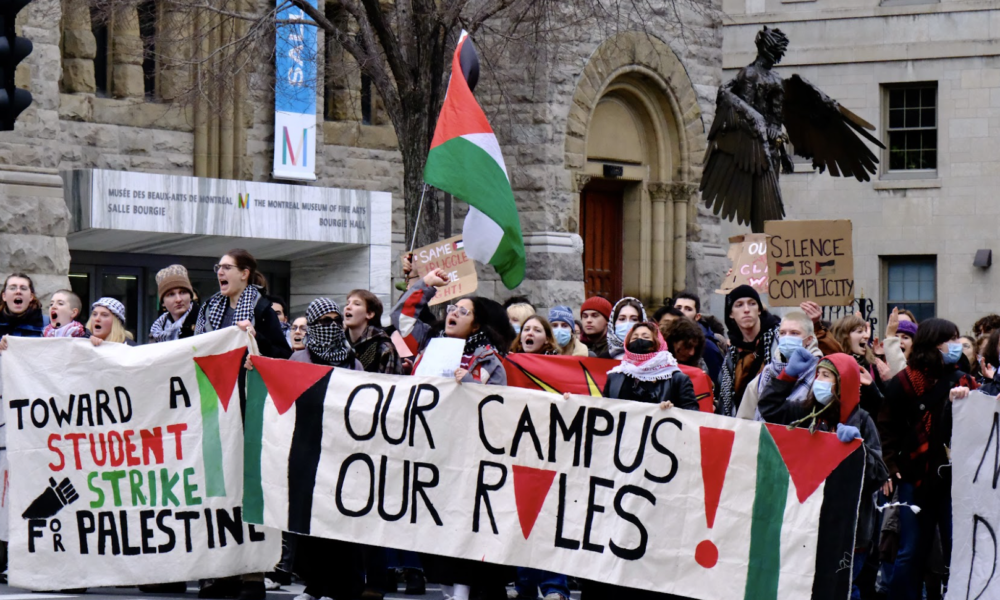
Beyond these victories, students have been active in various other movements, notably through the demand for justice for Palestine, and standing in solidarity with the Kanien’kehá:ka Kahnistensera (Mohawk Mothers)’ call to investigate potential unmarked graves on McGill’s New Vic Project, located at the former Royal Victoria Hospital site. 

Those occurrences are inspiring and show that student activism can trigger real change, but for someone who has never really taken part in activism in general, it may be hard to know where to start. There is no need to pressure yourself to become the next Greta Thunberg.

The best way to start is by educating yourself on key issues. Knowledge is power, and reading news articles and staying informed daily is a central part of being an activist—being informed about an issue is a constant process, not a one-time investment.  

Once you feel like you have your footing, you can show solidarity by joining marches, protests, sit-ins and walk-outs. Following student activist groups on social media is a good way to stay updated on events and initiatives. Make sure to stay safe and know your rights before taking part in public demonstrations. 

You can also make an impact by sending letters or emails to those in power, signing petitions, or raising awareness online. Sharing posts about what you’re fighting for can call attention and motivate others to research the cause you support. However, your involvement should not be limited to that. For example, if you’re artistically inclined, create art related to the cause you’re advocating for. Graffiti, songs, poems, and drawings can be powerful tools to spark change and get people to reflect on your message. Though these actions may seem small individually, if students collectively mobilize and remain persistent, our campus’ history demonstrates that they can spark revolutionary change over time. It’s easy to feel discouraged in activism, especially when results aren’t immediate. Advocating for change can often be frustrating, taxing, and slow. Fighting for your rights and those of others sadly isn’t always automatic or straightforward. While that can be disheartening, it shows the importance of staying committed to what you believe in.

Arts & Entertainment, Theatre

Puppets, blood, and Southern charm collide in ‘Hand to God’ from Players’ Theatre

Walking out of Players’ Theatre on Tuesday, Nov. 26 after the inaugural showing of Hand to God, it would be hard to miss the floored yet delighted reactions of audience members. The phrase “fucking badonkers” echoes off the high ceilings of the University Centre—and quite frankly, it’s a fairly apt description. Jam-packed with satanic puppets, missing earlobes, and a whole lot of deep-cut religious humour, Hand to God is one of the more entertaining ways to spend a Tuesday night.

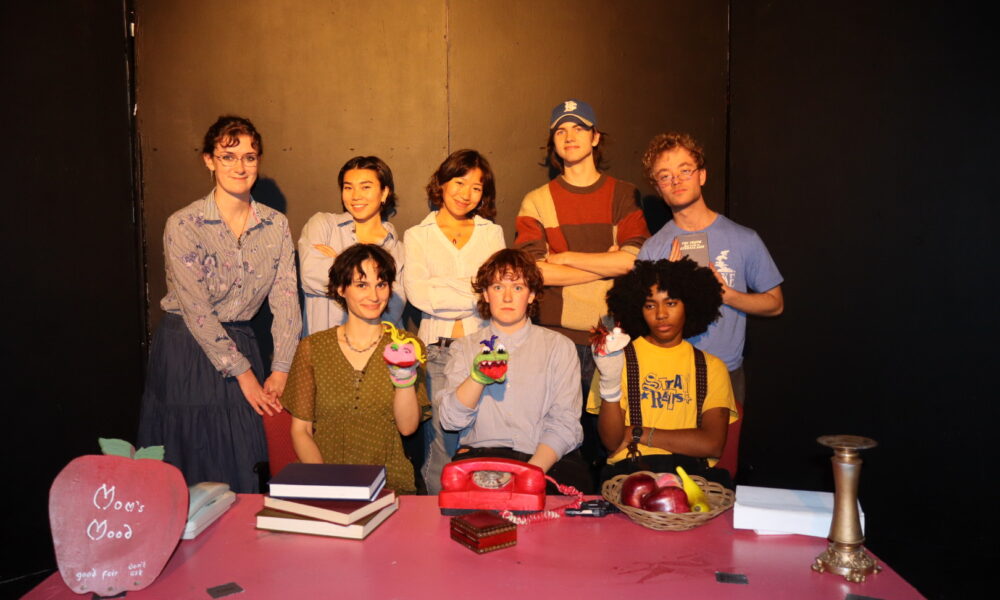
The play, written by Robert Askins, is set in the devoutly religious town of Cypress, Texas and follows recent widow Margery (Claire Tees, U4 Arts) as she attempts to lead a puppet club at the local church. The project was given to her by Pastor Greg (Henry Kemeny-Wodlinger, U2 Arts) in order to keep her occupied (idle hands and such) after the death of her husband. The club’s teenage members include her son Jason (Elias Luz, U0), his girl-next-door crush Jessica (Raphaëlle Béhar, U2 Arts) and his bully/rival Timmy (Nia Blankson, U4 Music). Things take a dark turn when Jason’s hand puppet, Tyrone, springs to life, declaring himself to be Satan, luring the group into sinful behaviour and spilling secrets everyone would prefer to keep hidden.

The show’s strength lies in its ensemble’s electric performances, particularly Luz, who commands the stage in a dual role as Jason and Tyrone. His rapid-fire transitions between Jason’s shy, childlike voice, and Tyrone’s husky, demonic growl feel like a marvel of athleticism and timing—a Jekyll and Hyde transformation for a boy and his puppet. The cast’s impeccable Southern accents amplify Tyrone’s menacing presence, grounding the play in its Texas setting. For co-director Roberta Du  (U3 Arts and Science), this attention to detail was a happy surprise.

“[The majority of the cast] ended up in the same callback, and we just put them in the roles that they are in now. And we were like, this is the show,” Du told The Tribune. “We didn’t have our hopes up for the Southern accent. We were like, if it’s bad, we’re not going to do it, but they were all, like, really dedicated. And that also kind of goes to show the type of people we want—super passionate, working for this play along with their talents.”

The passion shows not only in the performances but in the play’s immersive design. Audience members were greeted by a “Blood Splash Zone” warning upon entering the theatre—a mildly disturbing omen for what’s supposed to be a church puppet show. The reason became clear during several gleefully grotesque scenes involving stabbings, strangulations, and mutilations—mostly performed by Tyrone the puppet. The blood effects, impressively realistic, were a labour of love.

“Originally, we weren’t actually going to do blood. We were going to do, like, a comedic bit of red string coming out or something. But then we thought, it would look better. Making the blood sacks was actually really difficult. It took me a long time to figure out what we were going to do because we searched up ‘pouches of blood to explode,’ and they did not exist. So we made them out of plastic bags and hair elastics,” Co-Director Alexis Mezzarobba (U3 Science) explained. 

Despite their limited experience as directors, Mezzarobba and Du’s collaboration brought a cohesive vision to the production. Together, they crafted a tone that shifts seamlessly from absurd comedy to chilling chaos, delivering a show that feels like a slow descent into madness.

“[I] think we knew we were gonna work well together, but we didn’t know just how well. It really felt like two brains working as one. Anything that I couldn’t quite remember, I feel like was […] filled in by [Mezzarobba],” Du told The Tribune. 

Hand to God is incredibly successful in its cutting religious sarcasm and pushing unnerving violence to boundaries in all the right ways. 

In the best way possible, it will haunt my dreams (or maybe nightmares) forever. 

Arts & Entertainment Editor Dana Prather was the Intimacy Director for ‘Hand to God’ and was not involved in the editing or publication of this article. Web Editor Roberta Du was the Co-Director of this project. While interviewed, she was not involved in the editing or publication of this article.

News, The Tribune Explains

The Tribune Explains: Childcare services at the Macdonald Campus

At the Post-Graduate Students’ Society’s (PGSS) Nov. 7 Fall General Meeting, a graduate student in attendance raised concerns about the lack of childcare services at the satellite Macdonald Campus.

According to McGill’s 2021 Student Demographic Data Survey, 5.3 per cent of students have one or more dependents for whom they are the primary caregiver. Among survey respondents that did not opt out, 76.2 per cent—or 361 students—with dependents are caring for children.

For students with dependents, The Tribune explains the childcare services offered at both the Macdonald and downtown campuses.

What are the different types of daycares in Quebec?

There are four types of daycares in Quebec. 

Early childhood centres are non-profit daycares that provide services at the reduced rate of $9.10 CAD per day. This rate includes an 11-hour daycare service with one meal and two snacks, provided that the child qualifies for the reduced parental contribution and forsubsidized daycare by the ministère de la Famille. Private subsidized daycares are for-profit, but they offer childcare services at the reduced rate as well. 

Private non-subsidized daycares usually set their own rates, but parents who use their services may redeem a tax credit to pay for them. Home-based daycares are run in private homes and can be offered both at the subsidized or non-subsidized rates.

What childcare services exist for students at the Macdonald Campus?

The only operating daycare on campus is the Centre de la Petite Enfance (CPE) du Campus. It is a non-profit organization, providing childcare services to the staff and full-time students of both the McGill Macdonald campus and the Cégep John Abbott College. The CPE currently holds a permit to care for 60 children from three to 59 months in age. The daycare also accepts some children with special needs.

Nearby subsidized daycare services include the Centre Éducatif à Ciel Ouvert in Sainte-Anne-de-Bellevue and Le Coin des Marmots in L’Île-Perrot.

How does childcare at the Macdonald Campus compare to the downtown campus?

The Students’ Society of McGill University (SSMU) currently runs the SSMU Daycare and Nursery on the downtown campus. The SSMU Daycare Fee (SSMC), charged to all undergraduate downtown campus students, contributes to the expansion of childcare services provided at the Daycare and Nursery. According to its website, the cost of childcare service is $9.10 CAD per day per child under the subsidy by the ministère de la Famille. The fee covers a 10-hour daycare service that includes snacks, meals, and education up to a maximum of 261 days per year.

On top of that, the McGill Childcare Centre also serves 110 children of McGill students, staff, and faculty at the downtown campus. The daily rate of childcare services, similar to the SSMU Daycare and Nursery, is subsidized and governed by the rules and regulations of the ministère de la Famille. There is a $25 CAD membership fee per family to be paid first in order to access the childcare centre’s services.

At the downtown campus, students who are pregnant, or students who have at least one child under the age of 5 attending daycare, may obtain parking permits for spots directly on campus. However, the Macdonald Campus does not have any specialized parking permits for students with dependents. 

How are McGill and student unions addressing concerns over childcare at the Macdonald Campus?

In an email to The Tribune, the Macdonald Campus Graduate Students’ Society (MCGSS) President Jasmine Muszik acknowledged the lack of daycares on campus and wrote that Valérie Orsat, the Acting Dean of the Faculty of Agricultural and Environmental Sciences at Macdonald Campus, has been made aware of these concerns. Muszik noted that the issue has also been brought up at an MCGSS town hall where Orsat was present.

According to Muszik,  Joan Butterworth, the Chair of the Joint Board of Governors and Senate Committee on Equity’s Subcommittee on Family Care also plans on raising this issue at the next meeting.

For more information on childcare at McGill, visit the university’s Family Care website.

Behind the Bench, Sports

Bowers and Pulisic’s “Trump Dance” celebration met with criticism

Sports and politics are interwoven in increasingly complex ways. From Tommie Smith and John Carlos’ powerful silent protest on the podium during the 1968 Mexico City Olympics to Colin Kaepernick kneeling during the national anthem at NFL games, athletes have used sport to have their voices heard. In the weeks following the 2024 U.S. presidential election, another political trend has emerged across the sporting world: The “Trump dance.”  

Popular amongst supporters of President-elect Donald Trump, the dance involves a herky-jerky shaking of the arms and hips. It has been used to celebrate goals, touchdowns, and other big-time plays in the last month. Raiders breakout rookie tight end Brock Bowers and U.S. men’s soccer star Christian Pulisic were among the players who used this dance as a celebration. When questioned postgame about the dance, both athletes had a similar response—that the dance wasn’t political, and was just used because it was “fun” and popular. 

The players owe spectators a better explanation than that. They are more than entitled to celebrate their achievements in any fashion they want, but to do so by paying tribute (whether they meant to or not) to a controversial leader like Trump while simply writing the celebrations off as jokes is unacceptable. Even overt homages to Trump are not commented on by the athletes themselves. San Francisco 49ers star defensive lineman Nick Bosa interrupted Quarterback Brock Purdy’s post-game interview while showing off a Make America Great Again hat but had little to say about the incident in a press conference afterward. Bosa was eventually fined because he violated the league’s uniform policy, but the damage was already done; his actions had set social media ablaze. 

The effect of the players’ celebrations is compounded by their lack of explanation, reflecting the position of privilege these athletes have. When basketball legend and current Lakers forward LeBron James commented on the challenges that Black athletes faced, including an incident where someone graffitied a racial slur on his house, Fox News personality Laura Ingraham told her viewers that James should just “shut up and dribble,” a now-infamous phrase.

American conservatives have been campaigning for what seems like forever to remove any political statements from athletics. Every sports fan has heard “keep politics out of sports” in numerous contexts, whether it be against Pride Month celebrations or anti-racism efforts from leagues worldwide. Now that the political action being taken in sports is from athletes whose beliefs land on the conservative side of the spectrum, detractors of people like Kaepernick and James are now celebrating the actions of Pulisic and Bowers. It outlines a clear double standard within the sports world. 

Kaepernick was blackballed from the NFL because of his anthem displays. In addition, NFL general managers were outwardly resentful of Kaepernick and his political views, with the late Houston Texans owner Bob McNair going as far as saying that they “couldn’t have the inmates running the prison.” McNair later apologized for his racist comment, then walked back his apology.

The overarching problem with these celebrations is not that the athletes should not be able to do the Trump dance, it’s that their post-game comments show a profound ignorance of the consequences of their actions. White athletes writing off a Trump-inspired celebration as nothing more than a joke unrelated to politics, while Black athletes have faced career-ending consequences for similar displays, is a clear example of injustice. There is a willful ignorance around the reaction to these celebrations, and a lack of consideration for how the dance can be used to further the popularity of a president whose leadership has brought pain and struggle to families across the United States. The lack of understanding by these players that their actions have consequences is disappointing but unsurprising, and the increased normalization of these celebrations will only bring on more support from conservative fans.

Commentary, Opinion

Prêt à Manger—not as prêtty as you’d like to believe

It’s a common phrase: You are what you eat. Because people have such an intimate relationship with it, food makes for a particularly powerful political protest tool. Everyone has an opinion on food—anyone could delineate a bad egg from the apple of one’s eye. Similarly, much can be inferred about a protest by the food that defines it—as food is what nurtures us, it is also what fuels our political activism. This truth is reflected in the longstanding history of food protest.

It was that green gloom of Oct. 7 that first struck me when I paced the Sherbrooke-paved Roddick Gates. A large white van parked perpendicularly, rested halfway ajar like a wink, encasing a baker’s way-too-many of brand-name gourmet salads and sports drinks. 

What I will never forget was our shared broken laughter as I remarked that the police brigade in front of McGill must’ve managed to strike up a pretty penny sponsorship deal with none other than the local sweetheart salad bar. The joke writes itself: “Headliner! Signature meal prep company dabbles in domestic militia practices.”

It wasn’t until I recalled the Palestinian starvation protest that I started thinking about what silly salads might say about the possibly even sillier people who eat them. It’s a tragicomic disparity, a striking demonstration of privilege and power: Coordinated swarms of police officers parading on horseback, gratuitously eating expensive, curated, balanced diets. These same optics and the symbolic weight of food in political protest have permeated centuries of revolution. It is easy to conjure up the image of a bad vaudeville-era theatre performance pelted mercilessly with rotten tomatoes as a token of disapproval. When the audience is normally passive, the concept of projecting rotten produce represents a shift towards audience interactivity and freedom of expression. The tomato is accessible and inexpensive, and the soft, messy texture makes for a very emotional statement. The rotting symbolizes rejection and literalizes the audience’s disgust by materializing it on the stage for everyone to see. 

This brings to mind the brief 2019 UK trend of “Milkshaking,” where far right-wing figures were condemned by having milkshakes publicly thrown at them. Note the particular choice to use milkshakes—a dairy product which rots and “goes bad” the same way a corrupt politician might. The juxtaposition between severe, powerful leaders, and the sweet juvenile confections which streak their faces of outrage convey ridicule and detract from their optics of authority by reducing them to tantrum-ing tyrants who can’t help but cry over spilt milk. 

It is only through our very personal relationship with food that it is able to hold so much power as a political symbol. With such a collective, concrete public consensus, we begin to see playfulness take root as we are constantly challenging our preexisting associations and redefining our understanding of food and the social groups we choose to affiliate it with using layers of validated expectation and alternative subversion. 

Starvation, by comparison—such as that of the pro-Palestinian hunger strike—is an example of desperation embedded with a sense of helpless dread. Fundamentally, to starve is a plea to be seen once more as uncomfortably human. Allowing your body to break down on full display without concern for dignity poses a challenge to the cold uncaring negligence that characterizes the modern political landscape. 

This contrast between abundance and starvation in protest is much more complicated than access to expensive foods, and it’s much more horrifying than saying starvation is cheaper than a salad. It is an invitation to question the apathy we’ve grown so comfortable with. But I guess that’s just some food for thought.

Sports, Varsity Round UP

Varsity Report Card: Fall 2024

Martlets Field Hockey (0–10): C-

The 2024-25 season concluded with the Martlets Field Hockey team once again finishing at the bottom of the Ontario University Association (OUA) standings. However, this year marked an important shift for the team as they hosted their first home game in over five years. The matches, played in front of an energetic and excited crowd, saw the Martlets face off against the Queen’s Gaels in two close games (0-2 and 2-3). While the results did not go in their favour, their spirited performance highlighted the team’s growth and resilience. With a significant number of talented first-year players on the roster, the Martlets are showing promising signs of improvement, and are looking stronger than they have in recent seasons.

Martlets Rugby (0–6): D

With another winless season, the Martlets Rugby marked one of their toughest seasons to date. The past seasons—2021-22, 2022-23, and 2023-24—had seemed to provide some hope for the team, with the Martlets taking at least one win each year. Nonetheless, this year has led to a quite disappointing trend, with the team losing their last match 0-115 to the University of Ottawa Gee-Gees. Despite the victory-less season, Martlets Rugby did have some success off the pitch, with 16 of the team’s roster making the 2023-24 President’s Student Honour Roll. With the Martlets having over ten first-year players on the team, The Tribune is hopeful that the team’s outlook will improve in the upcoming seasons. 

Cross Country: Martlets B-/Redbirds B+ 

The Martlets placed first in two out of four regular-season meets, and third at Réseau du sport étudiant du Québec (RSEQ) Championships. When they travelled to Kelowna for the U SPORTS National Championships, they ended up placing 15th of 22 teams from universities across Canada. They walked away without medals but with two RSEQ All-Stars: Sophie Courville and Abene Glasgow. The Redbirds came second in three out of four regular-season meets, securing third at the RSEQ Championships and placing 10th at the U SPORTS National Championship, this time with three RSEQ All-Stars: Luca Messenger-Jones, Devin Chapple and Samuel Hepworth. The Tribune looks forward to watching the Martlets and Redbirds take on the track and field indoor season. 

Redbirds Football (3–6): C+

Redbirds Football brought home three wins in nine games this season, falling to the Université de Montreal Carabins in the semi-final of the RSEQ. Despite not making their mark when they travelled to nationals, they put on a masterclass at the Shaughnessy Cup game for a huge homecoming occasion, driving the Concordia Stingers into the turf and running rampant in front of a packed Percival Molson Stadium. In addition, the Redbirds sent three top-tier players to the East-West Bowl: Zachary Aboud, Domenico Piazza, and Ryan McNally were selected to attend the Canadian Football League Prospects game in Waterloo. Quarterback Dimitrios Sinodinos ends the season with packed suitcases ready to embark on his journey to be the first Canadian football player in Japan. The Redbirds showed an improvement to last season, ending the year on a higher note.

Redbirds Soccer (10–7–4): A

Redbirds Soccer had a season to remember. Securing second in the RSEQ, McGill earned a spot at the U SPORTS National Championships. Arriving at nationals champing at the bit, they stormed past tournament hosts, the Ontario Tech Ridgebacks, before unfortunately being outclassed by the eventual winners of the tournament, the University of British Columbia Thunderbirds, in a painful 3-0 loss. Following this, they lost to the York University Lions in their bronze medal game; however, they still received a high grade for such a successful season and strong effort to their fourth place at nationals. The Redbirds produced two players, Yannick Laurent and Ibrahim Chami, who made it into the U SPORTS Tournament All-Star Team. 

Martlets Soccer (9–6–2): B+

With nine wins, six losses, and two ties, Martlets Soccer had a fairly successful season. Midfielder Chloe Renaud was named RSEQ player of the year for her staggering 12 goals and four assists throughout the season. The Martlets began the regular season with four wins in a row until breaking their winning streak to the Laval Victors. From there they broke even, beating a few teams and ultimately held their own, losing games by only one or two points. With three more wins than last season, the Martlets have made a drastic improvement in their quality of play. Unfortunately, getting knocked out of the playoffs due to an own goal in the semifinal match against Laval caused the Martlets to lose a few marks in the grade book. 

Redbirds Lacrosse (11–2): A+ 

Redbirds Lacrosse had an incredibly successful season this year, with 11 wins and only two losses. Once again making it to the Canadian University Field Lacrosse Association Baggataway Cup semifinals, the Redbirds lost by one point in a devastating quadruple overtime, even after attackman Zach Bye tallied five goals. The only other loss of the season was a brutal 16-5 against their American neighbours, the University of Vermont Catamounts. Seven players were named All-Rookie honours and were each a driving force in the team’s massive success. With one more win than the 2023 season, they have upheld and uplifted the Redbird name and will hopefully continue to flourish in the seasons to come. 

Redbirds Baseball (8–4): A-

McGill Baseball’s season seemed to mirror last year’s. They once again went second in the league, with an 8–4 regular season record that included two wins against Université du Québec à Trois-Rivières (UQTR)—who they had been unable to beat the previous season. After consecutive wins over the Concordia Stingers in the semifinals, their strong showing in the playoffs ended in unfortunate back-to-back losses in the best-of-three final against UQTR. 

Shortstop Brad Marelich was a consistent force throughout the season, with several hits in key games. Outfielder Jonas Press was also a standout player on offense for the Redbirds. Centerfield Jett Jarvis was named one of the athletes of the week on Oct. 7, with strong performances in the Oct. 5 playoff games against the Stingers.

Redbirds Rugby (5–1): B+

Redbirds Rugby had an impressive season with a record of 5–1. They won every regular-season game except their last, including a victory over the University of Ottawa Gee-Gees, who they failed to beat last season. They also had a decisive victory against Harvard in the Covo Cup. However, during playoffs, they fell to the Gee-Gees in the semifinals, getting knocked out by the same opponent as last season and failing to see any playoff improvement. Ottawa was ultimately defeated in the finals by École de technologie supérieure (ÉTS).

Several Redbirds stood out on an individual level. At the end of the season, Head Coach Ian Baillie was named RSEQ men’s rugby coach of the year, his third time winning that award. Fullback Martin Laval was a consistent scorer, leading the Redbirds to several of their victories; he was named a first-team all-star alongside his teammates Anderson Recker, Brad Hunger, Ian McDowell, and Harry Corkum.

Rowing: Martlets B/Redbirds B+

2024 marked the second year that the McGill rowing team made the podium at the Canadian University Rowing Association (CURA) championships. Prior to 2023, the last time the team had gotten a CURA medal was in 2014. This year, the Redbirds won bronze in the men’s heavyweight double sculls with Ayoub Sabri in the stroke seat and Patrice Légaré at the bow. Overall, the Redbirds placed seventh in the men’s division with the Martlets placing 10th in the women’s division. While the Martlets didn’t make the podium, three boats qualified for the B finals. Overall, the rowing team is on the up and up from years prior. 

Golf: Martlets B-/Redbirds B+

McGill golf saw some great individual successes this season with Simon Savaria and Amy Wang both earning RSEQ all-star status. Adley Abols made history by becoming the first man golfer at McGill to hit a hole-in-one, when he did so at the RSEQ Omnium 1 Tournament. Previously, only two athletes, both women, had registered hole-in-ones. Despite the accomplishment, Abols was only the fourth top-scoring McGill golfer at the competition, beat out by Savaria, Gregor Lawson, and Camden Purboo, exemplifying the team’s skill this season. The Redbirds also qualified for nationals which will be held in the spring of 2025. On the Martlets side, apart from Wang’s recognition, the team did not make a big splash this season. With young teams for both the Martlets and Redbirds—with over half of the Redbirds team being first-year students—McGill golf is looking toward improvement for the years to come.

Editorial, Opinion

2024 SSMU executive midterm reviews

The Tribune’s Editorial Board presents its midterm reviews of the Students’ Society of McGill University (SSMU) and Post-Graduate Students’ Society (PGSS) executives. Tribune editors researched and communicated with each executive before leading an Editorial Board discussion on the executives’ work and accomplishments. Editors with conflicts of interest abstained from discussing, writing, and editing relevant reviews.

SSMU President: Dymetri Taylor

So far, one of Taylor’s most significant projects has been working to draft a proposal for changes to the SSMU constitution with the goal of creating a better-functioning student union. SSMU’s relevant governance bodies must approve these changes and the constituency must vote on them before they are adopted. In proposing revisions to the constitution, Taylor hopes to improve SSMU’s governance structure such that it will better delegate responsibilities between the Board of Directors (BoD) and the Legislative Council. As it stands, all of the Legislative Council’s resolutions must be ratified by the BoD, which means that the latter has veto power. The Tribune encourages Taylor to use the proposed governance restructure as an opportunity to increase the power of student representation at SSMU in the Legislative Council. 

Another one of Taylor’s goals is to increase efficiencies in the work of executives. For instance, he is considering a proposal to merge the Vice-President (VP) Internal and VP Operations and Sustainability positions, which would reduce the money SSMU spends on salaries. Given that recent executives have expressed concern about the workload of the executive team, The Tribune urges Taylor to consider how these changes might serve to better support them, and not just cut costs. During his tenure, Taylor has worked to improve the internal regulations of SSMU elections and is negotiating a new management plan with McGill regarding the leasing of the University Centre

Student engagement has also been among Taylor’s top priorities for the semester, and he views events as a crucial way to reach the student body. Among Taylor’s accomplishments are hosting an interfaculty welcome dinner for faculty associations and helping to plan the upcoming Gatsby Gala for students. While his commitment to strengthening students’ relationship with SSMU is crucial, especially considering poor voter turnout in recent years, a meaningful engagement strategy demands more events and more than just events to reach all parts of the student population. 

SSMU VP Finance: Pauline Jolicoeur

When Pauline Jolicoeur assumed office at the end of the 2023-2024 academic year, SSMU had a budget deficit of over $726,000 CAD, and had just run two unsuccessful referendum questions for a SSMU base fee increase. Given these circumstances, her immediate priority was to reorganize SSMU’s finances to address the budget deficit. Jolicoeur told The Tribune that through a consolidated downsizing effort in May, removing subscriptions to several softwares, renegotiating contracts, and many smaller adjustments, the entirety of this year’s projected budget deficit of $426,000 CAD has been eliminated. The actual numbers and reports supporting these figures are not currently available to the public, although Jolicoeur mentioned that they would be made available in the next few weeks. Jolicoeur said she was proud to have eliminated the deficit, and to put SSMU on a more sustainable financial path moving forward. 

In the coming semester, she hopes to revive SSMU’s Finance Committee in order to conduct an in-depth review of SSMU’s reserve fund investments, as well as streamline the accounting paperwork by using a webform. She also discussed the possibility of creating bank accounts for student services, similar to the ones that student clubs currently have, and developing a more user-friendly budget template for clubs to use. Although SSMU’s request for a base increase failed to pass again this semester, Jolicoeur said that it should not threaten any of SSMU’s existing functionality, but would prevent SSMU from increasing the salaries of its employees represented by the SSMUnion, amid demands for increased pay in line with the current cost of living. While eliminating SSMU’s budget deficit is a crucial step, The Tribune urges more transparency around the financial breakdown and reports. Moving forward, more work will be necessary to balance SSMU’s functions with fair compensation for SSMU employees given the rejection of the fee increase.

SSMU VP Internal: Zeena Zahidah

Zahidah began her role as VP Internal with an idealistic vision. While she had strong goals for the position, she admitted she didn’t understand all the inner workings of the SSMU, and how much her position involves administrative work. Her priority was inclusive representation for francophone students, a mandate which is now held by the VP External Affairs portfolio but was under her purview during her campaign. Now, over half of her committee members are fluent in french, and she’s successfully implemented a form in the office to let staff choose their language of communication. She also hosted a francophone club night called Femme Fatale, and is planning other diversity-focused events at Club 212 for next semester. 

Another goal has been connecting first-year students to the wider McGill community—she’s started work on a “buddy system,” which has started slower than expected thanks to by-elections and midterms, and is planning a social event in January with the Students’ Society Programming Network (SSPN) and First-Year Council (FYC) for students who missed frosh. In collaboration with SSPN, she negotiated a deal with 212 to host events like the Great Gatsby Gala, 4Floors and Faculty Olympics while Gerts is closed for maintenance. Zahidah has also been working hard to support the full-time SSMU staff, campaigning for the base fee increase to support their salaries and benefits. Though the levy did not pass, she plans to continue advocating for SSMU full-time staff so they are supported and recognized for their work. Zahidah also wants to pass updates to the VP Internal mandate and set up better structural and financial support for the following VP Internal, so they can start next year in a better position.

SSMU VP External: Hugo-Victor Solomon

Solomon’s goals as VP External were focused on addressing pressing social justice issues at McGill and fostering stronger community ties. He prioritized addressing the militarization of McGill’s campus, aiming to ensure the administration upholds peaceful and educational values. A key initiative under his leadership was the organization of two critical walking tours in Milton Parc. These tours, led by students, faculty and organizers from the Quebec Public Interest Research Group at McGill (QPIRG) and the Milton Parc Citizens’ Committee, discussed issues like Indigenous rights, climate change divestment, as well as the removal of the James McGill statue. For Solomon, supporting Indigenous communities has also been central, including helping the Mohawk Mothers with travel expenses for their legal appeals in Ottawa. He is currently working on creating a permanent Indigenous art exhibit in the University Centre slated to open in February. 

Expanding the Community Solidarity Fund— though its implementation will be delayed due to an issue with Elections SSMU—was another key initiative, alongside his work supporting Francophone students. Solomon also collaborated with the Black Affairs Committee to develop a Black Solidarity Policy. Additionally, Solomon presented a policy to combat antisemitism, stressing the importance of distinguishing it from anti-Zionism. As the policy did not pass, The Tribune urges Solomon to continue pushing to implement a policy against antisemitism within SSMU. Looking ahead, Solomon remains committed to connecting McGill with the Milton Parc community and continuing his work on establishing a food bank, which he aims to launch in the coming semester.

SSMU VP University Affairs: Abe Berglas

Berglas entered their role as VP University Affairs with a strong focus on accessibility, governance transparency, and protecting protest rights. Thus far, they have done a commendable job. They aimed to address the lack of resources for disabled students, emphasizing the importance of student-led advocacy to avoid treating disabled individuals as a monolith. This goal evolved into a deeper collaboration with McGill, particularly on accessibility strategies, where they partnered with the equity team to gather and compile student feedback. Berglas also sought to make governance processes more accessible, filling all advisory board positions for the first time in years, despite challenges with training gaps and inactive boards. On academic advocacy, Abe revitalized SSMU’s Accessibility Committee, reinstating accessibility-focused training and events. They also updated resources for student rights, incorporating protest rights into workshops and expanding collaboration with student senators across faculties. 

Despite fostering fruitful dialogues, Berglas told The Tribune they have faced administrative barriers, such as uncooperative committee structures and logistical skepticism, which they have worked to address through formal complaints and demand letters citing legal obligations for student representation. Looking ahead, Berglas plans to audit McGill’s EDI and anti-Black racism plans for 2020 to 2025, advocating for a critical review of their progress. They aim to foster stronger ties between SSMU and faculty members and enhance record-keeping through senator reports and a public blog to ensure continuity. While balancing sustainability with flexibility, Berglas remains committed to advancing accessibility and equity while empowering students to engage with university decision-making processes. Berglas’ plan sounds realistic, well-structured, and impactful for McGill students—but they are also taking on a significant workload. The Tribune recommends delegating tasks to others when possible to ensure that all goals are met within their term. 

Science & Technology

Reaching every doorstep: Equitable care for pregnant women in Nigeria

Nigeria’s Bauchi State has one of the highest maternal mortality rates in the world. Home visit programs are making a difference in reducing this rate by bringing vital healthcare knowledge straight to the doorsteps of pregnant women. By meeting women and their families where they are, this initiative helps address maternal health inequities and support vulnerable families. 

Anne Cockcroft, professor at McGill’s Department of Family Medicine in the Faculty of Medicine and Health Sciences, recently published a paper in Community Health Equity Research & Policy examining the equity of universal home visits to pregnant women in the Bauchi State. 

“All women need care during pregnancy and childbirth,” Cockcroft wrote in an email to The Tribune. “A problem with many interventions that involve outreach to communities or home visits is that they do not reach the most vulnerable households.”

Maternal health services in low- and middle-income countries (LMICs) are often under-resourced and unable to provide sufficient care for pregnant women. This study specifically examined how home visits—which aim to share actionable health information and promote equity—impact disadvantaged groups including women in rural areas, low-income households, and those with limited education. 

During these home visits, trained visitors shared crucial information on preventing pregnancy complications, equipping households to take proactive measures, particularly with men’s involvement. This included reducing heavy workloads, avoiding violence, and recognizing danger signs during pregnancy and childbirth. 

One key element of the program’s success was its focus on involving men. Men home visitors spoke with husbands, encouraging them to discuss pregnancy-related topics with their spouses and support them with household tasks. One of Cockcroft’s previous studies has shown that this not only improves maternal and child health outcomes but also improves the husband’s behaviour and attitude towards maternal and child care.  

Another major strength of the program is its universal approach. 

“We did not make initial assumptions about which women and which households most needed help,” Cockcroft wrote. “Only by making the visits universal can one ensure all women get support.”

This approach differs from government-provided health services in that it is available to all households. The most disadvantaged households often face the greatest barriers to accessing facility-based healthcare services. 

“The same factors that increase maternal morbidity and mortality reduce the ability of women to attend facilities for antenatal care or childbirth,” Cockroft wrote. 

The study found significant improvements in maternal knowledge of potential pregnancy risks in disadvantaged pregnant women. Pregnant women in rural and remote areas, those from impoverished households, and those without formal education experienced the greatest benefits. These included increased knowledge of danger signs during pregnancy, reduced instances of domestic violence, and improved spousal communication.

Similar to earlier reports of the trial, the home visits also produced notable improvements in maternal and child health. These benefits, however, tend to favour less disadvantaged groups, potentially widening the gap with more marginalized populations. What is unique about this study, however, is that it confirmed the pro-equity nature of home visits.

“The home visits did reach everyone equally, and the program was pro-equity,” Cockcroft wrote. “The impact of the visits was greater in poorer, less educated women in rural communities.”

Comprehensive household-level programs are critical in addressing barriers to accessing healthcare services and offer a practical approach to advancing universal health coverage. Additionally, home visit intervention promotes gender equity and can even be gender transformative

Moving forward, the Bauchi Ministry of Health is planning to integrate home visits—like those in Cockcroft’s study—into its routine services. 

This initiative stands as a testament to the transformative power of equity-driven healthcare. Its success reminds us that equitable health solutions are not only possible, but essential.

Science & Technology

Towards equity: 2SLGBTQIA+ representation in genetic counselling education

Genetic counselling is a growing field that aims to use family history and DNA testing to help families that may be at high risk for having children with birth defects and genetic disorders, as well as assess risk factors for inherited conditions. While innovations in genetic testing present new horizons for doctors and families, concerns are growing that modern genetics may be at risk of reproducing aspects of eugenics, a movement that aimed to “improve” future generations by only allowing certain people to reproduce. 

As genetic counselling navigates these concerns, it must grapple with many serious ethical and political questions. One certainty is that a diversity of voices must be included, both in conversations about genetic counselling and within the field itself. 

Valerie Chu, a recent McGill graduate, published a recent paper analyzing inclusivity in genetic counselling programs. While this paper was part of Chu’s graduation requirement, it held a special place for her, as it allowed her to suggest improvements that could increase the inclusivity levels in genetic counselling masters programs while working to amplify the voices of 2SLGBTQIA+ students. 

“I chose more of a passion project, something I thought was very important to the field,” Chu explained in an interview with The Tribune

Studies have explored and documented the experiences of 2SLGBTQIA+ students in adjacent fields. They have consistently shown that regardless of the field—medicine, dentistry, social work, or nursing—discrimination against 2SLBGTQIA+ students persists.

“They experienced discrimination and a different experience [during] their healthcare degree compared to their non-queer peers,” Chu stated. “But there were no published papers about genetic counselling students who identify as part of the LGBTQ population.”

For her study, Chu interviewed 13 genetic counselling students and recent graduates who self-identify as part of the 2SLGBTQIA+ community. 

“[We asked them about] their experience, and what their relationships were like with their peers and their faculty in their two-year genetic counselling master’s degree,” Chu explained.

The results of the study showed trends similar to those found in analysis of 2SLGBTQIA+ experiences in other fields, with seven sub-themes, such as assumptions of heterosexuality, feelings of isolation, and the need to educate classmates on queer issues, emerging in the responses.

Some of these themes are present in other related fields, one example being the conscripted curriculum—a teaching method where educators ask students to share their personal experiences to teach their classmates about race and social inequalities. 

“There’s this sort of pressure on these minorities to educate their classmates and to be like representatives, where the Asian student [is expected to be] the expert on all things Asian,” Chu explained.

When students are forced to become spokespeople for their identities, they can become objectified, making it harder to form organic personal connections and friendships.

Furthermore, students reported feelings of isolation, which can lead to lowering academic performance averages and potentially impact career choice after graduation.

The conscripted curriculum arises in small group settings. This makes it especially challenging to avoid in genetic counselling programs. All five Canadian genetic counselling schools have cohorts with less than eight students each, and programs in the United States aren’t much bigger.

However, Chu’s analysis provided a positive spin on this detrimental effect. 

“Some participants still said that there was a little bit of discomfort,” Chu stated. “[However, other] respondents said that they didn’t mind educating and helping their fellow students when they were looking for resources for LGBTQ patients or inclusive pedigrees.” 

Despite the limitations of the study—with a lack of gender diversity and no intersex or asexual participants—Chu’s work is critical to prompting important discussions within our working and learning environments.

“We’re hoping that this paper will cause faculty at different universities to reflect on how they treat their genetic counselling students,” Chu noted. “Maybe they will realize that they have some biases.”

Chu’s work paved the way for subsequent improvement in the inclusivity levels of genetic counselling programs—an important step in the fight towards equity and inclusion in health sciences. 

“Because it’s the first paper investigating the experiences of LGBTQ genetic counselling students, people can build upon it. Students now and in the future can quote and reference my paper for their papers that they’ll publish,” Chu said.

Read the latest issue

Read the latest issue