

Latest News

Arts & Entertainment, Books

A letter to lonely writers: Words of wisdom from Heather O’Neill

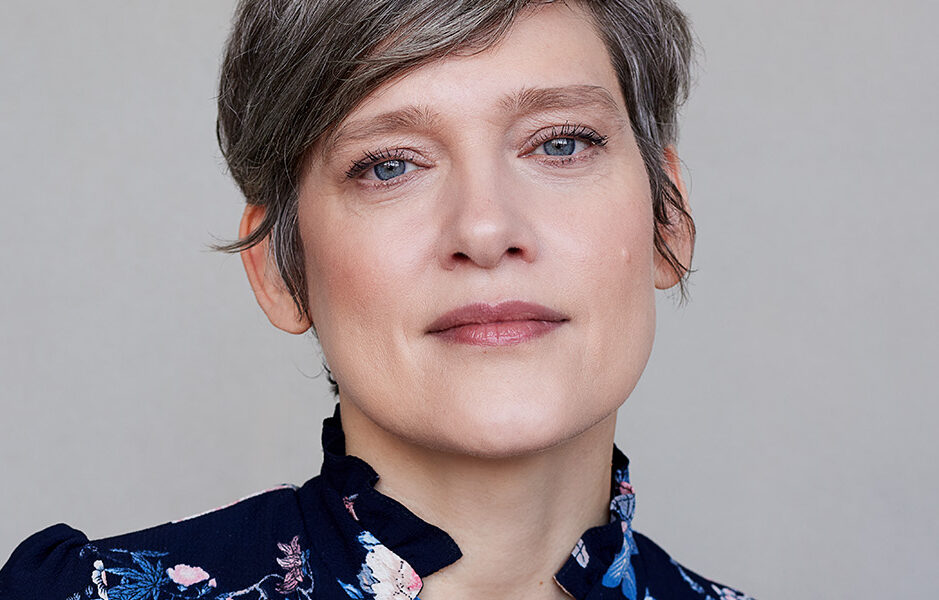
“Oh here comes the torture” and “oh what crap” are phrases that acclaimed author Heather O’Neill uses to describe the harrowing experience of reciting passages from her novels in public. She is McGill’s Writer-In-Residence, known for her debut novel Lullabies for Little Criminals, which won Canada Reads (2007) and When We Lost Our Heads, her most recent bestseller. 

O’Neil alluded that the re-read is one of the most harrowing experiences for young writers; it’s the dreaded moment when you realize that the masterpiece you wrote not 24 hours ago is one of the worst things you’ve ever read. Unfortunately, O’Neill confirmed in an interview with The Tribune that the 24-hour expiry date does not dissipate with age, acclaim, or experience. 

As children, we hoped to be older and cooler with glossed lips and dyed hair. As teens, we hoped to be older and more sophisticated with our shit together. This much sought-after “final form writer” is as elusive as Peter Pan’s shadow. Once, an attendee at one of O’Neill’s book events asked her about an opinion of hers. She replied incredulously that she no longer agreed with that opinion and inquired when she had expressed it originally. The attendee replied that it had been no more than 20 minutes ago. Humans, flawed as we are, are trapped in a cycle of change as unpredictable as the Canadian weather.

As a child, O’Neill knew exactly what she wanted to be when she grew up. From reading out newspaper clippings at dinner to printing zines at 50 cents apiece, no one could deny that O’Neill was destined to be an author. She faced many “weird kid accusations” with her attempts to spark conversation about books. As many introverts will understand, O’Neill did not experience this as a loss, thriving in a world rich with ink-sketched companions. Not only could these characters satisfy the role of a friend, but O’Neill’s own characters became self-reflections. These are characters that O’Neill would get along with, while simultaneously tiring of them, knowing as much as she does. 

When asked for her advice on writing, O’Neill encouraged young writers to embrace rejection.

“I just treat [rejection] like the flu,” she said in an interview with The Tribune. “I’m just gonna feel bad for three days […] but after three days I’m gonna feel fine.” 

While O’Neill refers to writing specifically, these words of wisdom apply to rejections of all kinds. O’Neill also advises creating and enforcing deadlines to motivate oneself. Additionally, she discourages attaching weight to literary trends as a means of success.

”You just have to be saying things no one has said before […] You want to become the trend.”

O’Neill muses that she would have liked to tell her younger self to elicit attention from more older authors and “forcefully” encourage them to mentor her. For legal purposes, this is not a suggestion to harass senior citizens. As for her writing process, O’Neill likes to get right into it by sketching out scenes to see how her characters improve with one another. She alternates her writing projects in three-month increments to help keep ideas fresh. 

O’Neill is looking forward to the release of her latest book this September; although specifics are top secret, she hinted that it may be her new favourite. Perhaps even more exciting is an idea that she pitched offhand, a podcast hosted by 80-year-old agoraphobic Heather who seldom interacts with people except to interview them from the comfort of her home. 

A final word of wisdom for the lonely writers who feel like they’re just not good enough yet, awaiting that moment of “older and wiser”:

“[You] get to a certain age and you’re like ‘okay, this is as much as I’m gonna know, so I might as well go out there and be confident.’”

That age is right now. So get out there and write.

Commentary, Opinion

Why we need to reconsider Quebec’s subsidization of private schools

Amid the François Legault government’s contentious policy decisions, including recent tuition hikes, Quebec’s substantial financial backing for private schools raises significant concerns for equal access to education across the province. This policy, whereby the majority of independent private schools receive subsidies from the government for each student, not only undermines the quality and accessibility of public education but also deepens the socio-economic divides within the province. Quebec must rethink its approach to educational funding, by shifting the focus and resources from private to public schools thereby fostering a more equitable and inclusive educational landscape.

Public education advocates and concerned taxpayers have increasingly scrutinized Quebec’s approach to funding education, particularly criticizing the generous subsidies it extends to private schools. In the 2018-19 academic year, 170 private schools received a total of just over $522 million in direct subsidies, along with an additional $27.6 million in approved transportation costs. Meanwhile, public school revenues from local taxation in 2020-21 were less than half of what they were in 2017- 18, representing 7.5 per cent of total revenues compared to 17.8 per cent three years prior. This, despite the fact that private schools cater to a considerably smaller, and often more affluent, portion of the province’s population. The decision to prioritize private education resulted in a concerning shift in the educational landscape and an alarming preferential shift among parents and students away from public schools: The market share of private schools has surged from 5 per cent in 1970 to a significant 21 per cent in 2022. In Montreal, the figures are even more pronounced, with private school enrollment reaching 39 per cent. This upward trend in private school enrolment not only siphons vital resources away from the public sector but also exacerbates socio-economic disparities. The burgeoning private school sector, bolstered by public funds, thus poses a direct barrier to an equitable and heterogeneous educational system.

The substantial public investment in private education amplifies advantages for the already privileged. Both national and international bodies have critiqued the profound consequences of this funding imbalance, including the Conseil supérieur de l’éducation, an extension of the Minister of Education, who declared Quebec’s system the most unequal in Canada. UNESCO has attempted to hold Quebec accountable for its “segregated” three-tier school system (subsidized private, public, and selective-public) in lieu of their recommended public single-system. Public schools—facing higher numbers of students who cannot financially access private and selective-public schools—struggle to provide quality education, creating a detrimental cycle where richer parents opt for private schools as opposed to advocating for better funding within the public system. The province’s neglect of the public school system leads Quebec to have the highest student dropout rates in the country and increasing teacher attrition, with a quarter of teachers leaving the profession during their first five years on the job market. 

Quebec’s restrictive language laws (especially Bill 101) exacerbate the harmful effects of the province’s private school subsidization. By requiring that the children of non-Canadian residents, immigrants, refugees and Canadian citizens who were not educated in English in Canada attend French-language schools, many newcomers are forced to send their children to French public schools. Meanwhile, a growing number of Quebecois parents have taken their children out of the public system and sent them to private schools. This disparity in education for the children of immigrants, refugees, and non-Canadian residents makes the adjustment to a new province all the more difficult. The flight of wealthier families who flee the public system and flock to government-supported private schools guarantees the continuation of this division. 

Private schools discriminate, using subjective criteria such as test scores, gender, economic status, and religion for admissions without external oversight. Additionally, the creation of a  selective public network, aiming to counter private schools’ elitism, instead inadvertently deepens educational divisions, entrenching a system where privilege determines educational quality. Quebec’s segregative system is paradoxical to the province’s professed values of equality and inclusivity.The recent tuition hikes for anglophone Quebec universities underscore the pressing need for a more equitable distribution of provincial resources. When even public universities, which //should// be accessible to all, are being forced to raise out-of-province tuition by nearly 30 per cent while Quebec private schools continue to receive hundreds of millions of dollars in funding each school year, it is imperative to question the Legault administration’s priorities. We all need to advocate for a system where education acts as a power of equalization, not division.

McGill, News

Protesters stage ‘die-in’ at Y-intersection to draw attention to McGill’s complicity in ongoing genocide of Palestinians

Content Warning: Mentions of genocide and a hunger strike.

On March 28, more than 40 protesters lay silently on the ground in front of the Arts Building for half an hour, their hands doused in red paint and bodies traced in chalk, to protest McGill’s financial and academic ties to the state of Israel. This ‘die-in’ was organized by the McGill Hunger Strike for Palestine—a group of students who are starving themselves in solidarity with Gazans who are facing famine to push for an end to McGill’s complicity in Israel’s ongoing genocide of Palestinians.

Speeches began around 1 p.m. as the crowd continued to grow.  

“Today, we are standing on the edge of day 39 of our hunger strike. Thirty-nine days fueled by outrage, disgust, courage, love, compassion, unwavering conviction, and an unyielding demand for justice in Palestine,” Sage, who is part of the hunger strike, told the crowd.

Sage reiterated why the hunger strikers feel that immediate divestment from and an academic boycott of Israel are critical.

“By choosing McGill for our education, you and I are actively complicit,” Sage said. “We are participating in this genocide at this very moment, whether we want it or not. This is why we are here today to let McGill know that we are not okay with our education taking away lives.”

According to Solidarity for Palestinian Human Rights (SPHR) at McGill, another group fighting for the administration to cut ties with Israel, McGill invests approximately $20 million in companies supporting Israel’s siege on Gaza. The university also has partnerships with Israeli universities and institutions, through initiatives such as the Sylvan Adams Sports Science Institute and courses like FACC 501 in the Faculty of Engineering.

During his speech, Chadi, who is on an indefinite hunger strike, highlighted Israel’s targeting of academic infrastructure and students in Gaza.

“McGill university has funded the apartheid state of Israel and the ethnic cleansing of the Palestinian people all throughout this genocide,” Chadi said. “It bears responsibility for the destruction of all twelve universities in the Gaza strip, which have been systematically targeted by a settler state. Over 4,326 Palestinian students in higher education, 231 teachers, and 94 professors have been martyred. If we were to dedicate a second for every single one of those students, you would stand silent for an hour and a half.”

Speakers also stressed the interwoven nature of anti-colonial struggles throughout the protest, linking the fight for Palestinian liberation to the Kanien’kehá:ka Kahnistensera’s (Mohawk Mothers) ongoing legal battle with McGill and the violence that western powers have instigated globally. 

“At the heart of our movement […] lies a fundamental truth that binds us all. That truth is the interconnectedness of our struggles,” Sage said. “We are not here just as individuals, but as representatives of the myriad of communities to which we each belong. Our fight for Palestine is intrinsically linked to the global struggle against imperialism and colonialism and all forms of oppression that seek to divide us.”

Throughout the die-in, organizers and protesters alike were critical of McGill’s response to the hunger strike and other pro-Palestine mobilization. The university has expressed concern over the health of hunger strikers, but has said that students must go through the official, bureaucratic channels if they wish to change McGill’s policies and investments. McGill has also stated that it will not consider severing ties with academic institutions in Israel. 

Chadi feels that the university’s messaging is contradictory to their actions.

“I think McGill’s unwillingness to discuss [divestment and an academic boycott] shows how blatantly hypocritical they are,” Chadi said in an interview with The Tribune. “They claim inclusion; they claim diversity; they claim freedom; and when the majority of their student body, when faculty and staff bring up something that is very dear and important in the midst of a genocide, when we are talking about where we want our money spent as students, they are shutting it down, and they are not allowing even discussion. At this point we are far beyond discussion; we are at action.”

In an email to The Tribune, the McGill Media Relations Office reaffirmed the university’s respect for “students’ rights to pursue political objectives and express political conviction.” 

”We urge them to do so in a way that prioritizes their health,” the office continued. “We have reminded the students that there is a process in place for expressing their concerns about any investment holding of the university. We have offered more than once to meet with them, but they have refused to meet on the terms proposed.” 

Em Kester, one of the students who participated in the die-in, spoke to the university’s response to pro-Palestine protests in an interview after the die-in. Over the past weeks, McGill has sent multiple universitywide emails telling protesters to respect McGill’s rules and regulations and telling both students and staff that they should avoid engaging with protesters and call security services if they are unable to get into buildings or have classes disrupted.

 Kester condemned McGill’s email communication around protests, calling them “fear-mongering.”

“I am saddened by the culture at McGill, and not supporting this, and not making it a university-wide thing, or even putting out a letter of support to protesters—like an email,” Kester said. “It’s a very conservative university and it makes that known every day.”

Kester also said that McGill has sent them emails saying that protesting could impact their ability to graduate.

“The university is threatening its students for doing a basic act of protesting. And I think that a lot of students are afraid of it,” Kester said.

The university did not respond to The Tribune’s questions about whether participating in on-campus protests may impact students’ graduation. The Media Relations Office did, however, state that it “is actively reviewing evidence and will begin disciplinary proceedings against any McGill students identified as having contravened the Code of Student Conduct, as [its] normal process.” On the evening of March 28, the university announced that it had called the police on protesters, and that at least one arrest “related to campus disruptions” had taken place. According to both the March 28 email and the Media Relations Office, the university plans to press charges.

One student who wished to remain anonymous spoke about the power of collective action in an interview after the protest, encouraging students who feel hopeless to mobilize.

“For people who haven’t been doing this because they feel kinda hopeless about it: When you’re occupying a space that you’re not supposed to occupy because McGill is telling you not to, you feel that power in the steps that you’re taking, and you feel that power in the collectiveness of it all. And these things only work if everybody does it,” they said.

After the die-in, organizers walked some protesters to meet the Kanien’kehá:ka Kahnistensera at the site of McGill’s New Vic project, where the Kahnistensera believe there to be unmarked Indigenous graves, while others went to join a SPHR protest taking place by the Milton Gates.

Sports

CLF McGill hosts “Impact Zone: Navigating Sports-Related Concussions” panel

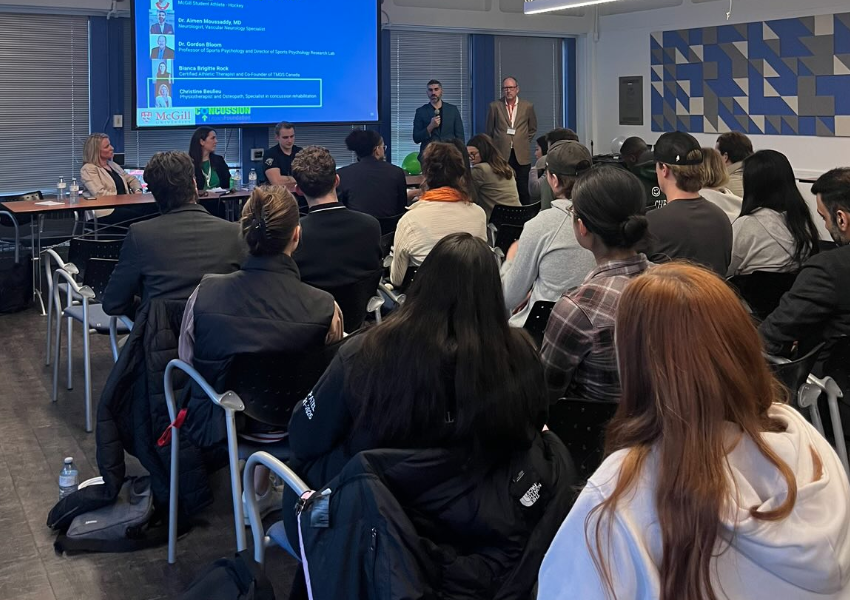
On March 28, the McGill Students for Concussion Legacy Foundation (CLF McGill) hosted their annual symposium. Co-Presidents Trisha Tee, a second year master’s student in experimental surgery, and Lily MacDonald, a third year undergraduate Dietetics student, explained that with this year’s panel titled “Impact Zone: Navigating Sports-Related Concussions,” they hoped to illuminate the wide range of different approaches to concussion treatment throughout the sports world. 

“The goal of this panel is really to get everyone together to have an interdisciplinary approach to concussion care, treatment, recovery, rehab, and really get a bunch of the different multidisciplinary views on how to treat it rather than just one way,” MacDonald told The Tribune. 

The first speaker was Evan Patrician, a former hockey player for the McGill Redbirds who quit the team this year after sustaining five concussions in the span of four years. Patrician detailed his experience with concussions.

“After the most recent concussion before the summer of 2023, short-term memory [loss] was beginning to creep into my daily life frequently,” Patrician said. 

Patrician explained that despite attending training camp at the start of the 2023-24 season, he was scared to get hit. This led him to take some time away from hockey and ultimately decide that continuing to play hockey could negatively affect his pursuit of academic and career goals. Patrician also touched on the stigma surrounding concussions in hockey. 

“Junior hockey is your full-time job and your health is second,” Patrician explained. 

Gordon Bloom, a professor in the Department of Kinesiology and Physical Education and the Director of the Sports Psychology Research Lab at McGill, spoke next. Bloom narrowed in on a discussion of the psychosocial aspects of post-concussion rehabilitation in athletes, highlighting the psychological aspects of recovering from a concussion. He explained concussions are difficult as they do not have a clear recovery timeline and as an “invisible injury,”, people often think athletes are faking it.  

Bloom discussed the advances in understanding and treating concussions since the early 2000s, highlighting the role of Eric Lindros’s 2011 concussion in bringing public attention to the issue. He then discussed the importance of qualitative studies in understanding what it is like for athletes to live with concussions. 

“For me, this was a real turning point, this article, because we finally had the empirical evidence that says, if you have multiple brain trauma injuries, and you don’t let it heal properly, your quality of life is going to be severely damaged,” Bloom said. 

Dr. Aimen Moussaddy, a neurologist specializing in vascular neurology, followed Bloom with a discussion of how he treats post-concussion symptoms. He explained the difficulties of treating patients when wait times are often weeks, if not months. Moussaddy also explored two ways of seeing how damage manifests in the concussed brain. 

“Axonal injury, which comes back to the fact that our brains are just a lump of wires […] those wires get twisted […] and that twist of wires ends up causing inflammation around the wires, and those wires to be dysfunctional,” Moussaddy said. “That dysfunction of wires can be reversible and temporary, or after repetitive effects, or depending on the severity of that one impact of that trauma may be irreversible [….] The second part of head trauma also modifies the way we release chemicals in our brain.” 

Bianca Brigitte Rock, a certified athletic therapist and co-founder of TMDS Canada, discussed a biophysical approach to concussions and outlined the importance of an interdisciplinary approach to treating concussions. Rock explained that there are five different spheres of symptoms: Physical, cognitive, sleep, affective, and the autonomic nervous system––anything to do with physical activity. 

Finally, Christine Beaulieu, a physiotherapist and osteopath specializing in concussion rehab spoke about the development of research on the physical activity after a concussion. She explained the process of developing consensus statements on concussion in sport which are produced at the International Conference on Concussion in Sport which occurs every four years. 

“The consensus statement is kind of the reference that people look at to create all of the policies and protocols on concussion,” Beaulieu said. “In 2022 […] this is where we see the biggest changes in the approach to rehabilitation [….] In terms of physical activity, now we say it is safe to start physical activity within two to 14 days after the concussion.”

The panel concluded with a Q&A session in which the audience asked the panellists about professional sports leagues’ concussion protocols, the gaps in concussion research along the lines of age and gender, and the need for public figures and government officials to speak up about the dangers of concussions. 

Off the Board, Opinion

In defense of gullibility

I have always been a little too gullible for my own good. From an early age, I internalized the idea that other than injuring someone or hurting their feelings, one of the worst things you could do was lie. Assuming that everyone around me was on the same page, I would nod in wide-eyed wonder as my elementary school classmates regaled me with tales of daring spring break adventures or claims of celebrity bloodlines. I was certain that they must be telling the truth, however fantastical the stories were. Even into junior high, I was quick to believe even the most improbable stories. One classmate managed to convince me that they were family friends with Martha Stewart because of their frequent trips to Martha’s Vineyard. While I eventually put it together that they were lying about the familial connection, it took me a frankly embarrassingly long time (midway through my second year at McGill) to realize that the charming coastal vacation spot was not, in fact, owned by Snoop Dogg’s bestie.   

I was also a very easily distracted kid, getting swept away in daydreams the moment some flower or passing stranger caught my eye. To my parents’ chagrin, this meant that I had a bad habit of wandering off whenever the impulse overtook me, meandering down side streets or off hiking paths wherever we went, with them always anxiously chasing after me. My flightiness has been an equally great source of entertainment for my family as it has a source of stress. The story of the time my six-year-old self strolled into a cruise ship casino and sat under a poker table while on a family reunion has been repeated enough times to make my cheeks burn at the sight of a slot machine. 

My over-trusting nature and penchant for distractibility combine into a formidable pair that has made me the perfect target for pranks, of the April Fools’ variety and otherwise. Whether it’s an elaborate deceit, a corny prank call, or a good old-fashioned whoopee cushion, you can bet that I’ve fallen for it. I once ate the better half of a Stink Bug–flavoured Jelly Bean pack, swallowing my disgust and powering on because a friend had given them to me as a “gift” with a seemingly earnest smile. Even tricks that seem too clichéd for a D-rate buddy comedy have managed to leave me bamboozled. Once, while I was attending a sleepaway camp in the middle of the Rocky Mountains, a camp counselor pointed off into the woods with an exaggerated, “Hey, is that a wolf?” While my bunkmates snickered and rolled their eyes at my obliviousness, I spent a solid two minutes scanning the treeline for the creature before realizing that the counselor had run in the opposite direction, cackling atop a hill while she triumphantly waved my stolen toothpaste above her head.  

For most of my life, my gullibility left me feeling embarrassed and a little stupid. Yet in the past few years, I’ve grown to appreciate the faith I have in other people, even when it’s to a fault. I don’t think I fall for these sorts of pranks and deceits because I’m stupid (at least, not entirely), but because I’d rather believe the people in my life and potentially fall for another prank than let myself become jaded and mistrusting. While I think a healthy amount of scepticism is required to navigate a world replete with misinformation—or avoid getting sucked into a cult—I would rather be overly trusting than overly suspicious of others. So if there’s even a slim possibility that they’re telling the truth, you can bet I’ll still turn and look when a friend takes the time to point out a wolf.

Sports

Varsity Report Card: Winter 2024

Redbirds Hockey (21–5–2): A 

After a disappointing second-round exit from the playoffs last year, the Redbirds entered the 2023-24 season looking for vengeance. With an added year of experience for Eric Uba and William Rouleau and the addition of Zach Gallant, the Redbirds were expected to come out flying from game one. However, after opening the season with three straight losses, a sense of uncertainty began to emerge amongst the McGill fanbase. The rocky start proved to be no match for the Redbirds as they followed it up with a five-game winning streak that would be more characteristic of the season at large. The Redbirds bounced around between first and third place in the Ontario University Athletics (OUA) East division. However, a remarkable seven-game win streak to close out the season earned the team a first-place finish in the regular season. After earning a bye through the quarterfinals and sweeping the Concordia Stingers in the semifinals, McGill faced off against the Université du Québec à Trois-Rivières (UQTR) Patriotes in the OUA East Finals. After losing game one at home––a loss that ended their 12-game win streak at McConnell Arena––the Redbirds defeated UQTR on the road in front of over 3,000 fans to keep the series going. With a slot in the OUA Finals on the line, the Redbirds lost 4-0, sending the Patriotes to face the Toronto Metropolitan University (TMU) Bold while they took on the Brock Badgers in the bronze medal game. After emerging victorious with a 5-2 win, McGill headed back to Ontario just a week later to face the University of British Columbia Thunderbirds in the U SPORTS National Championship quarter-final. With a suspenseful 3-2 win, the Redbirds matched up against the Patriotes again in the semifinal where they fell 5-4 to their Quebec rival. The Redbirds concluded the season with a bronze medal victory against the TMU Bold. Marking several major improvements from last season, //The Tribune// awards the Redbirds an A grade for their 2023-24 season. 

Martlets Hockey (5–18–2):  B- 

After a lowly two-win season in 2022-23, hopes that 2023-24 would be an improvement were on the rise as the Martlets were .500 in their first four games of the season. However, the nine-game losing streak that followed plummeted the Martlets to the bottom of the Réseau du Sport Étudiants du Québec (RSEQ) standings, where they would remain for the rest of the season. Probably the highlight of the Martlets’ 2023-24 season was their overtime 4-3 win against the University of Ottawa Gee-Gees on Seniors’ Night. Overall, there was not much to celebrate for the Martlets this year, earning them a B- and hopes for better luck next season. 

Redbirds Basketball (3–13): C+ 

Hopes that McGill would bounce back from a disappointing 6–10 record last year were quickly stifled as the Redbirds opened the 2023-24 season with a detrimental four-game losing streak. After their first win of the season against the Université du Québec à Montréal (UQAM) Citadins in late November, the Redbirds went on yet another losing streak, this time for six games. With the Redbirds only winning three games this season (two of which were by a margin of just two points), McGill’s 83-81 victory over the Concordia Stingers in the Lengvari Cup was likely this year’s high point. Sean Herscovitch being named as an RSEQ second-team all-star and teammate Saransh Padhy earning a spot on the RSEQ all-rookie squad were also bright spots on an otherwise disappointing year for the Redbirds that earned them a C+. 

Martlets Basketball (5–11): B- 

After a winless season in 2021-22, the Martlets improved to 3–13 in 2022-23 and to 5–11 in 2023-24. The Martlets started the year strong with back-to-back wins against Bishop’s and UQAM. After two losses, McGill went on a three-game win streak, but this was the beginning of the end as the Martlets went on a nine-game losing streak to close out the season. Despite the disappointing end to the season, Seyna Diggs was named as an RSEQ second-team all-star and earned a berth on the all-rookie squad alongside teammate Lily Rose Chatila. Daniella Mbengo was also among eight U SPORTS student-athletes named as recipients of the Athletes on Track bursary, in conjunction with the BlackNorth Initiative (BNI).

Martlets and Redbirds Track and Field: B+ 

Both the Redbirds and Martlets track and field teams had strong seasons, punctuated by impressive showings at the U SPORTS championships. While Matthew Beaudet was unable to retain his titles of U SPORTS Track Athlete of the Year and RSEQ Track Performance of the Year from last year, he still had a remarkable season, winning silver in the men’s 3000m, setting a new school record in the process. Kilty McGonigal set a school record in the heptathlon, where he narrowly missed out on a podium finish in fourth. Redbird track also finished second overall in the RSEQ championship. On the women’s side, Donna Ntambue won bronze in the U SPORTS 60m final and set a new school record of 7.32 earlier in the season. Moreover, Ntambue led the 4x200m relay team to a new school record and seventh place at the national championships. Next year, both sides are hoping to build off another strong season as many of their key performers return for another year. 

Martlets Volleyball (15–6): A- 

While the Martlets were unable to win the title this year falling in the playoffs to Sherbrooke, they still had a strong season compounded by a talented roster and spectacular performances. Clara Poiré and Victoria Iannotti were named first team RSEQ all stars, Charlène Robitaille was named a second team all star, and Brook Brown won the Leadership and Community Service Award. While the Martlets were unable to achieve an elusive third-in-a-row showing at the U SPORTS National Championships this year, this season marks the end of an impressive era at Martlet volleyball with ten graduating seniors including Robitaille, Iannoti, and Poiré, meaning that next year will be a rebuilding season. After the heights of the next three years, Martlet fans can only hope to see such a special group of players again. 

Redbirds and Martlets Swimming: A

Fans of the swimming squad may have noticed the consistent presence of Redbird and Martlet swimmers being nominated as McGill Athletes of the Week. Dominating the university cups at UQTR, Université de Sherbrooke, and University of Ottawa and finally the RSEQ Provincial Championship at Université Laval, the squad consistently put hundreds of points between their first place and the runner-up. Regularly being crowned with Athletes of the Meet awards, the Redbirds put forth consistently outstanding results, pulling the squad to overall bronze at the U SPORTS Championships. Benefitting from the veteran presence of swimmers such as Hazem Issa, the team welcomed newcomers such as Mats Baradat, hailing from Hyères, who won RSEQ Rookie of the Year and Swimmer of the Year. From the first cup meet to the RSEQ Provincial Championships, the Martlets have been eclipsing their competitors with their consistent intensity and outstanding results. Nonetheless, the U SPORTS Championship has proved to be more challenging. With only one podium, earned by co-captain Naomie Lo, the Martlet squad finished in fourth place, with 84 points fewer points than the bronze medalist. For their determination and enduring resilience, the combined efforts of the Redbirds and Martlets earned McGill swimming an A. 

Artistic Swimming: A+

The McGill Invitational set a successful tone for the season to come for the artistic swimming team. The season opened on a confident and positive note with a total of nine medals. This momentum carried over to Eastern Championships, where McGill showcased their talent and artistry, making the podium at every event but two, and securing their spot at the National Championships, held in Winnipeg. With over 54 total points, McGill benefitted from the energetic and talented performances of senior Diana Paparelli. Paparelli won two golds and a silver and was also named all-around champion of the novice division, leading the novice sweeping podiums. The novice team’s gold-medal Black Eyed Peas performance earned McGill the Wendy Yule Trophy and contributed 21 points to McGill’s tally.  The experienced squad placed third in the experienced division, with 33 points, thanks to the silver-earning team free final, and first-year Kayla Drew’s bronze solo. With a top-five finish in all six events and stunning performances by its swimmers, McGill’s artistic swimming squad placed first among all 14 competing universities. This national title is their 17th since the league’s inception and their first of the post-COVID era. It re-establishes McGill’s dominance over the Canadian University Artistic Swimming League (CUASL) and hopefully will be the start to another undefeated streak.

McGill, News

Kanien’kehá:ka Kahnistensera hold town hall to discuss investigation into site of New Vic project

The Kanien’kehá:ka Kahnistensera (Mohawk Mothers) held a town hall at Peterson Hall on March 26 to speak to members of the McGill community about their ongoing investigation into the site of the New Vic Project, where they fear there may be unmarked graves. The town hall came as part of a week of mobilization organized by various student activist groups, including Arts for Palestine, the Collective for Gender Equality, and Decolonial Solidarity. Other events included a tabling session, a poster-making and crafts session, a walk to the New Vic site, and a social mixer.

Karonhia’nó:ron—a McGill alum, incoming graduate student, and court-appointed cultural monitor in the Mothers’ investigation— who helped organize the town hall meeting, told The Tribune that they hoped the week of mobilization would help raise awareness around the Mohawk Mothers’ advocacy.

“I’m determined to inform as many people as possible about the Kahnistensera’s fight and McGill’s ongoing obstruction of the search for unmarked graves on school grounds,” Karonhia’nó:ron said.

At the town hall, the Mohawk Mothers sat down with members of the McGill and broader Montreal communities to answer questions about their investigation and explain their legal case against McGill, the Société québecoise des infrastructures, the Royal Victoria Hospital, the City of Montreal, and the Attorney General of Canada. Kwetiio, one of the Mothers, explained that since the investigation started, historic human remains detection dogs detected the scent of potential human remains by Hersey Pavillon in June 2023. Arkéos—the archaeological firm hired to carry out the investigation—then used ground-penetrating radar surveys were then used and found dozens of anomalies, as announced by McGill on Aug. 3, 2023. 

Kwetiio explained she feels a responsibility to ensure the land, which is unceded Kanien’keha:ka territory, is honoured and the investigation is carried out in good faith.

“That’s somebody’s daughter; that’s somebody’s child,” Kwetiio said. “It is a Kahnistensera’s duty to look out for the children and leave the land the way it should be for the next seven generations.”

Rajendra Kapila Basdeo, a coordinator for Kahnistensera Solidarity Committee, added that in his view, the Mohawk Mothers and McGill are proceeding with the investigation in differing ways. 

“Kahnistensera have always said that they are looking to find these children. McGill and [the] SQI have always maintained that they hope that they find nothing,” Basdeo said.

In an email to The Tribune, Associate Director of Media Relations Cynthia Lee stated that the investigation is still ongoing but asserted that no evidence of unmarked graves has been found thus far.

Lee also noted that McGill is actively pursuing reconciliation with Indigenous peoples by addressing the 52 calls to action set out by the Provost’s Task Force on Indigenous Studies and Indigenous Education in 2017. The calls to action are organized into five categories: Student recruitment, physical representation, academic programs, research and academics, and building capacity. 

However, Karonhia’nó:ron asserted that McGill’s actions towards the Mohawk Mothers have not been in the spirit of reconciliation.

“There is nothing reconciliatory about actively obstructing an investigation into unmarked graves of Indigenous children on land that McGill is actively occupying at the expense of the Mohawk people,” Karonhia’nó:ron said. “At every step of this journey, [the] McGill administration has chosen the path of most resistance.”

The university’s operations, including the legal battle surrounding the New Vic Project, are funded by various revenue streams including tuition payments. Kwetiio reminded students that they have the ability to influence the university’s actions. 

“I think as students [who] pay tuition […] you hold more power than you think,” Kwetiio said. 

The McGill Media Relations Office asserted that McGill is acting in the best interest of students in a written statement to The Tribune

“It’s important to note that McGill did not initiate the matter that has been brought before the courts. Rather, McGill is defending itself. Participating responsibly in the resulting legal proceedings, including seeking leave to appeal, is in the best interests of the university, including McGill students,”  wrote the Media Relations Office. 

Basdeo said that the Mohawk Mothers have seen growing support from students over the past couple of years.

“We started [the legal battle] about two and a half years ago and engagement has increased so much,” Basdeo noted. “McGill students are really doing an excellent job of raising awareness on campus, as well as putting pressure on the administration to really act in good faith.”

Karonhia’nó:ron echoed this sentiment and encouraged students to talk about the Mohawk Mothers and the New Vic project with people in their community.

“We have such strength in numbers,” Karonhia’nó:ron said. “We are reaching a point where the administration’s deflection tactics won’t work anymore. There is nowhere left to turn: Everywhere you look, there are masses of people standing together to hold this university accountable.”

Joke, Student Life

Hidden gems worth exploring in Montreal

Whether you’re a student from out of town, a tourist, or even a lifetime resident, Montreal has plenty to offer, and many of its best sights are off the beaten path. The Tribune has compiled a list of hidden gems across the island to help you elevate your weekends and get out into parts of the city you might not have explored before. 

Old Port 

Tucked away along the shorelines of the Saint Lawrence River, this old part of the city is relatively unknown to travellers and residents alike. From the cobblestone streets to the narrow alleyways, the Old Port feels like a little slice of Europe hidden on this side of the Atlantic. Getting to the area can be a bit tricky; when the metro was constructed in the 1960s, the city purposefully avoided naming the area’s stations anything obvious like “Old Port” as they feared doing so would bring in too much attention. The signage can be confusing as it’s written in some obscure local dialect called “français,” so keep an eye out for “Vieux-Port.” 

Mount Royal

Most McGillians go about their daily lives not knowing that one of Canada’s tallest mountains is quietly nestled right behind the university. After having been scammed by Desjardin’s Aurora Borealis, students are quick to dismiss the tall structure as another corporate misdirection. Finding your way up this hill—nay, mountain—can be a challenge, but the views from the top are well worth it. Where most students fail is that on their walk up McTavish, they get distracted by the prospect of a cold beer at Gerts or Thomson House—power through until you find a staircase across the street from that random law building. An expert tip: It’s a long walk, so pack your school bag with at least 10 litres of water. 

McGill Campus

Only the longest-tenured of Montreal residents know about this hidden gem. It features stunning buildings dating back over 150 years, lush greenery, lusher asbestos, and a scale replica of the Death Star from Star Wars, known by locals as Burnside. During the hustle and bustle of everyday life, McGill University’s campus offers an ideal spot for a quick repose, unless, for some reason, the place actually causes you stress—but I doubt that’s the case for anyone. 

Sainte Catherine Street West

Tourists and students don’t assume that Montreal has a world-class shopping street to rival the famous Fifth Avenue, Bond Street, or Rodeo Drive, and they’re right. However, Montreal has its own, much lesser-known, approximation of those famous streets. Often referred to as “The Place with the Construction” or “Where the Zara is,” this commercial artery has been essential in keeping the consumerist nature of Montrealers alive for decades. 

Plateau-Mont-Royal

Some boroughs, like Anjou, Pointe-Claire, and Saint-Léonard, are world-renowned for their beautiful landscapes, jaw-dropping architecture, and fantastic coffee culture. But some Montrealers know that the smaller, quieter borough of the Plateau-Mont-Royal is a great alternative due to its proximity to downtown. According to legend, the area is home to some great hole-in-the-wall restaurants, including Schwartz’s Deli, La Banquise, and Au Pied du Cochon. Due to the high student population, it can be very quiet on Friday nights and weekends, as most are at home studying or resting for a hard week ahead. 

Decarie Expressway

If visiting the Katy Freeway or Interstate-10 is high up on your bucket list, a visit to Decarie Expressway is sure to tickle your fancy. Constructed in the mid-1950s, this autoroute has become a beloved part of many Montrealers’ morning routines. Astute fans of design will marvel at its trenched structure, which helps concentrate the car fumes. After a quick southbound stroll, you’ll reach the Turcot Interchange, a reconstruction so faithful to the planning policies of the 1950s that you’ll be shocked to find out it’s not even a decade old. Montrealers who know about this hidden gem love to perch themselves on the narrow sidewalks for hours to watch the cars go by.

Behind the Bench, Sports

Sports betting scandals are not going anywhere

Here’s a rundown of the week’s sports news, (potentially sponsored by DraftKings if The Tribune manages to increase its readership numbers): In a press conference on March 25, Los Angeles Dodgers star Shohei Ohtani alleged his former interpreter stole money from his bank account. The Dodgers reportedly fired Ohtani’s long-time interpreter, Ippei Mizuhara, for making $4.5 million worth of wire transfers to an illegal bookmaker who is currently the subject of a federal investigation involving the IRS. Flipping over to basketball, Cleveland Cavaliers head coach J.B. Bickerstaff told reporters about fans shouting at him from the stands about player substitutions and beating the spread. Bickerstaff went on to mention that he and his family received threats from disgruntled gamblers over lost bets. Finally, the National Basketball Association (NBA) is investigating a series of irregularities surrounding prop bets involving Jontay Porter of the Toronto Raptors. For those familiar with the betting landscape in professional sports, the most surprising thing to come out of any of those stories is that Michael Porter Jr. apparently has a little brother who plays for the Raptors.

In 2018, when the Supreme Court of the United States (SCOTUS) struck down the 1992 Professional and Amateur Sports Protection Act, which prohibited sports gambling in the country’s 49 states not named Nevada, Pandora’s Box opened. Leagues were wary of promoting gambling and did everything in their power to avoid any semblance of impropriety and maintain the integrity of their sports, due to its previous illegality. According to former Major League Baseball (MLB) closer Jonathan Papelbon, baseball went as far as to have mob members and FBI informants speak to players about the dangers of gambling. Of course, MLB continues to meet with players and staff prior to every campaign to remind them of what they can and cannot do as it relates to sports betting, as it is outlined in the Collective Bargaining Agreement. The difference now is that FanDuel and PointsBet ads are everywhere, with leagues and their teams profiting from lucrative sponsorship agreements from a multi-billion dollar industry that operated exclusively on the black market in 49 of 50 states just six years ago.

Of course, sports betting scandals are not new. In the 1919 World Series, eight White Sox players including Shoeless Joe Jackson were accused of accepting bribes in exchange for throwing games. In 2007, the NBA faced a gambling scandal involving former referee Tim Donaghy, who admitted to placing wagers on games he was assigned to officiate and providing inside information to gamblers. In essence, it is not strictly because of the SCOTUS’ 2018 decision that the sports world is facing a smorgasbord of betting-related scandals right now. 

In places where they are legal (38 of 50 states at the time of publication), sportsbooks are heavily monitored and regulated. This means that if a friend of Shane Pinto’s were to allegedly place a wager using the player’s betting account in New York state, alarm bells start ringing in the sportsbook’s offices and they are able to inform the league of what took place. Ditto for the Jontay Porter situation, where red flags were raised after DraftKings Sportsbook announced the player’s prop bets were the biggest moneymaker in the entire NBA on March 20. 

The proliferation of sports betting means that these scandals are likely to continue. Americans bet almost 120 billion dollars on sports in 2023 alone. Sports betting is a recreational activity for some, but a dangerous, addictive practice for many others. Players and coaches will continue to be shouted at from the bleachers about beating the spread and their individual over-unders. Disgruntled gamblers crazy enough to send threats to basketball coaches about their lost wagers will continue to do so. Making sure players and coaches do not place bets on their own sports is only a small part of the challenges leagues will face going forward. Making sure their players are not involved in allegedly paying off illegal bookies, having friends place bets on their behalf, taking bribes, throwing games, and finding ways to protect players, coaches, and staff from crazed gamblers are some of the many other betting-related challenges leagues are facing, with unfortunately no easy fix.

Science & Technology

Against acceleration: Our biased perception of accelerating objects

If two pieces of paper, one crumpled up and one flat, were to be dropped, which one would reach the ground first? Without much deliberation, most people would likely say the crumpled piece of paper, and they would be correct. Air resistance slows the descent of the flat piece of paper given its larger surface area. Another favourite physics question is, in the absence of air resistance, whether a bowling ball or basketball would reach the ground first when dropped. In this case, while it might seem intuitive to assume that the bowling ball lands first, many graduates of high school physics would explain that the balls actually reach the ground at the same time. 

What might be more surprising to students, however, is that Aristotle, one of the greatest thinkers of his age, was similarly stumped by falling objects. Of course, there were no bowling balls when Aristotle was alive, but he did believe that the heavier an object was, the faster it fell.  

In a new study in the journal Perception, a team of researchers studied human perceptual bias when watching an accelerating object. Perhaps, as the researchers suspected, humans have difficulty perceiving such an acceleration, leading them to erroneously conclude that all objects fall at a constant velocity; this would help to explain Aristotle’s error. 

Fred Kingdom, professor in the Department of Ophthalmology at McGill, came up with the idea for the experiment after noticing his own inability to see the effects of gravity on falling objects, despite knowing that the object must be accelerating according to the laws of physics.

“I’ve always felt, when I look at an object that’s in free fall, I don’t actually get a very strong impression that its accelerating, even though the physics tells us that it is accelerating, and I thought that maybe there’s a bias in our perception of a free falling object,” Kingdom shared in an interview with The Tribune

The team set up an experiment, asking more than a hundred students at York University to watch videos of a basketball on their computer screens. 

“We showed a range of different accelerations, and a range of different decelerations, and all the subject had to do on each trial was to say, ‘do you perceive it to accelerate?’ or ‘do you perceive it to decelerate?’” Kingdom said. 

Analyzing the data, it appeared that people do have a bias that makes it harder to determine whether an object is accelerating downward when compared to an object moving up. 

“What we found was that, for the object that was going downwards, you needed to have it accelerating more than if it was going upwards in order to perceive it,” Kingdom said. 

Kingdom’s hypothesis for what causes this bias is just as fascinating as the experiment. Apparently, when we perceive acceleration often enough, our brains can get “tired” of it and, in turn, inaccurately calculate the acceleration of moving objects. A moving train, for example, will seem to be moving in the opposite direction when, in fact, it is merely slowing down.  

“If you are perceiving downwards movement all the time, it might fatigue the neurons which perceive downwards movement, but not the ones that perceive upwards movement,” Kingdom explained. 

Our brains are not seeing objects thrown up in the air as much as objects falling through the air. In turn, the part of our brain that can perceive downward acceleration is “tired” more often the part that can take in upward movement. 

Our brains do their best to analyze the world according to the laws of physics, having evolved over millions of years to do so, but just as computers have glitches, so do the world-generating capabilities of our brains. Of course, this is only one such bias in perception among many, further adding to our understanding of the complexity of our mind’s eye.

Read the latest issue

Read the latest issue