

Latest News

Editorial, Opinion

Montreal’s 2024 budget inflates a ballooning SPVM, while crucial accessibility issues go unaddressed

Announced on Nov. 15, Montreal’s 2024 budget raises serious concerns regarding the skewed allocation of funds accompanying the 3.5 per cent spending increase. The municipal government allocated the majority of the budget to investments in public transit––which is receiving a budget increase of $48.4 million, bringing it up to $715.6 million for the year––and the Service de police de la Ville de Montréal (SPVM)––whose budget will be increased by $35 million to $821 million. This tax hike however does not consider houselessness, alternatives to policing, and accessibility widely. Just shy of $7 billion, the budget will result in a 4.9 per cent hike in taxes for Montreal homeowners––an even higher rate than last year’s 4.1 per cent increase. Although raising taxes allows the government to provide vital public services, the budget’s allocation of funds grossly misuses Montrealers’ money. Despite some potential benefits for citizens, the budget not only fails to commit to accessible public services but also further empowers the abusive SPVM.  

Undoubtedly, the drastic increase in police funding is the most dangerous element of the new budget. Much of the police budget increase will go towards the hiring of 225 more police officers. The increase supports the misconception that more hiring will decrease overtime and stress, thereby improving policing practices. This overlooks the reality that the root problem resides within the policing institution itself, and that simply addressing officers’ working hours will not provide a solution. Hiring more officers contributes to over-policing wherein officers assert discretionary power under a systemically racist institution by disproportionately targeting Black and Indigenous peoples, and other racialized communities. In dialogue with mental health professionals and social workers, the city must invest in alternative methods of conflict de-escalation and care. 

Montreal does not need more police officers. This decision willfully misinterprets crime’s root causes, doubling down on the enforcement system rather than taking real action to address the underlying issues. By over-investing in policing, the Montreal government deprives other social services––such as safe injection sites, affordable housing, and shelters––of the necessary funding to provide for communities. 

The institution of policing as a whole fails to viably support many marginalized groups, including queer people, people suffering from mental illness, and sexual assault survivors—who often face violence from the police. For many officers, joining the police force represents power and control, contributing to the dangerous legacy and practices of the SPVM. When reckoning with the history of policing in Canada and North America, we must note its roots in slavery and settler colonialism. Police aim to control every aspect of individual people’s lives, producing regulated citizens. As such, police take autonomy away from individuals, imposing on communities and violently punishing those who do not conform.

One of the more positive aspects of the budget is the allocation of $34 million to provide free OPUS cards for senior citizens––an integral accessibility service for a well-planned city. However, this does not address transportation issues facing many other communities. Students, especially those who commute to school, face excessively high OPUS prices. Moreover, the recent talks about severely cutting certain transit services, including closing the Metro at 11 p.m., stopping intercity buses at 9 p.m., and withdrawing trains from the Orange, Green, and Yellow lines should concern Montrealers. These changes would drastically affect students and the general Montreal community, implementing devastating barriers to safe and accessible transportation. Although this funding matters, it cannot come at the expense of the metro’s accessibility to vulnerable populations. 

Montreal’s municipal government must re-allocate this budget to other services that work toward addressing the root issues causing crime and increasing the accessibility of public services for everyone. Premier Legault must immediately revoke his denials of systemic racism and prejudice in Quebec to take tangible steps toward redressing the inequalities that marginalized communities face every day. In this process, McGill students must lead the charge by getting involved in the communities around them, listening, learning, and taking action.


Commentary, Opinion

A snapshot of the perils of our phone-first recollection era 

Photographs serve as timeless reminders of our lives and permanent homes for our precious memories. Without them, recollections fade unnoticed; so we snap pictures through joy and sorrow, to create a visual record of our journey through life. As cameras embedded in our cellphones have become an omnipresent part of our daily routines, the excessive capture of countless photos has damaged our ability to retain that journey at all. When we take pictures, we are transferring the duty of remembering what really happened to an external device. This proliferation of photographic documentation threatens to reshape the foundation of our memories. If these patterns continue, we risk compromising the way we recall life experiences, particularly during pivotal stages of life such as university years.

Our generation is the first one to have the unique privilege of documenting its own youth digitally. No longer solely relying on oral stories from elders; now, intergenerational groups can effortlessly share thousands of pictures capturing real, lived experiences. As university students, the urge to capture every second through the various photo-focused apps on our phones can be overwhelming and almost irresistible in face of the desire for mementos that will be cherished for years to come. But equally pressing is the longing to have real, tangible memories of what being a student at McGill has felt like. 

While there’s no harm in snapping a photo of friends enjoying a sunny day outside Redpath, taking 20 more during the same hour might be excessive. Curating a small, meaningful collection of photos holds its own unique beauty. 

Take a cherished photo of your grandparents, for example. A faded, yellowing polaroid of a smiling face, such a gift because there is only one like it. We imbue these images with significance and value specifically because they are rare and precious. Now imagine what your children will see of your life: Thousands upon thousands of selfies and TikToks, every stage of your adolescence documented in gnarly detail, every piece of documentation made more derivative by the sheer quantity of the rest. 

For those who find this argument too sentimental, you can direct your attention to a more immediate and significant concern: The actual remoulding of our memories under the influence of photography. Have you ever attempted to recall an event from a few weeks or months back, and turned to your camera roll to recreate it in your mind? But what happens when, instead of recalling a beautiful experience as it happened, we can only grasp it through the pictures we took of it?

This might seem far-fetched, but our phones are one step ahead of us, employing vocabulary that ontologically relates photographs to our process of memory retention. Photos saved on Snapchat are called “memories,” and the platform notifies users of daily “flashbacks” from their camera roll, serving as reminders of past events. This vocabulary may seem harmless, but with so many lives lived through phone screens, what is there to separate a real memory from one crafted for you by an app? 

Research from Yale University indicates that documenting experiences via photography can enhance one’s connection to them by encouraging deeper immersion in the moment. Yet, the smartphone era’s photo abundance risks diluting authenticity as constant picture-taking prioritizes quantity over genuine immersion, potentially compromising the memories formed.

While using a camera as a visual diary is a helpful documentarian practice, it is inevitable that this culture of digital recording will pervade our psychology. Moving through the day with phone in hand, ready to mindlessly snap photos of anything, might seem beneficial to later recollection, but it will only cause harm to our memories in the long run. There is a saying about taking pictures of your food in restaurants: “The phone eats first.” When reflecting on a life documented through the lens of a camera, it may well be that the phone remembers first too. 

Commentary, Opinion

An Ode to Studio Art and why McGill’s curriculum needs it

At the beginning of this semester, I found myself eating lunch with a new dorm acquaintance, and making the usual small talk about classes. Add-drop deadlines were coming up, exacerbating the already-nagging sense of directionlessness that is so fundamental to collegiate studentdom, and the two of us felt just as lost as everyone else.

But it was with surprising resolution that my lunchmate told me she had dropped one of her classes, and in its place signed up for an art class held outside of McGill. McGill doesn’t have any studio art courses, she told me, so she thought it made more sense to put that tuition money toward a class she really wanted to take.

While I felt just as confused about my own path and future career as anyone else, I left the table feeling certain that McGill’s curriculum is in desperate need of studio art. 

Despite the central reason behind McGill’s lack of studio art being that UQÀM and Concordia University receive government funding to support their respective programs, many at McGill have felt similarly about the void in the university’s curriculum. In Art History and Communications Studies (AHCS), students and faculty have worked to combat this by transitioning the course ARTH 474––Studies in Later 18th and 19th Century Art 3––to include a “Drawing for Art Historians” component. 

Odd as it may seem, taking studio arts classes have gone hand-in-hand with my academic success. My notetaking, for instance, has become functional on both an informational and a visual level, where I give colour, format, and illustration as much validity as the denotations of words themselves. 

On a formulaic level, studio art is fundamental to so many of McGill’s strongest disciplines: civil engineering, mechanical engineering, and architecture, to name a few. Studio art classes would give McGill’s curriculum––and its students––an essential foundation of creativity, innovation, and three-dimensionalism (both literally and figuratively). Studio art practice would be useful in a range of fields, whether that be for architectural conceptualization, for mechanical trial and error, or simply for a break from content-heavy courses with a paintbrush and a canvas.

The importance of thinking with one’s hands––using tangible materials like clay, oil paint, steel, or wire––cannot be stressed enough. Navigating physical relationships of materials and their properties engages the body and the mind simultaneously in a way that any other kind of thesis-building, book-reading, project-proposing, or derivation-taking does not. Any student who takes a sculpture class will find their range of conceptualization suddenly much broader, more original, and both more aesthetically and mechanically impressive.

On a psychological level, studio art is healthy. Walking away from a computer is a good start unto itself, but the frustrations and victories that occur in a studio are of a different species than those encountered anywhere else. In my own case, though I never considered pursuing art, I always considered it important to be able to work long hours on something I was proud of, without feeling like my work was another inevitable hurdle in the longer path towards a career.

In a prestigious, academically-distilled environment such as McGill, coursework often feels stiflingly pervasive. Studio art gives the mind a chance to exercise different cognitive muscles. In the same way an athlete must let their muscles rest in between high-intensity workouts in order to get stronger, the brain, too, needs a rest from the whirlwinds of papers and lab work in order to maintain its highest quality. 

Many schools recognize the applicability of studio art, such as Northwestern University, where they offer a structural art course as part of their civil engineering program. This course emphasizes the connection between form and mechanics, which is essential to quality civil engineering. In tune with the initiatives taken by AHCS faculty at McGill, Northwestern provides an example of integrating studio art into an existing curriculum. For the sake of the quality and efficacy of McGill’s entire curriculum, as well as the general wellbeing and creativity of its students, the university would benefit from the addition of studio art. 

Off the Board, Opinion

Grounds for delight

As winter rolls in, my gait has begun to resemble the shuffle of a dejected penguin. Head permanently bowed for fear that one poorly planned step will result in death by slippage, my walks to campus now provoke a deep sense of mourning for warmer, and more posturally vertical, days gone by. These long consultations with the Milton sidewalk, however, have enlivened my affection for all things ground-related.

The establishment (romantics, well-being experts, my mother) is adamant about the importance of looking upward. Look at the sky, they say–quit slouching and ditch that grumpy aura. Sure, the sky has its perks—the sun, for instance—but can we stop with the looking-down slander? The ground is where life is!

The sky may be magnificent in its grandness, but the ground houses endless intricacy, from the cushiness of rich soil to the dotted coarseness of asphalt. Tiny creatures can, at any moment, crawl over a pebble and into one’s view. Even the scratchy gray of a sidewalk square is, in my view, far more texturally interesting than a spotless slice of clear blue. In the fall, I love to see leaves descend from their pompous treetop perch and gather playfully at my feet, and to hear their snicker as I sweep them aside.

The summer camp I went to as a kid laid claim to a large rocky ledge looking out on Georgian Bay. Slightly removed from the main grounds, it was a special space for reflection and commemoration. Laying flat on its sandy surface with my cabin-mates as we peered down at the lake, the momentousness of our girlhood and friendship would wash over me with all the drama of a coming-of-age movie. We staked our entire life’s trust in that big rock, our bodies glued to it as it held us above the drop in mighty stillness. 

In more recent times, some of my fondest memories have been formed sitting slumped on rocks after a night of outdoor dancing, suddenly so much more aware of their comfort. Leaning on one another in silent exhaustion, my friends and I would watch the new day materialize from the safety of this sturdy, ancient surface. So often depicted as unwelcoming and harsh, rocky terrain can offer the peace of constancy in a world of haste.

Winter grounds, covered in snow and ice, have their own ways of communicating life. Criss-crossing tire marks on snow-dusted roads, diverse in their density and opacity, tell us about the directions in which people have been travelling. Sled marks and scattered pilings of snow reveal a world of people making space for themselves and their kin. A mess of footprints on a busy street corner, a rare animal track on a doorstep. Every day, new paths and patterns can be seen stretching all around. The winter ground offers us an ephemeral tracing of life as it is lived and skirts away.

While I miss being able to plop down on an outdoor surface of my choosing without immediately turning into an icicle, I have found the floor of my apartment to be a respectable substitute during the colder months. Being at the bottom of a room summons a feeling of cocoonedness, of being held by the walls and furniture that tower on all sides. Sitting in a chair, legs hidden underneath a table, or sinking into a couch, I tend to grow irritated by the feeling that I am abandoning my corporeality. Cross-legged on the floor, I find myself whole and compact. Additionally, a migration to floor-level always generates a more satisfying feeling of closeness with whomever one is sitting, removing all possibility for stiffness or pretension. Knee-to-knee on our living room rug, silliness and vulnerability flourish together.

What was the point of all this mushy recounting? I want us to build a world of curiosity and affection from the ground up. Armed with an appreciation for what is too often cast as mundane, cold, and rigid, there is very little that can bring you down… except for the boundless allure of the ground, of course. The floor is yours!

Arts & Entertainment, Theatre

TNC Theatre brings ‘Importance of Being Earnest’ out of the closet

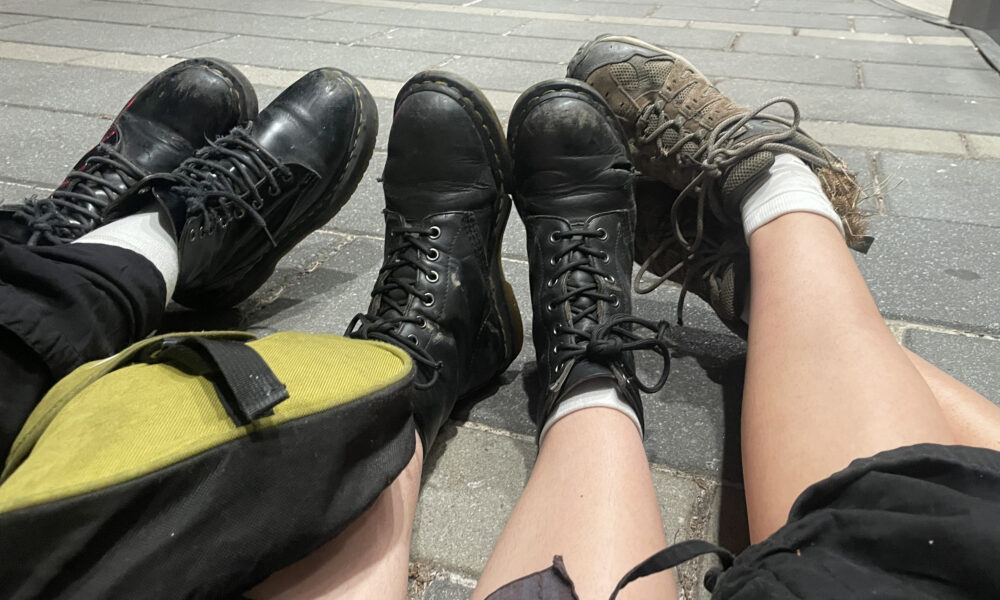
As I took my seat among a sea of Doc Martens and flamboyantly vintage clothing, I began to feel underdressed for this performance where everything from the audience to the antique couch was stylish, carefully chosen, and, above all, queer. 

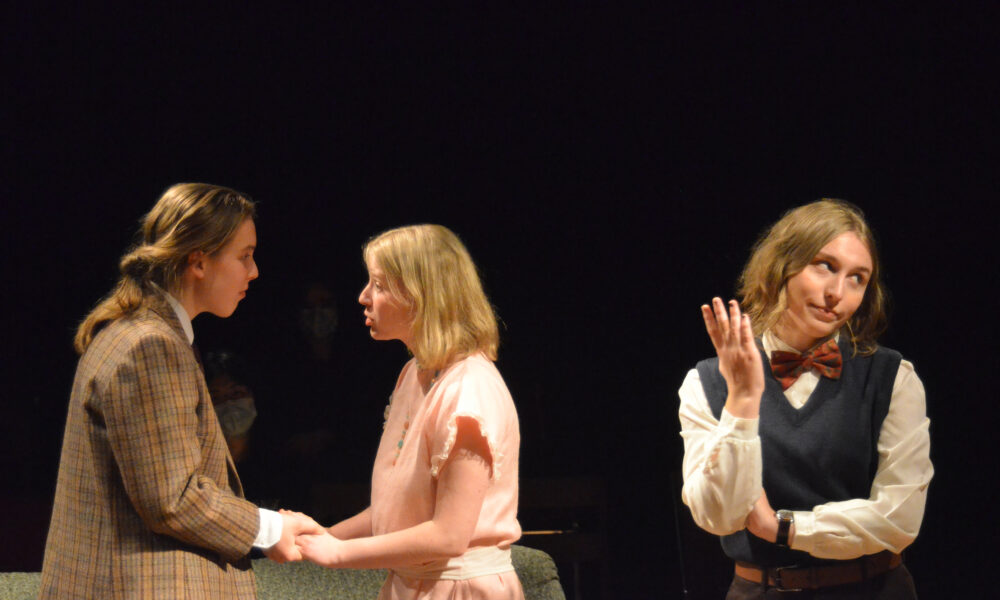
Tuesday Night Café (TNC) Theatre’s contemporary, lesbian rendition of Oscar Wilde’s 1895 comedy The Importance of Being Earnest brought Wilde’s queer subtext into the spotlight. The colourful script centres on two upper-class dandies who both lead elaborate double-lives in order to split their time between the country and the city. The twist: Both leading male characters are delightfully recast as women for this production. Jack (Maite Kramarz, U3 Arts) resides at his country estate along with her ward, Cecily (Jaimie Coplan, U1 Arts), and uses the alter ego Earnest to sneak off to New York City and cover for her extravagant exploits. On the other hand, Algernon (Celeste Gunnell-Joyce, U1 Arts) relies on her imaginary long-suffering friend Bunbury, whose poor health always requires her to escape into the country. 

Kramarz, who plays Jack with a tireless sense of respectability and neuroticism, serves as the perfect foil to Gunnell-Joyce’s Algernon, who hits the flamboyant, Wildean gestures of a do-nothing dandy spot on. 

When, by chance, Algernon finds out about Jack’s double life, she realizes that they both engage in what she calls “Bunburying.” She’s determined to infiltrate Jack’s country estate, posing as Jack’s reckless sister Earnest. As both of their lies begin to unravel, their contradictory personalities shine with Wilde’s witty dialogue turning increasingly back-handed. 

Throughout the play, the actors handled Wilde’s circuitous language with ease, spitting pointed insults and not-so-subtle digs at society as though it was second nature. 

“I was surprised at myself—and I was talking to all my cast members about this—that we were able to remember everything we were supposed to say in all these weirdly twisty lines,” Kramarz said in an interview with The Tribune

As Jack and Algernon’s double lives crumble around them, Lady Bracknell (Megan Danbrook, MA ‘23) stole the show with her formidable portrayal of an overbearing aristocrat’s vain attempts to maintain an honourable, Victorian facade. The love interests—Gwendolyn (Ellie Mota, U1 Arts) for Jack and Cecily for Algernon—dazzled with their spot-on takedowns of upper-class feminine stereotypes. 

After immersing myself in two hours of Wilde’s biting satire—which holds up remarkably well today—I retired to TNC Theatre’s tiny, lime-green office to speak with director Carmen Mancuso (U3 Arts) about the inspiration behind the show. 

“When we were choosing a play, we were really looking to find something really iconic and really fun that we could stage in kind of a new way,” Mancuso explained. “One thing that I really loved about [TNC] is that their mandate—their idea—is always about taking [a] traditional part of the canon and flipping it around.”

The Importance of Being Earnest presented a perfect opportunity for this, with its gay subtext begging to burst out of the closet with a more explicitly queer staging. “When I was reading through it, I kept finding moments where it was like […] ‘Oh my God. They sound so gay. This sounds like lesbians I know,’” Mancuso noted. 

While Wilde, famously sentenced to hard labour and two years of jail for his homosexuality, had to keep his play anchored within Victorian heteronormativity, TNC Theatre took the opportunity to bring queerness to the forefront by recasting the play with primarily women leads. 

“Our dream for something like this is that it’s a way of celebrating what’s in the play,” Mancuso said. “Of bringing out that very obvious—if you can even call it—subtext, and really kind of celebrating that in the open as something that’s alive and there and living.”

Arts and Entertainment Editor Dana Prather is Executive Director of Tuesday Night Café Theatre and was not involved in the publication of this article.

Arts & Entertainment, Pop Rhetoric

Where’s the hair, Harry?

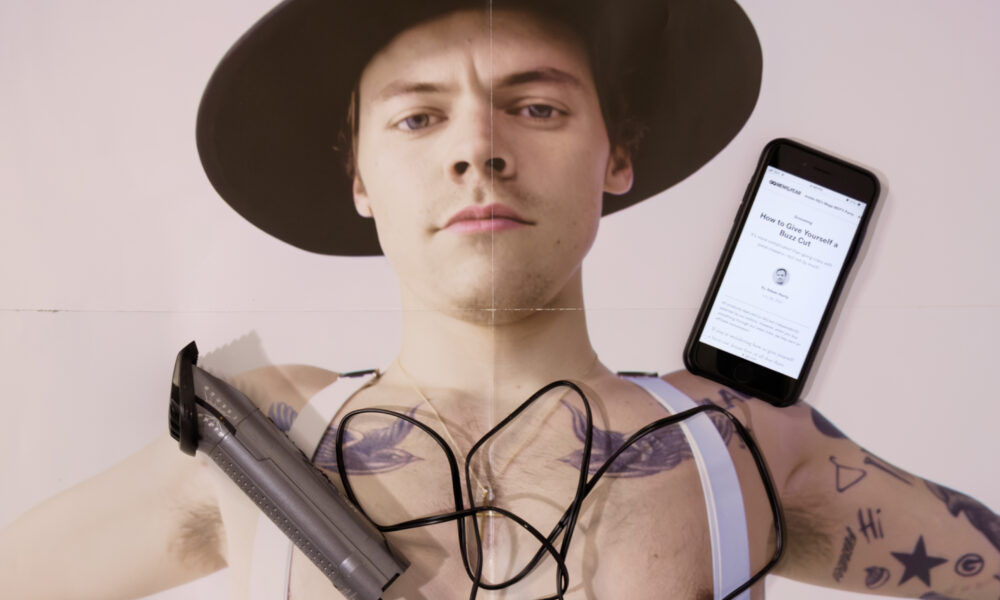
In Nov. 2023, the entertainment world was shocked to hear the news that one of their very best had been lost. Millennials still harbouring crushes from their teen years and diehard fans alike were devastated when they discovered what happened to Harry Styles. No, the man himself isn’t dead—but his hair, along with some desirability, sure is. 

Beauty isn’t everything, but Styles’ most recent move to get a buzz cut remains questionable, to say the least. From the boyish curls in 2011 to his lion’s mane in 2015, one of the singer’s most defining features has always been his hair. After all, his name is Harry Styles, so what is he without hair to style? Baldy Unstylish simply does not have the same ring to it. 

This move cannot be attributed to an impending midlife crisis. There’s speculation of reasonable rationalities, such as wanting to be more anonymous in public. The singer-songwriter is a mere 29 years old and has produced numerous chart-toppers in the past few years, including ‘As It Was’ and ‘Watermelon Sugar.’ The star won Album of the Year at the 2023 Grammy Awards for his work on Harry’s House, and he even debuted his role in the Marvel Cinematic Universe at the end of Eternals. There is no shortage of success in Styles’ life. Who knows—maybe the stress of making another album is getting to him, or perhaps this is his response to Taylor Swift’s recent re-release of 1989 (Taylor’s Version), whose romantic tracks about Styles do not paint him in the best light. Regardless of the reason, there is no true way to justify this tremendous loss. Maybe Taylor Swift was wrong; he may finally be going out of style. 

I am not the only fan to be outraged by this move. Members of the public have taken to X, formerly Twitter, to comment on how the new ‘do has affected them. To everyone posting the pic of Harry Styles with his shaved head please stop it’s hurting me emotionally, mentally and physically,” one X user stated. Meanwhile, another fan noted the gravity of the situation, asking, “you’re laughing? harry styles got a buzz cut and you’re laughing?” 

His hair was an inspiration to us all. He proved to the world that not only is there merit to the man bun, but that the slick-backed look is more than a cautionary tale against the excessive-hair-gel look that John Travolta popularized in Grease

Every generation has its turning point. Between the World Wars and Y2K, previous generations have had their fair share of drastic events. Who’s to say that this isn’t ours? The trauma of this hairdo is already affecting the McGill population.

“When I woke up to see that the rumours were true, I didn’t know how to go on with my day,” Sophia Longo, U2 Science, said in an interview with The Tribune

The extent of the damage this haircut has incurred is not yet known; we cannot imagine the havoc this could wreak on students’ performances on final exams.

In the end, it’s what’s on the inside that matters—haircuts cannot determine a person’s worth. That is, for everyone except Harry Styles. Even a casual observer could tell that half of the artist’s magic is hidden in his hair. Shaving his head is an act tantamount to removing a unicorn’s horn or stripping a tiger of its stripes. No matter how many of his songs top the charts, they will never be enough to sit atop his head. So Harry, if you’re reading this, then I beg of you—be hairy again. 

Arts & Entertainment, Books, Film and TV

The metamorphosis of Coriolanus Snow

Spoilers for The Hunger Games: A Ballad of Songbirds and Snakes; mentions of violence.

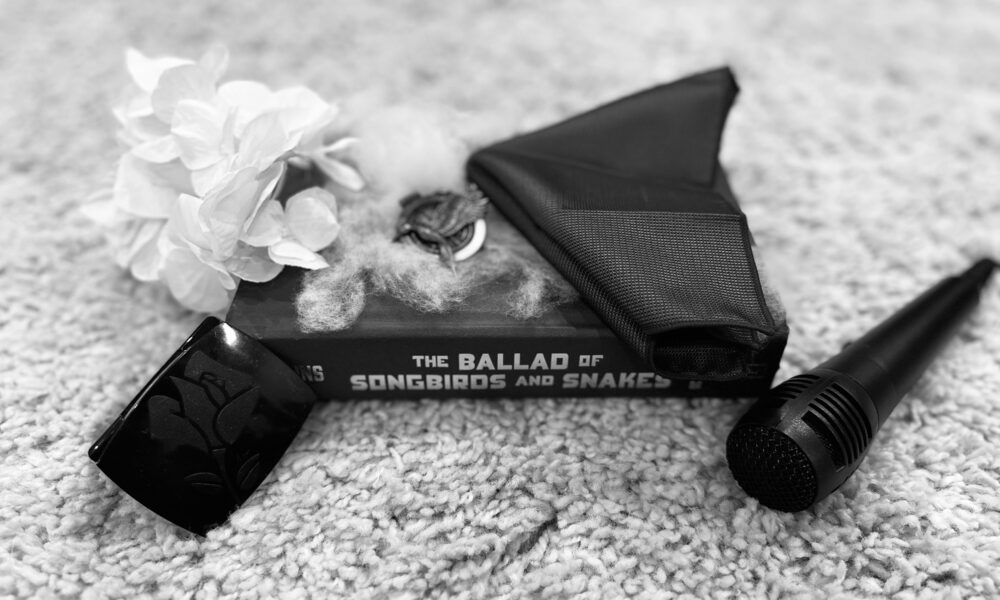
A villain is made from an innocent soul shattered to the point their humanity is forgotten. An enraptured audience feels compelled to watch this slow descent into madness, the arc of a villain so brutally destroyed. The prequel film for The Hunger Games trilogy, A Ballad of Songbirds and Snakes, is the perfect example of this. Anticipating its release on Nov. 17, an influx of Coriolanus Snow (Tom Blyth) thirst edits flooded TikTok to a degree that nearly rivalled the inescapable circulation of the 2014 Josh Hutcherson edit

To anyone familiar with the original Hunger Games trilogy, this response may be perplexing. President Coriolanus Snow, the maniacal mastermind who perpetrates the notorious Hunger Games, forces the districts to shackle children in a death battle as punishment for the districts’ attempted rebellion. A manifestation of pure malevolence, he spearheads the government which orchestrates these games as entertainment for the rich and frivolous. Why, then, is an entire storyline dedicated to his journey?

Villains serve as foils to protagonists, compelling them into the journey through which they unearth their heroism. However, an audience will always desire the omitted narrative uncovering how a villain came to be. We crave, more than anything, complexity in characters. Thus, the attraction of A Ballad of Songbirds and Snakes lies in its obsessive examination of Coriolanus Snow’s infamous origins. 

A character who renders an audience conflicted is rare; to do this in the face of pre-established hatred is even more extraordinary. Most viewers walked into the theatre expecting some maudlin backstory, poorly attempting to justify Snow’s horrific actions against innumerable innocents. They found, instead, an earnest young man with a desire to provide for his impoverished family. A golden-haired youth with his heart in his throat at the thought of twisting a jubilant performer into a murderer, merely to appease the Capitol. Looking at the child-like innocence of a boy, simple and caring, inspires empathy in the audience. Within the film’s first 20 minutes, Coriolanus joins the tributes as the Capitol displays them in a zoo cage to gain his tribute, Lucy Grey’s (Rachel Zegler) trust. From the moment she enters the arena, Coriolanus shackles himself to his monitor, raw anguish reflected in his eyes. This heart-wrenching moment reminds the audience that he too began as a child victimized by a perverse post-war system of “reform.” 

The film details Snow’s descent into depravity. Key moments progressively dismantle him until he splinters into the man we know as President Snow. The first flicker of his character comes when he bludgeons a tribute to death in self-defence, shocked by his loss of control. As the film progresses, each death makes the steps toward darkness easier. In a climactic fit of rage, discovering Lucy’s betrayal, he attempts to kill his love. So far, Lucy has served as a metaphorical representation of his heart and with this act he attempts to extinguish the final ounces of his morality. This marks the definitive shattering of his integrity, facilitating his metamorphosis from the innocence of Coriolanus to the malevolence of President Snow. 

The Head Gamemaker of the tenth games, Dr. Volumnia Gaul (Viola Davis) asks Snow what the purpose of the Hunger Games is. He replies, “The whole world is an arena, and we need the Hunger Games to remind us who we are.” Now enthralled in the confines of the games, Coriolanus sees himself as the Victor willing to do anything and everything to come out on top. With a corrupted soul, Snow falls into the footsteps of his father (who incited the idea of the games), no longer the bright-eyed boy with a golden heart and curls. We exit the theatre with the cold pang of loss. The last fringes of our hope for him flicker out with the cinema lights; we should have known better.

Arts & Entertainment, Comedy

Matt Rife’s Netflix special ‘Natural Selection’ is disconcerting and misogynistic

CW: Mentions of ableism and misogyny

 Matt Rife’s new Netflix special is supposedly a comedy; I didn’t find it very funny. 

The 28-year-old comedian and actor from Ohio has recently received a lot of backlash from his special, Natural Selection, which was released on Nov. 15. 

Rife is facing criticism that his special contains blatantly sexist and ableist jokes. In response to the backlash, he told The New York Times that he doesn’t think anybody should feel mad just because he was trying to make people laugh. He is either unaware of what is offensive or is overconfident in his assertion that people are wrong for being upset.

The problem isn’t that Rife wants to try for edgier humour; it’s important to take risks in comedy, and not everyone will like every joke—especially when it mentions oppressed people. The main reason why people are bothered is that Natural Selection is quite different from the comedy that made him famous. His comedy career first started to gain popularity when clips of his flirtatious crowd work—which greatly contrasts the juvenile comedy style of Natural Selection—began circulating on YouTube and Facebook. In an interview with Variety, Rife said his special is intended “way more for guys,” which, to him, translates to the jokes being at the expense of women and autistic people. His opening joke, used for “testing the water” with his audience, was that Baltimore is “ratchet” and that women with black eyes should hide in the kitchen. Although humour is extremely subjective, fans aren’t satisfied with the new Rife who thinks domestic violence is a joke. 

Rife has remarked in the past that his following consists mostly of women on the “very female dominant” TikTok, and this abrupt change in style marks an evident desire to appeal to a more male-dominated audience. It’s okay if he wants to write for men, but I question why he decided to do this at the cost of his primary audience. People don’t need to cancel him, because he’s cancelled himself by deliberately ridiculing the people who have supported him the most. 

The real cherry on top of all of this was his “apology,” which he posted to his Instagram Story on Nov. 20. Along with the caption, “If you’ve ever been offended by a joke I’ve told – here’s a link to my official apology,” he shared a link to a website selling special needs helmets for adults and children. Is it subjectively funny that he managed to make himself look even worse by leaning into the criticisms that his comedy is ableist? Yes, it is. 

After the special’s release, Rife’s previous controversies have begun circulating on social media. Most notably, he touched the then 18-year-old Zendaya’s face without her permission on the show Wild ‘N Out in 2015 during a game called “Talking Spit,” where players try to make someone spit out their water, usually from laughing. Rife’s initial attempts to make the actress spit out her water weren’t successful, so he tried to get a reaction out of her by touching her face. In the clip, Zendaya is visibly uncomfortable, and her teammates rush to defend her. He also posted a since-deleted tweet that perpetuated anti-Asian sentiments, referencing what at the time was the novel Coronavirus, by targeting the cast of the Korean film Parasite in his caption: “Everyone at the #Oscars waiting to see if the cast of Parasite coughs.” 

This new style he’s going for is not funny, and is certainly not okay either. It took me a while to realize why he seems so familiar—he reminds me of middle-school boys trying to earn their peers’ approval. He has the bad habit of making jokes that are blatantly sexist, ableist, or racist in order to please others, specifically men. Although men do not inherently appreciate this type of humour, men are Rife’s intended audience. Rife needs to take note that discriminatory humour shouldn’t be considered a form of humour, but a form of bullying. 

Behind the Bench, Formula One, Sports

Speeding in the Spotlight: A Review of the Las Vegas Grand Prix

On Nov. 16, Formula 1 (F1) made its first stop in Sin City since 1982. As the third and final American race of the calendar, the Formula 1 Heineken Silver Las Vegas Grand Prix (LVGP) is the penultimate race of the F1 season, one week before the Abu Dhabi GP kicks off almost 13,200 kilometres away. The decision to have back-to-back races located so far apart raises concerns about the environmental impact of the F1 season. However, the Fédération Internationale de l’Automobile’s (FIA) questionable environmental ethics were nowhere near the greatest concern of the disastrous weekend that was the Las Vegas Grand Prix. 

Despite ticket prices dropping by up to 62 per cent before the event, the LVGP was one of the most economically successful F1 races in history, with an estimated $1.2 billion in economic impact for the city of Las Vegas. The race brought 315,000 fans, with non-refundable tickets and hotel deposits, and their expenses ensured the race’s financial success. 

The LVGP faced significant technical issues from the get-go. In an attempt to cater to the European audience’s time zones, the race was set at night, not accounting for the extremely cold temperatures of the desert. On race day, the weather forecast predicted a minimum of seven degrees Celsius, prompting Pirelli, the official tire supplier of the FIA, to raise concerns about the drivers’ safety. 

Mario Isola, the head of Pirelli, explained that cold reduces tire grip, increasing the chances of losing control of the car. This requires constant control of pace since the slightest slump in rhythm could put lives at risk simply from the tires cooling down. The only feasible solution was to change tires more frequently, as they are kept in heated blankets, going against Pirelli’s climate change action goal to limit the number of tires used. As the FIA decided to go forward with the race, McLaren driver Lando Norrisaccident came close to proving Firelli’s concerns. While officially the incident was caused by a bump on the track, the lack of grip on the tires heavily contributed to Norris losing control of his car and ultimately crashing into the barrier. 

Despite starting on time, the LVGP came to a halt less than ten minutes after the Free Practice 1 (FP1) race began. One of the manhole covers was not properly bolted down, causing it to fly up, destroying the bottom of Carlos Sainz’s car––including his power unit––and sending sparks flying. The damages forced Ferrari to replace the car’s energy store––a set of batteries converting energy accumulated into electrical energy––despite each team only being allowed to replace them once per season. Ferrari requested an exemption from the regulations, citing external circumstances outside the team’s control, which the stewards denied, resulting in a ten-place grid penalty for Sainz. 

This situation made fans wonder how such an incident was possible. FIA rules require that the initial inspection of tracks happens one day prior to the cars getting on them, yet the inspection only occurred at 3:30 a.m. (PST) on Thursday for the Strip Circuit. Moreover, recent changes in the Sporting Code loosened the level of exigence that the regulatory institution should have, granting the FIA the discretion to declare the circuit’s safety.  

The subsequent inspection and repair of the track caused the FP2 to be pushed back to 2:30 a.m. PST on Friday. After the announcement of the delay, ticket-holders who had been waiting on the strip were forced to leave the venue. Many fans were single-day ticket holders for Thursday and their only solace was a $200 voucher to the official shop. On Nov. 18, Dimopoulos Law Firm filed a class-action lawsuit regarding the compensation of fans.
As talks of expanding the calendar resurface annually, the safety of the drivers and the audience must remain of utmost importance. After the extreme heat of the Qatar Grand Prix, the LVGP seemed to be the nail in the coffin for fans and drivers alike, encouraging them to ask for better conditions. Despite the remainder of the weekend carrying on relatively smoothly and Max Verstappen whisking away with another win, the FIA must unequivocally prioritize safety over superficial glamour and marketing ploys.

All Things Academic, Student Life

The Tribune’s declassified finals survival guide

With temperatures rapidly dropping, a light layer of snow enveloping the front lawn of campus, and course evaluations opening up, it can only mean one thing: Finals are almost here. This is often an anxiety-inducing time for McGill students as we pull all-nighters in the library, drink copious amounts of Red Bull, and forget about everything that doesn’t involve school. Unfortunately, this exclusive focus on academics during finals can often lead to burnout and poor academic performance. Luckily, there are tons of ways to promote self-care during finals season without your grades taking a hit. Here is The Tribune’s declassified finals survival guide. 

Exercise

Exercising might be the last thing on your mind as you’re heading into finals. But, it is one of the best ways to stay refreshed and healthy during this stressful time. Exercise releases feel-good hormones called endorphins, which have been proven to reduce stress levels and boost your mental health. Staying fit also enhances your concentration, making it easier to study for longer periods of time. So, head out for a hike, go for a free lane swim at the McGill gym, or even just walk around your neighbourhood—your GPA may thank you.

Vary your study spaces

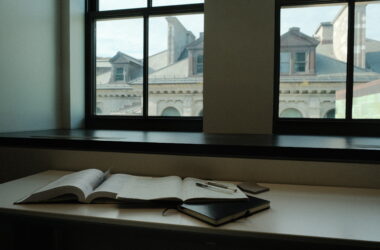
It might be tempting to spend the entirety of finals season camped out in McLennan or your living room. But, research has shown that changing up your study space can help with recalling facts and minimizing distractions. If you spend too long in the same study space, it becomes too comfortable, which often translates into less focus on the task at hand. Going to a new café or switching up libraries can help alleviate this.

Don’t neglect your social life

Just because it’s finals season doesn’t mean that you should shut yourself off from those around you. Staying in touch with friends and family, whether it be an evening out or a quick FaceTime chat, is beneficial for both your physical and mental health. It also helps reduce stress and anxiety. So, grab your friends and take a study break by heading out to your local thrift store or a holiday market.

Study smarter

Instead of re-reading your notes and hoping for the best, use retrieval practice to help you recall information more effectively this finals season. Retrieval practice, also known as the testing effect, is a strategy that involves actively recalling information to help strengthen your memory traces. This can include taking practice tests, using flashcards, teaching the information to others, and answering questions aloud. Research has found that these techniques help improve your memory by engaging in active cognitive processes as opposed to passive ones, like simply highlighting or reading your notes. 

Spacing out your study sessions, also known as repetition, has been found to not only help you learn more information, but also retain it for longer. By spacing out the material, you can focus on a specific subset during each session, without feeling pressured to cover everything at once. Spaced practice is particularly effective when you plan a schedule ahead of time, with clear objectives for each study session. 

Sleep, sleep, sleep

While you might be inclined to stay up all night finishing your research paper or memorizing those last couple of terms before your exam—don’t! Sleep is one of the most important ways for you to prepare for your finals. Sleep deprivation causes increased stress levels and impaired cognitive performance. Sleep helps with retaining key information learned during the day, which is especially vital for memorization-heavy final exams.  

The quality of your sleep is also important. Make sure to make your sleep environment cool, dark, and quiet to maximize the cognitive benefits of sleep. Following a regular sleep schedule and putting your phone away at least 30 minutes before bed are also crucial ways to help you stay alert during the day.

With a focus on self-care, you can avoid burnout this finals season and ace your remaining exams and assignments. You’ve got this!

Read the latest issue

Read the latest issue