



Latest News

Features

The politics of protection

On Nov. 6, 2025, Quebec Minister of Immigration Jean-François Roberge abolished the Programme de l’expérience québécoise (PEQ), a program designed to help foreign students and workers obtain Canadian citizenship. This abolition erases the progress of those in this program, forcing them to seek different paths to citizenship. This measure is one of many that the government of Quebec has implemented in recent years to limit migration to the province, reflecting a broader trend throughout Canada to lock down on immigration while completely uprooting thousands of migrants’ lives. 

Over the past sixty years, controversy around immigration in the political realm continues to increase dramatically. In 1971, Canada announced its commitment to multiculturalism; in 1972, Richard Swanson was celebrated as the 10 millionth immigrant since confederation. Economically, immigration was applauded and appreciated, but in the early 1980s, migration entered Western politics as a highly debated issue following increasing worries with work and housing insecurity. As a result, politicians in election season focused on appeasing their electorate rather than on undocumented immigrants, who are unable to vote. 

Professor Emeritus in McGill’s Faculty of Law, François Crépeau, who specializes in migration and human rights law, explained the politics of migration in an interview with //The Tribune//. He described migration as an example of a ‘permacrisis,’ or a “long period of great difficulty, confusion, or suffering that seems to have no end,” arguing that political discourse around migration is often merely symbolic. 

“Many immigration-related measures are essentially a discourse towards citizens,” Crépeau said. “If you increase deportations, it’s to tell the citizens, ‘Look, I’m protecting you better.’ At the same time, you’re spending a lot of taxpayers’ dollars, and you have to justify it. So you have to amplify the risk that those migrants are posing to society, and that’s why the discourse about the permacrisis is constantly amplified.” 

One such example of this type of discourse came in 2012, when Canada altered its punitive measures for migrant smuggling. The law now mandates a maximum of 14 years’ imprisonment for bringing one migrant illegally, the same punishment as for sexual assault with a weapon. The punishment for bringing 10 or more people into Canada illegally is prison for life—the equivalent of a crime against humanity. 

“The penalties that were decided by the Canadian government at that time were not designed to be implemented,” Crépeau said. “They were designed to send a message to the migrants, but most importantly, to the electorate. ‘Look how tough we are on crime.’” 

Crépeau continued, explaining the myriad of mechanisms that can be invoked to avoid detention and deportation. He listed, “Bail, guarantors, house arrests, ankle bracelets, being housed with community organizations, reporting to the police every day or every week.” These alternatives have been called for by Non-Governmental Organizations (NGO) for nearly 30 years, but they do not exist in immigration law. Rather, governments focus on punishments that bring electoral reward. Not only is the political display of detention an attempt at demonstrating heightened security measures, but the detention centres themselves simultaneously create jobs in, for example, construction work, management, and security. This is the core of the permacrisis: Politicians neglecting immigrants in order to appease the electorate. 

“Most [migrants] are totally innocuous. They have a job. They’re solidly citizens in all aspects except their papers. As long as we don’t recognize that, well, our politicians are going to continue to peddle this idea that these are dangerous people and we need to take very harsh measures like deportation and detention to get rid of them or protect the citizenry from them,” Crépeau said. 

In 2025 alone, Canada deported nearly 19,000 people—a sharp increase since 2022, when around 8,000 deportations occurred. Solidarity Across Borders (SAB), a Montreal-based migrant justice network, has organized to confront Canada’s unjust immigration system since 2003. Shi Tao Zhang, a representative from SAB, spoke with //The Tribune// on the years-long injustices migrants have faced in Canada. 

“Canadian Border Services Agency [CBSA] have yearly quotas of deportation and […] they’ve increased their goal by 25 per cent for this fiscal year as compared to last year, which is very worrying to me personally, because I feel like they’re just treating human beings like numbers,” Zhang described. “At the end of the fiscal year to meet their quota, they’ll often ramp up deportation.” 

Canada continues to deport and detain systematically in the name of political discourse and electoral reward, while thousands of migrants’ lives are violently uprooted. 

//THE LEGAL BLACK HOLE OF DETENTION//

The basic human dignity afforded to all citizens under due process is not extended to migrants, placing them in a vulnerable space where detention sentences are irresolute and lives often unravel. 

“When you’re in detention, your entire life stops. You become isolated from your family. You become isolated from everything. People lose essential pieces of their lives, people lose their jobs, people lose their housing and become homeless,” Zhang said.

Unlike jails or prisons, immigration detention is not formally punitive, but rather categorized as ‘administrative.’ Thus, it functions as a bureaucratic measure used to ensure removal, confirm identity, or address what authorities describe as a flight risk. Because it is not a criminal sentence, detainees are not serving time for an offence. Many have not been charged with any crime at all. While international human rights law outlines general protections for detained individuals, immigration detention operates in a grey zone. There is no fixed sentence, no guaranteed release date, and no trial determining guilt or innocence. 

In Canada, detainees are subject to periodic detention reviews, but release is never guaranteed. If the CBSA argues that an individual is unlikely to appear for removal or poses a security concern, detention can continue for months or even years. 

“You have international law about the rules for detention to respect the dignity of [prisoners]. They’re detained, but they’re not deprived of dignity. That doesn’t apply to detention centres, because this is administrative detention,” Crépeau explained. “It’s not a pre-trial detention or post-trial detention [….] They stay in detention for months or years on end, without any trial of any kind. And there’s no rule applying to that.” 

As a result, the living conditions within these centres cannot be tracked. Even after release, migrants often remain undocumented, with any brutality witnessed inside the centres going unreported out of fear. Oversight mechanisms are limited, and because detention is administrative rather than criminal, it falls outside many of the reporting systems that govern prisons. Advocates argue that this opacity makes it difficult to track use of force, medical neglect, or prolonged confinement. Upon release, many migrants return to legal limbo: Unable to work, access housing, or report mistreatment without risking further scrutiny. 

While much of the public scrutiny surrounding immigration detention has focused on the U.S., where footage of U.S. Immigration and Customs Enforcement (ICE) raids and overcrowded facilities circulate widely online, many Canadian advocates caution that this brutality is not a unique issue to the U.S. According to SAB, detainees across centres in Canada have described prolonged confinement with limited access to basic hygiene supplies, inconsistent medical attention, and restricted outdoor time. 

“Because what ICE is doing is overtly brutal and deliberately cruel, it’s attracting a lot of attention because it’s being filmed and disseminated online. But I think what Canadians don’t realize […] is CBSA is perpetrating the same types of violence on migrants here, but in silence, so no one really knows. They break into people’s rooms at night, they laugh at the children whose parents were arrested and make them cry,” Zhang said. 

Just north of Montreal, the Laval Immigration Holding Centre houses individuals awaiting deportation. The centre operates within a distinct oversight structure, and much of its day-to-day management is contracted to private security—a practice that tends to diffuse responsibility. Beyond the concern of what happens inside the facility, very little of its operations are visible to the broader public, and many detainees’ stories are only heard because of activist groups like SAB that communicate with detainees regularly. 

“It’s this regime of administrative detention that’s separate from the usual […] carceral system, because in administrative detention, they can technically keep you inside for as long as they want to,” Zhang said. “Unless you have a competent lawyer who intervenes, it’s usually very, very difficult, […] it’s kind of like a black hole.” 

//OUTSOURCING ACCOUNTABILITY //

As migration has increasingly been framed as a security concern rather than a humanitarian or administrative one, its enforcement expands beyond the CBSA, seeping into cities. Zhang described the key role the Service de Police de la Ville de Montreal (SPVM) has played in advancing detention and deportation, noting that even though Montreal became a sanctuary city in 2017—theoretically meaning that the SPVM is no longer supposed to collaborate with CBSA—both institutions still work closely together. 

“In 2023, there were around 1,000 calls made from the SPVM to CBSA in terms of flagging or checking legal status,” Zhang explained. “There is something specific with the way the SPVM operates with CBSA with racial profiling [….] It is obviously more likely for someone who’s racialized to get stopped.” 

Photojournalist William Wilson has reported on SPVM brutality at protests for nearly 10 years and spoke with //The Tribune// about how SPVM attitudes have changed towards the public in the past decade. 

“Nowadays, the police are so intensely intimidating people [….] And that’s new. That’s totally new,” Wilson said. “10 years ago, they used to stay at a distance until the march got moving in the streets. But nowadays, it is just like they’re breathing down their neck the second they arrive.” 

While public police remain central to interior enforcement, migration control is increasingly intertwined with private security actors operating under government contract. Specifically, there has recently been public outcry over Canada’s involvement in U.S. deportation centres, with many protesting and signing petitions against the Montreal-based security company, GardaWorld. Despite the company’s leverage within American detention systems, it is a recent recipient of over $100 million CAD in Canadian government contracts since Mark Carney stepped in as prime minister.

GardaWorld has security guards in detention centres across Canada, including at the Laval Immigration Holding Centre, as well as throughout some of the more controversial detention centres in the U.S. One such example is the South Florida Detention Facility, infamously nicknamed ‘Alligator Alcatraz,’ given its location situated amidst a moat of alligators. 

Because private security firms operate under contractual agreements rather than public policing mandates, oversight mechanisms differ. Complaints processes, transparency requirements, and reporting obligations are often less visible to the public. 

“[Security contractors] have a key advantage. The supervision of their activities is much more difficult, as long as you have the military or the police, but you have oversight mechanisms, public oversight mechanisms that will report on what errors have been made and who did what [and] when, and you will get to the bottom of the thing,” Crépeau explained. “[With private security], it’s not done outside. It’s done inside […] where you have no journalists, no NGOs, no oversight mechanism.” 

The normalization of private security extends beyond detention infrastructure, as Montreal institutions increasingly rely on contracted security personnel to manage protests and campus unrest. GardaWorld manages security at 50 per cent of Canada’s airports and works with universities, maintaining a contractual relationship with McGill itself from Aug. 26, 2024, through April 30, 2027. As of 2024, Garda is McGill’s only private security, although they also hired Sirco in 2024 to dismantle the pro-Palestine encampment

Around the same time, Wilson covered a pro-Palestine protest on McGill’s campus and described the tactics used by the private security that day. He showed a video someone had filmed of him at the rally—10 or so guards completely surrounded him, with their shields, face coverings, and various intimidation tactics, while Wilson stood engulfed, holding his camera and yelling, “I’m a journalist.” 

“They started beating the shit out of people, and I was screaming at them, ‘I can’t move, I can’t move. I have nowhere to go,’” Wilson recounted. “That was the biggest security operation I’ve seen [McGill] do. They must have hired at least 100 people just that day.” 

This expansion reflects a broader cultural shift in which private security personnel assume roles once associated primarily with public police, often with fewer transparency requirements, and as oversight mechanisms struggle to keep pace, the expansion of private security reveals the deeper transformation in how migration—and public order—are governed and surveilled. 

//THE HUMAN COST OF POLITICAL DISCOURSE //

Throughout debates on migration, the language of security has become increasingly dominant and invoked to justify border closures, the expansion of policing, and administrative detention. When migrants are cast as risks to be managed, enforcement measures can expand with limited public scrutiny; policies framed as procedural or preventative often carry deeply personal consequences. 

The validation of detention and deportation perpetuates the narrative that migrants are dangerous. Consequently, security frameworks surrounding the measures become normalized and embedded into public life. With the abolition of the PEQ and other measures like it, jobs are lost, families are separated, and lives are suspended in uncertainty. If the issue of migration begins as discourse, its consequences reverberate far beyond policy. 
News, SSMU

SSMU LC discusses fee renewals, McLennan library, and DriveSafe

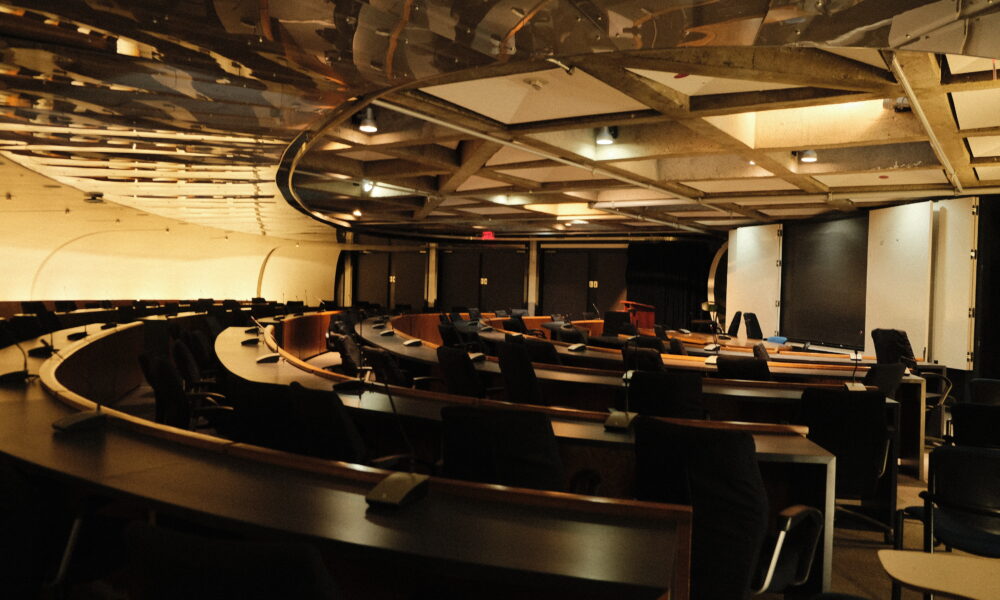
The Students’ Society of McGill University’s (SSMU) Legislative Council (LC) convened for the third time this semester on Thursday, Feb. 12, beginning with an introduction of the new recording secretary, Alissa Gharzouzi.

Vice-President (VP) Clubs and Services Hamza Abu Alkhair then proposed an amendment to the agenda, seeking to advance three motions moved by the Student Group Committee regarding group fees to the top, which were approved unanimously. Two motions regarded the World University Service of Canada (WUSC) Student Refugee Program fee, while the other pertained to the SSMU ECOLE Project fee, and all were passed after discussion. 

The minutes from the Jan. 29 council meeting were then approved unanimously with no changes or amendments. This was followed by a report from the Steering Committee.

The announcement period followed, during which VP University Affairs Susan Aloudat gave an update on McLennan Library’s sixth floor.

“I am so happy to announce that the sixth floor of McLennan no longer has a mold problem, and that means that the new reflection zone is officially open,” Aloudat said. “It’s a space specifically for quiet meditation. I really encourage everyone to check it out, it’s a very unique space that no other library has, and I’m so glad it’s finally available.”

President Dymetri Taylor then delivered the executive reports, followed by VP Finance Jean-Sébastien Leger. Reports by councillors came next, with those from the Medical (MSS), Nursing (NUS), and Education (EdUS) undergraduate societies providing updates on their respective responsibilities. 

Next, Taylor moved a motion regarding the renewal of the McGill Writing Centre fee. He then put forward three more motions pertaining to the Student Services Ancillary Fee, a referendum question on the renewal of the University Centre fee, and the Anti-Violence Fee, all of which passed unanimously. 

The Steering Committee’s motion to update the Standing Rules for the 2025-2026 SSMU Legislative Council was then passed unanimously, followed by a motion moved by VP External Seraphina Crema-Black to increase the SSMU Food Bank Fee by $1 CAD.

“At present, we restock the food pantry twice a week, and everything is gone in the 30 minutes after we restock it. So, obviously there’s […] high demand,” Crema-Black said. “We have been expanding it to a full-on food bank as opposed to a food pantry, so we need more money so that we can stock a food bank as it should be stocked.” 

After a brief recess, the council unanimously passed the last motion on the agenda regarding the SSMU Daycare fee, moved by Abu Alkhair.

The discussion period concluded the meeting, with Taylor introducing a plebiscite period where students could voice their opinions on the quorum for strikes.

“Right now it’s just 10 per cent of the students [who] need to participate in a vote to ratify it, going forward the question is […] particularly for student strikes, whether that should be increased to 50, 40, 30, 20 or 15 per cent to determine is there a certain amount of students that we need a threshold of to actually go on strike,” Taylor said.

Moment of the Meeting: 

The discussion session’s second item concerned DriveSafe’s inoperable phone number last Friday. The mistake is being investigated to determine how the error occurred and to ensure it is not repeated.  

Soundbite: 

“Last Friday, there was a Valentine’s Ball that was occurring at the University Centre. During this time, there was […] an incident that often comes up when alcohol is involved unfortunately, to which Drivesafe was called to transport the individual home. However, the phone number unfortunately did not work, instead routed to a number in Montreal […] to a gentleman who stated that he was very much not DriveSafe, […] and would not be giving anyone rides.”—Dymetri Taylor.

News

McGill Senate confronts the rise of AI and undergraduate enrolment pressures

On Feb. 11, the McGill Senate convened for its sixth meeting of the academic year. The senators discussed the Accountability and Implementation of the Policy of Assessment of Student Learning, the use of Artificial Intelligence (AI) in a broad university context, the proposed strategic plan on undergraduate enrolment and engagement, and the annual report on the Charter of Students’ Rights and Student Life and Learning

The meeting commenced with three memorial tributes to late Associate Professor David Shannon of the Faculty of Medicine, Associate Professor Richard Hovey of the Faculty of Dental Medicine and Oral Health Science, and Professor Rachelle Keyserlingk of the Faculty of Education. 

McGill’s President and Vice-Chancellor Deep Saini went on to share brief updates regarding international partnerships and university accomplishments. He noted that the Quebec National Assembly has resumed session, drawing attention to Bill 1, which aims to strengthen parliamentary sovereignty and could constrain certain legal challenges to provincial laws. He emphasized that academic freedom at the university level must remain protected. Saini also referenced Bill 9, which concerns secularism, expressing concern about its implications for teaching and campus life. He stressed that any legislative changes must preserve student autonomy and agency.

Turning to international initiatives, Saini highlighted McGill’s expanding global ties. During the 2026 World Governments Summit in Dubai, McGill signed a memorandum of understanding with the Khalifa Foundation to establish the United Arab Emirates-Indonesia Future Major Leaders program, with a donation from the foundation amounting to $17.5 million CAD. The initiative is built on more than 50 years of McGill’s collaboration with Indonesian education sectors and will focus on giving meaningful benefits to Indonesian students, educators, and institutions, while simultaneously providing support in areas of sustainability, engineering, and health care. 

Saini concluded by celebrating McGill’s recent accomplishments. The university ranked in the global top three in 10 of 11 subject areas in the latest Times Higher Education subject rankings, with particularly strong performances in medical and health sciences, law, psychology, social sciences, and arts and humanities. Saini thanked the university community for their contributions to this achievement. He also wished luck to McGill athletes, coaches, and staff participating in the ongoing Milano Cortina 2026 Olympics

The Senate moved to discuss the Accountability and Implementation of the Policy of Assessment of Student Learning, with senators reflecting on its rollout and areas for improvement. The policy is intended to provide a framework for assessment practices at McGill, aiming to advance student learning and well-being, support course instructors, and promote equity. 

Senator Meghan Lai opened the discussion by expressing gratitude for the work completed thus far. She then posed questions about next steps for resource engagement and stakeholder consultation. 

In response, Senator Jérôme Fortier pointed to the early successes of the policy’s implementation.

“I think the success of the implementation was the willingness and openness to look at assessments a little bit differently,” Fortier said. “Through that principle-based approach […] there were many practices done very well over the years, but the policy actually didn’t reflect the pedagogical value of some of those practices.” 

He further acknowledged ongoing challenges, particularly in developing effective rubrics and area-specific assessment frameworks. 

“I think the biggest [challenge] was this question of rubrics, or how to support instructors in providing clear expectations for every assessment,” Fortier explained. “That’s not the practice of many parts of the university, and for some disciplines, it actually can be quite challenging to create a rubric that would really reflect the right way to assess on a certain task.” 

Fortier concluded by highlighting the value of individual consultation and faculty drop-in sessions. He emphasized their focus on supporting instructors in developing courses using various pedagogical practices, and warned of potential difficulties in monitoring the policy going forward. 

“It’s difficult to encourage change months or even a year ahead of when a course is delivered. So, in many cases, in an ideal world, all [learning] policies, when they’re adopted, they’re implemented right away. This was unique in having this long window of implementation, but it is difficult to plan that far ahead in many cases.”

Next, the Senate turned to an open discussion on the use of AI at McGill. 

Framing the conversation, Associate Professor Christopher Buddle of the Department of Natural Resource Sciences emphasized that while he is not an expert in AI, the unprecedented speed of advancement in generative AI is a cause for concern. He described generative AI as a tool capable of producing text, code, and other outputs in response to prompts, noting that debates surrounding AI sit within a broader academic, governmental, and ethical ecosystem. 

“Artificial Intelligence is not new to universities. AI [has] been used for decades, but what’s new is its visibility, accessibility, and the speed of the tools,” Buddle stated. 

Senators then broke into 10 discussion groups before reconvening to share key points. 

Across groups, senators identified potential academic benefits of AI, including its ability to aid research, support students with learning differences, assist with coding and industry workflows, and help students develop skills in evaluating AI-generated outputs. Several noted that familiarity with generative AI will likely soon be expected in many professions.

Concerns about academic integrity and authorship were also prominent. Senators raised questions about how to assess originality, how to recognize AI-assisted work, and how grading practices may need to adapt. Some emphasized transparency and traceability as guiding principles, while others suggested developing a values-driven policy rather than rigid rules, given the rapidly evolving nature of the technology. Senators also raised environmental concerns, noting the high energy and water demands associated with AI systems.

“AI can support tutoring, drafting notes for studying, language support, accessibility, inclusion, research acceleration, and administrative efficiency,” Buddle stated. “Some of the challenges [concern] academic integrity. Who is the author? It’s the classic kind of question that could be important in high ed[ucation]. It’s been an important question for a long time, but again, that question has been accelerated.” 

Several groups stressed the importance of faculty training and institutional clarity, such as creating an endorsed list of AI tools, integrating guidance into course syllabi, and providing education on safe and responsible AI use. Others emphasized that norms will emerge through practice and that flexibility will be necessary.

The discussion concluded with broad agreement that AI will shape the future of teaching and learning at McGill, though senators differed on what university policy will consist of and how it will be implemented. 

The Senate then turned to discuss the proposed 2026-2030 Strategic Plan for Undergraduate Student Enrolment, led by Senator Angela Campbell

The plan outlines four major priorities for guiding the university’s requirement mission: Transform, expand globally, anchor locally, and unite. The aim is to move beyond admissions numbers to consider access, engagement, and long-term student outcomes. Campbell emphasized coordinated efforts between central admissions and faculties, aiming to create an ‘end-to-end’—from recruitment to graduation—student experience while carefully shaping the composition of the student body. 

“It’s not just the number of students that we’re thinking about when we recruit and admit students, but we’re thinking about the composition of our student demography, where we’re recruiting from, and how we are admitting our students,” Campbell said. 

But enrollment is also tied to budgeting. Engineering and Commerce have seen significant growth, yet course capacity is strained. Senator Jan Kopyscinski warned that Engineering admissions may be too high, citing limited lab space. Senator Chloé Muñoz described overcrowded lecture halls, with students sitting on floors, and raised concerns about housing shortages and retention. Campbell acknowledged that other departments face similar pressures, especially during the add-drop period.

Timing also matters. If admissions offers go out too late—as Senator Elham Emami noted—McGill risks losing students to faster-moving universities. Ultimately, Campbell stressed that the goal is to “get the target right” by encouraging redistribution, relieving pressure on oversubscribed programs, and planning growth sustainably.

Lastly, the Senate briefly reviewed the Annual Report of the Advisory Council on the Charter of Students’ Rights, presented by Associate Professor and Interim Dean of the Faculty of Law Tina Piper for information, before moving to the Annual Report on Student Life and Learning. 

Professor Anthony Mittermaier, who assumed the role of Interim Deputy Provost (Student Life & Learning) just last week, highlighted key achievements from 2024-2025, including the expanded use of preferred names and pronouns, an orientation welcoming over 7000 students, upgraded digital systems, and the administration of a revised Student Code of Conduct. The Student Wellness Hub also served more than 5,000 students, with expanded support for Jewish, Muslim, 2SLGBTQIA+, Black, and Indigenous students.

Moment of the Meeting:

Saini remarked that the flag would be lowered for the lives lost in a recent mass shooting in Tumbler Ridge, British Columbia, and shared his condolences in response to the senseless act of violence.  

Soundbite

“AI does not simply change how work is done. It also raises questions about what institutions value, how learning is assessed, and how responsibility and accountability are distributed. So, it matters at McGill a great deal.”— Christopher Buddle.  

A previous version of this article stated that McGill’s 2024-2025 orientation welcomed over 700 students. In fact, the orientation welcomed over 7000. The Tribune regrets this error.

Editorial, Opinion

Canada’s AI strategy risks further propagating anti-Black racism

In September 2025, Minister of Artificial Intelligence (AI) and Digital Innovation Evan Solomon created the federal AI Strategy Task Force to provide recommendations on the role of AI in Canadian economic and social life. The Task Force conducted an extensive consultation of over 11,300 industry leaders, academic researchers, and civil society stakeholders to inform the government’s AI strategy, with particular emphasis on ethical research, transparent regulation, sovereign infrastructure, AI literacy, and security safeguards.

Yet, its composition and policy vision contain a critical failure: By excluding meaningful Black representation and refusing to directly confront how AI systems reproduce anti-Black racism, the Task Force has condoned and enabled racial harm across the infrastructures that AI is being built to govern.

On paper, the Task Force presented itself as a conglomerate of expert opinion and guidance, a time-limited advisory body assembled to generate ‘actionable’ recommendations on Canada’s AI development, governance, and usage. Beneath this consultative framing, however, is a structural absence of racial equity. 60 Black Canadian scholars have publicly cited underrepresentation on the Task Force. No sector is dedicated to equity in AI, and when the issue of equity does appear, it typically refers to equity of access rather than ensuring that these AI tools function equitably. In an open letter to Minister Solomon, over 40 groups and more than 100 individuals expressed concern regarding the AI strategy’s potential to automate anti-Black racism into decision-making tools used by the government, public sector, and private industry alike. By downplaying regulatory safeguards, the strategy prioritizes commercialization and global competitiveness, reflecting a preference for economic advancement over harm prevention.

AI systems already produce racial disparities in policing, immigration, facial recognition, hiring, loan rates, and health care allocation. These outcomes reflect the absence of marginalized voices within the designs of these systems and their strategies. Workforce exclusion intensifies this as Black workers remain overrepresented in sectors most vulnerable to automation whilst underrepresented in the industries designing these systems, further widening racial wealth and labour gaps.

AI’s capacity to reinforce systemic discrimination is a product of its design; bound by the data it is trained on, AI replicates the discriminatory nature of its inputs and is unable to self-correct. An MIT study on facial recognition found near-perfect accuracy for light-skinned men but error rates exceeding 34 per cent for dark-skinned women, reflecting the lack of diversity and representation within the training datasets for such software.

Studies on large language models reveal similar dynamics: Prompts such as “Black people are ___” generate disproportionately negative traits and associations. Though overtly racist outputs have declined through corporate filtering, covert bias persists, with software assigning lower-paying jobs, harsher criminal outcomes, and deficit-based characterizations to Black individuals. Without representative development teams, transparent datasets, and continuous auditing, AI systems risk formalizing anti-Black racism within the infrastructures governing social and institutional life.

Generative AI also has significant environmental implications. Data centres require immense energy consumption, water extraction for cooling, and the mining of minerals that drive ecosystem degradation and produce major carbon emissions. As these facilities proliferate, their environmental burdens are unevenly distributed. Environmental racism scholarship has long documented how polluting infrastructure is disproportionately placed in marginalized communities.

This pattern is visible on a global scale, from contaminated water crises in predominantly Black municipalities to the concentration of industrial and digital infrastructure in racialized neighbourhoods. In Africville, a historic Black community in Halifax, residents were denied sewage and water services while landfills, slaughterhouses, and infectious disease facilities were built nearby, posing severe health risks to community members. As AI is increasingly integrated into urban planning and infrastructure modelling, such systems risk reproducing these same spatial inequalities, recommending the placement of high-emission facilities in the very communities that already bear disproportionate environmental risk.

AI bias extends into education as well. Automated admissions, grading systems, and classroom tools are often deployed without critical oversight. Yet universities remain fundamentally underprepared. At McGill, AI governance is still framed primarily in terms of academic integrity rather than structural equity. While existing AI policies have acknowledged bias, they lack tangible enforcement mechanisms, shifting responsibility to individual students and instructors.

Canada’s AI strategy cannot be equitable without Black representation embedded at every level of design, regulation, and deployment. As AI infrastructure expands, Canada must now determine whether technological advancement will mitigate historical injustice or continue mechanizing it. 

Behind the Bench, Sports

The Harlem Globetrotters: A complicated piece of basketball’s history

In 1950, Earl Lloyd, Chuck Cooper, and Nat “Sweetwater” Clifton entered the National Basketball Association (NBA) as the league’s first Black athletes. Cooper was the first to be drafted, Clifton was the first to sign an NBA contract, and Lloyd became the first Black player to enter an NBA game when he appeared on the court for the Washington Capitols in October of that year.

Prior to entering the NBA, Lloyd and Cooper had both played for the Harlem Globetrotters. While today the Globetrotters are seen more as a circus act than a basketball team, their role in the landscape of professional basketball is historically important.

The Harlem Globetrotters were originally founded in Illinois in the 1920s as the “Savoy Big Five,” a team that showcased Black talent at a time when segregation stopped Black players from playing in the professional league. They did not just happen to have Black players—they leaned into Black culture and identity. Later, the second iteration of the team branded itself as the “Harlem Globetrotters,” in reference to the Harlem Renaissance movement.

The team operated similarly to modern boxing, booking opponents and travelling around the globe to play in one-off games. Despite not being part of a formal basketball league, the Globetrotters dominated everywhere they went, with their most famous win taking place against Hall of Fame inductee George Mikan and the Minneapolis Lakers, who later became the Los Angeles Lakers. The Globetrotters were so dominant that they were forced to incorporate elements of the circus act we know them for today, as crowds were starting to become bored of how easily they would win games.

The team’s dominance and popularity meant the NBA simply could no longer ignore Black talent knocking at its door. In 1950, the NBA began signing players from the Globetrotters and continued to do so for years afterwards. NBA legend Wilt Chamberlain played one season with the Globetrotters in 1958-59, during which he took part in a sold-out tour in the Soviet Union. The following season, Chamberlain became a member of the NBA’s Philadelphia Warriors, where he won league Most Valuable Player (MVP), All-Star Game MVP, and Rookie of the Year in his first season. Chamberlain went on to rewrite virtually every NBA record in existence, forever changing the game of basketball.

While the Globetrotters provided a platform for Black players, the team has its own complicated history with race. Team owner Abe Saperstein was a known racist who saw Black players solely as financial assets rather than as marginalized people whom he could be an ally to. The team used Harlem branding in an effort to profit from the cultural renaissance in Harlem, New York City, while enriching a team owner who was a racist. 

Saperstein attempted to sign Boston Celtics legend and 11-time NBA champion Bill Russell in 1956. Russell notably refused to play for the Globetrotters after Saperstein declined to speak with him directly during contract negotiations, instead speaking with Russell’s white college coach. While this may have worked with other players, Russell was one of the first professional athletes to use their platform to speak about racial injustice in America and to become a champion of civil rights. He was never going to stand for how the Globetrotters treated Black players just for a few extra dollars.
The Harlem Globetrotters’ role in basketball history is significant, but equally as complicated. The Globetrotters provided a platform for Black players and became so dominant that the NBA could no longer keep its doors closed. On the flipside, they had an owner who clearly lacked respect for the Black players he employed while also profiting off the Harlem Renaissance. They were an organization deemed racially unjust by Bill Russell, one of the sport’s most significant players. Despite their prominence, they have been relegated to the status of basketball’s World Wrestling Entertainment (WWE) in recent years, when really they ought to be seen for what they are: An important piece of history.

Montreal, News

Montreal protests GardaWorld’s complicity in ICE immigration crackdown

On Feb. 13, around 1,000 people gathered outside Place Vertu to protest the U.S. Immigration and Customs Enforcement (ICE) crackdown on illegal immigration and their aggressive treatment of migrants and citizens alike. The protestors decried the involvement of GardaWorld, a Canadian, Montreal-based private security firm whose U.S. subsidiary, GardaWorld Federal Services, provides armed security, logistics, and emergency services to ICE. Additionally, McGill University currently holds contracts with GardaWorld for campus security. 

At 3:30 p.m., a group of around 50 people joined the crowd, holding up banners that read “Garda Off Our Campus.” Shortly after this group arrived, Celeste Trianon, one of the organizers of the protest, introduced Alejandra Zaga Mendez, the Québec Solidaire member for Verdun. Zaga Mendez began her speech by mentioning the South Florida Detention Facility—colloquially known as ‘Alligator Alcatraz’—where many have reported inhumane and callous treatment of detainees.

“It’s GardaWorld with this international subsidiary that created the new ‘Alligator Alcatraz’ in Florida, which tortures people,” Zaga Mendez said. “It’s GardaWorld who is complicit in deadly practices, practices that terrorize communities in the United States. As Quebecers, the reason we must protest is because there should not be one dollar, not even one cent of our money and our taxes, that has to go to a company like GardaWorld.”

Zaga Mendez continued by touching on a petition she launched in l’Assemblée Nationale du Québec, which was blocked by the Coalition Avenir Québec (CAQ). She stated that civil demonstration must continue to denounce the government’s silence on the issue.

“The CAQ decided to block the motion. That’s not courageous, and extremely shameful at a time when communities continue to be terrorized,” she said. “We must not stop [protesting] until we [divest], and there is not one cent of our public funds involved [in ICE’s politics] [….] This is what we will continue to do.”

A representative from Solidarité sans frontières spoke next. They condemned GardaWorld’s involvement with the U.S. government, reaffirming that migrants have the right to be treated lawfully.

“When a corporation chooses to support or to collaborate with politicians who encourage mass detention, the separation of families, and criminalization of migrants, that’s not [politically] neutral,” they said. “Migration is not a crime. Fleeing violence is not a crime. Crossing the borders to protect one’s kids is not a crime. What is a crime, however, is [the corporations] gaining profits off of human suffering.”

Another representative, who was holding up a banner that read “Chinga La Migra,” recounted the story of the Bath Riots. In 1917, riots broke out after Mexican workers crossing the border into the U.S. were subjected to baths with toxic disinfectants. The representative made a connection between the Bath Riots and the working conditions at ‘Alligator Alcatraz.’

“[The chemicals used in 1917] were the same products used by the Nazis during the Holocaust, and the United States were the first to use them on the Mexicans,” they said. “The job offer which was published by GardaWorld for working at ‘Alligator Alcatraz’ said one must be ready to be potentially exposed to toxic chemical products or gas [….] It’s this company that the Quebec government decided to give $300 million CAD to.”

The representative continued by asking the audience how far they believe ICE will go for ‘national security.’

“We have seen what ICE is capable of doing in front of cameras to even white citizens. We have seen how they have treated Renee Good and Alex Pretti. Imagine what they do behind closed doors when there are no cameras,” they said. “I would like to emphasize, also, the courage immigrants have in changing countries and restarting from zero [….] We owe them, as citizens of a so-called ‘first-world country,’ to fight for them and provide them a place where they may flourish.”

At 4:00 p.m., protestors left Place Vertu, walking westbound on chem. de la Côte-Vertu. They then turned right at the intersection with rue Bégin. They turned right again on rue Poirier, before turning left on rue Émile-Bélanger. From there, protestors walked straight until they reached the headquarters of GardaWorld.

The crowd chanted “gauche, gauche, extrême gauche” at every left turn, and “droite, droite, fuck la droite” at every right. In addition, some protestors chanted “Fuck ICE, le projet de loi 12, le fascisme ici là-bas, ça nous concerne tous,” in reference to the Strengthening Canada’s Immigration System and Borders Act. Protestors criticized the bill’s lack of transparency and disproportionate distribution of power to immigration ministers.

At around 5:00 p.m., protestors arrived at the GardaWorld headquarters where they were met with around 30 police officers, including riot police. Protestors threw snowballs and ice at officers across the barricade tape, and the police deployed tear gas and pepper spray to ward off the protestors. A Tribune journalist in attendance at the event was knocked over by a police officer.

In an interview with The Tribune, a representative from the Alliance des professeures et professeurs de Montréal who wished to remain anonymous, stated that fascism certainly exists in the modern world and that it is a pressing issue in Quebec.

“Fascism is clearly an abuse of our democratic institutions for the wellness and power of certain people, in particular the current elected American politicians,” the representative said. “There is always a fear that such abuse and systemic racism is present in Quebec, even more so in our schools and institutions [….] It is important for us to speak out against it.”

All quotes were translated from French.

Research Briefs, Science & Technology

‘Not enough:’ How racial invalidation impacts the mental health of multiracial individuals

Despite facing unique forms of discrimination, multiracial people remain largely overlooked in research on the intersection of racism and mental health. Multiracial people not only experience racism from strangers, but also from within their own families—a phenomenon known as intrafamilial racism. This, in turn, is a risk factor for poorer mental health outcomes.

In a recent study published in Race and Social Problems, N. Keita Christophe, assistant professor in McGill’s Department of Psychology and principal investigator of the Cultural Developmental Science Lab, examined how biracial individuals experience racial identity invalidation—the experience of having one’s racial identity denied. While previous research has focused on racial invalidation in public settings, this study looked inward to examine how these dynamics unfold in family circles. 

“Multiracial people are the fastest growing ethnic group in North America, and they’re already making up 10 to 15 per cent of the under 18 population,” Christophe said in an interview with The Tribune. “But at least in the type of stuff that I do, they make up one to three per cent of research, so I think there is a big gap.”

Christophe found that racial identity invalidation within families was not necessarily more or less common in certain types of families; rather, the difference lies in how discrimination between family members presents itself.

“For multiracial folks interacting with people of colour (POC), I think there’s kind of those invalidation comments around them not being X enough, like ‘you’re not Black enough’ or ‘you’re not Asian enough,’ and denying membership into that [POC] identity,” Christophe said. “Whereas from white family members, it tends to be more around being a [POC]. So because of skin tone, you already feel like you won’t be accepted or you’re not similar to white people, even though you have some of that heritage.”

The study found that nearly half of the 383 biracial adults surveyed reported experiencing racial identity invalidation from at least one family member. Those who experienced invalidation reported lower self-esteem and higher social anxiety, highlighting how experiences of discrimination can lead to increased mental health risks.

Christophe emphasized that although multiracial individuals share similarities with other racialized individuals in their experiences of discrimination, they differ in who they endure discrimination from.

“The difference is that they might also be more likely to experience discrimination from the groups to which they belong, such as from those POC groups to which they belong.”

Chrisptophe also highlighted how intersectional oppression plays into this phenomenon, where different axes of identity—race, gender, socioeconomic status, and sexuality—interact to create unique social positionalities for different people.

“Multiracial people also have intersectionality [within the element] of race,” Christophe said. “This kind of violates some longstanding notions of race as a binary [principle] and mutually exclusive category.”

Multiracial individuals often feel a stronger sense of connectedness or belonging to one group over another, and Christophe points out how these varying factors are worth investigating. 

“[Some multiracial individuals] really identify a lot more strongly with one group over the other just because of how they look. They may be white or Black presenting, [cases in which] people wouldn’t clock them as being multiracial,” Christophe explained. “However, some multiracial people feel very comfortable with all of the different backgrounds that they are [a part of].”

Overall, Christophe aims to highlight multiracial individuals’ resilience in their experiences and how their identity can bring many unique and positive experiences.

“Just because there’s more complexity in the multiracial experience living in our racially charged society, doesn’t mean that being multiracial is bad. A lot of people have really positive senses of self and feel a lot of pride in their identity and experience really good mental health,” Christophe noted.

As the gap between the rapidly growing population of multiracial individuals and their underrepresentation in research grows, studies such as Christophe’s call attention to the importance of addressing the unique experiences multiracial communities face.

Science & Technology, Student Research

Started vaping to stop smoking? This medication may help you quit both

Electronic cigarette usage has increased rapidly in recent years, with global estimates surpassing 100 million users. As vaping continues to grow in popularity, physicians and public health researchers are facing a difficult question: How should people quit a habit for which there is virtually no medical treatment consensus? A new clinical research review suggests the answer may already exist.

Tamila Varyvoda, a first-year student in McGill’s Faculty of Medicine and Health Sciences, found that varenicline—a medication prescribed to help people stop smoking cigarettes—may also help users quit vaping. The drug appears safe and potentially effective, though scientists emphasize that evidence is still developing.

Although vaping is often marketed as a safer alternative to smoking, it still administers nicotine, a substance that creates addiction by stimulating reward pathways in the brain. Despite growing concerns about its effects, there are no medications specifically approved to treat vaping dependency.

“Historically, teenagers were introduced to nicotine through cigarettes,” Varyvoda said in an interview with The Tribune. “Now that’s no longer the case. The first thing many young people try is vaping. When I was in CEGEP, there was literally an entrance where everyone would stand and vape. Seeing that made it clear that if we’re going to help people quit nicotine addiction, we need treatments designed for this new reality [….] If there’s a time we need treatments to help people quit, it’s now.” 

Researchers are intrigued by varenicline because, although it is typically used to help cigarette smokers quit, it is suspected that the medication could work for e-cigarette users as well. Varenicline targets the same brain receptors as nicotine, partially stimulating the receptor while blocking nicotine’s full effect, and thus maintaining a moderate dopamine release that reduces cravings and withdrawal symptoms. 

To investigate this hypothesis, Varyvoda conducted a systematic review and meta-analysis, combining the results of three randomized controlled trials conducted between 2023 and 2025 in Europe and the United States.

Across those trials, 178 participants received varenicline while 177 received a placebo. Participants ranged in age from roughly their early twenties to mid-fifties, and about half were male. Treatments lasted between eight and 12 weeks, and participants were followed for up to 24 weeks. In addition to medication, many participants also received behavioural support such as counselling sessions or text-based quitting programs.

Researchers measured success primarily by whether participants stopped vaping. Results showed that people taking varenicline were estimated to be about twice as likely to achieve abstinence as those receiving a placebo, although the limited sample size prevented any statistical significance.

“We couldn’t say, in good conscience, that varenicline was definitively effective yet,” Varyvoda explained. “Two of the trials showed clear benefits, but a smaller pilot study was inconclusive, which widened the confidence interval. Larger studies with longer follow-ups will likely clarify the effect, but right now the evidence points in a promising direction rather than a final answer.” 

Stronger evidence appeared in secondary measures. Participants using varenicline were more than twice as likely to report not vaping within the previous week, both at the end of treatment and during follow-ups. In two of the trials, continuous abstinence rates reached roughly 40 to 51 per cent in the varenicline groups compared to about 14 to 20 per cent in placebo groups at the end of treatment and remained higher months later. 

Safety findings were reassuring as well. Serious adverse reactions occurred in zero to three per cent of participants. The most reported side effects included nausea, insomnia, and vivid dreams, which were typically mild and temporary. Overall, the drug did not produce a higher rate of serious complications compared to the placebo.

Varyvoda reiterated that evidence remains limited. With only three trials available, and one involving only 40 participants, the results are not necessarily conclusive. Differences in treatment length and how quitting was measured also reduced certainty in the findings. In any case, Varyvoda reminds us that quitting nicotine is a path worth pursuing.

“It’s never too late to take care of your health,” Varyvoda said. “Quitting nicotine is difficult, but the body can recover, and it’s always worth trying.”

Arts & Entertainment, Film and TV

Racial representation is missing from the world’s most beloved rom-coms

When people think about popular, treasured romantic comedies, a few titles immediately come to mind: 10 Things I Hate About You, When Harry Met Sally, Love Actually, and 13 Going on 30. These films continue to dominate conversations about classic love stories and remain some of the most beloved in the industry. They make us laugh while giving insight into relationships, which transform into life lessons. But what do they—and most rom-coms—have in common? They primarily centre white leads and white storylines as the face of love, reinforcing the idea that they are the standard for romantic narratives. Some films completely lack diverse racial representation, and when there is representation, Black characters are confined to supporting roles, often reinforcing stereotypes.

In North America alone, over the last 31 years, the rom-com genre has brought in $11.7 billion USD. This widespread popularity emphasizes the influence of their message—who is represented and who is not—leaving a majority of viewers underrepresented. In 2024, white actors occupied 74.7 per cent of top roles in films, while Black actors only made up 10.7 per cent of these leading roles. This is even more striking considering that a study conducted in 2025 found that the majority of movie-goers are BIPOC. 

The rom-coms that do include Black representation often reduce characters to caricatures like ‘The Black Best Friend,’ an attempt for productions to seem inclusive by diversifying the cast and narrative structure while still pushing a white-centric storyline. Take Gabrielle Union’s role as Chastity Church in 10 Things I Hate About You, the best friend of co-lead Bianca Stratford (Larisa Oleynik). At the end of the film, Chastity is villainized, whereas Bianca experiences a positive character arc. It is not a coincidence that Chastity is one of the only Black characters in the film. 

Alongside her is Daryl Mitchell’s Mr. Morgan, the film’s Black English teacher. He is depicted as the ‘sassy’ Black character—another common cliche in film. Unlike Chastity, Mr. Morgan has the authority to be adored for his actions rather than villainized.

10 Things I Hate About You also exemplifies how passive inclusion of Black characters in the cast doesn’t qualify as authentic representation. Most of the Black representation exists as harmful stereotypes or underlying negligence of the Black character. Even when films highlight Black love stories, there’s often a condition of trauma or social struggle that affects the storyline. It’s uncommon that the industry shows Black couples experiencing love without hardship. To combat this industry-wide ignorance, fully developing Black characters in narratives and casting more Black actors in film and TV will address the film industry’s representational needs. Diversity isn’t a difficult feat to achieve; it simply requires active effort.

Black-led rom-coms do exist. However, they simply aren’t as popularized. Brown Sugar, Love and Basketball, and Love Jones are all fan favourites centering Black couples. But if we look at the worldwide box office earnings, How To Lose a Guy in 10 Days made over $178 million USD,  whereas Brown Sugar, released a year before, made only a little over $28 million USD. This large difference in earnings illustrates how Black rom-coms are simply not prioritized in the film industry. White is the default of the majority of films, and it is what’s constantly advertised to consumers worldwide. Meanwhile, Black rom-coms are typically only marketed to Black people. There’s an imbalance in the distribution system that favours white narratives. 

Rom-coms are essential to modern-day pop culture. They provide comfort and hopeful love stories that shape our views on relationships. As such, these movies must go beyond telling the story of white characters and seek more racial diversity in their leads and storylines. Cast diversity is still lacking in Hollywood, and there remains a lack of care when writing non-white characters. 

BIPOC representation matters because BIPOC matter; representation isn’t simply a character on screen, it is a different outlook on life, one where individuals from marginalized communities deserve to be appreciated, seen, and loved. Seeing someone who looks like you on the silver screen validates your lived experience, which is why representation matters. 

Arts & Entertainment, Theatre

The McGill Classics Play brings a chilling new ‘Antigone’ into the modern world

Sophocles is having a moment. The Ancient Greek playwright may be well over two millennia old, but his plays are seeing new life; his famed Oedipus Rex was recently adapted for an acclaimed Broadway run, and, here at McGill, his terrifying Antigone could not have been a more fitting choice for this year’s Classics Play.

Antigone, chronologically the last of Sophocles’s three Theban plays, culminates the story chronicled in Oedipus Rex and Oedipus at Colonus. In a move to modernize the work, translator Adam Zanin, adapter Caroline Little and director Madelyn Mackintosh set this production in the 1930s, on the heels of European fascism.

Starring Anelia Stanek, U2 Arts, as the eponymous daughter of Oedipus, the tragedy follows the rise of Oedipus’s advisor, Creon (Nikhil Girard, U3 Arts), to the throne of the city of Thebes after a violent civil war. His first act is to honour the fallen Eteocles, brother of Antigone, who fought to protect Thebes against their rebellious brother Polynices. For his treason, however, Creon denies the latter traditional Greek burial rites. The play’s conflict surrounds Antigone’s choice to bury her brother in spite of the edict.

Antigone’s actions create a storm in Thebes: Her sister, Ismene (Neela Perceval-Maxwell, U1 Arts), disagrees with her, fearful of Creon’s wrath. It can be easy to scorn her as cowardly, but in an interview with The Tribune, Mackintosh provided a more sympathetic perspective on the character.

“Most of us, maybe, would like to be Antigone but are Ismene, and would not necessarily accept execution, even for the strongest principles,” Mackintosh said. “But I don’t think that makes Ismene or anyone else weak […] and I don’t think it’s a responsibility to all be martyrs, or to all be some unforeseen level of bravery. I think it is our responsibility to be as courageous as we can.”

Mackintosh’s direction brings out the play’s debate over what loyalty entails, humanizing the struggle of the fight for the audience. Much of it feels familiar even now; many of the play’s subjects, such as the tempting of fate and the idolization of leaders, resonate brightly.

“The show was written 2500 years ago, it’s set a hundred years ago,” Mackintosh said. “And it pulls on references from today, and I think it is demonstrative of the way that tyranny is cyclical and destructive that the same story is applicable in all of those contexts.”

In this regard, Sam Snyders, U4 Arts, takes his part as “The Bartender” seriously. His near-constant presence throughout the production, as a spectator and aide to those in need, anchors him as the man who has witnessed and endured the cycle of tyranny. As the closest figure to a narrator, Snyder’s passionate performance brings with it anticipation and a will to fight.

While staying generally true to Sophocles’s original plot, there were several notable changes. One of them is the adaptation of the traditional Greek Chorus into a more modern ensemble; another is the introduction of death scenes, which were never performed in Ancient Greece. Together, these changes heighten drama in the production, resulting in a powerfully modern show that treats its source not just as history, but as a warning of what might be coming.

Ruminating on how Antigone mirrored the current state of U.S. politics, Mackintosh shared mixed emotions regarding global politics. Still, she highlighted a silver lining—that so many are willing to help keep Antigone’s fire alive through their work.

“A very significant part of me wishes the show was not as prescient as I feel it is, but at the same time, I also think that is why it is necessary and why I’m really proud of it […] a lot of people have put a lot of heart into the production, and I’m so incredibly proud of them.”

Read the latest issue

Read the latest issue