Latest News

Arts & Entertainment, Comedy

MSCC comedy show sheds light even in darkness

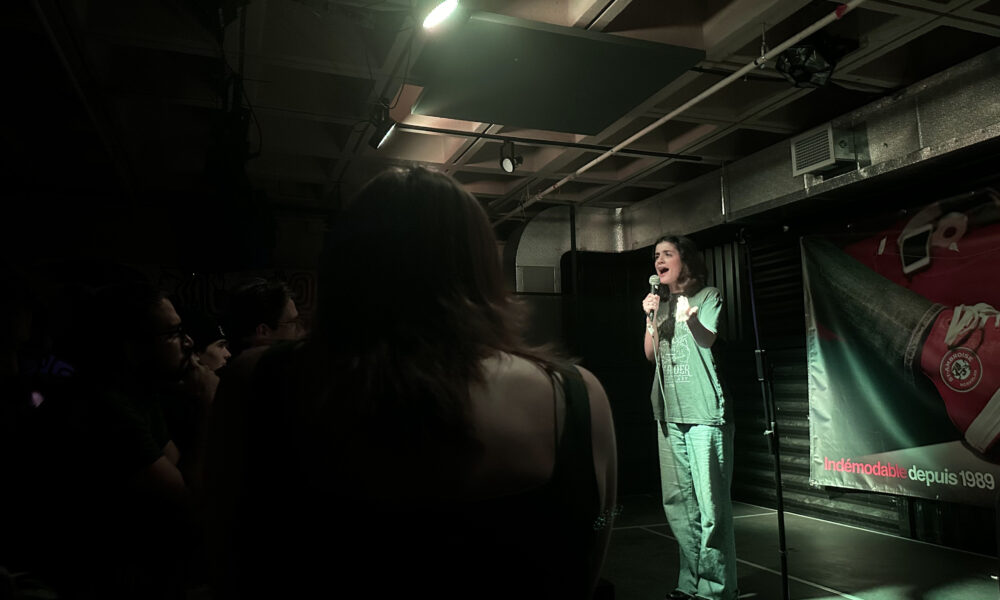
As finals season settles in, a healthy dose of seasonal depression is in tow, and McGill students are in need of an ample serotonin boost. On Nov. 15, the McGill Student Comedy Club (MSCC) sought to satisfy the gloomy campus by hosting their monthly stand-up night. The line for Gert’s Bar & Cafe appeared endless, filled with students eager for a window out of the November melancholy. In a theatrical turn of events, a campus-wide power outage nearly thwarted the performance, plunging the bar into darkness moments before the show. Fortunately, by the grace of God, comedy enthusiast that he is, the lights flickered on shortly after. With chaos circumvented, students eagerly clamoured for the seats nearest to the stage, drinks sloshing together in their haste. Eventually, the crowd settled, the lights dimmed, and palpable anticipation filled the room. 

Many tend to view stand-up comedians merely as witty individuals engaging in introspective discourse. Upon closer examination, these performers are putting themselves in incredibly vulnerable positions, divulging intimate parts of themselves to a crowd of strangers. The show was not about telling jokes, but rather about young adults connecting over the struggles of muddling through the complexities of life. From the moment the performance started, the room was filled with raucous laughter, the kind that comes only from the fondness of shared experiences. 

“One of the first things babies do is laugh,” Gabe Karasik (U3 Science), founder of the MSCC and the evening’s host, said in an interview with The Tribune. “[It is] one of the only things we do as a species that is universal.” 

The performances were fast-paced and energetic, each one of the eight performers crafting their own unique and beguiling narrative. As host, Karasik was charming and witty, maintaining his own facetious commentary whilst seamlessly managing the performances of the night. This was the first show for many of the performers—although you would not have noticed since they conducted themselves so effortlessly. 

A personal favourite was recent McGill graduate Maeve Reilly’s (BA ‘23) introspective take on self-cut bangs. She claims that since cutting them, she has attracted considerable attention in Montreal. As someone who impulsively cut her own bangs, this is a sizable comfort. 

A highlight that had the crowd whooping and cheering was Lillian Borger’s (U4 Arts) tale of her “consensual ethical non-monogamous August:” Her failed attempt to manage her different hookups without catching feelings. This experience included revelations that relationship issues are something she could not actually blame men for, as she manages to form an anxious attachment to literally anything. The laughter that erupted from the crowd in response suggests that the audience felt the same.

Charlie Scholey (U2 Engineering) also provided a memorable performance, taking centre stage in a blazer that even Jerry Seinfeld would envy. Charlie slipped into a comedically-masked quarter-life crisis about his impending 20th birthday, silhouetting a deep exposé into the abysmal and desolate future awaiting us as we age. 

Concordia student Sipora West’s analysis of the French and Canadian national anthems was particularly topical given the current debate over the Quebec government’s proposed tuition increase. She had the crowd in stitches, highlighting that the French anthem is talking about bathing in blood while we are over here ‘standing on guard’ for an ambiguous “thee.” 

The value of the event came from the intimacy of observing a snapshot of the performers’ selfhood. From the power outage to the final drunken laughs, the night was full of passion and energy. 

“There is something special about making people laugh and not just making people laugh but making people feel connected,” Zahra Faiz (U4 Arts), one of the MSCC executives, said. 

This show was a moment of felicity, in a storm of flurrying chaos, that captured the sweet innocence of childhood joy. It embodied the kind of laughter that exists only for itself, allowing every student to leave the bar a little lighter than they had arrived.

Arts & Entertainment, Film and TV

‘All the Light We Cannot See’ lacks character growth

Nearly ten years ago, readers hungrily consumed-turned each page of Anthony Doerr’s All the Light We Cannot See. Now after 200 weeks on the NYT bestseller list, Netflix is attempting to replicate this success with a TV adaption released on Nov. 2. In the four-episode miniseries directed by Montreal-born Shawn Levy. The show immerses viewers in the small town of Saint-Malo, France, during the Battle of Saint-Malo in 1944. Despite the show’s masterful visuals, much of the writing and character development relies on cliches and formulaic plot points, losing the novel’s rich complexity. 

Every story has its heroes: Marie-Laure LeBlanc (Aria Mia Loberti), is blind, living in Saint-Malo after she escaped with her father when the Nazis overtook Paris. In the novel, she’s a pure, kind soul, who eventually realizes her own strength and ingenuity. Werner Pfennig (Louis Hoffman) is a Nazi soldier. While in the novel, he initially takes to Nazism as an escape from the orphanage in which he was raised, he is a thoughtful character and comes to regret his role in the brutal regime. His redemption comes when he saves Marie from Nazi psychopath Reinhod von Rumpel (Lars Eidinger). Each character has their own duality: They tug between helplessness and agency, between goodness and immorality. They mirror each other—while Marie is blind and in a world of darkness, Werner’s Nazi ideology pulls him away from the truth. 

For an audience unfamiliar with the novel and ready for a watch-in-one-night series to kickstart the winter, All the Light We Cannot See is perfect. Aria Mia Loberti is blind herself, adding authenticity to her already complex character acting. Close-up shots of Marie’s hands feeling her surroundings prompt us to imagine the physical sensation of everything she touches, allowing viewers to closely experience her tactile perspective that is so important in the novel. The sound effects are crisp and smell arises frequently in dialogue, evoking the senses she relies on. 

In the novel, Marie, Werner, and von Rumpel are all morally grey in that they are complex, embodying extremes of good and evil, agency and helpfulness, and light and dark that allow them to grow. However, since the series fails to fully allow each character to experience both extremes, it doesn’t allow them to grow. 

In the series, Marie always knows the right thing to say, and when she comes face-to-face with von Rumpel in the first episode she is able to survive despite her impossible odds. It seems she has no failing, no flaw. She doesn’t grow from one who is helpless to one who realizes her own power—she is always powerful. However, her do-it-all personality undermines her accomplishments. Yes, she is able to defeat von Rumpel in the end, but what did her victory prove that wasn’t already assumed in her superheroic nature? Similarly, Werner’s goodness is never in doubt; he’s depicted simply as an unfortunate person unwillingly tossed into the Nazi regime. While his story is undoubtedly tragic, we fail to see him struggle with his own morality in a way that would have elevated his character. In the end, he feels less redeemed. Portraying him as simply a sheep in wolf’s clothing detracts him from his growth and agency.

Yet another cliché, a notable overkill involves the use of handguns. Every time a character threatens another person, they pull out a gun. After the initial episode, the gun-pointing seems more comical than threatening. The audience goes, “Ah, another gun pointed at a main character again. Wonder how they’ll get past that!” While excessive guns may work for Star Wars movies and Westerns, a series that depicts the harsh reality of World War II should find more creative solutions to create conflict. 

All the Light We Cannot See is ultimately worth the watch, but be ready for cheesy staged blocking and underdeveloped characters to hold back the talents of the incredible actors and immersive visuals. 

All the Light We Cannot See is available on Netflix.

Artistic Swimming, Sports

McGill makes waves at season-opening invitational

On Nov. 18, artistic swimming teams from universities and CEGEPs across Ontario and Quebec reconvened for the first time in the season at the McGill Invitational. This yearly exhibition, hosted annually by McGill University, marks the beginning of the Canadian University Artistic Swimming League (CUASL) season, uniting in the Western Conference the universities of Ottawa, Carleton, Western, Guelph, Queen’s, Toronto, Laval, Sherbrooke and McGill, as well as John Abbott College. This year, however, is the first time since 2020 that the Invitational took place in November and not January.  

“Last year [was] a little bit [of a] slower start because of COVID, but this year, we really jumped into it right away and we’re focused right away from the start,” second-year experienced swimmer Ana Gordon said in an interview with The Tribune

. “It made it nice because then we bonded really really fast and we got a really good team spirit early on in this season.” 

Events are split into competitor levels ranging from novice (no competition experience at the national or provincial level after the age of 12), competitive (any swimmer who is registered with CUASL), and experienced (athletes that competed nationally or internationally before joining CUASL, or competed provincially after the age of 12). 

The Invitational opened with the showcase of novice duets and trios. Tara Fitzgerald and Diana Paprelli were the first McGill pairing to compete. Their performance on the beat of an LMFAO’s mashup earned them first place in the event, foreshadowing the McGill podium sweep. 

As over twenty experienced duets or trios took the stage, three pairings from McGill showcased their talent. McGill’s second duet—performed by Catherine McGee and Olivia McLaughlin, earned second place with 83.3375 points.

Chloe Gavrilovic and Clara Thomas then took the aquatic stage to perform McGill’s last experienced duet in stunning pink swimsuits. The fast-paced movements stayed in rhythm and were well coordinated, showing extreme underwater skills. This energetic performance earned a total routine score of 81.1292, allowing them to take fifth place in the section ranking. 

Despite the performances proceeding smoothly throughout the competition, the novice event opened with several difficulties. The category began with a significant delay, starting over 10 minutes past schedule. As the first performer began her choreography, the music cut out. Amidst the crowd support, the Waterloo swimmer was granted the opportunity to perform their routine from the start at the end of the novice event. 

Fitzgerald performed McGill’s first novice solo and earned a third-place finish. Her song choice, ‘Million Dollar Bills’ by Lorde, left the crowd amazed with her ability to stay on beat with the hard hitting kicks of the song. 

“It was my first ever meet with McGill and I’m really glad it turned out to be such a success,” Fitzgerald explained about the meet. “I feel very proud of all of my swims and podium places, especially as a novice swimmer. I consider it to be a really great achievement.”

Paparelli closed the section in her red and black suit. Her slow-paced, emotional performance on Sade’s ‘Smooth Operator’ called forth the claps and roars of the fans. This spectacular performance earned her a total score of 83.93. This score grabbed her first place for the novice podium, feeding McGill’s total medal tally.

Experienced soloist Noémie Girard then performed a very emotional routine on Adele’s ‘Love in the Dark’. This skillful routine granted her 79.3180 points, placing her third on the podium. 

Anna Dolgova earned first place with her energetic and skillful routine on Amy Winehouse’s “Me & Mr. Jones.” Scoring over 88 points, Dolgova took first place. 

As the evening came to a close, the fans were still waiting for the ultimate show of artistry and skills of the team events. 

McGill’s novice team closed the event with an impressive routine to the tune of a Black Eyed Peas mashup, earning first place. 

The McGill experienced teams opened and closed the podium, dominating the competition with artistic yet skillful routines. The first team performed a technical choreography, earning third place, while the second team closed the evening with a gold-worthy performance. Their next competition will take place on Jan. 27 at the Eastern Canada meet. 

News, SSMU

Students vote in favour of Policy Against Genocide in Palestine, reject SSMU Base Fee increase

The Students’ Society of McGill University (SSMU) Fall referendum closed at 11 a.m. on Nov. 20, with 35.1 per cent of undergraduate students casting a ballot—up from the 16.7 per cent that voted in last semester’s election. Students overwhelmingly voted to pass the Policy Against Genocide in Palestine and to strike down a question that would have raised the SSMU base fee by 71 per cent.

The Policy Against Genocide in Palestine—put forward by students—compels SSMU to lobby McGill to condemn Israel’s siege on Gaza, divest from companies that support the state of Israel, and cut ties with Israeli universities. It also states that SSMU must take a public stand against Israel’s genocidal violence in Gaza and stand in solidarity with Palestinian and Arab students. The policy passed the referendum with 78.7 per cent of non-abstaining voters, 5,974 people, casting a “Yes” vote.

Solidarity for Palestinian Human Rights (SPHR) McGill celebrated the policy’s victory on social media, stating that they were “overwhelmed to see the McGill student body show such strong support for the Palestinian struggle in this historic moment.”

On Nov. 20, after the results of the referendum had been finalized, the SSMU Executive Committee sent out a statement notifying its constituency that McGill informed the SSMU President on Nov. 8 that, should the Policy Against Genocide in Palestine pass, “the University will consider that SSMU is in breach of its own constitution, and hence also in default of the Memorandum of Agreement (MoA) between SSMU and McGill University, as per Section 12.1.2 of this MoA.” 

McGill Media Relations Officer Frédérique Mazerolle elaborated on why the administration sees the policy as a violation of the SSMU Constitution in a statement to The Tribune on Nov. 21. 

“The view of McGill’s senior administration remains that the proposed policy, if adopted, will sharpen divisions in our community at a time when many students are already distressed,” Mazerolle wrote. “The constitution of the SSMU states that the Society ‘shall endeavour to facilitate communications and interaction between all students from all McGill communities’ and ‘to act in the best interests of [SSMU] members as a whole.’ If the proposed policy is adopted, our view is that the SSMU will be in breach of its own constitution.”

SSMU President Alexandre Ashkir discussed how Society plans to respond to McGill’s ultimatum in an email to The Tribune.

“As stated in our emails, McGill has put us in default for SPHR’s name and has threatened to put us in default for the Policy,” Ashkir wrote. “The next steps are for the Board to review the policy and make a decision on ratification. This decision will be made with legal considerations in mind, but most importantly, with the understanding that upholding our democracy is among the most essential tasks of the SSMU, even (and particularly if) it brings us in conflict with McGill. As I told the journalists for the Montreal Gazette, if we believed the policy was violating the Constitution, Elections SSMU would’ve shut it down. They did not and until the Board discusses it further, we will uphold their decision.”

SPHR McGill also addressed the administration’s response to the policy in the same online statement. 

“The administration will now—once again—do everything in its power to overturn the referendum result, in a desperate attempt to crush students’ unequivocal support for Palestinian liberation,” SPHR McGill wrote. “Our elected representatives in SSMU must ensure that the demands of their constituents are met. As our student union, the SSMU has the duty to resist threats from the McGill administration and defend the democratic decision of its students.”

A proposed $48.73 increase to the mandatory SSMU base fee was struck down, with 80.2 per cent of voters saying “No.” If passed, SSMU has said it would have used its increased budget to raise staff wages and meet unprecedented inflation. The society has also stated that it would “likely have to drastically reduce its operational scale” if the fee increase failed to pass the referendum.

Ashkir explained in a statement to The Tribune that SSMU planned to run a “clear and transparent campaign” but was burdened by other responsibilities. 

“We understand the resounding requests for more financial explanations to the increase and I personally apologize to all who may have felt that we were contravening to that,” Ashkir wrote. “We will prepare ourselves to properly run such a campaign for the next referendum period, clearly giving information and explaining in detail the impact of members’ decisions. The SSMU is currently digging into reserves; it can run for at most 2 years as it currently stands by digging into its investments.”

CKUT, a 24/7 non-profit community radio station based at McGill, was up for its first fee increase since 2012. Of the 5,133 voters, 67.2 per cent voted “No” to the station’s request for a $2 opt-outable fee increase.

“CKUT is disappointed that the students that voted could not see the value in the health of their campus radio station,” CKUT Funding and Outreach Coordinator Madeline Lines wrote in an email to The Tribune. “At a time when journalism is suffering, and when Canadian artists are up against algorithms to get their music heard, CKUT disrupts this. This decision means the station will continue to face financial challenges that may soon become existential.” 

MustBus, a student-run service which provides affordable bus trips to students, also failed to secure a $3 fee increase.

“As inflationary pressures continue to drive bus charter costs up, MustBus will now struggle to sufficiently subsidize ticket prices making transport options for McGill students less affordable, frequent, and accessible,” MustBus Co-President Henry Shapiro wrote in a statement to The Tribune. “Despite the disappointing referendum results, the MustBus team is committed to maintaining the current levels of service for next [fall].”

The renewal of the $0.50 opt-outable First Year Fee, which is used to hold events for first year students, also did not pass.

Other questions passed successfully. The McGill Student Emergency Response Team (MSERT), a student-run volunteer first response team which also provides trainings to students, won a $1.36 fee increase. The establishment of a $1 opt-outable fee, which will support a Community Solidarity Fund and Solidarity Funding Committee, was also approved. 

The Student Nutrition Accessibility Club (SNAC) ran a referendum question requesting the creation of a $1.30 opt-outable fee. The question passed with 65.7 per cent of the 5,335 voters who did not abstain casting a “Yes” vote.

“We are immensely grateful to the student body for recognizing the importance of SNAC’s mission and supporting the implementation of this fee,” SNAC Co-President Alexa Infelise wrote in a statement to The Tribune. “Your vote has paved the way for a more inclusive and supportive community where everyone has access to nutritious food and valuable education on healthy living.”

Finally, students also voted to ratify SSMU’s Board of Directors, which can either happen through a referendum or through a General Assembly.

This piece was updated at 5 p.m. on Nov. 21 to include a statement from the university.

A previous version of this article stated that 31.5 per cent of students cast a ballot in the Fall 2023 SSMU referendum. In fact, 35.1 per cent of students voted. The Tribune regrets this error.

Behind the Bench, Sports

Beyond the Stands: A Tribute to Percival Molson Stadium

There are a few places you encounter in life that you know will imprint on you forever. For some, these places are marked by unimaginable beauty; for others, it’s the unforgettable memories sunk into the very ground. Often, you cannot predict the impact these places will leave on you––whether it’s a summer doldrum on a friend’s porch or a moment of awe at the top of Stawamus Chief. I could never have predicted the influence that McGill’s own Percival Molson Stadium would have on my life––playing in the stadium has changed me forever.

The first thing that you notice about the stadium is the stunningly green turf field with a ring of red track on the fringe, surrounded by rising walls of stands bordering three-quarters of the field. The Nest––McGill Athletics’ student section––lies to the south, comprising rows upon rows of red benches with a second set of risers lined with the names and jersey numbers of Montreal Alouettes legends. Rising above, flags fluttering in the wind grace the southern ramparts. The western wall is shared with the Montreal Neurological Institute Research Hospital and its unshuttered windows always shine a soft glow onto the field at night. To the north lie concrete ampitheatre-like bleachers evoking the walls of a coliseum, topped by walkways and press boxes where unseen faces watch from above.

“I feel like I’m at Hogwarts sometimes, beside a big castle,” Martlets soccer defender Stephanie Hill reminisced, referring to Royal Victoria Hospital on the mountain above. “Whenever there’s fog, it’s so beautiful that I get the impression I’m in a postcard.”

The sheer magnitude of the stadium does much to inspire its occupants. 

“It has always been a pleasure to walk and play on that field,” Redbirds Lacrosse captain Isaiah Cree recalled. “I’ve never played within a stadium of its size and it is something I’ll never forget.” 

Having experienced three seasons of rugby on that field, spanning from August to November, I can only describe Molson as mesmerizing. Even during gruelling sweat-soaked practices in August and below-freezing temperatures in November, the stadium stages the fleeting beauty of the seasons more than its intended purpose. The tail end of summer brings the sun shining through the trees on Mont Royal as it sets just over the mountain’s summit. In the fall, when icy rain and winds cut through the bone, we work hard to see the steam rising from our huddles and scrums to give us proof of our efforts. In the winter, right when the rugby season finishes, the bright lights reflect off the first few snowflakes of the season, making them shine whiter than usual as they start covering the turf.

 The snowflakes aren’t the only other things that shine brighter at Molson. Emotions are heightened, pulses race, and every shout from fans in the stands rings through like a symphony.  The rising walls of stands act as a bowl, and at home games––win or lose––the cheers that erupt from the fans echo thrice as loud. Every success achieved on the field can bring euphoria, yet every loss can cut just as deep.

I am fortunate that I still have another year to connect to Molson as I close out my law degree, but other athletes are coming to terms with their final moments on the field. Recalling the advice his graduating teammates gave him on recognizing and cherishing the best times of the season before it was over, Redbirds Soccer defender Julian Huster shared his approach.

“I thought, ‘These are the good times that I might not realize have passed until after they passed,’ so the morning practices, the preseason, the beautiful sunsets––I was conscious about that, and I was soaking it in as it happened,” Huster recounted.

When my turn comes to say goodbye to Molson Stadium, I hope I remember Julian’s words before it’s too late. But for the time being, with one more season left, the only thing I can do is work to return to that pitch one last time and help put on as great a show as McGill has ever seen.

Out on the Town, Student Life

The holiday markets of Montreal

Short days, snow, and an absolute need for gloves—what makes Montreal a pain in the winter is also what makes it the perfect place for holiday festivities. So grab a friend and a tote bag, and brave the cold to the following markets to snag some local gifts.

The Great Montreal Christmas Market – Quartier des Spectacles

Distance from campus: 10 minutes, via Place-des-Arts metro
Dates: Thursday-Sunday Nov. 25-Dec. 18, all week Dec. 19-30

The Great Montreal Christmas Market offers an escape for students in urgent need of hot chocolate and holiday vibes. With over 60 vendors selling a wide array of goods from jewelry to candles to food, there’s bound to be something for everyone. But keep in mind that there are only 30 booths, so many of the vendors rotate.  

Montreal Christmas Village – Atwater Market

Distance from campus: 15 minutes, via Lionel-Groulx metro
Dates: Friday-Sunday Nov. 30-Dec. 24

The sister market of the one in Quartier des Spectacles, the Montreal Christmas Village is the quintessential holiday market in the city, complete with a big Christmas tree and holiday-themed programming like fondue nights and movie screenings. With 54 vendors, this will be a great place for stocking stuffers or to simply relax after class.

Marché des Fêtes – Time Out Market

Distance from campus: 5 minutes by foot
Dates: Dec. 7-10 and 14-17

The closest market to campus is in the Time Out Market food court. Organized by the Collectif Créatif, a Montreal organization that brings together local artists and creators, this market is a great opportunity to see small businesses showcasing their products, which cover a wide variety of categories, including tableware and dishware, skincare, tabletop games, decor, and baked goods.

Holiday Market – Locoshope Angus

Distance from campus: 30 minutes, via Prefontaine metro
Dates: Nov. 25-26 and Dec. 2-3

Also organized by the Collectif Créatif, this temporary market is a great excuse to leave campus and explore a new area of the city. The vendors line the walls of what was once the Angus Shops, one of Montreal’s former industrial hubs, displaying everything from clothing to pet accessories, candles, and chocolates.

Winter Market – Students’ Society of McGill University (SSMU) Building

Distance from campus: on campus
Dates: Nov. 30 and Dec. 1//

If the thought of leaving campus doesn’t sound too appealing, head to the SSMU Ballroom to meet local vendors and pick up some crafts, snacks, and artwork. 

Vegan Christmas Market – Maison du développement durable

Distance from campus: 15 minutes, via Saint-Laurent metro
Dates: Dec. 2-3

Located in the Maison du développement durable, this is the perfect place to stock up on vegan goods before heading for skating at Esplanade Tranquille. From baked goods to fashion accessories and cosmetics, all products here are made without animal substances. Just don’t forget to book your free ticket ahead of time.  

Marché de Noël de Jean-Talon – Jean-Talon Market

Getting there: 40 minutes, via Jean-Talon metro
Dates: Dec. 2-24

The Marché Jean-Talon is worth visiting any time of the year, and the holiday market is just icing on the cake. Though on the smaller end with only 12 booths, this gastronomy-focused bazaar is the perfect place to pick something up for the foodie in your life.  

Marché Artisinal Puces POP – Saint-Denis Church

Getting there: 20 minutes, via Laurier metro
Dates: Dec. 8-10 and 15-16

Located in the Saint-Denis church on Laurier, this market will feature over 150 local artists and businesses, split over the two weekends. With everything from jewelry to ceramics, the only issue will be trying not to spend too much.

Marchés de Noël illustratif & ludique and Gourmand & Artisanat – Pop-Up Labs

Distance from campus: 35 minutes, via Mont-Royal metro
Dates: Dec. 9-10 and 16-17

The first weekend of this intimate indoor market will focus on art and toys, and the second weekend will be all about food and crafts. Either way, it’s bound to be a nice afternoon and a good excuse—if you needed any—to walk down Mont-Royal Avenue. 

Hockey, Sports

Trib Explains: What is happening with Hockey Canada

TW: Mentions of sexual violence

In May 2022, Rick Westhead revealed that a plaintiff had settled a sexual assault lawsuit against Hockey Canada, the Canadian Hockey League (CHL), and eight unnamed CHL players. The lawsuit alleged that eight CHL players, including members of the 2018 Men’s National Junior Hockey Team, sexually assaulted a young woman in a hotel room in June 2018 following the Hockey Canada Foundation gala and golf event in London, Ontario.  

The young woman claimed that one player had given her copious amounts of alcohol and lured her back to his hotel room where the two engaged in sexual acts. The first player then invited seven others without the young woman’s knowledge or consent. According to the lawsuit, the eight players went on to sexually assault the young woman for hours, threatening and manipulating her into staying when she attempted to leave. 

The young woman said that, after the sexual assaults, the players forced her to shower and state on video that she was not fearful, intimidated, or intoxicated prior to the assault. The players’ lawyers later shared the recording with The Globe and Mail in an attempt to exonerate them from any wrongdoing. 

The news of the sexual assaults prompted several MPs to accuse Hockey Canada of trying to cover-up the alleged assaults without investigating properly. In July 2022, The Globe revealed that Hockey Canada maintained a multi-million dollar National Equity Fund, largely composed of registration fees from players its sanctioned leagues, to be used for out-of-court sexual assault settlements without disclosing to parents or players how their money was used. 

Further investigation by The Globe revealed that the fund exceeded $15 million in recent years. Parliamentary hearings also revealed that Hockey Canada has paid $8.9 million to settle multiple cases of alleged sexual assault since 1989. 

Hockey Canada has consequently lost a number of sponsors following the parliamentary hearings. In June 2022, Minister of Sport Pascale St-Onge put the organizations’ $7.7 million in government funding on hold but elected to restore it in April 2023, after the organization agreed to meet three conditions

Multiple investigations are currently ongoing regarding Hockey Canada and the alleged sexual assault in 2018. The only investigation that has concluded is a governance review led by retired Supreme Court Justice Thomas Cromwell, who found serious governance failures within Hockey Canada—including the failure to disclose the National Equity Fund. After delivering his findings, Cromwell asserted the board of directors must step down, which they did. Hockey Canada CEO Scott Smith has also since been replaced by Katherine Henderson, the former CEO of Curling Canada

On Nov. 14, Hockey Canada finally announced that an independent adjudicative panel into the alleged 2018 group sexual assault had reached the conclusion that members of the 2018 World Junior team violated the governing body’s code of conduct. It is confirmed that the young woman involved cooperated in the investigation, an excuse Hockey Canada levied in their defense of a lack of investigation. Following the panel’s disclosure to Hockey Canada and other parties involved, an undisclosed party initiated an appeal to the panel’s decision. As a result, Hockey Canada will keep the details of the panel’s report, including the names of players involved, private until the appeal is concluded to “not interfere with the integrity of the appeal process.” Hockey Canada has stated that the appeal will begin “in the near future.”

Still ongoing is the London Police investigation into the 2018 assault. While documents suggest that there are grounds to charge five players, it is unclear what the outcome will be and the London Police have asserted that Hockey Canada’s investigations will not affect their conclusions. 

The National Hockey League (NHL) is also still conducting its own investigation into the 2018 incident as players assumed to be involved are on active rosters. Despite announcing in Jan. 2023 that the investigation was “really close to the end,” as of Aug. 2023, NHL Deputy Commissioner Bill Daly stated that the NHL does not “have a specific timetable to share at this time.” 
Ultimately, there are still very few answers. In Ottawa, Hockey Canada has been included in the ongoing parliamentary hearings by the Standing Committee on Canadian Heritage into Safe Sport in Canada that outline the crisis of abuse within Canadian sport. The next hearing will take place on Nov. 21.

McGill, Montreal, News

Students craft pins and ribbons in solidarity with the Mohawk Mothers

Content Warning: Mentions of death and abuse

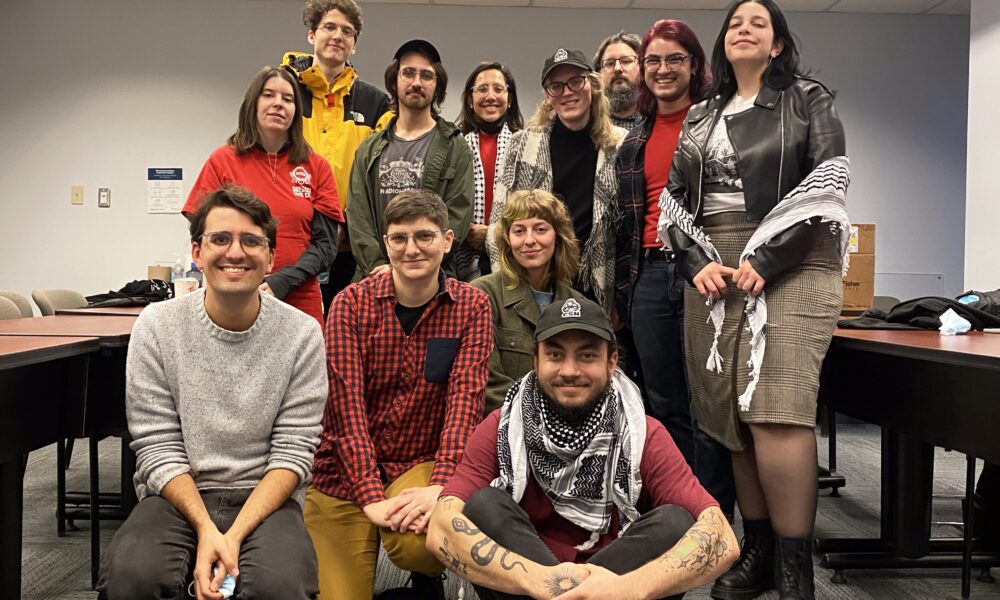
On Nov. 15, the Anthropology Students’ Association (ASA)—in partnership with the Nursing Undergraduate Society (NUS), Divest McGill, the Arts Undergraduate Society, and Take Back Tekanontak—hosted a “Crafting Solidarity” event in support of the Kanien’kehá:ka Kahnistensera (Mohawk Mothers). 

The Mothers are currently engaged in an investigation into McGill’s New Vic Project site over potential unmarked Indigenous graves. They last appeared in court on Oct. 27 to urge transparency from the defendants—including McGill, the Société québécoise des infrastructures (SQI), the Royal Victoria Hospital (RVH), the City of Montreal, and the Attorney General of Canada—and discuss the disbandment of the court-appointed archaeological panel, which provides recommendations that bind all parties, as per the settlement agreement. Archaeological work and construction have continued to take place on the New Vic site against the Mothers’ wishes. Justice Gregory Moore announced his ruling on Nov. 20, calling for the reinstatement of the archaeological panel.

Attendees of the event, held in room 260 of the Arts Building from noon to 3 p.m., cut orange ribbons and crafted purple squares inscribed with the phrase “Truth MM” to distribute around campus. Naomi Pastrana Mankovitz, U3 Nursing, Senator for the NUS, and an organizer of the event, explained that the crafting event was a follow up to the ASA’s Mohawk Mothers teach-in held on Oct. 25. According to Mankovitz, students who attended the teach-in expressed a need for more accessible ways to show support for the Mothers. 

“One of the ideas that came up at that event was just making the issue visible to the university. So, [we are] creating art, and pins, and ribbons,” Mankovitz said in an interview with The Tribune. “Having a space to come together and do that art, eat, and meet other people that are interested in supporting [the Mothers], it’s quite a simple activity to plan, and there seemed to be a lot of interest.” 

Rajendra Kapila Basdeo of the campaign Decolonial Solidarity hosted a brief tour of the New Vic site for the last hour of the event, leading a small group of students to the site of the Allan Memorial Institute—a research and psychiatric centre operated by RVH. The Institute currently faces a class-action lawsuit, as it was one of 89 institutions that were CIA-funded for MKUltra experiments—unconsented psychological brainwashing experiments of Indigenous peoples and others.

One of the attendees of the crafting workshop, Sage Duquette, 2L, shared that he believes that McGill’s has misled students in its communications regarding the investigation. Duquette specifically referred to the Provost and Vice Principal (Academic) Christopher Manfredi’s Oct. 10 email, which stated, “No evidence has been found to substantiate the presence of unmarked graves.” 

“I think that that’s a gross misrepresentation. [It’s not that] there’s conclusive evidence that there are graves, but you don’t need to have conclusive evidence to have evidence,” Duquette said. “There are things to suggest [the possible presence of graves] such as the historic human remains detection dogs. There is evidence. There’s not conclusive evidence, but there is evidence. So, to claim that there’s no evidence is misleading and harmful.”

Mathis Lehoux, U4 Arts, shared a similar frustration with the McGill administration, particularly when it comes to reconciliation with Indigenous peoples. 

“Whenever we see McGill releasing some information to the community, you just know from the get-go that it’s bullshit,” Lehoux said in an interview with The Tribune. “To see the institution that we put money in hide the truth and manipulate a facade of collaboration with Indigenous peoples […] to protect their interests is really frustrating.” 

Duquette further expressed that he felt McGill has had a “cynical” approach to the investigation and its public relations campaign, asserting that McGill’s continuous obstruction of justice may point to guilt. 

“It all really seems to me to be at the detriment of guilt, because if there actually aren’t any human remains there, then surely that would be good to prove,” Duquette said. “You would want to prove that through a thorough process, and you would want the Mothers on board recognizing that that is the conclusion.”

McGill could not be reached for a comment in time for publication.

A previous version of this article stated that Justice Gregory Moore was going to announce his ruling on Dec. 1. In fact, Justice Moore released his ruling on Nov. 20. The Tribune regrets this error.

Science & Technology

McGill and AI: Student artists paint a picture of emerging landscapes

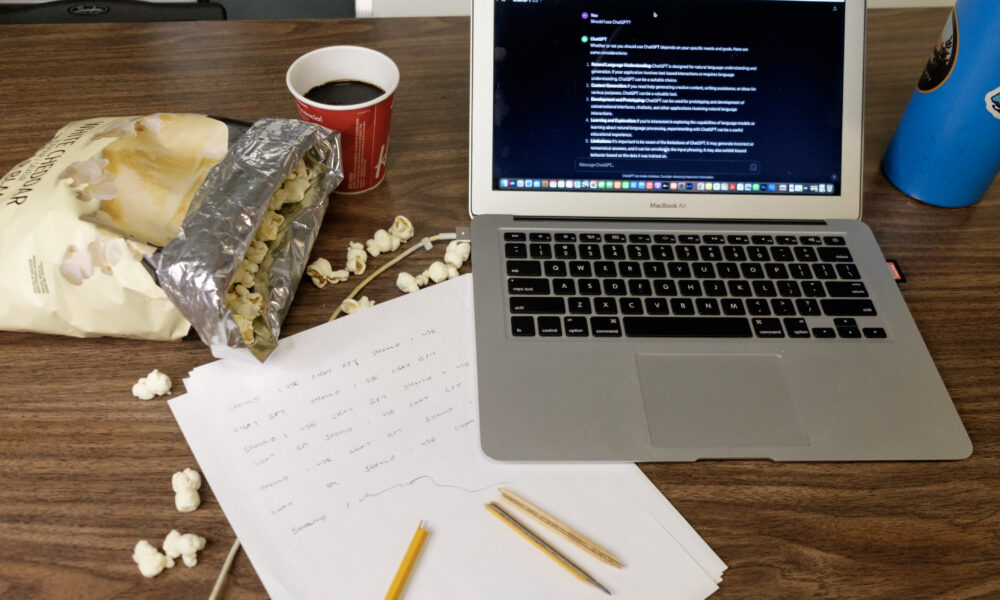
The advent of artificial intelligence (AI) has profoundly influenced the way students learn, think, and create. As AI begins to enter mainstream usage, The Tribune aims to explore the evolving relationship between AI and members of the McGill community, including researchers, professors, and students. This week, Darren Li, U4 Quantitative Biology and Co-Founder of the McGill Arts Collective (MAC), offers insights on the potentials and pitfalls of AI from the perspective of a young creative.

Aiming to foster Montreal’s artistic community, MAC hosts weekly events that serve as a collaborative and discursive hub for painters, filmmakers, and artists of all forms. Despite AI’s growing presence in the art world, there seems to be a gap in familiarity and dialogue among student creatives. 

“We actually haven’t had much discussion about AI and art,” Li noted in an interview with The Tribune

This remark reflects a broader perspective: Generative AI in art has yet to reach a level of influence that significantly captures student artists’ attention. For many student artists, AI is increasingly viewed as a tool for inspiration rather than a threat. Li highlights its potential as a starting point for creativity.

“AI is a really good source of inspiration […] if you have some very abstract idea, maybe you can ask AI,” Li said. Adobe’s CEO, Shantanu Narayen, echoed this sentiment in a recent interview at Stanford, suggesting that generative AI in the creative and art space is going to augment human ingenuity, not replace it.

However, AI is not without its baggage. In the wider art world, the rise of AI-generated art raises concerns about fair pay and ethics. Traditional artists’ rates stand in stark competition to the remarkable affordability offered by AI art services. With monthly subscriptions costing only 11 to 33 CAD, platforms like DALL-E and Midjourney provide users with the ability to generate hundreds of images in various styles. 

A major ethical concern is the fact that generative AI art models are trained using art collected online. Although some argue that the content used was in the public domain, DALL-E and Midjourney have been heavily criticized for using art without the artists’ informed consent. This has sparked public outcry among artists, especially digital creators, who suddenly find their art styles effortlessly replicated by AI.

Services such as Google’s AutoDraw and Quick Draw resolve this issue by explicitly disclosing that any art you make will be added to their database. Adobe has also committed to training their new Firefly AI using only licensed or copyright-expired content.

Li is optimistic that, although AI can make intricate pieces, it still lacks the artistic touch inherent in the human creative process. 

“In the art gallery industry, you can’t get away with just using AI to generate art […] the human expression and physicality of your art is crucial, and AI can’t show that for you,” Li added. “AI is going to generate something that might look like your art, but it still needs that human input.”

Online examples show that AI can create unique images, but these still depend on the user’s creative prompts. Results are also often unpredictable, resulting in a visual mishmash as the confused AI scrambles to blend different references to meet the user’s request. 

A key challenge that comes with the rapid progress of AI is balancing innovation and regulations. Li stresses the importance of ethical considerations and proposes solutions such as compensation for art used in training datasets and government-imposed guidelines. 

“There definitely needs to be some ethical means of going about it. Some of the issues might not be resolved but would be lessened,” Li noted. “If there’s protection, I would feel less cheated.”

With ever-changing artistic and technological landscapes, student artists confront the multifaceted role of AI in art. While acknowledging the challenges and ethical concerns AI brings, young creatives must navigate embracing innovation while upholding human creativity. Their ability to adapt will signal a future of art that is both technologically advanced and deeply human; a canvas where AI serves as the brush, not the painter.

Arts & Entertainment, Theatre

“The Road to Hell” is paved with quirky duos

Before I saw “The Road to Hell,” nobody would tell me anything about it. The play is modern and relatively unknown, so a cursory Google Search reveals very little. I learned that it consists of two one-act plays, with two actors in each act. A new, mysterious play with a tight cast—I was intrigued.

McGill’s Players’ Theatre is small and intimate, the perfect setting to focus on the inner workings of four characters. I arrive early to interview director Henry Kemeny-Wodlinger (U1 Arts), who is happy to discuss anything about the play but the plot. Kemeny-Wodlinger is a serious, hands-on director—he just directed “KIN” at the Toronto Fringe Festival in 2022. Despite his obvious talent and experience in theatre, he credits the other members of the production with “keeping the show grounded.” Megan Siow, the stage manager, gave critical second opinions and “kept track of the practical side of things;” costume designer Olivia Reeve (U3 Arts) brought out new elements of the characters. Plus, each act consists of vignettes, strung together by vocal performances from a very talented trio: Mia Gallant-Campagne (U2 Arts), Hannah Marder-MacPherson (U2 Science), and Irene Newman Jimenez (U3 Arts & Science). Kemeny-Wodlinger tells me that casting was critical—actors had to grasp authentically the inner workings of their very quirky characters.

The first act, “Yodellers,” follows a golf reporter, Lorne (Hayden Jackson, U3 Arts), who interviews a rising golf star named Meg Boot (Tori Rotolo, U3 Arts). They end up spending a night together sharing stories. The next day, Meg wins the US Open. Lorne rushes to her hotel room and proclaims his love for her. She returns the sentiment. The problem? Meg is a lesbian. Despite their obvious incompatibility, Meg is soothed by Lorne’s presence, and Lorne is awestruck by her athletic talent. They remain together during Meg’s tour but are unable to name or understand their relationship.

The actors play this impasse very well. Rotolo’s Meg is impossible, dramatic, and obsessed with her own burgeoning success. Jackson’s Lorne is tortured, desperate for Meg’s impossible affection—a dog kicked by her sexuality. He makes several attempts to win her over, which leads to moments of profound earnestness: At one point, Meg sits on Lorne’s lap while they tell sex stories. In the process, however, he quickly realizes that “the wrong parts of this are turning [her] on.” While the situation is impossible, neither character wants to exit this hell of their own devising. 

The second act, “Kreskinned,” focuses on a couple who are hypnotized on their first date. The opening scene finds them transformed: Joyce (Naomi Decker, U3 Arts) runs around like a chicken, while Dennis (Mazdak Darvishi, U2 Arts) becomes a car. Once the hypnotism wears off, they discover that their trigger words still work, causing the other partner to sink into a trance and forget whatever has just happened. They begin to abuse this power over one another, avoiding the awkward moments of a new relationship. A conversation about Joyce’s fight with her sister, Dennis’s forgotten birthday gift, and a too-brief sexual encounter are all erased. While smoothing over the screw-ups, the two fall in love, suspended in this untenable perfection.  

The act is deeply hilarious—both characters are so silly and earnest, with palpable chemistry. Joyce is fastidious and insecure until she is “transformed by her chicken.” Dennis is shy and vulnerable, soft-hearted and prone to jumping into things. In my favourite scene, Joyce struggles to be a good host but the food portions are meagre, the wine glass singular, and the chip dip goes everywhere. The scene’s physical comedy is as touching as it is awkward.

Kemeny-Wodlinger’s coy comments are now better contextualized. Throughout the play, all characters are very impulsive. The director clearly encouraged the actors to lean into it and work on instinct, letting each couple’s fascinating dynamic shine. While the situations are farcical, “The Road to Hell” brings to life the real impasses and self-imposed hell of relationships with sensitivity and humour. 

Read the latest issue

Read the latest issue