


Latest News

Hockey, Sports

Trib Explains: What is happening with Hockey Canada

TW: Mentions of sexual violence

In May 2022, Rick Westhead revealed that a plaintiff had settled a sexual assault lawsuit against Hockey Canada, the Canadian Hockey League (CHL), and eight unnamed CHL players. The lawsuit alleged that eight CHL players, including members of the 2018 Men’s National Junior Hockey Team, sexually assaulted a young woman in a hotel room in June 2018 following the Hockey Canada Foundation gala and golf event in London, Ontario.  

The young woman claimed that one player had given her copious amounts of alcohol and lured her back to his hotel room where the two engaged in sexual acts. The first player then invited seven others without the young woman’s knowledge or consent. According to the lawsuit, the eight players went on to sexually assault the young woman for hours, threatening and manipulating her into staying when she attempted to leave. 

The young woman said that, after the sexual assaults, the players forced her to shower and state on video that she was not fearful, intimidated, or intoxicated prior to the assault. The players’ lawyers later shared the recording with The Globe and Mail in an attempt to exonerate them from any wrongdoing. 

The news of the sexual assaults prompted several MPs to accuse Hockey Canada of trying to cover-up the alleged assaults without investigating properly. In July 2022, The Globe revealed that Hockey Canada maintained a multi-million dollar National Equity Fund, largely composed of registration fees from players its sanctioned leagues, to be used for out-of-court sexual assault settlements without disclosing to parents or players how their money was used. 

Further investigation by The Globe revealed that the fund exceeded $15 million in recent years. Parliamentary hearings also revealed that Hockey Canada has paid $8.9 million to settle multiple cases of alleged sexual assault since 1989. 

Hockey Canada has consequently lost a number of sponsors following the parliamentary hearings. In June 2022, Minister of Sport Pascale St-Onge put the organizations’ $7.7 million in government funding on hold but elected to restore it in April 2023, after the organization agreed to meet three conditions

Multiple investigations are currently ongoing regarding Hockey Canada and the alleged sexual assault in 2018. The only investigation that has concluded is a governance review led by retired Supreme Court Justice Thomas Cromwell, who found serious governance failures within Hockey Canada—including the failure to disclose the National Equity Fund. After delivering his findings, Cromwell asserted the board of directors must step down, which they did. Hockey Canada CEO Scott Smith has also since been replaced by Katherine Henderson, the former CEO of Curling Canada

On Nov. 14, Hockey Canada finally announced that an independent adjudicative panel into the alleged 2018 group sexual assault had reached the conclusion that members of the 2018 World Junior team violated the governing body’s code of conduct. It is confirmed that the young woman involved cooperated in the investigation, an excuse Hockey Canada levied in their defense of a lack of investigation. Following the panel’s disclosure to Hockey Canada and other parties involved, an undisclosed party initiated an appeal to the panel’s decision. As a result, Hockey Canada will keep the details of the panel’s report, including the names of players involved, private until the appeal is concluded to “not interfere with the integrity of the appeal process.” Hockey Canada has stated that the appeal will begin “in the near future.”

Still ongoing is the London Police investigation into the 2018 assault. While documents suggest that there are grounds to charge five players, it is unclear what the outcome will be and the London Police have asserted that Hockey Canada’s investigations will not affect their conclusions. 

The National Hockey League (NHL) is also still conducting its own investigation into the 2018 incident as players assumed to be involved are on active rosters. Despite announcing in Jan. 2023 that the investigation was “really close to the end,” as of Aug. 2023, NHL Deputy Commissioner Bill Daly stated that the NHL does not “have a specific timetable to share at this time.” 
Ultimately, there are still very few answers. In Ottawa, Hockey Canada has been included in the ongoing parliamentary hearings by the Standing Committee on Canadian Heritage into Safe Sport in Canada that outline the crisis of abuse within Canadian sport. The next hearing will take place on Nov. 21.


McGill, Montreal, News

Students craft pins and ribbons in solidarity with the Mohawk Mothers

Content Warning: Mentions of death and abuse

On Nov. 15, the Anthropology Students’ Association (ASA)—in partnership with the Nursing Undergraduate Society (NUS), Divest McGill, the Arts Undergraduate Society, and Take Back Tekanontak—hosted a “Crafting Solidarity” event in support of the Kanien’kehá:ka Kahnistensera (Mohawk Mothers). 

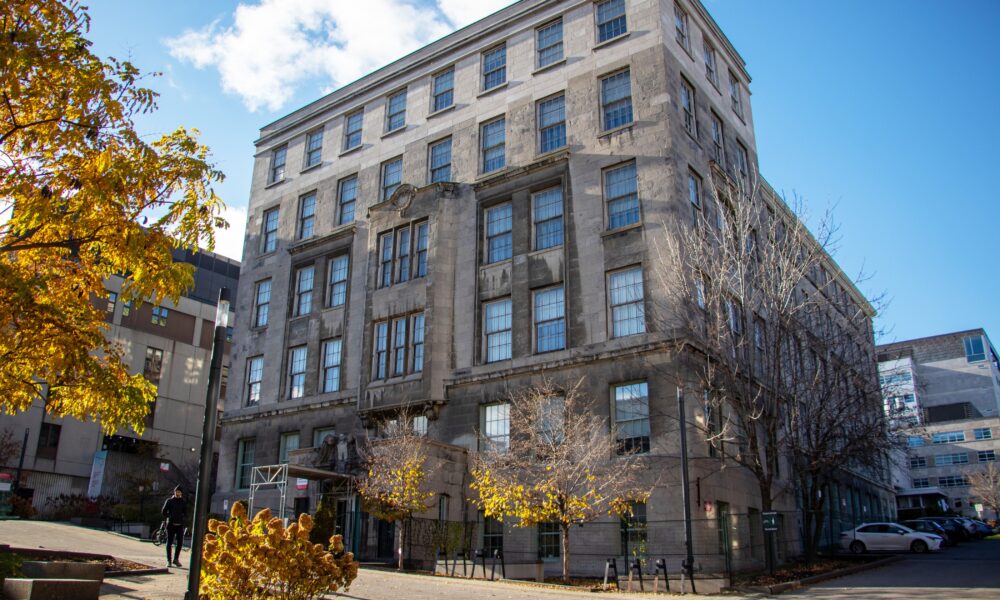
The Mothers are currently engaged in an investigation into McGill’s New Vic Project site over potential unmarked Indigenous graves. They last appeared in court on Oct. 27 to urge transparency from the defendants—including McGill, the Société québécoise des infrastructures (SQI), the Royal Victoria Hospital (RVH), the City of Montreal, and the Attorney General of Canada—and discuss the disbandment of the court-appointed archaeological panel, which provides recommendations that bind all parties, as per the settlement agreement. Archaeological work and construction have continued to take place on the New Vic site against the Mothers’ wishes. Justice Gregory Moore announced his ruling on Nov. 20, calling for the reinstatement of the archaeological panel.

Attendees of the event, held in room 260 of the Arts Building from noon to 3 p.m., cut orange ribbons and crafted purple squares inscribed with the phrase “Truth MM” to distribute around campus. Naomi Pastrana Mankovitz, U3 Nursing, Senator for the NUS, and an organizer of the event, explained that the crafting event was a follow up to the ASA’s Mohawk Mothers teach-in held on Oct. 25. According to Mankovitz, students who attended the teach-in expressed a need for more accessible ways to show support for the Mothers. 

“One of the ideas that came up at that event was just making the issue visible to the university. So, [we are] creating art, and pins, and ribbons,” Mankovitz said in an interview with The Tribune. “Having a space to come together and do that art, eat, and meet other people that are interested in supporting [the Mothers], it’s quite a simple activity to plan, and there seemed to be a lot of interest.” 

Rajendra Kapila Basdeo of the campaign Decolonial Solidarity hosted a brief tour of the New Vic site for the last hour of the event, leading a small group of students to the site of the Allan Memorial Institute—a research and psychiatric centre operated by RVH. The Institute currently faces a class-action lawsuit, as it was one of 89 institutions that were CIA-funded for MKUltra experiments—unconsented psychological brainwashing experiments of Indigenous peoples and others.

One of the attendees of the crafting workshop, Sage Duquette, 2L, shared that he believes that McGill’s has misled students in its communications regarding the investigation. Duquette specifically referred to the Provost and Vice Principal (Academic) Christopher Manfredi’s Oct. 10 email, which stated, “No evidence has been found to substantiate the presence of unmarked graves.” 

“I think that that’s a gross misrepresentation. [It’s not that] there’s conclusive evidence that there are graves, but you don’t need to have conclusive evidence to have evidence,” Duquette said. “There are things to suggest [the possible presence of graves] such as the historic human remains detection dogs. There is evidence. There’s not conclusive evidence, but there is evidence. So, to claim that there’s no evidence is misleading and harmful.”

Mathis Lehoux, U4 Arts, shared a similar frustration with the McGill administration, particularly when it comes to reconciliation with Indigenous peoples. 

“Whenever we see McGill releasing some information to the community, you just know from the get-go that it’s bullshit,” Lehoux said in an interview with The Tribune. “To see the institution that we put money in hide the truth and manipulate a facade of collaboration with Indigenous peoples […] to protect their interests is really frustrating.” 

Duquette further expressed that he felt McGill has had a “cynical” approach to the investigation and its public relations campaign, asserting that McGill’s continuous obstruction of justice may point to guilt. 

“It all really seems to me to be at the detriment of guilt, because if there actually aren’t any human remains there, then surely that would be good to prove,” Duquette said. “You would want to prove that through a thorough process, and you would want the Mothers on board recognizing that that is the conclusion.”

McGill could not be reached for a comment in time for publication.

A previous version of this article stated that Justice Gregory Moore was going to announce his ruling on Dec. 1. In fact, Justice Moore released his ruling on Nov. 20. The Tribune regrets this error.

Science & Technology

McGill and AI: Student artists paint a picture of emerging landscapes

The advent of artificial intelligence (AI) has profoundly influenced the way students learn, think, and create. As AI begins to enter mainstream usage, The Tribune aims to explore the evolving relationship between AI and members of the McGill community, including researchers, professors, and students. This week, Darren Li, U4 Quantitative Biology and Co-Founder of the McGill Arts Collective (MAC), offers insights on the potentials and pitfalls of AI from the perspective of a young creative.

Aiming to foster Montreal’s artistic community, MAC hosts weekly events that serve as a collaborative and discursive hub for painters, filmmakers, and artists of all forms. Despite AI’s growing presence in the art world, there seems to be a gap in familiarity and dialogue among student creatives. 

“We actually haven’t had much discussion about AI and art,” Li noted in an interview with The Tribune

This remark reflects a broader perspective: Generative AI in art has yet to reach a level of influence that significantly captures student artists’ attention. For many student artists, AI is increasingly viewed as a tool for inspiration rather than a threat. Li highlights its potential as a starting point for creativity.

“AI is a really good source of inspiration […] if you have some very abstract idea, maybe you can ask AI,” Li said. Adobe’s CEO, Shantanu Narayen, echoed this sentiment in a recent interview at Stanford, suggesting that generative AI in the creative and art space is going to augment human ingenuity, not replace it.

However, AI is not without its baggage. In the wider art world, the rise of AI-generated art raises concerns about fair pay and ethics. Traditional artists’ rates stand in stark competition to the remarkable affordability offered by AI art services. With monthly subscriptions costing only 11 to 33 CAD, platforms like DALL-E and Midjourney provide users with the ability to generate hundreds of images in various styles. 

A major ethical concern is the fact that generative AI art models are trained using art collected online. Although some argue that the content used was in the public domain, DALL-E and Midjourney have been heavily criticized for using art without the artists’ informed consent. This has sparked public outcry among artists, especially digital creators, who suddenly find their art styles effortlessly replicated by AI.

Services such as Google’s AutoDraw and Quick Draw resolve this issue by explicitly disclosing that any art you make will be added to their database. Adobe has also committed to training their new Firefly AI using only licensed or copyright-expired content.

Li is optimistic that, although AI can make intricate pieces, it still lacks the artistic touch inherent in the human creative process. 

“In the art gallery industry, you can’t get away with just using AI to generate art […] the human expression and physicality of your art is crucial, and AI can’t show that for you,” Li added. “AI is going to generate something that might look like your art, but it still needs that human input.”

Online examples show that AI can create unique images, but these still depend on the user’s creative prompts. Results are also often unpredictable, resulting in a visual mishmash as the confused AI scrambles to blend different references to meet the user’s request. 

A key challenge that comes with the rapid progress of AI is balancing innovation and regulations. Li stresses the importance of ethical considerations and proposes solutions such as compensation for art used in training datasets and government-imposed guidelines. 

“There definitely needs to be some ethical means of going about it. Some of the issues might not be resolved but would be lessened,” Li noted. “If there’s protection, I would feel less cheated.”

With ever-changing artistic and technological landscapes, student artists confront the multifaceted role of AI in art. While acknowledging the challenges and ethical concerns AI brings, young creatives must navigate embracing innovation while upholding human creativity. Their ability to adapt will signal a future of art that is both technologically advanced and deeply human; a canvas where AI serves as the brush, not the painter.

News, SSMU

SSMU VP Sustainability and Operations explains the role’s return after six-year vacancy

After six years of vacancy, the Students’ Society of McGill University (SSMU) reinstated the role of Vice President (VP) Sustainability and Operations this June. Hassanatou Koulibaly—who served as VP Student Life in the 2022-2023 academic year—currently holds the position after running unopposed in the 2022-2023 SSMU executive election. The VP Sustainability and Operation’s main responsibilities include managing space allocation in the University Centre building, overseeing SSMU’s business operations, such as Gerts Bar and Café, and providing foundational support to clubs on the SSMU Environment Committee

The role first became vacant in August 2017, when the last VP Sustainability and Operations, Anuradha Mallik, resigned. Shortly after her resignation, the University Centre was closed from February 2018 to September 2021 due to asbestos closures and renovations, followed by the COVID-19 pandemic. In an interview with The Tribune, Koulibaly explained that because many of the VP’s responsibilities relate to managing the building, executives deemed the role unnecessary while the building was closed.

Koulibaly highlighted that SSMU decided to fill the VP Sustainability and Operations role for the 2023-2024 academic year in part to ensure a manageable workload for other executives.

“I was one of the advocates for having this role back [last year], because it is a significant amount of work to do,” Koulibaly said. “In my role as VP Student Life, [I found myself picking up a lot of the role] because it relates to clubs, and clubs use the space. […] I found myself stretched very thin.”

Former SSMU VP University Affairs Kerry Yang highlighted that the executive team’s overall workload has been growing over the course of several years as executives bring new ideas and projects to the organization each year. In addition to this executive overwork and around-the-clock hours, Yang noted that there has been instability within the SSMU executive team in recent years.

“[When an executive] takes leave or steps down, that workload passes on to the other [executives],” Yang said in an interview with The Tribune. “Just having another executive in case a situation like that happens is something that can be very helpful in terms of dividing up the workload and preventing too much burnout on the other executives.” 

Koulibaly noted that one of the challenges she has faced this year is the undefined nature of the role. Because of this, one of her priorities for the year is to create internal regulations for the executive position that will clearly specify its mandate and allow students to hold the executive accountable. Koulibaly also spoke to the way that the role prioritizes parts of the SSMU mandate that were overlooked last year, such as holding the executives accountable to sustainability mandates. 

“In my experience last year as VP Student Life, I knew that I had to give a sustainability workshop to the clubs, but that was about it,” Koulibaly said. “I find that it wasn’t [positioned as] ‘this is very important and every executive needs to make sure that in all of their projects and plans that they are making sustainability a priority’ […] I think a lot of the focus this year is to have the sustainability portion of the SSMU more prioritized in the various mandates that we do care about in various projects that are already happening.”

Despite this change in the executive team, some students still report difficulties accessing SSMU’s services. Blaise Benoit, U3 Science, emphasized the importance of SSMU in advocating for students, but expressed frustration about challenges securing funding for clubs through the organization.

“I know that there aren’t too many [SSMU executives], and they’re vastly overworked.” Benoit said in an interview with The Tribune. “But I [also] know that in the current structure with which they operate, it’s very difficult for clubs within McGill to just operate and gain the funding that should be allocated to them. It just seems so disorganized; I think there’s great changes that need to be made.”

Arts & Entertainment, Theatre

“The Road to Hell” is paved with quirky duos

Before I saw “The Road to Hell,” nobody would tell me anything about it. The play is modern and relatively unknown, so a cursory Google Search reveals very little. I learned that it consists of two one-act plays, with two actors in each act. A new, mysterious play with a tight cast—I was intrigued.

McGill’s Players’ Theatre is small and intimate, the perfect setting to focus on the inner workings of four characters. I arrive early to interview director Henry Kemeny-Wodlinger (U1 Arts), who is happy to discuss anything about the play but the plot. Kemeny-Wodlinger is a serious, hands-on director—he just directed “KIN” at the Toronto Fringe Festival in 2022. Despite his obvious talent and experience in theatre, he credits the other members of the production with “keeping the show grounded.” Megan Siow, the stage manager, gave critical second opinions and “kept track of the practical side of things;” costume designer Olivia Reeve (U3 Arts) brought out new elements of the characters. Plus, each act consists of vignettes, strung together by vocal performances from a very talented trio: Mia Gallant-Campagne (U2 Arts), Hannah Marder-MacPherson (U2 Science), and Irene Newman Jimenez (U3 Arts & Science). Kemeny-Wodlinger tells me that casting was critical—actors had to grasp authentically the inner workings of their very quirky characters.

The first act, “Yodellers,” follows a golf reporter, Lorne (Hayden Jackson, U3 Arts), who interviews a rising golf star named Meg Boot (Tori Rotolo, U3 Arts). They end up spending a night together sharing stories. The next day, Meg wins the US Open. Lorne rushes to her hotel room and proclaims his love for her. She returns the sentiment. The problem? Meg is a lesbian. Despite their obvious incompatibility, Meg is soothed by Lorne’s presence, and Lorne is awestruck by her athletic talent. They remain together during Meg’s tour but are unable to name or understand their relationship.

The actors play this impasse very well. Rotolo’s Meg is impossible, dramatic, and obsessed with her own burgeoning success. Jackson’s Lorne is tortured, desperate for Meg’s impossible affection—a dog kicked by her sexuality. He makes several attempts to win her over, which leads to moments of profound earnestness: At one point, Meg sits on Lorne’s lap while they tell sex stories. In the process, however, he quickly realizes that “the wrong parts of this are turning [her] on.” While the situation is impossible, neither character wants to exit this hell of their own devising. 

The second act, “Kreskinned,” focuses on a couple who are hypnotized on their first date. The opening scene finds them transformed: Joyce (Naomi Decker, U3 Arts) runs around like a chicken, while Dennis (Mazdak Darvishi, U2 Arts) becomes a car. Once the hypnotism wears off, they discover that their trigger words still work, causing the other partner to sink into a trance and forget whatever has just happened. They begin to abuse this power over one another, avoiding the awkward moments of a new relationship. A conversation about Joyce’s fight with her sister, Dennis’s forgotten birthday gift, and a too-brief sexual encounter are all erased. While smoothing over the screw-ups, the two fall in love, suspended in this untenable perfection.  

The act is deeply hilarious—both characters are so silly and earnest, with palpable chemistry. Joyce is fastidious and insecure until she is “transformed by her chicken.” Dennis is shy and vulnerable, soft-hearted and prone to jumping into things. In my favourite scene, Joyce struggles to be a good host but the food portions are meagre, the wine glass singular, and the chip dip goes everywhere. The scene’s physical comedy is as touching as it is awkward.

Kemeny-Wodlinger’s coy comments are now better contextualized. Throughout the play, all characters are very impulsive. The director clearly encouraged the actors to lean into it and work on instinct, letting each couple’s fascinating dynamic shine. While the situations are farcical, “The Road to Hell” brings to life the real impasses and self-imposed hell of relationships with sensitivity and humour. 

Recipes, Student Life

Indulgent coffee drinks for the holiday season

From peppermint mochas to gingerbread lattes, there are endless possibilities for creating delicious holiday coffee drinks. The Tribune has compiled several scrumptious coffee drinks that are sure to delight your taste buds, add a touch of festivity to your day, and, most importantly, brighten up your mood this exam season. All recipes make two servings, so you’ll be able to treat a friend as well! 

For peppermint lovers: Peppermint Mocha

Creamy, minty, and chocolatey? This cozy peppermint mocha is a much-needed boost to help you power through long study periods.

Ingredients:

  • 1 ½ cups of any milk of your choice
  • 6 tbsp of sugar
  • 2 tbsp of cocoa powder, unsweetened
  • 1 ½ cups of espresso (or strong coffee)
  • 1 tsp of peppermint extract
  • ½ tsp of vanilla extract
  • Whipped cream (optional)
  • Chocolate shavings (optional)

Steps:

  1. In a small saucepan, mix milk, cocoa powder, and sugar. 
  2. Heat the saucepan over medium heat until small bubbles begin to form around the edge and the sugar has dissolved.
  3. Stir in espresso, peppermint extract, and vanilla extract. Remove from heat. 
  4. Divide the drink between two mugs and, if desired, top with whipped cream and chocolate shavings.

For white chocolate fans: White Chocolate Mocha Latte

Make this indulgent white chocolate mocha latte from the comfort of your home. This popular coffee drink is rich and always a hit!

Ingredients:

  • ⅔ cup of any milk of your choice
  • 6 tbsp of white chocolate chips
  • 2 tbsp of espresso (or strong coffee)
  • Whipped cream (optional)
  • Coffee beans (optional)

Steps

  1. Heat milk and white chocolate chips over medium-low heat in a small saucepan until melted. Stir consistently. 
  2. Pour the coffee into the saucepan. Divide the drink between two mugs. 
  3. If desired, top with whipped cream and coffee beans. Serve warm.

For gingerbread fanatics: Gingerbread Latte

Bursting with rich flavours and packed with aromatic spices, this gingerbread latte is a must-try for winter. Best of all, you can make your own cup of this delectable beverage with just a few simple ingredients!

Ingredients:

  • ¾ cup of espresso (or strong coffee)
  • 1 tsp of ground cinnamon
  • 1 tsp of ground ginger
  • 2 tsp of sugar
  • 2 tbsp of molasses (or honey)
  • 1 ½ cups of any milk of your choice

Steps:

  1. In a small saucepan, combine the coffee, milk, cinnamon, ginger, sugar, and molasses. 
  2. On medium heat, bring to a simmer. Once it begins to simmer, reduce to low and stir regularly. After 2 minutes, remove from heat.
  3. Divide between two mugs and serve immediately.

For s’mores lovers: S’mores Latte

This s’mores latte is the perfect coffee drink to warm you up on a snowy winter day or reward yourself after your final exams!

Ingredients:

  • 1 tbsp of marshmallow syrup
  • ½ tbsp of chocolate syrup
  • ¼ cup of espresso (or strong coffee)
  • ¾ cup of any milk of your choice
  • Marshmallows, toasted (optional)

Steps:

  1. Mix milk, marshmallow syrup, and chocolate syrup in a small saucepan. 
  2. Heat the saucepan until warm and stir to combine. 
  3. Pour the espresso into the saucepan. Divide the drink between two mugs and serve immediately.
  4. If desired, top with toasted marshmallows.

For the salted caramel fans: Salted Caramel Latte

This salted caramel latte is a soul-soothing coffee drink for those days when you need a little extra comfort or feel drained from studying. It’s sweet, with a little saltiness and a hint of chocolate flavour.

Ingredients:

  • 2 cups of any milk of your choice 
  • 8 tbsp of salted caramel sauce
  • 4 cups of espresso (or strong coffee)
  • Whipped cream (optional)

Steps:

  1. Combine milk and salted caramel sauce in a small saucepan. 
  2. Heat the saucepan until warm. Stir well to dissolve the salted caramel sauce.
  3. Add coffee and use an immersion or regular blender to blend until frothy. 
  4. Divide between two mugs and, if desired, top with whipped cream and more caramel sauce.

These recipes were adapted from Ashley Fehr’s Peppermint Mocha, Real Housemoms’ White Chocolate Mocha Latte, Christina Lane’s Gingerbread Latte, Kitchen Concoctions’ S’mores Latte, and Christin Mahrlig’s Salted Caramel Latte.

Arts & Entertainment, Music

The Grammy Awards bring nothing but disappointment

The day the Grammy Awards nominations come out is like Christmas morning to me. There is quite possibly nothing I enjoy more than opening Pitchfork that morning and scrolling through, hoping to see my favourite albums and songs of the year nominated for their respective categories. Does it ever happen? Usually not. I have vivid memories of last year’s ceremony, sitting on my couch, watching my TV with my fingers double crossed, praying that Beyonce’s RENAISSANCE would win Album Of The Year (AOTY). Of course, that didn’t happen. Instead, Harry Styles won for Harry’s House. As Beyonce’s second work following her magnificent 2017 album Lemonade—which was also tragically snubbed—she deserved to win because of that loss and because of what RENAISSANCE meant to Black listeners. I could list my years of disappointment over AOTY winners, but it would sadly be endless. 

This year, though, I am allowing myself to have hope. With three and a half of my favourite albums of the year being nominated for AOTY, I’ve calculated a 43.75 per cent chance that I will be satisfied while watching this year’s award ceremony. 

My Hopes: 

I would be most ecstatic with Lana Del Rey (LDR)’s ninth studio album Did You Know That There’s A Tunnel Under Ocean Boulevard? (DYKTTATUOB) taking the trophy. But, I will still be almost as happy if SOS by SZA or the record by boygenius wins. I might be content with Taylor Swift’s Midnights, but definitely not happy—thus the half chance. 

On the topic of LDR, I believe she deserves to win something. Even just one Grammy. After being notoriously snubbed in 2019 when her album Norman Fucking Rockwell! didn’t win AOTY (or anything else!), it’s important that she wins now. DYKTTATUOB is her second-best album—the record has such a high quality of lyricism, with intimate familial themes woven throughout. Her winning either AOTY—or for one of the other categories she was nominated for—will restore some of my faith in the Grammys. 

I hope that either SZA or boygenius sweeps this year. SZA’s win would be justified after losing the Grammy following the release of Ctrlher critically acclaimed debut album—and the success of boygenius’ the record in bringing visibility and joy to the queer community should not go unrecognized. And in a perfect Venn diagram of the two, I’m rooting for SZA and Phoebe Bridgers to win Best Pop Duo/Group Performance for their song “Ghost in the Machine” on SOS.

Seeing Ice Spice get nominated for some awards made me incredibly happy. As a fellow New Yorker, she will always have a special place in my heart. I hope to see her win Best New Artist, and she and Nicki Minaj definitely should win Best Rap Song for “Barbie World” as the song is super fun and upbeat, and was incredibly popular this past summer. 

Overall, I’m proud to see so many of my favourite artists nominated, just as I am proud that women artists have received the majority of nominations this year. A bit of my faith in the Recording Academy and their decisions has been restored. Who they decide to give the awards to, however, will most likely make me lose such faith all over again. 

My Predictions:

My actual prediction, however, is that the Recording Academy will absolutely rip all of our hearts out again. My expectations are that I will sigh, like always, after every award category, with the exception of maybe one or two. Like the realist I am, I’m aware of how unlikely it is that my faith will remain, thus continuing my endless cycle of hope to disappointment that comes every year following Music’s Biggest Night

The Grammys will air live on Sunday, Feb. 4, 2024 (8:00 to 11:30 p.m. ET) on the CBS Television Network and will stream on Paramount+.

Science & Technology, STEM EVENTS

From eco-grief to empowerment: A blueprint for environmental activism and hopeful change

There is no doubt that there is increasing urgency to address environmental challenges around the world. On Nov. 15th, the McGill Environment Student Society (MESS) hosted a lecture on climate change, with a focus on how an uncertain climate future brings about increased anxiety. Featuring Jen Gobby, an affiliate assistant professor at Concordia University in the Department of Geography, Planning and Environment, this event marked the inaugural session of MESS’ “Meet the Faculty” seminar series. 

“One story we hear over and over again—in classes, on the news—is climate change as a crisis,” Gobby said in her talk. “And it is. It’s an ecological crisis. It’s a social crisis. It’s an inequality crisis. It is a crisis.”  

Under these conditions, undergraduate students not only navigate their degrees, but also grapple with social issues, including climate change. Gobby’s recollection of her personal struggles resonated with the audience, which was filled with Bieler School of Environment students. Research increasingly shows that climate anxiety and eco-grief are significant psychological effects of this ongoing problem. In her talk, Gobby attempted to outline ways in which we can regain individual power to combat these negative emotions.

“Our emotions are a sign of our deep care of each other, of this earth, of the land we’re on, our own futures, of our families,” Gobby said. 

Emotions are the fundamental driving force towards achieving climate justice, but they are not easily accessible for all. For some, they are empowering, while for others, emotions make political engagement all the more challenging. Gobby discussed how difficult it can be to debate about topics that resonate closely to you. She proposed that this contributes to why we see so much climate denial right now. 

“It can actually lead us to repress their feelings or fully disengage, or even deny climate change.” 

To remain active in the fight against climate change and to avoid despair, Gobby argued that we need to implement self-care strategies to ensure healthy coping mechanisms. Maintaining this commitment to action while looking out for your mental health is a serious challenge, though outlining this process can go a long way. These mechanisms are what suit you—it can be as simple as listening to a meditation podcast, reading a new novel you have been wanting to read, or doing community work. 

“One of the things that has helped me address my climate [anxiety], and other kinds of anxieties and stresses, is being part of climate movements,” Gobby said. 

At this point in the talk, Gobby opened the floor for students and faculty alike to share their own insights in regards to activism. Some mentioned Divest McGill’s initiatives, Indigenous rights movements, and youth climate marches across Canada. The discussion highlighted that advocacy comes in many different forms, including science communication, various art media, and on-the-ground activism. All of these approaches help build momentum in raising awareness and fostering a sense of united purpose among those involved. 

“There are thousands and thousands of researchers like ourselves, postdocs, graduate students, undergraduate students, professors, who would like to use their skills to contribute to transformative movements, but maybe don’t know where to build those connections,” Gobby explained. 

To address this issue, Gobby coordinates Research for the Frontlines, an organization committed to advancing the cause of climate justice in Canada by providing a platform for people to intertwine academia and activism. 

To bridge the two, Gobby foregrounds activism in her academic work, centring high-impact, community-based research. She presented her research framework that highlights the abuse of natural resource extraction to sustain our everyday lifestyles, prioritizing the voices of those disproportionately impacted and the systems of oppression that drive the climate crisis. 

“[We need to] look at what’s wrong with the systems […] that dominate our societies or cultures these days and fix them because they haven’t been working for long before the climate crisis began,” Gobby said. “We need to transform them, not just improve them.” 

Science & Technology

Fuzzy Robots: Karon Maclean showcases emotionally-aware machinery

On Nov. 13, Karon MacLean, professor in the University of British Columbia’s Department of Computer Science, gave a talk covering her lab’s research on emotionally-interactive robots. MacLean’s work, which began with constructing robots at MIT in the 1980s, has always gone against the grain of traditional robotic engineering. 

“The hierarchy was very much that the more complicated your technology was, […] that was more respected,” MacLean explained in an interview with The Tribune. “And I was very low on that totem pole, because I actually thought that the interesting part was what’s in your head.”

This interest in the cognitive side of robotics—the reactions and models that users engage with—pushed MacLean to develop simple but expressive devices. 

“I just had this idea that if I can make people think things that aren’t there, using very minimal cues, isn’t that more powerful, because you don’t need all this complicated technology?” MacLean said. 

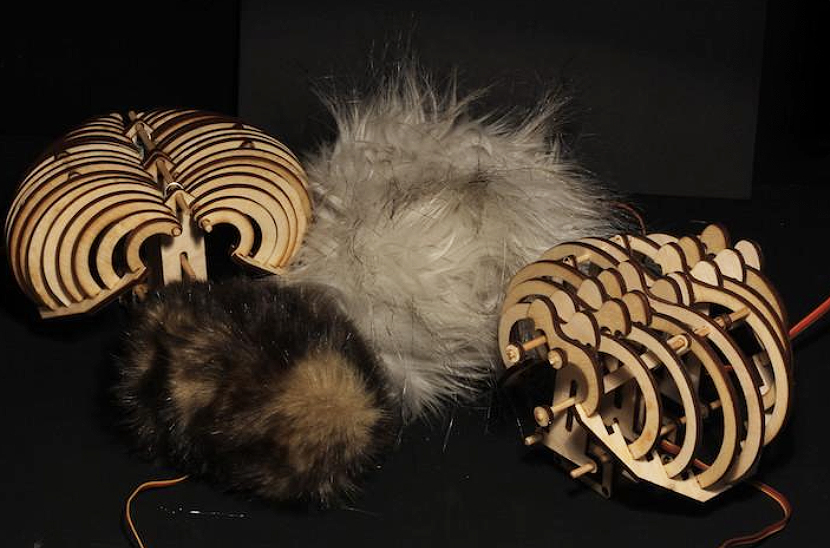
Ultimately, MacLean found her niche with hand-held, fur-covered robots that aimed to sense their users’ emotions and respond by displaying emotions of their own. Her attempts were guided by her observations of therapy animals, aiming to simulate some aspects of their behaviour. 

“I do not think we could ever replace [a therapy animal]. That’s not really my goal,” MacLean said in her lecture. “But could we understand it? And can we help a little bit in some of these situations?”

Taking this into account, MacLean thinks about her lab’s robots as part of a feedback loop: First, the user, perhaps someone experiencing psychological distress, picks up the robot and touches it, essentially pretending that it’s a small animal like a cat or a rabbit. Then, the robot employs machine learning to interpret the touch data, formulating an educated guess about the user’s emotional state. At that point, its programming kicks in and it changes to display an emotion of its own, for example changing the rate at which it is breathing, or moving its robotic ears up and down. On the human side, the user notices that the robot is showing this emotion. This interaction has the potential, MacLean’s research suggests, to actually change how the user is feeling, ideally making them calmer and more relaxed. The robot then picks up on this new emotion, and the cycle continues. 

Her lab’s first attempt to implement this involved designing robots to help calm children about to go under anesthesia. This proved to be a trickier task than expected. 

“One of the first criteria they came up with is, ‘whatever you do, the kids will throw up on it,’” MacLean said. 

In addition to this, the robot needed to be able to survive being thrown and stepped on, while still having state-of-the-art sensors and internal software intact.

While these initial projects, constructed in the early 2000s, had to be quite large to meet all of these constraints, modern technology and innovative design allows MacLean’s lab to now construct small, lightweight models that are even more effective. 

“They’re very customizable,” MacLean said. “And we can make all these different sizes, and shapes and oblong things.” 

In fact, the modern incarnations of the robots, nicknamed CuddleBits, are simple enough to be made in workshops with high school students. 

All of these models centre around MacLean’s primary research interest: The role of haptics—technology that engages with the sense of touch—in human-machine interaction. Common examples of this are the way a smart phone vibrates in response to button presses, and how some video game consoles vibrate to communicate game events. 

Within this field, MacLean is particularly interested in haptics’ potential to incorporate emotion—both the user’s real emotions, and the robot’s simulated ones. 

“It became increasingly clear to me that what’s going on through your sense of touch is so dominated in peoples’ minds by emotion and affect […] that if you don’t take this into account when you’re doing interaction design based on touch, you’re just gonna miss most of the opportunities,” MacLean explained. “At some point, we just really jumped in with both feet, and started working on emotional robots.”

McGill, News

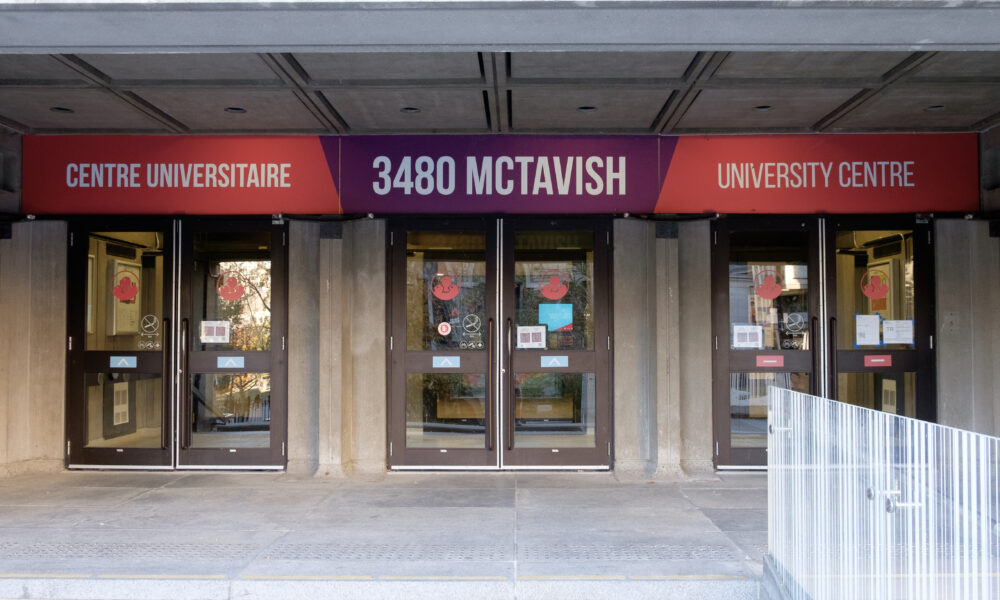
McGill’s joint Senate and BoG meeting sees dialogue on the university’s third century

McGill’s annual joint Senate and Board of Governors (BoG) meeting took place in the Faculty Club on Nov. 14, addressing the theme of “Building on McGill’s Record of Excellence for the Third Century: Challenges and Opportunities Ahead.” 

Maryse Bertrand, Chair of the BoG, briefly introduced the topic before handing the microphone off to Principal and Vice-Chancellor Deep Saini for opening remarks at his first joint Senate-BoG meeting. Saini began by acknowledging the importance of plurality and dialogue between the two bodies. Touching on the fact that the public’s perception of the role of universities is changing, he emphasized the institution’s role in equipping students with skills that will help establish McGill as a trusted voice to the public. 

“Higher education is entering a new reality [….] We must consider the factors that have contributed to McGill’s reputation as a top university while finding ways to build upon this reputation,” Saini said. 

Bertrand then led a warm-up session that involved the entire room. Amidst this activity, she highlighted the recent decision of the Quebec government to raise tuition fees for out-of-province and international students. Despite these challenges and obstacles, Bertrand confidently asserted her belief in McGill’s resilience and unwavering reputation. 

Following the warm-up, senators and members of the Board were invited to discuss the question, “Considering the opportunity and challenges facing universities, how do we best prepare for the future of higher education at McGill?” in their individual round table groups. PGSS Secretary-General Satish Kumar Tumulu gave the first answer, emphasizing McGill’s place as a centre for sourcing knowledge in service of various communities. Other members of the BoG and Senate highlighted this point as well as the fact that McGill’s research sector has been its biggest strength but that this research must reach the broader community. 

The night then proceeded to take a round-table format, where each table was assigned a question by Bertrand and given 45 minutes to discuss before an appointed speaker would present the results of each team to the room. 

Some groups discussed the question of the changing perceptions of a university degree’s value and accessibility. Table one emphasized how over the past 60 years, economic factors and shifting industry demands have prompted a reevaluation of educational priorities. Tables one, two, and three all focused on how the university aims to bridge the gap between academia and industry demands by fostering inclusivity and transparency, ensuring students are prepared for a rapidly changing job market. 

Jacob Levy, a Member-at-Large on the Senate and Chair of McGill’s Department of Political Science, spoke on how McGill has not yet faced ideological repression by the provincial government despite their unsteady relationship, putting the institution in a privileged position to create changes. 

“If we intend for a guild to be a force in facing challenges in fixing [student’s] education […] then I think that we want to take advantage of our relatively protected position so far, to be forceful as advocates for the independent and critical voices within academia,” Levy said. “We are among the research universities that have so far not been under that kind of content-based [ideological] attack. That makes us relatively more attractive to both faculty and students.”

Shifting focus to the role of universities in combating misinformation and public distrust, tables four to six spoke on the importance of maintaining information plurality while actively combating disinformation. The tables recognized the need for transparency, emphasizing faculty involvement in teaching students how to discern truth from misinformation. These efforts also extend to rebuilding trust, particularly among historically marginalized minorities such as neurodivergent people and people of colour, reaching rural communities, and ensuring institutional inclusivity. 

Lastly, tables seven to ten discussed educating a future-ready generation with the knowledge, skills, and drive to navigate their careers and their lives. The tables collectively discussed moving toward an adaptive learning approach that shifts emphasis from grades to critical thinking and personal growth.

Moment of the meeting: 

Principal Saini said in his closing remarks that the institution needed to invest in a fleet of BeaverTail trucks. He was referencing a comment made earlier by a member regarding the trucks’ ability to enter communities and spread information—a line discussed throughout the meeting.  

Soundbite

“Don’t lose the research part of the university. It has been its biggest strength, but it needs to reach the communities.” — Vice Principal (Research and Innovation) Martha Crago, who sits on the Senate, on the importance of research diversity at McGill.

Read the latest issue

Read the latest issue