Latest News

McGill, News

McGill’s joint Senate and BoG meeting sees dialogue on the university’s third century

McGill’s annual joint Senate and Board of Governors (BoG) meeting took place in the Faculty Club on Nov. 14, addressing the theme of “Building on McGill’s Record of Excellence for the Third Century: Challenges and Opportunities Ahead.” 

Maryse Bertrand, Chair of the BoG, briefly introduced the topic before handing the microphone off to Principal and Vice-Chancellor Deep Saini for opening remarks at his first joint Senate-BoG meeting. Saini began by acknowledging the importance of plurality and dialogue between the two bodies. Touching on the fact that the public’s perception of the role of universities is changing, he emphasized the institution’s role in equipping students with skills that will help establish McGill as a trusted voice to the public. 

“Higher education is entering a new reality [….] We must consider the factors that have contributed to McGill’s reputation as a top university while finding ways to build upon this reputation,” Saini said. 

Bertrand then led a warm-up session that involved the entire room. Amidst this activity, she highlighted the recent decision of the Quebec government to raise tuition fees for out-of-province and international students. Despite these challenges and obstacles, Bertrand confidently asserted her belief in McGill’s resilience and unwavering reputation. 

Following the warm-up, senators and members of the Board were invited to discuss the question, “Considering the opportunity and challenges facing universities, how do we best prepare for the future of higher education at McGill?” in their individual round table groups. PGSS Secretary-General Satish Kumar Tumulu gave the first answer, emphasizing McGill’s place as a centre for sourcing knowledge in service of various communities. Other members of the BoG and Senate highlighted this point as well as the fact that McGill’s research sector has been its biggest strength but that this research must reach the broader community. 

The night then proceeded to take a round-table format, where each table was assigned a question by Bertrand and given 45 minutes to discuss before an appointed speaker would present the results of each team to the room. 

Some groups discussed the question of the changing perceptions of a university degree’s value and accessibility. Table one emphasized how over the past 60 years, economic factors and shifting industry demands have prompted a reevaluation of educational priorities. Tables one, two, and three all focused on how the university aims to bridge the gap between academia and industry demands by fostering inclusivity and transparency, ensuring students are prepared for a rapidly changing job market. 

Jacob Levy, a Member-at-Large on the Senate and Chair of McGill’s Department of Political Science, spoke on how McGill has not yet faced ideological repression by the provincial government despite their unsteady relationship, putting the institution in a privileged position to create changes. 

“If we intend for a guild to be a force in facing challenges in fixing [student’s] education […] then I think that we want to take advantage of our relatively protected position so far, to be forceful as advocates for the independent and critical voices within academia,” Levy said. “We are among the research universities that have so far not been under that kind of content-based [ideological] attack. That makes us relatively more attractive to both faculty and students.”

Shifting focus to the role of universities in combating misinformation and public distrust, tables four to six spoke on the importance of maintaining information plurality while actively combating disinformation. The tables recognized the need for transparency, emphasizing faculty involvement in teaching students how to discern truth from misinformation. These efforts also extend to rebuilding trust, particularly among historically marginalized minorities such as neurodivergent people and people of colour, reaching rural communities, and ensuring institutional inclusivity. 

Lastly, tables seven to ten discussed educating a future-ready generation with the knowledge, skills, and drive to navigate their careers and their lives. The tables collectively discussed moving toward an adaptive learning approach that shifts emphasis from grades to critical thinking and personal growth.

Moment of the meeting: 

Principal Saini said in his closing remarks that the institution needed to invest in a fleet of BeaverTail trucks. He was referencing a comment made earlier by a member regarding the trucks’ ability to enter communities and spread information—a line discussed throughout the meeting.  

Soundbite

“Don’t lose the research part of the university. It has been its biggest strength, but it needs to reach the communities.” — Vice Principal (Research and Innovation) Martha Crago, who sits on the Senate, on the importance of research diversity at McGill.

Ask Ainsley, Student Life

Ask Ainsley: How not to get lost

Dear Ainsley, 

I write to you in utmost embarrassment. It has come to my attention that I have absolutely no sense of direction. In the past, I have been so reliant on my Maps app and my friends that I didn’t realize I had no clue where I was going. It was only recently, when I decided to switch to a dumb phone and commit myself to reading philosophy and becoming a full-time pilates instructor, that all of this hit me. The other day, I was walking to a friend’s house for her wine and cheese night,  I ended up right where I started. What should I do? Please help. 

Thank you, 

Hopeless Helen

“To live is to suffer, to survive is to find some meaning in the suffering.” — Friedrich Nietzsche 

Dear Hopeless Helen, 

I completely understand where you are coming from—know that you are not alone. Follow these tips to get you out of your directionless slump. 

Acknowledge the Shame

Few speak up about their lack of internal compass due to the haunting feeling that torments us all: Shame. First, you must acknowledge that shame. Stop wallowing and get yourself out of bed. Go to the bathroom and take a good look at yourself in the mirror. Do you like what you see? No? Is it because you have deep, unresolved insecurity about your sense of direction? 

That’s what I thought. 

Repeat this mantra:

“I am Helen 

I will tell ‘em 

I will be good at finding my way 

And so I say

Hip Hip Hooray!” 

If your name is not Helen, you’ll have to think of your own mantra. I may have great advice, but I don’t have the time or energy to write a poem for every name out there.

Buy a Map

Step two might be the hardest of all: Buying a map. Not many places sell real maps anymore. But I know a spot. It’s called The Map Store*. Nobody knows where it is because you need a map to get to it. 

Once you have found the Map Store, make sure to buy the biggest and most in-depth map of Montreal you can find. My ex-boyfriend Stuart once went all the way to the map store and bought a map of Edmonton by accident. I dumped him right then and there. 

Plan Your Route

Plan a 20-minute to five-hour walk from your house to somewhere cool. I do not know where you live or what you think is cool so this is a very difficult step for me to help you with. Sometimes you have to do things yourself and can’t have a column lady hold your hand through everything. C’est la vie.

You Are Ready to Take on the Day and Go Everywhere!

Grab your map and a couple of friends and hit the road! Leave your phone at home—in fact, leave everything at home! There is literally no need for keys, wallet, water, or food when you have a map**. 

Making a Mistake

If you find that you are lost, do not back down. Do not start crying. Remember that you are Helen. You are extraordinary, and even the greats make mistakes. If you are with a group, you will have to convince them that this is where you meant to lead them. This is how I ended up playing a great game of strip poker in a retirement home. If you are alone, there are always ways to retrace your steps. That’s why I bring breadcrumbs to mark my path wherever I go, which works 100 per cent of the time, without any fault**. 

I hope this advice helps, and remember: Acknowledging your problem is the first step to solving it. 

To many more great walks,

Ainsley

*Not to be confused with Aux Quatre Points Cardinaux, one of Montreal’s actual map stores.

**At the behest of the law, I have been told to include The Tribune is not responsible for any mishaps resulting from the aforementioned advice.

Along Party Lines, News

Along Party Lines: A guide to Montreal’s municipal politics

Montreal’s municipal government announced the approved city budget for 2024 on Nov. 15. The budget sees a $235 million increase in spending and, on average, a 4.9 per cent increase in residential property taxes. The 2024 budget also sees increases in spending on public transit and housing, as well as a $35 million increase in funding for the Service de Police de la Ville de Montréal (SPVM). To help students decode what this new budget may mean for their lives, The Tribune presents a guide to Montreal’s municipal politics.

How are Montreal’s municipal politics organized?

Montreal’s city council, made up of 65 elected officials, is the central decision-making authority for the city. It comprises Mayor Valérie Plante, city council chair Martine Musau Muele, 18 borough mayors, and 45 independently elected council members. The city council approves the annual budget and is responsible for city-wide issues and plans, including ensuring clean drinking water and overseeing large projects such as the expansion of Montreal’s metro system.

In addition to the city council, each of Montreal’s 19 boroughs has its own council. Borough councils oversee issues such as garbage collection, recreation, and construction within their boundaries. 

What parties are in power in Montreal?

Four parties are currently represented on the city council: Projet Montréal with over half of the seats, Ensemble Montréal with one third of the seats, Équipe LaSalle Team with three seats, and Équipe Anjou with two seats. In addition, there are two independents on the council. 

As the second-most-represented party, Ensemble Montréal, is the official opposition. The party has representatives from eight different boroughs on the city council. 

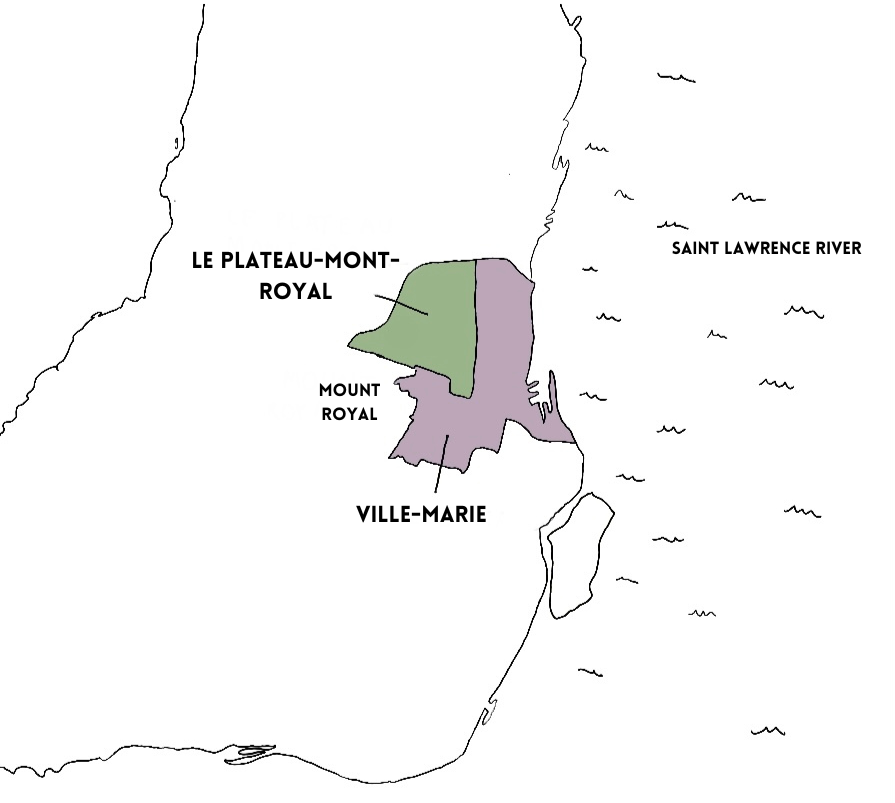
Both the Ville-Marie and Le Plateau Mont-Royal boroughs are represented almost entirely by members of Projet Montréal. These boroughs incorporate residents from neighborhoods including Downtown Montreal, the International District, Old Montreal, the Quartier des Spectacles, Milton-Parc, Le Plateau, and Mile End. In addition to these two boroughs, Projet Montréal has representatives from nine others on the city council.

What are Projet Montréal and Ensemble Montréal’s policy stances?

While Ensemble Montréal has expressed significant discontent with the 2024 budget’s tax increases, the two parties released similar stances regarding policing, housing, and the environment before the most recent election in 2021.

Both parties support increasing the public security section of the budget. Ensemble Montréal supports significantly expanding SPVM’s funding and hiring more police officers. Both parties have said that they support increasing the use of body cameras and the involvement of social workers. 

During the 2021 election, Projet Montréal pledged to build 60,000 affordable housing units. Ensemble Montréal, on the other hand, promised 50,000 new housing units with 10,000 being social housing. The 2024 city budget allocated over $50,000,000 toward the creation of affordable as well as government-subsidized housing.

In regard to the environment, Projet Montréal is aiming to make the city carbon neutral by 2050. The party has  plans of planting trees and increasing access to electric-car parking. They also banned the use of single-use plastics this March . Similarly, Ensemble Montréal has outlined a goal to get Montreal to carbon neutrality by 2045 largely through expanding  the number of green spaces in the city.

How can I make my voice heard?

Aside from voting, citizens can get involved with municipal politics in a number of ways. There are 11 standing committees where city councillors seek community input on subjects ranging from cultural life to transportation systems. 
The city of Montreal’s website contains a calendar of all upcoming public participation events—meetings where citizens can go to voice concerns or opinions to governing bodies.

Student Life

Busy hands, idle minds

“Wow, all I’ve done today is school!” If, like myself, this thought runs through your head as you walk home in the dark at 4:30 p.m., it may be time to find an after-school activity. 

Learning a new skill, particularly over the course of multiple weeks, has many benefits for students’ well-being. When we allow our brains to focus on something that may not be academically productive, we create an opportunity to destress. Committing to a multi-week program establishes a routine, something especially important in the short days of the Montreal winter. Read on to learn about some of the options available to you around Montreal.

Pottery

Price: $370

Duration: 7 weeks, 3 hours/week

Address: 5333 Avenue Casgrain, Suite 804

Language: English

For those itching to get behind the (pottery) wheel, Atelier Spirale offers pottery courses for all levels in both wheel-throwing and hand-building. As an added bonus, those enrolled in the course can access open studios on Saturdays from 11 a.m. to 2 p.m. to work independently. Registration for the winter session, which starts on Jan. 8, is live now and will close once full. 

Circus

Price: $325

Duration: 11 weeks, 2 hours/week

Address: 181 Avenue du Cirque

Language: Bilingual (English & French)

Did you know Montreal is home to the National Circus School? Along with training future Cirque duSoleil performers, the school runs a wide variety of adult recreational courses for those of us who aren’t lucky enough to be graduating with a degree in Circus Arts. Beginners and intermediates can explore circus techniques such as trapeze and silk acrobatics. Adult classes take place on Saturdays between Jan. 13 and April 4. If swinging from the ceiling or riding a unicycle has always been on your bucket list, mark your calendars for the start of registration on Dec. 4.

Improv

Price: $258 

Duration: 6 weeks, 2 hours/week

Address: 3706 and 3716 rue Notre-Dame Ouest

Language: English

Improv classes have many benefits for health and well-being. Students learn to be present, embrace mistakes, and build self-confidence in their humour and public speaking skills. Impro Montreal runs a 6-week course for improvisers of all levels. Unsure if improv is for you? The studio offers a one-hour Freebie Improv Workshop to those interested in learning more before committing to a full course. 

Archery

Price: $95

Duration: 12 weeks, 3 hours/week

Address: 5485 Chemin de la Côte Saint-Paul

Language: English or French

Who knew you could learn archery in Montreal? Archers du Sud-Ouest is an archery club that runs weekly lessons out of the Centre Gadbois. Equipment is provided, and the club even offers a free intro session to newcomers. Adult lessons take place every Tuesday and Thursday from 8 to 9:30 p.m. between January and April.

Latin Dance

Price: $40-70

Duration: 7 weeks, 1 hour/week

Address: 372 St. Catherine Street W

Language: English

Salseros is a Students’ Society of McGill University (SSMU) club providing affordable Salsa and Bachata lessons for all levels. The club also hosts various socials and events throughout the semester to introduce students to the Montreal Latin dance scene. While you can sign up as a pair, it’s not necessary to come with a partner; the club will pair leaders and followers in-class. Registration for the winter semester opens in January and will be announced on the club’s Facebook and Instagram pages. 

Honourable Mentions 

The McGill Arts Collective hosts free, bi-weekly roundtable events and workshops to help students of all abilities practice their artistic skills. 

McGill Athletics offers a variety of affordable group fitness, dance, and sports classes at the Currie Gymnasium.

McGill Swing Kids runs weekly swing-dance lessons at local studios. Your first lesson is free of charge! 

News, Recap, SSMU

Recap: SSMU Board of Directors Nov. 16 meeting

The Students’ Society of McGill University’s (SSMU) Board of Directors (BoD) met on Nov. 16. Before the board dove into the meeting’s agenda, they welcomed a new director, Fawaz Halloum. 

Sierra Fallis, Deputy Speaker, led the board through the meeting’s agenda points. First was an executive committee report presented by Vice-President (VP) Student Life, Nadia Dakdouki. She shared that the executive committee was working on campaigning for a SSMU base fee increase. 

Next the board turned to approving meeting motions. The only motion discussed during the public portion of the meeting was a motion to release an announcement to membership regarding the Solidarity for Palestinian Human Rights McGill (SPHR). Fallis shared that the statement had been written but required approval by the board prior to its release. The motion was promptly moved to the confidential session of the meeting.

“The statement is going to be public […] but I think that there could be confidential considerations to sending out the statement,” board member Lisa Pennel suggested.

As there was nothing else on the public agenda, the meeting moved into the confidential session, after which the meeting was adjourned.

As of Nov. 20, SSMU has not released a public statement regarding SPHR.

Editorial, Opinion

Fall 2023 SSMU Referendum Endorsements

The Tribune’s Editorial Board presents its endorsements for the Students’ Society of McGill University (SSMU) Fall 2023 referendum questions. The Tribune’s editors researched and discussed each of the questions before voting on each endorsement. The endorsements reflect a majority vote of the editorial board, with editors who have conflicts of interest abstaining from pertinent questions.

MUSTBUS Fee Increase: Yes

MUSTBUS is a student-run co-op bus service created in 2019 that offers cheap bus tickets to McGill students. Round-trip tickets currently cost approximately $30 for a day trip and $60 for an overnight trip. In Winter 2023, MUSTBUS ran over 20 trips to destinations, including Boston, Toronto, Ottawa, and New York City. MUSTBUS is asking to increase the opt-outable fee for its services by $3—from $2 to $5. This will allow the company to meet inflation and to offer more bus trips, more destinations, and lower costs for customers. MUSTBUS’ main issue has been being unable to meet the student demand, with tickets for trips selling out within minutes. The Tribune endorses the $3 fee increase, as it is opt-outable and demand for MUSTBUS’ services has been displayed.

Creation of the Student Nutrition Accessibility Club Fee: Yes

The creation of the Student Nutrition Accessibility Club (SNAC) fee will support the club starting in Fall 2024 and lasting until the end of Winter 2029. The club’s services include weekly distributions of free, fresh produce and monthly educational nutrition workshops. The club is currently supported by the McGill Sustainability Projects Fund, which provided $15,260 to its initiatives for Fall 2023. The fee, which students can opt out of, is $1.30 per semester and will not only allow SNAC to continue bringing its services to McGill students, but also increase the club’s capacity to distribute free produce and expand the number and scope of the educational programs. Due to the prevalence of food insecurity on campus and the lack of affordable options, The Tribune supports the creation of this fee and the expansion of SNAC’s services.

Safety Services Fee Increase: Yes

Safety Services offers a variety of valuable services on the McGill campus, including the McGill Student Emergency Response Team (MSERT), the Sexual Assault Centre of the McGill Students’ Society, and both the DriveSafe and WALKSAFE programs. Each of these services picks up the slack in the critical area of student safety, helping to support, protect, and care for students where the McGill administration has fallen short. The fee increase proposed in this question, which raises the non-opt-outable fee from $5.65 to $7.01 per semester, would affect the funding for only MSERT. It would allow them to continue offering their free First Aid courses, the current funding for which expires this semester. It would also enable them to expand their offerings of free courses and workshops for the general public, as well as to purchase critically-needed new training equipment and training courses for their volunteer emergency responders. 

Base Fee Increase: Yes, with reservations

SSMU is asking for an increase to the SSMU base fee—the mandatory fee that all SSMU members pay. This fee is used to support the Society’s everyday operations, including funding over 250 clubs, services such as the SSMU Eating Disorder Center and the Sexual Assault Center, and the SSMU office. The base fee, which was last increased in 2019, is currently $68.48 per semester for most full-time undergraduate students and, if this motion passes, will increase by 71 per cent to $117.21. 

According to the motion initiating the fee, the increase would be used to raise wages for unionized staff and to help the Society meet unprecedented levels of inflation. In an email to The Tribune, SSMU explained that this year’s executive team decided to pause growth and put a hiring freeze in place at the beginning of their term to combat the current financial situation, which has forced the society to dip into reserve funds in recent years. Without a fee increase, SSMU says that it would “likely have to drastically reduce its operational scale,” thus impacting the services and programs available to students. The Society has also stated that it plans to use the additional funds to help mobilize against the Quebec government’s proposed tuition hikes through campaigning and student outreach. 

While paying workers proper wages, maintaining services for students, and ensuring the financial sustainability of the students’ union is vital, SSMU should be more forthcoming about how this $48.73 increase will be spent if the motion passes. SSMU members, like SSMU employees, are under unprecedented pressure from tuition hikes, inflation, high housing costs, and food insecurity, and they deserve a detailed breakdown of where the additional revenue from this fee increase would go. Further, SSMU has been plagued by low student engagement for years; if this fee passes, it is imperative that SSMU dedicate substantial resources to increasing student outreach and engagement so that SSMU members know the tools available to them through their students’ union and how to engage in student democracy. Overall, The Tribune endorses a vote of “Yes” for this non-opt-outable fee, as living wages for SSMU employees and the resources SSMU provides are vital, but cautions that SSMU must do better to be transparent and increase student engagement.

Radio CKUT Fee Increase: Yes

CKUT is a non-profit community radio station based at McGill which provides 24/7 programming. It is one of the only places on campus where students can get access to high-quality sound equipment and studios to learn broadcast journalism and radio skills. The Tribune sees value in supporting other campus media outlets in order to foster a healthy student democracy—particularly amid Bill C-18. CKUT’s programming platforms institutionally-neglected voices and reports on the undercurrents of the arts and news of Montreal. The station is requesting a $2 raise to their semesterly opt-outable fee, bringing the fee for most full-time students from $5 to $7. Given the burden of inflation and the fact that they have not requested a fee increase since 2012, The Tribune advocates for a “Yes” vote for a CKUT fee increase. 

First Year Fee Renewal: Yes

SSMU’s First Year Council is an elected body that represents first years, advocates for them, and aims to help them adjust to university life. It also holds events, such as mixers, giveaways, and therapy dog hangouts. The Tribune sees helping new students get acclimated and learn how to engage in campus democracy as crucial. That being said, the paper encourages careful spending of the funds collected from this fee. If passed, SSMU must ensure that first year students are being brought events that help them learn about mental health resources on campus, know their rights, socialize, and engage with campus democracy. As such, The Tribune endorses a “Yes” vote on this $0.50 opt-outable fee. 

Creation of the Community Solidarity Fund, Fee, and Solidarity Funding Committee: Yes

The Tribune votes “Yes” on establishing a $1 opt-outable fee to finance a Community Solidarity Fund, which would be overseen by a Solidarity Funding Committee. This initiative stands to increase the amount of funding available to social-justice-focused initiatives whose aims align with SSMU’s positions. It also would be more accessible than other types of funding, which often require that recipients have organizational bank accounts or a larger organization willing to accept funds on their behalf. The policy has built-in safeguards: Recipients will have to write a report detailing what they used the funds for within three months of receiving the money, and no one individual or group will be able to receive over 7.5 per cent of the overall fund in a given year. Consultations were conducted with SSMU’s Funding Commissioner, SSMU’s Indigenous Affairs Commissioner, SSMU’s Equity Commissioners, the SSMU Vice President (VP) Student Life, the SSMU VP Sustainability and Operations, and the Quebec Public Interest Research Group at McGill. Given the importance of supporting social justice projects and the thorough research that went into the proposal of this fee, The Tribune supports the establishment of the Community Solidarity Fund.

Ratification of the Board of Directors Members: Yes

Section 6.5 of the SSMU Constitution stipulates that SSMU’s Board of Directors, its highest governing body, must be ratified through either a General Assembly or a referendum. As per the Constitution, “The Board of Directors shall supervise the management and administer the business and affairs of the Society and shall exercise all of the powers of the Society, except for those which the Act expressly reserves to the Members.” This vote would officially make Alexandre Ashkir, Nadia Dakdouki, Lalia Katchelewa, Liam Gaither, and Jacob Shannon members of the SSMU Board of Directors from November 15, 2023 until November 14, 2024. The Tribune urges a “Yes” vote so that SSMU’s Board of Directors can carry out its role.

Policy Against Genocide in Palestine Referendum Question: Yes

The Tribune strongly endorses a “Yes” vote on the adoption of the Policy Against Genocide in Palestine. This policy seeks to confront the lacking and insensitive responses of McGill University toward supporting Palestinian students and redressing settler colonialism here and abroad. The Tribune recognizes this policy as a testament to Palestinian students, groups, and allies courageously organizing for self-determination and for an anticolonial world in line with previous popular mobilizations and the relentless work of Black and African students at McGill to cut ties with South African apartheid. In voting for this policy, the university can acknowledge and build on the multiracial, multireligious, and pluralist movement for peace that Palestinian, Arab, Jewish, and Muslim students have forwarded.

McGill has invested and collaborated with donors, institutions, and corporations actively complicit in Israel’s settler colonial apartheid. As it stands, McGill’s investments, collaborations, and words enact violence on Palestinian students, and help erase Palestinian families, land, and struggle abroad. The policy asks McGill to cut ties and divest from violent stakeholders. These include investments in arms and weapons manufacturers and contractors that develop technologies that kill Palestinians—$500,000 in Lockheed Martin and $1.6 million in Thales—and investments in killing our planet, with $1.4 million in Chevron, Israel’s main fossil fuel extractor. McGill also holds partnerships with universities, such as Tel Aviv University, which funds military research for Israel, and the Hebrew University of Jerusalem, whose strategic location in Israeli-occupied East Jerusalem has allowed the university to house a military base. McGill cannot call for “compassion, inclusivity, and respect” without divesting and disavowing these institutions.

On campus, the policy asks McGill to condemn the Israeli bombing and genocide, retract threats to Palestinian students and groups, and provide concrete support to Palestinian and Arab students. The policy calls on SSMU to release a public statement, provide support for Palestinian and Arab students, and commit to a consistent, solidaristic position against genocide and settler colonial apartheid with Palestinian students and the Palestinian struggle for liberation. These should be the expectations for a university and the individuals who represent all students’ interests. The Tribune endorses a “Yes” vote because it is the first step toward repairing McGill’s outsized role in silencing Palestinian students and pro-Palestine movements and in sustaining settler colonial apartheid.

Editorial, Opinion

McGill’s neglect of Indigenous veterans fuels settler colonialism

Content warning: sexual violence, settler colonialism.

Observed a few days before Remembrance Day, Indigenous Veterans Day on Nov. 8 commemorates the notable contributions of Indigenous veterans to Canada’s historical military pursuits. Despite official recognition since the day’s establishment in 1994, the broader acknowledgment of Indigenous contributions remains insufficient, and the lack of care provided to Indigenous veterans is abominable. The failure to widely recognize the invaluable role of Indigenous peoples in Canada’s military fuels settler colonialism, while excluding Indigenous resistance to violent nation-building.

The treatment of veterans in Canada has historically rendered one truth: Canada fails to provide sufficient support for its veterans, especially Indigenous veterans. By the end of World War II, over 3,000 Indigenous soldiers, sailors, and air crew members served in the Canadian Forces. However, upon transitioning back to civilian life, many faced racism and encountered systemic obstacles to gaining rights and personhood. Until 1960, the Canadian government did not afford Indigenous soldiers the same rights and benefits after service––such as access to housing and financial and health supports––as non-Indigenous veterans. The general neglect of Canadian veterans is evident to this day as many returnees, grappling with various forms of trauma, confront mental health issues, houselessness, and drug addiction. When compounded by the enduring effects of intergenerational trauma and colonial violence that Indigenous peoples experience, the Canadian government’s neglect yields perilous consequences. McGill’s failure to acknowledge Indigenous Veterans Day illustrates the institution’s hypocrisy, erasing the diverse military experiences that form Canadian history. 

The decision of many Indigenous individuals to enlist in the military stems from inequality and injustice. The military, functioning as a business, strategically targets those from lower-income communities, enticing them with promises of financial and social benefits that many never receive. Historically, some Indigenous peoples have chosen military service as a means to escape the exploitation they face within Canada, only to encounter further exploitation and discrimination within the military.The military must cease targeting Indigenous people to serve for a settler colonial nation that does not provide them adequate care nor recognizes their need for support and redress. Urgently required is the establishment of culturally-responsive trauma and healing services for veterans, addressing the unique needs of Indigenous veterans and fostering genuine healing in the aftermath of war.

This oversight extends to the additional lack of recognition toward Indigenous women veterans. With the Canadian military being a ‘brotherhood’ predominantly composed of white cisgender men, their interests consistently take precedence. This results in a perpetuation of sexual violence, particularly toward women of colour. The Canadian justice system, built on the exclusion of Indigenous peoples under the Indian Act, habitually overlooks cases of sexual violence in the military. Disturbingly, this form of violence disproportionately affects Indigenous women, who are sexually assaulted at three times the rate of non-Indigenous women and represent 16 per cent of all female homicide victims while only comprising 4.3 per cent of the population of Canadian women. Canada must intensify its efforts to mitigate this violence and protect Indigenous women in the armed forces and beyond.

The absence of any mention of Indigenous Veterans Day in McGill’s communications adds another layer of insensitivity, raising questions about the institution’s commitment to decolonization. McGill’s performative and hypocritical actions toward the Kanien’kehà:ka Kahnistensera (Mohawk Mothers) fails to address the concerns about unmarked graves that the Mothers have raised. Acknowledging Indigenous Veterans Day goes beyond honouring the bravery of veterans; it means confronting war’s inseparable connection to colonialism. 

The acknowledgement of Indigenous Veterans Day must involve a confrontation with the violence that institutions have continually and historically inflicted upon Indigenous peoples—a reality in which McGill participates. For the university to stand with Indigenous peoples, it must go beyond superficial gestures, such as sending out emails selectively, and work toward a meaningful recognition of the diverse contributions Indigenous communities have made. True improvement in the university’s relationship with Indigenous communities cannot be limited to public relations strategies and requires substantive actions, conversations, and attention.

Features

The hidden opponent: How ACL tears threaten women’s soccer

As the 2023 Women’s Soccer World Cup kicked off Down Under, a shadow loomed over the tournament for players and fans alike: The absence of many of the game’s most electrifying stars. 

Notable absentees included Canada’s Janine Beckie, England’s Leah Williamson, and the United States’ Catarina Macario. They were missing not due to a lack of skill or determination, but by a common and devastating injury: A torn anterior cruciate ligament (ACL). 

The injured stars were just three of the many players who had torn their ACL during their club seasons, thereby side-lining them for the international tournament. They are just a small part of a concerning trend with ACL injuries disrupting women’s soccer.

ACL injuries in women athletes

The ACL, a ligament located in the middle of the knee, connects the patella, or kneecap, to the tibia, the shin bone. Its main function is to ensure knee stability and balance, which is crucial for movement. However, the ligament is susceptible to tearing, a common yet serious injury typically resulting from rigorous physical activity. For instance, stopping quickly when changing directions while running can cause an ACL to tear.

Sustaining an ACL injury is devastating for an athlete, frequently requiring surgery to reconstruct the ACL to prevent future injury and thus pushing them out of action for some nine to 12 months. The recovery period is so long because following surgery, athletes face the daunting task of regaining lost muscle mass, restoring mobility, and overcoming psychological hurdles from fear of re-injury. Avoiding surgery also runs the risk of sustaining another injury because daily activities like walking up the stairs or stepping off the curb can lead the knee to buckle, causing the injured person to fall.

“You need an ACL reconstruction because your knee is unstable,” Dr. Moreno Morelli, a faculty lecturer in McGill’s Department of Orthopaedic Surgery, explained. “An unstable knee also causes a lot more stress inside the joint, so there’s a greater risk of having additional damage to the inside of your knee.”

In my years of playing youth soccer, my coaches consistently drilled the heightened risk of ACL tears in women and girls into our heads. Experts from Yale Medicine state that women are two to eight times more likely to experience an ACL tear than men are. When I stopped playing soccer after my sophomore year of high school the fear of sustaining the injury stopped lingering in the back of my mind. 

“As [people assigned female at birth] start to grow, [the] pelvis changes shape, and it changes the alignment of [the] legs,” Morelli said. “So it puts you more into what you call a valgus position or knock-knees alignment, and that kind of alignment puts more strain on your ACL. As soon as you push off the limb or land on the limb when the leg is in that knock-knees position, it puts more strain on the ACL, and it could rupture.”

This strain becomes exacerbated by a larger Q angle in women—normally around 17 compared to 12 degrees in men—due to pelvis shape differences. The Q angle measures the angle between the line from the knee up the femur and an imaginary line connecting the knee with the bottom part of the pelvis. This larger angle also puts more pressure on the ACL, increasing the risk of injury.

Research from 2017 also suggests that hormonal fluctuations during the menstrual cycle increase ACL tear risk, as it has been shown that elevated estrogen and progesterone cause the hormone relaxin, which loosens ligaments, to be more active. The greater ligament laxity, or looseness, makes the joint less stable, increasing the risk of injury. However, despite this observed connection between the menstrual cycle and increased ACL tears, we still lack definitive evidence.

Research gaps

A deficit in data and research on the increased ACL risk among women leads athletes to keep getting injured. According to Alireza Monajati, a senior lecturer in the University of East London’s Department of Bioscience and Sport, there is currently not enough data related to the circumstances surrounding ACL injuries. These gaps in the research make it more difficult for doctors and trainers to analyze the causes of the injury. There are also limited studies with high internal validity that detail ACL injuries in elite female athletes, so how can we find available research that could be used for preventative measures?

More data on elite female athletes will help develop better training and nutrition plans. For instance, should evidence conclusively establish a link between ACL injuries and the menstrual cycle, it would provide compelling cause for managers at elite clubs to tailor menstruating players’ training and match loads based on their cycles. However, this approach might also overreach into players’ intimate lives, giving coaches too much access to their bodies; in the pursuit of more complete data, research ethics is also crucial.

In an interview with //The Tribune//, Monajati discussed the challenges in gathering data on ACL injuries among athletes. 

“Experimental research on professional [athletes] is limited because of their availability, but in terms of the type of research, it doesn’t always have to be experimental research [where] you bring the professional athlete to the lab,” Monajati said. “Sometimes it’s just gathering the data around the event where the injury happened, and when you have a big pool of data, then you can make the right decisions.”

To enhance data collection, Monajati proposed a procedure that he believed would enable greater collection of such data in women’s soccer, inspired by the existing protocols for cardiac risk management in soccer. According to these protocols, set by governing bodies like the FA and UEFA, players participating in European or FIFA competitions are required to undergo cardiac screening every two years as a condition to play. Monajati believes a similar approach can be done for ACL tears.   

“They should undergo certain screening every one or two years, and when injuries happen, the data of that must be reported by the medical team to the FA. The data can involve so many things, [like] the load of the training, the surface where they’re playing, [and] the menstrual cycle phase they’re in. All of this data can be gathered so that you have a big [set of] data eventually, and with big data, you can then apply statistical analysis to process and find the patterns.”

Professionalization and inadequate medical care

Beyond gaps in data, women’s clubs’ frequently lack sufficient resources puts players at risk of increased ACL tears. In theory, the more at-risk demographic should be offered extra protection and preventative measures, such as supportive exercises and nutrition. However, this is not the case. 

A typical women’s soccer regular season is between 20-30 games depending on the number of teams in the league—National Women’s Soccer League (United States) teams play 28 games, while the Women’s Super League (England) and the Frauen-Bundesliga (Germany) play 22. This doesn’t factor in extra tournaments, like domestic cup games or the Champions League, and the intensity only heightens for players who also compete with their country’s national team. Samantha Kerr, one of the best women’s soccer players, competed in 38 games for Chelsea in the 2022-23 season and 12 games for Australia in 2023. 

In recent years, women’s soccer has been working toward greater professionalization to bring it up to the standard that men’s teams play at. In that process, the women’s teams have been playing a growing number of matches. Several global invitational tournaments that women players can compete in have grown in the past ten years, from the Arnold Clark Cup (2022) to the Cup of Nations (2019) to the SheBelievesCup (2016). Pre-existing competitions have also welcomed more teams, increasing the game count. In 2011, the World Cup featured 16 teams; the 2023 World Cup included 32.

However, as playing time increases, medical support has failed to keep pace. According to a FIFA report from 2021, more than 25 per cent of first-division women’s soccer teams did not hire a physio or a team doctor. Christina Le, a physiotherapist at the University of Alberta’s Glen Sather Sports Medicine Clinic and a passionate Arsenal fan, discussed the state of medical staff availability at women’s soccer clubs in an interview with //The Tribune//.

“Even clubs like Arsenal and Chelsea are just now starting to support their women’s sides better. I don’t think there were any full-time physios and stuff like that that were part of the [women’s] clubs until maybe the last couple of years,” she said. “So I think that’s a big thing: just trying to get a steady medical team instead of contracting a physio just for the season or just for like three months, [because otherwise] you have to build a whole new relationship with somebody else who comes in and takes over that role and maybe has a totally different treatment approach and style.”

Le believes the lack of permanent staff members is largely tied to the way that soccer fans and even club employees still see the women’s game as second-tier to the men’s.

“When they’re trying to pursue these sports [medicine] jobs, there are a lot of people who look at the women’s league as a stepping stone to get to the men’s league,” said Le. “That is not how this should work. They are different entities, and the women’s game should be the end goal for somebody. It shouldn’t be like people get their ‘in’ at a club by helping out with the women’s team and eventually get a promotion to the men’s side.”

Similar pressures appear in the coaching context. The media linked England Lionesses manager Sarina Wiegman to the England men’s coaching job in August, while Chelsea F. C. Women manager Emma Hayes was repeatedly asked by broadcasters if she would switch to coach in the Men’s Premier League. In both cases, the move to the men’s side is seen as a step up by the media and by fans—despite the fact that their teams had more successful years than the corresponding men’s teams. 

In an interview with Sky Sports, Lioness Georgia Stanway responded to rumours of Wiegman being linked to join men’s soccer coaching roles by emphasizing that managers enjoying their roles in women’s soccer is what will allow women’s soccer to continue to grow—they should not view women’s teams as a stepping stone. Hayes had a similar reaction to the rumours, telling an interviewer that Wiegman’s role as a women’s coach is important in and of itself and that women’s teams deserved top-tier coaches just as much as men’s teams do. Similarly, women’s teams also deserve top-tier medical staff.

Prevention Strategies

To address the disproportionately high risk of ACL tears, experts and sports professionals alike are emphasizing the need for comprehensive medical support. This focus pushes to overcome the physiological factors that uniquely, adversely affect women. A starting point is incorporating preventative exercise programs, which have demonstrated efficacy in reducing ACL injuries.

“There are several studies that have looked [at] specific exercise programs with the intent of decreasing the incidence of ACL tears,” Morelli said. “There’s a big study out of Los Angeles that was published almost ten years ago where they looked at about 1500 [14-18 year old female athletes] who did a specific exercise program and compared [them] to those who didn’t do the exercise program, and the exercise program reduced the incidence of ACL tears by about 80 per cent They carried this study out over two years, and in the second year, it reduced by 70 per cent.”

But to build a solid foundation, young women  pursuing elite soccer need adequate exposure to high-level training early on. Bad running form, for example—which entails habits like heel striking and overstriding—can lead to running-related injuries. Training that builds good patterns related to form and strengthens players’ bodies in a way that fortifies them against ACL injuries is essential.

“There’s a lot of attention put on the biological pieces, and I think it absolutely makes sense to integrate a part of that, but I think the tricky part with the biological pieces is that they’re not modifiable,” Le said. She explained that non-biological factors like having a medical team and access to proper strength and conditioning help. “In England at all of these big clubs, there are boys who are like nine and ten years old being signed to academies and then getting exposed to strength and movement patterns at that age. There’s not much of an academy for a lot of the women’s clubs, and if there are, they are a little bit older, maybe 15 or 16.”

According to Monajati, an injury-prevention program targeting ACL tears combines  improving coordination, balance, and strength. 

“The framework of that is basically these three aspects: the technique during landing and changing directions, which is something that can be taught, the balance in the lower limb muscles, which comes from strength and conditioning, and perception exercises, to improve coordination,” Monajati said.  

Physiological factors that increase women’s risk of ACL tears are not an excuse for the elevated frequency of the injury in the women’s game. Rather, they offer a call for increased attention, research, and data related to professional women’s soccer that will allow for the establishment of more adequate preventative measures.

Without preventative measures that target ACL tear risks, women soccer players will continue to miss out on momentous opportunities like the World Cup—devastating both players and fans.


Off the Board, Opinion

Learning to go slow

This past summer was a summer of long drives. I would put on a podcast, occasionally find a passenger, and hit the road in my beat-up blue Subaru. Ironically, at some point, while speeding on long stretches of Route 175, I also came to embrace moving slowly.

I have always been bad at slowing down. Even as a kid, I would immediately pick an ambitious project or set a new goal when presented with a break from school. I would take up knitting, train for a race, or fix a broken clock that I was determined not to replace. No matter what, I would pour my all into something that would give me tangible results and stave away the awful feeling of having wasted precious free time by simply relaxing. 

As I got older, hobbies turned into using my time off to plan for the future, but my fears of misusing time persisted. My calendar was meticulously organized in order to prevent a wasted moment. Breaks may have been about taking a pause from school, but they certainly were not about rest.

This summer, I was woefully unoccupied. The winter semester had been difficult for me, marked by burnout and depression. (It turns out that balancing a part-time job, working at a student paper, and being a full-time student are not conducive to a peaceful lifestyle.) So, there I was at the end of April, with my biggest fear about to be true: I had no summer plans. As friends left Montreal to take on impressive internships, network, and make money to save for the future, I quit my job at a restaurant and mindlessly travelled in the months to come.

Going into the summer, I was worried—given my track record with unconstructed time—that my mental health would go downhill. Of course, I panicked at times, feeling as if I was dooming my future, but I pleasantly surprised myself with my ability to lean into rest and let the open road take me anywhere. 

For as long as I can remember, I’ve also always been overly self-judgemental. I would tell any friend that they should relax and let loose—after all, we are only young once, and there is plenty of time for everything. But I never included myself in this and always felt guilty once I inevitably burnt out and was forced to take a break anyway. I am not going to lie and say that is no longer the case, but this summer was new for me. I let myself be thoroughly and unapologetically impractical, and boy did it feel good. 

I got lost alone in Venice at 2 a.m. with a dying phone, watching the water lap at the edges of beautiful buildings, feeling elated and free. I drove five hours from Saguenay to Montreal just to spend four hours with someone I love before promptly driving back. I let myself pull off of the highway in upstate New York to see a park that looked beautiful and take a nap in a hammock. Sure, I made some calls that hurt the next day—mostly due to sleep deprivation—but I wouldn’t go back and change a thing.

I am now staring down the barrel of graduation next semester, and July feels like pure fiction. In a sea of students imbued with productivity mindsets and competitive ambition, it is hard to hold myself to taking it slow and being kind to myself. But in moments when I feel so overwhelmed that I want to run away and never look back, I remember the feeling of driving through the forest, windows cracked, and a sense of calm contentment rolls over me like a wave. 

Commentary, Opinion

Quebec falls just short of a proactive response to post-pandemic mental health crisis

The Quebec government’s recent announcement of new measures to avoid psychiatric hospitalization emphasizes the importance of patient-centric and holistic mental illness treatment.  However, it is also—put bluntly—too little, too late. Both the imminent introduction of medical assistance in dying (MAiD) as a care service for those struggling with severe mental illness and the regional inaccessibility of these new measures diminish the impact of this shift toward improved mental healthcare. The government will likely struggle to provide proper justification for offering MAiD to those suffering from mental illness when they have only recently invested in mental health crisis-related de-escalation and recovery.

Proposed as part of Quebec’s 2022-26 interdepartmental mental health action plan, the new intervention-focused program aims to deliver treatment within each patient’s home environment with three key initiatives. First is the deployment of specialized rapid-response teams to support patients experiencing crisis episodes following their discharge from the emergency department. Then, the introduction of psychiatric intervention units providing short-term stays (48 to 72 hours) will facilitate a return home during a crisis episode. Finally, the provincial government promises that they will implement intensive home treatment to avoid the potential for hospitalization-related trauma. 

If effectively implemented, these transformative shifts have the potential to empower those experiencing mental illness to maintain their autonomy throughout their recovery. However, all new measures introduced on Oct. 30 are accessible only to those in the Integrated University Health and Social Services Centres (CIUSSS) in the West Island and the Centre-Sud regions, leaving them largely inaccessible for many communities. While a step in the right direction, this lack of accessibility undermines the efficacy of these measures entirely. 

This investment into the treatment and prevention of mental illness is both timely and absolutely critical, given the broader mental health crisis. However, the regional inaccessibility of these measures is far from their greatest flaw. The introduction of MAiD is highly controversial, as many in Quebec debate whether the “intolerable suffering” of mental illness is enough to justify its inclusion in the program. Introducing the option of MAiD to those suffering from mental illness before fully implementing and investing in improved mental health treatment could significantly dampen the new measures’ positive impact. 

The complexity of layered approaches to mental health sparks tense discussions among psychiatry experts and mental health advocates alike, despite their united goal of providing the best care possible to those struggling. Many, including elements of the federal  government, that argue for the perception of mental illness as equal to physical illness are largely supportive of MAiD for individuals with severe mental conditions, similar to those with terminal illnesses such as cancer. 

However, this overgeneralization contradicts claims to a progressive, comprehensive conception of mental illness. It is uniquely challenging to diagnose, treat, and articulate mental illness, and the implication might even be that it is reductive to equate it to any other medical condition. MAiD has already erred dangerously close to the line of eugenics, as the government has been accused of using the service as an alternative for providing aid to disabled individuals.

Keeping this in mind, the government has a responsibility above all to invest extensively in the prevention and treatment of mental illness. Before turning to MAiD as an alternative care practice, the Quebec government must ensure that other measures are widely accessible for communities all across the province. 

Although the provincial government has undeniably illustrated a better understanding of the mental health crisis in its recent announcement, this is just the beginning. The introduction of MAiD as an option for those struggling with mental illness signifies a potential paradigm shift in mental health treatment, demanding careful navigation. The journey toward all-inclusive mental health reform is an ongoing commitment that requires dedication and vigilance to build a caring system that leaves no one behind. 

Read the latest issue

Read the latest issue