


Latest News

McGill, Montreal, News

Jewish students and allies rally against surge in antisemitism

Content Warning: mentions of antisemitism and violence

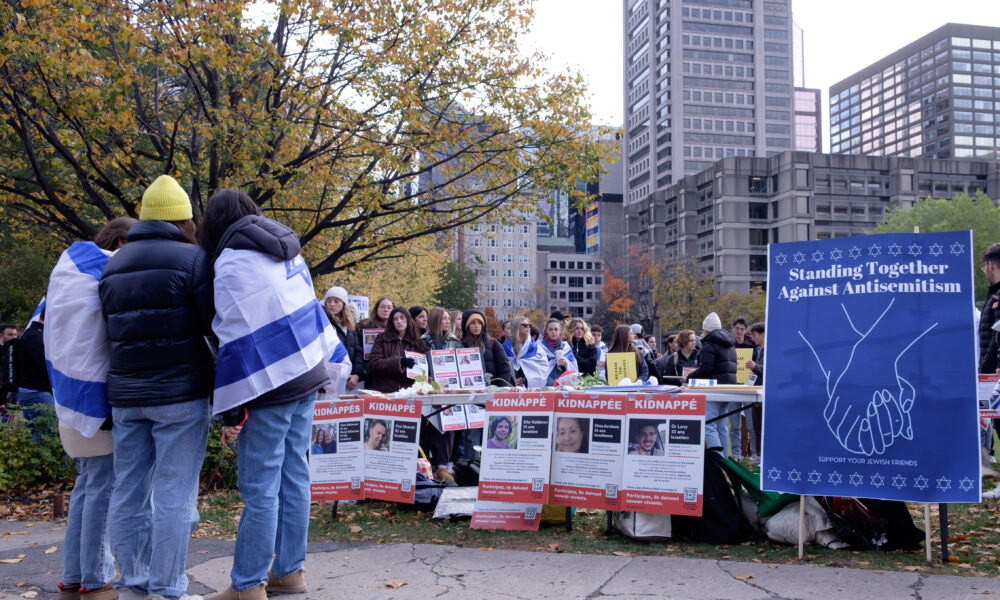
Over 150 Jewish students and non-Jewish allies gathered on McGill’s lower field on Nov. 2 to stand united against rising antisemitism across North America. 

The crowd held signs for peace, condemning antisemitism and Hamas. Many also waved Israeli flags, as attendees from the McGill and wider community heard from speakers who discussed the dangers of rising antisemitism and the importance of standing together in solidarity.

A group of five Jewish students from McGill organized the event, called “Standing Together Against Antisemitism,” according to one of the organizers, Nicole Nashen, 2L. It was also shared by the Jewish Student Alliance and Students Supporting Israel (SSI) at McGill on Instagram. 

“In the past three and a half weeks, there’s been an insane uptick in antisemitism [….] This [event] is really for Jewish students on campus,” Nashen said in an interview with The Tribune. “This is the scariest period of antisemitism we’ve ever experienced in our lifetimes. A lot of us learn about the Holocaust and about Jewish exile in the Middle East [and] in North Africa growing up. But we’re now experiencing this fear that our grandparents felt for the first time in our lives.”

The Canadian Press reported on Oct. 20 that the Montreal police have received an increasing number of hate crime reports, mostly targeting Jewish people, while the CBC reported on Nov. 4 that antisemitic and Islamophobic hate crimes are rising across Canada. The rise comes after Hamas’ Oct. 7 attack on Israel and Israel’s subsequent ongoing siege on Gaza. 

Students attending the rally told The Tribune that they have seen increased hate around campus toward them and their friends, including verbal threats, physical acts of hate, and the loss of friendships. 

“My friend, she was spat at by somebody [for being associated with a table that had an Israeli flag],” said one attendee, who did not want to be named. “I make a point. I usually wear a Star of David, I keep it out. [But] I get dirty looks for it.”

Midway through, as supporters chanted “Bring them home,” a man filming on his phone disrupted the event and suggested that the group chant about killing Palestinian children instead. The man, Yves Engler, posted the video he took to X, formerly known as Twitter, where it has since been viewed over 10 million times. Organizers responded to his chants with “No, we don’t support that,” before the crowd chanted for peace as the McGill security ushered Engler to the Roddick gates.   

Many students walking between classes watched on. One stopped to share his perspective on the rally and encouraged his fellow students to step outside of the religious dichotomy portrayed on social media. 

“We have a strong history of the Jewish community living in coexistence with Muslim people. And there’s this myth in the media now that Muslims and Jews cannot live together, and it’s false,” Aymen,  a Moroccan Muslim U4 Engineering student shared with The Tribune.

As the service continued, the crowd sang songs for peace such as Oseh Shalom and Eli Eli, with the event formally wrapping up after about an hour and a half.  

Near the end, a group of the crowd bearing Israel’s national flag sang the Israeli national anthem, Hatikvah. One man also wore a hoodie with the Israel Defense Force logo and another wore a hat with the same logo. Some passersby criticized those dancing with Israeli flags, explaining to The Tribune that they found the dancing to be “distasteful” with the Israeli government’s attacks in Gaza.

One individual, who did not want to be named, said, “They are dancing and people are dying, it feels wrong, [and] distasteful.”

Members from the event emphasized that this was a celebration of the Jewish community, not a celebration of the Israeli government’s attacks, and an opportunity for Jewish students to come together against antisemitism and feel safe to do so. 

“I can speak for myself that going through this [period of time] has felt extremely lonely,” Miriam Hotter, U3 Science, told The Tribune, reflecting on the event. “Even though we’re all feeling some mix of the same emotions. We’re all going through our own unique experience. So I think it’s important that we come together as a community and just support each other.”

After the rally, around 30 Israel and Palestine supporters engaged in a passionate, at times tense, and peaceful dialogue about the recent violence and history of Israel and Palestine. As the conversations wrapped up, most shook hands with each other. 
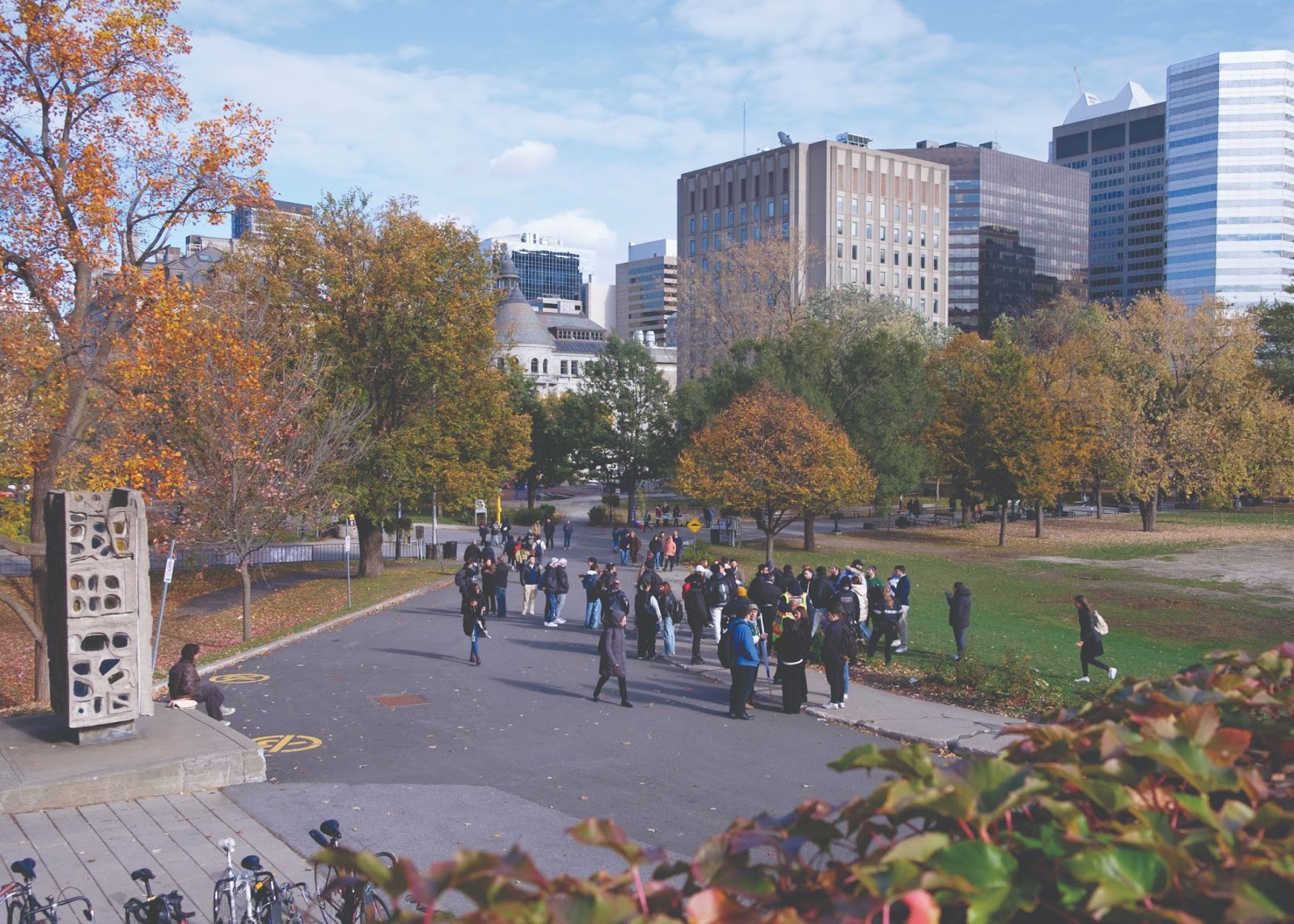
(The Tribune)

Yasmine Belamine, U3 Arts, saw the dialogue, and said, “It was quite interesting to see people willing to debate, people willing to talk. Although I must say that a lot of emotion was present, you could feel the tension.” 

Resources: 

For faculty and staff:  

For students:  

  • The Student Wellness Hub offers counselling services for students located in Montreal.  
  • Keep.MeSafe is a service accessible 24/7 whenever you need to speak (or text) with a mental health professional for support. You can access Keep.MeSafe from anywhere in the world.

A previous version of this article stated that “Eli Elias” was sung. In fact, the song was “Eli Eli”. The Tribune regrets this error.

This piece was updated at 9:45 on Nov. 13.

Album Reviews, Arts & Entertainment

Sufjan Stevens’ ‘Javelin’ blurs the line between love and loss

With over 20 albums under his belt, Sufjan Stevens is not unfamiliar with the intricacies of making music. After the success of his soundtrack for the Oscar-winning favourite Call Me By Your Name (CMBYN), the pressure for him to create the lyrical undertones to all our love lives and heartbreaks has only increased. Javelin, released on Oct. 6 and is Stevens’ newest beautiful album. 

Listening to Javelin feels like entering a world of folklore—exploring a realm of angelic imagery and fairytale love. In “Will Anybody Ever Love Me?” the sound of birds chirping underscores the otherwise heartbreaking lyrics about yearning for someone to love and hold. In Stevens’ fairytale, songs with his signature style feel like running through the grass during summer, such as “There’s A World.” However, outliers such as “Goodbye Evergreen” have an almost pop-like rhythm. As the album’s opener, the song punches intrigue into its listeners’ ears, making them excited for the tracks to come next. 

Many of Stevens’ songs draw a strong contrast between the lyrics and the melody. The juxtaposition of melancholic writing with cheery melodies highlights how this album takes the reader on a journey of realization and the ups and downs of love. With songs like “Genuflecting Ghost,” the listener almost intrudes on something private due to his text’s anecdotal feel. Stevens’ raw lyrics heighten the magical elements of folklore and religion that are incorporated into these songs, imbuing them with a surreal quality.

On his website, Stevens penned a poignant blog post describing the profound loss of his soulmate and partner, Evans Richardson IV, who passed away in April. The album is dedicated to his partner and makes the listener sense Stevens’ heartbreak. But songs such as “My Red Little Fox,” where beautiful backup vocals collectively accentuate the song, help the listener realize that Stevens is creating a space for shared experiences through his music. Whether it be encounters with love, loss, loneliness, or sadness, this album contains it all. Stevens is not afraid to share his feelings with all his listeners—and his listeners aren’t afraid to follow his lead.

Behind the Bench, Sports

FIFA dropped the ball with the 2023 Ballon d’Or

Each year, professional soccer players’ achievements culminate in the Ballon d’Or ceremony. At the event, invitees witness the presentation of the Ballon d’Or––the most prestigious award in soccer. Considering both national team and club accomplishments, the best player from the past year receives the Ballon d’Or. This year’s celebration took place on Oct. 30 in Paris, and the winners were Inter Miami’s Lionel Messi and F.C. Barcelona’s Aitana Bonmatí. Although the Ballon d’Or ceremony serves as an exciting occasion that publicly recognizes players’ achievements, FIFA’s poor planning of the women’s portion of the event soured the tone.

Messi’s Ballon d’Or win was somewhat expected. He not only captained the Argentinian national team to the 2022 World Cup title––a tournament in which he created the most chances of any player and scored seven goals––but also almost single-handedly helped bring Inter Miami from a struggling team at the bottom of Major League Soccer’s Eastern Conference to a Leagues Cup winner and an Open Cup finalist. Although runner-up Erling Haaland’s goal tally since joining Manchester City is impressive, getting on the scoresheet with the help of brilliant chance-creators like Kevin De Bruyne and Bernardo Silva is very different from building up a low-ranked team.

The women’s Ballon d’Or winner, Barcelona’s Bonmatí, was even more clear-cut than Messi—and rightfully so. On the 2023 World Cup-winning Spain squad, she stepped up in the absence of Spanish star Alexia Putellas and was recognized as the tournament’s best player with the Golden Ball. The midfielder has also been a significant contributor to the record-breaking F.C. Barcelona side that had a 62-game win streak until May of this year. Despite being surrounded by a strong team, Bonmatí’s abilities still clearly stand out, and her talent goes beyond the measure of her 94 career goals. The rest of the women’s rankings were equally star-studded, featuring Samantha Kerr as the runner-up and Mary Earps and Rachel Daly in the top ten.

Outside of the solid nominations and eventual ranking, the women’s Ballon d’Or ceremony left much to be desired. Scheduling and logistical choices made it seem that women athletes were just an afterthought in the grand scheme of the ceremony. 

Several winners and nominees were not even present to receive their awards. The ceremony was scheduled during the women’s international break, the time during which players compete with their national teams. This forced many athletes to choose between attending the ceremony and helping their country qualify for the 2024 Olympics––which features the main national team in women’s soccer, rather than the U-20 teams like the men’s tournament––with many athletes not even permitted to attend as a result. When considering how prestigious both the award and the ceremony are, and the amount of annual attention and preparation it receives, this was extremely careless planning. A Ballon d’Or ceremony would never happen during a men’s international break, especially if the international matches were important qualifiers for a tournament.

Soccer legend David Beckham, the president of Messi’s club, Inter Miami, presented the men’s Ballon D’Or. The choice seemed meaningful and personal––it was clear that the pick was intentional. Bonmatí, on the other hand, was presented her award by the much more underwhelming choice of Novak Djokovic. FIFA was apparently not only unable to get one of the many legendary female soccer players to present the award––someone like Christine Sinclair or Abby Wambach––but also failed to delegate the task to a female athlete in general. Djokovic has no connection whatsoever with women’s soccer and has actively denounced equal pay for women athletes. The choice was not only incredibly lazy but extremely disrespectful to women’s sports as a whole.

For the women’s game to grow and for female soccer players to be treated with the respect they deserve, equitable treatment needs to start at the top of FIFA. There is no excuse for treating these women as a mere accessory to the main event of men’s soccer.

Science & Technology

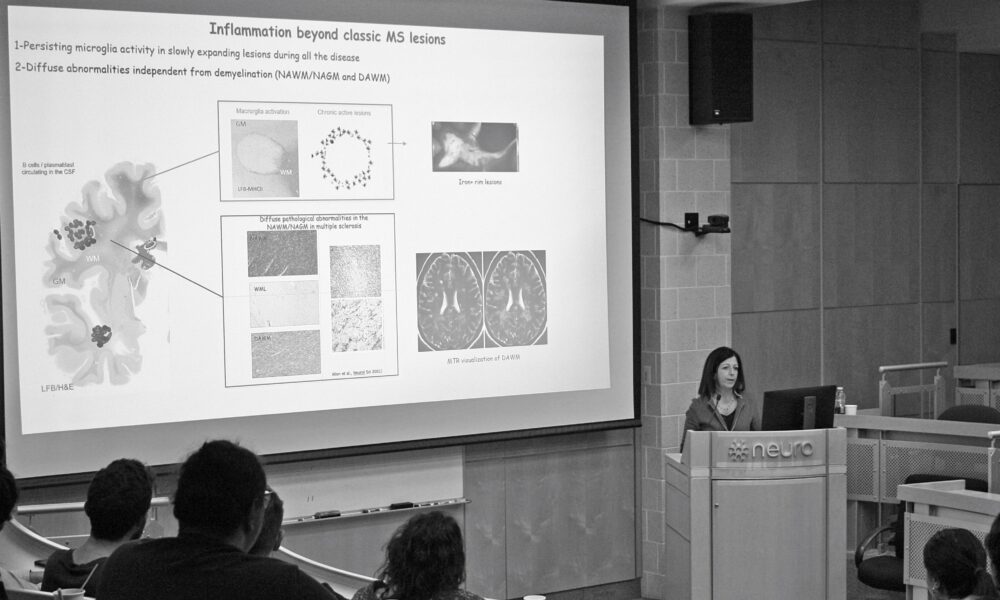
The Neuro’s Killam Seminar Series explores inflammation in multiple sclerosis

The Killam Seminar Series hosted a seminar about inflammation in multiple sclerosis (MS) at The Montreal Neurological Institute-Hospital (The Neuro) on Oct. 31. The seminar series invited Roberta Magliozzi, associate professor from the University of Verona, Italy, as part of The Neuro’s goal to bring in exceptional guest speakers from around the world. 

MS is an autoimmune disease characterized by chronic inflammation in the brain and spinal cord. The body’s own immune cells, including B cells and T cells, erroneously target and damage a fatty insulating substance called myelin, mistaking it for a foreign invader. 

“Most of the [inflammatory] cells we found were in the stroma [located in the centre of bones, i.e. bone marrow]. The only cells we found within the blood vessels [were] granulocytes and neutrophils,” Magliozzi said. “Our idea is that the inflammation persists in some niches […] hiding in the brain, especially in the progressive forms.”

Myelin is a material that wraps around and electrically insulates axons—the long, thin extensions of neurons responsible for transmitting information within the brain and the spinal cord. MS-associated myelin damage, along with direct injury to the neurons themselves, leads to a range of distressing symptoms, including changes in sensory perception, movement, and cognition. 

The average age of MS diagnosis typically falls around 43, although the onset can occur anywhere between the ages of 20 and 50. Alarmingly, Canada has one of the highest MS diagnosis rates worldwide, with over 90,000 people living with the disease, meaning nearly one in every 400 Canadians has received an MS diagnosis.

Magliozzi’s research centres on investigating the immunopathological mechanisms underlying MS. Her primary aim is identifying intersecting pathways of the nervous and immune systems, as well as potential biomarkers associated with the progression of MS. The ultimate goal is to enable early detection and intervention and to personalize treatment strategies that could slow or halt the progress of the disease. Magliozzi emphasized the central role of inflammation in MS. 

“Inflammation is consistently associated with chronic neuronal degeneration,” Magliozzi said. 

Although recovery of the damaged myelin and the axons can occur during the early stages of the disease, MS reaches a ‘progressive’ stage as relapses occur, during which neurons experience irreversible loss of function, leading to deteriorating symptoms over time. 

One of Magliozzi’s pivotal findings revealed that patients with meningeal inflammation, which affects the membranes covering the brain and spinal cord, and an early disease onset, tend to experience early disability onset. 

“We found that progression with meningeal information and early age of onset [translates to patients having] a short disease duration and they also die early,” Magliozzi said.

Researchers from the University of Vienna, Austria, and the Mayo Clinic in the United States, validated this groundbreaking discovery using biopsy samples that demonstrated the presence of elevated meningeal inflammation and severe pathology in the cerebral cortex. 

“We have now examined many MS cases in the UK, MS tissue bank, and this has started being validated by other groups,” Magliozzi said.

Magliozzi’s work also showed that MS lesions—areas affected by the disease—tend to cluster around the ventricles and that the onset and progression of MS are associated with increased levels of fibrinogen. Fibrinogen, a clotting factor, triggers microglia—the brain’s immune cells—leading to heightened inflammation. In one of the graphs illustrating these findings, neurons and microglia contain a significant concentration of fibrinogen. 

“There is a high correlation between neuronal loss or axon loss and microglial activation. So, this means that there is a strong association between these phenomena,” Magliozzi explained. “And then there is this very elegant study from a Dutch and UK group, where they showed that the meningeal inflammation in MS induces […] not only activation but also phenotypic changes in vertebral microglia, which is then directly associated with increased neural degeneration.”

While a definitive prevention or cure for the disease is yet to be discovered, the unwavering dedication of researchers and healthcare professionals brings us closer to a future where MS may no longer be a life-altering diagnosis. 

Behind the Bench, Sports

The NHL needs to stop embarrassing itself

On Oct. 24, the National Hockey League (NHL) reversed its draconian decision to ban Pride tape after months of public outcry from fans and players alike, concluding one of the most embarrassing months of public relations for a professional sports league to date. The entire endeavour was a lost cause from the get-go; yet, the league cannot seem to stop digging itself in deeper, turning to the Ottawa Senators to further establish itself as an unserious sports league. 

The NHL announced on Nov. 1 that the Senators would be stripped of a first-round draft pick in either 2024, 2025, or 2026 for their role in the nullified Evgenii Dadonov trade by the Vegas Golden Knights in 2022. Ottawa will have 48 hours after the draft lottery to decide if they will forfeit the pick that year. In the days after, the Senators fired General Manager Pierre Dorion,  and many fans were left wondering: Why the harsh penalty? 

The Senators signed Dadonov in 2020 to a three-year contract. As part of the deal, they granted him a 10-team no-trade clause. Dadonov was supposed to alert management of the 10 teams on his list by July 1, 2021. However, on July 28, 2021, the Senators traded Dadonov to the Golden Knights. The trade was allowed as Vegas was not on Dadonov’s list. 

The thing about no-trade clauses is that they are not public information. Teams do not share players’ no-trade lists with the NHL’s Central Registry Department, which is responsible for maintaining all player information, putting the onus on teams for transparency. 

The Golden Knights then attempted to trade Dadonov to the Anaheim Ducks in March 2022 in a clear move to free up salary-cap space––a whole other league-wide issue. However, the NHL nullified the trade within 48 hours as the Ducks were on Dadanov’s no-trade list. Amid the confusion, Vegas claimed to have not known about the list, shifting the blame onto the Senators. 

Unable to free up cap space, the Golden Knights missed the playoffs in 2022––albeit for a number of reasons, not just their inability to trade Dadonov. Yet, it was not until Oct. 30, 2023––18-months later––that the league revealed that they had opened an investigation into the Senators. 

During the time between the initial infraction and now, Ottawa came under new ownership, with the team being sold to former Montreal Canadiens minority owner Michael Andlauer in June 2023. While Andlauer should have done his due diligence prior to purchasing the team, his public comments have led many to speculate that he was not made aware of his liability in this case before closing the sale. Moreover, Andlauer has critiqued the leagues’ lack of transparency around the investigation and efforts by the NHL “to make sure the seller got the best price possible.” 

Ultimately, whether or not the punishment is warranted is conjecture. The league had to instill trust in the Central Registry and ensure that teams understood that their bureaucratic errors would not go unpunished. Regardless, the question many are asking is not whether the Senators should be punished; rather, it is a question of where the leagues’ priorities are. The Chicago Blackhawks were given a measly slap on the wrist in the form of a two million USD fine in response to an organization-wide sexual assault scandal. Chicago was not stripped of a draft pick for this “inadequate internal procedure,” as the league called it, but were instead gifted a generational first-overall pick in Connor Bedard

Ultimately, it is hard to take the NHL as a serious league for several reasons. Commissioner Gary Bettman denies the connection between chronic traumatic encephalopathy (CTE) and playing ice hockey. Numerous players accused of sexual assault are still on active rosters. Teams are not allowed to promote social causes through specialty jerseys, and the league just tried to ban goddamn rainbow tape. If it wants to remain competitive with the likes of other professional sports leagues in North America, the NHL needs to get it together because frankly, this is just getting embarrassing. 

Recipes, Student Life

Sweet and savoury apple recipes to spice up your fall

Granny Smith, Fuji, Honey Crisp, Jonagold, Jonathan, Gala, Golden Delicious, Braeburn, Cortland—there are countless apple varieties waiting to be found at the orchard each fall. After some apple picking and a little time in the kitchen, make the most of fall’s favourite fruit with these scrumptious apple recipes.

For those with a sweet tooth: Apple Cake

Apple, cinnamon, and walnuts are brought together for a moist and delicious cake. This recipe is perfect as a fall treat when served with a generous scoop of ice cream or as an on-the-go breakfast when paired with a smear of nut butter.

Ingredients:

  • ½ cup of softened butter
  • 1 cup of sugar
  • 2 eggs
  • ¼ tsp of vanilla extract
  • 1 ¼ cups of all-purpose flour
  • 1 tsp of baking soda
  • 1 tsp of ground cinnamon
  • ¼ tsp of salt
  • 2 medium apples, peeled and shredded
  • ½ cup of walnuts, chopped (optional)
  • 1 quart of vanilla ice cream (optional)

Steps:

  1. Preheat the oven to 350°F (175°C). Spray a nine-inch round cake pan with baking spray.
  2. In a large bowl, beat the butter and sugar with an electric mixer on medium speed until light and fluffy. 
  3. Add in the eggs, one at a time. Stir in the vanilla extract, all-purpose flour, baking soda, ground cinnamon, salt, apples, and walnuts (to your taste). 
  4. Mix until combined, and transfer to the cake pan.
  5. Bake for 40 to 45 minutes or until a toothpick inserted into the centre of the cake comes out clean. 
  6. Let the cake cool for 10 minutes in the pan, then remove it from the pan to a rack to cool for another 10 minutes. Serve warm with the ice cream (optional).
  7. Leftovers can be frozen in an airtight container or sealable plastic bag for up to three months. 

For those with a salty tooth: Apple Walnut Salad

Packed with sweet apples, crunchy walnuts, tangy cranberries, refreshing spinach, and earthy quinoa, this simple yet flavourful salad will certainly become a regular on your dining table this fall.

Ingredients:

  • 1 cup of quinoa, uncooked
  • 2 cups of water
  • 2 cups of spinach, roughly chopped
  • 1 cup of walnuts, roughly chopped
  • 1 ½ cups of apples, diced
  • ¼ cup of dried cranberries
  • ¼ cup of red onion, finely chopped
  • 3 tbsp of olive oil
  • 2 tbsp of apple cider vinegar
  • 1 tbsp of maple syrup
  • 2 tsp of Dijon mustard
  • ½ tsp of salt
  • ¼ tsp of black pepper

Steps:

  1. Place the quinoa in a medium saucepan over medium heat. Toast until the seeds start to pop and become aromatic.
  2. Add 2 cups of water to the quinoa. Bring to a boil, then turn down the heat to low.
  3. Cover and simmer the quinoa for 15 minutes, then remove from the heat. 
  4. Keep the quinoa covered for an additional 10 minutes, then fluff with a fork. Season with salt if needed.
  5. To make the salad dressing, whisk together the olive oil, apple cider vinegar, maple syrup, Dijon mustard, salt, and pepper.
  6. In a bowl, add the cooked quinoa, spinach, walnuts, apples, dried cranberries, and red onion.
  7. Pour the dressing on top. Stir gently to combine. Serve at room temperature or chilled.
  8. Apple Walnut Salad is best enjoyed fresh. Leftovers can be kept in an airtight container in the fridge for two-three days. 
  9. If not serving right away, store the dressing in a separate container in the fridge.

These recipes were adapted from Betty Crocker’s Homemade Apple Cake and Yumna Jawad’s Apple Walnut Salad.

Emerging Trends, Student Life

Are dumb phones a smart move?

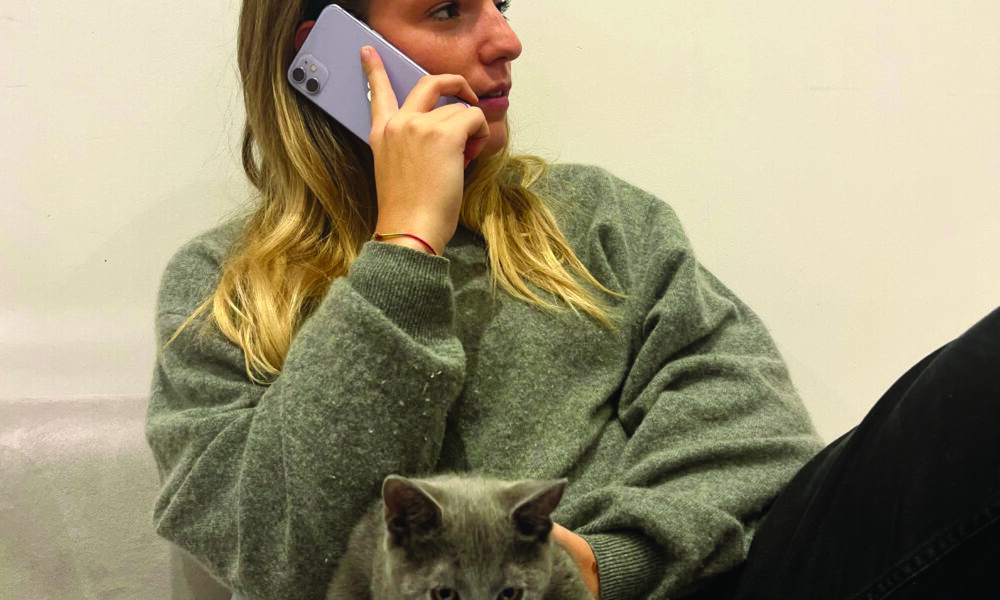
​​A growing number of young adults are making the shift away from using smartphones in favour of “dumb,” or flip, phones. Some students make this transition only during exam periods, while others have committed to using these devices full-time. Despite the prevailing belief that the flip phone market has flatlined in the face of advancing technology, some students have found the value in these simpler phones. 

During his winter finals last year, Thomas Bolder, U2 Science, transitioned to a flip phone. Initially, not having access to music or podcasts on the go was an adjustment, and the experience of walking or waiting in silence was jarring. 

“[Waking up without my phone] felt strange at first, but really helped with productivity,” Bolder said in an interview with The Tribune. “I don’t think it’s something you can do forever, especially when meeting new people or looking to develop any new relationships,” he explained, as he’s noticed that social media apps are usually the primary mode of communication and networking in university. 

While the flip phone was impractical for certain tasks, Bolder found that his work ethic improved as he could focus for longer periods. As such, he recommends using a flip phone for those who want to be more productive and want a break from the overstimulation of social media.

Alex Miller, U2 Arts and Science, agreed with Bolder, but noted that he hasn’t been able to personally make the switch. 

“I would miss my mobile games and TikTok,” he said. “I find my current phone super addicting but I find it too hard to go entire days without taking breaks.”

Marcel Goh, who is in the first year of a Ph.D. in Mathematics, switched to a flip phone in April 2021 and has stuck with it. Goh was largely motivated by the steep repair costs associated with Apple devices and a desire to break free from the relentless and expensive Apple product upgrade cycle

Goh viewed it as a “challenge of seeing if [he] could survive without a smartphone.” 

In the initial days without smartphones, Bolder and Goh experienced some unease, as they weren’t used to not having a constant distraction. This intensified with the social expectation to stay plugged in. As university students, they feel the need for phones and social media to communicate and socialize. 

Goh relies on his dumb phone for emergencies and talking to friends. On some days, he won’t bring his phone with him altogether and relies on strangers for directions and his laptop for making plans. In the past, Goh used his smartphone to read academic papers and assignment questions while outside, but this convenience is no longer available. Nevertheless, he has been able to read a significantly greater number of non-school-related books, marking a new personal hobby for him.

But what if productivity isn’t the endgoal? Goh notes that his stress levels have decreased since he no longer receives school-related notifications while on the move. Despite the initial challenges, he encourages anyone who has ever contemplated giving up their smartphone to take the leap.

“If you’ve ever thought about ditching your smartphone for whatever reason, I would say just go for it,” he said. “If you’ve never felt the need to get a flip phone, then I’m not going to convince you you should.”

Goh suggests that those making the switch always carry a book or notebook when going out. This way, they can engage in reading or doodling to make waiting for appointments or transit less monotonous. 

With smartphones and social media so deeply ingrained in our daily routines, transitioning to a dumb phone may present the digital detox necessary for focusing on exams and schoolwork. So, as midterms conclude and finals loom on the horizon, perhaps it’s worth considering whether to downgrade your smartphone to a dumb phone in order to maximize your productivity. 

Research Briefs, Science & Technology

Statistics Canada researcher shares insights into Canadian heat wave

Matthew Quick, a research analyst at Statistics Canada, gave an insightful talk at McGill on Friday, Nov. 3, about the impacts of extreme heat across Canada and the many socio-economic factors that contribute to an individual’s vulnerability to these effects. He presented three of his recent studies, each illuminating a new facet of this complex issue. 

Impacts of extreme heat on non-accidental, cardiovascular, and respiratory mortality 2000 to 2020

The first study presented by Quick has not yet been published, but is currently under review at Health Reports, a journal published by Statistics Canada. It examines the relationship between mortality and extreme heat events—defined as periods of two or more days of unusually high temperatures and humidity, along with minimal cooling during the night. 

Quick explained that the majority of previous studies in Canada focused on single events rather than long-term patterns. His latest paper aims to address this gap in the research by surveying 12 major cities across Canada over two decades.

“Overall, 10 out of the 12 cities have higher mortality risks on extreme heat days compared to non-extreme heat days,” Quick said. “For example, in Montreal, it’s about 9 or 10 per cent higher on extreme heat days.”

Additionally, he found that extreme heat events, such as the 2010 Quebec heat wave, had a greater impact on mortality among individuals aged 65 or older. Quick noted that, while this finding is important to note, it is not surprising. 

“This is supported by lots of physiological research that says that older adults have less ability to dissipate heat, as well as that older adults are more likely to have underlying chronic health conditions,” Quick explained. 

The prevalence of household air conditioning in Canada

The second study, published in Health Reports, looks at one of the most critical tools for ensuring people’s safety during extreme heat events: Indoor air conditioning. While previous surveys have analyzed household use of air conditioning, Quick’s research goes to the individual level, exploring who exactly does and does not have access to this important technology. 

He found that while 61 per cent of Canadians currently have air conditioning, several factors can affect how likely an individual is to have it in their home. 

“The most important factor explaining this or differentiating from the 61 per cent is geography,” Quick said. 

For example, while 85 per cent of Ontarians have air conditioning, only 58 per cent of Quebec residents do. Within these regions, the data also indicates that heat-vulnerable populations, such as the elderly, generally have air conditioning access rates that align with the regional averages. However, several socio-economic factors also stand out. 

“[If you have] less than a high school education, you’re about 10 percentage points less likely to have air conditioning. If you live alone, it’s similar,” Quick said. “And if you do not own a home, i.e. if you rented, you’re at 50 per cent, so one in two renters had air conditioning across Canada.”

Exploring the associations between cooling centre accessibility and marginalization in Montreal, Toronto, and Vancouver, Canada

The final study, published in Canadian Geographies, focused on another way to combat the effects of extreme heat: Cooling centres. Cooling centres are publicly available locations such as libraries, community centres, and pools, that provide a variety of services, including water distribution and air-conditioned spaces. 

“These air conditioned spaces allow people to go […] and cool down temporarily, but they also facilitate social interaction and social support,” Quick explained. 

Cooling centres are becoming increasingly critical spaces as extreme heat events become more common, so Quick endeavoured to analyze the accessibility and prevalence of these centres across different neighbourhoods in major Canadian cities. 

“The main takeaway here is this interesting pattern that we see in Montreal, in Toronto, and in Vancouver, where as we increase in residential instability, we increase in the likelihood that you’re going to have a cooling centre within a 15 minute walk of you.” Quick said. “In Montreal and Vancouver, the most deprived areas are much more likely to have access to a cooling centre than the least deprived areas.”

Campus Spotlight, Student Life

Bar des Arts: To drink or not to drink

Have you ever tried describing the appeal of Bar des Arts (BdA) to a non-McGillian, only to be faced with the realization that its allure is absurd? No off-campus bar has BdA’s signature fluorescent lighting. On top of that, Montreal nightlife venues typically have places where you can sit and enjoy your drink—seating that is less limited than the weirdly placed and mysteriously stained couches in BdA (have they checked them for bedbugs?).

The average BdA-goer will undoubtedly face a line, bringing passersby to wonder, “What concert could all these people be waiting for?” Unfortunately, no concert will be taking place. In fact, good music might not even be on the night’s agenda. What awaits those lining up in the Leacock basement at 5 p.m. on a Thursday is… another line, where they wait to purchase tickets for drinks, after which they will face another line that becomes more cutthroat, as everyone tries to push to the “bar” and get their cups filled with cold(ish) beers. Don’t forget to add on the wait for the most mediocre grilled cheese you’ve ever tasted. Maybe you’ll be lucky enough to bump into someone you know while waiting—only to be unable to have a conversation at a normal volume due to the ten other conversations happening next to you, paired with some shoving.  

BdA also has a major temperature problem. This could be because having hundreds of students packed into a room in a basement doesn’t allow for decent air circulation. The place is scorching, and don’t expect it to feel any better once the winter months hit. To make matters worse, in the winter, students all wear coats to get there. This leaves the entrance of BdA barricaded with hundreds of jackets—a true struggle for those trying to distinguish which black puffer could possibly be theirs. Unless you hope to wait in a never-ending line, overheat in a basement, and possibly lose your coat this winter, you probably don’t need to check BdA off your McGill bucket list. 

While there are clearly some deterrents to attending, science can’t explain the serotonin that one gets from drinking a lukewarm beer in the Leacock basement. Picture this: It’s a gloomy Thursday at 5:30 p.m., you’ve just aced the “How Not to Pass a Midterm” exam, and you’ve practically taken up permanent residence on campus since the crack of dawn. What’s your go-to plan? If you’re a dedicated patron, you strut your woes down to the Leacock basement. The early start makes it convenient and low commitment. If you’re going to a party later, BdA is the ideal place to be before the pre starts. If you want more excitement, you can head to Gerts and catch some live music, but if not, you can go straight to bed and make it to your 8:30 the next morning no problem.

Now, let’s talk about the better aspects of the ambiance. When do you think it’s easier to strike up a conversation with a stranger: When you’re sober and dressed like a regular human, or when you’re balancing two ciders and dressed like Sue Sylvester? BdA’s themes will make you smile entering Leacock, which is a rarity. Students can dress up and listen to music related to the weekly theme, and no worries if you don’t remember anything—you can catch pictures of yourself by the BdA photographers on their Google Drive. Moreover, the basement isn’t just fun for patrons; the BdA staff enjoy a sense of community and fulfillment. U2 staff member Campbell Graham says, “There’s nowhere else I would rather be on a Thursday night.” 

It’s clear that McGill faces a challenge concerning ‘third places,’ or environments that foster social interaction and communal engagement among its student body. Consequently, this deficiency has contributed to the popularity of on-campus establishments like BdA, Blues, or 4 à 7. More than the allure of reasonably priced beverages, the enticing prospect of partaking in on-campus revelry draws students to these locales. While the lines, the sweatiness, and the “where’s my coat?” may give us pause, you know where we’ll be next Thursday.

McGill, News

McGill disputes Associate Deans’ membership in law faculty union

On Nov. 3, McGill and the Association of McGill Professors of Law (AMPL) gathered once again at Quebec’s labour tribunal office for a hearing to discuss whether the faculty’s Associate Deans belong in the union. Since November 2022, AMPL has been the certified bargaining unit for the Faculty of Law’s tenured and tenure-track professors, but shortly after its accreditation, the McGill administration filed for appeal against the Tribunal administratif du travail (TAT) decision.

At the hearing, held before Judge Stéphanie D’Alessandro, Faculty of Law Dean Robert Leckey and McGill Director of Labour Relations Francis Desjardins appeared on behalf of the university with a legal team including Corrado De Stefano and an associate, while AMPL President Evan Fox-Decent and the union’s lawyer Sibel Ataogul sat across from them.

Leckey, who has served as the faculty’s Dean since 2016, testified first as Ataogul questioned him on the differences between Deanship and Associate Deanship. Leckey revealed that he receives a stipend for his role as Dean, in addition to his base salary subject to the university’s Academic Salary Policy. McGill increased the Dean stipend, which was approximately $30,000 at the beginning of his term, annually to eventually reach around $100,000 in 2022, according to Leckey’s testimony. The stipend for Associate Deans at the Faculty of Law was raised once in 2018 from $5,000 to the current amount of $7,500. 

Ataogul then called former Associate Dean (Graduate Studies), Professor Richard Gold, to the stand to explain the Associate Deans’ responsibilities and powers in the faculty. In a post-hearing interview with The Tribune, Gold emphasized that tenured law professors take turns serving as Associate Deans every three years to allow their pre-tenure colleagues to advance their careers and research portfolios. 

“Taking your turn doesn’t mean turning into management, it just means you’re doing your best to contribute to the good of the faculty, governed by the faculty,” Gold said. “Our Dean might get something like a $100,000 stipend for being Dean, but […] a few thousand dollars is a token of appreciation. If this were a serious management position, we’d be getting paid $50,000 or 60,000 more.”

Fox-Decent, who also took the stand to affirm Gold’s description of the faculty’s Associate Dean roles, believes that the Nov. 3 testimonies provide compelling evidence for including the positions in the bargaining unit. He criticized the university’s costly and litigious attitude toward unionization. 

“At a time when the Principal is sending messages that we may be facing shortfalls in the tens of millions of dollars, I’m not sure that their funds are best spent paying an employer-side lawyer $900 an hour to fight cases against us that have very little merit,” Fox-Decent told The Tribune post-hearing.

Associate Deans are not the only position the university has tried to exclude from the bargaining unit. Recently, AMPL won a settlement against McGill that allowed them to represent jointly-appointed faculty members. Law and political science professor Víctor Muñiz-Fraticelli is one of the two jointly appointed professors whose membership was recently formalized. 

“If you had asked me five years ago [about unionizing] I would have said, ‘No, […] we ought to be participating in the governance of this institution in a collegial way, which means not thinking of ourselves as employees,’” Muñiz-Fraticelli said. “During the pandemic, I was brutally awoken to the fact that I was […] an employee, and if the university treated me as an employee, I ought to react with the instruments that the law gives me [….] [The union] is something that makes me feel much closer to my colleagues and allows me to participate in that shared governance in a much better way.”

Dean Leckey and the university’s media relations office declined The Tribune’s request to comment.

The case’s next hearings are scheduled for Dec. 4 and Dec. 6. 

Read the latest issue

Read the latest issue