Latest News

Science & Technology

Hot science tickets for a cold month

The Science and Technology team at The Tribune have gathered around our fall campfires to bring you the best of McGill’s upcoming science-related talks and events this November. 

Hand on My Heart: A Journey of Healing and Impact

Wednesday, Nov. 1, 2023 – 5:30 p.m. to 7:30 p.m.

Coming up first, on Nov. 1st, is the McGill Global Health Programs’ book launch of Dr. Maureen Mayhew’s new memoir, Hand on My Heart: A Canadian Doctor’s Awakening in Afghanistan. Dr. Mayhew has worked across the globe, including in Afghanistan and the Northwest Territories. In her book, she shares her clinical experiences and personal transformations, highlighting her involvement in Doctors without Borders in Taliban-occupied Afghanistan. You can register for the event on McGill’s Department of Global and Public Health website. 

Probing Human Consciousness and Creativity Through Brain Criticality and AI

Monday, Nov. 6, 2023 – 1:00 p.m. to 2:00 p.m.

This event, hosted at the McGill Neuro as part of the Feindel Brain and Mind Seminar Series, explores the possibilities of using artificial intelligence (AI) to study human consciousness and creativity. Karim Jerbi, a professor in Université de Montréal’s Department of Psychology, will discuss recent research from his lab that uses electrophysiology, signal processing, and AI to study cognition. He will bring together a variety of topics, including the effects of caffeine, anesthesia, and meditation on brain function. If you have been wondering how your caffeine consumption affects your cognition during those unbearable 8:30 a.m. classes, this event may hold the answer! Registration will be available soon at McGill’s Department of Psychology website

Fuzzy Robots with Feelings: Understanding physical emotional communication

Monday, Nov. 13 – 6:00 p.m. to 7:00 p.m.

Karon MacLean, professor at University of British Columbia’s Department of Computer Science, will be giving this talk in the context of the Centre for Interdisciplinary Research in Music, Media, and Technology’s (CIRMMT) distinguished lectures. She will cover the relationship between emotion and physical touch, something that is extremely hard to replicate with robotic interactions. Her research is truly interdisciplinary, and offers an exciting window into the future of human-machine interactions. This talk may not give you warm, fuzzy feelings but the title guarantees discussion of fuzzy robots! Registration is available at the CIRMMT website.

Unconventional semiconductors and processes for flexible, stretchable, and wearable electronics

Tuesday, Nov. 14, 2023 – 1:00 p.m. to 2:30 p.m.

In this seminar hosted by McGill’s Department of Chemistry, Antonio Facchetti, adjunct professor at Northwestern University and co-founder of Flexterra Inc., will provide an overview of new materials and techniques in the field of wearable and flexible electronics. His company, Flexterra, aims to develop soft, flexible electronic devices that can be worn and folded without issue. This involves developing innovative technologies for transistors and visual displays, the chemical techniques and principles for which Facchetti will discuss in his seminar. Registration is not required for this event.

Examining the role of diverse sexual behavior and conflict on eco-evolutionary dynamics

Thursday, Nov. 23 – 4:00 p.m. to 5:00 p.m.

This installment of the McGill Biology Department’s Conservation, Ecology, Evolution, and Behaviour lecture series will explore the relationship between animals’ sexual patterns and the resulting evolutionary changes. The speaker will be Swanne Gordon, assistant professor at Cornell University’s Department of Ecology and Evolutionary Biology, whose research focuses on evolutionary diversity using fish, moths, and butterflies. Registration is not required for this event. 

Open Science in Action Symposium

Thursday, Nov. 30 – 9:00 a.m. to 5:00 p.m.

The McGill Neuro’s fifth annual Open Science in Action Symposium features a variety of events. Topics will range from data sharing practices, open-source software in neuroscience, and the potential of the open science movement to accelerate drug discovery. Vincent Larivière, the Inaugural UNESCO Chair in Open Science and a professor of information science at Université de Montréal, will deliver the keynote address to open the symposium. You can register for the symposium on The Neuro’s website, where there will also be a livestream provided on the day of the event. 

Baseball, Behind the Bench, Sports

An ode to Dusty Baker

The creator of the high five. The winner of a Gold Glove, World Series, and two Silver Sluggers. The first African American manager with 2000 victories and the first manager in Major League Baseball (MLB) history to lead five different teams to division titles. On Oct. 26, following their elimination from the playoffs, Houston Astros’ manager Dusty Baker announced his retirement, prompting many fans to reflect on one of the most illustrious baseball careers imaginable. 

While he is largely regarded for his career as a manager, Baker’s career as a player is nothing to scoff at. In the 1967 MLB draft, the Atlanta Braves chose Baker in the 26th round; he then went on to make his MLB debut on Sept. 7, 1968 against none other than the Astros. Baker played in the minors for the following three seasons, finally cracking the Opening Day roster in 1972. Historical moments characterized Baker’s time with Atlanta, such as watching Hank Aaron’s record-breaking 715th home run from the on-deck circle. Baker also served in the Marine Corps Reserve as a mechanic in motor transport from 1968 to 1974. 

In 1976, Baker was traded to the Los Angeles Dodgers where he not only won his first Silver Slugger and only Gold Glove, but  this was when Baker took part in what is believed to be the first-ever high five with his teammate Glenn Burke in 1977. It was also with the Dodgers that Baker won his only World Series as a player in 1981. Baker then went on to play for the San Francisco Giants in 1984 before being traded to the Oakland Athletics in 1985, where he finished out his career. During his time with the Athletics, Baker began chewing a toothpick––a staple throughout his managerial career––later revealing they both deterred chewing tobacco and were an “excellent” source of protein. In 1986, Baker also began to wear wristbands––another fashion mainstay during his managerial career––to wipe the sweat of his forehead. 

In 1993, after spending some post-retirement years as a stockbroker, the Giants hired Baker as their manager, making him the seventh Black manager of a major league team. In Baker’s first season as manager, the Giants acquired Barry Bonds, who would go on to break Aaron’s home run record under Baker’s management. Baker won his first National League Manager of the Year in 1993; then again in 1997 and 2000, when the Giants won division titles. 

Baker’s career with the Giants ended in 2002, but the Chicago Cubs hired him as their manager in 2003. In Chicago, Baker managed through the infamous Steve Bartman incident, and the team’s on-field struggles led the Cubs not to renew Baker’s contract at the end of the 2006 season. 

After one year on the sideline, Baker stepped in as manager of the Cincinnati Reds from 2008 to 2013. Baker was then hired by the Washington Nationals in 2016, and after leading the team to back-to-back National League East titles, the Nationals opted to part ways with him in 2018. 

In the aftermath of their 2017 cheating scandal, the Astros brought Baker in to help revamp the team’s jaded image in 2020. While the players garnered boos from fans on the road, Baker came to be viewed as the only manager capable of weathering the storm. And with a 320-336 record, playoff appearances in each of his four seasons, two American League pennants, and the 2022 World Series victory, Baker proved to be the man for the task. 

Baker has been a vital voice in calling out the lack of diversity across baseball. In 2022, Baker was incredibly vocal of the lack of effort by MLB to draw more U.S.-born Black players to baseball, as not a single U.S.-born Black player played in the 2022 World Series for the first time since 1950. 

Ultimately, Baker took home 2183 wins (seventh all time), three Manager of the Year awards, three pennants across the American league and National league, and one World Series. His toothpicks and sweatbands will be remembered and as far as we can tell, Dusty’s voice will remain in the baseball world for years to come.

Out on the Town, Student Life

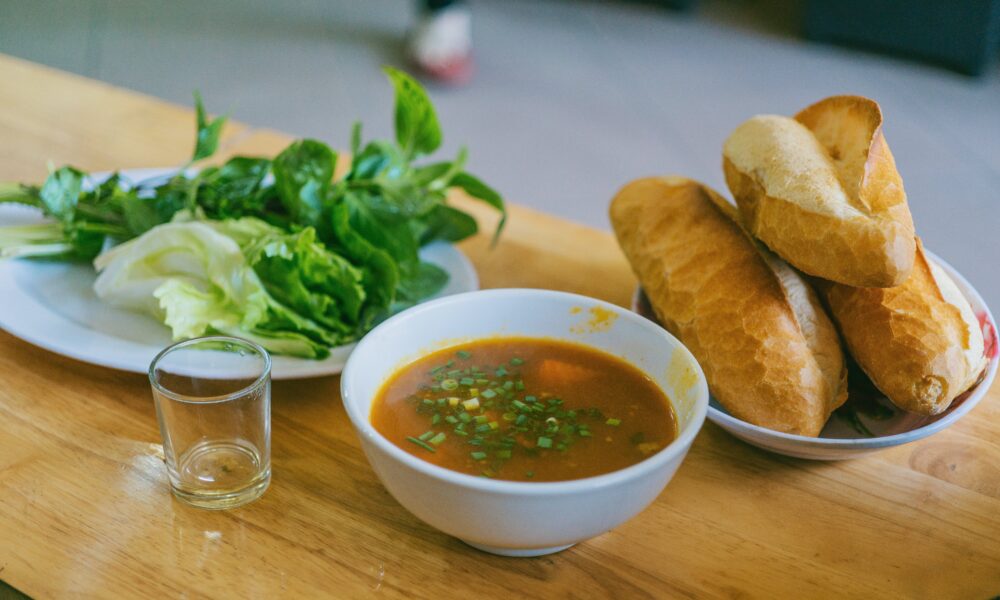
Warming up near campus: ‘The Tribune’s’ recommendations for soup

It’s 6 p.m., the sun has already set, you have 10 pages left to write for your essay, and the t-shirt you left the house in this morning isn’t protecting you from the cold—you need soup. So grab your spoons or chopsticks, as The Tribune highlights some nearby soup spots. 

Soupe Café

Distance: On campus

With midterms season transitioning into finals season, you shouldn’t have to take time out of your day to walk across the city for a nice bowl of soup. Soupe Café has three locations on campus: Burnside Hall, the Education Building, and the Sports Complex. Offering a different kind of soup every day, veggie and meat options alike, it’s the perfect place to go to in between classes (or even during your lecture’s 10 minute break). 

Vinh’s Café

Distance: On campus

Another campus icon, Vinh’s has become a go-to option for students looking for delicious but affordable sandwiches. What some might not know, or at least haven’t yet tried, is that Vinh’s has flavourful pho. With two locations, the Genome Building and the Strathcona Music Building, chances are that Vinh’s is only a stone’s throw away. Just don’t forget to bring your sandwich punch card. 

Nouilles Zhonghua

Distance: 1 minute on foot

A favourite for many McGilians, this Sherbrooke spot specializes in Chinese soups with hand-pulled noodles. Zhonghua offers a wide variety, from beef and pork to vegetarian options like tofu. This establishment is sometimes a victim of its own success, as long lines can form—it’s advisable to go during off-peak hours.

I AM PHO

Distance: 8 minutes by transit, 20 minutes on foot

Though it may be closer to Concordia than McGill, I AM PHO remains a great choice for Vietnamese soup. Served quickly and portioned generously, the soup packs an umami punch that will leave you satisfied for your impending three-hour lecture. Not to mention, they are open from Sunday to Wednesday, until 11:45 p.m. and from Thursday to Saturday, until 2:30 a.m.—making it ideal for those long nights at the library. 

Tsukuyomi Ramen

Distance: 10 minutes by transit, 15 minutes on foot

Despite the tough competition, Tsukuyomi has some of the best ramen near campus. This establishment is on Bishop, though there are also outposts in the Mile-End and Bois-Franc. It is a great choice for those who want options: From chicken to miso to tofu, there are bowls that cater to everyone’s taste, and plenty of vegan options to boot. 

Mandy’s

Distance: 5 minutes on foot

Believe it or not, your favourite fancy salad restaurant also offers soups. Their selection consists of matzo ball soup, vegan peanut butter and lentil soup, and butternut squash soup, the latter only available in October and November. If one of these three happens to be your favorite, or if you find stress in decision-making, Mandy’s is the soup spot for you. 

Olly Fresco’s

Distance: 5 minutes on foot

Another affordable option merely a few minutes away from campus is Olly Fresco’s, located under the Simon’s on St. Catherine. Simply walk in and choose your favorite soup from a fairly decent selection of options, including chili, chicken noodle soup, and potato bacon soup. Since you’re serving yourself, you can be in and out in minutes—quick, easy, and delicious soup. 

Olive et Gourmando

Distance: 15 minutes by transit, 20 minutes on foot

Located a bit further away from campus, this Old Port establishment is best known for its sandwiches, but don’t let that fool you; their soup of the day is worthy of the trek. Whether it’s black bean, tomato, or green chili, it’s sure to be comforting on those cold days. 

Dishonourable mention: Tim Horton’s

Distance: It doesn’t matter

Everyone loves the convenience of the Tim Horton’s on Sherbrooke and University, only a few minutes away from most of your classes. It’s a beloved Canadian classic, good for coffees and pastries, but their meals leave more to be desired. If you need a second warm liquid to complement your caffeinated drink, Tim’s offers a “two birds, one stone.” But come on, we’ve listed other options. You deserve nice things.

McGill, News

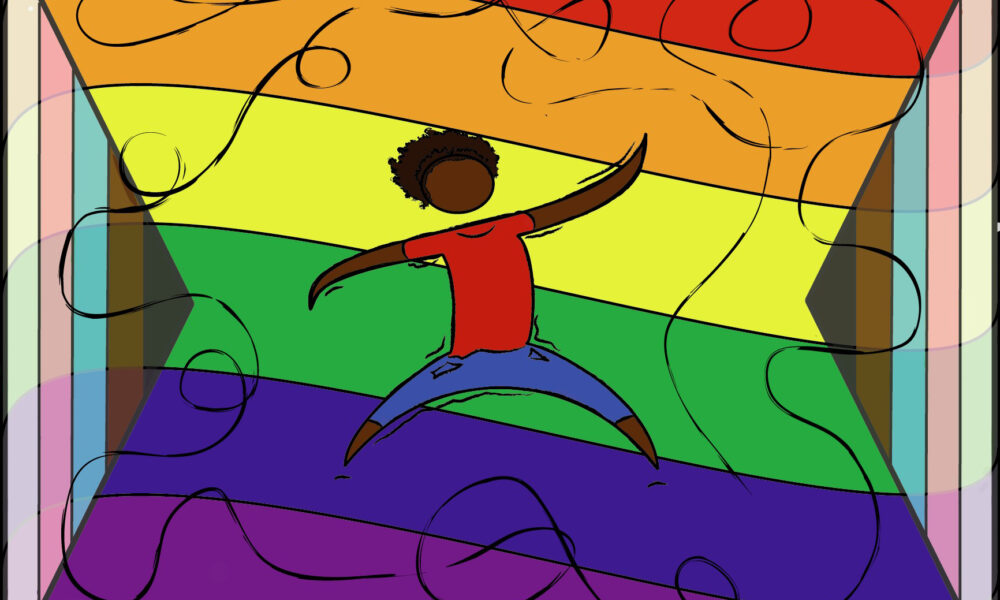
McGill celebrates sixth annual Queer History Month themed “Other Worlds”

Throughout October, the McGill Administration’s Equity Department hosted its sixth-annual Queer History Month, which consisted of panels, meetings and networking events—both online and in-person—for 2SLGBTQIA+ people and allies. The theme of this year’s Queer History Month at McGill was “Other Worlds,” a concept that examined the role and integration of storytelling into conversations about violence and hatred directed at members of the 2SLGBTQIA+ community. The theme sought to develop a platform for discussing how fictional, futuristic utopias can offer insight and serve as a tool for 2SLGBTQIA+ individuals to process backlash,homophobia, and transphobia.

Nalo Hopkinson, this year’s keynote speaker and an acclaimed Jamaican-Canadian writer of speculative fiction, hosted an interactive workshop and a keynote speech where she promoted creative storytelling and writing as a cathartic medium to inspire interpersonal empathy. This workshop also illuminated opportunities for attendees to reflect upon how they navigate a time when the identities of 2SLGBTQIA+ individuals are frequently stifled.

In the past few years, there has been a sizeable rise of anti-2SLGBTQIA+ and transphobic rhetoric and ideologies throughout Canada. Recent Conservative bills in New Brunswick and Saskatchewan have advocated for legal preferred pronoun discrimination in public education and have sparked protests, including the “1 Million March For Children” initiative that strives for the elimination of gender-neutral safe spaces and washroom facilities in schools. 

Andrea Clegg, an organizer of McGill’s Queer History Month and an Equity Education Advisor of Gender Equity and 2SLGBTQIA+ Education in the Office of the Provost and Vice-Principal (Academic), cited the importance of creating empathetic spaces for 2SLGBTQIA+ members of the McGill community to express themselves freely.

“McGill Queer History Month events offer a way to come together as a community, to celebrate our talents and achievements and to talk about and share stories of strength and pride,” Clegg wrote in an email to The Tribune. “Within a context of increasing attacks on our basic rights as queer people, having celebratory spaces to gather and connect with each other becomes all the more important.”

One of the most popular events during the month was McGill’s annual Homecoming event, “Return of the Rainbow.” First introduced in 2001, “Return of the Rainbow” is an evening for 2SLGBTQIA+ staff members, alumni, and students to network and discuss the intergenerational support networks that arise within, and beyond, McGill’s queer community. Attendees were encouraged to share their experiences of queerness and transness at McGill over catered food and drinks in an informal, conversational setting.

In an interview with The Tribune, Shannon Wood, a queer McGill alum and a Sexual Violence Education Advisor at the Office for Sexual Violence Response, Support and Education (OSVRSE), emphasized the importance of creating versatile, inclusive spaces for both students and staff.

“While there are a number of student groups on campus, queer-specific support for McGill staff is not as prominent,” Wood said. “Connecting with queer colleagues at events like Return of the Rainbow […] has been so comforting—especially during a time where parts of our society have taken steps backwards in regards to trans and queer rights. This reality is what makes the Other Worlds theme so timely, that we, both queer folks and allies alike, must continue aspiring to realities where we are accepted and safe to be who we are.”

In addition to Queer History Month events in October, McGill promotes diversity-focused workshops and year-round consultation support on its Equity website for 2SLGBTQIA+ students and staff members. These informational and supportive networks are provided through administrative and student-led organizations such as the Union for Gender Empowerment, OVRSE, and Queer McGill. However, despite the resources McGill promoted, alumnus Alexander Dow expressed the challenges students face in accessing the support systems offered. 

“Access to therapists and psychologists through the [Student Wellness Hub] is critically important, especially ones that understand queer issues and support them,” Dow said in an interview with The Tribune

“McGill already does have one of the largest networks for this. However, the system continues to see overwhelming demand that doesn’t meet the needs of all students. Increasing accessibility to these services and trust would be an area for improvement. Ultimately there are more positives than negatives in relation to McGill’s attitude, actions, and support for the queer community.”

Album Reviews, Arts & Entertainment, Music

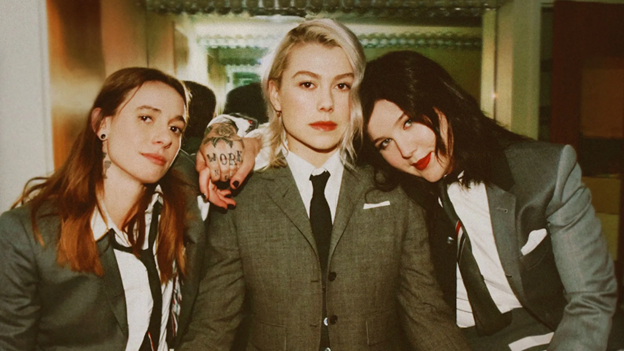
boygenius continues to amaze its listeners on ‘the rest’

Since debuting their self-titled EP in 2018, boygenius—the alternative/rock group formed by Phoebe Bridgers, Lucy Dacus, and Julien Baker—has been on everyone’s radars. After reuniting almost seven months ago to release their first full-length album, the record, the group put out a four-song EP on Oct. 13 titled the rest.

One can either listen to the record and then immediately follow it with the rest, or just listen to the rest independently. Both sound natural since the closing of the record almost perfectly leads into the start of the rest and because the latter touches upon themes explored in the former. “Voyager,” in particular, revisits the lunar imagery that Bridgers touches upon in the record’s “Letter from an Old Poet” and throughout her solo work. 

Over the last five years, boygenius has collaborated in a masterful way to show each of the band members’ maximum potential. They have beautiful voices separately, but when combined, their harmonies and lyricism build ethereal melodies. On this new EP, the opener and closer—“Black Hole” and “Powers,” respectively—showcase the trio’s expertise in collaborating without ever overpowering each other. 

While this EP might not blow either boygenius or the record out of the water, it still builds upon the solid foundation the band has established through their previous works. These four new songs have the same attention to detail and quality as their previous works; their lyrics are as poetic as always, especially on “Afraid of Heights,” and the melodies remain faithful to their classic mix of indie and rock sounds. 

To many, boygenius represents friendship, queer love, and acceptance. Their friendship makes every song that they write so pure and inherently relatable. Their openness with their sexuality empowers their fanbase to celebrate alongside them, turning each concert and listening session into a safe space for their fans to be proud of their sexuality. In the face of increasingly widespread homophobia and transphobia across America, boygenius’ music is a defiant expression of the importance of queer joy. 

McGill, Montreal, News

QPIRG-McGill’s Culture Shock explores intersection between food and social justice

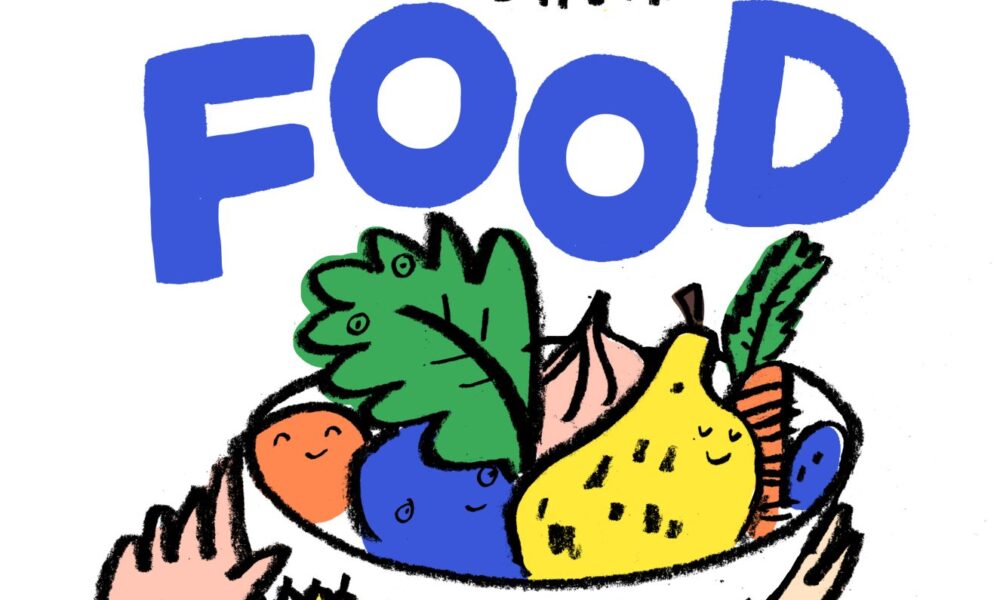
The Quebec Public Research Interest Group at McGill (QPIRG-McGill) held their annual Culture Shock event series—dedicated to anti-racism, migrant justice, and Indigenous solidarity—from Oct. 6 to Oct. 27. The student-run and student-funded organization selected food as the event’s theme, delving into food as a human right, as an aspect of cultural and historical identity, as a social justice issue, and as a form of community-building.

Nelly Wat, an Outreach and Promotions Coordinator at QPIRG-McGill, explained that food felt like an important theme to tackle during this year’s Culture Shock because of the prevalence of food insecurity among both students and the broader Montreal community, particularly in the midst of inflation and rising food prices

“That was the vision for the theme of food: Thinking about food as something that essentially should be a human right—something that people should have access to—but also something that can bring communities together,” Wat elaborated. “So, [there were] many different aspects of food that we wanted to explore. We had an open call-out for workshops, and people submitted their proposals.”

This year’s Culture Shock was comprised of four events: A panel discussion on food insecurity, a workshop on making elderberry syrup, a cooking event with Community Cooks Collective (CCC), and a community feast

“[We] wanted to introduce students to a variety of ways to actually get involved in their community, beyond just working within your institution, within the university,” Wat explained when asked about the range of events. “Actually going out into the community and finding different ways that you can get involved [and] connecting with people outside of [the] McGill bubble, so to speak, the Anglophone bubble also.”

At the Oct. 6 panel, which kicked off the event series, three panellists and a moderator spent an hour and a half discussing the different ways that food systems and food insecurity impact peoples’ everyday lives.

“Today we will be covering a topic that affects everyone: Food,” Nat Alexander, Programming Coordinator at Midnight Kitchen and panel moderator, said at the start of the event. “Each panellist that we have has direct experience with different facets of the food system, from academic research and policy to growing and distribution.”  

The panellists were professor Erik Chevrier from the Concordia Food Coalition, a group that aims to reimagine food systems and promote food sovereignty; Sona Sadio from the Sankofa Farming Cooperative at Concordia, a student-run community garden that provides food to Black and Indigenous communities; and Ayub Allene from Sister Sabria, an organization that seeks to provide food and shelter to those in need, particularly women. 

“Food justice is a complex topic that interweaves so many disciplines and social issues,” Alexander elaborated. “Issues of income inequality can’t be separated from food justice. Issues of racism and colonialism can’t be separated from food justice. Food is also emotional, it’s a way that we connect, a way that we remember.” 

During the event, all of the panellists stressed that existing food systems are not sustainable. Chevrier specifically pointed to the environmental impacts of our current farming and food production practices, emphasizing the need for change. 

“Agriculture is a main culprit of actually producing CO2 [carbon dioxide]. So not just about food travelling from one distance to another, but as soon as you start tilling agricultural land, you’re actually releasing carbons,” Chevrier explained. “We’ve actually crossed the threshold of nitrogen and phosphorus being produced […] we’re actually chemically synthesizing these for farms […] we’re creating dead zones, we’re actually acidifying the ocean.”

Sadio stressed that food insecurity and food deserts have disproportionate effects on people of colour and those from lower-income neighbourhoods.

“Grocery stores don’t feel incentivized to open up in certain areas that they don’t see as profitable for whatever reason,” Sadio said. “And, when we rally around Black lives or Indigenous lives or talk about policing, and how that leads to so much debt, […] so does this issue with food, it’s up there with the main causes of debt.” 

At one point in the panel, Alexander commended Let’s Eat McGill—a student-run campaign dedicated to tackling food insecurity on campus—for its efforts to bring accessible food options to McGill students. According to Wat, Let’s Eat McGill was also a recipient of QPRIG’s summer research stipend. 

“They’re doing some really important work specifically on the issue of food insecurity, the price of food on campus and residences and cafeterias,” Wat said. “We typically fund projects that do community work like [Let’s Eat McGill], or research projects, as well as student research projects related to social [and] environmental justice.” 

Chevrier suggested building a coalition like the Concordia Food Coalition at McGill in order to bring change to the university’s food systems.

“If you’re from McGill, you could actually start coalitions in your university to start changing your own food systems,” Chevrier said. “So Concordia, […] basically what we did is in 2013, [we] formed collective action to figure out ‘how can we transform our campus?’ and ‘how can this spill out into the community so that the community could actually reap the benefits of what we’re up to?’ [….] We actually now have the Hive Café, which is a collective-run organization, the means of production are owned by the community.” 

In an interview with The Tribune, Wat emphasized that QPIRG-McGill is making a concerted effort to be more visible on campus. 

“We’ve always struggled just a little bit to reach students, because oftentimes people don’t know who we are and our offices are not exactly on campus, [they’re] on Parc,” Wat said. “[Through the Culture Shock event series] we’re hoping to bring together a few community groups and some students as well, so that we can, you know, share a meal and also get to know one another even more.”

The final event of the Culture Shock series, a community feast for activists and community members, took place on Oct. 27.

Features

Bad guys with good vibes: Why I will always love the villain

Exploring the relationship between animated villainy and queer culture

Light spoilers for Avatar: The Last Airbender and She-Ra and the Princesses of Power

Growing up, I was always drawn to the villains when watching animated shows. I wasn’t rooting for them per se (I’ve always condemned Team Rocket’s Pokémon-snatching antics), but something intrigued me about how villains always went against the grain of whatever fictitious society they were aiming to collapse.

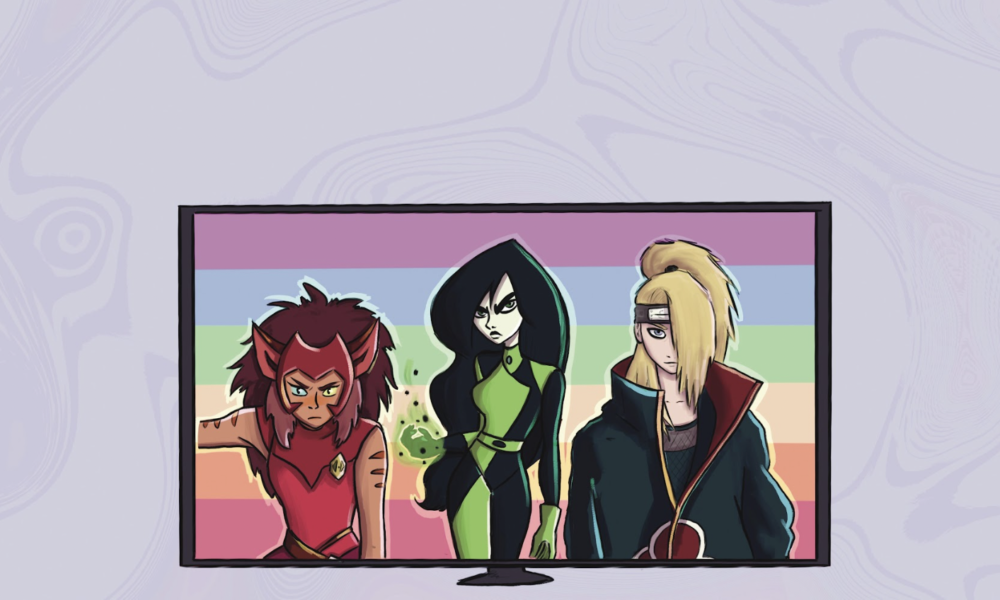
Whether I was idolizing Ursula’s flamboyant, larger-than-life eyebrows and vivid eyeshadow in The Little Mermaid, James play with ‘feminine’ disguises in Pokémon, or Shego’s sole loyalty to herself in Kim Possible, villains have always held compelling characteristics to me. While these traits are separate from what makes these characters ‘villainous,’ the phenomenon that I was mostly drawn to anti-heroes was no mere coincidence. Why were only the ‘bad’ characters given these attributes? Throughout my tween to teen years, I couldn’t seem to put my finger on why I preferred these characters to their hero counterparts, but I recently—finally—figured it out: Their sense of subtle queerness. 

Negative depictions of queer ‘villains’ in media

Many of these character subtleties in media stem from the radical Christian, nationalist, and repressive censorship ban in Hollywood that lasted from 1934 to 1968, known as ‘The Hays Code.’ The code banned several topics, such as homosexuality, in their goal of enforcing ‘appropriate’ media production. Although homosexual characters didn’t disappear from screens, they were pushed into villainous categories—implying that queer people were ‘bad’ based on their sexuality or gender and allowing the hero characters to be more ‘presentable’ to general audiences. Naturally, these emerging queer type-casts stayed on the side of evil after the motion picture industry abandoned the Hays Code, replacing it with aged-based ratings that are still in use today. 

For animated shows in the ‘90s and ‘00s, like The PowerPuff Girls and Pokémon, 2SLGBTQIA+ plotlines still connected queerness with inherent malintent. Take Ursula from Hans Christian Anderson’s fairy tale, The Little Mermaid. In the original story, Ursula is merely a sea witch who acts as an enabler to Ariel’s whims. But Producer Howard Ashman (a gay man) supported animator Rob Minkoff’s original sketches that were based on Divine, a legendary drag queen whose high-arched, thin eyebrows define Ursula’s face. Divine is a lesser known figure now (which is honestly criminal), but she was a cult figure during the height of her career—People Magazine once called her the “Drag Queen of the Century.” Contemporary audiences may not immediately relate Ursula’s garish performance in “Poor Unfortunate Souls,” low voice, and stark wig-like hair to Divine, but she still carries the qualities of an ‘othered,’ queer villain. While some people, myself included, appreciated Ursula’s distinctive appearance as an enhancement to her character, the unfortunate reality remains that she lacks depth or redeeming qualities beyond a superficial ‘gay’ portrayal. In the heteronormative mainstream, this can perpetuate a harmful stereotype suggesting suggesting that drag queens, and by extension all queer individuals, are exclusively bent on causing harm.


Transgender characters faced a similar fate. Futurama’s 2003 episode “Bend Her,” for example, depicts a male main character—and arguably complex anti-hero—Bender, who dresses up as a fembot to deceive and cheat other competitors during female events in the robot olympics. Not only does this narrative reinforce the longstanding (and false!) idea that men are physically ‘better’ at sports than women, it also supports the biologically-essentialist narratives that trans women only want to compete with cis women to ‘defeat’ them—when in reality, trans athletes just want to be included.

Seeing yourself in the dynamic villain 

Alongside these negative depictions are villains with nuance. Each character has a backstory, fears, hopes, and—ultimately—depth besides their (admittedly occasionally stereotypical) queer traits that defies the flat label of ‘queer villain.’ These are the villains that I—and other queer people—love. 

One of my favourite characters is Zuko from the show Avatar: The Last Airbender. Although a prince, he is scarred and cast out of his family at the age of thirteen due to his father perceiving him as weak—a classic misogynistic stereotype associated with gay men. His initial goal in the series is to capture Aang (the titular Avatar) to win back his father’s favour. While Zuko spends three seasons antagonizing the heroes, he simultaneously forges a new path, showing that he doesn’t have to fit into his family’s expectations to be loved and accepted. That’s the exact thing that makes him so redeemable to queer audiences. Queer youth don’t have the luxury of fitting into the assigned boxes that are deemed ‘acceptable’ by a cishet society. We don’t even have the language or the knowledge most of the time that other identities are possible. Gabs Gaston (BA ‘23), a trans-masc self-described villain lover, said it eloquently when explaining why they relate to characters like Zuko. 

“I not only see myself in [these characters in] how I’m othered by society as a queer person, but also with the inner turmoil that you have,” they said in an interview with The Tribune. “That’s part of the queer experience is trying to figure out your identity—whether it’s sexuality or gender. […] And going against the grain is [really] hard. It’s painful and it’s difficult, and it’s like everything is against you.”

Growing up cis and quite feminine meant that I consumed mainstream narratives about how I was going to grow up and marry a man. There’s always been such a binary about how—in my experience—women should and shouldn’t act. So when I started to realize I wasn’t attracted to guys like my peers were, it made me feel like there was something wrong with me. I didn’t know there were other ways to live. Seeing these characters who were ‘outsiders’ helped me feel like I wasn’t alone. The villains’ mere existence was enough to show me I didn’t have to follow every social expectation. 

Gaston agreed and said that while they didn’t like every choice the ‘villains’ made, they could understand how a lifetime of vilification could persuade characters to lean into it.

“When you are someone who has been confronted with needing to detangle and deconstruct that [binary] because of how you personally identify, […] that allows you to see nuance beyond binaries of good and bad as well,” Gaston said. “You can hold in tandem relating to this character who has been rejected from society and has been othered and who has gone through a difficult situation, while at the same time understanding that not all their actions [are good].” 

How villains help queer people discover how they identify and present 

Villains stand out from their hero counterparts: Why shouldn’t they? They’re powerful, confident, and defiant—counterculture personified in terms of style and ethics. So when queer people see themselves represented in villains, there’s a natural desire to embody them. These embodiments are not to replicate their wrongdoings: Instead, they aim to embrace their interpretation of the villain-aesthetic

Oona Avery-Jeannin, a queer 3D animator whose work includes the short Hex Boyfriend, discussed with the The Tribune over Instagram how cosplaying as Deidara, a villain from Naruto, helped them to understand their relationship with gender.

“While I was portraying [Deidara] I really got in touch with acting more masculine, and feeling euphoria for the first time. I wouldn’t say he’s queer-coded per se, but having a more feminine appearance yet acting super masculine is what really resonated with me,” Avery-Jeannin wrote. “I still don’t have a clear idea on what gender I can relate to, but through cosplay I was allowed to experiment with being a boy in a socially acceptable way. For costumes, I was able to lower my voice, wear a binder, and contour my face without anyone suspecting that I might be queer.”

Although some 2SLGBTQIA+ people discover their queer identities at a young age, many take years of self-discovery to articulate who they are. And some never feel the need to label themselves—but this self exploration happens nevertheless. Dressing up or even emulating these villain characters gives a lot of queer people the space to safely explore means of presenting outside their assigned gender at birth, or outside what society has regulated as acceptable. 

Ultimately, your body is a means of physically presenting how you feel on the inside. And this isn’t an experience unique to queer people. We’ve been told all our lives to fit in with whatever status quo governs our social sphere, when in reality, your appearance is how you express how you feel on the inside. I think Judith Butler, a legendary modern philosopher on gender, says it best.

“‘The body’ appears as a passive medium on which cultural meanings are inscribed,” Butler writes in their impactful 1990 book, Gender Trouble: Feminism and the Subversion of Identity. “These limits [of gender] are always set within the terms of a hegemonic cultural discourse predicated on binary structures that appear as the language of universal rationality.”

Sure, other people will always make assumptions about you based on how you look. But because these villain characters are visible in mass media, the discourse widens within the binary structures that many of us queer people still feel impacted by. 

“A lot of cis people only see transness as fitting into the same cis binary of gender, where it’s like, if you are a trans man, then your goal is automatically to transition and look like a cis man,” Gaston said. “What a cis man looks like isn’t necessarily what a man is, in general. And there are so many grey areas in between that people might want to live in. I find a lot of freedom and self love in that grey area.”

Even people like me, who are cis and dress femininely, can take these villains as inspiration. Think of Poison Ivy, originally a DC comic character, but who’s been adapted in so many franchises since. While she may have been created to pander to heterosexual male audiences, these same viewers simultaneously vilify her for using her sexuality and femininity to her advantage. She is feminine, smart, and doesn’t exist to be eye candy to men. For many queer women, there is a struggle with accepting their femininity while shedding the patriarchal social expectation that they mould their femininity for the male gaze

Gaston emphasized this, saying that they know several butch lesbian friends whose relationships with femininity have changed since embracing their sexuality.

“[These butch lesbians] were actually able to embrace their femininity more as a butch lesbian because their femininity was not for male consumption. It was not within the male gaze,” they said. 

Deconstructing the ‘good’ vs ‘bad’ character binary

Besides Zuko, the majority of characters I saw fell amidst a stark binary of ‘good’ and ‘evil.’ And while queer people find camaraderie in these anti-hero characters, it is frankly exhausting to only be portrayed as the villain. It teaches both queer and straight people a single narrative: That 2SLGBTQIA+ people are bad, and nothing more. 

But lately, I’ve been noticing more storylines where the villain has similarities to the heroes. The 2018 show She-Ra and the Princesses of Power showcases the majority of conflicts between the hero Adora (who magically turns into She-Ra with a sword—it’s complicated) and the villain Catra. Despite growing up together as cadets for an evil Horde army, their relationship fractures when Adora chooses to fight against the army alongside rebels while Catra says they may as well use their Horde power for self-indulgence. While the two leads are on opposite sides of this war, their underlying (homoerotic) friendship reinforces the notion that both are more than the ‘evil scum’ or ‘princess’ label that their respective friends call the other. And Adora understands Catra’s motivations—her feelings of otherness, her fears of rejection, and her queer undertones—despite Catra’s actions. In the end, Catra changes sides, but doesn’t change her personality. Her queerness still exists, and she is loved and accepted for it. 

“As someone who had to learn to love themselves, growing up in a situation where [I was] told not only from society but by family members that these parts of who you are are unlovable […] it’s appealing to see a character who is ‘othered’ and then reintegrated into a different family,” Gaston said. 

Villain characters have long been a sign that queer people can exist outside of society’s gendered expectations. However, these newer storylines that explicitly depict queer-coded villains finding love and acceptance without changing their physical presentation or personality shows 2SLGBTQIA+ people that their identity is not inherently evil. Villains persist to demonstrate that in an exclusive culture, disrupting the social norm is the way to make space and look good doing it. 

Editorial, Opinion

Support workers against the collapse of the public sector

Since the end of September, public-sector employees unionized under the Centrale des syndicats du Québec, Confédération des syndicats nationaux, the Alliance du personnel professionnel et technique de la santé et des services sociaux and the Fédération travailleurs et travailleuses du Québec, in Quebec have been marching to demand better pay and working conditions amid negotiations with the provincial government. With salaries that have fallen behind rising inflation and the increasing cost of living, public-sector workers have been consistently neglected by the provincial government. Quebec has the highest unionization rate in North America, and the common front has made a historic 95 per cent vote in favour of striking action, with some in favour of rotating strikes and others for full-fledged walkouts. While Quebec’s anti-scab legislation prevents the provincial government and companies from calling on “replacement workers” to substitute those on strike, the law also means that a workers’ strike would completely disrupt social services in the province, causing an urgent need for the reception of the public’s demands. As Quebec workers fight for their rights, citizens must stand with them against the government’s neglectful behaviour or face the collapse of the public sector. 

The COVID-19 pandemic particularly intensified problems within public services. While we celebrated nurses for their hard work, no action was taken to mitigate their material conditions. Administrators expected educators to transition to new styles of teaching with little to no aid or support. Despite acknowledging these issues, the province faced a massive teacher shortage with upwards of 8500 missing just weeks before the start of this school year. This shortage, paired with the consequences of the pandemic, has caused many students to fall behind and contributed  to mental health issues for many others. The lack of interest in those qualified to enter the public education workforce is a clear sign that this system is no longer sustainable. This burnout epidemic echoes in other social services such as healthcare, considering the loss of nearly 21,000 health workers in Quebec in less than two years. The provincial government continues to have an inadequate and weak response. Instead of allocating resources to those who actively contribute to the betterment of society and ensure the wellbeing of others, Premier François Legault has chosen to increase the salary of Members of the National Assembly, which would make them the highest-paid politicians in Canada. As the  public sector employee shortage worsens, the province refuses to recant the discriminatory Bill 21 and allow for wrongfully-terminated teachers to return to the classroom. 

The Quebec government does not value public sector workers. The redirection of blame to the workers in Premier Legault’s responses demonstrates a greater political agenda to increase private sector services. In a province where the socioeconomic gap continues to grow, further privatization, especially within the health and education sectors, will increase inequality to devastating levels. If the government continues to ignore public sector employees, the small number of those who can afford private schools and healthcare will reap the benefits, while lower-income communities who lack access to basic services continue to suffer. With even less opportunity to access needed care in a discriminatory healthcare system, immunocompromised people, communities of colour, and disabled people will suffer Quebec’s disregard. 

Informal and fugitive networks of care such as protests and peaceful demonstration are crucial for those in power to hear the demands of workers. McGill students must join these networks and stand with Quebec’s public sector workers. The “McGill bubble” has prevented students from demonstrating solidarity with the rest of the province and tying the university’s lack of regard to teaching assistants, floor fellows, and workers to broader social transformation. The common front’s action reminds us that strikes bring negotiations outside the private arena to the public sphere—giving workers power over the ruling class. Students have the chance to make their voices heard and change the narrative at McGill, and supporting the strike is essential to protecting workers’ rights in the future.

Arts & Entertainment, Pop Rhetoric

An ode to the fall film

There is so much more to October film-watching than scary movies. While viewers may inevitably crave the grotesque in the lead-up to Halloween, autumn simultaneously evokes a search for comfort in the TV catalogue as viewers shy away from the frigid outdoors. I found this sense of warmth during the past reading break when I had the unexpected pleasure of watching the 1998 film You’ve Got Mail for the first time. It’s a charmingly dated rom-com where Tom Hanks and Meg Ryan fall in love over email, and I was delighted by every minute of it. I can attribute my delight largely to the gratuitous autumnal imagery that enveloped the film, panning over a yellowing New York City with the warm and wistful film grain of the late-90s. The fall aesthetic is ubiquitously dreamy, and it’s something that I pointedly search for in the media that I consume this time of year.
Just as I am overtaken by the annual urge to rewatch Gilmore Girls the moment a cooler breeze passes by, my roommates settle in to watch Fantastic Mr. Fox because “it’s just so fall.” “Fall” is not generally considered a genre of media in the way that “Christmas” might be. However, the mass production of Christmas movies reveals a collective need to indulge in seasonal charm through the media we consume. What most people fail to realize is that the “Fall” genre does exist and has been begging to be acknowledged for years. You’ve Got Mail made me realize that I have obliviously been a die-hard “Fall” fan all my life.

A quick Google search of “Fall movies” delivers all the usual suspects of outwardly spooky films like Hocus Pocus and The Addams Family. These movies fit into the “Fall” genre simply through their connection to Halloween. They gather together through common motifs like ghosts, witches, and pumpkins. However, Halloween movies come up amidst a long list of other movies that are tied to one another in a different way. These films don’t feature ghosts or witches, but they do share an affective atmosphere. In concept, these films range from romances like When Harry Met Sally…, to psychological dramas like Good Will Hunting. Yet, they are all shrouded in the reds and oranges of the season, as well as an undeniable sense of coziness and familiarity. 

Coziness is a nebulous criterion to define a whole genre, but it’s one that could not possibly be removed from “Fall.” This cozy viewing experience integrally forms the genre’s ability to provide comfort as the weather grows harsher and we grow more reclusive. Similarly, nostalgia is profoundly intertwined with the “Fall” genre. Only a very small portion of the movies that my Google search produced were released in the last decade. This could very well be signalling a declining quality of fall-related movies over the past few years, but, nevertheless, this uncovers an autumnal desire to go back in time. Nostalgia makes these movies so re-watchable and serves as markers in time that we can’t help but come back to, over and over. 

Tom Hanks and Meg Ryan in You’ve Got Mail exchange emails throughout the year, and yet they fixate on how much they love New York in the fall. As I watched the film, I couldn’t help but think that I was only so dazzled by its charm because it was a “Fall” movie, although the events of the movie are not limited to the season. “Fall” movies are not about fall in the way that Halloween movies are about Halloween or Christmas movies are about Christmas. “Fall” is not about anything except a feeling, but it’s a feeling that’s as recognizable as the conventions of any other genre. Defending the existence of a genre on the basis of an indefinable feeling may seem far-fetched, but when my roommate says that something is “just so fall,” we understand exactly what she means. 

Off the Board, Opinion

Green spaces tend the roots of ecological justice

This summer, I had the privilege of visiting my family in the Democratic Republic of the Congo for the first time. We stayed in Kinshasa for the duration of our trip, but part of me wished to see what was beyond the capital city. Deep down, my true desire was to see the nature the country has to offer, the little pockets of life that embody what the Cradle of Humankind could have resembled without Western colonialism. Taking time in nature has always been of great importance to me. But after my trip, I realized that almost all of the outdoor recreation and education I’d received––outside of that received from my own family––along with the value I found in nature had come from white-dominated spaces. 

Kinshasa is a fantastic city, and I can’t wait to go back. But I was struck by the lack of green spaces. The government is currently prioritizing other issues like preventing Rwandan aggression, strengthening the economy, and unlinking the country from Western aid and implication. These concerns, paired with the city’s foundations of Belgian colonial infrastructure, explain the limited focus on green urbanism and environmental liberation. However, the busyness of the city made me think of my love of nature, and how, while only living in major cities my whole life, finding some refuge among flora has consistently bolstered my mental health. The connection with nature and the sense of community that comes with it has led me to meet like-minded individuals and opened my mind to new perspectives and realities. I continued to wonder if exposure to green spaces could help alleviate the stress of living in a busy city and offer even more health benefits to Kinshasans. And perhaps, it would be able to unite a people and further foster community, something that is key to decolonization, by placing the drivers of change in the hands of locals. 

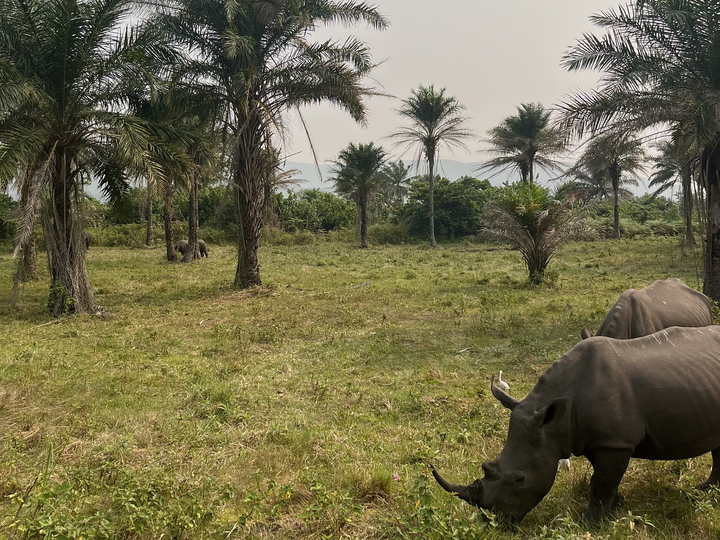
During my stay, I had the chance to drive outside the city centre to visit a privately-owned park. There, I was faced with some of the most breathtaking natural scenery that I had ever seen. After seeing the mountainous terrain paired with agba trees and animals roaming free within the lush plant life, my cousins who have lived in Kinshasa their whole lives were in equal awe, expressing that they had never encountered such natural beauty either. At that moment, I thought of how unfair it was that they had never had the chance to see the nature of their own country. A lack of exposure to nature for people of colour is not a new phenomenon, and research shows that the majority of people who participate in outdoor activities and recreation are white middle-class men who live in affluent areas. 

This experience led me to recall my summers as a kid at a sleep-away camp in Northern Ontario, and later working there as a counselor. I pondered the cherished canoe trips I took with friends in my teens and the numerous hikes I’d enjoyed with my family. The feeling of being free and connected to nature characterized my childhood, and gave me many chances to feel completely reflective and at peace. My trip this past summer showed me how much of a privilege and rarity this is. 

People of colour in Canada are three times more likely than white people to live in places that have no immediate access to nature. This inaccessibility shows how legacies of exclusion due to colonialism continue to plague communities of colour. Particularly in Canada, marginalized communities are unable to access the trails and activities that exist on the already stolen lands of Indigenous peoples. Why is it that mainly white people get to bear the benefits of spending time in nature? 

My experience in the Democratic Republic of the Congo and my life in Canada reminds me that people of colour worldwide continue to be excluded from spaces stolen from them in the first place. Black communities, Indigenous peoples, and people of colour need to reconnect with nature, but the objectives of this go beyond just enjoying the environment: All marginalized people’s cultural identities, communal health and healing from intergenerational trauma depend on returning to nature, and the time to start is now.  

Read the latest issue

Read the latest issue