Latest News

McGill, Montreal, News

22nd annual Pow Wow celebrates Indigeneity and community

On Sept. 22, members of the McGill community gathered on the Lower West Field to celebrate First Nations, Inuit, and Métis cultures at the 22nd annual Pow Wow. The five-hour event, hosted by First Peoples’ House and the Office of Indigenous Initiatives, was started in 2001 and became the centre of McGill’s Indigenous Awareness Weeks after the weeks’ creation in 2011. 

With a backdrop of blue skies and sunshine, the event began with the Grand Entry, which saw participants enter the tent while dancing to the beat of the RedTail Spirit Singers’ singing and drumming, followed by the pinning up of flags. A moment of silence took place after the introductory dancing for a member of the Kahnawà:ke community who passed away last weekend. This was followed by Intertribal dances, including the male Warrior Dance and female Butterfly Dance, also to the RedTail Spirit Singers’ music. The event also saw throat singing, a hoop dance demonstration, and speeches on the resilience of Indigenous peoples against Canadian settler colonialism.

Education and the involvement of young people, including McGill students and youth from around Quebec, played a significant role throughout the day. Younger children and toddlers, particularly from the Rising Sun daycare—the only Indigenous daycare in Montreal—were encouraged to dance alongside the Indigenous peoples.

Speakers emphasized that the Pow Wow was about socializing and joy. In an interview with The Tribune, JJ McKenzie, a member of the Métis Nation and one of the two dancers in the Orange Blossom Special dance, explained how the Pow Wow encourages a more positive and empowering representation of Indigenous peoples, in comparison to primarily-disheartening news coverage.

“A lot of the time in news and media, you only hear the sad bits about our communities, such as residential schools,” McKenzie said. “This is the fun part that we like to share […] for all of the Indigenous people here. It builds up our community, and then for everyone else who’s not Indigenous, it showcases our fun and cool parts of our culture.”

Outside the main tent which hosted the scheduled events of the day, the Pow Wow also accommodated a number of Indigenous organizations and companies, many of which displayed their jewellery, beauty products, decorations, and artwork. 

Matsheshu Créations, run by Raphaëlle Langevin of the Innu Nation from Mashteuiatsh, hosted a booth at the event, selling jewellery and clothing. In an interview with The Tribune, Langevin explained that it was her first time in Montreal.

“Not everyone wants to travel all the way to meet [my company], so it’s a way to come and meet people,” Langevin said. “I’m happy that people can leave with a part of our culture […] we have a beautiful culture, a really rich history. We are still here, and we are still strong.”

JC Bear, Nêhiyaw (Cree) and owner of Tansi Maskwa, echoed this sentiment, describing how the Pow Wow allows for socializing with other Indigenous communities.

“It’s very personal [….] It’s a way of reconnecting with my community,” Bear said. 

Leah Louttit-Bunker, U2 Arts and co-chair of the Indigenous Students Alliance (ISA), told The Tribune, that the Pow Wow was an enriching experience for all of the ISA, and commended the groups that hosted the event.

“It was heartwarming to see everyone gather together to celebrate Indigenous cultures. The annual [Pow Wow] is always the highlight of our year and we really appreciate the work that the First Peoples’ House and the Office of Indigenous Initiatives put into organizing it,” Louttit-Bunker said. 

McKenzie suggested that people looking to become more involved in honouring and learning about Indigenous communities should attend more local events outside of the university setting.

“See if there’s any events going on nearby that other people are invited to,” McKenzie said. “If you come and ask people questions, they will be happy to answer them and showcase our culture.” 

The next event affiliated with First Peoples’ House will be taking place on Oct. 16, where Alanis Obomsawin, an acclaimed Abenaki filmmaker, will deliver the 69th Beatty Lecture.

Science & Technology

McGill iGEM takes on innovative synthetic biology research

Many undergraduate students desire to delve into research at McGill in labs led by primary investigators and professors. Undergraduates themselves, however, have equally promising initiatives to lead exciting investigations. One of these student groups, McGill iGEM, is an undergraduate synthetic biology research team that has made impressive progress in recent years. 

In an interview with The Tribune, Jonas Lehar, U2 Science and lead of iGEM’s wet lab— the group that performs hands-on lab procedures—discussed the club’s projects and gave insights into the club’s mission. 

“The way I like to describe [iGEM] to people is [that] it’s a science fair for big kids,” Lehar shared. “We come up with a project over the course of the school year, and we spend the summer doing the research in the lab. Then we present our research at the International iGEM conference in November [in Paris].”

This year, the team will be presenting its cancer therapeutics project. As Lehar explained, many existing cancer drugs target mutated proteins that cause the cancer to grow and spread. Such a treatment, however, also targets healthy cells, which causes the side effects of chemotherapy and radiotherapy.

“We decided to try a [different] approach to cancer: Instead of trying to target the mutated proteins, we could target the DNA directly,” Lehar explained. “What fundamentally [causes] cancer are mutations in the DNA, so instead of targeting the proteins we could target cancer at the genomic level directly. This way would avoid targeting any healthy tissue.”

The team targeted messenger RNA (mRNA)—a complementary copy of DNA that is used to synthesize proteins. The team introduced several new elements into their test cells: Cas7-11 protein, guide RNA, CSX29 protease, and a fusion protein. This is an application of the new generation genome-editing technology known as CRISPR (clustered regularly interspaced short palindromic repeats).  

Cas7-11 protein works in tandem with guide RNA—a type of RNA sequence that recognizes cancer-causing mutations in the mRNA. Once guide RNA finds one of these mutations, Cas7-11 activates CSX29 protease. The protease cuts and thereby activates the fusion protein, which creates pores in the cell membrane and causes cytoplasm leakage. Not only does this kill cancerous cells, but it also stimulates the immune system.

While this is an impressive result, it is important to note that the team’s research is all in vitro—in the tube—and has not been tested in vivo—in animals. 


“We’re not testing [this system] on cancerous mice models because we don’t have funding for it—lab mice are very expensive. It’s also not possible within the year timeframe of the project,” Lehar explained. “However, team members from the previous years often do decide to continue the project that they worked on, so [testing our model in vivo] is definitely something we’re looking at in the future.”

The McGill iGEM will be recruiting new members in Winter 2024 for SynBio collective, STEMcast and InVitro Conference. They are looking for students from a variety of science programs, including Microbiology and Immunology, Anatomy and Cell Biology, Neuroscience, Bioengineering, Biochemistry, and Computer Science. This is part of their attempt to expand iGEM into a broader community of students and future researchers.


“In the past, iGEM was a small group of passionate students who wanted to do research. But [now] we’re trying to turn iGEM into something larger, something where we can get more students involved than just the competitive team,” Lehar said. 

Last school year, iGEM also organized synthetic biology workshops to teach students lab techniques and provide them with experience similar to that of a formal McGill lab course. They also ran a workshop for the Shad summer program in Montreal for high school students. 

“The idea of iGEM is that we want to make an opportunity for students to get in [a lab], to take a project and work on it from start all the way until the end. It’s really hard to get that first lab experience that you need to get started somewhere,” Lehar said. “A lot of profs want people who already have prior experience. We want to [be] a stepping stone for people to spark their curiosity in synthetic biology, and also encourage their scientific careers as they go on.”

Science & Technology

McGill students unite with Héma-Québec: From blood donations to saving lives

Every 80 seconds, someone in Quebec needs blood. Héma-Québec, which marks its 25th anniversary this month, has been the unwavering supplier of blood products, human tissues, and other crucial donations to Quebec’s healthcare system. Their relentless efforts have long been amplified through partnerships with local communities. One such collaboration was the recent mobile blood drive on campus, open from Sept. 18 to 21, organized between Héma-Québec and the McGill Students’ Blood Donation Association (MSBDA).

“Our club’s goal has been to increase awareness about blood, plasma, and stem cells [in] McGill’s community. We have coordinated a lot with Héma-Québec, since they perform blood and plasma donations in the province, while remaining an independent club accredited by SUS (Science Undergraduate Society) and MSS (Medical Students’ Society),” Oban Lopez-Bassols, U3 Arts, Co-President of the MSBDA, wrote to The Tribune.

“We aim for around four blood drives which we organize in coordination with other school clubs,” Lopez-Bassols wrote. “We’ve found collaboration with faculties and clubs to be an incredibly useful way to get input on good times and places for blood drives, as well as effective promotion of the drives.”

Indeed, awareness of shortages and the urgent need for donations is crucial to sustaining Quebec’s healthcare system. While Héma-Québec is currently capable of fulfilling 100 per cent of the blood donation needs within the province, more has to be done concerning plasma.

“Extreme burn patients, for example, need a lot of plasma, often for weeks on end. So that’s a huge need there,” Lopez-Bassols wrote. “Quebec’s plasma self-sufficiency is around 30 per cent, which leaves our province having to purchase expensive plasma—usually from the United States. We incentivize everyone to donate whatever they feel more comfortable with, but when open, [to try giving] plasma.” 

However, the barriers Quebec’s blood donation service faces do not stop at the plasma shortage. Especially for patients who need frequent blood transfusions, such as those receiving treatment for sickle cell disease or thalassemia, close blood type matches are needed to alleviate potential complications. These matches are best found in donors with similar racial or ethnic backgrounds—thus marking the need for diversity in blood donations.  

Upon further discussion on ethnicity and compatibility, Lopez-Bassols shared an article presented by Canadian Blood Services, underscoring that, “Right now, Canadian Blood Services Stem Cell Registry is not as diverse as Canada’s population. Though there are over 400,000 people registered with Canadian Blood Services Stem Cell Registry, only 33 per cent of potential donors come from Indigenous, Asian, South Asian, Hispanic, mixed-race[,] and diverse Black communities.”

He continued, “It’s especially crucial for stem cells since compatibility in it can be very hard to find. […] For Black History Month, we have [had] heavy promotion of this inequality but we’re still working on messaging and increasing diversity of the registry.”

Yet Héma-Québec and Canadian Blood Services, along with other blood donation organizations worldwide, have not always been a welcoming place. Discriminatory policies, especially those against members of the 2SLGBTQIA+ community due to prejudiced fears around HIV/AIDS, have left a lasting impact, and awareness is critical to eradicating such stigma and unfounded regulations.

“The blood ban was very controversial and exclusionary, so it was very hard for us to still promote blood drives while pressuring Héma-Québec to have more open access to donating,” Lopez-Bassols wrote. 

In recent years, Quebec and Canada as a whole have taken strides in dismantling discriminatory bans that previously prevented men who have sex with men from donating blood. Since Dec. 4, 2022, Héma-Québec has transitioned into gender-neutral questionnaires, assessing blood donation eligibility on what it calls ‘[an] individual basis in line with personal behaviours,’ rather than sexual orientation and gender identity. 

And as Héma-Québec celebrates its quarter-of-a-century anniversary, the spotlight is on paving the way towards a more equitable healthcare system here within the province. With each donation of blood, McGill students could save up to three lives—taking part promptly and directly in public health endeavours. 

Montreal, News, Private

Counter-protestors rally against anti-trans demonstrators outside Roddick Gates

Over 400 people congregated in front of the Roddick Gates on Sherbrooke on Sept. 20 to join the Protect our Trans Siblings counter-protest against the 1 Million March 4 Children. There was a heavy police presence on-site to separate the two sides, which later confronted each other in heated exchanges outside the offices of Quebec Premier François Legault, opposite the Roddick Gates. While scuffles did erupt on the outskirts of the protest where the two groups converged, confrontations remained verbal rather than physical, with the police stating that no arrests were made. 

The Protect Our Trans Siblings counter-protest, held at 8 a.m., was part of a national counter-protest movement. Despite the early start, the crowd was full of energy, waving placards and chanting slogans such as “protect trans kids” and “toute le monde déteste les fascistes.”

The 1 Million March 4 Children movement held national demonstrations to protest “gender ideology,” which they allege is being taught in schools across Canada. The movement has gained increased traction in Canadian politics with victories in New Brunswick and Saskatchewan, where Conservatives passed legislation in June of this year requiring students under 16 to get parental consent before their teachers can use their preferred first names.

Celeste Trianon—who led and helped organize the counter-protest—accused the anti-trans group of having the backing of far-right extremists who had supported the Freedom Convoy in Jan. 2022. Trianon also accused the movement of pushing hateful and exclusionary rhetoric which seeks to further silence and oppress 2SLGBTQIA+ people, especially those belonging to the trans community. 

“[They are a movement] which seeks to eliminate education about trans and queer people within school settings,” Trianon said to reporters during the protest. “They are not protecting children; they are actually hurting groups of children and teenagers who are already beyond marginalized.”

Among the counter-protestors was Jamie*, a graduate student at McGill who explained why they felt the need to join the demonstration.

“Because of the rise of right-wing hate,” Jamie said to The Tribune. “I have so many trans and queer friends whose very existence is under threat right now and if we don’t take a stand, who’s next? They are the most marginalized and there is no room for hate.”

Queer McGill, the largest queer student support group at McGill, was instrumental in raising awareness about the counter-protest and providing support to counter-protestors during the event. Queer McGill Administrative Coordinator Abe Berglas, U3 Arts, told The Tribune why the group felt they had to mobilize for the counter-protest.

“Queer McGill was trying to rally the McGill community since it is taking place at the foot of our school,” Berglas said. “From our institutional background we have accumulated a fair following […] we have a thousand people subscribed to our list […] we have also been in contact with SSMU [the Students’ Society of McGill University], to get SSMU itself to release a statement which they did last night […] and I have just been emailing Queer Concordia and a few other groups on campus to connect the far branches.”

When asked how McGill supported their efforts to organize and raise awareness of the counter-protest, Berglas’ answer was resoundingly blunt: “They haven’t.” 

An email was sent from Provost and Vice-Principal (Academic) Christopher Manfredi 48 hours after the counter-protest had occurred, stating that McGill remains “deeply committed to equity and to supporting all the members of its community, including for 2SLGBTQ+ peoples and communities.”

Trianon vowed to continue fighting to protect trans youth.

“We are fighting for the dignity and safety of trans and queer children, teens everywhere, and that is exactly why we are here protesting today,” Trianon said. “Because we want to send a message that everyone deserves to be safe going to school [….] We want to send a strong message that there is no space for hate across Canada.”

*Jamie’s name has been changed to preserve their confidentiality.

Student Life

Should I link in to LinkedIn?

In the workforce, employers often frame LinkedIn as an essential social media platform for those looking to enter the job market. For university students, LinkedIn’s most prominent features are its networking, job search, and job recruitment features, so most only join once they begin looking for internships or post-graduation employment. However, how necessary is it really for university students, many of whom aren’t actively looking to start their careers just yet? Is LinkedIn just a place to boast club and extra-curricular involvement? The Tribune investigated the benefits of LinkedIn for students and explains how to create a profile that will stand out to potential employers.

What is LinkedIn?

LinkedIn allows users to build a network, search and recruit for jobs, and share career news and ideas. A typical profile includes a professional headshot, a personalized headline, past and current education and job experiences, and a short summary of the user’s professional identity, including their goals and specific skills. Users can connect with and explore industries, companies, and specific individuals they are interested in. Through these connections, they can grow a professional network and explore job opportunities. 

What if I’m not looking for a job/internship right now?

While job-seekers often use LinkedIn to search for openings, businesses also use the platform to recruit future employees. Even if you aren’t on the search for a new job or internship, putting your professional self out there with a strong profile and summary can help to open yourself up to potential opportunities to build a network or to be recruited. 

What if I don’t know what type of job I may want?

For others, who aren’t entirely sure of what path they may want to take after school, simply building a LinkedIn profile can serve as invaluable practice at developing a “personal brand” by linking together your past experiences and your skills. Creating your LinkedIn profile is a brainstorming exercise that can help make it clear what your strengths and interests are. 

Further, the platform has an excellent search feature that can help students explore potential industries and career paths. Using the “People” search option, you can type in keywords that correspond to your interests. For example, if you are interested in fashion and want to find McGill Alumni who use that keyword, you can type in “‘McGill’ AND ‘fashion.’” Researching how real people have turned their interests and achievements into careers can be a very enlightening way to explore the numerous career paths you could pursue.

How to get started

Keep it professional, people. Using a professional profile photo and background is a great first step when setting up your LinkedIn. A quick Google search will yield many articles detailing the nitty-gritty of how to craft a stand-out summary or what specific past experiences and skills to include. The overwhelming consensus of these articles is that being concise is crucial. Your LinkedIn should not be the same as your CV—rather, it’s best used as a personalizing supplement to your CV. 

If you’re interested in more specific help, the McGill Career Planning Service has resources online, as well as advising opportunities to help you not only create but get the most out of the site and what it offers. 

Is it for me?

Making a LinkedIn profile shouldn’t be difficult or stressful. That being said, it is your professional online presence and likely the first social media platform that potential employers will see. Once you create one, diligence in maintaining, monitoring, and using proper etiquette will be key. 

Most of us fall somewhere along the spectrum of “no clue what I’m doing after school” to “I am so ready to start my career!” Regardless of where you’re at, LinkedIn can prove to be an invaluable tool for any student with the time and intention to build and maintain it. 

News, SSMU

SSMU BoD ratifies motion for VP Finance by-election

The second Students’ Society of McGill University (SSMU) Board of Directors (BoD) meeting of the fall semester was called to order on Sept. 20. The meeting’s public session included discussions of board members’ committee membership obligations and confirmation that the motion to hold a by-election to fill the currently-vacant vice-president (VP) Finance position had been ratified.

The Board’s first order of business was to welcome Maya Marcus Sells, the new SSMU General Manager and the latest addition to the BoD. As General Manager, Marcus-Sells will sit as a member on the executive committee and as a non-voting member on the BoD.

Discussion then turned to a motion from the Legislative Council calling for a by-election to fill the VP Finance position. Proposed during the last BoD meeting on Sept. 7, this by-election will fill the VP Finance position, which has been vacant since former VP Finance, Alice Fang, resigned on Aug. 18. SSMU Speaker and BoD Chair Jonathan Dong affirmed that a motion to ratify the previous motion to hold a by-election had been distributed via email after the Board’s last meeting and was unanimously approved on Sept. 12. 

SSMU President Alexandre Ashkir subsequently delivered the Executive Committee’s Public Report. He stated that there was nothing for the committee to share, joking that the only notable update was the committee’s decision to continue holding their weekly meetings on Wednesday mornings. VP Student Life Nadia Dakdouki chimed in to clarify that the President’s statement was indeed a joke.

“We did do work, […] there’s nothing worth reporting here, but there was a lot of work done,” Dakdoudi said.    

While there were few updates from the committee to be shared during the public session, Dakdouki noted that the Executive Committee’s members had engaged in many lengthy discussions.

Ashkir then stood for questions on the report and reminded attendees that any future questions about the report or about the Committee’s activities in general could be directed to him. As there were neither any questions raised nor opposition, the Executive Committee’s Public Report was quickly ratified. 

With no other topics on the agenda, the Board moved on to a discussion item that Ashkir raised, reporting that he had received a request from an unnamed employee and leader of various SSMU committees to discuss the matter of board committee membership. 

“Currently, the Board of Directors is understaffed,” Ashkir said. “For the time being, I would propose that we hold off on any board membership questions on committees unless [they’re] extremely urgent […] so that none of our current board members are overwhelmed with the sheer amount of board committees they would be expected to sit on.” 

Ashkir added that holding off on appointing current board members to additional committees would allow for newly-elected members to fill these positions in the near future. 

As no one raised questions or points of opposition, Dong declared the discussion items to be exhausted and concluded the public section of the meeting, which lasted a total of ten minutes.

“Unfortunately for our guests, we do have a confidential session this meeting, and, at this point, I will kindly ask you to leave, or else we will have to remove you or put you in the waiting room until we’re done [with] our confidential session,” Dong said.

Moment of the Meeting:

After attendance had been taken, Ashkir proposed an addition to the agenda of a point of discussion regarding board committee membership. The motion was seconded by Lalia Katchelewa, VP University Affairs, and added to the agenda after facing no opposition. 

Sound Bite:

“The [Executive Committee’s public] report mostly covers the motions [to call for a by-election for the position of VP Finance] that were approved, but a lot of the work that [the Executive Committee] does is in confidential discussions on a variety of topics for the day-to-day running of the society” 

— Ashkir on why the Executive Committee had so few updates during the BoD’s public session.  

Out on the Town, Student Life

The Tribune’s guide to the best BYOB restaurants in Montreal

Though it’s been 40 years since Quebec nearly passed a law that would have allowed guests to bring their own bottles into any restaurant, many places in Montreal still allow you to have a delicious meal while sipping your favourite wine.

Eating at a bring-your-own-bottle (BYOB) or “apportez votre vin” (AVV) restaurant is a great way to enjoy a night out without having to break the bank on drinks. Keep in mind, though, that many BYOBs might have more expensive menu items than their non-BYOB counterparts, so the extent of your savings could depend on how much you intend to drink. Luckily, most BYOBs in Montreal do not charge corkage fees, saving you from having to pay to bring your own bottles; but it is always worth double-checking so as to not be surprised when the bill comes. 

Finding BYOBs can be tough. One trick is to make a list where you can jot them down when you come across the signs on your daily commutes. If that seems like too much work, fear not—The Tribune has compiled a list of some BYOB spots near McGill.  

Amber

Nearest intersection: Rue Rachel and Ave Henri-Julien

After the tragic dissappearance of campus samosas, Amber is there to scratch the itch. It offers a variety of Indian and Pakistani dishes, from butter chicken to bhindi masala. Amber’s extensive menu, complete with a wide range of vegetarian and gluten-free options, can make it convenient for groups of any size. 

Khyber Pass

Nearest intersection: Ave Duluth and Rue Berri

The restaurant that played host to Justin Trudeau and Sophie Grégoire Trudeau’s first date is also the perfect place to pair delicious Afghan dishes with your own bottle (or bottles) of wine. Though they have an à la carte selection, their table d’hôte (which includes a soup or salad, main course, dessert, and coffee) starts at a reasonable $35, especially considering the money that’ll be saved on drinks.

KUI

Nearest intersection: Rue Wellington and Rue Hickson

What’s better than all-you-can-eat Korean BBQ? How about all-you-can-eat Korean BBQ with all-you-can-drink wine (provided you bring enough bottles)? Located on the supposed “coolest street in the world,” this restaurant is worth the trek on the Green Line.

La Prunelle

Nearest intersection: Ave Duluth and Rue Drolet

While the weather may have dipped too much to enjoy their terrasse, there’s still plenty to enjoy at this BYOB. Though on the pricier side, La Prunelle will wow you with its presentation, offering up Instagram-worthy plates in a lovely setting filled with natural light. Just remember to save room for dessert, as their cheesecake might just be the highlight of the meal (and would go lovely with that Riesling you just picked up at the SAQ).

La Rose des Sables

Nearest intersection: Rue Beaubien and Ave Papineau

Looking for a couscous or tajine that’ll justify an excursion to the East End? If so, La Rose des Sables is a must. From the expressive decor to the colourful dishware, the cozy atmosphere will make for the perfect fall dinner, especially after a midterm that didn’t go too well. For an ideal pairing, look for a syrah that would complement the richly spiced dishes on the menu.  

Luna

Nearest intersection: Rue Rachel and Rue St Andre

Even if it weren’t a BYOB, it would be tough to not recommend Luna. Their bibimbap is worth a visit by itself but paired with your favourite bottle, it’s an instant classic. Luna is on the smaller side, and considering its popularity, it may be best to make a reservation beforehand.

Uchi

Nearest intersection: Rue Atateken and Rue Ontario E

This unpretentious sushi joint near the Village checks off many boxes. BYOB, check. Affordable, check. Delicious and fresh, check. Sort of near campus, check. Pick up a pinot grigio or sake from the SAQ and gather a few friends for a lovely evening.

McGill, News

Asbestos dangers at McGill prompted Quebec regulator interventions, new report reveals

Asbestos dangers to workers at McGill University’s Macdonald campus caused Quebec regulators to intervene on three occasions between 2021 and 2023, a new internal report has revealed. 

The Internal Audit Final Report of the Macdonald Campus Asbestos Investigation, which was released to the McGill community on Sept. 18, detailed the events leading up to the detection of uncontained asbestos on the Macdonald campus in Winter 2023 and the subsequent building closures. It also set out a 25-point action plan to improve university-wide asbestos policies.  

The findings included “a lack of good working practices” by contractors at the Macdonald campus with asbestos and the “cohabitation of Faculty members and students with construction workers.” It also found that the communication protocols used to address building users’ concerns, including from students, about asbestos fibres—which upon inhalation can cause deadly cancers—were of limited effectiveness. 

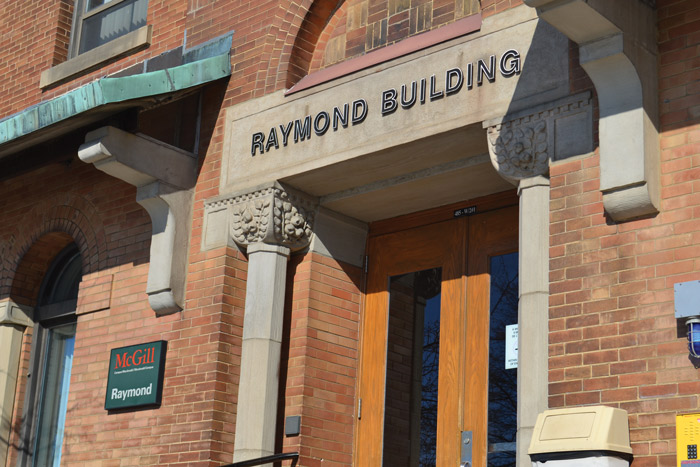
The 84-page report uncovered that the Commission des normes, de l’équité, de la santé et de la sécurité au travail (CNESST)—the Quebec body that enforces workplace health and safety guidelines—intervened on the McGill campus on Nov. 15, 2021, Oct. 17, 2022, and Feb. 14, 2023, to halt construction work because of the asbestos risks. In the Feb. 2023 intervention, a CNESST inspector went further, and used their powers to close the Raymond Building construction site—which students were accessing up until the closure. 

In the events leading up to the 2023 intervention, the report revealed that students raised concerns about air quality and dust in the Raymond Building on Nov. 28, 2022. A McGill Environmental Health and Safety (EHS) staff member observed the dust in early December but was not qualified to test it for asbestos, so instead raised the issue with other members of the EHS. But the only EHS staff member qualified to test for asbestos had just gone on leave, so the testing was delayed until Jan. 2023.  

Fabrice Labeau, McGill’s Deputy Provost of Student Learning, told The Tribune on the evening of Sept. 18 that the report’s mandate was to learn why asbestos fibres were discovered in the Macdonald campus buildings, and that it summarized the key findings into the 25 recommendations to improve the university’s policies. 

In response to questions about the CNESST intervention, Labeau explained that CNESST was providing the asbestos inspection reports directly to the McGill-hired contractors rather than the McGill administration. He added that one of the recommendations included “strengthening” the oversight for contractors doing work at McGill, as “typically their contractual obligations are such that it should all work out in the right way, and sometimes there’s slippages here and there.”

He also said that despite the intervention, he was not concerned about any “specific” risk to students.

“It’s very hard to pinpoint a specific detail from the report […] and say, ‘does that pose any specific risk?’” Labeau said. “The key point to me is […] that over the whole duration of the closure of the buildings […] and even before that, all the air tests in the building […] had the content of asbestos that was below the standard in Quebec, meaning that it was safe to be in the building during all these times.”

The World Health Organization, however, recognizes no known safe threshold to asbestos exposures, stating that countries must impose extremely low control limits or remove the asbestos completely to minimize the risks. In Quebec, the construction code now sets the asbestos airborne control limit at 0.1 fibres per centimetre cubed (f/cm3)—lowered from 1 f/cm3 in 2022. McGill adopts a more stringent standard of 0.01 f/cm3. A Tribune investigation published on Sept. 6 showed that asbestos is still Canada’s number one workplace killer. 

Labeau has since clarified in a media round table on Wednesday, Sept. 20, that “using the term safe is a difficult term […] what we do is follow the provincial code here that basically limits the presence of fibres in the air.”

Norman King, an epidemiologist who is scientific advisor to the Québec Association of Asbestos Victims, explained to The Tribune that even when the limits are set extremely low, the risks remain. 

“When we consider a concentration of 0.1 fibers/cm3, it seems like a very small amount of asbestos fibres. However, it is important to realize that there are 1,000 cm3 in one liter and that we breathe at least 5 liters of air per minute—more when we are working hard,” King said. “So, at a concentration of 0.1 f/cm3, we are breathing in 500 asbestos fibres per minute. This translates to 1 million fibres during the course of a 35-hour work week.” 

Asbestos, a known carcinogen, is safe when left intact; it becomes dangerous when the material is damaged and its dust fibres are exposed. Buildings across Canada used the mineral from the 1930s to the 1980s as an insulator due to its heat-resistant properties. McGill acknowledges on their EHS website that many of its buildings still contain asbestos, and provides information to the school’s community on the asbestos in each building through its asbestos web database

McGill’s senior administration requested the internal investigation at the start of 2023 following the asbestos-related building closures. At the time, there was no mention to the university-wide community that the CNESST had closed the Raymond construction site.

Pascal Théoret, Executive Director of the Internal Audit, confirmed to The Tribune in a statement through the McGill Media Relations Office that the mandate of the investigation received “full cooperation” from internal and external stakeholders, and that it completed all its elements of that mandate: To understand the events leading up to the detection of the uncontained asbestos at Macdonald campus.

The investigation’s 25 recommendations range from three-month, short-term tasks to longer 12-month tasks. This report detailed the more pressing recommendations with all the others to be detailed by Oct. 30.

Principal and Vice-Chancellor Deep Saini said in a Sept. 18 message to the McGill community that he is accepting all 25 of the report’s recommendations and that he would be tasking Provost and Vice-Principal Christopher Manfredi with the responsibility of carrying out the Task Force’s action plan. In the same correspondence, Manfredi stated that the report has prompted a review of all ongoing university construction projects and that McGill staff have been told to pause work that may involve materials containing asbestos.

The university is hosting two town halls about the report on Friday, Sept. 22. The first will be in person at the Centennial Centre ballroom on Macdonald campus at 10 a.m. and the second will be held online at 2 p.m. The events are open to all students and staff and require registration. 

The CNESST did not respond to The Tribune’s request for comment before the publication deadline. 

Lacrosse, Sports

Redbirds lacrosse edges out Carleton Ravens in a thrilling battle of the birds

On the heels of a massive 9-2 win over the Bishop’s Gaiters (0–2), the Redbirds (2–1) faced off against the Carleton Ravens (1–1) for their first home game of the season on Sept. 16. After taking a 10-5 loss in their Canadian University Field Lacrosse Association (CUFLA) regular-season opener against the Ravens, the win over Bishop’s––McGill’s only CUFLA opponent within Quebec––gave the Redbirds a much-needed boost ahead of their re-match. 

“We had a little bit of an effort issue and I thought yesterday [against Bishop’s], we really brought the effort,” head coach Nicolas Soubry told The Tribune. “We had a lot of alumni reach out and tell us stories about when they played versus Bishop’s. [They’re] our ingrained rival and I thought that really changed the motivation for the team.” 

However, the game did not start out the way McGill had hoped. An early goal from Carleton set the tone for a dominant first quarter where the Ravens would go up 3-0 just six minutes into the game. After the third straight Carleton goal, the Redbirds called a timeout, attempting to reset the tone. In the dying minutes of the opening quarter, midfielder Dylan James got McGill on the scoreboard, swaying the momentum back in the Redbirds’ favour. 

Three minutes into the second quarter, midfielder Joshua Jewell buried McGill’s second goal of the night and with just under four minutes remaining, James found the back of the net again to tie it 3-3. 

“This is a game of runs. It’s a game of big ups and big downs, and it’s less about the individual performance and more about just getting the team going,” James said in a post-game interview. “Tying it up with that goal, it was an honour.” 

The third quarter opened with back-to-back goals for the Ravens, giving them a 5-3 lead. But this lead would not last for long as attacker Mark Symon and midfielder Rowan Birrell brought the score back to even and midfielder John Miraglia gave the Redbirds their first lead. With the score 6-5, the Ravens came roaring back to tie the game and reclaim their lead with 14 seconds remaining in the quarter. 

Entering the fourth quarter 7-6 in Carleton’s favour, the game was far from over. Jewell scored to tie the game 7-7 and with just over seven minutes remaining, Miraglia netted his second of the night to give McGill a 8-7 lead. As McGill fans anxiously cheered on their team, a turnover allowed Carleton to tie it up with just one second on the clock. 

The opening minute of overtime looked bad for the Redbirds as Cartleton quickly gained control of the ball, rushing on a two-on-one towards McGill’s net. However, an errant pass allowed McGill to break back into Carleton’s zone and for his third assist of the night, James connected with midfielder Owen Howard who buried the game-winner on a masterful behind-the-back shot.   

Despite his personal excitement, Howard accredited the win to McGill’s improvement from their first game against Carleton. 

“Today we were moving it around, the whole team was getting involved and we had the crowd to pump us up,” Howard said. “It just kind of felt electric, [the game had] a whole different vibe going into it than the last game.” 

The Redbirds hope to carry this momentum into their game against the undefeated Trent Excalibur (3–0) on Sept. 23. 

Moment of the game: After turning the ball over in a play that allowed Carleton to tie the game, Howard was not supposed to be on the field to start overtime. However, unbeknownst to his coaches, Howard snuck onto the field in a move that allowed him to score the game-winner for his team. 

Quotable: 

“We’re a team that rides the highs and rides [the] lows. We’re a team with character and pride now. That’s something that I think we lacked in the past and now that we have it, this team can go places. 

–– Midfielder Dylan James

Stat Corner: James led the team in points with two goals and three assists. 

Features

Shifting perspective and starting again

Bridging my uncertainty through the arts of science.

My journey with art began at the age of eight in a small, local studio in Toronto. Colourful surrealist and impressionist artwork coated the walls, wooden easels bordered the fringes, and fluorescent lights shone softly across the quaint, narrow room. After watching me draw with printer paper and crayons at home, my parents decided to enroll me in art classes, and I was beyond thrilled to try my hand at formally learning fundamental art techniques. After months of practice, I discovered my niche in both a talent and a passion for realism. Replicating the intricacies of the delicate human eye and the more structured forms of hand sketches was enthralling. I would practice drawing delicate wisps and bold brush strokes, their motor movements integrating themselves into my subconscious. However, despite my enthusiasm, I always feared that while I was artistic, maybe I wasn’t creative like everyone else in class seemed to be. I could envision known objects, but when it came to creating original concepts, I struggled. And as I got older, any previous creativity continued to diminish, forgotten and unattended.

I considered my strengths: An aptitude for spatial reasoning, which I gained through learning to draw and think about my subjects; surprising memorization skills, which I found after I realized I had unknowingly committed numerous books to memory upon a single read-through, including a 300-page illustrated animal encyclopedia; and a deep interest in visuals and diagrams. So, I found myself drawn to life sciences such as anatomy and chemistry, fascinated by the patterns in life and the interconnection of seemingly different topics and beings. I loved seeing how nature could perpetuate patterns and designs in virtually everything: Waves and spirals, branching and symmetry, dispersion and diffraction. I adored seeing innate art and beauty in science.

But with every complex calculus equation and convoluted signalling pathway I encountered as my journey in science progressed at McGill, I found my original passion for learning life science had dissipated. A subject that once left me enthralled, now left me uninspired. With every class that followed, I felt that the art in science had been reduced to just a premeditated formula.

As I advanced through my post-secondary science education, I began to realize that these formulas demanded rigidity from their creation, leaving no room for imagination or creativity apart from the minds who created them, with us only to input the calculations. I encountered a dilemma: Should I have just pursued art from the beginning? 

Upon identifying my feelings, a resentment for science surfaced. I thought my choices were limited: It was either art or science—always shown to be innately disconnected. But why did I feel an obligation towards a single, linear path? Perhaps I felt too drawn to the appeal of an academic career, with all its rigour and praise. But more importantly, what was stopping me from trying again?

Approval: The illustrious idea of standardized intelligence

The craving for approval did not make an explicit appearance. It crept up slowly, manifesting itself during high school with the growing pressure to get into a university, and has lingered since. Parasitically leeching off of the praise that came with the rigorous path of science, I found myself unwillingly wishing for some unknown being to see my work and deem it, and by extension, myself worthy. 

Perhaps the fear was less about being undistinguished or “ordinary”, but more so about not mattering enough to be remembered. The thought of insignificance in both my artistic and scientific efforts haunted me, along with the worry that I was bound to be forgotten.

Time: The feeling it passed me by

Time: Another aspect that plagued me. I worried that changing my path would make all the time, money, and energy spent on science ultimately futile. Was I wrong about myself and my capabilities? But then, I remember my father’s story, of how he wanted to study computer science but didn’t win the raffle for his study permit. Instead, he redirected his efforts to becoming an industrial engineer. But with his dreams ever-present, he continued studying independently; now, he has been in IT for the past fifteen years. His circular journey took him on different, unexpected paths that led him back to where he always wanted to be. Only now, he arrived at the start again with a different experience, a new perspective, and the knowledge that his drive and determination are the few aspects of life he can control. His story made me consider, if we leave, can we ever come back? I think yes: We return in distinctly different ways.

Fear: The Ubiquity of Failure

In high school, it took me some time to settle on what I then considered to be my path. But after extensive deliberation between my two passions, the lustre of science and research ultimately won me over. I feared not being able to decide on one specific discipline, forever teetering on the border of two fields, halfhearted on both. But, I have found that an interdisciplinary path would have been more rewarding for me. I was not satisfied with science alone as a stoic, unimaginative discipline, and I wanted my art to be critiqued on its ability to communicate an informative purpose rather than my personal creativity or style. I wanted to dedicate myself fully to both. By merging art and science, so many options were open to me: Scientific illustration, graphic design in the medical field, 3D prosthetics, conservation photography. And no matter my apprehension about being too ordinary in my art, or too uninspired in my research, all I can do for myself is be willing to fail as often as I am willing to try again.

My time in university has allowed me to find others who share these conflicted feelings; I have met so many others who struggle with the same: Painters, potterers, and poets—all with a wonder for STEM, but a longing for the return of art in our lives. I wondered, when did I fall under the false guise that these two fields were so vast, that there was nothing connecting them? I have come to realize otherwise.

Interconnecting these Forces: 

Creating art can require many skills. Any piece requiring precision and accuracy, or even work that strays from the realm of the feasible, demands the comprehension of the subject’s anatomy, reasonable physics of motion, and logic in perspective. These components are imperative in the realms of physics, life sciences, thinking, and reasoning.

Mathematics can uncover incredible patterns, beautiful laws, and phenomena when we visualize numbers and formulas: Colliding blocks encode pi; prime numbers create spirals; material forms unravel, extending their reach like the branching of trees, river beds, our capillaries and bronchi, all working together to create something the other requires. The spirals in Nautilus shells, unfurling ferns, galaxies, and fingerprints. These elements demonstrate an intrinsic link between the bounded realms of logic and numbers and the free field of subjective creativity—where we bend the rules. There are infinite ways these dimensions can—and should—be intertwined. Why do we think we can only be limited to one discipline, when the world itself shows us how reliant these fields are on one another?

I decided I might be unsure of my decisions. Dissatisfied with my path. I may even be unhappy. How can we go back to something we were? Something we always wanted to be? For myself, I know that I’ve let fear hold me back for too long: The longing for approval from something I believed to be “greater” than myself, that time could never allow me to return to something I used to love. But having been trapped with this sentiment for so long does not make it binding. Like meanders in nature, which transform their linear paths into sinusoidal curves, taking longer routes to accommodate their sheer force and power, we are not always meant to have an unchanging path.

Now, I make space for art: On my walls, in my books, and within my heart. And I decided to approach science with optimism and excitement, knowing these fields have an integral reliance on each other. My journey with art and science might not look like what is typical or expected, but I know now that I can approach it in a multidisciplinary fashion, with all its exhilarating surprises, monotonous moments, and vastly unexpected circumstances. Both are fine by me. I know I can try again as many times as time allows me, and I’m excited to see how my path changes along with me.


Read the latest issue

Read the latest issue