

Latest News

News

Cecil Foster challenges Canada’s founding narrative in MISC lecture

On Feb. 2, the McGill Institute for the Study of Canada (MISC) hosted a lecture titled “Determining new international and domestic orders: Reflections on modern Canada’s endurance and more so resilience as Black and West Indian.” The lecture was given by Cecil Foster, a professor at the Department of Africana and American Studies at the University at Buffalo.

Daniel Béland, a professor at McGill’s Department of Political Science and MISC’s director, began the event with a land acknowledgement, along with a brief description of Foster’s work and McGill’s initiatives during Black History Month.

“Each year, Black History Month at McGill brings together students, staff, faculty, alumni and community members through […] [opportunities] to learn, reconnect and celebrate Black communities’ contributions to education and research,” Béland said. “[Foster] is a leading author, academic, journalist, and public intellectual. His work speaks about the challenges that Black people have encountered historically in Canada and their efforts to achieve respect and recognition for their contribution to what is now a multicultural Canada.”

Béland then passed the microphone to Foster, who began by highlighting the presupposition that Canada’s social resilience comes from its historical and perpetual whiteness—whether it be Anglophone, Francophone, or a combination of the two. Foster then presented his counterargument, claiming that Canada’s history and political structure today reflect a longstanding British West Indian heritage.

“From even its earliest days as a settler colony, Canada was inherently Black,” Foster said. “To this day, a social justice model of development based on Diversity, Equity, and Inclusiveness reflects Canada’s undeniable historical, cultural, and British West Indian heritage. This is an identity that dominant Canada always tried to deny in preference for the whiteness imposed through structural and institutional conformity and corruption.”

Foster then made a connection to Prime Minister Mark Carney’s speech at the 2026 World Economic Forum Meeting. In his speech, Carney implied that many people in the world live under the illusion that current domestic and international orders produce justice for everyone. Foster referred to Donald Willard Moore, a civil rights activist who publicly criticized Canada’s racist immigration laws in 1954, suggesting that Carney acknowledged Canada’s fundamental Blackness.

“Although not seen so directly, Carney was implying [that] Canada is fundamentally Black in its cultural values, expressions, and aspirational mores and ethos,” Foster said. “Could Carney have had in mind the words of the Black porters and those of the Negro Citizenship Association, [who] […] challenged the Canadian government not to be afraid of the changing times and the noisiness that comes with changing social orders?” 

Foster then mentioned Carney’s speech at the Citadelle of Quebec just two days after the World Economic Forum Meeting, where Carney recounted the Battle of the Plains of Abraham. He framed it as a pivotal point in history when Canada chose accommodation over assimilation, recognizing its two founding peoples—the English and the French. Foster criticized such a narrative, arguing that it erases Black contributions in Canada.

“These are ethno-nationalist narratives presupposing and even defending the centrality of whiteness and the marginalization of all non-whites, in effect sidelining all other peoples in their various forms and ethnicities [and] racialized Blackness,” Foster said. “British soldiers and sailors in steaming ports like Montreal, Quebec City […] were demographically multicultural British subjects and prototypical modern Canadians. Most of them were Black with their home bases in the British West Indies [….] With the technological change to introduce trains, as the sleeping car porters on Canada’s railways that knitted Canada together, they had always a sense of belonging to Canada and always fought for inclusion and to be treated as equals to all Canadians.”

Foster then focused his lecture on a period during which there were repeated calls and appeals for the British West Indies to become part of the Canadian Confederation. Following the Slavery Abolition Act, many prominent Canadians wanted to establish a single political jurisdiction of British colonies in the Americas. The proposal did not materialize, as the population of the British West Indies was predominantly Black, while Canada officially portrayed itself as white. Foster highlighted that the British West Indies in 1838—when Black people were considered free members of society for the first time—were a leading example of changing social orders.

“To be a Negro meant to not have a country of belonging,” Foster said. “A single jurisdiction, among other things, would help create an order where freedom would confront enslavement, [where] British values of inclusion and diversity […] [would confront] American values of exclusion, white assimilation and individualism. Two different moralities [sought] to establish a single dominant order [….] In Frederick Douglass’s view, the British West Indies epitomize, worldwide, the highest ideals of human freedom and dignity, and was a model of societal nationalist formation to be copied throughout the Americas by the 1860s.”

Foster then quoted a speech from 1957 presented by former chief minister of Jamaica Norman Manley, in which Manley pointed out that the British West Indies were able to answer the ‘race question’ before many other countries.

“I dare to say that the West Indies have travelled hundreds of years ahead of large parts of the world in solving the problems of how people of different races and origins can live together in harmony,” Foster quoted. “One has only to look around this room to comprehend that we have completely exploded the myth of racial superiority, and we are rapidly progressing to a higher level in that field than most countries know, because with us, it is ceasing to be a matter of tolerance. For a tolerance itself presupposes that there is something to be tolerated, and it ceases to be a matter of acceptance, because acceptance in itself presupposes that there is some problem to overcome and some difficulty to be accepted.”

Foster ended his lecture by encouraging the audience to revise established narratives of Canadian history, emphasizing how Black communities are not merely contributors but foundational to the establishment of modern Canadian values.

“As we live in academically stimulating times, there are challenging times, but only if we continue to live the lie of dominant narratives,” Foster said. “This is an opportunity to think of all of our separate ethnicities and nationalities […] as examples of how humanity’s dignity has always fought the established enduring social orders [….] Canada was always Black, and its multicultural values and ideals that now set it apart are those developed similarly […] in the former Black British West Indies.”

The event then moved on to a Q&A session. Debra Thompson, associate professor in McGill’s Department of Political Science, questioned whether Black understandings of freedom are commensurate with multiculturalism in Canada.

“[Can] the equation of all that comprises Black understandings of freedom and radicalism that frequently are imagined beyond the boundaries of any nation state, and certainly beyond the boundaries of liberal democracy or capitalism, really be rolled into multiculturalism?” Thompson asked.

Foster responded by highlighting that we must remove institutional boundaries when considering multiculturalism.

“If you start with the notion that the nation is of the people demographically and not institutionally, then it can work,” Foster said. “It might very well mean, as is being attempted now in Canada and elsewhere, the radical dismantling of many of the institutions. That’s the only way you can bring about reconciliation [….] You start by the will of the people, so that the nation becomes a projection of the will of the people, rather than the nation being an ethno-nationalist notion where people are forced or slotted into the nation, and those who don’t meet a specific criteria are excluded.”

Nadia Alexan, founder of the non-profit Citizens in Action, spoke next. She commented on the shifting political power of the wealthy, and how the current global order is increasingly shaped by elite interests rather than the true will of the people.

“The biggest danger we have now is the billionaires who have hijacked our governments. They are not content with influencing the government. They now want to be the government,” Alexan said. “It’s unbelievable what is going on, and that’s the danger […] as long as they keep making profits and cannibalizing the world.”

Foster emphasized that the initiative which started in the British West Indies and the Americas may facilitate new perspectives on international issues.

“As we think about the future, the lessons that we can learn from the experiences that have been developed in no other part of the world than in the Americas […] gives us a kind of a uniqueness,” Foster said. “We can look at all of these things and try to make sense of them and maybe share some of our experiences […] as to how some of these things might be overcome.”


Student Life

Single? Here’s how to make the most of Valentine’s Day

For some, Feb. 14 marks a time to celebrate Cupid and his eternal casting of divine arrows into the souls of kindred lovers for time immemorial. For others, it’s a corporate-manufactured holiday fabricated solely to sell greeting cards and pompous kitsch. Yet, even subscribing to the latter set of beliefs makes it no easier to witness the never-ending songs of lovebirds basking in displays of romantic affection. It’s true—couples have it easy on Valentine’s Day. But why should they get all the fun? The Tribune has gathered everything you need to know to enjoy Valentine’s Day while flaunting the bachelor(ette) life.

Old School Mile-End Dance Party at Bar le Ritz

What better way is there to shake off the mid-winter single blues than dancing late into the night? Step back into the Mile-End golden age of hipster moustaches and indie sleaze at Bar le Ritz’s one-of-a-kind Valentine’s Day event. Dress to the nines in your best vintage attire, and prepare to get sweaty as you bust out your best moves on the dance floor. What’s more, dancing has been demonstrated to reduce stress and increase serotonin levels—a perfect remedy to leave any winter slump and boost your mental health. Who knows, maybe you’ll even meet that special someone you’ve been waiting your whole, albeit short, romantic life for. 

Treat yourself

Going on a Valentine’s Day date need not be the purview of couples alone. Sometimes, the best date is one you take yourself on. The Montreal restaurant scene offers a wide range of Valentine’s Day date options, many of which feature special prix-fixe tasting menus. While getting a reservation as a couple can be a strenuous, expensive, and onerous ordeal, it is immensely easier to do so as a solo diner. Take advantage of only needing to pay for one plate, and treat yourself to a well-earned and delicious meal that would make anyone’s partner jealous. If reservations aren’t your thing, don’t fret—try restaurants like the Plateau’s Yokato Yokabai or Pointe-St.-CharlesBar Milky Way, which operate on a first-come, first-served basis. Even if there’s a line, you’ll likely be seated much quicker than if you were with a group. 

A spa day with a discount

Fight the blistering cold with hot steam and relaxing thermal pools at one of Montreal’s many spas, which offer an enticing student discount. At Spa Centrale Parc and Spa Ovarium, you’ll be able to trade in your Student-ID for a 15 per cent discount from Monday to Thursday. At Espace Nomad, students are eligible for 20 per cent off all treatments on Thursday evenings, while at Spa Carre St-Louis, students enjoy a $20 CAD discount from Monday to Thursday. Though you won’t be able to redeem such discounts on Valentine’s Day itself, a spa day makes the perfect gift to yourself. Take your mind off the holiday pageantry with a day filled with mindfulness and tranquillity.

Host a singles-only romance extravaganza

Whether it’s When Harry Met Sally or Heated Rivalry, hosting a romance-filled movie night with friends is one of the best ways to feel the love sans lover. To enhance the experience, make celebratory treats like chocolate-covered strawberries or The Tribune’s very own ‘Cupid’s Chocolate Lava Cake.’ You could even shake things up with a lovey-dovey cocktail like a Between the Sheets, Naked & Famous, or Very Sexy Martini. Either way, spending the day with those who care the most for you //is// the purpose of the holiday. After all, according to Plato, love between true friends is the highest form of connection we can experience, one that unites souls together for eternity. 


Being single on Valentine’s Day isn’t something to dread in the least. Take care of yourself, and you’ll be able to get some tender love and care with no scrubs to ruin it. And if it’s any consolation, all that time spent spreading amour only got Saint Valentine decapitated. Maybe the pessimists really do have it right.

Prof Profiles, Science & Technology

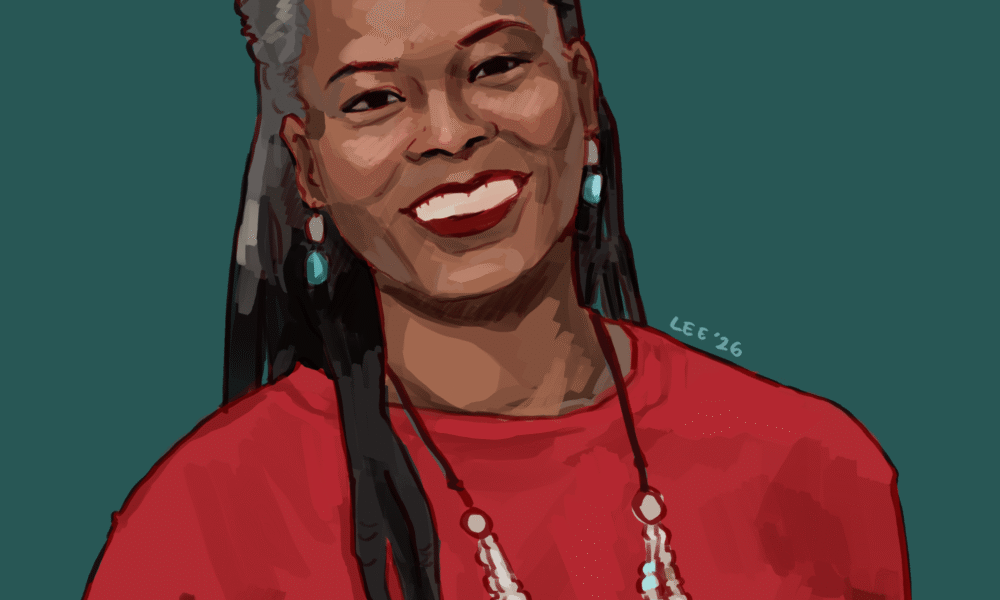
Meet your prof: Loydie Jerome-Majewska

From uncovering the genes that cause birth defects to serving as Chair of the Board of Directors of the Canadian Black Scientists Network, Professor Loydie Jerome-Majewska has been a catalyst for change across fields. She serves as a professor in McGill’s Department of Pediatrics and senior scientist at the Research Institute of the McGill University Health Centre. Jerome-Majewska sat down with The Tribune to shine light on her work in developmental biology and her efforts to advance equity and representation in the field.

Since the start of her academic journey at Wesleyan University, Jerome-Majewska has approached science with curiosity and an open mind. As an undergraduate pursuing an honours degree in biology, she gained hands-on laboratory experience working with her advisor, Laura Grabel, a professor in the Department of Biology.

“She was this amazing researcher who had children of her own, who danced after work, I mean, she just did it all,” Jerome-Majewska said. “And I thought that was just awesome. And so, I applied for graduate school.”

Jerome-Majewska continued her studies in graduate school at Columbia University’s medical campus in New York City.

“I worked with another amazing woman, [Virginia] Papaioannou,” referencing her graduate advisor and a prominent developmental biologist. “[She] was making a genetic mutation in mice using embryonic stem cells. It was brand new. Had never been done. I’ve just been fortunate to have really good advisors, and she also had children, whilst doing amazing science, she was just an amazing person.”

Combined with her postdoctoral work at the Memorial Sloan Kettering Cancer Institute with Elizabeth H. Lacy as her postdoctoral advisor—one of the women who started the whole molecular biology techniques in mice—Jerome-Majewska’s academic journey laid the foundation for her current research. Currently, she focuses on developmental disorders, using mouse models to predict how gene mutations could affect human patients.

“Now I’m interested in researching babies with congenital malformation at the time of birth, who have malformations when they’re born because things went wrong during embryogenesis.”

With a person-first approach to science, Jerome-Majewska emphasizes the importance of setting priorities to maintain balanced academic excellence, which, for her, meant stepping down from teaching to focus on her research.

“I enjoyed my teaching. I met some awesome undergrads, but you have to do it well. I’m doing a lot of other things too. I can’t do it all. You can never do it all,” she said.

Nevertheless, while the field of developmental biology continues to flourish, Jerome-Majewska notes that inclusive representation remains a challenge.

“I think there are things that impede how far we’ve moved into not just my field, but in science in general, because I don’t think everybody interested or excited who can contribute has been able to participate and contribute,” Jerome-Majewska said. “I think humans have huge potential, and if we could have all of the different people participate, we’d be so much further. Yeah, so in that way, I think that’s too bad for all of our field […], if everybody’s doing the same thing, we’re not gonna get anywhere.”

This recognition of social barriers inspired her involvement with the Black Canadian Scientists Network, which, with over a thousand members, creates space for representation and collaboration in science and is currently focused on the GenCARE project.

“We’ve been able to get part of the Genome Canada grant to sequence the genomes of people of African ancestry, looking at diseases that impact the population negatively.”

Looking toward the future, Jerome-Majewska emphasizes the importance of building a more inclusive genetic research landscape for the future generation of researchers.

“I think, for the GenCARE project, I’m super excited, because, as a Black woman, I know that precision medicine is coming, and if we don’t have the DNA from people that look like me, it’s not gonna work. And I can do something about it, I have the skills. So, it’s a no-brainer.”

Editorial, Opinion

Montreal upholds its colonial legacy by failing to prioritize reconciliation

On Nov. 18, Montreal Mayor Soraya Martinez Ferrada announced the composition of her new 14-member executive committee, with roles ranging from security and housing to green economic development. While Ferrada’s committee included a plethora of portfolios, it omitted a committee member explicitly responsible for reconciliation with Indigenous Peoples—a role that had been active for almost eight years under the Valérie Plante administration. 

Ferrada has insisted that reconciliation remains a top priority for her administration, stating that the responsibilities of the role would instead be handled by Associate Councillor of Cultural Services, Diversity and Inclusion (SDIS), Josué Corvil. However, Corvil’s title contains no explicit reference to reconciliation.

In conflating reconciliation efforts with ‘cultural diversity and inclusion,’ Ferrada’s government has failed to re-enshrine the importance of acknowledging, atoning for, and taking action to provide redress for Canada’s history of colonial violence and dispossession. Instead, this homogenization collapses nation-to-nation responsibility into a vague diversity mandate. The Ferrada administration must reinstate the role and pursue reconciliation in its genuine form: A distinct political relationship rooted in Indigenous sovereignty that addresses the city’s presence on the unceded land of the Kanien’kehá:ka, Anishinaabeg, Abenaki and Huron/Wendat peoples.

Plante first introduced the reconciliation role in 2018 following citywide criticism for her executive committee’s lack of racial diversity. When announcing the creation of the role, Plante framed it as critical to strengthening dialogue with Indigenous nations and improving the efficacy of the city’s reconciliation efforts. Yet, the changes Plante’s cabinet implemented through this role remained superficial, neglecting deep-rooted issues that affect Indigenous people at disproportionate rates, such as police harassment, anti-Indigenous racism, and homelessness. Municipal action repeatedly stalled at symbolism—resulting in statements, consultations, and commemorations without durable policy, funding or enforcement. 

The Ferrada government had an opportunity to correct the egregious shortcomings of prior administrations, but by abolishing the reconciliation role, her government has abandoned its obligations—not only to move beyond the lacklustre efforts of her predecessors, but to commit to reconciliation at all. Many of the issues central to the objectives of reconciliation—land claims and stewardship, consent over development, policing, and criminalization—do not fall under the ‘diversity’ umbrella of responsibilities, making her restructuring of the committee nonsensical and highly problematic. 

Indigenous children are over 17 times more likely to be removed from their families and placed in the child welfare system than non-Indigenous children. These high rates of parent-child separation are a direct continuation of the Residential School system, which perpetuated a multi-generational cycle of family disruption. Clearly, combating colonial structures, which are deeply embedded in every aspect of governance, policing, healthcare, and child welfare, requires more than standardized Equity, Diversity, and Inclusion (EDI) measures. Any policy that governs enforcement, service access, or institutional oversight should require not just consultation, but active inclusion and decision-making power. Yet, with the removal of this role, the cabinet has done more than sideline reconciliation—it has eliminated Indigenous representation altogether, effectively shutting Indigenous voices out of executive decision-making. 

The city’s decision to bury reconciliation inside Corvil’s role under SDIS runs parallel to McGill’s own chronic failure to prioritize genuine reconciliation measures. The university has repeatedly claimed its commitment to the 94 calls to action identified by the Truth and Reconciliation Committee and its own 52 Calls to Action, yet it has repeatedly failed to deliver anything more than mere symbolic commitments to institutional change. Empty land acknowledgements cannot conceal the fact that the university continues construction of the New Vic Project and aggressive legal injunction against the Kanien’kehá:ka Kahnistensera (Mohawk Mothers) despite mounting evidence of potential human remains on the site. 

If reconciliation is truly a priority, both Montreal and McGill need to act as such—structurally, not rhetorically. Reconciliation cannot be managed as a sub-file of ‘inclusion.’ It is a political process that demands redistribution of power, consent, and sustained action.

Commentary, Opinion

In exercising institutional restraint, McGill protects only itself

This past November, McGill’s Advisory Panel on Campus Expression (APCE) delivered a report on the state of academic freedom and expression at the university. The report recommended that McGill exercise “institutional restraint” and refrain from responding publicly to controversial geopolitical issues in order to preserve academic freedom. This policy encourages McGill to prioritize its reputation over critical advocacy, neglecting global responsibility under the pretense of protecting free thought.

Following the report’s publication, President and Vice Chancellor Deep Saini issued an enthusiastic statement affirming the APCE’s recommendations on campus expression. However, the report’s call for political neutrality undercuts McGill’s stated commitments to responsibility and global engagement. By extricating itself from political discourse, McGill forfeits its power to catalyze meaningful community discussion. 

Just last week, in light of the brutalization of Iranian protestors, McGill released an email directing students to mental health resources. Strikingly, this email was sent only to students on McGill records as Iranian passport holders and did not include a clear condemnation of the Iranian government’s actions. This message exemplifies McGill’s reticence to speak publicly on issues with global reach and disturbing human rights implications. 

While the university is eager to embrace its reputation as a globally-renowned institution, it engages selectively with the world around it, prioritizing its own reputation over advocacy. Because McGill’s priorities are not transparently reflected in its mission statements, the university’s decision to implement institutional restraint rings particularly dissonant. 

In its report, the APCE draws a false contrast between academic freedom and institutional positions, weaponizing this manufactured dichotomy to justify McGill’s silence on geopolitical issues. The report does not offer a clear definition of academic freedom, but merely describes the concept as “associational to freedom of expression” and bound by “the standards of scholarly research and inquiry.” The APCE’s intentional vagueness in defining academic freedom obscures the fact that official university stances and academic freedom are not inherently at odds with one another. Arguably, academic freedom is epitomized when educational authority figures can simultaneously espouse opinions and encourage community dissent. It is dangerous to conflate neutrality with equity and tolerance, as such practices vilify the expression of opinions. Additionally, if academic freedom extends only so far as “scholarly standards,” then opinions, institutional or otherwise, are protected only when they reinforce McGill’s pre-existing party lines.

This outcome—where the McGill administration’s biases are preached as nonpartisan and student voices are made political—is at clear odds with the APCE’s overarching goal of maintaining a vibrant academic and intellectual culture at McGill. 

The APCE advocates that McGill assume a neutral stance on all geopolitical issues. However, maintaining neutrality is a position in and of itself. In today’s polarized climate, acknowledging facts can be perceived as a political act. Institutional restraint enables McGill to refrain from affirming vital truths as suits the university’s agenda. In its report, McGill repeatedly refused to acknowledge genocide in Gaza, instead referring to the conflict as the “Israel-Gaza War.” Although intergovernmental organizations and NGO’s, including the UN, have repeatedly stated that the Israeli government’s actions align with the definition of genocide, in its report, the APCE employs misleading alternative terminology that downplays the conflict’s severity. 

Yet, McGill doesn’t stray from all political conviction. In 2022, the Provost issued a statement denouncing Russia’s invasion of Ukraine and expressing “shock and sorrow” over the conflict. Herein lies just one example of how the concept of neutrality can be selectively applied to uphold some truths while obscuring those deemed “too controversial” for public endorsement. In many critical instances, McGill, a school that prides itself on promoting the “dissemination of knowledge,” chooses to remain silent and protect its reputation. 

The APCE cited community outrage regarding previous university-issued geopolitical statements as a pretense for the necessity of institutional restraint. The report stated that, on an individual level, many faculty and staff members felt discouraged from voicing their opinions on political issues because they fear being negatively misinterpreted. Thus, the students are burdened with the responsibility to foster a campus environment that promotes constructive conversation and institution-level dialogue over ‘cancel culture,’ whereas professors—hired with a duty to protect academic freedom and promote discourse—are absolved of this duty. 

The APCE portrays institutional restraint as promoting academic freedom, drawing a false contrast between the declaration of political views and the protection of free thought. Yet, in today’s polarized social climate, even the truth has become politicized. Truth is imperative to freedom, both academic and otherwise. McGill would be wise to remember this.

Cross-Country / Track, Know Your Athlete, Sports

Meet the co-chair of McGill’s Black Varsity Association

When Ashleigh Brown, U4 Arts, first arrived at McGill, she had barely dreamed of being a varsity athlete, let alone running a campus-wide organization of athletes. Now, as one of the current Track and Field team captains, she juggles the responsibilities of student-athlete life with those of the Black Varsity Association (BVA)—McGill’s student-run initiative dedicated to uniting, supporting, and advocating for the university’s Black athletes.

The BVA was originally founded in 2000, but completely dissolved during the COVID-19 pandemic. Its then-leaders graduated, and with them left the association’s remaining support system. When McGill students and athletes returned to campus in 2022, two former BVA members invited Brown to join, and she has been active in the association since. 

Reviving the BVA was not a straightforward process and required convincing the McGill Athletics administration of its importance. In an interview with The Tribune, Brown shed light on the need for the BVA.

“Once you’re a person that goes so long without something, you start to […] think that you don’t need it,” Brown said. “But, with continuous advocacy, there’s always people who are willing to help and be allies. And it’s about finding those right people within the administrative level specifically. That’s been one of the tougher parts.” 

Beyond forming relationships with McGill Athletics’ administration, the main focus of the BVA is fostering community between its athletes. 

“Finding people who share your culture and help you feel comfortable is something that really helps you excel in your sport,” Brown said. 

As a Jamaican athlete herself, Brown recalled feeling surprised not to find any other Jamaican athletes on the track team. 

“It’s already enough that you’re an athlete and you come to a totally new province or totally new school, and you have to adjust to that. But imagine when there’s not a lick of people who can relate to you culturally. It can really impact you in your performance.”

As Brown has spent more time in the BVA, her responsibilities have increased, along with the gratification of the association’s hard work paying off. 

“The most rewarding part has been being able to see the community slowly become stronger in front of me. With the more events we have, people recognize each other and friendships are being formed.”

As the BVA’s current co-chair, Brown helps ensure that the association serves as a hub for resources tailored to McGill’s Black athletes. 

“I was once there, an athlete that knew nowhere to go for any type of resource, whether it be monetary or any type of mental health support that’s specific to the experiences that you face at the level that we compete and as a person of colour,” she said. “You have things like racism in sport all the time. But how can you get that help from people who actually know how to help you? I’ve been able to direct people to those spaces.”

Perhaps the biggest issue facing the BVA now has been McGill Athletics’ announcement that, as of next year, 25 of McGill’s varsity and club sports will no longer exist. One of the most surprising teams to be included in the list of cuts is the Track and Field team, which Brown said has the most Black athletes and athletes of colour of any McGill team. Since over half of the BVA’s executive board is on Track and Field, they face losing their status as athletes altogether. 

“I don’t agree with their decision [to cut Track and Field] at all,” Brown said. “It does not make any sense because our team is one of the best. And this year, we’ve been performing the best we ever have. The McGill track team is still fighting against this decision.”

Despite this upcoming uncertainty, Brown remains optimistic about the BVA’s future and its importance at McGill.

“I’m hoping we can continue, and that BVA continues to grow, and that the administration continues to, or eventually recognizes how important it is to have associations like these so that they can better support [their student-athletes],” Brown said. “But most of all, seeing athletes of colour feel comfortable at McGill has been one of the greatest things ever.” 

Off the Board, Opinion

An ode to emails and the archival nature of the inbox

I have often felt as though the diction and formalities of texting culture—or lack thereof—should emulate that of email correspondence. Emails preserve a level of linguistic intentionality that contemporary messaging platforms have largely flattened.

My affinity for emails began rather early. At the age of nine or ten, my school provided each student with a personalized institutional-domain Gmail address. As a child without a phone, this ‘brand-new’ mode of communication became my lifeline. 

This early exposure positioned email as more than a communicative tool; it became a formative space through which I learned the rhythms and nuances of written exchange. Email correspondence required a new level of intention, and through repeated engagement, I came to understand this attentiveness as intrinsic to the act of communication itself.

Electronic mail, as a hybrid epistolary form, preserves the intimacy and kinship of letter-writing whilst adapting correspondence to modern temporality, thereby sustaining the kind of relational exchange fundamental to human flourishing. 

As I grew up, my inbox became intertwined with moments of personal and academic development. It was through this electronic correspondence that I learned of scholastic achievements, opportunities, and acknowledgements that continue to shape my being. Beyond these moments, email also functioned as a consistent means of interaction, facilitating friendships in my adolescent years and professional relationships later on.

The Aristotelian notion of human flourishing, or eudaimonia, indicates that to live well is to participate in rational activity enacted through reflection, deliberation, and the sustained cultivation of virtue. Such activities unfold temporally and require the gradual shaping of one’s ethical and intellectual character through collective discourse. One comes to know one’s own reasoning through encounters with others and being respected within shared intellectual life.

Central to this is philia, a form of friendship rooted in mutual recognition and ongoing participation in one another’s intellectual and virtuous becoming. Aristotle positions such friendship as necessary to life itself because human beings do not actualize their capacities in isolation. Within this companionship, one’s thinking is both a sacred and social affair. 

To live well, then, requires communicative companionship. The sharing of reflections, deliberations, and affirmations in sustained intellectual discourse becomes constitutive of the flourishing life insofar as it situates rational activity within lived relational practice. 

It becomes difficult not to situate email within this relational structure. The exchange of drafts and written feedback sustains a form of intellectual companionship across distance. One participates in another’s thought process; one’s own thinking is received and built upon. Through such correspondence, thought becomes a joint venture. Where letters historically carried friendship across geographies, email preserves this epistolary nature within a temporality adapted to contemporary life.

The significance of the email does not lie simply in its ability to sustain intellectual companionship; it also permits one’s voice to circulate in its authored form. One writes oneself into presence, without needing to worry about an incoming message interrupting the cadence of thought before it has been completed: The email is composed in full before it is sent. There is something especially resonant in encountering one’s voice intact, given how often Black articulation has been historically mediated by white third parties. But with emails, diction remains one’s own. Cadence remains one’s own. Online correspondence is entangled with autonomous self-authorship. 

To look back on these threads is to encounter evidence of one’s becoming. Words once offered outward return and bear witness to intellectual growth, kinship, and authored presence across time. The inbox comes to function as a personal archive assembled unintentionally through the quiet accumulation of correspondence, preserving one’s exchanges and accomplishments.

If the medium through which we communicate shapes the emotional and relational experience it carries, then email’s hybrid form produces a communicative intimacy distinct from both handwritten letters and instantaneous direct-messaging. Emails are the beautiful halfway point, the love child of letters merged with direct messages and texts. They inherit the intentionality and reflective nature of handwritten missives whilst retaining the immediacy of digital delivery.

I fail to understand why one would deny oneself the opportunity to participate in this form of communication through the vessel of online mail. What a beautiful way to adapt to the times whilst still respecting the sacred passion of epistolary tradition. 

McGill, Montreal, News

Professor Annie Bunting explores gender-based violence in Africa

On Wednesday, Feb. 4,  Annie Bunting, professor of Law and Society at York University, hosted a discussion at the McGill Faculty of Law’s Centre for Human Rights and Legal Pluralism (CHRLP) entitled “Knowledge production and gender justice in post-conflict Africa” at New Chancellor Day Hall

Bunting opened the presentation with a background on her past work in international feminist law, including her role as the Chair of International Gender Justice at York University. 

“I started as a Boulton fellow here at McGill back in another century, which is such an amazing program,” Bunting said. “I am really glad to be engaging with all of you, especially at the Centre for Human Rights and Legal Pluralism because the [work done here] fits really nicely with my own.”

Bunting then explained her experience working on the Conjugal Slavery and War Project from 2015 to 2020, a project that documented cases of forced marriage during times of conflict to establish a system of reparations for survivors of gender-based violence. 

“The coalition was monitoring international criminal tribunals and their prosecution of gender crimes, starting with the international criminal tribunal for Rwanda,” Bunting said. “The special court for Sierra Leone in 2008 found forced marriage to be its own heading of a crime against humanity. This was the impetus for this further research project.”

Bunting then shifted her focus to the Kinshasa Declaration, made at a Survivor’s Hearing on reparations during November 2021 in Kinshasa, the capital of the Democratic Republic of the Congo. To help create this document, Bunting assembled survivors and non-governmental organizations (NGOs), and secured financial backing from 12 African countries. 

Bunting emphasized the number and diversity of goals presented during the hearing, explaining how she, the survivors, and the NGOs involved in the creation of the declaration came to the hearing with different outcomes in mind. 

“I’m interested in the tracking of these crimes against humanity, especially forced marriage,” Bunting said. “You have survivors [who] are very concerned about school fees for their children, about medical fees, about reintegration. So, you have really quite disparate goals for this event.” 

The event then transitioned to an open discussion, during which McGill Law Professor René Provost explained how language barriers impacted the drafting of the declaration. 

“One of the challenges we encounter is that the vocabulary used to talk about sexual relations in some African languages tends to be metaphorical, which posed enormous challenges when we convert that to the language of international or criminal law,” Provost said.

Next, McGill research fellow and Board of Displaced Internationals member Yana Liubymova spoke on the connection between sexual violence and conflict through her experiences with the war in Ukraine

“Unfortunately, we have numbers and numbers of survivor cases, and unfortunately, the statistics are growing. But, we improved our legislation and have a special program for survivors,” Liubymova said. “The displacement process is absolutely linked with the survivors of sexual violence in war.”

Bunting concluded by emphasizing the need for a focus that expands beyond individual survivor narratives, tackling the systemic issues themselves that enable gender-based violence.  

“I don’t want to leave the impression that we should overly rely on survivor testimonies or individual harm, because I think that can limit our thinking to not engage in substantive and structural redress. And that’s not an easy thing, right? It’s not easy to talk about what structural change looks like,” Bunting said. “These individual narratives exist within this broader communal push for recognition and reparations and for substantive change.”

Behind the Bench, Sports

Conflicting feelings of fandom

Never Google the owner of your favourite sports team. It almost never yields results that make you feel good about spending your money on tickets and merchandise, and often leaves you feeling put off altogether. 

Five National Football League (NFL) owners have been named in the latest Jeffrey Epstein file release, with all communications occurring after Epstein’s 2008 conviction for sex offences. Minnesota Vikings owner Zygi Wilf inquired about purchasing a property in Paris from Epstein in 2015. Epstein spoke via email with someone named “Josh” about New England Patriots owner Robert Kraft, who was arrested and charged with two misdemeanour counts of soliciting prostitution in 2019. Epstein alluded to “a past issue with Kraft that may come to light later.” Josh Harris, co-owner of multiple teams, had a multi-year business relationship with Epstein and visited his Manhattan home on at least one occasion in 2014. Meanwhile, New York Giants owner Stephen Tisch crudely discussed multiple girls, including one so-called “Ukrainian girl,” over email with the depraved pedophile. In emails where Tisch asked Epstein to be set up with this “Ukrainian girl,” she was referred to in vulgar language before Tisch followed up with “pro or civilian,” inquiring if she was a prostitute. 

On Jan. 30, Tisch put out a statement saying he “regrets associating” with Epstein and that “we all know now, he was a terrible person”—something Tisch should have known from Epstein’s prior 2008 conviction.

While the Epstein files dominate the news, Memphis Grizzlies owner Robert Pera has flown under the radar. On Jan. 29, investigative journalist Pablo Torre shared the findings of an investigation into the former Apple engineer and founder of Ubiquiti Inc., a company that specializes in making user-friendly internet equipment servicing remote areas of the globe. 

One of Ubiquiti’s top customers is the Russian military. The company stopped direct shipments to Russia when sanctions were implemented in 2022, but since then, sales have continued to pass through third parties. The company has not yet released a public statement on Russian combat units obtaining their equipment, but verified videos from the Donbas region clearly show Ubiquiti technology being used to commit war crimes against civilians. 

One Ukrainian military official estimated that 80 per cent of Russian drones use Ubiquiti equipment to relay video feed to command centers. The technology is so important that Russian military units have made Telegram videos begging for public donations in order to purchase more of the equipment. The equipment is small enough that it can be attached to the vests of operators, and, unlike satellite internet, it cannot be disabled by the provider remotely.

Although the company has stopped direct sales to Russia, sanctions experts have told Pablo Torre that pleading ignorance is not a valid legal defence for how Russia obtained their technology. 

This is not the first time Ubiquiti has been involved in a scandal over sanction violations. The company settled for over $500,000 USD in 2014 after it granted exclusive rights to a United Arab Emirates-based distributor to sell Ubiquiti technology to Iran. At the time of the settlement, Ubiquiti allegedly did not have a proper compliance department, and since then has taken no meaningful steps to ensure its technology does not end up in the wrong hands. Western tech illegally ending up in Russian hands is a large part of why the war is still ongoing. At best, Ubiquiti is being negligent; at worst, it is a willing participant in war crimes. 

From a fan perspective, it can be really disheartening to know that supporting your favourite team may directly benefit these owners. It can cause a lot of conflicting feelings and disconnect fans from the team. It often feels like blissful ignorance might be your best option as a fan because major sports owners are rarely in the news for doing good in the world.  Although our individual influence over such matters may appear minuscule, it is crucial that as a whole we pay attention to these issues, as this is the only way we can impose any sense of accountability on owners.

No fan wants to hear that the person who calls the shots for their favourite sports team is connected to a pedophile or is actively fueling wars. For those who want to support their favourite team and be part of something bigger than themselves, it is unfortunate that they may be financially benefiting some truly despicable folks in the process. Sports organizations are a massive part of the communities in which they exist and thus have a duty to properly represent the fans who support them.

Research Briefs, Science & Technology

From fauna to flora: The benefits of switching to plant-based protein

Vegetarianism has been on the rise for years; in 2024, 2.3 million Canadians self-identified as vegetarian, a 176 per cent increase from 2015. Several factors contribute to the marked rise, including vegetarianism’s perceived benefits for both individual consumers and the environment. But how beneficial is it really? McGill Professor of Animal Science, Surgio Burgos, and his former PhD student, Olivia Auclair—a postdoctoral researcher at Oxford University’s Environmental Change Institute—worked to determine the benefits of transitioning towards, or entirely to, a vegetarian diet.

“First, we looked at the contribution of important foods, which we call ‘livestock produce products,’ whether that be meat, red meat, white meat, or dairy foods, and the contribution to nutrients,” Burgos said in an interview with The Tribune. “[We] then looked at the environmental impact [of these foods] through greenhouse gas emissions [….] [Then we] put the information that we had gained for Canada in the context of other countries.”

In their recent review paper, Burgos and Auclair aimed to further elucidate the consequences of switching from animal-based protein to plant-based protein, analyzing nutritional, environmental, and health impacts of complete and partial dietary substitutions.

“Basically, we found that there were co-benefits of substituting red and processed meat with plant protein foods across all three of the dimensions that we looked at, so nutrition, environment and also health,” Auclair said in an interview with The Tribune. “So that’s good news, and we saw that for total replacements, where 100 per cent of red and processed meat was substituted. But we also saw, obviously smaller, but similar co-benefits when simulations were partial substitutions, so 50 per cent of red and processed meat.”

Their study found that substituting animal-based protein with plant-based protein sources led to average increases in calcium, iron, fibre, and potassium intake, as well as decreased levels of saturated fats. They, however, noted that their results were highly influenced by governmental policy. 

“For example, in the Netherlands, they don’t supplement [cow] milk with vitamin D, but we do [in Canada], it is mandatory. In the U.S., it is optional. So that vitamin D outcome changes because of [those policies],” Burgos said.

This illustrates the impact of policy on nutritional levels; the nutritional benefits of switching from animal to plant-based products are dependent upon which sources are fortified. Fortifying plant-based protein alternatives is critical to cementing the benefits of transitioning towards a plant-based diet.

Along with vitamin D, vitamin A, calcium, and iodine levels appear to have been particularly dependent on fortification policy.

“So for me, the goal of the study is to inform public policy in dietary guidance [and plant-based alternative fortification],” Burgos said. “Some countries include environmental impact as part of the considerations that they have to guide dietary guidance [….] But food fortification is another aspect of it.”

Another key finding of the study is that substituting meat with plant-based alternatives yields greater benefits than dairy substitutions.

“We’re sort of seeing there’s no clear co-benefits from substituting dairy. You get trade-offs with certain nutrients, you don’t see as big of reductions to diet-related greenhouse gas emissions, and the health gains that we saw in the dairy scenarios were only because of this increase in plant-based foods that accompany the reduction in dairy,” Auclair said. 

The research highlights the importance of choice in dietary substitutions. While the study shows that opting for plant-based alternatives can have positive environmental, nutritional, and health-based impacts, policy plays a huge role in the nutritional benefits of these substitutions. Their findings also reveal that changes don’t need to be extreme to have a real impact; substituting meat with plant-based alternatives, even just once a week, can benefit both your health and the environment.

“I think, for me, it’s not so much like telling people to eat a specific way, like ‘You should do this dietary pattern, or this dietary pattern,’ it’s really about just making more conscious food choices,” Auclair said. “And like Sergio said, like a few nights a week, integrating [plants], instead of cooking something with red meat, just try a new recipe [….] It’s about those individual choices that you make every day.”

Read the latest issue

Read the latest issue