

Latest News

Science & Technology

Inside McGill’s chapter of The National Society of Black Engineers

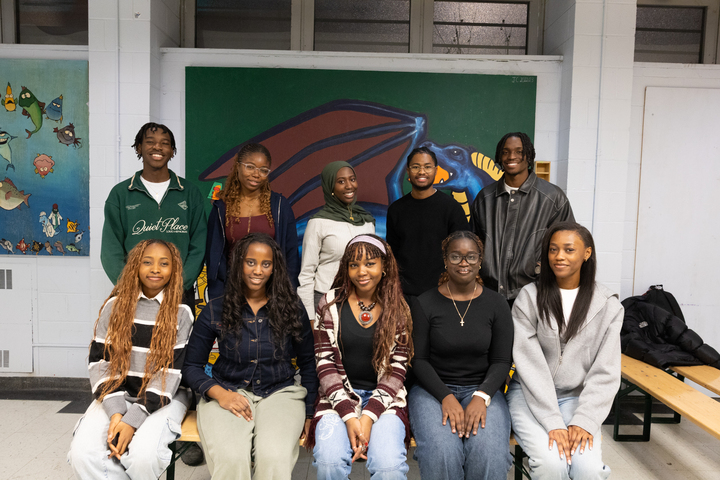
For many Black engineering students at McGill, finding community can be just as important as academic success. The McGill chapter of the National Society of Black Engineers (NSBE) aims to provide that support through camaraderie, mentorship, and leadership.

One of the students helping lead these efforts is Fatima Janneh, a third-year student in McGill’s Department of Bioengineering, and the current Vice President of NSBE McGill. Janneh has been involved with NSBE since her first year at McGill, but her connection to the organization began even earlier. While still in high school, she attended a summer program at the University of Toronto (UofT) and heard a guest speaker—then president of UofT’s NSBE chapter—talk about how the organization provided networking and professional opportunities. At the time, Janneh was interested in STEM but unsure about pursuing engineering. Seeing Black engineers, particularly women, changed that perspective.

“People of colour, Black people like me, a woman who wears a hijab—I was not seeing that in engineering,” Janneh said in an interview with The Tribune. “Other people in that panel who were also Black inspired me to pursue this career. I was 16 years old at the time. Fast forward a couple of years, and now I am in my first year of university.”

One of NSBE McGill’s most anticipated events is the Black Legacy Dinner, held annually during Black History Month. The event brings together students, professionals, and sponsors from across the Greater Montreal Area to discuss experiences in the professional world as Black individuals. This year’s dinner will take place on Feb. 16, and is themed “Yes We Can”—a reference to former U.S. President Barack Obama. The dinner features up to 100 participants and a panel of speakers from different backgrounds, including engineering, social work, philanthropy, and startups.

Janneh also discussed how NSBE’s internal culture plays a central role in its impact. General meetings include informal discussions about members’ weeks and shared experiences, alongside event and logistic planning, which helps create an environment where members feel comfortable speaking openly.

NSBE McGill collaborates regularly with other Black student organizations at McGill, including the Black Student Network, the African Students Society, and the Caribbean Students Society. These collaborations aim to bring together different Black student communities at McGill through social and cultural events.

NSBE McGill is also connected to other chapters across North America. Each year, members attend the NSBE Convention, which brings together more than 10,000 students. This year’s convention will take place in Baltimore from March 17 to 22. The event offers networking opportunities with major companies and allows students to connect with peers from other chapters. Additionally, NSBE McGill participates in the East Canada Zone conference and was recently named Chapter of the Season for its involvement in student life.

While NSBE McGill has grown since its founding in 2005, Janneh noted that challenges related to representation remain.

“When I walk in a room, not many people will know the feeling of being a Black student. The Black identity can be very different for others [….] There are certain prejudices that people might have in their minds but that they will never voice, though you can still feel them,” Janneh explained. “In the past, NSBE had to struggle with visibility and member count. But now, every single year, I see it grow more.”

Janneh stressed that her presence at McGill is tied to a broader sense of responsibility.

“I am here for more than just my degree. I am here to learn, grow, develop my skills [….] There is a pressure on me to be able to grow. I know my parents came here for us to have a better education, for us to have a better future. I can’t just throw this down the drain.”

To first-year students who may be questioning their place in engineering, Janneh offered one piece of advice: Avoid isolation.

“Just because you do not see representation in your class does not mean you won’t find representation anywhere else. I know it is difficult to go to those events when you don’t know anybody, but reaching out will bring you where you need to go.”


Basketball, Sports

Optimism for Redbirds Basketball

McGill’s Men’s Basketball team currently finds itself at the bottom of the Réseau du sport étudiant du Québec (RSEQ) standings. The conference is not a forgiving one, as it boasts two top teams: The Bishop’s University Gaiters, ranked second in the country, and the Université Laval Rouge et Or, who are not far from the top 10. McGill has had a rough go of things with a 2–13 record, but the Redbirds are a better team than their record would suggest, with plenty of hope for the future. 

Over the weekend, the Redbirds played Laval in what was a familiar tale. The McGill team had a strong start to the fourth quarter, bringing the crowd to life. Excitement in the gym peaked after a thunderous dunk from Saransh Padhy who finished with a team-high 18 points, accounting for 60 per cent of the total output from McGill’s five starters. Laval responded with a scoring run of their own, taking a game that was once tied at 55 apiece and quickly building a double-digit lead. Letting close games slip away in the fourth quarter has been an issue all season for the Redbirds, who have lost six times by just 12 points or fewer. In modern basketball, a 12-point swing is fairly minor. 

The Redbirds’ fourth-quarter struggles have not happened in a vacuum. McGill ranks last in points per game amongst the five RSEQ teams, with a measly 68 points. Looking across all of U SPORTS, only three teams in the country average fewer than 70 points on offence. At the same time, McGill surrenders around 80 points per game, which also puts them last in the RSEQ. 

While the Redbirds have not exactly excelled this season when it comes to offensive efficiency, the metrics suggest they should not be a bottom-three offence in the country or the worst in the RSEQ. They sit third on the RSEQ standings for field goal and free throw percentage, while occupying fourth in three-point percentage. Their main issue has been the number of shots taken in comparison to their opponents. This discrepancy is a two-fold issue—the team is turning the ball over roughly four times per game more than opponents, while also being outrebounded by an average of nearly six rebounds per game. No matter how efficient you are, it is a tall task to win with 10 fewer possessions.

Rebounding issues were on full display against Laval, where the Redbirds were outrebounded 48-35 and lost the fourth quarter rebounding matchup by four points. McGill could not keep opposing big men off the glass late in the game, something that both extended Laval’s lead and ran the clock dry. The inability to pull in rebounds also led to several Laval free throws as McGill’s defence scrambled to get stops in the paint. McGill has players who can guard and force missed shots, but what happens before the shot goes up no longer matters with a forgone rebound.

Despite this season’s struggles, there should be plenty of optimism moving forward: It is clear that the Redbirds have plenty of talent and room to grow. Their entire roster has remaining eligibility next season, including the team’s two top scorers, Sean Duff and Padhy. 

Duff has had a strong start at McGill, scoring in double figures in 13 of the 18 games he has played dating back to preseason. Meanwhile, Padhy has truly broken out. Last season, he averaged 7.5 points and 3.9 rebounds; this season, he is up to 13.1 points and 7.3 rebounds per game. Padhy appears to be a safety valve on offence late in possessions, someone whose teammates can trust to make the best of a short shot clock. With so many returning players, Assistant Coach Martin Cassini sees a bright future for the team. 

“I think some of our guys who have been here a couple years will be ready to step into leadership roles,” Cassini said. 

He also highlights this year’s rookies as a bright spot in the team and a reason to be excited about the future.

“Our rookies this year have great work ethic and willingness to improve their game,” Cassini said.

Editorial, Opinion

Canada would rather spend millions than confront systemic anti-Black racism

In 2020, the Black Class Action Secretariat (BCAS), a non-profit organization dedicated to addressing systemic discrimination against workers across Canada’s public institutions, filed Thompson et al. vs Canada, a federal class action representing 45,000 Black Canadians. The lawsuit seeks to address systemic anti-Black racism in the Public Service of Canada, namely discrimination in the hiring and promotion of Black employees. 

After five years of litigation, the Federal Court denied certification of the class action in March 2025. Despite publicly acknowledging the pervasive nature of anti-Black discrimination in the Public Service and settling class actions with other groups in the same sector, the Canadian federal government has refused to recognize the legitimacy of the lawsuit’s claims and has spent over $15 million CAD targeting the BCAS aggressive legal injunctions.

By financing the obstruction of Black public servants from legal channels instead of taking concrete, institutional action against systemic racism, the Government of Canada has once again revealed that its commitment to fighting anti-Black discrimination is superficial and perfunctory. The Canadian federal government’s continued prioritization of public statements over effective policy only leads to further entrenchment of structural racism in the public sector—a pattern mirrored by institutions across the country, including McGill. 

Black employees are chronically underrepresented in the Public Service, making up less than two per cent of managerial positions and often being hired in lower-level administrative categories. In the criminal justice system, where Black people are disproportionately targeted through over-policing and incarceration, representation is crucial. A lack of diversity and Black leadership within the Department of Justice and the Royal Canadian Mounted Police (RCMP) shapes outcomes for Black Canadians and further ingrains bias into already discriminatory systems. 

To address these gaps, the BCAS lawsuit has demanded several tangible action items: Equitable representation, an external reporting mechanism for harassment and misconduct, financial compensation, and a Black Equity Commission to coordinate recommendations. Injuries amount to $2.5 billion CAD, with the BCAS also requesting that funds be allocated for punitive damages to deter future discrimination. 

The Federal Court justified rejecting the lawsuit’s certification by asserting that its claims  could risk over-expenditure, despite the government comfortably investing $15,024,452 CAD in legal dues to fight the BCAS. This funding could have been transformative if directed toward the action items identified by the BCAS, or if employed to tackle anti-Black racism in other institutions across Canada, such as the healthcare, education, housing, and child welfare systems. The federal government’s message is clear: Canada would rather invest in silencing legal claims than taking genuine steps to confront anti-Black racism.

Crucially, the lawsuit also demands amending the Employment Equity Act to create a separate category for Black employees distinct from the ‘visible minority’ designation, a term used to identify groups eligible for equity measures. This strategy of demarcation erases complex differences in experiences between racialized groups in Canada, instead choosing to define ‘visible minorities’ in the negative, as “persons other than Indigenous people who are non-Caucasian in race or non-white in colour”—a framing that positions whiteness as the default against which everyone else is defined. By homogenizing all racialized groups into a single umbrella category, this approach neglects how systemic racism targets Black Canadians through distinct mechanisms that lead to disparate inequities.

This pattern of neglect for comprehensive reckoning is not confined to the federal government. Bound by the Employment Equity Act, McGill’s own policies are too shaped by the presence of the ‘visible minority’ designation and its accompanying negligence, with McGill’s commitment to reconciling its history of racism and slavery remaining superficial. Reporting and faculty testimonies continue to document severe underrepresentation of Black professors, hostile workplace environments, systemic discrimination against Black faculty, exclusion from senior leadership, and an over-reliance on Black labour to drive anti-racism efforts. 


The BCAS has since appealed the Federal Court’s refusal to certify their class action. The Canadian government, its courts, and institutions like McGill are now confronted with a choice: Continue to rely on empty gestures, or take meaningful action toward fighting anti-Black racism. Institutions must disaggregate ‘visible minority’ data, institute binding hiring and promotion commitments for Black workers and faculty, and create independent mechanisms for reporting anti-Black discrimination. Not statements, not mere recognition, not diversion and distraction—radical, systemic change.

McGill, Montreal, News, Recap

Recap: Montreal’s housing crisis becomes increasing cause for concern among residents

In July 2025, the Coalition Avenir Québec (CAQ) agreed to a project proposal that permits cohabitation in social housing, allowing unhoused individuals to live with a roommate. However, as of January 2026, this proposal has not yet been implemented. 

In response, Québec Solidaire called out the CAQ on Jan. 18 for its inaction on the issue. They cited the CAQ’s inefficiency in fulfilling its commitments to provide housing solutions to counter the shelter crisis. 

The city’s homeless shelters are increasingly overoccupied, with many unhoused individuals turning to emergency rooms for shelter. In a written statement to The Tribune, Jayne Malenfant, an assistant professor in the Department of Integrated Studies in Education, explained how the government could implement homelessness prevention to offset the number of people in need of housing.

“The proposed project would have been a start but it would have just treated the symptoms of the housing crisis rather than the root causes,” Malenfant said. “The provincial and municipal governments have to start considering and implementing rights-based policies that see a home as a right, and not something that people can be pushed out of for the profit of landlords or rental companies.” 

The homelessness crisis has worsened with rising costs of living, increasing rent prices, and insufficient funding for community groups. In the first quarter of 2025 alone, the average rent for two-bedroom apartments in the metropolitan area increased by 7.7 per cent, making it harder for residents to find affordable housing. 

Eza-Marie Lambert, U1 Arts, reflected on rising housing costs in a statement to The Tribune. 

“The only reason my parents and I are able to live on the first floor of a beautiful triplex in the Plateau is because we rent it at a discounted price from my extended family, who purchased the whole building for under $70,000 [CAD] back in the late sixties,” Lambert said. “To put that number in perspective, purchasing that same building in 2026 would run you well over $2,000,000 [CAD].”

Science & Technology

How systemic barriers hinder the integration of African immigrants in Quebec’s labour market

Immigrants contribute significantly to Canada’s socioeconomic growth in undeniable ways, yet many of them are excluded from job opportunities for reasons unrelated to their qualifications. A complex interplay of racial discrimination, social isolation, and systemic inequalities shapes the experiences of Highly Skilled African Immigrants (HSAIs) joining the workforce. This raises a pressing question: Despite arriving with strong educational backgrounds and adequate training, why do HSAIs remain so alienated from the labour market?

In a recent publication in the Journal of International Migration and Integration, Jacob Kwakye, a PhD candidate in McGill’s School of Social Work, examined the experiences of HSAIs in the Quebec labour market. He hopes his findings can shed light on the systemic racism Black communities face and inform policy-making moving forward.

“[The] majority of the findings in the study had to do with racial perception,” Kwakye said in an interview with The Tribune. “Although Canada is doing its best and Quebec has a lot of policies in place that try to address issues of racism, there are still certain issues that are perpetuating these kinds of perceptions.”

Kwakye’s study interviewed 16 participants using a qualitative approach, intentionally focusing on those who spoke different languages, held a Bachelor’s degree or higher from a Canadian or African university, and had lived in Quebec for three or more years.

“We’re just trying to look at meaningful narratives, and to be able to get those, you need to reduce the sample size in order to get in-depth knowledge from your participants,” Kwakye explained.

While language barriers were shown to play a role in HSAIs’ reduced ability to gain employment, racial biases held a more significant influence: Racism usually overrides language proficiency in the decision to hire HSAIs.

“The issues of language [as a barrier] also came up because, for the Quebecois context, the language is predominantly French. [The] majority of the participants stated that yes, language is a concern, but it does not supersede issues of racial perception.”

Kwakye also discussed how having a Bachelor’s or Master’s degree still puts them at a disadvantage when looking for work.

“They feel that they are more overqualified [than what the job demands] and that employers feel that because of their higher qualifications, they will not be able to engage them at the workplace,” Kwakye said. “So it’s either you need to reduce your qualifications in order to match the portfolio that is being advertised, or you must hide some of your qualifications to be able to be considered for a particular position.”

The study also revealed that the labour market favours the skills of those with local roots—an upsetting yet unsurprising finding given that it has always been easier for individuals born in Quebec to integrate into the workforce.

“When [HSAIs] are not able to conform and don’t understand the cultural dynamics, they will not be able to fit into these workplaces,” Kwakye said.

Kwakye also highlighted a participant’s experience in the workplace, where biases, racial discrimination, and assumptions about cultural competence directly affected HSAIs’ professional credibility.

“One lawyer said that sometimes some of the Quebecois clients felt unsafe to bring their matters to them or felt that they would not be the best person to help solve their problem, because they perceive [HSAIs] to not understand the Quebec context.”

As Quebec continues to rely on immigration to address employment shortages, Kwakye’s study highlights the contradiction of Quebec’s labour market—a system rooted in discrimination, perpetuated by systemic barriers, yet dependent on immigrant talent. 

Addressing these dynamics is important to create awareness and influence policy-making that does not disadvantage Black communities. Moreover, creating more equitable hiring practices and recognizing foreign credentials as valuable is a critical step to help prevent HSAIs’ exclusion from the workforce. 

Arts & Entertainment, Exhibition

‘Aunties’ Work: The Power of Care’ spotlights Black matriarchs

In many Black communities, ‘auntie’ is not just a family title, but a mark of respect given to women who serve as pillars of their community, regardless of blood ties. They serve as nurturers and mentors to the youth, creating protected spaces where members of their community can dare to dream. Though their labour often goes unacknowledged, its impact is deeply felt by their loved ones. Aunties’ Work: The Power of Care at the McCord Stewart Museum, created by fashion designer and researcher Nadia Bunyan, honours the resilient care networks forged by these matriarchs in Montreal’s Black communities. 

As the founder of Growing A.R.C., a nonprofit that builds community through interaction with material culture and sustainability practices, Bunyan designed the exhibit to embody the core values that guide her work. She made community collaboration central to her creative process, working closely with Montreal’s Black community. Through 21 audio interviews, Bunyan invited members to share their own experiences with their aunties and reflect on the impact of their care. This process gave her a clear understanding of how these figures keep their community united through acts of love and care.

The exhibit’s first section, “Bodies of Care,” features three spotlighted mannequins, each representing a different decade: the ‘70s, ‘80s, and ‘90s. Bunyan explained in a conversation with Alexis Walker, hosted by the museum, that the mannequins and their placement recreate the comfort and safety of entering a room and being greeted by one’s aunties. A lace doily motif decorates the wall behind the mannequins, a detail Bunyan’s interviewees consistently recalled seeing in their aunties’ homes. As a result, the doily motif appears in every section of the exhibit. The mannequin embodying the ‘80s wears a yellow blouse and pants ensemble that once belonged to Bunyan’s mother, adding a personal touch to the installation. 

The “Materialities of Care” section displays borrowed belongings, including garments, books, and CDs, revealing how Black matriarchs influence different facets of life for their loved ones. A touchscreen also allows visitors to gain further insight about the pieces—their source, the stories they tell, and their cultural significance.

A vintage vanity anchors the “Reflections and Continuity of Care” section. The piece sits within a halo of pictures of various aunties, dating from the ‘70s to the present day, creating a sense of being watched over by these nurturing figures. The vanity’s mirror reminds visitors that they, too, are a reflection of the work of aunties and invites them to consider how they can continue the cycle of care for the generations to come.

Lastly, the “Discussions of Care” section features a video projection of a roundtable discussion between some of Bunyan’s interviewees. As one walks through the exhibition, the voices of community aunties and of the people who have directly felt the impact of their care can be heard. In the interview clips, they share their fondest memories with these matriarchal figures. 

Bunyan’s overall work also touches on a social, cultural and political facet of Black communities. While the selected pieces represent symbols associated with aunties, they equally reflect the respectability politics present within the Black community, under which the social scrutiny Black people face manifests in a concern with self-presentation. However, through the love and care that the aunties impart, this deep attention to their appearance shifts into a sense of pride surrounding their identity.

At the end of the exhibition, a private nook offers notebooks and pens for visitors to write down their own reflections on how aunties have shaped their personal lives. Bunyan explained that this section positions itself as a contrast to the ephemerality of art expositions. Through the words on the pages, the experience of the exhibit is immortalized.

Aunties’ Work: The Power of Care runs until April 12, 2026, at the McCord Stewart Museum, located on rue Sherbrooke.

Sports, Winter Sports

Team Canada’s medal makers: Five stories to watch in Milano-Cortina

From frozen rinks to mountain peaks, Team Canada’s brightest stars are preparing for their biggest stage yet. At Milano-Cortina 2026, these five athletes and teams carry not only medal hopes, but years of sacrifice, resilience, and pride.

Connor McDavid and Men’s Hockey

For more than a decade, Olympic men’s hockey has been missing its brightest stars. This year, in Milano-Cortina, National Hockey League (NHL) players are finally back—and no performance is more anticipated than Connor McDavid’s. After watching from afar in 2018 and 2022, the world’s most electrifying player will finally don the maple leaf on the sport’s biggest stage, alongside fellow superstars Nathan MacKinnon, Nick Suzuki, and Cale Makar.

For a generation raised on Sidney Crosby’s golden goal, this tournament signals a new era. Canada enters as a favourite, with a likely showdown against the United States looming. McDavid’s Olympic debut gives him a chance to define his legacy beyond the NHL and lead his country when it matters most.

Marie-Philip Poulin and Women’s Hockey

When the pressure is highest, Marie-Philip Poulin rises like few can. The Canadian captain remains the only hockey player—men’s or women’s—to score in four Olympic gold-medal games. Her two goals in the 2022 final against the United States secured her third Olympic title and reaffirmed her ‘Captain Clutch’ reputation.

She arrives in Italy alongside dozens of Professional Women’s Hockey League (PWHL) players, representing a new era of women’s hockey since the league’s inception in January 2024.

Since women’s hockey debuted in the 1998 Nagano Olympics, gold has never left North America. Nearly every final has been a Canada-USA showdown, decided by inches and nerves. 

Canada will once again chase greatness in women’s hockey’s fiercest rivalry with Poulin at the helm.

Flag bearers Mikaël Kingsbury and Marielle Thompson

Few athletes embody sustained excellence like Mikaël Kingsbury. The most decorated male moguls skier in World Cup history, he arrives with three Olympic medals, nine world titles, and 100 World Cup wins—yet still chases perfection on every run.

Alongside him stands Marielle Thompson, one of ski cross’s most consistent and courageous competitors. Since winning Olympic gold in 2014, she has remained a fixture on podiums around the world, collecting more than 70 career top-three finishes and multiple Crystal Globes.

Chosen as flag bearers, Kingsbury and Thompson represent longevity, resilience, and relentless ambition. In sports where one mistake can end everything, they have remained elite through injuries, pressure, and changing generations. In Italy, they carry not only the flag, but a deep legacy of Canadian winter sport excellence.

Ski half-pipe phenom Cassie Sharpe

Cassie Sharpe’s return to elite skiing is one of Team Canada’s most inspiring stories. The 2018 Olympic halfpipe champion and 2022 silver medallist stepped away to become a mother, unsure if she would ever return.

Two years later, she is back and thriving. In her first season returning, Sharpe earned World Cup podiums, won X Games gold for the first time in six years, and became the first mother to claim the title.

With her daughter watching from home, Sharpe now competes with renewed purpose. Her journey reflects both the unseen challenges athletes face and the courage it takes to chase greatness again.

Figure skaters Deanna Stellato-Dudek and Maxime Deschamps

At an age when most figure skaters have long retired, Deanna Stellato-Dudek is just getting started. In 2024, alongside partner Maxime Deschamps, she captured Canada’s first world title in pairs skating in six years. She completed this feat at age 40.

Once a teenage prodigy, she was forced into early retirement by injuries. Years later, she faced a defining question at a 2016 retreat: What would she do if she could not fail? Her answer—win Olympic gold—pushed her back onto the ice weeks later to begin training in pairs.

After moving to Montreal, the duo steadily climbed the ranks before breaking through on home ice in 2024. Their story is proof that perseverance has no expiration date.

Student Life, Student of the Week

Student of the Week: Aya

In February of 2025, following the completion of her honours-level Bachelor’s degree in clinical nutrition in Gaza, Aya was admitted to McGill’s M.Sc. thesis program in Human Nutrition. Now, a year later, she remains trapped in Gaza, unable to provide the necessary biometric data to complete her application. 

Because of limited border crossings in Gaza under Israel’s genocide and the lack of a visa application centre (VAC) in Palestine, Aya was forced to defer her admission to McGill to the Winter 2026 semester, and then again to the Fall 2026 semester. With the former now well underway, she has yet to receive the support she needs to provide her biometrics. This would result in a third deferral, after which she will lose her offer of admission. 

“This opportunity [to attend McGill] represents years of hard work finally being recognized,” Aya said in an interview with The Tribune

Aya is one of 130 Palestinian students who have been accepted into Canadian universities but remain barred from travel to begin their studies; 70 of these students, like Aya, are trapped in Gaza even after the ceasefire, while 30 have evacuated to Egypt.

The biometric requirement that holds Aya in Gaza has already been circumvented by a number of countries—including the United Kingdom, France, and Ireland. These countries have all established programs to either evacuate students to Egypt or Jordan to obtain biometrics, or to waive the biometric requirement entirely, with the understanding that students in Gaza face exceptional circumstances and cannot be held to standard visa stipulations. In 2022, under this same logic, Canada—rightfully—waived the biometric requirement for some Ukrainians fleeing Russia’s war in their country. The same support has not been extended to Palestinian students.

“I know students who got scholarships from other countries and [have] been evacuated and started their degrees, but there’s [still] no action [from the] Canadian government to help us get evacuated from Gaza,” Aya said. 

While awaiting political action from the Canadian federal government and Immigration, Refugees and Citizenship Canada (IRCC), Aya is working full-time as a nutrition officer with an international non-governmental organization (NGO). 

Though the famine has subsided, malnutrition persists in the Gaza Strip as food remains expensive and insufficient—a scarcity created and upheld by Israel’s continued restriction of food supplies into the region. Her days involve supporting malnutrition screening, food distribution, and medical treatment, while her evenings are spent taking independent online courses to supplement her work. 

“Living in Gaza, we continue to struggle under extremely difficult conditions, as there is still severe food insecurity [….] A lot of children and pregnant, lactating women are malnourished. The struggling is still the same,” Aya explained. “Even when food enters Gaza, prices remain extremely high, converted to before the genocide, and most families have no source of income.” 

From Aya’s nutritional perspective, the food in Gaza is not just deficient in quantity, but also in quality. 

“Even what enters Gaza is for commercial use, a lot of snacks, a lot of […] energy drinks,” Aya said. “It’s not high-quality food, [like] vegetables and fruits, to resolve the malnutrition impact in children, in elderly people.”

In Gaza, expertise in clinical nutrition like Aya’s saves lives. By failing to facilitate Aya’s education and research at McGill, the Canadian government and IRCC are denying a lifeline to those in Gaza, where Aya plans to return after her studies. 

“These delays affect far more than one individual future,” Aya said. “When opportunities like these are lost, the impact extends to [the] entire community, as my goal has always been to return and help my community in Gaza.”

For Palestinian scholars in Gaza today, education is not so much a personal undertaking as it is an imperative responsibility to their Palestinian homeland and those who remain in it. 

“That’s why we are looking for this opportunity,” Aya said. “It’s not a choice. It’s mandatory to have a good education.”

The future of Gaza lies in academic expertise capable of rebuilding from the ground up. 

“Supporting our ability to study,” Aya said, referring to all prospective Palestinian students and scholars, “is also an investment in the future recovery and resilience of our community.”

McGill, Montreal, News

Indigenous justice workshop explores Indigenous rights and activism in the Americas

McGill Faculty of Law’s Centre for Human Rights & Legal Pluralism (CHRLP) hosted a workshop titled “Revitalization of Indigenous Justice in the Americas” over Zoom on Thursday, Jan. 29. The event featured three speakers active in Indigenous rights advocacy, including attorney Elizabeth Olvera Vásquez, McGill BCL/JD candidate Tarek Maussili, and Peruvian grassroots organizer Elsa Merma Ccahua

The event explored the meaning of justice for Indigenous Peoples in the Americas, with a focus on community responsibility, the relationship between land and life, and collective repair. The speakers examined how these concepts exist in the context of marginalization, capitalism, and land dispossession, with an emphasis on current Indigenous efforts to challenge these systems of power. 

Vásquez began the discussion by emphasizing the importance of Indigenous communities being familiar with their family origins and history. She explained that, through an understanding of family history, Indigenous people can more effectively integrate into their communities.   

“It is important [for Indigenous people] to know that their children are part of the community itself, because they know [their family] background will imply responsibility in a determined moment,” Vásquez said. “So it is important to know where to find that.”

Maussili continued the talk by criticizing Canadian society’s treatment of Indigenous Peoples, using his childhood as an example of the country’s historic and continuous erasure of Indigenous cultures and identities.

“Being Indigenous in Canada was never a good thing up until 2015 or 2016. I went through high school and I finished around 2015 and I remember being Indigenous was the most horrible experience,” Maussili said. “You’re treated as subhuman. You’re not treated with respect, and this is still the case today. Justice means reclaiming our identities and reclaiming our strength as a people. We’re losing our position in this country as Indigenous people from our respective nations. This is the goal of Canada, to assimilate our people, to dispossess us of our lands.”

He expressed the need for the younger generation of Indigenous people to get involved in activism, stressing the vitality of broader action against Canada’s attitude towards Indigenous rights. 

“Getting the youth active is something that I would like to see for our people,” Maussili said. “When I was in Peru, I saw the youth and all the young activists getting involved in protesting against the government and asserting their rights, and that sort of thing is what we need to see here in Canada [….] You can still clearly see that it’s not in Canada’s best interest to assert or to respect Aboriginal rights and titles. The future doesn’t really look good for us if we continue down this path.”

Ccahua spoke next, underlining the central role of land and territory in holding Indigenous communities together in the face of corporate advancement.

“We have been fighting with a mining company for many years,” Ccahua said. “I belong to an impacted and affected community, and we have a very long history. For our people, justice is defending [our] territory, water, and life. We live in a productive community that lives off the [land], and [our people] see those products as capital for their daily living and for supporting their families.”

She concluded the workshop by stressing the role of Indigenous activism as a tool for autonomy against governmental agendas of cultural assimilation.  

“In spite of all of the negative [experiences] our communities have gone through, I strongly believe that something that continues to be very present is resistance and the ways of resistance in which communities have found their own political [and] judicial strategies,” Ccahua said. “Why speak about Indigenous justice? It enhances the self-determination and autonomy of Indigenous Peoples.”

Arts & Entertainment, Theatre

Tolstoy transformed: McGill’s Arts Undergraduate Theatre Society’s immersive ‘Great Comet’ shines

From Jan. 24 to Jan. 31, the McGill Arts Undergraduate Theatre Society (AUTS) staged Natasha, Pierre, and the Great Comet of 1812, a musical originally created by Dave Malloy, as their annual performance. The show reinterprets a 70-page excerpt of Leo Tolstoy’s War and Peace, set in 19th-century Moscow, as the characters experience love, jealousy, heartbreak, familial obligation, and societal expectations. AUTS director Milan Miville-Dechene explains that even though the story spans 200 years, the musical explores themes that remain deeply relevant.

The show follows the countess Natasha (Claire Latella, U1 Music) and her cousin Sonya (Miranda De Luca, U3 Education) as they arrive in Moscow, awaiting the return of Prince Andrey Bolkonsky (Chris Boensel, U2 Arts), Natasha’s fiancé, who has been sent off to war. One night at the opera, the rogue Anatole (Frank Willer, U1 Science) sweeps Natasha off her feet. Convinced they are in love, Natasha breaks off her engagement and makes plans to elope with the charming Anatole, whom she has known for just a few days. When others discover their plans, Pierre (Sam Synders, U4 Arts), Andrey’s best friend, steps in to prevent the disaster. 

Théâtre Plaza was the perfect venue for this show, with its moody, atmospheric lighting and spacious interior. The actors used the balcony and floor as part of the set, physically and metaphorically engrossing the audience in the story. The lighting reflected the musical’s numbers distinctively—when the characters were partying at the club, the lights switched to green and purple, reminiscent of hazy modern clubbing. 

Natasha, Pierre, and the Great Comet of 1812 embodies the most extravagant and outlandish aspects of musical theatre, perhaps most notably by constantly breaking the fourth wall, made easier thanks to the confines of the intimate venue. 

From the first musical number, “Prologue,” the cast interacts directly with the audience by making eye contact and chanting the lyrics “Gonna have to study up a little bit / If you wanna keep with the plot / ‘Cause it’s a complicated Russian novel / Everyone’s got nine different names / So look it up in your program.” Complete with designated interactive seating, a few audience members were brought up to the stage and spun by various characters. 


Some cast members elaborated on how they connected with audience members and handled the show’s fourth-wall breaks.

“It’s definitely intimidating because […] I love to connect with a scene partner, so having to connect with an audience member who is like ‘I’m not in this right now’ is definitely different, but so much fun,” De Luca said in the interview with The Tribune.

Later, maracas were handed to attendees, inviting them to join the live orchestra. The setting and the story are removed from modernity, a fact the musical itself embraces, blending story and reality and enticing the audience to join the colourful world of Moscow.

The cast’s performances were also remarkable for their ages. Latella dazzled with her singing, especially in her solo “No One Else.” Complemented by her dynamic acting, she brought the wide-eyed, romantic young girl to life. Though Mary, Andrey’s sister, is a relatively minor character, Ariel Goldberg (U0, Arts) conveys Mary with her abusive father’s impossible whims through vocal performance, imbued with a slow, mournful quality. Mary and Natasha’s dissonant harmony in “Natasha & Bolkonskys” perfectly conveys their apprehension and clash of personalities. Willer, on the other hand, exudes Anatole’s effortless charm and suavity from his first moment on stage, making the audience feel Natasha’s immediate infatuation. 

Ryan Jacoby’s (U1, Science) performance as Dolokhov embodies what made this musical so special. The delicate balance between the fun, theatrical humour and the grounded dramatic emotions epitomizes the quick-witted humour of the show. 

The company numbers were among the most impressive, featuring elaborate choreography, precise synchronization, and stellar vocal harmonies from the entire cast. The ensemble was integrated into the musical, with their presence—or absence—noticeable in the musical numbers. With the entire company on stage, it was easy to feel the chemistry among the cast, which translated into a natural camaraderie among their characters.

Read the latest issue

Read the latest issue