


Latest News

ABCs of Science, Science & Technology

Social chatbots are abetting the loneliness epidemic

Isolation. Anxiety. Depression. The loneliness epidemic rages onward even as the era of lockdowns is mostly behind us. Around 33 per cent of adults worldwide report often feeling lonely, with research showing that social isolation is correlated with greater physical and mental health risks, including heart disease, weakened immune system, higher sensitivity to pain, and various psychological disorders. 

Confronted with such an enigmatic, seemingly Sisyphean issue, society responds with what it does best: Problem-solving with technology. Humanlike social chatbots, or conversational artificial intelligence (AI) applications, now function as virtual friends who are unnervingly attentive and inordinately supportive—seemingly the perfect antidotes to loneliness. Yet, with rising concerns about digital privacy, the murky ethics of AI, and overall detriments to wavering mental health, the proliferation of AI chatbots is much more of a danger than a tool for well-being.

Cybersecurity issues are inevitable when interacting with chatbots. Users’ names, email addresses, phone numbers, usage data, and cookies are often stored and shared with external services by AI applications, despite superficial reassurance that user information is completely secure. This means that unidentified third parties will have access to all contact information, unbeknownst to most users. Worse yet, chat history, images, voice recordings, and calls are almost always recorded and stored semi-permanently as the chatbots’ training bases. Personal identifiable information (PII), such as speech patterns, voice and facial recognition, as well as racial and gender profiles, may thus be stored without the users’ direct consent. Even though digital privacy regulations are in place in Canada, they simply cannot account for the fast-paced, almost parasitic encroachment of AI chatbots.

Replika, a chatbot launched in 2017, has espoused physical violence and sexual harassment time and again. Purported to be the non-judgmental, 24/7 available friend who supports the user no matter what, the chatbot rarely disagrees—even when users suggest illegal, discriminatory, or self-sabotaging actions. Replika has encouraged people to commit murder or suicide, often within a mere few lines of message exchange. 

Contrary to what companies may promise, AI chatbots do not ‘comprehend’ human language. Conversations are collected and deciphered through natural language processing (NPL) and human-like feedback generated through machine learning. All chatbots do is analyze the users’ language, syntax, opinions, and beliefs, then mirror their responses accordingly. In this sense, they could easily pick up and learn biases, discrimination, or hate speech, often reflecting neither common sense nor basic moral values. These AI chatbots thus pose critical risks by feeding into their users’ often already turbulent state of mind by depriving them of real, human interactions.

The questionable effects of chatbots do not end with violence—the perceived anthropomorphism of AI technology often creates delusions of interacting with another person. With features of styling one’s own chatbot avatar, starting from haircuts and eye colours to ethnicities and gender expressions, users are encouraged to regard their AI companions as their perfectly tailored friends, much more compatible and amenable than actual humans. Additionally, these chatbots do not have real needs, nor do they ask for anything in return. They are merely designed to appease users, often leading to toxic emotional dependence

Indeed, some users have become deeply attached to the point where even they are concerned about chatbots replacing their real, human connections. Worse yet, people have been developing romantic relationships, convinced that the AI application is capable of loving them back. Companies such as Replika have borne witness to severe attachment issues as petitions for restoring pre-update, intimate connections with their chatbots circulate the internet. While these social chatbots provide a space for users to be seen, heard, and supported, the one-sided interaction can only fuel delusions and worsen existing mental instability in the lives of vulnerable people.

At first glance, social chatbots might seem like an efficient, temporary replacement for actual therapy, but it was never designed as a proper psychiatry tool. From personal cases to wider user data, the detriments of AI applications far outweigh their potential support for mental health. If tech companies are to combat the epidemic of loneliness, they must start addressing the moral quagmire of conversational AI.


McGill, News, SSMU

SSMU General Assembly discusses internal policy audits, financial losses, and motion regarding Uyghur rights

On Jan. 16, students and Students’ Society of McGill University (SSMU) executives assembled via Zoom for SSMU’s Winter General Assembly (GA). The agenda included a vote on the Motion Regarding Uyghur Rights, the Divest for Human Rights policy report, a report from the Board of Directors (BoD), as well as portfolio reports from each SSMU executive.

Seventh on the agenda was a vote on the Motion Regarding Uyghur Rights. The motion, if passed, would expand Divest McGill’s mandate to include divestment from companies considered to be complicit in the ongoing Uyghur genocide. An investigation by The McGill Tribune in March 2022 revealed over 15 million dollars of McGill’s endowment fund tied up in companies complicit in the mass detention of the Uyghur people.

With an attendance just shy of 50 students, including SSMU executives and the Speaker of the Council, the meeting failed to reach quorum—350 attendees must be present to pass any motions. Although a unanimous majority voted in favour of the Uyghur Rights motion, it could not be approved at the GA—it was later presented at a Legislative Council meeting. Before the vote, gallery member Naomi Sacks, U0 Arts, voiced her support for the motion to the Assembly.

“I think that as a university, and as members of our university, we have a responsibility to make sure that the endowment goes towards good causes, and not towards genocide,” Sacks said. “I do think it is super important that SSMU takes a stand, because SSMU is a powerful organization, and with the backing of SSMU, McGill might listen to us.”

The GA then proceeded with a presentation of the BoD’s Report from SSMU President Risann Wright. She had several updates to share since the Fall 2022 GA, including contract renewals and the hiring of new staff, approval of the Financial Statements for the 2022 fiscal year, and ratification of the new Consultation Policy. The BoD also authorized a budget request for an activist bootcamp, and similarly approved the Fall 2022 Referendum Questions.

From there, the GA heard summary reports from SSMU’s various executives. President Risann Wright explained SSMU’s ongoing audit of all governance and policy documents to ensure that the Society adheres to practices of equity and inclusivity.

“This past semester I did quite a bit of research […] to look at doing an audit from an EDI [Equity, Diversity, and Inclusion] perspective of all of our government documents, including our Constitution and Internal Regulations,” Wright said. “We have met with various firms and organizations and consultants in this space, who were able to provide insight, and hopefully we will continue to use their support moving forward to ensure that we have the cutting edge of EDI and equity considerations in our policies and governance.”

Vice-president (VP) Finance Marco Pizarro followed with an explanation of the considerable financial losses suffered by SSMU in the past year. According to Pizarro, the current economic climate, in combination with the campaign for McGill to divest from fossil fuels, has had a “huge impact” on SSMU’s finances. He added that Gerts Bar and Café, which is run by SSMU, is struggling due to current inflation rates.

“With our investment fund, we lost a lot of money, a few hundred thousand dollars,” Pizzaro told the Assembly. “The only people that were making money [this year] were the ones that were invested in oil and gas, and thanks to our Divestment and Human Rights Policy, we were not.”

Moment of the Meeting:

SSMU President Risann Wright reported that the Pilot Groceries Program—which launched in December to provide vouchers and free meals to registered students—will soon be made permanent if the program fee motion manages to pass during the Winter 2023 referendum.

Soundbite:

“SSMU is currently working on building affordable student housing for students. The Affordable Student Housing Committee has been truly formidable and is super motivated to do research and to advocate for student priorities in terms of housing [….] Shortly, you should see more information about your housing rights, events, listers, social media posts, all of that.”

—VP External Val Masny on the Affordable Student Housing Committee

Arts & Entertainment, Theatre

David Paquet’s ’Wildfire’ is a blazing success

Although January in Montreal is synonymous with grey skies and plummeting temperatures, the city’s vibrant theatre community is still blazing—and nowhere is this more evident than in Talisman Theatre’s bold production of Wildfire by David Paquet. A triptych of intergenerational trauma, the play depicts the lives of a set of deeply unhappy triplets living in a triplex as they navigate twisted familial connections. Set against a backdrop of glittering, floor-to-ceiling gold streamers (courtesy of set designer Odile Gamache), Wildfire expertly weaves elements of classical Greek tragedy with a dark, often grotesque comedic sensibility. 

The production’s cast comprises Julie Tamiko Manning, Kathleen Stavert, and Davide Chiazzese, all of whom portray two distinct characters at different points of the play in an impressive display of range. At the show’s outset, the three appear as triplets Claudie, Claudine, and Claudette, who hurry on and offstage as they recount complicated familial relationships and their searches for connection with their inner child, their life, and their mailman, respectively. This first act comes to a dramatic close when they are subjected to a chilling curse from a psychopathic baby. What follows is a litany of over-the-top moments—the death of a pet tarantula, a young woman’s perverse interaction with a serial killer, and a prolonged sequence of feet-licking are just a few examples that come to mind—that left the audience to split their time between bursting with laughter and squirming in their seats.

First produced by the Centre du Thêâtre d’Aujourd’hui in 2016, Wildfire is the English-language translation of playwright David Paquet’s smash-hit tragicomedy Le brasier. This Governor General Award–winning artist is no stranger to the city’s French-language theatre scene. A proud graduate of the National Theatre School’s playwriting program, Paquet has lived in Montreal for many years and even received the Prix Michel-Tremblay for his play Porc-épic, which was produced by local theatre company Théâtre PÀP in 2010. However, Wildfire is his first English-language production in Montreal and serves as his introduction to the city’s anglophone audiences. While this novel attempt to connect with the city’s English-speaking theatregoers may seem daunting to some, Paquet feels much more excitement than trepidation. 

“This play seems to me to be a perfect fit for an encounter with this new audience, both neighbouring and yet unknown, since it intertwines the notions of otherness and home,” Paquet noted in the show’s press release. 

To make this leap between the Two Solitudes, Wildfire is being presented by Talisman Theatre in partnership with La Chapelle Scènes Contemporaines, a contemporary performance venue and creation space where directors and producers can stage their shows. Founded by Lyne Paquette and Emma Tibaldo in 2006, Talisman aims to present English-language premieres of Quebec plays in translation. Wildfire is also part of Centaur Theatre’s Wildside Festival, which runs from Jan. 16 to Feb. 11 and features five distinct plays curated by theatre artist Rose Plotek. A powerhouse of anglophone theatre in Montreal, Centaur Theatre has made it a priority to make deeper connections with the francophone theatre community and promote cross-cultural connection this season, and their support will undoubtedly draw more anglophone spectators to this delightfully twisted play. 

For fans of the original French text, rest assured that this translation by Leanna Brodie maintains its tongue-in-cheek humour. The direction by Jon Lachlan Stewart is based on the original production by Phillipe Cyr, honouring the show’s vaudevillian nature. The production also doesn’t leave its francophone spectators out in the cold. Subtitles are projected throughout the show to a small screen visible only by the back three rows of the audience members, keeping the spectacle linguistically accessible without distracting from the action onstage.

Six years after its original French premiere, Wildfire is a bold new English-language translation whose sardonic humour and twisting, cyclical storyline will offer audience members on both sides of the aisle plenty to talk about. 

Wildfire runs from Jan.16 to 28 at Théâtre La Chapelle as part of the Wildside Festival. Tickets can be purchased online at https://lachapelle.org/en/schedule/wildfire-1-1 (Regular: $30; Students: $25)

McGill, News

Luke Stark discusses how digital media exploits emotions in feminist tech series

Luke Stark, an assistant professor in the Faculty of Information and Media Studies at Western University, delivered a virtual talk on Jan. 18 about the history of affective computing and emotions in cybernetics, the science of communications and control in humans and machines. 

The lecture was part of an annual speaker series titled “Disrupting Disruptions: Feminist and Accessible Publishing, Communications, and Technology,” organized by Alexandra Ketchum, a faculty lecturer at McGill’s Institute for Gender, Sexuality, and Feminist Studies (IGSF). Stark’s research focuses on the ethical, historical, and social impacts of artificial intelligence (AI) and machine learning, which are also the topics of his current book project, Ordering Emotion: Histories of Computing and Human Feelings

Ketchum launched the speaker series in 2019.  In an email to the The McGill Tribune, she noted that  Stark’s talk was the 71st of the series. 

“When I started the series, I never imagined how big it would become,” Ketchum wrote. “I wanted to showcase the work of scholars, artists, and people in industry whose voices are less often showcased when it comes to questions of technology. This means that every speaker in the series is a person of colour, queer, a woman, non-binary, or disabled (and many of the speakers in the series share multiple of these identities).”

The talk was given in ‘scenes.’ Scene one centred around Facebook’s reaction icons, titled “Where Did These Faces Come From, and Why Do They Matter?” In this scene, Stark discussed how the like button, a 2009 design choice, is an example of a method used by social media platforms to extract data on user expression. 

“That’s what these reactions are, they are structured data about emotional expression,” Stark said. “In some cases, this data is structured by the user, is developed by the user; in some cases, it is collected without the user knowing or realizing.”

Scene two of the talk outlined how technology companies became interested in developing emotional AI and how AI understands emotions. Stark argues that computing technologies reinforce definitions of emotions that prioritize the body’s physiological reactions to emotions. 

“Computing technologies are taking up much older ideas, and in some ways taking up ideas that have been largely discredited […] in biology, physiology,” Stark said. “These kinds of quantifiable, biophysical definitions of emotions have tended to either directly or indirectly justify emotion and emotional control as both a proxy and mechanism for maintaining social norms […] of colonialism [and] misogyny.”

In scene three, Stark discussed the misrepresentation of emotional AI by technology companies. He debunked Apple’s introduction of Memoji, animated emojis that follow the user’s facial expressions, as a camouflaged cover for the company’s extraction data to improve its facial recognition technology. Stark also noted that digital features often run rampant with biases, pointing to research by Lauren Rhue that discovered how facial recognition systems fail to accurately interpret the emotions of Black people.

In his concluding remarks, Stark quoted Michal Kosinski, a computational psychology and psychometry expert at Stanford University, that equated a smartphone to a “psychological questionnaire that we are constantly filling out, both consciously and unconsciously.”

Zoe Leousis, U1 Arts, attended the talk with the hopes of learning more about the technology she interacts with on a daily basis.   

“It’s something you don’t really think about, how personal the targeting of certain platforms really is and how easily we can be swayed by it,” Leousis told the Tribune.  “I would have never thought of the robot maid from The Jetsons as a mirror to the stereotypes being pushed by these companies.”

Arts & Entertainment, Comedy, Pop Rhetoric

Logan Paul’s genius strategies to make you rich!

Logan Paul is not the scam king that the media has falsely painted him to be. I, for one, am an avid supporter of the hotter Paul brother and have personally spent thousands of dollars on NFTs, which I don’t regret at all. 

Non-fungible tokens, or NFTs, are the genius business of investing in unique digital images that accumulate astronomical value. Understanding NFTs to be the goldmine that they clearly are, Logan dipped his toe into the industry by purchasing one NFT for a whopping $623,000 USD, according to a screenshot of his Snapchat story. Unfortunately for him, the NFT’s worth plummeted to $10—only because there obviously wasn’t the right leader in advertising its true worth. Please welcome to the stage that leader: Logan Paul himself, the perfect champion for NFTs. 

As a non-problematic YouTuber, superstar musician, and intimidating boxer, Logan Paul is the ideal face for this new wave of NFT gaming. Taking inspiration from his love of Pokémon cards—the NFTs of the 90s and early 2000s—Logan devised a game that would maintain the joy of Pokémon’s super cool mythical animals and also introduce the masses to cryptocurrency. He announced this pet project, CryptoZoo, in 2021 on his hilarious podcast, IMPAULSIVE (isn’t he clever?). The game was simple: Use real American dollars to purchase “eggs” on the blockchain, which will “hatch” into common animals you can find on Earth. But where are the hybrid animals I was promised, you ask? Roleplaying as God, you have the power to breed your animals together to create crossbred animals (handmade unique NFT art) which accumulate Zoo tokens the longer you hold them. Think of it like a business pyramid—the most sturdy and successful shape.  

Like all the other listeners, I was immediately sold on CryptoZoo and couldn’t wait to invest. Logan Paul has never steered me wrong before, so why would he now? He alleged on IMPAULSIVE to have invested $1 million USD and over seven months of his valuable time and energy into this project. CryptoZoo was going to be a massive hit. Before launch day, CryptoZoo had sold $2.5 million in eggs. But then—sabotage. 

Logan Paul’s own development team scammed him, stole his hard-earned code, and escaped to Switzerland! They held the code hostage for $1 million and claimed to be “underpaid” when CryptoZoo had yet to be launched. As business mogul Kim Kardashian once said, “Get your fucking ass up and work. It seems like nobody wants to work these days.” Everyone knows that trainees should be paid lower wages during the trial stage of their employment! 

Cut to December 2022. President Biden calls for unity, deadly storms attack the east coast, and, unbeknownst to us Logan Paul stans, the best present is about to be dropped: A scandal. No, not the false rumour that Logan Paul abandoned his pig, Pearl (she was lovingly rehomed). But a trio of tell-all videos posted on YouTuber CoffeeZilla’s popular channel was about to change everything. CoffeeZilla set out to “uncover the truth” about CryptoZoo, making wild and unfounded claims that Logan Paul hired professional scam artists and criminals to develop this game to simply make himself money. While the “scam artist” allegation was true, they also scammed Paul out of $7.7 million dollars. So really, CoffeeZilla, Logan Paul is the real victim. 

Amidst the “scandal,” the Zoo token value jumped 1000 per cent in two weeks, proving that Logan Paul’s popularity is the key to a good investment. CryptoZoo investors who know what they’re doing are biding their time, knowing that their returns will be tenfold in the near future. As Logan said, CryptoZoo is coming. Who is CoffeeZilla to decide when the development timeline ends? Only Logan can decide that. So, while scumbags like CoffeeZilla make their money off of “investigative journalism,” CryptoZoo will be passively making its investors rich—at some point! 

Arts & Entertainment

What we liked this winter break

The weather outside is frightful, but as always, the Tribune has media recommendations that are nothing short of delightful. Here is a breakdown of what the Arts & Entertainment section enjoyed over winter break.

Alice in Borderland (Season 2) 

Ella Buckingham, Staff Writer

(hardwarezone.com)

The much anticipated second season of Alice in Borderland, a Japanese thriller series streaming on Netflix, truly holds its own––no small feat in the shadow of its epic first season. Set in Borderland, an alternate reality where only a small percentage of the population is left and must play a variety of maniacal games in order to survive, the second season picks up right where the last one left off. The audience sees young gaming prodigy Arisu (Kento Yamazaki) and his friends battle their way through the trigger-happy marksman King of Spades (Ayumi Tanida), probing philosophical questions, and a prophetic nudist before the climatic last episode that will have viewers reeling. What the storyline lacks in complexity, the finale makes up for by deftly wrapping up an almost impossible number of loose strings. While a third season has not yet been confirmed, hopefully the joke’s on us and it will be coming soon. 

Glass Onion: A Knives Out Mystery 

Dana Prather, Staff Writer

(mashable.com)

In the follow-up to 2019’s smash-hit Knives Out, the “world’s greatest detective” Benoit Blanc (Daniel Craig) returns to take part in another star-studded whodunit. Set a few months into the COVID-19 pandemic, Blanc finds himself frustrated and listless without a mystery to solve when he’s unexpectedly invited to a weekend-long murder mystery party on a private island by eccentric tech billionaire Miles Bron (a hilariously douchey Edward Norton). When a shocking real-life murder occurs, Blanc’s powers of deduction are put to the test. A stellar ensemble cast—Kate Hudson is a standout as vapid former model Birdie Jay—form Bron’s inner circle, serving as perfect targets for the film’s satirical jabs at America’s wealthy elite. Complete with stunning Greek island vistas and heart-warming, posthumous cameos from the likes of Stephen Sondheim and Angela Lansbury, Glass Onion is a fun-filled mystery that’s not to be missed. 

Ginny & Georgia (Season 2)

Simi Ogunsola, Contributor 

(people.com)

Peaaaaach, they’re backkkkk! For all the fans who stuck it out through the painful attempts at portraying Gen-Z, endless Ginny vs. Marcus blank staring contests, and complete destruction of the word “peach,” you’ll be pleased to know that season 2 of our beloved Ginny & Georgia is out now on Netflix! All of your favourite players—Cynthia (Sabrina Grdevich), Nick (Daniel Beirne), and I’ve-loved-you-since-I-was-15-Joe (Raymond Ablack)—are back to take you on an emotional rollercoaster unlike anything seen in season one. Viewers journey with Ginny as she grapples with the truth of her mother being a murderer. Ginny and audiences alike go back and forth between shock, anger, a desperation to understand, and maybe a reluctant relatability as they are forced to decide: Can good people do bad things? But don’t worry—whenever things are getting too serious, Max (Sara Waisglass) is back with a cringey line that makes you say, that’s enough internet for today. Head back to sweet, old Wellsbury for the second installment of “we’re-definitely-not-the-Gilmore-girls!”, with a side of intense reckoning with the fact that your superhero is human too. 

Anna Akhmatova: Selected Poems (Translated by D.M. Thomas)

Kellie Elrick, Contributor

(poetryfoundation.org)

My family sold my grandma’s house this past summer, and while moving everything out, we found no fewer than three copies of Anna Akhmatova: Selected Poems. Akhmatova’s poetry travels through the 20th century, from Imperial to Soviet Russia. My grandma read it during and after the Cold War. Today, it resonates more than ever: Cities move like people; colours laugh; the dead are the ones who smile. Akhmatova notably chose to stay in Russia during and after the Revolution, writing against the backdrop of friends and family being imprisoned, exiled, and executed by the Stalinist Regime. At times, time itself seems to freeze and the landscape of the poem is frozen over for a few stanzas, before melting again when Akhmatova transports the reader to the past. The reader bears witness to suffering in more solemn, common situations rather than big historical moments in newspapers: Through stories of women standing in prison queues in Leningrad during the Great Terror, tears melting ice, or a blue sky smeared with blood. But maybe these are big moments—maybe they would be lost without someone to write them down. I can see now why one copy wasn’t enough.

SZA: SOS

Adrienne Roy, Contributor

(genius.com)

Following her breakthrough debut album CTRL in 2017, SZA’s fans have been—not so patiently—awaiting her next record. Finally, on Dec. 9, 2022, the R&B singer released SOS, the second chapter of a story that tackles the intricacies of modern love—a diverse but wonderfully cohesive ode to her exes. A 23-track break-up album risks sounding redundant, but SZA’s sublime vocals and jarring yet vulnerable lyrics are her signature and help this record stand out. For these reasons, “Kill Bill,” inspired by Quentin Tarantino’s 2003 movie of the same name and “Low,” a subdued but high-tempo hit about keeping past relationships “on the lowski,” are clear highlights. Softer hits like “Nobody Gets Me” and “Ghost in the Machine (featuring Phoebe Bridgers)” testify to her willingness to venture outside her genre—possibly redefining it altogether. SZA proved that good things come to those who wait, as SOS is far from a cry for help: It’s a masterpiece. 

Album Reviews, Arts & Entertainment

‘NO THANK YOU’ poignantly hits back at the music industry 

Something felt off amidst the accolades lavished upon Little Simz following her 2021 Mercury Prize-winning record Sometimes I Might Be Introvert. Be it by awarding her Best New Artist at the Brit Awards in 2022, despite having just released her fourth album in a decade-plus career, or through the postponement of her North American tour due to the financial strain of being an independent artist, the music industry has repeatedly defined Little Simz’s worth in commercial terms, rather than in terms of her artistry. 

NO THANK YOU sees Simz reflect on her complex relationship with an industry that too often treats Black artists as commercial tools. Its surprise release and minimal promotion subverts listeners’ expectations of what a follow-up to an artist’s most successful album can look like. Lyrically, Simz is introspective in her verses, lamenting the emotional toll of dealing with industry figures who prioritize paychecks and “sending their kids to private school” over her mental health, visible in the standout track “Angel.” Simz is direct in her approach, expressing frustration at herself for participating in the industry despite knowing she would lose agency: ‘What did I expect from those living the corporate life?’

Sonically, NO THANK YOU is more pared back than its predecessor, but Simz and collaborators Inflo, of Sault fame, and Cleo Sol maintain a strict precision to their work, with bursts of richness carefully chosen to amplify Simz’s most confessional moments. On “No Merci,” spurts of telephone rings form a call and response with tense orchestral strings before Simz’s frustration gives way to lush, liquid synths, as Cleo Sol’s backing vocals repeat the mantra ‘you can’t be their saviour.’ Meanwhile, “Gorilla” revisits some of the raucousness of Introvert with an anthemic horn section trading fours with low-strung bass and a dragging drum groove. 

Simz sustains a coolness in her demeanour, acknowledging the grim humour of her position as an independent artist by cracking jokes—for example, mocking the powerful and influential as ‘art collectors, silent investors, and film directors.’ Ultimately, her candour and wryness corroborate the merits of Simz’s approach; NO THANK YOU is a testament to the artistic value of Little Simz making music on her own terms. 

Editorial, Opinion

In debating existence, expect resistance

On Jan. 10, McGill University’s Centre for Human Rights and Legal Pluralism (CHRLP) planned to host a talk entitled “Sex vs. Gender (Identity) Debate In the United Kingdom and the Divorce of LGB from T.” The debate featured Robert Wintemute, a human rights professor and lawyer with ties to the LGB Alliance—a notorious anti-transgender lobbying group in the U.K.—and purported to discuss whether laws should be amended so that changing one’s legal sex is made easier. In response, student groups such as RadLaw and Queer McGill staged a protest and the event was cancelled only minutes after it began. The event and its disruption spotlighted McGill’s shameless determination to platform a hateful organization that promotes discrimination against trans people, while aiming to sow division within the queer community. The university must apologize for once again prioritizing alleged academic freedom above the rights and safety of the students they claim to serve. 

The LGB Alliance claims to advocate for bisexual, lesbian, and gay causes, despite having tweeted that opposing same-sex marriage is not homophobic. The organization is also virulently anti-trans, supporting trans conversion therapy, promoting medical misinformation about trans people, and declaring that gender identity is a “lie.” Organizations like the LGB Alliance relentlessly pit marginalized groups against each other, claiming to be a champion for queer people while simultaneously attacking trans and nonbinary folks. This is a dangerous and divisive tactic often used by those who wish to maintain the status quo of oppression. 

McGill claims to be promoting academic debate by hosting Wintemute while also stating that individual events are not endorsements of specific views. In an email to law students following the event’s cancellation, Professor Robert Leckey, Dean of the Faculty of Law, suggested that protesters failed to live up to their commitment to “the exchange of ideas.” However, as highlighted by the open letter put forth by the protest’s organizers, the university’s rhetoric promotes a dangerous culture of intolerance. Such “conversations” that question trans dignity do not exist in an academic bubble of discourse. The hate group in question has exercised their political agenda by contributing to anti-trans bills and attempting to prevent reforms to the Gender Recognition Act in the U.K. The failure to consider the wider implications of giving a voice to transphobic ideology is indicative of McGill’s failure to foster a safe campus for its trans and non-binary students. 

Discourse that focuses on trans peoples’ very right to exist, aside from the egregious encouragement of discrimination and hate, moves the conversation away from the myriad ways that transgender people are disproportionately targeted. Trans people are over four times more likely to experience violent victimization than cisgender people, are significantly medically underserved in Canadian health care institutions, and are victims of hate crimes at skyrocketing levels in the country. In particular, racialized trans and non-binary individuals report more instances of sexual assault, harassment, and fear of police mistreatment.

Hate disguised as academic discourse subjects trans students to additional danger and discrimination. The very basis of the event ignores Canada’s colonial history of implementing Western legal structures seeking to delegitimize Two-Spirit identities in Indigenous communities. Anti-trans rhetoric has far-reaching consequences that disproportionately affect racialized transgender people and their communities: 68 per cent of transgender people of colour report mistreatment at the hands of a health provider, there is a worrying lack of access to gender-affirming care for Black transgender youth, and Black transgender women are incarcerated at 10 times the rate of their cisgender counterparts. Protesters were not only defending the rights of transgender individuals, but they were also upholding the principles of active and democratic citizenship. Opposing bigotry is precisely the responsibility of community members—especially in lieu of their unabashedly unprincipled university.

It is unacceptable for McGill or any other academic institution to provide a platform for a discriminatory agenda under the guise of freedom of speech. McGill’s leaders have a responsibility to ensure a safe, respectful campus for all students, and that includes not debating the validity of students’ existences on a public stage. We must stand in solidarity with trans and nonbinary folks, especially those already at the margins, and work towards creating a community where nobody’s right to dignity and respect is up for debate.

Off the Board, Opinion

Escaping into the city

As much as I would like to pretend that I am a Romantic-era poet, lingering in vast fields and haunting pastoral landscapes, I have always been more comfortable in the city. Whether it’s the steady hum of car engines or the distant chatter of people on their daily commute, I find that being in the city and breathing in polluted air is more comforting than walking through acres of silent and mysterious grasslands. 

As someone who is drawn to places where everything feels familiar, I know that this attraction to densely populated spaces filled with strangers is an anomaly. Spurred by a coming-of-age arc that featured several revelations, I could only appreciate my solitude after shedding the need to compare myself to social butterflies and embracing the reassuring presence of busy crosswalks and fluorescent lights.

After spending a lot of time with myself, I have come to realize that Thoreau wasn’t lying about the healing power of solitude—especially for a university student in an urban jungle. While I love what I study, it can be mentally draining to be in class for an entire day and interact with the sheer complexity of comments about the novel that we’re reading that week. Juggling the demands of maintaining social connections with the constant hustle of university life can make even the simplest of interactions harder.

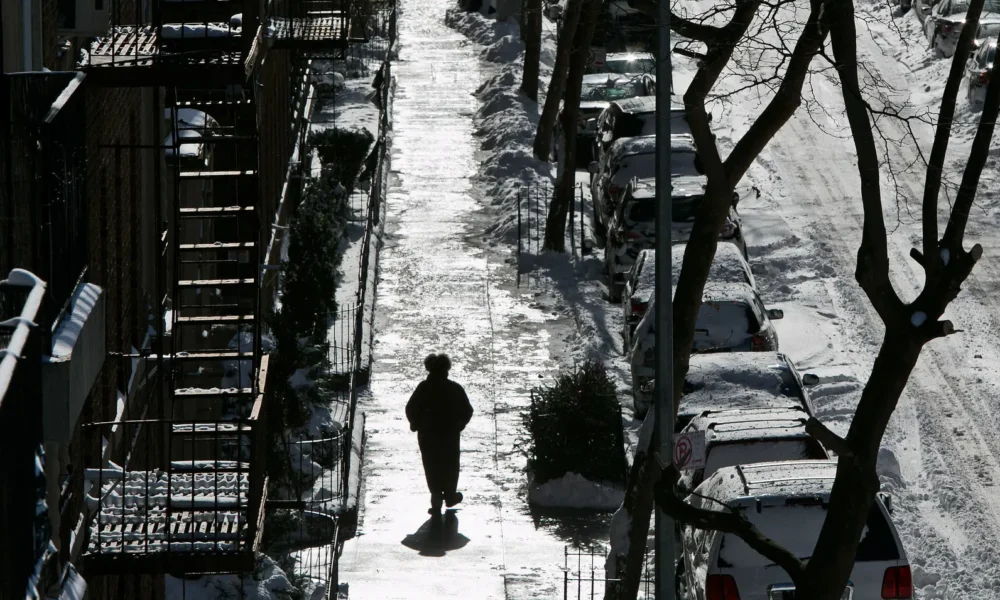
I happened upon the key to gaining some of that lost energy back when I took the longer route home from an evening class and arrived with a sense of renewed ease. As I struck a balance between spending time with people and recharging through routines such as walking home, it became obvious that participating in a social gathering did not have to ruin my day. Decorated by the fast-paced background of the city and its rushed inhabitants, returning to myself became a subtle exercise in slowing down and appreciating fleeting relationships like that between me and the person rushing past me on the sidewalk. 

I learned to welcome the thrill of being part of a crowd without forcing myself to break the wall of anonymity that thrives in the city. The sheer amount of buildings surrounding and separating me from other city dwellers should feel lonely, but instead, I feel like my body would stop its clockwork motions if it were forced into a space where I knew the names of the people who lived above me. Armed with a newfound realization about redefining alone time, I found myself going to markets, cinemas, and malls alone, sinking into namelessness, and becoming another figure in the crowd. More importantly, though, I learned not to feel guilty about my preference for being a people-watching observer and accept that—contrary to the advice of a dozen high school teachers—I do not always have to push myself outside of my comfort zone to gain a valuable experience. 

I admit that this preference for quietness does not always work to my benefit. Sometimes, being alone with my thoughts can lead to all-consuming existentialist spirals rather than pleasant silences. In an effort to counter the occasional breakdown, I search for my favourite distraction, like a song played on repeat or a dance just for the sake of movement, as a source of companionship rather than a way to waste time. As much as I support the occasional desire to spend time alone as an antidote for exhaustion, I would argue that indulging in the company of some healthy escapism goes a long way. Becoming a person who doesn’t dread the idea of navigating a vast city by themselves isn’t easy. Eventually, basking in small moments of silence while walking home from the last class of the day adds up to fulfill that goal, and more.

Hockey, Sports

Finally, some parity: The shifting landscape of international hockey competition

When it comes to international play in both men’s and women’s hockey, the conversation tends to revolve around two familiar suspects: Canada and the United States. Tournaments hosted by the International Ice Hockey Federation (IIHF)—the international governing body for ice hockey—are dominated by discourse surrounding the two North American superpowers as fans wait for the ultimate matchup, usually in the gold or silver medal round. 

The dominance of these two countries is even more apparent in the IIHF’s under-18 and under-20 competitions. Since the inception of the men’s under-20 World Junior championship in 1977, Canada has won 20 gold medals, facing off against the U.S. five times since 2004. In women’s hockey, the pattern is even more glaring with the U.S. and Canada meeting in the gold-medal game every year since the creation of the under-18 Women’s World championship in 2008, with the exception of a U.S.-Sweden final in 2018.  

While the Canada-U.S. rivalry is what draws much of the viewing audience to IIHF tournaments, the past few years have shown the desperate need for parity within international competition. And in 2023, we got just that. 

At this year’s under-18 Women’s Worlds, the rising levels of competition were put on display as Czechia, Slovakia, Finland, and Sweden made their presence known. In the semifinal, the U.S. fell 2-1 to Sweden, with Astrid Lindeberg netting the game winner. The loss marks the first time the U.S. will not appear in the gold-medal game in tournament history. In the other semifinal, Finland forced Canada into overtime, and despite falling 3-2, the Finns made clear that they will no longer be pushed around on international ice. 

To follow up the 2022 NHL draft in which two Slovakians, Juraj Slafkovsky and Simon Nemec, went first and second overall, Slovakia started to establish itself as a force to be reckoned with. Tournament Most Valuable Player, Nela Lopušanová, a 14-year-old Slovakian forward, dominated with 12 points over five games and was a constant highlight reel. Lopušanová’s feats reveal themselves to be all the more remarkable when you factor in her play in the men’s under-16 league in Slovakia, where she is averaging 3.1 points per game. For context, Slafkovsky averaged 2.35 points per game in the same league. The scoring leaders illustrate the tournament’s newfound parity with Czechia’s Adéla Šapovalivová and Tereza Plosova, Sweden’s Hilda Svensson, and Slovakia’s Ema Tothova, joining Lopušanová in the top 10. 

As for the men’s 2022-23 under-20 World Junior tournament, Canada’s usually dominant team had some shaky moments, but this year, they weren’t against the U.S. On Dec. 26, Canada opened the tournament with a 5-2 loss to Czechia—a team without a gold-medal game appearance since 2001. 

The U.S. faced a similarly shocking 6-3 defeat against Slovakia—a country that is yet to appear in a gold medal game. As the prospect of a U.S.-Canada gold-medal match-up faded away, some began to turn toward stars of the rising European teams. 

Adam Gajan, a Slovakian goaltender who was not even listed on the team’s preliminary roster, took over the news cycle. The relatively unknown player skyrocketed to a potential second-round pick in the matter of a week. After a masterful 33-save performance against the U.S., Gajan shut out Latvia and carried his team to a nailbiter game against Canada in the quarterfinal. Despite falling short of a medal yet again, the Slovakian team proved that they are true contenders, adding a newfound level of parity to a tournament usually dominated by the Canadians, Americans, and Swedes. 

But the story doesn’t end there. After a somewhat underwhelming match-up against the U.S. in the semifinals where the Canadians claimed a 6-2 victory, Czechia defeated Sweden in a 2-1 overtime win to face off against Canada in the final. With Canada gaining a 2-0 lead early on, Czechia tied it up with less than 10 minutes to go, taking the game to a thrilling overtime but ultimately losing 3-2. Following two invigorating match-ups, many Canadian fans are left asking the question: Does Canada have a new rival?

Read the latest issue

Read the latest issue