Latest News

Hockey, Sports

Redbirds fall to Ravens in front of packed Winter Carnival crowd

On Jan. 13, in the midst of a snowstorm, the McGill Redbirds hockey squad (11–5–3) welcomed the Carleton Ravens (7–7–3) to McConnell Arena in front of a crowd of 1,029. After a hard-fought game, the Ravens defeated the Redbirds 4-2. This result bumps the Redbirds to fourth place in the East division of the Ontario University Athletics (OUA) standings, one point behind the Concordia Stingers and a mere four points ahead of the Ravens. 

The evening kicked off with second-year centre, Caiden Daley, striking first. The goal came just over eight minutes into the first, off an assist by second-year Alex Plamondon and first-year Olivier Tremblay. The early goal set the intensity of the game and electrified the packed arena. 

Head coach David Urquhart noted that the spirit of the crowd aided the Redbird’s strong start. 

“You could feel the extra energy in the building, and our team was energized and responded with a great first period,” Urquhart wrote in an email to The McGill Tribune. “While it was not the result we wanted, it was fun to have the extra crowd support.” 

The first period ended with unsuccessful chances by second-year forward Eric Uba and swift saves made by fourth-year goaltender Emanuel Vella in the final minute.  

The Ravens evened the score at the top of the second, with a sharp shot making it past Vella in the opening minutes of the period. The Redbirds then squandered several attempts to retake the lead. Second-year forward Brandon Frattaroli’s rush from the Redbirds’ defensive zone all the way to the Ravens’ goal gave the fans hope but was ultimately fruitless. 

Growing frustration came to a head with a few scrums in front of the net and forward Jordan-Ty Fournier being handed a minor roughing penalty. This power play allowed Carleton forward Madoka Suzuki to swiftly bury a puck in the back of the McGill net, closing out the period with a 2-1 lead. 

The third period opened with an altercation between two Carleton players and third-year forward William Poirier, setting the mood for the final act of the game. Renewed speed and tensions reigned, as a third goal by Carleton in the first five minutes left the Redbirds deflated with a two-goal deficit to recover from. First-year centre William Rouleau took it upon himself to bring the deficit to one, scoring on a power play with  assists from forwards Uba and Frattaroli, reviving hope for Redbird supporters. 

In the last moments of the game, the atmosphere heightened, as the crowd hoped for overtime. After pulling the goaltender with two minutes left, the Carleton offence managed to tally one last goal, in the last minute of play. 

Team captain and fifth year defender, Taylor Ford, felt that his team had been outmatched

“We slowed down a bit in the second period and let them back into the game,” he conceded.  “Overall, we played well and didn’t capitalize on our chances. Their goalie played well.”

“We had a strong third period but the late push was not enough to come back from the two-goal deficit,”  Urquhart added. 

Despite this loss, the Redbirds are still in the top half of the OUA standings, in fourth position, with the next face-off against Université du Québec à Trois Rivières’s Patriotes on Jan. 18, before confronting them on home ice on Jan. 21. 

Stat Corner

The night closed with a total of 12 minor penalties, six per team, including five penalties for roughing, creating multiple power play opportunities.

Quotable: 

“The McGill men’s hockey team would like to thank all of those fans who came out and supported us. The arena was loud all night and it was exciting for us to play.” 

—Captain Taylor Ford  

Moment of the Game:

Those in attendance might have noticed that one of the two referees officiating the game, Elizabeth Matha, became the first woman to officiate a men’s game at McGill.

Ask Ainsley, Student Life

Ask Ainsley: Managing the winter blues

Dear Ainsley, 

I am back at school, mid-January, and here I find myself in the bleak midwinter. I feel more and more sluggish and unmotivated as the days grow shorter. With the sun setting before 5 p.m. and school routines returning, many McGill students, including myself, are experiencing depressive moods, and I am worried things will only get worse. My guess is most of us are affected by seasonal affective disorder. How do I combat these winter blues and regain motivation?   

Sincerely, 

Managing Seasonal Affective Disorder (MSAD)

Dear MSAD, 

From what I understand, the seasonal affective disorder (SAD) you, and the students around you, may be experiencing is a form of depression triggered by a lack of sunlight during the fall and winter months. Symptoms of SAD can include changes in mood, disruptions in sleep, alterations in appetite, and a loss of interest in activities that once brought you joy. 

However, I want you to know that these symptoms are not just a result of the gloomy weather, but rather the interruption of your body’s internal clock—also known as the circadian rhythm. The circadian rhythm is regulated by the hypothalamus, a part of the brain stimulated by sunlight. When the daylight hours are limited during the fall and winter, the hypothalamus no longer receives enough stimulation. This leads to an imbalance in your body’s production of certain hormones such as melatonin, which can make you sleepy and lethargic, and serotonin, which regulates mood, leading to feelings of depression and low energy levels. 

Nevertheless, there’s hope. There are ways to combat SAD. So, if you are feeling the effects of the winter blues, listen closely. Here’s how to get through Montreal’s dismal winter. 

Light therapy

You will want to practice light therapy, which can be as easy as spending more time in the sun or beside a sunlamp. Try going outside as much as possible to take advantage of the natural sunlight. Around noon, when the sun is brightest, bundle up in your warmest winter coat, hat, and scarf, and stroll around the block or to a nearby park to soak up the sun. When you’re indoors, keep your blinds open to let in as much natural light as possible. Using a sunlamp on darker days, when sunlight is scarce, is a great way to combat SAD. Whether it stems from a lamp or natural sunshine, the light will help balance your melatonin and serotonin levels, elevating your mood and combating the winter blues. 

Exercise

Exercise is beneficial for anyone who suffers from depression, as it releases endorphins—hormones that reduce pain and increase feelings of well-being. Exercise also increases your metabolism, which helps improve your energy levels. Low-impact aerobic activities, such as walking or dancing, are exercises well suited to treating seasonal affective disorder. Try gentle stretching, yoga, swimming (the McGill pool is free to students, so no need to spend money!), or running. The McGill recreation centre offers a wide variety of group fitness classes and access to the gym for a relatively low price to help you maintain regular physical activity. So grab a friend, book a class, and get moving!

Get enough Vitamin D

Vitamin D is known as the “sunshine vitamin” because our body produces it when our skin is exposed to UV light, and it is crucial to maintaining overall well-being and happiness. Incorporating vitamin D-rich foods into your diet may also help combat seasonal affective disorder. These foods include salmon, turkey, eggs, mushrooms, leafy greens, walnuts, oatmeal, bananas, and berries. Try to incorporate a few new recipes into your toolkit that promote bringing the sunshine back to your palate.

Spend time with friends and family

Although one of the symptoms of seasonal affective disorder is social withdrawal, it’s important to avoid isolating yourself and maintain a healthy level of social interaction outside of classes. This can help lift your mood and keep the depressive thoughts at bay. So, take part in activities like sledding, dinner parties, and winter walks that get you out of your comfort zone and allow you to spend more time with your loved ones. 

Formula One, Sports

Formula 1 neutrality legislation is anything but neutral

On Dec. 20, the Féderation Internationale de l’Automobile (FIA) updated the International Sporting Code––a set of common regulations that apply to all Formula racing series––to ban drivers from making personal, political, and religious statements without permission from the FIA. 

The FIA attempted to justify the ban by citing the organization’s commitment to upholding a principle of neutrality––the principle of political neutrality that is enshrined in the International Olympic Committee Code of Ethics. With this ban comes the threat that all drivers who do not maintain a “neutral” stance on personal, political, or religious matters risk breaching FIA regulations. Punishments for breaching the International Sporting Code regulations vary from fines to not being able to compete in a race.

The FIA’s ban comes after drivers such as Sebastian Vettel and Lewis Hamilton have begun to use their platform on race weekends to make political statements and speak out about social injustices. In 2020, after winning the Tuscan Grand Prix, Hamilton wore a shirt on the podium that read, “Arrest the cops who killed Breonna Taylor.” Following Hamilton’s statement, the FIA cracked down on acts of protest, ordering drivers to keep their race suits zipped up for the entirety of the podium ceremony and post-race interviews. 

By defining the confines within which drivers can share their political, religious, or personal views, the FIA is anything but neutral. The organization limits drivers’ freedom of speech and obliges them to comply with the FIA’s own political agenda. 

This move by the FIA reveals the organization’s hypocrisy. The new regulations serve to further muzzle racers, already a common practice within the FIA. In 2020, the FIA launched the #WeRaceAsOne initiative in an effort to denounce global inequalities. However, #WeRaceAsOne ceremonies were called off in 2022 as the FIA decided to “gesture towards action.” 

Predictably, the FIA has failed to implement any direct action to meaningfully increase diversity within the sport. While silencing the voices of its own racers, the implementation and subsequent eradication of the #WeRaceAsOne initiative only demonstrates the organization’s refusal to commit to actual change. Rather than supporting their athletes’ fights against the global inequalities the organization claims to stand against, the FIA repeatedly chooses to condemn their actions and silence their voices. 

The FIA’s position on political statements is unsurprising as the sport’s dedication to promoting neutrality is regularly weaponized as a tool to silence the voices of its racers, such as Vettel or in Hungary or Hamilton in Tuscany. By imposing silence through new regulations, the FIA is strengthening its stance regarding the separation of sports and politics. 

Moreover, the ban allows the FIA to continue to allow races in countries with widespread human rights violations without backlash from its drivers. For example, Sebastian Vettel and others were reprimanded by the FIA for wearing a shirt with the message “Same Love” at the Hungarian Grand Prix to protest Hungarian anti-LBTQIA+ laws

Several Grand Prix host countries accused of human rights violations also partake in sportswashing—or hosting important sporting events solely to improve their international reputation. In the case of Bahrain, the country signed a contract with Formula 1 that guarantees races will be held there until 2036 despite the reported ongoing human rights abuses. Thus, the FIA prefers to uphold the principle of “neutrality” rather than promoting the protection of human rights as enshrined in Article 1.2 of the Sporting Code.

But in practice, the FIA’s new legislation serves to prevent drivers from publicly denouncing the organization’s agenda. By slashing freedom of speech, the FIA makes it clear that their “efforts” towards equality and inclusivity are a smoke screen, washing out the dark practices that continue within the sport.

Campus Spotlight, Student Life

Uncovering the new face of McGill’s oldest museum

The reopening

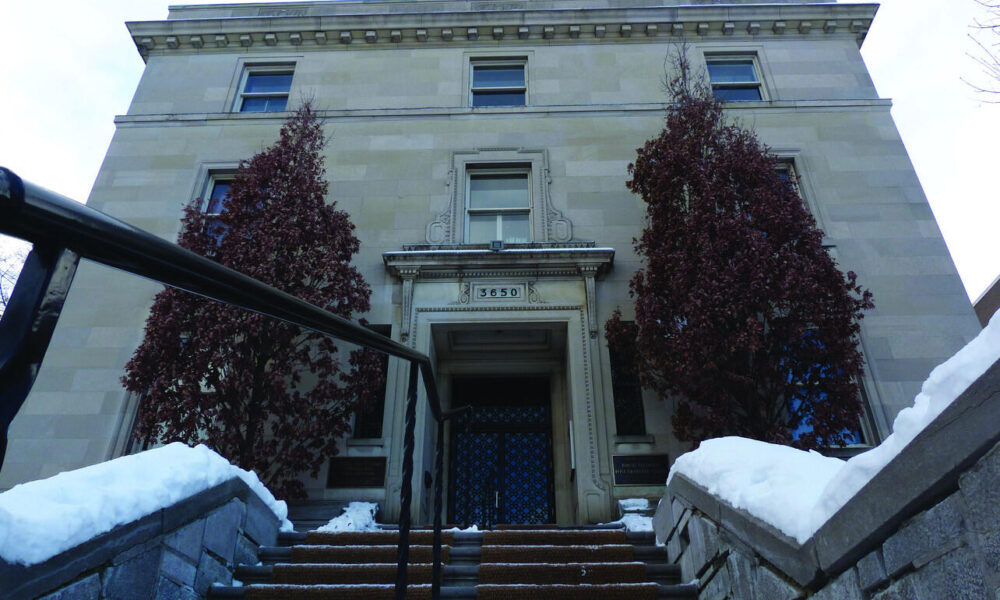
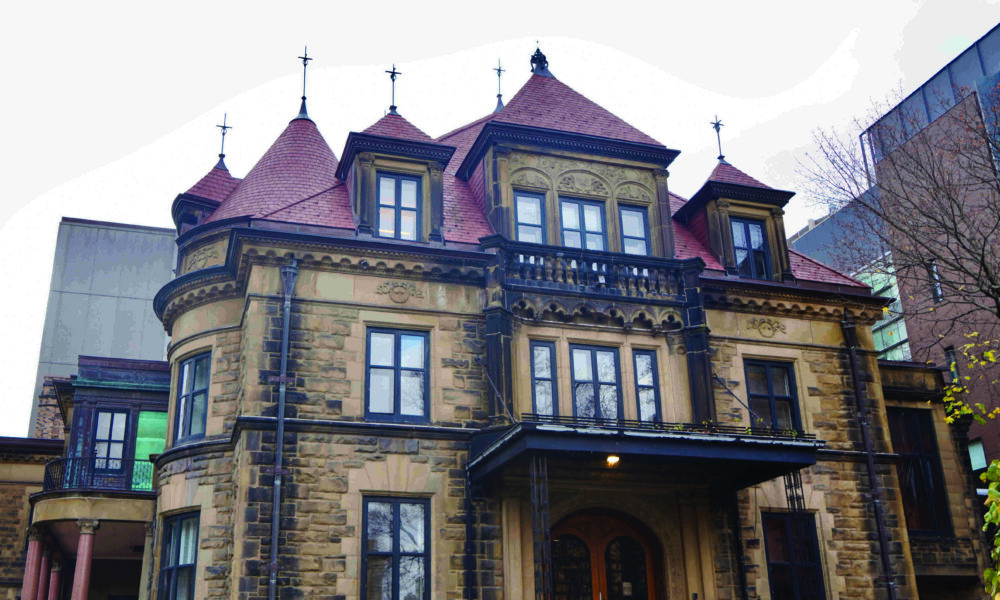
Scores of excited visitors crowded the entrance to McGill’s Redpath Museum on Jan. 10 for its long-awaited reopening. Since March 2020, Redpath Museum, overlooking lower field, has been closed in accordance with Quebec’s and McGill’s COVID-19 health and safety guidelines.

Ginette Dessureault, the museum’s administrative assistant, explained that the museum’s decision to reopen was made in close consultation with McGill.

“McGill wanted to take a very cautious approach to reintegrating […] the students and staff safely into the building, and see how a couple [of] semesters went […] post-pandemic,” Dessureault said in an interview with The McGill Tribune. “The timing is now right to reopen the museum because we know we’ll be open for a fair amount of time. There was some hesitancy about mixing the general public with the student population, [so] we wanted to make sure it was a safe time to do it.”

During its closure, the museum’s usual tours shifted to an online platform, allowing them to showcase their exhibits virtually, such as in the Biodiversity exhibit virtual tour. However, as Dessureault notes, a large part of the museum’s draw is seeing its collections in person.

“We had a few really successful virtual events, but really the core of our essence is to have the public here to see [the exhibits], to interact with [them],” Dessureault said. “The experience, being in person, is a tactile experience. All your senses are engaged, so I think it is a lot more pleasant for the visitor.”

The pieces remained at the museum all throughout the pandemic, and curators conducted safety checks to keep the museum’s collection well preserved. 

“There was always somebody here to monitor [and] […] to ensure the integrity of the collections,” Dessureault said. 

The experience

The museum’s pieces mainly focus on the natural sciences, with exhibits spanning from ethnology and biology to paleontology and geology. The Museum’s artifacts span multiple millennia, with fossils of some of the oldest known vertebrates, rare artifacts from prehistoric cultures, and taxidermied animals.  

The Redpath Museum was built in 1882 as a gift to the university from businessman and sugar baron Peter Redpath to commemorate the 25th anniversary of Sir John William Dawson’s appointment as Principal of the university. Dawson was an acclaimed natural scientist with a valuable collection of geological pieces and other specimens to be displayed for students and the public. 

For many students, seeing these pieces for the first time in person was a worthwhile experience.

“[The museum] definitely surpassed my expectations,” Zareen Subah, U1 Management, said while visiting the museum. “The Tyrannosaurus Rex was my favourite, just the jaw itself was half the size of my upper body, so that was pretty cool.”

Ryan O’Connell, U1 Arts, was observing a display on the museum’s first floor, before speaking to the Tribune

“I am so happy that something like this exists on campus,” O’Connell told the Tribune. “This is a great way to spend an hour or something in between classes [….] It was unfortunate I could not do that last year, but now I can.”

Though the museum sits right at the heart of campus and its steps have always been a popular place for students to gather, Dessureault explained that the closure affected students’ knowledge of the broader offerings held in-house at the university.

“We have found that many McGill students don’t even know about this building. [These students] have come in [the last couple of days] and didn’t even know that we had this resource on campus.”

Mahin Usman, U2 Arts, has been awaiting Redpath’s opening, wondering if she would get the chance to visit it before she graduated. “I remember passing by [the museum] a couple of times. And thinking, ‘this seems super interesting.’ I wanted to check it out, but I saw online that it was closed. So, in the back of my head, I have been hoping it would open before I graduated.”

Museum Educator Sara Estrada Arevalo began working at Redpath just a few months before the closure in 2020. Arevalo’s role at the museum was altered quickly by the rapid shift to virtual tours.

Arevalo expressed her excitement at returning to in-person tours after the extended shutdown.

“I think it’s one of the jewels of McGill because of its historical value and because of all the collections we have,” Arevalo said in an interview with the Tribune. “This museum was built to share collections with the public, so having visitors coming and having the opportunity to be in contact with the collections and learning from them is pretty exciting.”

The museum offers a low-commitment opportunity for students to participate in an educational visit that they may not have sought out further afield. 

“We are happy to be open and welcome all the visitors we’ve had in the past [few] days. It’s been just phenomenal. And the response has been incredible,” says Dessureault. “We really strive to serve the community, to see all the faces again and have everybody come back.” 

O’Connell encouraged the rest of the McGill community to pay the museum a visit, and noted the museum had “mass appeal” thanks to the variety of exhibits.

“It is absolutely surreal to just stand a few inches, and all that’s separating you is glass, from something that is 200 million years old. When can you say that you have that experience in your everyday life?”

The Redpath Museum Society (RMS) also allows students to get involved by assisting professors and curators of the museum with tours, events, and workshops.

Confronting the past

Though the museum preserves artifacts in stasis, it can also serve as a site for change through ethical and decolonial approaches to museum going. Redpath Museum features several archeological and ethnographic objects gathered through theft or illegal trading. James Ferrier, a former McGill Chancellor, contributed to Redpath Museum’s collection with Egyptian mummies that were presumed to have been acquired illegally from an illicit antiquities market. Another familiar name, Thomas Roddick, former Dean of McGill’s Faculty of Medicine, donated another mummy in 1895 after a colonial British military mission in Egypt. Both of these household names that are celebrated around our campus participated in the theft of ancient artifacts that  still sit in the Redpath Museum today. 

Redpath is not the only Western museum to display artifacts out of context, diminishing their cultural and historical significance. Recognizing this fact could offer a different way of viewing at an exhibit like the World Cultures collection, where a critical perspective on conservation, curatorship, and preservation can trouble and open conversations about the holdings from Central Africa and Egypt. Just as the McCord Museum’s exhibit on Indigenous Voices has sparked similar discussions, working to empower sovereignty and vitality from larger arts communities remains a prescient and collaborative endeavour.

McGill, News, PGSS

First PGSS Council Meeting of winter semester passes motion to mobilize against Bill 96

The Post-Graduate Students’ Society (PGSS) held its first Council Meeting of the winter semester on Jan. 11. At the meeting, PGSS councillors passed motions regarding the impact of Bill 96 on international students and the distribution of reusable menstrual products to graduate students. They also debated the practice of passing legislation without reaching quorum. 

The first motion, brought forth by External Affairs Officer Onyeka Dike, aimed to approve a survey of PGSS members from January to March of this year regarding the impacts of Bill 96—a bill that expands the requirements for the use of French in Quebec. The motion would require that PGSS liaise with English-speaking CEGEPs to take a formal position and push the government to make changes to the Bill, such as countering the requirement for international students to learn French within six months of arriving in the province. 

“Bill 96 is one act of legislation that has some real far-reaching effects if you are an international student,” Dike said during the meeting. “International students cannot access some of the essential services, for example, if you have a dispute with your landlord that brings you to the [municipal courts], but the language of the courts is strictly French. If there has to be any translation, you have to pay for that yourself.”

The motion passed with 39 in favour, one opposed, and four abstentions.

Charlotte Aubrac, the PGSS environment commissioner, presented a motion to allocate PGSS funds to provide reusable menstrual products on campus and lower barriers to access. 

“With the $10,000, we will be able to purchase around 500 reusable menstrual products that we will give away for free to PGSS members,” Aubrac said. “I think a lot of people will benefit from it.”

The motion passed with 42 in favour, none opposed, and one abstention.

A heated debate broke out after Bradley Por, a PGSS member from the Graduate Law Students Association (GLSA), expressed concern that allowing motions to be passed without quorum would normalize not having quorum at PGSS meetings and ultimately set an undemocratic precedent. He further explained that at the previous PGSS Annual General Meeting (AGM), the PGSS may have not met quorum because it started almost an hour late and many people left.

Kristi Kouchakji, the PGSS Secretary General, argued that not reaching quorum has been the status quo for many years and that PGSS could not function if they needed to reach quorum because meetings typically have such low attendance. 

“[Not reaching quorum has] been normalized already for the past five or six years at the AGM, and we can’t keep operating in that scenario,” Kouchakji said. “We’ve tried just about everything legal to get quorum and nothing works.”

At the end of the meeting, a variety of amendments were proposed to the Society and Activities Manual of the PGSS, mostly to clearly delineate the roles and responsibilities of PGSS representatives to ensure that they are not overworked. All the proposed amendments were adopted, including one to ensure that the University Affairs Officer has a manageable workload, especially when the committee nomination and appointment process is underway.

Moment of the Meeting:

Onyeka Dike, External Affairs Officer, shared the personal experiences of international graduate students who were negatively affected by Bill 96 and argued that the Bill affects international students all across Canada.

Soundbite:

“It’s still important that we have an AGM, I don’t think the fact that we lose quorum, which will affect council business, changes the significance of the AGM. Because, the way I understand—and I also study constitutional law with a PhD—I think that the AGM is almost superior to the Council.”

—Bradley Por on the importance of maintaining quorum requirements

Basketball, Sports

Martlets basketball triumphs in tight game against UQÀM

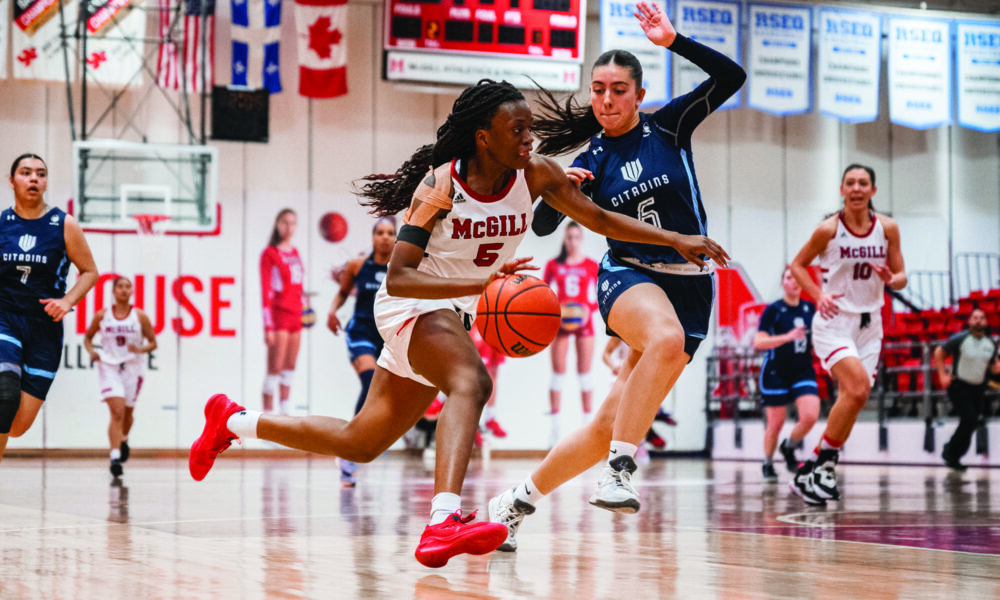
The Martlets (1–7) faced off against the UQÀM Citadins (5–3) on Jan. 14 at McGill’s Love Competition Hall in a thrilling match-up. Though the score remained close throughout the game, the Martlets pulled ahead in the final seconds to secure a 57-55 victory—their first of the RSEQ season. 

The first quarter saw a slightly rough start for the Martlets, with the Citadins scoring seven free throws and establishing an early lead. But McGill successfully incorporated three-point shots into their game strategy, racking up 18 points from six three-pointers throughout the match-up. Both teams put up solid defences, intercepting passes and recovering rebounds to gain possession. The plays intensified as the game went on, with both Martlets and Citadins fighting hard for each point to bring them closer to stealing the lead. 

By the fourth quarter’s end, the score was tied at 55-55. After a brief McGill time-out with just nine seconds left on the clock, a layup by first-year guard Stephy Tchoukuiegno awarded the team the two-point lead needed to secure the win. 

In an interview with The McGill Tribune, Tchoukuiegno explained that two falls she took early in the game presented a challenge, but she remained focused on performing her best. 

“I was just in the mindset of ‘play your game, don’t be stressed, and do what you’ve gotta do,’” Tchoukuiegno said. She also noted the importance of lively spectators in tight games like this one.“It feels good to have our crowd here supporting us.”

The win was especially meaningful for the team, as they lost both of their previous games against UQÀM this season, with the most recent loss being only two days prior. 

According to the team’s head coach, Rikki Bowles, the Martlets went into the rematch with a driven mindset in light of the previous losses. 

“Our expectation—what I told the athletes in the locker room—was to win this game,” Bowles told the Tribune. “I know it has been a struggle at times, but I thought we came in more confident than in the past, more prepared, we knew what [the other team was] going to do, and it was just about going and getting it done.”

Martlet fourth-year guard Jessica Salanon mentioned that the team’s performance reflected what they had learned from playing UQÀM in the past.

“All the games we’ve got against them [were] tight games and we felt like we gave them the games,” Salanon explained. “We made mistakes and that led them to win. So we knew that today, if we wanted to win, we [would] win.”

The Martlets will play next on Jan. 19 against the Laval Rouge et Or for their “Shoot for the Cure” game––a USports initiative to raise money for breast cancer research. 

Moment of the Game

Midway through the third period, Daniella Mbengo intercepted a UQÀM pass and made a fastbreak play, out-running the Citadin defence and scoring a swift layup to ecstatic cheering from the crowd.

Quotable

“[We’re] just going to appreciate it [….] The athletes work so hard, and this has been a long time coming. I will never take a win for granted, so we’re just going to enjoy this one.”

–– Head coach Rikki Bowles, on how the team will celebrate their win

Stat Corner

The top-scoring players for McGill were Mbengo, with 11 points, alongside Kristy Awikeh and Tchoukuiegno, who both scored eight points.

Features

The virtual realm can’t save us

Where do you go when you need help? When there are those moments in the semester too overwhelming to handle, to process, to sit still? When assignments pile up and you’re wading through homesickness, isolation, or low self-esteem? What if you’ve been struggling with your mental health? I don’t ask these questions to scare you away. I ask them because when we talk about mental health, we’re often not talking about the solutions, the compromises we make to ourselves, or the parts of ourselves that require gentleness and care.

Nearly fifty-seven per cent of McGill students who identify as disabled report having a mental health disorder. Late-night McLennan sessions are the norm, and the Wellness Hub’s record-long wait times persist. The mental health crisis at McGill is severe and growing. 

Founded in 2019, McGill’s Student Wellness Hub aims to provide students with free access to counsellors, nurses, doctors, psychologists, and other health care practitioners. However, the Wellness Hub has been continually plagued by staff shortages and long wait times that have left it unequipped to deal with students’ demands for mental health services. Manystaff move between volunteering for the students and working for the province’s health care system. When Quebec is unprepared to care for mental illness, on top of ingrained medical racism and sexism rampant in the health care system, the people who require treatment the most just have to wait, unserved and unseen.

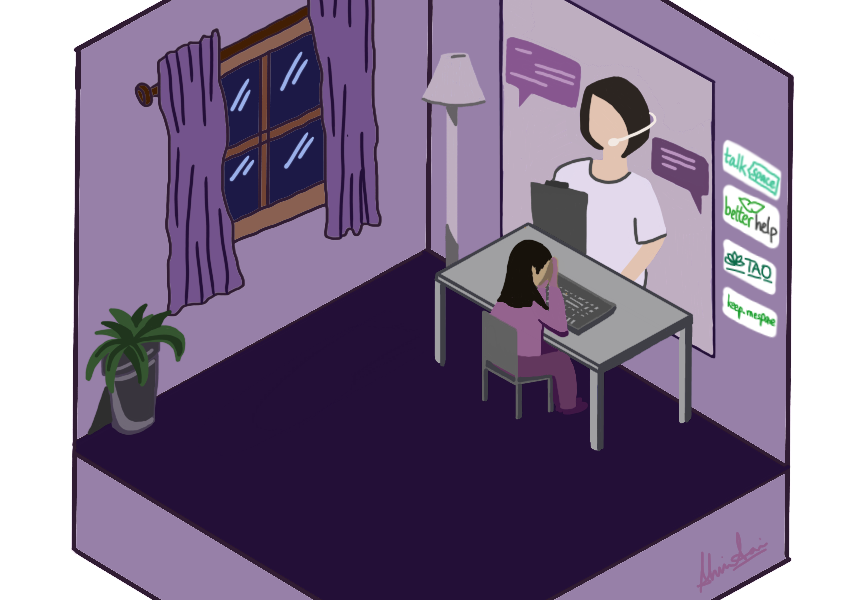
In the wake of the Wellness Hub’s shortcomings and COVID-19 lockdowns that redirected the labour of medical workers, many students have turned to a more accessible alternative: Online therapy. With a plethora of apps from BetterHelp to Calmerry to Talkspace that offer mental health support at your fingertips, it is easy to understand why students are opting for these digital services. 

Online therapy comes in a variety of forms, mainly asynchronous text therapy and synchronous talk therapy via phone or video call. Since the start of the pandemic, therapists have been increasingly offering telehealth to their patients to reduce health risks. Therapy and self-help apps have become increasingly popular for many stakeholders—those seeking care, therapists in need of work, and corporations or institutions with employees or students demanding greater access to health care. The global mental health apps market size was valued at $5.6 billion CAD in 2021 and is expected to expand at a compound annual growth rate of 16.5 per cent from 2022 to 2030.

Apps like BetterHelp match users with a therapist based on their profiles and offer live video call sessions. In these meetings, they often incorporate techniques used in in-person sessions, such as cognitive behavioural therapy (CBT), which focuses on recognizing and reframing one’s unhealthy thinking patterns, and acceptance and commitment therapy (ACT), which prompts one to embrace their thoughts and feelings instead of feeling guilty about them. In implementing these changes, the return to in-person post-pandemic may be seamless or potentially unneeded. Other platforms, like Brightside, offer asynchronous text therapy options, where users can text the licensed counsellor that they are matched with when they are struggling. While users may find challenges in communicating their needs through writing, the time it takes to text may allow them to clarify their thoughts and better express their needs. Clients have space beyond a weekly one-hour limit to share their struggles, which might facilitate more effective treatment. 

This trend has travelled to the campus. Colleges and universities across North America have taken advantage of online mental health treatment by providing students with free access to therapy apps. For instance, as part of their pledge to achieve diversity, equity, and inclusion in education, the University of Kentucky began a partnership with Talkspace this year to offer its 30,437 students free counselling services.  

These apps also specifically target big clients like corporate workplaces and higher education institutions, marketing themselves as the key to higher employee productivity. But this raises the question of whether companies might rely on virtual mental health services instead of creating proper, non-exploitative working conditions. 

At McGill, the Student Wellness Hub provides students with access to Therapy Assisted Online (TAO), a self-directed platform that combines educational materials for mental health and professional development. The service is available to anyone but especially targets higher education, employers, and health care organizations.

Released in 2015, Maple, one of the Student Wellness Hub’s partners, aims to connect its users to a licensed physician within minutes. Users are prompted to enter their symptoms and they are then paired with a physician with whom they can chat via text or video call, and receive a diagnosis or prescription. This platform makes it easier for students to receive a diagnosis, which are often difficult to acquire, especially if an in-person visit to the Hub is not possible. 

One of the Hub’s other partners, keep.meSAFE, provides 24/7 access to professional counsellors whom students can contact via phone or chat. The platform has also partnered with other Canadian universities including the University of Toronto, Toronto Metropolitan University, and the University of Guelph. 

Both the Wellness Hub and keep.meSAFE, however, only offer multi-session support with an assigned counsellor in the short term. Self-guided platforms like TAO are best used as mere ​​complementary efforts to talk therapy, which experts recommend as a first-line treatment for intense cases of mental illness. And you can’t forget the potential for these services to contribute to the underfunding and privatizing of health care and take the pressure off the federal and provincial governments to provide comprehensive mental health care for all.

As a result, students who require more personalized long-term treatment, but are deterred by high expenses, insurance concerns, or the difficulty of finding the right therapist, may turn to therapy apps that advertise themselves as the solution to all barriers to access. BetterHelp’s stated mission is: “Making professional therapy accessible, affordable, and convenient—so anyone who struggles with life’s challenges can get help, anytime and anywhere.”

This was the case for Jordan*, who experienced an “all-time low” shortly after beginning their studies at McGill. Jordan’s feelings of isolation and academic stress initially led them to seek help at the Wellness Hub.

“I was told that they had an opening in two months, but I was like ‘What do you mean? I’m in a crisis situation right now. I need someone right now,’” Jordan said in an interview with The McGill Tribune.

After being deterred by these lengthy wait times, Jordan turned to BetterHelp as a means of finding a therapist. They purchased their monthly plan for $340 per month, which granted them access to a phone call once per week with a licensed counsellor. 

“I gained a lot from it,” Jordan said of their BetterHelp experience. “It was nice to talk to someone who would listen to me and agree with everything I said, but push me.”

Martin Drapeau, a clinical psychologist and professor of educational and clinical psychology and psychiatry at McGill, sees online therapy as one of the positives to have come out of the COVID-19 pandemic.

“It’s become a ‘mainstream’ practice that continues to be used at rates that are significantly higher than pre-pandemic,” Drapeau wrote in an email to the Tribune. “It is simply more convenient for most people, clinicians included, [and] now that it has become mainstream, clinicians are getting better and better at delivering online therapy.”

Nate Fuks, director of the Virginia I. Douglas Centre for Clinical Psychology and assistant professor of clinical psychology at McGill, cites fewer financial barriers as a key advantage to telehealth and therapy apps.

“Some online mental health platforms make therapy more accessible financially, which is an important consideration for students—students have limited financial resources and therapy can be really expensive these days,” Fuks wrote in an email to the Tribune.

Jordan’s experience with BetterHealth did not, however, meet their expectations when it came to financial accessibility.

“At the end of the day, it’s still a business. It’s not cheap and it’s not accessible to everyone, which is kind of what was advertised,” Jordan said.

Since the platform was not financially sustainable over time, Jordan opted to stop using the platform once their mental health crisis subsided.

Though online therapy may be effective for some patients, Drapeau highlights that, for those suffering from certain mental health disorders, in-person treatment is preferred.

“[Online therapy is] not recommended […] for anxiety disorders that require exposure, [like] social anxiety and phobias,” Drapeau wrote. “It is also not recommended for children, individuals who have ADHD, [or those who] have a possibility of suicidal ideation, although adjustments can be made.” 

Fuks points out that face-to-face interactions are often key to cultivating a safe space for people to open up about their mental health struggles.

“In person, therapy usually happens in the therapist’s office, which often becomes a space psychologically associated with safety and security—necessary variables to make the therapy work,” Fuks added. “A lot of clients, as well as practitioners, find establishing a good working therapeutic alliance easier in person than online.”

For students living in communal settings, in particular, Fuks explains that difficulty in finding a private space for virtual therapy sessions can be a barrier to making the most of mental health care.

“Sometimes it is challenging for clients to find a private soundproof space where they can speak freely, without the fear of being overheard by their roommates or family members,” Fuks said. “This negatively impacts clients’ ability to feel safe to speak freely about any subject in their lives, which is central to productive work in therapy.”

Despite advertising themselves as a universalizing service, therapy apps exclude those who do not have access to a private space, a stable internet connection, and a laptop or phone. 

Many have also critiqued therapy apps’ lack of guaranteed protection for their users’ personal health data. A 2020 investigation from Jezebel found that BetterHelp information was being shared with Facebook, including metadata of messages between patients and therapists. 

Drapeau believes that these safety concerns could be alleviated with proper governmental regulations regarding patient data safety.

“There are guidelines for online practice. When these are followed, online therapy is perfectly safe,” he explained.

While Jordan benefitted from BetterHelp, they echo Drapeau and Fuks’ preference for in-person therapy—an experience that they had prior to moving to Montreal.

“In person, you can’t really hide behind the screen,” Jordan told the Tribune. “It pushes people to share more quickly, [whereas] online really depends more on your willingness to share.”

Limited in the number and diversity of its own counsellors, McGill’s Wellness Hub relies on outsourcing students to their virtual telehealth partners—Maple, keep.meSAFE, and TAO—when they cannot meet the needs of different student communities. The Hub website, for instance, directs students seeking a Black or Indigenous counsellor or a counsellor of colour to keep.meSAFE. 

Minority groups, including racialized, disabled, low-income, and 2SLGBTQIA+ students, already disproportionately face structural barriers to receiving mental health care. McGill should not be able to offload the responsibility of providing care specific to the trauma and mental health experiences of such students through telehealth partnerships. McGill should, instead, focus on providing specific and comprehensive care in any commitment to combating anti-Black racism and redressing settler colonialism.

For Jordan, reaching out for help was a struggle in itself against the heavy stigmatization of therapy. 

“More so in the Black community, people don’t really do therapy. I really had to push for it with my family,” Jordan explained. “I do recommend it, but there are still these cultural barriers.”

The Hub remains an important stakeholder in improving mental health on campus. Dr. Vera Morono, Director of the Student Wellness Hub, cites greater flexibility as a key reason for the Hub’s continued use of online care. 

“Virtual therapy offers a flexibility that increases accessibility for many users by allowing for shorter appointments, reducing physical barriers, more adaptable schedules, etc.,” Morono wrote in an email to the Tribune.  “That flexibility is further enhanced with supplementary apps and services like keep.meSAFE, which offer expanded and vetted care options such as 24/7 support, care providers in multiple languages, self-guided care, and more.”

The long-term effects of shifting therapy into the virtual realm are still unclear. As virtual services are integrated into university infrastructures, it is important to remember that third-party apps and services are fundamentally businesses seeking to profit off of students’ demands for mental health resources. They are not accessible or effective models of care for everyone and should not be the be-all and end-all solution to McGill’s mental health crisis. 

While online therapy apps do increase access to therapy in many ways, more investment must be directed toward the root causes of the rise of mental health problems on campus: McGill’s hustle culture, rising tuition costs, food insecurity, and an ableist post-pandemic climate, among others. We shouldn’t just digitize what we should transform. 

* Jordan’s name has been changed to preserve their anonymity.

McGill, News

“No TERFs on our turf”: Students rally against talk platforming anti-trans organization

Content warning: Mention of racist and transphobic violence

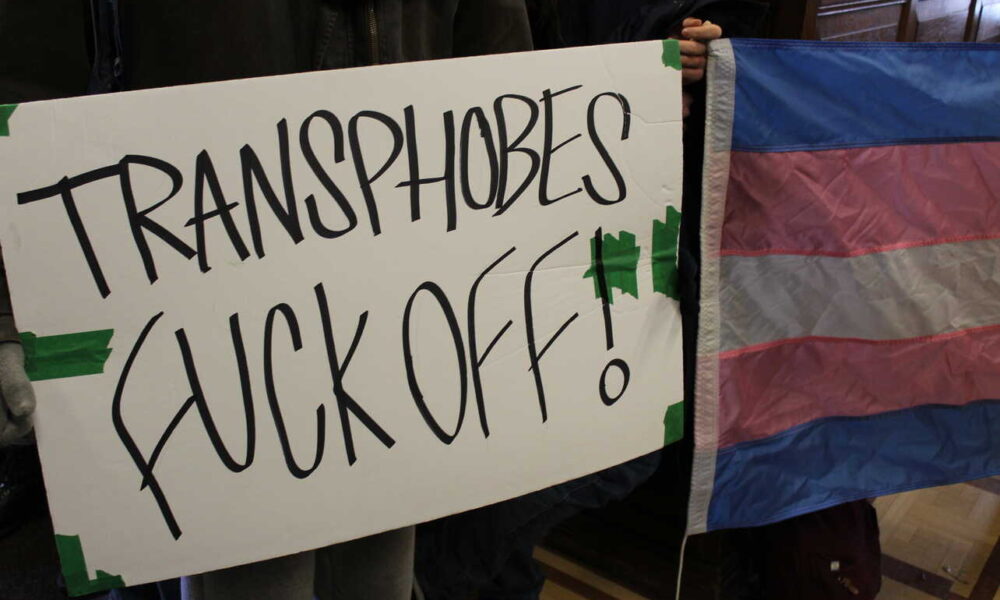
In the early afternoon of Jan. 10, McGill students and members of the 2SLGBTQIA+ community packed into Chancellor Day Hall to protestThe Sex vs. Gender (Identity) Debate in the United Kingdom and the Divorce of LGB from T,” a talk by Robert Wintemute hosted that day by the Faculty of Law’s Centre for Human Rights and Legal Pluralism (CHRLP). 

Wintemute, a human rights lawyer and professor at King’s College London, is a trustee of the LGB Alliance, an anti-trans lobbying organization and charity in the U.K. that aims to protect the rights of lesbian, gay, and bisexual people while simultaneously recognizing sex solely as a binary. 

Trans activist Celeste Trianon, along with members of Trans Patient Union and RadLaw McGill—all of whom organized the protest—filed through the entrance of Chancellor Day Hall 20 minutes before the talk was slated to begin, carrying bullhorns and banners, chanting “LGB with a T.” Students and 2SLGBTQIA+ community members gathered around the organizers to show solidarity and joined in the chanting, quieting only to let Trianon speak.

“McGill’s Faculty of Law, by actively giving a platform to anti-trans lawyer Robert Wintemute, is directly contributing to the same rollback of human rights that have been plaguing our world as of late,” Trianon said in their opening remarks. “The sheer irony in platforming him through the [CHRLP] cannot be overstated. Trans rights cannot, can never be, separated from gay or lesbian rights and they are not at odds with the rights of children or women.” 

As Trianon continued, protesters cheered and jeered, interjecting by calling “shame” on the CHRLP, Robert Leckey—the Dean of the Faculty of Law—and McGill. By 1 p.m., protestors were blocking the doors to the room where Wintemute was supposed to give his talk with banners, and 20 minutes later, protest organizers announced that the talk was cancelled. Wintemute and Leckey were still inside. 

Some trans activists in attendance, including Bee Bergeron, U1 Arts, were disappointed that they had to spend a Tuesday afternoon fighting for their rights rather than attending class. 

“I thought university would be a welcoming space for me. I thought I would be able to just focus on my studies without worrying about [my rights],” Bergeron said in an interview with The McGill Tribune. “Ta yeule, TERF [shut up, TERF].”

Bergeron added that Wintemute should “stop trying to insert [himself] in university affairs, stop trying to legitimize bullshit. It is so unfair to trans people, especially trans women of colour because they kickstarted the whole movement and now [he is] backstabbing them.”

Trans women of colour such as Marsha P. Johnson, Sylvia Rivera, and Miss Major Griffin-Gracy, were prominent figures in the gay rights movement in the United States during the 1960s and 1970s, and were some of the strongest voices at key events like the Stonewall uprising. Despite the crucial role trans women of colour have played in securing LGBTQ+ rights, 57 trans women and non-binary folks of colour  were killed in the United States in 2021 alone.

After Wintemute’s talk was cancelled, protestors took up the chants “no TERFs on our turf” and “TERFs go home.” They directed calls at supporters of Wintemute who stood outside the event space—one woman was seen sporting an “I love JK” t-shirt, referring to Harry Potter author J.K. Rowling who has repeatedly made transphobic comments on Twitter.

Police were also on the scene. Two officers entered Chancellor Day Hall as the protest reached its peak to ensure no violence broke out. The officers did not stay for more than a few minutes, after which they remained in their patrol car outside. They were not present when protestors threw baking flour at Wintemute.

In an interview with the Tribune after their speech, Trianon denounced McGill and the CHRLP for justifying their decision to host Wintemute with arguments about preserving and pursuing academic freedom.

“Academic freedom, like freedom of speech, is not hate speech. There is a difference between pure attacks on people’s dignity and academic freedom as we know it,” Trianon said. “This is an event designed specifically to attack the trans community, there is no other way to put it [….] When you tolerate intolerance, your ability to tolerate gets stripped away, so why should we tolerate intolerance to trans people?”

The protest received support from organizations like the Concordia Student Union, Social Work Student Association (McGill), Sex and Self, Black Students’ Network McGill, Project 10, Midnight Kitchen, and many more. More than 500 individuals have also signed an open letter penned by Trianon, RadLaw McGill, and Queer McGill criticizing McGill and demanding accountability for hosting the talk.

In the days following the protest, Dean Leckey sent an email to law students claiming their actions on Tuesday “far exceeded the generous ambit of peaceful protest.” He asked students to reflect on the consequences of their behaviour and the kind of environment created for future “guests.” 

The “Sex vs. Gender (Identity) Debate” was not the first time Leckey has worked with Wintemute. In September 2013, the Montreal Gazette published a piece co-authored by the two titled, “Quebec should be as tolerant of religious diversity as it has been of sexual orientation.” Wintemute is also a McGill graduate—he earned a law degree from McGill in 1982.

The Students’ Society of McGill University (SSMU) addressed the undergraduate student body, and trans students in particular, on Jan. 12 in an email that denounced the CHRLP for welcoming Wintemute. Val Masny, SSMU vice-president External Affairs, reiterated SSMU’s statement in an email to the Tribune, adding that students should contact them to discuss action against transphobia at McGill. 

“It’s important for me to emphasize all the work that was done by Queer McGill, the Trans Patient Union, RadLaw, as well as other groups, and students around this issue,” Masny wrote. “In a couple of days, I’ve seen a community come together and demand better from their university. The struggle is not over. The trans community at McGill has been asking the university for better services for years, and now they are also asking for accountability.” 

On Jan. 16, Queer McGill published a letter signed by the organizers of the Jan. 10 protest detailing demands they have for the CHRLP, McGill, and the Faculty of Law. The four demands are offer an official, public apology for welcoming Wintemute, host a community consultation with an audience that reflects the trans community at McGill, investigate why Wintemute was approved to speak at the university, and make donations to the Trans ID Legal Clinic. The letter concludes by warning McGill, the CHRLP, and the Faculty of Law that if a response is not received by Jan. 26, the signatories will mobilize till the demands are met. 

The day Wintemute was scheduled to speak at McGill, the LGB Alliance filed an official complaint with the United Nations against Victor Madrigal-Borloz, the current UN independent expert on sexual orientation and gender identity. The complaint alleges that Madrigal-Borloz is in violation of his mandate because he supports legislation that requires the implementation of gender self-ID practices.

Students who wish to change their gender marker on Minerva can visit the Legal Information Clinic at McGill. Those wishing to report instances of discrimination can contact the SSMU University Affairs executive team or the PGSS University Affair Officer. Trans and non-binary students seeking support should contact Project 10, Queer McGill, or the Trans Patient Union.

A previous version of this article stated that Queer McGill organized the protest. In fact, RadLaw McGill and the Trans Patient Union organized the protest, and Queer McGill only helped advertise it. The Tribune regrets this error.

McGill, News

Faculty of Law event to host speaker with ties to anti-trans organization

McGill’s Centre for Human Rights and Legal Pluralism (CHRLP), housed by the Faculty of Law, is hosting Robert Wintemute for a talk titled “The Sex vs. Gender (Identity) Debate In the United Kingdom and the Divorce of LGB from T” at 1 p.m. on Jan. 10. CHRLP’s decision to welcome Wintemute prompted outcry from several groups at McGill, including RadLaw McGill and Queer McGill, for his association with a trans-exclusionary advocacy organization. The student groups, along with trans activist Celeste Trianon, are staging a protest at 12:40 p.m. on Jan. 10 in room 16 of Old Chancellor Day Hall, where the “Sex vs. Gender (Identity) Debate” will take place.

Wintemute, who graduated from the Faculty of Law in 1982 and is currently a professor of human rights law at King’s College London, is a trustee of the LGB Alliance—an organization based in the United Kingdom that advocates for the rights of lesbian, gay, and bisexual people only. LGB Alliance is widely regarded as an anti-trans hate group because it only recognizes sex as a binary, invalidating the identities of transgender and non-binary people. The LGB Alliance has also lobbied to exclude transgender people from legislation that would shield them from conversion therapy in the U.K.

In an interview with The McGill Tribune, Trianon, a law student at Université de Montréal, reflected on the interconnectedness of gender, sexuality, and human rights issues. 

“What the LGB Alliance does is try to divide and conquer the trans community by attempting to ‘drop the T’ or otherwise remove trans people from the picture,” Trianon said. “We cannot separate trans rights from women’s rights, from gay and lesbian rights—everything’s interconnected. And oftentimes, it is people who are most marginalized or touched by the most intersections that are hurt.”

According to CHRPL co-director Frédéric Mégret, the Centre was approached by Wintemute to host his presentation. Mégret added that the Centre recognizes the concerns that students and other community members have with platforming the LGB Alliance, but ultimately stressed that the Centre is dedicated to upholding academic freedom.

“We are mindful that this is a very problematic organization in many ways,” Mégret said in an interview with the Tribune. “We are also keen on hosting difficult conversations—the Centre has in the past and we think that the ethos of human rights is that ideas have to be voiced and refuted [….] We invite people whose views we occasionally strongly disagree with. The question is whether there’s space for a conversation.”

While not advertised on the event’s web page, Professor Darren Rosenblum will be present to provide a rebuttal to Wintemute, according to Mégret. Yet, several groups at McGill, including RadLaw McGill, Queer McGill, and  Black Students’ Network McGill, have spoken out against CHRLP’s decision to platform Wintemute and the LGB Alliance’s values in the first place. 

The Trans Patient Union (TPU), a coalition of Queer McGill and the Union for Gender Empowerment, condemned CHRPL’s response, which the union finds to be insufficient. 

“How are trans and nonbinary people meant to feel that they belong at McGill when its administration makes it clear that our right to legal protection is up for debate?” Jacob Williams, a TPU representative, said in a statement to the Tribune. “The debate sends the message that rejecting trans protections in law is a position worth considering.”

Williams stressed that the Centre’s choice to platform Wintemute is indicative of McGill’s approach to equity at an institutional level. To support trans students, the organization recommends that community members and leaders centre the experiences of marginalized folks at McGill.

“Don’t let McGill’s branding as ‘inclusive,’ ‘equitable,’ and ‘diverse’ obscure the actual experiences of trans people among other minorities at McGill,” Williams said. “When it comes to ‘equity,’ McGill is all bark and no bite. So until we see the results we need, students need to call out McGill’s supposed commitment to ‘equity’ for what it really is: A corporation’s shallow, self-interested marketing strategy that occasionally delivers crumbs.” 

For those seeking support, the Trans Patient Union is an advocacy and mutual aid collective by and for trans and nonbinary patients at McGill and can be reached on Instagram. @transpatients. 

Arts & Entertainment, Film and TV

1899 is a brilliant mosaic in nine different languages

1899 is a multi-everything show: Multilingual, multicultural, multigenerational, and with multiple plotlines. Even the most intuitive of viewers are guaranteed to be thrown by one of the plot twists—because spoiler alert, there are multiple! 

The eight-episode Netflix series, released on Nov. 17, follows passengers on a cross-Atlantic naval voyage thrown into a series of progressively alarming situations after discovering a thought-to-be-sunken steamship. The mystery-thriller attempts to fill the shoes of Dark (2017)—the previous show written by series creators Jantje Friese and Baran bo Odar—packing 1899 with action, mystery, and disorientation. But though 1899 bears many thematic and visual similarities to Dark, it is entirely unique. Though oh-so-slightly predictable at times, 1899 is a delightfully eerie and puzzling series, providing a perfect form of escapism for the upcoming months of dropping temperatures. 

A television show is only as great as its actors, and 1899’s cast is stuffed with dystopian television veterans, such as Emily Beecham (Into the Badlands), Lucas Lynggaard Tønnesen (The Rain), Miguel Bernardeau (Elite), Mathilde Ollivier (Overlord), and even Andreas Pietschmann, who plays a peripheral protagonist in Dark. With actors that rule this genre, it’s not surprising that the performances are stellar, something best proven through the characters’ abilities to emotionally connect despite the language barriers. 1899 is a multilingual show where each actor speaks their native language.  Aside from being historically authentic, this adds to the chaos of the plot as the characters must communicate despite the constant dialectal disconnect. Though there are options for audio dubs, for the most immersive experience, the creators recommend watching the show in the original mix of languages, which includes English, Hindi, Spanish, German, French, Portuguese, Polish, Danish, and Swedish. 

As an avid fan of Dark—and by extension, Friese and bo Odar—I find it difficult to be truly unbiased. 1899  cultivates the ambiance of a hauntingly disjointed steamship: Nothing seems to make sense, nobody understands each other, and everyone has something to hide. This is no doubt a show to watch with all the lights off, perhaps by candlelight if you want to delve into the authentic nineteenth-century experience. The soundtrack seamlessly supplements the show’s preternatural vibe—curated by Ben Frost, it features tracks by Hozier, Jimi Hendrix, Black Sabbath, and even Cher. 1899 mesmerizes viewers with its top-notch colour-grading and atmospheric visuals. How can you make a tiny room on a steamship or an imminently aflame house seem appealing? 1899 constructs this appeal, with each and every one of the sets distinct and terrifyingly alluring. 

One of the most appealing characteristics of Friese and bo Odar’s works is that there’s no spoon-feeding. The characters do not impart any wisdom or answers but instead are at the mercy of the narrative just as much as the viewers. We are equally shocked at the sudden appearance of a missing steamship, a blue-eyed child, or an anachronistic flashlight (in the nineteenth century?!). Because of this, 1899 is a show meant to be experienced rather than understood. There are so many intersecting storylines, and if 1899 is anything similar to Dark, any loose ends will probably remain unresolved until least expected. 


Unfortunately, Netflix has cancelled any future seasons of 1899. With the creators’ renowned knack for intricately planned plotlines and secrets, as well as their consistent reliance on the triquetra (a triangular figure composed of three interlaced arcs) as a defining symbol of the series, viewers will be left with many unanswered questions. Despite the show remaining on the top 10 lists for weeks, Netflix attributed the cancellation to insufficient popularity. So, with the number of laughingly awful series that Netflix is churning out, this cancellation shows the streaming platform is favouring profits over substance. Not the best indication for television in 2023…thanks, Netflix.

Read the latest issue

Read the latest issue