

Latest News

Art, Arts & Entertainment

‘Lasting Impressions’ showcases classic paintings in a new dimension

At Espace St. Denis, Lasting Impressions unfolds in an atmospheric movie theatre, complete with a menu of drinks and snacks that contribute to the show’s Parisian atmosphere, as if you are sitting in one of the quaint cafés depicted in the impressionist paintings. Multiple movie screens wrap around the sides of the theatre, creating a truly immersive experience. 

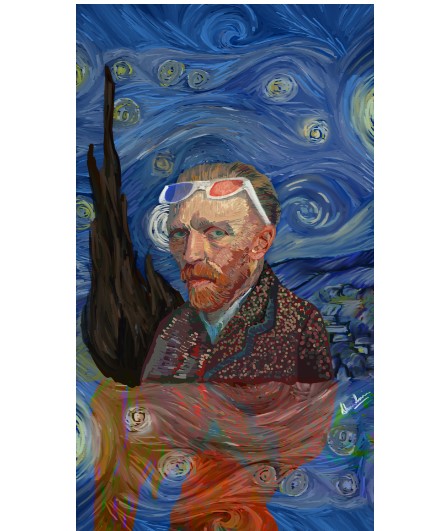
Lasting Impressions offers a dazzling highlight reel of famous impressionists, including Van Gogh, Monet, and Pissarro. This exhibition stands apart from the slew of other impressionist showcases that are popular today by showing 3D renderings of the artworks. While the use of 3D may sound gimmicky, it counteracts the flatness that often plagues digitally rendered and projected art pieces. Using this technique is a clever response to the impressionist style, which relies on dynamic movement and depth to convey emotion. 

The show is divided into two parts. The first, in 2D, explores Paris as the epicentre of the impressionist movement beginning in the late 19th century. As jaunty music and a restaurant ambiance permeate  the background, vintage footage of bustling Parisian streets is projected, interspersed with artist introductions detailing their upbringing and involvement in the Parisian art scene. The showcase also highlights some lesser-known women impressionists, such as Marie Bracquemond, Eva Gonzales, and Berthe Morisot

After a brief intermission, the second section begins with an audio introduction by the great-granddaughter of Pierre-Auguste Renoir, Sophie Renoir. Guests are then prompted to put on their glasses, and the 3D show begins. 

The massive wraparound screens combined with the expertly crafted 3D makes for a mesmerizing experience. The size of the screens allows for an unprecedented view of the immense detail that went into these works. The slideshow lasts 50 minutes, with each painting on display for about half a minute. There are a total of over 100 paintings shown, ranging from famous masterworks to relatively unknown paintings.

Dylan Pierce, who made the 3D effects for the show, is the key to Lasting Impressions’ success. Masterworks, such as Manet’s A Bar at the Folies-Bergère and Degas’ The Rehearsal, float serenely across the screen with amazing depth and movement. Monet’s Water Lilies was especially entrancing; the water in the painting was digitally manipulated to make rippling waves. The 3D elements lend themselves especially well in this scenario, making the water seem transparent and the bottom of the lake far, far away.

Only an experienced producer could match this show’s ambition. Rubin Fogel, a producer responsible for a host of Montreal concerts and shows, helped organize Lasting Impressions. In the introduction to the show, he called it “one of the most exciting projects that I’ve been involved with in the 45 years I’ve been in this business.”

Accompanying musical pieces were carefully chosen to fit perfectly with the art. Selections varied from lively instrumentals to sombre classical pieces to moving vocal performances. For example, the gentle melodies in Debussy’s ”Clair de Lune worked harmoniously with the soft, glimmering view of Van Gogh’s Starry Night to create a transcendent experience at multiple sensory levels. Additionally, Adam Fisher’s tribute to Van Gogh, “Vincent,” was especially impactful when overlaid with some of the visual artist’s other works, such as The Bedroom and The Church at Auvers.

This display does a much better service to its impressionist paintings than other non-physical showcases have. It still, however, possesses some of the unavoidable limitations of digital art. The texture and visibility of the brushstrokes, visual elements that are considered a cornerstone of the impressionist movement, are completely lost. Additionally, the viewer cannot see the light interact with the canvas as it would if they were walking around the real-life painting.

Viewing the paintings in this exhibition is no substitute for viewing them in real life. With that being said, visitors are still bound for a completely unique, ambient, and compelling experience at Lasting Impressions. 

Lasting Impressions is on display at Espace St. Denis until March 12.

Arts & Entertainment, Film and TV

‘Women Talking’ is as vibrant as it is harrowing

After premiering at the Telluride Film Festival in the fall of 2022, Women Talking made its way to theatrical audiences on Jan. 13. Adapted from Miriam Toews’s 2018 novel of the same name, the film was co-written and adapted by Toews and Canadian director Sarah Polley. Women Talking follows eight women in a remote Mennonite community who grapple with their faith in God and their community following a series of violent sexual assaults. The film tracks these women for 48 hours as they decide, through a series of conversations, to fight, forgive, or flee. Despite its grim subject matter, Women Talking doesn’t feel like taking your medicine. With piercing dialogue, a captivating sea of performances, and striking visual composition, Women Talking is as compelling cinematically as it is thematically. 

The film creatively departs from the novel by placing a young girl from the colony (Kate Hallett) as the narrator—in stark contrast to the novel’s male narrator, August. Although August (Ben Whishaw) still appears in the film, Polley and Toews use this minute yet monumental change to centre women’s voices and presences in their story. The central conversation between the eight women is sharp, cutting, and at times, witty. The script pays careful attention to never demonize or look down upon these women for their religious beliefs. It never once passes judgment for their fears of staying or leaving the place they call home, even though it may be a dangerous place. With such powerful dialogue, their words resonate well into the film’s quiet moments. 

The film’s three leads—Ona (Rooney Mara), Salome (Claire Foy), and Mariche (Jessie Buckley)—intently articulate the emotional, physical, and spiritual pains of the women. Each of them symbolizes the three core solutions proposed by the women in the colony—to forgive, fight, or flee—but none ever feel like a caricature or too on the nose. Foy, who comes to represent the desire to fight, delivers an intensely captivating performance, unwavering in vigour and sorrow from start to finish. She says every line of dialogue with the same fierceness as the last—serving as the driving force of division, you simply can’t take your eyes off her. Alongside the rest of the cast, Buckley and Mara’s performances expertly support Foy’s. Mara, in particular, acts as the emotional core of the film as an audience stand-in, incorporating lighter moments of a blossoming romance with the bleak backdrop of the film’s overarching themes. Buckley plays in direct contrast to Foy, acting as a sounding board for her ever-changing perspectives throughout the film. 

The matriarchs of the colony, Greta (Sheila McCarthy) and Agata (Judith Ivey), masterfully bring a sense of structure and order to the sprawling cast. Despite the individual merits of each performance, the cast’s chemistry and support of one another is what makes the entire film something extraordinary.  Their authentic chemistry brings life to the script, brilliantly portraying countless aspects of this community’s collective experience. 

Director Sarah Polley made a striking and bold choice with the film’s visual language by working with a drab, grey colour palette. This could have compromised the cinematography, but Polley elevates the emotional tension with colour to emphasize the desperation the women in this colony feel. Something has drained these women’s lifeblood, metaphorically and visually. With sweeping shots of country fields and sunsets from barn doors tinted with the film’s ominous colour palette, Polley creates a sense of familiarity, discomfort, and hope, all before the first words are spoken. 

Women Talking combines a masterfully written script, astonishing performances, and phenomenal visuals, making the film one of the year’s most important and compelling works. To some, a story of women having conversations in one setting may seem exceptionally suited to a novel. Polley, however, expertly demonstrates how film can not only accommodate, but even elevate the text beyond its original form. 

Women Talking is currently playing in theatres across the country.

Combat Sports, Sports

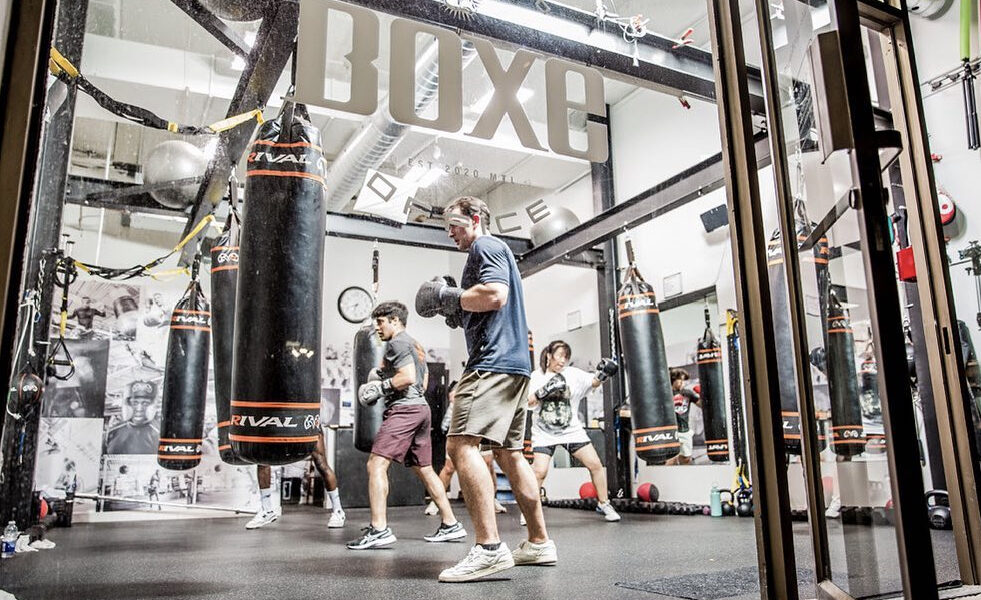
Boxe Office: A hit among McGill students

Over the past several years, boxing has seen a remarkable resurgence in both viewership and participation. The sport’s popularity has skyrocketed, likely in part due to the rise of “influencer boxing,” where organized fights amongst popular internet figures garner massive attention and millions in pay-per-view sales. 

As boxing gains more and more fans, it is no surprise that young people have begun to seek out amateur boxing for their own enjoyment. Located one street south of McGill’s downtown campus on President Kennedy Avenue, Boxe Office has quickly become a hotspot for downtown residents, particularly McGill students. The gym was founded in July 2021, after the fitness industry endured a harsh year of lockdowns and diminished revenue. The timing, however, didn’t phase gym owner Normand Robert, a seasoned boxing coach and Taekwondo black belt who has been active in the boxing world for over four decades.

Due to the precarious timing of the Boxe Office’s opening, the gym started out with a lower volume of customers than it had hoped for. Despite the initially modest numbers, Robert recalls being optimistic about the gym’s prospects.

“I saw it as an advantage. I said to myself [that] COVID would eventually slow down,” Robert said in an interview with The McGill Tribune. “I’ll use this time to fine-tune the business, work any bugs out, and when people come back to the gym, I’ll be ready.”

Robert credits the gym’s success to his personable one-on-one approach to coaching and his decision to operate out of a small space, with enough room for only six heavy bags. 

Robert believes that in order to get the most out of training, athletes must develop each technical aspect of boxing individually. As such, the gym offers six different types of one-hour classes: soft, flash, core, shadow, focus, or boom.  As most of the gym’s members are new to boxing, Robert takes pride in training his new clients from the very beginning and watching them develop their skills from beginner to expert. 

Many students who came to the gym as beginner-level boxers in the fall were quick to praise the gym, not only for helping them develop a new skill, but also for its impact on their lives. 

“Mr. Robert motivates me to push myself, teaches me the art of boxing, and, most importantly, cultivates my ever-growing passion for the sport,” said Charlie Li, U1 Science. “I’m glad I’ve stepped into this gym. It has changed my life and made boxing an integral part of my life.”

Lauren Kennedy, U1 Music, found that boxing helps her grow her self-esteem. 

“When I leave Boxe Office, I leave as a stronger and more confident person [. . ..] Robert is an extremely encouraging, patient, and talented coach,” she said. “His boxing classes are the favourite part of my day.” 

Robert contends that regardless of skill or experience, his best clients are focused and eager to learn. He noted that many McGill students who come to his gym already embody these traits.

“I get a lot of McGill students,” said Robert. “They’re smart; they want to understand what I teach them and ask a lot of questions. That is something that I love.”

As the Boxe Office experience continues to grow in demand, Robert is starting to consider his plans for the gym’s future. But Robert insists that small class sizes must remain the priority so he can continue to build relationships with clients, both old and new. 

“Community is important,”  Robert said. “Nobody is a stranger here. One of my goals, when I opened, was to make something friendly, and […] build up a community.”

Emerging Trends, Student Life

The advent of Chat GPT in academia

From composing an email to plagiarizing an assignment, ChatGPT can do it all—and with impressive quality, surpassing the average AI bot. The caveat is that it’s very difficult to detect its use. ChatGPT’s impressive generative skills pose a novel problem for the world of academia and are bound to change the nature of academic work at McGill and other universities, as early as today.

Launched by OpenAI in November 2022, ChatGPT is a chatbot that provides intellectually

complex answers to every conceivable question you throw at it. Its ability to instantly generate creative writing, historical information, and scientific data is revolutionary;  experts believe it is only a matter of time before it replaces old-fashioned search engines, which only provide a list of relevant hyperlinks. Such advantages make its appeal to students perfectly clear.

Bettina Kemme, a computer science professor and researcher at McGill, expressed her concerns about this new software in an interview with The McGill Tribune. 

“The tricky thing is that the chatbot can provide different results when asked the same question. This would create a significant problem,” Kemme said.

McGill students like Jesse Sutherland, U1 Science, are already encounteringChatGPT’s influence in the classroom. 

“My bio professor makes questions that you can’t find the answers to online. Now he was joking about how he has to check all the questions on ChatGPT before setting an assignment,” Sutherland said.

For the moment, Kemme––and the McGill administration––have left the onus on students to not abuse the platform.

“[There has] always been a minority [of students] that [have] plagiarized. As long as the proportion does not increase, it won’t be a problem, otherwise, the university has to have a discussion,” Kemme said.

The Dean of Students reinforced this stance in a Jan. 15 email to students, saying that this software is a great tool for “preparing a summary of information for yourself,” but that it should not be used for assessments. Still, the question remains: How will the university keep track of all this?

Such concerns also surfaced in conversations with students, some of whom, like Mohamed Elsamadouny, U2 Software Engineering, offered potential solutions. 

“While it may not be possible to check for plagiarism, there are several AI applications that can detect whether certain text[s] [have] been generated by other AI,” Elsamadouny said.

These apps, including GPTZero, recently developed by a Princeton University student, and Content at Scale and are showing promise at identifying works potentially produced by ChatGPT. 

Another consolation is the technology’s occasional susceptibility to errors. ChatGPT can generate incorrect information or reproduce content laden with biases. For a student in a rush or desperate for answers, these responses could be taken as truth or as fact. Students should be wary and use the software for inspiration rather than plagiarism.

All of this is not to say that ChatGPT has solely caused alarm. Shifting from coursework to real-life implications has had many positive impacts. One example is its usefulness in the job and internship market, where the platform seems to have garnered great popularity amongst students in need of cover letters, resumes, and professional emails.

Alberto Garcia, U2 Arts, praised the chatbot for its ability “to provide a working skeleton and structure upon which you can build.” 

The chatbot produces decent working models for cover letters that are personalized to one’s CV and the particular requirements of a position. This eliminates the daunting aspect of simply getting started on an application.

Students have also found the bot helpful in running a business. Ahmad Darraj, U2 Management, told the Tribune how his friend found ChatGPT useful in helping to “develop the webpage for his cat litter business.”

Others have used it to navigate delicate social situations. U0 Software Engineering student Nicolas Saade told the Tribune that he used ChatGPT “to write a thoughtful letter [to a McGill club] explaining his reasons for leaving in a way that would not hurt [his] team members.”

The advent of ChatGPT simultaneously calls for a reimagining of evaluation methods while nourishing several different aspects of student life. McGill’s policy at the moment seems to advocate for self-policing of the software’s use and the imperfections in the technology might just guarantee that…for now. 

Behind the Bench, Sports

How the Habs let down their stars

The Montreal Canadiens are having nothing short of an absolute dumpster fire of a season this year. Currently sitting at the bottom of the Atlantic division, the Canadiens have a 0.1 per cent chance of making the playoffs, on par with their performance last season. With troubles coming from every direction imaginable, many are claiming this year is the beginning of a much-needed rebuild.

In the latest of their series of unfortunate events, the team announced that Cole Caufield, the Habs’ leading goal scorer and prized possession, would miss the remainder of the season due to a surgery for a shoulder injury sustained earlier in the year. 

Montreal has not had more than a three-game win streak all season. Despite abysmally low playoff chances, the administration allowed Caufield to play with a serious injury, which likely aggravated it and made the recovery period lengthier and more tedious.

The loss of Caufield in a season with so few bright spots is damaging in many respects. Not only is he one of the Canadiens’ best players, but Caufield is also one of his teammates’ biggest supporters. An undeniable fan favourite, Caufield’s absence will be felt by Habs fans and players alike, both on and off the ice.

As a selfless teammate, it checks out that Caufield would want to set aside his own pain to help shine some light on an otherwise dark season. But at 22 years old, the Wisconsin native who currently ranks 11th in the National Hockey League (NHL) for goals scored has an incredibly bright future ahead of him—that is, if he stays healthy. In allowing Caufield to play while injured, the Canadiens’ medical staff were careless and placed the player in dangerous conditions for what can only be described as a throwaway season.

This isn’t the first time Montreal stars have been permitted to play despite lingering injuries. Carey Price and Shea Weber—both forced into retirement by injuries (among other factors)—were permitted to play with serious ailments that they never quite recovered from. Creating an environment where star players feel safe and taken care of is imperative to the long-term success of any team.

With 11 players currently out of the Habs lineup with injuries, Caufield isn’t the only one who was encouraged to play through the pain, calling into question the  competence of the Canadiens’ medical staff. In early December, Sean Monahan, who is currently fifth on the roster in terms of points, showed up to a game in an ankle boot and was still allowed to play. 

At this point, many Habs fans are just hoping for the season to end as quickly and as painlessly as possible. With 35 games left in the regular season, many are calling on them to “tank for Bedard.” Actively tanking, the practice of intentionally weakening a team in the hopes of falling in the standings and gaining a better slot in the next year’s draft lottery, is becoming more and more popular with teams hoping to get their hands on World-Juniors phenom Connor Bedard with a first-round pick.   

The tanking strategy, though, has already proven unsuccessful for the Habs. After a dreadful 22–49–11 season last year, the Canadiens were fortunate enough to choose first overall in the 2022 NHL Draft and selected Juraj Slafkovsky. Unfortunately, Slafkovsky continues to struggle at the NHL level, missing three months due to a lower-body injury, and is currently part of the slew of injured players.   

The answer to the Habs’ woes is not as simple as another first overall pick. As we have seen from failures such as the Edmonton Oilers and the Buffalo Sabres, even multiple consecutive years of superstar draft picks do not guarantee success, because even the strongest players cannot rebuild a broken system. 

With Caufield’s contract with the Canadiens coming up at the end of this season, an extension is beginning to seem more and more unlikely. Montreal must start putting the safety of its players first, and focus on the talent they do have instead of each “shiny new toy” dubbed to be the next Maurice Richard. If they are unable to do so, they run the risk of losing their stars to teams that protect their players’ health and still manage to bring home the cup.

Commentary, Opinion

Over the rainbow and back again: Queer stories beyond tokenism

With the winter months leaving me feeling cold and alone, I find myself looking to movies, TV shows, music, and books for company. As a queer woman, I find myself searching for media that reflects my identity—something much easier said than done. Scrolling through Netflix or perusing bookshelves reveals a disturbing lack of women-loving-women content. After an unsuccessful search, either because I’ve seen or read something before or I’m not in the mood for a predictable romance, I can’t help but wonder: Where is the queer representation? 

Without in-depth, nuanced representation, queer women and their experiences are erased from public consciousness—invalidating their existences and inflicting emotional harm. Coming out and taking pride in your identity is hard enough, especially depending on where you live. Many queer people have been forced to leave home by unsupportive parents, while others quite literally risk their lives if they live openly in a country that criminalizes same-sex relationships. Having to constantly remind people that you are here, alive, and living your truth adds another layer of difficulty. Many are left wondering whether coming out is worth the risk at all.

For those of us free to be ourselves, a common challenge we face is erasure. The 2SLGBTQIA+ community is not unfamiliar with this practice of denying a part of or all of a person’s identity, whether it be (non-exhaustively) race, gender, sexuality, or ethnicity. Notably, Black, Indigenous, and other queer women of colour have to further contend with the erasure of their racial identities. 

While queer stories have finally made it into the media, representation remains surface-level. In 2019, 92 per cent of the top 300 TV shows watched in the United States featured queer characters. But characters that are queer women of colour remain elusive or trivialized and relegated to the background. Though shows like The L Word: Generation Q and Euphoria have characters like Sophie Suarez, a Dominican LGBTQ character, and Rue Bennett, other big names in queer media like Portrait of a Lady on Fire, Call Me by Your Name, and Will & Grace exclusively feature white queer women and men. 

When queer women are represented in popular culture, many creators do so in a harmful way. Some of Hollywood’s favourite tropes about queer women actually leave me feeling more alienated than connected to the community.

A few of the most common tropes include “bury your gays,” where queer women are killed instead of living a happy ending, as seen in Killing Eve and The 100; the “psycho lesbian,” where gay women are obsessive, sometimes delusional, most recognized in characters like Crazy Eyes from Orange is the New Black and more recently, Valentina in season two of The White Lotus; and “girl-on-girl is hot,” a trope that sees women together only through the male gaze and for the pleasure of men—think of any movie where a frat bro has asked women to make out (for his own pleasure of course) or if he could join in on the action. 

These tropes are undeniably harmful to queer women. Not only do they demean queer characters, but they create stereotypes that reduce their experiences to be palatable for straight audiences. If they are viewed as “psychos,” desperate, entertainment for men, or simply not worthy of a happy ending—as the “bury your gays” trope makes painfully clear—queer women will continue to struggle to find art they can lose, and find themselves in. 

Popular culture contributes to the erasure of queer women through the perpetuation of damaging tropes or their exclusion altogether.  Hollywood producers, book publishers, and showrunners, among others, need to actively make space for non-straight, non-cisgender, non-white people and their stories in our collective consciousness. This recognition is long overdue and we must treat the stories of 2SLGBTQIA+ people of colour as the sites of resistance, joy, love, tragedy, and normalcy that they are. Their voices must be heard if we hope to make popular culture representative of the people it serves.

Off the Board, Opinion

Blindsided by Rational Irrationality

I’ve always found a sense of comfort in routines. Even if they are sometimes dull, the structures that construct my daily life add an extra layer of padding to my occasionally rocky university experience. This extends from my regular breakfast of two years—fried egg on top of avocado toast, slathered with a sweet sriracha smile—to my lecture times neatly laid out on Minerva.  Don’t get me wrong, my 8:30 a.m. biology lectures make me rethink the Geneva Convention, and the hangovers surprisingly never seem to help. Still, as much as I despise that freezing morning hike to McMed, I appreciate the straightforwardness of knowing what to do and when to do it. Predictability provides an illusion of control, reassuring me along the way.  

This is why I find the unpredictable moments—the ones that stray from the mental map I’ve meticulously crafted for myself—so paralyzing.

This lack of control became especially apparent to me a few summers ago. It was after my first week volunteering at a local hospital to compensate for my oh-so-vibrant social life, with my dad driving me every morning, like clockwork. However, starting the second week, my so-called progenitor of life informed me that I needed to take the bus. I, of course, tried to plead my case. “But I’m only 17,” I bemoaned. It was of no use. So I crossed the street, only to be told by the bus driver that the bus I was looking for stopped on the other side of the street. Then, in a spurt of pure genius, I ran in front of the parked bus to go to the other side and didn’t see the SUV that promptly gave me a rough-and-tumble cuddle. 

The next moments were a bit of a haze. I heard yells from bystanders, but I just felt mostly confused. An old man waiting for his bus ran to me and started patting me on the back to calm me down, but he was using such force that I almost felt like he was trying to finish the job, putting me out of my misery. The SUV driver, surprisingly enough, was a nurse from a different hospital, which is why, to this day, I maintain that it was a hit job from a jealous competitor. 

It was at this moment, when I was at my lowest, that everything became clear to me… that this incident would become a stellar college essay. Still, I put that thought to the back of my mind as I waited for the ambulance, which quickly arrived and rushed me to the hospital. They asked if I needed anything, so I immediately responded with, “MORPHINE,” and I regret to inform my scrumptious readers that I did not, in fact, receive morphine that day. 

Now you may be asking: What is the point of this story? Did I come out of this experience more resilient than ever? Did I learn a valuable lesson? These are the same questions I’ve been asking myself over the past few years, hoping for some sort of conclusion that wraps the entire experience in a pretty pink bow and neatly settles the feeling of discomfort in the pit of my stomach. Unfortunately, I’m not sure I found it. Although I’m now much more careful when I cross the street and probably a little more grateful for my early lectures, that sense of confusion has never really left me. No one ever expects that they will be hit by a car, lose their dream job, or get a divorce after 20 years. Sure, it happens to other people, but definitely not me, right? All I think anyone can hope for is to adjust their perception of the world, to make it slightly more accurate for better or for worse, so that next time, their routines are a bit more attuned to reality.

McGill, News

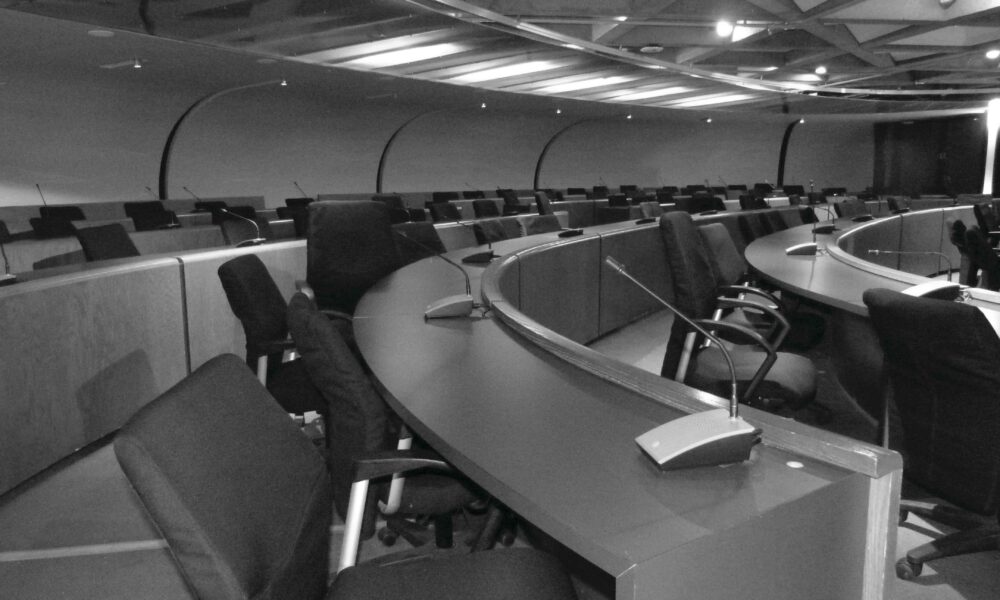
McGill Senate debates hybrid learning amid reports of overworked staff

At the McGill Senate’s fifth meeting on Jan. 18, senators discussed low student enrollment and presented reports regarding the creation of a new teaching program and budget planning for the upcoming academic year. A large portion of the meeting was dedicated to hearing recommendations for potential blended learning programs, with senators stressing the possible implications of hybrid learning on overworked staff.

Interim Principal and Vice-Chancellor Christopher Manfredi summarized recent government relations meetings in his opening remarks, including a campus visit from the federal Minister of Environment and Climate Change. Manfredi also commended the recipients of the 2021-2022 Principal’s Student-Athlete Honour Roll, whose annual gala he attended a week prior on Jan. 10.

Discussion then turned to the creation of a new teaching program in the Faculty of Engineering—a Masters of Science in Architecture with a thesis requirement—to be established in the School of Architecture

After some conversation around budget considerations for the upcoming school year, the meeting reviewed recent student recruitment numbers. Interim Provost Fabrice Labeau explained that this year’s lower student enrollment may have contributed to McGill’s lower revenue.

“Part of the deficiencies this year in terms of reduced revenue with respect to budget is due to the missed targets in terms of enrollment in certain student populations,” Labeau said.

Labeau also noted that staff turnover had caused significant internal upheaval at McGill. Although McGill’s current turnover rate is approximately seven per cent,similar to pre-pandemic levels, the current labour market poses a new, growing concern. 

“Due to the labour market, […] positions remain open longer, and it’s harder to recruit,” Labeau said. “So even at the same turnover rate, if you look at the number of people who leave in a given year, […] the positions they leave stay open longer.”

Associate Provost (Teaching and Academic Programs) Christopher Buddle presented an update from the Working Group on New Models of Academic Program Delivery. Buddle made three short-term recommendations, such as better definitions and frameworks for online and blended learning programs as the post-pandemic world introduces new challenges surrounding virtual learning and student attendance. 

“We have to consider when course design needs to be rethought. What is the impact on students at a programmatic level?” Buddle said. “If all students have a lot of their courses with a lot of online components, they might question ‘Well, why am I here in person?’”

Buddle also cited the need for refining processes around new program creation and dedicating workgroups to support a unified vision for the university’s summer programs and activities. 

Long-term recommendations Buddle highlighted included developing a consistent approach to hands-on learning to increase student opportunities, while being more responsive to emerging societal needs to fulfill the university’s vision.

Some senators were concerned about the ambitious recommendations Buddle presented. Many pointed out that implementing new blended learning programs would require the university to consider other aspects that were needed to support this shift, such as additional staff. 

“I think it requires a real commitment to it, more than just technology,” Professor Andrew Kirk said. “I think it requires a commitment to a teaching philosophy and learning philosophy. You know, it’s not just a Zoom license and a webcam, it’s thinking about, what platforms do we need? What human support do we need? [It’s] not just technology support.”

Moment of the meeting: 

Kirk voiced his concern about the Working Group on New Models of Academic Program Delivery creating an additional workload for faculties, as he believes that staff already take on additional responsibilities without any extra resources. Kirk said that if the university takes on too many additional initiatives, the number of “precarious” instructors could increase as well. 

Soundbite: 

“I teach music classes where I need to be able to play music, […] and the basic sound and video equipment is in very bad shape. [It is] on its last legs.” 

—Professor Julie Cumming on the need for staff consultation when deciding on new technologies for the classroom

Ask a Scientist, Science & Technology

The nature of Earth seems as alien as Mars

In 1957, the boundaries between Earth and space were first breached: The USSR launched the satellite Sputnik into space, marking the first contact between humans and our galaxy, setting off the aptly named space race between the Soviet Union and the U.S. 

Even after icy international relations began to thaw with the end of the Cold War, the space race continued and extended its pool of competitors to other countries. From the rapidly expanding economies of Japan and India to private, Musk-esque ventures, the fight to monopolize the mysteries of the heavens has become crowded. What many of these powers have in mind, though, is uniform—to reach the notoriously treacherous Martian landscape. 

The Polar Microbiology Laboratory at McGill, however, has set out to deepen our understanding of the Red Planet from the comfort of home. Rather than rushing off into space like seemingly every billionaire today, researchers at the lab are looking to Earth’s most inhospitable environments in an attempt to find lifeforms akin to what might be present on Mars. In a new paper spearheaded by Elisse Magnusson, a PhD student in the Department of Natural Resource Sciences under the supervision of professor Lyle Whyte, the lab team describes their research on microorganisms living in Lost Hammer Spring, one of the coldest springs on Earth and an analogous habitat to the life theorized to inhabit Mars. 

Lost Hammer Spring, in Nunavut’s most northern area, is known for its high salinity—over 20 per cent salt concentration. High salinitykeeps the water liquid, even in below-freezing temperatures. Researchers view Lost Hammer Spring as one of the closest terrestrial environments to Mars, with its cold salt springs and large salt deposits being theorized to also exist on the Red Planet.

Mars is home to both organic carbon—which plants, animals, and most microorganisms need to survive—and environments rich in inorganic material, or matter not principally composed of carbon. 

According to Magnusson, Lost Hammer Spring is indeed one of Earth’s most Martian environments. By learning how microorganisms survive in these environments and the effect they have on their surroundings, researchers can better predict what they should be looking for on Mars. 

“The types of location or metabolism that we can expect to see [are] expanded [by looking to inorganic environments],” Magnusson explained. “It is also important […] so we know where exactly we might want to look and what exactly we might want to look for because certain types of microbes and metabolisms mean particular biosignatures.”

The team’s acquisition of a metatranscriptome, or the isolation of the total mRNA present in each microorganism, is especially remarkable; it provides information on the genes that these special microorganisms express. Using this technique, the Polar Microbiology Lab gleaned important insights into how these microorganisms can survive in such inhospitable conditions and what materials they consume and recycle.

Magnusson was enthused by this discovery, adding that it allowed researchers “to look at what genes [the microorganisms] are expressing and look with much greater detail at their metabolism, their adaptations.” 

The European Space Agency has even shown special interest in the team’s research. The group turned in their results to the agency, which is planning to use the findings to calibrate life-detection technologies. 

The team’s research demonstrates the fascinating connection between the extraterrestrial and terrestrial, as well as intriguing developments in the search for alien life. Although space exploration is a requirement to prove any theories posited by this research, important discoveries can be made without leaving orbit. In fact, it is curious that our home planet is often just as alien as Mars.

News, SSMU

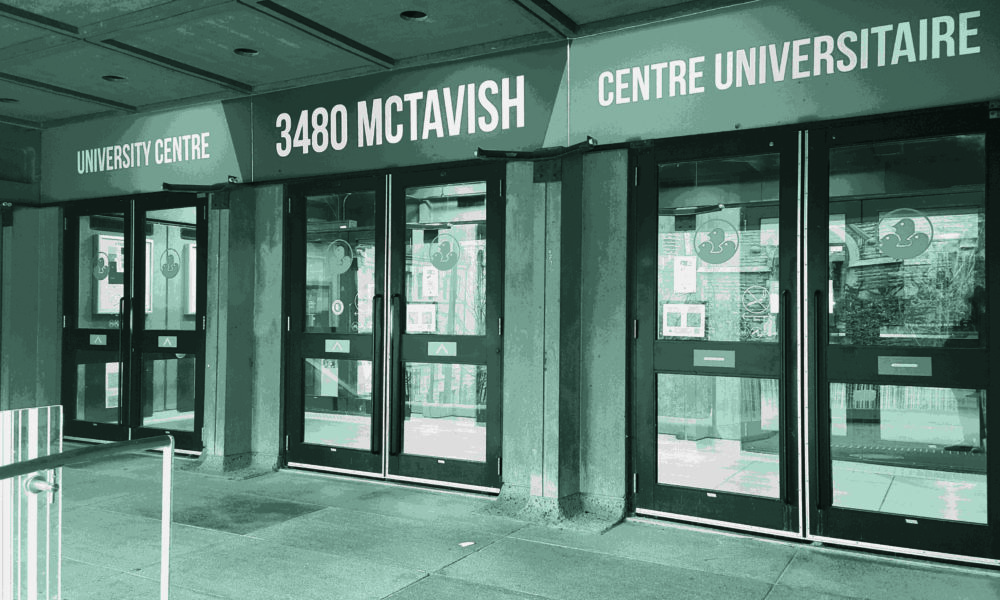
Legislative Council passes motions on Uyghur rights, support for trans students

The Students’ Society of McGill University (SSMU) Legislative Council convened on Jan. 19 for its first meeting of the winter semester to vote on two motions: One regarding the state repression of Uyghur people in China and another one which serves to bolster SSMU’s support for trans students in the wake of Robert Wintemute’s scheduled talk at McGill’s Centre for Human Rights and Legal Pluralism (CHRLP). 

Vice-president (VP) External Val Masny presented the first motion, which seeks to pressure the McGill administration into divesting from companies involved in the Uyghur genocide. The motion was originally presented at SSMU’s Winter General Assembly but did not pass because the meeting did not reach quorum. The Speaker of the Council then sent the motion to the Legislative Council, in accordance with SSMU’s Internal Regulations of Governance.

Demands outlined in SSMU’s Divest for Human Rights Policy—which already calls on the university to divest from roughly $1,000,000 of holdings in companies deemed complicit in the genocide—would now apply to the full range of McGill investments outlined by the motion.

“The way in which the [Uyghur genocide] operates is knowably through mass surveillance of the Uyghur population, built in China and abroad, and those companies that we’ve researched have been found to engage in […] surveillance,” Masny said. “[McGill’s] investments total 115 million dollars. It is quite an impressive number.”

SSMU, borrowing from a study by the Uyghur Rights Advocacy Project, outlined their qualifications for companies considered to be complicit in the Uyghur genocide in the motion. The standards earmark any company known to use forced Uyghur labour, any company manufacturing in or partnered with East Turkestan, and any Chinese surveillance company or biotech company engaging in genomic identification—a tool China has broadly used to track its citizens.

The motion passed with 17 votes in favour and one vote in opposition.

Masny then brought forth a motion regarding Robert Wintemute’s foiled seminar, which reiterated SSMU’s support of trans people.

“There have been people in the student body who have named what has happened as hate speech,” Masny said. “[Our] firm position against hate speech is a prolongation of SSMU’s firm position against discrimination.”

Beyond officially condemning Wintemute, the motion requires that an action plan be created to equip SSMU in future efforts supporting the transgender community. This action plan, will be drafted before the end of this academic year in collaboration with SSMU’s Gender and Sexuality Committee and executives in University and External Affairs. 

The motion passed unanimously, with a single member abstaining.

Before either motion was voted on, representatives from undergraduate faculties—as well as SSMU executives—each presented reports from their respective branches of responsibility. Arts representative Matthew O’Boyle gave an update on the upcoming Fiat Lux project, which will shut down the McLennan-Redpath complex from Winter 2024 until 2026.

“There were a lot of concerns about study space, and [the university] has secured a contract with a place to secure study space,” O’Boyle said. “They’re also trying to find some other work-study programs for students.”

O’Boyle’s colleague, Arts representative Angelica Voutsinas, also had some news to share.

“If anyone has classes in Leacock, [AUS] Snax will be up and running soon—we’re just finishing up some construction,” she said, referring to the beloved snack bar whose reopening has been hampered in recent years by renovations and hiring struggles.

Moment of the meeting:

Masny expressed frustration with the motion supporting trans rights over the fact that, without clear mandates, decisions on how, if, and when to enforce guidelines are made at the discretion of SSMU executives alone. 

Soundbite: 

“We’re monitoring sidewalks at McGill because it’s one of our mandates—so if you see snow unshoveled or sidewalks unsalted, you can email me [….] We’re trying to pressure the city to do better shovelling snow.”
—VP External Val Masny, delivering an open invitation for students to email [email protected]  should they spot unkept sidewalks

Read the latest issue

Read the latest issue