

Latest News

McGill, News

McGill not equipped to handle emergency mental health care cases

Content warning: Mention of suicide

Since its inception in 2019, McGill’s Student Wellness Hub has been marred by a lack of staff, minimal support from other university infrastructures, soaring demand for appointments, and the COVID-19 pandemic. As a result, students have struggled to book appointments and are often left to navigate Quebec’s understaffed and overwhelmed health care system.

Across Canadian universities, 30 per cent of students experience clinical depression and roughly 65 per cent of students report feeling overwhelming anxiety at least once. In Quebec, one in five people will experience mental health issues throughout their lifetime, but only about half of them will seek professional help. There are currently an estimated 155,864 mental health and substance use health care providers in the province—approximately 1,817 providers per 100,000 people. Despite this, many Quebecers report difficulty accessing care: In the most dire cases, lives are lost because of the system’s inadequacy. Jeremiah Wallace, a Quebec resident, has experienced the failings of the health care system firsthand.

In May 2022, Wallace’s daughter, Hannah, took her own life after a battle with depression and other mental health issues. (Wallace suspects Hannah may have had undiagnosed bipolar disorder.) Hannah was an education student at McGill and an Arts and Culture editor at The Bull and Bear, a student-run magazine published by the Management Undergraduate Society. In an interview with The McGill Tribune, Wallace described his daughter as a talented writer, an avid reader, and an overall wonderful person who was failed by the systems charged with caring for her. He believes that Hannah’s past suicidal behaviour should have qualified her for more urgent care.

“[McGill] should not have exposed [Hannah] to the inadequacies of the Quebec health care system,” Wallace said. “She was definitely eligible after a suicide attempt for somebody to take care of her, to watch her [….] My daughter had a nervous breakdown and a psychological breakdown, [yet] she was not able to avail special services.”

Wallace is now channelling his grief into advocating for better mental health care on campus.

“I think [McGill] needs to improve their health care plan to have unlimited counselling. If somebody really needs it, they should be able to see a counsellor every day,” Wallace said. “Don’t say you are hiring one counsellor, that’s not enough. Tell me you are hiring 10 counsellors per year; tell me you are going to tell the next [donor] that shows up […] to spend money on [mental health].”

McGill’s Wellness Hub is currently the main point of contact on campus for students looking to access mental health services. It is not, however, equipped to help students in crisis requiring immediate attention. In a written statement to the Tribune on behalf of the Wellness Hub, Frédérique Mazerolle, a McGill media relations officer, explained that “emergency care for students in crisis is not part of the Wellness Hub’s mandate,” because the Hub does not have the means—financially or staff-wise—to provide such services.

“We have connected with the Faculty of Medicine and Health Sciences to recruit graduates and are exploring more innovative digital recruitment approaches to adapt to an ever-changing Quebec job market,” Mazerolle wrote. “It is important to note, however, [that] crisis care requires a range of highly specialized services working together, around the clock, that the Wellness Hub is not equipped to provide.”

The Students’ Society of McGill University (SSMU) mental health commissioner Maya Willard-Stepan added that emergency care is not a part of SSMU’s health care mandate because of its complexity.

“SSMU doesn’t have the level of training or capacity needed to properly intervene in emergencies,” Willard-Stepan explained. “Currently at McGill, emergency cases are tended to through the Office of the Dean of Students, not any student group or the Wellness Hub.” 

The Office of the Dean of Students (ODoS) employs case managers who work with students experiencing mental health difficulties and members of the McGill community who are worried about a student’s well-being. According to Willard-Stepan, case managers can streamline access to clinicians and other counsellors at the Wellness Hub so that students do not have to navigate the process of booking an appointment on their own.

“If there is a student who is either a survivor of a suicide attempt or someone who is experiencing suicidality, when the situation is no longer an emergency, ODoS has referral power to clinical counsellors at the Hub,” Willard-Stepan said. “You do not have to go through normal pathways.”

Accessing care through the Wellness Hub is notoriously difficult. Students have reported wait times of up to nearly three months for an appointment with a mental health care provider. While the Wellness Hub employs nurses, they can only write prescriptions for birth control medication and “smoking cessation tools.” 

Wallace takes particular issue with McGill’s accommodation policies. Though he feels that an extension for a final project would not have changed Hannah’s mental state, an extended break may have been enough to allow him to find her proper care. 

“She [sent] an email to a professor and said ‘I need an extension, I tried to commit suicide,’” Wallace alleges. “His response was ‘talk to your [teaching assistant]’.”

As the SSMU mental health commissioner, Willard-Stepan is responsible for advocating on behalf of students during meetings with the McGill administration. This semester, Willard-Stepan must also prepare for the renewal of SSMU’s Mental Health Policy, which expires on May 1, 2023. In order to forge a policy that responds to the evolving needs of students, Willard-Stepan is holding community consultation meetings. 

One of Willard-Stepan’s goals for the coming policy is to better acknowledge intersectionality—BIPOC and 2SLGBTQIA+ students face many more barriers to care than white, cisgender, heterosexual students. The Wellness Hub currently has one wellness advisor dedicated to serving 2SLGBTQIA+ students, but the wellness advisor supporting Black students position is currently vacant. Mazerolle confirmed, however, that the Hub employs a diverse counselling team “with representation from BIPOC and 2S&LGBTQIA+ communities” and that “all staff at all levels are trained in [equity, diversity, and inclusion] informed practices and care.” 

“I think that in the past few years, we’ve seen a lot of progress and understanding of how your intersection of identities impacts your health and also impacts your access to health,” Willard-Stepan explained.  “Equitable access to health care is social justice.”

Also on the docket for Willard-Stepan next semester is the finalization of a suicide prevention framework. Currently, McGill has a postvention—after the fact—framework that is implemented in the case of a death on campus. There is no framework in place if a student dies off campus apart from formal procedures like cancelling their registration and lowering flags on campus to half-mast. Willard-Stepan is looking forward to developing a preventative framework that will hopefully help students when they are in crisis rather than post-crisis. 

“[The framework] is designed to create a preparedness plan at McGill so that when there is a death on campus or when there is someone experiencing suicidal thoughts, there is a document that gives people the knowledge of what they can do, and when their role stops and they need more support,” Willard-Stepan said.

While advocating for a reform of McGill’s and Quebec’s mental health care systems, Wallace is also calling on the Faculty of Education to commemorate Hannah in some way and to acknowledge that there is a mental health crisis on campus. In the meantime, he is focused on remembering his daughter as the beautiful, brilliant person she was.

“Hannah wrote several novels [….] She was a huge fan of Taylor Swift, Glee, and Love Simon, and before there was Love Simon, there was The Perks of Being a Wallflower,” Wallace wrote in a follow-up email to the Tribune. “She likely read 5,000 novels. When she died, it was a bit like the fire in Alexandria.”

Students in crisis should contact Suicide Action Montréal at 1-866-277-3553. For an appointment with a doctor, wellness advisor, or mental health counsellor, students can contact case managers at the Office of the Dean of Students, call the Wellness Hub at 514-398-6017 Monday through Friday, or go to the Hub’s website for more information. To consult with the SSMU mental health commissioner, email [email protected].

Arts & Entertainment, Pop Rhetoric

Pop Dialectic – Two Black Panther: Wakanda Forever movie reviews

Just for Laughs –  Simi Ogunsola

After four years of waiting, Black Panther: Wakanda Forever is finally here and people have been talking. Some are calling the film an 11/10 and hailing Ryan Coogler as a genius while others can only describe the film as “mid” and prefer the first movie. Personally, I loved the film, but it was a wild ride for sure. Here is a spoiler-free list of my thoughts while watching.

No wayyy…..

Director Ryan Coogler definitely took audiences for a ride with the cameos and plot twists in this sequel. One second I was flying to the edge of my chair in fear, and the next, shock had me flinging myself back. From multiple conflicts between Wakanda and Talokan going on at the same time, to the frantic omg-the-movie’s-almost-done-but-the-problem-isn’t-resolved stress, the film keeps you engaged and thoroughly entertained.

The U.S. low-key being the bad guy? What’s changed!?

The movie explores tensions between Wakanda and the U.S., among other global superpowers. Without saying too much, it really made me reflect on what makes us consider a country “good” and “bad,” and how narratives (true or otherwise) can be spun to achieve a country’s goals. Poli sci and IDS majors, run, (with an open mind) don’t walk, to this one.

*Speechless*

By “speechless,” I mean that you could’ve heard a pin drop on the stained carpets of theatres worldwide. During the tribute moments, the entire theatre was silent. Fans hoping for a final goodbye to Chadwick Boseman will be pleased by what I can only describe as a love letter to the star. Suffice to say that during the post-credit scene, tears were definitely shed.

Purrrrr Ms. Girllllll!

One thing that wasn’t on my Wakanda Forever bingo card was a touching feminist tale.  The film did not shove the “strong Black Woman” trope down audiences’ throats, nor did it obsess over Shuri being a young girl who likes science. The movie simply said: “Here is woman. Here is woman in all of her different facets.” It illustrated, without obsessing over, all the different ways for a woman to just //be// and I really appreciated that.

The film tantalizes the viewer, the soundtrack pleases and surprises the ear, and of course, the actors bring it all home. A must-watch—you won’t regret it. 

Cultural Faux Pas – Joy Sebera

Just the Facts

Although opinions may be divided about which Black Panther was better, viewers cannot ignore the sequel’s cinematic merit, aesthetic appeal, intense plot, and moving tribute to the late Chadwick Boseman. However, one of the elements that makes it so popular is the majority Black cast and the film’s inclusion of African cultures. That being said, who is actually being represented and who is the film truly for? The Black Panther superhero was created to introduce a Black superhero, not an African superhero, to the American Marvel comics canon, and the films sustain that narrative.  

One Size Fits All

Wakanda is a fictional African country that has closed its borders off from the rest of the world to protect itself from being exploited for vibranium, a fictional resource. The people of Wakanda speak Xhosa, a language from South Africa, and multiple East and West African cultures are represented through the clothing and traditions showcased in the film. Is this positive representation or homogenization that does not take specific African identities seriously? What effect does this serve in a film that does not reflect African realities? Wakanda has never been colonized and the main conflict in the first film is if and how Wakanda should share their resources with a hostile and alienating world. The message is from American voices disguised in African clothing, literally.  

Who’s the real villain?

The Black Panther franchise features arguably two of the most sympathetic villains in the Marvel Cinematic Universe —Erik Killmonger and Kukulkan or “Namor.” Without giving too much away, the storyline that pits the Wakandans and the Talokanil against each other is justified, and yet it seems to come completely out of left field. The introduction builds up a plot that would challenge Western exploitation, but it quickly becomes a battle between two nations that both fear exploitation, with Americans at the unsatisfying centre of the resolution. Is it really any surprise that, even in Xhosa, American voices speak the loudest?


Black Panther: Wakanda Forever is currently playing in theatres.

McGill, News

COVID-positive students no longer need a medical note to defer exams

McGill’s exam deferral regulations now allow students with COVID-19 to request a deferral without a medical note. This alteration was made on Nov. 25 after meetings between Law Senator Josh Werber, Students’ Society of McGill University (SSMU) vice-president (VP) University Affairs (UA) Kerry Yang, and McGill administrators.

Under McGill’s existing regulations, students in eligible faculties, including Arts, Management, and Science, get one opportunity while completing their degree to defer an exam without supporting documentation. For subsequent deferrals, supporting documentation is required. Such documentation includes a medical note from a verified health practitioner, a statement of capacity that indicates to what extent a student’s condition has hindered them academically, dates during which the student was impacted, and when they are expected to recover. 

The Deferred and Supplemental Exams webpage now indicates that for students in eligible faculties who have contracted COVID-19 “a medical note is not mandatory even if this is not your first deferral.”*

As COVID-19 case numbers soar once again, medical clinics in Quebec are increasingly backlogged. Yang explained that the modification of the regulations is meant to alleviate the stress on students who contract the virus and struggle to obtain supporting documentation due to the overburdened health care system or other accessibility issues. 

“All this, the documentation, the entire process [of requesting a deferral] is extremely stress-inducing, especially during finals season,” Yang said in an interview with the The McGill Tribune. “We sort of want what requires the least amount of work and effort out of [students].”

McGill media relations officer Frédérique Mazerolle noted in an email to the Tribune that exam deferrals should only be used for extremely strenuous circumstances. 

“Deferring an exam is an exceptional measure, and is meant to help students who are severely ill or dealing with unforeseeable, significant extenuating circumstances,” Mazerolle wrote. “Requests due to minor illnesses (e.g. a cold, cramps, nausea, etc.), minor personal matters, for scheduling conflicts (e.g. travel plans), or to manage your workload will not be approved.” 

Deferral requests can also be refused for the failure to provide a valid reason, recurring deferral requests for similar reasons without attempting to address the barriers hindering a student’s ability to write the exam, and inadequate medical documentation. 

While there may be fear of students taking advantage of the policy due to the leniency of the new clause, Werber believes it should not present a significant concern. In an interview with the //Tribune//, he asserted that inappropriate use of a policy is bound to occur and that students in need of deferrals should not be punished for the possibility of improper use. 

“You’ll have students who legitimately deserve a deferral, who don’t get one,” Werber said. “I’d rather have the occasional bad actor get a deferral than [have] some student who’s legitimately sick [not] get it.” 

Macdonald Campus Students’ Society (MCSS) VP UA Alireza Roosta explained that the uncertainty over the approval of deferral requests has forced students to attend their exams while ill. 

“The first thing that you think of is, ‘Okay, I have 12 hours before my exam, and I need to get my request approved and I also need to get, for example, medical documentation. So how can I do all of that? Isn’t it better for me just to show up sick?’” Roosta said. 

Werber has hope that the medical note exemption for COVID-19 cases will be carried over to other illness-related exam deferrals.

“Hopefully, this practice of not requiring a medical note for COVID-19 is the beginning of a new direction by which students are believed when they have an accessibility issue or need a deferral, rather than always having to prove it all the time,” Werber said. 

Those who need to request an exam deferral can do so through the Student Menu on Minerva.

*This information was listed on the Deferred and Supplemental Exams webpage at the time of publication.

ABCs of Science, Science & Technology

How STEM’s  leaky pipeline persists at McGill

At the end of this semester, I will have completed half of my neuroscience undergraduate degree at McGill, and the number of women professors in my science courses so far is slightly alarming. Out of the 22 professors that I have had spanning disciplines like neuroscience, biology, mathematics, physiology, and computer science, only four of them were women—a measly 18 per cent. Many courses offered by the Faculty of Science are taught by more than one professor, and PHGY 311 is a prime example, with four different instructors leading the class over the course of one semester. Each time we finished a section of this course, my friends and I hoped that the new professor would be a woman. But with only three classes left, we now know that we will not be getting the opportunity to learn about ion channels from a woman professor. Many would argue that this doesn’t matter, but it reflects a broader gender inequity that is stubbornly entrenched across scientific disciplines.

PHGY 311 is not an outlier; it is the norm. In McGill’s physiology department more broadly, men represent 72 per cent of all professors. It demonstrates the troubling reality that, on average, academic positions in the faculties of science and engineering are primarily held by men. “Turning the Tide for Academic Women in STEM: A Postpandemic Vision for Supporting Female Scientists” is a recent study investigating the challenges women encountered in academia throughout the COVID-19 pandemic. The researchers noted that, although inclusivity in science has increased over the past decades, underrepresentation, salary discrepancies, and increased career-related obstacles are some of the challenges that women in science, technology, engineering, and mathematics (STEM) continue to face. 

The pandemic alone did not cause these issues—it exacerbated the effects of pre-existing inequalities between men and women academics. Women spent less time doing research throughout the pandemic because care responsibilities and other traditionally gendered tasks  fell disproportionately on their shoulders. A meta-research study also found that the number of women who were first authors on COVID-19 papers published throughout the pandemic decreased by a staggering 19 per cent compared to 2019.

The phenomenon behind gender disparities, such as the decreased number of research publications, is known as the leaky pipeline, which describes how gender biases may limit women’s opportunities to ascend to the highest positions within STEM. These barriers can have devastating effects at various stages of women’s careers, such as hiring, funding, publishing, and professional advancement. The leaky pipeline problem has resulted in a persistent gender gap among STEM academics despite the significant increase in the number of women pursuing advanced degrees in the sciences.

Julie O’Reilly, a second-year PhD student in the Bourque Lab at the Research Institute of the McGill University Health Centre (RI-MUHC), has noticed that the number of women in McGill’s science graduate programs contrasts starkly with the number of women who occupy academic positions at McGill. 

In an interview with The McGill Tribune, O’Reilly shared that, even though she has never consciously thought that women would be worse in STEM, she has realized that an unconscious bias, largely perpetuated by outdated social norms, has shaped the mental image that she has of principal investigators. 

“When there’s a great discovery and it’s made by a female, then the article will mention: ‘It’s a female!’ and [the focus] would be about [gender], which shouldn’t be the case,” O’Reilly said.

Intersectional identities can further intensify the inequalities that women in STEM may experience. The term “double bind” encompasses both the institutional and interpersonal sexism and racism that women who are Black, Indigenous, or people of colour face. Another such factor is the variability across specific STEM fields. Some studies have shown that women majoring in physics, engineering, and computer science (PECS) are outnumbered by men who do worse academically. Even more surprisingly, the researchers determined that student-level factors, such as socioeconomic status, self-confidence in scientific abilities, and home resources do not sufficiently explain the gender discrepancies witnessed in PECS.

I sat down with Longyu Li, a third-year student in mechanical engineering at McGill, to learn about her experience as a minority in a major that is still very male-dominated.

“I know that in other engineering departments, there’s quite a few [women students]. Mechanical [engineering] is just that one department that’s mostly boys,” Li said. “I think that if there were more activities and social events, [we would feel better supported].” 

When looking at the faculty members in the mechanical engineering department at McGill, the number of male professors significantly overshadows that of women academics. Of the 27 professors listed on the department’s website, only three are women. 

The lack of representation of transgender and non-binary people in STEM is representative of a larger narrative that erases this community from key industries and fields of study. Queer McGill said in an email statement to The McGill Tribune that the history of gendered violence in Quebec may influence the makeup of the STEM field today. 

“To be a woman in a STEM program is a position especially charged in Quebec in light of the École Polytechnique massacre, which targeted women in an engineering class,” Queer McGill wrote. “We [do note] that many students and staff run initiatives in an attempt to overcome imposter syndrome, lack of equal opportunities, and other barriers related to being a minority in STEM programs.”

Such initiatives on campus include Diversity in Math, the equity discussion group led by professor Rosalie Bélanger-Rioux, and Promoting Opportunities for Women in Engineering McGill.

“We would like to see these efforts shared and prioritized by the McGill administration,” Queer McGill wrote.

Sophia Moubarak shared some of her experiences as a third-year student in electrical engineering at McGill with the Tribune. When I asked if she could remember how many women professors she has had since she started university, Moubarak quickly responded that she indeed could, because the paltry number—four women professors out of 23—was so easy to recall. 

“You can count your female professors on one hand,” Moubarak said.

In accordance with what seems to be the trend in STEM majors at McGill, only 22 per cent of professors in the Department of Electrical and Computer Engineering are women. Prior to starting her undergraduate studies, Moubarak knew that the demographic would be tilted towards men, but she still expected more inclusivity and better representation.

“If you see someone that you can maybe picture yourself as in the future, you tend to do better in those courses,” Moubarak said.


Some scholars have predicted that many STEM fields like computer science, surgery, and mathematics will not achieve gender parity within the next 100 years. Although the prediction may seem discouraging, there are changes that institutions can implement to fast-track their faculty memberships to better reflect the population. Increased support for scientists who are mothers will help alleviate some of the demands of childcare and domestic work. Advocacy committees can support women in STEM, especially racialized women, and raise awareness about the structural hurdles that prevent them from reaching the top. Pathways for career advancement should offer greater flexibility depending on the scientist’s particular circumstances, such as childcare and household responsibilities. For science to continue its innovative and transformative work in society, the STEM workforce needs to equip women with better resources and tools to succeed.

Chill Thrills, Student Life

Sex and Self’s new shame-free book club caters to open and honest discussions

Sex and Self, a not-for-profit, sex-positive organization, held its first book club meeting last Thursday over Zoom. Readers congregated virtually with Mo Asebiomo to discuss It’s My Pleasure: Decolonizing Sex Positivity—the author’s debut book that challenges the basis of what it means to hold sex-positive attitudes in a white supremacist country. Participants discussed their interpretations, experiences, and observations, and also listened to Asebiomo read and discuss their work. 

Sex and Self is a student-run group that aims to educate and empower individuals about their bodies, autonomy, and sexuality. The organization was set up at McGill in 2019 by Felicia Gisondi, but has now expanded across many universities in Canada. Sex and Self’s mission is built on three pillars: Scientifically-backed sex education, intersectionality, and a sex-positive atmosphere. It facilitates various seminars, workshops, and events to educate people about sexual and reproductive health and wellness. Simultaneously, the organization works with sex and health sponsors to attain free products for students and works with health care professionals to ensure their message is scientifically grounded. 

The co-president of Sex and Self McGill, Holly Bloomfield, U4 Science, said in an interview with The McGill Tribune that “[o]ur main goal is to provide comprehensive sex education that’s shame-free, pleasure-focused, and scientifically backed to the McGill community.”

To expand its repertoire of sex-positive offerings, Sex and Self’s newest initiative, Book Club, provides a safe space to explore topics that are often not reflected in the media or sex education programs. A common theme surrounding sex education in the classroom is one of abstinence, in an attempt to scrub the important topic out of students’ awareness. Book Club takes a vastly different approach, with open discussions taking the forefront. 

“Books ranging from anything, like smut, just give people a safe and informed place to talk about all the different kinds of aspects of sex, while also bringing in perspectives that we may not hear through the books,” Bloomfield said.

Sex education taught at a younger age can be inadequate or even nonexistent; often, sex education lacks information, stigmatizes sex curiosity, and is done through a cisgender and heteronormative lens. With the slogan of “Nobody benefits from knowing less about their bodies,” Sex and Self is trying to help fill these gaps. 

“Within our future generations, we don’t have to have this like closing up [around topics like sex]. I would love to live in a world where we can talk about genitals the same way we talk about other body parts like we don’t have to pause and say it quieter or laugh uncomfortably afterward,” said Tess Vardy, the University Coordinator at Sex and Self and a fourth-year Arts student at the University of Guelph. “Like, I’d love to say vagina like I say finger. That’s the kind of world I want to live in.”

This desire for open and shameless conversations about sex is brought into the book club meetings, as Vardy aims to create the most comfortable environment possible when leading the club. They actively ensure a safe space by providing trigger warnings and low-pressure discussions so that people can participate if desired. 

The other McGill Sex and Self co-president, Lidie Silva, U4 Science, spoke about her experience creating safe, inclusive environments while moderating different workshops and events. 

“Allow everyone to learn and [don’t] assume that everyone has different backgrounds, voices, and information. It’s just like, everyone has space to learn together,” Silva told the Tribune.


Sex and Self’s fulsome resources are available on their Instagram or website, where you can sign up for events and stay up to date with their various initiatives. The organization also provides a wellness pantry on the first floor of the University Centre, where, at any time during opening hours, students can pick up pads, tampons, condoms, lube, ovulation strips, period cups, and (if you turn on their Instagram notifications) even sex toys.

Science & Technology, Science Rewind

Trottier Foundation gives $16 million to McGill Space Institute

The Trottier Family Foundation announced on Nov. 21 that they would be making a donation of $16 million to the McGill Space Institute (MSI)—which will now be called the Trottier Space Institute (TSI)—as well as $10 million to L’Université de Montréal. Half of the money donated to McGill will go towards building an annex onto the TSI building at 3550 University Street, while the other half will fund fellowships and provide increased support for research projects. 

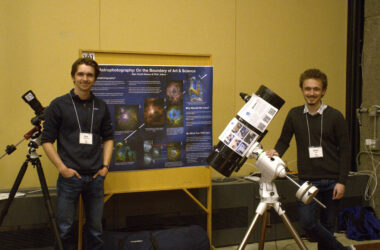
In light of the donation, Nicholas Vieira, a PhD student in astrophysics at McGill, discussed his hopes for the future of the TSI in an interview with The McGill Tribune

“Hearing about this new donation is super exciting as a graduate student, because I know that this kind of money is going to fund all sorts of new students to come to the TSI,” Vieira said.

Since the TSI was founded in 2015, it has grown to house more than 120 researchers who work on a wide variety of topics, including exoplanets, astrobiology, and the formation of stars. As the TSI continues to grow, the extra space provided by the annex will allow for new and exciting research projects to develop. 

“My understanding is that the building is hopefully going to just accommodate a lot more students, because this building is beautiful. I love it, but it’s not the biggest building on campus,” Vieria said. 

Vieira studies kilonovae, phenomena that occur when two neutron stars orbiting each other collide, emitting a burst that lasts for about a week. “The reason why kilonovae are super interesting to me is that we think the reason they shine is that during these mergers, you synthesize a bunch of radioactive elements, and just heavy elements in general,” Vieira explained. 

In the future, Vieira and a team of scientists at the TSI hope to use the James Webb Space Telescope (JWST) to further their research. 

“We really want to point James Webb at these things, and analyze how their […] colour evolves over time, how their brightness evolves over time, and see if we can learn stuff about the origin of these really heavy elements using that data,” Vieira said. 

Research into kilonovae is one of many space-related investigations currently underway at the TSI. 

“There’s a lot of really exciting stuff going on, which is one of the things that I really like about coming into work here,” said Vieira.

Even before the donation, the TSI was already doing ground-breaking research. Professor Victoria Kaspi, director of the TSI, was even awarded the Albert Einstein World Award of Science in September 2022. 

“The ground-breaking work by the Space Institute’s researchers includes major discoveries in the area of neutron stars and fast radio bursts by […] Victoria Kaspi,” wrote Frédérique Mazerolle, media relations officer at McGill, in an email to the Tribune.

Kaspi is known for her past work on neutron stars, which are formed by the collapse of massive stars and are some of the densest objects in the universe. More recently, at TSI, she has focused on fast radio bursts, which are a mysterious observed phenomenon. 

“Fast radio bursts […] are these bursts of radio waves that, as the name implies, are very fast, like milliseconds long,” Vieira explained. “What’s really neat about FRBs, as they’re called, is we have no idea where they come from, nobody knows what produces them.”

New astronomical telescopes and instruments accelerate innovative research like Kaspi’s, and the donation from the Trottier Foundation will help keep TSI at the cutting-edge of this development. 

“The visionary gift coincides with an exciting age of discovery in astrophysics, thanks in part to the development of powerful new telescopes—such as the Canadian Hydrogen Intensity Mapping Experiment (CHIME) and [the JWST]—that enable researchers to explore deep into our solar system and beyond,” Mazerolle wrote.

Know Your Athlete, Sports

Know Your Athlete: Ludovyck Ciociola

The exceptional play of first-year goalkeeper Ludovyck Ciociola was a bright spot for Redbirds soccer fans during a disappointing 2–8–4 season. After a successful stint at Collège Ahuntsic, the rookie from Montreal North capped off his debut season at McGill by earning a spot on both the RSEQ all-rookie team and the U-SPORTS all-rookie team. This provincial and national level recognition cements Ciociola as a name to watch in the Canadian university soccer circuit. The McGill Tribune sat down with Ludovyck to discuss his accomplishments and to hear about his path to McGill.

A four (or maybe five, his memory failed him here) year-old Ciociola began playing soccer in his neighbourhood under the guidance of his number-one fan––his mother.

“Honestly, my mom put me in because it was the most popular sport in Montreal North. Since I can remember, I liked it, so I’ve just continued,” the keeper told the Tribune

It wasn’t until a few years later, however, that Ciociola started standing between the posts. The transition from the outfield was seamless as the youngster slid into his new position with ease. With a game inspired by Barcelona’s Marc-André ter Stegen, the Redbirds keeper has the skill set of a modern goalkeeper: Excellent footwork, fast reflexes, and solid passing abilities.

Ciociola’s success this season comes after overcoming persistent doubt in his playing abilities early on. 

“For a long time, I didn’t have self-confidence as a keeper,” Ciociola said. “From U13 to U17, I didn’t have the confidence to play AAA [the highest level in Quebec] [….] After U17, I just made the jump to AAA, and I won the golden glove in my only AAA season. I was invited to try out for semi-pro. I made the semi-pro team, so when I got over that mental block, it really started working out.”

Early in the Redbirds’ season, Ciociola had a brilliant stretch of play, showcasing incredible poise against some high-quality teams. 

“We faced [Université de Québec à Trois-Rivières] at home on Friday and won 1-0, then Sunday we went to Laval and [tied] 1-1,” Ciociola said. “I played excellent games on an individual level in the two matches. And, after that week, I won McGill athlete of the week, RSEQ athlete of the week, and U-SPORTS athlete of the week.” 

However, the triumph didn’t last long. McGill’s early success ground to a halt after the team failed to pick up points in five out of the last six contests. Nevertheless, Ciociola had plenty of positive experiences throughout his first year with the Redbirds. 

“[I want to give a] shoutout to Mika [Michael Palomo], I met him this summer when I joined Blainville to play semi-pro, and I found that he really helped me become more aware of goalkeeping tactics,” the keeper said.

After getting the first-ever red card of his career against Sherbrooke on Sept. 15, Ciociola wanted to clear up what really happened and to emphasize the support from his team. 

“It wasn’t really a red card; the ball hit my face. That was the one time I was actually mad [….] A coach, Pierre [Lepage], came to see me on the bench and told me they were going to win for me, and we did win, 2-0.” 

Ciociola also expressed gratitude for senior goalkeeper Chris Cinelli-Faia as the veteran guided him through his first season.

“There’s the team, and then there are the goalies, who form a sort of team inside the team,” Ciociola explained. “Chris has been there all season, talking, giving advice. If I had something to ask, I would see him. You can say he took me under his wing. Chris wrote a paper on penalties and how you should move as a keeper […] but I haven’t applied his paper findings yet.”

During the offseason, the Redbirds keeper will be keeping busy by cheering on Les Bleus in their World Cup defence while attending his first-year management classes and weekly team training.

*The interview was translated from French by the author.

Off the Board, Opinion

The risk I took was calculated, but man, am I bad at math

In middle school, I spent objectively too much time reading dystopian Young Adult fiction novels and watching rom-coms from the 1990s and 2000s, which have now left me with a questionable repertoire of references and an insatiable taste for casual insurgency. I’ve never considered my attempts at nonconformity as dangerous to others simply because the scale of my “anarchy” is what many would call pathetic.

Like many of my other personality traits, I could easily blame my weirdest qualities on my immediate family. To many of my friends, buying a pair of ripped jeans or eating a sandwich with white bread are simple, unweighted choices. For me, deliberately calculating the cost-benefit analysis of such choices is a crushing reminder of how I’m disappointing my mother. The idea of buying white bread—even when it’s on sale—sends a chill down my spine, lighting up my nervous system with my eight-year-old self’s fear of stepping out of line.

While I have no qualms about hiding my purchase of what my mother calls “overpriced pants that have already been broken” from her, I always feel a sense of anxiety when stepping into them, as if I have gained a power I have no control over. Even though I fully understand that the pants annoy my mother, it feels almost stupid to think that wearing pants with holes in them is a way to forge some kind of path forward for myself. 

I wouldn’t necessarily describe myself as a rebellious person, but I am often compelled to do things that I had previously avoided at all costs, as long as there are hilariously low stakes. For the majority of my life, I actively avoided any and all scary movies. When I went to see //Titane// (2021)—a body horror drama film about a serial killer—I felt a glowing sense of pride as I left the theatre, even if I watched most of the movie’s gruesome first third through my fingers. It may not have been a traditional “scary” movie, but having previously avoided horror like the plague, it felt like a weird, powerful step towards overcoming my fears.

Sometimes I think that these casual acts are just a product of all my own insecurities—maybe a new angle at which I can attempt to not be myself. Because of my persistent inclination towards making self-deprecating jokes, I know that it’s easy for me to joke about the low-stakes nature of these challenges. But inadvertently, some of these new efforts have brought me genuinely closer to different parts of myself than I had previously thought possible. 

I’ve spent a solid two decades complaining about sports: I got excited about the Super Bowl solely because of the buffalo wings and would constantly decry that I didn’t get sports—it was easy to hide my chagrin from not understanding them behind loud expressions of hostility. Yet, for all the times I’ve annoyed my family by complaining about the television constantly being tuned to the sports channel, my dislike has finally started to crack. While my brother bribing me with takeout to watch Mets games with him didn’t exactly spark joy, following the Rangers during the Stanley Cup playoffs last year with my family was an intense, yet jubilant experience. Watching every game was more than just a few hours of visual engagement; it was a true bonding experience. Becoming a hockey fan probably should have felt like a betrayal of my own opinions, but I found that picking up the game was more of a fun challenge—I don’t understand a good amount of the rules, but I still won’t quit.

I’m not immune to wishing I could take risks that are indubitably serious, or wanting to know more surely where that drive comes from. But for the most part, I’m pretty content with my low-pressure unrest—if the worst thing that can come from it is ribbing from my family, I can probably handle that. Regardless of how strange or mundane some risks may seem, if they bring me closer to myself and to my family, I see no good reason to stop.

Research Briefs, Science & Technology

Flatworm-inspired bioadhesives allow pressure-free hemorrhage treatment

Hemorrhages account for about two million potentially avoidable deaths around the world every year. With a 30 to 40 per cent rate of trauma mortality, the impact of hemorrhages worldwide cannot be understated. Yet, a group of researchers at McGill made a remarkable improvement in its treatment by developing bioadhesives derived from structures found in flatworms to efficiently handle pressurized blood flows in non-compressive hemorrhages. 

Hemorrhages are caused by blood loss due to damaged blood vessels. The bleeding can be minor, resulting in a bruise, or significant, leading to fluctuations in vital signs and altered mental status. Hemorrhaging can occur outside the body, as a traumatic wound, or inside the body, as internal bleeding. Internal hemorrhages require clinical investigations that include physical examinations, laboratory tests, diagnostic imaging tests, and close monitoring of vital signs. 

Various factors  can lead to hemorrhaging, such as alcohol abuse, drug use, tobacco consumption, cancer, surgery, or damage to an internal organ. Uncontrolled hemorrhaging leads to decreased blood flow and oxygen supply to organs, which could ultimately result in organ failure, seizures, coma, and death. The treatment for a hemorrhage depends on its anatomical location, the extent of the blood loss, and the patient’s symptoms. 

External bleeding can usually be treated by applying direct pressure and placing tourniquets near the wound. However, the treatment of non-compressible hemorrhages, when wound sites are inaccessible, remains challenging. Current treatments, including the use of hemostatic agents (thrombin and kaolin) and bioadhesive sealants, have major drawbacks: They can be insufficiently absorbent and are difficult to store.

Researchers from McGill developed bioadhesives modelled after structures found in marine animals, such as mussels and flatworms, to remedy many of the problems presented by traditional adhesives.

In a new study published in Nature, Jianyu Li, a professor in McGill’s Department of Mechanical Engineering, and his team have proposed the use of liquid-infused microstructured bioadhesives (LIMBs) as an innovative strategy to treat non-compressible hemorrhages. 

“These interesting microstructures provide us with a solution to handle heavy blood flows, which is mission-critical in the cases of non-compressive hemorrhages,” Li said in an interview with The McGill Tribune. “They act like a sponge, sucking in the blood at the source of [the] wound, can rapidly induce clotting, and can instantaneously form strong bioadhesion that seals bleeding sites. This new material is mechanically robust and tough to encounter pressurized blood flows and can be instantly removed after surgery.”

As their name suggests, the LIMBs are formed by infusing liquids into a bioadhesive gel called xerogel, which absorbs blood and promotes clotting at bleeding sites. Infused liquids facilitate interfacial bonding and sealing—sticking formed by the intermolecular forces in liquids. The synergy of xerogel and infused liquids allows the bioadhesives to form robust adhesions without having to apply pressure. 

Unlike traditional wound closure methods like sutures, wires, and staples, bioadhesives are less invasive and promote wound healing through various mechanisms, such as the release of antibacterial and growth factors, induced host immune responses, and delivery of healthy cells. The bioadhesives possess antibacterial, anti-inflammatory, antioxidant, and self-healing properties, and can remain stable on the site of application due to their intrinsic adhesion property derived from flatworms. These bioadhesives also prevent leakages after surgery, which account for 30 per cent of complications that can easily result in pain, inflammation, infection, and death. LIMBs were validated through both in vitro and in vivo testing using pig models.

The application of LIMBs is quick and pressure-free, making them suitable for non-compressible hemorrhages. Additionally,e LIMBs minimize the risk of re-bleeding upon removal and can be left inside the body to be absorbed. 

“Our material showed […] better-improved safety and bleeding control efficiency than other commercial products,” Li said. “Beyond bleeding control, our material could one day replace wound sutures or deliver drugs to provide therapeutic effects and would have important implications in various clinical settings and even the Canadian Armed Forces.”

Commentary, Opinion

Canadian mining: Putting a price on Latin American lives

Canada is one of the world’s most prominent players in the mining industry, and its presence has been swiftly growing since the 1990s. Nowhere is Canada’s dominance seen more clearly than in Latin America—where between 50 and 70 per cent of mining activity involves Canadian companies. 

With its neocolonialist control over the mining industry, Canada holds immense influence over the political and environmental landscapes of Latin America. This control has proven to be devastating, with mining being responsible for the highest proportion of human rights violation complaints in Latin America.  North American governments also create a trap of terrible conditions that workers in the mining industry cannot escape due to restrictive immigration policies in Canada and the U.S. Educational institutions that prepare students to enter the mining industry, including McGill, are complicit in the detrimental effects mining has on Latin American countries. With Canada’s oldest mining engineering program, McGill must re-orient its mining program towards sustainability and end its perpetuation of mining’s destructive status quo. 

Canadian companies participate in extractivism, by which minerals are extracted from the Earth with virtually no regulation to maximize profit. The lack of enforceable guidelines leads to terrible working conditions and environmental destruction, such as pipeline failures that cause cyanide solution to enter waterways. Canada funds and directs most mining operations in Mexico, which are notorious for poor labour conditions such as exposure to explosives, or toxic gases that contribute to injury and death through workplace accidents, lung disease, and cancer. Although the extractive model of mining provides workers with jobs, the lack of regulation stifles workers’ rights in an industry where conditions are already brutal. Furthermore, this practice encourages an economic focus on resource extraction that weakens the economic self-determination of the resource-rich region. 

Inequitable mining practices are directly contributing to the displacement and subsequent migration of Latin American peoples. Although illegal border crossings have seen a downward trend in the past 20 years, Canada and the U.S. have been arresting and detaining more people than ever over the past three years with the numbers still on the rise.  Migrants resorting to illegal entry often come from Mexico, where smugglers profit off of locals needing to escape dangerous working conditions, poverty, and violence. Canada already has a history of displacing and exploiting racialized peoples to achieve its economic goals, as evidenced by the construction of pipelines on Indigenous lands. 

McGill prides itself on the fact that its students and alumni have “shaped the face of mining” in Canada and around the world. With this pride should also come responsibility. The McGill Research Group Investigating Canadian Mining in Latin America (MICLA) is a research collective based at McGill that aims to fund public research and debate regarding Canadian mining in Latin America. Composed of students and faculty, MICLA is part of the university’s ongoing effort to link teaching with research and to connect these to the public interest. However, they have not released any public updates since 2013. McGill students working in mining research should be examining Canada’s neocolonial practices, and the MICLA’s mission should be revived to spur activism for those forced to work in these poor conditions. 

To truly transition to sustainable mining, governments and corporations must acknowledge the horrific impacts of current mining conditions and bring forward laws and regulations that have undergone community consultation. The needs and concerns of those inhabiting the land must be prioritized in the development of a project to ensure the community is not harmed. Further, McGill must take the proper steps to change the devastating state of the mining industry by incorporating sustainable and ethical mining practices into its curricula.


It is crucial that the Canadian government be held accountable for its exploitative practices in Latin America. The unethical tactic of displacing workers and subsequent denial of safe and equitable migration cannot continue. McGill must pool its resources to prepare its students to promote positive change in the mining sector. Having the oldest mining program in Canada means nothing if it is not being continually updated to serve the needs of today. McGill must stop resting on its reputation of prestige, and work on sustainable changes.

Read the latest issue

Read the latest issue