Latest News

Laughing Matters, Letters to the Editor, Opinion

Letter to the Editor: Responding to The T on Campus

I’ve decided to go on holiday to the Opinion section this week. I would have preferred Barbados or Mexico, but alas, no flights. Normally I write restaurant reviews in the Student Life section, which is awfully fun. But this week, I’m reviewing your hot takes on campus. 

Let’s not overthink this. For a take to be hot, it just needs to be controversial. Plain and simple, at least when you first hear it. Extra points if you make me laugh and minus points if you try too hard. Trying too hard is inherently unfunny, plus no one likes a try-hard. I’ll also comment on how accurate it is as well. The sweet spot, and I’m doubtful we will find this in the first go, is a take which makes you go something like: “Have you gone mental…wait a minute, that’s brilliant.” So, without further ado, what’s the T?

“No amount of finance bro money can save you from the amount of therapy you will need.” 

Very funny. I’m glad you got that off your chest. Is this a hot take? Or did you just get your heart broken by a finance bro? The funny thing about finance bros at McGill is they’re not even proper finance bros yet—they’re wannabe finance bros, still under parental supervision with their pacifiers in, which is even funnier. They want to be taken seriously, like they’re important and busy, but really they can’t even get their balance sheets balancing properly yet. 

It’s probably unfair to assume every wannabe finance bro will end up like Christian Bale in American Psycho. And finance bros do get the brunt of the jokes, so this take is not particularly hot, nor funny. 

Now here’s a question: Who do you dislike more between finance bros and frat boys? Easy— frat boys, every day of the week. Frat boys are the backwash of the McGill community. Sorry finance bros, I know you love a case comp. 

Hotness-barometer: 1/5

Accuracy: 2.5/5

“We should be able to smoke in front of McLennan.”

So, bear in mind most people who loiter outside McLennan have probably been struck with this inspiration at least once—it’s probably a stretch to say this is a hot take. And, frankly, no, you shouldn’t. If everyone was allowed to smoke outside McLennan, it’d be a puffing orgy! 

Hotness-barometer: 2/5 

Accuracy: 2/5

“Wearing a backpack is so embarrassing, please invest in a different bag”

Oh, you definitely carry a tote bag. And let me guess, you thrifted it. I guess this take is beginning to turn up the heat, I’ll give you that. I wear a backpack, or a rucksack as I like to call it. And what can I say: They’re so wonderfully ergonomic and easy to carry. What’s so embarrassing about that? Okay, maybe I do sound like a loser when I say it like that. There is, however, one small problem with your take: Only sorority girls and finance bros believe in it. And having an opinion that aligns with them? Now that’s embarrassing. 

Hotness-barometer: 4/5

Accuracy: 2/5

“You can definitely trust the person next to you to look after your stuff.”

If this is sarcastic then this is utterly brilliant. What’s that? You’re being serious? Really? Oh no. Well, this is barely a take then. It’s McGill after all, everyone’s squeaky clean here. That being said, I bloody well hope this take is true because I’ve left my stuff to grab a Kit Kat. 

Do watch out though if you’re next to someone with a Concordia laptop sticker. Before you know it, you’ll be in a bidding war for your own laptop on Ebay.

Off the Board, Opinion

Reclaiming the value in being “undecided”

If you ask any of my friends at McGill, they would tell you that I have switched around my majors and minors eight times since the beginning of my degree. I started as an Environment & Development and International Development Studies (IDS) double major with a History minor. Throughout my three semesters at McGill, I have made countless changes to my second major—changing IDS to History, then Economics, then Geography, and even considering Statistics. It was not over yet—my next decision was to drop the second major entirely in favour of a minor in Management—and flip-flop the domain of my Environment major between Environment & Development and Economics & the Earth’s Environment. My minor underwent similar changes before I decided on Economics. 

It was a long and gruelling journey until I finally felt confident in settling on a major in Economics & the Earth’s Environment with minors in Management and Economics. I questioned myself so many times, aimlessly browsing websites about career prospects, and eventually taking a bunch of classes that, while interesting, now count for none of my requirements and are further extending my degree. Looking back, I wish that I had allowed myself a little more flexibility in deciding on a degree plan.

There is a lot of anxiety surrounding the big question: What’s your major? And when will I decide on the perfect one? Picking the “wrong” major can make people feel unprepared for their future, making them miserable throughout undergrad as they are stuck in classes that they do not enjoy or find useful. As a result, students often feel extreme pressure to get it right on the first try, fearing the consequences of idling too long. 

Upon starting university, many people plan their degree around their career aspirations. But how many 17 and 18-year-olds fresh out of high school truly know what kind of career they want to pursue in the ‘real world’? Though there are some students who find their ideal path early on, many students do not have the same luck. High schoolers are just not as exposed to all of the career possibilities and life experiences that college students are, especially if their high school has a weak advising program. Furthermore, many students—like myself—attended high schools where class structures took a ‘Common Core’ form, where there are relatively few options for students to dive deeper into specialized topics to see how much they enjoy them. Beyond the broad knowledge acquired from ‘general-education’ style classes, many high-school students are not exposed to diverse areas of study. For example, somebody who enjoyed general chemistry in high school will not necessarily enjoy pursuing a chemistry major when classes get more difficult and in-depth, especially if they later find that it does not align with their career goals.

Most universities offer their students the option of starting their degrees as undecided, but only 20 to 50 per cent of students make the decision to do so. Many students pick a major upon entering undergrad, taking the risk that they will be one of the 50 to 70 per cent of students studied who change their major at least once. Rather than picking a major and struggling to complete its requirements while attempting to figure out what interests them, students might benefit from going in undecided, taking specialized classes in fields that pique their interest, and then picking a major once they have a more informed picture of what each field of study has to offer.

Stressing about taking classes for the programs I picked early on made it all the more difficult to gauge my enjoyment in a class or interest in a subject. Had I gone into university with an undeclared major—or at least without a concrete decision—it would have been easier for me to discover what I had a passion for and what I wanted to pursue further. Now, I rest easy knowing that I have settled on a degree plan that I am content with… or have I?

Basketball, Sports

Three NBA players to fill the shoes of Lebron James and Kevin Durant this 2022-2023 season

Oct. 18 represented not only the start of the 2022-2023 NBA season, but a new era of basketball. The 2021-2022 season saw 22-year-old point guard and shooting guard Luka Doncic lead the Dallas Mavericks to the Conference Finals, only to lose to the unmatched depth of the Golden State Warriors. Just a round later, fans were treated to veteran-like poise from Boston Celtics forward-guard Jayson Tatum, who confidently led his team to victory in a historically competitive Eastern Conference. The prowess of these young players is beginning to overshadow the legacies of greats like Kevin Durant and Lebron James. Despite their notoriety and reign of dominance, it is time for new stars to shine. The McGill Tribune presents our picks for three potential players to fill the shoes of Durant and James this upcoming season.

Luka Doncic: 

The Slovenian sniper has the deep arsenal and pure dominance it takes to be the next man up. At 23 years old, Luka Doncic became the youngest Mavericks player to reach 5,000 points and is the only NBA player in history to record 30 points, 12 rebounds, and 15 assists in under 30 minutes. With a remarkable 27-point first half in game six of last year’s Western Conference Semi-Final, Doncic gave his team the opportunity they needed for a game seven win against the defending Western champs, the Phoenix Suns. 

Despite all signs pointing to a promising career, the absence of Jalen Brunson, who equalized the Mavericks’ offence with an average 21.6 points per game in the playoffs, could be a barrier to the Mavs’ development of a consistent rhythm. This year will be a true test of whether or not Doncic has the leadership qualities to lead a middling Mavs offence on a deep playoff run. 

Ja Morant: 

‘Ja’-dropping highlights, dynamism, and an unstoppable combination of energy and youth—these are the qualities that best describe Ja Morant. Last season, the young point guard earned his first All-Star and All-NBA selection. Morant was able to prove his clear prowess with the impressive feat of joining Kobe Bryant and Lebron James as one of the only players to record multiple 45-point games before the age of 23. But Morant’s success did not end with the regular season as he carried the Memphis Grizzlies to their first series win in eight years.  

Morant’s most encouraging honour last year was his Most Improved Player award. Morant upgraded his field goal percentage from 44.9 to 49.3, along with his points per game from 19.1 to 27.4 in 2020-21. If Morant can continue to refine his game, a run for the title could be in order for the Grizzlies.

Jayson Tatum: 

Tatum has developed into one of the game’s most dangerous and prolific shot creators. The Duke Blue Devils alumnus made the greatest statement of his young career with a trip to the 2022 NBA finals. Tatum was the definition of a torch carrier for last season’s Celtics team, proven by his All-NBA honours and ranking as sixth in an extremely competitive MVP race. With the acquisition of Malcolm Brogdon, the Celtics are in a prime position to make another run at the title, as Brogdon’s shooting and playmaking should provide the much-needed offensive aid for Tatum. 

Tatum’s got the skill, size, and ability it takes to ascend in the modern NBA. Perhaps his only potential setback is his performance in clutch scenarios—Tatum was held to only 13 points in 40 minutes during game six of last year’s NBA Finals. If Tatum wants to rise to greatness, he’s going to need to do better than 21.5 points per game in the NBA finals and learn to embrace the spotlight.

Editorial, Opinion

Hockey culture must be dismantled from the bottom up

Content warning: Mentions of sexual violence, hazing, and sexism

On Oct. 11, Hockey Canada CEO Scott Smith and the entire board of directors resigned from their positions after weeks of scrutiny over the organization’s handling of sexual assault allegations. Several major sponsors like Tim Hortons and the Bank of Nova Scotia have suspended their endorsements, while other companies like Canadian Tire have permanently ended their relationship with the governing body. Some of these sponsors welcomed the group resignation as a first step in amending the culture of sexual violence and silencing of survivors, but this occurrence is no more than an exodus of shame. To truly address the violence that takes place under Hockey Canada’s purview, the organization, as well as hockey fans, must reckon with their role in encouraging, excusing, and covering up toxic male behaviour. Rebuilding hockey culture must be an effort from the bottom up.

Despite pleas from fans to keep sports separate from politics, it is impossible to insulate hockey from the outside world for the simple reason that players are real people and do not live in a vacuum. Canadian identity is deeply entwined with the culture of ice hockey. This culture, however, has long served as a determinant of insiders and outsiders within Canadian society— it excludes racialized minorities and women and, ultimately, promotes a code of silence between white cisgender men. 

It is no surprise that a sport that prides itself on its exclusivity functions like a boys’ club. The narrative of the hometown hero thrusts young players into local stardom, and often protects them from the consequences of their actions. In hockey, the most praised players are often those who play aggressively, and it is apparent that this attitude travels far beyond matches. Championing players as commodities—characters who exist purely to play the game and entertain—further contributes to this illusion of untouchability that enables their behaviour. But the culture of sexual violence in hockey is not only perpetrated by players. In fact, players themselves are often survivors of hazing, sexual assault, abusive coaches, and a permissive institution. The cycle of violence is self-fulfilling, and its effects echo beyond the ice rink. 

Active efforts to cover up sexual violence plague the leagues under Hockey Canada’s jurisdiction. The organization used player fees to set up a previously unknown multi-million dollar fund to settle sexual assault cases. For Hockey Canada, money has the ultimate power to absolve players and coaches of their crimes. Ironically, money is what is propelling the downfall of the organization. The loss of major sponsors is a significant move that reflects companies’ interests in protecting consumer support by distancing their brand from this scandal. It seems that good corporate citizenship, or companies’ efforts to align themselves with ethical standards, is one of the only ways to induce institutional progress or, at minimum, dialogue. An exclusive focus on the power of companies, however, disregards the fact that hockey’s demoralizing culture of hazing, misogyny, and rape starts as soon as kids lace up their first pair of skates. The future of hockey in Canada must prioritize bottom-up initiatives and should be wary of corporations’ fronts of allyship. 


If Hockey Canada truly wants to address the misogynistic culture it has allowed to fester, it must allocate significant resources to consent training starting with young players. As soon as a new board of directors is formed, the organization must also implement a policy to handle sexual assault allegations—a key element to holding perpetrators and enablers accountable. This reckoning should also extend into other parts of Canadian society, notably college campuses. McGill’s recent revision to its sexual violence policy is a step forward in centering survivors and is cause for optimism. But, just as in professional leagues, true change will only be reflected when rape culture is dismantled. From allowing professors with sexual misconduct allegations to teach and the men’s varsity hockey team to receive no formal consent training, McGill needs to actively participate in the change and require the Athletics department to take a hands-on approach to tackling rape culture. The “boys will be boys” culture is pervasive in both Hockey Canada and on campus. Men at McGill and in Canadian society must reject the infantilization that absolves them and embody non-violent manhood.

Arts & Entertainment, Books

‘Scenes from the Underground’ centres queer rave culture around the world

McGill alumnus Gabriel Cholette (MA ‘17)  started his writing career by publishing true vignette-style stories about queer sex and party culture on an anonymous Instagram account for his friends. The vignettes range in length from a single sentence to a three-page whirlwind, with settings from Montreal to Berlin, but all take place in the queer underground rave scene. Cholette wrote about these experiences from 2017 to 2018, as he was going to various clubs and parties. Since then, Cholette has taken ownership of his zesty prose and intriguing stories through the composure of his 2021 memoir Les Carnets de l’Underground. On Oct. 4, local Montreal publisher House of Anansi released an English edition—translated by Elina Taillon—titled Scenes from the Underground

The vignettes are paired with illustrator Jacob Pyne’s risqué drawings, depicting nudity, intimacy, sexy Furby costumes, to name a few. Cholette and Pyne’s creative partnership began where every good relationship starts—on Grindr. Together, the two perfected a beautifully chaotic method of storytelling: Pyne’s image sets the tone for Cholette’s vignette, showing the reader whether the story features anonymous sex, the calm of next-day hangovers, or friendships formed in the ecstasy of a rave. 

Cholette’s Instagram bio requests, “[d]on’t send this to my mother,” which has since become a joke—Cholette’s mom is one of his biggest fans. While originally insecure about publicly releasing his work under his name, Cholette let go of these fears after noticing a separation between his underground life and above-ground life as a creative writing professor at l’Université de Montréal.

“At first I [wrote] anonymous[ly] because it was kind of a big step for me to come up with those stories publicly,” Cholette said in an interview with The McGill Tribune. “[What changed was that] I received a lot of messages from people who are really excited with the way I talk about [these topics].”

Cholette’s storytelling is refreshingly frank. Despite the hazy imagery of young people enjoying shadowy, sweaty clubs with pumping bass music, Cholette doesn’t shy away from the dark side of this world. Many of the final stories describe hangovers and the effects of bad trips, like vertigo, from drug mixing. Nonetheless, Cholette’s intentions are neither to demonize nor praise the raving community. 

“For this book, I was really trying to give this positive approach to [rave culture] because in the media, the only thing we talk about is the abuse, and I think it’s important to give [it] another life,” Cholette explained. “I think we can criticize [raving] and [its] capitalized culture and for sure it adds another layer of [demonization] in a community that’s already marginalized [….] But for me, it was finally my way of having a community and making links with others.”

At the core of each vignette is Cholette’s message of appreciating the people he’s found in the rave world. Amidst the clubs, drugs, and multilingual friends, he nails his portrayal of strong 2SLGBTQIA+ community bonds that connect queer people all over the world. No matter how demonized these raving communities are, there is solace in those spaces where cishet people do not dare to go. 

Between sexting and alcohol-induced escapades, there are—as Cholette affectionately calls them—his “goblins” who flit in and out of each story, showing up the next morning and always offering a safe couch to crash on. As with all communities, there are bad experiences and bad people. But for Cholette, the ultimate goal is to destroy the shame associated with this culture and show the community found in the underground. 

“If you don’t talk about [the culture] necessarily positively with people, they […] start having these two lives, one that they can talk about in public and one that they cannot talk about in public,” Cholette said. “What I was trying to destroy with my book is [that] you can talk about [this culture] with your mom, you can talk about it at school and it won’t make a difference—it doesn’t make you a bad person.”

“For gay people, it’s like you do your coming out and you go out of the closet but then it’s easy for us to go back in the closet.”

Scenes from the Underground is available in bookstores and online.

Arts & Entertainment, Books, Film and TV, Music

What we liked this fall reading break

As the second official Fall Reading Week comes to a close and McGill students are thrust back into the throes of midterm season, downtime can feel like a fleeting dream. For students who have time to read non-academic books or for those looking for a new study soundtrack, here are some highlights from members of the Arts & Entertainment team. 

Pre Pleasure by Julia Jacklin 

Amalia Mairet

(juliajacklin.com)

Although Julia Jacklin’s new album was released in late August, October is the ideal season for Pre Pleasure. Her third record is an intimate, confessional experience with a dreamy but drum-heavy sound that Pitchfork classified as “understated rock.” The vocals are soft but deliberate, compelling you to listen carefully—whether it’s in an airport boarding line or on a walk to class. Autumn is a season of change and patience, the perfect time to listen to Jacklin meticulously unravel relationships with her younger self, mother, unnamed lovers, and friends, with a flawless instrumental backdrop throughout. If nothing else, tune into “Ignore Tenderness” for the uncomfortably honest first verse about reconnecting with her sexuality, and stay for the vocal swell that lifts masterfully into the chorus.

“The Midnight Club” 

Millie Roberts

(bloody-disgusting.com)

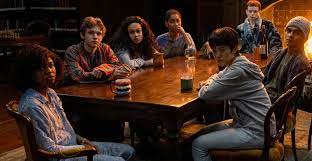
An ominous Victorian manor deep in the woods, ghosts, cultish rituals, and a group of teenagers looking to solve an ancient mystery: All of these classic horror tropes are embraced in The Midnight Club. The Netflix series takes place in an eerie youth hospice for those diagnosed with a terminal illness, where eight teenagers meet every night and share ghost stories to reconcile their pasts with whatever future they have left. The newest addition, Ilonka (Iman Benson), hopes to find a paranormal cure by uncovering the history of the hospice’s dark secrets. The Midnight Club is a valuable addition to Mike Flanagan’s horror universe, yet it doesn’t reach the evocative heights of its predecessors, such as The Haunting of Hill House. Despite this, it remains a worthy Halloween season watch for those looking for a moderate scare. 

Derry Girls, Season 3 

Ella Gomes

(abc.net.au)

Released on Netflix on Oct. 7, the third and final season of Derry Girls serves as a hilarious, heartwarming conclusion to the beloved Channel 4 series. The show follows teenager Erin and her group of friends in Northern Ireland as they navigate Catholic school, eccentric family members, and outrageous predicaments, all while living through the Troubles. Despite taking place in a period plagued by sadness and loss, the show maintains a light-hearted tone—the protagonists are mischievous and spirited, experiencing the same milestones and shenanigans seen in any other coming-of-age sitcom. The series’ final bow leaves viewers with both a warm heart and a burst lung as they watch Erin and her friends grow into their own while Northern Ireland undergoes significant political reformation.

The Inheritance Games by Jennifer Lynn Barnes 

Isobel Bray

(leslibraires.ca)

The Inheritance Games book trilogy follows the seemingly ordinary Avery Grambs, a teenager who inherits the entire estate of Tobias Hawthorne—a billionaire she’s never met. The catch? To receive her inheritance, Avery must move into the enormous, secret-passage-filled Hawthorne House, where every room showcases Tobias’ love of puzzles and riddles. Unfortunately, Tobias Hawthorne’s family, including his four young grandsons, also live in Hawthorne House. With both help and hindrance from the Hawthorne family, Avery starts to piece together her role in the dead billionaire’s games. I found Barnes’ writing style to be easy to read and engage with; her narrative structure lets the audience in on just enough to feel like they are solving the mystery along with Avery. A twisty, entertaining, and fast-paced plot with well-developed characters make these books great escapist reads for a fall day. 

Jonny Appleseed by Joshua Whitehead

Kellie Elrick

(goodreads.com)

This acclaimed novel follows the titular Two-Spirit/Indigiqueer and NDN glitter princess as he tries to find his way home. Poignant and retrospective, the story moves fluidly through time to explore sex, lost love, colonialism, family, and identity. At the novel’s beginning, Jonny has left his childhood on the reserve for city life in Winnipeg, making ends meet as a cybersex worker to fund his ticket home. In the seven days leading up to his stepfather’s funeral, the reader is launched into an achingly raw journey into the past. The stream-of-consciousness narrative is steeped in nostalgia, flowing melodically before intermittently shocking the reader back into the present with stark one-liners. Jonny’s story is highly timely but also intrinsically timeless, as Whitehead articulates first love, desire, guilt, and evolving identity in a way so deeply personal the reader can’t help but feel a part of the story. 

Album Reviews, Arts & Entertainment

Alvvays embrace expansive shoegaze in a bold development of their sound

Though it took Alvvays five years to produce the follow-up to 2017’s Antisocialites, their third record Blue Rev proves to be worth the wait. The band grappled with several setbacks in the album’s production, including the theft of their early demo tapes, the destruction of their equipment in a basement flood, and the replacement of their rhythm section. Yet this hardly stopped them from producing a record that boldly innovates by building on their indie-pop foundations. 

Blue Rev sees the band take their catchy musical formula and throw it through a hazy, dream-pop-inspired filter: Soundscapes drip with fuzzy and distorted guitars, vintage synthesizers provide sparkly counterpoints, and drums with heavy reverb deepen out the sonic palette. The result is a richer, more all-encompassing sound than that of their previous material. 

Yet amongst this expansion, Alvvays maintain a clinical songwriting approach. Songs rarely exceed three minutes, wasting no time in quickly presenting a memorable hook. Blue Rev is also as emotionally cathartic as ever, with themes of suburban, often unrequited, love, afforded greater poignance and warmth by lead singer Molly Rankin’s increasingly bold vocal delivery. 

Opener ‘Pharmacist’ concentrates an inordinate amount of pop goodness across its two-minute runtime. ‘After the Earthquake’ begins with jangly, Johnny Marr-esque guitar riffs, which then make way for a breakneck, pop-punk inspired second half. Meanwhile, ‘Very Online Guy’ is an exercise in 80s synth pop and influencer satire which works against all odds. 

Blue Rev’s only weakness is that some of its material is more compelling than others. Moments like the alternative rock homage on ‘Lottery Noises’, or the semi-cliched refrain of always waiting on ‘Bored in Bristol’ see the album tire towards its tail end. Nevertheless, this is a more than fair price to pay in exchange for a strong 14-song tracklist by a band willing to traverse new territory, making Blue Rev a wholly satisfying pop experience. 


Blue Rev is available to stream on all streaming platforms, and Alvvays are touring North America from October to December.

Sports

Tribune Tries: Fitness classes at McGill

After spending the summer reflecting on healthy habits I could take up for the start of the semester, I decided that I should incorporate more physical activity into my new weekly routine.

Upon taking a closer look at the McGill Recreation website, I discovered that, in addition to their regular gym membership, they also offer fitness classes, dance classes, martial arts, and a swimming club. Armed with this newfound knowledge, I signed myself up for a spinning class and a Pilates class. McGill students can buy a 10-class fitness pass for $50 plus tax. At around $5 per class, these fitness classes are some of the cheapest on the Montreal market.

I began my fitness classes mid-September, starting with a Tuesday evening spinning class. I was not new to spinning—having taken some classes when I was younger—and was super excited to get back into it. 

The spin classes at McGill are taught by Huy Duong, a McGill alumnus who developed his passion and love for spinning while he was a student at McGill. He continues to spin as a way to keep active while working as a software developer. Duong explained in an interview with The McGill Tribune how he transitioned from a spinning aficionado into an instructor. 

“At some point, I decided that I wanted to give classes myself and pursued a spinning instructor certification,” Duong told me. “At one point, I had heard that McGill Athletics needed a spinning instructor, so I jumped at the chance to give classes at the place where my interest started. I still work full-time as a software developer. Being a spinning instructor is a hobby.”

Duong’s classes are filled with great music and a variety of exercises, including pushups and tapbacks—which really provide a full-body workout. What I love the most about the spin classes is that the intensity is personalized. Each spin bike has a resistance knob which can be adjusted by the individual based on their preferences. If you enjoy being challenged in a fun and cheerful environment, I highly recommend that you take a spin class at McGill.

After spending the following days discovering soreness in muscles I never knew I had, I attended my Friday evening Pilates class excited to discover what the Pilates hype was about. The class is taught by Emily Halpert-Cole, who has been teaching Pilates at McGill Athletics since 2015. 

Pilates class has easily become the highlight of my Friday. It’s the perfect way to unwind before the weekend. Halpert-Cole focuses a lot on breathing, and teaches us how to be conscious of the movement of our body’s muscles. Pilates focuses on core, stability, and posture while working all of the body’s muscles. The breath work and focus on feeling your muscles allows students to be more mindful of their bodies. Essentially, Pilates provides a kick-ass core workout which is beneficial for any sport you may practice. Despite working pretty much every muscle in my body, I leave the class feeling relaxed enough to go to bed.  

Halpert-Cole’s philosophy is that the most important element of a fitness class is to enjoy yourself and have fun while moving your body. The fact that she doesn’t exclusively focus on just building muscle is super refreshing. An added plus is that she uses equipment like gym balls to make the class more lively, and pushes us to do exercises we’ve never done before.

The fitness classes at McGill are the perfect way for me to uphold my fitness resolutions. They are a fun way for me to move my body throughout the week and meet other McGill students who enjoy working out. Despite the body aches I get the following days, I always want to come back for more.

Campus Spotlight, Student Life

Day in the life of a McGill student: Outfit edition

Walking around campus sometimes feels like walking the catwalk at Paris Fashion Week. And by sometimes, I mean every day. McGill’s got a fashion culture––a big one. A 10-minute walk to class can have you passing by people draped in floor-sweeping trench coats, balanced on mile-high platforms, and sporting some looks that you’d only see in Vogue. 

But with the hectic student life, how do people do it? What does the process look like? Where is the inspiration coming from? How is everyone turning out show-stopping looks on random Wednesdays? The McGill Tribune sat down with some of McGill’s most fashionable students to find out.

8:30 am – Going to class

Starting bright and early at 8:30, Rebecca Yates, U1 Arts, dons a white button-up shirt, a fuzzy sweater, and a black mini-skirt layered underneath a leather jacket.

Yates usually builds her outfit around one piece that she really wants to wear and finds others to complement it. If it’s a sunny day, she’ll pick out a cute skirt that she’s feeling and then expand outwards. Her style is all about comfort because of the confidence she gains from that, so just 10 minutes before class, she’ll pick pieces that make her feel her best and boldest. 

If all else fails, she tells me, she’ll grab jeans and a baseball cap. 

When describing her style, Yates explains that she gravitates towards whatever makes her feel like the coolest version of herself.

“When I look in the mirror and I’m like, ‘OMG I feel so cute right now’ […] you feel like the best version of yourself,”  Yates said in an interview with the Tribune.

4:00 pm – Chilling at home

You can find Leena Demers, U2 Arts, lounging around her house in an oversized t-shirt, yoga pants, a cozy sweater, fuzzy slippers, and maybe even some sunglasses.

From both talking to Demers and observing her style, you get the sense of deep thoughtfulness, analysis, and so much passion. For Demers, all of her outfits revolve around colour and asking herself how she can make something that best represents her.

A seasoned fashion enthusiast, Demers is inspired by style icons like Vivienne Westwood, Halston, Ralph Lauren, and of course, Ms. Bella Hadid. She describes her style as big and bold and we joked about how, when she’s walking through Redpath and heads are turning, she knows she’s put together something great.

7:00 pm – Gym Time

Lifting, squatting, or running on the treadmill, Ella Peck, U2 Arts, can be spotted in the gym in a periwinkle track jacket and matching Nike gym shorts.

Ella describes her style as comfy and cozy. She likes to be comfortable physically and feel good in whatever she has on. 

Timelessness and agelessness are pillars of Peck’s style.

“I love to find combinations of outfits that anyone, anywhere in the world could wear,” Peck said. 

10:00pm – Hitting St. Laurent

For a night out, Peck can be seen wearing an all-black ensemble. She sports a silky-black top with black leather pants and black heels, topping the look off with dangling sparkly earrings.

She explains that, when putting her outfits together, she loves to have one piece that her eyes are just drawn to, one thing that really pops.

Speaking to each of these fashionistas was extraordinary; you could tell that their energy, passion, and colourfulness in life are what shape and inspire their daily fashion choices. One thing everyone agreed on was that choosing pieces that make them the most comfortable, and in which they feel their best, is when they look their best too.  

“When you put clothes on that make you feel and look good, you’re going to exude your best self,” Demers said.

McGill, News

Construction begins on New Vic site without consent from Mohawk Mothers

Content Warning: Mention of colonial violence.

Arkéos, an archeological firm hired by McGill, began excavating the Royal Victoria Hospital site as part of McGill’s New Vic project, on Oct. 12. The firm is investigating claims that there may be unmarked graves of Indigenous children on or near the property.  Arkéos broke ground without the consent of the Kanien’kehà:ka Kahnistensera (Mohawk Mothers), who raised concerns about unmarked graves in October 2021. The Mothers are also embroiled in an ongoing lawsuit against McGill over the potential burial site. The next hearing is scheduled for Oct. 26.

Following the most recent hearing for the lawsuit, the Société québécoise des infrastructures (SQI) postponed archeological work until an information session could be held with Arkéos. The session took place on Oct. 6.

According to the Mothers, the meeting was unusual from the moment they were belatedly invited. Karennatha, one of the Mothers, explained that there was misinformation given about the location and timing of the meeting, as well as who would be attending.

“The [information session] we went to, it was all lies,” Karennatha said. “First of all, they reported that they had the meeting at the Long House, and it was actually in the [Elder’s Lodge]. Then, they said that there were [30 to 40 Indigenous] people there who went to that meeting [….] There were four people there.” 

At the information session, Karennatha and Kahentinetha, another Mohawk Mother, posed two questions, after which they were escorted out of the meeting by police officers. 

“They were showing pictures of the grounds […] and [Karennatha] says, ‘Why don’t you show people the building where you murdered all our children? Show it to them.’ And I said, We wanna know what you did with our children. Where are they? What did you do with them? We know you have them, and you know you have them.’ And then they called the police,” Kahentinetha recounted in an interview with The McGill Tribune.

In the Mothers’ opinion, McGill began archeological work because the university believed it had consent from the Indigenous community, which the Mothers did not provide. 

“After this meeting, McGill claimed that they got [all Indigenous peoples’] permission, but [they got] only four Indigenous people’s,” Kahentinetha said. “And those four people work for the government, they are not on our side.”

In a statement to the Tribune, McGill media relations officer Frédérique Mazerolle stated that the decision to start work was made after consulting “all relevant groups.” In addition to claiming that McGill is adhering to all regulations regarding archeological work, Mazerolle asserted that Indigenous observers will be present on the construction site. 

“The Indigenous communities concerned were invited to information sessions about the methods used to identify and preserve any potential vestiges present on the site of the former hospital,” Mazerolle wrote. “[McGill] intends to follow the industry standard practice of seeking input from the Indigenous community and we have no intention of proceeding in a manner that would endanger Indigenous artifacts or vestiges.” 

The Mothers, however, claim that McGill’s behaviour towards them has been cold and uncooperative. Henry*, an associate of the Kahnistensera, explained that security guards were present on the construction site after the Mothers declared that they would be monitoring the work from the sidewalk. 

Protestors supporting the Kahnistensera occupied the New Vic construction site on Oct. 11 to denounce the coming archeological work. Police evacuated protestors by 3:30 p.m. the same day. Barricades and fencing were erected around the area soon after. 

When the Mothers and their team revisited the site on Oct. 12, the land was completely blocked off. There were active construction crews on site and the Mothers reported being interrogated by security guards and discouraged from taking pictures. Furthermore, the Mothers’ attempts to file an official police report regarding the crime of desecration of graves were unsuccessful, and their phone calls and visits to local police stations were met with hostile responses. During a phone call that the Tribune was included on, one police officer told the Mothers that workers would not have begun work without implicit legal approval.

“A graveyard is a private property and if there’s trucks working on the property, it is because the [property owners] asked them to,” one police officer told the Mothers. “For digging, you need to have a permit, and you need to go through the city for a permit. The things you are talking about were probably all done before they started digging there. They are not just digging.”

The Mothers also publicly questioned why construction began, as they noted that McGill and Arkéos are not complying with the Canadian Archaeological Association’s (CAA) guidelines for ethically conducting professional archeological work on unmarked graves. These guidelines include a framework for conducting remote sensing, as well as highlighting the importance of area mapping and bringing on Indigenous investigators. 

The Mothers believe that construction is being rushed in an effort to quickly destroy evidence of Indigenous bodies. Henry explained that this rapid start to construction represents a complete defiance of archaeological guidelines. 

“They have not used a single ground checking technique that they’re supposed to, according to CAA,” Henry said. “They are just rushing the work manually.”

While the guidelines are not legally binding, Henry explained that for McGill to break ground, the university must have received a mandatory signature from Quebec’s Minister of Culture, as required by law.

The Mothers filed an official complaint with the CAA on Oct. 13 outlining why they see McGill and Arkéos’ conduct as unethical and illegal. The letter called out McGill’s lack of adherence to their previous agreement with both the court and the Mothers: To halt archeological work until their next official court date. 

On Oct. 14, the Students’ Society of McGill University (SSMU) executives issued a public statement in an effort to stimulate discussion about the dispute. In their email, the executives emphasized McGill’s failure to properly consult Indigenous communities about the New Vic construction, and expressed their belief that the university’s actions are driven by greed. 

The Mothers released a statement on Oct. 16 explaining that they are being falsely accused of organizing certain solidarity actions, such as an instance of vandalism of Arkéos property that the SQI reported to the judge appointed to their case. While the Mothers are appreciative of support, they urged demonstrators to consider the legal repercussions their actions may have on the Mothers—even if they are intended to support their cause—and emphasized their values of “peace and respect.” 

The Mothers’ next steps are tentative. They told the Tribune that they will continue fighting for justice, but that there is uncertainty over the Oct. 26 court date, where the Mothers had originally hoped to receive an interlocutory injunction to effectively halt renovation on the site until court proceedings had elapsed. As archeological work has already begun, the Mothers fear that the judge will argue that the need for an interlocutory injunction has been eliminated. 

Arkéos did not respond to the Tribune’s request for comment.

*Henry’s name has been changed to preserve their anonymity.

Read the latest issue

Read the latest issue