


Latest News

Features

Hockey in crisis: Endemic unaccountability within Canada’s game

Content warning: Sexual violence

On May 26, TSN’s Rick Westhead broke the news that a sexual assault lawsuit against Hockey Canada, the Canadian Hockey League (CHL), and eight unnamed CHL players had been settled. Filed on April 20, the lawsuit alleges that a young woman was sexually assaulted in a hotel room in June 2018 by those eight CHL players, including members of the 2018 Men’s National Junior Hockey Team. 

To close out an evening of celebration at the star-studded 2018 Hockey Canada Foundation Golf and Gala event in London, Ontario, many of the players in attendance stepped out for a night on the town. Praise rang through the ears of the young Canadian players, fresh off a gold-medal win, and the feeling as though the city was theirs began to settle in. 

After meeting one of the players at Jack’s—a staple of the university town—the young woman says the player gave her copious amounts of alcohol, isolated her from her friends, and lured her back to the player’s hotel room where the two engaged in sexual acts. Without the knowledge or consent of the young woman, the first player then invited seven others. 

According to the lawsuit, the eight players sexually assaulted the young woman for hours. When she attempted to leave the room, the group directed, manipulated, and intimidated her into remaining. The number of men in the room, some of whom had brought golf clubs with them, threatened physical harm and further coerced her into staying. 

The young woman says that, after the sexual assaults, the players forced her to shower and state on video that she was not fearful, intimidated, or intoxicated prior to the incident. The players’ lawyers later shared the recording with The Globe and Mail in an attempt to exonerate them from any wrongdoing. 

Like the domino effect outcome of the #MeToo movement where the surfacing of one story prompted the exposure of many others, this 2018 case of sexual assault was not an isolated incident. On July 22, after receiving a report on the incident, Halifax police opened a criminal investigation into a group sexual assault that was said to have occurred in 2003 involving members of Canada’s 2003 Men’s National Junior Hockey Team. The allegations state that more than a half dozen players from the team were recorded during the tournament raping an unresponsive woman. 

For young hockey players everywhere, the news came as a shock. What happens when the people you look up to, those who represent your country, use their collective power to exploit? Caiden Daley, a Western Hockey League (WHL) alumnus and member of the McGill men’s hockey team, struggled to digest the events of 2018. 

“Hockey being a sport that I’ve loved for my whole life and hearing that news, opened up my eyes to what can happen,” Daley shared with the Tribune. “[Sexual assault] shouldn’t be in any culture, it’s not acceptable anywhere, and I just hope that players hear that news and take a step back and think to themselves about what hockey is about.” 

The McGill Tribune / Mika Drygas

The players knew what they were doing that night was criminal. They knew that a lack of physical evidence and a video stating the assault was consensual would blur the case in a court of law. They also knew that the structures designed to hold them accountable would fail to do so—just as they had failed so many times before. 

In 1989, two members of the WHL’s Swift Current Broncos were charged with sexual assault—charges that were later dropped when police pressured the young woman involved into admitting that the encounter was consensual. Then, they charged her with public mischief, a charge that often discourages survivors from reporting sexual assault. 

And so, while those two players went off free, traded across the country to pursue their professional hockey dreams, the young woman underwent several years of counselling and multiple attempted suicides. 

Echoes of the violence inflicted by the Swift Current case have continued to ring ever since. The Saskatoon Blades in 1995. The Windsor Spitfires in 1995. The Barrie Colts in 2000. The Soo Greyhounds in 2012. The Gatineau Olympiques in 2014. The same story on repeat. Just different towns, different teams, and different players. The CHL—Canada’s major junior hockey league that represents the Ontario Hockey League (OHL), Western Hockey League (WHL), and Quebec Major Junior Hockey League (QMJHL)—has produced generations of local hockey “heroes” whose destructive actions face no repercussions. 

As journalist Laura Robinson lays out in her 1998 book Crossing the Line: Violence and Sexual Assault in Canada’s National Sport, patterns of sexual abuse often stem from players’ confrontations with a litany of hypersexualized hazing rituals and sexually abusive coaches. “They are also very angry and frustrated with the powerlessness they feel, especially when they have been abused by men they looked up to and trusted,” Robinson writes. “One of the ways they believe they will get rid of these bad feelings is to transfer them to someone else.” In 1994, for instance, 135 sex crime charges were laid against the senior players, owners, coaches, and trainers of the Ontarian team, Tilbury Hawks. The case uncovered initiation “games” that centered on the boys’ rectums, penises, or mouths—rituals that are not uncharacteristic of other junior hockey teams throughout Canada. 

University hockey teams cannot be sidelined in discussions of the sport’s pervasive culture of sexual violence. Misogynistic environments and assault allegations are commonplace within university sports teams, such as Boston University, the University of Michigan, and Carleton University, to name a few. In 2014, the University of Ottawa men’s hockey team was suspended in response to allegations of group sexual assault in Thunder Bay. 

When asked if the recent Hockey Canada scandal had prompted any changes to education and training programs received by the McGill men’s hockey team, executive director of McGill Athletics Geoffrey Phillips told the Tribune by email, “[t]he safety and well-being of our student-athletes is always the number one priority of McGill Athletics. The messaging and support offerings to student-athletes is ever-evolving based on current social issues and how best to address them.”

Currently, in addition to completing It Takes All of Us, the mandatory online sexual violence education program for the entire McGill community, student-athletes are also mandated to complete an annual anti-hazing education course. According to Phillips, coaches hold “team building exercises throughout the year to harness a strong, inclusive environment.”

The Tribune reached out to McGill’s men’s hockey coach David Urquhart regarding the issue of toxic masculinity in hockey culture, but he respectfully declined the interview request. 

Although the responses from McGill hockey representatives indicate that there are some structures in place to educate players, the normalization of sexual violence and the silencing of survivors is deeply entrenched in hockey’s too-often permissive culture. These values cannot be erased by the “It Takes All of Us” program, inclusive “team building,” and an anti-hazing education course. These surface-level initiatives are sorely inadequate, failing to acknowledge the depths of the problem endemic to male hockey culture—a problem decades in the making. 

Recent parliamentary hearings targeting Hockey Canada’s cover-up of the 2018 case have expanded to investigate deeper-seated issues within the organization. Notably, the hearings revealed the existence of a multi-million dollar fund that is supported by registration fees from youth players across the country and used to pay out settlements in cases of alleged sexual assault. Hockey Canada has deployed the fund to write checks at their own discretion, allowing the organization to avoid the participation of their insurers on issues that are deemed uninsurable, such as sexual assault. Until recently, parents and players have been unaware of the fact that their registration fees are being used to cover up cases of alleged sexual assault; the fund had remained a well-kept secret for decades and is not listed in the organization’s handbook. 

An investigation by The Globe and Mail revealed that the reserve fund exceeded $15 million in recent years. Hockey Canada CEO Scott Smith and chief financial advisor Brian Cairo both defended the existence of the fund because of the uninsurable nature of the settlements. Senior executives testified that Hockey Canada handles many sexual assault cases every year and has paid $8.9 million to settle multiple cases of alleged assault since 1989. 

While the 2018 sexual assault case was not the first assault involving National Junior Hockey Team members, it was the first time that Hockey Canada was unable to conceal their players’ egregious actions from those outside the tightly-bound organization. It was the first case to reveal that this fund had been dedicated to settling sexual assault claims behind closed doors. It was the first to prompt the Canadian government to put an unprecedented freeze on the $7.8 million of federal funding allocated to Hockey Canada each year. 

Courtney Szto, an assistant professor at Queen’s University whose work specializes in sports, physical cultures, and intersectional justice, ties these mass cover-ups to the lack of impartial third parties within sports establishments with which athletes can openly communicate their experiences. 

“The lack of accountability [….] is similar when any sports organization likes to deal with issues in-house and participants are not provided with any external oversight,” Szto wrote.

“If you have an issue with a coach, who do you go to? Who can you trust? Historically, those people you would raise an issue with are also the people who determine your playing time, your salaries, and/or any other potential opportunities you might receive; hence, people learn to stay quiet because they don’t know who to trust.”

This culture of silence is not exclusive to Hockey Canada. As a country, Canada muzzles its history and past injustices—its settler colonialism, its enslavement, its misogyny—the consequences of which run through the very fabric of the nation. Despite learning about the 2018 sexual assault allegations against the CHL players that very year, the federal government did not follow up on the complaint until the news became public, failing to hold the players or organization accountable, like so many others. 

The thunderous silence from current and former NHL players and coaches is disheartening as well. There was no whistleblower in 2018. Nor in 2003. The code of silence implicates all players, as it enables the dangers of hockey culture to remain unchallenged behind closed doors. 

“Even if you don’t think you’re affected, you are,” Daley said. “We’d all like to change— it doesn’t just take one person, it’s a whole community. Things need to be changed and need to be taken care of and put into the right direction. And hopefully, hockey culture can keep moving forward[s] instead of backwards.” 

In response to the pressures inside and out of the hockey world, Hockey Canada continues to show that they truly do not care to change. The only action taken has been the resignation of Michael Brind’Amour, former president of Hockey Quebec and the organization’s board chair. CEO Scott Smith has also continually refused to step down—a decision Szto believes obstructs any tangible change from occurring within the organization. 

“Personally, I think you need to clean house at Hockey Canada for the sake of rebuilding trust,” Szto said. “I know not everyone was complicit or involved in the recent incidents that have received news attention, but, without a clean slate, there will always be questions about who knew what and when. I don’t think in this instance you can make meaningful changes with so many of the same pieces still in play.”

Despite calls from the majority of Canadians for his resignation, the Hockey Canada board has made clear that they will continue to support Smith’s reign. He was even asked to hand out medals and trophies at several tournaments this past August. This passivity on behalf of the organization illuminates their unwillingness to reform leadership and take accountability for their utter failure to protect any person or player from the dark current of hockey culture. 

The NHL’s investigation into the 2018 sexual assault case is still ongoing. As the names of the assaulters have been speculated upon but not made public, there is hope that they will be met with harsh discipline.

But any hope that the hockey establishment will work to implement true change is tempered by the broken promises, closed-door cover-ups, and hockey’s code of silence. It’s a hope stifled by hockey’s continual lack of reform—a hope no one has the heart to truly believe in.

Student Life, Word on the Y

Word on the Y: Back to School

McGill’s campus is looking very different this semester as students return to fully in-person learning for the first time in over two years. COVID-19 restrictions have been relaxed, Zoom lectures are becoming a thing of the past, and campus life seems to be coming back strong. For many new and returning McGillians alike, this fall may feel exciting, daunting, and unfamiliar.  The McGill Tribune talked to some students about this semester’s return to classes.

“It’s my first real year because last year all of my classes were online. I prefer in-person––I feel like at home I was less motivated, but it was maybe easier to follow the class because you could just rewatch the lectures. But even if it is harder now, I feel like I am more motivated. To see all the people and interact with them––I prefer that.” 

– Alexis Shank, U2 Arts

“I’ve been much happier with in-person classes. I felt very isolated at home––I was in a little cave inside all day. Now, I have to get out. I had one in-person class last year, and now all my classes are in-person. It feels much nicer, seeing and meeting new people. While the greater social contact is great, now I’m in my classes and I hear this symphony of coughing. I might wear a mask just for my own peace of mind.” 

– Johnny Carter, U2 Education

“Last year, I didn’t have any fully online classes. I always had the option to go and I liked the assurance that, if I got sick, I would be able to watch recorded lectures, but now some profs are not recording lectures. And it’s frustrating because now you go to class and hear a lot of coughing because people feel pressured to go to class. Generally, I do prefer in-person, but it was good to know if you got sick, you wouldn’t fall behind. I also wish individuals would be more responsible––at least if people could wear a mask. I don’t think it’s necessarily a bad thing that they lifted the mask mandate, but I think more insistence on responsibility would be good.”

– Mia Szabo, U1 Arts

“[The lack of COVID-19 restrictions] is weird. My roommate had COVID-19. People want to be in this post-COVID world, but we’re not quite there yet. But it does seem like when people do get COVID-19, it’s a regular occurrence. It’s manageable, but it’s also scary; it’s your first week living away from home and you get COVID-19.”

– Lucinda Silverman, U0 Arts and Science

“Last year was a bit different––I did one year of dental school, so a lot of it was online. Professors obviously had to adjust because they were healthcare professionals, which I think was responsible of them. But, at the end of the day, not everyone is going to be happy. A lot of our labs got cancelled and things had to be adjusted. But I think it was the right move because we were surrounded by healthcare people. This year, I like being in person––it feels like we’re back to normal. It’s weird to see Frosh starting again and people being more social than the past two years.”

– Kenneth Tan, M1 Medicine

“When class was online, I found it difficult to find opportunities for social interaction. Additionally, since I was starting my first year of university, the overall transition was a lot more difficult than if school was fully back in-person. The transition to going back in-person has been overall very smooth because it’s something that I’ve been wanting for a long time. Once I heard that school was going to be back […] I went in with the mentality of wanting things to return to normal as soon as possible.

[With COVID-19], I always think that it’s better to be safe than sorry because, while restrictions have been lifted, COVID-19 is still a thing, and catching it can still put a roadblock on your life. I’ve never minded masks, but I’m glad that large groups of people can gather and socialize again.”

– Devin Feng, U1 Science

McGill, News

McGill students, staff “stressed” about lack of COVID-19 guidelines in residences

For the first time since 2020, a semester has begun with nearly no pandemic restrictions in place at McGill. Mandatory masking and social distancing were dropped in May 2022 and campus activities, including all classes and Frosh, have resumed at full capacity. Those in residences, however, report feeling that COVID-19 protocols within dorms have not been clearly communicated.

Irina Zhang, U0 Management and Arts, shared a post on Reddit on Sept. 3 explaining that she had tested positive for COVID-19, but was unaware of the protocols she should follow considering she lives in a double room with a roommate. Zhang immediately panicked because she could not find any clear answers on how to proceed. She tried contacting the Dean of Students’ office in an attempt to move rooms, but as it was the weekend, members of the Dean’s team were out of office. 

“I was only aware of the simple protocols La Citadelle emailed us at the beginning of the year, which just told us to stay in our rooms if we had COVID-19,” Zhang said in an interview with The McGill Tribune. “It seems that they only send [the full protocols] to students that need to quarantine.”

With little prior information from McGill staff, Zhang turned to other students in residences and online platforms such as Reddit with her questions. She explained that she did not think of contacting her floor fellow—both because she was overwhelmed and because she thought COVID-19 protocols fell outside of floor fellows’ purview.

After making the Reddit post, Zhang called La Citadelle’s 24/7 front desk staff, who answered most of her questions. She learned how to get food—go to the cafeteria but remain distanced from others—and received the official COVID-19 protocols for the residence. 

She was told to remain in her double room, but to avoid contact with her roommate. The current residence protocols state that roommates are only separated in “extreme cases,” or when an individual is immunocompromised. Zhang was further advised to maintain social distance if she needed to leave her room and not to have any visitors. Despite McGill’s protocols, Zhang had friends bring her food and ultimately left her dorm to quarantine at her parents’ house.

Alex*, a floor fellow, believes the current protocols in place are “careless” and insufficient to adequately handle COVID-19 outbreaks in residences. 

“There are far fewer self-isolation rooms available this year,” Alex wrote in an email to the Tribune. “In contrast, last year, there were floors dedicated to COVID-19 self-isolation in NRH (New Residence Hall). This has left students to ‘self-isolate’ in their own room, with their potentially COVID-free roommate.”

In addition to limited protocols for COVID-positive students, McGill has stopped distributing rapid tests and many lectures are no longer recorded. Alex believes that the lack of resources and accommodations offered by the university increases the chances of sick students missing classes and tests, causing them to fall behind academically. Alex also noticed that a large number of students were sick after Frosh. He worries that many assumed it was “Frosh Flu,” and did not test for COVID-19.

“Though fewer and fewer people are affected by the virus as time goes on, it is vital to note that we are not at a place where we can completely ignore it,” Alex wrote. “The reality is that there are students still living in residence with COVID-19, and McGill needs to acknowledge this by accommodating those individuals.”

McGill media relations officer Frédérique Mazerolle affirmed the university’s commitment to the safety of those in residences in an email to the Tribune.

“The health and wellbeing of the community will remain our top priority and all necessary health and safety measures as recommended by government and public health authorities will continue to be implemented in the residences to ensure residences remain safe spaces this academic year,” Mazerolle wrote. 

*Alex’s name has been changed to preserve their anonymity.

Out on the Town, Student Life

Foodies breathe life into the Olympic Park at First Fridays

I had a disagreement with a couple of friends recently. Don’t worry, there were no tears shed. It was just about how many friends we have at McGill who are proper “foodies”. You know, the sort who actually enjoy cooking and don’t rely on President’s Choice frozen pizza to suffice. Anna was unsure of how many, while Sean claimed to only have three. I stood back, and then said, “Well, I think everyone’s a foodie, deep down.” Don’t roll your eyes, hear me out. 

Last week, I went to Les Premiers Vendredis (First Fridays) at Montreal’s Olympic Park, the second-biggest food truck festival in Canada. With over 3,000 people and 50 food trucks, this wasn’t for the faint of heart. Women dressed in full Aritzia. Men in rugged t-shirts who judge other men by how well they grill steak. Families with kids who love to wander—away from their worried parents. Students in baggy pants, fuming at any price over $10. Everyone was here. Excited, hungry, and with one question: What are we going to eat? Now tell me people aren’t foodies deep down! 

Festivals are the life of summers. And it doesn’t matter what type of festival it is—the first thing you do when you enter is establish an action plan. At this festival, it went like this: Go for a wander and decide what to eat afterwards. Great plan, said the other 3,000 people in unison. My friends and I followed suit.

There’s something odd about serving street food in an enormous, concrete Olympic park. But in a weird way, it made sense. It’s a grey, utilitarian construction built for the 1976 Olympic Games. And now, almost 50 years later, it’s still serving the community—just with more variety of food. 

The theme this week was Vietnamese, so there were a large number of Vietnamese trucks offering soup, rice, sandwiches—you name it. They also had those quintessential, plastic street stools for seating. Aside from Vietnamese, most cuisines were covered—though I didn’t see any ramen. 

Walking around, we stopped by the La Sauce stand, which offered testers of its spicy sauces. Truth be told, the spiciest sauce was quite hot—who knew? Meanwhile, the distillery stand offered us free shots of their new fruity rum, which went down like water. There was also live music and even mini golf to keep you busy. 

Bugger, is that shrimp I smell? I’m allergic to shrimp, you see. A warm salty smell like a mermaid’s armpit, and mixed with grilled BBQ chicken. It was coming from the paella stand and drew in perhaps the longest line of any truck. But tempting as it was, I decided not to flirt with death. Instead, I went to a Vietnamese truck, Saigon Montreal, which offered Wonton soup and fried rice. 

The line was painfully long, too. Waiting in queues really is the epitome of aimless human frustration—that and the time between pressing the button in an elevator and the doors closing. Eventually, I got the fried rice with chicken for eight bucks, and wolfed it down. Portion sizes looked like they were meant for children, but I still thoroughly enjoyed it. 

My friend got a portion of the jerk chicken from Boom J’s cuisine, a Jamaican jerk chicken truck. It was fantastic. Juicy, tender, soft, with a sauce that acted as a perfect sweet and salty coat. I also grabbed a hot pepper burger from the Dilallo burger truck. I’ve never tried a burger with a hot red pepper before and I can’t say I’ll be rushing back. The fries hit the spot though. 

As I was waiting in line for the Saigon truck, I saw this young boy. He must have been about seven or eight years old. And unlike most people there, he navigated the crowd using a wheelchair with his guardian. They stopped next to me, frustrated as one drooling, BBQ-obsessed man didn’t see him. The boy looked down and took a bite of his taco, he then looked up at me and beamed a smile with the most unforgettably happy eyes. I smiled back.

Sports

The unapologetic brilliance of Serena Williams

In a Vogue article published on Aug. 9, tennis legend Serena Williams announced that she would officially step away from the game after the 2022 U.S Open. 

Serena’s admirers held their breath with tremendous emotion as her masterful career came to a close on Sept. 2 with a loss in the third round of the tournament. 

Serena Williams leaves behind a legendary tennis legacy. Since winning her first Grand Slam title in 1999, Williams has won a total of 23 single Grand Slam titles in as many years. She has also won 14 doubles Grand Slam titles with her sister, Venus Williams. No tennis player, man or woman, has won more championships in the Open Era, when Grand Slam tournaments began allowing professional tennis players to participate. 

Williams has revolutionized the face of tennis forever. She is regarded as the best player of all time. She is also widely recognized as the greatest female athlete of all time and, by many, the greatest athlete of all time, period.   

Williams’ legacy as a tennis player extends far past her impressive athletic feats. In an world that expects women to play and celebrate quietly, Williams showed millions of female athletes that it is okay to be passionate. 

Williams has experienced violent and sexist criticism at the hands of the media. Most notably, in 2018, when Williams argued with umpire Carlos Ramos during the U.S. Open over his controversial calls, Williams was heavily mocked and shamed by the media as she was accused of throwing a tantrum, being immature, and making tennis an ugly sport. In response, Williams honorably defended her reaction and explained that she was standing up for what was right, and hoped her actions would pave the way for other female athletes to stand up for themselves on the court. 

Since Serena Williams’ debut in tennis at the U.S. Open, adorning iconic beaded braids, she has endured intense racism from the media, the tennis community, and the public. Serena and her sister Venus were accused of match-fixing in 2001 at Indian Wells, and faced racial slurs and explicit threats of bodily harm from the crowd. After Williams’ spirited discussion with Ramos at the 2018 U.S. Open, Williams was, again, a target for racist attacks from the media as Australia’s Herald Sun depicted Williams with an explicitly racist and derogatory caricature. In response, Williams rose above yet again, calling out the media for their role in demonizing her for actions white players are continually excused for.

Williams has refused to be shamed for her body, upsetting societal and tennis norms of what the female body “should” look like and do. Her catsuit at the French Open dominated news cycles for days following its reveal. Despite Williams explaining that it was to prevent blood clots following her pregnancy and traumatic childbirth, the catsuit was banned and Williams was, again, flooded with criticism. Williams has worn an array of iconic outfits on the court, including a denim miniskirt, a studded leather jacket, a Nike blazer, tutu skirts, and, of course, pieces from her collaboration with the late Virgil Abloh’s Off-White.

Serena Williams is looking to the next stage of her life as an evolution and is ready for the future—such as with her business Serena Ventures, a firm that mostly invests in start-ups created by women and people of colour. Williams explained that it is time to change the pattern of men supporting one another and only investing in each other.

We are not done hearing or talking about Serena Williams. How could we be? She has changed the face of sports and tennis forever. Williams defined a new era of athletic greatness and power. Her story, the story of a young Black girl from Compton with unprecedented discipline and determination, has inspired people worldwide. While the virtuosity of the greatest athletes of all time will be dearly missed on the court, her impact off the court will continue to grow.

Behind the Bench, Sports

Running should produce feelings of freedom, not fear

CW: Mention of physical and sexual assault

On Sept. 2, Eliza Fletcher was abducted during her morning run in Memphis, Tennessee. Three days later, Fletcher’s body was found in a vacant lot roughly seven miles from where she was taken. 

The tragedy of Fletcher’s death reaffirms the constant dangers of running while female-presenting. In 2016, Alexandra Nicolette Brueger was shot and killed on a run in rural Michigan. Three days later, Karina Vetrano was killed while on a run in New York City. Five days after that, runner Vanessa Marcotte was murdered in Princeton, Massachusetts. In 2018, Mollie Tibbetts, a University of Iowa student, and Wendy Martinez, a Washington D.C. resident, were both stabbed to death during runs. And in 2020, Sydney Sutherland was killed while running in Arkansas. 

These stories are nothing new. 

As a runner myself, I often run with a buddy, be it my dad or a friend. There are times, however, when I need to take time for myself—so I run alone, listen to music, and just think. But, running alone comes with the fear of being harassed or harmed. 

Every runner has likely heard the tips: Don’t wear headphones, change your route, only run in broad daylight, and in well-populated areas. Even that, however, does not always suffice. Despite “doing everything right”, Wendy Martinez and Karina Vetrano were still brutally killed  while simply going for a run in broad daylight in well-populated, “safe” areas. Regardless, the onus should not be put on the runner to avoid being harassed or murdered. Running should be a way to escape the stresses of everyday life, not an additional stressor.

Verbal and physical harassment is far too common an occurrence for all women, runners especially. In a survey by Runner’s World, 60 per cent of female runners have dealt with harassment while on a run. 

When I was in high school, I was running with my friends when a man drove by and rolled down his window to yell “Nice legs!”. I have also been honked at and stared at to the point of feeling incredibly uncomfortable. 

Society’s acceptance of the hypersexualization and objectification of women enables predators to continually harass and attack women. 

When a woman goes out for a run alone at 4:30 a.m. wearing a sports bra and shorts, as Eliza Fletcher did, she is not asking to be harassed or assaulted. A runner who becomes the victim of unwanted sexual attention is not to blame for harassment. And many women runners do not have the privilege of running during daylight hours, in safe neighbourhoods, with a buddy. 

Instead of asking why she was running so early in the morning or what she was wearing, we should instead be asking why we, as a society, are okay with a culture of victim-blaming. Safety should not be conditional on what time it is, what someone is wearing, or what someone looks like. 

Despite strides made towards ending the culture of sexual violence, known sexual abusers are still being elected into office and the gender pay gap still means that women are receiving $0.89 for every dollar a man makes doing the same work. Ending harassment for runners and other athletes means calling attention to how female-presenting individuals are treated as lesser beings or sexual objects, and actively working towards systemic change.

Being able to exercise in the way that most empowers you without fear of harassment or assault is a right everyone should have. Until running free of fear is an option for all people, we must hold each other accountable. Returning home from a run should be a given, not a hope. 

Arts & Entertainment, Comedy

Stand-up show ‘The Remedy’ offers the cure for a boring Thursday night

By day, Deli Planet looks like any other restaurant you’d find inside of a train station—neatly decorated with a simple arrangement of black tables and chairs and plain leather booths lining the walls. But, don’t let its unremarkable appearance fool you. By night, the restaurant transforms: A small stage is set up, a microphone is procured, and a spotlight is illuminated. Deli Planet doesn’t just serve food—it serves comedy shows. On Thursday, Sept. 1, the restaurant hosted The Remedy, a show packed with stand-up performances in association with the Montreal Comedy Club

Throughout the night, eight Montreal comedians each performed around 10 minutes of stand-up. Despite their short stage time, the performers covered a range of themes in their set, creating an engaging show: Joanna Selvarajah and Joel Slavik discussed the perils of online dating, while Wassim El-Mounzer joked about his time teaching English in Korea. Other comics found humour in the mundane facets of everyday life, such as Viveth Kanagaratnam who described his fear of revolving doors. Each performer also had a unique comedic style: Harrison Weinreb took on a slow, deadpan delivery, which contrasted Ahren Belisle’s more animated performance. Hadi Kubba and Jason Houle repeatedly interacted with the crowd to improvise new jokes, while Selvarajah and Weinreb seemed to stick more closely to their prepared sets. The variation in comedic styles and subject matter kept the performances exciting for the audience and made each performance unique.

The show’s compère—the master of ceremonies in stand-up comedy—was comic Ali Mohammadi, who entertained the audience between sets with his sharp crowd-work. Even when his jokes didn’t land with the audience, Mohammadi smoothed the moment over with another quip and kept the show moving. The comic was particularly skilled at callbacks, referencing gags he had made in an earlier part of the show. By returning to these jokes throughout the show,  Mohammadi’s performance gave the diverse sets a sense of cohesion. 

Although all the comics had prepared unique and creative materials, many of the performers had doubts about their set. For example, several prefaced their jokes with a warning that the material was new or still being workshopped. Some were also nervous and spoke rather quickly, still working on their comedic timing.  Many of the performers are just starting out in comedy and are still building up confidence on stage. The night’s sets were impressive overall and each of them garnered many laughs from the audience.

A particularly memorable moment in the show was when El-Mounzer swapped his L.A. Dodgers baseball cap for an audience member’s bucket hat, which was covered in fur in the image of Appa from the series Avatar: The Last Airbender. 

“I look like I’m going to take you fishing,” El-Mounzer joked. “Or like a SoundCloud manager who takes all your money.” 

An evening highlight was a bit from Weinreb about a friend who was moving into a new apartment because they were expecting children. The comedian criticized the friend for their lack of resourcefulness and suggested that they create room for the children by simply “stack[ing] ‘em on top of each other.” In an unwavering, serious tone of voice, Weinreb continued: “I could fit, not even exaggerating, 600 babies in here.” 

While the show featured a wide variety of comedic styles, the performers were alike in the passion and energy they brought to their sets. With talented comics and a sharp compère at the helm, The Remedy provides the perfect entertainment for a Thursday night.

The Remedy: Stand Up Comedy Show’ takes place Thursday nights at Deli Planet on 800 René Lévesque, West. Admission is $15 online and $20 at the door.

Commentary, Opinion

Point-counterpoint: A debate on the aesthetic of Burnside Hall

Burnside is the vision of practicality – Alexander MacKenzie

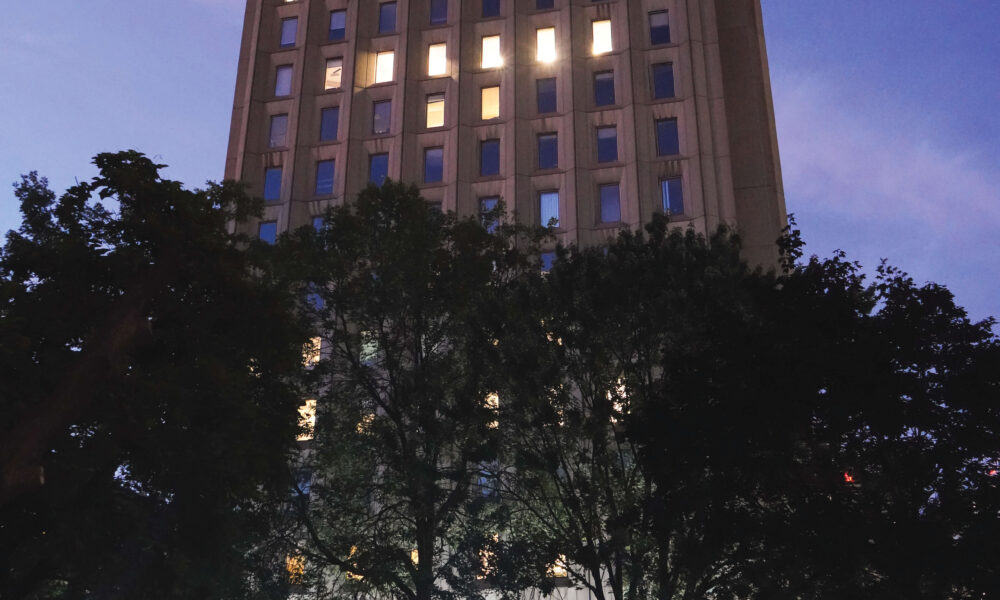
A quick glance towards Burnside Hall reveals nothing striking about its immediate design. Perhaps the most observant of oceanographers or astrophysicists studying in the building could casually point out its warm sandy colour, and wavy texture adorning the walls outside. Likely only the oceanographer, not without some degree of self-contempt, would remark that the building is shaped like sand waves on a beach. But  since most students entering the building are not architects, features of this sort would go, for the most part, unnoticed. Despite having nothing extraordinary or jarring architecturally, there remain many appreciable things about the building worth students’ attention.

By far, the most enticing feature is that Burnside is located right on top of an extensive underground tunnel system, providing passages to the rest of the buildings in the science and engineering complex. The basement makes for a fantastic refuge and student space, offering a sizable yet cozy study area full of computers, which add a sentimental cybertech ambience. When the lower-level Soupe Café is open, Burnside’s basement is filled with the smell of freshly-baked pastries. Most of McGill’s sandwich enthusiasts already know about the coveted Burnside basement grilled cheese

When entering the building from underground tunnels, students might notice the appreciable lack of crowding around and within the three spacious red elevators. The upper levels generally consist of narrow, colour-themed hallways, with space for hundreds of small rooms, many of which are typically unoccupied. Also, there are great study spaces on the fifth and 11th floors, the latter featuring cozy soundproof rooms and eight-foot-tall windows overlooking both McGill campus and Mount Royal.

Burnside Hall also possesses other purposes on McGill campus. The building was designed to allow for five additional stories if McGill were to ever need more space on campus. The top of the building houses meteorological equipment for use by students of the Department of Atmospheric & Oceanic Sciences to observe the night sky over Montreal.

As far as the average McGill student is concerned, Burnside Hall is a convenient, practical, and pleasant space. It is an invaluable centre for student life on campus and allows astrophysicists and oceanographers, along with the occasional Mathematics or Statistics student, to study, grow, and prosper at McGill.

Burnside can burn –  Sarah Kayed

When it comes to Burnside Hall, McGill’s attempt at Brutalism “fakes it, but never quite makes it”. Most students consider this science faculty building to be ugly, if not depressing. From an architectural perspective, Burnside attempts to imitate the style of Brutalism and fails quite miserably, instead existing as a bleak space unfit for educational needs. 

Brutalism is often characterized by an exposed concrete exterior of little ornamentation, constructed so that the interior serves as a space for social gathering. Additionally, this design approach was connected to ideas of social reform and collectivity within architecture, through a desire for equality. When looking at Burnside, one cannot help but wonder—what ever happened to political architecture? 

Typically, this architecture style adopts inward-facing repetitive windows paired with hidden entrances. At Burnside, however, the façade is primarily glass, taking the spotlight away from the raw concrete exterior. The windows—spanning floor-to-ceiling across all floors—overshadow the concrete’s texture and grain, moving it away from the Brutalist concrete style.

It seems that the only actual Brutalist features of this site are the hidden entrances and the underground tunnels for ease of accessibility. The inside of the building, on the other hand, resembles a labyrinth seemingly impossible to navigate. For a structure to embody equality, accessibility becomes a key element, and, in Burnside, navigational difficulty is the most pressing design issue. No McGillian wants to be lost in a concrete dungeon looking for a lecture hall or computer lab.

A better example of the Brutalist style on campus is McLennan Library. The prefabricated concrete library incorporates a spacious interior with easy access from floor to floor; almost every aspect of the space is visible and students can complete their work in a suitable environment. Comparatively, Burnside is a naive, even hypocritical, imitation of Brutalism that creates an oppressive space for students and faculty.

Off the Board, Opinion

Why everyone deserves therapy

Therapy. There, I said it. A word that, despite its immeasurable benefits, carries the heavy weight of unrelenting stigma everywhere it goes.

In the industrialized world, 25 per cent of adults experience significant mental health problems each year that require intervention in the form of psychotherapy and/or medication. In particular, university students are disproportionately affected by mental health issues such as anxiety—with 56.8 per cent of McGill students reporting a mental health disorder in 2021. These shockingly high rates are largely attributed to the extreme levels of academic stress that university students experience.

While mental health conditions make up an incredible 14.3 per cent of deaths worldwide, according to one estimate, the majority of adults suffering do not seek treatment, citing self-doubt and the fear of judgment from those around them as major deterrents.

Such feelings of self-doubt are becoming increasingly common amid the COVID-19 pandemic. Mental health impostor syndrome, when someone feels like they are not “suffering enough” to seek mental health treatment, is one of the most common modern-day barriers to accessing care. 

In stark contrast to the stigma surrounding mental health, societies around the world place significant importance on physical health and wellness. From going to the gym in the mornings to brushing one’s teeth twice a day, to routine checkups at the doctor’s, people spend hours every day preoccupied with their physical bodies. 

Yet, when it comes to their minds, people are less willing to take preventative measures to invest in their mental wellness. Mental health challenges can be as severe and as deadly as physical ones, and the two can even exacerbate each other..

When it comes to treating mental illnesses, it has been shown over and over that the most effective means is therapy, while therapy paired with medication is more effective than either method alone. 

Despite initially being designed to help people struggling with mental health issues, therapy can provide anyone with a plethora of techniques to enhance their daily life. From distraction strategies like  stress-relieving activities to breathing exercises and  mindfulness, therapists can offer a personalized toolkit to help better manage one’s unique challenges. Further, therapists are trained to be unbiased and confidential listeners that can aid in navigating a broad scope of circumstances. 

Think of the number of times that you have been to your family doctor for routine checkups or mild symptoms like a sore throat or cough. Just as we go to our family doctors when we are feeling physically well, we should encourage the practice of going to a therapist when we are feeling mentally well. Attending therapy regularly can help alleviate future mental health crises while identifying particular issues that one may need to work through.  

Regardless of society’s portrayal of therapy as something reserved for those with the most severe mental illnesses, everybody can benefit from the techniques and tools that a therapist can provide. Even those who do not feel that they need therapy could always benefit from adding another caring and supportive individual to their circle of trust if they are able to do so. 


It is important to acknowledge, however, that therapy is not available to everyone for various reasons, including economic and accessibility factors. Reaching out to mental health professionals and taking the first step can  feel impossible when therapy sessions in Montreal range from $90 to $150. However, there are networks that offer sliding scales and accommodations based on income level and identity.Otherwise, there are other options for students in Montreal, such as the Canadian Mental Health Association and a range of telehealth services. With offerings ranging from free phone and in-person services, there has never been a better time to reach out for help.

McGill, News

McGill unions frustrated with ongoing delays in collective agreement negotiations

As of Sept. 13, only one of McGill’s 14 labour unions—the teaching assistant unit of the Association of Graduate Students Employed at McGill (AGSEM)—has an active collective agreement (CA) in place with the university, according to McGill’s Human Resources (HR). CAs govern salaries, hours, benefits, and working conditions of unionized employees, and are typically reviewed every three to four years. 

While McGill media relations officer Frédérique Mazerolle says that the pandemic and the economy are reasons why most CA renewals have been delayed, many union representatives believe there is more to the story. Four out of the five union representatives interviewed for this piece say that McGill’s current administrative structure is ill-equipped to handle negotiations with 14 unique bargaining units. In an interview with the The McGill Tribune, AGSEM mobilization officer Kiersten van Vliet identified the university’s HR department’s constant rotation of employees as a hindrance to the negotiation process.

“There has been some turnover in the central HR,” van Vliet said. “So, there are some people who are moving into a role [of] being a negotiator for the first time. McGill’s spokesperson for our negotiations—it is the first time she is ever negotiating.”

AGSEM invigilators’ most recent CA with McGill expired in 2020, and, as a result, the last pay raise employees received was in 2019. While the stipulations under the previous agreement remain in effect during the period between a CA’s expiration date and the signing of a new contract, many CAs do not account for increases in Quebec’s minimum wage and inflation after an agreement has ended. In AGSEM’s case, negotiations for an updated CA began in March 2021, but a government conciliator was called on Sept. 6, 2022 to mediate after repeated stand-offs between AGSEM and McGill.

“It is like a war of attrition—they are trying to see how long we can hold it together, and be serious, and be firm,” van Vliet said. “Time is on McGill’s side as the institution with bigger resources. Especially considering a lot of the unions—AMURE, AMUSE, AGSEM—are majority students, and this is not our day job, they do have a lot working in their favour.”

Thomas Chalmers, president of McGill University Non-Academic Certified Association (MUNACA), believes the university’s “corporate mentality” is at the root of its negotiation issues.

“Even to their own HR department they have cut staff, and […] they lost three or four major HR people to other institutions. So they cannot even keep their own people,” Chalmers said in an interview with the Tribune. “It is evident there is an issue with retention, both in HR and throughout the university, and they are not really effectively addressing it.”

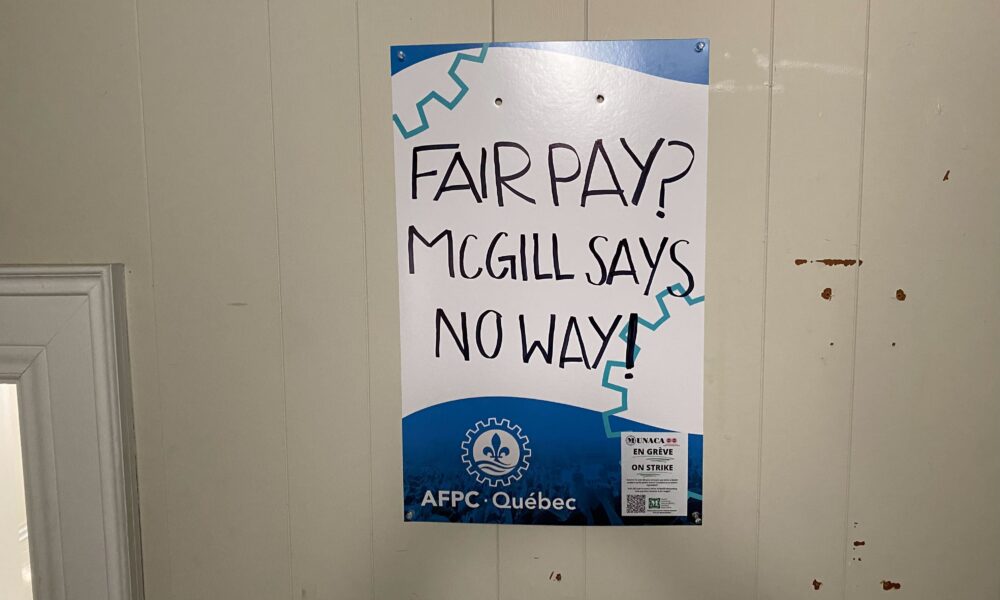
MUNACA has been without a CA since Nov. 30, 2018. Negotiations between the two parties began in earnest in September 2020, but more than two years of bargaining have come to an impasse. McGill requested a conciliator through Quebec’s Tribunal administratif du travail (TAT) in December 2021, but the five meetings since resulted in two days of MUNACA strikes that paralyzed McGill, despite the third-party aid. 

Following the unsuccessful conciliation, McGill requested an arbitrator to settle the dispute. The two parties presented their cases in an arbitration hearing held on Sept. 1. Chalmers says it’s likely that neither party is going to be happy when the “arbitration award”—the final, binding contract made by the arbitrator in lieu of a CA—is released. 

Chalmers pointed out that, while fewer than two per cent of unions go on strike or require provincial intervention, several unions at McGill have resorted to striking over the past few years. He referred to the highly publicized Association of McGill University Support Employees (AMUSE) strike last spring, during which a majority of floor fellows suspended their roles for over two weeks. Since then, AMUSE and McGill have agreed to a contract that was ratified by AMUSE in April 2022. McGill, however, has yet to sign the contract as the agreement must be translated into French first, according to Quebec laws. 

“It is disappointing and shameful that floor fellows have started the new school year without their contract signed,” AMUSE President James Newman said in an interview with the Tribune. “McGill is stubborn. They want to drag out the process. They want to wear the unions down through continued negotiations. It is sad and shameful but sadly typical of employers.”

Professor Raad Jassim, president of the McGill Course Lecturers and Instructors Union (MCLIU), echoed Newman, Chalmers, and van Vliet in his interview with the Tribune, revealing that MCLIU had been close to striking when the pandemic hit. Jassim believes that McGill has no incentive to change its “old-fashioned thinking.” MCLIU’s current CA was signed in September 2020 and expired last month on Aug. 31; they will head to the negotiation table in October 2022. 

“[McGill is] not able to deliver because they are underlaboured and underpowered. They need to increase HR to deal with all the unions around them, and I do not think they have enough lawyers,” Jassim said. “[McGill is] slowing the process [and through this] they think they are going to prevail to convince us otherwise. They won’t.”

Despite concerns about McGill’s HR department, van Vliet believes there is a silver lining in the solidarity built within and across unions.

“As much as it has been frustrating that these negotiations are taking such a long time, I think it is also a testament to the strength of the unions for not caving in [to] their demands,” van Vliet said. “We are not just capitulating to the demands of the employers or what they are saying is possible. We know our value, and we are going to keep fighting until we get the best that we can.”

While the Association of McGill University Research Employees (AMURE) agrees that complex and lengthy timelines have given rise to frustrations, AMURE president Sean Cory believes it is equally as important for members and students to get involved and educate themselves on McGill’s labour issues. 

“If a student works at McGill […] the vast majority are covered by a union. They can contact their union, learn about their rights, and monitor the situation,” Cory said in an interview with the Tribune. “I think attending one of our meetings is a big step towards knowing what is going on and understanding why it is taking two years to negotiate, so I would encourage people to attend.”

AMUSE president Newman additionally emphasized the importance of bidirectional solidarity between the unions and the broader McGill community.

“We need your support and solidarity in all we do to try and get a fair campus for all workers, which means a fairer campus for you,” Newman said. “Because many of you are also workers, and certainly many of you care deeply about labour rights and care about creating a more just university—you’ve shown that through all the activism and protests that you guys have done over the years, particularly the occupation of the Arts building to promote a more inclusive Board of Governors. ”

Read the latest issue

Read the latest issue