

Latest News

McGill, News, SSMU

SSMU BoD meeting dominated by discussions about McGill Palestine Solidarity Policy MRO

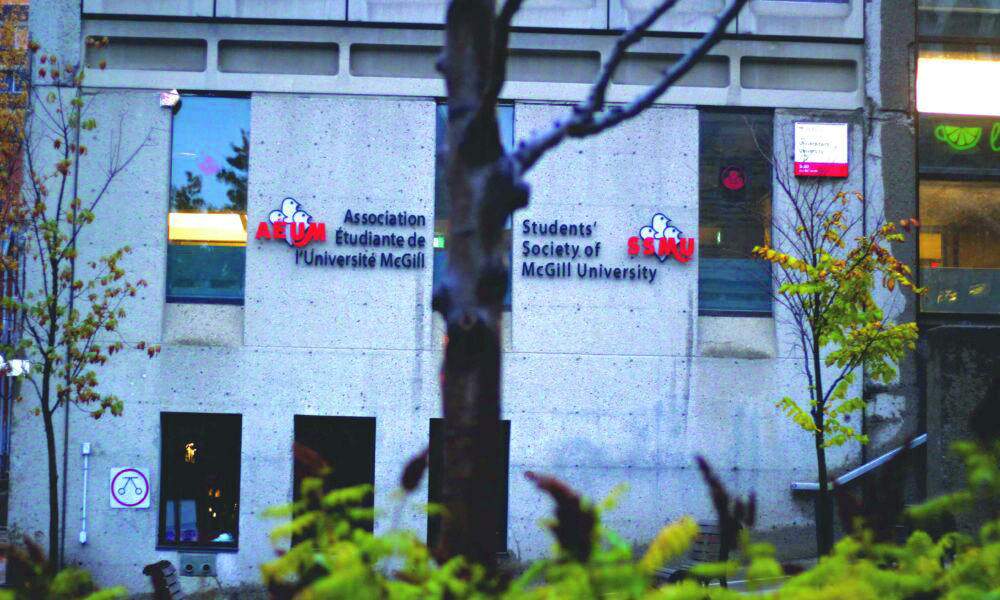
The Students’ Society of McGill University (SSMU) Board of Directors (BoD) convened on March 31 with all directors present except vice-president (VP) Student Affairs Claire Downie. Downie had submitted her notice of resignation to the SSMU leadership and campus media outlets earlier in the day, explaining that her resignation was due to the SSMU’s harmful work environment

SSMU president Darshan Daryanani presented a working document with a timeline of events, beginning March 21 with the adoption of the Palestine Solidarity Policy and ending with the March 29 meeting between himself, VP finance Eric Sader, VP student life Karla Heisele Cubilla, and Deputy Provost Fabrice Labeau. Daryanani clarified in an email to The McGill Tribune that the discussion with Labeau featured the Palestine Solidarity Policy, the notice of default, the MoA, and the MRO. The SSMU is still in its 30-day grace period regarding the notice of default and in the process of reviewing the remedies requested by McGill before taking any formal steps. 

Daryanani also thanked the Legislative Council for passing a motion regarding McGill’s MRO at its March 24 meeting and announced that the executive committee approved $5,000 on March 28 to retain legal counsel regarding the official notice of default. The SSMU leadership further expressed their intent to uphold student democracy, evidenced by two statements to the McGill community following the March 24 MRO email.

In the question period following Daryanani’s executive committee report and announcement, Director Yara Coussa asked Daryanani if there was a precedent for McGill using MRO communications to publicly pressure SSMU.

“Yes, the MRO has been used as a tool to inform SSMU,” Daryanani said. “[On November 28] 2019, [Labeau] came to Legislative Council and spoke publicly regarding a particular motion, [the Motion Regarding Free Trip Offers to Student Leaders], and once the motion was adopted by the Legislative Council, the deputy provost also sent an email to the student body.”

All of the Legislative Council motions on the agenda were promptly ratified with unanimous approval. The remainder of the Board’s public session was dominated by discussions about Coussa’s motion to publish the Legislative Council-mandated statement by April 5. In a lengthy debate period, directors and members of the gallery alike expressed concerns over the back-and-forth between the university and SSMU escalating into a costly legal feud. The motion was ultimately ratified after the addition of three amendments regarding a legal review of the statement before its publication. 

“As a director, I feel strongly about legal consultation on [SSMU’s statement in response to the MRO],” said Charlotte Gurung, a Council representative to the Board. “I do think the statement is great, but I think that we’re in a precarious situation with McGill, and just because they have made a public statement, and that is potentially a misstep for them, I don’t think we need to be justifying us making a public statement without legal consultation because that could just as well be a misstep for us.”

Moment of the meeting: During the question period, council representative Mary Zhang asked the Board if Downie’s resignation could have been prevented, and how they plan to mitigate the vacancy. Delouvrier responded that he was saddened to hear of Downie’s resignation, and that he would answer objectively by directly quoting Downie’s letter, in which she said the resignation was preventable. 

Soundbite: “I would encourage all directors to vote in favour of this statement pending the approval of legal, because I think that as directors we have a duty to SSMU and SSMU’s mission, and our long-term stability as a Society depends on our ability to carry out our mission. That’s not something we’ll be able to do if we are dependent on the university. It’s our duty as directors to approve this motion in order to send out a message that we are independent from the university, and we have agency, and that we take a stance against this form of pressure.”

—Director Coussa during the debate period on the ratification of the motion regarding the Legislative Council-mandated statement against the MRO.


Student Life

Exam-season survival guide

If there’s one thing we can learn from Montreal’s frigid winters, it’s that they always beget spring; a period of stasis, then, is essential for growth. As we enter a new season—as well as exam season—remember that amid the hustle culture of academia, rest itself is a radical act of resistance. To help you prioritize your well-being during this transitional period, the Tribune has compiled a list of simple reminders. Though they may seem obvious, they are important to remember nonetheless.  

  1. Always ask for an extension 

Asking for extensions can be anxiety-inducing. If you’re feeling too ashamed or intimidated to reach out, just remember: Professors and TAs are people too. In reaching out, even just to check in, you’re giving others the opportunity to help you. Many are happy to accommodate students or compromise on deadlines to an extent. There’s no need to trauma-dump in your email—keep it simple and polite. Outline briefly where you’re struggling and offer a time frame or plan that would allow you to complete the work in full. If the deadline is imminent, consider requesting an incomplete, or K grade—an alternative option of which many professors aren’t aware. Since they do not impact your GPA, K grades are a good last resort if completing a course is just out of reach. Get in contact with your professor ASAP to iron out the details.

  1. Get enough sleep 

With academic and personal schedules that can stretch late into the night, cordoning a full eight hours for sleep can seem unattainable. But a good-night’s rest is essential to your well-being. Ask yourself if ratcheting up sleep debt is worth it: Sleep deprivation will impact your mood and productivity, and can seriously compromise your health. Some studies even suggest that it can take up to four days of adequate rest to make up just one hour of lost sleep. Yikes!

Resting will only improve your GPA in the long term. Instead of powering through the week and hibernating all weekend, try to wake at a consistent time and take short naps to supplement the rest (ha)—but remember not to nap too close to bedtime, and be sure to set an alarm to avoid the dreaded nap hangover. Classes are ending; so too are any dreaded 8:30 a.m. lectures. Try switching up your studying to align not with your academic time table, but your body’s schedule. If you’re most productive at night, don’t feel pressured to be an early bird. No matter your specific chronotype, at the end—ish—of the day, just sleep. 

  1. Normalize having “you time”

“Live in the moment” is an adage that rings closer to a tired cliché belonging on a Forever-21 T-shirt than actionable advice. Yet it still holds true: There is more to life than non-stop hustle. Between exam cramming or paper bullshitting, there still exists slow, quiet moments to appreciate. Try your best to set aside breaks for yourself without screen time. Although there’s nothing easier than mindlessly scrolling, you’re likely to feel more guilty than invigorated in the end. Consider spending a study break engaging in an activity you’ll feel accomplished in completing: Listen to a new playlist on a walk; cook a hearty meal; bake a tasty treat. If you’re tight on time, clearing your mind can be as simple as breathing mindfully. Practicing mindfulness techniques can also prove helpful in calming yourself down if any mid-exam panic begins to set in. 

  1. And remember: Don’t define yourself by your work

Being invested in studying is a good thing—that passion is precious. However, defining your self-worth by the quality or quantity of your work can destabilize your sense of self when you inevitably fail to surpass your self-imposed and impossibly high standards. And if you instinctively cringed from the word “fail” in that last sentence, take a moment to reflect. Don’t be afraid of failure. External factors like scholarships or job applications can make it seem like your life hinges on your grades—but valuing a high GPA for whatever reason is not mutually exclusive to the responsibility you have to your own health. The way your work is received ultimately does not define you, and neither does a letter on a transcript. Amidst toxic attitudes in academia that your worth is tied to your work, it’s a powerful and liberating act to decide that the work you produce and the grades you receive are only but a reductive representation of you. Plus, distancing yourself from your academic performance can be healthy, actually. (Even though acing an exam is a hell of an addicting dopamine hit, we know!)

News, The Tribune Explains

Tribune Explains: McGill’s Office of First Nations and Inuit Education

McGill’s Office for First Nation and Inuit Education (OFNIE), nested under the Department of Integrated Studies in Education and part of the university’s Faculty of Education, has been in operation since 1975. In the decades since its inception, the office has amassed partnerships with five different Indigenous education organizations across Quebec: The Cree School Board, Kativik Ilisarniliriniq, the Listuguj Education Training and Employment Directorate, the Kahnawà:ke Education Centre, and the Naskapi Education Committee. Currently, the office provides six in-community post-secondary programs, including certificates in education, Indigenous language and culture, and Bachelors of Education degrees.

Assistant director Jim Howden remarked that despite its age, it is often underappreciated at McGill. 

“We are probably one of the best-kept secrets here at McGill,” said Howden.

What are the office’s current priorities?

The office is always working to improve its current programs as well as expand them to other communities and more students. In an interview with The McGill Tribune, Howden noted that the Listuguj Education Training and Employee Directorate had its first graduating class in the Bachelor of Education First Nations and Inuit program in 2020. The four-year program graduated 15 students. Its success influenced the Kahnawà:ke Education Centre to create a similar program with OFNIE for their students. These programs, Howden explained, are useful in providing a path for Indigenous people to become educators in their own communities. 

“And that’s a truly remarkable feat,” said Howden. “Because, it’s creating Indigenous teachers for Indigenous children in Indigenous communities, and so there’s less need for non-Indigenous teachers like myself.”

Greta Cheechoo, director of education services at the Cree School Board and graduate of two programs partnered with OFNIE, spoke to the Tribune about the value of offering Bachelor of Education programs.

“The programs help the communities to have [many] qualified and competent teachers to teach in our schools,” said Cheechoo.

What do OFNIE partnerships bring to Indigenous communities?

Many of the students pursuing Bachelors of Education or education certificates with OFNIE are adult learners going back to school. Bethany Douglas, a post-secondary counsellor for the Kahnawà:ke Education Centre, explained the significance of having in-community education opportunities as opposed to programs offered on a university campus. For Douglas, the urgency, uniqueness, and usefulness of the partnership with McGill allows these groups to offer the degrees in their students’ communities.

“Our cohort is made up of primarily mature learners, adult students who are returning to school after being out of the school system for a few years. Many have families of their own and have been working in the field of education already for a number of years,” said Douglas. “It would be impossible for most, if not all, our students, to leave full-time jobs to attend post-secondary full time. Our program is in-community, with community instructors as much as possible, so our students have access to a unique program that isn’t found on any [other] campus.”

OFNIE meets annually with a steering committee that provides feedback and guides the office in course delivery and successful programming. Howden emphasized that the partnership between McGill and the associated education organizations is collaborative. 

“We co-create,” said Howden. “We don’t parachute in with the BA program [….] It truly is a discussion working through and creating new courses.”

What role do Indigenous leaders take in these partnered degrees?

While the number varies depending on the partnership, many of OFNIE’s program instructors are Indigenous. Howden spoke to the importance of highlighting Indigenous knowledge and leadership in course delivery.

“There’s a lot more Indigenous knowledge that is brought in, there’s a lot more of the beliefs and values of the community,” said Howden. “We work with the communities, scholars, knowledge holders, and elders in some situations where they deliver the course. We encourage and welcome the McGill presence at every step of the way. But we also favour the Indigenous instructors that know the culture that know the programs that know the children.”

Chill Thrills, Student Life

Tried and true hangover cures

The end of the semester is fast approaching, and with that, an influx of graduation parties and end-of-year get-togethers await you. Don’t get too ahead of yourself though: Finals are also right around the corner, so you can’t slack off just yet. Excessive drinking and hangover symptoms can ruin that fragile work-life balance so many of us seek to perfect. So, whether it’s nausea, headaches, fatigue, or simply regret, the Tribune has vetted some hangover remedies to get you back into tip-top shape.

Solution 1: The pantry

         Eating well in the morning can make all the difference after a big night out. While some people swear by greasy foods like bacon or hash browns, they can upset your stomach and leave you feeling worse. It’s recommended to eat foods that will hydrate you, pump up your blood sugar, and replace lost nutrients like salt and potassium. Fruits, including oranges, strawberries, and bananas, are a good place to start. Staples for treating colds also work for treating hangovers—toast, bagels, and bouillon soup can nourish you without upsetting your stomach.

Solution 2: The bed

         If you’re feeling hungover but want to push yourself to study, take a step back and assess your energy levels: If you can afford to rest for a couple more hours, you’ll be left with fewer, but ultimately more productive, hours to study. Even if you have to wake up early, don’t ignore any rest throughout the day. Naps of even 20 minutes, whether at your place, on the bus, or on campus, can be great for reducing fatigue and other hangover symptoms. Close your blinds and turn on the “do not disturb” phone setting so that your sleep can be as restful as possible.

Solution 3: The Elkay

         Since alcohol is a diuretic, the best hangover preventative is to drink plenty of water the night of the party and, at the very least, drink a glass of water or two before you go to sleep. But if you wake up and remember that you barely drank a drop of water all night, start rehydrating as soon as you can. Fill up a big bottle of water and keep it with you the entire day.

Solution 4: The gym supplies

         Beyond rehydrating with water, it’s important to replenish the electrolytes you lost. Electrolytes, which include nutrients like sodium, potassium, calcium, phosphorus, and magnesium, come bottled, as a gel, and in powdered form. If you’re looking for a drink, Gatorade, Vitamin Water, and Bai are some of the readily available choices. For electrolyte powder, try Nuun or Biosteel. 

Solution 5: The medicine cabinet

         If your head is pounding, reach for some ibuprofen, commonly found in Advil. It is  recommended to avoid acetaminophen, commonly found in Tylenol, as acetaminophen reacts negatively to remaining alcohol in the body. When combined with frequent and heavy alcohol use, repeated doses of acetaminophen can result in liver damage. 

Solution 6: The nightstand

A common hangover symptom is sensitivity to light and sound. It’s easy to control your environment when you live alone, but if you have roommates or need to head out, insulate yourself by grabbing your sunglasses, baseball cap, and earplugs. A pair of earbuds with rubber tips will do wonders at keeping ambient noise at bay. 

McGill, News

McGill Residences face COVID-19 surge as preventative measures loosen up

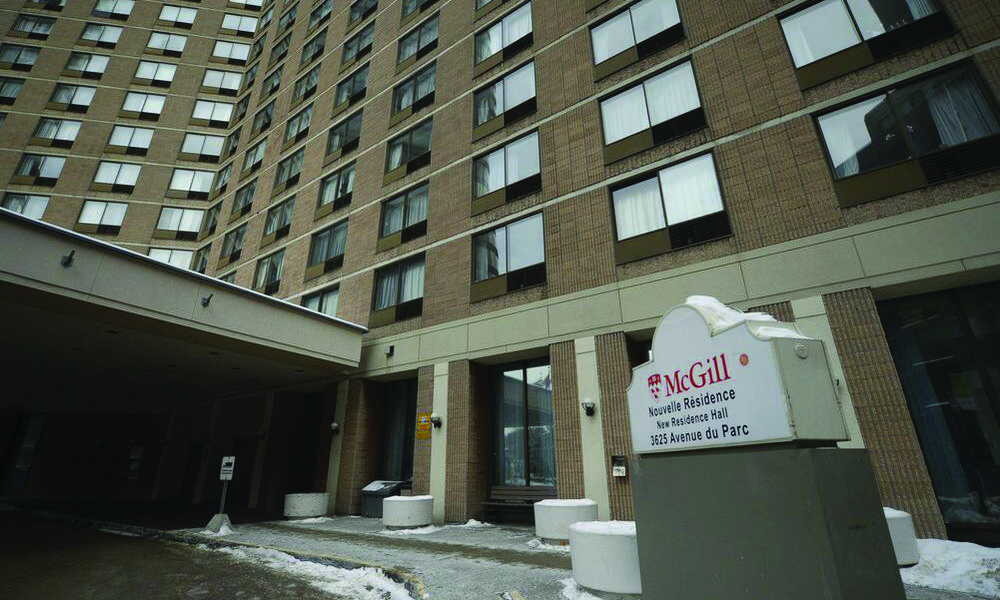
Between March 20 and 26, McGill reported 473 COVID-19 cases on campus, an increase of 330 from the previous week. Along with the rise in cases, many preventative measures are being lifted by both the Quebec government and McGill. After the province disabled the vaccine passport application, McGill announced it would drop vaccine passports at McGill starting March 28, and that all in person final exams would go ahead as scheduled. Starting April 1, McGill will also be consolidating rapid testing in residences into a single site at Carrefour Sherbrooke. Previously, there were four sites—Carrefour Sherbrooke, New Residence Hall, McConnell Hall, and Macdonald Campus Laird Hall—and rapid testing was only available for symptomatic students living in residence.

On the McGill subreddit, students and floor fellows living in residences have expressed concern regarding the sudden increase in cases and the lack of preventative action taken by the university. Christian Tonnesen, vice-president floor fellow, suspects that the number of cases reported by McGill is not representative of the actual number of COVID-19 cases within the campus community, noting that students often do not inform McGill of their positive test results. 

“I have had many floor fellows approach me and let me know that they suspect, and/or have often been told, that a majority of their students have COVID-19, or have been in close contact with someone who does have it,” Tonnesen wrote in an email to The McGill Tribune. “It strikes me as ironic that for an institution that was very hardline on COVID-19 and took many precautions regarding isolating students and relocating them last year, to have them throw up their hands and say, ‘Welp, we tried, but there are not enough rooms. Good luck everyone.’”

Nina McConnell, a U1 Economics student living in New Residence, approves of McGill’s management of the new wave. For her, tight restrictions at the start of the year, like visitor limits, made socializing difficult and felt arbitrary at times. 

“​​I appreciate the loosening up of the restrictions even despite what’s going on,” McConnell said. “There was a period when it was a little scary when they were out of isolation rooms in residence, but other than that I think they’ve been handling it pretty well. We still need to mask, we still go down to the dining hall and are distanced. But I think, overall, it’s better to manage it this way than to have the extremely tight restrictions that were happening at the beginning of the year when there were less cases.” 

Dr. Anne Gatignol, a professor in the Department of Medicine at McGill, believes that loosening restrictions will increase contamination, which she believes is inevitable at some point. Nevertheless, given that so many students have been contracting COVID-19, Gatignol encourages students to take precautions to protect themselves against the new variant and other respiratory infections. 

“If you remove the mask, you increase the circulation of all respiratory viruses, and we already see an increase in flu and colds due to many other viruses,” Gatignol said. “As SARS-CoV2 Omicron BA.2 variant circulates and is more contagious than the original Omicron, it would be much better to keep masks on most of the time when distancing is not possible. It would protect against COVID, but also against the flu and other respiratory infections.”

Frédérique Mazérolle, media relations officer at McGill, wrote to the Tribune that McGill had revised its protocols in residence to support student safety in light of the recent spike in COVID-19 cases in Quebec. She explained that appropriate measures will remain in place, and that McGill will remain vigilant as the pandemic evolves. 

“We urge students that test positive to continue isolating in their rooms and to report their test results to the McGill Case Management group. In the event that our self-isolation rooms reach capacity, and in order to accommodate all students in residence, a new room may be temporarily assigned if necessary,” Mazérolle wrote. “If there is increased demand in the future for rapid testing in residences, we will ensure that testing is ramped up to meet capacity.”

Tonnesen believes that the current measures McGill has implemented to tackle the surge are insufficient. As a result, he explained, floor fellows have had to work with students to create their own COVID-19 safety measures as best as they can. 

“Since McGill is failing to act, there are groups of students and floor fellows in residences with shared bathrooms who have had to do the work McGill hasn’t, such as creating ‘COVID’ and  ‘NON-COVID’ sinks and bathrooms in residences with shared facilities or organizing food delivery,” Tonnesen wrote. “If I didn’t know any better, I’d say McGill has weighed the pros and cons and decided that the COVID disaster in residence will hopefully pass with minimal media coverage and is therefore not worth the financial cost of ensuring the bare minimum safety requirements for students and floor fellows.”

McGill, News

Tribune Explains: Winter 2022 exams amid sixth wave of COVID-19

McGill’s Winter 2022 final exams will take place in a hybrid format from April 13 to 29, amid increasing COVID-19 cases and waning restrictions. Experts say that Quebec is officially in a sixth wave fuelled by the highly contagious BA.2 subvariant, a trend evident in McGill’s rising case numbers. At the same time, Quebec is standing by its plan to end restrictions and begin “living with the virus.” McGill, for its part, has rolled back measures like the vaccine passport and strict isolation for those who test positive in residences. The McGill Tribune looked into the updated exam procedures that students can expect for Winter 2022 exams.

What are the distancing and masking guidelines for exam rooms?

Students are required to wear masks for the entirety of their exams. According to Frédérique Mazerolle, McGill media relations officer, “Ventilation in exam rooms has been verified based on room capacities. In some cases, rooms are at reduced capacity based on ventilation assessments.” Mazerolle emphasized that members of the McGill community can feel safe writing in-person final exams due to these ventilation measures, as well as McGill’s over 96 per cent vaccination rate, as of April 2022. 

What should students do if they test positive for COVID-19 before an exam?

Just like the Fall 2021 semester, students are directed to fill out the COVID-19 accommodation form and isolate for the required five-day period if they test positive. Those who test positive may not attend in-person exams, and should seek alternate accommodations including deferred exams or supplemental exams when necessary. Students should also report any COVID-19 cases to McGill’s Case Management Group.

What are the accommodations available to students who cannot attend an in-person exam?

Those who cannot go to in-person exams, for any reason, are encouraged to email their instructors to explain their situation as soon as possible. Students can also apply for deferred exams, approvals for which are not always guaranteed and are evaluated on a case-by-case basis. While the university continues to offer accommodations for health-related issues, according to the dean of students, online exams will not be offered as an alternative to in-person exams when students are unable to attend, so students should plan to be in Montreal for any in-person exams.  

Are accommodations available for students with ongoing health issues?

According to Robin Beech, McGill’s dean of students, students with ongoing health issues are expected to have already completed the COVID-19 Academic Accommodations Request Form on Minerva, and to have sent the relevant medical documentation to the Office of Students with Disabilities. For immunocompromised students who have not yet filled out the accommodations form, it is recommended to contact the Office of the Dean of Students as soon as possible.

Mazerolle maintained that McGill has learned to quickly adapt to the changing circumstances of the pandemic, and that the health and well-being of the community remain the university’s top priorities.

The dean of students, Robin Beech, encourages students with questions regarding final exams or COVID-19 procedures to reach out to his office at [email protected]. Additionally, students should report their COVID-19 cases directly to McGill’s Case Management Group at 514-398-2920.

Creative, Video

McGill Psycho

260946387 is handsome, well-educated, and intelligent. He is twenty-seven and living his own McGillian dream. He studies by day, achieving a grade point average of 4.0.

Staff Producer Kate Gelinas documents a day in the life of a 4.0 GPA student at McGill University in this parody of Patrick Bateman’s morning routine from “American Psycho”.

Laughing Matters, Opinion

On becoming the It-Girl

With the spring weather suddenly upon us, it is time to look wistfully forward to summer…or more specifically, the summer aesthetic. It doesn’t matter that it is barely spring, or that the spring solstice was only last Sunday—it will never be too early to start working on your bikini body! 

Luckily for you, That Influencer just uploaded their 10-minute summer body workout. Now you can sneakily do crunches beside your bed as the mind-numbing, non-copyrighted music trickles out of your Airpods—MOM GET OUT OF MY ROOM! You’ll have to leap to your feet and run to the door in a shameful attempt to conceal your flimsy athletic aspirations, wondering why parents must always have the worst timing. Returning to the floor, you’ll dutifully recommence your Russian twists and reassure yourself that you’ll see results soon. Maybe you have model genetics too, they’re just recessive. 

Of course, all bodies are bikini bodies…and besides, you’re working out for your mental health, right? But on top of that, this year’s trending pieces actually only look good on a small fraction of the population. That won’t stop you from buying them though, since stores are now more inclusive than ever! Maybe you’ll try asking an employee for fashion advice. She’s ignoring you? Weird. Whatever, Aritzia is overpriced anyways. 

Though you’ve heard mixed reviews, you’ll place an order from SHEIN instead; 10 shirts for less than $100? Steal! But when you check the tracking email, you’ll be horrified. Estimated Delivery: One month! What ever happened to fast fashion? You probably should’ve paid the extra four dollars for express shipping. So because you have no clothes to wear, you’ll head down to Eva B. for some much-needed retail therapy. But don’t worry, you’re shopping sustainably. 

The feminine urge to categorize yourself for others’ consumption is overwhelming, so you’ll definitely open Pinterest, pinning inspiration for the aesthetic that’s All Yours. Remember, the It-Girl is not just an aesthetic, it’s a lifestyle. You must dress like you’re vacationing in Italy, —but make itstill weather appropriate—: Iit is only 10 degrees out. Listen to small indie artists (like Tame Impala or Mac DeMarco) that you discovered before they got popular—but also know all the popular radio ones. Workout—but not too much. Drink green juices and eat your vegetables but also be able to enjoy a burger and fries and party—in a classy way that costs more money than you currently have. 

The stress of preemptively defining your summer vibe swells, and you might decide you need a coffee, your third one of the day, but it’s okay because you’re in your Lorelai Gilmore era. As you walk to Starbucks, you’ll pass a guy who checks you out. You’ll roll your eyes and meet the lens of an imaginary camera: You’re in your Fleabag era.

As you wait for your iced white mocha latte with oat milk to be ready, the BeReal notification will ping. You’ll snap a selfie and upload it. Gotta update your friends on what you’re doing at this exact moment in time. Scrolling through: McLenny, cafe, still in bed, oh—she’s in a lecture right now. You smile at your phone. It’s fun to be so present in your friends’ lives…almost like hanging out with them. 

A text will pop up on your phone, it’s your friend. She says you guys are going out tonight. You’ll ask her the dress code and she’ll respond: Medium whore. You’ll mentally sift through your box of nearly identical tiny black tops and decide on one. Or maybe you’ll wear that one. 

And then you’ll be at the club, dancing and trying to pretend you don’t notice the guy who has been staring at your tits for the last 10 minutes. You’ll raise your phone above the crowd to snap a picture to post on your Instagram story—for how else are people going to know that you’re having more fun than they are?

Joke, Student Life

Cuffing season is over: Best places on campus to break up with your significant other

Whether it’s the green spaces, reading rooms, restaurants, or historical architecture, there’s no shortage of places on campus to fall in love. However, when deciding where to break up with someone, things get a bit muddier. To help out with these nerve-wracking decisions, The McGill Tribune has identified the best spots at McGill to end things with your partner. 

Birks Basement

The stained glass Birks chapel and study room are among the most romantic places on campus, great for asking out your crush. The basement, on the other hand, is a decrepit network of weird hallways, mysterious rooms, and unsettling bathrooms: The perfect place to end it with your not-so-perfect other half. 

Bonus points if you both had to take your shoes off at the entrance. 

The Leacock hallway before an exam in 132 

What’s better than a quiet, one-on-one setting when you want to end things? How about a packed corridor with 600 nervous and erratic first year students. If things go poorly, you can always slowly disappear into the crowd and eat the guilt away with a box of Krispy Kreme frequently sold by tabling peers. 

Bonus points if the exam in 132 is the dumpee’s. 

In line at the hot-dog stand 

Between school, work, and hobbies, it’s always ideal to maximize your time. For years, the hot-dog cart has been your go-to place for a quick bite. Now, it just became your go-to breakup spot. The momentum of the line, the smell of the grill, and the trash-digging squirrels—what could be less endearing? At the end of it all, regardless of how the breakup goes, you can reward yourself with a hot-dog. 

Bonus points for ending it as they’re taking your order. 

During a lecture

If you share a class with your soon-to-be ex, the possibilities are endless for initiating the tragedy: At the start of class, during the powerpoint, or right at the final moments when students are asking questions—it all depends on what feels right to you. The Tribune recommends the moment when you sense the professor is about to go off on some tangent—that way you won’t have to miss any valuable material. If your ex starts hammering you about the breakup, just whisper, “Shh, I really need to pay attention.”

Bonus points if you snag the middle seats in the second row.

Quiet section of McLennan 

If you’re the type of student who rarely leaves the library during finals season, then there’s no reason to break that streak for a break up. If you want to do it right, start off by looking through the shelves for the biggest book you can find (atlases are good), then invite your partner to the library for a study date. Right as it looks like they’re getting into a good working grind, shoot them a quick message asking to break up (it’s the no-talking section), and then open the book to hide your face if need be. It’s efficient for both of you and courteous to the other library patrons. 

No bonus points on this one, I think it does enough damage. 

Lightning Round

Option 1: Post it on the MyCourses Discussion Board of a class you share.

Option 2: Urge the Provost to mention it at the bottom of the next email blast.

Option 3: Submit it to a vote in an SSMU referendum.

Option 4: Go the meta route. Show them this article and ask which they would prefer. 

Read the latest issue

Read the latest issue