


Latest News

Basketball, Sports

Redbirds bring Lengvari Cup home in narrow 58-57 win against Stingers

Love Competition Hall was packed for the annual Lengvari Cup as McGill’s Redbirds (12-0) faced off against the Concordia Stingers (6-6) in an enthralling game. 

Second-year Haris Elezovic opened up the scoring with a layup, but the Stingers quickly answered with a three-pointer. The first quarter featured an intense defensive press on both sides, keeping the score low until the pace quickened and a successful turnover by Sam Jenkins helped Sidney Gauthier land a reverse layup with under a minute left. The first quarter ended with a two-point lead for Concordia at only 12-10.

The Stingers were the first to strike in the second quarter due to a McGill foul that gave away two free throws. But Elezovic helped to bring the Redbirds’ score up with a quick layup, then daringly blocked an attempt by the Stingers, earning him the cheers of the crowd. 

With less than four minutes left in the first half, forward Kevin Li sank a three-pointer, bringing the Redbirds even with the Stingers at 21-21. However, the Stingers quickly responded and by halftime the score was 28-21 for Concordia.

McGill returned from halftime rejuvenated, ready to face the Stingers and the invigorated crowd. Jenkins scoring first seemed to be a good omen for McGill, but the third quarter proved to be a tough battle.

The Stingers brought their score up to 35-23 with a series of successful shots. The Redbirds fought back with Elezovic scoring off of a bullet pass from teammate Cameron Elliot, followed by a layup from Jenkins. However, the Stingers continued to gain headway, leading McGill 48-30 with just under three minutes of the quarter left. 

Luckily for the crowd, the Redbirds were not discouraged by this gap as a dunk from Zachary Lavoie-Toure, a three-pointer from Jenkins, and five points from Li allowed the team to reach the fourth quarter down by only 10 points. 

In an interview with The McGill Tribune, Li recalled how he approached the final quarter.

“We have a group of guys that know how to win so I wasn’t worried about the score even when we were down by like 15 in the fourth quarter,” Li said. “Everyone on the team contributed [to] the win.”

The smooth gameplay of the Stingers in the fourth quarter was no match for the Redbirds’ determination as they slowly but surely closed the gap with points from Jenkins, Quarry Whyne, and a crowd-pleasing three from Jamal Mayali

With three minutes left and a score of 56-52, tensions were high on the court—it was still anyone’s game. Following a shot from Whyne that brought the score up to 54 for the Redbirds, he easily scored two free throws with 50 seconds left after a foul from the Stingers. The crowd erupted as the score was finally even. With 3.9 seconds remaining, a McGill foul gave the Stingers a one-point advantage. However, with less than 2.8 seconds left, the Stingers received a technical foul and Whyne was given two free throws.

The competition hall was dead silent as the 6’4 shooting guard successfully made his first throw without batting an eye. When Whyne sank the second shot, the crowd erupted into cheers as the Redbirds were victorious, 58-57. George Lengvari, an alumnus of both McGill and Concordia and long-time benefactor of both universities, handed the Redbirds their trophy for the second year in a row. In a post-game interview, Whyne explained how the Redbirds were able to make such a comeback.

“We felt confident going into the game,” Whyne said. “However […] we dug ourselves a hole early on. Nonetheless, once again we were able to show how resilient our group is, and with the guidance from our coaches we were able to overcome that deficit and win in the end.”

This impressive comeback from the Redbirds at a critical moment of the game is a sure indicator of the team’s spirit and their willingness to fight. It is also promising for the upcoming RSEQ championships, as the team remains at the top of the rankings this season.

Stat Corner: Haris Elezovic was the key to McGill’s offence, scoring a game-high 14 points during the game.

Quotable: “This will help us get ready for the playoff game next week too. We are looking to beat Concordia again at their gym tomorrow to make history.” — Fourth year forward Kevin Li

Moment of the Game: With 2.8 seconds remaining, Quarry Whyne made two free throws, securing the cup for the Redbirds and maintaining their undefeated streak of the season.


Know Your Athlete, Sports

Know Your Athlete: Madison Mueller

After making the decision to study at McGill, Madison Mueller, a U3 student studying anatomy and cell biology, found herself trying out for the school’s water polo team, the Poseidons. Growing up in Burr, Saskatchewan—a province well known for its flat, dry plains—Mueller never considered playing water polo. But as a strong athlete who played basketball and swam competitively for 12 years, Mueller transitioned smoothly into the new sport during her first year. 

“The way I understood water polo is through basketball,” Mueller said in an interview with The McGill Tribune. “They’re very similar. They have screening, they have cuts, they have zone and man-to-man defence, and there are fast breaks and everything. It’s really set up the same way.” 

However, there are key differences—the first, and most obvious, being that water polo is in water and players are able to swim with the ball without having to pass it. Each team is allowed six outfield players in the pool at a time, as well as one goalie. Possibly the most important difference is that water polo, for lack of a better word, is ridiculously aggressive. 

With referees standing poolside, they can only make foul calls based on what they see from above. Since players can’t touch the bottom of the pool, they often create leverage by pushing off their opponents and wrestling for a positional advantage below the water’s surface. The ability to hide under the water allows for players to kick, scratch, and even bite each other to gain the slightest edge over their opponents.  

“The reason why we have the super tight bathing suits that zip up in the back is so that players can’t grab it as well,” Mueller said. “When I first joined the team, I asked what water polo was like, and was told that it was really aggressive. The example I was given is that during the Olympics, there was a girl who reached over behind her back, grabbed a girl’s bathing suit and flung her over her shoulder and her whole bathing suit came off.”

Yet, Mueller was not deterred by the sport’s aggressive nature. She reflected on her first-ever game with the Poseidons at a tournament against the University of Toronto Varsity Blues. 

“I scored a hat trick with two nicely placed lobs and one breakaway,” Mueller said. “It was a pretty memorable experience.”

After finding success with the Poseidons, combined with her experience coaching competitive swimming throughout high school, Mueller felt compelled to start up her own water polo team, the Humboldt Hammerheads, in an effort to grow the sport in her home province of Saskatchewan. While still focussing on skill development, the squad is looking to start competing against other water polo teams in Regina, Saskatoon, Weyburn, and Estevan. 

Although not an officially recognized varsity sport, McGill’s water polo team is funded by the Students’ Society of McGill University (SSMU) and competes in two leagues. During the Fall  semester, the team is broken up into men’s and women’s squads and they compete in tournaments against varsity squads in Eastern Canada such as the University of Toronto, Queen’s University, and the University of Ottawa. In the winter semester, though, the team is co-ed and split into Poseidon One and Two. Both squads compete at different levels within the Quebec league, which includes McGill, Concordia, Université de Montreal, and UQÀM. 

Persevering through ever-changing COVID-19 restrictions, struggles to find pool time, and budget cuts, the team is nonetheless looking forward to the Fall 2022 season. With the McGill pool having reopened on March 7, the team has been hosting tryouts with the goal of building up a fresh base of players.

Arts & Entertainment, Pop Rhetoric

Disney’s support for ‘Don’t Say Gay’ bill contradicts their alleged values

Considering that Disney owns a theme park that they call the “happiest place on Earth,” it is disappointing that the company currently supports several legislators who want to silence 2SLGBTQIA+ people and make Florida the most heterosexual place on Earth. Disney made headlines after the Orlando Sentinel and other news outlets exposed the company’s financial donations of over $253,850 USD to Florida legislators who voted to pass the Parental Rights in Education bill, better known as the “Don’t Say Gay” bill. Passed by the Florida Senate on March 8, the bill prohibits any discussion of sexual orientation or gender identity in schools. While he has not yet signed it into law, Florida governor Ron DeSantis has spoken in favour of the bill and is expected to approve it soon. The law aims to prevent “exposing” children to 2SLGBTQIA+ culture and topics, effectively censoring queer and gender nonconforming young people growing up in Florida. What these lawmakers don’t realize is that 2SLGBTQIA+ culture goes beyond sex; these children will never be able to see school as a safe place for them, which will negatively impact their mental health and even their livelihoods. 

By funding these legislators, Disney goes against their publicly proclaimed company values to create a more inclusive world. For instance, during Pride month, Disney splurged on rainbow merchandise and virtue-signalled through supportive tweets. While Disney supposedly aims to spread magic and acceptance, Disney Pride is a rainbow-washed marketing ploy. Following the company’s hypocritical behaviour, the 2SLGBTQIA+ community—which many of Disney’s staff and are a part of—decided to stand up for themselves, sparking walkouts primarily amongst Disney World workers in Florida. 

In response to criticism, Disney CEO Bob Chapek paused financial support to the homophobic legislators and pledged to instead donate $5 million USD to the Human Rights Campaign (HRC). While this pledge is financially beneficial to the HRC, throwing money at 2SLGBTQIA+ organizations does not erase the harm that Disney’s previous support to Florida legislators has already caused. The fact that Chapek only ceased funding after receiving major backlash shows that his public remorse is a matter of protecting his and the company’s public image. Chapek doesn’t seem to understand that his actions demonstrate a greater commitment to combating cancel culture than to fighting political injustices. The HRC did not trust his intentions either—they publicly refused the donation, stating that Disney needs to focus on getting oppressive bills vetoed rather than performatively speaking out against them.

In a tweet shared on Good Morning America, Chapek wrote, “The biggest impact we can have in creating a more inclusive world is through the inspiring content we produce, the welcoming culture we create here and the diverse community organizations we support, including those representing the LGBTQ+ community.”

The problem with this statement is that it absolves Disney of the responsibility to use its power to protect, rather than harm, the communities they claim to support. As a company, Disney’s financial power gives them a huge influence over politics—and in this case, they used that power to actively contribute to a less inclusive world. Stopping payments and pledging allyship means nothing when Disney’s support has already pushed the “Don’t Say Gay” bill closer to becoming policy. 
As one of the largest entertainment companies in the world with a massive influence on children, Disney needs to actively stand against harmful legislation. Supporting these bills, let alone staying silent, harms their 2SLGBTQIA+ fans and employees. While company values can change—former Disney CEO Bob Iger previously threatened to boycott filming in the state of Georgia amid anti-LGBTQ+ bills in 2016—it is Chapek’s responsibility to ensure that future value changes are progressive and genuine. Performative action has no place in a world where the safety of marginalized groups is threatened. Disney thrives on internal and external support from queer people; it is antithetical for them to profit from and harm marginalized communities at the same time.

Off the Board, Opinion

The feminine urge to be a bit of an asshole

My mother is an assertive woman. When I was younger, I was often baffled by her abilities to command the attention she deserved whenever she walked in a room. Maybe it was because she spent years working as a manager at an engineering firm, or maybe it was because she was a Taurus, but Mummy demanded respect, and she got it. Of the numerous traits of hers that I picked up, the “respectful assertion” didn’t quite rub off as expected, and I grew up being, among other things, a bit of an asshole. 

The ways in which I grappled with this mean streak have changed throughout my life. On March 8, International Women’s Day, Instagram was overflowing with positive posts uplifting women—their sugar, their spice, and their everything nice. Don’t get me wrong, I’m not a scrooge; representation through excellence is one of many ways to empower women, and it is of course important to exhibit when women succeed in overcoming systemic barriers. But I started noticing a pattern. Many photo threads, infographics, quotes — they all seemed to unequivocally equate being a woman with being good. Though I support the uplifting of all women, I also encourage everyone to broaden their circle to include, well, nasty women. 

I was often called bossy as a child. My aforementioned assertive mother had coworkers label her intimidating or angry. I didn’t like the labels; they didn’t feel like they fit my mom nor myself. When I got older and grew conscious of my own being, the innate concept of “femininity” was ingrained into my psyche. This exacerbated my inner clash, as words like “aggressive” or “intimidating” were incongruent with the girly nature I felt society expected me to have. When I made my first Tumblr account and dipped a toe into the most shallow ends of corporate feminism, once again I found that the discourse about protecting women often revolved around their innate goodness. 

Despite what the swathes of online blogging tried to tell me, there was no one way to experience the spectrum of emotion, negative or not. Feelings are not supposed to be associated with gender; our efforts to support others should not orient around what we expect as a correct emotional response. But I didn’t know that at the time.

So I started to tone it down. I started to express negative emotions in ways I believed reflected some kind of womanly nature, like tearing up instead of shouting out. If I was angry, I wasn’t an asshole anymore, I was the very gendered term of bitch—which meant I didn’t get angry, I let the anger get me. Within the realm of human emotion, I restricted myself out of fear that I might fall into a category of women whom people didn’t want to respect.

The thing is, vileness––or, for lack of a better word, evilness––continues to permeate our world. It is not hard to think of systemic or individual examples on all scales of activity, from geopolitical conflicts to some goober tripping people on the street. Every day, our fellow humans commit varying levels of “bad” acts. I thoroughly believe it is my human right to be allowed to participate in all the bad so long as it continues to exist. This is by no means my proclamation of being a future war criminal, and I, like other rational people, want peace and prosperity for the world. Nonetheless! While men are spitting in the street I should be allowed the privilege of getting angry without feeling the need to shift it to a more acceptable fury. 

When uplifting women, you cannot demand or expect every person to be a shining example of “good” womanhood. While successful, kind, and passionate women exist in multitudes, so do those with little ambition, limited amounts of sweet words, and maybe like, one hobby. I suggest we raise a glass to the liberation of everyone, nice and spice, or dingy and stingy.

Commentary, Opinion

The selective humanity in Canada’s refugee policy

Canada’s open-arms response to the recent Ukrainian refugee crisis is, rightfully, a point of pride for Canadians. Refugees of all backgrounds face unimaginable challenges through no fault of their own, from dangerous sea crossings to lasting mental trauma. Countries that recognize these challenges and contribute their attention and resources to refugee settlement do make a positive impact. However, Canada and Quebec’s hasty policies for Ukrainian refugees are not reflective of their typical refugee policies, which raises doubts about whether these governments are genuinely motivated by humanitarian principles, rather than political and racial bias. 

On March 3, Immigration Minister Sean Fraser announced that Canada will allow an unlimited number of Ukranians to apply for expedited visa stays of up to two years, waiving quotas, the usual application fees, and high barrier requirements such as language or labour market impact assessments. The visa process, which usually takes a year to complete, will be expedited to a matter of weeks for Ukrainians. At the provincial level, Quebec immigration minister Jean Boulet announced $5-million in grants to 14 community organizations related to the support and francization of incoming Ukrainian refugees. Quebec also has no limit set on the number of Ukrainian refugees it will accept through Canada’s program. 

Especially for students and young adults, expedited temporary visas are relatively quick to process and are an effective short-term policy response to global refugee crises. The policy grants refugees thrown into uncertainty time to safely study or work before making difficult long-term decisions about their future. That said, this thoughtful policy is highly uncharacteristic of Canada, a nation that often avoids such open-access temporary visa programs on the grounds that people will overstay them upon expiry. 

For context, Canada has approved 7,885 Afghan refugee applications in seven months, in contrast to the over 6,000 Ukrainian applications approved in the last 10 weeks —many even being accepted before concerns about Russian aggression fully materialized. By contrast, migration opportunities for Syrian refugees fleeing war to Canada have quietly declined ever since the influx in 2016. Their path to Canada has essentially become limited to private sponsorship cases, which are both rare and come with high financial barriers. 

Upon being prompted to acknowledge that the same temporary visa opportunities are not offered to refugees from Africa or the Middle East, Fraser and Prime Minister Justin Trudeau insisted there was no bias involved, stating that each situation is unique. The justification offered is that Ukraine’s western borders are currently open, and over one million Ukrainian refugees have already successfully crossed over to neighbouring countries, from which it is easier to apply to come to Canada. Meanwhile, in Afghanistan for instance, refugees face several barriers crossing into neighbouring Pakistan, including required bribes, police aggression at checkpoints, and heavy travel restrictions imposed by the Taliban. 

However, the Canadian government’s justifications are no excuse for abandoning efforts to ensure fairness. Unique situations, such as those in Syria and Afghanistan, warrant especially comprehensive criteria and consultation. There are several reputable international and local refugee organizations, such as Aman Lara, that are ready to coordinate with the Canadian government to offer the same hope to young non-Ukrainian refugees.  

Canada’s inequitable refugee policy reflects more than laziness on behalf of the government—it carries the weight of a racist, and unfortunately common, rhetoric circulating mainstream media: That Ukrainian refugees, the majority of them white Christian Europeans, will better fit into Canadian society. Especially compared to Western media coverage of the Middle East, Ukrainian refugees have been depicted as more civilized and consequently more worthy of the support the Western world has to offer. 

This narrative is morally reprehensible. Canada is home to some of the most proudly multicultural cities in the world, and the modern “Canadian” is no longer defined by a single ethnicity, religion, or cultural practice. Quebec, in particular, must be aware of its racial bias, as it invests millions in the francization of Ukrainian refugees while sitting on a backlog of non-white applications—a situation made worse when considering it cut immigration to the province by 20 per cent in 2019. Premier Legault justified the cut by citing the difficulty of integrating newcomers into society and the labour market—now not the most convincing explanation given Quebec’s immigration policy for Ukrainians.

To truly offer equal opportunity, the government must acknowledge the racist implications of its policy in this current social climate, instead of dismissing criticisms with the logistical and bureaucratic excuses refugees hear too often. As shown through its policy for Ukrainian refugees, Canada’s stressful and invasive procedures imposed on refugees from other active conflict zones, namely Syria and Afghanistan, were unnecessary. The federal and provincial governments have demonstrated their capacity to help refugees regain agency over their lives, and it is time they extend these opportunities equitably.

Know Your Athlete, Sports

Know Your Athlete: Clément Secchi

Clément Secchi, U4 Management, has spent much of his life in the pool. The fourth-year swimmer was named both McGill and RSEQ Athlete of the Week multiple times this year, and recently won six gold medals at the RSEQ Championships, including ones for the 4x50m relay, the 200m butterfly, and the 50m butterfly—setting team and RSEQ records for all three. Secchi was also named Athlete of the Meet at the Championships as well as RSEQ Athlete of the Year. 

While clearly a dominant force in the pool, Secchi explained that dedication and hard work allowed him to reach the level he is at today.

“I am proud of never giving up and I’ve kept training hard and getting faster and faster,” he said in an interview with the Tribune. “I wasn’t very fast when I was younger, so […] to be where I am at today, it is nice to see where I [came] from.”

The star swimmer explained that he does not have professional role models, but rather looks up to those who are closer to home.

“My biggest inspiration is probably my parents,” he said. “My parents [motivate me] with their work ethic. They are really hard workers. And if you work hard, after you can play hard.”

Growing up in France, Secchi tried his hand at multiple sports before zeroing in on swimming as his favourite. 

“I was playing soccer and tennis and doing swimming at the same time when I was young, but after a few years, I had to make a choice between the sports and I decided to stick to swimming,” Secchi said. “I liked the teammates I had and the pool was also really close to where I was living so it was really practical. I always loved being in the water. I spend most of my summers in the water.”

He joined his hometown club in Aix-en-Provence, staying there until his second year at McGill—the year that the COVID-19 pandemic hit. While spending his third year in France during the pandemic, he moved up to the largest swimming club in France, Cercle des Nageurs Marseilles, a professional team that produces Olympic-level swimmers. 

Secchi explained that the Marseille facility, starkly different from McGill’s Memorial Pool, is his favourite place to swim. 

“The best place to train is definitely in Marseille,” he said. “The complex is on the beach so when you are done training you can walk 20 stairs and then you’re in the sea. So it’s pretty amazing, different from the McGill pool for sure.”

While Secchi may enjoy the pool in Marseille more, the swimmer explained that he really loves his McGill teammates and appreciates the support they provide each other.

“It’s about having a really good atmosphere and everybody working towards the same goals and everybody working hard,” Secchi said. “I like the work ethic at McGill, everybody works hard and supports each other trying to be the best every day.”

A supportive network is crucial, especially considering how much training they do. Secchi trains two to three times a day most days of the week, and at least once every day, except on Sundays. McGill swim team training consists of both swimming practices and lifting sessions twice a week. 

Secchi emphasized that with such a busy schedule, staying organized and using his time efficiently is crucial. Even with a timetable like his, he makes sure to put aside time to take a nap every day.

“You get better at [the balance] as you get used to it,” he said. “I am so much more on top of schoolwork and swimming in my last year than in my first year. But, it is really about setting priorities and also being efficient.”

As his time at McGill comes to an end, Secchi looks forward to the future and hopes to obtain a master’s degree in the United States while spending his final year of eligibility competing in the NCAA. In the immediate future, however, you can catch Secchi competing in the U Sports Championships on March 23.

Science & Technology

Student Research: How the tickle of a feather guides bird flight

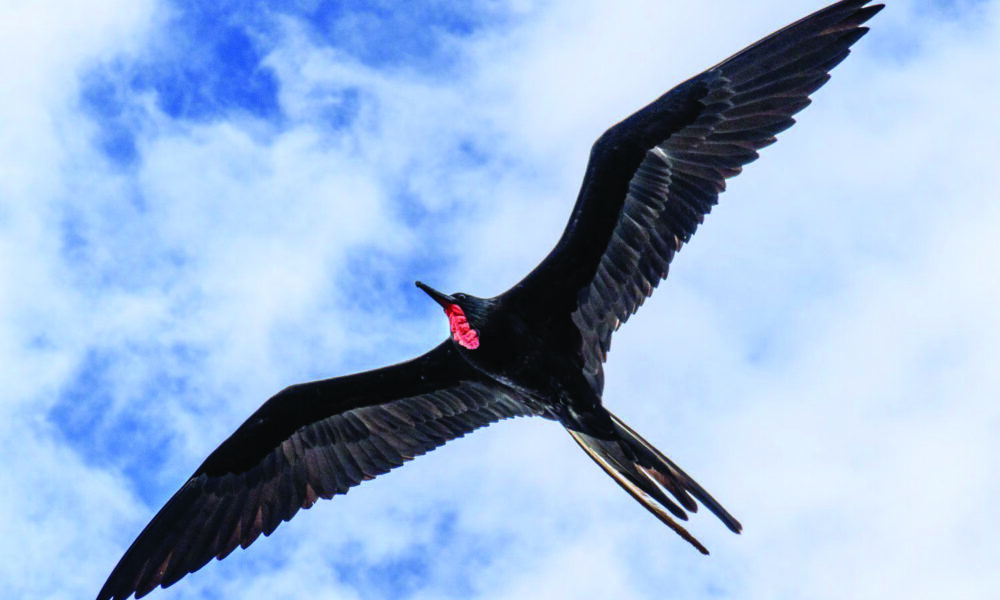
Flying is fundamental to the survival of birds. It’s how they migrate, find food, mate, and escape predators. Along with its benefits, flight comes with unique risks as well: One wrong maneuver and a bird could plummet out of control. So, how exactly do birds become the masters of flight as adults? This is the question third-year biology honours student Maggie-Rose Johnston, a member of the Sarah Woolley lab, is trying to answer. Working with zebra finches, Johnston is seeking to understand how a bird’s brain interprets the physical stimuli sensed by its wings.

“The basic hypothesis is that the activity going on in the feathers should be translated in the brain,” Johnston said in an interview with The McGill Tribune. “What I’m doing is just the real basics of understanding a whole lot of avian flight and how they react to pressure differences and airflow.”

Relying on sensory feedback from their feathers to navigate the aerial environment, birds use tiny changes in wind patterns to fine-tune their movements through the air. The sensory information is passed along from the bird’s wings to its brain using its central nervous system, guiding the bird during flight so that it can seamlessly react to ever-changing air currents. 

“Whiskers are a good analogy for filoplumes,” said Johnston. “They are these long feathers that have a little tuft at the end of them and are interspersed in avian wings. And what seems to be happening is that these are acting like whiskers, detecting the movement of the larger feathers.”

The main focus of Johnston’s research is to distinguish which areas of the brain are involved in interpreting the movement of feathers. To mimic the motion of flying, Johnston moves one of the zebra finch’s wings up and down, by hand. Once this flight simulation is completed, the bird’s brain activity is measured. 

“In future steps, [we] may use tweezers to move a specific feather, but at this point we’re just trying to find the ballpark of what we’re looking at here,” Johnston said.

During flight, certain neurons in the hyperpallium apicalis, an area of the brain involved in interpreting sensory information from the wings, are activated. To identify which neurons are firing, Johnston measures the activity of an early activation gene called RPS6. This gene marker acts as an indicator of neural activity and is used to determine which regions of the hyperpallium apicalis are involved in the interpretation of sensory information.

During the measurement process, the birds are sedated and left to rest in the dark away from any external stimuli before brain activity is measured to try and reduce any data obstruction. Johnston admitted, however, that background noise can interfere with the experiment.

“The problem is that there is a little bit of activity in the [hyperpallium apicalis] but it’s not very striking compared to the background noise,” Johnston said.

This link between sensory information and flight mechanics is still somewhat unclear, but Johnston is using this as a learning opportunity to improve her experimental protocol. She views the ambiguity of her results as a way to learn and is keen to go back to the drawing board. Nevertheless, her results are far from insignificant as they are still furthering the understanding of neural correlates of bird flight.

When it comes to future applications of her research, Johnston believes that the field of avionics has much to learn from the flight of birds.

“Understanding how birds fly can open up a whole new avenue for engineering in general and engineering of flight,” Johnston said. “The energy-saving potential of getting machines to behave like bird wings is incredible.”

The mapping of neuro-mechanics of bird flight could revolutionize aviation, most notably within the sector of drone engineering. How birds compute air flow changes and adapt to their surroundings is a source of interest for self-driving drones research. Johnston hopes to conduct further research on birds and other vertebrates to unlock the design secrets embedded in their anatomy. 

Commentary, Opinion

Redressing the history of medical injustice at McGill

Content warning: Enslavement, medical abuse, racial and colonial violence 

McGill’s troubled history of abuse and complicity in violence toward Black, Indigenous, and disabled people is nothing new. James McGill enslaved at least three Black people and two Indigenous children, an increasingly recognized and discussed reality within the community, especially following professor Charmaine Nelson’s work, Slavery and McGill University: Bicentenary Recommendations, and the Black Students’ Network and the Indigenous Students’ Alliance’s 2021 video essay on McGill’s history of enslavement. 

McGill, as an institution, has also committed atrocities in the Allan Memorial Institute under the MK ULTRA experiments. Dr. Ewen Cameron worked in a team with the CIA at the Allan Memorial Institute in the 1950s and 60s to conduct brainwashing experiments and psychological torture on patients admitted for mental illnesses. Eyewitness accounts suggest Indigenous children were also subjected to Cameron’s abuse, and Indigenous groups such as the Mohawk Mothers suspect there may be unmarked graves under the Royal Victoria hospital. 

Survivors of these abuses have since filed lawsuits against McGill, the Royal Victoria Hospital, the Canadian government, and the Central Intelligence Agency (CIA). Until now, though, the Canadian Supreme Court has refused the government and hospitals’ motions to dismiss the case, forcing McGill to confront its legal and moral liability. Given its involvement in this kind of abuse, McGill must acknowledge its wrongdoing and implement reparative measures for survivors and the larger McGill community, such as providing monetary reparations and committing to addressing current issues of medical abuse. 

Cameron’s aim was to “de-pattern” brains to create a blank mind canvas susceptible to ideological influence and malleable to different objectives. Considering that McGill prides itself as a global leading institution with a history of “expanding minds,” the university should confront its history of psychological torture and forced ideological indoctrination. McGill can no longer ignore the experiences of survivors of the abuse who recall being comatose for weeks at a time, drugged with LSD, put in sensory deprivation rooms, and forced to listen to the same recordings on endless loops. 

During the Korean War, the CIA funnel-funded Canadian researchers like Cameron to lead these psychological experiments at McGill. As the first chair of McGill’s psychiatry department, Cameron had the authority to legitimize his practices to psychiatry students he worked with, who would later become professionals in the health-care system. In this way, his structural and institutional impact would trickle down to harm racialized and disabled people. Indeed, Quebec’s systemically racist healthcare endangers Black, Indigenous and other racialized individuals—proof of the longstanding effects that colonial violence has on institutions like hospitals, which will need to implement radical measures to enact long-overdue change.

The MK ULTRA experiments are not the first time McGill has come under scrutiny over its harmful past, and it certainly will not be the last. McGill’s colonial legacies were first forged as part of the university’s founding and this history continues to shape the institution today. In 2020, McGill finally changed the racist name of its sports teams following persistent advocacy by Indigenous students. McGill is also built on the stolen and unceded land that is part of the Treaty Land of The Haudenosaunee Confederacy, of which the Kanien’kéha Nation, the Anishinaabeg, and Haudenosaunee peoples are a part. As Kahentinetha, a member of the Mohawk Mothers, said, “The entire McGill University is a crime scene.” 

If the university hopes to show any accountability and work to regain the trust of the community, McGill has a responsibility to publicly acknowledge the numerous atrocities it has been a part of and apologize to survivors. At the very least, the university must go forth with legal processes without posing any obstacles to the families of survivors. McGill must be willing to be held accountable, and should develop plans to ensure decolonial and anti-oppressive approaches are embedded into the university’s own health system. Further, it must take steps to halt all abusive measures within the health-care system at large. Any effort at reconciliation by McGill is insufficient as long as the university neglects their responsibility in redressing the pattern of medical injustice.

Arts & Entertainment, Books, Pop Rhetoric

Albert Camus: A visionary of pandemic-era life?

Albert Camus’ 1947 novel The Plague masterfully portrays the death and suffering that a fictional bubonic plague brings to the people of Oran, an Algerian city under French colonial rule. The events take place over many months, with protagonist Dr. Rieux working to both physically and psychologically help others suffering from the plague. The novel has undergone a resurgence in popularity since the start of the COVID-19 pandemic, perhaps as it appropriately captures much of the public’s response to the pandemic over the past two years. Indeed, the novel’s emphasis on human resilience and the value of life are especially relevant in today’s social climate. 

Since the pandemic began, the global death toll has surpassed 6 million.

Much in the same way that we have watched the steadily rising figures released by the government, many people in Camus’ novel attach great significance to their government’s weekly release of health statistics. Though many newspapers have struggled to raise revenue, especially those that still print paper copies, general trust in the news has increased since 2020. Reports and information have clearly taken on a heightened importance, which reflects not only the pertinence of the time period, but also the significance we attach to the subject of the news itself—tragedy.

Outside of exploring the value of life, The Plague also focusses on Dr. Rieux, who grapples with the chaos of his situation. It is the human condition—namely, the desire for meaning in a meaningless world—that drives the oft-ineffectual fight against that which we cannot make sense of. For example, Rieux works day-in and day-out at quarantine facilities providing care, but most of the time his work is futile. Most people die from the sickness. Rieux, in sum, finds that “Weariness is a kind of madness. And there are times when the only feeling that I have is one of mad revolt.” Rieux’s exhaustion from fighting against the seemingly inexplicable is apt when reflecting upon both the pandemic’s early days, characterized by confusion and a global lack of knowledge, as well as its tiring, two-years-this-month perpetuation. As a beacon of hope, Camus’ plague eventually recedes after mass vaccination campaigns, however. 

Recently, Camus’ call to action and firm adherence to moral principles have been observed in contemporary movements. Though one fifth of health-care workers in the U.S. have left their jobs due to unsafe working conditions, many more stayed and tried to provide care to those who need it. To rectify these conditions, some nurses and workers have gone on strike and demanded more resources and staff necessary to properly handle cases. Across Europe, including places like France, health-care workers have done the same. The challenges of the pandemic have brought notice and resistance to the seemingly absurd conditions people have been living in, and Camus’ rebel has, in a sense, resembled aspects of those essential workers who, like Rieux, try to do the best they can with what they have been given.

Art often reflects reality, but for Camus’ novel, life almost seems to be imitating the book. In particular, Camus’ concludes that “in time[s] of pestilence […] there are more things to admire in men than to despise” and that humans should “go forward, groping our way through the darkness […] and try to do what good lay[s] in our power.” Society has responded in a similar way to Camus’s predictions: With the media’s continuous despondency, the resilience of essential workers, and most importantly everyday citizens’ searches for meaning in a hostile world. 

Rieux remarks that he shall “refuse to love a scheme of things in which children are put to torture,” and it is against the world that Rieux tries to realize his purpose as a doctor. Likewise, when we have been confronted with the suffering brought on by the pandemic, we have tried to fight against it to preserve the things we love. In Camus’ fiction, the plague slowly ends thanks to the diligence and realism of those who oppose its violence. Perhaps leaning into the same message, in addition to greater support for our health-care system and vaccine outreach, can help get us through COVID-19.

Science & Technology

Tribune Tries: Visiting Montreal’s Biodome

Montreal’s Biodome is part of the Space for Life complex, a network that includes four other museums––the Biosphere, the Botanical Garden, the Insectarium, and the Rio Tinto Alcan Planetarium. The network aims to provide educational and research opportunities that prioritize sustainability and biodiversity protection. 

Researchers at the Biodome have access to a living laboratory, which acts as a hub for projects related to ecology, habitat protection, urban wildlife, and animal ethics. With five ecosystems under one roof, the centre boasts a collection of over 130 different animal and plant species. After paying a visit to the centre on a rainy day, The McGill Tribune has compiled a list of our favourite animals found in each ecosystem. 

Tropical rainforest – Capybara

Often found hanging around the rainforest’s bodies of water, the capybara spends its days munching on leaves, rolling in the dirt, or cooling off in the water. Capybaras can grow as large as 1.3 metres long and can weigh up to 68 kilograms, making them the largest rodents alive today. To communicate, these overgrown guinea pigs bark, whistle, and click, and can typically be found in groups of 20 with a large male at their helm. 

Fun fact: In the wild, capybara’s backs are prime real estate for birds hoping to hitch a ride or catch some rays. 

Laurentian maple forest – Canada lynx

One of Canada’s largest felines, the Canada lynx can be identified by its disproportionately large paws and black tufts of hair on its ears. As excellent climbers and jumpers, the lynx is often on the hunt for hares, of which they consume as many as 200 per year. Mostly found in Canada, Alaska, and the northern United States, they tend to spend most of their time alone, roaming four to 20 kilometres a day. 

Fun fact: The Canada lynx can jump as far as seven metres. 

Gulf of St. Lawrence – Moon jellyfish 

Made up of 98 per cent water, moon jellyfish are basically the celery of the sea. Much like anemone and coral, moon jellyfish use their tentacles (all 1,200 of them) to capture their prey. The nematocysts covering each tentacle release a stinger that injects a paralyzing agent into the plankton and larvae that make up their diet. 

Fun fact: Contrary to popular belief, peeing on a jellyfish sting will not actually make it feel better. 

Subantarctic Islands – Macaroni penguin 

These medium-sized, flightless arctic birds are recognizable by their yellow head tufts, similar to those of the rockhopper penguin, which you can also find at the Biodome. The most ecologically vulnerable species on this list, macaroni penguins have experienced a population decline ranging between 30 to 65 per cent over the past 30 years, depending on the study conducted. They only come onto land to moult and reproduce, spending most of their time in the sea, where they find their diet of krill, fish, and cephalopods. 

Fun fact: When colonizers first saw these penguins, they called them “macaronis” after the 18th century fashion trend referenced in the song “Yankee Doodle.” 

Labrador coast – Atlantic puffin

Atlantic puffins are easily identified by their matching orange beaks and feet. The small birds tend to nest around cliff sides when they aren’t looking for fish to eat. While they may have the macaroni penguin beat when it comes to their flying abilities, Atlantic puffins are hardly experts––to keep themselves in the air, they must flap their wings 300 to 400 times per minute. 
Fun fact: The Atlantic puffin can catch up to 60 fish in one dive.

Read the latest issue

Read the latest issue