


Latest News

Student Life

From 1968-2022: Accessing birth control as a student

For many McGill students, university is a time of exploration. And yet, many students struggle to find adequate resources to help them navigate their sexual lives. Unfortunately, barriers to accessing comprehensive resources is nothing new. Since the 1960s, McGill students have been actively working to fill the gaps, creating sexual health resources for their peers. 

It all began in 1968 when McGill’s Student Council passed a motion to form a Birth Control Committee in order to address the lack of sexual health resources available to the McGill community. From this committee, Donna Cherniak and Allan Feingold created the Birth Control Handbook—a comprehensive guide to sexual health, contraception, and anatomy for university students. Its first edition began circulating in 1968, prior to the Omnibus Bill of 1969 which legalized birth control and decriminalized abortion across Canada. Cherniak and Feingold laid the groundwork for activists who came after, with substantial change eventually taking hold not only at McGill, but at countless universities across North America.  

The 1968 birth control handbook and its three subsequent editions were integral to keeping students safe. However, over 50 years later, adequate sexual health and contraception resources is still lacking. To honour the incredible work of Cherniak and Feingold, the Tribune has compiled some sexual health resources students can use in 2022.

  1. The Wellness Hub

For those looking to get started with contraception or even renew a pre-existing birth control prescription, the Wellness Hub can help. The hub is home to a variety of resources, offering wellness programming to all students and consultations with nurses or doctors and referrals to off-campus specialists. However, appointments fill up quickly, so we recommend calling at 8:30 a.m. on Mondays to snag a spot. 

Services: Consultations for STD and cervical cancer screening, IUD and Nexplanon insertion and removal, as well as access to sexologists—mental health professionals who offer sexual health support in a safe and judgement-free space. The hub’s sexologists can offer support for concerns related to coping with an sexually transmitted infection (STI) diagnosis and communicating diagnoses with partners, BDSM practices, sex work, pregnancy, contraception, and abortion. 

  1. Dialogue and Maple

Both international and out-of-province students also have access to several online telehealth resources that connect students to appropriate health-care professionals who can offer medical advice from the comfort of students’ own homes. Dialogue is covered by the SSMU Health Plan for in- or out-of-province students, whereas Maple is covered for international students under the International Health Insurance Plan. 

Services: Nurse or doctor consultations for contraception, prescriptions, STD screening, access to sexologists, and referral to in-person resources. 

  1. Head and Hands 

Head and Heads is an organization located in the Notre-Dame-de-Grâce neighbourhood that offers physical and mental health resources to youth ages 12-25. Their mission is to provide youth with the resources they need to make informed decisions about their bodies. 

Services: STI testing for young adults aged 12-25, regardless of sexual orientation, gender, or insurance status.

  1. Montreal Sexual Assault Centre 

The Montreal Sexual Assault Centre is a safe, judgement-free organization that offers services to survivors of sexual violence. Any survivor over 18 years of age can go to one of their four locations across Montreal, even without an appointment. 

Services: Medical examination, STI testing, forensic samples, medical treatment and follow-up, psychosocial support, and information on police and legal procedures. 

Whether in 1968 or 2022, sexual health is an important part of wellness. If you’re looking for other resources or somewhere to go off-campus, you can visit www.mcgill.ca/wellness-hub/campus-care/ for more targeted services and locations. 

McGill, News

Students split over McGill’s ‘return to full in-person activities’ for Fall 2022 semester

After two years of pandemic-related closures and restrictions, Provost and Vice-Principal (Academic) Christopher Manfredi and Vice-Principal (Administration and Finance) Yves Beauchamp announced on Feb. 22 that the Fall 2022 semester will be held entirely in person. The statement came as COVID-19 cases and hospitalizations in Quebec continue to decline and the provincial government gradually eases many of its pandemic restrictions—such as the vaccine passport, limits on private gathering, and work-from-home orders.

All classes, regardless of size, will take place on campus in the Fall 2022 semester. This is a marked change from the Fall 2021 and Winter 2022 semesters, which had in-person courses capped at 150 and 200 people, respectively. Other activities, such as research and extracurriculars, will also return to routine pre-pandemic operations. 

Manfredi and Beauchamp clarified in their announcement that students should still expect some COVID-19 measures to continue into the coming semester. Frédérique Mazerolle, a McGill media relations officer, said that the university will provide further information as the fall semester approaches.

“Appropriate measures will still be in place to ensure that our campuses continue to be safe and we will remain vigilant as the pandemic continues to evolve,” Mazerolle wrote in an email to The McGill Tribune. “As usual, we will provide regular updates as we continue to return to more in-person activities over the coming months.”

Student reactions to McGill’s announcement have been mixed. Some, like Herman Korsunov, U2 Management, believe that it is time to lift pandemic restrictions. Korsunov noted that many core, introductory-level classes in his program often exceed the capacity limits that were set for in-person delivery over the last two years—resulting in some students experiencing university almost solely online. These students, Korsunov argued, have been put at a serious disadvantage by their lack of in-person schooling, particularly because they have missed out on networking opportunities.

“A major part of business, and the whole Desautels Faculty of Management, is that you need to communicate with people, you need to make some friends, you need to network,” Korsunov said. “That’s how, for example, […] I found my internship, I met some people, I’ve done some extracurriculars. They’re all thanks to communication and talking to people [….] We need to have all classes to be in person mainly for the social and meeting-the-people part. I think the education technique can be online, but it’s not as efficient from what I saw.”

Others, like Anthony Georgaros, U2 Arts, say the university’s decision is premature, given the pandemic’s past unpredictability.

“In my opinion, it’s a little early to make such a bold call,” Georgaros wrote in a message to the Tribune. “[The] administration should probably wait until the summer to confirm if they should return to fully in-person classes because chances are they will have to go back on that if the trend from the last couple years continues.”

The university did not answer the Tribune’s questions on what accommodations will be available for the coming semester, how the rollback of the vaccine passport will transpire at McGill, and under what circumstances, if any, the decision to resume full activities may be modified.

Creative, Video

McGill Minute – February 21, 2022

Contributor Sabrina Nelson brings you the top news stories in the Tribune’s weekly news segment, “McGill Minute”.

Hockey, Sports

Martlets hockey returns with a bang, winning first game back against Carleton Ravens

On a chilly evening at McConnell Arena, the McGill Martlets hockey team (10–3–0) played their first game of the semester after over two months of hiatus due to recurring pandemic restrictions. The McGill team returned on Feb. 18 with style and determination, beating out the Carleton Ravens 3-0 (4–9–0).

From the get-go, the game seemed promising, with McGill taking first possession of the puck and team captain Jade Downie-Landry taking the first shot on goal. However, both the action and the enthusiasm died down for the rest of the first period.

Martlets forward Makenzie McCallum explained that the prolonged hiatus resulted in the team needing some time to find their footing on the ice once again. 

“It took a period for us to get back into the swing of things,” McCallum wrote to The McGill Tribune. “But once we found our rhythm, we were flying.”

Indeed, toward the end of the first period, a new-found energy made its way through the Martlets, and their shots on goal increased. But the Ravens’ defence remained strong, proving difficult to penetrate for the McGill attackers. Though the puck spent more time on the Ravens’ side of the ice, the Martlets were busy solidifying their strategy.

The second period saw a shift in the Martlets’ spirit. Netminder Tricia Deguire made several incredible saves, keeping the score at zero through her agile goaltending. Finally, after relentlessly pressuring the Ravens’ defence, first-year defenceman Jaime Kastelic scored the first goal of the game, assisted by forward Katie Rankin. The second period ended at 1-0, with every McGillian in the audience rejuvenated and at the edge of their seats. 

Both teams eased slowly into the third period, with McGill remaining cautious to keep the game in their favour. Several players, including Downie-Landry and centre Marika Labrecque, attempted shots on goal to no avail. 

Energies on both teams were high, yet the first half of the last period began to suggest a 1-0 finish. Then, with a burst of adrenaline, Downie-Landry scored with an assist by forward Stephanie Desjardins and defenceman Elizabeth Mura, bringing the game to 2-0 for the Martlets. 

Celebrations had barely ceased before Downie-Landry scored an unassisted third goal. Cheers soared through the crowd and players alike. With the score now at 3-0, and only 12 minutes left in the game, it was a sure win for the Martlets. With another game in hand, Downie-Landry is currently first in the nation for points among women’s U Sports hockey. 

Looking ahead to future games, Downie-Landry explained that the key to maintaining the streak is for the team to constantly adapt and adjust after every game. 

“As the game progressed, we started getting back into our good habits which we had worked [on] towards the first half of the season,” Downie-Landry wrote to the Tribune. “What will be important for our upcoming games is to build off of the positive, yet learn from what we could have done better. Our growth has been tremendous up until now.”

Moment of the game: Early in the second period, the Ravens were able to get the puck to the Martlets’ side. In a whirlwind of back and forths, goaltender Tricia Deguire was alone defending the net, with the puck fast approaching. The crowd sat in suspense, as a goal against McGill seemed inevitable. Yet, Deguire beat the odds, blocking the shot, saving the puck, and retaining a score of 1-0 for the team.

Quotable: “Our coaches have really helped our team develop to the group we have today and I think it showed last night. The young group of defence have done a great job stepping up, which helps our overall success.” – Forward Makenzie McCallum


Stat corner: With 196 points to her name, Martlets captain Jade Downie-Landry is close to becoming the seventh player in team history to break the 200-point mark.

Editorial, Opinion

McGill’s commitments to Black History Month require sustained action

On Feb. 1, an opening ceremony with keynote speaker Dr. James Jones marked the lineup of events for McGill’s fifth annual celebration of Black History Month. In an email to students, Principal and Vice-Chancellor Suzanne Fortier and Provost and Vice-Principal (Academic) Christopher Manfredi acknowledged that the work of McGill’s Anti-Black Racism plan builds upon ongoing advocacy by the Black Students’ Network, the McGill African Students’ Society, and the Dr. Kenneth Melville Black Faculty Caucus, and that celebrating Black excellence should be a year-round commitment. These words are an important, yet minimal, first step in reversing the documented apathy toward the sustained, storied, and long-standing realities of anti-Blackness at McGill. Committing to promises of anti-racism and truly honouring Black History Month requires bolder, multilateral solutions that fundamentally reimagine the core structure of the university—which disproportionately impacts Black community members’ abilities to flourish.

McGill’s commitment to year-round care for Black history has yet to be realized. This, in part, stems from the university’s initial reluctance to officially recognize Black History Month—21 years after the House of Commons’ official recognition and years of grassroots Black student advocacy. McGill’s involvement fails to extend beyond surface-level engagement. For example, the university often pigeon-holes Black academics’ events into February, rather than offering them prime speaking opportunities at more “prestigious” events, like the Beatty Lecture. Although McGill has finally admitted that its namesake, James McGill, enslaved at least three Black people and two Indigenous people, it took repeated instances of vandalism before his statue was taken down—for “repair and restoration.” Year-round support for Black lives means well-intentioned engagement, beyond funding, that challenges McGill’s tendency to exclude and ignore Black presence on campus.

McGill’s hesitancy to engage could be perceived as giving Black student groups autonomy to organize, but it is critical to remember that the administration ultimately holds power over the university’s direction. Consider the underrepresentation of Black faculty––who made up just 0.8 per cent of the over 1,700 tenure-track or stream academics in September 2020––especially in, but not limited to, disciplines like science and engineering. The focus on Black excellence, already concerning in its validation of Black humanity only within spheres of neoliberal achievement, has not translated to representation on the syllabus or in the classroom. 

At the faculty level, departments must question why race-critical approaches sit on the periphery of curricula. Professors have a responsibility to understand that teaching one Black thinker on their Eurocentric syllabus is hollow without meaningful engagement. Courses centred on race are often offered solely at the 400 and 500 levels, rather than being seriously integrated into introductory courses across the sciences and humanities. In turn, programs continue to value a white status quo over the experiences of Black and racialized people often affected by the radical, white supremacist misinterpretations of these disciplines. McGill students can currently graduate without understanding how colonialism and systemic racism subsist and survive as all-consuming forces—all of which affect what courses are taught, who gets to teach them and how, and how Black students connect lived experience in the world with those in the classroom. 

McGill students are not exempt from these changes. To lazily criticize McGill without taking action or changing one’s own attitude is to allow systemic anti-Black racism to propagate for personal, performative benefit. In spite of their limited diversity, McGill student organizations need to go beyond rhetorical shows of support—and in the Students’ Society of McGill University’s case, need to go beyond utter radio silence—they can further share calls to action and concretize constitutional commitments to equity. Unburdening Black students involves fairly compensating them for their labour and sharing power, rather than consulting them in symbolic “safe spaces.”

McGill needs to hold itself accountable for its commitments to Black people. These actions are neither all-inclusive, nor easy for students, faculty, or the administration—and they should not be either. McGill needs long-term changes across all levels and must raise the bar to which it holds itself. McGill should communicate progress updates on their Anti-Black Racism plan more clearly and consistently, as should SSMU with the Black Affairs Committee. The tiered, multi-layered process of breaking barriers and making space for McGill’s Black community is necessary in the pursuit of an equitable, just, and anti-racist future.

News, SSMU

‘I never went on any leave of absence’: SSMU President Daryanani makes first appearance at Legislative Council since Sept. 23

On Feb. 17, the Students’ Society of McGill University (SSMU) Legislative Council convened for a long 5.5 hours, with SSMU president Darshan Daryanani’s return dominating the meeting and discussions about concerns of racism and harassment within SSMU. Councillors voted on several motions, including one regarding a moratorium on ancillary fees, and heard presentations from several student groups, including Student Support, Athletics and Recreation, and Divest McGill, about the different fees and services up for referendum at the SSMU General Assembly

Providing long-awaited transparency, Daryanani addressed the council directly during the meeting, revealing that he was not on a leave of absence, but that he had been suspended by the SSMU Board of Directors (BoD) since Sept. 23, 2021. The suspension was set to end on Nov. 5, 2021, but the BoD extended it several times and did not give Daryanani a definitive end date.

“Only on Sunday, February 13, was I informed by the SSMU Board of Directors that all reasons to justify the suspension were unfounded and declared inadmissible,” Daryanani said. “I can assure you that at every step, I fully collaborated with the process, despite the fact that the board frequently violated my rights as a SSMU officer and employee. To be clear, I never went on any leave of absence.”

In the question period that followed, Daryanani said that he was never told the reason behind his suspension, but responded to several inquiries about his time out of office. 

Several student representatives and members of the gallery raised concerns about the lack of transparency on the part of other SSMU members regarding Daryanani’s suspension. Although all of the SSMU executives were present at the meeting, only Daryanani responded to questions regarding his suspension, with the others stating that such information was confidential. 

Engineering representative Hiraku Murakami questioned vice-president (VP) Finance Éric Sader about executives refusing to acknowledge Daryanani’s suspension due to confidentiality. Several other councillors also brought up the topic, with management representative Nathaniel Saad later adding, “There is a fine line between confidentiality and withholding information that students deserve to know.”

As attention turned toward the actions and responses of the SSMU executives, many attendees became emotional when discussing questions about the “toxic” workplace culture for women and gender minorities at the SSMU. After member of the gallery and former SSMU president Bryan Buraga questioned why executives were acting “glib” about such a serious matter, VP Student Life Karla Heisele Cubilla quickly responded, claiming that executives were also “victims of the structure” and calling the question “insulting, almost.”

While all the executives agreed that there are major issues in SSMU’s working culture that need to be addressed, tensions were high and the responses of executives differed greatly in manner. VP University Affairs Claire Downie spoke out broadly about the actions of male employees at SSMU. 

“Men who work at SSMU, men who are in these circles, please consider that you may be part of the problem,” Downie said. “You may not have these egregious examples that some people talk about, but many many men are part of the problem and I want people to be mindful.””

Councillors then addressed five motions concerning the Feb. 21 General Assembly before the session was adjourned: The Motion Regarding Amendment on the Moratorium Ancillaries Fees was not approved; the Motion Regarding the French Accessibility Fee Referendum Question and the Motion Regarding Referendum Question on the Increase of the 2022 SSMU Membership Fee were both approved; and the Motion Regarding Reintroduction of the Facility Improvement Fee Referendum Question and the Motion Regarding Ratification to the Society’s Board Of Directors were both postponed. The remaining motions, including the Motion Regarding Referendum Question on the Creation of a Black Affairs Fee Levy, were postponed to email approval.

Moment of the meeting:

During the announcement period, VP internal Sarah Paulin interrupted president Daryanani with a point of order, claiming that the revelation that he was absent because of suspension was confidential information. Members of the Dias—which includes the Speaker, Speaker On Call, the Parliamentarian, and the Governance Manager—met in a breakout room for 15 minutes to decide on whether to sustain the VP Internal’s point of order, before allowing Daryanani to continue.

Soundbite:

“I just want to bring up one thing: That this is not a clash of McGill Athletics and Divest McGill. McGill Athletics is with the climate movement [….] However, this is a chance for the Student Union to actually stand up and protect the students […] from the administration [….] This is a chance for […] the thousands of students that use McGill Athletics to have a better experience and to be better able to control that experience out of the hands of administration.” —Gallery Member James Mulvaney, on how amending the SSMU moratorium of ancillary fees uplifts McGill Athletics without devaluing Divest McGill’s efforts.

A previous version of this article stated that the Speaker of Council and a couple non-voting members of the council convened in the breakout room. For clarification, it was the members of the Dias (which includes he Speaker, Speaker On Call, the Parliamentarian, and the Governance Manager) who met in the breakout room to decide on a governance question—whether to sustain the VP internal’s point of order.

Science & Technology

Anger, crime, and punishment: Can we control our own emotions?

A team of scientists from McGill, the National Institute of Scientific Research (IRNS), and the University of Ottawa have identified anger as being an intuitive, near-instantaneous reaction to crime in a recent study published in Psychology, Crime & Law. Their research shows that emotion, alongside factual evidence, can play a significant role in determining punishments for criminalized individuals.  

Led by Carolyn Côté-Lussier, professor of urban studies at the INRS and assistant professor in the University of Ottawa’s criminology department, the experiment asked participants to make snap decisions about the degree of punishment 52 males should receive based on their photo. Participants were told that the men had previously been convicted of a crime, but their actual crimes were not listed. 

By measuring both the participants’ electrical impulses that control facial expressions and their punitive decisions, Côté-Lussier’s team concluded that anger could manifest itself physiologically within only 500 milliseconds. Participants had decided on a punishment for a criminalized person after only 1.3 seconds, on average.

The researchers used facial electromyography (fEMG), a technology that records minute movements in facial muscles down to the millisecond, to quantify the physiological manifestation of emotion. The movements of corrugator muscles, those directly responsible for frowning, were specifically recorded to isolate instances of anger. 

“We respond to other people’s facial expressions and emotions, and we also have our own facial expressions that express our emotions,” Côté-Lussier said in an interview with The McGill Tribune. “I’m very interested in these micro expressions, in how we feel intuitively. You might not be aware of where an emotion is coming from, but it [manifests] itself on your face.” 

The team observed that participants felt varying levels of anger toward the individuals they were shown, and that there was a correlation between how “warm”—or friendly—the individual was perceived to be and the degree of punishment the participants said they should receive. 

“When I was creating the groups of pictures, I was focussed on how they differed on the dimension of warmth,” Côté-Lussier said. “Because this […] is the thing we pay attention to the most [in this experiment] and will really orient our emotions to a particular social emotional group.” 

Côté-Lussier noted that this intuitive manifestation often stems from biases founded upon demographic characteristics like race, age, perceived social status, or attractiveness.

“These kinds of biases […] are infusing our reasoning, they are tinting the way that […] we see people, and we can work actively to try and dismantle that. But when we look at the data, we tend to see the same kind of biases being manifested,” Côté-Lussier said. “So there is a link here between the intuition and the outcome that we end up seeing.”

Côté-Lussier says that other characteristics that provoke such biases pose possible areas of future study, now that the link between the intuitive nature of anger and punitiveness has been quantified. 

“For instance, I haven’t considered the race dimension in the analyses themselves, partly because I made an effort to control for that by having the same kind of composition across the two groups,” Côté-Lussier said. “But that doesn’t mean that that stops us from looking at those dimensions [in the] future.”

And according to Côté-Lussier, it is these internalized biases and tendencies to make snap judgments that proliferate and fester in our criminal justice system, even if we make efforts to check them at the door of the courthouse.

While Côté-Lussier recognizes that this research does not directly emulate what occurs in the courtroom, specifically because judges and jury members are expected to make decisions based on evidence, not just a photo, she reminds us that our innate tendencies can lead us to make emotionally-guided judgements. 

“I think it would be incorrect to expect that a judge or a jury member could do away with the emotional intuitive reactions,” Côté-Lussier said. “For me, the important thing is less about how I hope people will pay attention to [this research] in the criminal justice system, and more about how I want it to tackle social, structural inequities. If we reduce those inequalities, we’ll see less crime and less anger about crime.” 

Basketball, Sports

McGill men’s basketball maintain their perfect record, rallying for back-to-back wins against Citadins

On Feb. 17, the McGill men’s basketball team (6–0) returned to the court for the first time in almost three months, lengthening their win streak to six games with a decisive 84-62 win over Université du Québec à Montréal (UQAM) (2–4), then a narrow 80-79 victory the next day. Thursday’s game started strong for the Redbirds, who sustained a lead from the first quarter to the last. Although UQAM demonstrated some beautiful passing that led to a few key scoring opportunities, the Redbirds dominated the game and easily secured the win.

Sam Jenkins, a fifth-year guard, was on fire with a game-high 19 points, including five three-pointers and nine rebounds. Jamal Mayali, also a fifth-year guard, had an impressive game with several three-pointers, contributing 16 points overall and four rebounds, ranking second in points for the Redbirds. 

“We moved the ball very well offensively, and as a result, a lot of guys were getting good quality shots and defensively, we were on point with our rotations for most of the game,” Mayali wrote to The McGill Tribune.

Like many others, starting guard Cameron Elliot was excited to be back in action and was impressed with his team’s performance after an 11-week break.

“I think we played well as a team, considering it was our first game back after a long break, but we have a lot to improve on if we want to reach our goals for the year,” Elliot said. “I think we did a good job of playing with flow and keeping the ball moving at all times, and I know we will only get better with time.” 

Less than 48 hours later, the Redbirds rematched against UQAM on Feb. 19. While the game was a much closer affair, the Redbirds held on to win 80-79, coming back from a 12-point deficit to win on a buzzer beater from first-year guard Sidney Gauthier

In contrast to Thursday’s game, the Redbirds were mostly trailing their opponents, only gaining the lead with just over four minutes left in the last quarter. With less than two minutes left in the game, the Redbirds, trailing by six, called a timeout. After an apparently successful pep talk, Gauthier and third-year guard Elliot made two back-to-back layups to shrink the deficit to two. 

With 30 seconds left in the game, now only down by three points, McGill called another timeout. This time, after a jump shot from Jenkins and two missed free throws from UQAM, the Redbirds were within one point of their opponents, and Gauthier’s last minute heroics clinched the team’s sixth victory.

“I think it was certainly a team effort, and I never would want to take all the credit for that play, because all I did was make the shot,” said Gauthier. “[But] the feeling after seeing the ball go in is a feeling I never want to forget. It gives me chills just thinking about it again.”

Fourth-year forward Kevin Li was happy with his team’s performance against a team he considers to be one of their top rivals.

“For our team, I think it was a great two wins,” Li said. “The UQAM team is the team that beat us in my first year. We beat them in the regular season but when we went to the playoffs we lost to them twice. I think it’s a great message that we sent to them, saying we are not losing this year.”

The Redbirds return to the court next weekend with a home-and-away series against Laval on Feb. 24 and Feb. 26.

Stat Corner: The Redbirds current record of 6–0 marks the team’s best start since 2001.

Moment of the Game: With no time remaining on the clock and the Redbirds down by one point, first-year guard Sidney Gauthier netted a jump shot off an assist from Cameron Elliot to win Saturday’s game 80-79.
Quotable: “It’s just been so nice to be back on the floor with everybody that it’s hard to look past the excitement of the moment. But we’re hungry for more than just regular season wins, and I’m really looking forward to competing when it matters the most.” — Cameron Elliot on the return to competition.

Student Life

The Computer Riot, Birth Control Handbook, and struggle for Africana Studies: Brief histories of student activism

Students have long been at the forefront of social progress, both on their campuses and in the wider Montreal communities. The McGill Tribune looks back on a few instances throughout history when students banded together to advocate for their rights.

1969 Computer Riot at Concordia 

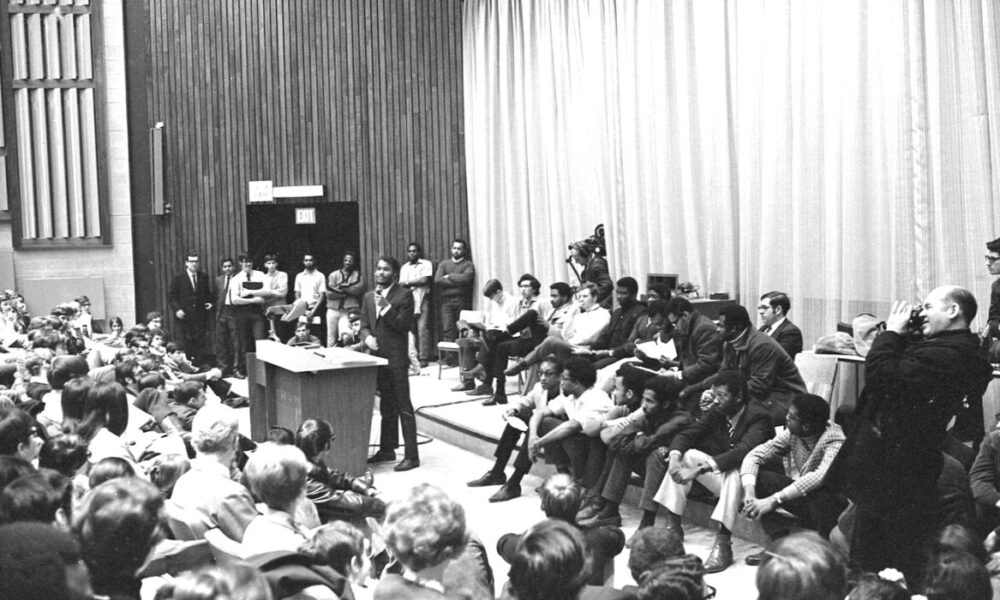
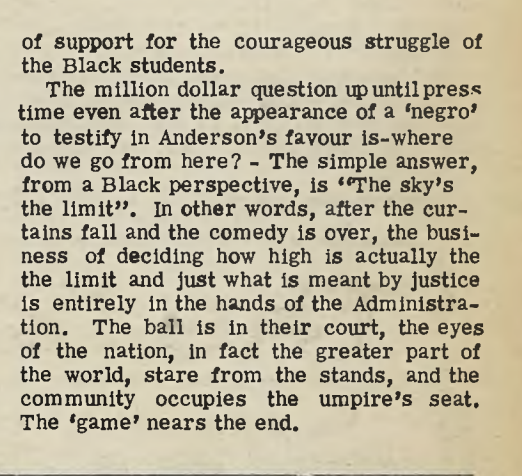
This protest would come to be known as the largest student riot in Canadian history. In the spring of 1968, six West Indian students from Sir George Williams University filed a complaint against their professor, Perry Anderson, for deliberately giving Black students lower grades. Though the university agreed to establish a Hearing Committee, Black students denounced the impartiality and incompetency of Concordia’s representatives. They walked out of the hearing with around 200 other students and occupied the school’s Computer Centre. After days of negotiation between the administration’s lawyers and the students, a settlement that would institute a new Hearing Committee was established, and the end seemed near. As protesters began to leave the Centre, assuming that the agreement was all settled, however, the proposal was scrapped. The next day, the administration called in the police and riot squad to handle student threats of vandalism. When they arrived, a large portion of computer equipment had been destroyed and a fire had broken out—totalling $2 million in damages. 

Though the accused professor was reinstated soon after and received no consequences, the occupation forced the administration to establish student representation on university decision-making bodies. Soon after, University Regulations on Rights and Responsibilities and the Ombuds Office was established. 


This quote comes from the special issue of the student newspaper The Georgian produced by student protestors called The Black Georgian (Concordia Archives).

The Birth Control Handbook 

In 1968, the dissemination, sale, and advertisement of birth control methods was still illegal across Canada. In spite of this, the McGill Student Council passed a motion to form a Birth Control Committee and host a student seminar on sex education, eventually leading to the conception of the Birth Control Handbook, a guide to the pros and cons of various methods birth control methods as well as other useful information on sexual health. The handbook’s co-editors, Allan Feingold and Donna Cherniak, worked alongside Montreal-based doctors to conduct research and compile practical information on everything from condoms and diaphragms to abortion services and IUDs. Feingold and Cherniak also sought to highlight how social and political issues affected access to sexual health resources. At a time when contraceptives were inaccessible, the handbook responded to a huge demand, with more than three million copies distributed, in and beyond McGill, by 1974. 

(Rise Up! Archives) 

The struggle for Africana Studies 

In the 1990s, the Africana Studies Committee (ASC)—formed after McGill attempted to downgrade its African Studies program to only offer a minor—worked to, among other goals, bring an Africana Studies program to McGill. This program would study the Black diaspora as well as the interdisciplinary, internationalist perspectives that characterize it, and not to mention act as a departure from African Studies’ problematic history of centring white scholars. Black students at McGill worked for four years to craft a proposal for the expanded program, presenting it to the McGill administration in 2000. It was the culmination of several initiatives, including a public demonstration that demanded the African studies program continue, the fundraising of approximately $20,000 for the Committee, and the organization of the Africana Congress 2000, which brought students, community activists, and lawyers from different countries together to strategize the future of Black studies at McGill. 

The proposal was also delivered at an important time: McGill had recently received more than $65 million in private donations and a commitment of $80 million in government investment. In the end, however, the administration showed its blatant resistance to the needs of Black students, stalling and eventually shelving the proposal once the student leaders graduated. Throughout the years following the ASC’s proposal, the Black Students’ Network has continued to spearhead the initiative for an Africana studies program at McGill. 

Commentary, Opinion

For a better future, McGill must learn from Black history

Every February, Black History Month comes around with growing support, yet there is still room for growth on behalf of institutions and individuals. Oftentimes, corporations and institutions appear to care about Black history, while truly not doing much good for anyone. These institutions shape Black History Month increasingly around Black trauma when, this month should really be a celebration of Black achievements and history. Most importantly, this celebration should take place all year, keeping the discussion prominent and accessible in the mainstream.

The history of Black nationalism in Canada dates back more than 400 years, but many students only know about Black American history, which diminishes the role of Black internationalisms in the history of Pan-Africanism and Black nationalism. This is shocking considering the major links between Black Canadian and American history. For example, the parents of Malcolm X, Earl and Louise Lansing, met in meetings of the then-newly formed Montreal branch of Marcus Garvey’s United Negro Improvement Association and later wed in the city. After defending his family’s right to reside in a predominantly white neighbourhood in Michigan, Earl was killed, and Louise was subsequently admitted to a mental health asylum. These experiences pushed Malcolm toward the ideology of Black nationalism, with which he would greatly influence the Civil Rights movement of the 1960s as he fought for racial justice. This great connection between Canadian and American Black history should be recognized and more widely taught.

Montreal’s role in the emergence of jazz culture makes the city a cornerstone of Black history,  and is even home to the largest Jazz Festival in the world today. The roots of Montreal’s jazz culture can be traced back to the early 20th century when the Black community of Little Burgundy established a number of social organizations to counteract poverty and social marginalization, out of which arose artists like Oliver Jones and Oscar Peterson. During the Golden Age of jazz, several famous artists visited Montreal and frequented clubs founded by the Black community, such as Café St-Michel and Rockhead’s Paradise, the latter being the first Black-owned nightclub in Canada, founded by Rufus Rockhead. The impact that jazz has had on the city is indisputable, and countless McGill students spend their weekends enjoying jazz bars. Residents of Montreal have the responsibility to recognize the rich history of Black culture in the city, to help revive historical and cultural narratives.

McGill has made great progress in celebrating Black History Month with events, and supporting organizations like the Black Students’ Network and the McGill African Students Society, which have brought attention to Black history. However, it is the obligation of McGill students to make use of these resources to further their knowledge of Black history and its impact. These organizations use history to help understand current issues facing Black students, and also offer calls to action that equip students to be better allies to the Black community. 

McGill should offer more on Canadian and Montreal Black history. Moreover, McGill is very loud and proud as an institution regarding their alumni, but many students may not have heard that Julius Garvey, son of aforementioned Marcus Garvey, attended McGill. This is a strong link between the Black nationalist and Pan-African movement that the university should recognize during Black History Month. 

Montreal and McGill both have profound Black histories. With living in a major city comes the responsibility of acknowledging and understanding the history that shaped it to be what it is today. Montreal holds a diverse population, and increasing recognition of local Black history can truly impact the way residents treat each other and can go a long way toward cultivating an anti-racist society. 

Read the latest issue

Read the latest issue