

Latest News

Commentary, Opinion

Sensitive course content requires careful instruction

CW: suicide, self-harm

Lecture recordings obtained by The McGill Tribune from a Winter 2022 PSYC 302 (Psychology of Pain) class by professor Jeffrey Mogil reveal him joking about suicide and self-harm, and describing to students the most effective way to shoot themselves. Mogil is a professor in the psychology department who regularly teaches PSYC 302. He has received many awards and research grants, including the Distinguished Career Award of the Canadian Pain Society, and is popular among students, as per his ratings on RateMyProf. And yet, despite his accolades and his research in behavioural neuroscience and pain, Mogil deemed it appropriate to make graphic jokes about suicide in a room full of students. 

Although many professors establish more casual and joking relationships with students as part of their teaching methods, some topics should be off-limits. Jokes about suicide are dangerous. With mental health issues on the rise among young people, telling students the most effective ways to end their lives is completely inappropriate. No matter how friendly the rapport is in the classroom, professors have a responsibility to convey their material appropriately. Fostering a good relationship with students should mean promoting mental health resources and help, not self-harm. 

The comments by Mogil are particularly disturbing considering the barriers students encounter when accessing mental health resources at McGill. Considering its rigorous academic environment that has only been exacerbated by the pandemic, it is unsurprising that the number of students struggling with their mental health is on the rise. From just a brief scroll through r/mcgill, readers will find countless student posts detailing experiences of burnout, depression, and anxiety that reveal the extent to which mental illness is an issue at McGill. However, the resources available to students consistantly fail to meet demand. In order to meet with a psychiatrist, students have to go through a nurse, and then a general practitioner who issues a referral. After that, waiting times to actually meet with a psychiatrist can be as long as 8-10 weeks unless the case is deemed “urgent.” And although psychiatrists are not the only professionals available to students, school counselors fall short of providing the care students need when their mental health cannot be addressed with meditation or better sleep hygiene. On the other hand, students are left to endure a professor’s graphic jokes about suicide. 

Instructors, especially those in the psychology department, should be aware of the difficulties students face in receiving appropriate mental health care. Jokes about suicide are not only irresponsible and dangerous, but a complete abuse of the position of authority that professors are granted. Those teaching these subjects should know that their classes and content can be triggering to a diverse student body. All students, especially those who are struggling with their mental health, deserve to feel safe in the classroom. Instructors should foster a learning environment that gives students options to take care of themselves. Seemingly small actions such as including trigger and content warnings, allowing students to step out of class when needed, or providing access to alternative materials can make a huge difference. Professors should model respect for their students, not contempt for their health. 

Mogil’s comments speak to the larger issue of professors and universities not providing safe learning environments for vulnerable and marginalized students when their classes delve into topics like self-harm, racism, homophobia, transphobia, and sexual violence. The responsibility of protecting the mental well-being of students rests just as much on the shoulders of the McGill administration as it does on professors. This issue is a matter of accessibility. All students have the right to a safe classroom, regardless of the course and the professor’s teaching methods. 

Arts & Entertainment, Books

‘When We Lost Our Heads’ explores feminine obsession in 19th-century Montreal

“For there is no friend like a sister

In calm or stormy weather;

To cheer one on the tedious way,

To fetch one if one goes astray,

To lift one if one totters down,

To strengthen whilst one stands.”

Two little girls are tempted by sinister goblins in Christina Rossetti’s Victorian-era poem “Goblin Market,” but the power of sisterly love prevails and saves the younger sibling from certain death. Though the main characters of Montreal author Heather O’Neill’s new novel When We Lost Our Heads, Marie Antoine and Sadie Arnett, perform contrasting interpretations of the poem at a young ladies’ competition, both capture the adoration and infatuation of late 19th-century Montreal. Their power struggle for notoriety forges a friendship so passionate and inextricable that it threatens to change not only their fates, but that of the entire city when their actions spark an uprising within the working class. Spanning the course of the two girls’ lives, the novel spins a tale of tragic love, vitriolic jealousy, and the romance of violent revolution. 

As the daughter of a sugar factory owner and the belle of upper-class Montreal society, Marie is born into great wealth. In the same privileged neighbourhood of the Golden Square Mile, Sadie lives with her family, whom she detests. She scribbles in her notebook and looks down on everyone she encounters—except Marie. Born from their obsession with one another and disdain for everyone else, Marie and Sadie’s relationship leads to the shocking murder of a maid, tearing the two apart as Sadie is exiled to a boarding school in England. Sadie begins a career as a writer of erotic tales while Marie accepts her fate as a future business mogul. 

When they are reunited, Marie enters into an unhappy engagement to Sadie’s brother. Triggered by this union, amongst other betrayals, Sadie flees to the Squalid Mile, the industrial sector of the city steeped in crime and debauchery. Here is where O’Neill paints a tale of two cities most starkly: Those in the Golden Mile enjoy material luxuries, punctuated by the delights of sugar and tulle, while the unfortunate souls in the Squalid Mile live and die in grime and soot. The most poignant element of this contrast between rich and poor, clean and dirty, is that selfishness and deviance are always lurking in the shadows of both sides of the city. 

With When We Lost Our Heads, O’Neill further solidifies her niche expertise of Montreal’s criminal underbelly, as she did with her 2007 Canada Reads winner Lullabies for Little Criminals. The setting serves as a backdrop for a retelling of the 1789 French Revolution as Marie and Sadie find themselves at odds in a worker’s struggle—complete with allusions to cake and Marie Antoinette—but one set from below Sherbrooke Street to the foot of Mount Royal. Factory workers start organizing against the foremen; the female struggle for safe working conditions and resistance against abuse takes centre stage. Instead of passing judgment, O’Neill lets her characters do the work by contrasting Marie and Sadie’s trivial conflict with the hardships faced by the residents of the Squalid Mile, from bloody factory accidents to botched abortions to filthy lodgings. 

Just like the whip-smart intellect of Marie and Sadie, symbols are cleverly woven into the narrative. Every analogy drives home the notion that this is a fable about the precarity of power and how quickly it can be lost—threats of sexual violence cut across class lines, while class considerations cut across notions of female solidarity. These intersections are presented plainly, with no clear solution or moral reckoning; Sadie works as a prostitute, but by choice, thanks to her upper-class background. What propels the story is thus not moral judgments, but base emotions, like female rage. 

But Marie and Sadie’s chaotic relationship remains the focal point; much as the side characters are bewitched by their love, or hatred, of these two women, so too are readers by their unflinching self-importance. We root for Marie and Sadie despite ourselves. A love like that, so obsessive and all-consuming, only breeds destruction. And eventually, their shared passion and outward disdain culminate in the ultimate tragic spectacle, as it should—being adored or reviled is what their entire lives depend on. 

As O’Neill writes, “Every decent friendship comes with a drop of hatred. But that hatred is like honey in the tea. It makes it addictive.” With this bittersweet delicacy of a novel, readers will be entranced by every last drop. 

Arts & Entertainment, Books, Film and TV

What we liked this reading break

As another reading week comes and goes, McGill students once again return to the textbooks. Even so, the fleeting time away from school has served as a great opportunity to devour new content and re-discover some hidden gems. Here are The McGill Tribune’s favourites from Winter 2022 Reading Week.

The Secret History (1992) — Chantay Alexander, Contributor

People actually read during Reading Week? It’s hard to put down a novel as entrancing as Donna Tartt’s 1992 debut, The Secret History, a foray into the ominous, whimsical atmosphere of dark academia. This is the type of book best read by candlelight with a glass of hard liquor. Despite being written three decades ago, its recent rise in popularity on the popular TikTok community #BookTok alerted a new generation to the book. Tartt’s flawed yet captivating characters sink into the depths of exclusive East Coast scholastics, ancient Greek history, and brutal murder—what more could you want? The collegiate backdrop and vast Vermont forestry provide a picturesque framing for Richard Papen and his newfound class of five’s gradual descent into ethical corruption, intimate betrayals, and riveting explorations of psychological decay. I found The Secret History an intoxicating page-turner, the quintessential modern Greek tragedy, untangling the harshness in beauty at every turn.

7 Days in Hell (2015) — Arian Kamel, Staff Writer

While I was doing my daily three-hour readings of SSMU emails over the break, as any good McGill student would, I stumbled across 7 Days in Hell. A 2015 HBO mockumentary, 7 Days in Hell follows an epic tennis match between Aaron Williams (Andy Samberg), who rocks a haircut that can only be described as a mix of Snooki and Pikachu, and Charles Pool (Kit Harrington), an English tennis prodigy who gets relentlessly bullied by the Queen. What can I say about this film? I laughed, I grew, I rekindled a relationship with my father who left to pick up milk 14 years ago, all in the span of 50 minutes. This is a story about love and friendship, about a legendary seven-day tennis match that shocked the world, and most importantly, about the Queen calling someone a “fuck nut.”

Scream (2022) — Suzanna Graham, Staff Writer 

Alone in the house this reading week? Take advice from the cult classic movie Scream: Don’t answer the landline. That is, if you still have one in 2022. Instead, head to the theatre and watch the newest edition of Scream—a hilariously meta requel of the 1996 original. Return to Woodsboro, California where a new killer wears the Ghostface mask in pursuit of those connected to the original victims and survivors. Despite the new cast of teen victims and (assumed) villains, the film welcomes back Gale Weathers (Courtney Cox) and Sydney Prescott (Neve Campbell), who can still kick some Ghostface butt. This is the movie for Scream-fanatics, those who can survive a good jump-scare, and everyone rooting for Drew Barrymore in the original film’s opening scene. 

Rupaul’s Drag Race Season 14 (2022) — Adrienne Roy, Contributor

Season 14 of Rupaul’s Drag Race premiered on Jan. 7, and the competition is as fierce as ever. The Drag Race franchise has grown exponentially in the past few years, but the American iteration has always been a fan-favourite of viewers around the world. This season is particularly remarkable, diverse, and historic: Maddy Morphosis made headlines and sparked some controversy as the first heterosexual, cisgender man to be cast on the show. However, this season has also been a glass-shattering one for the transgender community, with Bosco, Jasmine Kennedie, and Willow Pill joining Kerri Colby and Kornbread Jeté as the five openly transgender women chasing the title of America’s next drag superstar. Season 14 is igniting important conversations about marginalized communities while serving juicy, drama-filled episodes.

Behind the Bench, Sports

It’s high time for change: Athletics organizations must relax marijuana testing rules

On Feb. 25, the National Collegiate Athletic Association (NCAA) announced that it would be relaxing the rules surrounding positive marijuana tests for its athletes. Effective immediately and extending retroactively to drug tests conducted as early as fall 2021, the threshold levels for tetrahydrocannabinol (THC), the psychoactive component of marijuana, are increasing from 35 nanograms to 150 nanograms per millilitre. Moreover, positive tests will result in less harsh penalties, and student athletes with a single positive test will no longer be immediately banned from future events.

Cannabis has long been legally considered a dangerous recreational drug, falling in the same category as other substances like heroin, lysergic acid diethylamide (LSD), and peyote according to the Drug Enforcement Administration’s (DEA) schedule categories. But in recent years especially, the validity of this classification has repeatedly been called into question, with countries like Canada, along with several American states, legalizing the drug for medicinal and recreational use.

In the world of professional athletics, cannabis use is permitted in infinitesimally small amounts, and athletes with positive tests are subject to the same penalties for cannabis as for banned performance-enhancing drugs. The rules are set by the World Anti-Doping Agency (WADA) and its national agencies like the U.S. Anti-Doping Agency.

In 2021, American sprinter Sha’Carri Richardson attained the title of sixth fastest woman in the world, and later qualified for the 2020 Tokyo Olympics after she ran 100 metres in an electric 10.86 seconds. In July, however, Richardson received a positive marijuana test, forcing her into a one-month suspension and stripping her of her Olympic eligibility. 

Despite cannabis being legal in Oregon, where the trials took place, and Richardson coping with the death of her mother just one week prior to her race—news which was relayed to her by a reporter—WADA expressed its intent to stick with the suspension decision. Yet, just half a year later, Russian figure skater Kamila Valieva was still permitted to compete in the 2022 Beijing Olympics despite a positive test for trimetazidine, a banned angina medication. 

The placement of cannabis alongside serious performance-enhancing drugs immediately sticks out as a rather silly ascription. The connotations surrounding marijuana usage surely do not paint the picture of a beefy, doped-up athlete ready to annihilate their competition. If anything, the drug could be considered a performance-diminishing drug. A high sprinter would likely have more trouble reaching the finish line, after all, cannabis consumption causes relaxation, confusion, and can slow down reaction time—they might even get a bit giggly and lost.

A 2021 review study compiled a variety of articles investigating the health effects of cannabis and its main cannabinoids (THC and CBD) on athletic health and performance. Unsurprisingly, their conclusions pointed to cannabis having “null or detrimental” effects on athletic performance. The most “enhancing” effect cannabis might have is relieving feelings of anxiety and helping ease recovery. Several other studies support these findings: Marijuana does not improve one’s physical abilities.

The efforts of WADA and its affiliates in eliminating drug use among athletes focus on fairness and athletic equality in sporting competitions. Why then are anabolic steroids, categorically known for enhancing strength and performance, or cocaine, a powerful stimulant drug frequently criticized for its overdosing potential, in the same list of banned substances as THC and cannabis products? The list goes on without a single mention of alcohol regulations, in or out of competition. What makes a violently hungover athlete more eligible than one that got high a week ago? These discrepancies are exactly why cannabis rules must be reinvestigated and updated according to modern scientific findings.

The NCAA’s decision to increase THC thresholds, along with their recommendation that penalties for positive tests are significantly reduced, is a sizable step in a productive direction. If the science does not support such harsh restrictions, it is time to let go of old conservative perceptions surrounding marijuana and THC.

Editorial, Opinion

Decriminalization would place sex work in the foreground, not the underground

On International Sex Worker Rights Day, March 3, Montreal sex workers and advocates organized to call for the decriminalization of sex work in Canada. While the current law governing sex work—the Protection of Communities and Exploited Persons Act, implemented in 2014—has received praise, it ultimately fails to adequately protect sex workers. Instead, its narrowly focusses on exploitation, contains loose prose on sex workers’ ability to communicate their services in the public sphere, and equates of sex work with human trafficking. The law stigmatizes sex workers as immoral, denies them proper labour conditions, and hinders their right to seek sufficient recourse after violent encounters. Municipal, provincial, and federal organizers are doing critical work in educating governments and the public on the varied lived experiences of sex workers. This must coincide with the decriminalization of sex work and a cultural change that humanizes sex workers and recognizes their work as work.

Regardless of one’s individual belief on sex work, laws must reflect that sex workers are deserving of rights and protection from violence. Industries that fail to offer job security, regulation, transparency, and meaningful labour standards doubly affect sex workers, as they face the addtional burden of miscontrued narratives about their profession. Both inside and outside of their job, sex workers are parents, caregivers, hardworking members of their communities. Unspoken barriers to accessing to basic services like health care and community protection due to stigma sends the message that those who engage in sex work are not worth the tax dollars, respect, and effort as those engaged in legal work. Moving toward decriminalization requires serious assessment of counterarguments, however. Beyond superficial value judgements, Indigenous women and leaders raise legitimate concerns about how settler-colonial state violence, surveillance, and control complicates the landscape of sex work. For racialized and undocumented sex workers subject to the violence of borders and policing, this relationship to the state is more fraught.

Arguments that promote criminalization tend to peddle the false belief that it will cause the end of sex work. But this statement removes government responsibility when their criminalization pushes sex workers underground and encourages negative attitudes about people trying to provide for themselves under the thumb of capitalist states. To do sex workers justice is to centre agency in policy debates, rather than victimhood, and to ensure their safety at all levels. 

Just as sex workers must have sustained choice and agency, allies of sex workers must reconsider the ways in which they romanticize the job. When media outlets cover rich, white sex workers who are seemingly happy and fulfilled in their work without a critical lens acknowledging that these instances are the often exceptions, they afford audiences simplicity at sex workers’ expense. These narratives, and larger ones that play into white feminism, like the missing white woman syndrome, take focus off the most affected, such as racialized and trans sex workers. To portray sex workers within the binary of either empowered capitalist girlbosses on OnlyFans or helpless victims is a dehumanizing generalization—it eludes discussions about the oft-exploitative systemic conditions sex workers face. Sex work, like most careers, is not perfect, and it is unfair to pick and choose which forms of sex work to glamourize without beginning to engage with what decriminalization can offer.

The challenges ahead of decriminalization are imposing forces, but they do not offer a reason for governments inaction. Policy solutions must go above rhetoric to include sex workers in employment benefits like the Canada Emergency Response Benefit, which many were unable to access during the pandemic, keeping them in hostile socioeconomic conditions. Debates must focus on the agency and choice of sex workers and should offer them generously increased access to housing, healthcare, mental health services, and protection that, in turn, promote sex worker autonomy. At the university level, McGill can take steps to provide more information about sex work, including through channels like It Takes All of Us. As structural shifts will change people’s assumptions and attitudes, an actionable first step is for community members and policymakers alike to listen carefully to foster empathy, not division or dehumanization, for the multitude of sex workers’ experiences.

Science & Technology

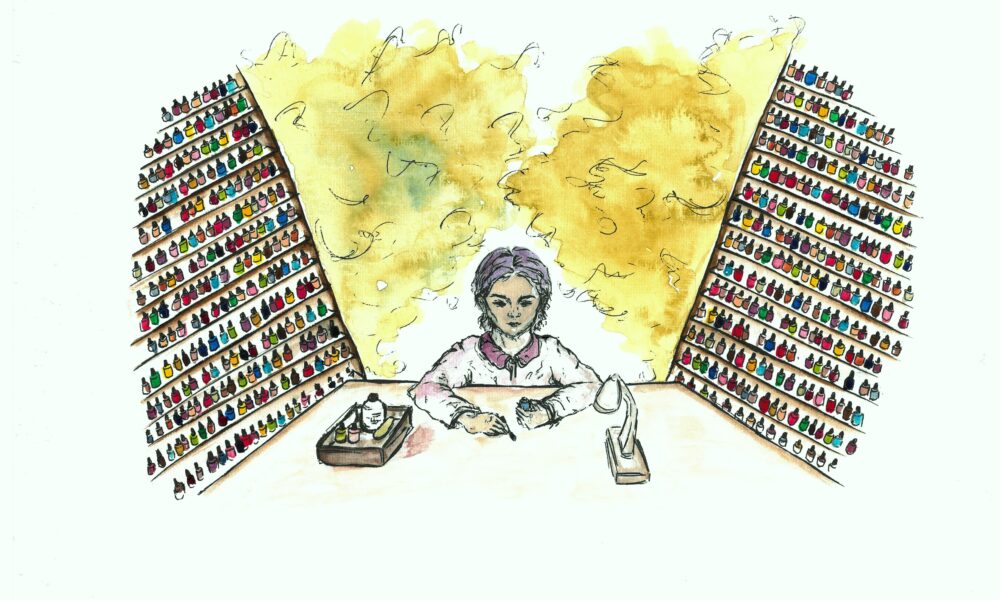
Canadian nail salon workers exposed to high levels of hazardous chemicals

Imagine a workplace where employees are exposed to toxic chemicals on a regular basis. And imagine that for the majority of these chemicals, there is little, if any, information regarding their effects on human health. Now imagine that quite a few have been suspected to cause health problems such as cancer and reproductive issues.

This is the reality for employees in the nail care industry. You might have imagined a workplace this hazardous to be a waste collection centre or a chemical manufacturing company, but University of Toronto researchers Miriam Diamond, Victoria Arrandale, and Linh Nguyen found that nail salons have unexpectedly high levels of chemicals such as diethyl phthalate (DEP) and tris(1,3-dichloro-2-propyl)phosphate (TDCIPP). 

But, what are these substances, and where are they found?

In an interview with The McGill Tribune, Bernard Robaire, a professor and environmental toxicant researcher in McGill’s Department of Pharmacology and Therapeutics, noted that the two main chemical families investigated in the study are phthalates and organophosphate esters. These chemicals appear in many places: Phthalates, for instance, are found in many everyday products and can be added to materials such as polyvinyl chloride (PVC) to make them more pliable.  

“The thing that makes lipsticks nice and glossy? Those are phthalates. When you walk into a new car, that new car smell is from phthalates,” Robaire explained.

Organophosphate esters (OPEs), such as TDCIPP, are another class of chemicals found in products ranging from pesticides to flame retardant materials, like furniture. 

While these chemicals are ubiquitous, nail salon technicians are exposed to high concentrations for long periods of time. Diamond and co-authors focussed on this group in their study, in collaboration with the Parkdale Queen West Community Health Centre and Toronto’s Healthy Nail Salons Network. They found that nail salon workers’ exposure in the workplace was up to 30 times higher than exposure in homes. 

The vast majority of nail salon workers are immigrant women, particularly of Asian descent. One study from the University of California at Los Angeles found that out of all the nail salon workers surveyed across the U.S., 81 per cent were female and 79 per cent were foreign-born, with nearly three-quarters of all immigrant workers listing Vietnam as their place of birth. The results of this study connect to a broader pattern of environmental racism within the industry, with administrative carelessness leading to inadequate protections and policies that disproportionately expose marginalized people to life-threatening toxicants in the workplace. 

“So then comes the question, if we’re exposed to [these chemicals], at what dose would we have to be exposed for them to have a toxic effect?” Robaire said. 

The Robaire and Hales team at McGill have published numerous papers that suggest mechanisms by which phthalates, OPEs, and other plasticizers may induce toxicity. Their research, along with other correlational studies, provide evidence that exposure to these chemicals at high enough levels could induce toxic effects on one’s nervous, reproductive, or immune systems. These effects are particularly worrisome for nail salon workers who may be pregnant or considering having children.

But nearly all of these studies are done in cell lines and animal models, with very few human epidemiological studies. Health Canada and other regulatory agencies currently require a high burden of proof to demonstrate that each of these individual chemicals are toxic at environmentally relevant levels. According to Robaire, this link is very difficult to prove. 

For example, the harmful effects of bisphenol A (BPA) were known for decades before Canada became the first country to formally declare it a harmful substance. Only then did Health Canada consider that there was sufficient evidence linking exposure to toxic health outcomes. However, Robaire’s team has found that substitutes for BPA may be even more toxic than the chemicals they replaced. Fortunately, Health Canada is considering changing their approach by regulating families of chemicals rather than one at a time. According to Robaire, change also needs to happen through government officials, scientists, and industry representatives from around the world to reduce human exposure to toxic chemicals.

Nail salon workers want these changes as well: Many have begun forming groups, such as the Nail Salon Workers Project, that call out the negative health impacts of working in nail salons and advocate for better work environments.

Off the Board, Opinion

The challenges and comforts of transitioning at McGill

Crossing Sherbrooke street to pass through McGill’s Roddick Gates tends to offer newly admitted students the chance to explore a new life at university. When I first saw the majestic stone arch, I felt an overwhelming sense of pride. I was proud of getting myself to the university I knew would set me up well for the future. After giving myself a metaphorical pat on the back, a gush of excitement came over me when I remembered all of my reasons for choosing McGill. Canada had strong queer rights, Quebec would help better my French fluency, and the university embodied liberal attitudes. As I passed under the gates, my eyes fell upon the impressive 19th-century architecture of the Arts building, and immediately, I felt confident that I had found my new home. 

However, my optimism in discovering Canadian ways of life dampened when I entered my residence in first year. Though most students were welcoming and just as excited as I was, I found little difference between them and the Europeans from whom I had tried to escape. They had designer, or thrifted, outfits trying to mimic the popular styles, or find their own, and, most of all, they were all very gendered. Most students were also outwardly heterosexual, and those who casually mentioned that they wanted to explore their sexuality were usually women who were influenced by the male gaze. Women who identify with the gaze, like kissing a girlfriend to attract men, abuse their privilege of engaging in queer actions without facing consequences, which has harmful impacts on queer people. When I went clubbing, I feared possible violent oppressions from cisgender men. Witnessing cisgender women kiss others then exacerbated my feelings of marginalization. It was only toward the end of the academic year that I found comfort in new friends who were outspoken about respecting queerness as more than just a heterosexual experiment. 

That same year, my experience with gender transition had positive and negative influences. On the one hand, there were students who thought I was “male” rather than “female” and were confused upon introductions when they compared my seemingly “feminine” name to my “masculine” apparel. On the other hand, positive influences included the rare gems of students who I met on nights out who voiced discontent with the gender binary and gave me confidence in my choices of clothes and haircut. 

In my second year, gender, sexuality and feminist studies (GSFS) courses rejuvenated my comfort in studying at McGill. Conversations that I had with my professors paved the way for me to understand my gender identity as nonbinary rather than fluid. Course content showed me the nonsense of labels, yet also their vital importance in a world of identity politics. The stories of fellow students that I heard in conferences set my heart ablaze. Once again, I felt more attached to McGill than my own home in France. 

With new knowledge comes old truths, and those of Canada were clear: The feminist agendas had not yet been achieved. I had to understand that McGill was part of the institutional barrier that slowed progressive change. For example, feminist discussions are essential for queer rights, but McGill fails to provide adequate resources to the GSFS department, like tenured funding, which mutes its impact on campus. Without a doubt, this reality tarnished the glorious façade of the university that I had set upon my arrival. Yet it sparked a fire within me to fight for something so much more important than an old building made of stone: An equitable society. 

As I near the end of my degree, I look across at the Roddick Gates and the Arts building and feel pride for the students who walked in with an opportunity to write a new chapter, and left with a desire to not fit in. With my McGill experience almost over, I feel grateful for being able to acknowledge that “feeling at home” is no longer attached to a place, but within my own body and identity. 

McGill, News

Divest McGill occupies Arts building, plans to stay overnight for at least one week

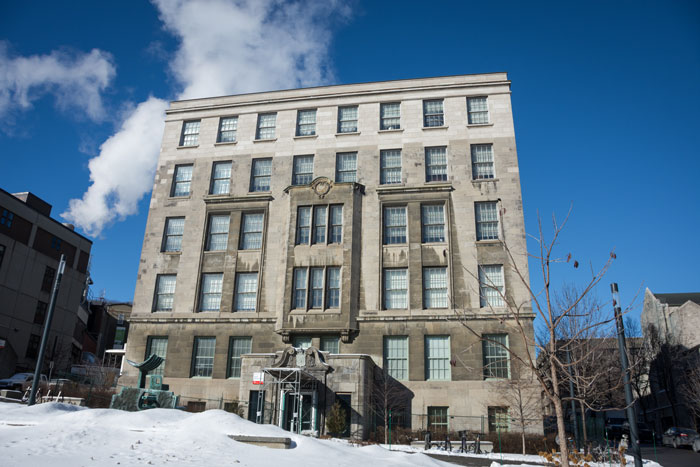
Divest McGill members and organizers arrived at the McCall MacBain Arts Building around 1:30 p.m. on March 7. It was the start of their minimum one-week-long occupation in protest of McGill’s continued investments in the fossil fuel industry. According to their manifesto, Divest is calling for a complete overhaul of what they say is a university system built on white supremacy and settler-colonialism, run by a Board of Governors (BoG) that serves capitalist interests. 

“We could not think of a better place to symbolically show McGill that we want to build a grassroots movement for democratization,” said Jordan,* a member of Divest, in an interview with The McGill Tribune inside the Arts building. “The Arts building is one of McGill’s most iconic buildings, especially from the outside. [We] want to demonstrate to the McGill community and the Montreal community as a whole that we will not stand for McGill to continue doing what they have been doing.”

In order to raise awareness about McGill’s approximately $50 million directly invested in the oil and gas industry, Divest is handing out pamphlets and flyers with information about police brutality, RBC’s investment in the Coastal GasLink (CGL) pipeline, as well as information about past Divest occupations and actions. Among the handouts is Divest’s manifesto, which specifically calls on the university to divest from the CGL pipeline and to democratize their governing bodies.

Members of Divest are planning to stay overnight in tents set up in the main entrance of the Arts building. In addition to their 24-hour presence, they have organized several events to engage students in the fight for divestment and the democratization of the BoG and Senate. Movie screenings, community dinners, and open discussions on topics ranging from anarchism to Indigenous rights are slated to take place in the Arts building from March 8 to 11. 

According to Zahur Ashrafuzzaman, U2 Cognitive Science and member of Divest, the Arts occupation is also a way for Divest to stand in solidarity with several organizations pushing back against McGill, such as the Association of McGill University Support Employees (AMUSE) and the Mohawk Mothers. Several banners hung in the main Arts corridor call on McGill to divest from TC Energy, the company currently building pipelines through unceded Wet’suwet’en territory. 

Jordan emphasized that the occupation being conducted by Divest is open to all members of the McGill community. Ashrafuzzaman added that accessibility was a priority.

“For so many people, McGill just does not feel safe in so many ways: We have the blacklist of Palestinian students, we have McGill restraining the use of harm reduction by floor fellows to actually keep students safe,” Ashrafuzzaman said in an interview with the Tribune. “So many people are put in a precarious situation because of McGill [….] So, we want to have somewhere that feels radically safe and radically full of care.”

Within the first couple hours of the occupation, Divest caught the attention of many passers-by. Students and McGill staff stopped regularly to ask questions about what was going on and staying longer to learn more about the divestment movement. Linden MacKenzie, U1 Environment and Development at the Bieler School of Environment, was heading to her class in Leacock when she was handed a pamphlet. 

“I feel proud to be a part of the student community here because obviously they care a lot,” MacKenzie said in an interview with the Tribune. “[I’m] not so proud to be a part of McGill as an institution that does not divest from fossil fuels.”

After reading the various handouts and visiting the resources on Divest’s social media, MacKenzie was all the more dismayed by McGill’s inaction. She plans to attend several upcoming events Divest has organized to show her solidarity with their pursuit. 

“How can [McGill] not understand the impact of fossil fuels?” MacKenzie said.

*Jordan’s name has been changed to preserve their anonymity

A previous version of this article quoted Zahur Ashrafuzzaman saying “we have floor fellows at the whim of being fired by McGill and losing housing.” In fact, floor fellows are not at the whim of being fired or losing housing, and the issue revolved more around McGill’s harm reduction policies. The Tribune regrets this error.

Arts & Entertainment, Dance

‘Why We Dance’ is a masterclass on the science of movement

From McGillian to award-winning documentarian, Nathalie Bibeau’s career is the answer to a question many Arts students dread: “What are you going to do with an Arts degree?”

Bibeau graduated from McGill in 1998 with a Joint Honours degree in history and sociology, before completing her Master’s degree the following year in history at the University of Toronto. After an internship with the United Nations Educational, Scientific, and Cultural Organization, she worked odd jobs, travelled, and met artists from around the world. Through those experiences, Bibeau realized that she could make a living as an artist, a career she once thrived in as a trained dancer and returned to as a documentarian. Her latest directorial project, Why We Dance, was produced for The Nature of Things—a documentary series examining the ways humans interact with nature. Why We Dance premiered on Feb. 25 on the CBC and will be available to stream on CBC Gem for the rest of the year. The documentary explores the intersections between science and art through dance—an activity we all do, whether we realize it or not. In an interview with The McGill Tribune, Bibeau described how her research on dance stretched her understanding of the art form. 

“It opened the floodgates of what is possible in terms of dance, and what I imagined dance to be,” Bibeau said. “I always felt like I was a born dancer. When I started researching, I realized it’s not an activity we choose to do—we actually are all dancers.”

Bibeau’s team interviewed a compelling cast of choreographers, psychologists, and neuroscientists to understand the science behind dance. The diverse roster includes Bronwyn Tarr, an evolutionary psychologist at Oxford, who describes how even before birth, fetuses follow certain movement patterns. Such trends continue into childhood as creatures explore imitation, synchronization, and play as a means of expression. Why We Dance reveals that these tendencies toward dancing are neither exclusively human nor random. They explain developmental variations in social and physical behaviour, mating habits in animal species, and stories of cultural tradition. Fitting each element into a 44-minute run-time may seem absurd, but Bibeau crafts a fully realized picture.

From flamingo sanctuaries in France to MIT’s Immersion Lab to oceanside choreography, the cinematography in Why We Dance is stunning. Bibeau captures impactful frames by marrying the natural world with the man-made, further pushing the narrative forward. A meticulous storyteller, Bibeau also articulated the importance of the post-production process.

“One of the editing styles I was trying to work in for this film is ‘match cut,’” Bibeau said.“I wanted the film to feel like one long conversation. You can do that through narration and the clips you choose, but visually, I wanted to feel that way too [….] You’ll notice if we leave one scene with a turning dancer, we come into the next with someone finishing the turn. It was extremely deliberate.”

Beyond its captivating cinematics, Why We Dance touches on how dancing has served as a survival tool for oppressed communities throughout history. For instance, Bibeau interviewed Sandra Laronde, who is from the Temagami First Nation and serves as the executive and artistic director of Red Sky Performance, a world-renowned company of contemporary Indigenous performance. Through her work, Laronde explores the importance of dance in Indigenous cultures, noting that it was outlawed in Canada from 1884 to 1951. 

“We’re supposed to dance for people who cannot,” Laronde explained in the documentary.

Dance is an empowering act, one that strengthens communities, connects us to the spiritual and natural world, and unites different generations to one another. When asked what viewers should take away from the film, Bibeau responded without skipping a beat: “I hope they dance.” 

McGill, News

Students raise concerns about McGill governance’s accessibility and transparency

McGill’s primary governing bodies, the Senate and Board of Governors (BoG), have recently been subject to criticism from students regarding issues of transparency and accessibility, with meetings being difficult to attend, and recordings not being made public, or only staying up for a limited period of time. Students have also raised concerns in the past about the structure, role, and member composition of McGill’s governing bodies.

Under section 4.7 of the Board of Governors’ Rules of Order and Procedure, no recording of the meeting is allowed before or after the fact—students must attend the sessions live. Moreover, students wanting to attend a Board of Governors meeting must email the Secretariat to secure a spot. 

Senate meeting recordings can also be difficult to access as only current McGill students and staff can attend meetings. In addition, meeting recordings are only made available for a limited period of time before being replaced by the next meeting recording. Some students, such as Bryan Buraga, former Students’ Society of McGill University (SSMU) president who represented students at the BoG and Senate and member of Democratize McGill, worry that the difficulty of accessing the meetings poses concern for transparency.

“[The Senate] has a webcast that is usually recorded, but it is only available for the month in which the meeting was held, and then it gets taken down and you can’t access it anymore,” Buraga said in an interview with the Tribune. “Then, only the meeting minutes are available to the McGill community, [but] the minutes are words on paper. You don’t exactly hear what senators say. The minutes are written up by the Secretariat who are beholden to the administration, so there are a lot of measures that the administration can use to be untransparent.”

In an email to the Tribune, the Secretariat detailed certain practices it uses to ensure McGill’s governing bodies’ meetings remain available to students and the wider community. The office also noted that both the BoG and Senate meetings are live-streamed—a practice that arose over the pandemic in an attempt to maintain pre-pandemic accessibility—and accessible by members of the McGill community. 

“Senate meetings are generally open meetings, meaning that they are open to observation by any member of the university community and accredited press, subject to limitations of space and good conduct,” the Secretariat wrote. “Exceptionally, an item on the Senate agenda may require confidential treatment, in which case the Senate will meet in closed session.”

Unlike the Senate, Board of Governors meetings are not made available online afterward. In their email, the Secretariat disclosed that they would look into the possibility of making BoG meeting recordings available after the meeting had adjourned.

However, concerns about governance extend beyond the question of their accessibility. Last November, a coalition between Divest McGill and Divest for Human Rights formed Democratize McGill, a student organization that calls for more student involvement and representation at the university’s high-level, decision-making bodies. Democratize McGill aims to address the disconnect that it believes exists between the McGill community’s values and the university’s administrative actions.

Democratize McGill is currently looking into potential BoG reforms—ranging from abolishing the governing body entirely to making its membership more inclusive of students, in order to better reflect the views of McGill students.  

In contrast to the McGill administration, the SSMU Legislative Council uploads audio-only meeting recordings to their website—a change from last year’s video uploads to YouTube.


“The pandemic has moved the Legislative Council into an incredibly more accessible model for all students,” SSMU Speaker of the Legislative Council Alexandre Ashkir wrote in an email to the Tribune. “Hosting the meetings online allows people who would usually not want to stay late on campus, for security or for comfort, to participate [….] It lifts an important weight and barrier of entry oftentimes neglected. Time is precious and not all are ready, or privileged enough, to be able to spend these hours on campus on a Thursday night.”

Read the latest issue

Read the latest issue