


Latest News

Arts & Entertainment, Books, Pop Rhetoric

The young adult dystopian genre is too close for comfort

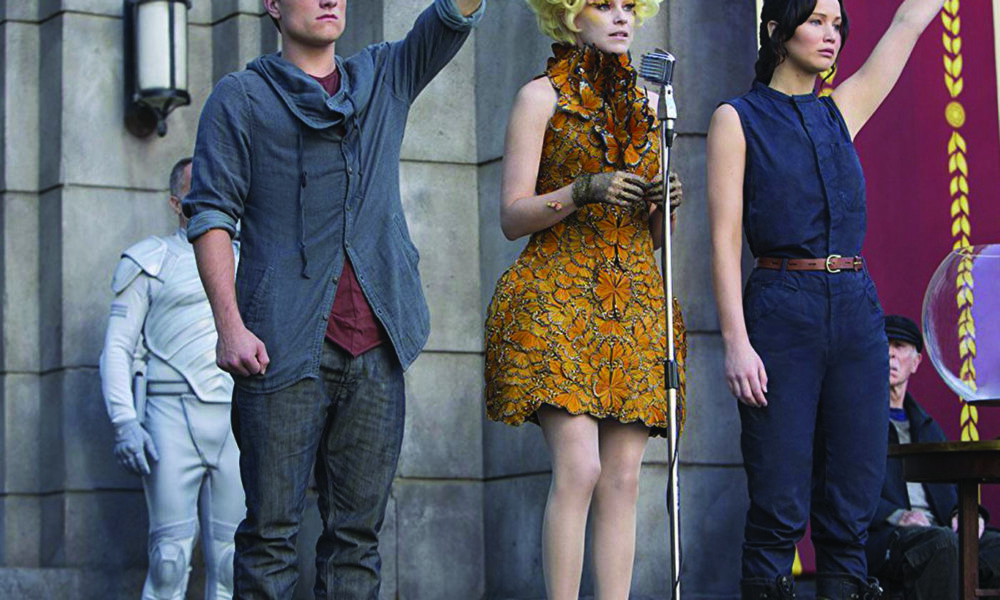
When many think of the young adult (YA) dystopian genre, both in literature and in film, The Hunger Games immediately comes to mind as one of the defining trilogies of the category. The Hunger Games hit the big screen 10 years ago and made nearly $700 million in worldwide sales. In the late 2000s and early 2010s, the YA dystopian genre reached peak popularity, and as a young tween in its target demographic, I remember just how captivated my friends and I were with tales of teenagers sparking revolution.

Books like The Hunger Games caught our attention for more than just their flashy book covers. For one, the protagonists were young kids and teenagers, just like us. But they had the power, through ability or circumstance, to change the world. As young people who just wanted to find a place where we fit in, we looked up to these characters who played vital roles, who were heroes that saved society from injustice. The characters were brave in their dangerous fictional worlds: While Katniss Everdeen competed in a deadly competition in the Hunger Games, Tris from Divergent jumped out of trains for thrills, and Thomas from The Maze Runner sprinted for his life through a murderous maze. Each protagonist found themselves in life and death scenarios, which kept young readers and adults alike flipping the pages in suspense. 

Despite the surge in YA dystopian novels during the 2010s, the genre is nothing new. Novels such as Aldous Huxley’s Brave New World (1931), George Orwell’s 1984 (1949), Ray Bradbury’s Fahrenheit 451 (1953), and Margaret Atwood’s The Handmaid’s Tale (1985) laid the groundwork for this 21st-century fad. All of these stories follow protagonists navigating oppressive systems that use systems such as surveillance and social pressures to force conformity.

Unfortunately, many YA dystopian books that capitalized on the success of their more thoughtful predecessors dumbed down their dystopian elements to attract young readers. This surface-level writing in terms of world, plot, and character-building caused the genre to lose what little critical respect it had. Series such as Divergent copied the idea of splitting society into groups called “factions” from The Hunger Games’“districts” and Harry Potter’s “houses,” where characters belong to a group based on a single value or skill.  Main character Tris leaves her family’s faction, Abnegation, to enlist in the exciting yet dangerous faction, Dauntless. Unlike The Hunger Games, where Katniss’ involvement with war is a result of self-sacrifice and need for rebellion, Tris has little motivation or character development throughout the series. The Hunger Games challenges young people to question the systematic oppression around in a way that realistically explores corruption and injustice – a domain these copycat novels tend to gloss over. 

The YA dystopian genre now seems less far-fetched, with young people becoming more politically active in the face of real threats of climate change, tyrannical politicians, and global conflict. These activists are applying the original YA dystopian message—that young people have power to change the world they live in. Novels have always incorporated political messages, whether to destigmatize mental illness, challenge racial biases, give voice to 2SLGBTQIA+ characters, and more. Nonetheless, YA dystopian literature so clearly reflects social oppressions in the world that it becomes difficult to enjoy the “fiction” as we could when we were younger and more ignorant. Fantasy no longer sugarcoats these books; the similarities between fact and fiction are more obvious. 
The YA dystopia genre may be less popular than it was 10 years ago, but it truly shaped what my generation was reading in adolescence. Now older, we can no longer see The Hunger Games as fantasy—oppressions endorsed or even enacted by governments around the world are an inherent part of the world we live in. Yet young adults can still look to literary figures, like Katniss, as inspiration in the fight against injustice in our world.

Science & Technology

Six McGill undergrads win UofT international artificial intelligence competition

A team of six undergraduate McGill students placed first in the International Artificial Intelligence Competition ProjectX, which ran from Sept. 1 to Jan. 31. Hosted by the University of Toronto, the annual competition challenges students to develop new models of machine learning with practical, real-world applications. Of the three categories open for submissions, including clinical practice, epidemiology, and genetics, the group placed first in clinical practice and received $25,000 in prize money. 

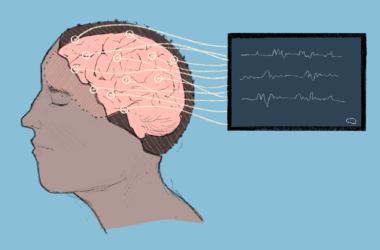
The team worked to create DeepVent, a patient ventilator model that operates through reinforcement learning (RL)—a type of artificial intelligence (AI) that aims to recognize patterns in data to improve subsequent decision making. 

Reinforcement learning is a small, yet rapidly developing subfield of AI and machine learning. When provided with a dataset the algorithm can begin to recognize patterns so that it can learn which decisions are more beneficial to reach a certain goal, similar to the way humans learn a new skill. Reinforcement learning is the same type of AI which now holds the title of best chess player in the world.

“It’s really impossible to [teach] all the different moves in chess,” Flemming Kondrup, U4 Science student and member of the winning team, said in an interview with The McGill Tribune. “So what you do instead is you play the agent against itself, and […] it learns a general pattern of how to play. That’s how humans learn as well, [because] they develop an intuition of what’s a good move and what’s a bad move.” 

With this type of ‘intuitive’ analysis, RL can be used in medicine to learn from historical health data so that doctors can find the best, most personalized long-term treatment for individual patients. 

“RL also looks into the future, and predicts how the treatment it’s going to give now is going to affect future treatment options,” Kondrup explained. “A really good chess player doesn’t just do a move that’s good now, but sometimes they might sacrifice a move now for a better move later. And the same thing applies to health care.” 

The DeepVent team plans to use their model to regulate the dynamic ventilation needs of patients in hospital intensive care units. ICU doctors, who are often overworked and overwhelmed, may find it difficult to monitor the ventilation settings of multiple patients at once. DeepVent provides a solution to this through its personalized ventilation system that would adjust to changes in a patient’s breathing. Their results have shown a 59 per cent expected enhancement in overall treatment quality. 

“As a disease evolves, you need to adjust the settings on the ventilator,” Kondrup said.“Doctors have to constantly monitor patients and adjust these settings, and that can be pretty challenging.”

The average hospital ventilator settings include functions to manage the fraction of oxygen inhaled from the surrounding environment (FIO2), the expiratory pressure when a patient breathes out (PEEP), and the volume of air inhaled (tidal volume), all of which can impact a patient’s respiration—and as a result, their overall health. DeepVent envisions a ventilator with a built-in feedback mechanism that self-adjusts the settings without doctors having to intervene.

Another challenge the team addressed is the extensive training and experience health-care professionals need to effectively manage ventilated patients. 

“In order for a health-care practitioner to treat patients well, they need […] years of experience,” Kondrup said. “You can train AI on data of tens of thousands of patients [and] on what a real human being would need years to experience.”

As ventilators have been so central during the pandemic, it will be important to continue advancing the field of respiratory technology, both to help our intensive care units now, and into the post-pandemic future. 

“The idea of DeepVent is that instead of just focussing on the present, it tries to promote long-term health and survival,” Kondrup said.

McGill, News

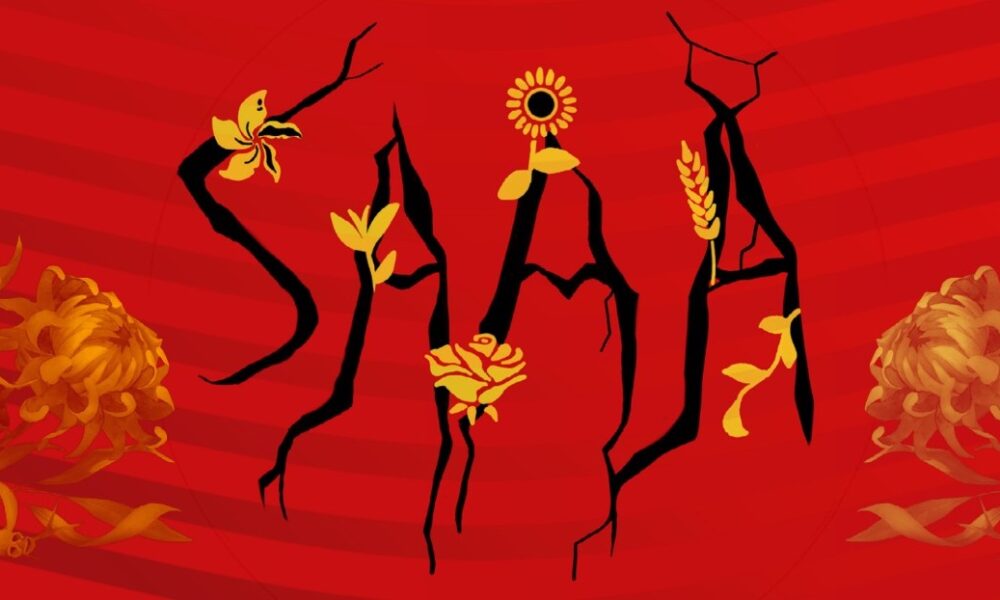
Student-led Week for Solidarity Against Authoritarianism in Asia aims to inform and mobilize McGill community

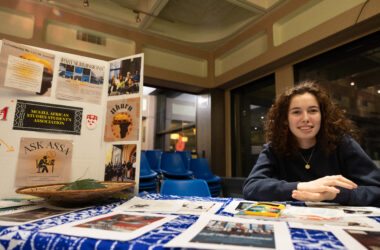
A group of McGill students held a “Week for Solidarity Against Authoritarianism in Asia” from March 7 to March 11, aiming to raise awareness and foster discussions about the realities of ongoing authoritarianism in parts of Asia. Students, activists, academics, journalists, artists, and more convened to discuss the many ways authoritarian regimes can disrupt and endanger lives, and to stand in solidarity with those resisting it. The first three events, which were held on Zoom and streamed on Facebook, navigated anti-authoritarian activism, the intersections of gender and migration, and the role of media and threats to press freedom, respectively. The final event, a screening of the student films “Naglalahong Pamana” and “Women for Yangon,” was held in person in the McCall MacBain Arts Building. 

Two of the organizers, Pratik Mahajan and Kai Scott, both U3 Arts, explained in an interview with The McGill Tribune that the team made a conscious effort to platform individuals from a variety of professions and backgrounds—as opposed to solely centring academic voices. By inviting guests across diverse domains, they hoped to engage discussions about the wide-reaching, often intersecting consequences of authoritarian governance.

“There’s no way you can throw around these really abstract terms like ‘authoritarianism.’ And it can be quite hard to pin down what exactly that looks like,” Scott said. “The goal was [to] see each [of the events] as anchors, where we will get a bunch of people […] with lots of different angles focussed on this one particular manifestation. Then from there, hopefully, we can have really interesting discussions about what actually getting actively involved with that looks like.”

During the “Journalism and Freedom of the Press in Authoritarian Contexts” round table, Naw Hsa Moo spoke to the sobering realities of reporting in Burma. Hsa Moo, a journalist, a human rights, peace, and environmental activist, and member of the Karen ethnic minority, spoke to the heightened terror and danger she faces reporting on the ground.

“The situation for journalists in ethnic areas, especially in the conflict zone, is even worse,” Hsa Hoo said. “In Karen State, I witness first-hand experience of Burmese military attacks against Karen civilians with heavy artilleries and air strikes. When I travel to report in areas of Karen State […] I have to tell the stories of what the Burmese military is doing. The world needs to know. But there is constant fear. Fear of an airstrike. Fear of being shot. Fear of being arrested.”

In line with the ethos for the week, many of the speakers provided calls to action. Mahajan found social activist, politician, and academic Yogendra Yadav’s notion of creating a “truth army” to combat misinformation particularly compelling. 

“A lot of authoritarian regimes are relying on social media manipulation, especially with their troll armies […] engaging with activists and opposition leader politicians, just [having] debates in bad faith​,” Mahajan explained. “Yogendra Yadav’s suggestion was that in our own capacity we try to stick up for the truth, take that pledge.”

Throughout the week, many speakers and organizers mentioned financial support as a way for students to support resistance against authoritarianism. At the “​​Intersections of Gender, Migration, and Authoritarianism” round table, which took place on International Women’s Day, attendees were encouraged to donate to the South Asian Women’s Community Centre, a Montreal organization that aims to support and empower South Asian women and families. And at the “Journalism and Freedom of the Press in Authoritarian Contexts” roundtable, independent media outlet Harbour Times and the Karen Environmental and Social Action Network—where Hsa Moo works—were also spotlighted.

Niranjan Takle, an Indian journalist who has worked to expose corruption and injustice throughout his career, noted that critical thinking, especially on the part of students, is crucial in combating authoritarianism. 

“I would say that since you are all in your youth, and the youth do not have a fixed frame of thinking, they can think out of the box,” Takle said. “After working for a number of years, we kind of developed a frame within which we tend to think and imagine. But, since you don’t have a fixed frame of thinking, or you can think out of the box, probably you will be more helpful in suggesting innovations or innovating our stories.”

Yadav stated that those interested in getting involved can reach out to him directly by email at [email protected].

Research Briefs, Science & Technology

Excavating Earth’s history through ancient rock formations

Scaling mountainous terrain or keeping an eye out for grizzly bears and moose while wading through the flowing rivers of the Yukon may not seem typical of academic work. But these were only some of the many challenging conditions McGill researchers endured while conducting a recent study looking at  oxygen levels on Earth before they started rising roughly 2.43 billion years ago.

Maxwell Letche, a postdoctoral researcher in Earth sciences at McGill and lead author of the study, explained that the redox state of iron-rich sedimentary rocks can tell us about atmospheric composition long ago. 

 “When the earth first formed, we didn’t have photosynthesizers around, so the atmosphere must have been anoxic,” Letche said in an interview with The McGill Tribune. “We’re trying to look at the transition from no oxygen to lots of oxygen on the earth.”

Nearly all of the life on Earth owes its existence in part to oxygen. If a human doesn’t receive enough oxygen, they will die. If the grizzly bear currently stalking that human doesn’t receive enough oxygen, it will also die. Understanding the oxygen levels at different points in the Earth’s history, coupled with the evolutionary timeline of life on Earth, provides valuable insight into the development of life as a whole.

“When you’re looking at sedimentary rock, you’re looking at a collection of minerals and rocks that have accumulated in a depositional environment that has been influenced by a number of different surface processes, like weathering, transport, and changes that can occur as that sediment was converted […] into rock,” Letche said.

This aggregated collection allowed Letche and his team to simultaneously study a variety of different minerals and their reaction to oxygen levels at their time of formation. Such an analysis required gathering a variety of samples, which is why Letche found himself in remote, untarnished parts of the world such as the Eastern Yukon.

The study gives us a more accurate understanding of the relationship between oxygen levels across the planet and the formation of early life forms. One finding was that the Earth experienced a period of low atmospheric oxygen levels. Previously, scientists had assumed that the Earth either had no oxygen or a large abundance of oxygen later on, in response to photosynthesis.

“What we argue is […] if the earth was capable of maintaining a small but non-zero level of oxygen, this could be completely consumed by surface reactions [and] these oxygen levels could be below what is detectable by telescopes,” Letche said. “Another potential suggestion being made is we could instead look for ozone. We only need a small amount of oxygen in the atmosphere in order to produce ozone.”

As ozone is more detectable than oxygen, searching for this compound could allow scientists to screen more planets for potential signs of life. Understanding of the relationship between the development of life on Earth could even prove useful in the ongoing search for life on other planets.

Formula One, Sports

‘Drive to Survive’ Season 4: A pit stop before the 2022 season

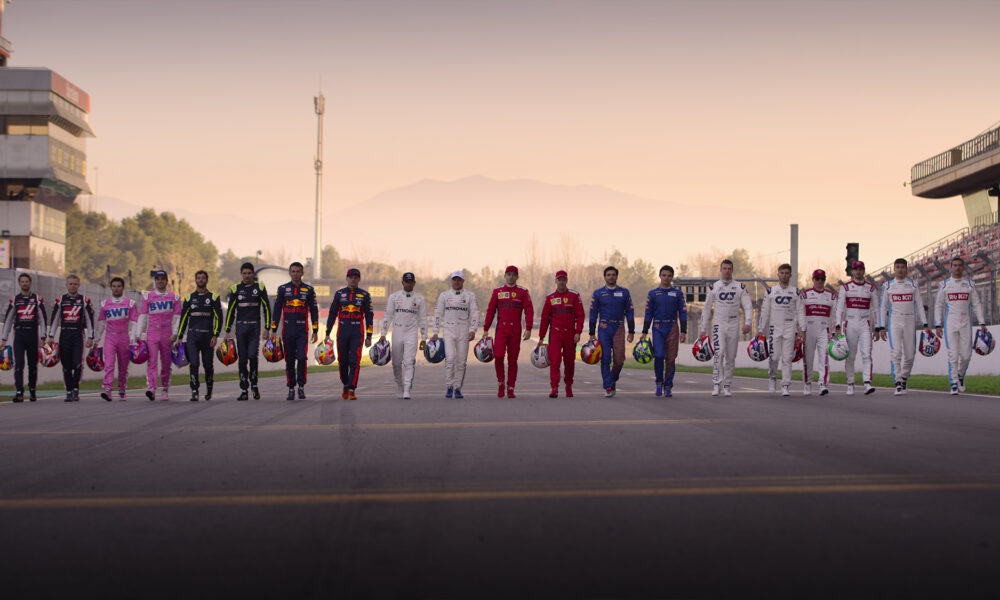
On March 11, Netflix released the fourth season of Formula 1: Drive to Survive (DTS), a 10-episode docuseries on the 2021 F1 season. With most episodes highlighting a different team or race, the series draws in avid fans and curious newcomers alike to explore the ups and downs of the intense world of F1. Despite criticisms of the series’ deceptive dramatizations, season four only adds to the hype surrounding F1 as the Bahrain Grand Prix, the first race of the 2022 season on March 20, quickly approaches. 

The starting grid of the 2022 season features some changes from the 2021 lineup. One of the biggest changes is the roster for Mercedes, the winner of the 2021 Constructors’ Championship. In Sept. 2021, George Russell announced that he would be leaving Williams and instead signing a contract with Mercedes, joining seven-time world champion Lewis Hamilton. Depicted as a promising young driver dealing with a struggling Williams team, Russell has been a member of the Mercedes junior programme since 2016. This move left Mercedes driver Valtteri Bottas without a team for the 2022 season, until he announced that he had signed with Alfa Romeo. Bottas will be joined by Guanyu Zhou, China’s first ever F1 driver, at Alfa Romeo. Filling in the gap for Williams is the ex-Red Bull driver Alex Albon.

Apart from these changes, the majority of F1 teams are maintaining the 2021 status-quo. Red Bull, Ferrari, McLaren, Alpine, AlphaTauri, and Aston Martin have kept the same roster of drivers. The most notable difference is also the subject of the season’s fourth episode: Haas dropping driver Nikita Mazepin, the son of Russian oligarch Dimitry Mazepin—the owner of fertilizer company Uralkali, a former sponsor of Haas. F1 and Haas’ decision comes amidst a growing movement in the world of professional sports to prevent the participation of Russian athletes and Russian events following Russia’s invasion of Ukraine in February. Haas broke ties with Uralkali, removing its logo from its cars and merchandise, and designed new livery without the colours of the Russian flag. With a new vacancy on the Haas team, Mick Schumacher will be joined by Danish driver Kevin Magnussen. Eyes will be on this team as they hope to bounce back from a disappointing 2021 season by attempting to build the perfect car as per the new 2022 regulations. As it stands, Haas remains optimistic after outstanding times in recent practice events in Barcelona and Bahrain. 

The new season of Drive to Survive also reminds viewers of the fiery rivalry between 2021 World Championship winner Max Verstappen and runner-up Lewis Hamilton. Verstappen refused to appear on the show, leaving Red Bull team principal Christian Horner to speak for him and his team. The drama climaxed with the championship-deciding Abu Dhabi GP. F1 race director Michael Masi elected to speed up the end of the procedure, and a controversial safety-car restart toward the end of the race resulted in a frantic final lap where Verstappen pulled ahead. The situation left Hamilton disheartened with the sport, stating that he lost faith in its ability to police races fairly. He has since stated that he is “coming back stronger” and is ready to reclaim the championship title. Verstappen’s blistering practice times and Hamilton’s reinvigorated spirit indicate that this rivalry will be very much alive for the 2022 season. 

 
Practice times, however, are not necessarily an accurate prediction of how the season will play out. The 2022 season will see a new fleet of cars transformed in light of some serious regulation changes that were curated to ensure better and more exciting racing. In short, the changes feature an aerodynamics overhaul that creates a vacuum beneath the floor of the cars, facilitating passing and leading to a drastic increase in downforce that permits drivers to closely follow other cars. With Mercedes dominating previous seasons, it is expected that these changes will shake up the standings. As F1 embarks on a new era with its latest cohort, next week’s race in Bahrain marks the beginning of a new season of drama and intrigue.

Chill Thrills, Student Life

Themed dinner parties for McGill students

When gatherings themed as The Great Gatsby or dress-as-your-favourite-Spotify-artist start to feel old, why not take a distinctly McGill spin on things? The Tribune has you covered with 10 McGill-inspired themes that are sure to wow your guests.

1. Dress as your favourite Redpath cafe salad

Are you a caesar salad with chicken slices? Or are you a $15 Mandy’s salad because you’re not cheap? The diversity of salads provides a plethora of options from which guests can choose.

2. Everyone dresses as Big Suze

Spotting Big Suze on campus is the ultimate McGill Where’s Waldo. Imagine if there were 10 Big Suzes parading around your apartment! Ask guests to don a blond bob and red jacket to replicate our favourite principal’s look. That being said, costumes aren’t the most important part of this party––it’s essential that you communicate all of the details about the party only through vague, passive-aggressive emails.

3. Everything but adequate mental health services party

You’ve heard about everything but clothes parties, but have you ever been to an everything but adequate mental health services party? This one hits different. 

4. Toga party but host it at a Classics Wine and Cheese 

Take your toga party to the next level by holding it at the ultimate venue: A Classics wine and cheese! Everyone there will be thrilled by your ultra-realistic interpretation of their major.

5. Tote bag party

This one’s for the Arts students who refuse to carry their belongings in a backpack like everyone else. Encourage guests to create outfits made up only of tote bags––for added effect, fill the tote bags with various objects that clang around incessantly as you walk, like keys, loose papers, juul pens, and cigarettes.

6. Office Hours Party

Ask half of the participants to dress as professors and the other half to dress like students.  Replicate the excruciatingly awkward moments of office hours by pairing guests off with random people you know they have nothing in common with. Bonus: Admit only one person every 10 minutes and encourage them to form an ambiguous line in the hallway so they end up entering out of order.

7. Dress as NOT your major

We’ve all been to parties where we’ve had to dress as our major, but how many of us can say we’ve attended a dress as NOT your major party? Tell attendees to dress as their major from an alternate universe—there’s nothing like seeing Derek from Management with safety pin earrings and black nail polish. 

8. Birks entrance themed party

Tell party-goers to take their shoes off at the door and encourage the first person who leaves to take someone else’s shoes in order to create confusion. Bonus points for slippery tile floors or outside detritus. To further replicate the Birks experience, start hiding shoes throughout the apartment periodically when no one is looking. 

9. Gerts party

Divide roles among guests to recreate the atmosphere of Gerts with its many groups of bar-goers. Examples include a group of first-years loudly singing Taylor Swift and taking up three tables, management bros discussing their latest bitcoin acquisitions and jaded fourth-years who have been there since 2 p.m. Pour beer on the floor beforehand for the ultimate stickiness.

Student Life

Student experiences of the ongoing invasion in Ukraine from Montreal

Content warning: Mentions of war and violence

On Feb. 24, Russian President Vladimir Putin announced a “special military operation” in Ukraine after months of military buildup along its border. Since then, Russian forces have been invading and bombing major cities in Ukraine, claiming 636 civilian lives and forcing 2.8 million people to flee as of March 14. 

In response to the invasion, Canada and numerous other countries have placed sanctions on Russia, including banning Russian fuel imports and freezing foreign assets held by Russia’s central bank and oligarchs. Meanwhile, police forces have detained more than 5000 protesters in Russia as anti-war demonstrations break out across the country. 

As the invasion unfolds, Ukrainian and Russian people across the world have been overwhelmed with both mental and financial stress. 

Kateryna Tyutyunyk, U1 Engineering, was born and raised in Ukraine. She has been watching the invasion rage on and endanger the lives of her immediate family members and friends who are currently in Kyiv, Ukraine’s capital. For Tyutyunyk, it has been heart-wrenching to be distanced from her loved ones while knowing their lives are at risk. 

“[My friends and family] would go to sleep sometimes and not be able to answer [calls or texts] and for me that would cause an anxiety attack, because I’m not sure if they are sleeping or if they are just no longer there,” Tyutyunyk said in an interview with The McGill Tribune. “It’s been very distressing for me to see things go on normally here while I’m in full awareness that my family and friends are fighting for their lives. It almost disassociates you from your reality, because you are mentally experiencing a war too, even if you are not physically there.”

For Russian international students, the economic impact of the war and sanctions are causing uncertainty. Canada, the European Union, United States, and the United Kingdom have banned many Russian banks from the Society for Worldwide Interbank Financial Telecommunication (SWIFT). Credit card companies Visa and MasterCard have suspended the operations of foreign cards in Russia and Russian cards outside of the country amid sanctions.

As an international student, Daria Rybina, U1 Arts, is financially cut off from her parents in Russia. She has even been facing difficulty accessing funds that her family is trying to transfer to her through Chinese banks. With the value of Russia’s ruble falling due to foreign sanctions on Russia’s economy, Rybina has to find a part-time job in Canada. 

“I’m working as an English tutor for Russian kids, but [clients] have been paying me on my Russian card which no longer works in Canada,” Rybina said. “The money that I was getting before was not much, but it was enough for me as a student. Now with ruble going down, it wouldn’t even be enough when converted, so I’m looking for a job here to get paid in Canadian dollars.”

Oleksandra Vydysh, U0 Arts, is a Ukrainian international student at McGill. The invasion has been mentally and financially taxing for Vydysh, whose family resides in Dnipro, a city 80 kilometres north of the Russian-occupied Zaporizhzhia nuclear power plant in southeastern Ukraine. In addition to her fears for her family’s safety, Vydysh says that the  financial hardship has been debilitating. She urges the McGill administration to provide a program of financial aid for those affected by war.  

“I’m glad that officials at McGill are acknowledging what is going on, but I do find their statements to be impractical,” Vydysh said. “I think what the majority of students need is financial support from McGill […] It would be a good idea, for example, to have bursaries for Ukrainian students.”

Gregory Kosoy, a Ukrainian U3 Science student, denounced the political theatre that has formed around the invasion. Recently, the Montreal Symphony Orchestra cancelled a performance by Alexander Malofeev, a Russian pianist. Kosoy finds these anti-Russian stances to be performative, and criticized those who demand only statements from the administration or the Student Society of McGill University (SSMU). 

“I think statements are performative unless something concrete is being done,” Kosoy said. “Sure, it’s noble of McGill to provide mental health counseling to people being affected by this, but in reality what McGill needs to do is to start raising money.”

Campus Spotlight, Student Life

Five small habits to reduce your digital ecological footprint

Even though the internet is not a space we associate with physical resources or landscapes, it very much affects it. It is an unfathomably large resource and therefore requires resources to sustain it, even if it seems as simple as opening your laptop. Studies estimate that digital technologies are responsible for around four per cent of global greenhouse gas emissions. 

Thanks to the pandemic, our online presence has increased dramatically, driving up our energy use along with it. While there’s no use in worrying about the environmental impact of every text you send, digital technology is undeniably becoming an increasingly substantial part of the world’s energy usage. Our digital footprint is part of everything we do online, but there are small internet habits you can incorporate into your daily routine to help reduce it.

  1. Unsubscribe from spam emails 

While emails don’t produce the same physical waste as paper mail does, each still has a carbon footprint of roughly four grams of CO2—which rises to 50 grams when accounting for any attachments. This is because of the energy needed to send emails and store the content in physical data centres. If you get 30 spam emails a day, that’s the equivalent of burning 19 litres of diesel gas a year. Multiply this by everyone you know, and that’s a lot of carbon emissions. And really, who needs that many emails from Facebook and Aritzia, anyway? Websites like unroll.me can make unsubscribing super quick and easy.

  1. Download the Ecosia search engine

Ecosia is an environmentally friendly search engine extension that uses a portion of its ad revenue to plant trees, instead of lining the pockets of CEOs! Through the use of solar panels, it is also carbon-negative, which means the organization actually offsets more carbon than they produce. You can add this extension to any search engine by searching up “Ecosia.”

  1. Watch videos in standard definition instead of 4K

Watching a video on your phone in 4K resolution leads to eight times more carbon emissions than watching the same content in standard definition. Make sure to change those video settings, especially when downloading videos or movies to watch later. If you are sending videos to others, try to send them using links instead of file downloads, as this takes much less energy, and will probably be less annoying to your friends as well.

  1. Delete old files from your “cloud”

Your content in the “cloud” is actually being stored in data centre servers all around the globe, not just on your local computer. These data centers require a lot of energy to operate, whether to help transfer data over long distances, or keep the computers cool. Organizations estimate that data centres represent over one per cent of the world’s energy usage, and this is rapidly increasing as the internet receives more and more traffic. If you can avoid downloading documents you don’t need to keep (think of all those school readings…), this will also help decrease your digital footprint.

  1. While you’re at it, check your chargers!

 Leaving your tech charging all the time, or leaving certain chargers plugged into the wall, is a rarely-considered way many waste energy every day. This is especially true for plugged in devices that actively use energy (either through staying updated, blinking lights to signal being on, etc). Getting in this habit of unplugging will also save you money down the road by gradually decreasing your electricity bill.

Individual action won’t save the planet—tech corporations also need to fix their structural environmental degradation. Nonetheless, simple lifestyle changes are a sure way to decrease one’s personal ecological footprint.

Chill Thrills, Student Life

Spring break diaries

After an intense period of midterms and deadlines, reading week always comes as a much-needed break. Some take advantage of the break as an opportunity to catch up on any missed lectures or readings. Though the week off can be a good time to get a headstart on upcoming work, it’s also always important to get adequate rest and unwind from the stress built up throughout the school year. The McGill Tribune caught up with several students to see what they got up to over the break.  

Lucille Applegate (U1 Arts) 

Feeling exhausted and burnt out from midterm season, Applegate needed a real break from school to unwind and gain back her energy in order to tackle the semester’s last leg with strength. She wanted a change in environment, so Applegate decided to leave Montreal for a few days and visit some family members in Chicago.  

“I rested for most of my time in Chicago by binge-watching Grey’s Anatomy, wandering around the city, catching up on some books, and working on my extracurriculars,” Applegate said. “After midterm season and a lot of uncertainty since the start of the semester because of covid, this was a much-needed break for a lot of people. I feel energized and ready to take on March, with a lot of very fun stuff happening over the month as [COVID-19] rules ease down.”

Tracy Berbari (U1 Management)

As most of her friends stayed in Montreal and a few had come to visit from Vancouver, Waterloo, and Toronto, Berbari felt she should stay in  Montreal for the week. Over the break, Berbari focussed on finding a balance between seeing her friends, going out, binge-watching shows, and studying for her midterms. With the majority of her midterms scheduled for after reading week, she spent a lot of time studying. 

“Reading week did not really feel like a break, but then at the same time, it kind of did,” Berbari said. “Due to the amount of work that my professors had given me for the week, I felt overwhelmed. Yet, this break was much needed and enabled me to get back in the right headspace to focus on my work and re-energize.”

Overall, she enjoyed the break, as it allowed her to follow her own schedule by prioritizing things that she wanted to do, such as hanging out with friends and family, all whilst working hard. 

“These past few months had been pretty overwhelming and exhausting due to study and work,” Berbari explained. “But, I was able to relax this week and get back some strength to tackle the rest of the semester.”  

Héloise Kissel (U2 Management) 

Kissel made use of the break to hang out with friends and relax. She spent her days wandering around Montreal, exploring cafes and restaurants with her friends, and watching movies with her roommate. 

“We kind of have a movie theatre set up at our apartment, and every night we would either watch a movie or catch up on a series,” Kissel said. “After a couple of intense weeks of studying, it felt good to unwind and relax with friends over small things.” 

Despite still having to work over the break, Kissel managed to find a balance between relaxing and studying. As she usually sticks to a fixed schedule for each day of the week, it felt freeing to be able to make spontaneous plans with friends. An avid lover of Korean food, Kissel visited DaDashi during the week, a Korean restaurant on Saint-Catherine Streets. 

“One evening, my friends and I decided to go out and eat at a Korean restaurant, and oh my god, it was so good!” Kissel said. “It felt really nice to be able to just peacefully eat out with some friends and not have to constantly think about assignments.”

Arts & Entertainment

National Theatre School of Canada stuns with production of ‘Cabaret’

Content warning: mentions of fascism, antisemitism, and genocide.

From Feb. 22 to 26, the National Theatre School of Canada (NTS)’s graduating class of 2022 put on an outstanding production of the 1966 musical Cabaret. Choreographed by award-winning director Matjash Mrozewski, the play featured a cast of graduating acting students and a production team composed of students, teachers, and alumni.  

Based in Montreal since 1960, the NTS is a theatre training school of international repute. Their annual production, put on by graduating students in the acting program, showcases the skills learned during their school years.

For the graduating class of 2022, Mrozewski chose the musical Cabaret to reflect on the importance of experiencing pleasure during dark historical periods—something he believes is particularly relevant today.

“Life in Weimar Berlin was chaotic, stressful and turbulent, how could we not want to seek out joy, transcendence, euphoria and escape?” Mrozewski wrote in the play’s program.

Cabaret is set during the late 1920s, in the Jazz Age of Berlin. In search of inspiration for his next novel, young American writer Cliff (Henry Beasley) travels to the city, where he befriends German smuggler Ernst Ludwig (Charles Brien) and British cabaret singer Sally Bowles (Kira Chisholm).  

From the fictional Kit Kat Klub cabaret to Cliff’s rented room at a boarding house, the play explores the political tension in Germany following the rise of the Nazi Party, while touching on themes of antisemitism, feminism, and gay rights. 

Mrozewski fully embraces Cabaret’s queerness, unapologetically celebrating the characters’ fluidity in their sexuality and gender. Although Cliff is explicitly bisexual in the original text, some productions of Cabaret have shied away from openly portraying his sexuality. Mrozewski, however, fully dives into this aspect, not only with Cliff, who experiences romance with Bobby (Blake Pyne) but also with the Emcee (Brandon Lee Carabin) and Herr Schultz (Anaka Sandhu). In the NTS’s production, the song Two Ladies, sung by the Emcee about his polyamorous lifestyle, now features a cabaret boy and a cabaret girl instead of the usual two girls. The character of Herr Schultz also challenges gender norms through a fantastic performance by Sandhu, who is also nonbinary.

Costume designer James Lavoie expertly related the musical’s social issues through its stage visuals. The outfits of the cabaret members remain monochromatic throughout the play, except for Sally’s, whose extravagant wardrobe perfectly highlights her extroverted and diva-like personality. The use of black and white costumes made the eventual revelation of Ernst’s bright-red swastika armband even more striking. In the closing scene, Lavoie dresses the Emcee in a uniform worn by concentration camp prisoners hidden under his coat, a twist that gives the musical a chilling conclusion. 

To support a minimalist decor composed of two concrete-like walls, students put on a mesmerizing show of lights and projections, using projectors to showcase archival footage of 1930s Berlin. The parallel between the performance and the stage art adds a touch of realism to the play’s narrative. 

Overall, Cabaret was incredibly well done. With the talents involved in the NTS’s student-led production of Cabaret, the Canadian theatre scene will certainly not be short of remarkable performers or producers any time soon.

Read the latest issue

Read the latest issue