

Latest News

McGill, News

Divest McGill occupies Arts building, plans to stay overnight for at least one week

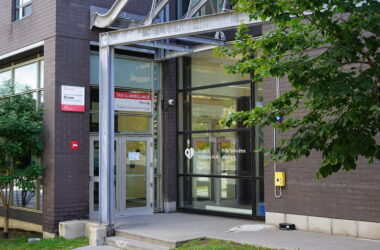
Divest McGill members and organizers arrived at the McCall MacBain Arts Building around 1:30 p.m. on March 7. It was the start of their minimum one-week-long occupation in protest of McGill’s continued investments in the fossil fuel industry. According to their manifesto, Divest is calling for a complete overhaul of what they say is a university system built on white supremacy and settler-colonialism, run by a Board of Governors (BoG) that serves capitalist interests. 

“We could not think of a better place to symbolically show McGill that we want to build a grassroots movement for democratization,” said Jordan,* a member of Divest, in an interview with The McGill Tribune inside the Arts building. “The Arts building is one of McGill’s most iconic buildings, especially from the outside. [We] want to demonstrate to the McGill community and the Montreal community as a whole that we will not stand for McGill to continue doing what they have been doing.”

In order to raise awareness about McGill’s approximately $50 million directly invested in the oil and gas industry, Divest is handing out pamphlets and flyers with information about police brutality, RBC’s investment in the Coastal GasLink (CGL) pipeline, as well as information about past Divest occupations and actions. Among the handouts is Divest’s manifesto, which specifically calls on the university to divest from the CGL pipeline and to democratize their governing bodies.

Members of Divest are planning to stay overnight in tents set up in the main entrance of the Arts building. In addition to their 24-hour presence, they have organized several events to engage students in the fight for divestment and the democratization of the BoG and Senate. Movie screenings, community dinners, and open discussions on topics ranging from anarchism to Indigenous rights are slated to take place in the Arts building from March 8 to 11. 

According to Zahur Ashrafuzzaman, U2 Cognitive Science and member of Divest, the Arts occupation is also a way for Divest to stand in solidarity with several organizations pushing back against McGill, such as the Association of McGill University Support Employees (AMUSE) and the Mohawk Mothers. Several banners hung in the main Arts corridor call on McGill to divest from TC Energy, the company currently building pipelines through unceded Wet’suwet’en territory. 

Jordan emphasized that the occupation being conducted by Divest is open to all members of the McGill community. Ashrafuzzaman added that accessibility was a priority.

“For so many people, McGill just does not feel safe in so many ways: We have the blacklist of Palestinian students, we have McGill restraining the use of harm reduction by floor fellows to actually keep students safe,” Ashrafuzzaman said in an interview with the Tribune. “So many people are put in a precarious situation because of McGill [….] So, we want to have somewhere that feels radically safe and radically full of care.”

Within the first couple hours of the occupation, Divest caught the attention of many passers-by. Students and McGill staff stopped regularly to ask questions about what was going on and staying longer to learn more about the divestment movement. Linden MacKenzie, U1 Environment and Development at the Bieler School of Environment, was heading to her class in Leacock when she was handed a pamphlet. 

“I feel proud to be a part of the student community here because obviously they care a lot,” MacKenzie said in an interview with the Tribune. “[I’m] not so proud to be a part of McGill as an institution that does not divest from fossil fuels.”

After reading the various handouts and visiting the resources on Divest’s social media, MacKenzie was all the more dismayed by McGill’s inaction. She plans to attend several upcoming events Divest has organized to show her solidarity with their pursuit. 

“How can [McGill] not understand the impact of fossil fuels?” MacKenzie said.

*Jordan’s name has been changed to preserve their anonymity

A previous version of this article quoted Zahur Ashrafuzzaman saying “we have floor fellows at the whim of being fired by McGill and losing housing.” In fact, floor fellows are not at the whim of being fired or losing housing, and the issue revolved more around McGill’s harm reduction policies. The Tribune regrets this error.


McGill, News

Students raise concerns about McGill governance’s accessibility and transparency

McGill’s primary governing bodies, the Senate and Board of Governors (BoG), have recently been subject to criticism from students regarding issues of transparency and accessibility, with meetings being difficult to attend, and recordings not being made public, or only staying up for a limited period of time. Students have also raised concerns in the past about the structure, role, and member composition of McGill’s governing bodies.

Under section 4.7 of the Board of Governors’ Rules of Order and Procedure, no recording of the meeting is allowed before or after the fact—students must attend the sessions live. Moreover, students wanting to attend a Board of Governors meeting must email the Secretariat to secure a spot. 

Senate meeting recordings can also be difficult to access as only current McGill students and staff can attend meetings. In addition, meeting recordings are only made available for a limited period of time before being replaced by the next meeting recording. Some students, such as Bryan Buraga, former Students’ Society of McGill University (SSMU) president who represented students at the BoG and Senate and member of Democratize McGill, worry that the difficulty of accessing the meetings poses concern for transparency.

“[The Senate] has a webcast that is usually recorded, but it is only available for the month in which the meeting was held, and then it gets taken down and you can’t access it anymore,” Buraga said in an interview with the Tribune. “Then, only the meeting minutes are available to the McGill community, [but] the minutes are words on paper. You don’t exactly hear what senators say. The minutes are written up by the Secretariat who are beholden to the administration, so there are a lot of measures that the administration can use to be untransparent.”

In an email to the Tribune, the Secretariat detailed certain practices it uses to ensure McGill’s governing bodies’ meetings remain available to students and the wider community. The office also noted that both the BoG and Senate meetings are live-streamed—a practice that arose over the pandemic in an attempt to maintain pre-pandemic accessibility—and accessible by members of the McGill community. 

“Senate meetings are generally open meetings, meaning that they are open to observation by any member of the university community and accredited press, subject to limitations of space and good conduct,” the Secretariat wrote. “Exceptionally, an item on the Senate agenda may require confidential treatment, in which case the Senate will meet in closed session.”

Unlike the Senate, Board of Governors meetings are not made available online afterward. In their email, the Secretariat disclosed that they would look into the possibility of making BoG meeting recordings available after the meeting had adjourned.

However, concerns about governance extend beyond the question of their accessibility. Last November, a coalition between Divest McGill and Divest for Human Rights formed Democratize McGill, a student organization that calls for more student involvement and representation at the university’s high-level, decision-making bodies. Democratize McGill aims to address the disconnect that it believes exists between the McGill community’s values and the university’s administrative actions.

Democratize McGill is currently looking into potential BoG reforms—ranging from abolishing the governing body entirely to making its membership more inclusive of students, in order to better reflect the views of McGill students.  

In contrast to the McGill administration, the SSMU Legislative Council uploads audio-only meeting recordings to their website—a change from last year’s video uploads to YouTube.


“The pandemic has moved the Legislative Council into an incredibly more accessible model for all students,” SSMU Speaker of the Legislative Council Alexandre Ashkir wrote in an email to the Tribune. “Hosting the meetings online allows people who would usually not want to stay late on campus, for security or for comfort, to participate [….] It lifts an important weight and barrier of entry oftentimes neglected. Time is precious and not all are ready, or privileged enough, to be able to spend these hours on campus on a Thursday night.”

Arts & Entertainment, Dance

‘Why We Dance’ is a masterclass on the science of movement

From McGillian to award-winning documentarian, Nathalie Bibeau’s career is the answer to a question many Arts students dread: “What are you going to do with an Arts degree?”

Bibeau graduated from McGill in 1998 with a Joint Honours degree in history and sociology, before completing her Master’s degree the following year in history at the University of Toronto. After an internship with the United Nations Educational, Scientific, and Cultural Organization, she worked odd jobs, travelled, and met artists from around the world. Through those experiences, Bibeau realized that she could make a living as an artist, a career she once thrived in as a trained dancer and returned to as a documentarian. Her latest directorial project, Why We Dance, was produced for The Nature of Things—a documentary series examining the ways humans interact with nature. Why We Dance premiered on Feb. 25 on the CBC and will be available to stream on CBC Gem for the rest of the year. The documentary explores the intersections between science and art through dance—an activity we all do, whether we realize it or not. In an interview with The McGill Tribune, Bibeau described how her research on dance stretched her understanding of the art form. 

“It opened the floodgates of what is possible in terms of dance, and what I imagined dance to be,” Bibeau said. “I always felt like I was a born dancer. When I started researching, I realized it’s not an activity we choose to do—we actually are all dancers.”

Bibeau’s team interviewed a compelling cast of choreographers, psychologists, and neuroscientists to understand the science behind dance. The diverse roster includes Bronwyn Tarr, an evolutionary psychologist at Oxford, who describes how even before birth, fetuses follow certain movement patterns. Such trends continue into childhood as creatures explore imitation, synchronization, and play as a means of expression. Why We Dance reveals that these tendencies toward dancing are neither exclusively human nor random. They explain developmental variations in social and physical behaviour, mating habits in animal species, and stories of cultural tradition. Fitting each element into a 44-minute run-time may seem absurd, but Bibeau crafts a fully realized picture.

From flamingo sanctuaries in France to MIT’s Immersion Lab to oceanside choreography, the cinematography in Why We Dance is stunning. Bibeau captures impactful frames by marrying the natural world with the man-made, further pushing the narrative forward. A meticulous storyteller, Bibeau also articulated the importance of the post-production process.

“One of the editing styles I was trying to work in for this film is ‘match cut,’” Bibeau said.“I wanted the film to feel like one long conversation. You can do that through narration and the clips you choose, but visually, I wanted to feel that way too [….] You’ll notice if we leave one scene with a turning dancer, we come into the next with someone finishing the turn. It was extremely deliberate.”

Beyond its captivating cinematics, Why We Dance touches on how dancing has served as a survival tool for oppressed communities throughout history. For instance, Bibeau interviewed Sandra Laronde, who is from the Temagami First Nation and serves as the executive and artistic director of Red Sky Performance, a world-renowned company of contemporary Indigenous performance. Through her work, Laronde explores the importance of dance in Indigenous cultures, noting that it was outlawed in Canada from 1884 to 1951. 

“We’re supposed to dance for people who cannot,” Laronde explained in the documentary.

Dance is an empowering act, one that strengthens communities, connects us to the spiritual and natural world, and unites different generations to one another. When asked what viewers should take away from the film, Bibeau responded without skipping a beat: “I hope they dance.” 

Laughing Matters, Opinion

So you’ve just met an Asian girl

So you’ve just met an Asian girl. There she is, assigned to your group for the final project in HIST 208, with her Hydro Flask and laptop stickers. She’s kind of cute. This could be your chance. Time to shoot your shot: Where is she from?

Oh, she’s Chinese. Yikes! What does she think of that whole authoritarian government thing? Plus, um—COVID! If you want, you can talk about the Economist article you’ve read recently. There was this interesting one about Eileen Gu last week. You know, the skier? Can you believe she’s competing on behalf of China? 

There is something weird about this girl’s face, though. Oh, she says she’s half-white. Explain to her that you’re practically more Asian than she is! After all, you’ve been using chopsticks since the first time your parents took you to Panda Express. Also, you’ve watched like all of Death Note. Was it her mom or dad that was Asian? The dad? Oh. That’s weird. 

Make sure to ask her if she speaks the language. This, along with her facial structure, will determine how authentically Asian she really is. Wow, she doesn’t speak the language that well? That’s funny, because you actually took Intro to Mandarin in college. Konichiwa! Just joking. Proceed to introduce yourself to her in Chinese, following the tones of a 7th-grade oboe recital. You’re probably HSK 7 at this point. In fact, it’s always been your dream to teach English to Chinese children. The one thing you can’t stand, though, is the animal cruelty. No wonder the whole bat thing happened! You’re an ethical vegetarian. Well, Buddhists are okay, you guess. Speaking of food, you’ve always been exceptionally good at eating really, really spicy food. Like, really spicy. Make sure to explain to her that you always drain the Sriracha bottle. 

Oh, Fujian cuisine is on the milder side? You don’t even know where that is. That must be some smaller city.

Anyway. Time to open up a new line of conversation. Has she seen the hate crimes in the news recently? Well, you’ve been against that stuff from the beginning. Racism is wrong. It’s important to you to be on the right side of history. When that shooting in Atlanta happened, you raced to your computer to tweet #StopAsianHate. And things have changed, haven’t they? Or improved, anyway. Not that you’re an authority. Tell her that you’ve been thinking a lot about solidarity with the Asian community. And radical empathy. You’re a big fan of Andrew Yang, actually. 

It really seems like you’re clicking! And she is super cute. Maybe she’s the one? Don’t get ahead of yourself, but remember: You could be the Mark Zuckerberg to her Priscilla Chan. Ask her for her WeChat (yeah, you’re culturally versed). If you really want to get the point across, maybe slide in a subtle reference to your dick size in the chat. Unlike, you know, *wink*— the competition. 

Oh. Huh. It looks like she’s talking to the professor. What? She wants to get reassigned? This is unbelievable. What does she mean, you “made her uncomfortable”? As far as you could tell, she’s been enjoying this conversation from the very beginning. I guess some Asian girls aren’t submissive after all. Uppity bitch. 

Anyway, the class is letting out now. You might as well get some sushi. Maybe you can explain to the waitress at the restaurant that Panasonic has actually always made your favourite line of toasters.

Out on the Town, Student Life

Stitching together Montreal’s handmade clothing scene

Since the beginning of the COVD-19 pandemic, the rise of knitting and crocheting has quickly propelled handcrafted clothing to the status of a fashion staple. This ethical alternative to fast fashion allows consumers to express themselves through unique fashion choices while helping to keep garments out of the landfill. 

McGillians looking to get in on the new trend this spring are in luck; Montreal is home to a small, but incredibly versatile, community of handmade creators.

1. Left_____overs 

Inspired by her mother’s knitting practice, Emma Harris launched her own handmade clothing store in early 2021. While opening her own online store was something Harris wanted to do prior to the pandemic, it was the time spent in lockdown that allowed her vision to finally come to fruition.

“My shop definitely wouldn’t be as big if it weren’t for COVID-19,” Harris said. “I think [I was] looking for a side-hustle and a way to take a break from being on screens all the time.”

Harris employs a loose, pattern-free approach in creating her avant-garde looks. Primarily sourcing her leather and textile scraps from factories, Harris aims to maintain the structural integrity of the materials in her finished product.

“It helps to give the garments a lifeline of history [and] create a closer relationship with the garment,” Harris said. 

Harris is encouraged by the recent public interest in handmade clothing, and is confident that this trend will only continue to gain traction. 

“I think it will definitely find a strong footing as the climate crisis ramps up,” Harris said. “Eventually, the current fast-fashion industry will no longer be able to keep producing as they are today.”

2. Hannah Isolde

Coming from a self-described “family of makers,” Nova Scotia native Hannah Goodman has been knitting and sewing for as long as she can remember. 

“I taught myself to sew on a 1970s sewing machine and just went ‘Wow this is incredible! I can create my own clothing,’” Goodman said. 

After graduating from high school, Goodman realized that she wanted to pursue design. She then moved to Montreal, where she opened her own handmade clothing business, self-titled Hannah Isolde, in 2018. 

Goodman’s shop primarily sells clothing that is typically seen as romantic and feminine. However, she tries not to see clothing as defined by the gender binary. Through her brand, she aims to encapsulate a leisurely, vacation lifestyle.

3. Boutique Lustre—4068 St. Laurent Boulevard 

Yasmine Wasfy, owner of Boutique Lustre, has had a strong passion for ethical and sustainable fashion since her teen years. Her time spent studying costume design at LaSalle College equipped her with the tools to start her own fashion brand post-graduation. 

A business that began in Wasfy’s living room and ran out of pop-up shops quickly became a well-known spot for eye-catching designs. Boutique Lustre first opened its doors to the Montreal community in 2006 and has since established an unwavering consumer base. 

“The word client feels too transactional to describe what we’ve built,” Wasfy said. “I refer to my clients as my community [….] I’ve grown with them, and their lifestyles help to inspire my designs.”

Wasfy prides herself on her unique creative process. As the boutique’s sole designer, Wasfy begins her pieces with a collection of textiles from Canadian-run companies and creates monthly capsules with various themes and colour palettes. She then organizes the textiles into a mood board of fabrics and begins patterning. The final patterns are handed over to the boutique’s small team of sewers who sew the garments by hand. 

Wasfy feels that the widespread move to online shopping has allowed the handmade clothing scene to reach a larger audience, all while opening up the space for important conversations. 

“The online marketplace has pushed people further into sustainability and opened the door for greater size acceptance,” Wasfy explained. “I think this conversation was much needed and [is one that] will continue to be had.” 

Student Life

From 1968-2022: Accessing birth control as a student

For many McGill students, university is a time of exploration. And yet, many students struggle to find adequate resources to help them navigate their sexual lives. Unfortunately, barriers to accessing comprehensive resources is nothing new. Since the 1960s, McGill students have been actively working to fill the gaps, creating sexual health resources for their peers. 

It all began in 1968 when McGill’s Student Council passed a motion to form a Birth Control Committee in order to address the lack of sexual health resources available to the McGill community. From this committee, Donna Cherniak and Allan Feingold created the Birth Control Handbook—a comprehensive guide to sexual health, contraception, and anatomy for university students. Its first edition began circulating in 1968, prior to the Omnibus Bill of 1969 which legalized birth control and decriminalized abortion across Canada. Cherniak and Feingold laid the groundwork for activists who came after, with substantial change eventually taking hold not only at McGill, but at countless universities across North America.  

The 1968 birth control handbook and its three subsequent editions were integral to keeping students safe. However, over 50 years later, adequate sexual health and contraception resources is still lacking. To honour the incredible work of Cherniak and Feingold, the Tribune has compiled some sexual health resources students can use in 2022.

  1. The Wellness Hub

For those looking to get started with contraception or even renew a pre-existing birth control prescription, the Wellness Hub can help. The hub is home to a variety of resources, offering wellness programming to all students and consultations with nurses or doctors and referrals to off-campus specialists. However, appointments fill up quickly, so we recommend calling at 8:30 a.m. on Mondays to snag a spot. 

Services: Consultations for STD and cervical cancer screening, IUD and Nexplanon insertion and removal, as well as access to sexologists—mental health professionals who offer sexual health support in a safe and judgement-free space. The hub’s sexologists can offer support for concerns related to coping with an sexually transmitted infection (STI) diagnosis and communicating diagnoses with partners, BDSM practices, sex work, pregnancy, contraception, and abortion. 

  1. Dialogue and Maple

Both international and out-of-province students also have access to several online telehealth resources that connect students to appropriate health-care professionals who can offer medical advice from the comfort of students’ own homes. Dialogue is covered by the SSMU Health Plan for in- or out-of-province students, whereas Maple is covered for international students under the International Health Insurance Plan. 

Services: Nurse or doctor consultations for contraception, prescriptions, STD screening, access to sexologists, and referral to in-person resources. 

  1. Head and Hands 

Head and Heads is an organization located in the Notre-Dame-de-Grâce neighbourhood that offers physical and mental health resources to youth ages 12-25. Their mission is to provide youth with the resources they need to make informed decisions about their bodies. 

Services: STI testing for young adults aged 12-25, regardless of sexual orientation, gender, or insurance status.

  1. Montreal Sexual Assault Centre 

The Montreal Sexual Assault Centre is a safe, judgement-free organization that offers services to survivors of sexual violence. Any survivor over 18 years of age can go to one of their four locations across Montreal, even without an appointment. 

Services: Medical examination, STI testing, forensic samples, medical treatment and follow-up, psychosocial support, and information on police and legal procedures. 

Whether in 1968 or 2022, sexual health is an important part of wellness. If you’re looking for other resources or somewhere to go off-campus, you can visit www.mcgill.ca/wellness-hub/campus-care/ for more targeted services and locations. 

Research Briefs, Science & Technology

Predicting coma outcomes with a high level of accuracy

Treating unconscious patients is a real challenge for physicians. For example, when treating patients with brain injuries, doctors and family are often faced with the decision of either pursuing aggressive treatment or switching to an end-of-life care approach. However, because patients are often unable to communicate, making such decisions is extremely challenging. 

Being able to accurately predict whether a patient will regain consciousness would therefore be an invaluable tool for clinicians. Dr. Stefanie Blain-Moraes, an assistant professor in the Faculty of Medicine and Health Sciences at McGill, and a member of the Brain Repair and Integrative Neuroscience Program at the Research Institute of the McGill University Health Centre, is developing a test that can predict whether a patient is likely to recover within the following three months.

The test uses propofol, a drug used by anesthesiologists in the operating room to sedate patients. When conscious patients receive propofol before a surgery, their brain networks are reconfigured, marking the transition between conscious and unconscious states. The reconfiguration can be observed with an electroencephalogram (EEG), a recording of the brain’s electrical activity which anesthesiologists can then use to monitor their patients’ brain activity after they administer propofol. According to Blain-Moraes, this is done to prevent intra-operative awareness, an often traumatic experience where a patient regains consciousness during a procedure or later recalls what happened during anesthesia. 

Blain-Moraes and her team built their test around this phenomenon of brain network reconfiguration in response to propofol. They administered the drug to patients with disorders of consciousness, including coma patients, and looked at their brain’s responses. They hypothesized that patients who undergo a reconfiguration similar to awake patients, such as those receiving propofol for a surgery, would recover consciousness within three months. Indeed, it would mean that their brain is responding to propofol in the same way that a conscious patient’s brain would—a sign that means that they will likely regain consciousness soon. However, patients who do not undergo this reconfiguration would likely remain unconscious.  

Astonishingly, preliminary results have shown that their predictions were correct. They developed an algorithm that calculates the amount of reconfiguration that appears in the EEG after administering propofol, resulting in a number called the Adaptive Reconfiguration Index. There was a linear separation between the indices of the patients who regained consciousness after three months, and those who remained unconscious. In other words, three months after performing this test, patients with an index greater than zero had regained consciousness, and those with an index smaller than zero had not. 

This study, however, is only based on a small patient pool. Blain-Moraes, who has been named among the world’s top scientists under the age of 40 by the World Economic Forum, is currently co-leading a much larger study to confirm these results. The study’s goal is to recruit 300 participants to confirm the accuracy of the Adaptive Reconfiguration Index in this larger sample. But even if larger studies support their findings, the system still needs to be refined before it can be used in hospitals. The study used advanced, laboratory-grade EEG devices, but many hospitals do not yet have access to this technology. The index should thus be adapted to make sure it is still accurate when using hospital-grade EEG devices. 

“It is still a laboratory technology, not something that can be used in the clinic,” Blain-Moraes said. “The software should be so easy to use that you just drop the EEG into it, and it automatically gives you the index.” 

If the Adaptive Reconfiguration Index is adapted for use in a hospital setting, it could greatly improve the care of patients with disorders of consciousness. The index could be an important tool for physicians, and has the potential to help inform better clinical decision-making, and ultimately, better patient outcomes. 

Science & Technology

A potential cure for HIV: Right under our belly buttons?

At the 2022 Conference for Retroviruses and Opportunistic Infections, Yvonne Bryson, an infectious disease researcher and professor at the University of California at Los Angeles, announced that a woman of mixed race had been cured of human immunodeficiency virus (HIV). After undergoing an umbilical cord stem cell transplant to treat her leukemia, the patient exhibited signs of HIV remission. Scientists are hopeful that this research on umbilical cord stem cells could shed light on a potential cure for HIV.

HIV attacks the body’s immune system and, when left untreated, often leads to acquired immunodeficiency syndrome (AIDS). There is currently no cure for HIV. The available antiretroviral therapy (ART) is, however, very effective at preventing the development of AIDS. This form of treatment stops the virus from multiplying in the body and reduces the viral load to very low amounts, making the virus virtually undetectable and impossible to transmit. 

“ART does not cure the person, since the virus remains archived in the body and will re-emerge if treatment is discontinued or interrupted or if drug resistance develops,” Dr. Bluma Brenner, an assistant professor in McGill’s Faculty of Surgery and an affiliated member of the McGill AIDS Centre, wrote in an email to The McGill Tribune

Although effective, ART has its flaws—according to the WHO, 27 per cent of those diagnosed with HIV could not access the treatment in 2020 Ideally, ART would be made more accessible and affordable until there is a surefire cure and roadmap to solving the HIV crisis.

The eye-catching term “cured” has been used extensively in the media coverage of this recent story, garnering widespread attention. In this case, to be cured of HIV meant that the patient stopped ART and remained in remission. Disease remission is characterized by a decrease or disappearance of symptoms. This woman is the third person reported to be cured of HIV, but remains under the watchful eye of physicians as remission relapse is possible.  

“The only [other] cases of HIV cure were the Berlin and London cases, [which] were isolated cases where individuals with cancer received whole body irradiation and who received stem cell transplants,” Brenner wrote.

These two individuals were both recipients of bone marrow transplants containing genetic mutations capable of stopping HIV’s viral entry into the body. However, this type of treatment is invasive and can have terrible side effects such as graft versus host disease, where the recipient’s body is attacked by donor cells. Umbilical stem cell transplants, in comparison, are less intrusive and therefore less likely to cause lasting damage. After the collection of donor cells, the recipient receives an intravenous injection containing the stem cells. Umbilical stem cells work similarly to bone marrow ones by blocking HIV’s entry into the host’s cells, which stops the disease from progressing. Why these umbilical stem cells work so well is still unclear. 

The patient’s recovery was remarkably smooth after the stem cell transplant, making her a novelty amongst those cured of HIV and rendering umbilical stem cells that much more of an attractive option to researchers looking for cures. In addition to her health rebound, she is also the only woman and person of mixed race to be cured of HIV with stem cells—two firsts that could be significant for researchers when investigating a cure.

Her biological sex and race are important because there are very few HIV trials that include women at all, let alone women of mixed race. Fifty-three per cent of HIV patients worldwide are women, and of these women, most are non-white. The disease is especially prevalent in developing countries due to systemic factors such as poverty, lack of access to health-care services, and lack of information on the prevention of spread. Many of these HIV patients are also at a much higher risk of developing AIDS because of compromised immune systems from prior infections. To understand how the disease could be treated universally, it is vital that people of diverse backgrounds are included in cure trials. 

A cure must work for everyone, regardless of race or biological sex, to bring an end to the HIV/AIDS crisis. That being said, it is unlikely that umbilical cord stem cells will be the be-all, end-all cure: Several unavoidable factors complicate the cure, such as ethical issues regarding the acquisition of umbilical cord blood, the overall cost of stem cell transplants, and the complex task of finding the right donor

So, while this case is indeed important scientifically, it is perhaps too specific to a particular set of conditions to inspire a universal umbilical stem-cell cure. But as always, more research needs to be done. 

“One needs to have a cautionary note,” Brenner wrote. “There was a Boston patient and a Minnesota patient who had [a] similar treatment, underwent remission, and experienced viral rebound.” 

Although the news of this cured woman is boosting morale amongst the HIV-affected community, a universal cure still seems far out of reach. According to Brenner, it is not possible to use umbilical stem cells to treat all HIV patients. 

“The mass media loves the magic bullet, the instant cure,” Brenner wrote. “There is no HIV vaccine in the foreseeable future.”

McGill, Montreal, News

McGill administration speaks to reconciliation initiatives and Mohawk Mothers federal court case

McGill’s Media Relations Office invited student media to a round table interview on Feb. 23 to discuss the progress of the university’s Indigenous Initiatives unit. In attendance was  Christopher Manfredi, provost and vice-principal (Academic); Dicki Chhoyang, interim director of Indigenous Initiatives; and Thomasina Phillips, associate director of Indigenous Student Success.

McGill’s Indigenous Initiatives unit was created in 2017 to implement the university’s 52 Calls to Action framework, which outlines the actions the administration has pledged to take to reconcile with McGill’s Indigenous community. As a subset of the Office of the Provost and Vice-Principal (Academic), the hub aims to supports Indigenous students in a variety of ways, including allocating funds for financial aid specifically to Indigenous students, facilitating student mentorship by hosting Visiting Elders at the First Peoples’ House, and implementing wraparound programs.

The unit works alongside the university to implement the 52 Calls to Action. One of the calls to action Phillips has been overseeing this year is Indigenous student retention and recruitment to the university.  

“There is a need for career shadowing, mentoring, and these kinds of relationships with Indigenous professionals,” said Phillips. “We have been developing, in partnership with university advancement, the creation of an Indigenous Alumni Association. We’re still early in the process.”

The unit also hosts round tables and uses other, more informal outreach channels to glean how to best support Indigenous students. In an interview with The McGill Tribune, Aneeka Anderson, U4 Arts, vice-president Communications of the Indigenous Student Alliance, and communications assistant with the Indigenous Initiatives unit, explained that these initiatives aim to shift the burden away from student activists. 


“I have heard from many Indigenous students at McGill that the university was not a place that they could thrive, it was not always safe, it was at times a place of burnout when students would try and create change on their own,” Anderson said. “What is important about [the 52 Calls to Action] is that it is no longer just students or just faculty […] pushing for this change in a grassroots way, it is the university taking this on. [Before], students would do this without pay [and] without praise, just unseen labor at the cost of people’s well-being.” 

Since its creation in 2017, seven of the 52 Calls to Action have been completed, with the remaining 45 in progress or yet to be started. When students questioned the seemingly slow-moving progress on this front, Manfredi responded that the university is making sure the tasks are completely fulfilled before labelling them as complete.

“Some things may have been completed in one part of the university, but not in another. So we are not going to check it off. It’s done until we’ve got it completed at the institutional level,” Manfredi said. 

When describing the plan’s updates thus far, the administration also pointed to the university’s efforts to increase the visual representation of Indigeneity on campus, like moving the Hochelaga Rock to a prominent position next to the Roddick Gates and raising the Hiawatha belt flag on the Arts building. For Phillips, representation goes beyond symbolic gestures.

“One of the things that we hear from Indigenous students is when they come to a colonial institution like McGill, they want to see themselves reflected in their environment,” Chhoyang said. “For us, what we’re doing with physical representation, it’s not about aesthetics, it’s about meaningful representation.” 

Concerns about the Mohawk Mothers’ federal court case against McGill, the City of Montreal, the Quebec government, and Stantec were also raised during the round table. Manfredi said McGill is willing to collaborate with Band Councils during the investigation into potential Indigenous unmarked graves on the Royal Victoria Hospital site

“The way in which we’ve approached those allegations that were brought forward, I think actually demonstrates the seriousness with which McGill takes reconciliation,” Manfredi said. “So I think it’s actually a positive reconciliation story.”

Responding to Manfredi’s comment in a statement to the Tribune, kahentinetha bear, a Mohawk Mother, contended that there are limits to McGill’s attempts at reconciliation, given that the Band Council is an imposed structure of governance for Indigenous peoples.

“Whether they realize it or not, the band council works for the oppressor and sits on the other side of the bar,” kahnetinetha wrote. “They are a department of the army. Their job is to keep the indians in check [….] If they want to reconcile with us then return our children back to their mother, sit with us and discuss the money they pilfered from our Indian Trust Accounts and return all the money. If they truly want to reconcile, sit down with our people and make agreements according to the great peace kaianerekowa.” 

For any Indigenous students seeking support or resources at McGill, reach out to Indigenous Initiatives at the Office of the Provost and Vice-Principal (Academic): 514-398-4177 or [email protected].

McGill, News

Law professors continue to push for a union, a first in McGill’s history

For the first time at McGill, a group of professors are seeking a union to represent them in their relations with the McGill administration. On Nov. 7, 2021, professors at the Faculty of Law submitted their union membership cards to the Tribunal administratif du travail (TAT), Quebec’s labour relations tribunal, and filed a petition for certification. Since then, the McGill administration has been litigating against the certification and refusing the faculty-specific union that the professors applied for. 

Professor Evan Fox-Decent, interim president of the Association of McGill Professors of Law (AMPL), explained that the motivation to unionize emerged out of a collective hope to restore collegial governance and faculty autonomy at McGill, arguing that “the COVID crisis was the bale of hay that broke the camel’s back.” 

In Aug. 2021, a number of law professors wrote a letter to the administration demanding that they implement a policy requiring proof of vaccination for those coming to campus for the Fall 2021 semester. The letter was greeted with a memo by Provost and Vice-President (Academic), Christopher Manfredi asking faculty deans and department heads to name specific professors who were reluctant to teach in person. Fox-Decent says the administration’s disciplinarian response to the letter highlights the “climate of fear” in which professors work. 

“The history of our governance at McGill has always, pridefully, been based on the notion of collegial governance, and it’s simply impossible to read that memo from August 29th and believe that the authors of it are committed to collegial governance in a meaningful sense,” Fox-Decent said in an interview with The McGill Tribune. “Our only hope is to work with [the administration] on a slightly more equal and transparent footing on matters of mutual concern with a collective foundation and the labour code to support us.”

According to Quebec’s Labour Code, upon receiving a petition for certification, a labour relations officer must assess whether the bargaining unit applied for is representative of the majority of workers that it would comprise, as well as whether the union has the agreement of the employer. In this instance, the requested bargaining unit would represent professors at the Faculty of Law. However, the McGill administration has opposed the union on the grounds that the bargaining unit should comprise professors across all faculties. 

In an email to the Tribune, Frédérique Mazerolle, a McGill media relations officer, reported that none of the current bargaining units or associations at the university cover only a single faculty. 

“The university is of the opinion that the unit proposed by the petitioning association is not appropriate,” Mazerolle wrote. “Moreover, the administration feels it does not take into account the converging interests of a broader group of employees and the history of labour relations at McGill University.”

Fox-Decent recalled that unionized service personnel, such as custodial employees under the Service Employees Union (SEU) at McGill, have different bargaining units based on the buildings in which they work. Fox-Decent contends that similar to the SEU, the roles and work of professors are highly specialized and lead to distinct interests that require distinctive bargaining units. 

Richard Janda, a McGill law professor and secretary of the AMPL, is unsatisfied with McGill’s proposed bargaining unit, arguing that it dismisses the exact centralized force that the unionization efforts aim to combat. According to both Janda and Fox-Decent, McGill presented documents at the hearings before TAT that revealed yearly faculty agreements between the provost and the deans about budgeting and other matters of governance. Janda believes that the existence of individual agreements with each faculty demonstrates that each has specific interests that the administration’s proposed bargaining unit would counter.

“Our faculty, according to those documents, is given significant autonomy. In that sense, the university is something more akin to a federation […] and we’d like to keep it that way,” Janda said in an interview with the Tribune. “The fact remains that we have a pretty specific community of interests. It’s not unheard of [to] have specific units unionized within the university.”

There is precedent for this: At York University, for instance, professors of Osgoode Hall Law School are separately unionized under the Osgoode Hall Faculty Association (OHFA), while remaining faculty members are unionized under the York University Faculty Association (YUFA).

Fox-Decent shared Janda’s sentiments about the documents and expressed frustration about the fact that they had not been made known to professors previously. 

“We see unionizing and entering into collective bargaining as a sunshine offensive,” Fox-Decent said. “It’s going to make transparent many decision-making processes that have been hidden from us until now and give us the opportunity to participate in those.” 

Many law students at McGill have been vocal about their disapproval of the administration’s decision to litigate against law professors. In fact, at the law faculty’s town hall with Dean Robert Leckey on Jan. 21, many attending students turned their cameras off to reveal coordinated profile pictures that read out “Let them unionize,” followed by a red heart. 

Samuel Helguero, a 3L student who attended the town hall on Jan. 21 was disappointed in the administration’s refusal to accept the union and its decision to hire Corrado De Stefano—a partner lawyer from one of Canada’s biggest law firms, Borden Ladner Gervais (BLG) limited liability partnership (LLP). 

“The central administration really has no leg to stand on in their legal case at the labour tribunal in resisting the union, which makes [their opposition] all the more incredulous,” Helguero said in an interview with the Tribune. “They are using students’ tuition money and they’re definitely union-busting, plain and simple.”

Helguero, who also helped organize the Law Students Association’s faculty strike in protest of the university’s reopening for the Winter 2022 semester, stressed that the unionization efforts and the student strikes are connected movements against McGill’s administration. 

“It’s really about the struggle for self-determination over the spaces that we are working in,” Helguero said. “Students are workers, as are professors—we should both have full decision-making powers. “COVID-19 illustrated external bodies that are unelected making decisions for us, and inevitably the decisions being made about us, without us, were the decisions we didn’t like and that were putting us in danger.”

Fox-Decent, who expressed solidarity with the law student strike movement in a letter, criticized McGill’s decision to fight the unionization, arguing that the money dedicated to litigation could have been redirected to purchase N-95 masks or to adopt other safety measures.

“To support us, students should write directly to Provost Manfredi and Principle Fortier expressing their dismay that at a time when McGill is saying that it does not have the resources to provide, for instance,  universal hybrid education in all of its courses, that it can, nevertheless, find considerable resources to engage in litigation to break a union that its law professors are trying to start,” Fox- Decent said.

Additionally, Fox-Decent encouraged students to attend the upcoming hearings. The AMPL is working to livestream the upcoming hearing to accommodate online attendees. 

“McGill just wants to pretend like [the unionization] is not happening, but at the same time they are not proud of [resisting the union],” Fox-Decent said. “It’s still possible for the wider McGill community to encourage our administration to think again about whether ongoing adversarial litigation against a supermajority of its colleagues in the Faculty of Law is the best way to run a university.”The previous hearing, originally scheduled for Feb. 14, was postponed by McGill due to a medical emergency with their attorney. The next AMPL v McGill (case number 1251090) hearings will take place on May 2, May 4, and May 13 at 9:30 a.m.

A previous version of this article stated that all law students at the Jan. 21 town hall turned their cameras off to show solidarity with the professors’ unionization efforts. In fact, it was many, but not all, of the students. The Tribune regrets the error.

Read the latest issue

Read the latest issue