

Latest News

McGill, News

Social Work Student Association votes to strike until February 25

After the McGill administration denied the School of Social Work’s decision to independently hold classes remotely until at least Feb. 25, the Social Work Student Association (SWSA) held a General Assembly (GA) on Jan. 17 to discuss the possibility of a strike. The motion to strike was successfully passed, with 70 in favour, three against, and two abstaining. The SWSA had previously detailed their concerns in an open letter to the McGill Administration before the GA and vote occurred.

The strike is set to run until Feb. 25, when another GA will be convened to vote on whether it should continue past March 4. Students will strike from School of Social Work classes held in person for the duration of the strike. However, they will continue to attend field internships and are encouraged to attend those courses held online. The SWSA will end the strike if McGill grants the School of Social Work full independence in choosing how and when its students return to in-person learning.

Students at the GA, such as Jo Roy, U3 Social Work, felt that the SWSA’s decision to strike was in line with the ethos of social work.

“[Social work] is very much a helping profession and one that cares about people and the ethics of it are very much in tandem with what we just did,” Roy said in an interview with The McGill Tribune.

Codey Martin, U3 Social Work, echoed Roy’s sentiments, noting that approving the motion to strike was an effort to apply the principles of social work in real life. 

“It’s the basic fundamentals of the social work program that we are currently learning, […] to put all the course content material learnt in the three-year degree into practice,” Martin said. “It comes down to supporting one another.”

Alyssa Salaciak, U2 Social Work and the internal affairs coordinator at SWSA, was the chairperson for the GA. With the strike in motion, Salaciak is tasked with supporting social work students by holding Zoom meetings for students to voice any concerns or offer points of advice to one another. 

“Now that we have agreed to strike, what does that mean for [SWSA]?” Salaciak said. “[It means] supporting students as they do it because it’s quite scary […] We’re here for you. We’re here for each other.”

Hannah Kirk, U3 Social Work, has an internship working with elders and older people living in Kahnawake, Mohawk Territory located on the south shore of the Saint Lawrence River. Like other social work students, Kirk is concerned about the risk of contracting COVID-19 in in-person classes and spreading it to the Indigenous communities with whom she interacts.

“The implications of me, as a white person, going to a class of 40 people, contracting COVID-19, and going on reserve and spreading it are really heavy, and McGill is responsible for that,” Kirk said. “When it comes to actually making decisions that protect the Indigenous community […] they don’t care.”

The SWSA is not the only students’ association at McGill pushing for school-specific autonomy in regards to remote learning. The Education Graduate Students’ Society (EGSS) announced a strike vote on Jan. 19. The Law Student Association will hold a Special General Meeting on Jan. 28 to discuss student concerns and the possibility of a strike.

According to Martin, the motion to strike is just the beginning of a greater movement for the SWSA. 

“I think it’s going to build momentum and people are going to start to really start to voice their concern and speak for a better understanding of the situation that McGill and other institutions are putting people in,” Martin said. “As much as I want to be in person, I’d love to be in-person, but unfortunately in the last 21 months of not contracting a virus, I kind of want to keep it that way.”


Arts & Entertainment, Pop Rhetoric

‘Degrassi’ keeps it real, for better or worse

If something happened at your high school, it probably also happened on Degrassi. Although the show’s “classic” era ended with Degrassi High in 1992, the Next Generation series surpassed it both in length and popularity. This was largely due to the show’s memorable cast: Toronto rapper Drake and actress Nina Dobrev both appeared as main cast members before finding considerable fame elsewhere. Most of the actors were the same age as their characters, bringing an authenticity to their onscreen awkwardness and growth. However, it is clear that many of the actors were relatively inexperienced, with scenes bringing the audience to tears from ridiculing laughter rather than powerful performances.

The long-running teen drama franchise, set and produced in and around Toronto, began with The Kids of Degrassi Street, which ran from 1979 to 1982. Its successor, Degrassi Junior High, began airing in 1987 and was directly followed by Degrassi High in 1989. The series officially concluded in 1992 and wasn’t revived until 2001, when Degrassi: The Next Generation premiered. The show was briefly continued as Degrassi: Next Class on Netflix from 2016-2017, with a new reboot of the show set to hit HBO Max in 2023. With the next iteration of the franchise imminent, it’s worthwhile to examine the impact that the show had on the television industry and beyond. 

Degrassi: The Next Generation stood apart from other teen shows for its procedural format and more grounded approach to portraying teenagers. By depicting nuanced emotional conflicts and social situations, Degrassi solidified its reputation as a show that wasn’t afraid to touch on darker or more controversial subjects. While Dawson’s Creek and other American shows featured older actors with exaggerated plots and questionable realism, Degrassi: The Next Generation was entertaining without needing excessive stylization. 

When I first encountered the show, it seemed drastically different than anything I’d seen before, especially since it was airing on TeenNick, the teen-aimed, mature Nickelodeon programming block that I never actually felt cool enough to watch. Degrassi: The Next Generation began airing music video promos in season 10, establishing the sustained appeal of the franchise and enticing new viewers. Several episodes of Degrassi: The Next Generation generated major attention for how they handled mature subject matters: “Accidents Will Happen” from season three, for instance, focussed on Manny (Cassie Steele) having an abortion after getting pregnant at the age of 14. American network The N refused to air the episodes, which only became available in the United States in 2006, two years after their initial release in Canada. While the U.S. clung to shiny, happy-go-lucky teen programming, Canada wasn’t afraid to tell it like it was. In season 10, Adam Torres (Jordan Todosey) was introduced, becoming one of the first transgender characters on scripted Canadian television. Degrassi High: School’s Out!, a television film that served as the finale for Degrassi High, even featured the first use of the word “fuck” on Canadian primetime television. 

Degrassi has always been relatively self-contained, which has led to the creation of many memes and jokes in the years since it went off-air. Despite the questionable fashion, gritty acting, and excessive school bands on the shows over the years, the series’ realism has allowed it to endure longer than other teen-oriented shows such as Riverdale. While the lengthy duration of The Next Generation forced certain plots to get recycled—like teen pregnancy, car crashes, makeovers, and fights—they never became trivialized or glamourized. Unlike other soulless reboots, reviving Degrassi feels loyal to the trajectory of the franchise. The show’s theme song rings true: Whatever it takes, Degrassi will make it through. 

Arts & Entertainment, Pop Rhetoric

Where do I begin: NFTs

Non-fungible tokens (NFTs) are the new year’s craziest phenomenon and strangest mystery. Following in the footsteps of Bitcoin and other cryptocurrency investments, these tokenized digital commodities have taken the internet by storm. NFTs allow collectors to own original pieces of artwork in the digital form. What started as a way for artists to sell the rights to their work has evolved into a bustling marketplace for status symbols and Twitter profile pictures. The question remains: Are NFTs the next evolution of art dealerships or nothing more than a passing collection craze?

An object or asset is fungible if its owner can trade it for another object of equal value, such as money or Air Miles. Both physical and digital assets can be fungible. In art markets, collectors buy and sell paintings, sculptures, and other artifacts, but do not exchange or trade them. Art is therefore non-fungible; NFTs bring this phenomenon onto the internet. An NFT is a digital “token,” or object, that can only be purchased with cryptocurrency. Whereas bitcoin or other forms of crypto are fungible, NFTs are publicly verifiable assets authenticated on the blockchain. When an NFT is designated as a token on the blockchain, it can be sold like a tangible piece of artwork. In other words, NFTs are the digital public ledger of cryptocurrency. What sets NFTs apart from other forms of digital art ownership or copyright is the tokenization of each asset. This helps prevent fraud by publicly publishing the ownership of these commodities.

On the one hand, NFTs allow artists to profit from the sales of one-of-a-kind digital works, including paintings, videos, and music—much like painters do with physical pieces.  However, tech millionaires, hip-hop artists, and other celebrities have latched onto NFTs as the newest way to gaudily display their wealth. For example, popular digital artist Bored Ape Yacht Club has garnered over $1 billion in sales since its May 2021 launch, selling unique cartoons of apes valued as high as $3.4 million. Although some artists treat NFTs as another way to financially thrive off of selling their creations, others do very little in the way of fostering creativity, favouring profit. NFTs differ from other art purchasing sites, such as Etsy, in that the buyer doesn’t just own a copy of the digital art, but the rights to that particular digital image. Many NFTs posted to digital marketplaces like OpenSea are frauds, simply screen captures of an image with no accompanying proof of ownership. Social media users and celebrities alike have flocked to Bored Ape Yacht Club, displaying their NFTs as social media profile pictures. Recently, Twitter began a pilot program allowing users to upload not just a photo, but the verified copy of an NFT to set as their profile picture on Twitter, which will appear as a hexagonal icon to indicate its authenticity. Instead of having the owner of an entity simply screengrab the image of the digital token and upload it to their profile, they would be able to upload the token onto Twitter and prove their ownership of the NFT.

Theoretically, NFTs seem like a fair way to give artists the privilege to distribute content online in a profitable, trustworthy way. However, due to the common lack of originality and authenticity in the art, as well as the abrupt spike in interest, NFTs resemble more of a fad rather than industry-altering technology. Relying solely on consumer-generated excitement and often lacking the depth or complexity that grants artistic works their timelessness, NFTs possess little long-term value. Instead, they offer the possibility of exorbitantly displaying wealth as one would with streetwear or excessive jewelry—only online. At the end of the day, many NFT sales are less about art quality and more about brand names and showing off one’s money.

Science & Technology

How gene mutations affect vitamin B12 deficiency

In recent years, vitamin supplements have become all the rage, with an increasing number of supplements claiming to clear your skin, promote hair growth, and even increase your IQ. Unrealistic advertisements aside, vitamins are in fact quite important. Our bodies need vitamins in small amounts to be able to grow and function properly. 

Vitamin B12, also known as cobalamin, is important for maintaining the body’s metabolism, forming red blood cells, and ensuring the proper functioning of the brain. Because the human body cannot make vitamin B12 on its own, we depend on foods, mainly animal products, to get this particular nutrient. Certain non-animal products, such as nutritional yeast and soy milk, have been fortified with vitamin B12. However, people who follow a plant-based diet are recommended to take vitamin B12 supplements to prevent cobalamin deficiency, which is characterized by feelings of weakness, tingling, smooth tongue, anemia, and sometimes memory loss. 

While such a deficiency can be reversed by vitamin B12 supplements, there are individuals for whom cobalamin supplementation is insufficient. These individuals have mutations in the genes that code for the proteins that help the body absorb or transport vitamin B12. There are currently 12 gene mutations that can lead to these inborn vitamin B12 diseases. However, the role of these genes is not well defined and thus are being studied by many researchers—one of whom is Dr. David Rosenblatt, a senior scientist in the Child Health and Human Development program at the MUHC Research Institute who has been treating patients with vitamin B12 deficiencies for over three decades. 

Rosenblatt and researchers from the Baylor College of Medicine recently published a study in Nature Communications that found that the most common type of vitamin B12 deficiency disease, clbC, is caused by a mutation in the gene Mmachc. clbC is a multisystem disease that appears in utero and can lead to growth restriction and intractable epilepsy. The Mmachc gene codes for a protein that binds cobalamin when it enters the cell. However, mutations in two other genes, Ronin and Hcfc1, also cause clbC-like disease, but with more severe symptoms. 

“The common clbC has more than 1,000 patients described from around the world,” Rosenblatt wrote in an email to The McGill Tribune. “For the rare forms that are modeled in this paper, there is only one Ronin patient and less than 20 Hcfc1 patients.”

The goal of the paper was to characterize the cobalamin disorders these gene mutations cause in greater detail by studying the function of Ronin and Hcfc1. To do this, the researchers studied the disease in a mouse model afflicted by the same gene mutations. The mice showed symptoms that are typically associated with vitamin B12 deficiency, including brain abnormalities and cardiac defects. However, the researchers also saw symptoms that were atypical of vitamin deficiency, such as craniofacial dysmorphia, or abnormal growth of the brain and facial features. This sign is typically seen in patients that have ribosomopathies—disorders where the ribosomes, the tiny machines of the cell that make proteins, are non-functional. 

To verify whether the craniofacial dysmorphia observed in the mice was a result of ribosomopathies, the authors examined protein expression in the mice. They observed that in the mice with both mutations, there was a decrease in the number of ribosomes, indicating ribosomopathy. These results show that the vitamin B12 deficiencies are much more complex than previously thought. 

“I think that there is still a great deal more that needs to be learned about the basic mechanisms in these diseases,” Rosenblatt wrote. “Knowing more about mechanisms can sometimes lead to targets for therapy.” 

Though it is too early to search for a cure, such studies are nevertheless a vital stepping stone toward understanding vitamin B12 deficiency diseases. 

Out on the Town, Student Life

A guide to Montreal apartment hunting

With the winter semester well underway, McGill students are beginning to ask themselves the all-important question: Where will I live next year? For many, the mere thought of delving into apartment hunting amid the return to hybrid learning is anxiety-inducing, to say the least. The range of different neighbourhoods, roommates, floorplans, and price ranges can seem both endless and daunting. However, The McGill Tribune’s foolproof tips will help get you on track to finding the right apartment at the right price.

1. Deciding on your must-haves

The first step in finding your dream apartment is identifying what you’re looking for. Start by making a list of your “must-haves” and your “nice-to-haves”. For instance, if you are an avid baker, a spacious kitchen with sufficient counter space might be one of your must-haves. In particular, consider what amenities you wish to have included, the type of appliances, furniture, natural light, transit access, as well as the location of the apartment. This list will come in handy when visiting apartments and making your final decision.

2. Budget, budget, budget

Before even beginning the search, it is critical to determine your budget range. Studio and one-bedroom apartments tend to have the highest rent per person, so you might consider living with roommates to offset costs. Generally, the higher your number of roommates, the lower your rent will be. However, communal living may not be suited for everyone. Before rushing into a decision, reflect on whether you would be comfortable sharing your space with others or making compromises. Stay realistic about what you can afford to spend on rent while still having room for other expenses, such as wifi and utilities if not included. Compare your findings with the average rent prices of each neighbourhood to glean a greater perspective, and try to find lease transfer agreements for below-market prices; apartment swapping guarantees that the previous rent does not increase between tenants. 

3. Finding roommates

Not only does living with roommates help you save money on rent, but it’s also a great way to socialize and feel more a part of McGill’s student community. For those who are interested in living with one or several roommates, consider how well your day-to-day routines align. Is your potential roommate a night owl, while you need to get up before sunrise for swim practice? Do they like to party, while you prefer to stay in? How do your cleaning preferences mesh? Asking questions like these prior to choosing a roommate is key to preventing future conflicts. Though it may be tempting, remember that your best friend isn’t necessarily the best roommate for you—it’s more important to live with someone whose values and lifestyles match up with yours. For those in search of roommates outside of their immediate social circles, McGill’s Off-campus Housing Facebook group and the International Roommates in Montreal Facebook group are great resources. 

4. Searching for an apartment

Now that you have identified precisely what you are looking for, it’s time to get started with the apartment hunt! Online search engines Padmapper and Zumper are great starting points, allowing users to tailor listings by desired location, number of bedrooms, and various amenities. Refer back to your list of must-haves, as well as your number of roommates to browse listings suited to your needs. You might even surprise yourself by finding a listing you love on Craigslist or Kijiji. McGill’s Off-campus Housing Facebook group also has a variety of apartments for rent, primarily located in either Milton Park or the Plateau—the two most common neighbourhoods for McGill students due to their proximity to campus. Alternatively, you could go for a walk in the neighbourhoods that you are interested in, taking notes of places with “for rent” signs. For those new to Montreal, this is also a great way to get a feel for different neighbourhoods.

5. Making the decision

Once you have found some listings that interest you, make a list of your top few apartments. These can be places that either best suit your needs or merely speak to your design style. To start the process of renting an apartment, contact the landlord, agent, or tenant to set up visits, either in person or virtually. Touring apartments wherever possible is essential, as you may notice flaws that the listing’s photos omitted; maybe there isn’t as much lighting as you thought there would be, or the kitchen is a lot smaller than anticipated. After having seen your top choices, refer back to your must-haves and nice-to-haves. This should help you to eliminate apartments that don’t sufficiently meet your criteria. Before signing any documents, make sure to be aware of your tenant rights to avoid entering into an unlawful agreement. 

Remember, apartment hunting is tough, especially as a student. You may not find the “perfect” apartment right away, but don’t overlook the power of adding your own personal belongings, decor, and memories. Try to imagine the full potential of the space; it might only feel like home after some time settling in. 

News, SSMU

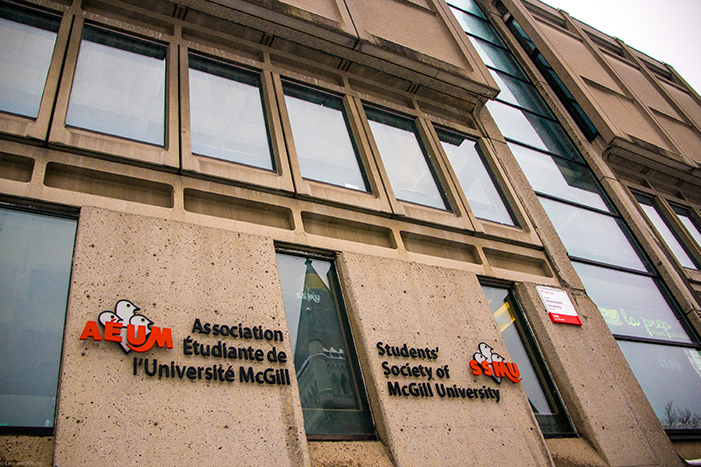
SSMU Legislative Council passes motion to address doxxing of students

On Jan. 20, the Students’ Society of McGill University (SSMU) Legislative Council held their first meeting of the winter semester, discussing several annual reports and announcements, including the AUS Town Hall on the return to classes, and approving five motions. One motion will require SSMU executives on SSMU’s Divestment and Demilitarisation Campaign Mandate to provide progress updates; another motion sought to create an anti-surveillance master plan to protect McGill students who, because of their anti-colonial activism, have been doxxed and harassed on websites such as Canary Mission and Campus Watch. This master plan would institute a SSMU anti-surveillance commissioner to lead an anti-surveillance committee under the Council. 

During the question period, vice-president (VP) University Affairs Claire Downie spelled out how SSMU organized their campaign to facilitate a safer return to campus on Jan. 24, including measures such as making respirator-style masks available.

“On Monday we announced that we’re going to be providing respiratory-style masks on a pay-what-you-can basis to students who are especially vulnerable to COVID,” Downie said. “We’re hopefully going to be announcing details about this in the coming days.”

VP Finance Éric Sader engaged in several back-and-forths with councillors regarding president Darshan Daryanani’s continued absence. Sader told inquirers and the broader gallery that it is in the BoD’s “fiduciary duty to act in ways that benefit the company,” which includes, according to Sader, the “responsibility not to answer these questions” surrounding the president. 

Councillors Ghania Javed and Yara Coussa then presented the Motion Regarding the Creation of an Anti-Surveillance Master Plan within the SSMU. Coussa spoke of public websites which blacklist and expose personal information about advocates and activists, including pro-Palestinian McGill students and staff, students involved in Uyghur, Tibetan, or Hong Kong liberation advocacy, as well as Muslim students since the enactment of Bill 21.. 

“These forms of intimidation and attacks impact students’ mental health, physical health, and discourage their involvement on campus,” Coussa said. “Some students have reported that it has prevented them from applying to leadership positions on campus [….] These examples […] highlight how students have been victims of racist surveillance.”  

The motion, passed with 24 in favour and two abstentions, will mandate VP Internal Sarah Paulin publish a master plan by April 7, 2022 detailing how SSMU will help combat and end racist surveillance and doxxing at McGill.

Moment of the meeting:

During the announcement period, VP Finance Sader made a public apology to Councillors Coussa and Javed for his “unprofessional comments” toward them during the Nov. 25, 2021 Legislative Council meeting. Sader also noted that, going forward, it is important for him to acknowledge power dynamics at play, given his position as a white man speaking to two racialized women during the incident. 

Soundbite:

“I think it’s important to point out that McGill Athletics and Recreation are not funded by the university […] and [are] not in a position to take a stand regarding divestment [….] It’s outside of the scope of McGill Athletics and Recreation. I just want to point out that what’s happening right now is students are losing out on services [….] Basically, Athletics and Recreation has their hands tied.”— Member of the gallery Chloe Parsons, U3 Education and chair of the Student Athletics Council, on how the SSMU moratorium on auxiliary fees impacts the McGill Athletics and Recreation facility services available to students.

Arts & Entertainment, Film and TV

‘Too Hot to Handle’ season three enforces unhealthy sexual values

The Netflix series Too Hot to Handle’s season three presents an even hotter, more dramatic mess than its previous seasons of scandal. The dating show brings 10 horny young adult participants on an erotic vacation, only to enforce sexual abstinence after the 12-hour mark. The show documents the contestants as they struggle to choose between winning the $200,000 prize money or giving into their sexual urges—and they often choose wrong. At best, Too Hot to Handle is unbelievable, and at worst, it’s exploitative. 

According to Deadline, Too Hot to Handle’s viewership decreased after the release of its second season, dropping from 51 million households to 29 million. This lapse in popularity may explain some of the show’s changes—for instance, a flash announcement revealing that money lost by rule-breaking can be won back by good behavior, and the surprise of some participants returning to the show even after being kicked off. Each episode is a rollercoaster with no clear destination, as viewers buckle in for a dizzying experience.

To criticize Too Hot to Handle for its absurdity would be superfluous; the show makes no effort to hide its selling points of voyeurism and drama-laden guilty-pleasure watching. There are many sexually suggestive scenes, often brought out by producer manipulation through sensual workshops like body painting.

But what does go beyond the garish is how Too Hot to Handle fetishizes its representations of queer relations. When Izzy and Georgia inaugurate the contest’s first rule-breaking with some kissing, the narrator phrases the act as an attention-seeking grab rather than portraying it as having any legitimate intimacy or emotional connection. The kiss is followed by a cringey montage of the male contestants voicing their appreciation at the idea of sapphic sexual acts. The gender binary is still rigidly enforced: Men pursue the women and manipulate their male competitors. The kiss shared between Izzy and Georgia is never acknowledged as part of the romantic conquests.

Though previous seasons have featured competitors open to polyamorous relations, this season’s participants act jealous and competitive toward one another, lending the episodes an air of toxicity. Viewers aren’t meant to sympathize with the contestants’ plights of sexless vacation; rather, the show’s selective editing and snarky narrator portrays them as entitled and arrogant. Edited and manipulated to showcase the worst of these contestants, the show makes naturally dislikeable personalities even more unsavoury.

This season stigmatizes sex even more than previous iterations. According to the rule-enforcer character, Lana, sexual acts are a barrier for emotional connection. Too Hot to Handle enforces heteronormativity and traditionalism by offering contestants as an example of what not to be, setting them up as detestable through edited interview clips and explicit narration mockery. The show delights in personal misery, preaching “deep emotional connection” to the contestants, who are simply not looking for that type of relationship. Given that the premise of the show is to lure in people interested in a month of sexual flings, the narrator’s demeaning attitude does not take into consideration the lack of interest participants have in long-term romance.

It is not unusual for viewers to detest the young singles as they prioritize immediate sexual gratification over financial success while manipulating those around them. However, the season’s drama-obsessed, insincere contestants are a regression from the show’s previous portrayals of individuals who were sex-positive. Still, the real blame lies with the show’s producers, as they manipulate and exploit the contestants to manufacture punchlines rather than meaningfully considering diverse forms of attraction.

McGill, Montreal, News

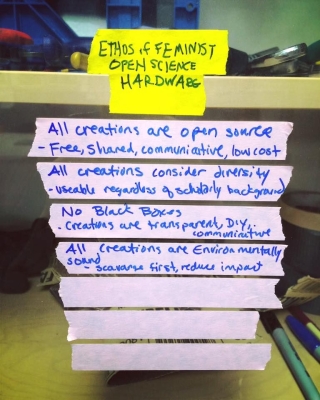
Max Liboiron leads webinar on anti-colonial technology within universities

On Jan. 20, Max Liboiron led a webinar on “Building feminist and anticolonial technologies in compromised spaces” as a part of the fourth season of the Feminist and Accessible Publishing and Communications Technologies Speaker and Workshop Series. Co-sponsored by Alex Ketchum, a faculty lecturer at the McGill Institute for Gender, Sexuality, and Feminist Studies (IGSF), and Concordia University professor Damon Matthews, the webinar detailed how to navigate work in sites tainted by strong histories of colonialism—and ultimately, how to achieve structural change.

Liboiron, an associate professor in geography at Memorial University and formerly the school’s Associate Vice-President of Indigenous Research, is Métis and a leader in developing and promoting anticolonial research methods across disciplines. As the founder of the Civic Laboratory for Environmental Action Research (CLEAR), an interdisciplinary plastic pollution laboratory that operates out of Memorial University, Liboiron has shaped public policy on both plastics and Indigenous research.

During the webinar, Liboiron discussed the concept of “compromise”—not as a failure, as some proponents of institutional change might see it, but as a condition of doing ethical work within uneven power relations. They highlighted the necessity of establishing equitable research methods and policies within colonial systems and institutions.

According to Liboiron, even in the process of decolonization, individuals will inevitably reproduce parts of colonialism due to its pervasiveness. 

“When I’m talking about compromise and reproducing parts of the system that we are trying to change, it’s the condition of doing the thing. It is the condition for making change,” Liboiron said. “You don’t get to start from somewhere else, there isn’t somewhere else, this is the place, and that is the basis of your collaboration in the world.”

Liboiron also highlighted the role infrastructures play in upholding and defining colonial spaces and institutions. They explained that within the research sphere, structural power difference between Indigenous communities and universities is often downplayed; in practice, university researchers, rather than Indigenous people, often stand to gain the most from data collected on Indigenous communities. Thus, one of the key ways to decolonize research and combat unequal power dynamics, Liboiron explained, is to establish data agreements that empower Indigenous communities to own their own data. 

“Indigenous data sovereignty is about how and why they need to own and control their data,” Liboiron said. “A sovereignty model for a research collaboration with an Indigenous group can be that the Indigenous groups decide the priorities, the overarching ethics and goals of the research, but then I as the researcher ‘fuck off’ and do the work. That’s the recognition of unevenness and of owning your place in the uneven infrastructure.”

Ketchum, writing to The McGill Tribune by email after the talk, said she feels inspired by Liboiron’s recent book, Pollution is Colonialism, and is motivated to bring anticolonial scholarship into the classroom. 

“Dr. Liboiron thinks critically about university structures, lab structures, and research practices,” Ketchum said. “I’ve loved being able to assign Liboiron’s work in the GSFS feminist research methods courses that I teach, because their work helps students and researchers question what it means to do feminist and anticolonial research.”

Matthews, a professor, research chair of climate science and sustainability at Concordia, and director of the Leadership in Environmental and Digital Innovation for Sustainability (LEADS) program, hopes universities will use their influence to promote social and environmental sustainability.

“I really appreciate the idea that we can work toward achieving transformative change while also acknowledging the flawed nature of many of the institutions that we operate within,” Matthews said. “But, as institutions, few universities have succeeded in challenging the power structures that propagate the fundamental inequalities and injustices that could undermine our sustainability goals.”

Science & Technology

ROAAr symposium delves into the complicated relationships between scientists

The science behind friendship and how it develops between people has been a longstanding object of study. However, much less research has looked into the friendships between scientists themselves. The Rare & Special Collections, Osler, Art, and Archives (ROAAr) branch of the McGill Library held a symposium on Jan. 20 to explore exactly that. 

Stopes and Hewitt: A correspondence for the ages

Laura Jean Cameron, professor of Geography and Planning at Queen’s University, first met Ingrid Birker, manager of the Public Program at McGill’s Redpath Museum, when she reached out to her in hopes of gaining access to part of the Redpath’s fossil collection. Cameron had requested access to some Fern Ledges fossils housed at Redpath. These fossils had a history: They were important items in the friendship between Charles Gordon Hewitt, an entomologist, and Marie Stopes, a palaeobotanist and suffragette. 

Hewitt was first Stopes’ student at the University of Manchester, where in 1904 he attended her lectures on palaeobotany, the study of fossilized plants. When Hewitt moved to Canada in 1909 to become dominion entomologist, he and Stopes continued to communicate through letters. The two connected over the newly emerging field of ecology, but their friendship also inspired many of Stopes’ feminist writings. 

“The success of their friendship was […] one of the important contributions she may have wished to make for science,” Cameron said during her presentation. “In her writing on behalf of women’s suffrage […] Stopes expressed her belief that a friendship of equality between men and women was not only possible, but was an evolutionary imperative.” 

While Birker and Cameron acknowledged the other friendships that Stopes and Hewitt had with problematic figures in Canada such as Duncan Campbell Scott, the notorious deputy superintendent general of Indian affairs, and Helen MacMurchy, a staunch promoter of eugenics, the presenters glossed over Stopes’ involvement in the eugenics movement. Stopes was a vigorous supporter of birth control and family planning, but primarily because she believed these to be key tools in the practice of eugenics—which, for her, meant selective breeding to preserve the white race. 

Penfield and Cone: Advancement of science but the end of a friendship

Borrowing from his research for a larger exposé published by The Globe and Mail, journalist Eric Andrew-Gee examined the once prosperous, but ultimately volatile friendship between Wilder Penfield and William Cone

Penfield and Cone began working together at the New York-Presbyterian Hospital in 1924, where Penfield practiced surgery, primarily on the brain. When Penfield moved to Montreal in 1928 after being recruited by McGill University, he invited Cone to join him. The pair would eventually found the Montreal Neurological Institute-Hospital (MNI) in 1934. 

“[Penfield and Cone] led a team together that made groundbreaking discoveries about memory, pleasure, anxiety, and learning,” Andrew-Gee explained. “They worked together in ‘double-harness,’ as they both liked to say, for 35 years.”

The friendship devolved, however, as Cone’s skills as a surgeon and dedication to the field of medicine surpassed Penfield’s, causing Penfield to grow jealous. Even worse, in 1953, Penfield was chosen over Cone for the directorship of the institute.

“By the 1950s, there were two camps at the [MNI],” Andrew-Gee said. “Cone’s people focussed on spinal surgery [while][…] Penfield’s focus[sed] on epilepsy.” 

Cone became extremely depressed not long after these events and eventually died by suicide in 1959, which greatly upset Penfield. Despite the tragic ending, Andrew-Gee concluded his talk by acknowledging the instrumental role friendship played in the lives of the two men and their scientific developments.

“Cone and Penfield had a deeply loving friendship, and together, sitting and talking over a microscope or the head of a patient, they helped give birth to the romantic mathematics of neuroscience,” Andrew-Gee said.

Science & Technology

A mother’s fight to bring an understanding of autism outside of the clinic

From last century’s fears surrounding poor parenting to modern vaccine hesitancy, persistent misconceptions about the causes of autism have often resulted in the developmental condition being wrongfully associated with moral panic. During a recent talk hosted by McGill’s Division of Social and Transcultural Psychiatry for the Culture, Mind and Brain Program’s Speaker Series, Marga Vicedo, an associate professor at the University of Toronto studying the history of science, highlighted the story of one mother determined to understand her daughter’s experience with autism. 

Clara Park gave birth to Jessica, her third child, on July 20, 1958. After three years, Park realized that her daughter was different from the rest of her siblings. Seemingly uninterested in other children, Jessica was instead fascinated by numbers, art, and the aurora borealis.

As a stay-at-home mother, Park spent a great deal of time carefully observing her daughter and figuring out how to best support her, and was disappointed when her findings were dismissed by the child development experts she consulted. At the time, psychoanalysis would have interpreted  Park’s efforts to understand her daughter as evidence of refrigerator motherhood—an offensive term used to describe detached, uncaring mothers of autistic children.

“Rejecting the separation of thinking and feeling, Park aimed to show that objectivity and reason are not incompatible with love, and can be a valuable part of mothering,” Vicedo said. “[And] further, that intelligent love could be also a way to reach reliable knowledge.”

Despite the initial opposition, Park remained convinced that her efforts were not at odds with her mothering. She found fellowship in her beliefs through a correspondence with Bernard Rimland, a researcher who attributed autism to organic causes, and her collaboration with Marie Battle Singer, a psychoanalyst and fellow innovative thinker.

Contemporary clinical methods to treat autism were underdeveloped and prevalent therapies, including Applied Behaviour Analysis (ABA), were often criticized as cruel and ineffective. Park reworked such programs by identifying useful principles and tailoring them to the domestic sphere in a pragmatic way. Inspired by certain elements of ABA, Park collaborated with her daughter to develop a practical system for behaviour modification. Incorporating Jessica’s love for numbers, Park and Jessica assigned points to specific behaviours and tracked them using a golf counter.

“Jessica set her goals, chose her rewards, and agreed to the penalties,” Vicedo said. “Their program did not try to eliminate autistic behaviour such as rocking or flapping, but focussed on behaviour that Jessica said she wanted to change, because they made her feel anxious or interfered with other things she wanted to do.”

Park’s impact extended far beyond her household. She presented her knowledge in ///The Siege///, the most comprehensive account of raising an autistic child at the time and an invaluable resource to parents and therapists. She also brought together a large circle of mothers of autistic children who supported each other and corresponded at length.

This vibrant community met regularly at conferences and shared their experiences with each other, discovering important insights along the way. The children were also invited to speak at the gatherings to share their stories and perspectives once they were old enough.

Park was a dedicated proponent of the value of maternal insight and the fight against mother-blaming. She recognized the value of what she called the “deep knowledge of the child in context,” which refers to personalized catering to a child’s needs using observation of children in a wide variety of situations and a full understanding of their history. To Park, this lived maternal experience was a unique tool that did not undermine clinical methods, but complemented them.

“Park was not only questioning widespread notions of good mothering, but also challenging a central tenet in scientific epistemology,” Vicedo said.

Park harnessed both her love and her will in order to better understand her daughter. Her work remains a significant achievement that is deeply relevant to the current era of misinformation surrounding autism. Jessica has grown to be an accomplished artist.

Read the latest issue

Read the latest issue