


Latest News

Commentary, Opinion

McGill’s COVID-19 response has been a shitshow from the start

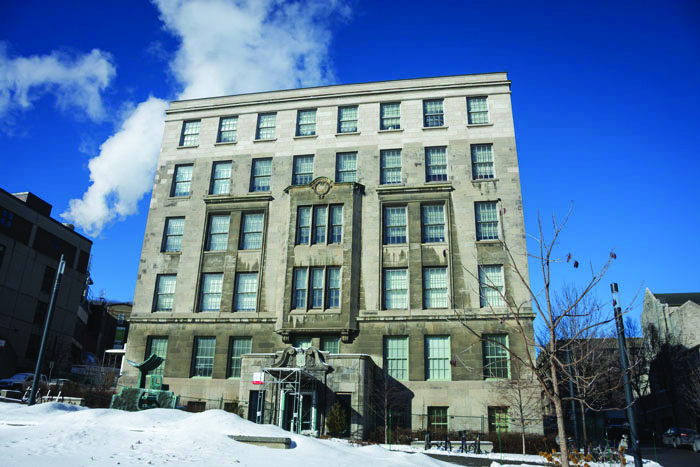
As the COVID-19 pandemic nears its second anniversary, McGill’s response to the ongoing health crisis has been thoroughly disappointing and incompetent. It has gotten to the point where many students are taking matters into their own hands to protect themselves, their peers, and their loved ones. Undergraduates from the School of Social Work voted to go on strike after the administration overruled the school’s decision to postpone their return to in-person classes until Feb. 25. The strike came after McGill violated its own Senate resolution allowing faculties to make such decisions for themselves and the academic freedom that it professes to defend. Similarly, students from the Faculty of Law voted to go on strike until the university introduced better hybrid options. Instead of heeding to genuine concerns about the return to in-person activities, the administration has continued their email and video propaganda campaign in a frustrating attempt to pacify the more than 22,000 McGillians who have expressed their demand for changes through an open letter. This is on par for the course of an authoritarian, paternalistic administration, whose COVID-19 response has, frankly, been a disaster since the beginning of the pandemic.

A few days before the university first shut down early in March 2020, in my capacity as the Students’ Society of McGill University (SSMU) president, I remember speaking to Deputy Provost (Student Life and Learning) Fabrice Labeau about student concerns regarding the then-new virus that was spreading across the globe. As the SSMU President is responsible for ensuring the safety and well-being of the student body, I hoped to glean more information from him regarding the university’s plans. Labeau assured me key administrators were meeting regularly as part of the nascent Emergency Operations Centre (EOC), the insular group that has been deciding McGill’s COVID response over the past two years. I asked if students could be a part of that group, as it was important to communicate student concerns in real-time and have students be an active part of guiding the university’s response. In reply, he said that students would not get a seat at the table because the group presides over “operational matters.” To this day, the EOC does not have student representation.

From the very beginning, the administration’s response has failed students. When universities worldwide first began to shut down, students on exchange were left in the dark. Since then, students in residence have reported that the university has fallen short in upholding its own safety guidelines, and floor fellows have stated that they are not receiving the support or communication they need to do their jobs safely. McGill has neither imposed a vaccine mandate, unlike many other Canadian universities, nor, at the very least, required unvaccinated McGillians to undergo regular rapid testing, like the University of British Columbia. Over the final exam period last December, the administration forced students to complete exams in person, despite the University of Toronto, Queen’s University, and Dalhousie University, among others, refusing to do so, as the Omicron variant fomented the fifth wave of COVID-19.

In the two months since the Omicron variant first appeared in Canada, I had hoped the administration would use this time to make campus as safe as possible for those wishing to return to face-to-face learning. I had also hoped that our courses would be made as accessible as possible for those unable to attend, whether they be immunocompromised, infected with COVID-19, or dealing with the multifaceted effects the pandemic has had on our lives. Instead, the administration has resigned itself to letting McGillians get sick en masse and has left students to fend for themselves if they contract COVID-19 or have to quarantine, relying on the goodwill of their professors rather than a guarantee of online educational access. McGillians have lost faith in the administration’s ability to make the best choices for the safety and well-being of the McGill community.

But it’s okay everyone: The McGill administration knows what’s best for you.
McGill, News

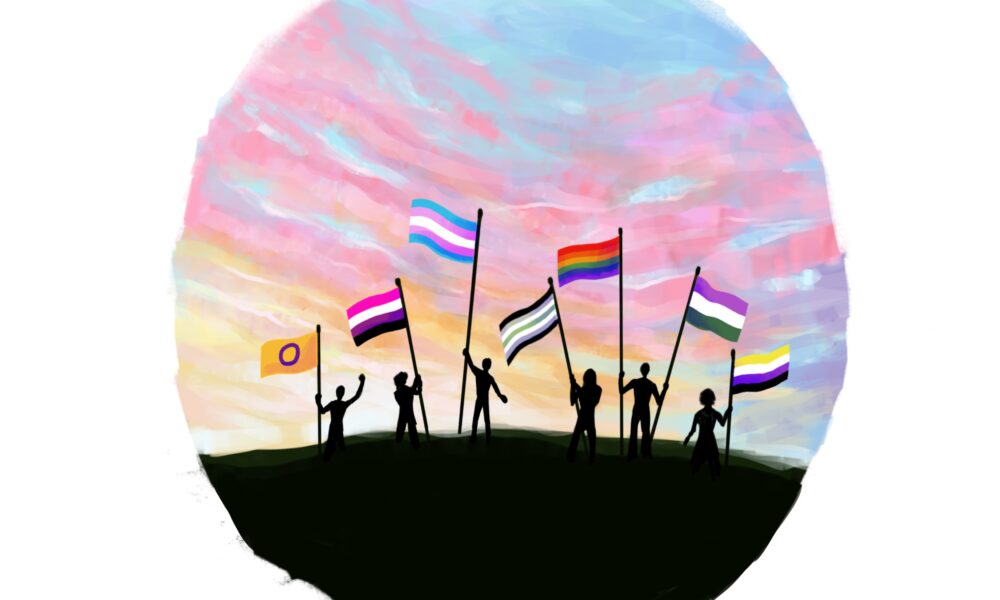
Transgender students cite difficulty in changing legal name on Minerva

A month into the Winter 2022 semester and the McGill administration and the Students’ Society of McGill University (SSMU) have begun preparing for the Spring 2022 graduation season, even organizing graduation photos and planning in-person ceremonies. For Ezra-Jean Taylor, U3 Arts, however, the prospect of finishing their degree in two semesters is stressful because she has been unable to change her name in the Minerva system, which means that currently, their diploma will not state their legal name.

Taylor is a transgender student who spent a year going through the process of legally changing their name, which they accomplished in 2021. While Minerva—the platform McGill uses for official student documentation—has an option for students to input their preferred name, changing a legal name in the system is more complicated, Taylor explained in an email to The McGill Tribune.

“I found some confusing information on how to change my legal name [on Minerva] and emailed the Office for Academic records,” Taylor wrote. “I was told I would need a court order stating my legal name has changed as well as proof of that name being used on ID.”

The process proved to be more convoluted than obtaining a court order. McGill requested that Taylor also provide a new Certificate of Acceptance of Quebec (CAQ) and student visa—both of which are issued by the Government of Quebec—demonstrating their new legal name. 

“As far as I am aware, to reapply for the CAQ and student visa, you need to show McGill transcripts and a letter of admission,” Taylor elucidated. “You see where the issue is? If both groups need the other’s documents, nothing can be done.”

Jamie*, an events coordinator for Queer McGill (QM), told the Tribune in an email that while QM has not had any cases such as Taylor’s come to their attention recently, the struggles that trans students face in dealing with the university’s administrative system have existed for years. Specifically, Jamie noted that the systems in place put trans students at risk of being deadnamed—that is, referring to a person by the name they had before they changed their name—which can remind the person of traumatic experiences and induce feelings of anxiety and depression.

“Students often have issues where they are deadnamed in a variety of locations, such as when logging into MyCourses, accessing through Shibboleth, and others,” Jamie wrote. “McGill has made some small concessions to us, such as changing emails from alias emails to legitimate emails, but that is simply not enough for students.”

Taylor views the obstacles that they are facing as less of a problem on Minerva’s part, and more of a problem from McGill, whose actions and policies, in Taylor’s opinion, are behind the times and harmful for trans students.

“Being transgender in Montreal, and particularly at McGill, is quite isolating,” Taylor wrote. “There are groups and activities here or there, but nothing concrete that could help guide trans students through this process.”

SSMU’s gender and sexuality commissioner Grey Cooper underscored that transphobia is still very present at McGill. 

“There are still frequent issues for students in regards to getting their names respected and used, being gendered correctly, and being able to navigate classes in a way that does not misgender them,” Cooper wrote in an email to the Tribune. “More options and ease in the access of name changes, medical support, and mental health support for trans students who have dealt with traumatic interactions due to transphobia, would help improve McGill for the trans community.”

Transgender students and other members of the 2SLGBTQIA+ can find varying types of support on the Project10, Queer McGill, and the Union for Gender Empowerment websites. Students wishing to address struggles they have faced in the McGill community can contact the SSMU Gender and Sexuality Advocacy Committee.

*Jamie’s name has been changed to preserve their anonymity.

Arts & Entertainment, Pop Rhetoric

The price of stardom: When your image is no longer yours

A little over a week ago, a video surfaced of Kanye West, with the swagger of a man who left his sanity on the 2016 VMA stage, confronting a member of the paparazzi. This isn’t a change of pace for Kanye—the man confronts the paparazzi as often as I miss my 8:30 lectures—but he does bring up an important point on image ownership. 

“You guys can follow us, you can stand outside our hotel at any given time, but you don’t give us any percentage of what you’re making off us, off our kids, and I’m going to change that,” West vowed to the photographer. 

The paparazzo didn’t disagree. He did, however, say that celebrities needed the paparazzi—without them, the stars’ histories would be all but forgotten. 

There is an element of truth to this considering that gossip tabloids shape and cement the lives of celebrities in the public eye, keeping them relevant and wealthy—but it’s also not all it’s chalked up to be. For every celebrity’s career the paparazzi’s press might forge, a dozen more lie in ruins, from ousting celebrities still in the closet to scrutinizing marriages till they crumble—and in the case of Princess Diana, ending lives. All of this, in pursuit of the almighty dollar.

Kanye isn’t alone in his outrage over the use of his image, with more and more celebrities voicing their frustration in recent years. Take Ariana Grande, who posted a paparazzi photo of herself repping her merch on a night out, only to get sued by the paparazzo not once, but twice for copyright infringement. 50 Cent, Jessica Simpson, Liam Hemsworth—the list of celebrity lawsuits goes on and on, each for posting paparazzi photos of themselves on Instagram. Lisa Rinna, best known for The Real Housewives of Beverly Hills, is currently fighting back against a $1.2-million lawsuit after posting paparazzi photos of her and her daughters—but she is the exception rather than the rule. Most of these cases end in settlements, since it’s often cheaper to settle than wrack up legal fees.

Model Gigi Hadid’s case is especially interesting, as her lawyers have argued that her photo was “fair use” due to her pose and choice of outfit, making her a contributor to the piece. Still, the case never set legal precedence as it was dismissed before going to trial, the paparazzi agency having only filed their copyright after the lawsuit.

Despite holding an appeal only rivaled by pharmaceutical executives, the paparazzi seem to have the law on their side. The press can publish photos of public figures without their permission; this right is a benchmark of journalism that allows us to stay informed. Yet I fail to understand where celebrities, as public figures, fit into this, especially when it concerns tabloids. Why is the entertainment of the public a necessity when it means treating stars’ private lives like public commodities? This lack of restriction, in tandem with copyright laws, places paparazzi under the same jurisdiction as wildlife photographers.

It is only right that a studio photographer profits when others use their photo, but their models are consenting and compensated. Celebrities, on the other hand, are neither. When it comes to “entertainment”-based press, photographed subjects should have some level of control over the use and profit of their image, because as celebrities, they are their own brand. The tabloids need to realize the difference between celebrities and the action figures that they inspire.

Commentary, Opinion

Groundhog day: Climate change’s age-old scapegoat

Groundhog Day, a tradition dating back to the late 19th century, has long provided respite from many long winter months. Moving from candles, to hedgehogs, and finally, to groundhogs, the holiday has gone through many transformations. Yet predicting the weather has remained its steady focus. On Feb. 2, the possibility of these -20 degree days stretching on for six more weeks will be determined by none other than Phil, the groundhog from Western Pennsylvania, whose full name is actually Punxsutawney Phil, Seer of Seers, Sage of Sages, Prognosticator of Prognosticators and Weather-Prophet Extraordinary. While the prophetic power of Phil provides a fun start to February, it indirectly dismisses the progressive warming of the Earth due to climate change. 

As the tradition goes, if the groundhog sees his shadow on Feb. 2, then we can expect six more weeks of winter, but if not, then spring weather is just around the corner. However, though Phil has been forecasting since 1887, he has just a 39 per cent accuracy rate––less than the roughly 50 percent odds you would get if you flipped a coin. This holiday is largely based on tradition, rather than lore like many others, its purpose is increasingly muddled and fragmented throughout the years. It is also simply not well known, and even if known, not well understood. It turns out that determining whether Phil sees his shadow or not is actually just based off whether or not he casts a shadow at all, rather than whether he catches sight of it. Traditions themselves can be problematic, as they are often stubborn to change, at the expense of modern issues. Climate change is not linear, but exponential, so despite Groundhog Day being a cute tradition, society has outgrown the need for a meteorological scapegoat. 

Over the past 70 years, higher summer temperatures have been arriving earlier and bleeding into autumnal months because of the cumulative warming effects of climate change. Just last summer, there was a heat wave across North America, with Lytton, a small town in British Columbia burning to the ground after being ravaged by forest fires. Shattering Canada’s previous heat record, the temperatures reached a scorching 47.9 C degrees Celsius. Effects were also felt here in Montreal, with humidex values skyrocketing to between 35 and 40 degrees Celsius and nights providing little to no relief from the uncomfortable heat and humidity. Phil provides a distraction for many who refuse to face the realities of climate change, of why bikini season has become increasingly prolonged. It is no secret that temperatures are rising and extreme weather events are increasing in severity and number across the globe. But rather than blaming an early summer on a groundhog, we need to address the real problem. 

So while this holiday might seem like a harmless way to raise spirits and optimism during the seemingly endless cold months, in a world filled with performative activism, keeping Groundhog Day on calendars emphasizes a holiday that bears little cultural significance today that no one understands nor celebrates. The human desire to find an answer for everything finds temporary relief in holidays like this—succumbing to an external locus of control and letting someone, or something, else take the blame. But humans, alone, are responsible for the worsening effects of climate change, on both individual and industrial levels. Simple and dismissive explanations, like letting Phil take the fall for an early spring, are what the fast-paced world of social media thrives on. 

It is easier to enjoy spring when we can accredit it to the prophetic powers of Phil, rather than the exponentially worsening effects of global warming. We have reached a point where we can no longer be passive in the face of climate change: It affects each and every one of us, and we must be proactive. By the end of the century, summers could be six months long, and that’s not groundhog’s fault. It’s ours. 

Arts & Entertainment, Music, Pop Rhetoric

Concept albums and the problem with defining subjective terms

Albums come in a multitude of shapes and sizes, with each crafted with different aims in mind. In 1973, Pink Floyd released their monumental album The Dark Side of the Moon, a progressive rock masterpiece and one of the most acclaimed albums of the decade. But Dark Side was more than just a collection of tracks; overtime, it has become known as a quintessential concept album

A concept album is commonly understood as an album with tracks whose meanings are oriented around specific themes and ideas. In The Dark Side of the Moon, for example, each song represents a different aspect of an unfulfilled life; the track “Time” highlights people’s wasted years, while the track “Brain Damage” focusses on insanity. The Dark Side of the Moon may appear to be a fairly clear example of a concept album, as its tracks are interwoven with the theme of the “dark side” of life. However,  the definition of these types of albums is actually quite tentative, loosely applied, and relatively subjective. Attempting to define exactly what a concept album is with one concrete paradigm is rather counterintuitive.

Take, for instance, Metallica’s Master of Puppets: Each track represents various destructive activities, ranging from drug abuse to war. The binding theme that ties each track together is the lack of control one feels over their life when caught in a cycle of despair. Yet popular music magazines, such as Classic Rock, do not list the album among other great concept albums, with no definitive reason as to why. If Master of Puppets is not a concept album, then the criteria for calling an album one must be more restrictive than the broad definition of unified themes and coordinated, meaningful songs. 

One way to narrow the definition is to specify that the songs have to form a narrative, and that the album’s meaning is best understood when all of the songs are considered together. Similar to the last definition, this framework adds a storyline element, which would explain why Master of Puppets, a meaningful album that lacks a “plot,” is not generally considered to be a concept album.

However, this definition may be too constraining. While it can accurately describe some examples, such as Kendrick Lamar’s To Pimp a Butterfly, it would exclude what some people consider the first concept album: The Beatles’ Sgt. Pepper’s Lonely Hearts Club Band. With Sgt. Pepper’s, there is little thematic connection and overall narrative between the songs to satisfy this definition. And though this has led some to deny it the status of a concept album, many still attribute the label to it. 

These conceptual problems beg an important Euthyphropic question: Is an album called a concept album because it is one, or is it a concept album because it is called one? 

This question, though clarifying the debate, is not easy to answer. There ought to be a reason to call something a concept album, but what should that reason be? In Platonic terms, what is the “form” of the concept album? When analyzing specific albums, such as Master of Puppets and Sgt. Pepper’s, it seems that there is no objective answer and no definite solution. 

Perhaps the debate itself is misleading. Does it really matter if someone thinks that Master of Puppets is not a concept album while The Dark Side of the Moon is? Nailing down the definition of a concept album is the wrong approach. Otherwise, albums would lose their subjective meaning in the face of a futile search for objectivity in music. To continue down this path may lead us to have to declare, in Nietzschean style, that the concept album is dead, and we have killed it. In other words, trying to force an inherent meaning upon a concept album goes against the personal nature of listening to music. 

The history of music is a wonderful and distinctly personal one; being stringent about labels should not be the way forward. 

Science & Technology

The glowing DNA that can act as protein motion sensors

In the methodical world of scientific research, there is irony to be found in serendipitous stories of discovery. More often than expected, a scientist’s day in the lab is filled with more head-scratching than “eureka” moments. It is in these moments that a curious scientist would dig deeper, even in the negative data. Alexis Vallée-Bélisle, an associate chemistry professor at Université de Montréal, did just that, eventually coming to invent a fluorescent DNA nano-antenna that glows to indicate a change in the structure of proteins.   

The story begins in 2016, when Valleé-Bélisle developed the world’s smallest thermometer. This technology acts as a flambeau torch, where the stick is DNA and the flame is a dye attached to it, glowing bright when the temperature around proteins changes. 

However, Vallée-Bélisle told the The McGill Tribune that the team soon realized that the dye was not glowing due to the change in temperature, but due to a change in protein structure. This occurs when the protein performs its function or interacts with other molecules in the cell. The dye is sensitive to the environment around it and thus detects the nanoscale twists in the protein structures.

 “It was unexpected,” Vallée-Bélisle said. “But we knew we were on[to] something big.”  

“Structure equals function” is a well-known axiom in biochemistry. The proteins in the nails and skin and the proteins in our gut and brain are both made from amino acids, but they work differently because they fold into a variety of 3D structures

Once the structure of proteins is known, it is easy to predict their function. This knowledge, combined with synthetic biology, can be used to develop drugs that bind specific pockets of the 3D structure to inactivate the viral proteins, in order to fix the misfolded proteins observed in diseases, or to design novel proteins

Although the field of structural biology took a huge leap forward in 2020 with DeepMind’s AlphaFold2 algorithm—which could computationally predict the 3D structure of proteins from their amino acid composition—research still depends heavily on experimental studies. X-ray crystallography and Cryo-EM are the current gold-standard methods of determining protein structures. But these experiments are complex enough to consume one’s entire PhD, and require expertise in structural biology, limiting their broader use.  

“People are struggling to have a simple assay [method] to monitor their favourite protein’s activity,” Vallée-Bélisle said. “We need[ed] to come up with an antenna that probes small changes in the conformation of protein.”  

To determine the structural changes of these biological nanomachines, Vallée-Bélisle turned to his favourite molecule—DNA—for nano solutions.  

“DNA’s language is simple, its chemistry is much simpler and programmable,” Vallée-Bélisle said. “We have a DNA synthesizer and we can have a [DNA] antenna by the end of the day.”    

Researchers repurposed their serendipitous discovery of the DNA antenna to detect the changes in the structure of proteins occurring at the time scales of micro to milliseconds. One of the most important parts of this antenna is the glowing dye attached to the DNA. Since different dyes interact differently depending on a given protein structure, the researchers were able to detect five different types of structural changes in a single protein within months of using the same DNA antenna.  

Vallée-Bélisle plans to scale up this technology from detecting one protein structure at a time to detecting 96 possible structures of proteins with different antennas at the same time, all combined on a single palm-sized plate. 

“The goal of any scientist is to have your technology out there,” Vallée-Bélisle said. “If we could build those 96 well plate readers then we probably can make [this technology] available to everybody.”


Discoveries like this one will enable scientists to put more time into thinking of solutions and less time mixing solutions in the lab.  

Album Reviews, Arts & Entertainment

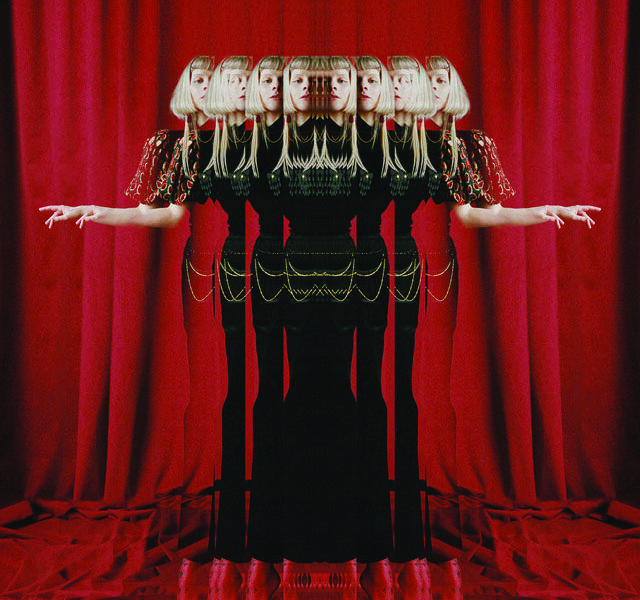
Electro-pop meets celestial beings on Aurora’s new album ‘The Gods We Can Touch’

After her 2015 single Runaway went viral on TikTok in 2020, Norwegian artist Aurora has become one of the most streamed artists on Spotify, sitting comfortably in the top 1000. Her third studio album, The Gods We Can Touch, is her newest release. 

Just like her two previous albums, The God We Can Touch diverges from mainstream pop music with its innovative and cinematic qualities. The album is almost conceptual in the thematic unity between its tracks, with each song dedicated to humanizing a different god or spiritual deity, from Greek mythological characters to Christian figures. 

Aurora opens the album with “The Forbidden Fruits of Eden,” a short song that sounds like mantras layered over a catchy beat, setting the album’s overall mystical ambiance. The second track, “Everything Matters,” continues in a similar tone, as Aurora’s reverbed high-pitched voice harmonizes with gentle piano and electronic beats. The song also features Montreal-based singer Pomme, whose French verses complement the song’s celestial tone.  

In the album, Aurora boldly navigates her way through an extensive sonic palette, combining her on-brand Nordic electro-pop sound with soft folkloric elements. While “Cure for Me” and “A Temporary High” have an energetic quality that makes the listener long for the reopening of clubs, “Heathers” and “Artemis”  are more enigmatic and folkish, with ethereal harmonies and delicate synths. Although the drastic variation of genres throughout the album may seem incongruous, the songs are carefully arranged so that even the most intense songs blend into slower ballads. Creating an album with such radically different sonic elements was certainly risky, but The Gods We Can Touch overcomes the challenge, proving that Aurora has the talent to conquer the pop scene.

Campus Spotlight, Student Life

A peace of home

For most McGill students who hail from outside Montreal, starting university means leaving the place that we have come to call home. When packing for college, we carefully select items that remind us of home and that we can turn to whenever we feel homesick. Arriving in a new city amidst a sea of strangers can make you feel overwhelmed and alienated, but having these items can bring us feelings of peace and comforting memories.

Yet, what is home? Is it a place, a person, a scent, a feeling? Everyone has a different meaning of home; it is usually not tied to a single place or experience, but rather a collection of memories linked to different places and people. 

Tracy Berbari (U1 Management):  Lebanon  

Laughter, family, calm, excitement, peace, fresh air, and love are all things that Berbari associates with the word “home.” 

Lebanon had always previously brought her these feelings. Its breathtaking views and nature brought her peace amidst the country’s hectic financial crisis. Because of the October Revolution, she and her family were forced to pack up the essentials and leave at the end of 2020. Though she does not have a specific item that reminds her of home, there is a place in Montreal that transports her back to Lebanon. 


“On a summer day, a kind man, who was my first friend in Canada, suggested that we take a tour of Montreal,” Berbari said. “Our first stop was the Bèlvédere d’Outremont. After a long walk up the hill, we finally arrived at the top, and when I saw the view I was mesmerized. We were surrounded by all the lovely elements that mother nature had to offer: the birds were chirping, the flowers were blooming, and at that moment in time, I reminisced [about] all of my childhood memories in Lebanon. Suddenly, the move to Canada wasn’t so scary, it felt like home, my home.”

The McGill Tribune / Tracy Berbari

Charlotte Mineret (U1 Arts): Belgium

Having moved multiple times during her time in Belgium, and now recently to Montreal, Mineret understands that a place isn’t the most important thing when it comes to feeling at home, but rather the connections formed with the people around her. 

While she has brought numerous objects from home—including delectable Belgian cheese—the one item Mineret could not have left behind is her horse-shaped glass statue, gifted by her grandparents. Every time she looks at it, she is reminded of her childhood and of her time in Brussels with her family. 

“We went to this place where they made these glass statues and I saw them make it from scratch,” Mineret said. “It has always been on my desk in Brussels and it’s on my desk here in Montreal. It makes my dorm feel more personal and like a home.”

The McGill Tribune / Charlotte Mineret

Manon Fillon Ashida (U1 Arts): Tokyo/Belgium

Before coming to Montreal, Manon used to think that home was associated with one’s citizenship. Being both French and Japanese, she previously never considered Belgium as her home. However, moving to Montreal made her realize that Belgium is where she has created some of her most cherished memories.

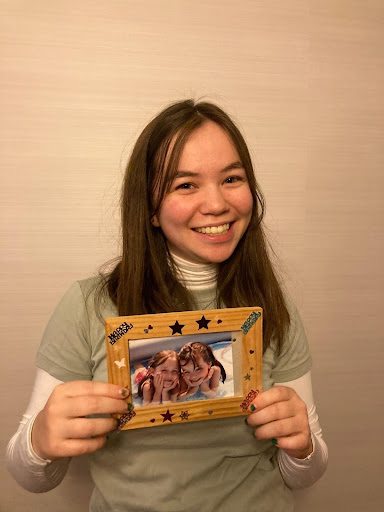
While she did not bring many items back from home—besides tons of clothes—she did bring the picture that her best friend gave her for her fifth birthday. 

“I had just moved from Tokyo to Belgium and she was both my neighbour and my first friend,” Ashida said. “She gave me this picture for my fifth birthday and I have always had it on my desk. It’s an item of great significance to me because I have known and spent so much time with her. It reminds [me of] my time in Belgium and reminds me of home.” 

The McGill Tribune / Manon Fillon Ashida
Student Life, Word on the Y

Word on the Y: First-years’ experiences on campus

Isabella González, Staff Writer

Coming from an international school where I knew everybody, I was overwhelmed when I stepped into overcrowded lecture halls with 100 different students during my first week of in-person class. As I walked into a bustling lecture hall lit up by blinding lights, I decided to take a seat next to a stranger. The anxieties teeming in my head discouraged me from saying hello, but I pushed those feelings aside and started a conversation. After all, I’m a stranger to them too; we both have the same irrational fear of being the first one to break the dense silence between us. While 100 students in one lecture hall can seem like 100 individual things to worry about, those are also 100 exciting opportunities for meaningful conversations, valuable friendships, careless laughter, brunch outings, and late-night study dates at the library. I’ve decided to embrace these opportunities in my first year, and live boldly outside of my comfort zone. While I won’t get to know everyone in my overcrowded lectures, as long as I make one or two friends with whom I can pick up a warm and comforting chai latte after class, I’m set.

Abby McCormick, Staff Writer

As I take a seat in my first in-person class of my second semester at McGill, the aura around me is one of comfortable silence. While I initially thought that being in a sea of people once again would fill my stomach with butterflies, instead, it reminds me that I’m not the only one struggling to find a sense of normalcy amid the chaos of the pandemic. I smile at the girl next to me through my black mask. She smiles back. It reminds me how much I missed the simple gestures of human contact during these weeks of isolation. With the return to the classroom, I am hopeful for more opportunities to connect with other students and make my first year one for the books. Even though I’ve missed out on many quintessential freshman year McGill experiences, like lectures in Leacock 132 and nights at Cafe Campus, I am confident that the uncertainty of the pandemic has made me more adaptable and will—hopefully—make my upper years at McGill feel all the more worthwhile. 

Rosie Kaissar, Contributor 

After a long break filled with isolation and quarantine, I couldn’t be happier to be back on the beautiful downtown campus with lots of commotion all around. While going back to McGill brings back the stress of finals week and 3 a.m. crying sessions in McLenny, the beautiful sight of white, powdery snow and feeling of the refreshing, though extremely cold, air have made it difficult to stay away from campus—even on the days when I don’t have any in person classes. I love how I can just go for a small walk and run into friends who I haven’t seen since early December. Even with the hybrid model of school this year, campus feels like a home, and I am excited to be back.

Sabrina Nelson, Contributor  

As I enter the room of my first in-person lecture, I feel out of place amid a sea of unfamiliar faces. After two years of seeing black squares on my laptop, I had forgotten what it felt like to be in a room filled with strangers. Yet, as I take my seat, the person next to me smiles and says hello. Suddenly the butterflies are gone, and I am at ease. I quickly realized how much I had missed the small pleasures of human contact—the exchange of glances, smiles, and laughter. I had forgotten the excitement that came with meeting someone in a classroom for the first time and sharing a meaningful conversation. I have missed out on so many high school and first-year experiences because of the pandemic, yet even if things will never go back to how they used to, I hope that the return to in-person will make up for everything that I have yet to experience—like Montreal’s nightlife and art scene—and that I will still get to have the college experience that I have dreamt of having. Looking forward, I will grasp every opportunity that to form valuable friendships and push myself out of my comfort zone to make unforgettable memories. I won’t take anything for granted, even the seemingly mundane things.

Student Life

Women in law panel highlights versatility and resiliency in law

McGill Women In Leadership (MWIL) and the McGill Pre-Law Students’ Society (MPLSS) joined forces on Jan. 26 to host a panel about women in law featuring prominent lawyers and legal scholars from across Canada. During the event, panellists discussed the proudest moments of their careers, the challenges of being a woman in law, and the advice they would offer to future lawyers in the audience. 

MWIL’s vice-president (VP) Events, Lis Riveros, U1 Arts, sat down with the Tribune to discuss the motivation behind this event and the importance of connecting future lawyers with other women in the field. 

“Between me and the VP Events for McGill Pre-Law, we agreed that in order for women to advocate for themselves and move their careers forward, they can’t succeed by doing it alone,” Riveros said. “The idea of being able to succeed in law and having the ability, competence, and eventual affluence of being a lawyer are usually tied to those who are not women.”

The panel featured a diverse range of women in law, including a business owner and practicing criminal defense lawyer, a corporate lawyer, an entertainment lawyer, and a legal scholar. Riveros explained that holding the panel remotely actually enhanced the event because it allowed for more diversity in the speakers they brought in. 

“If we did the law panel in person, we could only do Montreal lawyers,” Riveros said. “Zoom and online events give endless opportunities and creativity.”

Riveros highlighted that the goal of this year’s event was to emphasise versatility in law. When planning, it was important for MWIL and MPLSS to include women who were extending the boundaries of their law degree.

For instance, panellist Jordana Goldlist, criminal lawyer and owner of JHG Criminal Law, studied civil litigation before switching to criminal law and eventually starting her own company. 

“My biggest accomplishment is my business overall,” Goldlist said. “After five years [at a criminal law firm], I wanted to do things differently. I left on a leap of faith and started my own practice in 2015. I’ve grown a fantastic practice, a great reputation, and it’s nothing but hard work and dedication.” 

The speakers were also candid about the ugly side of law and the gender bias that follows many women in the legal field. 

Sarit Batner, a corporate lawyer at McCarthy Tétrault in Toronto highlighted how challenging it is for women in law to get their foot in the door. 

“The list of challenges that women have to face in law […] is great and long, and if you’re a racialized woman you can add layers to that. What I was most surprised by were lines of referral. You come into law expecting that there’s no gender difference. However, the client sources are still men, the networks are still men, and being excellent is super helpful, […] but [it’s] often not enough.”

Despite the obstacles they have had to overcome throughout their careers, the panel emphasized to the audience that there is great potential to make positive institutional change with a law degree. 

Professor Priya S. Gupta at the McGill Faculty of Law explained that the law gave her the knowledge and leverage to address the issues she is most passionate about. 

“One of the things I loved [about law school] was how it could teach you to engage in the world, through all these different fields and all these different modes. When you have the things you’re interested in […] the law gives you the profession that allows you to make those changes in the world.” 

Read the latest issue

Read the latest issue