


Latest News

Album Reviews, Arts & Entertainment, Film and TV, Internet, Music

The McGill Tribune Presents: THE BEST AND WORST OF 2021

ALBUMS

  1. Red (Taylor’s Version) by Taylor Swift

2012 was a simpler time: As conspiracy-theorists announced the approach of the world’s end, Taylor Swift was easing into pop music with catchy breakup songs. Nine years later, she has re-recorded her chart-topping album Red, adding 10 new songs (from the vault) that blend with the original album’s mix of colorful bops and somber songs. Featuring Phoebe Bridgers, Chris Stapleton, and more, Red (Taylor’s Version) confidentlynavigates toxic relationships, heartbreak, and the joys of getting older. 

  1. An Evening with Silk Sonic by Anderson .Paak, Silk Sonic, and Bruno Mars

An Evening with Silk Sonic is as smooth as liquid gold. Easy to listen to for even the most unfamiliar listener, every second of this 30-minute record is jam-packed with funky guitar glissandos and ever-present R&B vocals. An Evening with Silk Sonic doesn’t hold any grand aspirations. It’s not trying to change music as we know it forever; it’s simply a good time. 

  1. 30 by Adele

November 2021 was the official month for “sad girl autumn,” established in major part by Adele’s new album, 30. The highly anticipated work was the singer’s first release since 2016’s 25—and her signature powerhouse vocals and wistful lyricisms undeniably surpass all expectations. With standout songs like “I Drink Wine” and “Can I Get It,” 30 is an intense emotional collage that bridges themes of heartbreak, motherhood, and reinvention. Whether you’re 30 or 13, the album is an unforgettable insight into Adele’s creative ingenuity.

  1. Solar Power by Lorde

After a four-year hiatus, Lorde’s third studio album does not disappoint. Solar Power combines the artist’s brilliant lyricism with innovative acoustic sounds inspired by early-2000s soft rock. The resulting album is a candid ode to the power of nature, filled with Y2K references that add a slight dose of melancholia. Released in early August of this year, Solar Power was the perfect conclusion to the summer. But its appeal has extended beyond sunny weather, and its joyful beats will definitely be played during the dull winter days to come.

SONGS

  1. “MONTERO (Call Me By Your Name)” by Lil Nas X

Since his debut in the mainstream scene in 2019, the internet can’t get enough of Lil Nas X. The release of “Montero (Call me by your name)” came at the perfect moment: During a time of universal misery amid the COVID-19 pandemic Lil Nas X’s catchy beats were what we didn’t know we needed. The song took the world by storm, becoming certified platinum in the fU.S. just a couple weeks after its release. For the 2SLGBTQIA+ community, the song was like a breath of fresh air—it was truly refreshing to see the rapper embrace his queer identity so authentically and unapologetically.

  1. “Driver’s License” by Olivia Rodrigo

Taking a page out of Taylor Swift’s book, Rodrigo began her career with a song about heartbreak. But what sets “Driver’s License” apart is its brutal honesty. Rodrigo paints a vivid image of how her driver’s license, a sign of flourishing adulthood and widening horizons, became the vehicle for a metaphor about mourning a failed relationship. Rodrigo’s candor is why “Driver’s License” is the hit of the season. Well, that and its killer melody. 

  1. “All Too Well (10 Minute Version) (Taylor’s Version) (From the Vault)” by Taylor Swift

Taylor Swift’s 10-minute re-recording of a nearly 10-year-old song is a perfect example of her lyrical and musical genius. In this emotional ballad, Swift reflects on her naivety in past relationships, notably alluding to her former relationship with Jake Gyllenhaal. Melodically swelling as she begins to recognize the red flags, “All Too Well” is a cathartic break-up anthem that is the ultimate musical remedy for your toxic breakup blues. 

  1. “Off The Grid” by Kanye West

Kanye West, Playboi Carti, and Fivio Foreign team up for a hard-hitting assertion of pride about how far they’ve come while still giving their thanks to higher powers. Over a drum-heavy drill beat, Carti’s adlibs, Fivio’s verse, and Ye’s chorus collide for one of 2021’s best songs of the year. If Playboi Carti’s Whole Lotta Red/ wasn’t a hard enough collaboration between Playboi Carti and Kanye West, “Off The Grid” fills in for whatever was missing.  

FILMS

  1. Dune
(radio-canada.ca)

This film proved that a runtime of 155 minutes can still feel like a tease. Adapted from Frank Herbert’s iconic novel, Dune was a massive highlight of cinema this year. Dune follows the noble House Atreides as they assume control of the planet Arrakis and its production of spice, a precious resource. While the family deals with threats to their acquired power, teenage heir Paul (Timothee Chalamet) grapples with visions of a complicated future. With powerful performances, gorgeous cinematography, and an intense score, Dune is a must-see for those patient enough to sit through it.

  1. Spencer
(imdb.com)

Christmas with the British royals isn’t all fun hats and extravagant dishes. Directed by Pablo Larraín, Spencer is a fictitious retelling of the tenuous marriage between Diana, Princess of Wales (Kristen Stewart) and the infidelious Charles, Prince of Wales (Jack Farthing). As she navigates intrusive journalists, rude in-laws, and dinner-party politics, Diana struggles to find her footing. Lush scenery and a powerful performance by Stewart make the viewer forget they’re watching a made-up flick about a family of imperialist one-percenters.

  1. The Suicide Squad
(empire.com)

The fact that The Suicide Squad has an actually coherent storyline already places it a cut above its predecessor—but it doesn’t stop there. The newest James Gunn flick has visually-scrumptious special effects, a soundtrack you’ll be humming for days, and an ensemble that would make Tarantino drool. There is the upbeat yet unpredictable Harley Quinn (Margot Robbie), the brooding Bloodspot (Idris Elba), and John Cena as…well, John Cena. But it’s really King Shark (voiced by Sylvester Stallone) who steals the show.

  1. No Time to Die
(cnn.com)

Daniel Craig is back for his fifth and final performance as James Bond in No Time to Die. The film has all of the exciting explosions and fight scenes that we expect in a 007 film, yet it also manages to tie up the loose ends in Craig’s collection of the Bond franchise. One standout new character is Paloma (Ana de Armas), a girlboss CIA agent who matches Bond in charm and intelligence. And for the first time ever, rejecting this hero’s previous standards of toxic masculinity, James Bond shows emotions and vulnerability.

TV SHOWS

  1. Sex Education
(netflixlife.com)

Not many shows can claim to be as representative and authentic as Netflix’s Sex Education, which has gotten better and better with each passing season. The third season centres on Moordale Secondary School’s new principal and her more conservative approach to education. With the new addition of gendered uniforms and abstinence-heavy sex education classes, Otis (Asa Butterfield) and his friends are faced with new challenges in exploring their sexuality and gender identity. This season does a focussed job exploring the dangers of oppressive mindsets on teenagers without straying from its humorous tone. 

  1. Squid Game
(theeconomist.com)

What is there to say about the biggest show of the year except that it’s utterly enthralling? Squid Game takes place in a world where people in severe debt are invited to participate in deadly children’s games for a chance to win a large fortune—and a second chance at a better life. The heart of the show is its characters, each so compelling yet pitiable, and in some cases detestable; their humanness is why it’s so easy to connect with them.  

  1. WandaVision
(IndieWire.com)

Marvel Studios kicked off its television endeavours on Disney+ with one of its most unique and innovative story arcs. Starring Wanda Maximoff (Elizabeth Olsen) and Vision (Paul Bettany), WandaVision follows the married couple through a progression of sitcom styles and stories as they try to piece together their past, present, and future. With striking new theme songs, cinematography, and costuming in each passing episode, WandaVision is a must-see for Marvel fans. 

  1. The White Lotus
(npr.org)

HBO’s The White Lotus, written and directed by Mike White, is a blueprint of how not to act on vacation. Two entitled families and a hysterical Jennifer Coolidge manage to antagonize every staff member working at the White Lotus, a luxury Hawaiian resort. The staff, in return, have fun taking revenge by stealing the guests’ drugs and sabotaging romantic date nights, creating a satirical comedy meant to make the viewers uncomfortable.

WORST:

  1. Song: “Obsessed” by Addison Rae

The debut single by TikToker and internet personality Addison Rae is just as perplexing and disappointing as her entire career. While Rae most likely intended to release a dance-pop anthem about self-love and empowerment, the actual song sounds vacuous and conceited. Given her rising stardom, it’s okay for Rae to obsess over herself. But don’t expect general audiences to obsess over this painful waste of 134 seconds. 

2. Album: = by Ed Sheeran

Ed Sheeran’s transformation from soft acoustic country boy to possessive synth-pop star is complete in his newest album, simply titled =. Sheeran’s lack of creativity in sticking to math symbols is emblematic of this creative endeavor in its entirety. As this album is titled after a finalizing symbol, hopefully it is Sheeran’s final album.

3. Film: Space Jam: A New Legacy

(BBC.com)

Playing on nostalgia for an easy cash-grab has been a recurring trend in Hollywood for a few years now. If you grew up in the late ‘90s, you most likely remember the iconic movie Space Jam, in which basketball superstar Michael Jordan befriends beloved Looney Tunes characters. The 2021 sequel, unfortunately, is nothing like the original. It’s not much more than two hours replete with tactless product placements, flat jokes, and unnecessary social media references.

4. TV Show: Pretty Smart
(eonline.com)

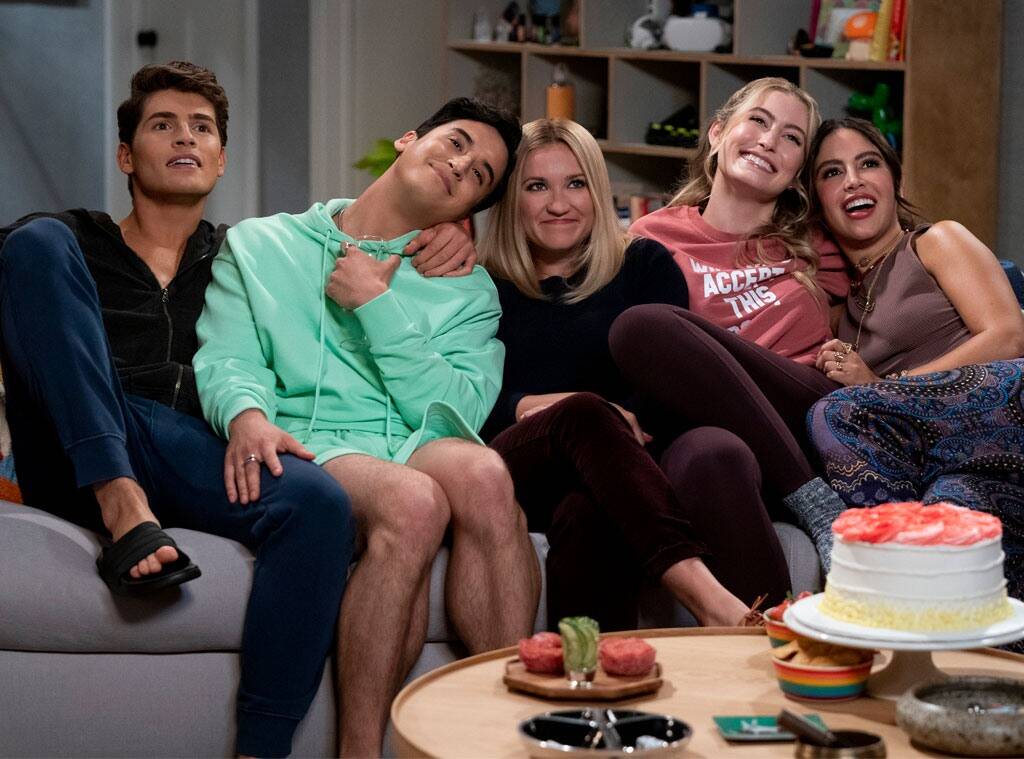
Pretty Smart, the latest Netflix sitcom, is about as appealing as the leftover grey slush at the bottom of an Ice Capp. From the title alone, it’s clear that the producers at least have a firm grasp of irony. The series follows Chelsea (Emily Osment), a self-proclaimed brainiac, as she’s forced to live with her sister and her “eccentric” friends. Little to say, the premise is not very inspiring—but don’t worry, nothing else about the show is either. If this gets picked up for a second season, I’m selling all my lively possessions and abandoning human society to live among the Cloudberries.

McGill, News, The Tribune Explains

Tribune Explains: COVID-19 protocols for final exams and the Winter 2022 semester

With the final exam period taking place from Dec. 7 to Dec. 21 and the Winter semester rapidly approaching, the McGill administration has been sending emails to students and faculty outlining ongoing and changing COVID-19 safety procedures. The administration plans to host in-person exams and allow approximately 90 per cent of classes to be delivered in-person next term. Many, however, have become more concerned since the recent discovery of the Omicron variant in Canada on Nov. 29. The McGill Tribune looked into what students can expect for the upcoming exam season and semester.

What COVID-19 safety measures are in place for students taking in-person exams? 

Each exam room will be set up to allow for adequate air circulation. McGill has measured the CO2 levels in its buildings and implemented measures to maximize fresh air circulation accordingly. Procedural face masks will continue to be mandated, and fresh masks and hand sanitizer will be available at the entrance of each exam room. The administration recommends that students change their procedural mask every four hours. In the event of an exposure, those wearing the same mask for more than four hours are considered medium- to high-risk contacts, and will be required to get a COVID-19 test.

Academic accommodations for COVID-19-related issues will continue to be offered throughout the exam period. Considerations to compensate for missed exams will be made for any students who test positive for COVID-19 or are required to isolate due to a public health directive, potential exposure, or the instruction of a healthcare professional. The form can be found under the ‘personal’ tab on Minerva. 

How has the university responded to the emergence of the Omicron variant? 

According to McGill media relations officer Frédérique Mazerolle, the COVID-19 situation is being monitored closely, and so far there have been no changes in procedure for either the exam season or Winter semester.

“The university has contingency plans and will put in place additional measures if warranted, based on public health guidelines and factual information,” Mazerolle wrote in an email to The McGill Tribune. “Unless epidemiological conditions change very significantly in Montreal, final exams will continue to be delivered in the format as described in the course outline.”

By means of a university-wide email, the administration also asked students to reconsider international travel to avoid being stranded in light of changing travel restrictions in Canada and abroad. 

How will classes look during the Winter 2022 semester?

Courses with less than 200 students enrolled—which account for approximately 90 per cent of all classes—are expected to take place in person next semester, though some of these courses may still have a hybrid component. Just like the Fall 2021 term, if a course is being delivered remotely, it will have no room assignment on Minerva. The 200-person limit does not apply to research laboratories, which will be back to full operation.

The Academic Accommodation Policy offered throughout the Fall 2021 term will continue to be offered in Winter 2022 to accommodate students that miss classes, deadlines, and/or assignments for COVID-19-related reasons. For the upcoming term, instructors have been encouraged to include modes of remote participation for in-person classes, and to offer leniency for assignment due dates. 

Will the rapid tests for asymptomatic students at Trottier continue to be offered next semester? 

According to a Dec. 2 email sent out by Associate Provost Chris Buddle and Deputy Provost Fabrice Labreau, the rapid testing centre in the Trottier building for asymptomatic individuals will continue into the winter semester. Having found 64 positive asymptomatic cases out of 1,350 tests administered, the university considers the testing initiative a useful tool in preventing outbreaks on campus. There are plans to expand the testing options offered, with further information to come. 

McGill, News

Divest McGill delivers petition to administration urging immediate divestment from TC Energy

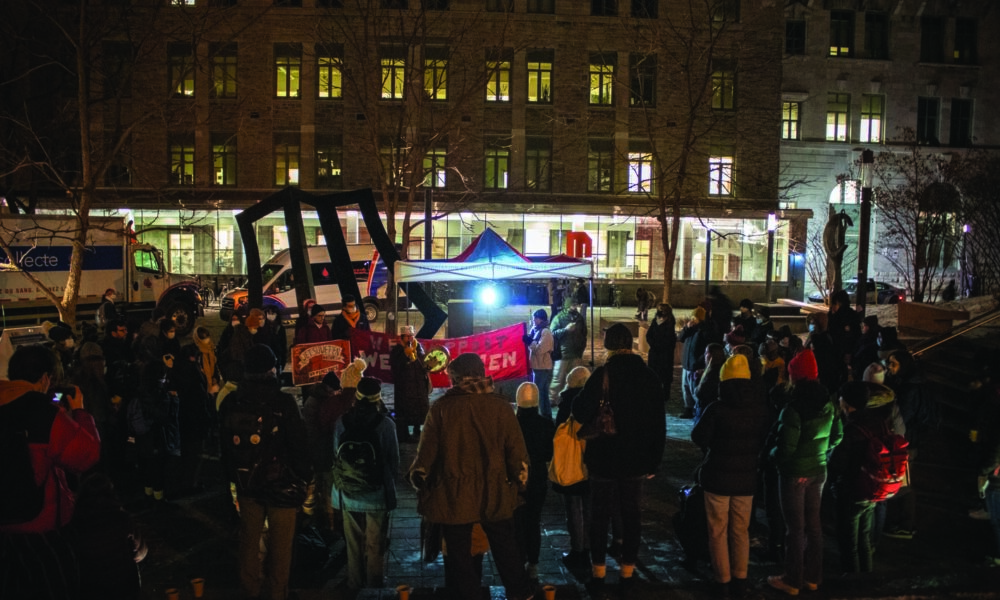
Divest McGill and other campus groups gathered outside the James Administration Building on Dec. 1 to show solidarity with Wet’suwet’en land defenders. Student activists assembled to listen to speakers and gather signatures for a petition that urges McGill to divest from TC Energy—the fossil fuel company building the Coastal GasLink (CGL) pipeline through Wet’suwet’en territory without proper consent.

During the event, Divest members walked around with QR codes that linked to the petition and offered attendees free hot chocolate. The group then gathered around a tent to listen to the lineup of speakers that included Marlene Hale, a Wet’suwet’en elder, Atreyu Rivers Lewis, events coordinator for the Indigenous Student Alliance (ISA), Andreas Iakovos Koch from the Divest for Human Rights campaign and Students in Solidarity for Palestinian Human Rights (SPHR) McGill, Elijah Aedo-Castillo from the Black Student Network (BSN) McGill, Daniel Tamblyn-Watts from the McGill Corporate Accountability Project, Shelly Bahng from the Pan-Asian Collective, and Mireya Bayancela, an Indigenous storyteller, artist, and activist.

Hale was the first to speak, condemning the Royal Canadian Mounted Police (RCMP), who have been brutally opposing land defenders, invading resistance camps, and arresting anyone they deem to be in the way of the pipeline’s construction.

“[It is] not only [that] the Indigenous people of the Wet’suwet’en nation are being tortured, […] but now it’s also the journalists, and that’s where it really hits hard and hits home for us,” said Hale. “Without the word getting out [about] what’s going on in this world, without having journalists writing for us [and] taking down everything that the RCMP [and] CGL [are] doing in our nation […] the world will never know. The world would never know what is going on with us in our traditional land.”

Other Indigenous speakers touched on their experiences as McGill students. Lewis, a U1 Arts student from the Anishinaabe Nation in Ontario, described facing racism—including blatant denials of history—throughout their time at university.

“I am disgusted to be among professors and even some students who are so uneducated and so ignorant towards Indigenous struggles,” said Lewis. “They use words like ‘post-colonialism’ as an insult to our struggles. They use words to try to justify and normalize violence and genocide, forced sterilization, and assimilation policies [….] They do it every day so casually. I’ve had white professors tell me horrible things, [like] that the Cree or the Inuit had it easier because they lived up north. I’ve had professors tell me that we’re never going to live in a society that’s without colonialism. I’ve had professors tell me that it’s a dark past and a dark history and that our lived experiences are based on just the past.”

Stefan Christoff, radio host of Free City Radio on CKUT 90.3 FM, helped write the petition. Christoff spoke to The McGill Tribune ahead of the protest, explaining the implications of McGill’s roughly $4.7-million investment in TC Energy.

“McGill has talked a lot about sustainability, and [has] talked a lot about the environmental crisis we all face,” Christoff said. “[McGill’s investments are] obviously a direct contradiction with that rhetoric, and beyond [the fact that] these investments directly are constructing an oil and gas pipeline, they’re constructing that pipeline on Indigenous lands [….] Many, many members of the Wet’suwet’en Nation are against this pipeline.”

Divest sent the petition to the McGill administration on Dec. 2, with 748 signatures. 

Emerging Trends, Student Life

Making way for handmade gifts

When I was in high school, I used to start making my Christmas gifts in the summer. I’d knit stuffed animals, ornaments, socks, mittens, and anything in between. They were a vivid collection of knit items that didn’t always look like the pattern pictures in the books. But that was part of their charm.

I was deeply invested in the gifts during the weeks leading up to Christmas—I would bring my knitting with me to all my classes. The metallic reverberation of knitting needles dropping on the floor would send all eyes in my direction, my teachers scowling at me, or laughing if they were a little more sympathetic. Making handmade gifts is a ritual that has always been a part of the holidays for me.

This season was no exception; as we reach the conclusion of another turbulent year, handmade gifts offer a creative outlet for academic-weary students to extend a thoughtful gesture to a friend or loved one. The McGill Tribune sat down with a few students to hear about their craft. 

Sydney Saleh, U4 Arts, created a collection of quirky objects for her roommates last year.

“I found fuzzy gloves at the dollar store and I made them into little creatures,” Saleh explained. “I pushed the thumb in so it only had four fingers in the bottom, and then I stuffed it with stuffing from an old pillow. [They] definitely looked so asymmetrical, but that was kind of the point.”

In addition to being inherently unique, handmade gifts are also often a cheaper alternative to store-bought presents. 

“We usually have a Christmas get together where we all exchange gifts and I was very broke,” Saleh said. “I didn’t have a lot of money to go and buy them everything that I would have wanted to, so I [decided to] make things from scratch that will have some kind of unknown value.”

Rather than attempting to disguise the fact that the gifts weren’t store-bought, Saleh decided to take advantage of their unique handmade nature.

“I wrote little individualized notes for each of my friends and I put them inside [the gifts] in case they ever came undone,” Saleh said.

I couldn’t help but think of my many stuffed animals that had fallen apart—this just became part of the endearment of Saleh’s gifts.

While Saleh gave her friends their gifts in person last year, Christal OuYang, U3 Arts, who stayed with her parents in Vancouver, shipped off her handmade presents across the country, and even across the world.

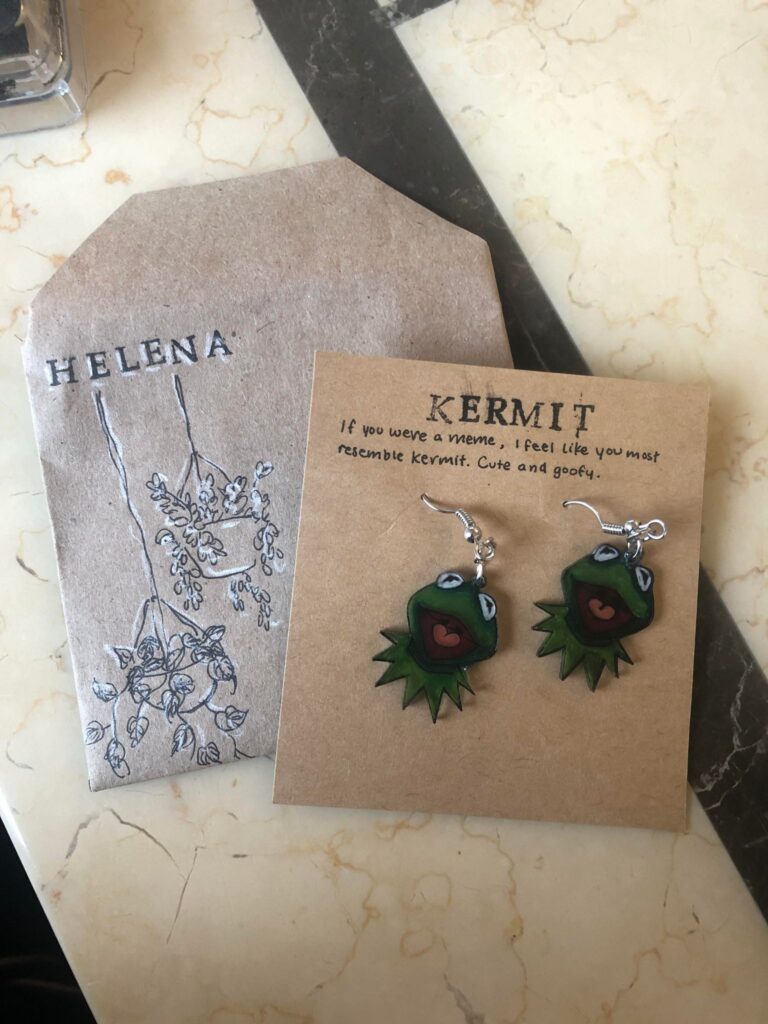
OuYang made crocheted scrunchies, painted cards, and whimsical earrings. She and her girlfriend also sent each other packages during their long-distance relationship.

“For Christmas, I embroidered a hoodie for her with one of her favourite kinds of instant ramen,” Ouyang told the Tribune.

Christal OuYang / The McGill Tribune

Like Saleh, OuYang agrees that the unique nature of the handmade gift sets it apart from store-bought alternatives. 

“I think it’s so much more personalized,” OuYang said. “I feel like when you buy a gift it can easily become one of those things where it just sits around.” 

For many others, like OuYang, the pursuit of crafts spiked last year during the pandemic.

“During COVID, I had a lot more time because I didn’t have a social life,” OuYang joked. “When I scroll past all the pictures of people [on my phone] and I get to the COVID-era, it’s just photos of things.”

As I talked with Saleh and OuYang, I was reminded of how deeply therapeutic it is to make gifts for others. Once exams are over, it’s relieving to become invested in a ritual, tactile activity—an activity so different from the endless essays and exams that dominate finals season.

“It is very fun as a stress reliever,” OuYang said. “There’s also a goal that I’m reaching and it’s not just benefiting me, but making other people happy.”

Emerging Trends, Out on the Town, Student Life

Montreal then and now: Documenting the city’s changing urban landscape

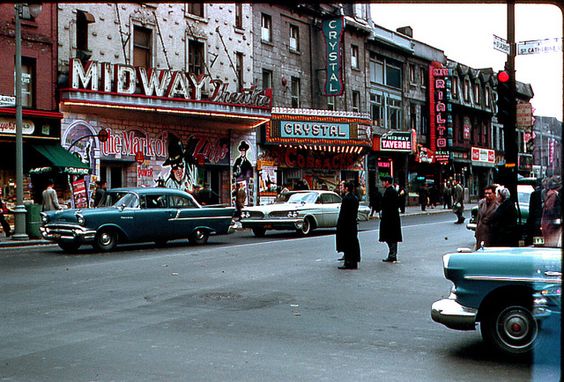
Every few days, Instagram account Montreal Then and Now posts historical photographs of the city––sometimes recognizable intersections and buildings, other times obscure corners or neighbourhoods. Swipe to the left, and you’ll see a present day snapshot of these settings at the same angle, all taken by Elijah Herron, creator of the project. 

Herron made his first post in 2018, when he was working toward his degree in Urban Planning at Concordia. Having access to a breadth of historical maps and photos while in school, he was curious to see the changes and preservations made to the urban fabric of the present day. 

A series of pictures show the transformation of The Empress Theatre from its heyday in the 1920s, an Egyptian Revival style theatre that has sat empty in the Notre-Dame-de-Grâce area for two decades. Another reveals the predecessor to a popular buffet restaurant in Chinatown to have been a cabaret. 

Herron’s photo sets sometimes feature historical landmarks, like the site of the 1986 Canadiens Stanley Cup Riot, or the apocalyptic 1884 snapshot of massive ice-jams intruding upon Old Port. Many of his posts reveal the effects of displacement and gentrification in a neighbourhood; lively streets once occupied by independent businesses are transformed to emptier sidewalks and corporate storefronts, and many architectural and cultural heritage sites are lost to larger commercial ventures and infrastructures. 

The contrast between images is often drastic. In the comment sections, followers of the account fill Herron’s phone with waves of nostalgia for the city’s past landscape. Under a photo comparison of Théâtre Outremont, one commenter writes, “Wonder how long before some developer turns this into condos.” Another user expresses a sentiment echoed across many posts: “Sometimes you’ve really just got to admit…this city has grown uglier.” Although Herron relates to his followers, he’s wary of too much pessimism. 

“I do feel nostalgia to a certain extent but I am careful not to romanticize the past too much,” Herron wrote to The McGill Tribune. “I like to remember that [the drastic changes] are part of a long process of little changes.” 

Despite the sense of extreme and rapid loss triggered by his posts, Herron reminds residents that they have the ability to influence the present and long-term changes of their neighbourhood, or city. 

“Being involved in the life of a city is more than just being upset when you see change, and there are varying ways to influence the future,” Herron wrote. “Voting, petitioning for preservation and heritage status, going to local meetings, seeing what is happening in your neighbourhood directly!”

In Montreal, local housing committees and tenants’ associations advocate for residents’ rights and community-oriented urban planning. In the 1970s, The Milton-Park Citizens’ Committee created a non-profit, co-operative housing project to oppose the destruction of their community by a real-estate company. Or, take The Chinatown Working Group, which formed in 2019 to preserve the architectural and cultural heritage of the neighbourhood. 

Herron hopes that the Montreal Then and Now project will make people more aware of the transforming urban terrain around them. As a generally nomadic population, students can be especially disconnected from a neighbourhood’s historical context and the effects of their own presence. 

“I like to think people are feeling a connection to the city as a living thing that changes over time, sometimes for the better, sometimes for worse,” Herron wrote. “Being caught up in our lives and becoming used to our surroundings, I think [the project] can give you an opportunity to just stop and reflect on what has been happening around us.” 

Even before starting the project, Herron loved to take walks through different neighbourhoods in Montreal. After spending so much time with the archives of the city’s past geography, the different historical layers of the city feel all the more intimate. 

“Before doing a lot of research, cities can seem like a monolith or somewhat inaccessible,” Herron wrote. “Through the constant work of this page everywhere you start noticing historical consistencies as well as seeing locations having a historical life.”

Science & Technology

CRISPR-Cas9, the unwitting revolutionary

Bacteria get a bad rap, and often deservedly so: Different strains cause a range of infections and diseases, including pneumonia, strep throat, and tuberculosis. However, any well-researched health food advocate can list the many benefits of the bacteria present in yogurt, and your local pub would be doomed without the strains integral to crafting their signature brews. What might be even more surprising is that a recent, revolutionary gene-editing technology, once exclusively the subject of science fiction, is based on the bacterial genome.

Bacteria and archaea, the original hosts of the CRISPR-Cas9 system, use this DNA-protein system to defend themselves from viruses. CRISPRs are DNA sequences that repeat in the genome of a bacterium, interspersed with fragments of genetic code from past viral invaders. When a virus enters a bacterial cell, the remnants of that same virus held in the bacteria’s DNA help identify and eliminate the virus. Once a virus is identified by a bacterium, Cas9 proteins try to figure out whether the new viral intruder matches any of the genetic information contained in the CRISPRs’ sequences of their DNA. If the virus matches the stored genetic information, the Cas9 protein will cleave it into pieces. 

In 2011, researchers, including Nobel laureates Jennifer Doudna and Emmanuelle Charpentier, discovered that Cas9 proteins can be used to cut genomes that do not contain viral information, inspiring a plethora of research projects that have widened the scope of biotechnological possibility.

One such project is spearheaded by Daniel Sapozhnikov, a PhD candidate in the Department of Pharmacology and Therapeutics at McGill, and Moshe Szyf, a professor in the same department. The project aims to develop a way to remove methyl groups—one carbon atom bonded to three hydrogens—from genes. Many diseases and disorders are dependent on whether specific genes are expressed, or “turned on.” Since varying amounts of methylation are associated with whether or not a gene is active, then being able to remove methyl groups could have important consequences for gene manipulation in scientific studies.

“Since the 1980s, it’s been shown that […] genes with less [methylation] tend to be expressed [more] and genes with more tend to be expressed [less],” Sapozhnikov said in an interview with The McGill Tribune. “That’s basically the same conclusion that we have been stuck with in 2020. Without the ability to manipulate the DNA methylation levels at specific genes, there is really not much causational evidence for how DNA methylation and gene expression interact.”

In order to better understand the relationship between methylation and gene expression, Sapozhnikov and Szyf developed a technique to demethylate select regions of a cell’s DNA.

CRISPR-Cas9 plays an integral role in the demethylation technique developed by Sapozhnikov and Szyf. By using guide RNA and Cas9 to block the methylation of genes, the effect of DNA demethylation can be evaluated in different cases. The specific system of CRISPR-Cas9 the team used is known as dCas9, which is CRISPR-Cas9 with a modified protein that prevents the cutting of DNA—a potentially lethal consequence—while retaining the important function of gene targeting. Once the dCas9 protein reaches the desired target of a genome, it binds to the site, preventing methylation of whatever it is attached to by physically blocking the process.

Although other teams have developed techniques for demethylation, Sapozhnikov believes that their method is the most exact.

“There have been other tools that have been made that do similar things, but we argue that our tool is better from a causational perspective because […] it has fewer other activities,” Sapozhnikov said.

The technique developed by Sapozhnikov and Szyf only works to remove methyl groups. Understanding the correlation between demethylation and gene expression could help the development of therapies to treat the numerous problems that arise from the improper functioning of gene expression. 

CRISPR-Cas9 is still a very new technology, and it can often have unforeseen consequences in the cells it is used on—not to mention the ethical concerns raised by editing someone’s DNA, which is a topic of heavy debate and even outrage amongst the scientific community. Despite the many unanswered questions, CRISPR-Cas9 represents an incredible step toward revolutionary gene therapy, and with research like that of Sapozhnikov and Szyf, important new uses will continue to be explored.

Student Life

Taking the stage at Gerts

The mere idea of the adrenaline rush of getting up on a brightly illuminated stage and pouring one’s soul out in front of a live audience is enough to make some feel queasy. However, for student musicians, the excitement and anticipation of a high-energy performance are what makes the hours of tireless practice they put into their craft worth it. 

After nearly two years of virtual gigs, McGill’s student musicians are more than eager to make their return to the stage. Many are excited to perform at none other than Gerts, McGill’s campus bar. 

Despite having been closed since 2018—a period long enough that most fourth-year students had never been until this year—Gerts has quickly become a go-to spot for McGill students. On a typical weekday evening, students can be seen getting drinks and chatting with friends in this cozy, laid-back environment. As many students know, Gerts truly comes to life in the presence of live music. Student and alumni musicians, especially, have found their place on its stage. 

Up and coming artist Ezra-Jean Taylor, U3 Arts, performed at Gerts for the first time two weeks ago. The indie-rock musician dabbled in various instruments growing up, but decided to delve into music composition during the COVID-19 lockdown.

“I began loosely learning [the guitar] and writing before the pandemic,” Taylor told The McGill Tribune. “Then, [during quarantine] I decided to sit down, record, and really add a layer of complexity to create a full song.”

After seeing an advertisement from CKUT, McGill’s campus community radio station, looking for live performers to take the stage at Gerts, Taylor decided this was a prime opportunity to put herself out there. 

For Taylor, Gerts’ friendly, student-focussed ambience made this performance one for the books.

“There was a good mix of people,” Taylor explained. “Some people were heavily focussed on the music, while it was a backdrop for others, but everyone was cheering and having a good time.”

As she is used to playing at smaller venues, performing at Gerts was a big step forward for Taylor’s music career. 

“It inspired me to look for more venues with bigger sound systems because it’s a lot of fun […] as a live musician who does a lot of effects,” Taylor said. 

Like Taylor, Sarah Krier, Arts ʼ20, was met with an overwhelmingly positive response when she took the stage at Gerts in November. This was her first time entering McGill’s campus bar since its closure in 2018, her first year of university. Krier felt that the performance was all the more meaningful because she has grown so much on a personal level since her last visit to the bar. 

“It felt crazy to be back at Gerts,” Krier said in an interview with the Tribune. “There was a lot of nostalgia for me there in playing […] songs that I’ve written since I’ve come into my own musical identity.”

Since graduating from McGill’s psychology program, Krier has worked as a freelance musician in Montreal. Known in particular for her soulful lyrics and soft accompanying instrumentals, Krier aims to connect with her audience and express a wide breadth of feeling. 

“I [try] to maintain very emotional, pointed writing and lyrics, with the goal of having this swath of songs where you can [feel] gut-wrenched, but also […] a crying in the club kind of vibe,” Krier explained. “Something you can dance to, but still feel a lot of emotions.”

Krier’s familiarity with the space as an alumna made her comeback to the stage particularly memorable.

“The audience was super energetic but seemed down for a calm set, which is what I brought,” Krier said. “[Performing] at this place that I’ve spent so much time at was comforting, and it was a nice reopening to the world of performing.” 

Krier often finds writing inspiration in spontaneous day-to-day interactions with strangers and friends––an experience that was largely lost during quarantine. She can relate to the struggles for invention that many artists experienced during the pandemic.

“When [COVID-19] initially hit, I felt this surge of creativity because I had so much time. I got really into recording and remote collaborations,” Krier explained. “But as it dragged on, I didn’t feel very motivated because I didn’t get to share my music with people in a live sense.”

For music lovers, too, the loss of the stage for over two years proved difficult. During her performance at Gerts, Krier noticed the excitement in the crowd pick up when the live music started. 

“It was a reminder that we had all been hunkered down for nearly two years,” Krier said. “Having people there felt so special [….] We’ve all been holding it in for so long and now we can somewhat be social again.”

Also part of Gerts’ November 2021 lineup was student funk band Stop, Drop & Groove. Co-founded in the winter of 2019 by Oz McClamrock and Michael Gorlin, both U3 Music, the band is well known throughout the McGill community for their lively renditions of popular funk tunes. 

Composed of 13 different musicians playing instruments from guitar to drums to trumpet to voice, Stop, Drop & Groove is well equipped to play a variety of jazz and funk pieces. All of the band’s members are either current students or alumni of McGill’s Schulich School of Music’s jazz program. 

Like Krier, the band mourned the ceasing of live performances, which occurred just a few months after their formation. This hiatus, however, is what made their eventual set at Gerts all the more rewarding. For saxophonist McClamrock, the sensation of a live, in-person gig is irreplaceable. 

“I’ve been drawn to music for as long as I can remember,” McClamrock told the Tribune. “I had some doubts in high school about […] a music degree, but when I’m onstage I can’t imagine doing anything else.”

Despite the success of recording their first album, Faraway Places, entirely virtually, the band is eager to get back to live performances. They have already played five gigs this semester and intend to continue performing at this pace for the remainder of the year. 

Taking to Gerts’ stage for the first time with their new music on November 24, the band felt that student energy was palpable. They hope that students in the crowd and beyond will become new listeners. 

“Gerts was great exposure among the McGill student body,” McClamrock said. “The dance floor was open which [got] the adrenaline going for the audience and performers [….] It felt great to be back performing after 18 months without a gig.”

Science & Technology

Seeing double: An overview of cloning, past and present

The scientific tool of cloning, which allows humans to duplicate organisms, has soared since the birth of first-ever mammalian clone Dolly the sheep. But how has this now commonplace discipline evolved, and where might it head in the future? Scientists must continue to grapple with the ethics of such a sensitive subject, especially considering cloning’s growing potential as a commercial endeavour.

In essence, to clone an organism, scientists take the desired genomic material from a somatic cell and insert it into an enucleated oocyte—or a female sex cell whose nucleus has been removed—in a process called somatic cell nuclear transferase (SCNT). 

“This is the fundamental principle of cloning from somatic cells,” Vilceu Bordignon, an associate professor within McGill’s animal science department, in an interview with The McGill Tribune. “It has to go back to the cytoplasm of the oocyte.” 

Despite the variety of highly technical methods available, such as powerful microscopes, stereoscopes, or even “handmade cloning,” Bordignon points out that one of the most complex parts of the cloning process is related to the oocyte itself.  

“The protocols for using in vitro [are] not as good in vivo because there is a part of the development that is made in oocytes that we still don’t know what it needs, and what the oocyte stores into the cytoplasm,” Bordignon said.

For this reason, Bordignon mentioned that even if scientists select the best candidate for an oocyte, the cell could still be missing some key components that are essential for controlling development.  

“The real factors affecting these reprogramming efficiencies are epigenetic factors,” Bordignon said. Epigenetics is the study of how the environment influences gene expression without altering the DNA sequence.  “For example, one of the experiments we’ve done is produce 25 piglets from the same cell culture, so […] theoretically, they are identical twins, but if you look at them, just at the difference in the size and the difference in the viability, you reasonably understand that just having the same genome sequences is not enough to make an identical animal.”

Though many epigenetic mechanisms are poorly understood, Bordignon remains hopeful about the prospects of applying scientific knowledge to improve the efficiency of cloning. 

“The message is simple. The more we understand how the cell differentiates, which pathways [it] controls, and how they restrict the functions to become specialized, the more we can understand how to act on those pathways to bring them back to an embryonic state,” Bordignon explained.

Similar protocols for cloning have been applied in other fields, like plant science. Though the ancient use of clonal propagation in plants—taking branches or pieces of a plant to regrow the species as its own organism—replaces the direct need for SCNT, the science of cloning and epigenetics can help create transgenic plants, which have a variety of applications. 

Jean-Benoit Charron, an associate professor in the Department of Plant Science at McGill, explained that, similar to cloning processes conducted in animals, scientists must use undifferentiated cells—grouped in a mass called a callus—to effectively create a plant with an altered genome that can be passed down to future offspring. 

“The oocyte is reproductive tissue […] that can allow the genetic information to pass to the next generation,” Charron said in an interview with the Tribune. “With plants, we do exactly the same thing. If you just [alter] a leaf, you will […] transform that leaf for the time that it is alive. The callus [is] a tissue that has the possibility of transferring the genetic information that you are adding to the next generation. The overall strategy I would say is identical.” 

Applications of these laboratory processes are simultaneously expanding, especially in the domain of transgenic crops. 

“The first wave of transgenic produce that were put on the market was mostly to […] help the grower achieve a higher yield at a reduced cost,” Charron said.  “So now we’re seeing a wave […] where we are trying to improve the nutritional value of all of the products and all the produce, or to limit the losses due to pathogens. And to do this, […] they take a wild variety that resists well to a virus or pathogen, they identify the gene responsible for that, and they transfer this gene into [another variety].”

While Charron says that transgenic crops would still take a couple of years to produce, when it comes to improving crop yield and resilience, the applications are endless. However, such tools can lead to unintended negative consequences when used to attack one specific problem 

“A transgenic plant producing an insecticide that kills insects reducing the yield of the crop […] was mostly to reduce the production cost,” Charron said. “This worked so well that it created a lot of monoculture, so people started to depend a lot on this.” 

Though transgenic crops have already been integrated into industrial farming, the use of cloning has not been similarly implemented, likely due to the continuing ethical debate surrounding it. Among its prospective uses, though, is the creation of superior livestock for meat and the potential to rescue endangered species. 

“Breeding is just a way to reprogram the genome and produce the next generation, and we can achieve that by cloning as well. Should we or should we not clone for production perspectives?” Bordignon asked. 

Bordignon went on to say that when the FDA compared the alimentary products of cloned animals to regularly farmed ones, they did not find any significant difference in nutritional value. Charron says that genetically modified organisms (GMOs) present in crops are also unfairly stigmatized despite the DNA alteration being so minuscule. 

“Instead of a big chunk of the chromosomes being transferred, here we are transferring only a thousand base pairs,” Charron said. “It’s surgical, almost. At the end [of the day], DNA is DNA.” 

As cloning technology grows more sophisticated, different industries can apply it towards new commercial endeavours. For a considerable price, many companies now offer cloning to pet owners who wish to create a genetic twin of their cat or dog. One such company is ViaGen Pets, which extends cloning services not only to pet owners, but also to zoos and wildlife conservation groups. 

“We have many clients who wish to enjoy a genetic twin to a beloved companion animal. This is an amazing opportunity if you think about it,” a spokesperson for ViaGen Pets said in an email to the Tribune. “A cloned companion animal is not the same animal, but shares many of the same traits [….] We also utilize our resources to help in the world of conservation where we work closely with […] conservation-minded groups.” 

While there are certainly positives to such technology, whether we are capable of handling it responsibly remains to be seen. Evidently, cloning and similar technologies, such as those involved in the creation of transgenic plants, span a large range of practices and are considerably difficult to evaluate ethically. These questions remain unanswerable for now and require additional research and consideration before implementing cloning technologies into new contexts, whether it be in the corn fields or at the pet store.

Read the latest issue

Read the latest issue