

Latest News

Features

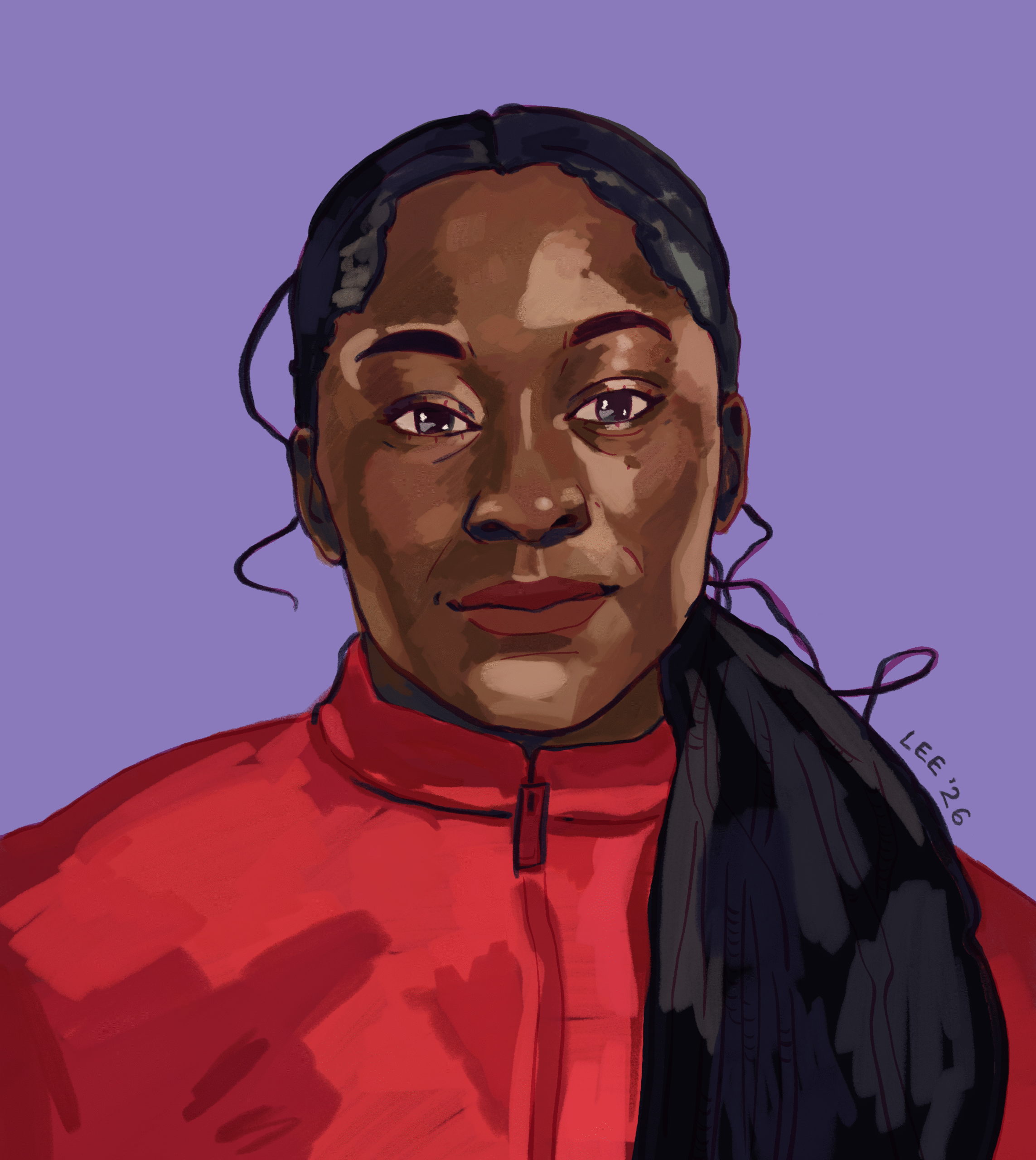
Meeting myself halfway

“Hi Halmoni,” I say, as I draw my Korean grandmother into an awkward, very loose, hug. “Hi say-quoi-yah,” she beams back at me, purple puffer jacket, tattooed eyebrows, and all. My grandparents are very predictable; Halmoni will measure herself against me and tell me I should enter Miss Universe; Haraboji will draw out a long “Hii,” pull me into a very brief hug, and give me two or three solid—and I mean solid—pats on the back.

I am grateful for every minute I get to spend with my grandparents, but seeing them in the flesh is a bittersweet experience. It reminds me of the time I told Haraboji that I was going to take an introductory Korean language class at McGill. I never actually ended up taking the course, and it pained me when every time he would come over to visit, he would ask me if I was still taking it. I shook my head and muttered that I would start trying to learn on my own soon—a promise I knew I wouldn’t keep. I wanted to take the class to stop feeling like a Korean fraud, and more importantly, to be able to talk to my Korean family. I wanted to know all the stories that couldn’t quite pierce through the language barrier between us. 

Growing up mixed Korean-Scottish in a predominantly white town in Southwestern Ontario, my search for a sense of identity and belonging has felt, at turns, humiliating and insatiable. As I enter my twenties, however, I’ve begun to see this confusing existence not as something to lament, but as something beautiful and inordinately complex to explore.

Simmering on low heat for several years prior, my racial identity crisis erupted in my first year of studies at McGil. McGill’s Upper Residence felt packed with hundreds of self-centred, loud, white people. More than being excluded, I felt repulsed: Who I was couldn’t have been farther from the culture I had been plunged into. Outside of the more glaring reasons for my alienation—like the astounding dominance of the thin, white, and blonde ideal—lots of other small things bothered me. For one, people wasted disgusting amounts of food in the dining hall. My Apba taught me to scrape out the last grain of rice out of the bowl, and I always use chopsticks to nitpick out the final few half-grains stuck to the side. 

I thought maybe my proximity to whiteness would grant me backend access to the ‘best four years of your life’ university experience that I was expecting—but it never really did. Through various conversations with other mixed East Asians, it was affirming to find out that my experience was not an anomaly. Serene Mitchell, a U3 Arts student born in Taiwan but raised transnationally between Asia and the West coast of Canada, remembers being shocked by the unabashed displays of privilege among the much of the McGill population.

“[I remember] feeling so […] isolated, feeling like I don’t have anything in common with these people at all,” Mitchell said, recalling their first year. “I think that’s when I started doing a lot of thinking and I was like, ‘if this is white people, this is not me.’”

But, it was those very experiences of Othering and alienation that led Mitchell to explore their Asian identity in more depth. She added, “I feel like because of how horrible it was, it pushed me to reconcile with my Asian identity, because […] the fact that people make me feel like I can’t have it makes me want to have it more.”

And oh, how badly I wanted my identity. After being chewed up and spat out by my first year of university, I felt the sudden urge to explore, and confront, my Asian identity. But how? The most obvious starting point was through my Haraboji—translating to “grandfather” in English. In my eyes, he embodied a lifetime’s knowledge of Korean culture, traditions, language, and lived history. I wanted to know all these things too, I wanted to be able to answer any Korea-related question anyone ever had for me, just like my grandfather could. It was as if I wanted to become my grandfather himself. Not far into my tragic hero’s journey did I confront the realization that being a walking encyclopedia on Korean culture wouldn’t make me any more Korean than I already am.

After that, I latched onto something different, something that Katia Lo Innes, BA ‘21, calls “boba liberalism.” Said to be coined by the now-deleted Twitter user @diaspora_is_red, the term points to the rise of bubble tea as part of the “substanceless trend-chasing spectacle” that is mainstream Asian-American—and Asian-Canadian—liberalism. 

“Once boba liberalism kicks in, and you see your cultural identity as things that can be bought and sold, and you’re mixed, you are always going to have this idea that you’re deficient,” Lo Innes said. “You have a scarcity mentality that tells you have to do all these things to catch up.”

The term critiques the idea of reaffirming one’s racial identity by purchasing commified and mainstream “Asian” products. Another Twitter user, replying to the original thread, continues: “It’s capitalist consumption presented as ‘API-ness.’ Buy more crazy rich asians tickets, sell more boba, go to raves, wear this brand. It’s reliant on capitalism.”

Though I was never a materialistic ‘boba liberal,’ I certainly struggled with the temptation to outwardly display—and perhaps, perform—my Asian-ness. I was never obsessed with purchases, but I was still obsessed with their shadow: Performance. I knew I just desperately wanted to prove to people—especially to white people—that I was Asian, that I was Asian enough.

“If you look at things as a performance for other people, you’re not going to feel it. But if you look at your own personal rituals, I think a lot of it was actually quite cultural. Like boiling water or taking shoes off to wear slippers. And they’re not ‘capital C’ culture, I’m not doing a tea ceremony every morning, but those are all cultural habits,” Lo Innes said.

At some point along the way, I, along with Lo Innes, was added to the Facebook group “Subtle Asian Traits.” Its 1.9 million members make funny, relatable posts about the ‘Asian experience’: Asian dads making kids cry while helping with math homework, references to K-dramas and animes, strict Asian parents pushing their children to be doctors and lawyers. While I related to some of the memes, I often felt like an outsider—even an imposter—in a community I was supposed to fit into.

“A lot of the Subtle Asian Traits discourse, and also a lot of mixed-race and cultural identity discourse is really based on consumption and what you do,” Lo Innes said. “It’s kind of shallow. Being Asian isn’t just going to get boba or having parents that beat you with a wooden spoon.”

But the unsettling feeling of not feeling Asian enough obviously runs deeper than not being able to relate to a universalized Asian experience. Many of my worries are linguistic, existential, even generational. Earlier this summer, I decided to walk down to Montreal’s melting-pot-of-a-Chinatown for the first time, expecting to find some comfort. Instead, I felt alienated. As I walked through the stores, pouring over all the things that I used to see lying around my grandparents’ house, I felt lost trying to navigate a space written in languages and characters I didn’t recognize nor understand. 

The dichotomy is dizzying: I saw so many familiar Korean things, but they felt oh so distant, foreign, and out of reach. It’s akin to how I feel around my Korean relatives sometimes: They speak to me in broken English, measure themselves against my towering height, marvel at my mixed features—my curly hair, mostly. I always nod along, catching some words and comments here and there. My Apba spoke to me in Korean when I was a young child, but eventually stopped. I never learned the language.

If there’s one thing that keeps me up at night, it’s grappling with the fear and sorrow of the possibility of the Korean line fizzling out in my generation. If I feel so disconnected and alienated from my culture now, it hurts to think about how disconnected my kids might feel. Haraboji and Halmoni won’t be alive; I won’t have any Korean to pass onto my kids; so many family stories will be left untold, caught behind the rigid language barrier dividing the world between my grandparents’ and I. Michelle Zauner, the half-Korean lead vocalist and songwriter of Japanese Breakfast, asks herself a similar question in the opening chapter of her memoir ‘Crying in H-Mart’: “Am I even Korean anymore if there’s no one left to call and ask which brand of seaweed we used to buy?”

Lo Innes, too, has grappled with long-term generational anxieties, but finds comfort in the fact that Chinese culture is always in flux—not something stuck in time, about to be lost.

“What I try to tell myself is that if I try and claim too much of Chinese culture as I know it, it ends up becoming kind of the archaic, fake version that I’m trying to feed my kids and that isn’t that cool,” Lo Innes said. “Culture in China is always changing and it changes with me and it changes with everyone who is Chinese, so I think a lot of people are being less traditional.”

And change does it ever: When I visited South Korea in 2016 with my grandparents and family, I was shocked to hear from both Apba and Haraboji that they felt like outsiders there. My grandparents were born in Korea, but moved to Toronto in 1968, my father in Toronto. Haraboji said that the dialect had changed so much that he—a native Korean speaker—could at times barely comprehend what people were saying. 

It made me think about the diasporic yearning to return to the homeland. The thought of travelling to the place my ancestors have lived for hundreds of years remains appealing. But while visiting South Korea was beautiful and thought-provoking, I realized that the place itself would be no silver bullet in reaffirming my racial identity.

Connecting to geographic places outside of the homeland is important too. Born to an Italian father and a Korean mother, Catherine Young Zambrano, U2 Arts, said she feels most at home in Toronto, where she lives right in between her two cultural neighbourhoods.

“In Toronto, my mom’s house is in between College Street and Bloor Street. On College Street, it’s Little Italy. And on Bloor Street, it’s Koreatown. And [we lived] literally right in the middle,” Zambrano said, smiling. “What I love about going home is how close I feel geographically to each little town of mine.” 

Lo Innes and Zambrano inspire me to see my complicated relationship with my cultural identity as a beautiful, complex thing to treasure. Instead, I think I’ll start asking myself questions like: How do I find genuine connection to culture? How do I learn to accept everything that I am, and realize that everything I am not? How do I come to peace with myself?

Food was an accessible entry point to accessing Korean culture for me. Although there aren’t many Asian grocery stores in the Plateau area where I live, I enjoy biking down to Chinatown or up to the Jean-Talon area to visit Marché Oriental. One time, annoyed by the meagre 2 lb bags of rice sold at grocery stores around me, I hauled a 15 lb bag of ‘extra fancy’ Calrose rice—otherwise known as sticky rice—several kilometers back to my apartment. For Zambrano, making her mother’s dumplings is a way of connecting to Korean culture. 

“I make them for my roommates, make them for my friends, and make them for my dinner parties,” Zambrano said. “Everyone loves them a lot.”

Food is my care language. I prefer chopping vegetables and preparing a birthday meal for a friend rather than buying them a gift. This summer, I made bibimbap for a close friend’s 20th birthday. I spent the morning julienning the carrots and cucumbers, marinating the spinach, making the sauce, and arranging everything in the bowl perfectly. Together, we celebrated his 20th birthday in the park just outside my apartment.

“Food is a great way to reconnect because it’s a universal language and has a universal way of caring for yourself and caring for others,” Lo Innes said. “Often, […] being mixed and not speaking […] your mother tongue, it’s like, ‘how do I communicate these feelings to people without the vocabulary to do so?’ Food is a great way to find that vocabulary.”

From Korean barbecue, to mul naengmyeon, to dotori-muk—a wobbly acorn jelly—to a simple bowl of fresh, steaming rice, making and eating Korean food brings me so much comfort. 

Though I cook for myself much of the time, food is best enjoyed in company. Renée Laberge, U2 Arts, made space for herself in Upper Residence in first year, sharing bits of Chinese culture and food with her floormates. “When I was in residence, I made a point to let people know that not only am I half Chinese, [that that I also] I fucking love the culture,” Laberge said, beaming. For Autumn Moon Festival, Laberge’s mother sent her mooncakes, so she cut the mooncakes up into tiny pieces and put them on a plate outside for people on her floor to try. For Chinese New Year, she cooked dinner for her entire floor.

***

My Haraboji is my cultural rock. As I was reading over the final versions of this feature, I decided to call him. I could hear his excitement emanating through the phone when he picked up. After explaining the topic of my feature to him, he surprised me when he said he felt the same way: When he travelled to Korea for the first time in 53 years, he said other Koreans treated him like he wasn’t a full Korean. But back in Canada, he said he is seen as an immigrant—fully the Other, fully Korean. I sat still in my chair, processing his words, because I had always seen myself as not-Asian-enough in his shadow. Hearing about his alienation from both places challenged the idea I had held onto for so long: That having a cultural identity is something you are born with and that sticks with you for the rest of your life. That because Haraboji was a full Korean, born in Korea, that he would stay Korean for the rest of his life. The fact that even Haraboji—who epitomized Korean-ness in my eyes—was still navigating his own cultural identity at the ripe age of 84, showed me that feeling Asian is so much more complex than I could have ever imagined.

Stepping out of the metro station near Place-des-Arts one lonely night this summer, I passed by an outdoor MUTEK festival performance. In a plain white tee-shirt that hung loosely off her shoulders as she pulsed to the beat was Ciel, a Toronto-based DJ hailing from Xi’an, China. As I swayed to the ethereal, head-bumping electronica, suddenly I was crying. It was a simple revelation, but an important one: There is no single way to be, or feel, Asian.


Science & Technology

Five science myths perpetuated by your favourite movies and TV shows

Movies and TV shows are notorious for sacrificing sound science in favour of cinematics that capture audiences’ attention. While this provides good entertainment, viewers may be shocked when scientific reality does not match up with fantasy. The McGill Tribune busts five incorrect portrayals of science in the popular media.  

Myth 1: Antidote to the rescue!

You may be familiar with action movie plotlines, involving the manufacture and distribution of an antidote to counteract a poison in a timeframe of mere days. For instance, in Teenage Mutant Ninja Turtles (2014), Shredder’s evil plan revolves around spreading a virus and then using the teenage mutant ninja turtles to create and distribute an antidote—all within the time span of a month. Most of these films feature certain characters with a natural resistance toward the poison who then provide their antibodies as a cure.

In real life, however, manufacturing an antidote would take much longer than a few days—even if the US Food and Drug Administration (FDA) regulations were ignored and a production process was already in place. A real-life parallel of antidote manufacture is snake antivenom, which is made by injecting horses with venom to produce antibodies. The process takes at least 18 months to complete and involves breeding snakes and milking their venom, and then purifying the antibodies produced by horses upon exposure.

Myth 2: Charge to 100—stat! 

Defibrillators, a very common occurrence in movies and medical dramas, are often used to put audiences on the edge of their seats, waiting to see if their favourite character will survive the shock.

In shows, defibrillators are mostly employed when a character’s heart suddenly stops beating. However, in a real emergency, defibrillators cannot be used on people with extremely slow heart rates or none at all. They are also not placed side-by-side on the chest as shown in movies, but at specific angles on the chest; one above the right nipple and the other on the left side just below the chest area.

Myth 3: Walking away scot-free

Many movies feature action heroes that are seemingly invincible: They walk away from huge explosions and destruction relatively unharmed—think any movie from the Marvel Cinematic Universe.

While fire and shrapnel are both dangerous side-effects of an explosion, there is a more insidious way explosions can kill: Through blast waves. If a person is close enough to the explosion to be propelled by its shockwave, they are close enough to be killed. 

When an explosion occurs, it creates a vacuum which is immediately filled by surrounding air. Pressure changes of three pounds per square inch (psi) can cause 164 kilometre-per-hour winds—gusts strong enough to collapse most residential buildings. Anyone close to the explosion would not only feel the blast, but also the immense wind pressure it creates. Such high pressure can cause serious ear, lung and bowel damage—sorry, Tom Cruise.

Myth 4: The BOOM in space

Battle sounds and noises made by ships as they move through space are found in many science fiction movies, like Star Trek and Star Wars. If these movies were true to science, there would be only deafening silence in space.

The reason for the silence is because space is a vacuum, and sound needs a medium to travel through to be heard. This fact was first proved in the 17th century by Irish physicist Robert Boyle, when he conducted an experiment that placed a ringing alarm clock inside a glass jar. After sucking out the air from the jar using a pump, creating a vacuum, Boyle discovered that when the air disappeared, so too did the sound.

Myth 5: The chloroform kidnap

Kidnapping scenes in movies tend to involve a dark figure descending upon an unsuspecting victim from behind, muffling their screams with a chloroform-soaked cloth. The victim typically loses consciousness only seconds later. 

Though it is a powerful anaesthetic, chloroform is a slow-working substance. It would take an adult human at least five minutes to lose consciousness—during which they could potentially fight off their attacker. Moreover, chloroform’s efficacy also depends on its dose: If the attacker is imprecise, overdose of chloroform can cause death. This is one of the reasons why chloroform is no longer used in surgeries. 

Despite the inaccurate portrayals of science that would make any expert shudder, most people continue to consume such media without question. After all, why go to the movies if not for an escape?  

Science & Technology

Nature-based solutions are the future of climate change mitigation

Global biodiversity has been increasingly imperilled since the beginning of the Holocene, or the human age, but many scientists agree that biodiversity decline in the 21st century is akin to a sixth mass extinction. Without the transformation of many facets of society, species abundance will continue to decline, causing a disastrous ripple effect across ecological, social, and economic spheres. 

This information, coupled with ever-more-troubling International Panel on Climate Change 

(IPCC) reports can make it feel as though all hope is lost for a livable future. To discuss mitigation strategies, McGill’s Faculty of Science is hosting the Bicentennial Mini-Science lecture series to disseminate scientific knowledge about the future of sustainability. 

Andrew Gonzalez, professor in the department of biology at McGill, Liber Ero Chair in Biodiversity Science, and director of the Quebec Centre for Biodiversity Science (QCBS), gave the sixth Mini-Science lecture on Sept. 9 via Youtube Live Stream. Gonzalez is a prolific researcher who also co-founded the environmental consulting company, Habitat. Based in Montreal, the organization advises local communities on forest management, landscape conservation, and ecosystem evaluation. 

The talk covered the history of biodiversity decline and the current challenges policymakers face in preventing environmental breakdown. Gonzalez emphasized that sustainability should aim to improve the quality of human life while preserving non-human biodiversity.

“Vital to all of this, is that human activities remain within bounds, so as not to destroy the diversity, complexity, and function of [the] ecological life support system that we call the biosphere,” Gonzalez said.

According to Gonzalez, the world operates as a “coupled social-ecological system,” where the economy and its growth are totally dependent on the productivity of the biosphere. As it stands, global supply chains for goods such as sugar, coffee, and textiles contribute to biodiversity loss, which in turn decreases economic productivity—ultimately creating a vicious cycle as long as these systems are intertwined. 

“Canada also imports biodiversity loss,” Gonzalez said. “[We] imported enormous amounts [of goods] from around the world to support our diets and the commodities that we purchase. Those imports […] have an imprint on ecosystems far from here, and that imprint, [whether it be] the destruction of habitats or the degradation of ecosystems, can be accounted for and quantified in our impact.” 

The economic slowdown caused by the pandemic has had several negative effects on biodiversity and conservation efforts. Despite the initial decrease in pollution and claims from social media that nature was healing, not a single international biodiversity target was reached this year. The global average temperature increase stands at a worrying 1.2 degrees Centigrade and 2021 had the warmest July on record. Canada also has the second-highest impact per capita on terrestrial mean species abundance—4.3 times the global average.

After discussing the sobering details of the climate crisis, Gonzalez shifted gears, offering several nature-based solutions, both on the micro and macro levels, to reach biodiversity and sustainability goals. 

“We have to extend global conservation networks by establishing more protected areas […] if we are going to bend the curve of biodiversity,” Gonzalez said. “We need to restore degraded lands [like] abandoned agricultural lands, […] and we have to base future land-use decisions on comprehensive landscape-level conservation planning.” 

A part of this solution set, Gonzalez added, is to transform agricultural systems by shifting away from animal protein-based diets toward more plant-based ones.

Although a small number of corporations are responsible for the majority of global emissions, Gonzales noted that effective biodiversity conservation strategies should consist of local efforts—and especially those led by Indigenous groups given their extensive knowledge of land stewardship

“We cannot come down from an ivory tower where we are hidden away from society and proposing top-down solutions,” Gonzalez said. “That doesn’t work. The risks are too great and the needs are too immediate.” 

The presentation provided a glimmer of hope in a sea of eco-anxiety, reminding attendees that scientists have amassed a wealth of solutions to preserve biodiversity. Whether they can be adopted in time remains to be seen.

Know Your Athlete, Sports

Know Your Athlete: Mathieu Soucy

Mathieu Soucy is one of McGill Football’s most impressive athletes. From athlete of the week to Réseau du sport étudiant du Québec (RSEQ) football player of the week accolades, Soucy has proven that he is a force to be reckoned with. However, it was not always his dream to pursue football: Born and raised in Quebec City, Mathieu Soucy grew up playing soccer but only found his love for football when he was asked to join the team at Cegep Garneau. 

“In physical education class, they saw me and asked if I wanted to play football. I said okay and decided to try out,” Soucy said in an interview with The McGill Tribune.

Although he started late, coaches recognized his talent early on, and quickly fit him into the wide receiver role at the McGill Redbirds football team. Soucy has put in years of hard work since he joined the team, and hopes to take McGill as far as possible this season.

The wide receiver’s impact is significant, as this position controls how the plays are run and how smoothly the offence functions. However, Soucy explained that sharing the field with his other teammates is crucial to the team’s overall success. 

“You don’t want to be selfish as a wide receiver because you need to run routes to get the ball to your teammates,” Soucy said. “That also means you need good chemistry with the other players on the team.” 

As a veteran, Soucy has solidified himself as a strong mentor. On and off the field, Soucy takes a leadership role when it comes to helping the team be the best they can be. 

“I’m 25, and it’s fun to see younger players, especially the ones coming in from Ontario at 18,” Soucy said. “The younger guys ask me questions, and I like being there for them. It really helps build chemistry.”

Mathieu has the mindset of a winner; regardless of reputation, he never rules any team out as a serious adversary.

“In this league, every team is a rival,” Soucy said. “We only play each team twice a year, so we have to give it our best every time we play. Being from Quebec City, Laval has always been one of my biggest rivals. [University of] Montreal is also one of my bigger rivals because we always seem to lose to them in the playoffs and get eliminated.” 

This semester is Soucy’s last. Beyond his postgraduate career plans, Soucy hopes to share his knowledge of football with his community back home once his time at McGill comes to an end. 

“It’s time I start thinking about my future,” Soucy said. “I plan on going back to Quebec City to work at my dad’s construction company, and eventually take over once he retires. I also want to coach my high school football team to give back to the kids. I have been given a lot in my life, and I feel I need to give back.” 

Although Soucy does not plan to pursue a professional football career, he has not yet ruled out the idea. 

“I probably won’t play contact football again,” Soucy said. “Maybe flag or touch, but contact is getting to be difficult. If a team in the CFL [Canadian Football League] asks me to play, I would definitely consider it, but otherwise, I am likely done.”

Mathieu Soucy has dedicated five years of hard work to McGill Football. Although this is his last season, his drive and dominance on the field will not be forgotten anytime soon. No matter where Soucy ends up, his years as a leader and mentor, and his dedication to the football team, will remain in the hearts of fans for years to come.

Science & Technology

Feathered flirtations: Studying courtship song among zebra finches

Although studying the delicate rhythms of seduction among humans is deeply fascinating to many, some biologists prefer to devote their attention to the courtship rituals of birds. Being highly social animals, numerous species of birds display sophisticated forms of socialization, even “romance”—their bird song being an essential seduction technique. Avian vocal communication is extremely intricate, and it is not just what they sing that counts, but how they sing it.

Birds are of particular interest to behavioural researchers due to their complex social lives and communication habits. Researchers at the Sarah Woolley Lab and Sakata Bird Song Lab published their recent findings on the subtle nuances of bird song at behavioural and computational levels, respectively, in a joint paper in PLOS Computational Biology.

“Because they are one of the few groups of animals that learn their vocalizations in the same way that we learn how to speak, you can make lots of connections [to the human brain],” Woolley said in an interview with The McGill Tribune. “They are also very social birds [….] Zebra finches are socially monogamous, they form these long term pair bonds, they learn to recognize each other [in part] by their vocalizations.”

Birds exhibit an impressive range of vocalizations. A danger warning is communicated with a short shout known as a “call,” whereas mating activity involves longer songs. These songs can be extensive and detailed and are constructed out of shorter phrases called “motifs.”

When male zebra finches are courting, their songs are less variable than they are during solo performances, involving subtle shifts to which the female birds are highly attentive. A motif that is present in both solo and courting versions can show small prosodic changes to pitch and rhythm that affect how females perceive the song.

“Often, when we ask the question of what females are paying attention to, we come at it from the perspective of our human ears,” Woolley said, “So when we listen to songs […] we tend to focus on the things that we are good at quantifying or that we can pick out of songs that we hear, and it is not necessarily the case that that’s what females are paying attention to.”

Female zebra finches have proven to be highly adept at recognizing the particular features of courtship songs. As shown in the paper, their acute perception of very small and fast modulations allow them to identify courtship intent from a single rendition of a motif. However, algorithm modelling of the females’ successful and unsuccessful discrimination has proven to be challenging.

The computational approach in this paper used a bottom-up method, extracting thousands of features directly from the waveforms of the vocalizations. The researchers used specialized software to analyze time-series, which are data points organized by time. Combining a wide variety of analysis methods, this highly-comparative time series analysis (HCTSA) toolbox allowed for the identification of a large quantity of minute modulations that would otherwise be unidentifiable to the human ear.

“Sound is basically a time-series, a series of oscillations, and you feed in the phrase that the bird sings, and the algorithm does thousands of computations,” Sakata said. “We used the toolbox for 5,525 different features from each of the phrases, and after we created this very large data matrix of features, we ran those features through a machine learning algorithm, [….] a bagged decision tree [classifier]. It was able to correctly identify 85 to 86 per cent of the [songs]. That was about the level of performance of the females.”

The effectiveness of the algorithm both in distinguishing courtship songs and predicting the behaviour of the female finches highlights the potential of such bottom-up techniques, wherein human bias is minimized by extracting features directly from the data. Identifying and understanding the features that are important in bird vocalizations is an essential preliminary step toward understanding how they communicate and find love in the modern world.

Soccer, Sports

McGill Men’s Soccer drops tight affair to Laval

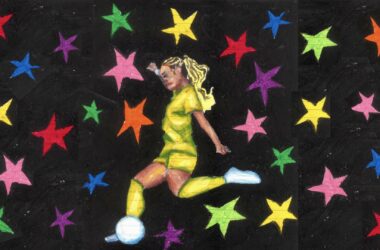
The McGill men’s soccer team (0-1-0) opened their Réseau du sport étudiant du Québec (RSEQ) regular season on home turf Sept. 10 against Laval (1-0-0). Despite the enthusiastic crowd, the Redbirds came up short, losing 2–1.

The game began with fast pace and solid movement at the back for the Redbirds. From the opening kickoff, both teams were quite physical, leading to early yellow cards on both sides. Despite a few defensive mistakes on McGill’s part in the first half, rookie goalkeeper Victor Henry made some spectacular saves to ensure the game remained scoreless. 

Third-year midfielder Bouba Ouane, who came in as a substitution in the second half, felt that the team lost their composure in the latter part of the first half as a result of the early mistakes.

“After the first 20 minutes or so, I think the team got a bit nervous with the massive crowd and I felt as if we fell apart somewhat,” Ouane said in an interview with The McGill Tribune.

Third-year midfielder Jake Gerenraich, a veteran on this season’s squad, shared his appreciation for the crowd, but agreed with Ouane that the team may have not been prepared for such a loud atmosphere.

“The crowd was the largest we have had since I have been a part of the program,” Gerenraich said. “It was awesome to see for a home opener; electric. I felt that because of it though, we lost composure as the first half continued.”

Despite the loss of confidence, the Redbirds entered the locker room at halftime tied 0—0 with Laval. The momentum lost late in the first half, though, would come back to hurt the home side when the team returned to the pitch. Laval opened up the scoring two minutes into the second half on a breakaway set up by a through ball that got past the McGill back line. 

Three minutes after the first goal, Laval continued to press, with forward Wassim Chaouki ​scoring on a tap-in in front of the McGill goal. The quick 2–0 lead out of the half completely shifted the momentum to the away side’s favour, digging a deep hole for the home side to climb out of. 

In a sudden turn, however, the momentum shifted back to the Redbirds. In the 58th minute, Gerenraich received a pass off of a free kick and made a spectacular pass into the 18-yard box to fourth-year forward Florian Bettelli, who converted and opened up the scoring for McGill. 

Gerenraich had a sense prior to the set piece that the opportunity for a goal would present itself. 

“Although I would not say set pieces are a strong suit of the team, we have some great free kick-takers and I think the goal showed that,” Gerenraich said. “A similar play happened earlier in the match and I knew the [assist] I made could possibly come again so I felt ready for the chance.”

After the Redbirds cut the lead to one, McGill applied more offensive pressure. This was made even easier just a few minutes later, as Laval defender Vincent Lavigne was sent off with a red card for a dangerous tackle, forcing the away side to play down a man for the remainder of the match.

Despite the advantage and some quality chances, McGill was unable to convert in the final twenty minutes, ending with a final score of 2–1 for Laval.

Ouane felt that they could have had a better opportunity of tying the game if they had tactically adjusted.

“I believe we could have pressed up the pitch more to end the game, especially due to the fact that we were up a man,” Ouane said. “Maybe [we could have] even moved to three at the back to aid the midfield in supporting the strikers.”

McGill men’s soccer plays University Québec à Montréal on Sept. 16. 

Moment of the Game:

Florian Bettelli scored McGill’s first goal of the game, and of the regular season, right inside the penalty box, sending the massive McGill home crowd to their feet. 

Stat Corner:

An extremely physical and heated match resulted in 10 yellow cards and one red card combined for both squads.

Quotable:

“The crowd was the largest we have had since I have been a part of the program. It was awesome to see for a home opener; electric.” — Third-year midfielder Jake Gerengraich

A previous version of this article incorrectly stated that Chris Cinella-Faia was the goalkeeper for this particular game. In fact, Victor Henry played as goalkeeper. The Tribune regrets this error.

Arts & Entertainment, Film and TV, Pop Rhetoric

‘He’s All That’ is a hollow ode to ’90s teen nostalgia

As if by mass psychosis, filmmakers have been scrambling to rehash ‘90s movies in all their zany glory. Case in point: He’s All That, a gender-swapped revamp of 1999’s She’s All That. On the surface, the remake has all the trappings of a potential Netflix hit: Lucrative source material that recouped 10 times its budget? Check. The star power of TikTok sensation Addison Rae? Check. Product placement galore? Check. But what comes out of its 91-minute runtime feels ultimately hollow.

The storyline introduces us to beauty influencer Padgett Sawyer (Addison Rae, in a not-quite-surefooted debut) who rises to the occasion of transforming hopeless misanthrope Cameron Kweller (Tanner Buchanan) into Prom King. Kweller’s instant stardom under her wing upps his popularity—of course, by the powers of a makeover. This familiar plot stems directly from the original She’s All That —which, for what it’s worth, was by no means a masterpiece in its own right.

However, this reboot throws the baby out with the bathwater by dropping the original’s endearing weirdness and emotionally layered performances. On the upside, it has occasional moments of charm and now-and-then laughs reminiscent of the original; Matthew Lillard’s awkward dance scene is a highlight. On the downside, the script borders on the mundane, and is too enamored with the power of social media for its own good.

There’s no denying that nods to the cult classic elevate the film’s overall appeal: Rachel Leigh Cook, the lead of the original film, appears as Padgett’s mom, and Sixpence None The Richer’s “Kiss Me” once again plays over the end of the film, this time remixed by Cyn. 

Lynn Kozak, associate professor in McGill’s department of history and classical studies, has thought a lot about remakes—after all, they have been around for millennia. In an interview with The McGill Tribune, Kozak underscored the value of nostalgia in film and television revivals.

“Nostalgia is a very powerful thing,” Kozak said. “The industry wants us to be nostalgic so it can make money off of us [….] There have been plenty of studies by people who have worked on the idea that you have nostalgia in times of uncertainty. You also have nostalgia when there are major cultural shifts.”

Despite the common use of nostalgia as a bankable commercial strategy, Kozak harbours a positive outlook toward remakes and their potential for good. 

“I think about how Ancient Greek tragedians are remixing myth, and [how] you get all these cool innovations in some of the Greek tragedies that never existed before, like Medea, who was never the one to kill her kids until Euripides decided it was,” Kozak said. “So I think that what we are seeing now is in some ways a modern version of that. Taking stories that are familiar but giving them new twists [….] That’s the way culture moves forward.”

Indeed, the best late ‘90s “rom-coms,” many of which were remakes themselves, pack a punch with their masterful blend of reinvention and subversion. The original She’s All That was itself based on an earlier wave of remakes, starting with George Bernard Shaw’s play Pygmalion, which morphed into My Fair Lady, the timeless musical. 1995’s Clueless was a reimagining of Jane Austen’s Emma; 1999’s 10 Things I Hate About You was a riff on Shakespeare’s The Taming of the Shrew; and 1999’s Cruel Intentions offered a new twist on Dangerous Liaisons. But the difference between these Generation-X remakes and He’s All That lies in the freshness of their takes and the superb acting performances.

He’s All That fails to fully deliver on the potential of the remake format—and is ultimately forgettable as a result. While fans of Addison Rae can take solace in knowing that they will see more of the TikTok megastar in future Netflix projects, suffice to say that, try as it might, this nostalgia-chasing flick is not all that.

Arts & Entertainment, Film and TV, Theatre

‘Come from Away’ finds solace in community amid tragedy

Twenty years after the 9/11 terrorist attacks, Apple TV+ has released a film rendition of the 2017 Broadway musical Come from Away.

During the aftermath of the attacks, the U.S. closed its airspace, diverting 238 planes to Canadian airports. 38 of those diverted flights arrived in the small town of Gander, Newfoundland, where they remained for five days, with passengers experiencing confusion and compassion. The musical depicts the Gander townspeople’s efforts to aid the thousands of stranded passengers.

Critically acclaimed stage director Christopher Ashley received his third Tony Award for the musical’s direction, and for good reason: The small 12-person cast and simple staging creates an intimate setting, as each cast member plays multiple local and passenger roles. This emphasizes the feeling of a social bubble while also showing similarities between foreigners and locals. Additionally, the musical’s use of narration to show characters’ internal monologues and to add historical context enhances the feelings of terror and confusion felt by the “plane-people,” the Newfoundland hosts, and ultimately, the audience. 

Aside from its thematic emphasis on finding community after a traumatic experience, the musical also illustrates how the 9/11 attacks promoted a rise of anti-Arabism in the West. During a frustrated internal monologue, an Egyptian passenger (Caesar Samayoa) expresses the increased hostility he feels from others, due to his Middle-Eastern identity. The show focuses on others whose lives were disrupted by the attacks, including a mother frantic to locate her son who was on shift as a firefighter, and a pilot whose co-workers were on the hijacked flights. It is their grief and anxiety that pervade the musical, even as Newfoundlanders bring everyone down to the bar to try to comfort those suffering and divert their attention from the tragic news. 

In the face of such immense loss, the musical’s inclusion of folk music, karaoke, and humour highlight the social bonds forged during the chaos. The music breathes positivity into the story, pushing the narrative toward hope as the characters find friendship and love amid uncertain circumstances. Infusions of staples of Canadian culture, such as Tim Hortons stage props and moose crossings, transform Newfoundland into a bubble away from the chaos within the United States. For the stranded passengers, Newfoundland has become an unlikely refuge.

By transitioning this theatre piece to film, the show both gains a wider following while losing some of the intimate feeling that made live-shows special. Although the initial footage of the audience entering the theatre helps bridge the gap between the in-person versus at-home viewing experience, it also adds a sense of detachment from the show as a whole. Contrasting with its themes of togetherness, Apple TV+’s film version only adds to the feeling of loneliness as the audience experiences both the pandemic and 20th anniversary of 9/11. The final moments of the show bring the audience to 10 years post 9/11, giving the characters and audience time to reflect on how their lives have changed since their stay in Newfoundland. 
Overall, Come from Away is a celebration of resilience during a horrific historical moment. The musical honours incredible connections between neighbours and strangers, while respecting the lives lost and permanently altered by a tragedy whose aftermath continues to resonate today.

News, SSMU

SSMU University Centre reopens after three-year hiatus

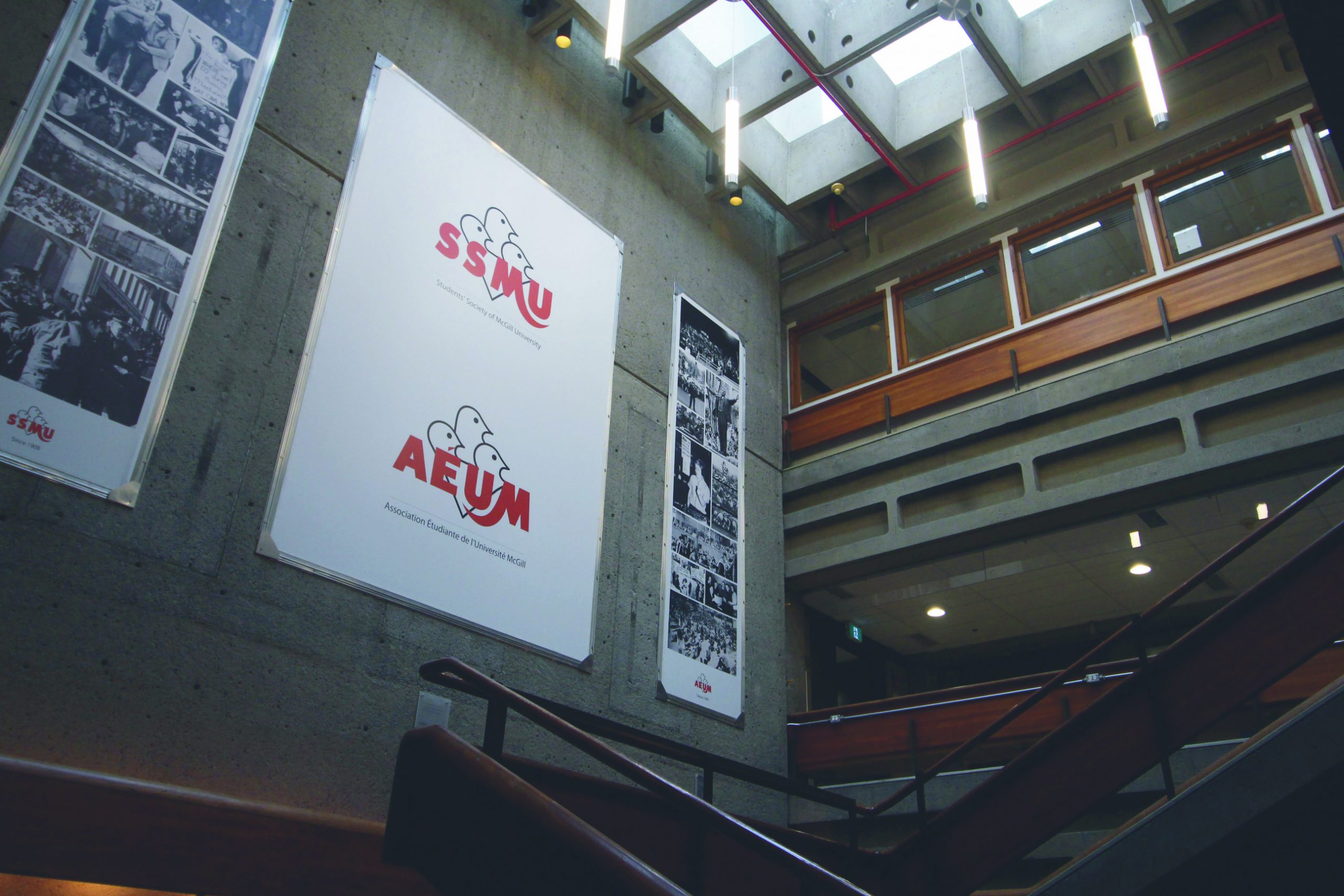
After a three-year closure, the Students’ Society of McGill University (SSMU) University Centre, located at 3480 McTavish St., has officially reopened. The University Centre has been a one-stop destination for students to enjoy university life, offering space for clubs and communities to meet as well as operating a student bar. After closing for renovations in 2018, the re-opening was further delayed by the COVID-19 pandemic—so many undergraduate McGill students have never gotten the chance to visit the popular spot until now.

In an email to The McGill Tribune, SSMU President Darshan Daryanani expressed his excitement about the possibility of inviting clubs back into the building. 

“The University Centre is designed to accommodate all the offices, bar and restaurant spaces, student lounges, event spaces, and meeting rooms needed for SSMU’s vast assortment of academic, social, and cultural activities,” Daryanani wrote. 

Daryanani explained that the building’s reopening was continuously delayed due to required renovations, such as replacing the electrical distribution systems and upgrading the alarm system. Given that restorations were under McGill’s jurisdiction, SSMU was unable to speed up the process. 

“This project consisted of the complete replacement of the building’s heating, ventilation, and air conditioning system, which dates back to the opening of the building in 1965,” Daryanani said. “On a brighter note, the renovations will make the building more energy-efficient and more comfortable, in addition to reducing the frequency of system interruptions.”

Miya Dhillon, U2 Arts, expressed her excitement about the University Centre’s reopening.

“I had no idea there was a SSMU University Centre,” Dhillon said. “I don’t know if I have missed out on anything since I never knew that was an option for us. I am excited about the possibility of having a spot on campus where I can go and hang out.” 

Tina Vanslette, U2 Arts, echoed Dhillon’s sentiments about the reopening of the Centre, describing the reopening as a chance to experience student life.

“I have never seen the inside of the SSMU building,” Vanslette said. “I have heard stories about it, especially Gerts, but […] its legacy is in the old Reddit posts about it. One more year of construction and it might have completely missed my graduating class. I’m glad I’ll get to see it.” 

A popular feature of the University Centre is Gerts Campus Bar, a SSMU non-profit operation that hosts events and holds a space for students, faculty, and staff to get together. The bar will be open to students Monday through Friday and open on weekends to those who reserve in advance. In an interview with the Tribune, Nadine Pelaez, Gerts’ Bar manager, said that she is excited to return Gerts back to the McGill community.

“Having a student bar is something most college campuses have to help promote student life,” Pelaez said. “It is a social centre where people can hang out with friends, study, or meet new people. Gerts is supposed to be the low-key student bar that allows students the opportunity to socialize without any pretenses of exclusivity or snobbiness.”

While the bar’s layout has not changed, its concept has; this year’s bar will also feature the new Gerts Café. The café will feature a space where students can buy coffee and food in a relaxed, open environment.  

“I want a place where students can go on campus to get good coffee and food,” Palaez said. “I am not trying to compete with the coffee from the residence halls, but rather compete with popular coffee shops around Montreal.”

Gerts Bar and Cafe will be following all government COVID-19 regulations, including enforcing a 125-person capacity limit and checking vaccine passports at the door. 

A previous version of this article incorrectly stated that the SSMU University Centre was located at 3600 McTavish St. In Fact, the University Centre is located at 3480 McTavish St.

Art, Arts & Entertainment, Music

‘What the Pop!’ booths showcase local talent

As the August heat faded and the leaves began to curl and drift away, the Montreal arts community said one final goodbye to summer at What the Pop!, a pop-up exhibition run by YES Montreal. The free public exhibition gave dozens of local artists the opportunity to sell their art at Riverside St-Henri. On Aug. 14, 21, and 28, a plethora of local artists showcased their photography, painting, jewelry, dance, and theatre, and Iranian-Canadian singer-songwriter Naghmeh Shafiei performed live on Sept. 4. 

Shafiei’s performance fused folk and rock and interwove Iranian melodies and intonations. With her soulful, emotive voice, and raw, poetic lyrics, Shafiei delivered a moving performance. In that moment, Riverside St-Henri felt transformed, as though there was something special in the air. As the terrace stood sheltered between brightly decorated shipping containers, wooden fences, and the darkening sky, a myriad of voices—each as uniquely beautiful as the last—washed over the crowd. 

In addition to giving artists opportunities to perform, the event allowed them to meet listeners and other local artists in person. Attendees were free to roam the terrace and stop by booths to speak to artists, fostering a greater sense of community and connection. 

“I have friends that I’ve met through social media [and] we’ve become really close, but it’s easy to forget that that real, [in-person] connection is just really what the soul needs,” Shafiei said in an interview with The McGill Tribune.

Shafiei stressed the importance of in-person presence at shows, explaining that many artists become inspired and motivated by their audience. In fact, Shafiei said that What the Pop!, which offers webinars and motivational tools for artists, gave her the motivation to finish writing her poetry book, Somewhat Wiser, Some of the Time

Lady Athenae, a three-member metalcore band, also performed at the event. To them, music is a form of catharsis: Mental health takes first priority in their lyrics. Between drummer Chris’ powerful beats, guitarist Sergio’s driving riffs, and lead singer Camille’s enchanting vocals, the band mesmerized the crowd. Suspended in the twilight, these artists shared slivers of magic through their music. 

“Music is like air. It’s life,” Camille said. 
Although What the Pop! is now over, the event’s website offers links to all its artists’ websites and social media, and will soon have a virtual exhibition gallery for its visual artists.

Read the latest issue

Read the latest issue