Latest News

Student Life

Showcasing queer culture through cookbooks

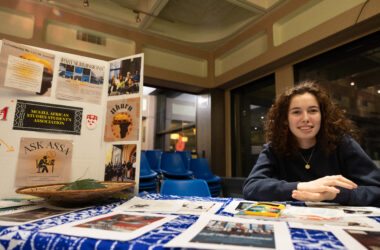
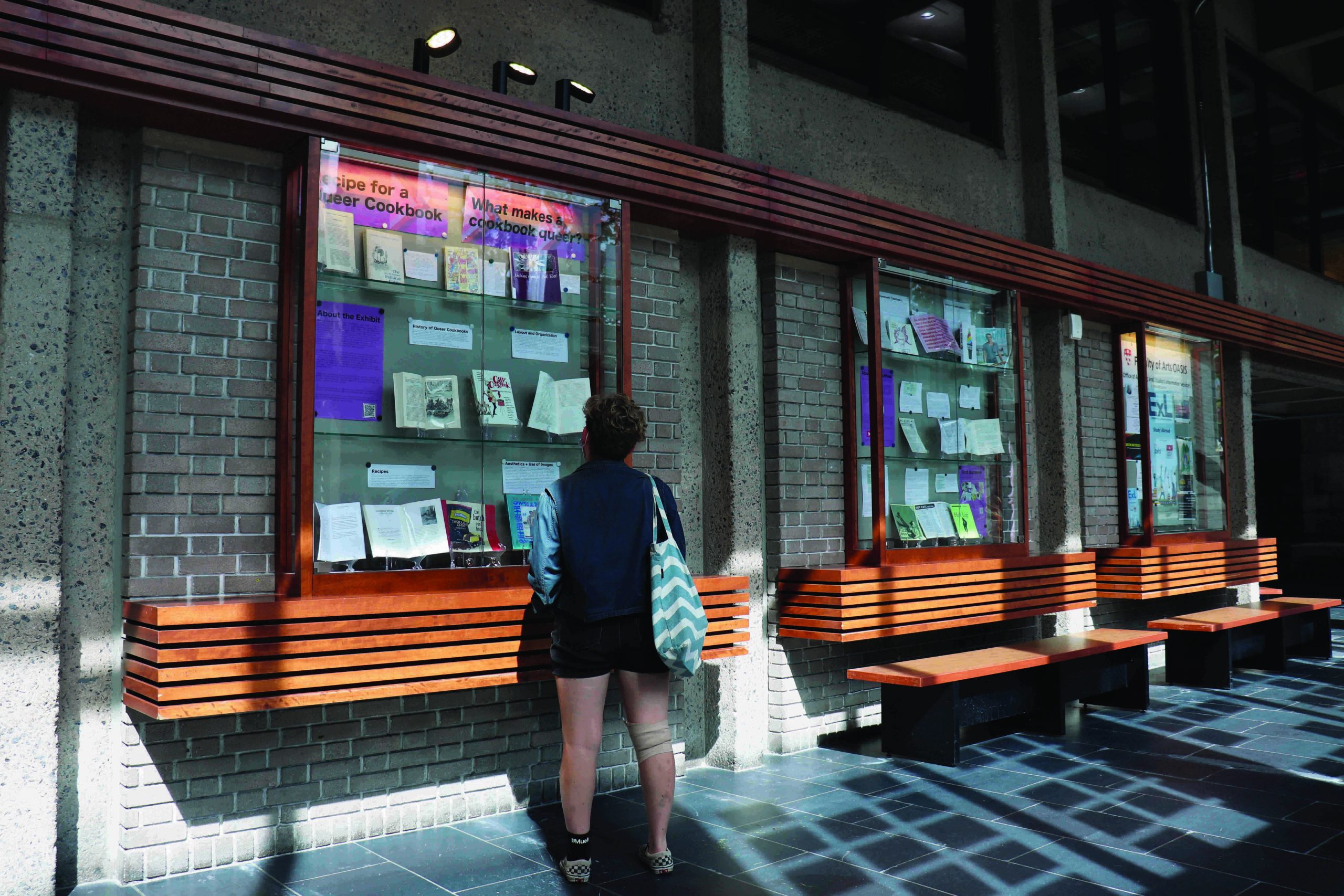
Up until Dec. 20, students walking down the Leacock corridor will notice a new addition to the glass cases lining the wall: The “A Recipe for a Queer Cookbookexhibition. 

Curated by Alexandra Ketchum, a faculty lecturer at McGill’s Institute for Gender, Sexuality, and Feminist Studies, the exhibit showcases more than 20 cookbooks that, for one reason or another, can be described as queer. 

Ketchum’s interest in queer cookbooks stems from her research into feminist restaurants. Her love for the subject was born out of a formative experience from her undergraduate years, when she visited Bloodroot, a self-proclaimed feminist restaurant and bookstore located in Bridgeport, Connecticut. Ketchum ended up writing about the spot in her undergraduate honours thesis and eventually pursued her master’s and PhD at McGill, where she studied feminist restaurants, cafes, and coffee houses in North America. 

The exhibit itself is inspired by lesbian feminist restaurant owners, some of whom put together their own cookbooks. 

“Bloodroot [has produced several cookbooks],” Ketchum said. “The first one was in 1980, called The Political Palate. In many ways, it’s like a political manifesto and a cookbook.”

While she has many research interests, Ketchum explained that amidst the difficulty of the pandemic, putting together the project was an opportunity to have fun with her research. 

“I’m into these cookbooks as artifacts and what they tell us about history, what they tell us about different cultural movements,” Ketchum said. “It allows me to ask […] deep questions about identity, queerness, politics, access to publishing and so forth, but it was also just fun.”

When asked what exactly makes a cookbook queer, Ketchum pointed to the importance of the viewer’s own interpretation.

“Part of the exhibit was to […] invite viewers and readers […] to think about, ‘what do I think makes it queer?’” Ketchum said.

However, there are some characteristics Ketchum includes in her own personal definition of a queer cookbook. For example, the authors of the book must, in some way, identify as part of the 2SLGBTQIA+ community, and the cookbook should connect to queer communities—be it through fundraising efforts, raising awareness about queer issues, or gathering recipes from community members.

But overall, the cookbooks vary––some are plant-based,  some have religious affiliations, and some emphasize sexuality and include nudity. A few of Ketchum’s personal favourites include The Kitchen Fairy’s Be Gay! Eat Gay!: The Gay of Cooking and Lagusta Yearwood’s Sweet and Salty

While most of the cookbooks on display come from her own personal collection, Ketchum also collaborated with the Quebec Gay Archives and Quebec Lesbian Archives, who provided the zines. Beyond loaning material for the exhibit, Ketchum wanted to collaborate with the archives in order to inform viewers that they are available for research on queer history

“[Viewers or readers] can scan the QR codes [in the exhibit] and find out how to make an appointment where they can see what other collections are available, or what’s digitized,” Ketchum said. “And all of a sudden, archives don’t feel like these spaces that are behind locked doors that you can never go to.”

For those who are not able to visit the physical exhibit in Leacock, the digitized version is available online at The Historical Cooking Project, a blog Ketchum has been editing since 2013. 

Martlets, Soccer, Sports

Martlets Soccer earn their first point of the year

A week after their home opener defeat to Laval, the Martlets took to the pitch in hopes of earning their first points of the 2021-2022 season. While they hoped for a win, the Martlets came home with a singular point following a 0-0 draw to UQAM. Similar to the game versus Laval, McGill played well in the first half but lost their shape and patience as the game wore on. UQAM was able to slow down McGill’s build-up and the game entered halftime at a stalemate that neither team seemed ready to break. In the second half, the Martlets came out energized, playing long balls and pressing high. Despite several high-quality chances in front of goal, the Martlets were unfortunately not able to capitalize. 

“We deserved a better fate,” head coach Jose-Luis Valdes said in an interview with McGill Athletics. “We didn’t necessarily have a lot of possession and turned the ball over too much, but we didn’t allow them too many scoring opportunities in the first half. After the intermission, we decided to press and that gave us a little more confidence, which resulted in our side getting the ball higher up-field and created more chances to score.”

According to spectator Shaz Kassimali, U4 Science, McGill’s press on offence added an energy in the second half that was noticeable from the stands.

“The girls’ effort was relentless, they pushed through till the end, and their resilience is inspiring and admirable,” Kassimali said.

In addition to the team earning their first point of the season, first-year goalkeeper Brenna Bordeniuk earned her first McGill clean sheet. Bordeniuk delivered a commanding display in nets, making a key save from close range on UQAM forward Eve Levesque at the end of the first half. Second-year team captain Olivia Mazzarello also spearheaded a talented backline, helping Bordeniuk with added protection.

“I think we were able to create some more goal-scoring chances,” Mazzarello wrote in a message to The McGill Tribune. “We’re going to continue looking to improve our creativity up top and working on our collective play all around.” 

The game was the first of a doubleheader with the men’s team, yet the stands only started to fill toward the end of the Martlets’ game. The men’s team went on to win behind two incredible penalty saves, which are proven to be influenced by crowd noise. 

“The energy in the stands was impeccable and really affected the outcome of the game,” said Safa Khalifa, U1 Arts, who attended the men’s game. “Everyone was standing and cheering for even the smallest things, saves, steals, good passes [….] I think it really encouraged the guys on the team to keep doing what they do. The crowd’s passion really motivated the team to score that game-winning goal.”

The Martlets began a series of away fixtures with a 3-0 win on Sunday, Sept. 19 versus Université du Québec à Trois-Rivières (UQTR). In a little under two weeks, on Oct. 1, the Martlets will return home to face rival Concordia under the Molson Stadium lights at 6 p.m. A packed crowd certainly would help spur our Martlets on to their first home win of the season.

Moment of the Game

In the 58th minute, first-year forward Annika Schmunk forced a top-drawer save from UQAM’s Andreanne Dubeau to keep the game at 0-0.

Stat Corner

The Martlets went into this fixture having lost their last three contests against UQAM, dating back to 2019.

Quotable

“It feels great and it’s motivating because we are expecting to get a lot more wins and [to] just keep getting better as a team,” said first-year defender Stephanie Hill regarding their first point of the season.

Student Life

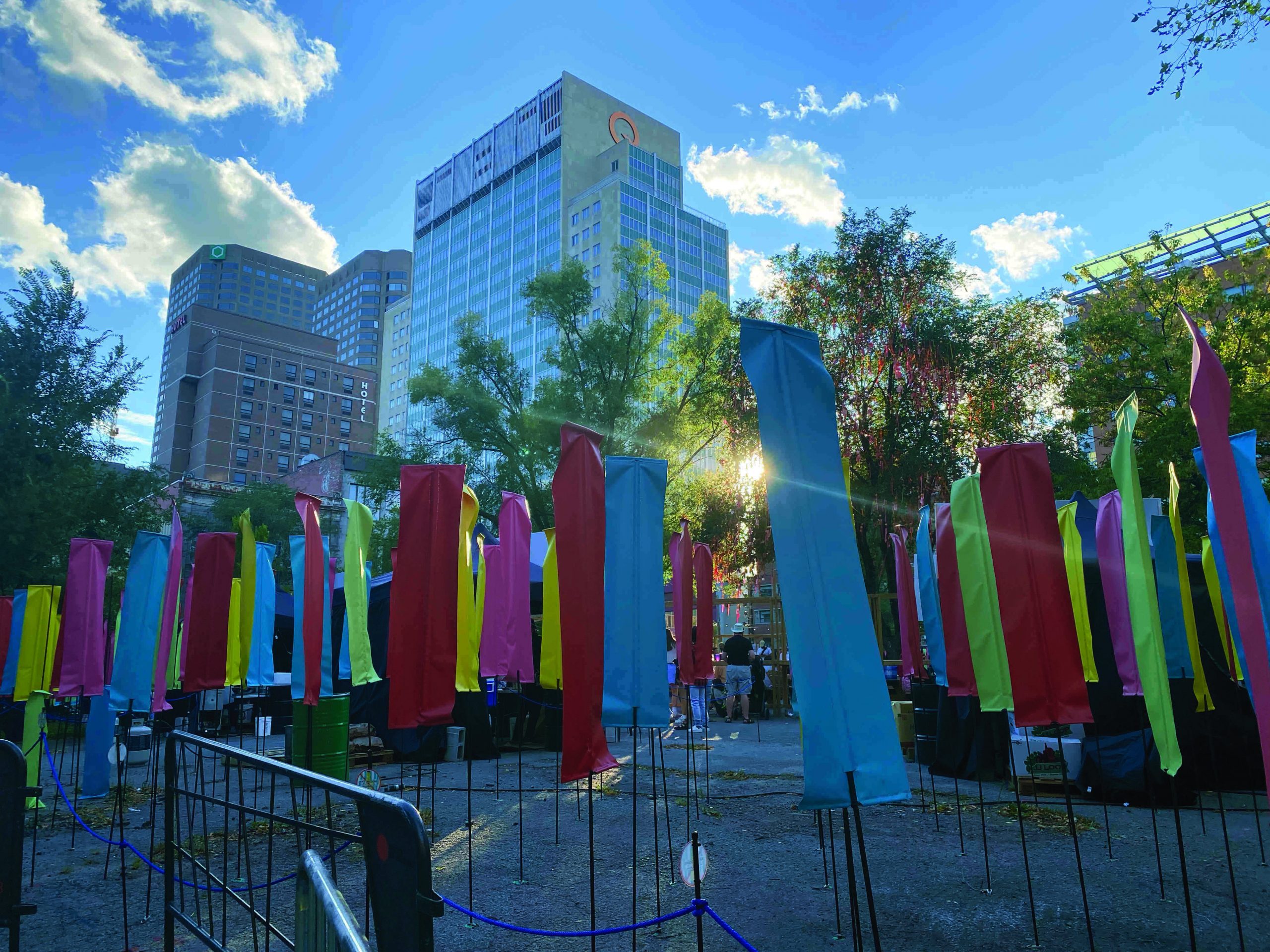
Bringing Pride to Chinatown

There was once a time when the terms “Pride” and “Chinatown” would not be associated unless you were talking about a restaurateur’s delight in the quality of their har gow (Cantonese dumplings). However, these days in Montreal’s Chinatown district, pride has a new meaning.

On Sept. 12, queer folks and allies united at Place des Souhaits for “Fierté au Quartier Chinois,” an event organized by Sticky Rice magazine, to celebrate Chinatown’s first pride and to mark the magazine’s one-year anniversary.

In an interview with The McGill Tribune, Viet Tran, Sticky Rice’s editor-in-chief, explained the importance of the event for Montreal’s queer Asian community.

“It became necessary to break the silence around [being queer and Asian],” Tran said. “What has been expected from Asian folks was to be quiet and to make ourselves discreet.”

Sticky Rice magazine explores what it means to be an Asian Canadian by highlighting the experiences of the Asian diaspora communities across Canada. Through essays, interviews, films, and other mediums, the magazine promotes an ever-changing dialogue around Asian-Canadian culture and identity.

Sticky Rice was founded in 2020, when anti-Asian hate crimes were on the rise. Amid this difficult period, the team decided it was time for Asian-Canadians to express themselves creatively from a place of vulnerability and authenticity.

The challenge to explain and understand what queer folks experience in predominantly Asian spaces is a difficult one, as Asian cultures are not homogenous. All with their own traditions, values, foods, belief systems, and people, Sticky Rice and its contributors recognize that they cannot speak for the experiences of all queer Asians.

“It’s not a secret that older generations are known to be more conservative with regard to sexual diversity,” Tran said. “There’s also something to be said about the relative lack of jargon in many Asian languages to address LGBTQ+ issues. We’re hoping that by giving queer Asians the permission to celebrate themselves in a more traditional neighborhood will inspire them to continue taking up space.”

Tran felt it was important to invite people from all demographics to the event.

“I do think that in any culture in which the pillars of family life sometimes take priority over individual differences, there are more efforts put into calling in people from all generations,” Tran said. “It was really important that this event be multi-generational, because the goal was to build bridges between younger queer demographics, local business people, and their legacies.”

Last weekend’s event featured performances from Montreal-based artists Hua Li, Waterboi, Miranda Chan, Beau Gomez and Die Nasty, Molly Gum, Frantz Lin, and Kai.

Frantz Lin described the significance of the event for him and others involved. 

“As far as I know, this was the first Pride in Montreal’s Chinatown, period,” Lin said. “It’s historic. It’s pretty important for Asian and Chinese youth to take our energy and community to partake in and claim Chinatown.”

Attendees enjoyed Asian street food and drinks provided by the on-site Asian Night Market and also learned about the Chinatown area through community-led walking tours. 

Tran described the significance, and importance, of holding this event in Chinatown. 

“It’s a neighbourhood that harbours a lot of cherished memories for us and our families, so we wanted to really pay respect to its history and to the resilience of its culture through guided walking tours, and by re-appropriating the space through an Asian-led party,” Tran said.

Sticky Rice’s second volume focusses on opening up the conversation around what it means to be Asian and queer. Titled (BE)LONGING: The Queer Edition, the volume showcases queer Asians from all backgrounds who have not historically been centred in mainstream 2SLGBTQIA+ platforms.

“​​As a musician of Asian descent, it also meant a lot to have such a diverse audience full of allies alongside the intergenerational support I felt from other Asians in the audience,” Montreal-based performer Hua Li said. “Sticky Rice highlights the margins of the Asian experience and gives us the space to break free from the model minority myth.”

Out on the Town, Student Life

Exploring Montreal’s thrifting scene

With the return to campus, many members of the McGill community are meeting off-screen for the first time, finally getting the chance to express themselves through their fashion choices. For the budget-conscious university student, this may sound daunting. However, Montreal’s wide selection of thrift stores, each with their own unique ambience, offer cheaper and more environmentally friendly alternatives to the big name-brand clothing stores. 

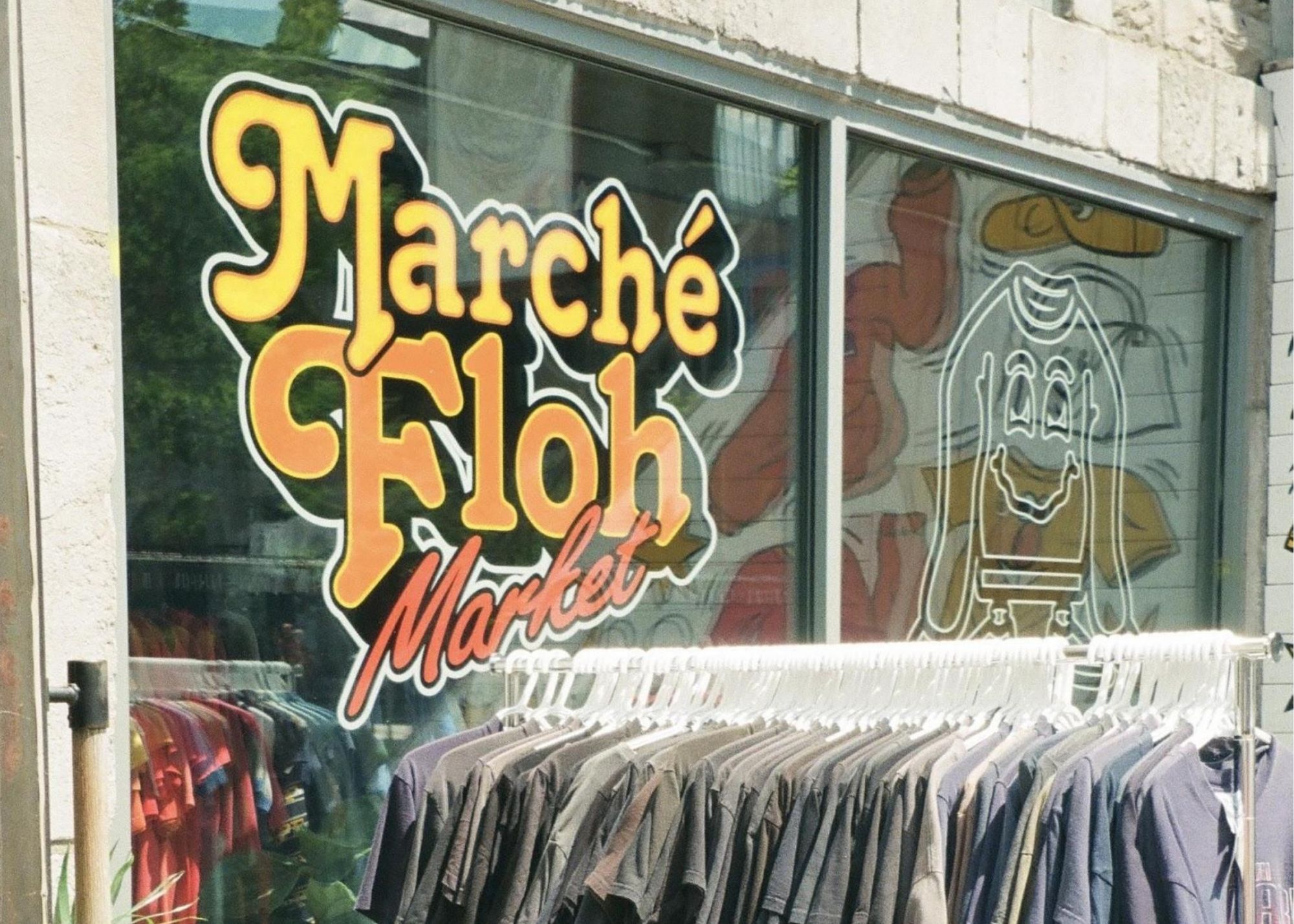
1. Marché Floh – 4301 Saint Denis Street

Marché Floh is a three-story vintage market that boasts 20 different resellers.

Alex Mondry, the market’s founder, has been passionate about thrifting for years. The business began as a pop-up thrift shop from Mondry’s own home, and eventually grew into larger pop-ups in Montreal’s commercial spaces in collaboration with other vintage resellers. The idea of hosting resellers all under one roof, Mondry explained, became what is now Marché Floh.

“The environment that we want to offer is very judgment-free, inclusive, [and] expressive, [where someone can] look for any type of piece and probably find it,” Mondry said in an interview with The McGill Tribune

Marché Floh’s stock includes ‘90s and early 2000s streetwear, baby-doll and goth styles, as well as hand-painted pieces.

Key to thrifting’s appeal, Mondry said, is the eclectic flare that vintage pieces bring to one’s wardrobe.

“Thrift shopping simulates a creative style that is different from shopping in a big-box store,” Mondry said. “You’re rarely going to run into someone with the same outfit as you.” 

Mondry also recognizes that thrift shopping helps minimize waste in the fashion industry. 

“People who thrift are helping us keep garments out of the landfill,” Mondry said.

2. LNF Shop – 5319 Park Avenue

For those looking for a thrift shop focussed on ‘90s nostalgia and high-quality brand name accessories, look no further than LNF Shop. Known for its denim, graphic T-shirts, and accessories, the shop is conveniently located within walking distance of the McGill campus.

Charlie Whitley, LNF Shop’s co-owner, is a former American Apparel employee who was inspired to add to Montreal’s vintage scene—which was lacking when LNF Shop started 10 years ago. 

“[It’s very] heavy ‘90s nostalgia, while trying to keep up with current trends,” Whitley said. “The care that goes into the products and the selection process [sets LNF Shop apart].”  

Items come from a variety of independent suppliers across Canada and are sold at affordable prices. 

The number of students opting to shop at thrift shops instead of big-box retailers is encouraging to Whitely, who is happy to see that many have shifted toward a more environmentally conscious lifestyle. 

3. Cul-De-Sac – 3794 St. Laurent Boulevard

Cul-De-Sac sells a variety of collectable pieces spanning multiple decades. It also boasts an in-house workshop where thrifted pieces can be modified and repaired.

Co-owner and manager Marc Jetté is no stranger to Montreal’s thrifting scene: 17 years ago, he began selling bags made out of recyclable materials, and his business eventually grew to include other accessories and clothing items.  

Jetté highlighted that many of Cul-De-Sac’s garments are of high quality because they were made during time periods when production methods were more thorough than they are now in the fast fashion industry.

“When people buy [from Cul-De-Sac], they are buying from a time period where things were made better.” 

Campus Spotlight, Student Life

McGill Farmers’ Market creates community for sustainable eating

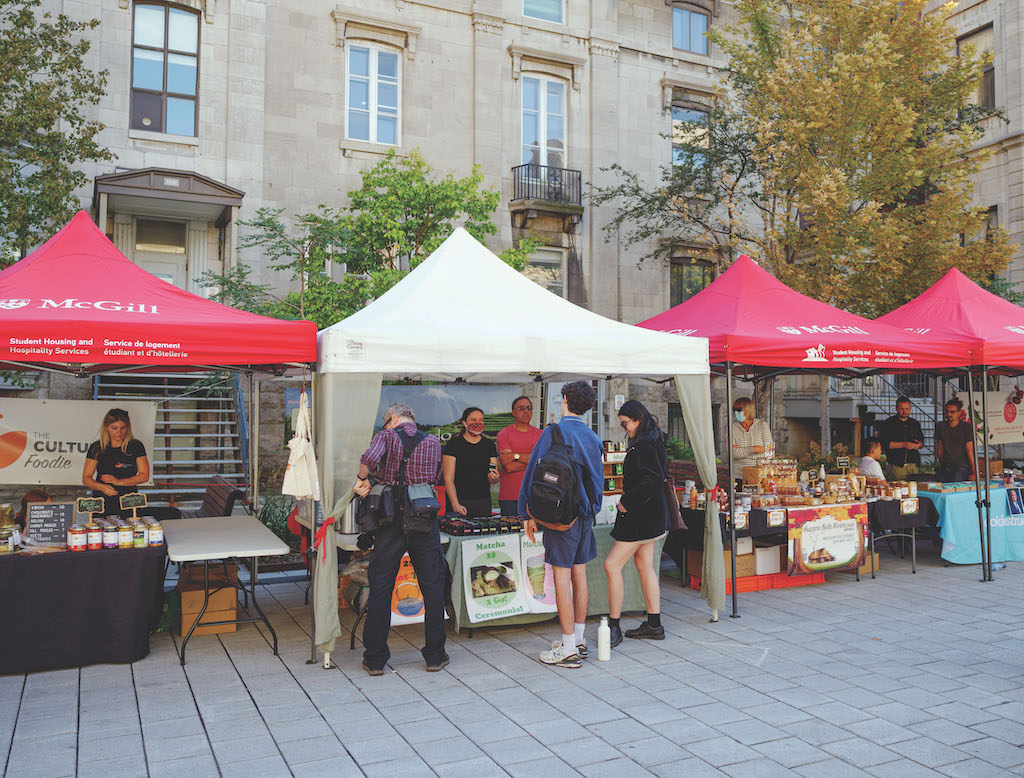
The McGill Farmers’ Market has been a staple of the summer and fall seasons at McGill since 2008. It returns again to McTavish Street this year, open on Thursdays from 11:00 a.m. to 5:00 p.m. Multiple vendors selling their signature products offer students a variety of food and flavour options, from De Sucre & de Miel’s avocado cakes and biscoff cookies, to the Cultured Foodie’s kimchi and pickled carrots.  

Jodie Anderson, U3 Arts, and her best friend Aneeka Anderson, U3 Arts, visit the market regularly. 

“We met up last week here and we are meeting up again this week to make this a little tradition,” Aneeka Anderson said. “We’re in our final year and, with COVID interrupting these traditions that we were forming [on-campus], we’re happy to be back and making the most of our last year.”

“It’s hard to shop locally and get such fresh stuff,” Jodie Anderson added. “Otherwise, if this wasn’t here, I might just be going to a big chain grocery store.”

Emma Leaden, MA2 Information Science, who visited the market for the first time, found it conveniently located and easily accessible. 

“This was right on campus,” Leaden said. “I know there’s a couple other farmers markets in the city that I haven’t been to because it’s just not as convenient.”

Leora Schertzer, U4 Arts and the coordinator of the farmers’ market, said that the market’s mandate is to provide accessible and sustainable food options to students.

“The goal is to promote local agriculture and local food production,” Schertzer explained in an interview with The McGill Tribune. “I think people like to meet the people who are producing their food as well. It makes it feel more personal. It makes you feel like you have more of a connection to what you’re eating and what you’re putting in your body.”

In addition to connecting students to local vendors, the market team organizes the Community Supported Agriculture (CSA) program, an initiative that offers local and seasonal produce through a weekly basket subscription service. The baskets are sourced from Co-op au Bout du Rang, a farm based in Saint-Felix-de-Valois—approximately an hour away from McGill by car—that grows over 40 varieties of vegetables. 

With current agricultural production systems causing substantial harm to the environment, Schertzer said a shift in food industry practices is urgently needed to confront climate change. 

“I think, in order for that change to happen, people need to have some sort of personal investment [in their food],” Schertzer said. “It makes people really happy to see the farmers’ market. They recognize familiar faces of the vendors who are super into what they’re doing and care a lot about their projects.”

Among these vendors is Elba Vasquez, owner of Café Elba. Vasquez started her business in 2013 to help struggling farmers in El Salvador. 

“I grew up in a small coffee farm in El Salvador, and I know what it’s like to be working there all day long in the coffee plantation,” Vasquez explained. “When I was a teenager working as a coffee picker, I was making 50 cents for every 35 pounds of coffee that I picked […] Some people make only $10 a day working all day long.”

The proceeds from the coffee Vasquez sells at the market help communities in Central America. She has recently been sending money to students in El Salvador to help them buy school supplies.

Although she takes part in a number of other farmers’ markets, Vasquez appreciates the student demographic unique to the McGill Farmers’ Market.

“Young people are very interested in [my business],” Vasquez said. “They want to help us by buying [the coffee]. They are very curious.”

Soccer, Sports

Ronaldo’s return to Manchester United is an exercise in spectacle

At the age of 36, Cristiano Ronaldo is still undoubtedly a superstar of world soccer. Alongside Lionel Messi, Ronaldo has been the joint best player in the world for more than a decade. He has encapsulated fans’ imaginations with a myriad of iconic moments, spanning his early days as a Manchester United phenom, to his stint as an established talent at Juventus. He has won nearly every accolade, both team and individual, that the sport has to offer. The crowning jewel—or rather, jewels—of his career are the five Ballon d’Or titles he has earned, consistently marking him as the best player in world soccer.

In a dramatic turn of events, Ronaldo has returned to Manchester United, the club that first gave him a platform to grow as a young 18-year-old prospect back in 2003. The move is full of romance, tying Cristiano Ronaldo, Manchester United, and all of the history between them together.

Despite his age, Ronaldo is still an incredible footballer; his physical conditioning and remarkable in-game sharpness is second to none, and he scored a tremendous 36 goals last season. Despite the romanticized reunion of Ronaldo and  Manchester United, this move smacks of desperation on both parties. 

If Ronaldo is anything apart from being talented, he is incredibly marketable. His 344 million Instagram followers attest to the scale of his global influence. Manchester United have already reaped the rewards of the meagre £25-million investment, as they saw Ronaldo’s iconic number seven jersey become the fastest-selling shirt in Premier League history. The famed new number seven jersey has brought in £187.1-million since his number was confirmed.

From a financial standpoint, these sales have more than justified both the fee to bring him to the club, and also the astronomical £500,000 per week he will be earning. 

U1 Arts soccer fan Ben Manson thinks the move may be ill-advised. 

“He has to prove it on the pitch,” Manson said. “As of right now, the only thing that Ronaldo has brought to Manchester United is an inflated ego and a paycheck. Ronaldo is a wonderful player, but yes, as of right now this entire transfer is one big circus, especially after the loss to Young Boys.” 

The loss came in Manchester United’s match against Swiss team BSC Young Boys Bern in the opening Champions League fixture of the season. Ronaldo scored in typical fashion, but the team failed to keep their composure, conceding a late goal.

Young Boys are not a team Manchester United should ever be losing to. Many believed that Ronaldo’s prowess for the biggest games would elevate United’s game. After all, he is known for his ability to rise to the occasion, often being likened to the Michael Jordan of the soccer community. Despite this, he failed to infect his Manchester United teammates with the same capacity for big-game success. 

Sam Koenig, U1 Arts & Science, on the other hand, believes Ronaldo’s move is a recipe for resounding success.

“Purely in virtue of the fact that he is such a brilliant player, he will elevate Manchester United to a higher level,” Koenig said. “That’s why I love Ronaldo. He has proved time and time again that he is capable of making those around him better.”

This will be an important facet of measuring the success of Ronaldo’s move to United. Although he is but one man, the best players are renowned for galvanizing their entire squad and winning. 

As it stands, Ronaldo’s transfer to Manchester United seems nothing more than a sales-driven spectacle. He is earning an exorbitant amount of money every week, but he is long past the player that rose to fame all those years ago. And crucially, the romanticism of a move back to his boyhood club suggests that this transfer has much more to do with appeasing the fans than it does with succeeding on the pitch. 

Commentary, Opinion

Federal candidates must work harder to earn students’ support

Viewers of the federal leaders’ debates on Sept. 9 and 10 heard many promises to solve the country’s problems. Unfortunately, details about the implementation of these sweeping goals were missing. Young people, in particular, may have felt left out of the discourse, as student issues were barely mentioned in either debate. Although the candidates discussed issues that impact young Canadians, such as pandemic recovery, mental health, the housing crisis, and climate change, they failed to address students’ unique concerns. To gain their support, federal candidates must be more clear about communicating how their policies will help students. 

Based on the debates alone, leaders appeared to overlook student issues. However, some parties’ official platforms still prioritize them. The New Democratic Party plans to eliminate student debt up to $20,000, while the Green Party seeks to increase scholarships for graduate and doctoral students. Likewise, Prime Minister Trudeau could have taken time during the debate to outline his promises to end federal interest on student loans and increase universities’ funding for mental health counsellors. While it is encouraging that parties have included student issues in their platforms, the debates were a missed opportunity for candidates to tell millions of viewers about these plans and show that they are passionate about helping young Canadians.

It is curious that the leaders downplayed student issues since inspiring young people in Canada to vote is a major challenge. Canadians between the ages of 18 and 24 vote less than any other age group: Many believe that their vote does not matter and think that the government does not care about their concerns. Young people also face greater barriers to voting, since many do not receive voter information cards and are not made aware of how to register. The suspension of Election Canada’s Vote on Campus program during this campaign will likely further decrease turnout. With many students disillusioned about voting in this unpopular snap election or uninformed about how to vote in the first place, it is imperative that parties go out of their way to direct their messaging toward this key interest group.

Although politicians may wish to appeal to all demographics evenly, the debates focussed on many issues that concerned specific groups. Both sets of moderators asked about the high rate of COVID-19 mortality in senior care homes without mentioning the pandemic’s devastating effects on young people’s mental health. Economic recovery was a major theme of the debates, though the participants ignored the fact that students’ entry into the workforce is necessary to spark this recovery. Candidates may have been more interested in courting the support of seniors because Canadians over the age of 55 have the highest voter turnout, but when seniors’ concerns are discussed more than those of other age groups, it can become a cause, rather than an effect, of higher turnout. If candidates want students’ votes, they should speak about issues that matter to them, just as they do for constituents of other ages. 

Young people represent a largely untapped resource for Canada’s political parties, and winning their support now has the potential to turn them into lifelong voters. As the 2021 federal campaign comes to an end, candidates must highlight the aspects of their platforms that pertain to young people, and continue to speak about these issues in upcoming campaigns—in addition to delivering on their promises once elected. However, candidates are not solely responsible for tackling low youth voter turnout. Students can advocate for themselves by pushing their leaders to restore on-campus voting and encouraging their friends to register and vote. To gain politicians’ attention, young people need to resist the temptations of apathy and meet the parties halfway. If students show greater political interest, candidates will be more inclined to discuss student issues in future debates, creating a cycle that ensures that every citizen’s voice is heard.

Features

Meeting myself halfway

“Hi Halmoni,” I say, as I draw my Korean grandmother into an awkward, very loose, hug. “Hi say-quoi-yah,” she beams back at me, purple puffer jacket, tattooed eyebrows, and all. My grandparents are very predictable; Halmoni will measure herself against me and tell me I should enter Miss Universe; Haraboji will draw out a long “Hii,” pull me into a very brief hug, and give me two or three solid—and I mean solid—pats on the back.

I am grateful for every minute I get to spend with my grandparents, but seeing them in the flesh is a bittersweet experience. It reminds me of the time I told Haraboji that I was going to take an introductory Korean language class at McGill. I never actually ended up taking the course, and it pained me when every time he would come over to visit, he would ask me if I was still taking it. I shook my head and muttered that I would start trying to learn on my own soon—a promise I knew I wouldn’t keep. I wanted to take the class to stop feeling like a Korean fraud, and more importantly, to be able to talk to my Korean family. I wanted to know all the stories that couldn’t quite pierce through the language barrier between us. 

Growing up mixed Korean-Scottish in a predominantly white town in Southwestern Ontario, my search for a sense of identity and belonging has felt, at turns, humiliating and insatiable. As I enter my twenties, however, I’ve begun to see this confusing existence not as something to lament, but as something beautiful and inordinately complex to explore.

Simmering on low heat for several years prior, my racial identity crisis erupted in my first year of studies at McGil. McGill’s Upper Residence felt packed with hundreds of self-centred, loud, white people. More than being excluded, I felt repulsed: Who I was couldn’t have been farther from the culture I had been plunged into. Outside of the more glaring reasons for my alienation—like the astounding dominance of the thin, white, and blonde ideal—lots of other small things bothered me. For one, people wasted disgusting amounts of food in the dining hall. My Apba taught me to scrape out the last grain of rice out of the bowl, and I always use chopsticks to nitpick out the final few half-grains stuck to the side. 

I thought maybe my proximity to whiteness would grant me backend access to the ‘best four years of your life’ university experience that I was expecting—but it never really did. Through various conversations with other mixed East Asians, it was affirming to find out that my experience was not an anomaly. Serene Mitchell, a U3 Arts student born in Taiwan but raised transnationally between Asia and the West coast of Canada, remembers being shocked by the unabashed displays of privilege among the much of the McGill population.

“[I remember] feeling so […] isolated, feeling like I don’t have anything in common with these people at all,” Mitchell said, recalling their first year. “I think that’s when I started doing a lot of thinking and I was like, ‘if this is white people, this is not me.’”

But, it was those very experiences of Othering and alienation that led Mitchell to explore their Asian identity in more depth. She added, “I feel like because of how horrible it was, it pushed me to reconcile with my Asian identity, because […] the fact that people make me feel like I can’t have it makes me want to have it more.”

And oh, how badly I wanted my identity. After being chewed up and spat out by my first year of university, I felt the sudden urge to explore, and confront, my Asian identity. But how? The most obvious starting point was through my Haraboji—translating to “grandfather” in English. In my eyes, he embodied a lifetime’s knowledge of Korean culture, traditions, language, and lived history. I wanted to know all these things too, I wanted to be able to answer any Korea-related question anyone ever had for me, just like my grandfather could. It was as if I wanted to become my grandfather himself. Not far into my tragic hero’s journey did I confront the realization that being a walking encyclopedia on Korean culture wouldn’t make me any more Korean than I already am.

After that, I latched onto something different, something that Katia Lo Innes, BA ‘21, calls “boba liberalism.” Said to be coined by the now-deleted Twitter user @diaspora_is_red, the term points to the rise of bubble tea as part of the “substanceless trend-chasing spectacle” that is mainstream Asian-American—and Asian-Canadian—liberalism. 

“Once boba liberalism kicks in, and you see your cultural identity as things that can be bought and sold, and you’re mixed, you are always going to have this idea that you’re deficient,” Lo Innes said. “You have a scarcity mentality that tells you have to do all these things to catch up.”

The term critiques the idea of reaffirming one’s racial identity by purchasing commified and mainstream “Asian” products. Another Twitter user, replying to the original thread, continues: “It’s capitalist consumption presented as ‘API-ness.’ Buy more crazy rich asians tickets, sell more boba, go to raves, wear this brand. It’s reliant on capitalism.”

Though I was never a materialistic ‘boba liberal,’ I certainly struggled with the temptation to outwardly display—and perhaps, perform—my Asian-ness. I was never obsessed with purchases, but I was still obsessed with their shadow: Performance. I knew I just desperately wanted to prove to people—especially to white people—that I was Asian, that I was Asian enough.

“If you look at things as a performance for other people, you’re not going to feel it. But if you look at your own personal rituals, I think a lot of it was actually quite cultural. Like boiling water or taking shoes off to wear slippers. And they’re not ‘capital C’ culture, I’m not doing a tea ceremony every morning, but those are all cultural habits,” Lo Innes said.

At some point along the way, I, along with Lo Innes, was added to the Facebook group “Subtle Asian Traits.” Its 1.9 million members make funny, relatable posts about the ‘Asian experience’: Asian dads making kids cry while helping with math homework, references to K-dramas and animes, strict Asian parents pushing their children to be doctors and lawyers. While I related to some of the memes, I often felt like an outsider—even an imposter—in a community I was supposed to fit into.

“A lot of the Subtle Asian Traits discourse, and also a lot of mixed-race and cultural identity discourse is really based on consumption and what you do,” Lo Innes said. “It’s kind of shallow. Being Asian isn’t just going to get boba or having parents that beat you with a wooden spoon.”

But the unsettling feeling of not feeling Asian enough obviously runs deeper than not being able to relate to a universalized Asian experience. Many of my worries are linguistic, existential, even generational. Earlier this summer, I decided to walk down to Montreal’s melting-pot-of-a-Chinatown for the first time, expecting to find some comfort. Instead, I felt alienated. As I walked through the stores, pouring over all the things that I used to see lying around my grandparents’ house, I felt lost trying to navigate a space written in languages and characters I didn’t recognize nor understand. 

The dichotomy is dizzying: I saw so many familiar Korean things, but they felt oh so distant, foreign, and out of reach. It’s akin to how I feel around my Korean relatives sometimes: They speak to me in broken English, measure themselves against my towering height, marvel at my mixed features—my curly hair, mostly. I always nod along, catching some words and comments here and there. My Apba spoke to me in Korean when I was a young child, but eventually stopped. I never learned the language.

If there’s one thing that keeps me up at night, it’s grappling with the fear and sorrow of the possibility of the Korean line fizzling out in my generation. If I feel so disconnected and alienated from my culture now, it hurts to think about how disconnected my kids might feel. Haraboji and Halmoni won’t be alive; I won’t have any Korean to pass onto my kids; so many family stories will be left untold, caught behind the rigid language barrier dividing the world between my grandparents’ and I. Michelle Zauner, the half-Korean lead vocalist and songwriter of Japanese Breakfast, asks herself a similar question in the opening chapter of her memoir ‘Crying in H-Mart’: “Am I even Korean anymore if there’s no one left to call and ask which brand of seaweed we used to buy?”

Lo Innes, too, has grappled with long-term generational anxieties, but finds comfort in the fact that Chinese culture is always in flux—not something stuck in time, about to be lost.

“What I try to tell myself is that if I try and claim too much of Chinese culture as I know it, it ends up becoming kind of the archaic, fake version that I’m trying to feed my kids and that isn’t that cool,” Lo Innes said. “Culture in China is always changing and it changes with me and it changes with everyone who is Chinese, so I think a lot of people are being less traditional.”

And change does it ever: When I visited South Korea in 2016 with my grandparents and family, I was shocked to hear from both Apba and Haraboji that they felt like outsiders there. My grandparents were born in Korea, but moved to Toronto in 1968, my father in Toronto. Haraboji said that the dialect had changed so much that he—a native Korean speaker—could at times barely comprehend what people were saying. 

It made me think about the diasporic yearning to return to the homeland. The thought of travelling to the place my ancestors have lived for hundreds of years remains appealing. But while visiting South Korea was beautiful and thought-provoking, I realized that the place itself would be no silver bullet in reaffirming my racial identity.

Connecting to geographic places outside of the homeland is important too. Born to an Italian father and a Korean mother, Catherine Young Zambrano, U2 Arts, said she feels most at home in Toronto, where she lives right in between her two cultural neighbourhoods.

“In Toronto, my mom’s house is in between College Street and Bloor Street. On College Street, it’s Little Italy. And on Bloor Street, it’s Koreatown. And [we lived] literally right in the middle,” Zambrano said, smiling. “What I love about going home is how close I feel geographically to each little town of mine.” 

Lo Innes and Zambrano inspire me to see my complicated relationship with my cultural identity as a beautiful, complex thing to treasure. Instead, I think I’ll start asking myself questions like: How do I find genuine connection to culture? How do I learn to accept everything that I am, and realize that everything I am not? How do I come to peace with myself?

Food was an accessible entry point to accessing Korean culture for me. Although there aren’t many Asian grocery stores in the Plateau area where I live, I enjoy biking down to Chinatown or up to the Jean-Talon area to visit Marché Oriental. One time, annoyed by the meagre 2 lb bags of rice sold at grocery stores around me, I hauled a 15 lb bag of ‘extra fancy’ Calrose rice—otherwise known as sticky rice—several kilometers back to my apartment. For Zambrano, making her mother’s dumplings is a way of connecting to Korean culture. 

“I make them for my roommates, make them for my friends, and make them for my dinner parties,” Zambrano said. “Everyone loves them a lot.”

Food is my care language. I prefer chopping vegetables and preparing a birthday meal for a friend rather than buying them a gift. This summer, I made bibimbap for a close friend’s 20th birthday. I spent the morning julienning the carrots and cucumbers, marinating the spinach, making the sauce, and arranging everything in the bowl perfectly. Together, we celebrated his 20th birthday in the park just outside my apartment.

“Food is a great way to reconnect because it’s a universal language and has a universal way of caring for yourself and caring for others,” Lo Innes said. “Often, […] being mixed and not speaking […] your mother tongue, it’s like, ‘how do I communicate these feelings to people without the vocabulary to do so?’ Food is a great way to find that vocabulary.”

From Korean barbecue, to mul naengmyeon, to dotori-muk—a wobbly acorn jelly—to a simple bowl of fresh, steaming rice, making and eating Korean food brings me so much comfort. 

Though I cook for myself much of the time, food is best enjoyed in company. Renée Laberge, U2 Arts, made space for herself in Upper Residence in first year, sharing bits of Chinese culture and food with her floormates. “When I was in residence, I made a point to let people know that not only am I half Chinese, [that that I also] I fucking love the culture,” Laberge said, beaming. For Autumn Moon Festival, Laberge’s mother sent her mooncakes, so she cut the mooncakes up into tiny pieces and put them on a plate outside for people on her floor to try. For Chinese New Year, she cooked dinner for her entire floor.

***

My Haraboji is my cultural rock. As I was reading over the final versions of this feature, I decided to call him. I could hear his excitement emanating through the phone when he picked up. After explaining the topic of my feature to him, he surprised me when he said he felt the same way: When he travelled to Korea for the first time in 53 years, he said other Koreans treated him like he wasn’t a full Korean. But back in Canada, he said he is seen as an immigrant—fully the Other, fully Korean. I sat still in my chair, processing his words, because I had always seen myself as not-Asian-enough in his shadow. Hearing about his alienation from both places challenged the idea I had held onto for so long: That having a cultural identity is something you are born with and that sticks with you for the rest of your life. That because Haraboji was a full Korean, born in Korea, that he would stay Korean for the rest of his life. The fact that even Haraboji—who epitomized Korean-ness in my eyes—was still navigating his own cultural identity at the ripe age of 84, showed me that feeling Asian is so much more complex than I could have ever imagined.

Stepping out of the metro station near Place-des-Arts one lonely night this summer, I passed by an outdoor MUTEK festival performance. In a plain white tee-shirt that hung loosely off her shoulders as she pulsed to the beat was Ciel, a Toronto-based DJ hailing from Xi’an, China. As I swayed to the ethereal, head-bumping electronica, suddenly I was crying. It was a simple revelation, but an important one: There is no single way to be, or feel, Asian.

Science & Technology

Five science myths perpetuated by your favourite movies and TV shows

Movies and TV shows are notorious for sacrificing sound science in favour of cinematics that capture audiences’ attention. While this provides good entertainment, viewers may be shocked when scientific reality does not match up with fantasy. The McGill Tribune busts five incorrect portrayals of science in the popular media.  

Myth 1: Antidote to the rescue!

You may be familiar with action movie plotlines, involving the manufacture and distribution of an antidote to counteract a poison in a timeframe of mere days. For instance, in Teenage Mutant Ninja Turtles (2014), Shredder’s evil plan revolves around spreading a virus and then using the teenage mutant ninja turtles to create and distribute an antidote—all within the time span of a month. Most of these films feature certain characters with a natural resistance toward the poison who then provide their antibodies as a cure.

In real life, however, manufacturing an antidote would take much longer than a few days—even if the US Food and Drug Administration (FDA) regulations were ignored and a production process was already in place. A real-life parallel of antidote manufacture is snake antivenom, which is made by injecting horses with venom to produce antibodies. The process takes at least 18 months to complete and involves breeding snakes and milking their venom, and then purifying the antibodies produced by horses upon exposure.

Myth 2: Charge to 100—stat! 

Defibrillators, a very common occurrence in movies and medical dramas, are often used to put audiences on the edge of their seats, waiting to see if their favourite character will survive the shock.

In shows, defibrillators are mostly employed when a character’s heart suddenly stops beating. However, in a real emergency, defibrillators cannot be used on people with extremely slow heart rates or none at all. They are also not placed side-by-side on the chest as shown in movies, but at specific angles on the chest; one above the right nipple and the other on the left side just below the chest area.

Myth 3: Walking away scot-free

Many movies feature action heroes that are seemingly invincible: They walk away from huge explosions and destruction relatively unharmed—think any movie from the Marvel Cinematic Universe.

While fire and shrapnel are both dangerous side-effects of an explosion, there is a more insidious way explosions can kill: Through blast waves. If a person is close enough to the explosion to be propelled by its shockwave, they are close enough to be killed. 

When an explosion occurs, it creates a vacuum which is immediately filled by surrounding air. Pressure changes of three pounds per square inch (psi) can cause 164 kilometre-per-hour winds—gusts strong enough to collapse most residential buildings. Anyone close to the explosion would not only feel the blast, but also the immense wind pressure it creates. Such high pressure can cause serious ear, lung and bowel damage—sorry, Tom Cruise.

Myth 4: The BOOM in space

Battle sounds and noises made by ships as they move through space are found in many science fiction movies, like Star Trek and Star Wars. If these movies were true to science, there would be only deafening silence in space.

The reason for the silence is because space is a vacuum, and sound needs a medium to travel through to be heard. This fact was first proved in the 17th century by Irish physicist Robert Boyle, when he conducted an experiment that placed a ringing alarm clock inside a glass jar. After sucking out the air from the jar using a pump, creating a vacuum, Boyle discovered that when the air disappeared, so too did the sound.

Myth 5: The chloroform kidnap

Kidnapping scenes in movies tend to involve a dark figure descending upon an unsuspecting victim from behind, muffling their screams with a chloroform-soaked cloth. The victim typically loses consciousness only seconds later. 

Though it is a powerful anaesthetic, chloroform is a slow-working substance. It would take an adult human at least five minutes to lose consciousness—during which they could potentially fight off their attacker. Moreover, chloroform’s efficacy also depends on its dose: If the attacker is imprecise, overdose of chloroform can cause death. This is one of the reasons why chloroform is no longer used in surgeries. 

Despite the inaccurate portrayals of science that would make any expert shudder, most people continue to consume such media without question. After all, why go to the movies if not for an escape?  

Know Your Athlete, Sports

Know Your Athlete: Mathieu Soucy

Mathieu Soucy is one of McGill Football’s most impressive athletes. From athlete of the week to Réseau du sport étudiant du Québec (RSEQ) football player of the week accolades, Soucy has proven that he is a force to be reckoned with. However, it was not always his dream to pursue football: Born and raised in Quebec City, Mathieu Soucy grew up playing soccer but only found his love for football when he was asked to join the team at Cegep Garneau. 

“In physical education class, they saw me and asked if I wanted to play football. I said okay and decided to try out,” Soucy said in an interview with The McGill Tribune.

Although he started late, coaches recognized his talent early on, and quickly fit him into the wide receiver role at the McGill Redbirds football team. Soucy has put in years of hard work since he joined the team, and hopes to take McGill as far as possible this season.

The wide receiver’s impact is significant, as this position controls how the plays are run and how smoothly the offence functions. However, Soucy explained that sharing the field with his other teammates is crucial to the team’s overall success. 

“You don’t want to be selfish as a wide receiver because you need to run routes to get the ball to your teammates,” Soucy said. “That also means you need good chemistry with the other players on the team.” 

As a veteran, Soucy has solidified himself as a strong mentor. On and off the field, Soucy takes a leadership role when it comes to helping the team be the best they can be. 

“I’m 25, and it’s fun to see younger players, especially the ones coming in from Ontario at 18,” Soucy said. “The younger guys ask me questions, and I like being there for them. It really helps build chemistry.”

Mathieu has the mindset of a winner; regardless of reputation, he never rules any team out as a serious adversary.

“In this league, every team is a rival,” Soucy said. “We only play each team twice a year, so we have to give it our best every time we play. Being from Quebec City, Laval has always been one of my biggest rivals. [University of] Montreal is also one of my bigger rivals because we always seem to lose to them in the playoffs and get eliminated.” 

This semester is Soucy’s last. Beyond his postgraduate career plans, Soucy hopes to share his knowledge of football with his community back home once his time at McGill comes to an end. 

“It’s time I start thinking about my future,” Soucy said. “I plan on going back to Quebec City to work at my dad’s construction company, and eventually take over once he retires. I also want to coach my high school football team to give back to the kids. I have been given a lot in my life, and I feel I need to give back.” 

Although Soucy does not plan to pursue a professional football career, he has not yet ruled out the idea. 

“I probably won’t play contact football again,” Soucy said. “Maybe flag or touch, but contact is getting to be difficult. If a team in the CFL [Canadian Football League] asks me to play, I would definitely consider it, but otherwise, I am likely done.”

Mathieu Soucy has dedicated five years of hard work to McGill Football. Although this is his last season, his drive and dominance on the field will not be forgotten anytime soon. No matter where Soucy ends up, his years as a leader and mentor, and his dedication to the football team, will remain in the hearts of fans for years to come.

Read the latest issue

Read the latest issue