

Latest News

Consultation
McGill, News

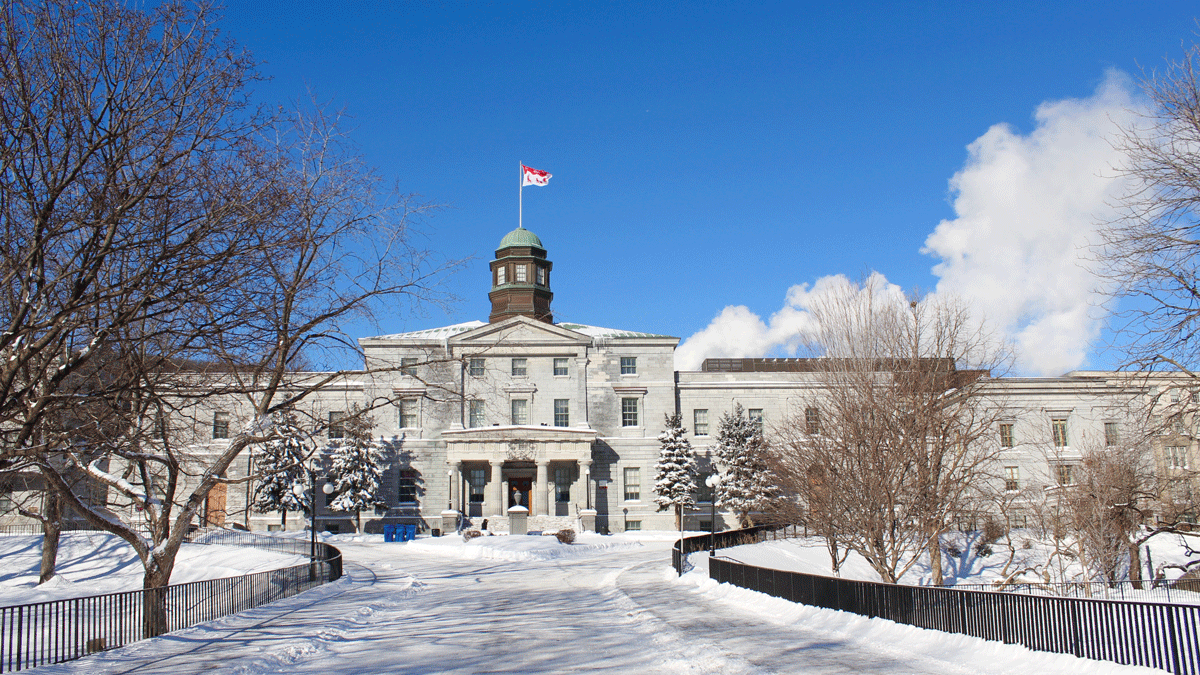
McGill Senate approves Fall Reading Break and discusses limits of academic freedom

Following a campaign led by students since at least 2018, the McGill Senate approved a motion to establish a Fall Reading Break for the Fall 2021, 2022, and 2023 semesters during its meeting on Nov. 18. 

In Fall 2021 and 2022, the break will consist of a two-day extension to the Thanksgiving weekend, for a total of five days, including the weekend. In 2023, the extension will be for three days, with plans for a longer break in the four subsequent years. Unlike other universities and colleges, the break will not last an entire week until at least 2024.

Gillian Nycum, university registrar and executive director of Enrolment Services, recognized the work done by students in establishing the break. 

“This was an initiative that really came out of student advocacy,” Nycum said. “[It was] a collaboration between staff, faculty, and students to engage in consultations to come up with a proposal for a Fall Reading Break.”

Nycum also acknowledged why the decision took several years, citing disagreements on how to best reorganize the academic calendar. 

“This isn’t a new conversation,” Nycum said. “Earlier conversations about how to make space in the Fall calendar for the Fall break didn’t lead to agreement on how to maintain contact hours.”

The Senate also addressed a set of questions put forward prior to the meeting by student senators regarding Principal and Vice-Chancellor Suzanne Fortier’s Oct. 26 message on Academic Freedom and Inclusiveness. The statement was inspired by recent controversy at the University of Ottawa, which sparked debate over the limits of academic freedom and the need to protect BIPOC students on university campuses. Some students and student groups, including the Black Students’ Network (BSN), took issue with Fortier’s failure to condemn the use of racial slurs in lecture halls or other academic contexts at McGill and demanded an apology for the statement. 

The questions’ preamble noted ambiguities in McGill’s policies regarding the limits of academic freedom, and the questions themselves highlighted concerns regarding lack of transparency in how exactly the university plans to maintain a respectful environment within the classroom. 

Provost and Vice-Principal (Academic) Christopher Manfredi argued that academic freedom cannot act as a license to engage in misconduct under any McGill policy. In response, Students’ Society of McGill University (SSMU) Vice-President University Affairs Brooklyn Frizzle noted the limits of his answer.

“Many of the university’s policies which govern conduct come with the caveat that they cannot be applied to restrict academic freedom,” Frizzle said. “[Senator Manfredi] mentioned The Policy on Harassment and Discrimination Prohibited by Law, which specifically states that it cannot be applied to abridge academic freedom.” 

Neither Manfredi nor Associate Provost (Equity and Academic Policies) Angela Campbell were clear regarding how they intend to address such ambiguities to protect marginalized students. 

Arts Senator Darshan Daryanani asked Manfredi why the university would not ban the use of offensive words before a student is hurt by their use. In response, Manfredi argued that such a solution would not be productive.

“Trying to construct an a priori list of words that are banned in the classroom, even if we can identify many words whose utterance in a classroom setting would be unlikely to be justified, would be a mistake for the university,” Manfredi said. 

Soundbite 

“Something that has become clear to us, as it has become clear to all universities, is that Fall 2021 is unlikely to look like Fall 2019. The pandemic is unlikely to have left us completely. But at the same time, it cannot [look like] Fall 2020. The toll it is taking on people is too high, and it calls on us to figure out how we can achieve more interactions while keeping our community safe.” – Principal and Vice-Chancellor Suzanne Fortier.

Moment of the meeting 

When discussing the Principal and Vice-Chancellor’s statement on Academic Freedom and Inclusiveness, SSMU Arts and Science Senator repeatedly asked Senator Manfredi whether McGill would condemn the use of racial slurs in lectures. He failed to answer the question on McGill’s behalf but acknowledged that he could not imagine a situation where such language would be appropriate. 

McGill, News

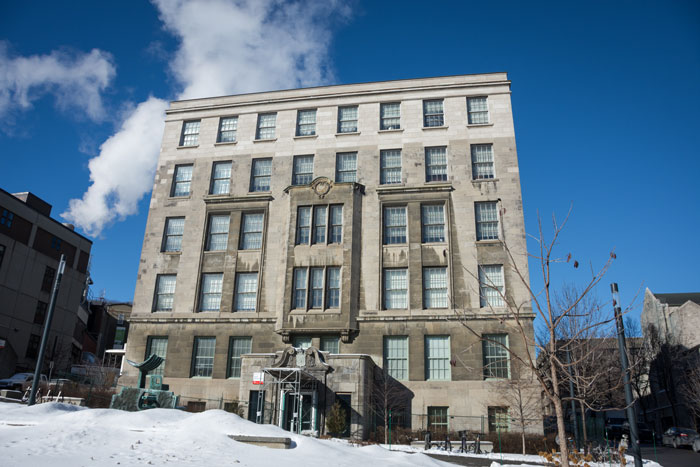
Tribune Explains: McGill’s New Vic Project

After the site was decommissioned in 2015, McGill has launched a proposal to renovate part of the Royal Victoria Hospital to create a state-of-the-art research, teaching, and learning hub dedicated to Sustainability Systems and Public Policy. The project was named the New Vic Project, and construction on the old Royal Victoria Hospital is planned to start in January of 2023. 

What is McGill looking to achieve with the New Vic project?

McGill is renovating only part of the Royal Victoria site and is working under the Societe Quebecoise des Infrastructures’ (SQI) oversight. Dean of the Faculty of Science and Academic Lead of McGill’s New Vic Project Prof. Bruce Lennox and Director of Community Relations Carole Graveline hope that the project will foster increased collaboration between students and professors, with a focus on sustainability in both the buildings’ laboratories and classrooms. 

The Royal Victoria Hospital’s history

Since its founding in 1893, the old Royal Victoria Hospital, on the corner of Pine and University Ave, has been dedicated to providing medical care. The hospital’s goal of healing extended beyond its patients; its founders wished that the site would be used to heal society and the planet through medical research and education in perpetuity. The hospital is currently being used as a COVID-19 isolation unit for those who are homeless and either infected with the virus or awaiting their test results. The hospital will operate this way until Spring 2021. In 2018, the government of Quebec announced they would cede part of the site to McGill and were also granting $37 million to help fund the renovation plans.  

Community feedback and student concerns over the project

Some students, however, are skeptical of the project’s supposed sustainability. In a Nov. 16 roundtable between the McGill administration and student media, students juxtaposed the project’s ethos of environmental consciousness with McGill’s investment in fossil fuel companies and questioned whether this presented a contradiction. Lennox believes the New Vic Project still stands in tandem with the university’s commitments to environmentalism and climate change mitigation through research. 

“I don’t see a contradiction,” Lennox said. “Many of the touch-points and eventual outcomes of research in sustainability have to do with energy use. There is a tremendous commitment in sustainability research at McGill to redirect energy use from all of its conventional sources, but those conventional sources aren’t just for energy use, they’re also for materials.”

During the roundtable discussion, students also spoke to the concern that the decision to partake in a project could potentially disadvantage Montreal’s unhoused population. Lennox said that McGill did not have jurisdiction over the parts of the hospital that are currently being used as shelters. 

“The buildings that we are currently designing for McGill occupancy, eventually ownership and then occupancy, do not include the Women’s Pavilion, the Ross Pavilion, and the Heresy,” Lennox said. “It’s my understanding that the Ross Pavilion is being used for these groups, so it’s out of our jurisdiction, and that building will remain under the control of the SQI past the completion of our project.”

Anti-privatization September 2020 protests

On Sept. 4, local residents and some McGill students demonstrated outside the old Royal Victoria Hospital out of concern that the hospital could be sold to private developers. Protesters claimed that discontinuing the hospital as a shelter for the unhoused population could present adverse impacts on the community by hiking up rent prices in the surrounding area and pricing out low-income residents.  

When will the construction on the old Royal Victoria Hospital start?

Lennox explained that details on the project are largely unknown to the community thus far. He hopes that upcoming information sessions and greater communication between the McGill community, students, professors, and members of the New Vic Project team will clear up controversies on this issue. Construction is slated to start January 2023.

(Kathryn Leci / The McGill Tribune)
McGill, News

SACS host the second installment of Fall 2020 Speaker Series

The Student Association of Cognitive Science (SACS) hosted an hour-long virtual panel to discuss the challenges, successes, and future opportunities that the field of artificial intelligence (AI) presents. The Nov. 19 event was the second installment of the 2020-2021 Cognitive Science Speaker Series hosted by SACS.

The speaker, Dr. Jackie Cheung, is an assistant professor at McGill University’s School of Computer Science and a core member of the MILA Research Institute. Cheung lectured on the implications of AI and Natural Language Processing (NLP) in settings where these technologies interact with humans. Drawing from his research on machine learning and predicting language, Cheung provided the audience with an in-depth look at the ethical questions that arise from the use of AI and NLP technologies.

Cheung emphasized the importance of avoiding stereotypical biases in common practices like searching for results online or ranking job candidates.

“[A] study looked at the representation of gendered [third-person] pronouns [in AI systems and] at how much these models think that there is an association between [a] pronoun and some words related to occupations,” Cheung said. “This is a problem [because] now, we are not just using these [AI] systems to analyze data in the abstract. We are now using them to make decisions.”

Cheung covered various other topics during his lecture, including the science behind AI technologies and the differences between AI, machine learning, and deep learning. He also described examples of successful AI technologies used in practice like IBM’s Watson and Deepmind’s AlphaGo Zero, which have defeated humans in games like Jeopardy and Japanese Go. The end of the lecture focussed more heavily on the ethical questions that surround AI, including how researchers can effectively employ AI systems for social good.

Cameron Cherif, U3 Arts and Science, elaborated on what she enjoyed the most about Cheung’s lecture.

“His talk was really informative, as he has covered not only what AI is about, but also its weaknesses and the ethical challenges it entails, while also debunking some myths that people commonly assume […] about [machine learning],” Cherif said. “He’s a phenomenal lecturer, and I enjoyed the throwback to COMP 424 [Artificial Intelligence].” 

One of SACS’s goals is to ensure that its events are accessible to the general public. Léo Tronchon, U4 Arts, shared his thoughts on the accessibility of the panel’s subject matter. 

“The talk given by Professor Cheung was, I believe, accessible for most people,” Tronchon said. “It covered the recent advances in AI and some of the [ethical] limitations encountered today [….] Since [machine learning models] are used extensively on the internet, where polarization is already problematic, I feel like [it’s] an important issue.”

Dr. Elizaveta Solomonova, a postdoctoral fellow in McGill University’s Department of Psychiatry, will host the next installment of SACS’s Speaker Series, which is being held during the first week of December. In the Winter 2021 semester, SACS will be hosting a cognitive science panel with four confirmed speakers to discuss the most relevant topics within the contemporary field of cognitive science. In an email to The McGill Tribune, Vice-President Academic of SACS Héctor Leos explained the importance of the Speaker Series panels for the McGill student community.

“These lectures are a great opportunity for students in and outside the program to learn about the research that is being done at their university, and to understand why an interdisciplinary study of the brain and the mind is so important,” Leos wrote. “This lecture was initially scheduled to occur last winter, but due to the coronavirus pandemic, it had to be cancelled. We’re happy that Dr. Cheung [agreed] to deliver his talk once again this semester.”

Students interested in the Student Association of Cognitive Science can find out more about future events via the association’s website and Facebook page.

Student Life

Pan-Asian Collective amplifies voice of the Asian student community

For many McGill students of colour, finding inclusive and welcoming spaces can be a struggle. A lack of safe spaces can perpetuate climates where racialized students do not have the chance to build a more equitable, inclusive environment. Pan-Asian Collective (PAC) is a new community on campus that creates platforms for Asian voices in conversations that often exclude them. 

In an email to the The McGill Tribune, PAC’s Communications Bottomliner Lavanya Huria, Events Bottomliner Yuan Kelly, External Affairs Bottomliner Chris Lau, and Communications and Events Team Member Chandni Patel explained how PAC started, as well as ways the organization is trying to call out and dismantle harmful norms.

“PAC started [just over a year ago] with a few friends talking about feeling like there wasn’t a space that existed at McGill for Asians to explore their identities,” Huria, Kelly, Lau, and Patel wrote. “We talked about wanting a space by and for Asians that centred learning, connecting, and showing up for our own communities, as well as others. These conversations led us to our first iterations of PAC.”

With the COVID-19 pandemic, there has been a significant rise in anti-Chinese sentiments that many students have experienced firsthand. At the same time, anti-Asian racism is often dismissed due to the false assumption that all Asian people are successful and well-adapted.

“A couple of us were really scared to leave our apartments alone, and some chose to avoid going outside altogether,” Huria, Kelly, Lau, and Patel said. “This was around the time a Korean man was stabbed in NDG. The pandemic has really brought to light an anti-Asian sentiment that has always existed but has been somewhat obscured, in part due to the [m]odel [m]inority [m]yth that has granted Asians, particularly East Asians[,] a sort of conditional belonginga peace that can be taken away at any moment, as we saw with the onset of the pandemic.”

In response to these rising tensions, PAC has spoken out against xenophobia. 

“It was important for us to use PAC as a platform to speak out against this racism using our collective voices,” Huria, Kelly, Lau, and Patel said. “PAC released a statement back in March about anti-Asian racism and violence [….] Attacks against Asian people and businesses are still happening and we would be grateful if non-Asian people gave more attention to this [….] We encourage fellow Asians to stay informed about and show up for other communities that need public support right now, namely Black and Indigenous communities on Turtle Island.”

Additionally, PAC is taking direct action to support Asian and marginalized community members. During Asian Heritage Month in May, PAC hosted open mic events to uplift Asian voices and connect the Asian community. PAC also collaborated on events with the Indian Students’ Association and the Union for Gender Empowerment on intersectional aspects of Pan-Asian identity, like being queer and Asian. 

Currently, PAC is hosting a giveaway to garner support for struggling small businesses in Chinatown. PAC is also working on collaborations with the Black Students’ Network, Students for a Free Tibet, and Anakbayan Montreal on the topics of long-term activism and self-determination in Asia

Still, Asians face challenges both within their communities and in a broader context. The aforementioned model minority myth can push them out of discussions on race and prejudice. Additionally, Asians are often targeted by companies to fulfill workplace diversity. 

“The multitude of identities, ethnicities, cultures[,] and histories that exist under the Pan-Asian umbrella are hardly represented in mainstream media,” Huria, Kelly, Lau, and Patel explained.  “When we are [represented], it’s often in stereotypical and harmful ways.”

PAC empowers Montreal’s Asian communities by promoting meaningful engagement in Asian history and culture in a manner that recognizes the diversity of Asian experiences. As Asians have largely been excluded from Western media and history, PAC offers students a space to be themselves without being burdened by the expectation that they represent an entire culture.

Students can follow PAC on Facebook and Instagram to get involved or to hear about their updates, events, and resources.

News, SSMU

Debt-Free Degree campaign mobilizes students to fight for financial support

The Students’ Society of McGill University (SSMU) announced its participation in the Debt-Free Degree campaign on Nov. 3, joining a coalition of eight other student unions that collectively represent over 250,000 undergraduate students in Canada. Since then, SSMU has encouraged students to voice their concerns on student debt by writing postcards to their local Member of Parliament (MP) through www.debtfreedegree.ca. Led by the Undergraduates of Canadian Research-Intensive Universities (UCRU) and the University Students’ Council at Western University, the campaign intends to advocate for increased financial support from the Canadian federal government for post-secondary students.

The coalition includes the Alma Mater Society of University of British Columbia, the University of Manitoba Students’ Union, the McMaster Students’ Union, the University of Saskatchewan Students’ Union, the University of Toronto Students’ Union, the Alma Mater Society of Queen’s University, and the Waterloo Undergraduate Student Association. The coalition aims to advocate for two financial support measures: A two-year grace period on all Canadian student loans and a doubling of investments in the Canada Student Grants Program.

Mackenzy Metcalfe, chair of the UCRU, explained why the organization chose student financial aid as a central demand of the campaign. 

“Students in Canada face significant financial barriers in their pursuit of higher education,” Metcalfe wrote. “The average amount of student debt in Canada is $28,000, which burdens students as they enter the workforce and begin their lives upon graduation [….] This campaign is important because investments in students are really an investment in the future. We will make up tomorrow’s workforce, and increased funding in student financial aid will undoubtedly see exponential returns.”  

Metcalfe encouraged students to take part in UCRU’s upcoming federal lobby week taking place from Nov. 23-27, where the coalition will be meeting with MPs to highlight students’ concerns.

“SSMU will be attending UCRU’s lobby week, along with the other UCRU schools, where we will elevate these concerns of students to Members of Parliament and advocate on issues including increased student financial aid, supports for Indigenous students, increasing research opportunities for undergraduate students, and supports for international students,” Metcalfe wrote.

Olivia Osso, U3 Arts, spoke to The McGill Tribune about the coalition’s attempts to increase public awareness and financial support for post-secondary students, especially considering the financial instability caused by COVID-19.

“Navigating financial barriers has always been difficult for post-secondary students,” Osso said. “With COVID-19, however, these difficulties have an added layer of uncertainty. Will recent graduates be able to gain employment right away? So many people are already losing their jobs after years of stable employment. Increasing the grace period for student loans and doubling investments are a few things that the federal government can do, but it would only be a start.”

SSMU Vice-President External Affairs Ayo Ogunremi explained the future goals of the campaign in regards to student involvement at McGill in an email to the Tribune.

“The McGill administration isn’t exactly an ally to students on issues of student fees,” Ogunremi said. “McGill students, however, can form solidarity networks and build grassroots capacity to challenge the structure of university financing [….] Our Policy on Accessible Education and Academics recognizes that our advocacy on student tuition always needs to be looking towards eventually eliminating tuition and ancillary fees [and seeking] alternate financing structures which do not place the burden on students.”

Ogunremi outlined the accomplishments of the current campaign so far, stating that UCRU representatives have been communicating with key government actors. 

“The effects of the campaign are difficult to tell so far, but I think you could say there have been small wins,” Ogunremi said. “The campaign is growing in attention across the country and UCRU representatives have been able to push these points with key federal ministers like the Honourable Mona Fortier, Minister of Middle-Class Prosperity and Associate Minister of Finance, and the Honourable Bardish Chagger, Minister of Diversity and Inclusion and Youth.”

Student Life

MUSTBUS seeks to make travel easy and affordable for McGill students

Last year, Alexis Zhou, U3 Arts, envisioned starting a student-run co-operative transportation service on the East Coast for McGill students. Zhou, disappointed in her experiences with New York City’s Port Authority Terminal and the Toronto Bus Terminal, hoped to satisfy a demand for affordable transportation among McGill students. Along with Matteo Trulli, U3 Management, Zhou founded McGill University Student Transport (MUSTBUS) to provide students with affordable transportation to major North American cities, including New York, Boston, and Toronto.

“Our immediate goal is to expand the college experience at McGill to really include Toronto, Quebec City, NYC[,] and Boston as a part of the McGill experience,” Zhou and Trulli wrote in an email to The McGill Tribune. “Our ultimate goal is to link universities in Eastern Canada and [the] Northeastern United States that are poorly served by intercity transportation and allow their students to go places for cheap.”

To bring their idea to life, Zhou and Trulli’s team worked to obtain legal non-profit status and gauge interest. In February 2020, they ran a pilot route and sold tickets to and from New York City for $30 each. 

“The February 2020 pilot trip went very smoothly,” Zhou and Trulli wrote. “The trip sold out pretty quickly and we were at capacity. We chose New York City because it is the largest metropolitan area in North America and it is [six] hours away. We were like, why not [?]”

This “why not?” attitude sums up the MUSTBUS project. After all, McGill students wanted better access to other North American metropolises, and there was no reason why they could not make it happen themselves. Since that pilot trip to New York City, MUSTBUS has done extensive research to make their program as efficient and accessible as possible. Part of this involved establishing a relationship with the Students’ Society of McGill University (SSMU).

“To make this possible, [we] needed [to conduct] extensive research on the industry, [and work on] negotiation[s] with bus companies and SSMU,” Zhou and Trulli wrote. “We were only now able to go onto the SSMU referendum after pitching multiple ideas [….] We first thought of registering as a SSMU club but then it didn’t work out. We decided to rather focus on becoming our own legal entity so that we can operate more efficiently and really, just [give] everybody the opportunity to travel.”

 On Nov. 13, MUSTBUS announced that the referendum on the continuation of the program passed, with 85 per cent of students voting in favor of the project’s continued development. The co-operative plans to propose a small, opt-outable fee next semester that will fund the service in order to keep it affordable, though this fee was not associated with the most recent referendum.

The passing of the referendum was very exciting for Zhou, Trulli, and the entire MUSTBUS team. Though, like many other organizations, MUSTBUS has been forced to put operations on hold due to the pandemic, the organizing team is still planning ahead for the post-COVID-19 future.

“We’re not operating any buses during the pandemic, but we’re continuously strengthening and building our organizational capacity and preparing to offer the best travel experience for the upcoming year,” Zhou and Trulli wrote.

 Once it is safe to travel and the COVID-19–related public health regulations are lifted, MUSTBUS promises to continue their mission to make inter-North American travel accessible for McGill students for years to come.

 Students can keep up with new MUSTBUS developments on Facebook and the MUSTBUS website.

McGill, News

McGill Senate responds to petition for extended winter break

Jules Barbe, U2 Arts & Science, shared a document authored by Elle Bremmer, U3 Arts, titled “Petition for an Extended Winter Holiday,” on Nov. 10, asking the administration to consider extending the current 12-day break. Since then, the petition has garnered over 9,000 signatures. During a Nov. 18 Senate meeting, Principal and Vice-Chancellor Suzanne Fortier announced McGill’s official response to the issue, saying a decision would be reached at the Dec. 2 Senate meeting. 

Barbe began the online petition after observing the adverse emotional and psychological toil the online semester has had on his peers.

“I kept seeing on social media, mainly [on] Reddit, how hard the semester was for my fellow students,” Barbe wrote in an email to the Tribune. “[It has been] very hard on students and professors alike. It’s very easy to […] see first-hand how students were impacted by online school [its] many challenges. ”

Barbe believes that McGill’s inaction on the issue is only exacerbated in comparison to other Quebec institutions that have already implemented a longer holiday.

“[E]veryone seemed completely defeated, especially seeing how other universities were getting a longer break themselves,” Barbe wrote. “Nothing’s [going to] change if we don’t try anything.”

On Nov. 20, a MRO McGill Communications email announced the administration’s intention to vote on extending the Winter 2021 semester at Dec. 2’s Senate meeting. Barbe expressed enthusiasm that his efforts have seemingly resulted in action from the administration.

“[The] announcement from the admin that they are sincerely planning to extend the break […] is a very good response […], and I’m looking forward to the decision they will make,” Barbe wrote. “This definitely made me more hopeful.”

Vice-President of University Affairs of the Students’ Society of McGill University (SSMU) Brooklyn Frizzle helped disseminate the petition after Barbe reached out to SSMU. Frizzle explained to The McGill Tribune that it was important for SSMU to endorse the petition because they are an organization meant to advocate on behalf of the student body.

“[The petition] gained traction immediately after its release and the next logical step was to ask the Executive Committee to endorse the petition on behalf of SSMU, which we hoped would add some legitimacy to our efforts,” Frizzle wrote. “More broadly, this is an issue that students feel incredibly strongly about, and it just made sense for SSMU to put some force behind the petition.”

Frizzle explained that extending the break would benefit students who are feeling frustrated and burnt out by the online semester.

“Students need a break—it’s that simple,” Frizzle wrote. “We’re overworked and under-equipped to deal with such a chaotic and emotionally taxing semester. An extra week off is the least the university can do [….] I think faculty need this break as much as we do, not only to rest but to prepare.”

Frizzle responded to the university’s official consideration of an extended winter break, voicing their concerns with the process ahead.

“The fact that it took an emergency Senate motion […] on top of a petition with nearly 9,000 signatures for the university to even formally acknowledge the possibility of extending the break is telling in and of itself,” Frizzle wrote. “My concern […] is that if the university does end up announcing an extended break, they’ll do so without acknowledging the tremendous amount of student labour [involved].”

At the McGill Senate meeting on Nov. 18, Fortier did not provide a concrete explanation of the administration’s current plans.

“There was a motion submitted [Nov. 17] asking Senate to defer the start of the winter term by one week,” Fortier said. “We are actively exploring the possibility of adjusting the calendar of dates in order to postpone the beginning of classes in the winter term.”

Fortier acknowledged the need for an expedient decision-making process.

“We know it is very important for us to make a decision on this matter very soon, but […] we [need to] take the time needed to make a considered decision,” Fortier said. “We’re expecting to bring a motion to Senate on this matter in two week’s time, [on Dec. 2].”

A previous version of this article stated that Jules Barbe began the petition. In fact, it was Elle Bremmer who wrote the petition, and Barbe who disseminated it. The Tribune regrets this error.
Baseball, Sports

MLB must do more than Instagram posts to celebrate Kim Ng

Kim Ng became the first female general manager of a Major League Baseball (MLB) team when the Miami Marlins hired her on Nov. 13. With 30 years of experience and six League Championships, she is one of the most overqualified individuals to ever be hired as a general manager. Her accomplishment garnered a tremendous amount of attention, both in and out of the baseball world, largely because it resonated with many groups of people. 

Ng’s hiring is a victory, because front offices are not designed to allow people who are not white men to rise to powerful positions—or even enter the building in the first place. Another woman, another person of colour, has broken a glass ceiling in an industry dominated by white men. As an Asian-American woman, especially one that loves baseball, thinking about Ng fills me with so many emotions: I feel proud, inspired, represented, worthy, and powerful. 

The league, teams, and other baseball-affiliated individuals and organizations should absolutely celebrate Ng and her historic achievement. Baseball social media accounts like MLB and the Marlins team posted a stream of quotes, artwork, and videos about Ng in the last week, and she more than deserves the attention. However, it was frustrating to see organizations make these posts without recognizing that they themselves play a historic role in keeping people like Ng out of baseball. Since the beginning of baseball, they have built and continued to uphold a culture that makes it challenging for minorities to be hired in positions of power. By failing to acknowledge this, these organizations are doing a disservice to her and every person she has inspired along the way. 

2020 has been the year of performative actions for MLB. The Black Lives Matter protests in May and June reopened conversations on discrimination against Black people within baseball; MLB took part in these conversations reluctantly. On Opening Weekend, opposing teams held a long piece of black fabric, a seemingly performative gesture highlighting the league’s inadequate efforts to support its Black players. Even with COVID-19, MLB failed to make genuine efforts. They paid for ads and campaigns to show appreciation for frontline healthcare workers, urging fans to take the pandemic seriously. However, when it came down to their bottom line, the league was all too willing to throw their respect and gratitude out the window and invited 11,388 fans into Globe Life Field to cheer—and breathe—together. 

So when organizations posted Kim Ng quotes and images on their social media accounts, I also want to know what concrete actions they are going to take next. I want to know how, from the top down, they are making systemic changes to public messaging, hiring, and combating internal racism and sexism. I want to know how they are going to make sure the next Asian-American woman doesn’t have to be as overqualified or wait as long as Ng did to get the job they earned. I want to know what they are doing to ensure that men like Brandon Taubman are not welcome in baseball. 

The best way for baseball to honour and celebrate Ng is to uproot the deeply ingrained culture of sexism and racism in the sport and finally live up to the ideal that baseball is for everyone. This responsibility does not rest solely on the Marlins, MLB, or any other single organization. The response from major league organizations to Ng’s historic achievement cannot simply be articles and tweets about how “awesome” she is. It is in spite of MLB that Ng rose through the ranks and was finally hired as a general manager. Her grit, hard work, and intelligence is remarkable; however, she is not the only woman who has ever possessed these qualities. I’m so excited that Kim Ng is finally getting her shot. I just hope that many more will soon get theirs too. 

Read the latest issue

Read the latest issue