


Latest News

Soccer, Sports

Point-counterpoint: Messi versus Ronaldo

Soccer is inherently a team sport, but it is important to take into account individual statistics when assessing the success of individual players. Each player has a unique impact on their team, but there are some statistical metrics that lend themselves to comparison. In recent decades, two players have risen above the rest in the GOAT conversation: Lionel Messi and Cristiano Ronaldo.

Lionel Messi

In looking at both Ronaldo and Messi’s careers, it makes sense to compare both players’ records for the team they play for the most: Their clubs. Attackers’ main statistical measurements are goals and assists, which together are known as goal contributions. In 731 club appearances, Lionel Messi has 634 goals and 256 assists, an average of 1.22 goal contributions per appearance. In 850 club appearances, Cristiano Ronaldo has 638 goals and 195 assists, an average of 0.98 goal contributions per appearance. Although Ronaldo spent time in the English Premier League, which is considered the hardest league in the world, he also played in Portugal, Spain, and Italy. Both the Italian and Portuguese leagues are considered to be easier than the Spanish league, where Messi has been his entire career. 

Although both players have spent significantly more time with their club teams, their international careers must also be considered. In 138 international appearances, Messi has 70 goals and 42 assists, with an average of 0.81 goal contributions per appearance. In 164 international appearances, Ronaldo has 99 goals and 28 assists with an average of 0.77 goal contributions per appearance. 

Typically, Ronaldo is credited with more international success based on Portugal’s win at the 2016 European Championship against France. This, however, is a misattribution. Ronaldo, due to an injury, was subbed out early in the game when the score was 0–0. Messi, who is considered the weaker international player, was awarded the Golden Ball for best player at the 2014 World Cup. Messi had previously won the Golden Ball, as well as the Golden Boot for most goals scored, in the 2005 U-20 World Cup, which Argentina won. Messi is also a frequent recipient of the highest individual award a soccer player can receive, the Ballon D’or. Messi has won it six times, most recently in 2019, while Ronaldo has won it five times.

Cristiano Ronaldo

Cristiano Ronaldo is widely considered to be the greatest soccer player of all time for his unparalleled success individually, at the club level and at the international level.

Since his professional debut in 2002, Ronaldo has scored 641 goals in 854 club games, scoring 0.76 goals per game. He is the all-time leading scorer in European club soccer’s highest level of competition, the UEFA Champions League, and has won nearly every individual accolade in soccer, including the prestigious Ballon D’Or on five occasions.

The best players must be successful in different European Soccer Leagues as each has its own style of play. The English Premier League has a fast and aggressive game compared to the slower but more technical Spanish La Liga and Italian Serie A. While Ronaldo has succeeded at the club level in all three of these major European leagues, Messi has only found success in the La Liga, and thus cannot be considered as adaptable as Ronaldo. Ronaldo also has five Champions League titles, two La Liga titles, three Premier League titles, and two Serie A titles to his name.

Apart from individual and club success, Ronaldo has led the Portuguese team to win the UEFA European Championship in 2016—the first major tournament title for the Portuguese National Team. Although the FIFA World Cup trophy has eluded both Messi and Ronaldo, the European Championship is what many consider to separate Ronaldo from Messi as the greatest of all time.

Editor’s Pick

Although Ronaldo has been dominant at many levels of soccer, especially the UEFA Champions League, Messi has the more impressive resumé. With significantly more goal contributions per game, a Golden Ball, Golden Boot, and six Ballon D’or awards, Messi is the stronger all-around player.

McGill, News

McGill law workshop highlights feminist issues in law

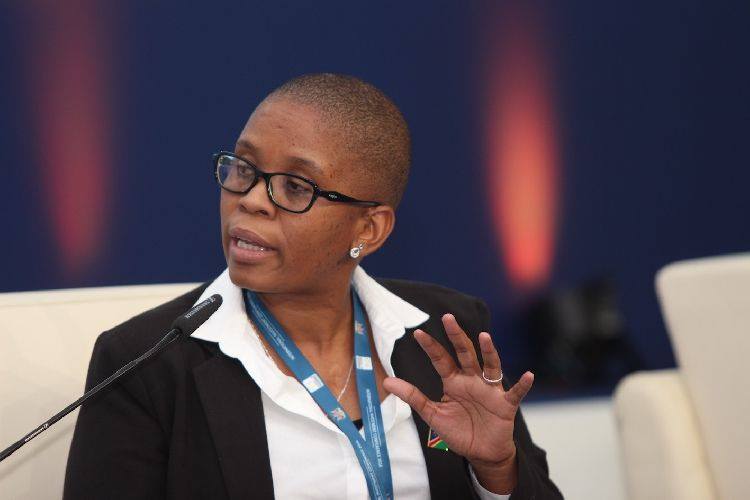
Namibian Minister of Justice Yvonne Dausab led a workshop on Oct. 23 exploring the relationship between feminism, social justice, and the practice of law. Dausab’s talk was part of the Annie MacDonald Langstaff workshop series, which is held annually in commemoration of the first woman and single mother to obtain a law degree in Quebec, and aims to celebrate the increasing numbers of women in the legal field.McGill’s Centre for Human Rights and Legal Pluralism has been hosting this annual event since 1988.  

Event coordinator Shauna Van Praagh spoke to The McGill Tribune about the importance of this annual workshop series.

“The point is to talk about the impact of feminist perspectives on law in different arenas through different roles and responsibilities that feminist jurists take on, whether they’re in government or an NGO, or as a lawyer or a dean of law school,” Van Praagh said.

Dausab expressed her desire for lawyers to use their position and expertise to work for citizens, stressing the importance of using legal systems to foster a culture of change in society. Dausab described a bottom-up approach to practicing law which focusses on constantly striving to obtain more and do better for neglected communities. She emphasized the need to continually advocate for those in need and to not stop at “enough” for those who are marginalized. 

“Social justice is not a once-off project, Dausab said. “t’s transformative. If we don’t see a transformation of our society, it may be difficult to say that we have done enough as lawyers in our country to enhance that trajectory.”

According to Dausab, in order to have a legal system that truly works for its community, the benefits of the system must be accessible to marginalized groups and address certain core criteria. 

“The first thing that you’re talking about is courts,” Dausab said. “Do we have court infrastructure available? The second one is your availability of human resource capacity [and] the availability of legal representation. The other important one […] is what kind of jurisprudence are we developing? What kind of cases are being heard?”

Minister Dausab spoke at length about her experience as a prominent woman in law, a position she achieved despite the challenges of growing up in Namibia during apartheid rule. Though the representation of women is increasing in the legal arena, gender disparities in the number of women in law still persist. Minister Dausab explained that, as a woman in a position of power, she feels she has an especially strong obligation to represent all women. She believes that all women face the same pressures to conform to gender based stereotypes, regardless of their personal accomplishments in the professional world.

“One of the biggest challenges [women] are facing is that whereas they are competing with [men] who have support in the form of a wife, or girlfriend, she is the support [for her family],” Dausab said. “Those dynamics don’t all of a sudden change because I’m the Minister of Justice.”

During the workshop, attendees were encouraged to think more deeply about the intersection of feminism and the Canadian legal system. For Vishakha Wijenakaye, a third-year doctoral candidate studying international human rights law, Minister Dausab’s statements about the relationship between her identity as a woman and as a legal academic were particularly salient. 

“Her vision that doctoral students should try to create positive change through their work resonated with me,” Wijenakaye said. “Learning about her personal experiences also highlighted the fact that my work, whether as a doctoral student or as a practicing lawyer, cannot be entirely separated from my identity [as a woman] and background.” 

Science & Technology

Following gut instinct to reimagine digestive health in the digital age

Digital technology has advanced more rapidly than any other innovation in human history. Many aspects of daily life have already shifted online, and with the advent of wearable fitness tracking technology, it is not hard to imagine a future where access to all types of health care is possible with the tap of a screen. 

On Oct. 14, Montreal Digital Spring, a non-profit organization whose primary goal is to boost digital intelligence, hosted a talk as part of MTL Connect 2020: Montreal Digital Week, their annual flagship event. Luca Cuccia, the co-founder and CEO of Phyla, a digital health company that merges artificial intelligence and microbiomic technology to improve gut health, gave a talk titled “Gut Health in the Clinical Space.” 

Gut health is directly related to achieving a balance of the gut microbiome, the bacteria living in the gastrointestinal tract of humans. Changes in the gut microbiome caused by a number of factors such as genetics, diet, lifestyle, stress, and age can lead to metabolic and gastrointestinal disorders like irritable bowel syndrome (IBS) and inflammatory bowel disease (IBD). Both IBS and IBD are chronic diseases, meaning they are not curable but can instead be managed with long term care and therapy. 

According to Cuccia, the medical industry is not geared towards helping people with chronic diseases who need care on a day-to-day basis. Despite growing public interest in the gut microbiome, little has been done to update diagnosis and monitoring procedures and improve the treatment of diseases of the gut. 

“Everyone on the Phyla team either knows someone or is directly impacted by IBS [or] IBD. We understand how difficult it is for patients. It can take up to five years to be diagnosed, during which patients must endure severe symptoms such as bleeding and weight loss,” Cuccia wrote in an email to The McGill Tribune.

For patients suffering from IBS and IBD, Phyla aims to track their health on a daily basis through two main methods: An application that tracks their disease and lifestyle metrics via self-evaluations, as well as a microbiome test kit shipped to their homes. Disease tracking allows Phyla’s algorithm to identify triggers that cause flare-ups and address problems as they arise, rather than when symptoms and complications become severe. 

“[Our] focus is diagnostics and disease monitoring […] to connect how a person is feeling and what they are saying to what’s actually going on in their body,” Cuccia said during his talk. 

The underlying cause for the same disease may differ in individuals. Coupled with existing research in the field, user data will allow Phyla’s algorithm to better understand the different causes of IBS and IBD through personalized medicine to ensure that the right treatment is being provided in a timely manner. 

“The research linking IBD and [the gut] microbiome still requires lots of work but is currently one of the most exhaustively researched applications of microbiome science, meaning that there is a large amount of data available in this field for us to train our algorithms,” Ryszard Kubinski, co-founder and CSO of Phyla, wrote in a message to the Tribune.

With large corporations like Facebook, Twitter, and even DNA testing companies such as  23andMe recently facing backlash for selling user information, privacy can be a huge concern with any technology that stores personal data. The team behind Phyla is currently constructing a secure data processing and storage framework. To optimize data processing while preserving user anonymity, they use a combination of differential privacy and homomorphic encryption, which allows manipulation of encrypted data without having to decrypt it first. 

Phyla is currently preparing for a beta release of their application. In the future, they plan to expand the tool to help patients suffering from other diseases linked to the gut microbiome, such as type 2 diabetes, liver cirrhosis, and metabolic syndrome.

“IBS and IBD are just the beginning [….] In the future, we hope to address as many of these [diseases] as we can,” Kubinski wrote.

Features

Turn on, tune in

August 2017: I’m driving into downtown Montreal for the first time, not as a tourist, but as a resident and student at McGill University. As I cross the Jacques-Cartier bridge after a 10-hour car ride from rural Pennsylvania, I turn on the radio just in time to catch Chumbawamba’s 1997 hit single, “Tubthumping”: “I get knocked down / but I get up again! It’s just the song I needed to quell my college anxieties and driving fatigue, defining the moment with a click of a button.


As a medium, radio is prone to serendipitous moments such as this one. Each second of a radio show is unique to time and place, making what you end up listening to all up to chance. There is a certain amount of risk that you won’t know (or even like) the song a station will play next, yet there is the possibility that the next track will be one of your favourite songs ever.

Commentary, Opinion

Solidarity in Montreal must outlast COVID-19

The Montreal Student Initiative for COVID-19 Response and Relief, a McGill student-led mutual aid group that formed during the pandemic, shut down on Oct. 1. Along with delivering material goods, such as food and prescriptions, to people in need, the group also organized virtual social events to connect their communities. According to the former leaders of the organization, the group was forced to dissolve after their most significant donor withdrew funds and they lost access to their main distribution hub. However, as the various organizations referenced in the resource document shared in their final Facebook post show, mutual aid in Montreal continues. While many mutual aid organizations formed as a response to the pandemic, they could continue to play an important role in supporting vulnerable communities in the future. As Montreal faces various social issues, including a growing unhoused population and shaky job security for its residents, community-focused aid organizations must be maintained after the pandemic.

Mutual aid occurs when, in the face of a common issue, those who are more privileged within a community support those who are more vulnerable. This can take many forms, from simply donating cash with which to purchase basic human resources, to volunteering, and even to babysitting for working parents. Citizens are responsive to this sort of organizing; one Montreal mutual aid Facebook group has at least 17,000 members. The emphasis is not on serving for the sake of social status, but instead, on taking care of one’s communities through direct aid and outreach. 

Despite the benefits that these organizations provide, many groups have formed specifically as a response to inequities exacerbated by COVID-19. It is important to emphasize that the work of these groups is necessary even after the pandemic, and ensure that they do not wither away or become dormant until the next crisis appears. As small, local, and personal forms of direct action, mutual aid organizations excel at supporting the communities that need them most in a way that charities often cannot due to shortages of staff or funds. Black communities in Canada and the United States have practiced mutual aid for a long time due to this reach.

Research suggests there is a reason that many mutual aid organizations are taking up much funding and media coverage during this crisis: People are more likely to donate when faced with a specific individual or group than they are when facing a more distant or less identifiable cause. So when one’s local community is in need, one is far more likely to give, especially in the face of something as impactful as a pandemic. 

Montreal is currently facing unemployment issues alongside the COVID-19 pandemic. The Quebec unemployment rate remains twice as high as it was at the start of the year, and economists are warning that the economic impact will likely continue past the outbreak. Homelessness remains a significant issue, with half of the province’s unhoused population living in Montreal, including a disproportionate amount of Inuit. 

Unlike the virus, turning one’s back to the community and simply staying isolated inside will not make these difficult situations disappear. But, mutual aid can help to blunt their impact, allowing Montreal communities to take care of their own. There is no doubt that some groups directly related to COVID-19, such as groups providing childcare for those in hospital, will not be necessary when the pandemic is gone. However, the spirit of solidarity that the virus has fostered cannot be allowed to dissipate as well. Mutual aid groups must stay active and local groups must remain engaged for the benefit of the less fortunate in Montreal.

Research Briefs, Science & Technology

Exploring the linguistic mosaics of Montreal bilingual speakers

Montreal is a one-of-a-kind city for several reasons: It has a vibrant nightlife, an incredibly rich history, and an amalgamation of diverse cultures. Yet, nothing in Montreal is as iconic as the role of language in shaping the city’s unique culture. As most Montrealers speak both French and English, casual conversation can be a mix of words and phrases taken from both languages. Although linguistic research in Montreal has mostly focussed on French speakers, the content of what Montrealers say in their conversations has, until now, received little scientific attention

A recent study from the McGill Department of Psychology provides insight into which language bilinguals choose to speak while engaging in various conversation topics. Participants were asked about 21 subjects ranging from news to culture, as well as which language they used to discuss each subject in various environments, including school, work, home, and their social lives. Remarkably, none of these communicative contexts showed the same number of topics or pattern of language use. 

Mehrgol Tiv, a Ph.D candidate studying experimental psychology at McGill and lead author of the paper, explained how a novel application of an existing methodology was used to analyze participants’ responses. 

“Often, when we conduct research studies in the cognitive sciences, we do so in a laboratory, where many of the elements that make up the real world are controlled or not taken into consideration,” Tiv wrote in an email to The McGill Tribune. “We adopted network science as a robust tool to represent the real-world complexities of language use.”

Network scientists use mathematical tools to map the strength and frequency of connections within datasets, which are then represented as visual models. This method has diverse applications across scientific disciplines, from tracking COVID-19 transmission to mapping neurons in the brain. 

Using this framework, Tiv and her colleagues calculated the total number of conversation topics across different situations, how often the topics overlapped, and which language was used to discuss them. The subjects of each conversation were then visually represented as individual units, called nodes, which form links within the network model to other topics of conversation. Researchers use lines of differing thicknesses to estimate the rate of co-occurrences between two or more topics. When translated into a graphic, these colour-coded nodes and links describe a complex network of speech patterns.

“The content of conversation makes up the collective discourse, which can tell you a lot about the goals and values of a group of people or a society,” Tiv wrote. “It answers a different set of questions than studying how people speak. Many of [these questions] are social in nature.” 

Researchers surveyed 115 university-age participants, who completed questionnaires about their language use and conversational patterns in different areas of their lives. The results demonstrate just how dynamic bilingualism in Montreal really is. No two communicative settings showed the same distribution of French versus English, suggesting that language use is connected to social and contextual cues.

According to the study, bilinguals use their dominant language across a broad range of conversation topics and within a greater number of contexts, including at home, school, and work. In contrast, they found that participants engaged in discussions on a more narrow range of topics in conversations held in their non-dominant language. 

The focussed, repetitive environment of many workplaces could explain why participants reported speaking mainly in their dominant language and about fewer topics. Social settings, which tend to invite dynamic conversations with larger groups of people, showed the most variation in both conversation topic and language use. 

The study’s findings are consistent with a linguistic theory called the complementary principle, which proposes that bilinguals tailor their language use in different social situations. This is certainly the case in Montreal, where fluency in both French and English can greatly improve job opportunities.  

“There is a lot going on linguistically in Montreal,” Tiv wrote. “It’s the culmination of historical forces like colonialism, modern-day immigration, and a host of other social factors which give rise to Montreal being a unique place to study bilingualism.”

Off the Board, Opinion

To play or not to play

A classical music fan even as a child, I went to my first symphony at 11 years old. Just before the conductor began his elusive dance, he cued a single, collective breath—an upbeat, as I would later learn. That instance was electric, the orchestra and audience anticipation alike generating a tangible energy felt through the hall. Suddenly, music coloured the air, players moving in tandem. I listened, enraptured. And after the thrill of the performance, epic as a raging storm and tranquil as a dew-covered petal—another silent beat, and then thunderous applause. I fell in love.

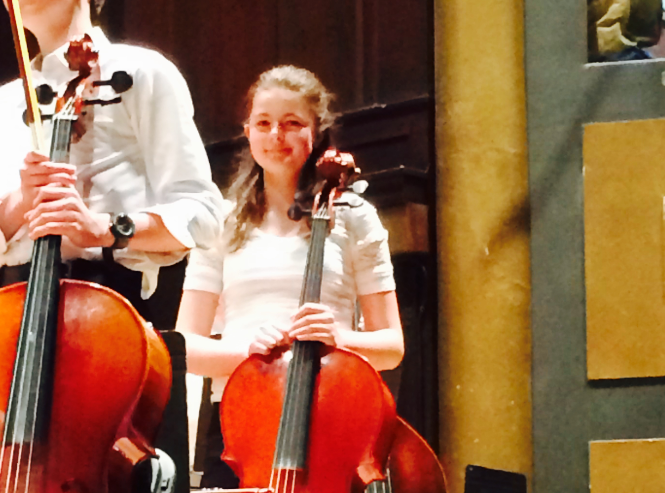
I started learning to play the cello in seventh grade in my middle school’s strings program. Encouraged by my teachers, I applied and was admitted to a specialized arts high school. I was not an accomplished player; rather, through instruction and hard work, I cultivated my skills alongside my peers. In many ways, music shaped my identity: I fostered friendships with stand partners, built my self-confidence, and found my community. With each mid-performance smile shared with friends across the stage, I was tapped into the orchestral magic that had first resonated with me years earlier. 

Halfway through high school, however, I realized that I could not be a professional musician. I enjoyed the creative and community elements, but the constant rehearsals, lessons, and practice sessions were tedious. Though manageable, if I planned to audition for music programs, my playing calibre and practice intensity would need to increase significantly. Looking forward, I could see that such rigorous obligation would taint my passion if I were to bind myself to my cello as a livelihood, and a mixture of self-doubt in my abilities and fear of commitment rendered that avenue unattainable.

In deciding to let go of professional expectations, I was free to do what I wanted. Despite my senior year being chock-full of music-related responsibilities, the pressure to perform well came from a need to do my best for my teachers, peers, and my own standards, without future stress looming over me. This meant I could dedicate more time to academics and chamber groups that I could play in for fun. It also gave me time to prepare for my very first Royal Conservatory exam, a metric by which many Canadian music students gauge their skill level. Completing it would be both concrete proof and a fitting capstone of my progress. After scheduling the date in June, the summer months became a flurry of frantic practicing, and, just days before moving to Montreal, I completed the grade-eight exam, ending my cello career. 

Well, not quite: I still played at home, for my family and myself. I did feel a significant loss, though, even knowing that I couldn’t bring my instrument with me to university. Besides missing the camaraderie of rehearsals and the excitement of concerts, I also lost my callouses, which I had built up over six years—a physical reminder that this new identity I would forge myself would not revolve around music. 

I know this all sounds dramatic. I’m incredibly privileged to have had these opportunities, and I’ll always be grateful. Regardless, leaving something you love, even intentionally, will always be bittersweet.

Although we’re told to “follow our dreams,” sometimes it’s best to separate a personal interest from a career—adhering to impossibly high standards should not impede your ability to enjoy your craft. In choosing to not pursue music professionally, I redefined my creative passion to one influenced by internal motivations rather than external pressures. It is a conscious decision not to monetize your every interest; it will still always be worth it to find fulfillment in the arts, no matter your age, skill level, or commitment. Be the architect of your own joy, and support artists who share theirs with the world. Professional musicians continue to inspire me: Every time I watch a live performance, experiencing an orchestra weave pure magic from a seat instead of the stage, I fall in love all over again.

Hockey, Know Your Athlete, Sports

Know your athlete: Sam Tremblay

Although the 2021 season has been cancelled and training in quarantine is far from ideal, McGill Men’s Varsity Hockey Captain Samuel Tremblay remains committed to the success of the team and sees teamwork as a key factor in future accomplishments. As the leader of a storied program, he understands the responsibility that comes with success. 

“I care so much about the success of the team and I always try to see the big picture, which is winning another championship,” Tremblay said in an interview with The McGill Tribune. “I’d do anything to win again and people know that, which, I think, might be a big reason why I’m in this [leadership] position right now.”

Although Tremblay recognizes the guiding role he must play as the team’s captain, he knows that his leadership is only possible with the help and trust of his teammates. 

“There are just so many different ways you can be a leader, and, to be honest, I wouldn’t be in this position here without the guys surrounding me,” Tremblay said. “Leading is a team effort. You can be the best leader in the world, but if you don’t have good followers around you, I truly believe you’re not going anywhere.” 

Tremblay credits his mentality of sharing the team responsibilities to past McGill Hockey leaders. 

“[In] my first year, I had the privilege to play with Pat Delisle-Houde, our captain that year, and since then he [has been] like a mentor [to] me,” Tremblay said. “In terms of leadership, he seemed always in control and always had an answer [….] During second year, I lived with former McGill Captain Nathan Chiarlitti, and Jan Kaminsky, [who was a] former assistant captain [….] I got to learn from two great leaders and mentors who were very different from Pat, but just as good. These past captains were the ‘glue guys,’ and they just made everybody feel part of the team with their energy.”

The team was determined to return better than ever for the 2020-2021 season, but the COVID-19 pandemic made it difficult for some players to stay focussed and motivated as many facilities shut down and the upcoming season was cancelled. 

“At the beginning [of the season], it was pretty challenging,” Tremblay said. “Everything was closed, and I was not motivated at all to train at home. I actually hated it. It was hard mentally, but I got to bike more and enjoy being outdoors. Outside of training, I usually spend time with the guys, though that was not possible. However, I was able to spend more time reading and playing the guitar.”

Tremblay expressed his disappointment regarding RSEQ’s decision to cancel the upcoming winter season, but understands that it is a necessary measure to ensure the safety of staff and players. 

“It’s obviously very frustrating because we’re trying to stay in good physical and mental shape,” Tremblay said. “At the end of the day we [have] to follow the rules and try to protect each other, so I respect that. It’s just very upsetting.”

Tremblay graduated with a B.Sc. in Kinesiology in the Spring of 2020, and is currently pursuing a master’s degree in biomechanics, making him eligible for a final season in the McConnell Arena. However, Montreal and McGill are not the end of Tremblay’s hockey journey.

“When my [master’s] is done, I’ll head overseas to play professional hockey and travel the world,” Tremblay said. “It’s one of my dreams to go play in Europe. [I will] put a bit of money [aside] while traveling the world, and in a few years, I’ll come back here to work in biomechanics or in hockey.”

With a future full of possibilities, Tremblay is excited for what his final year has in store.

You will see me again for a sixth year,” Tremblay said. “Luckily for me…I can come back next year to play my last season, but I can’t say the same for guys on the team [who] are graduating this year.”

Read the latest issue

Read the latest issue