

Latest News

McGill, News

McGill Senate discusses Action Plan to address anti-Black racism

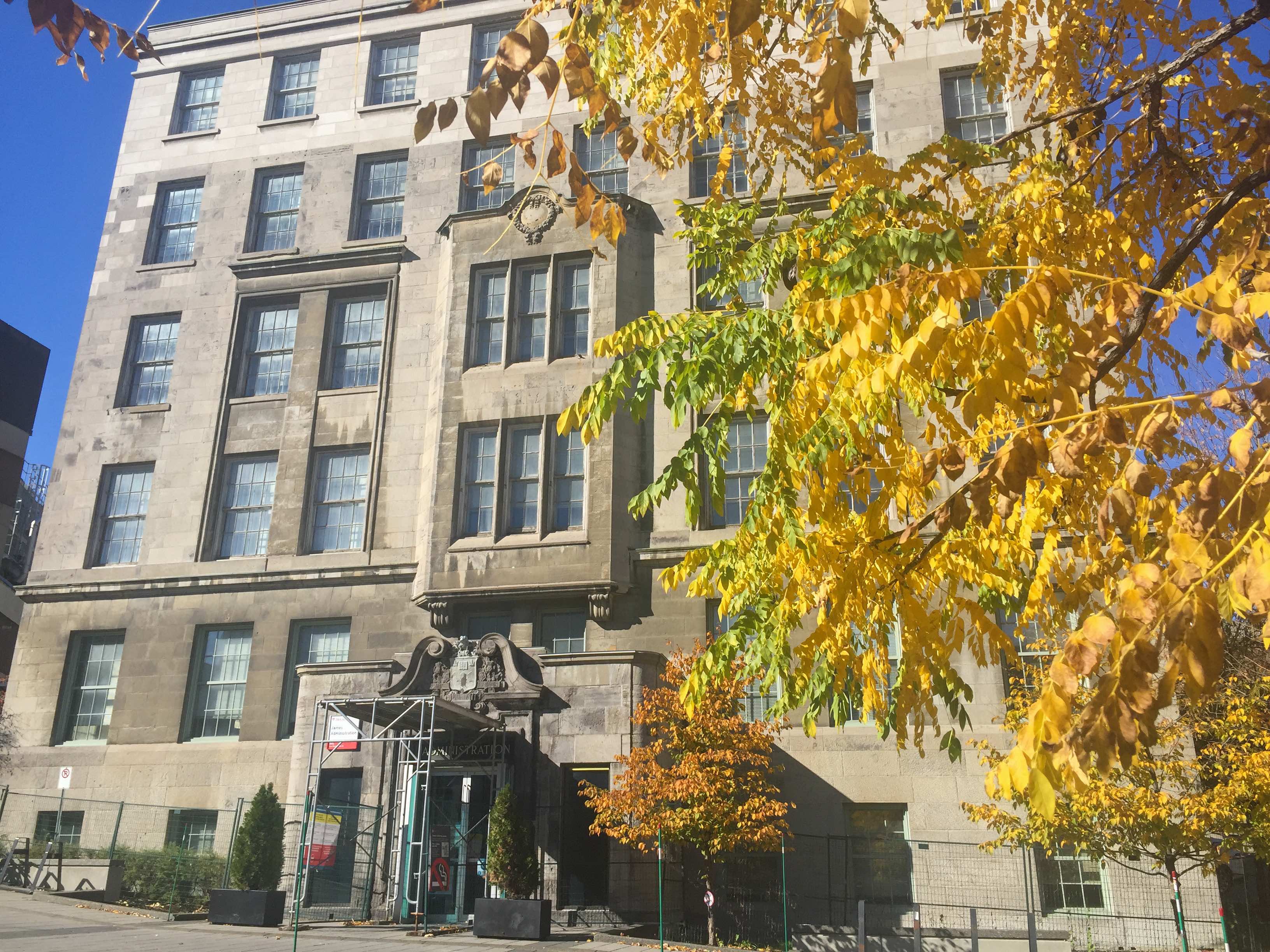
The McGill Senate discussed McGill’s Action Plan to Address Anti-Black Racism in their second  Senate meeting of the academic year on Oct. 21. Provost and Vice-Principal (Academic) Christopher Manfredi and Associate Provost (Equity and Academic Policies) Angela Campbell released the 44-page plan on Sept. 30. Composed in consultation with the Black Student Network (BSN), the plan aims to institutionalize anti-racism efforts and resources across campus.

Following the opening remarks of the senate meeting—which was hosted on Zoom and streamed on Youtube LiveSenate members were split into 10 break-out rooms and tasked with producing reports on aspects of the plan, delegating questions to the different groups. The questions targeted issues such as institutional support for Black students, alleviating the burdens of Black student activists, expanding the faculty recruitment network, and addressing the barriers within McGill’s hiring processes to encourage applications from a more diverse pool.

The Students Society of McGill University (SSMU) Vice-President (VP) of University Affairs Brooklyn Frizzle spoke on behalf of group one, which was assigned a question about which action items members of the McGill community should prioritize to address anti-Black racism, research, knowledge, and experiences. Frizzle spoke about the need for administrative support for groups working against anti-Black racism on campus.

“For decades, really, students have been pulling a lot of the weight in terms of anti-racism on campus,” Frizzle said. “Any working groups [that] are established […] are going to need a fair amount of administrative support and institutional access in order for them to succeed without depending on the labour of unpaid students. A couple of things we wanted [to be] delineated were what exactly […] this support [is] going to look like, and who will be responsible for [it].”

Frizzle emphasized the importance of amplifying Black voices on campus.

“We want to prioritize support and representation for not only the advocacy but the mental health and wellbeing of Black students,” Frizzle said. “This not only includes [their] representation both on campus and in governance but also anti-racism education.”

After the Senate discussed the reports brought forward by each group, Principal and Vice-Chancellor Suzanne Fortier opened the floor for further conversation on the plan. Arts Senator Darshan Daryanani inquired about the issue of instituting a Black Studies department, referencing item four in the “Research and Knowledge” component of the plan. The plan states that the Black Studies program will enhance the African Studies department, rather than be created as an independent department.

“Since the 1970s, [the BSN has been] demanding for a Black Studies department,” Daryanani said. “So […] why hasn’t this been part of the plan, and [instead] simply an enhancement of the African Studies program?”

Manfredi responded to these concerns, claiming that the Senate believed it was important to prioritize the immediate provision of resources to the African Studies department. Item four in the plan lists two annual budgets to enhance financial support for the department.

“African Studies already exists, so what would be the relationship between the already existing African Studies program and any new initiatives that the university might support?” Manfredi said. “I think it’s also important to point out that academic programs emerge from the faculties. They are not driven from the Provost’s office.”

Moment:

Senator Manfredi addressed Item two in the plan, which denotes what will happen with the James McGill statue by the end of the bicentennial year. Manfredi noted that the plan includes the relocation of the statue and the installment of a plaque in its place, and emphasized the importance that the institution speaks truthfully about its history.

Soundbite:

“What our group discussed was the lack of specificity in terms of funding and the fact that [the goals stated in the action plan] really do not compensate for the demand of a Black Studies department. So we hope that the university will prioritize a plan to fund an entire Black Studies department, and to make sure that the engagement of black scholars is there for such work.” – SSMU Arts Senator Darshan Daryanani

Montreal, News

Protestors remember victims of police violence and call for SPVM budget cuts

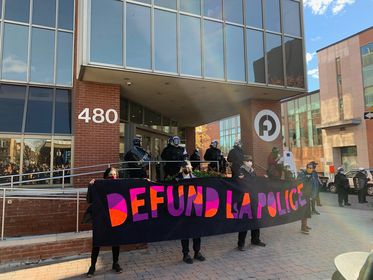
Over 200 protesters gathered to call for the defunding of the Service de Police de la Ville de Montréal (SPVM) on Oct. 24 in a demonstration organized by the Defund the Police Coalition and Justice for Victims of Police Killings. This demonstration marks the 11th annual Justice for Victims of Police Killings vigil to honour the lives of victims of police violence in Montreal.

The demonstration began with speeches delivered at Sir Wilfrid Laurier Park in the Plateau-Mont-Royal district, before the group embarked on a three-hour long march west along Saint Joseph Boulevard. The energetic crowd continued south on Park Avenue, before turning eastward on Sherbrooke Street. The march ended nearly four kilometers south of the initial post at the Place des Festivals. 

As they walked the crowd chanted “no justice, no peace, defund the police,” while playing music that pays homage to Black and Indigenous artists on personal devices. Speakers at the demonstration read aloud the names of victims of police killings across North America, including Bony Jean-Pierre and Breonna Taylor, who were murdered in 2016 and 2020 respectively. 

The Defund the Police Coalition, formed in June 2020, has released a list of 10 demands for the SPVM, including a call for a 50 per cent reduction of its current budget of $662 million and a reallocation of those funds to underfunded community groups. 

Elijah Olise, one of the organizers of the demonstration, emphasized the need to view the Defund the Police movement as one not solely focused on dismantling the police force, but also on reinvesting in communities across Montreal. 

“Upholding peace through fear is not the right way to achieve an ideal society,” Olise said. “When you see that youth are plagued with housing issues, a lack of jobs, and a poor quality of life, in [communities] like Montreal North [and] Little Burgundy, [they] are then pushed to do these crimes. Once you provide resources to empower communities, you don’t need to police them.”

One activist, a graduate student in the Faculty of Science and member of Socialist Fightback McGill who wished to remain anonymous, grounded the history of police brutality in the rise of capitalism. 

“When we look at [how] the police as an institution was incorporated into municipalities in today’s society, we see that it is just a reformed version of slave patrol,” the student said. “This is the same police that harassed gay and trans activists at Stonewall in 1969. The institution keeps reforming itself, but [this is] only treating a symptom of capitalism, not actually addressing the underlying issue.”

After a summer of historic civil unrest and with the U.S. presidential election fast approaching, some say that these protests are more important than ever. Jake Russell, an American citizen living in Montreal, linked the Defund the Police movement to the current political climate in the U.S., demanding a model of humanity over criminalization. 

“We need to reevaluate how the police function in our society,” Russell said. “A lot of Americans do not agree with that xenophobia, racism, and sexism [….] The approach to societal problems should be harm reduction. The War on Drugs is a complete and utter failure. Drug addiction should be treated as a public health issue, rather than [punished via] the police.”

Jessica Quijano, a rally co-organizer, is a Montreal activist who coordinates justice initiatives including the Iskweu project at the Native Women’s Shelter of Montreal. She described how demonstrations serve to provide a therapeutic channel for those grieving loved ones lost to police brutality.

“I think [marching] changes the consciousness of society,” Quijano said. “It’s important that families who have lost someone see that people are in support of them, and it’s healing for many to see people go out to the streets to stand for them.”

McGill, News

McGill student urges School of Social Work to support Sipekne’katik Nation

On Sept. 18 Canadian news outlets began to report on a dispute between settler fishermen and members of the Sipekne’katik First Nation in southwest Nova Scotia. Settlers have destroyed property and physically intimidated members of the Sipekne’katik First Nation over their right to fish lobster. The settlers’ disregard of Indigenous treaty rights is one of many acts of colonial violence against Indigenous Peoples that have been reported in recent months.  

On Feb. 20, the Students’ Society of McGill University (SSMU) released a statement in opposition to the Canadian government’s oppression of Indigenous Peoples, though McGill’s administration has remained silent. McGill’s inaction inspired Cody Martin, U2 Social Work, to author a call to action urging McGill’s School of Social Work to condemn the inhumane treatment of First Nations people across Canada. 

“I thought about this [call to action] over and over [and] how I would approach [it],” Martin said. “It came down to telling the faculty, […] ‘it’s time to practice what you preach,’ [ in social work], we learn about the core of ethics, competency laws, the different historical relations with social work, and how [social workers are] supposed to be advocates at the political front.” 

In his letter sent to the McGill School of Social Work’s Equity Diversity Decolonization Indigenization Initiative (EDDII), Martin recommended the adoption of several actionable items into the EDDII’s upcoming 2020-2024 strategic plan, which will be presented for a vote at the Oct. 28 School Council session. These recommendations include the release of a public statement in support of Sipekne’katik First Nation rights, the development of an anti-discrimination code of conduct for McGill’s School of Social Work, and the integration of 94 calls to action established by the Truth and Reconciliation Committee into the EDDII’s plan. Martin hopes that the implementation of these initiatives will foster a more equitable environment for McGill’s Indigenous students. 

“I want to see McGill start honouring their words of action,” Martin said. “They talk about creating space […] for the Indigenous population and people of colour, they talk about creating all these spaces [carrying out] justice, but, at the end of the day, where are these spaces? Out of the 40,000 enrolled students at McGill, there’s a population of [only about 150 self identifying] Indigenous students.” 

Introduced in the spring of 2020, the EDDII replaced the Equity Committee, a 2016 initiative that was created following a university-wide survey about equity on campus. While the committee was intended to help foster equity at McGill, it faced structural challenges when implementing change. 

Some of the objectives developed out of the equity survey were achieved, such as [the formation of] a collective space from which to launch activism around equity, diversity, and inclusion (EDI) issues,” the EDDII wrote in a collective statement to The McGill Tribune. “However, the committee structure proved a barrier to collective action.” 

The implementation of the new EDDII initiative prompted an overhaul of the former Equity Committee. For the past six months, members of the McGill community have been consulted on how equity principles can have a greater impact at McGill.

“The results of this [consultation] process are [the creation of the] EDDII,” the collective wrote. “[The EDDII] is a […] collaborative structure to support and track the implementation of [an] actionable strategic four-year plan to achieve the integration [of] the principles of equity, diversity, decolonization, and Indigenization throughout our school.” 

With the recent controversy surrounding James McGill’s colonial history and McGill’s billion-dollar debt to the Six-Nations community, Catie Galbraith, U3 Geography student and Vice President of Events for the Indigenous Students Alliance, feels that McGill can do more than releasing a public statement. 

“McGill should absolutely be taking a stance against colonial violence, [but McGill] needs to go beyond just issuing statements,” Galbraith said. “It should take the form of financial reparations and support to communities and working to address their own colonial legacy.” 

Renee Corbiere, U3 Arts, is an Indigenous student who feels that McGill can do more to further knowledge on Indigenous issues at the university. 

“There’s not so much the school can do to completely remove racism from the country, but what they can do is ensure that their students are educated on [Indigenous issues].” 

Campus Spotlight, Student Life

Campus Spotlight: McGill Recreational Dance Company

Finding the time to stay active under regular circumstances is difficult, but finding ways to exercise in the middle of a global pandemic poses an entirely new, and more daunting, set of problems. That’s why the McGill Recreational Dance Company (RDC) is offering free, virtually accessible dance classes to the McGill community. In non-pandemic times, the McGill RDC is committed to bringing a variety of dance styles to McGill students at a minimal cost and without the commitment of a full semester of classes. The club is managed by a dedicated executive team. Among them is co-president Amy Kulle, U2 Science.

“Our executive team is made up of McGill students who come from a variety of different dance backgrounds to teach a choreography class in a different style each week,” Kulle said. “Since there is something new each week [and] there is no requirement to attend every class, our club works well with students’ [and instructors’] workloads.” 

Now that courses are remote, the McGill RDC has been providing dance classes for free, as hosting sessions on Zoom is significantly cheaper than renting rehearsal spaces. The club plans on continuing to offer free classes for as long as McGill classes stay remote. Since all of the executive board members teach classes, the RDC exposes students to a large variety of styles, with a few recent classes including contemporary, tap, and musical theatre. The variety of classes make attending accessible to a wide range of students. 

When the COVID-19 pandemic halted campus life in March, all clubs were faced with uncertainty. However, the McGill RDC did not allow the obstacles that came with lockdown to prevent them from sharing their love of dance. 

“Offering online classes was a simple decision,” Kulle said. “We knew we couldn’t just cancel all our classes, since dancing can have a big positive impact on mental health, and we wanted to continue to provide this resource for our members, especially considering the times.” 

Classes begin with around 10 minutes of warm-up that includes cardio and stretching. The rest of the time is used to teach a dance number that is choreographed by the teacher. By the end of the class, attendees will have learned approximately one minute of choreography.

In addition to Zoom classes, the club offers exclusive programming on their social media platforms. Beyond promoting their events on Facebook and Instagram, McGill RDC uses these platforms to engage daily with their members and the broader McGill community. On “Move Mondays,” they post simple at-home and apartment-friendly workouts. “Why Dance? Wednesday” posts provide information about the history of different styles of dance, such as the history of hip hop. On “Technique Fridays,” an executive will share tips on how to strengthen a particular technical skill, such as balance.

Though McGill RDC has established a regular weekly programming schedule, they are constantly looking for new ways to bring dance to students virtually. One upcoming event is a Virtual Dance-A-Thon, which McGill RDC will be hosting on Nov. 8 in collaboration with Alegria Contemporary Ballet Company, K-Rave, and Mosaica Dance Company, three other dance clubs at McGill. For $10, students will have access to unlimited classes on a wide variety of dance styles offered by executive members of all four clubs. Half of the event’s proceeds will be donated to Big Brothers and Big Sisters of Greater Montreal, a non-profit organization that creates and supports mentorships for youths.

“Although these are definitely not traditional ways of sharing our love of dance, we believe it is important to stay active and move both for physical and mental health,” Kulles said. 

McGill RDC has put a lot of work towards finding innovative ways to continue sharing their love of dance during tumultuous times. Their commitment to bringing dance to their classmates stuck at home speaks volumes about the resilience and optimism of the McGill student body to not let COVID-19 get in the way of their passions.

Student Life

Redefining the Witch

Beyond the obligatory appearances on TV, the witch is a pervasive figure, taking on different forms throughout history. Her classic imagery—black pointed hat, broomstick, old haggard face, and unsavory wart—is a staple of Halloween festivities. In contemporary popular culture, witches have appeared as archetypal fairytale villains, teenagers in coming of age stories, and even as violent matrons overseeing a dance school. As modern witchcraft is on the rise, she might even be a friend or classmate. To understand the witch’s complex evolution, however, we must return to her origins.  

One of the first historical accounts of witches is in the biblical story “The Witch of Endor,” where a witch summons a dead prophet’s spirit to help King Saul achieve victory in battle. In ancient Greece and Rome, authorities of magic used sorcery to prevent unwanted storms, bring rain for agriculture, or increase wealth. Before the 14th century, witches were not seen as inherently demonic, but as merely possessing a special relationship with divine forces that allowed them to concoct spells and connect with the supernatural. 

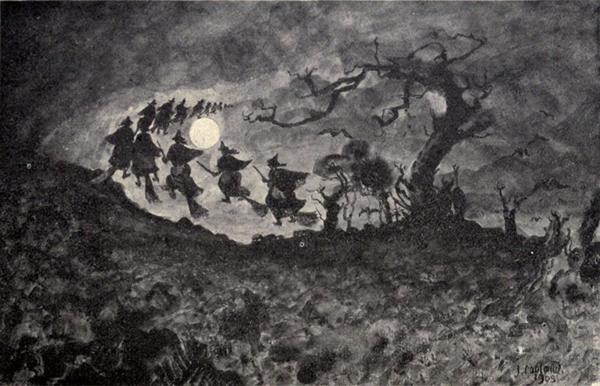
In the middle ages, however, the popular European perception of witchcraft was transformed into dangerous anti-religion, threatening patriarchal Christian societies and traditional female roles. Witches were believed to conspire on the Sabbath to have orgies, worship unholy images of various animals, and feast on the roasted flesh of unbaptized babies. Beliefs of women flying in the night, their minds held captive by the devil, instilled fear in medieval peoples. The stereotypical image of witches riding broomsticks reflects anxiety surrounding those trespassing the barriers of domesticity. 

The witch craze was stimulated by the publication of Malleus Maleficarum in 1486, a guide that taught inquisitors and judges how to identify, interrogate, and condemn witches. The book asserted that an inherent lack of intelligence in women made them defenseless against the devil’s seduction. Apart from the Bible, the book sold more copies in Europe than any other continent until 1678. 

Since the beginnings of English literature, writers have been fascinated by the character of the witch. Tropes of devilish, mysterious women trace back to antiquity, such as in the tale of Hecate, the Greek goddess associated with magic, witchcraft, the moon, and necromancy. In Macbeth, a trio of devilish witches deliver dual prophecies that incite the play’s conflict, while in Morgan le Fay, Geoffrey Monmouth’s witch is portrayed as a healer, seductress, and royal enemy. 

Despite her various forms and shapes, the witch epitomizes female independence, yielding insuppressible power, her madness never submitting to those who fear it. The witch is a powerful icon of rebellion and autonomy—not only women, but also people of colour and individuals in the queer community have turned to modern witchcraft, disempowered and frustrated by dominating systems of governance. 

“Being of mixed heritage, I find myself trying to incorporate elements from my various ethnic and cultural backgrounds,” Devon Ellis-Durity B.A. ‘20 (Concordia University) wrote in a message to The McGill Tribune. “What got me interested in witchcraft was the ability to work with the elements and further my connection with nature. Witchcraft has allowed me to further align with my morals.” 

Modern witchcraft is multifaceted, its inherent openness welcoming to everyone regardless of background. Ultimately, being a witch in the 21st century is to engage in a hallowed practice that connects the individual with the earth and their community.

“When I first started learning about witchcraft, it was introduced to me as something which has no ‘right’ or ‘wrong’ way, that everyone practices, values, and relates to it differently,” Mitzi Ellemers, U2 Arts, wrote in a message to the Tribune. “It is very forgiving in this sense. Personally, my relation to witchcraft is about solidarity, oneness, and reverence for the earth and all natural elements and a sisterhood with the people who I practice with.”

Editorial, Opinion

SSMU representatives deserve compensation

Students’ Society of McGill University (SSMU) Vice-President University Affairs Brooklyn Frizzle recently submitted a motion that would have placed a proposed non–opt-outable SSMU Representatives fee to pay SSMU representatives on the Fall 2020 Referendum ballot. SSMU tabled the motion until Winter 2021, and some elements of the fee are still being refined. Still, it is already clear that, to meet SSMU’s pay equity scale requirements, the fee will likely have to be substantial. 

Considering that McGill students have historically rejected many proposed fees and base fee increases, the Representatives Fee may be dead on arrival. Moreover, students are notoriously apathetic about SSMU elections, and student government is prohibitively unpopular because many students find it elitist and controversial. In this context, asking for a significant fee increase—let alone one to pay SSMU leaders—may invite a torrent of backlash from students. Nevertheless, student disinterest in SSMU must be overcome. SSMU works tirelessly to provide essential services to students—services which many students not only take for granted, but, in many cases, are necessary because the McGill administration fails to provide them. It is incumbent upon SSMU to make a good case for paying its representatives, but it is equally imperative that students support a fee to compensate student leaders.

By not paying councillors, SSMU may be violating its own labour policies. In 2017, it adopted a policy against unpaid student labour, and executives, remunerated staff, commissioners, and coordinators are salaried. Yet student senators and faculty representatives are not paid, even though these positions are often as demanding as some salaried positions. Officially, they are expected to work between four to seven hours a week, though this is rarely the reality. After all, this figure assumes that meetings do not go overtime, whereas they almost always do, and it does not factor in additional hours spent preparing documents, debating policies, participating in student activism, and tending to other aspects of the job. As a result, some attest to working exorbitant hours while also balancing full course loads and other commitments. This pressure, which often takes a toll on their mental health, is only exacerbated by the financial sacrifice some students make to volunteer to serve.

Although some may argue that the skills and experience obtained on the job are worth more than a paycheck, the lack of compensation presents an insurmountable financial barrier for many students. This barrier deprives SSMU of a vast reservoir of talent, diversity, and perspectives, limiting student government to the few who can afford to work part-time without pay. Compensation, then, is not just fair, but a prerequisite for a more accessible, equitable, and representative student union. 

If SSMU moves to pay student representatives, it must be transparent about the source of the funds, and it must not divert funds from vital services, such as its mental health resources. It must also proceed cautiously, as proposing an additional fee may obstruct the SSMUnion’s collective bargaining efforts. Representative positions are not unionizable, and SSMUnion is already asking to raise the base SSMU fee. As a result, the Representatives Fee would require a separate question, increasing the likelihood that students would reject them both. This would be completely counterintuitive to fostering a more egalitarian labour environment.

To get any fee passed, SSMU must not only campaign relentlessly, but also show students why they should be investing their money in the union at all. Years of controversy have absconded its actual purpose: From academic advocacy to the SSMU Daycare, mental health resources, the Midnight Kitchen, and other services, SSMU supports the study body where the administration fails to do so. And when McGill’s governing is unjust, SSMU is there to advocate for students. SSMU’s shortcomings ultimately stem from the administration’s reluctance to support students, which strains SSMU’s resources and simultaneously increases the need for them. 

SSMU is important, and it must effectively show students why. It is profoundly unjust that student representatives are not paid for their labour, but if SSMU wants students to foot the bill, they must show students why compensating their representatives will make their union more fair and accessible.

Sports

The seven spookiest curses in sports

Superstition and sports go together like tricking and treating. Over the years, various fan bases and players have had luck bad enough to make them look beyond the grave in search of the source of their sports woes. With Halloween right around the corner, The McGill Tribune lists seven of the spookiest curses to ever plague the sports world.


The Curse of William Penn

In 1985, construction began on a skyscraper currently known as One Liberty Place in downtown Philadelphia. By 1987, it was the tallest building in the city. This, however, broke a long-held tradition of no building rising above the statue of the founder of Pennsylvania, William Penn, that was attached to City Hall, beginning the curse of William Penn.

No major Philadelphia sports team would win a championship for 20 years. In 2007, a beam was added to City Hall, making the William Penn statue the tallest structure in the city once again. A little over a year later, the Phillies won the 2008 World Series in five games. Philadelphians learned their lesson, and remain appropriately vigilant of William Penn.


The Madden Curse

Since its inception in 1999, Madden NFL has carried with it a dark scourge on the athletes that graced its front cover. The curse made itself known in 1999 when the first athlete to be featured on the cover, Garrison Hearst, led the San Francisco 49ers to the playoffs, only to suffer a horrifying ankle injury that kept him from playing for the next two years. The very next year, one of the greatest running backs of all time, Barry Sanders, suddenly announced his retirement from the league immediately following his Madden 2000 cover announcement. The curse has continued to this day, afflicting players as successful as Drew Brees, Michael Vick, and Adrian Peterson. Headed into the 2020-2021 season, we’ll see if the curse continues with Lamar Jackson, this year’s Madden cover athlete. 


The Curse of the Colonel

The Curse of the Colonel has affected the Japanese Central League’s Hanshin Tigers baseball team since 1985. Hanshin fans were celebrating a Japan Championship Series victory by pulling lookalikes of the Tigers’ players from the crowd of supporters and having them jump into the Dōtonbori River. However, as there was no lookalike of American MVP Randy Bass available, the Tigers’ devotees decided that a nearby statue of KFC mascot Colonel Sanders would do, and launched it into the river. The Colonel cursed the Tigers from his watery grave, which affects the team to this day. Although the statue was later recovered, his left hand and glasses remain missing, dooming the Tigers to 10 last-place finishes in 18 seasons and defeat in the 2003, 2005, and 2014 Japan Series.


The Curse of The Bambino

Perhaps the most famed sports curse, the Curse of The Bambino, began in 1918 when the Boston Red Sox sold Babe Ruth to the New York Yankees for $125,000. The curse continued 86 years until the Red Sox came back from a 0-3 deficit to the Yankees in the 2004 World Series. Boston sports fans were so desperate to break the losing streak that they put a baseball cap on top of Mount Everest, pushed a piano formerly owned by Babe Ruth into a pond, wrote books, and renamed streets. While it’s unclear what broke the curse, it clearly worked. Since 2004, the Red Sox have won three more championships, while the Patriots have won five NFL titles, the Celtics have claimed one NBA title, and the Bruins brought home one NHL title. 


The New York Knicks

Valued at  $4.6 billion, the New York Knicks have been the most valuable franchise in the NBA for the past five years due to their huge fan base and storied past. Despite this, the Knicks haven’t managed to win an NBA championship since 1973. In the nearly five decades that have followed, the Knicks have been astonishingly abysmal, only flirting with success in the Patrick Ewing era of the 1990s. James Dolan took ownership of the Knicks in 1999, and since then, Knicks fans everywhere have cringed and despaired at a seemingly never-ending series of bad decisions. 

For Knicks fans, there seems to be no end in sight. Despite boycotts, and chants for Dolan to sell the team,” ownership seems steadfast in their never-ending quest to drive the franchise into the ground. 


The 40-Year Olympic Curse

Starting in 1940, the Olympics seem to have a curse that reappears every 40 years. The 1940 Olympics, set to take place in Tokyo, had to be cancelled due to World War II. Forty years later, many countries boycotted the 1980 Olympics in Moscow in response to Russia’s invasion of Afghanistan. Now, in 2020, 40 years after that Cold War incident, the Tokyo Olympics were deferred due to the COVID-19 pandemic. This pattern has many people, including Japanese Deputy Prime Minister Taro Aso, convinced that the world’s biggest multi-sport event is cursed.


The Billy Goat Curse

In 1945, Chicago Cubs fan William Sianis snuck his pet goat Murphy into the stands of Wrigley Field. After seven innings of successfully hiding his livestock, Sianis and Murphy were discovered and security guards removed them from the stadium. As he was dragged from the stands, Sianis shouted that the Cubs would never win a World Series. Sianis’s words carried weight, apparently, as the Cubs failed to win a world series until 2016, a full 108 years after their last title in 1908. Attempts to lift the curse included the delivery of a goat head, the enlistment of help from a Greek-Orthodox priest to douse the field in holy water, and a local restaurant encouraging Chicagoans to go vegetarian in an effort to appease Murphy the goat.

News, SSMU

SSMU’s Special Referendum unsuccessful after 15 per cent quorum not met

The Students’ Society of McGill University’s (SSMU) 2020 Special Referendum failed to reach the required 15 per cent quorum needed to ratify proposed changes to the SSMU constitution. The referendum’s polling period ended on Oct. 16 with a voter turnout of 12.8 per cent, marking the lowest turnout since 10.6 per cent during the 2015 Winter Special Referendum. As a result, the Society will re-examine the methods used to increase student engagement.

On Sept. 5, SSMU’s Judicial Board (J-Board) responded to the Board of Directors’ appeal regarding the suspension of their judgement of the SSMU 2020 Constitution. The J-Board ruled that the ratification of the amended Constitution in the Winter 2020 referendum was invalid because the French version of the document was not made available during the polling period. The Judicial Board gave SSMU until Nov. 1 to hold a special referendum to ratify the 2020 Constitution and its supporting documents but because it failed to meet the 15 per cent quorum, the proposed version was not adopted.

SSMU will reinstate the 2017 Constitution as of Nov. 1, as ruled by the Judicial Board. After restoring the constitution, SSMU will be forced to restructure the Board of Directors and the Legislative Council and remove representatives from Theology, the Francophone Affairs Committee, the Indigenous Affairs Committee, the Equity Committee, and the Macdonald Campus Students’ Society (MCSS). During the Legislative Council meeting on Oct. 22, SSMU President Jemark Earle discussed further changes.

“One representative from the inter-residence council, one senate caucus representative, and one environment representative [will be added to Council],” Earle said. “Additionally, the Executive Committee will be voting members of council. [This will] remove the joint Board-Council session.”

In contrast, the 2018 Winter Referendum saw the highest percentage of voter turnout in almost 14 years, largely due to student interest in voting for a Fall reading week. However, since then, student engagement in SSMU Elections and Referenda has been on a steady decline every semester since Winter 2018. Many students, including Arts Councillor Chip Smith, are  concerned about the low voter turnout.

“This is a referendum,” Smith said. “It’s a campaign [….] I know that [voting] is the most important thing [during a referendum]. Frankly, there was no real get-out-to-vote in this campaign, so my question is, what did the executive do to get turnout? What deals were made to students? What was used? Were there Facebook posts? What was the role of the executive in that?” 

The Student Engagement Plan, approved by SSMU in April 2020, outlines ways in which certain communication practices could improve participation in student government. The plan suggests tabling, flyering, and classroom announcements as the best methods to engage students. The Student Engagement Plan finds that emails and social media posts do not allow for direct engagement with the student body. With the Fall 2020 semester entirely online due to the COVID-19 pandemic, effectively reaching students has been challenging.

“[SSMU’s communication practices] were probably one of the reasons [why the referendum failed],” Earle said. “Maybe our communications were not as strong as they were in the past. I know there were several ads put out on [SSMU’s] Instagram and on Facebook. I don’t know how far those [ads] reached.”

Tasked with reviewing SSMU’s governance bodies, the Comprehensive Governance Review Committee (CGRC) will continue to work on creating a more accessible SSMU. As a committee of the Legislative Council, the CGRC meets biweekly. Chair of the CGRC Lauren Hill met with the committee for the second time on Oct. 23 and will be making recommendations to improve SSMU’s practices and broaden general engagement with student governance at McGill.

“I can’t guarantee that [the Constitution] will be brought up again [in the same way], but it will definitely be a discussion point moving forward,” Hill said. “What I suspect will occur is that we are going to go through all of the changes that were originally brought forward to be changed [for] further consultations to see if that’s still the desire of the student body.” 

McGill, News

Unresolved issues with Workday HR system leave hundreds of TAs unpaid

A variety of issues have persisted since McGill’s Human Resources (HR) system transitioned from Banner to Workday in August 2020. Eight weeks into the Fall 2020 semester, hundreds of McGill employeesteaching assistants (TAs) in particular—experienced delays in payment, and some have still not been paid at all. McGill staff have brought the Workday HR system under scrutiny after numerous allegations of payroll issues, technical glitches, information transfer difficulties, and stalled hiring processes have endured into October.

McGill employees encountered issues with Workday almost immediately after its implementation on Aug. 4. After receiving multiple complaints about Workday in early September, the Association of Graduate Students Employed at McGill (AGSEM) launched a survey to track potential violations of McGill and AGSEM’s collective agreement (CA).

Interim Grievance Officer at AGSEM Jessica Rose explained that AGSEM identified payroll issues because a number of TAs were missing from the union “dues list” in September. McGill’s dues list functions as a monthly payroll report for AGSEM.

“There are 400 unique individuals missing from our dues list [from September 2020], accounting for 415 TA positions,” Rose wrote in an email to The McGill Tribune. “That’s at least 400 TAs who have not been paid. Based on hiring numbers in previous years, I would estimate that there are at least 450 TAs who are not being paid currently.”

Rose explained that certain faculties and departments experienced a higher number of payroll and hiring issues.

“There are at least 16 departments in which more than half of the TAs have not been paid,” Rose wrote. “In 10 of those, 100 per cent of the TAs have not been paid.” 

Of the 10 departments that did not receive payment in September, two were in the Faculty of Engineering and eight were in the Faculty of Medicine.

Article 17.03 of the CA states that all TAs must receive their first payment by direct deposit within 30 days of starting their contract, but many TAs, for unknown reasons, are being issued physical cheques from McGill’s HR department. Kiersten van Vliet, President of AGSEM, explained how this violation has impacted TAs not currently living in Montreal.

“There are some people who are being issued cheques […] but they are located somewhere else in the world, and their cheque is going to their Montreal address,” van Vliet said. “For people who weren’t able to access the Workday system and update their address, [the cheques] just get returned to [the HR office]. So they are paid according to Workday, but the cheque is locked in a building.”

When either partyAGSEM or McGillviolates the collective agreement, a grievance may be filed to either the TA’s respective department chair, or the entire HR department to resolve the issue. Rose explained that AGSEM is currently filing several grievances. 

“We currently have four collective and individual grievances related to various issues stemming from this, including late pay […], payment by cheque […], unpaid work from the summer semester, and lack of access to Zoom Pro,” Rose wrote to the Tribune.

While McGill has not yet responded to any of the grievances, AGSEM hopes to claim compensation consistent with McGill’s own late fee structure for tuition.

“When you are late paying your tuition, you have to pay a late fee and interest,” van Vliet said. “So what we are trying to claim is a late fee and interest for every employee who has not been paid.” 

One TA in the Desautels Faculty of Management at McGill, who wishes to remain anonymous, described his experiences with a Workday technical issue: Despite being hired, Workday registered his position as being ‘terminated’.

“Communicating with [the Human Resources] department is highly inefficient,” the TA wrote. “I contacted [the] HR of my faculty/department first, [then] the McGill HR on Sept. 8 [….] Then, after another two weeks, on Sept. 22, they told me ‘we realised that many employees cannot log in and our Workday team is working on fixing this issue’ [….] After that, I heard nothing from them.”

The TA’s technical issue was resolved on Sept. 25, yet the paycheck issues persisted. 

“I missed my first paycheck, which should [have been] paid on Sept. 15 [….] The paycheck is still missing, and I am still [in contact] with McGill HR department to deal with this issue,” the TA wrote.

The problems with Workday have also impacted other McGill employees beyond those protected by AGSEM’s union, like casual teaching support workers, tutors, and remote learning assistants. A graduate student, who also wishes to remain anonymous, described their experience as a tutor.

“It’s been three weeks […] and I still haven’t gotten into the [Workday] system,” they wrote to the Tribune. “So, in this time duration, I could have worked. I lost that opportunity.”

The inefficient Workday system has also retroactively affected workers who were employed throughout summer 2020. One undergraduate student, who wishes to remain anonymous, said that they have not yet been compensated for a research position they held over the summer.

“The fundamental reason [why I wasn’t paid] was because I wasn’t in the system before Workday [was implemented], nor during the switch,” the student said. “There was no record of my time cards [or employment].”  

The undergraduate student said that they had been in correspondence with McGill’s HR department since early September, exchanging over 10 emails to obtain their compensation. 

Earlier in October, 132 professors, TAs, and course lecturers signed an open letter expressing their frustration over the persisting complications with Workday, urging McGill to find solutions promptly. On Oct. 20, Yves Beauchamp, Vice-Principal (VP) Administration and Finance and Christopher Manfredi, Provost and VP Academic sent an email to all McGill staff, writing that 1,450 TAs, 1,000 course lecturers, 300 casual and student research assistants, and close to 800 casual employees had been successfully hired and paid through Workday.

Rose believes that the number of Fall 2020 TAs McGill listed in the email is incorrect. 

“According to our data, there are 1,569 unique individuals working as TAs, and at least 1,625 TA positions,” Rose wrote to the Tribune. “Factoring in missing data, it is likely that we have over 1700 TA positions and over 1600 unique TAs.” 

Van Vliet is concerned that those 150 to 250 TA positions are still unaccounted for in McGill’s number of paid employees, because their hiring status is still suspended on the Workday system.

In an email to the Tribune, Beauchamp and Manfredi said that McGill’s HR team is aware of the various Workday concerns and is working to resolve the issues. 

“Approximately 150 of these new hires are still pending in Workday,” Beauchamp and Manfredi wrote to the Tribune. “Resolution of these cases is the team’s highest priority. A further 700 of these new hires experienced an initial delay in pay, which has since been corrected. Investigation of the cases indicates that about half of them are attributable to isolated technical problems and/or to patterns of misunderstanding or repetition of certain errors by users.” 

Van Vliet noted the Workday complications have also burdened local administrators tasked with resolving the various technical issues.

“There is all this added pressure [for administrators] to learn a new system […] and there are so many issues that have to be solved case by case, [so] it’s just a very slow and agonizing process,” van Vliet said.

Rose remains unsatisfied with Provost Christopher Manfredi, Provost Yves Beauchamp, and Assistant VP Diana Dutton’s implementation and handling of the Workday system.

“When an institution makes standing up for your rights this exhausting, it’s a sign of bad faith,” Rose wrote. “I don’t want to downplay how much this affects other employee groups as well, but […] this is not just how McGill treats its employees—this is how McGill treats its students, and then they turn around and ask us to pay them [tuition and fees].”

Science & Technology

Exoplanets provide clues to extraterrestrial life and Earth’s history

Earth-like planets beyond this solar system, also known as exoplanets, are a popular target of research in the search for extraterrestrial life forms. However, the evolutionary processes that give rise to life depend heavily on the physical and chemical characteristics of habitable environments. 

The role of climate in shaping the evolution of life on Earth, and potentially on exoplanets with similar environments, was the theme of a live panel discussion hosted by McGill’s Space Institute (MSI) and the Department of Earth and Planetary Sciences on Oct. 15. The event, titled “Climate and Habitability of Terrestrial Exoplanets,” included panelists such as Raymond Pierrehumbert, Professor of Physics at Oxford University; Sarah Hörst, Professor of Earth and Planetary Sciences at Johns Hopkins University; Nikole Lewis, Professor of Astronomy at Cornell University; and Michael Way, a researcher at the NASA Goddard Institute for Space Science.

A planet’s climate is defined by how the components of its atmosphere––an envelope of gaseous and other small molecules that surround a planet––interact to regulate the light, temperature, and air on the surface.

“Light interactions, temperature, humidity, pressure, and the conversion of gases into different types of particles are all variables that affect how a [planet’s] atmosphere functions,” said Hörst. 

Pierrehumbert added that fundamental physics plays a substantial role in shaping the interactions of particulate matter as they transition from solids to liquid and gases. 

“Climate physics comes from putting together the basic building blocks [of physics, including] light interactions, thermodynamics, and the Newtonian motion for atmospheric fluid,” Pierrehumbert said.

The atmospheres of exoplanets are also known for hosting biosignature gases at detectable levels, implying the possibility of life. These are gases whose origins require biological agents, such as oxygen gas, which is a byproduct of photosynthesis, a quintessential indication of plant life.

 Most of what is known about climate was determined using simulation models based on Earth’s climate.

“We have a good handle on how climate changes over time and the broad range of climates we can expect to see in other places,” said Lewis. 

However, while Earth can act as a standard measure against which scientists can compare atmospheric observations from other planets, Lewis warned that relying on Earth-based data can create biases. Such inherent assumptions can be limiting for astro-climatologists when attempting to distinguish whether an exoplanetary climate condition is conducive to life.

“We have to use this world that we have around us as a kind of benchmark to decide what to look for in our early stage of astrobiological object hunting,” Way said. 

Liquid water, which is considered a requirement for life, is also presumed to be a strong indicator of extraterrestrial life. Way explained that the presence of water on other planets is likely, but the limitation to life could be a matter of whether the amount of water is too little or too much. The latter case poses a potential constraint on evolution.

“Some people think life exists near the sea-floors on Earth [….] Maybe life gets there, but it would be hard for it to evolve into more complex forms later on,” Way said.

The challenges of finding life on exoplanets are multifaceted, even if they have the right atmosphere, moderate climate conditions, and other characteristics of habitability. It is possible that some exoplanets are at different stages of development, eventually evolving to host life. Tracking climate trajectories and other properties that affect the habitability of exoplanets can not only predict the existence of extraterrestrial life, but also give researchers a chance to preview the past and potential future of Earth.

“There is a lot we can learn from Earth’s sweeping climate history,” Pierrehumbert said. “We can [also] look at exoplanet climates and think about something that could be happening on earth in the next century.”

Way echoed his excitement toward the potential of other planets to answer questions about the early history of Earth.

“We’d really like to know how this planet became habitable, and it’s not clear that we really fully understand that [yet],” Way said.

Read the latest issue

Read the latest issue