


Latest News

Know Your Athlete, Sports

Know your athlete: Nick Kleban

Anyone looking for an expert on Montreal’s cycling paths needs to look no further than Nick Kleban, U3 Science and the president of McGill Cycling. Kleban has been making the most of lockdown, riding his bike as frequently as he can while rocking out to 2000s music.

“I’ve been fortunate enough that [with] biking, you can still train outside,” Kleban said in an interview with The McGill Tribune. “I pretty much rode my bike all summer.”

As he keeps up with his own training, Kleban is also ensuring that McGill Cycling remains a place for its members to connect, if only digitally. Members keep in touch through the club’s forum, update their activity on Strava, a running and cycling app, and coordinate via Zwift, a virtual running and cycling training program. The opportunity to ride together is one of Kleban’s favourite things about the team, even if they are meeting online for the time being. While many of its members are experienced cyclists, the club is open to all levels.

“There’s always been an amazing sense of community,” Kleban said. “[There are] a lot of the advanced riders on the team [and] they’re not opposed to riding with the beginners. So we do have a lot of big group rides, slow pace [rides], and we stop and just have a good time.”

Kleban’s own cycling journey started when he moved to Squamish, British Columbia, at five years old.

“The town is basically shaped around mountain biking,” Kleban said. “The locals live, breathe, and sweat it.”

Kleban’s father taught him how to ride a bike when he was five years old, and he began mountain bike lessons soon after. He began racing in his early teens, and is now undoubtedly skilled—but he still had plenty of cycling misadventures as a child.

“I was six years old, [and] it was one of my first times on a black [diamond] run for mountain bikes,” Kleban said. “I was going down the trail, and the guy who was coaching me was just saying, ‘Okay, come slowly, come slowly.’ But of course, I let go of the brakes and went as fast as I could and flipped like Superman in the air, and he caught me Lion King-style like I was Simba [and] my bike went hurtling down the hill.”

Kleban switched from mountain biking to road riding when he came to McGill, but he still loves the trails in his hometown.

“Here, I’m all about road [biking], and then I go back home and I want to be on my mountain bike,” Kleban said. “In the city, I favour going on the mountain. Outside of the city, I like to ride down on the South Shore. It’s got an actual climb, which is a rarity around here.”

Kleban has certainly found success with road riding. During the 2019 Eastern Collegiate Cycling Conference (ECCC) Championships, he finished fifth in the Men’s A Mt. Philo Road Race, third in the Milton Circuit Race, and was the runner-up in the series overall. His consistent results have attracted attention in the cycling world. He recently signed with the Union Cycliste Internationale (UCI) Continental Team Skyline for the 2021 season.

“The hope is that we could go over to Europe and race on a six-week Italian project and then do some of the bigger races in North America,” Kleban said. “Of course, this is all barring [COVID-19]. But best case, that happens.”

His ultimate dream is to represent Canada at the U23 World Championships and eventually the Grand-Prix Montreal World Tour.

“It would be amazing to compete in a race that big on roads I’ve spent so much time training [on], in front of my friends and family,” Kleban said.

Even while looking ahead to those goals for himself, Kleban encourages beginners not to be intimidated by advanced cyclists.  

“Have fun,” Kleban said. “We’re all just riding bikes at the end of the day.”

Science & Technology

Going Supernova: The swan song of a dying star

For centuries, astronomers have studied space phenomena in an attempt to address the fundamental question of our existence and place in the Universe. One astronomical event that is often considered is known as a supernova. It is a powerful stellar explosion that, for a short time, is often brighter than a whole galaxy of stars. 

Scientists divide supernovae into two main types based on their origin. A “type Ia” supernova is believed to occur when a white dwarf star––left over when a star that is not big enough to go supernova exhausts its nuclear fuel––undergoes a runaway nuclear reaction. This reaction results from the star reaching its critical mass due to the accumulation of matter from nearby stars. A “type II” supernova, on the other hand, takes place before the death of a massive star, when it has run out of nuclear fuel.

In the initial 10 seconds of a supernova, the imploding star releases a burst of neutrinos, subatomic particles similar to an electrons but with no electric charge. The neutrinos can be tracked by scientists using an early warning system. The most commonly used alert system, the SuperNova Early Warning System (SNEWS), is a network of neutrino detectors located around the world. 

The remnants of supernovae are often appreciated by scientists for their beauty and are widely studied by astrophysicists like Dr. Victoria Kaspi, Director of the McGill Space Institute. 

“A lot of my research has been on what happens after a supernova. For example, a type II supernova can leave behind either a neutron star or a black hole,” Kaspi wrote in an email to  The McGill Tribune

Kaspi has spent the last 25 years studying neutron stars, the collapsed cores of massive stars left after a supernova occurs. 

Apart from leaving behind remnants, a supernova explosion emits a significant amount of energy—equivalent to the total amount of energy that the Sun will radiate in its lifetime. The radiation released is so powerful that if a supernova occurs near the Earth, it would strip the ozone layer, leading to mass destruction. The chance of a supernova engulfing the Earth anytime soon, however, remains unlikely. 

“There are very few stars that close by, much less any that will undergo a supernova [explosion] any time soon,” Kaspi wrote. 

Stellar nucleosynthesis is a regularly occurring process by which elements are created within stars via the combination of protons and neutrons. However, the creation of heavier elements requires much more heat and energy. Many common elements found on Earth, including carbon, nitrogen, and oxygen—the essential building blocks of life—originate within supernovae. Iron samples found in the ocean are also believed to be remnants of a nearby 2.2 million-year-old supernova. 

According to information published by NASA, the supernova remnant Cassiopeia A released an abundance of oxygen at its implosion. This also means that Cassiopeia A, a near-earth remnant, contains all the elements needed to make up DNA. 

Apart from issuing clues as to the origin of life, the study of supernovae provides insight on other aspects of the universe. Due to their fixed luminosity, astronomers use type Ia supernovae as “standard candles” to measure cosmic distances when mapping the universe. Scientists can also measure the “redshift,” the increase in wavelength of a supernova’s light as it moves away from Earth. Comparing the redshift with the distances of supernovae allows scientists to infer changes in the rate of the universe’s expansion.

For all the information they provide to astronomers, supernovae remain exceptionally delicate and beautifully sublime. According to Kaspi, the death of a star is lamentable, despite the multitude of galactic processes their demise reveals. 

“One thing that I find amazing about […] supernovae is that they destroy what is a lovely onion-layer type structure inside the massive star,” Kaspi wrote. “That star works for millions of years, through nuclear reactions, to build a delicate, symmetric and beautiful inner structure. That is a bit sad.”

Commentary, Opinion

Online discussion forums are the future of conferences

In light of McGill’s announcement that instruction will continue primarily online during the Winter 2021 semester, students in the Faculty of Arts must prepare for the possibility that most of their conferences will remain remote. This new reality will disappoint those who miss direct face-to-face interaction with their peers. However, students should not dismiss the strengths of discussion forums, which make them a viable alternative to the flawed in-person conference system. Discussion posts are more inclusive and easier to grade, and they create more well-thought-out discourse than in-person meetings. Arts students would benefit from their continued use alongside traditional conferences. 

Even in a casual setting like a weekly conference, public speaking can be daunting for many students. Those who have social anxiety may feel too intimidated to openly voice their thoughts, especially when meetings delve into controversial topics that sometimes provoke strong responses from fellow students. Discussions on myCourses reduce fears of public speaking, making the virtual conference a more inclusive place to share one’s ideas. 

MyCourses discussions also give students more time to think about their answers than they would have in a standard conference. Although some professors and teaching assistants release questions in advance, meetings can become highly spontaneous when discussion leaders pose new questions and when classmates react to each other’s perspectives. This format benefits students who can think quickly and improvise answers, but a textual forum enables more thorough consideration of different arguments. Thus, discussion posts produce higher-quality conversations than face-to-face conferences can. 

Online discussion boards also solve one of the most significant problems with in-person conferences: They are challenging to grade fairly. When conferences are evaluated by participation, some students try to speak as much as they can to obtain the highest possible mark. This comes at the expense of those who are not called upon, since they are afforded less speaking time and therefore receive lower participation grades. Some conferences are assessed by attendance alone, with no incentive for students to speak. In this format, students are not motivated to prepare in advance, leading to periods of awkward silence broken only by a small number of individuals who have done the necessary work beforehand and feel obliged to contribute. On the other hand, discussion forums require a minimum level of participation from each group member, such as making one original post and commenting on a classmate’s post. They also allow those who are more interested in the conversation to continue it without preventing their classmates from contributing and earning a good grade. While in-person conferences can cause students to speak either too much or too little, an online platform provides a more equitable grading scheme that suits more students’ learning styles.

Detractors would argue that discussion boards are a poor replacement for conferences because they inhibit the natural flow of intellectual debate. Many feel that interpersonal communication is integral to the university experience and that discussion posts amount to little more than additional essays. Although instructors should work to carry the relaxed atmosphere of a conference into a virtual format, creating a truly equivalent experience would be impossible. Those who miss the organic connections fostered by conferences should feel welcome to return to them once the public health situation permits doing so, and video calls can continue to be used as a substitute in the meantime. However, professors should adapt syllabi going forward to allow discussion posts as an alternative for those who find conferences more challenging. 

Although online discussion boards may not be the best choice for everyone, they can mitigate many problems that currently exist with conferences. They help students who find public speaking challenging, foster more intelligent discourse, and level the playing field by providing equal opportunities to contribute. McGill should allow students who prefer myCourses threads to continue using them, even after in-person conferences resume.

Commentary, Opinion

The City of Montreal is letting down its most vulnerable

Ask the average McGill student to point you in the direction of Cabot Square, and not many can. You may have better luck with a Concordia student considering the square’s proximity to their campus. To many Indigenous people in Montreal, however, the urban square holds a special significance. As a long-established informal meeting place of the Inuit and First Nations Peoples who have travelled to Montreal seeking medical care, today Cabot Square comprises a diverse community that includes people experiencing homelessness and the city’s most at-risk populations. Ironically, its monument and namesake hails from an Italian colonizer who serves as a reminder of the far reach of settler colonialisma system that has placed so many structural barriers upon Indigenous Peoples living in urban centres. This paradox, as well as the neglected state of Cabot Square itself, serves as a reminder that Montreal has failed to meet the numerous calls for justice set out by the National Inquiry into Missing and Murdered Indigenous Women and Girls (MMIWG).         

Released in June of 2019, the report stresses the need to combat the disproportionate levels of violence directed at Indigenous women and girls. The calls to action propose mandatory anti-racism and cultural safety training for public servants in policing, justice, education, health care, and social work. Despite this, just last month, the country witnessed another egregious and glaring example of systemic racism in Quebec’s healthcare system with the death of Joyce Echaquan. This certainly is not an isolated incident in the province. A 2019 independent report on law enforcement found that Indigenous women were particularly overrepresented in street checks carried out by Montreal police. Data like this makes it obvious that the recommendations set out to protect Indigenous women are not being actively addressed.           

Shelters like Resilience Montreal, located at Cabot Square and run by the Native Women’s Shelter, have begun working towards these calls to justice. Resilience Montreal works to reach out to and support the Inuit community in particular, by providing everything from housing, mental health services, and traditional Inuk food in an effort to create a safe space for at-risk Indigenous women. While these services have had a tremendous positive impact on the area, it is not enough to turn the tide of systemic racism and sexism city-wide. The municipal and provincial governments must step up and implement change in all administrative sectors—though this goal seems remote considering the Quebec Premier’s refusal to even acknowledge that systemic racism exists. Unfortunately, the future of projects like Resilience remains uncertain, with the funding and lease location currently up in the air. The COVID-19 crisis has only exacerbated this uncertainty, requiring costly sanitary measures and reducing capacity, making action by the city all the more crucial.                             

Here at McGill, non-Indigenous students can show support by educating themselves on issues affecting Indigenous people in the country that they study in and take account of nationally significant days of reflection such as Orange Shirt Day, which is held on Sept. 30 every year to raise awareness of Canada’s residential schooling system. After all, being aware of the bystander effect is the first step in overcoming it. The next step is speaking out and getting involved. Students can help Resilience and the Native Women’s Shelter through volunteering time and by making physical donations of anything from homemade sandwiches to clothing items. 

As the next generation of progressive voices, it is up to young people and students to change the paradigm we live in and hold our institutions accountable. It is no longer acceptable to live in a city where your gender and culture determines your access to a humane living environment, the type of healthcare you receive, and your safety. The future of Indigenous women starts today, not tomorrow.

Artistic Swimming, Sports

Appreciating the art of artistic swimming

Artistic swimmingrenamed from synchronized swimming in 2017is often portrayed as a combination of swimming and gymnastics. However, the sport deserves to be considered in its own right. Artistic swimming is affectionately referred to as “synchro,” and individuals who participate in the sport have good reason to love it. Being an artistic swimmer requires a unique combination of strength, endurance, speed, and flexibilityboth physical and mental.

Artistic swimming is undeniably niche, which can make it difficult to find local teams. However, McGill has one of Canada’s strongest collegiate artistic swimming programs, consistently medaling at the Canadian University Artistic Swimming League (CUASL) championships. In February, the Martlets received the CUASL Gerry Dubrule Trophy, which is awarded to the best overall team each year. The artistic swimming team also won McGill’s Harry Griffiths Trophy for non-U SPORTS varsity team of the year.

There are three main events in artistic swimming: Solo, duet, and team, though only duets and teams are featured at the Olympic level. Teams routinely feature eight athletes who often compete in multiple events, each requiring a separate skill set. At the junior and senior levels, there are two types of routines for each of these events: Technical and free. 

One example of a stellar routine is Jacqueline Simoneau and Karine Thomas’s 2015 Canadian national technical duet. The program was so creative, one might forget the complexity required. Technical routines must include Fédération internationale de natation (FINA)-regulated sequences or elements and, with few exceptions, all swimmers must perform the movements in unison. 

Free routines, on the other hand, have no limits and exude creativity. The possibilities are endless and filled with surprises. There is no other sport where one would see a team lifting an athlete while they spit out pool water, as the Canadian national team at the 2012 Olympics in London did. Canada has traditionally been dominant on the Pan American artistic swimming stage and is the only country in the Americas to have already qualified both a team and duet for the 2021 Tokyo Olympics. 

Routines in artistic swimming generally range from two-and-a-half minutes to four minutes. This may not seem like a long time, especially to the audience, but when choreography comes down to the millisecond and requires constant motion, each routine can feel like a lifetime for the athlete. The sport also requires extreme attention to detail in the routine’s movements. To perfect the small details, conditioning, both on land and in the water, is a regular part of athletes’ training programs. Athletes and coaches spend hours working on synchronizing movements in preparation for competition.

Even at the highest level, many artistic swimmers balance these hours of intense practice with other obligations such as academic work. Although artistic swimming may not receive the same spotlight as other sports, artistic swimmers still put in intense hours of training. 

Since artistic swimming is such an under-appreciated sport, it can be difficult to find coverage even of competitions at the highest level. Inside Synchro and Fishtail Magazine work to fill that void in sports reporting as the two artistic swimming-focused publications currently in print worldwide. Especially during the pandemic, these news sources provide a crucial means of highlighting the artistic swimming community, which is small and dispersed, yet very collaborative. In many ways, the special nature of the community encourages such collaboration. That solidarity, combined with the beauty and diversity of skills required to do the sport, is what makes artistic swimming special.

Editorial, Opinion

McGill must address a growing mental health crisis

Since the pandemic struck Montreal seven months ago, McGill students’ lives have changed drastically. Classes are now online, many students are studying from home, and those residing in Montreal are once again subject to strict restrictions on social gatherings to curb the second wave of COVID-19. 2020 has been a year of nearly unimaginable stress, leading to a mental health crisis across all age groups, but particularly young people. Now, students are experiencing the added pressure of an academic workload that is just as heavy, if not heavier, than a semester under normal circumstances. All the while, McGill has failed to adapt to the pandemic in a way that prioritizes student well-being. The university must make mental health a top priority by investing in adequate virtual services and rethinking its expectations of students as well. 

Being a student is difficult at the best of times. McGill is known for being an academically rigorous university with high standards for its students; many jeopardize their mental or physical health to succeed in their classes. Usually, though, students have mechanisms to cope with stress and manage their responsibilities. They can study with friends, look forward to a weekend of socializing, or go to the library or a café for a change of scenery. 

However, the pandemic has made these activities impossible, with students confined to their homes all day. Poor internet service, differing time zones, or difficult home environments make the semester all the more stressful. Further, many McGill students have reported an increased workload as some instructors fail to address ongoing concerns from students regarding remote learning, with many unwilling to accommodate students needing extra help or time to complete assignments. First-year students face the particularly daunting task of adjusting to university life with very little help or support. 

The effects of COVID-19 on mental health go beyond academics. Many students live in unhealthy home environments and have reported increased feelings of loneliness. Rates of substance abuse have also climbed. As winter approaches, it will become more difficult to go outside, leaving students even more isolated should the second wave persist. Yet, the ongoing stress of university can lead one to put these concerns aside for fear of falling behind. Even during an unprecedented global crisis, the competitive, capitalist nature of academia continues to make students feel as though they must operate at their full capacity at all times. Although this is indicative of a larger issue within academic culture, McGill and its professors must nevertheless be more understanding of how difficult it is for students to perform as normal.

To make matters worse, McGill’s mental health services remain inadequate at best. Right now, investing in better services and hiring more mental health professionals should be the university’s primary focus. While some one-on-one Wellness Hub services are available online, its website pushes students to join group workshops or access online resources to be used on their own time. These services create the illusion of support, but in many cases do next to nothing to tangibly help. Amid a crisis, it can be nearly impossible to work on one’s own mental health without professional aid. This is especially true when under immense academic pressure. While some student-run services like the Peer Support Centre do valuable work, they cannot be expected to fill the role of licensed professionals. McGill expects students to work as though nothing is wrong, yet provides them with few tools to adequately address their needs when it comes to mental health. 

Despite a supposed commitment to its students’ mental health, McGill’s approach continues to fall flat.  Rather than insisting that its services are sufficient, the university must be conducive to change and use its resources and capacity to properly adapt to this crisis. Should it fail to do so, McGill will once again have proven its total lack of regard for the well-being of its student body. 

Science & Technology

MUHC to begin trial of ciclesonide for alleviating COVID-19 symptoms

While the race for a COVID-19 vaccine continues, scientists around the world are exploring the possibility of repurposing existing drugs to effectively treat COVID-19 patients. Recently, researchers have seen a number of breakthroughs. One of these successes is dexamethasone, a corticosteroid hormone with anti-inflammatory and immunosuppressive properties. 

The conclusions of one research group, published in The New England Journal of Medicine, suggested that orally or intravenously administered dexamethasone was effective in treating severe cases of COVID-19, particularly improving survival in very ill patients requiring supplemental oxygen. 

Following the success of dexamethasone, in mid September, a team of researchers from the Research Institute of the McGill University Health Centre (RI-MUHC) began to examine whether other drugs within the corticosteroid family could treat milder cases of COVID-19. 

Nicole Ezer, assistant professor in McGill’s Faculty of Medicine and lead investigator of the new MUHC study, drew inspiration from previous dexamethasone trials. She wrote to The McGill Tribune about the promises of ciclesonide in COVID-19 treatment.

“Ciclesonide is a type of inhaled steroid and nasal steroid, and it is currently used for asthma and allergic rhinitis,” Ezer wrote.

Typically, steroids like dexamethasone and ciclesonide are used to treat inflammatory conditions such as allergic disorders, skin conditions, and other illnesses that affect the respiratory tract. COVID-19 shares some of the adverse effects of other inflammatory diseases, making these steroids a viable option for treating respiratory symptoms that arise from the virus. 

There are multiple advantages to using ciclesonide as a treatment for COVID-19. The side effects of ciclesonide are relatively rare and mild: The most common side adverse effect is oral thrush, also known as candidiasis, which only occurs in one per cent of patients. Candidiasis occurs when candida, a mouth fungus, grows and causes white blotches on the tongue and throat as a result of corticosteroid exposure. 

Another advantage of ciclesonide is that there is already evidence of its efficacy. Studies have shown that the drug decreases damage to lung tissue by inhibiting the replication of SARS-Cov-2, the virus that causes COVID-19. Even in moderate cases of COVID-19, lung  damage can cause breathing difficulty and lead to inflammation in the respiratory tract. Inhaled drugs like ciclesonide act directly on the nose, airways, and lungs, the primary sites for the viral replication of SARS-Cov-2. 

Ezer and her colleagues are keen to further explore the treatment possibilities of ciclesonide through a randomized trial. So far, the trial has been unusual in that its design is both remote and “touchless.”

“This is a very pragmatic randomized control trial,” Ezer wrote. “[It is pragmatic] in that patients are at home, have medications sent to their home by courier, and answer questions online without visiting the hospital.” 

Participants must register on an online platform where doctors can then follow up with them. Eligible participants are randomly assigned to a control or experimental group. As in any randomized trial, only a select number of participants will receive ciclesonide, while the rest receives a placebo.  

The study is currently in the recruitment stage. Participants need to be over the age of 18 and must have been recently diagnosed with COVID-19. They must also exhibit symptoms such as fever and shortness of breath within five days of enrolment. 

For now, the study is geographically limited to Quebec. However, the team hopes to expand the study.

“We’re working with [officials in] Alberta and British Columbia to offer [ciclesonide] to other provinces as well,” Ezer said in an interview with the Tribune.

The work of Ezer and her colleagues is crucial to treating COVID-19 cases in the immediate future, as widespread vaccines might not be available until mid-2021.  

“Vaccines will not be the only solution for COVID-19,” Ezer wrote. “Vaccines may not have 100 [per cent] efficacy, so we will still need treatment options for those who do get COVID. At a population level, we need inexpensive treatments for mild patients that are well-tolerated.”

More information regarding the study, eligibility criteria, and registration information can be found on the study’s official website.

Off the Board, Opinion

I love ‘Shrek 2,’ hear me out

I love Shrek 2. It is one of my favourite movies of all time. Most people who have met me know this about me because I manage to work it into every conversation that lasts five minutes or longer. 

Shrek 2 follows Shrek and Fiona, two ogres fresh from their honeymoon, as they visit Fiona’s still-human parents and negotiate a myriad of obstacles in their marriage. The film is classic Shrek: It has fairytale characters, family drama, sensational rescue scenes, and amidst all of that, a layer of social commentary. But, the beauty of Shrek 2 lies in the fact that the audience can take in as much or as little of that social commentary as they like. 

Most digital media today is divided into two categories: Serious and obviously trying to address a current and pervasive societal ill, or completely and absurdly detached from anything serious at all. Teen dramas and reality television offer escape to worlds where systemic injustice does not exist and 16-year-olds do not have acne, while gritty documentaries, biopics, and political dramas try to shed light on the reality of current affairs. Not only is there no middle ground in the movies and shows being produced, but there is also no nuance in popular perception of these categories. Reality TV and teen dramas are trashy, while biopics and documentaries are high-brow and intellectual. 

I thoroughly enjoy movies and shows that fall into the “trashy” category. They may not be intellectually stimulating or well-made, but they are entertaining. In my mind, if a show or movie succeeds in entertaining the audience, it holds value. Of course, this comes with the caveat that if it perpetuates or encourages bigotry or systemic inequity, it is no longer acceptable as a piece of entertainment. Despite my firm belief in the inherent value of the media I consume, I find myself feeling the need to justify my choices to watch low-brow content. I tell people that I like it as a joke or think the incredibly low-quality scripts and acting are actually funny. While these are not always outright lies, I do also just genuinely enjoy what I am watching, and that is fine.

Shrek 2 bridges the gap between cheap laughs and social commentary almost perfectly. Corruption at the highest level of politics, individual self-esteem issues, and police brutality are all present, but anyone watching could also ignore these points quite easily. How someone chooses to perceive and watch Shrek 2 is entirely up to the viewer and their own level of social awareness. 

There is no right or wrong way to enjoy Shrek 2, though. If someone wants to watch it and unpack the discussion of toxic masculinity and men’s self-esteem issues, they can do that and find value in doing so. If someone just wants to watch a giant, sentient gingerbread man have hot milk dumped on him as he dissolves into a moat, that is equally valid.  The pressure to explain or justify enjoying preferences to appear smarter or more ‘woke’ can be deeply ingrained, especially for young women. For decades, products and media marketed to women have been dismissed as frivolous and low-quality. Now, more than ever, it is important to let people enjoy things that make them happy. Shrek 2 does lend itself brilliantly to more in-depth analysis, but I should not have to explain that every time I tell someone that it is my favourite movie because my love of the dumb jokes is just as justifiable and rational a reason as any other for me to love it.

Arts & Entertainment, Theatre

Players’ Theatre proves that the show must go on

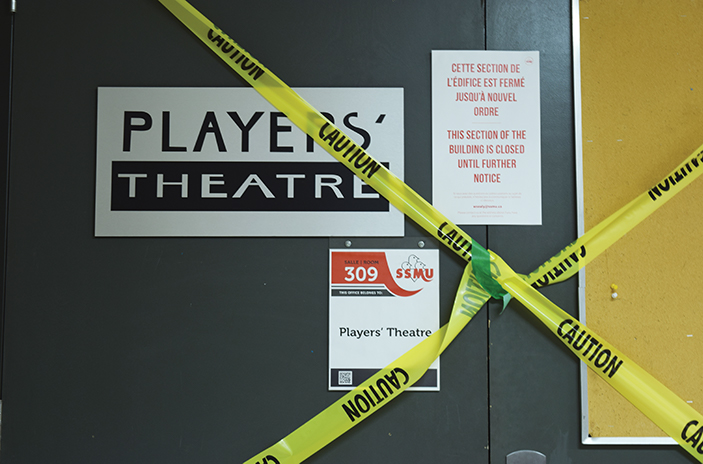
Theatre-lovers everywhere are mourning the days of live performances with sold-out venues, elaborate production designs, and most importantly, a sense of collective belonging. COVID-19 has caused major disruptions for McGill’s theatre community, especially since Montreal moved into its Red Zone earlier this month. 

Understandably, theatre clubs at McGill have struggled to adapt to the new restrictions. The Arts Undergraduate Theatre Society (AUTS) announced on Facebook on Sept. 22 that this year’s intended production of A Chorus Line would be cancelled. While many clubs initially planned to rehearse and perform in person, these plans have since been derailed. Despite the setbacks, some clubs at McGill are taking innovative approaches to reimaging theatre during a pandemic.

Basile Guichard, U2 Arts and production manager at Players’ Theatre McGill, spoke with The McGill Tribune about how the club has altered their plans as restrictions have intensified throughout the semester. 

“[Originally] we were thinking of having an outdoor show on the McGill campus, because events were allowed before the red zone,” Guichard said. “Then we thought that filming it would be a better idea, but obviously that’s not possible anymore with the very strict restrictions.”

Guichard explained that despite the various obstacles, the club’s directors and cast members have been willing to adapt to the ever evolving changes in order to put on a show. Even though the executive team prefaced every audition by telling the applicants that there was a chance that the show could be cancelled at any moment, many applicants still wanted to start the production process. 

Since the province announced the new restrictions in place for Red Zone, Players’ Theatre has taken a new approach to producing its October shows This is a Play and Life is a Dream. One show will be a live play on Zoom and the other will be a radio play with visual imagery. 

Despite the altered formats of their upcoming programming, Guichard said that the resolve of club executives and members is strong and that students are still eager to produce shows.

“There’s definitely a drive still present,” Guichard said. “I know from talking to other execs from other theatre clubs at McGill […] that every single team has some people who are still interested in creating and collaborating and growing together.” 

Players’ Theatre hopes to keep the momentum going for next semester as they plan for the annual McGill Drama Festival (MDF) which features student-written, produced, and performed one-act plays. Though Players’ is uncertain as to what shape MDF will take during the Winter 2021 semester, Guichard feels hopeful that the greater community will still support student theatre on campus.

“People are definitely willing to show up and put in the work despite everything,” Guichard said. “People are still showing a lot of interest [.…] It’s a good break for living in the pandemic world or going to school online.” 

Life is a Dream and This is a Play will be premiering on October 29th, 30th, and 31st.

Art, Arts & Entertainment

‘A Harlem Nocturne’ showcases triumphs of Black Canadian art and history

On Oct. 15, OBORO art centre hosted a virtual conversation between two esteemed members of the Canadian art community, Deanna Bowen, a Governor-General award-winning artist, and Kimberly Phillips, director of Simon Fraser University Galleries. The discussion delved into Bowen’s exhibit, A Harlem Nocturne, which focussed on Black Canadian history and its representation in art.

Bowen, a Vancouver-raised, interdisciplinary Black artist, traces Black migration across North America through her work. As a descendant of Black pioneers in Alabama and Kentucky, A Harlem Nocturne is Bowen’s effort to document her own family history. Bowen noted how conversations about Black settlers and city builders in North America have rarely factored into our contemporary notions of Black history and urban history at large. 

Both the exhibit and the history for which it is named are a marvel. A Harlem Nocturne is inspired by the famed Harlem Nocturne, Vancouver’s only Black nightclub during the 1950s and ‘60s. To this day, the Nocturne’s influence spans generations of performers, from famous trumpeter Charles Ellison, to Eleanor Collins, the first Black North American artist to host a weekly national television series, The Eleanor Show. Bowen’s exhibit is an excavation; her forensic investigation of the histories of Black performers transforms her art pieces into a curated display of archival evidence. 

Bowen’s pieces include postcards of the Stratford Hotel in Vancouver’s Eastside, a gathering place for Black Vancouverites, and a poster of a play starring her great-uncle Herman Risby and dance legend Len Gibson. A striking point of the exhibit is a black print of the title card of the musical episode, “The Promised Land” starring Gibson and his family on the subject of formerly enslaved, Black American settlers in Canada. The exhibit maps Black presence in Canada, in public and in private, showcasing the tension between the nation’s idealized progressivism and the oppressive anti-Black racism innate to the country.

To find her place in the context of her art, Bowen explained how she needed to listen to the silence of the past. 

“It’s difficult for prior generations to articulate their history, especially when they come from viewpoints that other people are seeking to destroy,” Bowen said.  

Whether through focussing on her family or the media, Bowen strives to create art that accurately reflects her worldview. 

“Being a descendant of a body of people that experienced trauma, one has to be a witness out of necessity,” Bowen said. 

Phillips, the curator of A Harlem Nocturne, is interested in the visibility and the perseverance of women artists, particularly those from marginalized communities.

“The complexity and rich histories of Black performers are only visible in shadow ways […] in the very specific granular elements like teeny editorials,” Phillips said. 

Bowen expressed her desire to illuminate the “dark matter,” or the figures, events, and histories that remain largely ignored by the white majority in the midst of systemic racism.

“I’m interested in the less-than-important documents, [the] messages in shoe boxes […] the documents that are rich, full, outside the white, Western archive,” Bowen said.

Due to the inaccessibility of Black Canadian history, the exhibit required restoring, translating, and magnifying original materials in order to showcase the work of this community. For example, one piece features a series of light boxes with Gibson’s original choreography in dance notation intending to transcribe the movement of Black dancers. In consulting the Canadian Broadcasting Corporations’ (CBC) archives, Bowen further realized the importance of the work she was doing.

CBC’s decision to digitize its archives of Canadian history but to trash original copies of Black content only spurred Bowen’s efforts in A Harlem Nocturne. Through her exhibit, Bowen situates Black history into the public consciousness, repositioning and rearranging it for accuracy and access.

“An exhibition is the most publicly accessible way to put forward what people need to know,” Bowen said.

Bowen’s work and the stories—famous and erased—that it depicts take no specific locale. A Harlem Nocturne is a triumphant call to expand the common, oversimplified narratives of Black Canadians and their complex and vibrant stories.

Read the latest issue

Read the latest issue