
Latest News

Hockey, Sports

October brings drafty weather, Quebec talent goes first overall

While this year’s virtual NHL draft had a number of delays, it held a special place in the hearts of many Quebecers. The first overall pick for 2020, Alexis Lafrenière, is a Quebec native from Saint-Eustache. The last time a Quebec-born skater was selected first overall was in 1998, when the Tampa Bay Lightning drafted Vincent Lecavalier. In a Zoom interview with sportscaster Sam Rosen, Lafrenière explained how excited he was to be selected by the New York Rangers. 

“It’s a dream come true for me, obviously,” Lafrenière said. “I am really honoured to join the Rangers and I am excited to come to New York and play some hockey.”  

Lafrenière was also the first Canadian to be drafted first overall since Connor McDavid was selected by the Edmonton Oilers in 2015. 

Another defining moment in this year’s draft occurred when Quinton Byfield was selected second overall by the Los Angeles Kings, making him the highest drafted Black player in NHL history. Byfield hopes to help expose more young Black athletes to the game of hockey.

 “I think [the NHL] is really moving in a good direction […] and I am definitely excited to help out and spread as much awareness as I can,” Byfield said in a Zoom interview. “It just shows that there is a lot of opportunity for everyone in the world. You can play [any] sport and be successful [at] it.” 

While Byfield says that being in the record books for anything is exciting, he wants to focus on achieving his lifelong dream of playing high-level hockey in the NHL without the emphasis on his background. 

Many teams took advantage of the online setting of the draft, coming up with creative ways to announce their picks, but the Ottawa Senators had the most innovative announcement. With the third overall pick, the Senators enlisted the help of University of Ottawa alumnus and Jeopardy host, Alex Trebek, to announce their decision. 

“With the third pick in the 2020 NHL draft, the Ottawa Senators choose this player,” Trebek read from the on-screen prompt.

The answer was “Who is Tim Stützle?” Stützle is an 18-year-old German player currently playing for Adler Mannheim in the Deutsche Eishockey Liga (DEL). One of two Germans selected in the first round, an NHL record, Stützle explained how thrilling and overwhelming draft night was.

“[Being selected] was extremely exciting,” Stützle said in an interview with Deutsche Welle. “It was also pretty stressful right after [being picked]. I had to do a whole lot of interviews. I hardly had a chance to speak to my family and friends.”

With the final pick of the first round, the San Jose Sharks chose Ozzy Wiesblatt, a Calgary native whose mother has a hearing impairment. To announce the 31st pick, the Sharks’ director of scouting, Doug Wilson Jr. used American Sign Language to sign “Ozzy” so that his mother could see that he had been selected. 

“That means a ton, especially to my mom and the deaf community in general, I think,” Wiesblatt said in an interview with NBC Sports. “It’s a very nice gesture for him to do that. My mom will never forget that.”

Wilson explained how the life-changing experience of being drafted is important for the whole family.

“In my life, my mom is a huge, huge factor,” Wilson said to NBC Sports. “If I was in this moment, I would want to be able to share it with my parents too.”

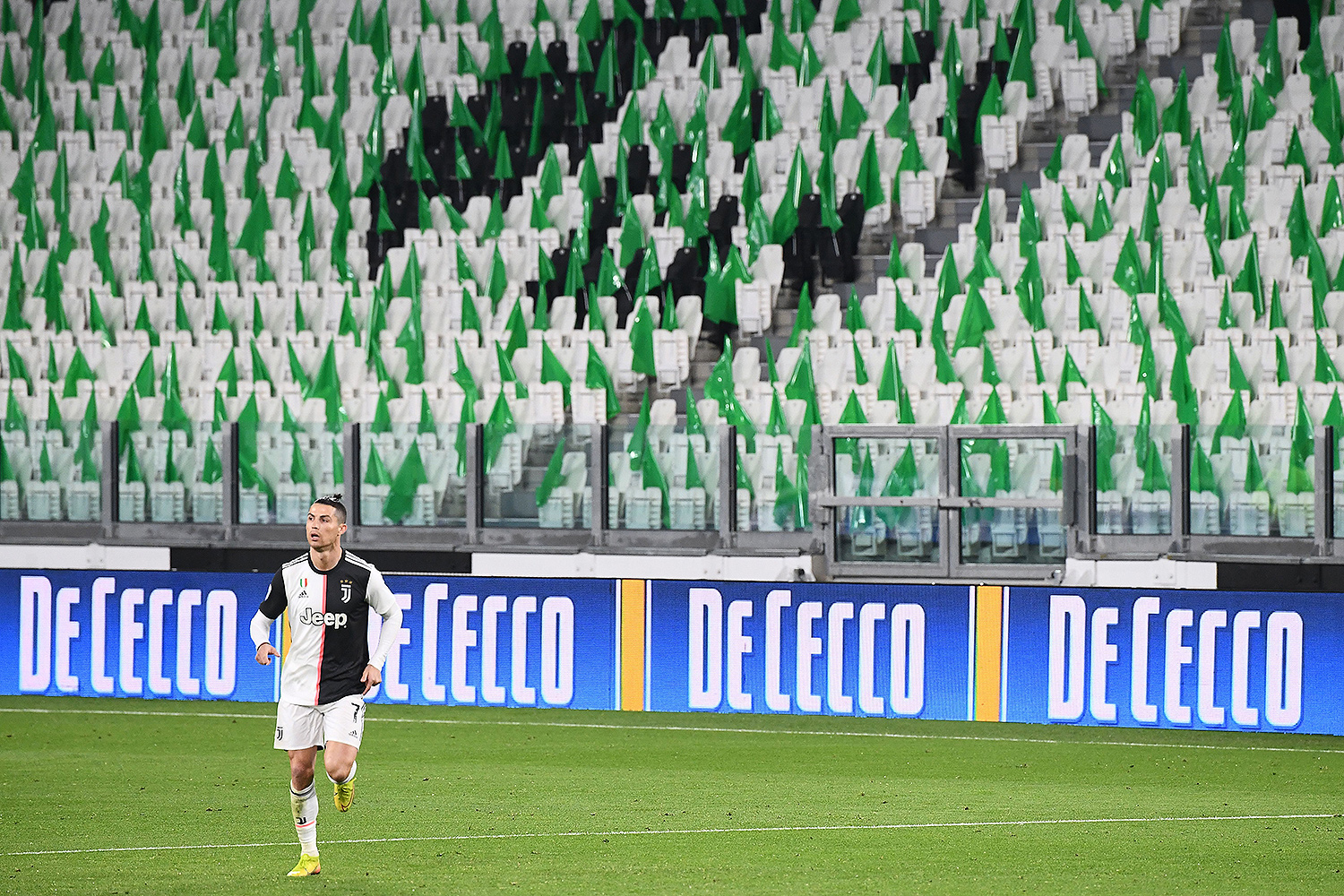
Although it was certainly not the draft that these athletes had dreamed of, participating from home instead of in Montreal—where the draft was supposed to take place—the organization did their best to make the night memorable.  Despite odd camera angles and delays in reactions, the NHL’s ability to provide an inclusive virtual experience for everyone was commendable.


A previous version of this article stated that Vincent Lecavalier was drafted by the Tampa Bay Lightening in 1988. In fact, he was drafted in 1998. The Tribune regrets this error. 

Features

The violence of exclusionary design

Hostile architecture, also known as exclusionary or defensive design, is an intrinsic component of Montreal’s urban spaces—you just may not have noticed it. For most people who call this city home, experiencing urban public spaces is risk-free and innocuous, be it riding on the metro, sitting in the park, or simply walking down the street. This comfort, however, is not the reality for all. For the over 3,000 unhoused residents of Montreal, urban public spaces are exclusionary and dangerous.

Off the Board, Opinion

Running for running’s sake

There’s a famous scene in Forrest Gump when Forrest, who has spent all day in his sleepy Alabama home staring into a void, dons his cap, springs out of his rocking chair, and for no particular reason, starts running. Forrest runs first to the end of the road, then to the edge of town—and once he has reached the edge of his county, he figures he might as well run across his state. 

Forrest keeps running for many years, eventually criss-crossing the United States. One day, running as usual, a crowd of journalists assails him with a barrage of questions: “Why are you running? Are you doing this for world peace? [For] the environment? [For] the animals?” Forrest, incredulous, tersely admits, “I just felt like running.”

Similarly, for no particular reason and with nothing better to do, I began running on a frigid afternoon in late March. I had none of Forrest’s boundless stamina, unfortunately, and my first outing of the pandemic was a dismal experience, as I found myself incessantly panting and stopping during the entire five-kilometer loop. 

Two days later, still without thinking much of it, I was running again—the same five-kilometer loop, still panting and stopping, but for briefer stretches of time. Two days after that, I ran again.

Before long, running became a habit. Every other evening, I would go outside and run, with no exception for Saturdays or Sundays. It took me a few weeks to master the five-km run—once I could do that distance in a single stretch, I added an extra two kilometers and made it a seven-kilometer run. A few runs later, when I had mastered that one, I added a bit more and made it a nine-kilometer run. 

In those early months of the lockdown, each day felt the same as the day before it. I would wake up late, barely touch my class material, then veer into existentialist rabbit holes while reading the news. But at least I ran in the evening. And I was content with having done at least one productive thing with my day. 

Eventually, what began as a mindless habit to spend time became one of the few anchors that kept me level-headed in day-to-day life. With running, I could clear my mind of global events, keep track of the changing seasons, and focus on reaching ever-longer distances.

My absurd objective—which I whole-heartedly believed was unattainable—was to reach the distance of a half-marathon. But by mid-May, I’d run a string of 17-kilometer loops at decent times, and one balmy Wednesday night, I ran the full 22 kilometers in a single stretch. 

Absolutely drained from my experience and now detesting nothing more than the idea of running in vain circles, I decided that very night to retire from running. 

But Forrest Gump, crossing the United States, didn’t stop when he reached one of the oceans; he merely turned around and kept running. It didn’t take me long to follow his lead—three days after my half-marathon, I sprang out of “retirement” and kept going. Running was enjoyable as an end in and of itself. 

The pandemic—much like running—has been a big test for our stamina. As we brace for a second wave that seems destined to look much like the first, my new pastime has taught me a few things about living through dull, monotonous days. Most important is to set markers that demonstrate progress in our day-to-day, whether that be reading a few pages of a novel every day or aiming for longer distances every evening, so that we don’t feel like we are perpetually trudging on a hamster wheel.

Science & Technology, Student Research

Nerdy going on thirty: Soup & Science returns for its 30th edition

The first-ever Soup & Science event, held in 2006, was hardly an extravagant affair. Professors and students gathered together in the second-floor lobby of the Trottier building to talk science, pass along research developments, and, of course, share in the event’s eponymous light refreshments. Thirty editions and a venue change later, the Soup & Science lecture series has become a mainstay of McGill’s academic calendar, having hosted over 400 speakers and 10,000 attendees since its inception. 

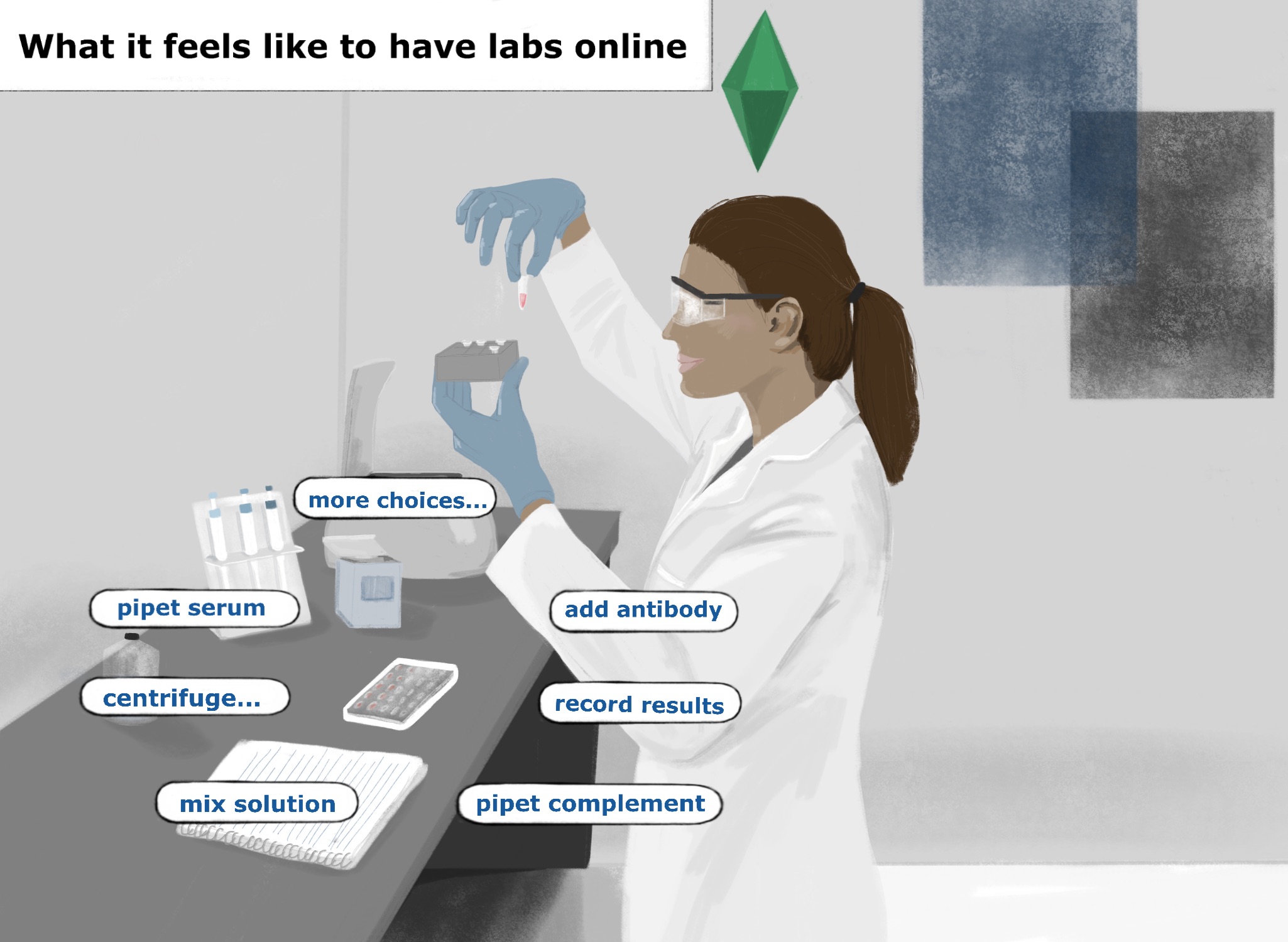
The McGill Tribune covered highlights from the five-day virtual event. 

Satellite imaging Panama’s tropical forests to find “carbon refuges”

Jonathan Giammaria

Because most forest trees tower into dense foliage, their heights are often impossible to measure accurately from the ground. In 2018, a team led by Dr. Catherine Potvin, professor in the Department of Biology, discovered a fallen tree in Panama’s tropical forests. The tree proved to be a rare find, allowing the researchers to obtain an exact measurement of its height.

“[The tree] measured 71 meters in height, which is amazing because it’s about twice the height of the reported forests of Panama,” Potvin said. 

Trees are essential for naturally reducing the amount of greenhouse gases in the atmosphere. Through photosynthesis, they can store large amounts of carbon dioxide in their trunks for extended periods of time—a process known as carbon sequestration.

“Now that we were able to measure it, we know it contained 50 [tonnes] of carbon,” Potvin said.

 That’s [in] a single tree. In the temperate forests [of Quebec], there are 40 tonnes of carbon […] in one hectare of forest.” 

Potvin stressed the importance of developing novel methods, such as satellite imagery, for measuring these abnormally tall trees, and mapping areas where they grow en masse. Dubbed “carbon refuges,” their preservation would help to maintain stable levels of carbon in the atmosphere.

Applying a niche mathematical concept to calculate infinite values from finite points 

Ronny Litvack-Katzman

Dr. Anush Tserunyan, assistant professor in the Department of Mathematics and Statistics, is a mathematician with a keen eye for deducing the logic behind complex systems. Ergodicity, the focus of Tserunyan’s research, is a branch of mathematics that studies the statistical properties of dynamic systems.

Tserunyan compared ergodicity to a well-mixed cup of milk and coffee. In this example, the movement of any given drop of milk in the coffee—here, an individual “point”—can be used to model the mixture’s movement over time. 

The ergodic theory stipulates that studying an individual’s trajectory across time is the same as observing a collection of individual trajectories at a single time point. 

“[Finding the] averages over infinitely many points is impossible to compute, and pointwise ergodic theorem gives you a way to measure it at finite points,” Tserunyan said. “The average you compute will be very close to the actual average.”  

Although it can be hard to imagine ergodicity’s real-world applications, Tserunyan commented that ergodic theory is foundational to other branches of mathematics, including those used to conceive climate models.

McGill physicists are escaping radio frequency interference at the world’s northernmost research station 

Sophia Gorbounov

In a talk titled “Radio frequency interference at the McGill Arctic Research Centre,” Taj Dyson spoke about imaging the Universe during the Cosmic Dark Ages, just before the formation of the first stars. Dyson, U2 Science, explained his work with Doctors Cynthia Chiang and Jonathan Sievers to detect neutral hydrogen signals from one of the oldest but least-studied eras of the Universe.

“The only signal that comes from the Dark Ages comes from neutral hydrogen, which faintly glows at around 1.4 gigahertz,” Dyson said. “But, by the time that signal reaches us on Earth, it has been red-shifted down to 100 megahertz, which is pretty much exactly the frequency of FM radio broadcasts.”

This, Dyson explained, results in significant interference and becomes a serious problem when trying to image hydrogen signals.

The simplest solution is to position oneself as far away from radio signals as possible. Located at 80 degrees North, the McGill Arctic Research Centre is easily the best option. 

After hunkering down in this small research facility, Dyson observed the data and determined the magnitude of interference still being received from Dark Age hydrogen molecules. With much significantly less radio frequency interference, Dyson concluded the Centre was a prime location for examining incoming signals.

Ask a Scientist, Science & Technology

Discussing the necessity of positive rhetoric on climate change

On Sept. 16, the Trottier Institute for Sustainability in Engineering and Design held its seventh annual symposium titled “Lessons from a Pandemic: Solutions for Addressing the Climate Change Crisis.” The first speaker, Dr. Naomi Oreskes, an affiliated professor of Earth and Planetary Sciences at Harvard University, discussed why people should trust science. The panel explored the origins of climate change denial and suggested some potential solutions.

In an interview with The McGill Tribune, Dr. Christopher Barrington-Leigh, Associate Professor at the Institute for Health and Social Policy and the School of Environment, commented on how the overwhelmingly pessimistic rhetoric that surrounds the climate crisis can encourage climate change denial. 

“We don’t have positive stories for the future [because] everything Hollywood produces is apocalyptic,” Barrington-Leigh said. “People behave in very predictable ways when they don’t have [a positive vision of the future], and it’s all to do with closing off socially, [and] thinking defensively […], not creatively.” 

He also pointed out that cognitive dissonancethe discomfort people feel when a behaviour and a cognition contradict one anotherplays a substantial role in the persistent trend of climate change denial. 

“The thing with cognitive dissonance is that […] the more contrary evidence comes, [the worse it gets]. If a little bit of evidence comes along that’s contrary to your belief, you […] make up more conspiracy stories so [you] can enforce [your] belief,” Barrington-Leigh said. “You raise the stakes even more now [that] your ego is even more [under] threat, [so it can be] a positive feedback [loop].” 

Barrington-Leigh claims that even education on climate change, a commonly suggested solution to combat misinformation, can backfire if it puts too much blame on the individual for their beliefs. 

“Canada has been [implementing] public education policies about climate change for a generation and a half, and they amount to nothing,” Barrington-Leigh said. “The mistake is often that it’s about individual action, that people are bad or selfish [….] When you say we have to change our consumption practices, everybody starts looking at their own life [and] thinking: ‘Oh no, I’m a bad human.’”

Inspiring leadership, Barrington-Leigh suggests, may be the most important factor in constructing productive rhetoric on climate change. 

“[We need] somebody who frames things the right ways. We understand that people need a positive story they can buy into, and they need to not feel bad about themselves,” Barrington-Leigh said. “[People] need to have a story that brings them together with other people […] so they can […] take positive actions that are good for other people. That’s all any human wants.”

He also pointed out that plenty of progress is being made to combat climate change, and this progress will inspire even more push to combat the issue.

“On [Sept. 23], China […] surprised a lot of people by announcing it’s going to be carbon neutral by 2060,” Barrington-Leigh said. “China doesn’t come out with goals like that […] unless it’s credible. Now, the ball’s in India’s court, and of course, the developed countries had better move faster.”

Barrington-Leigh concluded by affirming the unique power of youth climate movements to rise above political divides. 

“We could have youth parties very suddenly come to power in a lot of countries,” Barrington-Leigh explained. “And they can mostly transcend the existing political partisan boundaries. They just have such a good premise, which is that youth are oppressed and excluded from power [….] If you look at the history of humankind I don’t think there is any time in which the stakes have been so large for young people [….] If you give young people power and let them face the issues, they [learn] faster than if you exclude them.”


In an earlier version of the article, the Tribune misquoted Barrington-Leigh as saying “China doesn’t come out with goals like that [….] That’s incredible.” In fact, Barrington-Leigh said “China doesn’t come out with goals like that […] unless it’s credible.” The Tribune regrets this error. 

Commentary, Opinion

McGill must do more to protect students in residence

McGill welcomed hundreds of new students to its campus residences this fall, despite delivering classes remotely. McGill Student Housing and Hospitality Services (SHHS) must now balance students’ urge to socialize while protecting the community’s health and safety amid the pandemic. As the number of daily cases continue to increase in Quebec, residence staff must be prepared to implement containment measures as necessary. Although SHHS claims to prioritize students’ health and safety, their lax approach is insufficient to stop a potential outbreak. Even though public health officials warned of a second wave well in advance, SHHS failed to draft more stringent protocols to protect the physical health of students in residence and the surrounding community. Now, with Montreal in a red zone, poor communication and limited enforcement will only exacerbate the risk of an outbreak within residences.

When Quebec Premier François Legault announced the new red zone restrictions on Sept. 28, SHHS made quick adaptations in order to comply. The closure of common areas and a ban on any indoor gatherings seemed sudden, given that SHHS made no adjustments weeks prior. Additionally, the COVID-19 tracker does not specify where on campus transmissions occurred, fueling rampant speculation. The information currently posted online offers a protocol for students who have symptoms, but it is unclear what measures will be put into place if there is an outbreak. SHHS must prioritize implementing thorough guidelines and structure for any attempt to stop the spread of COVID to be effective.

Those who enter New Residence Hall are greeted by a handwashing station and someone enforcing mask ordinances. Although handwashing is an important sanitary measure, SHHS must extend their enforcement to address violations of occupancy limits. Frequent gatherings in individual rooms pose a greater risk for transmission. It is naïve to assume that first years will limit their social interactions to a select group of people, which is recommended by health officials. Students in residences have reported inconsistent enforcement and rule defiance. It is not uncommon to hear loud gatherings persist throughout the night, undisturbed. To reduce the risk of transmission, SHHS must increase its enforcement beyond areas under public view. 

With poor communication and flawed safety measures in place, the lack of disciplinary enforcement is no surprise. Whereas other Canadian universities have garnered attention for making stern statements and imposing stricter guidelines after students violated restrictions, McGill’s approach is passive and weak in comparison. SHHS implemented a strike system for those who violate the rules, but the informal parties that occur every weekend continue to persist. With no serious consequences for those violating the rules, the SHHS is only tolerating students hosting gatherings. While students must play their part in keeping those around them safe, SHHS must do a better job setting a precedent for what constitutes irresponsible behavior.  

One may claim that McGill cannot control what students do off-campus, but it is still responsible for the safety of the hundreds of students that it welcomed into their residences and subsequently into the community. Montreal public health director Dr. Mylène Drouin attributed the second wave of infection, which led the city to impose stricter restrictions, to social gatherings organized primarily by young people. Given the demographic that they serve, SHHS must show a greater will to break up social gatherings and implement better measures to track and reduce the virus’s spread. 

Commentary, Opinion

The pandemic demands a more accessible McGill BoG

For years, McGill students have fought for change through protests, rallies, and other physical demonstrations. Protests, such as those led by Divest McGill against the occupation of Wet’suwet’en territory and the Indigenous students behind the “Change The Name” campaign, have been crucial to drawing attention to issues on campus and effecting change at McGill. COVID-19 has restricted students’ ability to mobilize for issues that matter to them. The McGill Board of Governors (BoG), which has final authority over all academic, financial, and investment affairs, needs to ensure that students are given the opportunity to put forth their grievances. 

With tuition fees increasing for the 2020-2021 academic year and longstanding resentment against McGill’s investments in fossil fuels, student voices must have a platform. The BoG leaves little opportunity for students to ask questions or share their concerns on the topics discussed. The Board holds bi-monthly closed meetings, with four student representatives and two student observers, who do not vote but still attend the meetings on behalf of student associations. While student representatives are invaluable, the ratio of six representatives to over 40,000 students simply does not accurately reflect all student concerns. Community sessions are held after every other meeting—so, every four months—in which students and staff can submit questions for the Board. However, participating in such sessions is not as easy as it sounds. Community members must submit questions 15 days before the meeting. Questions are then vetted by the Board to ensure that they cover matters that the Board wishes to address. Even if a question survives this process, it will only be allotted a maximum of five minutes.

As the COVID-19 pandemic has made in-person protests unsafe for many, the BOG must adapt their current system to ensure that student concerns are addressed. In the past, students have used physical forms of protest like rallies and sit-ins to compensate for the Board’s lack of transparency. Since in-person protests are now unsafe, it is increasingly difficult for students to make their voices heard. The McGill administration’s failure to adapt to the restrictions placed on students this year displays their flagrant disregard for student well being. 

The BoG is set to host one student forum for this academic year in January. Forums differ from community sessions as they allow students to engage directly with the BOG as opposed to written and submitted questions. All members of the McGill community must be heard, but with little to no ability to protest and only one opportunity this year to address the Board, individual students are silenced. The Board of Governors must adapt their current meeting system to allow ample time and care to manage the concerns of students. Live streaming meetings through websites such as Youtube Live would allow students to tune in and hear in real-time decisions made regarding their tuition, academics, and the BOG’s investment choices. 

In addition, a live community session system would allow for an open forum at the end of every meeting instead of the submitted and reviewed questions, whereby questions could be submitted in real time. With this in place, questions that challenge the Board are more likely to be addressed, and more students will be able to put forth concerns regarding their welfare. On top of this, a live comment section would mitigate the barrier of submitting questions to the Board 15 days before the scheduled meeting.

Though in-person protests are currently unsafe, students can take a number of different approaches to fight for their rights. Amplifying online components of student movements, such the Black Student Networks’ (BSN) #TakeJamesDown online video series and letter writing initiative, is one way to push for change on campus if you are unable to physically protest. Moreover, by contacting board members individually, students can direct their demands to the source. Unprecedented times call for adaptations by the McGill administration, and turning a blind eye to student concerns is not a viable option.

Basketball, Soccer, Sports

Documentaries for staying in the sports mood

Although most sports are currently on hold, staying engaged with the world of sports has never been easier. Here are some of The McGill Tribune’s favourite sports documentaries that will tide you over to the next season.

Athlete A

Content warning: Graphic descriptions of sexual violence

Athlete A is a powerful and important story about the behind-the-scenes abuse that continued for decades at USA Gymnastics (USAG). The Netflix Original documentary highlights not only the abuse by team doctor, Larry Nassar, but also USAG’s ongoing and active participation in concealing it.

Maggie Nichols, or Athlete A, was the first gymnast to report abuse by Nassar, but investigative reporting by The Indianapolis Star encouraged over 150 more women to come forward. 

Watching the gymnasts testify during Nassar’s sentencing is empowering and heartening. When Nassar receives his 175-year sentence, it feels as though these athletes finally get some semblance of the justice that they deserve. This documentary sheds light on the corruption of an internationally recognized organization and the power of the athletes’ fight for justice.

The Dawn Wall

In this unbelievable tale of perseverance and determination, directors Josh Lowell and Peter Mortimer regale the audience with the life of rock climber Tommy Caldwell. The film follows him through his younger years as he becomes one of the best rock climbers in the world. It is a documentary that tells the story of a man determined to do the impossible: Climb the treacherous Dawn Wall in Yosemite National Park in an effort to leave the problems of his life behind. The Dawn Wall is one of the most difficult climbs in the world, and before Caldwell finished his 19-day climb, many had dubbed it insurmountable. In those 19 days, the documentary puts everything on display: The intricacies of rock climbing, the drama between Caldwell and his climbing partner Kevin Jorgeson, and Caldwell’s sheer will and determination––or borderline insanity––required to complete the gruelling climb. 

Women of Troy

Cheryl Miller never got to play in the WNBA, yet she is often considered one of the greatest basketball players of all time. Miller led a stacked University of Southern California Trojans team to two NCAA Championship wins in a row. When a team is that good, the stories follow. Director Alison Ellwood deftly tracks Miller’s career along with her talented teammates, like four-time WNBA Finals MVP Cynthia Cooper, as well as Paula and Pam McGee, to highlight their influence on both the men’s and women’s games. Women of Troy is a 2020 basketball documentary worthy of attention—it will only take a fraction of the time it took to watch The Last Dance, and audiences will enjoy it just as much.

John McEnroe: In the Realm of Perfection

French filmmaker Jean-Luc Godard once said, “Cinema lies. Sport doesn’t.” The quote serves as the opening to director Julien Faraut’s poetic film about 1980s tennis superstar John McEnroe, and the sport of tennis. The first few minutes of the film are thrilling, with McEnroe setting a serve to the loud sounds of the band Sonic Youth. The film does not let up either, as its use of found footage—reels and reels of 16mm film that did not make the cut for an old instructional video—helps Faraut tell the story of a superstar athlete and his personality. Through innovative techniques, this documentary makes the audience reconsider the way that we watch sports altogether.

Take Us Home: Leeds United 

Leeds United are the quintessential controversial club of English football. A hard-nosed physical program, their success in the 70s earned them the title of the country’s most hated club. Marcelo ‘El Loco’ Bielsa is a legendary manager whose charged personality and obsessive work ethic has given him a near mythical reputation in football. In Take Us Home: Leeds United, program and manager combine to create a storyline, the likes of which no screenwriter could script. 

From the Spygate Affair—which followed Bielsa’s covert surveillance of rival team’s training sessions followed by a 70-minute impromptu press conference on their tactics—to the bizarre moment when Leeds deliberately scored an own goal following a controversial decision against their opponents, the six-part docu-series has it all. 

Take Us Home is the culmination of a club’s 100 years of success and misery, all showcased in a single season. Follow along as Leeds United soar to the top of their championship, only to crash and burn as they once again fail to secure a promotion to England’s top division. 

Cheer

Cheer follows the competitive cheerleading season of the Navarro College Bulldogs from Corsicana, Texas as they attempt to defend their championship title. Cheerleading is not a sport that traditionally gets mainstream coverage on major broadcast networks or news sites. Cheer, however, illustrates that the physical demands and hard work necessary for success in cheerleading make it as legitimate a sport as any other.

When Netflix released this docu-series in January 2020, it launched the cast into immediate stardom, with many of the cast members rapidly gaining impressively large followings on social media. It is easy to understand why viewers wanted to know more about these athletes: The series presents heartwarming backstories and characters that, while imperfect, remain relatable. These personal narratives, combined with impressive tumbling and baskets, make for entertaining lockdown watching. 

QB1: Beyond The Lights

This exciting docu-series follows three football stars through their senior year of high school as they vie for championships and Division I scholarships. 

This series provides a deeper look into practices, film sessions and the conversation on the field during games. However, the focus is not only on football, but also on the daily lives of each athlete. As the documentary follows the players through their school day and home life, the audience learns about the struggles that go on behind the scenes. QB1 humanizes these star athletes and unravels the stuck-up jock stereotype that football players often receive. Whether it’s the anxiety that comes with knowing that without a full-ride scholarship some players cannot afford to go to university or the pain associated with losing a brother, the series captures the emotions of life outside of football.

You do not need to know anything about football to start watching this real-life Friday Night Lights series. By the end, though, you just might become a football fan.

Editorial, Opinion

Quebec’s racist health care system needs reform

On Sept. 28, Joyce Echaquan, an Atikamekw woman and mother of seven, livestreamed the moments before her death at Joliette Hospital. The widely-shared video shows hospital staff making racist comments towards Echaquan, and sparked outrage across the country. The horrific situation highlights the deep flaws inherent in the Canadian health care system, which, despite being “universal,” remains inaccessible to Indigenous people, often going even further to actively harm and kill them. McGill, as Canada’s top-ranked medical school, is actively complicit in this. Quebec and McGill must overhaul medical care distribution and professional practice in the province to provide better care, agency, and opportunities to Indigenous communities.

In July 2020, premier Francois Legault doubled down on his position that systematic racism does not exist in Quebec and that the majority of Quebecers are not racist. Time and time again, however, both of these statements have proven to be unequivocally false. Published in 2019, the final report of the National Inquiry into Missing and Murdered Indigenous Women and Girls included an almost two hundred page supplementary report dedicated to Quebec. The document includes a section on the province’s inadequate health and social services, and condemns Quebec’s failure to address these issues.

Indigenous people in Quebec tend to have traumatizing experiences with the health care system that range from inadequate to deadly outcomes. This is due to factors such as a lack of services in remote areas, racist encounters with non-Indigenous health care workers, and a lack of Indigenous health care providers who possess the cultural understanding necessary for adequate treatment, especially when it comes to mental health services. Those who cannot access a particular service within their area must travel to city centres, placing the onus on Indigenous people living in remote areas to go out of their way to access care. This leads to disastrous health outcomes; for example, tuberculosis rates among Inuit are 300 times higher than in non-Indigenous Canadians. When accounting for these discrepancies, it is impossible to ignore the systemic racism that lies at the heart of this province. 

As a leader in medical training, research, and provision, McGill is also responsible for this anti-Indigenous institutionalized racism. A Mi’kmaq woman named Kimberly Gloade died only two years ago after being turned away at the McGill University Health Centre because she did not have a health card, illustrating yet another structural factor limiting access to health care for Indigenous people in Quebec. If one is denied care at the first point of contact due to this kind of systemic problem, they will be far less likely to see treatment in the future.  

As a response to these inequities and ongoing calls to action from activists, medical schools have taken steps to place a greater emphasis on Indigenous health care and healing, leading to the creation of new courses and programs in recent years. McGill’s Department of Family Medicine recently introduced an Inuit health module that seeks to incorporate Inuit understandings of health as holistic, with spirituality as a vital component. The module is not mandatory, however, and will only be offered within Family Medicine for the time being. While this kind of education is crucial, an even greater emphasis must be placed on outreach and support for Indigenous students to increase the number of Indigenous health care professionals in Quebec. In 2016, less than one per cent of specialists and general practitioners in all of Canada identified as “Aboriginal.” Governments and educational institutions must provide Indigenous people with the agency to administer care within their own communities. This starts with financial and academic support for Indigenous youth.

While Quebec and McGill must act, only so much reform is possible within a colonial state that continues to commit genocide against Indigenous Peoples. The federal and provincial governments have repeatedly proven that they have no tangible regard for Indigenous life and are committed to power and profit above all else. As a result, non-Indigenous and particularly white McGill students should provide financial support when they can to Indigenous activists and uplift land back movements while working to unlearn their own internal colonial and eurocentric biases. Students must also support programs that increase access to education for Indigenous students and continue to listen to the needs of Indigenous students on campus. If systemic racism did not exist in Quebec, what happened to Joyce Echequan would not have happened. It is time to finally face these issues rather than continuing to deny them. 

Science & Technology

When life gives you data, make visual art

People often see art and science as opposing subjects––logic versus beauty, the utilitarian versus the aesthetic. Dr. Kirell Benzi, a data science researcher and data artist, does not share this view. His artwork is created from compilations of data, which he represents using shapes, colours, and movement. 

On Sept. 24, Benzi presented his work during an online conference hosted by the Convergence Initiative entitled “When Data Science and Art Collide.” Leading the audience through the mysterious abstractions of his art, Benzi explained that he splits his data art into three categories based on the scientific method used to create them. The first, which he calls network art, features nodes and links amassed into enormous, colourful clouds, or twisted, sinewy shapes. 

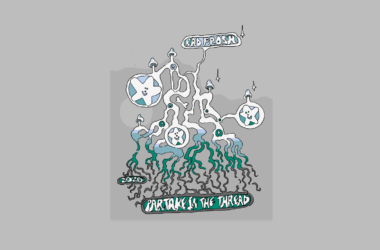
(Globalization/Kirell Benzi/2019)

Of course, the networks are based on real data. A web of excited tweets and retweets about the 2012 discovery of the Higgs-Boson form a piece called “Scientific Euphoria,” while a vast map of performers at the Montreux Jazz Festival, classified by musical style, make up the piece “Jazz Luminaries.” Benzi explained that these visual representations help people make sense of the massive amounts of data involved.

“You want to transform complex notions, usually numbers or statistics, into something more visual,” Benzi explained. “A large portion of the brain is dedicated to vision, so it really makes sense to try to transform numbers or even text into something that we can visualize, because our brain is wired to interpret those stimuli [….] To me, when you create art, it’s interesting to have both emotion on one hand and cognition on the other hand.” 

The second of Benzi’s categories is artificial intelligence (AI) art. Benzi uses neural networks, which is a way of training a computer to perform tasks by showing it a large number of examples until it can replicate that task on its own. Benzi programs his neural networks to recognize objects based on millions of different pictures and then adjusts how the network generates its own image based on all those that it previously observed. With a mix of seemingly random objects, including bubbles, wigs, geysers, balloons, and jellyfish, he creates pieces like “These Are Not Flowers,” which, while abstract, still feel oddly familiar. Benzi described AI as an artistic tool that he uses to channel his creativity.

“Sometimes, you put an ingredient in for the colour, but sometimes it’s more about the shape,” Benzi said. “And it’s very difficult to control, actually. But that’s where the artistic part comes into play because this image was not created at random. [Although] the image is created by the algorithm, [it is] a tool to put in some of your own creativity and then use it to create new shapes [….] You, as an artist, have to train the network, play with the parameters, tune them, and create the shapes.”

Benzi’s third category of data art is based on fractals, a mathematical and physical phenomenon of geometric patterns that repeat infinitely on different scales. These patterns make for extraordinary artwork that appears progressively more intricate as the viewer looks closer. While displaying his recent piece “Breathe,” Benzi emphasized that these fractals appear frequently in nature, and make his data artwork appear satisfyingly natural.  

“If you look closely, you see that we have some repeating shapes,” Benzi said. “I really like this idea because, to me, it looks organic, maybe like a cell structure, but it’s purely math and coefficients of recurring functions.”

Benzi’s artwork fills a gap in our understanding of art and science. He adamantly seeks to teach others about the possibilities of data science, showing that algorithms can not only process data, but can also give way to emotions and self-reflection. And this doesn’t end with networks, AI, and fractals—science and art overlap all the time, even in our daily lives. It may be time to accept that the two are connected and finally look for the beauty behind the science.

Read the latest issue

Read the latest issue