


Latest News

Basketball, Soccer, Sports

Documentaries for staying in the sports mood

Although most sports are currently on hold, staying engaged with the world of sports has never been easier. Here are some of The McGill Tribune’s favourite sports documentaries that will tide you over to the next season.

Athlete A

Content warning: Graphic descriptions of sexual violence

Athlete A is a powerful and important story about the behind-the-scenes abuse that continued for decades at USA Gymnastics (USAG). The Netflix Original documentary highlights not only the abuse by team doctor, Larry Nassar, but also USAG’s ongoing and active participation in concealing it.

Maggie Nichols, or Athlete A, was the first gymnast to report abuse by Nassar, but investigative reporting by The Indianapolis Star encouraged over 150 more women to come forward. 

Watching the gymnasts testify during Nassar’s sentencing is empowering and heartening. When Nassar receives his 175-year sentence, it feels as though these athletes finally get some semblance of the justice that they deserve. This documentary sheds light on the corruption of an internationally recognized organization and the power of the athletes’ fight for justice.

The Dawn Wall

In this unbelievable tale of perseverance and determination, directors Josh Lowell and Peter Mortimer regale the audience with the life of rock climber Tommy Caldwell. The film follows him through his younger years as he becomes one of the best rock climbers in the world. It is a documentary that tells the story of a man determined to do the impossible: Climb the treacherous Dawn Wall in Yosemite National Park in an effort to leave the problems of his life behind. The Dawn Wall is one of the most difficult climbs in the world, and before Caldwell finished his 19-day climb, many had dubbed it insurmountable. In those 19 days, the documentary puts everything on display: The intricacies of rock climbing, the drama between Caldwell and his climbing partner Kevin Jorgeson, and Caldwell’s sheer will and determination––or borderline insanity––required to complete the gruelling climb. 

Women of Troy

Cheryl Miller never got to play in the WNBA, yet she is often considered one of the greatest basketball players of all time. Miller led a stacked University of Southern California Trojans team to two NCAA Championship wins in a row. When a team is that good, the stories follow. Director Alison Ellwood deftly tracks Miller’s career along with her talented teammates, like four-time WNBA Finals MVP Cynthia Cooper, as well as Paula and Pam McGee, to highlight their influence on both the men’s and women’s games. Women of Troy is a 2020 basketball documentary worthy of attention—it will only take a fraction of the time it took to watch The Last Dance, and audiences will enjoy it just as much.

John McEnroe: In the Realm of Perfection

French filmmaker Jean-Luc Godard once said, “Cinema lies. Sport doesn’t.” The quote serves as the opening to director Julien Faraut’s poetic film about 1980s tennis superstar John McEnroe, and the sport of tennis. The first few minutes of the film are thrilling, with McEnroe setting a serve to the loud sounds of the band Sonic Youth. The film does not let up either, as its use of found footage—reels and reels of 16mm film that did not make the cut for an old instructional video—helps Faraut tell the story of a superstar athlete and his personality. Through innovative techniques, this documentary makes the audience reconsider the way that we watch sports altogether.

Take Us Home: Leeds United 

Leeds United are the quintessential controversial club of English football. A hard-nosed physical program, their success in the 70s earned them the title of the country’s most hated club. Marcelo ‘El Loco’ Bielsa is a legendary manager whose charged personality and obsessive work ethic has given him a near mythical reputation in football. In Take Us Home: Leeds United, program and manager combine to create a storyline, the likes of which no screenwriter could script. 

From the Spygate Affair—which followed Bielsa’s covert surveillance of rival team’s training sessions followed by a 70-minute impromptu press conference on their tactics—to the bizarre moment when Leeds deliberately scored an own goal following a controversial decision against their opponents, the six-part docu-series has it all. 

Take Us Home is the culmination of a club’s 100 years of success and misery, all showcased in a single season. Follow along as Leeds United soar to the top of their championship, only to crash and burn as they once again fail to secure a promotion to England’s top division. 

Cheer

Cheer follows the competitive cheerleading season of the Navarro College Bulldogs from Corsicana, Texas as they attempt to defend their championship title. Cheerleading is not a sport that traditionally gets mainstream coverage on major broadcast networks or news sites. Cheer, however, illustrates that the physical demands and hard work necessary for success in cheerleading make it as legitimate a sport as any other.

When Netflix released this docu-series in January 2020, it launched the cast into immediate stardom, with many of the cast members rapidly gaining impressively large followings on social media. It is easy to understand why viewers wanted to know more about these athletes: The series presents heartwarming backstories and characters that, while imperfect, remain relatable. These personal narratives, combined with impressive tumbling and baskets, make for entertaining lockdown watching. 

QB1: Beyond The Lights

This exciting docu-series follows three football stars through their senior year of high school as they vie for championships and Division I scholarships. 

This series provides a deeper look into practices, film sessions and the conversation on the field during games. However, the focus is not only on football, but also on the daily lives of each athlete. As the documentary follows the players through their school day and home life, the audience learns about the struggles that go on behind the scenes. QB1 humanizes these star athletes and unravels the stuck-up jock stereotype that football players often receive. Whether it’s the anxiety that comes with knowing that without a full-ride scholarship some players cannot afford to go to university or the pain associated with losing a brother, the series captures the emotions of life outside of football.

You do not need to know anything about football to start watching this real-life Friday Night Lights series. By the end, though, you just might become a football fan.

Editorial, Opinion

Quebec’s racist health care system needs reform

On Sept. 28, Joyce Echaquan, an Atikamekw woman and mother of seven, livestreamed the moments before her death at Joliette Hospital. The widely-shared video shows hospital staff making racist comments towards Echaquan, and sparked outrage across the country. The horrific situation highlights the deep flaws inherent in the Canadian health care system, which, despite being “universal,” remains inaccessible to Indigenous people, often going even further to actively harm and kill them. McGill, as Canada’s top-ranked medical school, is actively complicit in this. Quebec and McGill must overhaul medical care distribution and professional practice in the province to provide better care, agency, and opportunities to Indigenous communities.

In July 2020, premier Francois Legault doubled down on his position that systematic racism does not exist in Quebec and that the majority of Quebecers are not racist. Time and time again, however, both of these statements have proven to be unequivocally false. Published in 2019, the final report of the National Inquiry into Missing and Murdered Indigenous Women and Girls included an almost two hundred page supplementary report dedicated to Quebec. The document includes a section on the province’s inadequate health and social services, and condemns Quebec’s failure to address these issues.

Indigenous people in Quebec tend to have traumatizing experiences with the health care system that range from inadequate to deadly outcomes. This is due to factors such as a lack of services in remote areas, racist encounters with non-Indigenous health care workers, and a lack of Indigenous health care providers who possess the cultural understanding necessary for adequate treatment, especially when it comes to mental health services. Those who cannot access a particular service within their area must travel to city centres, placing the onus on Indigenous people living in remote areas to go out of their way to access care. This leads to disastrous health outcomes; for example, tuberculosis rates among Inuit are 300 times higher than in non-Indigenous Canadians. When accounting for these discrepancies, it is impossible to ignore the systemic racism that lies at the heart of this province. 

As a leader in medical training, research, and provision, McGill is also responsible for this anti-Indigenous institutionalized racism. A Mi’kmaq woman named Kimberly Gloade died only two years ago after being turned away at the McGill University Health Centre because she did not have a health card, illustrating yet another structural factor limiting access to health care for Indigenous people in Quebec. If one is denied care at the first point of contact due to this kind of systemic problem, they will be far less likely to see treatment in the future.  

As a response to these inequities and ongoing calls to action from activists, medical schools have taken steps to place a greater emphasis on Indigenous health care and healing, leading to the creation of new courses and programs in recent years. McGill’s Department of Family Medicine recently introduced an Inuit health module that seeks to incorporate Inuit understandings of health as holistic, with spirituality as a vital component. The module is not mandatory, however, and will only be offered within Family Medicine for the time being. While this kind of education is crucial, an even greater emphasis must be placed on outreach and support for Indigenous students to increase the number of Indigenous health care professionals in Quebec. In 2016, less than one per cent of specialists and general practitioners in all of Canada identified as “Aboriginal.” Governments and educational institutions must provide Indigenous people with the agency to administer care within their own communities. This starts with financial and academic support for Indigenous youth.

While Quebec and McGill must act, only so much reform is possible within a colonial state that continues to commit genocide against Indigenous Peoples. The federal and provincial governments have repeatedly proven that they have no tangible regard for Indigenous life and are committed to power and profit above all else. As a result, non-Indigenous and particularly white McGill students should provide financial support when they can to Indigenous activists and uplift land back movements while working to unlearn their own internal colonial and eurocentric biases. Students must also support programs that increase access to education for Indigenous students and continue to listen to the needs of Indigenous students on campus. If systemic racism did not exist in Quebec, what happened to Joyce Echequan would not have happened. It is time to finally face these issues rather than continuing to deny them. 

Science & Technology

When life gives you data, make visual art

People often see art and science as opposing subjects––logic versus beauty, the utilitarian versus the aesthetic. Dr. Kirell Benzi, a data science researcher and data artist, does not share this view. His artwork is created from compilations of data, which he represents using shapes, colours, and movement. 

On Sept. 24, Benzi presented his work during an online conference hosted by the Convergence Initiative entitled “When Data Science and Art Collide.” Leading the audience through the mysterious abstractions of his art, Benzi explained that he splits his data art into three categories based on the scientific method used to create them. The first, which he calls network art, features nodes and links amassed into enormous, colourful clouds, or twisted, sinewy shapes. 

(Globalization/Kirell Benzi/2019)

Of course, the networks are based on real data. A web of excited tweets and retweets about the 2012 discovery of the Higgs-Boson form a piece called “Scientific Euphoria,” while a vast map of performers at the Montreux Jazz Festival, classified by musical style, make up the piece “Jazz Luminaries.” Benzi explained that these visual representations help people make sense of the massive amounts of data involved.

“You want to transform complex notions, usually numbers or statistics, into something more visual,” Benzi explained. “A large portion of the brain is dedicated to vision, so it really makes sense to try to transform numbers or even text into something that we can visualize, because our brain is wired to interpret those stimuli [….] To me, when you create art, it’s interesting to have both emotion on one hand and cognition on the other hand.” 

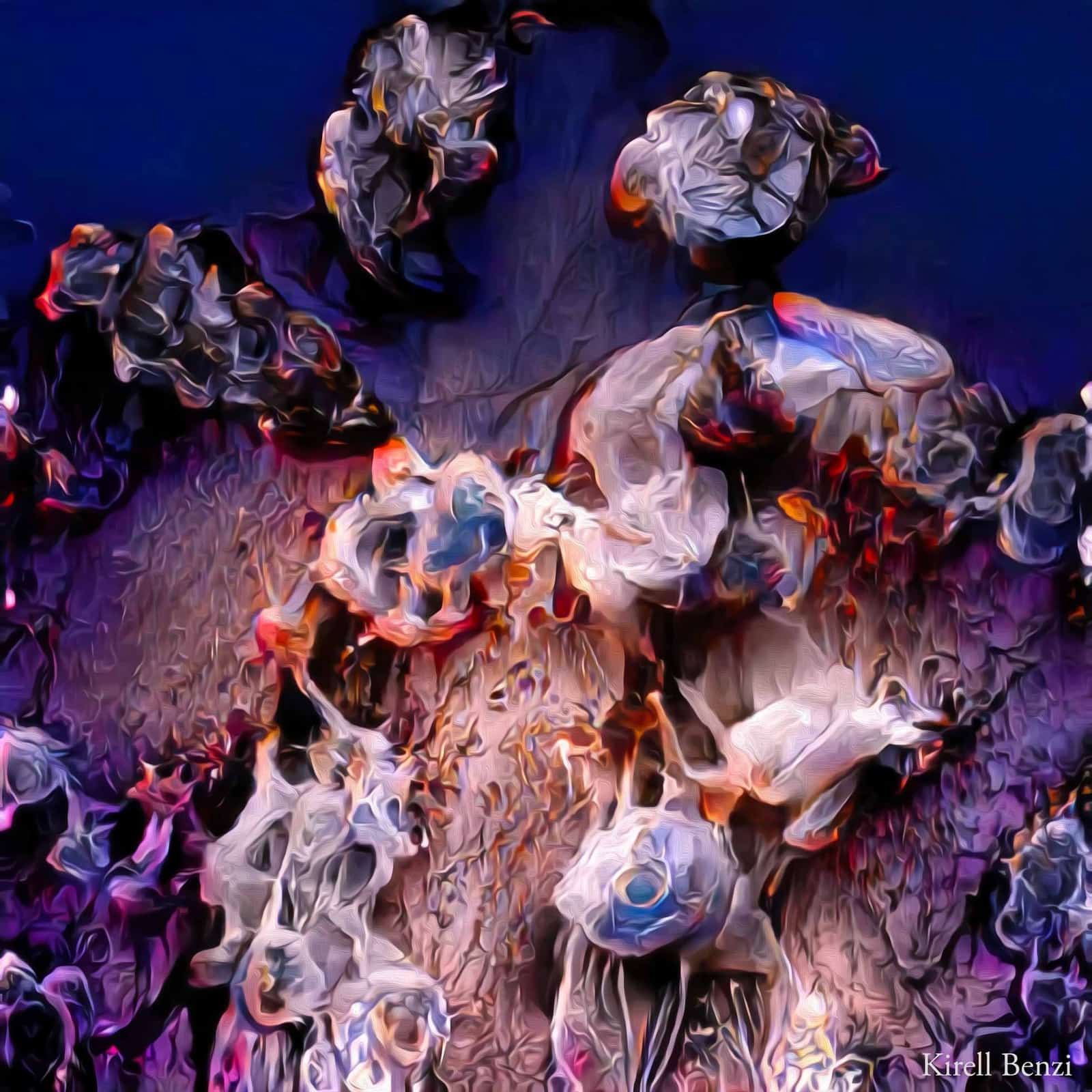
The second of Benzi’s categories is artificial intelligence (AI) art. Benzi uses neural networks, which is a way of training a computer to perform tasks by showing it a large number of examples until it can replicate that task on its own. Benzi programs his neural networks to recognize objects based on millions of different pictures and then adjusts how the network generates its own image based on all those that it previously observed. With a mix of seemingly random objects, including bubbles, wigs, geysers, balloons, and jellyfish, he creates pieces like “These Are Not Flowers,” which, while abstract, still feel oddly familiar. Benzi described AI as an artistic tool that he uses to channel his creativity.

“Sometimes, you put an ingredient in for the colour, but sometimes it’s more about the shape,” Benzi said. “And it’s very difficult to control, actually. But that’s where the artistic part comes into play because this image was not created at random. [Although] the image is created by the algorithm, [it is] a tool to put in some of your own creativity and then use it to create new shapes [….] You, as an artist, have to train the network, play with the parameters, tune them, and create the shapes.”

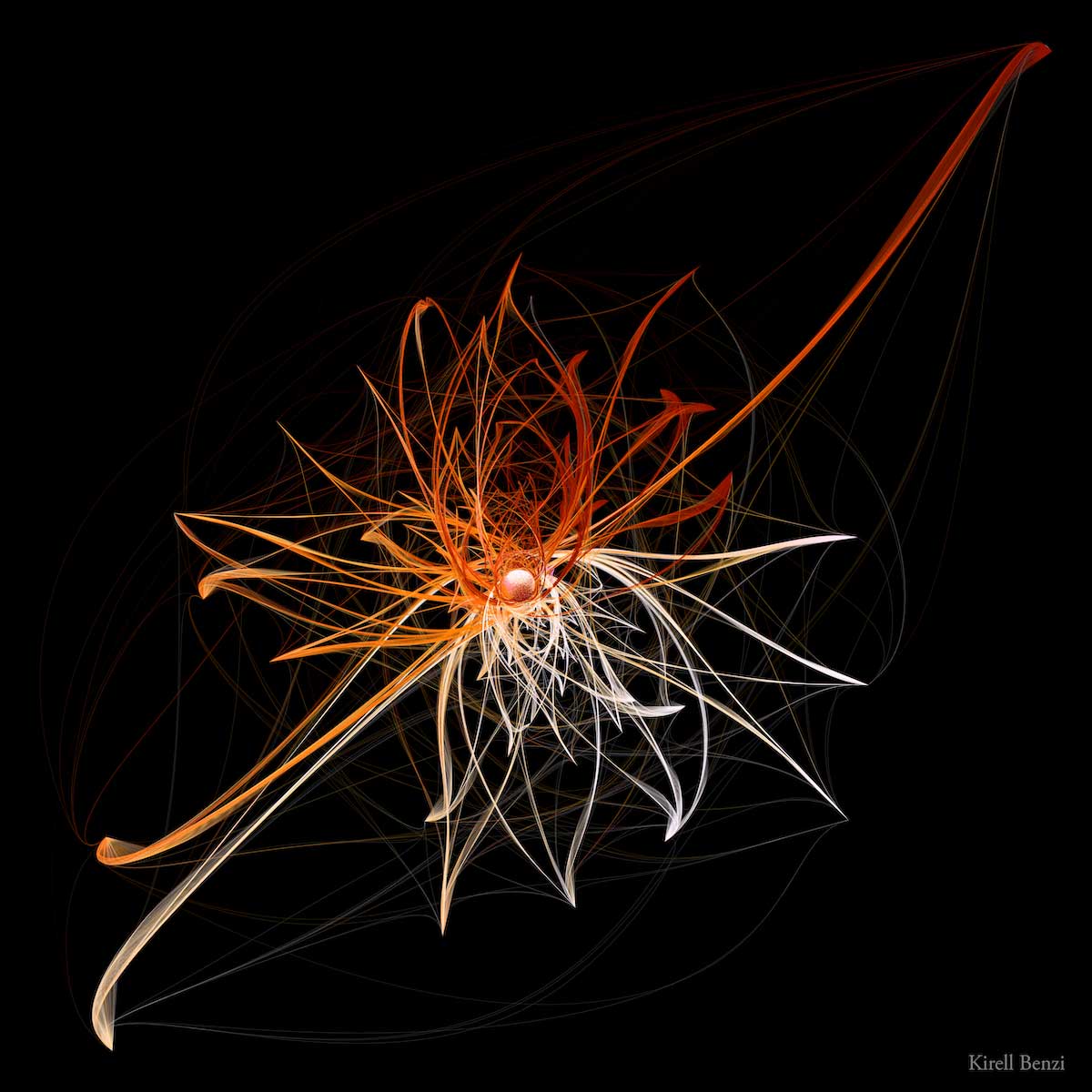
Benzi’s third category of data art is based on fractals, a mathematical and physical phenomenon of geometric patterns that repeat infinitely on different scales. These patterns make for extraordinary artwork that appears progressively more intricate as the viewer looks closer. While displaying his recent piece “Breathe,” Benzi emphasized that these fractals appear frequently in nature, and make his data artwork appear satisfyingly natural.  

“If you look closely, you see that we have some repeating shapes,” Benzi said. “I really like this idea because, to me, it looks organic, maybe like a cell structure, but it’s purely math and coefficients of recurring functions.”

Benzi’s artwork fills a gap in our understanding of art and science. He adamantly seeks to teach others about the possibilities of data science, showing that algorithms can not only process data, but can also give way to emotions and self-reflection. And this doesn’t end with networks, AI, and fractals—science and art overlap all the time, even in our daily lives. It may be time to accept that the two are connected and finally look for the beauty behind the science.

Baseball, Sports

MLB 2020 awards

The 2020 MLB regular season wrapped up on Sept. 27 after two months of unbelievable baseball. The Baseball Writers Association of America (BBWAA) will, as usual, present their annual awards this off season to those who stood out during the 60 (or 58) games. The McGill Tribune pays homage to the wackiness of this season, however, and recognizes some of the more niche accomplishments of teams and players in 2020. 

The “Make Canada Proud” Award: Jordan Romano

It’s fitting that the best Canadian player in the majors this year plays for the majors’ only Canadian team. Romano, a Markham, Ontario native, struck out 21 with a 0.886 WHIP in an admittedly low 14.2 innings, helping push the Toronto Blue Jays to the eighth seed in the American League (AL) and their first post-season appearance since 2016. The righty was placed on the injured list in late August and was unable to recover before the Wild Card Series, where the Jays were swept by the Tampa Bay Rays. Honourable mentions go to Romano’s Montreal-born teammate Vladimir Guerrero Jr. and Cleveland pitcher Cal Quantrill of Port Hope, Ontario.

The “Congrats… I Guess” Award: Milwaukee Brewers

Hours before the first pitch of the 2020 season, MLB announced a new 16-team playoff format. In a season full of weird things, this new format—and the timing of its announcement—was downright befuddling. Just over two months later, on the final day of the regular season, the Brewers lost 5-2 to the Cardinals and finished with a 29-31 record, but still got to celebrate a third-straight post-season berth thanks to the new eighth spot. Despite a losing record and an underwhelming finish in their own game, they earned the right to get swept by the powerhouse Dodgers in a 2020 post-season series. Congrats, I guess. Honourable mention goes to the Houston Astros, who also clinched a playoff spot with a losing record and swept the now 18-straight playoff loss Minnesota Twins to advance to their fourth consecutive division series.

The “Awesome Young Dude” Award: Juan Soto

Despite playing just over a third of the usual amount of games, the 2020 season showcased an enormous amount of young talent, and 21-year-old Washington Nationals outfielder Juan Soto was a huge part of that. A positive COVID test in July and elbow soreness in September cost him a few games, but he wasted no time reminding us why we all fell in love with him last year. Two monster home runs in his first series back set the tone for an impressive season: He led the majors with a 1.185 OPS, hit 13 homers, and became the youngest player to ever win the NL batting title. Honourable mentions to Fernando Tatis Jr. (21), Dustin May (23), and Ronald Acuña Jr. (22). They all make baseball better.

The “Dad Strength” Award: Mike Trout

There are so many reasons to honour Mike Trout, and his performance at the plate after becoming a dad this season is no exception. Beckham Aaron Trout was born on July 30, 2020, then, on Aug. 4, 2020, Dad Trout homered in his first at bat back from the paternity list. In fact, in his first seven games after his son was born, Trout hit six home runs with a 1.373 OPS. Unfortunately, Trout’s dad strength was not enough to boost a struggling Angels squad into a playoff spot even with the extended format, but at least he’ll have a longer off season to spend with his kid. Honourable mention to Brewers starting pitcher Brandon Woodruff, who racked up 43 strikeouts with eight earned runs over 32 innings in his five outings after his daughter was born on Aug. 31, 2020.  

Arts & Entertainment, Internet, Pop Rhetoric

Food YouTube must acquire the taste for a digestible future

If there is one thing in this world that transcends borders and crosses political stripes, it’s food. Closely tied to culture and identity, food acts as an equalizer that strengthens communities and our understanding of others. It is no wonder why so many television programs and networks are entirely dedicated to food—it is entertaining, educational, and motivational. From Julia Child to the Iron Chefs, world-renowned cooking celebrities have turned to the small screen to share their recipes with the world. YouTube’s platform and its wide-ranging potential have shaken the food world up harder than a good martini. 

Where the Food Network, Bravo, and Cooking Channel have banked on the tried-and-true formulas of game shows, celebrities cameos, and renowned James Beard award-winning chefs, YouTube’s content creator platform allows anyone with a kitchen to be the star of their own cooking show. Long before quarantine began, a younger generation of cooks and bakers had become quasi-celebrities on YouTube as channels like Binging with Babish and How To Cake It amassed millions of subscribers.   

One area that YouTube cooking shows tend to excel in is the representation of diverse cuisines often overlooked in conventional network television. For decades, food television has often presented food cultures as homogenous, as white hosts and chefs either presented the same trite European-influenced dishes or appropriated ethnic cuisines. Food comes in many styles, spices, and tastes, but cooking shows have often neglected African, Asian, and Indigenous cuisines. The people-of-colour who are represented on network television, such as Marcus Samuelsson of Chopped, Sunny Anderson of The Kitchen, and Padma Lakshmi of Top Chef, bring fantastic insights to food, but they are a small minority among the dozens of white show hosts. 

In contrast, YouTube’s freelance model gives content creators complete creative control. Chefs who may not have even been picked up by networks in the first place do not have to rely on corporate approval, which gives individuals the freedom to demonstrate how to cook their culture’s cuisine. Channels like Chef Lola’s Kitchen and Helen’s Recipes offer approaches to cooking that would otherwise be white-washed: Lola brings her Nigerian roots to the table, and Helen brings a Vietnamese palate to create straightforward, yet vibrant meals. 

As YouTube’s bevy of food channels have grown, they have not avoided controversy. Bon Appetit’s YouTube channel recently faced accusations of a toxic culture toward BIPOC staff members, as the channel prioritized white-centric cuisines and exclusively paid white editors for video appearances. After seven of their staff members left, including Sohla El-Waylly, who was the first to speak out against parent company Condé Nast, Bon Appetit responded by instating Dawn Davis, an accomplished, Black publisher as Editor-in-Chief. 

Systemic racism is not exclusive to the YouTube food community—in fact, it is a problem endemic to the larger industry of food entertainment. Mario Batali’s sexual assault allegations, Paula Deen’s blatant racism, and the accusations against Jamie Oliver of cultural appropriation for his “punchy jerk Jamaican rice” have been major scandals in the food entertainment industry. These culinary giants and their controversies are intrinsic to corporate power structures and attitudes founded in discriminatory institutions that prioritize white-centric contributions and perspectives. 

In order for Food YouTube—and Bon Appétit in particular—to move towards equitable and diverse content, they must go beyond grazing the surface of these issues. Content creators must implement progressive changes that address representation and equity in their content and the food that they make. They must learn from the mistakes of food television and continue in the right direction. Only then will the great equalizer be truly equal.

Arts & Entertainment, Internet

Equinox 2020 celebrates BIPOC cultures and identities

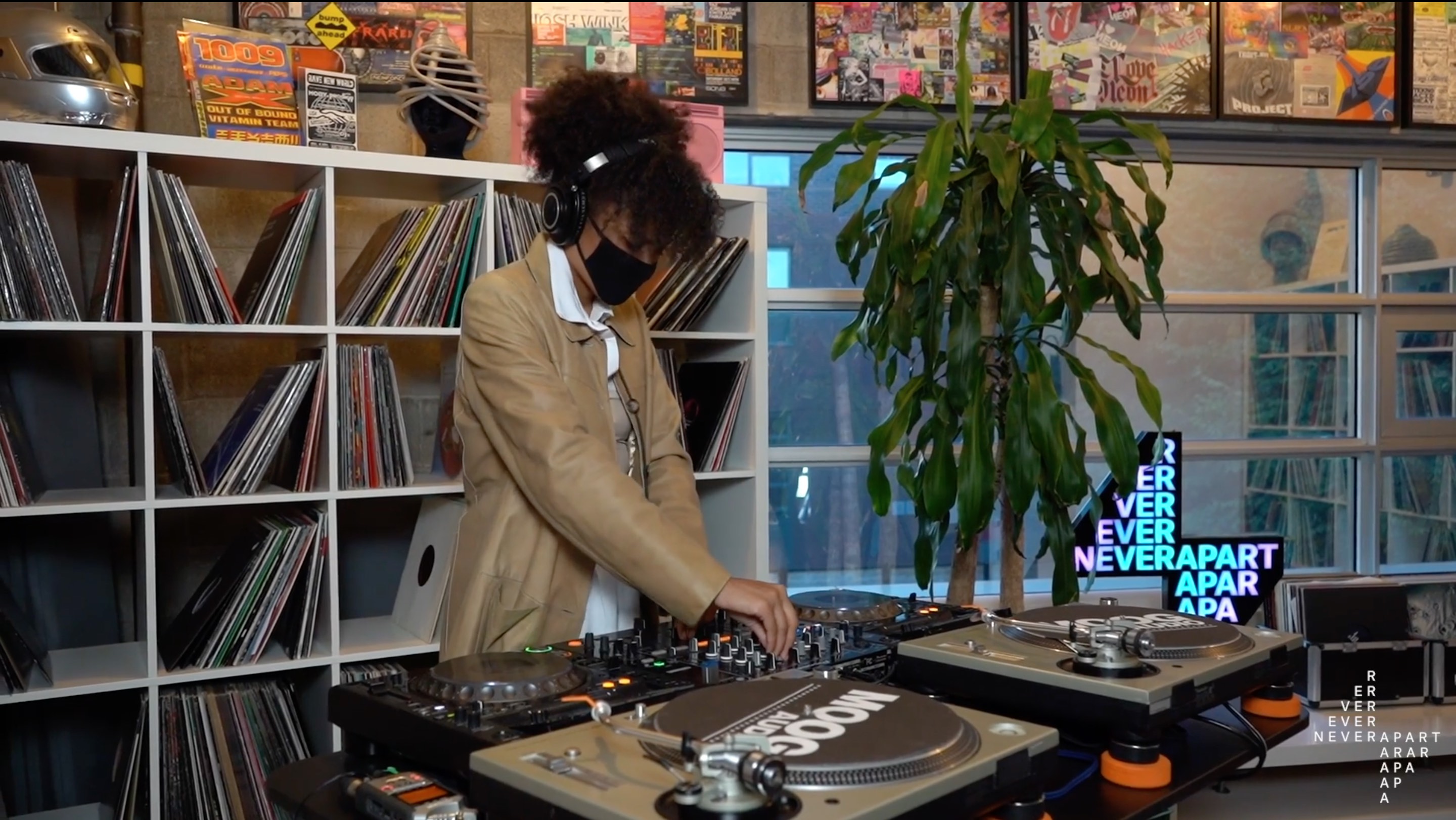
Never Apart’s Equinox 2020 festival, held on Sept. 26, was a one-day digital celebration of BIPOC creators across Canada, merging music, art, ecology, and food under the theme of “Cultivate.” Never Apart is a Montreal-based nonprofit focussed on bringing about social change and spiritual awareness through organizing culture and music programs. Equinox 2020 featured Q&As, a cooking demonstration, live music sets, and a mini-documentary. The event was a triumphant educational experience, demonstrating unity between many BIPOC creators celebrating their culture and identity. 

The celebration kicked off with a discussion about the resurgence of two-spirit identities in Indigenous communities. Dayna Danger, a two-spirit Metis/Saulteaux/Polish curator and artist, spoke with Jade Konwataroni, a nursing student at the University of New Brunswick from the Mohawk territory of Kahnawake, about the importance of preserving Indigenous cultures in a colonial country. 

Konwataroni discussed the challenges that she faces in balancing her queer and Indigenous identities, as some elders in her community have internalized colonial homophobia. While it is not always easy, Konwataroni has come to value self-acceptance while finding people in her community that respect her for who she is. 

“When I figured out that I was going to […] be exactly who I am, […] Indigi-queer, two-spirit, […] that’s when everything started to […] pick up, and I cultivated lovely relationships,” Konwataroni said.

Danger and Konwataroni also discussed the land-based practice of hide tanning: By changing the pH level of an animal’s skin to prevent it from rotting, it can later be used to create leather. Konwataroni explained that practicing hide tanning has fostered in her a greater respect for all animals. The practice has also allowed Konwataroni to connect with other two-spirit people in her community. 

“I struggled a lot with […] who has the right to […] tan hide,” Konwataroni said. “As Indigenous people, I think we all have the right to learn how to do something even if we weren’t taught it by our grandparents [….] All the two-spirit people coming out and doing it is really inspiring […] and it makes it more approachable.”  

As the theme “Cultivate” suggests, Equinox 2020 was aptly concerned with cuisine, and the connection between food preparation and land-based practices. Jean-Philippe Vezina, a Quebecois vegetable grower of Haitian descent, took the audience on a virtual tour of his garden, Les Jardins Lakou. Vezina founded Les Jardins Lakou in an effort to reconnect with his Haitian heritage and help other Québécois of Haitian descent to learn about their agricultural and culinary traditions. 

Later that afternoon, Marlene Hale, also known as Chef Maluh, demonstrated how to cook traditional West Coast First Nations cuisine. Hale is a chef, educator, and member of the Wet’suwet’en nation. She began the cooking demonstration with a drumming introduction to celebrate the beginning of the harvest season. Hale proceeded to cook a delicious meal of cedar plank salmon, wild rice, grilled vegetables, and bannock focaccia with a side of Labrador tea. 

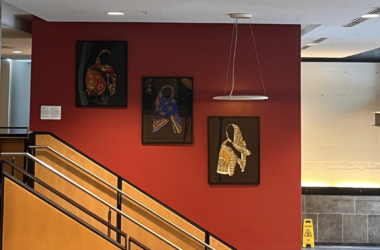
With Equinox 2020 occurring a few days before Orange Shirt Day, an event designed to bring attention to the history of the residential school system in Canada, it was fitting that interdisciplinary artist Adrian Stimson had the opportunity to discuss his pieces. Stimson’s pieces, which use found materials, expose the experiences of genocide, loss, and resilience of the Indigenous peoples coerced into Canada’s residential schools. A member of the Blackfoot nation, Stimpson was forced to attend residential school three times. In an installation entitled “Old Sun,” Stimson placed a blanket of Buffalo fur on the ground and covered it with a tipi made from steel bars resembling a prison cell. This piece highlights the ways in which colonialism has oppressed and demonized Indigenous cultures and values. 

Equinox 2020 was an educational multidisciplinary exploration of Indigenous cultures and identities. The event provided a positive and inclusive atmosphere to celebrate a diverse range of cultural beliefs and practices. While platforming challenging topics, Equinox 2020 focussed on the resilience and accomplishments in the BIPOC community in Montreal. 

The event is archived on Facebook and available for anyone to re-watch free of charge. 

McGill, News

Monmouth University professor leads webinar on Anthropocene accountability

Monmouth University professor Randall S. Abate presented a new approach to the fight for climate justice in a webinar hosted by The McGill Journal of Sustainable Development Law (MJSDL) on Oct. 2. The central focus of Abate’s presentation was on holding “common enemies”— the animal agriculture industry and the fossil fuel industry—accountable for their environmentally destructive practices. 

Abate argued that the United States federal government has allowed these industries to subvert fossil fuel emissions regulations, which is a significant contributor to climate change.

“[Climate change] needs to be considered one of the most glaring examples of the perils of unrestrained capitalism,” Abate said. “Litigation is an important tool to hold governments and the private sector accountable for climate change impacts, raise awareness of pressing challenges, and goad legislative responses.”

Litigation is crucial for protecting the environment when governments fail to make it a priority. Emma Sitland, 2L Law and executive editor of the MJSDL, emphasizes its importance in regulating polluting companies and the governments that enable them.

“These kinds of litigations are such an important mechanism for accountability,” Sitland said. “How are we going to get governments to account for climate change? […] How are we going to hold corporations accountable?”

During his talk, Abate proposed a new approach to Anthropocene accountability: The unification of environmental and animal rights movements. Given that both industries contribute substantially to pollution, Abate suggests that collaboration between the two movements would significantly benefit the quest for climate justice. In the work to regulate animal agriculture industries, animal welfare efforts in particular would benefit from adopting tactics used in successful environmental lawsuits against fossil fuel companies. 

“My work generally seek[s] to convey […] the importance of collaboration between the environmental and animal law movements in addressing problems of interest to both, […] such as the need for more ambitious regulation of the animal agriculture industry and their significant climate change impacts,” Abate said.

Although his legal approach targeted American institutions, Abate highlighted how the same methods could be applied in a Canadian context. 

“[The U.S. and Canada] have a long way to go from here,” Abate said. “For many decades, our energy systems have been powered by fossil fuels, and our food systems have been dominated by animal agriculture. Old habits are hard to break.”

Arsalan Ahmed, 3L Law and editor-in-chief of the MJSDL, believes that introducing perspectives like Abate’s provides new dimensions to discussions around larger issues that impact Canadians. 

“[MJSDL speaker events are] about giving you ideas, challenging current assumptions,” Ahmed said. “When we look at the Canadian context [of environmental accountability], I don’t think it’s very clear, [and] it’s not particularly well publicized.”

Abate’s presentation also addressed how the COVID-19 pandemic has unexpectedly helped the fight for climate justice. 

“When [the pandemic] started, […] I never imagined that [it] would be such an integral part in my environmental scholarship and teaching as it has become,” Abate said.

Abate argued that the pandemic presented significant financial setbacks for polluting industries. Demand for oil hit record lows, and the animal agriculture industry faced huge losses while sales of plant-based meat alternatives rose by 200 per cent.  Abate hopes that COVID-19 could be a turning point away from the status quo, and for the better.  

“I hear all too often this year, ‘I can’t wait to get back to normal,’” Abate said. “Well, I’m not eager to get back to normal [….] Normal is exactly what we need to get away from.”

Montreal, News

Thousands march demanding ‘Justice for Joyce’

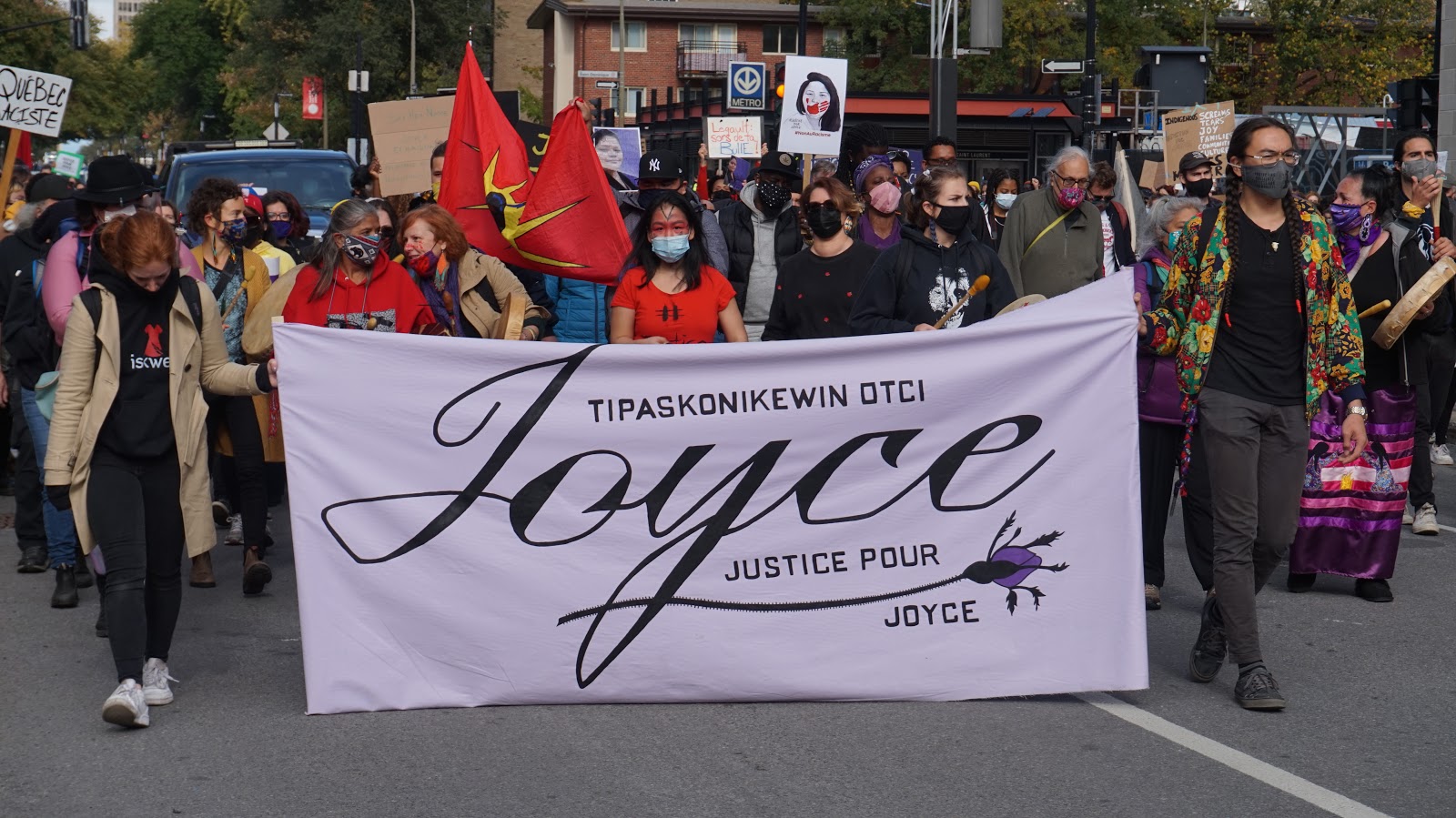
Thousands gathered at Place Émilie-Gamelin on Oct. 3 to participate in a peaceful demonstration, organized by the Native Women’s Shelter of Montreal and its Executive Director Nakuset, Iskweu, and Janis Qavavauq-Bibeau, to demand justice for Joyce Echaquan. Joyce was a 37-year-old Atikamekw woman and mother of seven who faced racist verbal abuse from hospital staff while she lay dying in a hospital in Joliette on Sept. 28. The masked and socially-distanced crowd chanted “Justice for Joyce” as they marched down Rue Berri, calling for legal justice for Echaquan and pushing to eradicate institutionalized racism against Indigenous Peoples across the country.

Joyce Echaquan, who went to the Centre Hospitalier De Lanaudière in Joliette, Quebec because of stomach pains, was the victim of taunts and racist insults by the hospital staff. Echaquan live streamed the incident on Facebook as she pleaded for help, just before her death.

Janis Qavavauq-Bibeau was one of the event organizers and is currently the Research Coordinator for the Iskweu Project, an initiative started by the Native Women’s Shelter. The project was started as a direct response to the increasing number of missing and murdered Indigenous women and girls (including trans and two-spirit) in the province and nationwide.

“Tuesday morning, I watched the video with my boss and my colleague Jess,” Qavavauq-Bibeau said. “My boss asked, ‘what do we do?’ I said we are going to march [and] we are going to give a voice to Indigenous people who don’t have one.”

The demonstration attracted people of all ages, including Chloe Rodriguez, U3 Arts, who heard about the event through social media.

“It was an emotional space [and] the atmosphere was heavy, but the urgency and necessity of the moment was definitely present,” Rodriguez said. “The speakers were extremely powerful. I felt humbled and enraged by their words.” 

Speakers at the demonstration represented various Indigenous organizations across Montreal, including the Native Women’s Shelter of Montreal, the Native Friendship Center, and Quebec Native Women Inc.  Political leaders from both the city and Québec solidaire also took part in the gathering, advocating for political leaders to address systemic racism in Quebec.

Alisha Tukkiapik, an Inuk woman and head of the National Indigenous Commission of Québec solidaire, delivered an impassioned speech to the crowd.

“It hurts so much that Joyce had to record to get this attention, because we’ve been dealing with this for hundreds of years and she’s not the only victim that we’ve had and lost,” Tukkiapik said.

Marie-Ève Bordeleau, a Cree woman and Commissioner of Indigenous Relations for the City of Montreal, called on the Quebec government to act and emphasized the importance of unity in the process of dismantling institutionalized racism.

“Together, we need to accept our differences,” Bordeleau said. “Together, we can change the system and eradicate systemic racism. Together, we will change the system. Indigenous people, non-Indigenous people, governments: It is time. Let’s not find any more excuses for our inactions.”

Joyce Echaquan’s death adds to the disturbingly high number of missing and murdered Indigenous women in Quebec and across Canada. Last year, as part of the National Inquiry into Missing and Murdered Indigenous Women and Girls, a supplementary report gave the province of Quebec 21 recommendations to ensure the safety and well-being of women, girls, and 2SLGBTQIA people in the province

“For those who are in a position in the health care field, in the youth protection field, in the justice field, read the recommendations [and] apply them,” Nakuset said.

On Oct. 3, Quebec Public Security Minister Geneviève Guilbault announced that she will be launching a public inquiry into Echaquan’s death and Centre hospitalier de Lanaudière. This investigation is currently ongoing.

Album Reviews, Arts & Entertainment, Music

In conversation with Gulfer

As a defining concept in popular music, teen angst has manifested in many different ways, from the mid-2000s emo pop-punk bands such as My Chemical Romance and Fall Out Boy, to the emergence of the sad-girl acoustic indie genre, currently spearheaded by Phoebe Bridgers. Emo music has never truly died out, and as 2020 has proven, angst is not going anywhere either. 

Enter Gulfer. The emo revival-math rock group, composed of bassist and vocalist David Mitchell, lead vocalist and guitarist Vincent Ford, drummer Julien Daoust, and backing vocalist and guitarist Joe Therriault, has released multiple EPs and two full-length albums during their eight years together. 

Although one might assume that a band would be musically limited by such a specific genre title, Gulfer has constantly found new ways to interpret and experiment with their music. 

“I think the music that we’ve released up to this point fits very much within [the emo revival and math rock] genres,” Therriault said in an interview with The McGill Tribune. “In terms of math rock, we have a lot of weirdness in terms of odd time signatures, and Vincent […] and I do a lot of tapping riffs. But with this album, we diversify a lot more and maybe don’t fit so neatly in [any] box.”

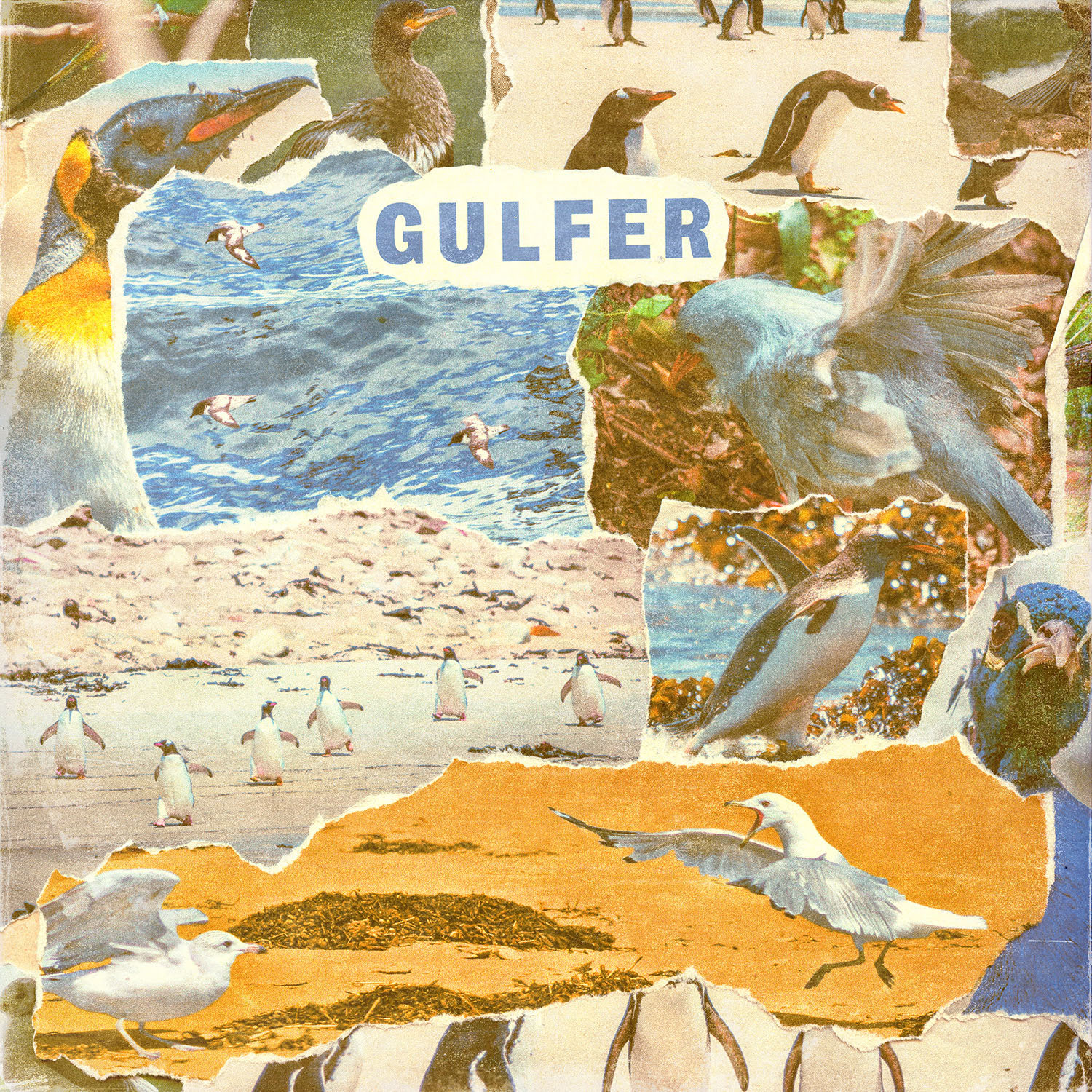
The band’s latest album, Gulfer, is set to be released on Oct. 16. Although the COVID-19 pandemic has delayed future touring plans for the band, the album’s production process remained mostly unscathed by the ongoing situation.

“These songs were written maybe two years ago,” Therriault said. “We recorded the album [around] this time last year, so COVID-19 was not the dream in anyone’s eye at that point.  When the pandemic hit, the album was finished and it was basically mixed and mastered.”

Even though its production and songwriting were set in stone far before the pandemic, the album feels incredibly timely, capturing an onslaught of anxiety. From the very top of the album, “Blurry” comes in strong, with its big emotional punch bolstered by a snappy and memorable guitar track. The song starts off loud and fast, never really letting up, as it holds on to the familiar angsty feeling of wanting to shout into the void.

The sound production’s diminished levels of mixing helped to develop a washed-out vocal layer on top of the album’s frenetic and experimental guitar riffs. While a strong and distinct vocal track is usually synonymous with the popular perception of emo music, Gulfer stands apart by developing their own brand of emo that lets the math rock-inspired guitar shine the most. The vocals blend with the instrumentation, contributing to the thematic unity of the mixing and the album itself.

“Our vocals are mixed a little bit lower than some [other] pop [bands],” Therriault said. “Vocals [that are] really high in the mix I think are just cheesy. It doesn’t mean it’s bad, but [I prefer] to have them blend a little more.” 

Nevertheless, the album closes out its primary setlist with another standout, “Trips and Falls,” which is anchored by a sharp and syncopated drum beat that defines the building energy of the album’s climax. 

Gulfer’s release seems almost serendipitous, given the current climate that we live in—the poignant and angsty sentiments expressed are striking and unmistakable, fitting given the emotional turmoil brought on by the pandemic. Gulfer’s approach to emo music is considerably distanced from the original 2000s scene that many people know and love, but it just might be the 2020 portrait that nobody saw coming. 

Gulfer’s self-titled album will be available on Oct. 16.


Chill Thrills, Student Life

Mastering the art of the pantry meal

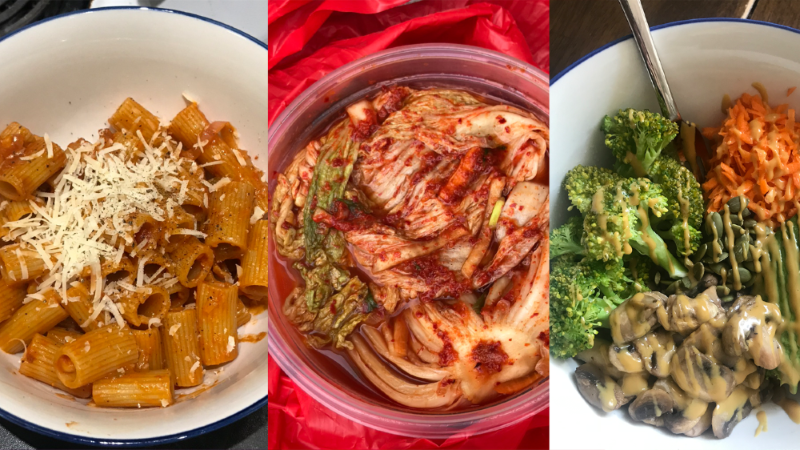
I’m a firm believer in keeping a well-stocked pantry. Upon hearing the word “pantry,” images of massive cold-rooms stocked wall-to-wall with cans of broth come to mindan impossible feat of space (and organization) for busy students to accomplish. A pantry, however, does not have to be so daunting. Taking the time to organize a shelf or two of non-perishable ingredients goes a long way for students: Keeping these staples cuts down on grocery shopping bills, minimizes potential food waste, and offers endless creative cooking opportunities. Pantry staples provide a solid foundation for a variety of meals and can be combined with the fresh produce in season. Further, your pantry will look different depending on what cuisines are familiar to you, so seek out culturally specific pantry lists that will keep you physically and emotionally fortified. Personally, as a second-generation Chinese-Canadian, I take a lot of inspiration from The Woks of Life

As we enter peak mid-term season, there will be more time devoted to studying and grinding out paperswhich potentially means less time spent grocery shopping or in the kitchen. Rather than relying on frozen pizzas and bags of dumplings (although absolutely delicious) for a quick fix, challenge yourself to maximize the humble staple goods that we so often turn our nose up to. Below, I’ve shared a few key areas to begin building your pantry, as well as my favourite pantry pasta, a vegetarian twist on Allison Roman’s legendary caramelized shallot pasta, created when I ran out of anchovies and also wanted to make something my vegan roommate could enjoy. 

Grains

Grains are the bones of your pantry: They have long shelf lives and typically only take a few minutes to prepare. Keep a few bags of the grains you rely on the most. My personal staples include white rice, pasta, and rice noodles.

Dried vegetables

Often passed over for fresh produce, dried vegetables offer powerful flavours in small batches, and their nutritional value is virtually unchanged from fresh produce. Dried vegetables that are reconstituted in water, such as lentils or mushrooms, are great additions to stir fries and grain bowls. 

Canned or preserved goods 

Go crazy with this one: Get your favourite cans of beans, briney pickles, sour kimchi, tinned meats and fish, and jars of saucy tomatoes. There’s really no limit to what you can find as preserves. 

Sauces and dressings

Wet food is the best food. Have a good selection of cooking oilsolive and grapeseed are reliable, but alternatives such as coconut and avocado oil are having their moments. 

For building stir fries, have staples on hand like soy sauce, sesame oil, oyster sauce, rice vinegar, and honey. 

Keep salads and sandwiches fresh with mustards, mayonnaise (or veganaise), and vinegars. 

The Classic Pantry Pasta

Ingredients:

  • 5 oz of pasta 
  • 3 tablespoons Tomato paste 
  • Salt (to taste)
  • 2 tablespoons of pepperoncini
  • 1 chopped green olives
  • 3 Shallots or one small onion
  • 2 cloves of garlic 
  • Parmesan (optional, to taste)
  • 1 tablespoon butter or butter substitute
  • Olive oil


These instructions provide a solid base to build a delicious and simple pantry pasta, so feel free to swap out the peppers or olives for any canned or preserved vegetables of your choice. The measurements are suggestions. Canned white beans, chickpeas, pickled onions, or tinned fish such as tuna could be fantastic additions, just as long as they’re briney. 


  1. Boil a liberally salted pot of water and and cook pasta two minutes under the package instructions. Make sure to save about a cup of pasta water.
  2. In a pan, heat olive oil on medium-high, adding shallots and garlic. Cook for 15 minutes or until caramelized. 
  3. Add finely chopped olives and pepperoncini. Add a tablespoon of pepperoncini brine if you prefer spicier pasta. Cook for about two minutes.
  4. Add tomato paste and cook for five minutes or until it looks rusty. 
  5. Add strained pasta to the pan, along with about a third of a cup of pasta water and butter or butter substitute. Mix for about 2-3 minutes until glossy and emulsified. 
  6. Serve immediately with parmesan to your liking.

Read the latest issue

Read the latest issue