


Latest News

Editorial, Opinion

PEQ reforms highlight the CAQ’s xenophobia

On Sept. 12, activist group Le Quebec c’est nous aussi held a protest against proposed reforms to the Programme experience Quebecoise (PEQ), a fast-track immigration program for international students who wish to permanently reside in Quebec after graduation. While similar reforms proposed (and later suspended) last November sought to impose new French language requirements, these new changes target employment: Those seeking the certification must now have at least 12 months of work experience of a suitable “skill level.” This caveat creates significant barriers to eligibility, especially during a pandemic that makes it difficult to find stable employment. At their core, the changes are yet another example of the Coalition Avenir Quebec (CAQ)’s disgracefully xenophobic anti-immigrant sentiment. The burden should not fall solely on international students to oppose this policy. Rather, McGill’s administration must do better to protect them, and other students must meaningfully oppose these changes. 

Immigration reform was one of the CAQ’s core campaign promises in 2018. At the time, now-premier Francois Legault vowed to reduce the number of immigrants allowed into Quebec from 50,000 to 40,000 per year and impose a French-language test and a xenophobic “values test” after three years of living in the province. These policies play into anti-immigrant attitudes in Quebec, which have grown substantially in recent years. The current PEQ reforms are not the first example of the party attempting to limit newcomers, and there is little chance they will be the last. Even beyond immigration, other legislation such as Bill 21, which prohibits public workers from wearing religious garments on the job, propagates xenophobia and hate. 

Under the new PEQ guidelines, students would have to work for 12 months in a type 0 (managerial), A (professional) or B (technical) job upon graduation. A student who is unable to find this kind of employment and ends up working as a restaurant server, for example, will be ineligible for the program. Students who have spent years studying in the province while completing internships and volunteer work will nevertheless be considered ‘unskilled’ by the CAQ’s standards. These classist changes undermine the value of this equally valuable labour and favour those with the privilege often necessary to solidify a “professional” job after graduation. 

While finding stable employment in a field the CAQ government deems desirable is difficult at the best of times, the pandemic has made it even more challenging. As many companies have not even rehired furloughed employees who were laid off earlier this year, they are less likely to consider new candidates until the economic situation improves. Even more shameful is that these changes come after the province spent months touting the importance of essential workers, including grocery store cashiers and restaurant workers, who would not be eligible for immigration under the revisions to the PEQ. The CAQ considers it acceptable to jeopardize these workers’ safety, yet refuses to see them as valuable enough to remain here permanently. In this context, an emphasis on skill and experience is all the more dehumanizing. 

As in November 2019, when the last reform package was proposed, McGill has taken a relatively quiet stance against the reforms compared to other Montreal universities. After all, such programs are not nearly as stringent in provinces like Ontario, and the university wants to retain its international student base. McGill relies heavily on funding from international student tuition; the very least they can do is stand up for them. However, a statement in opposition does little to change the situation in a tangible way. McGill has a responsibility to use its influence to fight against these reforms and provide sufficient funding for services like the Legal Information Clinic and International Student Services, which help international students navigating information and seeking guidance on these issues. Simultaneously, it must avoid implementing changes, like its recent international tuition hike, that serve as additional barriers to students’ ability to study and live in Quebec. 

Students also have a role to play in opposing the reforms. As a result of public outcry and student activism following the changes proposed to the PEQ last November, the CAQ eventually abandoned the revisions. The same must happen now. Those currently in Montreal need to use their voices and attend demonstrations in support of international students who may not be able to show up physically due to COVID-19 and support organizations like Le Quebec c’est nous aussi. The student body would be nothing without its international population, and it is vital that they get the support they deserve. 

Arts & Entertainment, Film and TV

‘Tenet’ is an emotionally hollow puzzle

Leave it to Christopher Nolan to galvanize moviegoers into returning to multiplexes after months of living-room movie nights—only this time, at a limited capacity, donning masks and safely distancing from one another. Released in Canada on Aug. 26, Tenet has been tasked with the responsibility of carrying an ailing theatre industry on its back. Despite all the hype building up to Tenet’s release, the thriller punches below its weight. However, it is neither the technical nor the conceptual elements that hold the blockbuster back; rather, Tenet’s ultimate disappointment is its emotional elusiveness. 

Without delving into the specifics of the film’s intricate plot, Tenet follows a CIA operative, known only as The Protagonist (John David Washington—in a confident and cool performance), who works for a clandestine international organization called Tenet. The palindromic name underscores the film’s theme of reversal. His mission is to prevent Russian oligarch Andrei Sator (Kenneth Branagh) from raining destruction on the world with a device called The Algorithm. In doing so, the Protagonist acquaints himself with “inversion,” a process by which the entropy of both people and of objects can be reversed, resulting in the appearance of time running backwards. 

“Don’t try to understand it. Feel it,” a scientist (Clémence Poésy) advises The Protagonist early in the thriller. This is sound advice for viewers trying to work out its dizzying plot. Between the time-inversion and paradoxes, Tenet emerges as a visually arresting, but a rationally inaccessible spectacle. By the time the audience figures out what is going on, another logical knot pops up, and the cycle restarts. Worse still, Richard King’s grinding sound design often overpowers the film’s expository dialogue, adding another unwelcome chore in addition to understanding the already confusing plot.

What is most disappointing about the film is that it may signal the end of an era, a drifting-away from Nolan’s earlier films and the pathos that made them so enjoyable. Indeed, Nolan’s best films can each be stripped down to their rich emotional core: 2010’s Inception portrayed a father’s resolve to reunite with his children; 2006’s The Prestige examined the cost of obsession; 2000’s Memento depicted an amnesiac’s relentless pursuit of vengeance. These heart-wrenching films highlight just how unfeeling Tenet is in comparison.

The sole emotional resonance of the film is conveyed through Kat (Elizabeth Debicki), a mother trapped in an abusive relationship, who wants nothing more than to rescue her son from the onslaught of nuclear war. But this plot line remains underdeveloped, and Tenet withholds the brutal emotional arc that makes viewing Nolan films worth all of their brain-racking.

However, what the film lacks in heart, it makes up for in technique. The sheer massiveness of Tenet strikes the viewer every step of the way, from the terrorist siege of a grand Kievan opera house to the hijacked jumbo jet crash. The film is packed with exciting action sequences, including a kitchen fight that features a well-placed cheese grater, and a reverse highway chase sure to keep viewers on edge. Hoyte van Hoytema’s dazzling widescreen cinematography and Ludwig Goransson’s score, which harbours a reversed quality paralleling the film’s plot, are what make Tenet worth the watch.

Tenet gets lost in its own labyrinthine plot, sacrificing its emotional core in the process. The blockbuster is visually and technically striking, plunging its viewers into the world of quantum physics, paradoxes, and parallel realities. But this only eclipses the humanity of the film—and ultimately, Tenet offers little more than a hollow spectacle.  

McGill, News

Canadian Biotech start-up to begin Phase 3 COVID-19 oral treatment trials

On Sept. 2, Pulmonem Inc., a Canadian biotechnology start-up, received Health Canada’s approval to begin Phase 3 clinical trials to test an oral medication to treat COVID-19. The treatment does not eliminate the need for a vaccine, but can potentially reduce the number of COVID-19 patients requiring hospitalization by diminishing the severity of their immune responses to the virus. 

 To raise funds and find assistance to conduct trials, the start-up has partnered with the Research Institute of the McGill University Health Centre (RI-MUHC). Pulmonem Inc. announced that, if the trial is successful, the medication can be ready for distribution by the end of 2020.

Pulmonem Inc. was founded in March 2020 in response to the COVID-19 pandemic. Pulmonem is only the second Canadian drug trial to receive approval from Health Canada to begin Phase 3 trials, which involves testing the drug against the current standard of care in a limited number of patients. Dr. Houfar Sekhavat, founder and CEO of Pulmonem Inc., sees the approval as progress for those most vulnerable to the virus. 

 The new oral medication was developed by repurposing Dapsone, an existing anti-inflammatory drug used to treat malaria, lupus, and long-term infection in HIV patients. The Phase 3 trial, sponsored by the RI-MUHC, will test the medication on 2,000 patients located across Canada and the United States. The randomized trial process was designed by Dr. Jean Bourbeau, professor and a member of the Transnational Research in Respiratory Diseases Program at McGill University. 

For patients, the reformulation of the pre-existing drug Dapsone could mean reduced costs and greater accessibility to treatment. Pulmonem Inc.’s contract with one of the biggest Dapsone producers means that the entire course of treatment with the drug would cost patients $52. When clinical trials begin, the safety risks of prescribing Pulmonem will also potentially be minimal, as it is a reformulation of a well-known drug. 

“When you start with a new medicine, […] it takes millions of patients to find out about the adverse effects,” Bourbeau said in an interview with The McGill Tribune. “But when we already know the safety profile, we know which patients are safe to use the medication.”

While Pulmonem has approval to begin Phase 3 testing, organizing a clinical trial amidst a pandemic remains challenging. Conducting the study remotely to minimize contact with patients requires advanced technology, peer reviewers, and additional funding. 

“It’s important that the ideas are not always coming from big pharmaceutical companies, […] especially when we […] have [start-up] projects […] led by experts such as Dr. Bourbeau,” Sekhavat said. 

The opportunity for pharmaceutical companies to invest in COVID-19 treatments and vaccine research for profit has raised concerns regarding the quality of their findings and discoveries. Bourbeau, however, sees the partnership with academic institutions as one way of ensuring that the research conducted retains its rigorous standards. 

“The quality of research has been a problem before in emergency situations,” Bourbeau said. “But I think [that] the academic centre being separate from the industry can bring this quality to ensure that people do not compromise the safety and the efficacy of new treatments.” 

For students like McGill Medical Direction member Lintao Hu, U3 Science, the RI-MUHC’s commitment to high quality COVID-19 research is both encouraging and necessary. 

“It’s important to know that McGill is taking steps to support the development of treatments, especially because there’s a lot of misinformation in the community around the coronavirus,” Hu said. 

Although additional funding is still needed before trials can begin, Sakhavat explained that McGill’s support for the Pulmonem Inc. start-up will have significant implications for McGill and Canadian healthcare research as a whole, regardless of the trial’s outcomes.

RI-MUHC and Dr. Bourbeau were visionary to support a small Canadian startup,” Sakhavat said. “Being associated with one of the most prestigious universities in the world is a big starter for our company, but it also puts RI-MUHC as top leaders in the industry.”

A previous version of this article stated that the treatment was called Pulmonem, after the start-up. In fact, the treatment is a repurposed version of Dapsone. The Tribune regrets this error.
Arts & Entertainment, Theatre

‘En Pointe’ is an optimistic return to Montreal’s in-person theatre

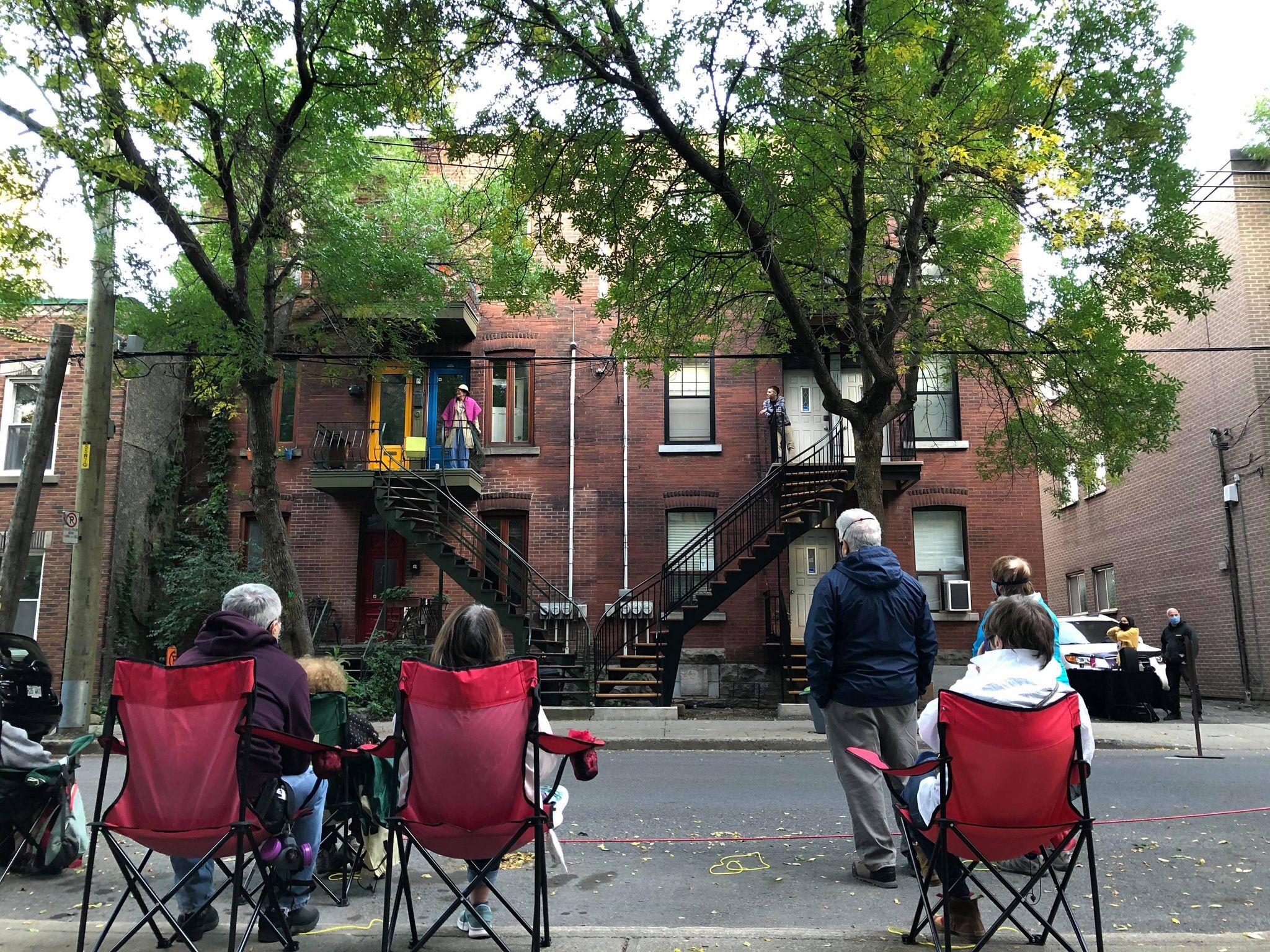
For several months, COVID-19 brought Montreal’s theatre scene to a halt, but as public health measures are slowly being lifted, Tableau D’Hote Theatre has emerged as one of the first production companies to offer its patrons a safe theatre-going experience. En Pointe, their current production, is a series of bilingual short plays which follow 16 residents of Montreal’s Pointe-Sainte-Charles neighbourhood as they begin to emerge from social isolation. 

En Pointe features nine short plays which were showcased once per week at a location that was only announced on their social media, just hours before each performance. Each play is written to allow the audience to interact with the larger narrative at any time, so that each vignette presents its own self-contained story. This gives audience members the freedom to attend episodes selectively and out of order. 

This series of short plays was innovatively staged: Each performance was orchestrated in various outdoor locations in Pointe-Sainte-Charles. This enabled the episodes to be set in natural environments, highlighting the neighbourhood that the characters inhabit. Local parks, community centres, intersections, and even laundromats were used as backdrops, providing the audience with a safe and immersive experience. This simple, voyeuristic nature brought viewers right into the action and created an uncanny feel of realism. 

The first episode, (Partial) Reopening Day, sees two neighbours interacting for the first time in months, as Quebec began to lift quarantine rules. Rather than establish narrative continuity, this episode set a thematic foundation for the rest of the series: Short performances of community members reintegrating into society, and learning how to co-exist with one another in a time where isolation is encouraged. Various other thematic elements relevant to the pandemic are intertwined throughout each following episode. 

One standout episode was the series’ sixth, Lost Cat, which tells the story of neighbours coming together to help find a lost cat. Playwright Mathieu Murphy-Perron slots anglophone actor Ryan Bommarito in the show to integrate a witty subplot depicting the dynamic between Montreal’s francophone and anglophone populations. The actors communicated using elaborate hand gestures, and grasped onto the few words that they knew in the others’ language. This particular episode felt like a moment of comic relief in comparison to the others, and effectively worked to highlight the dramatic ranges of En Pointe’s actors. Each character was fully developed, with their own unique quirks, though the personalities portrayed sometimes appeared larger-than-life which contrasted with the otherwise realistic portrayal of everyday interactions that other aspects of this production were grounded in. 

Each location was set up to ensure the safety of all viewers, with social distancing markers placed on the ground, and the mandatory use of masks. Actors were miked, so the background noise of the surroundings would not distract the audience, especially as some performances happened across the street from the designated seating area. On average, each show attracted 30 viewers, though episodes taking place in less spacious locations had a capped attendance to ensure everyone’s safety. Tableau D’Hote Theatre worked with Playwrights’ Workshop Montréal’s COVID-19 coordinator, Lindsay Petts, to guarantee that regulations were properly followed and provide a sense of safety amongst audience members.

Tableau D’Hote Theatre used the dreary state of our world as inspiration, and put together a lighthearted series based upon social connection. Their resiliency in creating a return to in-person theatre amidst a pandemic speaks volumes to the importance of theatre in our communities. Given the right precautions and community solidarity, En Pointe holds true to the saying: “The show must go on!”

The ninth and final installment of En Pointe is set to happen on Sunday, September 27th at 3 pm. To those looking to watch the show as a whole, En Pointe records each of its episodes and makes them available online. Follow @tdhtheatre to find out where it will take place.

Arts & Entertainment, Film and TV, Pop Rhetoric

‘Unpregnant’ is unhelpful queer representation

HBO Max’s new film Unpregnant is not your typical teen comedy: The film explores abortion rights, the subtle casualness of rape culture, and the dominance of Christianity in America. While the plot is structured around a teenage girl’s struggle to have an abortion, Unpregnant is also a story of rekindling a lost friendship. Despite the film’s radical bend, especially in questioning the pervasiveness of heteronormativity in our society, Unpregnant offers flimsy queer representation. The film’s shortcomings are indicative of a problem endemic to the film industry, which often reduces representation to virtue signaling. It sidelines its queer characters, relegating them to subplots riddled with one-dimensional stereotypes and tropes. 

Unpregnant is a feminist buddy-action movie that follows the journey of teenagers Veronica (Haley Lu Richardson) and her former friend Bailey (Barbie Ferreira) on a road trip to Albuquerque so that Veronica can have an abortion without her parents’ consent. The girls meet a variety of eccentric characters and encounter many obstacles on their way, giving Unpregnant a hilariously fast-paced and unexpected twist. 

The film challenges heteronormative ideals that are typically omnipresent in most conventional teen movies. In one scene, Veronica’s boyfriend tracks her down to bring her a bouquet of flowers. Instead of taking this gesture to be romantic, Veronica chastises him, explaining that he is a creep for following her. Later, the girls have a choice between hitching a ride with a lesbian race car driver, Kira (Betty Who), or a seemingly friendly couple with a child. The girls decide to take the couple’s offer and, to their horror, discover that they are pro-life advocates who have kidnapped them. The heroes of a traditional rom-com become the villains of Unpregnant as the couple attempts to thwart Veronica’s plans. 

While Unpregnant subverts normative expectations of heterosexual relationships, it fails to do much else. The film’s narrative is still centered on the struggles of a straight, middle-class, white cis-woman. The queer characters are not granted the same character development as the straight lead and exist solely to prop up Veronica’s personal narrative. 

The queer characters in Unpregnant are shallow stereotypes, only serving to reinforce the heteronormativity that the film claims to dismantle. Media scholars have pointed out that the majority of 2SLGBTQIA+ characters in film and television are presented as either a villain or a victim. In Unpregnant, the audience is meant to pity the main queer character, Bailey, who is a social outcast, has a difficult home life, and spends more time online gaming than interacting with her peers. According to Ray Seif’s study on queer representation in the media, this portrayal reinforces the notion that members of the 2SLGBTQIA+ communities are a deviation from society’s norms and therefore must be outcasts. 

Not only is the representation of queer characters in Unpregnant limiting, their time on-screen is also restricted. We only discover that Bailey is a lesbian halfway through the movie, and her romantic interaction with Kira makes up less than 10 minutes of the film’s running time. It appears as though the writers added in queer characters to appeal to a diverse audience without exploring their stories in-depth: The film quickly pushes asides its reveal of Bailey’s sexuality, and subsequently denies her and Kira’s relationship any time to flourish.

While Unpregnant addresses many important social issues more bluntly than its predecessors, the film does not give its viewers adequate queer representation. Unpregnant simply falls in line with Hollywood’s all-too-common tendency of tokenizing its diversity for viewership rather than dignifying its audiences with fully-realized, complex characters. 

Basketball, Sports

Lessons from the bubble

The conclusion to the 2019-20 NBA regular season has been like none other in league history. Confined to a bubble in Orlando, Florida and without fans in attendance due to the ongoing pandemic, the league restart truly does represent “a whole new game.” This unique experience has turned the NBA restart into an experiment, revealing important lessons for players, coaches, and the league. 

A coaches league

The NBA is commonly hailed as a “star’s league,” yet in nearly every series of the 2020 playoffs, the team with the better coach—and not necessarily the better players—has won. The sterile environment of the bubble means that there is no home court advantage to sway momentum. In this context, the ability to make swift in-game adjustments to player rotations and game plans has proven to be of paramount importance. In the West, both Frank Vogel and Mike Malone of the Los Angeles Lakers and Denver Nuggets, respectively, have used such adjustments to great effect. Denver, in particular, overcame consecutive 3-1 deficits for the first time in league history thanks to Malone’s ability to adapt. Similarly, Eric Spoelstra led the underdog fifth-seed Miami Heat past the first-seed Milwaukee Bucks in the East by unleashing a slew of devastating defensive schemes. Meanwhile, the Bucks, led by Mike Budenholzer, as well as the Los Angeles Clippers, helmed by Doc Rivers, each faltered despite being championship favourites. They were simply outmaneuvered and outcoached. Certainly, star players remain critical to championship aspirations, but the bubble is demonstrating that the NBA is a coaches league too.


Regular season awards no longer matter…

The Milwaukee Bucks’ Giannis Antetokounmpo was awarded the 2019-20 MVP and Defensive Player of the Year award, the first player to win both in the same season since Michael Jordan. But Antetokounmpo’s award ceremony was not replete with the normal pageantry. With the Bucks already eliminated from the bubble, Antetokounmpo had to accept his award over video conference.

This strange situation is indicative of the fact that NBA awards truly have become “regular season awards.” Decided through votes cast by members of the media, awards are increasingly driven by storylines and flashy regular season statistics. At the same time, an increasing number of the league’s elite players are taking games off to load manage. These trends combine to mean that the players who stand out during award season are often not the league’s best. This discrepancy has been regularly demonstrated in the playoffs, as the league MVP and Defensive Player of the Year have not advanced to the finals since 2016 and 2017, respectively. Even Antetokounmpo acknowledged this trend, telling the media not to call him MVP until he wins a championship. Watching Antetokounmpo’s virtual trophy ceremony made it perfectly clear: The NBA awards no longer indicate who the best player is in the league, nor do they predict playoff success.


…But the regular season does

The Los Angeles Clippers were, by most NBA analysts’ accounts, destined to win the 2019-20 NBA championship. Instead, they were sent home in the second round after blowing a 3-1 series lead to the Denver Nuggets. Following their historic game seven loss, several Clippers players noted the team’s chemistry issues, and All-Star Paul George said that the Clippers simply did not have enough time together. This may be true, but it is not because the Clippers’ core nucleus only came together last offseason. Instead, the lack of chemistry can be blamed on the Clippers’ extensive load management, as All-Stars Kawhi Leonard and Paul George alone combined to miss 38 games during the reduced 2019-20 season.

Meanwhile, the Clippers’ cross-town rival Lakers advanced to the Western Conference Finals, despite also forming their nucleus during the 2019 offseason. Unlike the Clippers, the Lakers chose to largely forego load management during the regular season, opting instead to use the time to build chemistry and experiment with different game plans. NBA teams can learn from this dichotomy by taking advantage of the regular season to experiment, learn, and grow. While wins and losses in the regular season may ultimately not matter, the experience absolutely does.

Student Life

Sage Montreal creates unique Asian-inspired street fashion

Clothing is, for many, an essential part of self-expression. Street fashion, in particular, is able to convey significant meaning in a casual manner. Sage Montreal, a streetwear brand started by a group of students from McGill, Concordia, and the University of Waterloo, aims to represent east Asian culture within a western reality. 

Jian Qiao He, U3 Management and one of four founders of Sage Montreal, explained how his brand explored the cultural backgrounds of its creators for inspiration. 

“[There were] not really any brands that reflected [my Asian] lifestyle and upbringing,” He said. “[Sage was created to] represent us authentically.”

One afternoon in 2017, after a day of CEGEP, He and three friends were chatting in a bubble tea shop, as they often did. These friends, Victoria Kwok, U3 Economics, Rulin Nie, U3 Management, and Yu Tong Lui, an engineering student at Waterloo, were all interested in street fashion and had Asian backgrounds, so together, they decided to create their own brand, which they called Sage Montreal.

Today, the team has grown from the original four founders to a dozen team members. A friendly atmosphere remains, even as the team has grown. 

“Since we started as friends, it’s easy to work together,” Kwok said.

The name “Sage” comes from the necklace that a frog wore in popular anime Naruto. This name captures the casual and referential vibe that the brand projects.

Sage Montreal’s attention to small details that evoke broader emotions, like the frog’s necklace, is clear throughout the brand’s launches. Their most recent launch, “In the Heat of the Sun,” embodies the brand’s emotional lifeblood.

“Before the profits, we’re really just driven by the vision of Sage, which is to analyze our upbringing and culture under the microscope, [which] drives us to consistently deliver projects,” He said. 

“In the Heat of the Sun” is a play on words, referring to both the sun’s warmth, and Sun Wukong, the monkey king from Journey to the West, an influential piece of 16th-century Chinese literature. Slyly, this reference appears on the top of the launch pages’ bar. 

Sage connects cultural reference points, such as Naruto and Journey to the West, from across history and across Asian traditions as these designs aim to share many stories. 

Beyond bridging cultural boundaries, Sage pushes creative boundaries by taking full advantage of their resources at hand. In particular, their interactive and dynamic online presence was created by Liu, who has a background in software engineering and led Sage’s team in building their innovative website. 

The homepage of Sage’s website takes viewers through an interactive gallery that showcases several pieces from the brand. The team collaborates amongst themselves and with Montreal photographers and graphic designers on lookbooks for each launch. This strong online presence helps Sage to achieve their vision and reach a wider audience.

Despite the recent challenges brought on by the COVID-19 pandemic, the brand is using the hardships as an opportunity for growth. Due to interruptions in supply chains that backed-up their orders, Sage shifted from relying on third-party manufacturers to produce their clothing to producing their products completely on their own. The brand has its own printing press, adding to the unique, artisanal quality of their clothes. They also plan to make more clothing by hand in Montreal to further Sage’s sustainability mandate.

Sage’s quick adaptation to pandemic conditions, along with its visual branding, have allowed them to continue to grow in the absence of an in-person store. 

“[Sage had] a seamless transition from [the] physical environment to [the] virtual one,” Nie said. 

For their most recent launch, Sage dedicated its resources to revamping the website instead of a physical pop-up shop. They added detailed animations to their online boutique, giving it the look of a rotating storefront, along with a complex 3D virtual gallery.

Sage hopes to expand its partnerships by collaborating with small businesses in Montreal, other groups, and creators. The company also hopes to develop an inclusive platform for under-represented creators to share their art and experiences. 

“[Ultimately, Sage is] all about growing our community,” Nie said. “Community is what keeps Sage alive.”

McGill, News

McGill launches reimagined study spaces for COVID-19

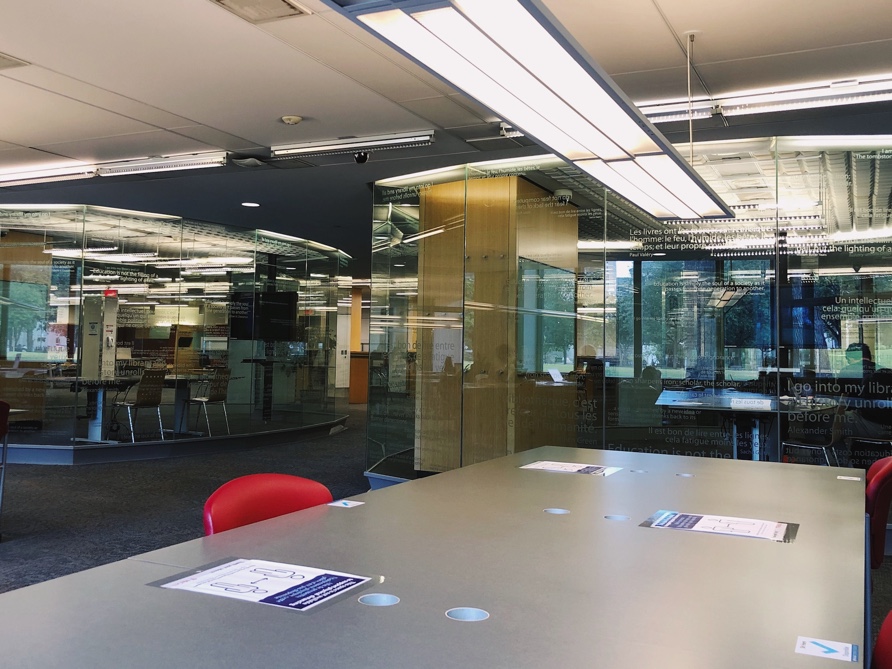
On Sept. 8, McGill launched Study Hubs, a safe-study alternative to the traditional library experience. The Study Hubs are individual study spaces that are set up in compliance with the university’s COVID-19 safety measures that include the mandatory use of masks and socially distanced study areas. These study spaces are available at the Mclennan-Redpath complex, the Nahum Gelber Law Library, and the Macdonald Campus Library.

Students can gain access to the Study Hubs by booking one three-hour time slot per day. Upon arrival, which can be at any time during the allotted time slot, students must check in with Student Navigators using their McGill IDs. Although the online booking system tracks seat numbers, seating is assigned on a first-come, first-serve basis as students arrive at the library.

Arielle Rosenthal, a Student Navigator at the Redpath Library, explained the Study Hub’s safety procedures.

“Masks are to be worn at all times in the library, except in your chosen seating place,” Rosenthal said. “There is no food allowed, but drinks are allowed in a sealed drink container, and cleaning will occur between each study period.”

U-Print printing services are also available in the McLennan-Redpath complex and the Nahum Gelber Law library to students who book a Study Hub time slot. Power sources are available at 85 per cent of the seats, though library resources recommend having fully charged devices upon arrival. While the new Study Hubs grant students access to library resources, they do not allow students to socialize as circulation in common areas is not permitted.

Lindsay Nissinoff, U3 Arts, who frequented McGill’s libraries before the COVID-19 pandemic, spoke about her reluctance to visit the Study Hubs.

“I am personally apprehensive about trying these new spaces, mainly due to the three-hour time limit and the rising number of COVID-19 cases in Montreal,” Nissinoff said. “While I praise the university for attempting to resume in-person activities, I personally would prefer to study outside while the weather permits.”

Mathilde Genest, U3 Arts and Science, has a different outlook on the Study Hubs.

“I was a little uncertain about the Study Hubs. However, after actually coming to the library and seeing all the measures that were put in place, I am looking forward to coming back,” Genest said. “I will say the limited time slots will pose a challenge, but I felt safe and the library was pretty transparent about the procedure. I feel like I need to be able to study somewhere else than home from time to time, and the Study Hubs seem to be the safest option.”

Katherine Hanz, liaison librarian at McGill, explained that the health of students and staff was prioritized during the creation of the Study Hubs which presented the best solution for staff and students. 

“Creating a safe space for study was a top priority with both the set-up and running of the Hubs,” Hanz said. “A number of measures have been put in place to keep students and library personnel safe. While the Hubs may not feel exactly like the pre-COVID library, we are so happy to be able to welcome students back in this capacity and to be able to provide a safe place for study.”

The new Study Hubs gives students a chance to use library resources while being able to study in a quiet environment. Additionally, the Study Hubs strictly follow the directives from the Quebec Ministry and McGill’s protocols for COVID-19. Nonetheless, there is still apprehension to use the shared spaces, especially as on Sept. 20 when Montreal rose from Level 1 to Level 2 under the progressive regional alert and intervention system for COVID-19.

The interview with Genest took place in French and was translated by the author.

News, The Tribune Explains

Tribune Explains: Association of Graduate Students Employed at McGill (AGSEM)

What is AGSEM? 

The Association of Graduate Students Employed at McGill (AGSEM) is the union to which teaching assistants (TA) and invigilators for McGill university belong. Founded in 1974 as the McGill Teaching Assistant Association (MTAA) and certified in 1993 as a union to represent Teaching Assistants, AGSEM is the oldest Teaching Assistant Union in Quebec and currently the largest labour union at McGill University. Comprising several branches, AGSEM operations are run by an executive committee, a bargaining committee, a Delegates council, and several other peripheral committees. In 2010, McGill’s student invigilators were similarly accredited as a union after receiving a 94 per cent majority vote in favour of unionizing.

AGSEM represents TAs and exam invigilators through its Collective Agreements, which are signed by the organization’s representatives and McGill’s Board of Governors. The Agreements define employees’ labour rights, which include freedom from harassment and unfair dismissal, as well as limits to hours worked. The most recent Collective Agreement for TAs expired in 2018, and a new one is expected to be voted on later this month. 

AGSEM and COVID-19

AGSEM recently criticized and annotated a draft of McGill’s “Directives for Teaching Staff Regarding In-Person Activities: Fall 2020” for failing to adequately address the rights of teaching staff. The union called for a more concrete plan to communicate the directives with its employees and demanded that TAs not be forced to assist classes in-person and through Zoom simultaneously. 

In April 2020, the McGill administration announced its decision to hire non-union graders for some summer 2020 online courses. This move sparked outrage among McGill’s graduate TAs and invigilators who saw the decision as explicitly anti-union, enacted solely to cut-back on costs. In addition to anger over McGill’s choice to hire graders outside of AGSEM, the union felt that the decision to raise online course capacity levels over the summer placed an additional burden on already overworked and underpaid TAs. 

As McGill adjusts to learning online with some in-person options, AGSEM has expressed that McGill’s employed graduate students deserve to be better compensated for working in virus-prone conditions. For those TAs and invigilators expected to assist with in-person learning opportunities, there is now an increased risk associated with their position.  

Unionization Drive for Teaching Support 

While graduate TAs have been protected by a collective agreement signed in 1993, McGill has added many non-unionized teaching support positions in recent years. Teaching support positions include markers, graders, tutors, note-takers, demonstrators, facilitators, mentors, course assistants, student assistants, academic casuals, and placement exam administrators. AGSEM’s bargaining unit has been actively engaged in an effort to unionize teaching support positions so that workers in these positions can profit from union benefits like negotiated fair wages, paid breaks, job security, access to office space and teaching resources, access to grievance procedures, and protections against workplace harassment and discrimination.

On Apr. 30, AGSEM petitioned to unionize teaching support staff. AGSEM and the Confédération des syndicats nationaux (CSN) are currently initiating legal challenges against McGill to ensure that the university is following the proper unionization process.

The upcoming TA assembly

AGSEM is holding a bargaining ratification vote on the upcoming TA general assembly on Sept. 30. Occuring after two years of collective negotiations, graduate TAs will have a chance to discuss and ratify their new tentative contract. Starting on Sept. 22,  AGSEM will be hosting a series of online presentations outlining the tentative agreement in preparation for the assembly.

McGill, News

Renaming of men’s varsity teams delayed indefinitely

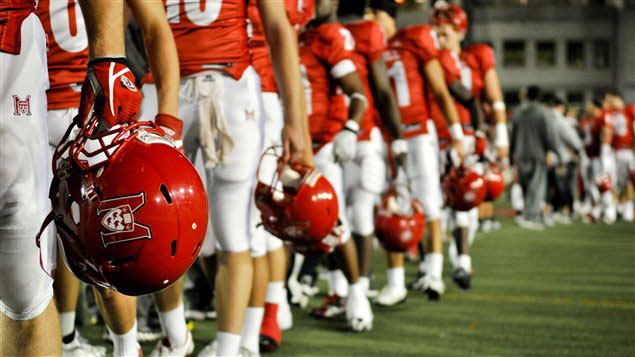
Following the McGill administration’s decision to change the name of the varsity mens’ teams in April 2019, the Steering Committee assigned to find a new name for the teams by August 2020 has seen their work delayed due to COVID-19. Following Indigenous-led student activism, McGill Principal and Vice-Chancellor Suzanne Fortier announced in an email on Apr. 12, 2019 that a Steering Committee would be formed to select a new name. 

Deputy Provost (Student Life & Learning) Fabrice Labeau and Mr. Hubert T. Lacroix, a former McGill varsity head coach, are the co-chairs of the committee. Labeau attributed the delay in part to the magnitude of the process.

“There was [an] excellent response to the open call for name ideas, [and] the Steering Committee received more than 500 submissions,” Labeau wrote in an email. “[We take] seriously the responsibility of choosing a name that honours McGill’s long history of athletic achievement, and expresses the university’s values and principles. The Committee plans to conclude its work in the coming weeks. Part of this work includes doing the necessary due diligence before we publicly announce a new name.”

Tomas Jirousek, former Indigenous Affairs Commissioner of the Student’s Society of McGill University (SSMU) and leader of the #changethename campaign, highlighted the larger implications of the renaming process when it comes to Indigenous students and reconciliation.

“The McGill administration has a moral obligation to deliver a new name in a timely, and respectful manner, one which recognizes the impact and history of the Redmen name,” Jirousek wrote in an email to the Tribune. “A delay in moving forward with a new name acts as a barrier in moving towards that place of reconciliation.”

Jirousek understands the issue of the men’s team name as a significant decision, one of the many hurdles that need to be addressed by the McGill community.

“There are pressing issues facing Indigenous students at McGill, and the university cannot genuinely confront those issues while we are still grappling with the legacy of the Redmen name,” Jirousek wrote. “I am disappointed but not surprised in the length of time that it takes McGill to meaningfully address issues of colonialism on campus.”

While Labeau focused on the scale of the decision-making process, Jirousek feels that the process of renaming is in fact a simple one that is a matter of two choices. 

“Choose the McGill Martlet name, a name which our varsity women’s teams have championed, or open a process for choosing a name which actually honours Indigenous nations,” Jirousek wrote. “The administration should have been in contact with the SSMU Indigenous Affairs Commissioner during this process to properly explain how this issue […] has been impacted by [COVID-19].”

Jo Roy, an Abenaki U2 social work student, shared Jirousek’s concerns about a lack of transparency and communication between the Steering Committee and the student body.

“I only remember the call for name submissions going out last year [and] I have yet to see any information [or] updates from this committee,” Roy wrote to the Tribune. “Committees are usually struck by institutions as a means to signal that they’re doing something about an issue without actually doing anything [….]”

Regarding the impact that COVID-19 may have had on the process of selecting a new name, Roy expressed dissatisfaction.

“[It] feels like the committee meant nothing to the administration to begin with, [and] that the pandemic was just a convenient way for them to forget about […] the promise made to Indigenous students,” Roy wrote.“Everyday that a new name has not been chosen to replace that racist nomenclature is another day that [McGill is] unwelcoming to Indigenous students.”

Read the latest issue

Read the latest issue