


Latest News

Science & Technology

Modelling climate action on the response to COVID-19

Some scholars, politicians, and activists believe that the climate crisis merits the same kind of national and international response that COVID-19 is receiving, but others think that would be impossible. While climate change and COVID-19 are fundamentally different problems, they both pose massive threats to human well-being and require enormous behavioural shifts.

Much like a pandemic, climate change is a threat multiplier: A study of the SARS epidemic in China found that patients from regions with high air pollution were twice as likely to die from the illness as patients from regions with cleaner air. Similarly, air pollution from greenhouse gases such as carbon dioxide, methane, and nitrous oxide make people more susceptible to respiratory illness, which can exacerbate the risks associated with COVID-19 and disease in general. Furthermore, urbanization and rising temperatures are expanding the geographic ranges of both animals and humans, creating more potential vectors of disease transmission.

According to Hamish van der Ven, professor in the Department of Political Science at McGill, the discrepancy between how governments have responded to COVID-19 and climate change is in part due to which populations are most affected. Climate change is threatening the futures of younger generations, while COVID-19 is taking the lives of older people.

“We have seen a response to COVID-19 because people in power are equally at risk of suffering adverse health impacts,” van der Ven said in an interview with The McGill Tribune. “Boomers care about the problems that affect them [….] Boomers stand to suffer the most from [COVID-19], and millennials stand to suffer from climate change.”

Another reason that the responses to both problems have been different is because climate change can still seem like a somewhat distant problem.

“COVID-19 forces immediate behavioural action because it is easier to trace causality,” van der Ven said. “Climate change does not have acute, easily attributable impacts, making action much harder.”

Further, while climate change has been unfolding slowly for decades, COVID-19 has appeared rapidly, and the situation understandably demands quick and decisive action. With social distancing, quarantining, and, hopefully, immunization, COVID-19 can be contained.

Climate change, on the other hand, does not have a quick fix. The behavioural shift needed to respond to COVID-19 is conceptually simpler, requiring that people put their lives on hold for weeks and likely months to come. Responding to climate change, however, will mean a multi-generational commitment to reshaping industries and the economy. 

The current pandemic may demonstrate that decarbonization is doable, at least in a short time frame. From January to March, for example, China reduced their CO2 emissions by 25 per cent. 

“This may be a political opportunity and a chance to restructure the economy,” van der Ven said. 

Governments could even use the power they have to provide bailouts to shift towards decarbonization. Academics are calling to leave the oil and gas industry to fend for itself and for airline-industry bailouts to include emissions-reduction requirements. This opportunity to decarbonize and downscale the economy is only one of the ways in which the current state of the world mirrors some of the tenets of degrowth, a movement that advocates for economic slowdown. 

“[COVID-19] has put degrowth into a new perspective and [forced people to] question what is essential and what is non-essential,” Nicolas Kosoy, a professor in McGill’s Department of Natural Resource Sciences, said in an interview with the Tribune.

While COVID-19 has shown us that behavioural change is possible, Kosoy acknowledged that no one in their right mind would hope to replicate COVID-19 as a formula to reduce emissions. What’s more, the emergency policies in response to COVID-19 may temporarily reduce emissions, but it is likely that COVID-19 will ultimately be a step back in global efforts to respond to climate change, as people begin to realize just how precious experiences such as travelling, eating out, and consuming are. Furthermore, if the response to COVID-19 is held up as a model for climate action, it will be hard to garner public support.


Arts & Entertainment, Theatre

Finding feminist solitude in Natasha Perry-Fagant’s “The Absence of Silence”

Walking past Segal’s, the beloved Saint-Laurent grocery store, you may have noticed the phrase “#FringeBuzz” plastered to the windows on the second floor. Behind those windows is the Minimain, a black box performance space in the Mainline theatre. This is where actor, director, and playwright Natasha Perry-Fagant performed her one-woman show The Absence of Silence on February 20, 22, and 23 during the Festival de la Bête Noire horror festival.  Perry-Fagant moved to Montreal from Summerland, British Columbia in 2009 to attend Concordia’s theatre program, where she developed an interest in surrealism. She performed in director Nathalie Claude’s 2010 rendition of Gertrude Stein’s Dr. Faustus Lights the Lights and collaborated with director Jen Cressy on a one-woman performance of Charlotte Perkins-Gilman’s The Yellow Wallpaper. She has since written her own pieces, such as Scrum, a surrealist piece about gender and body dysmorphia.

In the intimate setting of the Minimain, Perry-Fagant’s work was mesmerizing. Her unnamed characters explore solitude and femininity in three acts, their performances ranging in genre with an emphasis on sound and visuals. The show opens with the eerie choreography of a nude creature reacting to a soundscape and projected visuals that slowly creep closer to her. The second act is a gory scene in period-piece costume, while a Yellow Wallpaper–inspired overhead voice muses matter-of-factly on 19th-century life. In the final act, a woman comes home from the store and sets down her groceries. This scene is repeated several times, with each repetition including slight but significant changes, resulting in a Black Mirror–like mind-bending effect. 

Like any successful avant-garde piece, The Absence of Silence is difficult to describe. It refuses to collapse into digestible descriptions. Perry-Fagant cites italian theatre director Romeo Castellucci as an influence on her work.

“I saw a piece of his that travelled to Montreal where they had these weird interludes, and there was this huge machine onstage […] whirring and whirring, and there [was] a moment where a bunch of wigs were falling into the machine,”  Perry-Fagant said. “Looking at the pieces apart from each other, nothing frightening was happening there, but I was absolutely terrified watching it [….] It made an impression on me of how looking into the subconscious can really draw out feelings from a viewer, and especially a viewer in the sense of being in the theatre, as opposed to the screen.”

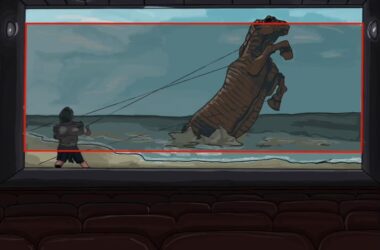
The second act is inspired by a The Dollop episode about the history of women and transportation, in which Dave Anthony and Gareth Reynolds joke about how women in the past were expected to ride side-saddle, since straddling a horse was thought to break their hymens and put their wombs at risk. Perry-Fagant wrote the voiceover — in the style of Perkins-Gilman — from the perspective of a woman who injures herself falling from a horse because of this side-saddle mandate. As Perry-Fragrant curls around the frame of a broken mirror and fastens a corset stuffed with shards of glass around her body until her white dress oozes red, it is clear that her movements are not intended to mime the monologue. The dissonance between the florid voiceover describing 19th-century domesticity and the abject, self-imposed suffering onstage creates a sense of loneliness effectively conveyed by both narration and visuals. As an actor, Perry-Fagant wanted to understand how a woman of that time would reflect on her loneliness in that situation without the language of feminism that we have today.

“I wanted to have this kind-of distanced text that describes [those] feelings, but in a way that is not right on the bone of “Yeah I feel like shit, because I feel like I’m worthless”, and kind of aggrandizing that in the 1800s [women might say something more like] ‘Well I don’t think that I quite understand how it’s feeling, but it’s not very good now.’”

With movement-based work, the lack of dialogue forces actors to react more to their environment, but this means that it can also be easier to get distracted by shuffles in the audience or somebody coughing. Rather than being subjected to the whim of her setting, Perry-Fagant takes advantage of this vulnerability and lets invasive soundscapes, which project outward expressions of characters’ inner feelings, guide her performance.

“I find that if people are speaking words at you, it puts you in a cerebral [mental space],” Perry-Fagant said. “You’re analyzing the words, and you’re trying to think of what the author meant. I find that to get at the subconscious of the viewer, it’s easier to aggrandize the emotional experience of the performer [through sound]. […] It’s always been really important for me to have sound [be] a key part of the experience of bringing you into the world.”

COVID-19 has been a shock for the theatre community, with the entire runs of shows cancelled. For a community centered on live performance and gathering, this has shocked the creative routines of many Montreal artists. Perry-Fagant looks for the silver linings in this situation by treating it as an opportunity to allow her future works to percolate: She’s keeping herself busy editing film projects and studying, analyzing, and workshopping future shows.

A previous version of this article incorrectly spelled Perry-Fagant’s name as “Perry-Fragrant.” The Tribune apologizes for this error. 

Arts & Entertainment, Internet, Music

Dancing with internet friends

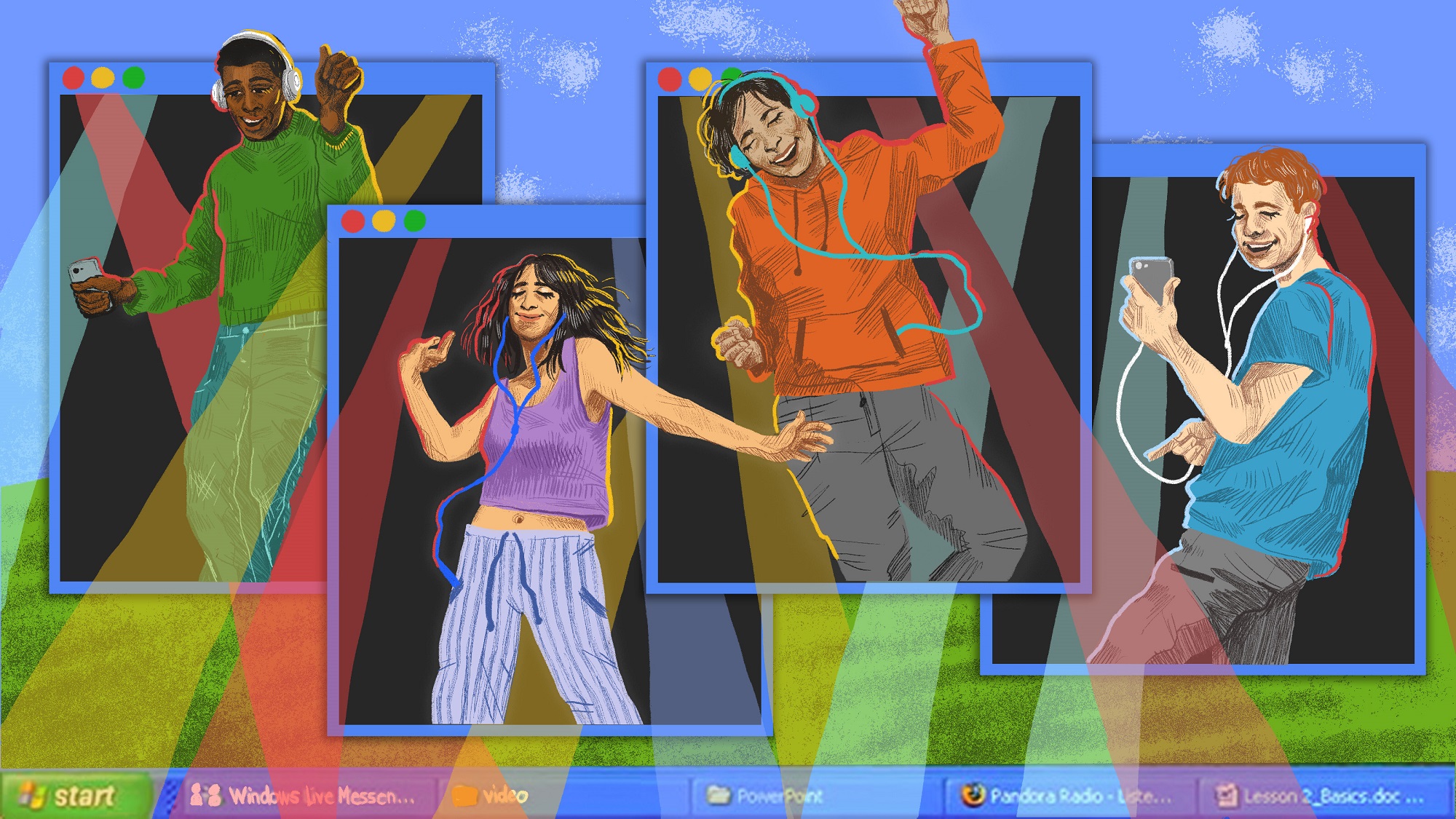
Despite the self-isolation imposed by the COVID-19 pandemic, I’ve still been dolling myself up to go out on the weekends and even, recklessly, the weeknights. With bars and venues closed and our lives re-oriented from being mostly online to almost entirely online, it’s unsurprising that people have been flocking to online ‘clubs’ to continue one of life’s simplest, but most rewarding pleasures: Dancing. Besides the sheer fun of it all, the emergence of online dance parties provides a vital space for queer and marginalized peoples to foster community in these seemingly disparate times.

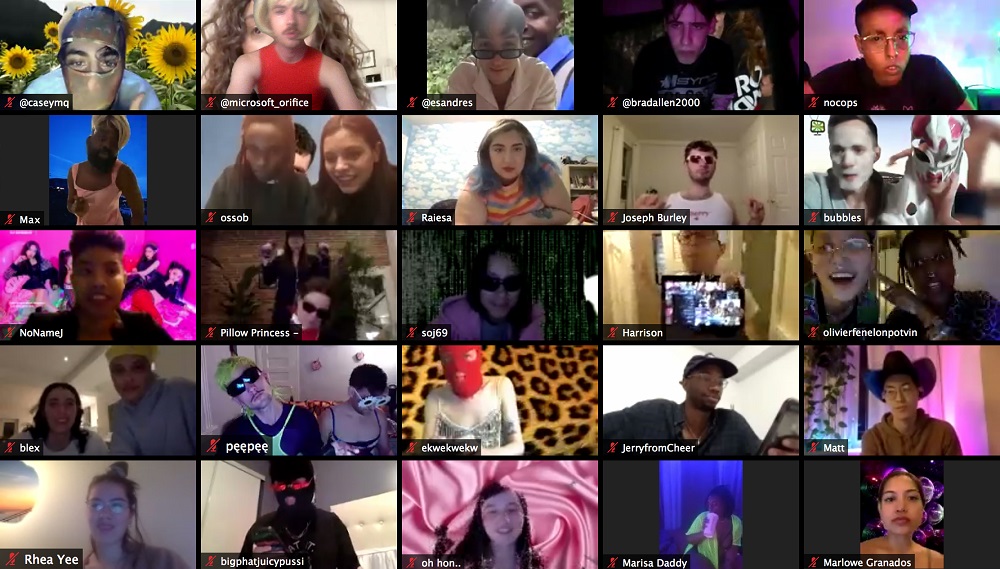
Club Quarantine (Club Q), not to be confused with D-Nice’s Instagram live event, is the most high-profile of these online queer clubs, having featured DJ sets by big names like Charli XCX, Tinashe, and Dorian Electra. Created as a joke between four friends in Toronto, Casey MQ (Manierka-Qualie), Brad Allen, Ceréna, and Mingus New, Club Q now broadcasts every night on Zoom, creating a sense of familiarity amongst its patrons. 

“We have Club Q regulars now,” Manierka-Quaile, DJ and co-founder said in an interview with The McGill Tribune. “There [are] some dedicated people [who] come all the time, and that is beautiful to see. This is the space that [they now] go to. ‘What am I doing tonight? I have nothing to do. I’m definitely going to Club Q.’”

Online dance parties operate in a similar fashion, as Zoom’s audio- and screen-sharing functions allow producers to highlight acts and patrons. The chat function allows users to talk openly and message each other privately, mimicking the chaos of bumping into people in a real club. In all, Zoom’s tools give producers the same artistic and logistical oversight as they would over an IRL venue. A highlight of Zoom is the ‘spotlight’ tool, where hosts choose a screen to share on an online ‘jumbotron.’

“It’s kind of become the heartbeat of Club Q, because everyone gets to have their moment,” Ceréna, artist and co-founder said. “Here, because we’re all at home, you can do anything you want! We can be spotlighting someone cooking in the kitchen or someone giving us a full twerk moment or someone with their pet turtle.”

(Club Quarantine)

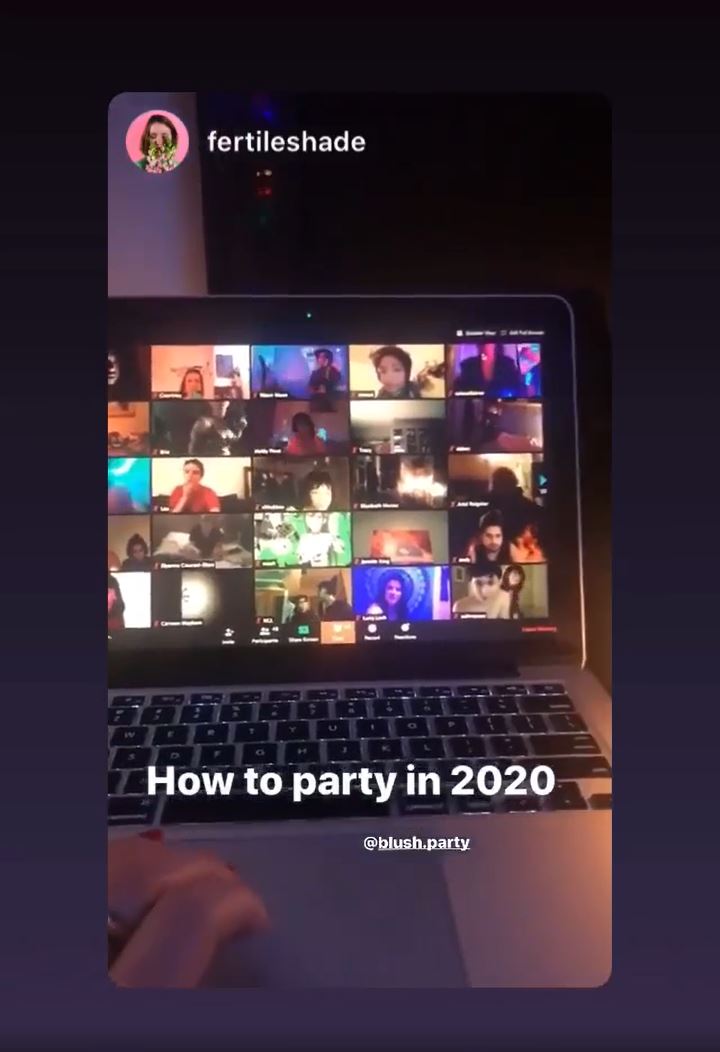
These features can be further used to elevate a traditional club experience, allowing for more experimental camera angles and perspectives. Avery Burrow, co-founder of Montreal’s Vice Versa Productions, recently held Queerantine, a Zoom version of their lesbian party, Blush, geared towards raising funds via PayPal to support QTBIPOC sex workers who have difficulty directly accessing government aid. Burrow noted the benefits of using go-go dancers and backgrounds to create a cohesive visual experience on Zoom. Besides providing financial support, Burrow sees Queerantine’s positive role extending beyond its patronage.

“Just [in] advertising for Queerantine, I got a lot of responses from people being like ‘Oh, it’s just so nice to have something in my feed that’s positive right now,’” Burrow said. “That’s what we’re trying to do is break up the negativity and […] build community.”

Like any real club, however, unwanted patrons can appear, in this case in the form of online trolls. Hosts must take it upon themselves to moderate chats and kick out users when it jeopardizes the safety of other patrons. Burrow kept the password to Queerantine locked to the organizers and those who donated to the event’s GoFundMe; though not a foolproof method, it did reduce the chance of homophobes crashing the party.

(Avery Burrow)

Showing solidarity with these spaces is more vital than ever, with queer and marginalized people disproportionately affected by lay-offs and financial strains of the COVID-19 pandemic. But, communities have thrived online far prior to the quarantine age, and that may be why so many people who grew up on the margins of society feel at home in these spaces. Manierka-Quaile noted that the re-emergence of queer internet culture has spurned a sort of nostalgia for those who’ve already spent hours lurking in online chat rooms like Omegle and Chatroulette. Now, like it or not, more groups of people are seeking belonging in these virtual worlds.

“This is like my childhood. I think that’s why, for all of us, it was just very natural to […] go onto this platform, because it [had] very chatroom vibes,” Ceréna said. “It’s just kind of wild that when the world stopped and everything just took a pause, [….] I was ready to just retreat and hibernate, [and then] this happened and now it’s like, “Oh shit, we did break the internet!”

A perhaps-unintended consequence of these parties is the absence of physical barriers to accessibility. Clubs and bars are traditionally seen as one of the few safe spaces for queer and trans communities, but have long been inaccessible to differently abled patrons. 

“We can bring the dance party to people’s living rooms,” Burrow said. “If you live in a wheelchair-accessible house, that means [that] the dance party is now wheelchair accessible [….] My party can now welcome people who want to be at it, no matter what barriers they might face.” 

Furthermore, these online clubs provide a space for people who are unable to see any other queer people in person. Sitting alone in front of a laptop, watching other queers vogue, dance or even just lounge about and drink wine can comfort patrons and remind them that they aren’t alone in their experiences. 

“We just needed another outlet for us to be free and to feel […] that sense of community [with] each other,” Ceréna said. “What’s been the most beautiful of Club Q is seeing all the beautiful queer people. I’m in a small town [right now] with no queer people, and this is just like, serving me. This is making my life just so much better.”

For the foreseeable future, people will have to go online to find these spaces. Club Q shows no signs of slowing down, and Burrows hopes for Vice Versa to host more online parties in the future. Similar parties are popping up: Club Hunhouse for queer women, trans and non-binary people, and STRAPPED.TO, which centers QTBIPOC, is hosting virtual events. When and once COVID-19 passes, these places will likely move into the physical world, however at their core, they remain a uniquely virtual phenomenon. In bridging these geographical and physical gaps to connect queer communities, online clubs will retain an almost ephemeral existence that a physical club simply can not attain.   

“In this moment in the quarantine age, you’re going to have to find that community online or you’re going to have to find it within yourself,” Manierka-Quaile said. “By being online, there’s that accessibility to just being tapped in.”

To provide financial support:

Club Q: https://www.paypal.com/paypalme2/reachclubq 

Vice Versa Productions: [email protected] or https://www.gofundme.com/f/vf6y9-queerantine-a-queer-online-dance-party

Also Cool Artists Fund: https://ca.gofundme.com/f/also-cool-artist-fund 

Student Life, Word on the Y

Word (off) the Y: How has your life been under physical distancing?

As life has been turned upside down, Associate Provost (Teaching and Academic Programs) Christopher Buddle and the Student Life team of The McGill Tribune share their outlook on this unprecedented period in history, as well as what they are looking forward to when this crisis passes. 

Miguel Principe; Student Life Editor

Three weeks ago, I was stressed about [things] my future such as writing exams, finding a gap-year job, and applying to grad school in the following year. With the coming months looking uncertain, I am trying my best to just appreciate what I have, especially compared to what those on the frontline don’t, most importantly, the ability to stay at home and be with my family . Being in my final year at McGill, I’m disappointed to see Convocation and Grad Ball cancelled and that I never got to say a proper goodbye to McGill and Montreal. When all of this is over, I can’t wait to throw away all notions of physical distancing and give my friends the biggest damn hug and just hang out inside a café. 

Alaana Kumar; Staff Writer

When it became apparent that self-isolation was the only way forward, my sister and I headed home to Ontario. For the first time in years, my immediate family is under the same roof outside of the holiday season. Although the situation can be scary, we are doing our best to appreciate this extra time together. We are keeping busy with puzzles, board games, books, movies, journaling, drawing, and of course, school and work. Saying goodbye to my graduating friends in Montreal was incredibly difficult and seeing their graduation cancelled was heartbreaking. Regardless, I’m so proud of all that they have accomplished and I look forward to seeing them soon. In tough times, I like to remind myself how lucky we are. Thank you to our health workers, paramedics, essential service employees and scientists. We appreciate you!

Catherine Morrison; Staff Writer

When I first found out about McGill going online due to the pandemic, I wasn’t too worried. I knew I would be able to manage the new style of learning and complete all of my exams and essays. Plus, I was still on track to graduate. However, being a graduating student, I felt devastated by how quickly four years would come to an end. Having to cancel events that I had planned all year long with student groups and learning about the potential cancellation of convocation made me feel hopeless. However, with time, as well as a couple of wine nights with my mom, I have learned to cope with the strange sense of loss that I have been feeling. Rather than allowing myself to dwell on what has been lost, I’m trying to focus on the great things to come in the future.

Scott Kennedy; Staff Writer

At first, I felt really disheartened. This is my final year, and I was looking forward to spending time with my friends, saying my goodbyes to people, and having that one last hoorah of walking out of an exam room and ending up at OAP. Now I’ve accepted what’s going on and am constantly reminding myself that there are some people around the world, even in this country, who do not have the same luxury of being able to safely quarantine. At the moment, my family and I seem to be keeping ourselves busy, but we are still finding time to spend time together. I was definitely sad to see the Grad Ball shut down, because, if I might be so bold, I had a pretty good fit planned. I’m looking forward to seeing my friends, as well as what my post-undergrad future holds. On a broader note, I look forward to seeing how we are able to come back from this historical period and the extent to which the pandemic will inform the way we move forward.

Christopher Buddle, Associate Provost (Teaching and Academic Programs)

Everything has changed in two weeks, and while it’s very scary in many ways, and raises a lot of worry and anxiety, it’s also given me so much hope for McGill and for our community [….] Personally, my work days are very full given my position in senior administration […] but for fun, I have been learning the banjo, and finding a bit of time to work on that. However, I can’t say that hobby is being enjoyed by everyone in our house. [Cancelling convocation is] very sad for our graduating students, although it was the right decision. Though, I know there will be other ways that we will commemorate the graduating class, there is something so special about seeing the big tent on Lower Field. [Overall,] I’m looking forward to seeing students, my colleagues, and friends in person! While it is great to be able to use videoconferencing, it’s just not the same.

Student Life

The importance of the humanities at McGill

The relative importance of the sciences and humanities has been up for debate. In academia, the objective approach, predominant in the sciences, which analyzes information through observable data, has come to be more highly valued than the subjective approach of gaining knowledge through individual perspectives and opinions, often used in the humanities.   

Stereotypes have circulated about the difference between being in an Arts program compared to a Science one. At McGill, stereotypes about Arts students depict them as lazy, barely needing to study to get straight As. These ideas further the belief that Faculty of Arts graduates have no employment prospects since they have no tangible skills that can be applied to the ‘real world.’

Will Straw, Professor of Urban Media Studies in the Department of Art History & Communications Studies, described how stereotypes about Arts students have perpetuated at both McGill and in popular culture, fueling misconceptions about the Faculty of Arts as a whole.  

We all hear that […] Arts courses are just schools for training people to be ‘woke,’” Straw said. “Even Knives Out, [a 2019 mystery film by Rian Johnson] has jokes about people taking Arts in elite US colleges and being trained in radical French theory. The longstanding stereotype is that the humanities are useless and that people study ‘flower imagery in Blake’ or something. These [stereotypes] have been around forever.”

A common belief is that people in STEM graduates earn higher salaries than those of Arts programs. However, a study by Emolument found that the pay gap between the two domains closes over time and graduates in the humanities can even end up making more money than those in the sciences. 

Furthermore, studying the arts can lead to many interesting jobs after graduation. The humanities can open doors to a variety of essential careers such as lawyers, teachers, writers, and activists. In fact, many notable McGill graduates have a Bachelor of Arts degree, including Prime Minister Justin Trudeau and thesinger and novelist Leonard Cohen

The Faculty of Arts’s Gender, Sexuality, Feminism, and Social Justice Studies (GSFS) program is the only department that specifically focusses on ethics and social justice initiatives at McGill. Pascale Graham, a course lecturer for the Institute for Gender, Feminist, and Sexuality Studies at McGill, explained the program’s importance in shaping our global communities.

“Some of the strongest elements of working in gender studies are the willingness to take risks, engage in interdisciplinary approaches and think creatively on issues of social inequality,” Graham said. “Gender studies has been at the forefront at challenging power structures and plays a critical role in drawing continuous attention to injustices, offering critical analyses on structures of oppression. In doing so, it provides avenues for addressing inequalities with the aspirations of formulating more equitable futures.”

As in all universities, McGill students face many social and political issues relating to racism, sexual assault, and the climate crisis. It is therefore extremely important that this program exists to offer courses on making changes not only within the McGill community but also around the world. Despite this integral role that Arts departments such as GSFS play, there have been times where students, as well as the McGill administration, have perpetuated the narrative that a science degree is more valuable than one from the Arts. For Joanne Chio, U3 Arts, it comes down to McGill not providing enough support for Arts classes as well as the Faculty as a whole.

“I do not think that McGill values Arts as much as other faculties because of how it has overseen several Arts programs,” Chio stated. “This is often seen through the scattering of Arts classes all across campus in undesirable buildings as well as the lack of academic counselling for students interested in Arts-related opportunities outside of McGill.”

On Feb. 10, the GSFS Students’ Association announced on Facebook that the office of the Dean of Arts was going to suspend the graduate degree options for both GSFS and International Development Studies starting in Fall 2021. McGill graduate and undergraduate students distributed an open letter with signatures from students in both fields of study as well as students in other programs, and the suspension was soon rescinded. However, this incident is just one of many examples illustrating a pattern of McGill deprioritizing the Arts program compared to other faculties. 

According to Straw, to understand what the McGill community could do to better support Arts programs, a discussion with the administration on what students truly want to gain from their humanities education is an imperative first step.

“In the name of being more academic, we’ve done away with a lot of practice-based programs in Arts [but] is this what students want?” Straw said. “I think that Arts departments get caught up in preserving the way they’ve been doing things for a long time, but […] it might be time for students, professors, and administrators to sit down at a big table and figure out what everyone wants and how they might go forward.”

Mercedes Labelle, U3 Arts, believes that McGill needs to provide Arts students with better ways to find jobs and get recruited. 

“I wish the Faculty of Arts offered more networking events and career fairs,” Labelle said. “It seems like corporations literally come to Desautels and Engineering events ready to recruit [students] whereas the Faculty of Arts doesn’t have [them]. Being in Political Science, I wish I had been able to learn about future careers in my field at McGill. Of course, the Arts Internship Office is great but there’s only a few internships available for the entire faculty and a lot of them are international, meaning that they’re pretty hard to get and [are] not accessible to the everyday student.”

Crisis in the Humanities, a 1964 best-selling book co-written by several humanities and social science professors, stated that a science-oriented world had no room left for the humanities. However, it is evident that public policy, critical thinking, and social justice are now more important than ever. In the current COVID-19 pandemic, for example, the sciences remain extremely important as healthcare workers are providing constant care and researchers are developing ways to combat the pandemic; however, those in the arts—journalists, educators, and politicians in particular—are playing equally important roles in our lives today through upkeeping public morale and sharing vital information.  

Historically underappreciated, the arts, especially domains in the humanities, provide a window to a plethora of concepts that equip those who study them with perspectives that are unrivaled by other domains.

“Generally speaking, the humanities play a vital role in shaping interrogations into what defines and drives human experiences,” Graham said. “This means not only delving into our past to offer a different lens of analysis but also deconstructing how historical events shape our present conditions. In doing so, it provides the opportunity to look forward and [reimagine] what our futures may be.” 

Basketball, Sports

In conversation with Yaron Weitzman

Yaron Weitzman covers the NBA as the national writer for Bleacher Report, so he ended up travelling from his New York home to Philadelphia to cover the 76ers quite often during the 2017-18 season. Ben Simmons was a rookie that year and, well, the Knicks were not playing well at the time. Weitzman really needed a story.

Once he was in Philadelphia, he realized that he had more than enough content for an article: He had enough to put together a book proposal. A few years later, his new book Tanking to the Top hit the shelves. Weitzman’s book details the history of the last 15 years of Philadelphia 76ers basketball, a tale centred on Sam Hinkie, the former General Manager who notoriously formed terrible teams in an effort to accumulate high draft picks. Weitzman interviewed nearly 175 people, though both Hinkie and the 76ers as an organization cordially refused to cooperate.

“[The team was] very polite [and emailed back], ‘Congratulations, we’re not going to participate,’” Weitzman said. “I kind of figured eventually, when they see that this is a real thing [that they would] [….] It’s easy to say no at first, [… so] I kind of figured they would relent eventually, and, to their credit, they did not. So, power to them. They’re sticking to their guns on that one.”

Given the lack of formal cooperation from the team, Weitzman had to work harder to compile a list of interview targets. In the case of Markelle Fultz, the 2017 top overall pick, he received insights from Keith Williams, an old coach and mentor. He also knew he could reach out directly to certain players and their agents to fill in the details.  

“I didn’t have any sit-down with [76ers guard TJ McConnell], and I thanked him in the book, and he would have no idea why,” Weitzman said. “He was just very polite and gracious [though], and, like, I would go to him during pregame availability [….] TJ McConnell [was] always available and sitting, and I would ask him a lot of random questions like, ‘What do you remember about the day [former 76ers teammate] Nerlens Noel was traded?’”

As a sports fan growing up, writing about the NBA felt like a natural fit for Weitzman, who studied sports management at New York University before realizing that he didn’t care for the business side of sports. He has always loved the NBA, and still does, but now finds that other sports have displaced his energetic passion.

“I feel like I’ve channeled all of that into my Mets and Jets fandom,” Weitzman said. “I’ll […] rant like I’m a […] caller [on New York’s The FAN radio station] calling on Mike Francesa to complain about the batting lineup. I still love the NBA. I mean, yeah, it’s more of ‘It’s definitely [a] job, right?’ There [are] times, like, I don’t want to watch. The NBA is not a respite for me.”

Weitzman watches games with a careful eye and has a knack for uncovering interesting stories, like a recent one on NBA players changing their phone numbers or another on players agreeing to not go for rebounds. With years of experience at Bleacher Report and SLAM, among others, Weitzman felt that the book had been a long time coming. He knew that he had always wanted to write one, and the story of the Sixers presented a good opportunity. He had finally found his voice as a writer.

“I’d be scared to look back at [my early writing],” Weitzman said. “I feel like there’s a lot of really bad Bill Simmons impressions.” 

Student Life

A retrospective guide to navigating first year

Adjusting to any new setting is a natural, but challenging part of life, and one’s first year at university is no exception. As you launch yourself into a new journey amongst the wilderness of McGill, the elders, better known as upper-years, leave behind some tokens of wisdom.  

Before embarking into the exciting world of university life, the most eager have already made a campus checklist of potential supplies, from bedding to notebooks. However, there are often overlooked items that make the dorm experience more enjoyable. For Fred LePage, U3 Computer Science and History, a simple speaker proved to have more uses than just creating an ambiance in his room.

“A speaker makes you a valuable recruit to any social gathering, though not if others get the same idea,” LePage said. 

As great as speakers are, Gwenyth Wren, U3 Environment and African Studies, recommended something to combat the likely noise in dorms. 

“I can’t overemphasize [having earplugs] if you’re like me and [had] super loud […] people on your floor screaming at 2 a.m.,” Wren said.

Dylan Havelock, U3 Computer Engineering, prioritized keeping his room comfortable, particularly after the hikes to the Upper Residences. 

“If you’re going to include one thing, I’d say [it would have to be] the fan,” Havelock said. “I think [mine] ran for eight weeks straight.”

Outside of the many climbs up the mighty hill that is the McGill campus, another aspect of university life that newcomers and seasoned students alike must endure is picking classes and setting up a schedule. Students should know that they don’t need to have a perfect schedule when the semester begins as there is an Add/Drop period in the first three weeks of the term that allows students to try courses for which they might not have not registered.

“Add/Drop is your friend,” Wren said. “If you are entering [as a] U0, play around with classes and see what you like.” 

There are many different tools that students can use when choosing the perfect class. For those avoiding the dreaded 8:35 a.m. class at Stewart Bio or who want a day off in the week, the Visual Schedule Builder (VSB) displays potential schedules, including course instructors and locations. RateMyProfessors is another useful tool. On this website, students can read through the reviews and experiences of other students for a given professor’s classes.

“A good way to measure your decision […] is how the prof is rated online,” LePage said. “You’ll be spending several hours a week with this person so get used to them.”

Course evaluation sites and Facebook groups are great ways to find the coveted “bird courses” at McGill. However, Aisha Manneh, U3 International Development Studies, suggested that doing well in electives doesn’t always mean filling your schedule with the usual suspects.

“Pick electives in things you’re interested in and it’ll almost always be an easy A if you enjoy the work,” Manneh said.

Furthermore, students should also understand that sites like RateMyProfessor or the McGill subreddit do not always paint the full picture.

“You should be honest with yourself and pick things you’re interested in,” Iyanu Soyege, U2 Political Science and African Studies, said. “[Don’t] let the bad experiences of others determine what you do.”

For students, it is key to pick classes on subjects that they feel they can immerse themselves into for hours, especially when the dreaded midterm season rolls around. It is also important during this exhausting period to find the ideal place to prepare for impending exams, and the dorms may not be the ideal place.

“Around residence, it can get pretty distracting, so it’s good to use the libraries,” Havelock said. “Everyone is […] in that study mode, and it just rubs off on you and […] helps you focus.” 

While students will have to wait for Schulich Library’s facelift, there are still an abundance of options from the ultra-quiet Islamic Studies Library to the conversation-friendly floors in Redpath.

“The Law Library [is] […] definitely worth the hike,” Manneh said. “It’s super quiet though, so not a good place to whisper with your friends but great for getting some serious studying done.”

Outside of the routine of studying around Milton-Parc, Montreal is full of unique neighbourhoods that many students often don’t see since they typically stay within their comfort zone near campus. Leon Picha, U0 Management, suggested one inexpensive way to get out of the McGill Bubble and explore the city.

“I used to go on the Metro, and when I’d find a cool sounding station, I’d just get off and walk around,” Picha said.

The iconic Mount Royal Park can also give students a chance to escape the urban setting in the middle of the city.

“There’s […] the main path, but there [are] also these little trails,” Havelock said. “If you’re an outdoorsy person and want to get that nature fix in Montreal, it’s a really good spot.”

Overall, Montreal is a fantastic city with so much to offer. Whether it be the Musée des Beaux Arts, an Old Port eatery, or a nightclub in the Plateau, people can seek out all different kinds of entertainment.  A particular favourite for first years to venture out to are the nightclubs on St. Laurent Boulevard. The street is jam-packed on Thursday nights as the popular nightclub Tokyo hosts a combination of the Top-50 hits playlist and 3-for-$10 Jägerbombs. This tradition has become iconic, to the point that ‘Tokyo Thursdays’ are part of the McGill vernacular. Wren reiterated the importance of this Montreal institution. 

“Tokyo will always have my heart, and my Thursday nights,” Wren said. 

Above all, it’s worth acknowledging that McGill’s ‘work hard, play hard’ mentality can get overwhelming; first-year students must not forget to take care of themselves throughout the school year. Spending time with friends away from nightlife settings is a great way to practice much needed self-care.

“Your friends [are] going to understand the stress you feel better than anyone else,” Manneh said. “Try and schedule in […] chill time with your friends outside of the club.”

When you are among friends and peers alike at McGill, remember to avoid the habit of comparing yourself to them, even if they seem to be getting amazing grades or finding their own social groups. It may appear that you are isolated in feeling inadequate or apprehensive, but the truth is that everyone is going over their own hurdles and many will share similar anxieties.

“It [may] seem like everyone is doing better at school, doing better at making friends and managing better than you, but that’s not true,” Wren said. 

Most importantly, no one should feel like they are alone when navigating the sometimes uneasy waters of first year. There are always people there for you.

“You may feel a lot of pressure, but remember there are always people […] who are there to support you, whether it be your family, friends, floor fellows, or other services offered by McGill and SSMU,”  LePage said.

Off the Board, Opinion

Infected with hate

During the first week of March, I got into a taxi on my way to meet some friends in LaSalle and started to chat with the driver. I found out that he was originally from Iran, and I asked how bad the COVID-19 outbreak would be in Canada. He told me that he predicted high numbers and many deaths.

As of April 6, the total number of cases worldwide is nearly 1.3 million, and Iran alone has seen over 60,000 cases. The total deaths in Iran have reached over 3,000; the taxi driver was right. 

Due to the ever-increasing number of cases and deaths, people are told to stay at home to ‘flatten the curve.’ Social distancing is a practice that hopes to slow the escalation of cases beyond what the health care system is able to handle. Limiting contact with one another for a few weeks, in theory, keeps the infection trajectory to a rate that hospitals can handle. Fear has been used by governments and the media as a tactic to get the public to understand the gravity of the situation and the importance of ‘social distancing,’ more recently known as ‘physical distancing’ due to the effects of social isolation on mental health.

However, as a Chinese-Canadian, I’m afraid to go outside not for fear of contracting the virus, but for fear of racist encounters. There have been several local examples of anti-Asian racism in the last several weeks: the racially motivated stabbings of two Korean men in Montreal, the robbing of a Korean restaurant in Montreal, and repeated vandalization of statues in Montreal’s Chinatown. The virus does not discriminate in whom it infects; on the other hand, these instances all felt far too personal. In late February, an elderly lady told me to ‘put on a damn mask’ as she walked by me in the aisle of a Jean Coutu. It was not the most devastating interaction that I could have had, but I am nonetheless afraid to leave the house sometimes, let alone go to grocery stores or pharmacies, because this pandemic, and this racism, is all really happening.

Today I thought, ‘I cannot wait for things to return to normal.’ But, I also realized that my weird feeling of guilt about being someone of Chinese origin had been around even before the COVID-19 pandemic. On the topic of COVID-19, there has been speculation that China’s reported number of cases during the outbreak may not be legitimate. After reading about this, I thought that the Chinese government might actually be covering up their actual number of cases for COVID-19, in fact, I would not find it surprising if they were. Government officials from the US as well as the UK Prime Minister Boris Johnson, have expressed doubt and anger at the Chinese government. 

Regardless of the legitimacy of China’s figures, it scares me that the rapidly growing number of cases and deaths are contributing to international tensions and tearing people apart, rather than bringing them together. Circumstances are bleak right now. People are forbidden to visit their family members who are dying in isolation. Medical professionals are burnt out and scared. Meanwhile, people are losing their jobs and their livelihoods. International politics, though important, should not be a focus right now. Instead, we should be coming together—while maintaining a two-metre distance.

I have always had conflicting feelings as a first-generation Chinese immigrant living in a Western society that spoon-feeds its people propaganda against the Chinese government. It is sometimes difficult for me to maintain an objective view of politics and cultural trends. I often forget that the government of a nation does not represent the people of that country. In those times, I am riddled with guilt about something that doesn’t have anything to do with me or my family or the majority of Chinese people. But somehow after reading one too many articles or headlines, I forget that we are not responsible. I think that it is important to keep that as a reminder to all, so that fewer innocent people get hurt. So that people, like myself or my Taxi driver, aren’t afraid to leave our houses. We are losing enough people to this pandemic; we do not need to lose more to racist and divisive ideologies.

Editorial, Opinion

McGill must move carefully into the digital world

McGill students’ lives are shifting entirely online. April 3 marks the end of the first week of classes since the university made course instruction remote. McGill administrators are attempting to provide uniformity to students in all faculties, but even so, professors have been left largely to their own devices in terms of how to approach this transition. While the administration has been confident about the efficacy of the shift in their emails to the student body, McGill students have had varying experiences with remote instruction so far. In addition, many other aspects of students’ lives—such as socializing and basic errands—have either halted or been forced to adapt to less-than-ideal circumstances over the last several weeks. Crucial resources like therapy and simple tasks like going to the grocery store have all been disrupted by COVID-19. Many McGill students are finding that, in being forced to adapt to entirely new modes of learning and living while managing the stress caused by the pandemic, they are struggling to keep up with their responsibilities, academic and otherwise. With this in mind, it is crucial that McGill’s administration and professors continue to be understanding, practice leniency, and provide resources for the student body while it undergoes an entirely unprecedented series of events. 

McGill’s decision to allow students to exercise a Satisfactory/Unsatisfactory (S/U) option for all classes is warranted and the administration should be commended for it. Further, it was appropriate for McGill to entirely shut down over two weeks so that they could properly assess how to move forward, yet it is imperative that professors acknowledge the circumstances that the closure has created. Students were discouraged from preparing assignments during this time, and even though professors had been allowed to maintain deadlines, these weeks were a crucial period for students to take a break from school work in order to commit mental energy to adapting to new circumstances caused by the pandemic. The return to class should not involve professors simply taking four weeks of material, work, and lectures and squeezing it into the final two weeks of the semester. While an imperfect solution, if professors need to cut material from their syllabi in order to refrain from overwhelming students, they should do so, even with the S/U option in mind. 

The McGill administration, in continuing to decide how the semester will proceed, should recognize that professors are being put in an extremely difficult situation, often lacking the infrastructure or expertise to quickly move classes online. Professors, in turn, should recognize the position in which this puts students. Zoom, as ubiquitous as it has become, is an imperfect piece of software and can be accompanied by a range of technical difficulties. In addition, it must be noted that moving away from in-person instruction, while a difficult change for all students, is particularly devastating for students without a reliable internet connection or who learn most effectively in a classroom setting. In addition, much of the burden of shifting toward remote instruction has also been placed on Teaching Assistants, creating an increased academic workload for individuals who may be experiencing stress for other reasons related to the pandemic. The administration and professors should be cognizant of this reality. 

While students are confronting this litany of changes in their academic lives, they face other challenges as well. Some students may be dealing with family members or friends who have contracted the disease, or engaging in more extreme quarantining measures because they are at higher risk. This is also a time during which challenges with mental health are being exacerbated, and unfortunately, resources for such challenges are much harder to access. At this time, McGill’s Wellness Hub is not accepting any new clients. That being said, thus far the administration has made concerted efforts to make online mental health resources available. McGill should continue to do everything in its power to make sure these services are accessible to its students remotely. Professors too, should take specific note of circumstances causing anxiety or stress when considering student requests for extensions or alterations to assignments. 

Finally, McGill students should seek to shift their expectations of their own productivity. We must be gentle with ourselves when things are not going how we would like them to be, primarily because we are in the midst of a contemporarily unrivaled global pandemic. Students should try to do things that offer them structure over the course of days and weeks which would otherwise blend together. In addition, so many facets of students’ lives are now exclusively accessible through a laptop that it may be necessary to schedule breaks from being digitally immersed throughout the day. Moving away from screen-time for a set number of hours a day can not only benefit one’s physical health, it removes one from the perpetual cycle of news related to COVID-19 which can be anxiety inducing. Stress may be an inevitable consequence of moving into a digitally-oriented world, but McGill students can make use of the resources available to them and their existing networks of support in order to mitigate the effects as much as possible.

Features, Joke

Textual schedule builder

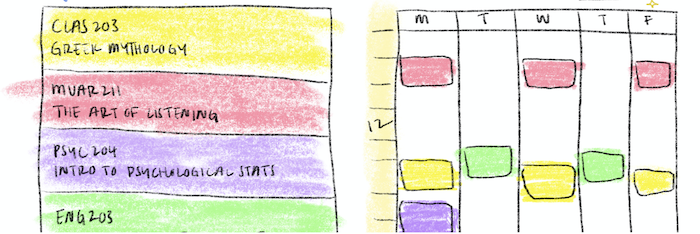
Frankly, planning the perfect schedule is no joke. When I need to choose my classes for the school year (and I always know when this is; it’s in my calendar), I really, really need to weigh out my options. I log onto Visual Schedule Builder and I begin to optimize my schedule. I think through all of my choices very seriously. I have to. Because, as you, I, and Principal and Vice-Chancellor Suzanne Fortier all know, education is no laughing matter.


Read the latest issue

Read the latest issue