Latest News

Joke, Sports

McGill athletes victorious in sporting competition

The McGill Sportspeople (4–11) prevailed over cross-town rivals UdeQÀM (50–1) by quite a bit at the Sporting Event on April 1.

The first fraction of the game was marked by tension and excitement as players on both teams made plays. While McGill initially struggled to gain momentum, their star-studded offensive lineup pushed a full-court press in the later minutes and ultimately knocked one out of the park. 

“When you get a touchdown, there’s nothing like it,” Sportspeople captain Pitch Wilder said. “The key was making sure our ball movement was going in the right direction.”

The intensity increased as the game neared its end, with UdeQÀM closing the gap. Despite their best efforts, however, a buzzer-beating wicket from McGill ended the game in the Sportspeople’s favour.

“We went out there and gave 110 per cent,” Guy Baller, captain of the UdeQÀM team, said. “Our coach has been involved in the direction, instruction, and training of the operations of our team. Next time, we’re just going to have to focus on scoring a different number of points.”

Sportspeople Head Coach Fabreeze LaCroix was pleased with McGill’s performance.

“Our team did good athletics today,” LaCroix said. “Now it’s all about keeping that momentum through the season and making it to the playoffs.”

McGill’s fans were pleased, too, and expressed their enjoyment of watching them do sports.

“I enjoy watching them do sports,” Chase McMan, U0 Engineering and event attendee, said.

The Sportspeople next play on April 14, when they’ll take on their cross-town rivals, the Concordia Dropouts.

Joke, News

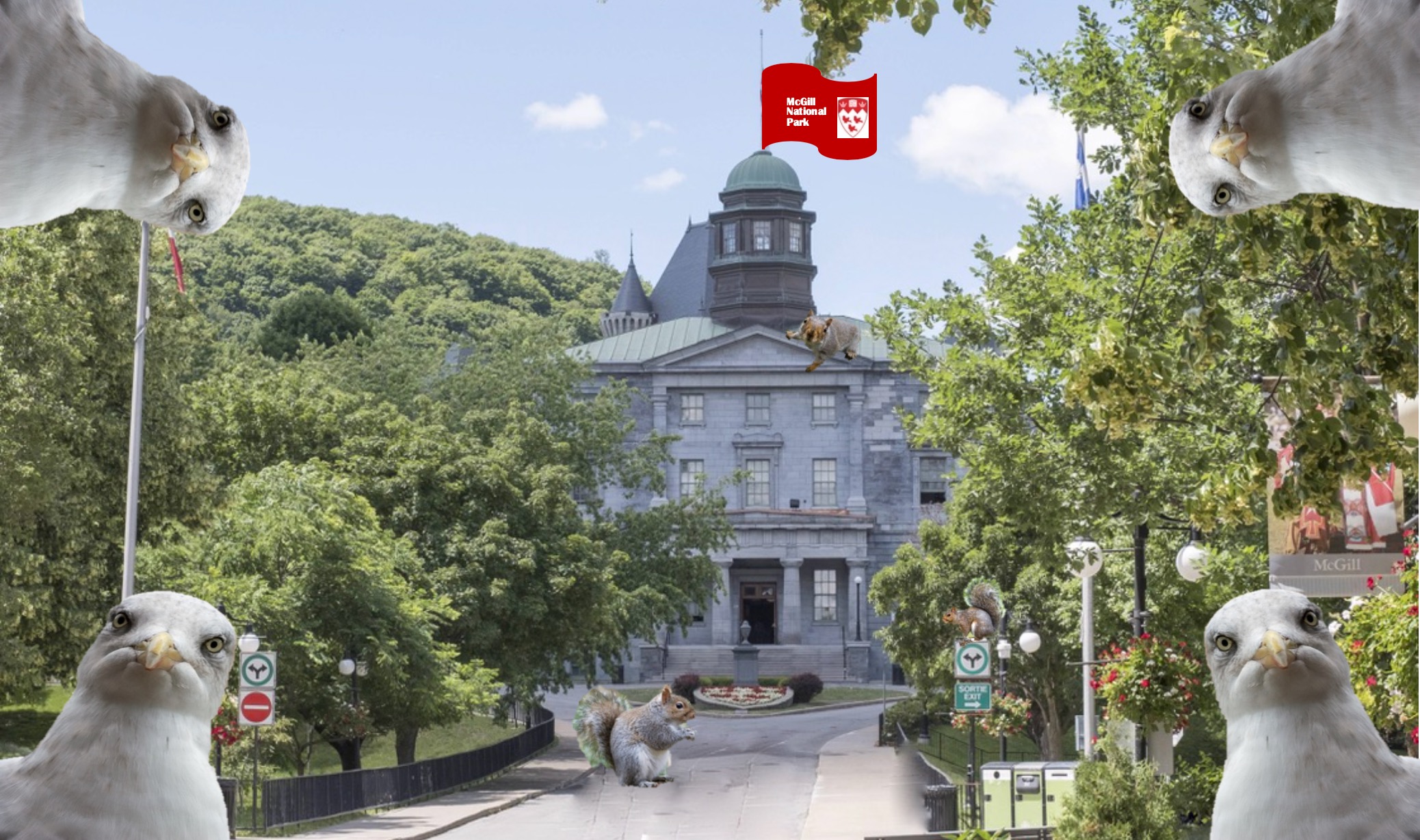
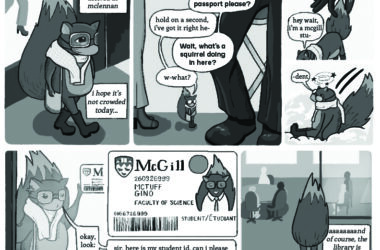
McGill’s downtown campus declared national park to protect local seagull and squirrel population

Following the McGill administration’s closure of campus until May 1 as a result of directives of the provincial government regarding limiting the spread of COVID-19, the McGill community was forbidden from gathering on the university’s grounds. 

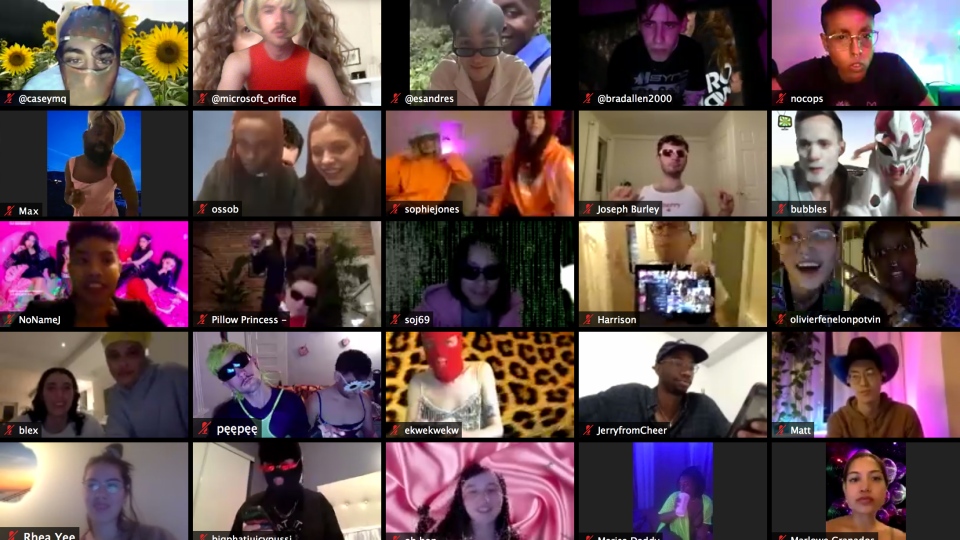
Overnight, the McGill campus was devoid of its human population, who turned to Zoom’s backdrop feature to experience Canada’s vast and beautiful landscapes. Yet, not all of the campus’s inhabitants abandoned the McLennan-Redpath complex. Instead, the Milton-Parc community could suddenly hear a beautiful symphony of screeching seagulls, and no longer needed their alarm clocks to wake up. 

The seagulls, local to the area, have had their beaks set on McGill’s downtown campus for a while, but the university’s large student population had, until now, made it very difficult for them to settle undisturbed. The seagulls were also inconvenienced by the squirrel population living on campus, who were always first to get students’ leftover food from the trash and dig up sweet finds from Lower Field. 

“The amount of laptop-carrying douchebags criss-crossing the Y intersection made living here unbearable,” Steven Seagull said. “Don’t even get me started on how those thicc [sic] squirrels would get to the thrown out bahn mis and Four Loko cans before any of us could.”

Finally, on March 23, this phenomenon came to the attention of Associate Provost Christopher Buddle as he was filming content for his vlog series, available soon on Hulu and Netflix. Soon after, Buddle notified Parks Canada of the urgent need to protect these rare local species. 

“I was astonished to find out that such a peaceful green space existed in the heart of downtown Montreal, with no human disturbances or noise pollution,” Jessica Gray, Environmental Assessment Scientist for Parks Canada, wrote to The McGill Tribune. “While the circumstances surrounding this newly fallow land are not to be overlooked, it is a delight that we could finally find a home for our locally endangered species.”

On March 27, McGill’s downtown campus was officially declared an urban national park to safeguard the well-being of the local seagulls and squirrels, who can be seen enjoying themselves on the vast playground, and even engaging in some riveting quidditch games on Lower Field. 

Others, however, were disappointed to learn of Parks Canada’s decision to prioritize the needs of these wild species, over that of their own. Milton-Parc’s dogs had been lobbying the McGill administration for years to turn Lower Field into a dog park. 

“My parents and I have unfortunately been living in that neighborhood with all the wannabe frat boys for 10 years,” Confiture, a local celebrity dog, told the Tribune. “Every evening, we walk through this pseudo-Hogwarts scenery and make our way to Lower Field. But every winter, this big ol’ ice rink gets built and I only have half of the field to run on. I know that Mont Royal is close by, but with my old age, I can’t bear to walk uphill. But now that McGill’s campus is a national urban park prohibited to pets, I’ll have nowhere accessible to get some exercise in.”

Entry to the McGill National Park, formerly known as the McGill downtown campus, costs $5 for members of the McGill community, though only transactions with One Card are accepted, and $20 for non-members. Only five people at a time are allowed to visit the park to respect both social distancing rules and the precious species who have permanently moved in.

Horoscopes, Joke, Student Life

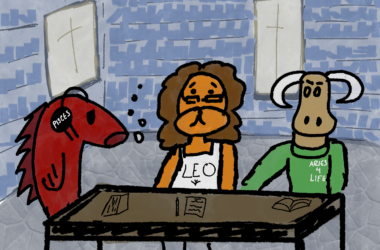
Horoscopes for the week of March 29 to April 4, 2020

Good tidings to you, reader. I hope my greetings find you well. In these strange times we all need a little reassurance to help us keep going. I will remind you that there is indeed a tomorrow, and that tomorrow brings new and exciting challenges and experiences for us, even in the face of self-isolation. After much astrological contemplation, this is what’s in store for you this week.

Aries

A wild goose chase is on the horizon for you, where your skills of agility, quick-thinking, and seduction will be tested by your distrustful neighbour, Caruthers. Good luck.


Taurus 

A special someone is right around the corner, and you’ll be surprised to discover Valentine’s Day has come late for you this year. Unfortunately, it has been further postponed due to the current pandemic.


Gemini 

As a Gemini, your weakness for amphibians will become your strength after you are appointed a high-ranking Canadian military officer to help ward off an unexpected frog invasion. Channel your fear into inner rage as those ferocious animals invade the shores of Vancouver.


Cancer

Your strong sixth-sense will be a source of ‘I-told-you-so’ satisfaction to everyone who doubted your previous warnings of the impending frog invasion. (See Gemini.)


Leo 

Be bold this week. Don’t be afraid to invoke your inner Kirby as you unhinge your jaw and mouth-hoover your dropped Taco Bell Crunchwrap Supreme from the floor of your kitchen.


Virgo 

During these strange times, resist your usual urges to pilot shipping boats off the ports of Montreal a little longer. Your ideal time to strike is right around the corner.


Libra

Make peace your enemy this week and declare war on your roommates for their blatant disrespect of your sexy little sundress.


Scorpio

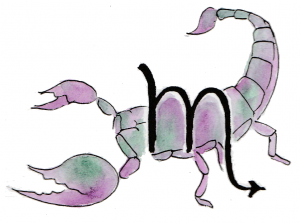
Take note of when your peers let their guards down, as it will be the perfect time to recruit them to your 30-person ska band, affectionately known as The Planet Crushers.


Sagittarius 

Dear Sagittarius reader (if you are not a Sagittarius please stop reading now), I know this is odd, but I believe I may be your father. Please reach out to me by mail, fax, or email me at [email protected].


Capricorn 

Suspense and intensity come your way this week when you have a showdown with the mouse that lives in your apartment. Don’t let your typical arrogance and hot-headedness get the best of you, as this will put you at a disadvantage against the mouse’s use of a .38 Special.


Aquarius

You live in the vibe economy, and the next time you vibe check, prices will be plummeting. Keep this in mind when looking for future vibortunities (vibe opportunities) this coming quarter.


Pisces 

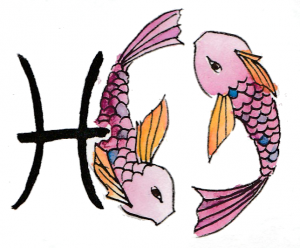
You are a conniving little twerp with nothing but evil in your blood, which is why all your friends and coworkers will be surprised when you selflessly donate your life savings to Chiquita Banana.

(Image credits: Winnie Lin)

Features

Do it yourself, together

There’s no place like home, especially when you’re too young to go to any music venues. This is often the case with punk and its associated DIY scene, where many of their musicians and fans are teenagers and young adults. In places with bustling DIY scenes like Boston or Philadelphia, most music venues are 21-plus, for liquor licencing reasons. Therefore, the house show is the MacGyvered way for young musicians to share their music. For those under-21, the house show monopolizes their music scene because it is the only place to enjoy music in a collective space. But, what makes Montreal’s DIY scene unique is that established venues are relatively relaxed when it comes to fostering the youth subcultures of the city. Furthermore, the young are less isolated from its older and more established counterparts, allowing for a closer connection between the generations within the scene. David Mitchell, the vocalist and bassist of local band Gulfer, recalls how he started out in the DIY spaces nearly 15 years ago.

Martlets, Men's Varsity, Sports

Coaches are key to athletes’ holistic success

Coaches, for better or worse, can change not only an athlete’s career, but their entire life. This is especially true for university athletes, who experience a major period of mental and social development in their lives while also competing for titles and championships. Balancing athletics with academic and social demands can be challenging, so the bond between an athlete and their coach is a vital one. Having someone who understands that there will be ups and downs in their sport, and their life in general, can be crucial for an athlete’s overall success. 

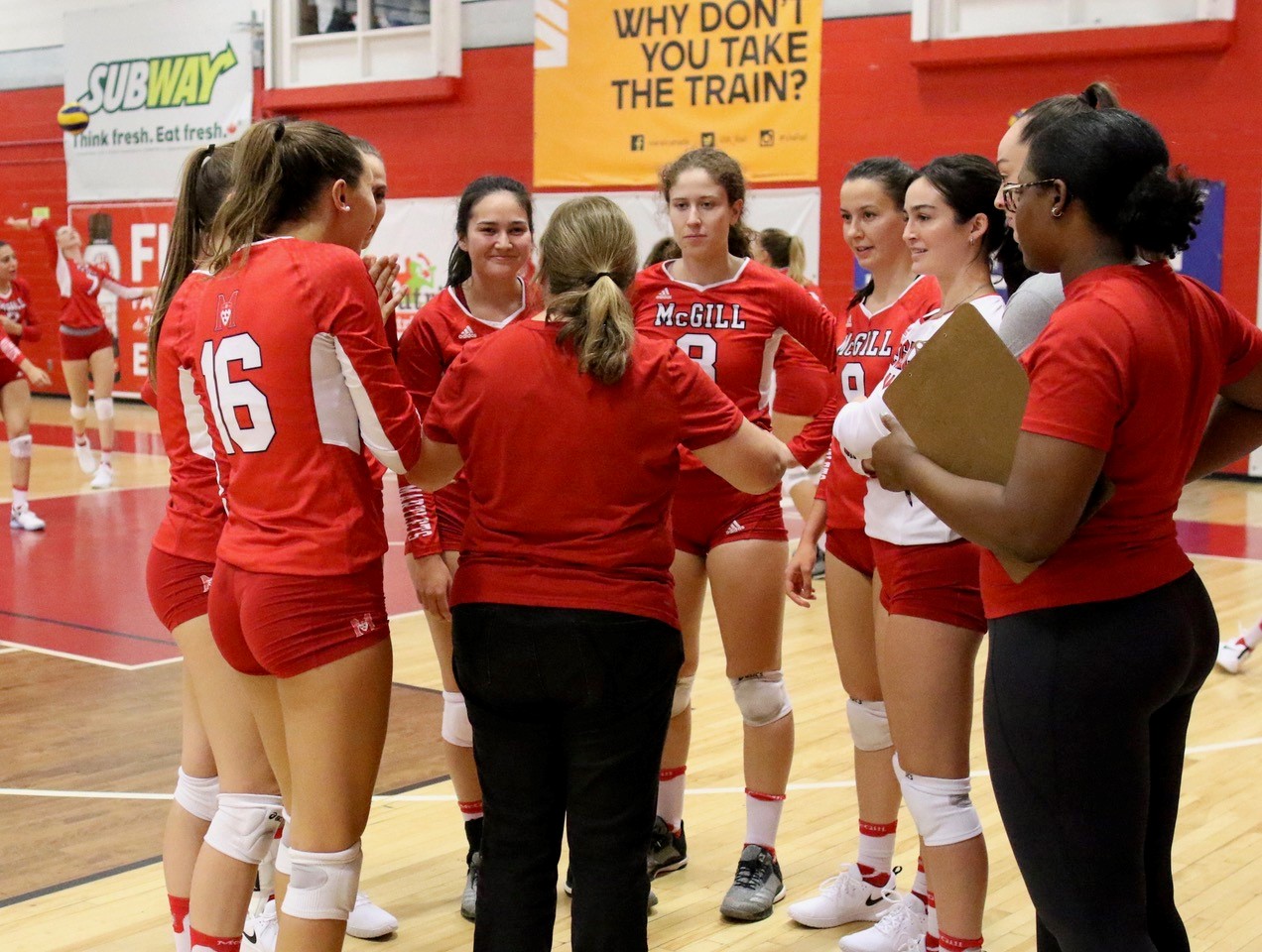
Many student athletes think that coming to university will mean a dramatic shift in their relationships with coaching staff, as university rosters tend to be much larger than those of high school teams. Intuitively, one might think that smaller rosters help facilitate stronger relationships between players and coaches. However, fifth-year middle blocker for Martlet Volleyball Myriam Robitaille explained that this was not the case when she arrived at McGill. 

“I thought [that] with the bigger group it would [feel more isolated], [but] I found the opposite,” Robitaille said. “Coming to university, […] what I [actually found] was another family here.” 

As any McGill student can tell you, the academic workload of university is much greater than that of high school. For athletes, this work comes on top of hours of practicing their sport, lifting weights, and extra conditioning, as well as travelling for games and tournaments, all of which can be stressful. Having to balance athletics and academics can make being a university athlete more challenging than being a professional athlete in some respects. 

“I played one year of [professional volleyball] last year,” Robitaille said. ”You only have [volleyball]. You only have to focus on training, eating well, and sleeping well. At university, it is the opposite. [It is] the most busy schedule you will [have] in your life.” 

Thus, having a coach who understands that you have a life outside of sports is important. Robitaille believes that Martlet Volleyball Head Coach Rachèle Béliveau is a perfect example. 

“I have an excellent relationship with Rachèle, and she is like a second mother to me,” Robitaille said. “I know [that] sometimes I [would be] overwhelmed and [need] more time to study, and she [would say], ‘Go home, study, and take the time to catch up and come to practice tomorrow or next week.’ When [I] felt very [overwhelmed] with school, she was so relaxed with it and so encouraging, which would take a lot of pressure off.”

While a good coach supports their athletes in all aspects of life, their primary job is to help athletes develop their skills. Personal growth, both as athletes and people, go hand-in-hand, however, as McGill Swimming Head Coach Peter Carpenter exemplifies. First-year swimmer Daphne Danyluk described the impact her coach has had on her performance.

“He has definitely changed me as an athlete,” Danyluk said. “I used to be very anxious about my [performance], which obviously did not lead to the […] results that I wanted. He helped me to have fun and enjoy the sport once again.” 

Third-year forward for Martlet Soccer Giovanna Tiberio changed positions after coming to McGill. She explained that her coaches helped her thrive as a forward and realize the impact that her emotions had on her performance. 

“It is not even funny how [much] my coaches have moulded me as a player,” Tiberio said. “I went from nothing to scoring multiple goals, receiving [MVP] of the game [awards], making an all-star team, and, more importantly, just being happy, […] comfortable, confident, and important when I stepped [onto] that field.”

University-level athletes spend an immense amount of time dedicated to their sport, and in doing so, they must make difficult sacrifices. Because of this, it is essential that they have mutual trust with their coaches.

“You spend up to five years competing for the university,” Danyluk said. “It is quite [a] long [time], so it’s good to have a good relationship between everyone on the team, including the coaches. I talk about my objectives and goals to my coach, but also I can talk to my coach about injuries or school problems, and it’s good to have someone who understands and is willing to help.” 

Good coaches are also good listeners. They understand that all their athletes train differently and require different attention. 

“A good coach would be someone who deals with everybody according to their individual goals,” Danyluk said. “Everyone has different objectives and goals in their sports, and that’s okay.” 

Since many coaches at McGill have worked with a wide array of athletes over their tenures, they are able to understand and adapt to different types of learning styles and circumstances. For student athletes who are moving away from home for the first time, their coach fills the position of a mentor figure who they can depend on, where family members or teachers may have served before. The acts of mentorship from coaches often go well beyond the court or field as well, as coaches can provide important support for their players in general. 

“On my way to my first ever practice with the Martlet soccer team, something personally devastating happened to me,” Tiberio said. “I messaged [Martlet Soccer Head Coach Jose-Luis Valdes] to advise him that I would not be able to attend because of personal issues, but that didn’t stop him. He called me, asked me where I was, and then met up with me. Through all my tears, he just listened to me. This is when I really began to understand who he was: A man who would drop anything and everything to make sure his players were okay, on and off the field. It’s so much more than just a team for him.” 

The coaches at McGill are not only compassionate and caring towards their athletes, they also often have an impressive athletic resume. Béliveau, for example, was on one of three Canadian women’s volleyball teams to make it to the Olympics. Having someone like her that is both an accomplished athlete and a phenomenal coach can have an immense impact on their players.

“I think [that Béliveau is] just an excellent role model in general,” Robitaille said. “With a female coach, you can really relate, and I think she [understands] a little more what is happening [with] our emotions […] and our body, and in general how to reach us.” 

For collegiate female players, having such capable role models also inspires them to become role models for the next generation. Tiberio pointed to the women who have broken barriers that were previously thought to be unbreakable and who laid the groundwork for the success of current athletes. 

“I get to be a proud athlete and play with all these layers of privilege thanks to all that the women before us have accomplished and all the women now and thereafter will have accomplished for us,” Tiberio said. 

By being a role model, a mentor, and a friend, coaches can help student athletes become the best versions of themselves. Because of this, many upper-year students plan on staying in touch with their coaches after graduation and may even become coaches themselves. 

“It’ll be difficult to ever say bye,” Tiberio said. “I will be a proud alumna and plan on sticking around and helping as much as I can.” 

Student Life

Zoom style guide: Be the best-dressed student in your online lecture

So much has changed over the course of the Winter 2020 semester. Many of McGill’s traditions, such as convocation and end-of-year formals, have been postponed or cancelled. Many students—particularly those who are graduating—have spent weeks or even months getting ready for these fancy occasions. However, while they are no longer able to get all dolled up to take part in these celebrations, there are still ways to show off one’s most stylish self this semester. To help cope with the loss of in-person celebrations, The McGill Tribune has compiled a list of recommended outfits that students can wear for their Zoom lectures so that they can be the best dressed in their online class. 

The casual look

Everyone has that sweats and stained t-shirt combo that they can’t imagine their life without. While they might not wear it to school everyday, those clothes are the first thing that students put on when they get home. We cook in them, we watch Netflix in them, we sleep in them, and, most importantly, we love them. Sport this look to be as casual as you can in your online lecture and show off that cozy-cute vibe.

Full cap and gown

Show your fellow McGill classmates that you can still throw yourself a party, even if you might not be able to celebrate on campus like you had hoped. This is a great outfit choice as it also allows you to flex on your lower-year classmates who still have many more lectures to attend, on Zoom or otherwise, before they can cross that finish line. This fit is restricted to graduating students only; it’s a complete faux-pas for anyone else to steal this look.

Swimwear

While there are many downsides to being asked to self-isolate at home, being able to tan during class doesn’t have to be one of them. Whether you’re in zero- or 20-degree weather, bring a towel, chair, and laptop outside, break out that swim gear, and get some sun. Your classmates will be in awe of your courage, resilience, and sick tan lines. Bonus points if you add a snorkel to the outfit.

Formal attire

Alright, so you didn’t get to wear that gown or tux to the end-of-year formal. Now’s your time. Getting dressed up and forgetting all of the stress of what’s going on around you is one of life’s greatest coping mechanisms, so go all out. Actually wash and style your hair for the first time since the mayhem began. Do your nails. Wear your nice shoes. You know what they say: When you look good, you feel good so look like a baddie and get that 4.0. 

Your favourite TV show character

You’ve got some time on your hands, so you might as well assemble an ensemble that your favourite TV show or movie character would wear. Think Sharpay by the pool in High School Musical 2 or Dwight from The Office working on the beet farm. This outfit works really well for psychological reasons: Your classmates and professor will recognize you, but they might not know exactly why. For this reason, they will spend a lot of time staring at your screen, so you can feel like you’re getting a lot of attention. Enjoy your time in the spotlight, sweetie! 

Chef attire

Yeah, you can cook. Or maybe not. No one really has to know. This outfit says: “Just got back from cooking a three-course meal, what have you guys been doing?” People will be intrigued, they will be amazed, and they might even be proud. With this outfit, one thing you’re sure to cook up are some good grades. 

Whatever you choose to wear, wear it with a smile. Also, be sure to remember not to stand up in front of your computer unless you’re 100 per cent sure that you’re wearing pants. 

Art, Arts & Entertainment, Music

Supporting the Montreal arts community during the pandemic

Montreal is inseparable from its arts scene: From small, packed music venues to student art exhibitions and comedy shows, this seemingly enclosed community plays an important role in the city’s culture. So what happens when, within a matter of days, venues close, tours and festivals are cancelled or postponed, and everyone must stay indoors? Montreal-based creatives are now grappling with these strange and unprecedented circumstances and turning to each other for support.

“I watched the music industry dissolve in, like, three days,” Malaika Astorga, a visual artist and co-founder of Also Cool Mag, said in an interview with The McGill Tribune. “The sole source of income for so many people is just gone.”

Though she was temporarily laid off from her nine-to-five, Astorga has been able to earn a sustainable income doing freelance work during her time in quarantine. However, like many artists, she is concerned about financial instability.

“I feel like I’m trying to make the best of it by focusing more on my creative work, […] but, at the end of the day, you know, I still need to pay my hydro,” Astorga said.

Like many in Montreal’s creative scene, Astorga is worried that venues won’t be able to reopen once the pandemic is over. Though there are efforts to crowdfund relief aid, she says it might not be enough. 

“I’m concerned about long term support for those kinds of businesses because they’re not seen as essential businesses by the government, even though […] we’re seeing that [people] need entertainment,” Astorga said. “It’s what’s getting all of us through this thing.”

Like Astorga, third-year McGill student Gloria-Sherryl François (Glowzi), a multidisciplinary artist and DJ, has concerns for fellow artists in the music industry. Since entering the professional circuit, she has realized how much long-term planning is involved in making events happen—often as much as a year. Now that the pandemic has forced everything to a screeching halt, she is questioning the validity of the structures that are currently in place. 

“If there’s one thing that this pandemic is showing, it’s that [I’m wondering], well, was this system ever made to work?” François said. 

François also noted that many artists now lack access to the resources they need to create due to self-isolation and the closing of non-essential businesses. But she added that the blow to morale has been offset by increased community support within the creative world. 

I feel like that’s something that was kind of lost after the 80’s and 70’s, where people would just systematically collaborate with each other,” François said. “It was more about […] all these amazing people just coming together and making place for other folks who were not as under the spotlight as them.” 

For Pelin Karaaslan, a painter from Istanbul, her biggest concern is visibility as the events, exhibitions, and pop-up shops she would normally attend have been cancelled.

She cannot access the studio she recently began renting, which she had been visiting everyday before the pandemic to work—her and her studio-mates asked for a rent freeze without success. Luckily, Karaaslan has still been able to paint and focus on her commissions during quarantine, since she has access to  those materials at home.

“I paint everyday and I realize that this sounds cheesy, but really if I have paint supplies, it’s going to be fine,” Karaaslan said. “I’m just painting a lot. I’m trying to […] keep doing what I Iove.” 

If there’s a time to say “thank you” to creatives and venues, it’s now. Astorga explained that the best way to help artists is through GoFundMe pages and PayPals. Also Cool Mag created an artist fund to raise money for artists who sign up. So far, the fund has helped three artists; each received $250. 

Supporting artists by purchasing their artwork, music, or merchandise is another way to help financially. After that, the next best thing to is sharing their work on social media. 

Despite the darkness of the situation, Astorga sees the brighter side of all the community efforts. 

“Maybe it took something like this for us to realize how much we can actually support each other,” Astorga said. “Hopefully there will be more helpful, and empathetic, and […] loving structures in place after this is done, because we’re seeing that they’re essential to our well-being.” 

Artist info:

Malaika Astorga: 

Instagram: @flloral_art

Website: www.malaikaastorga.com

Also Cool Mag:

Glowzi:

Instagram: @glowzi

Website: glowzi.design 

Pelin Karaaslan:

Instagram: @pelinkaraas

Website: pelin.studio

Montreal Venue Relief Fund: https://www.gofundme.com/f/pzes5-montreal-covid19-venue-staff-relief-fund 

Also Cool Mag Artist Fund: https://www.gofundme.com/f/also-cool-artist-fund?utm_medium=copy_link&utm_source=customer&utm_campaign=p_lico+share-sheet&fbclid=IwAR3RCMrnxDG0hjzuBp0Nnrv4TirikwQOh4LeBEmKu-F2prnFUjQI9VO49Nc 

Ask a Scientist, Science & Technology

COVID-19 prompts rise in digital health services

The COVID-19 pandemic sweeping the globe is drastically changing the ways in which people approach work, play, education, and, of course, healthcare. In light of the outbreak, routine checkups have begun to shift online to relieve overcrowded hospitals and reduce opportunities for infection. This style of remote healthcaretermed telehealth or telemedicineaims to provide care to patients at a distance. 

Dr. Antonia Arnaert, a professor in McGill’s Ingram School of Nursing, described telehealth as a specific service of remote healthcare. 

“The larger term that we are using now is digital health,” Arnaert said in an interview with The McGill Tribune. “Telehealth, telemedicine, or mobile health are all components of digital health.” 

Digital health describes services that use technology to deliver healthcare, including data analytics, artificial intelligence, virtual reality, and networks of interconnected sensors and mobile technologies called the ‘Internet of Things’ (IoT).

Telehealth operates through various channels. Services can be delivered through video conferencing sessions, allowing the healthcare practitioner at the other end of the call to diagnose the patient’s condition in real time. Patients can also upload photos and other media for doctors to examine. Arnaert explained that patients’ digital data that do not require immediate attention are stored in a process called ‘store-and-forward.’ These data can then be retrieved at a more convenient time for busy healthcare providers, many of whom have become even busier with the COVID-19 pandemic.

Telemonitoring is a subset of telehealth that applies specifically to patients with chronic conditions and those recovering from surgery. Using body sensors and IoT networks, telemonitoring allows health professionals to remotely track and review patients’ vital signs.

By making distance and mobility non-factors, telehealth provides essential services to those who would otherwise struggle to access conventional healthcare. However, bringing telehealth into the mainstream is easier said than done, as both technical and human obstacles stand in the way of widespread adoption. The first major challenge is a lack of technical infrastructure that can facilitate the flow of information between patients, medical professionals, and hospitals. Much of the data in Quebec hospitals are still paper-based, and where electronic systems do exist, the ability of separate digital networks to effectively exchange data, termed interoperability, is still very low. 

“The many challenges regarding interoperability […] makes it quite difficult for healthcare providers to become excited [about telehealth],” Arnaert said. 

These primitive methods of data storage impede the development of telehealth services, as they rely on the abilities of digital systems to take in and process patient data on one end and transmit doctors’ orders back to patients on the other. 

Other challenges of implementing telehealth lie in the realm of human resources. Providing reliable healthcare online requires an army of IT technicians to maintain network infrastructures and ensure that Internet connections are stable, servers are not overloaded, and data uploaded to cloud storage centres are secure and encrypted. As for the healthcare professionals themselves, they must be trained on using telehealth technologies. 

The COVID-19 pandemic will provide a significant incentive to start shifting telehealth into the  mainstream of healthcare. To ensure that the next generation of doctors and nurses are well equipped to provide telehealth services, Arnaert suggested that this type of training be integrated into medical education and at workplaces. 

“The pandemic will speed up things from a healthcare perspective and help make changes,” Arnaert said.  

Arnaert compared this trend in telehealth to the similar rise in e-learning brought about by school closures, in that the technology has always been available. The COVID-19 outbreak demonstrates the pressing need for such infrastructures, accelerating the incorporation of the online platform alongside conventional methods of providing education and healthcare. In the long term, the benefits from these digital tools may well outlast the outbreak itself.

Commentary, Opinion

COVID-19 and domestic abuse: Why Canadians need to isolate now, rather than later

On March 18, 2020, McGill students everywhere opened their inboxes to discover that McGill would be shutting down due to the COVID-19 pandemic, with classes for the remainder of the Winter and Summer terms being taught remotely. Canada is now in a state of lockdown due to a government-mandated quarantine. The COVID-19 virus has spread rapidly, with approximately 6,320 cases reported across the country as of press time. With a litany of businesses, schools, and workplaces shut down, many people find themselves confined within their homes, unable to leave due to social distancing  measures. This situation is particularly alarming for survivors of domestic abuse, who may find themselves trapped with their abuser and isolated from their friends and family. Refusing to self-isolate does more than just spread the virus: It may also prolong the length of time that survivors are forced to spend with their abuser in quarantine. Quarantine and social distancing policies set by the government must be taken seriously: It is during such extreme circumstances as a pandemic that Canadians must consider the needs and vulnerabilities of others above their own. 

The quarantine has forced many people to work from home or lose their jobs altogether. These potential financial losses strips domestic abuse survivors of the independence and resources that they might use to protect themselves and their loved ones from an abuser. A lack of financial independence further increases the abusers’ control, making it harder for survivors to leave. Many people will continue to remain out of work until the pandemic is under control, which can, in part, be helped by social distancing, until then, many survivors will be faced with co-inhabiting with their oppressors. 

Government-mandated isolation also forces abuse victims to be isolated from their support systems and loved ones. Often, survivors find respite in workplaces and at school, as they provide a physical distance from the abuser. Additionally, educational institutions and places of work can offer survivors social support. These environments provide a measure of control that the victim does not have at home. The COVID-19 outbreak has resulted in many shelters for domestic violence victims becoming overwhelmed, many women will be forced to remain in crowded shelters to care for their children, putting them at a higher risk for contracting the virus. With the shelters reaching full capacity and facing the trials and tribulations the virus brings, some women may find themselves unable to seek refuge from their abuser at these shelters. These shelters will continue to be overwhelmed until the virus is under control and the curve is flattened, prospects that heavily depend on how strictly individuals choose to practice social distancing. 

Although many shelters in Canada have turned to online and phone support for women in crisis situations, many have ceased physical measures of support. As healthcare systems nationwide become overwhelmed in response to the COVID-19 outbreak, survivors are faced with delays and a lack of healthcare resources as the pandemic is prioritized, making the situation more dangerous and difficult. Until the pandemic is contained, the healthcare systems will continue to be overwhelmed, making it difficult for survivors to seek adequate care and support, further exemplifying why people choosing to socially distance and self-quarantine is crucial to help contain the virus to alleviate the burden on the health care systems. 

During a pandemic, it is important to understand that social distancing and isolation prevent the spread of  disease, but also to shorten these measures. As members of the Montreal community, McGill students have a responsibility to practice social distancing, meaning that opting to quarantine with several friends and hopping from apartment to apartment must cease.  Refusing to isolate out of resistance to giving up “everyday life” prolongs the pandemic and in turn, heightens situations of domestic violence for others, because as long as the virus continues to spread, Canadians will continue to be forced to remain indoors.   

Read the latest issue

Read the latest issue