

Latest News

McGill, News

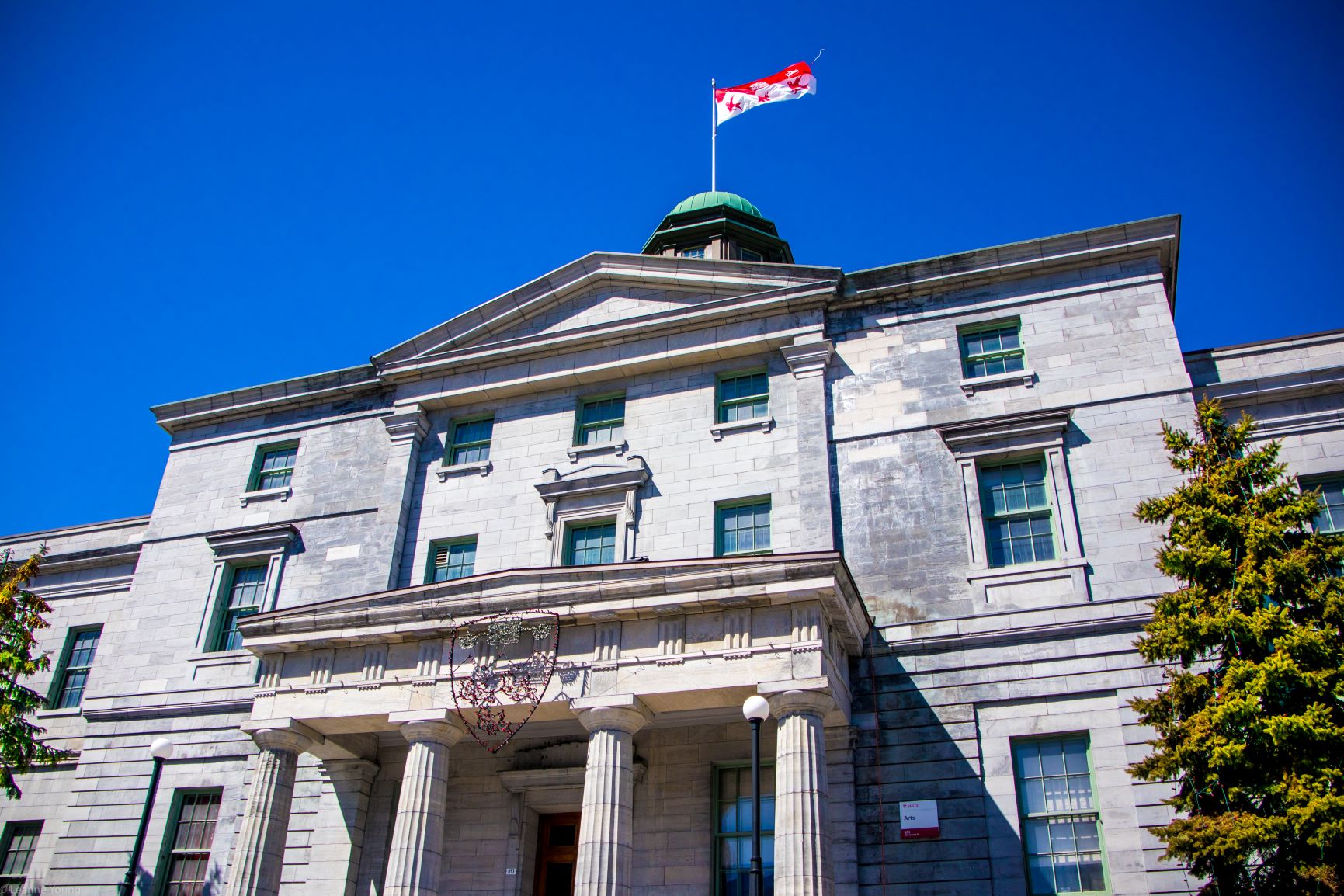
McGill announces remote Fall 2020 semester

McGill announced on May 11 that it would join other post-secondary institutions across North America in transitioning to online learning as the primary method of course delivery for the Fall 2020 semester. Although this type of switch is unprecedented in McGill’s history, the administration aims to clarify how learning and student activities will take place over the summer months. 

Following the Quebec provincial government’s mid-March orders to cease in-person teaching, McGill students and staff completed the Winter 2020 semester remotely via Zoom calls and lecture recordings. Associate Provost (Teaching and Academic Programs) Christopher Buddle hopes that the transition to remote teaching platforms will not be viewed as a sub-par, temporary solution, but instead as an opportunity to foster a positive learning environment.

“The transition was really quick at the end of the winter [semester],” Buddle said.  “It was pretty difficult to really put the effort in to make sure that the experience was exactly where we wanted it [to be] for remote delivery of courses. What we’re trying to do […] over the summer is bolster support for instructors, whether it’s through webinars, […] individual training sessions […], or learning communities in faculties, to really look at ways that remote delivery can be enhanced.”

With classes moving online, students have voiced concern about the impact that remote learning will have on their education. Alex*, U1 Science, feels that those who rely upon support from services such as the Office for Students with Disabilities (OSD) may not be able to receive the learning accommodations they require. 

 “Most [of the] accommodations that McGill [provides for OSD students] is extra time to write exams and writing exams elsewhere than the field house,” Alex said. “Now that [we] have 72 hours to write [exams] from home, [McGill and the OSD] assumes [that it’s enough], but those are accommodations for COVID-19, not accommodations for [students] registered under the OSD.”

Another concern among students is that valuable educational experiences, such as opportunities for in-person labs and research, will not be transferable online. While McGill has yet to announce how location-specific courses that cannot be replicated remotely will proceed, there are several ideas currently being considered by the administration. 

“Faculties are looking at a number of [solutions, such as] offering the class in the winter instead of the fall,” Buddle said. “[We’re looking] at ways to do virtual labs and simulations [as well as] using multimedia technologies to make lab experiences quite full and rich, even if [the student is just] sitting in their living room.” 

As many international and out-of-province students may elect to not return to Montreal, Buddle emphasizes that aside from those enrolled in certain yet-to-be-determined graduate-level and clinical work courses, students will not be expected to return to campus. 

“If there are any [school] activities in-person and students aren’t in the Montreal area, we are looking at ways to make sure that [they also] have access to that material,” Buddle said. “However we start the term is how we end the term in [regards to] academic activities [….] We don’t want to switch [teaching activities] part way through the term, […] because that really disadvantages students that aren’t here.” 

It is not yet clear whether campus facilities such as McGill’s libraries and the athletic complex will be accessible. Buddle confirmed that some residence accommodations are planned to be open to first-year students but could not say which specific residences. 

Still, despite the administration’s efforts, some members of the McGill community, such as Aakanksha Mathur, U1 Arts, find that the quality of online education is simply not comparable to in-person classes. 

“Although [McGill has assured students that] they will get the same academic experience […] it’s really not the same,” Mathur said. “I’m still continuing with a summer course right now, but since it’s an intensive course, you are meant to have two hours of lectures a day. Now I’m having 30 to 60 minute videos instead, and some random lab videos that happen once a week, which is […] disappointing.” 

Mathur, along with a growing number of students, feel that this shift in curriculum delivery should be reflected in cuts to the Fall semester tuition. 

“I’m not expecting [McGill] to [provide] free courses,” Mathur said. “They’re still justified [in taking] a fee. I don’t think that they are justified taking such a high fee and at the same time saying [that we’re receiving] the same level of education, because we’re not.” 

Buddle declined to comment on the possibility of tuition reduction. 

The McGill administration will continue making announcements with updates throughout the summer. 

* Name has been changed to protect the anonymity of the source.

 

News, The Tribune Explains

Tribune Explains: The Involvement Restriction Policy

The Students’ Society of McGill University’s (SSMU) Inter-faculty Involvement Restriction Policy (IRP) is a contract and policy that processes, investigates, and acts on complaints of discrimination, violence, harassment, improper conduct, or gendered violence. The policy aims to minimize harm and ensure the safety and wellbeing of the individual filing the complaint, the plaintiff, by investigating the complaints and implementing varying restrictions to events specific to each charge. Following an April 2 article published by The McGill Daily detailing recent invocation of the IRP against an incoming SSMU executive, The McGill Tribune looked into the policy details of the IRP.

The evolution of The Inter-Faculty IRP

Initially, the Management Undergraduate Society, the Engineering Undergraduate Society (EUS), Arts Undergraduate Society, and the Science Undergraduate Society possessed their own individual IRP. Prior to the ratification of the inter-faculty IRP in December 2019, the plaintiff had to undergo the IRP process in every faculty if they wanted to implement restrictions to the respondent for events across all faculties. In an interview with The Tribune, EUS President Niloufar Seraj explained why the inter-faculty IRP is more comprehensive than the previous policy.

“[Faculty members] ended up agreeing that you can’t really protect [all McGill students] when you can only restrict access to people in your own faculty, and can only handle cases of members in your own faculty,” Seraj said.

The standard inter-faculty IRP process superseded the faculty-specific IRP processes and also allowed faculties to share information about relevant cases amongst each other. Although each faculty’s investigative committee handles complaints, the restriction outcomes can be honoured across all faculties signed under the inter-faculty IRP because the process is identical.

The IRP ultimately acts as a safety measure for the plaintiff and other affected individuals, not a judicial or punitive measure: It does not make public judgments about whether or not the respondent is guilty or innocent, nor is it capable of administering disciplinary measures.

The scope of restrictions under the inter-faculty IRP

Seraj clarified that the restrictive actions are tailored to each specific case. 

“There is no one version of restriction. There are an unlimited amount of possibilities [of incidences],” Seraj said.

The IRP investigative committee assigns the corrective action best suited to the specific incident. The committee’s recommendations to the respondent could range from mandatory workshops and training to a restriction from a specific event or group, or even to a wider ban from all events where alcohol is present.

The standard procedure for determining restriction outcomes

Individuals who wish to file a complaint must fill out the details of their case in an incident response form and specify how they would like the investigative committee to respond. Alternatively, the plaintiff can use the response form to report the incident without requesting further action or recommending specific action to the committee.

If the complaint falls under the scope of the IRP, the investigation will begin. The composition of the investigative committee generally includes equity commissioners, executive faculty members, and individuals trained in the involvement restriction procedure. Members of any investigative committee are required to sign non-disclosure agreements to ensure confidentiality throughout the process.

During the investigation, the IRP committee interviews the plaintiff, the respondent, and anyone who voluntarily comes forward with information about the incident. The investigative committee may also accept written statements in place of an interview.

The committee then decides by a majority consensus which restrictive measures it deems are necessary to ensure the safety of the plaintiff and others and communicates the results privately. The measures taken will never exceed the request of the plaintiff. Should the plaintiff request that the respondent be banned from all faculty events, the equity commissioners will submit the name of the respondent to the SSMU Anti-Violence Coordinators (AVC). The SSMU AVC maintains a central list of all individuals who are subject to any involvement restrictions.

How and when to use the inter-faculty IRP

McGill undergraduate students, and any other persons impacted by the incident, may file incident reports confidentially, anonymously, or through a proxy. Individuals may file complaints against McGill undergraduate students, graduate students, alumni, staff, employees, and visitors. Complaints may be filed about incidents that occurred in any situation in which McGill students are present, both on-campus or off-campus.

To report an incident under a specific faculty, fill out the faculty incident response form and submit it to the chair of the Faculty Committee. To report an incident through SSMU, complaints should be submitted to the Anti-Violence Coordinators ([email protected]).

Research Briefs, Science & Technology

Mapping the types and causes of cancer

Cancer is a family of related diseases caused by the uncontrolled division of cells known as a tumour. The Pan-Cancer Analysis of Whole Genomes, a six-year project comprising the work of more than 1,300 researchers in 37 countries, is the largest, most in-depth analysis of cancer genomes to date. It aims to investigate these genetic mutations in more than 30 cancer types with previously unknown causes. 

When researching the causes of a cancer type, the traditional method has been to examine the genetic mutations in the exome, the protein-coding genes that make up one per cent of our genome. However, in the new initiative, scientists decided to study the other 99 per cent of our DNA that is composed of non-coding genes and their mutations. 

The scientists aimed to sequence the entire genome of 38 different tumour types by examining 2,605 localized primary tumours and 173 metastases, tumours that have migrated to other parts of the body. The project thus provided insight into genetic mutations that occur within the non-coding genes of the genome of cancer patients. 

Researchers found that while mutations in coding regions of DNA are central in driving the development of cancers, mutations in the non-coding regions actually contribute as well. Although individually these mutations do not have a great effect, the sum of all these mutations significantly contributed to cancer development, contrary to what was previously believed by scientists. This new information could provide an alternative view on the causes of cancers and pave the way for more targeted gene therapies.

As of February 2020, the team of researchers have published more than six papers in Nature Magazine and an additional 16 papers on other platforms. With such large-scale data-sharing, however, significant measures had to be taken to respect data protection regulations. Mark Phillips, an academic associate at McGill’s Centre of Genomics and Policy, was in charge of implementing the safeguards for the privacy of patients who contributed their data to the study. 

“From the perspective of the participants themselves, genomic data [are] extremely rich and usable for a multitude of purposes,” Phillips wrote in an email to The McGill Tribune. “[They are] often also stored alongside other sensitive health information, such as a participant having a certain disease [….] Genomic data […] potentially [tell] so much about a person that […] there are any number of additional possible ways the data could be used or misused that no one has conceived of yet.”

The Pan-Cancer Project’s results relied heavily upon patient data and data sharing. In fact, privacy laws play a big part in any human genomics project. 

“We should aim for as universal as possible of a code of conduct for genomic data sharing,” Phillips wrote. “Genomics has become a coherent, international field of study. It’s also more given to close international collaboration and data-sharing than other fields of research, and so a shared framework across this new field is particularly needed.” 

Without patient data and the work of researchers like Phillips who ensure that they remain secure, the project itself would not have been possible.

The study also highlighted the notable use of carbon dating to study cancer genetics, a method based on retracing cancer-causing mutations that had occurred several years before the tumour’s appearance. Using this method, the researchers found that 20 per cent of these mutations occurred before the first trace of a tumour, and that a large proportion of these mutations were within the same group of genes. Thanks to patient data and a diverse team of researchers, the study’s results may shape future methods of early-on cancer detection, allowing for doctors to find cancers before they progress.

Cartoons

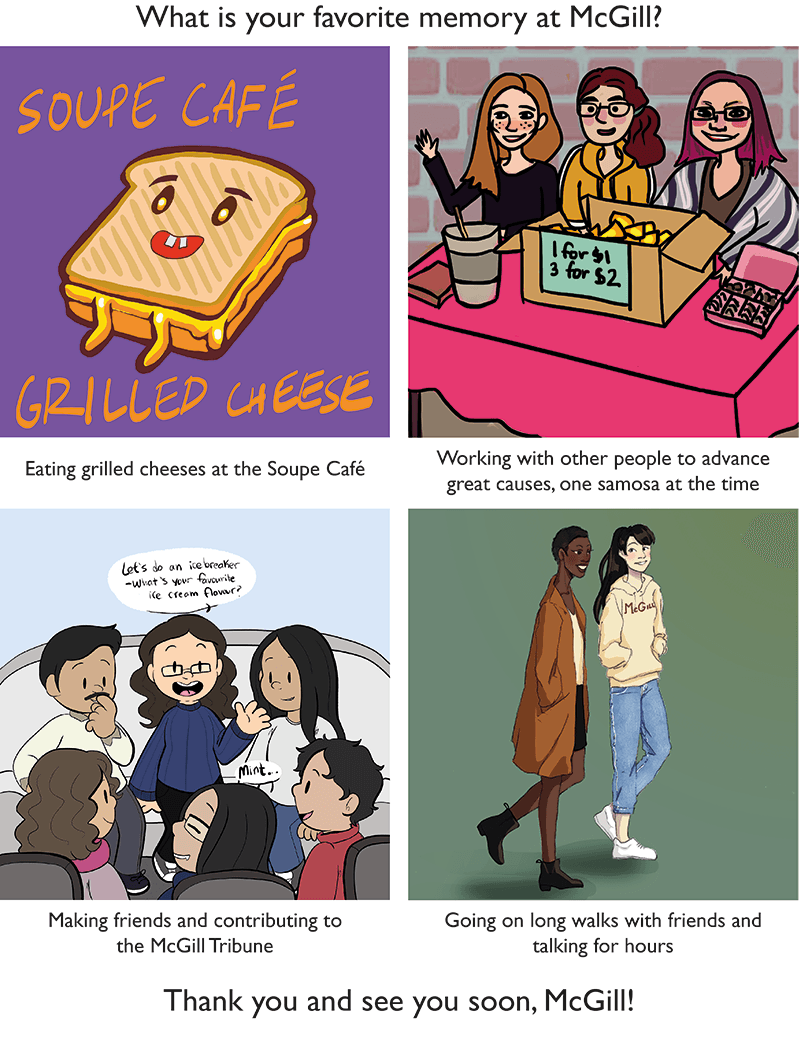
See you soon, McGill!

(Nicholas Raffoul, Daria Kiseleva, Sunny Kim, Sabrina Girard-Lamas / The McGill Tribune)
Features

Snail mail

My first pen pal was my grandma’s dog, Amigo. He wrote me stories on little scraps of birchbark about his life in the backyard: Digging holes, chasing squirrels, and accompanying my grandma on her walks. He asked me about what I was learning in school, what life was like in the big city, whether or not I was excited to be a big sister. When Amigo died, the correspondence responsibility was transferred to her new dog, Tangles. I was older then, and insisted upon having human pen pals. I loved the idea that my words could be taken anywhere in the world. I was hooked on a hobby that I practice to this day. Since moving to Montreal for university three years ago, I correspond mostly with a close friend from home, Seth Bartusek, and my 10-year-old sister, Hannah Jane. I spoke with both of them about how exchanging snail mail has changed the way they communicate.

Basketball, Martlets, Men's Varsity, Soccer, Sports

2019-20 ‘Tribune’ end-of-year athletics awards

Team of the year: Men’s swimming

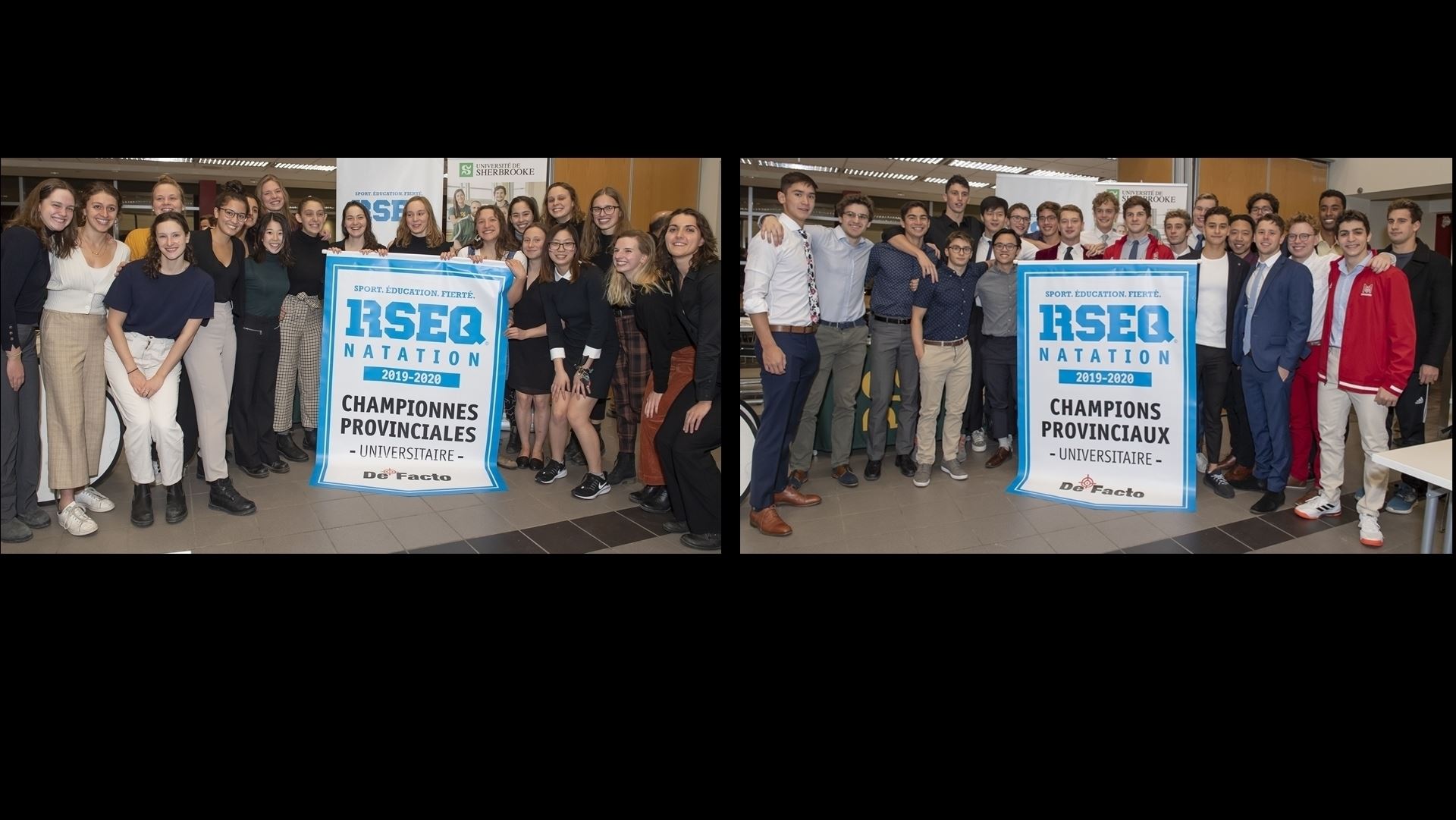
McGill Swimming excelled this year, with both the men’s and women’s teams finishing in first place at the RSEQ Championships. At the National Championships, the men’s side placed fourth overall and earned four medals for the first time since 2009. Second-year Clement Secchi stood out, winning two gold medals and one bronze, as well as setting a blazing-fast Nationals record of 25.82 seconds in the 50 metre backstroke. Secchi has driven McGill’s turnaround in men’s swimming in the last two seasons, pushing them higher in the rankings than they have been in years past.

Coach of the year: Peter Carpenter (Men’s swimming)

Much of McGill Swimming’s success this season can be attributed to Head Coach Peter Carpenter. In 2020, Carpenter was awarded Fox 40 Men’s Coach of the Year and RSEQ Men’s and Women’s Coach of the Year

“[Carpenter] has definitely changed me as an athlete,” RSEQ Rookie of the Year Daphne Danyluk said in an interview with The McGill Tribune. “I used to be very anxious about my [performance], which obviously did not lead to the […] results that I wanted. He helped me to have fun and enjoy the sport once again.” 

Female athlete of the year: Maria Gheta (Artistic swimming)

Second-year Maria Gheta led the women’s artistic swimming team to their second consecutive—and 16th overall—national championship title. Gheta’s season featured several remarkable performances, including a duet with her sister Ioana Gheta that earned them first place in the Canadian University Artistic Swimming Finals. She was named Athlete of the Week by McGill Athletics on several occasions. Gheta is leading McGill Athletics in perhaps its most dominant stretch in any sport and will continue to do so in the years to come.

Male athlete of the year: Jamal Mayali (Men’s basketball)

Averaging 17.4 points, 4.7 rebounds, and 1.5 assists in league play during the 2019-2020 season, third-year shooting guard Jamal Mayali led the McGill men’s basketball team to a conference record of 12–4. This was enough to secure the number-one seed in the RSEQ postseason tournament. Mayali’s crafty shooting and foul-drawing style of offence allowed the team to work like a well-oiled machine, with wide floor spacing that kept the lane clear. Mayali’s efforts this season earned him a First Team All-star selection from the RSEQ. 

Female rookie of the year: Ariel Carignan (Women’s soccer)

First-year centre back Ariel Carignan came in blazing for the Martlets. Fresh off a promising season at Collège de Sherbrooke, Carignan did not want for highlights this season, ending a six-year losing streak to the Université de Montréal Carabins in October with a curling free kick to win 1–0. This performance earned her an Athlete of the Week from McGill Athletics and RSEQ All-Rookie Team merits. Carignan’s performance helped the Martlets finish the season with an impressive record of 9–4–1. With three years of eligibility left, it is safe to say that we can expect more highlights from Carignan in the years to come. 

Male rookie of the year: Cameron Elliot (Men’s basketball)

First-year guard Cameron Elliot had an outstanding season with McGill men’s basketball: He led the team in assists with 93 on the season, almost 30 more than second-place teammate Quarry Whynne, and was third in minutes played for McGill. This well-rounded performance earned Elliot a spot on the RSEQ All-Rookie Team. As well, the guard’s proficiency as an unselfish playmaker bodes well to the future of McGill basketball.

Science & Technology

Medicinal cannabis: Past, present, and future

With its legalization in 2018, marijuana, or cannabis, has become more widely accessible to adult Canadians for recreational use. Most people are familiar with marijuana’s usual effects, such as feelings of euphoria and relaxation; increased sensitivity to colour, sound, and taste; clouded thinking; and hunger. Beyond recreational use, however, cannabis has a number of important uses and applications in the biomedical industry. 

Cannabis is a genus of flowering plants belonging to the family Cannabaceae. The active chemicals found in cannabis are called cannabinoids, the most notable of which is tetrahydrocannabinol, or THC, which is also the plant’s primary psychoactive compound, responsible for the common “high” feelings.  Over 100 cannabinoids have been identified, including cannabidiol, or CBD. 

The current and future applications for cannabis in medicine build on a long history of human understanding. The use of cannabis as medicine can possibly be traced back as far as 2737 BC, when, according to Chinese legend, Chinese Emperor Shen Neng prescribed marijuana tea to treat a plethora of illnesses, including gout, rheumatism, and poor memory. A more successful and reliable use can be attributed to Hua Tao, a Chinese physician who lived around 110 to 207 AD. Thought to be the first to use cannabis as an anesthetic, Tao allegedly mixed dried cannabis powder with alcohol to create a numbing powder used before surgery. In fact, the Chinese word for ‘anesthesia,’ mázui, literally means ‘cannabis intoxication.’ 

In the US, cannabis was used as a patent medicine during the 19th and early 20th centuries. However, the introduction of legal penalties for marijuana possession, and its criminalization in the second half of the 20th century, limited medical cannabis research as it became more difficult to obtain, even for scientific purposes. 

By the late 20th century, more states in the US started to support prescription cannabis, finally allowing medicinal marijuana research to properly take off. 

Carolyn Baglole, a professor in the Department of Medicine at McGill and member of the Research Centre for Cannabis, explained how CBD can be used in medicine. 

“CBD has been studied fairly extensively,” Baglole said in an interview with The McGill Tribune. “There’s a lot of hope that CBD can be used therapeutically to treat a variety of different conditions, whether [that be] helping you sleep better or reducing inflammation and pain associated with rheumatoid arthritis.” 

Yet, scientists still do not fully understand many compounds found in cannabis. 

“It’s thought that perhaps the combination of these different compounds is responsible for the widespread beneficial therapeutic properties,” Baglole said. 

When cannabinoids enter the nervous system, they bind to cannabinoid receptors CB1 and CB2, a class of cell membrane receptor proteins located throughout the body. This binding causes many of marijuana’s psychoactive effects. Cannabinoid receptors are a part of the endocannabinoid system, which plays a role in many physiological processes, including mood, memory, appetite, and the perception of pain. 

“The endocannabinoid system is sometimes referred to as the ‘Goldilocks,’ because it’s a system that helps us feel just right,” Baglole said. “It regulates our temperature, our mood, our circadian rhythm, digestion, [which are] all important for homeostatic control.” 

At McGill, research on the medical application of marijuana takes place at the Research Centre for Cannabis. Baglole is one of two co-leads for the biomedical sector of the Centre.

“We were granted centre status officially through the Faculty of Medicine one year ago,” Baglole said. “There was good momentum at McGill to organize a centre that would unite folks with diverse expertise in all things cannabis [….] It’s probably one of the most comprehensive cannabis centres in existence.” 

Antonio Vigano is a professor in the Department of Oncology and Medicine and the other co-lead of the biomedical sector. 

“We are looking at a lot of pre-clinical studies to understand the mechanisms of action and the chemical composition of medicinal cannabis, and the real challenge comes with trying to understand how medicinal cannabis can help our patients,” Vigano said. “In particular, we are looking at how to integrate medicinal cannabis in response to chronic conditions.” 

More recently, cannabis has been used in cancer therapy. Though not a direct treatment, it can alleviate symptoms and improve the general quality of life for cancer patients. Doctors can prescribe it as medication for cancer patients experiencing adverse effects of chemotherapy, such as nausea, vomiting, and general cancer-related pain. According to Vigano, cannabis can be taken alongside more traditional cancer treatments.

“My usual response to cancer patients is that, if you feel better, and you can do more, you can be in better shape [as a result of medicinal cannabis] to receive traditional cancer treatments like immunotherapy,” Vigano said. “We know that one problem of cancer treatments is how difficult it is to go through them […] patients are very fatigued, they lack appetite, they’re in pain. All these symptoms can be treated and can benefit from medicinal cannabis.” 

Baglole explained that THC is not as addictive as other compounds like opioids, but it has been shown that psychological addiction and dependence can arise from regular cannabis use. The American Psychiatric Association’s Diagnostic and Statistical Manual of Mental Disorders (DSM-5) classifies cannabis use disorder as an official condition, which gives rise to the question of whether patients who are prescribed medicinal cannabis can become dependent on it. US federal law lists cannabis as a Schedule I drug, meaning it is likely to be abused and lacking in medical value. This places it on the same level as heroin, ecstasy, and LSD. Unlike marijuana, however, over 65,000 heroin overdoses occurred in 2018, ecstasy is frequently cut with stronger and more dangerous drugs, and LSD is a powerful hallucinogen

Lara*, a U2 Arts student at McGill, explained how daily use of cannabis began to affect their day-to-day life in an interview with the Tribune

“Using marijuana every day really diminished its effect,” Lara said. “While it still prevented me from being very productive, a lot of the more enjoyable effects weren’t occurring.” 

Lara also talked about what happened when they did not use cannabis. 

“I would have a lot of trouble sleeping, and throughout the day, all I could think about was how much more comfortable I would be if I could smoke,” Lara said. “I was almost in a permanent state of relaxation, and I lost interest in many activities that I was passionate about before.” 

While cannabis can negatively affect recreational users, Baglole emphasized that people who need cannabis for debilitating and chronic conditions like rheumatoid arthritis would benefit more than they would suffer. She stated, however, that with the research still in its infancy, it is difficult to provide concrete information regarding medicinal cannabis dependency.

In the future, the biomedical sector of the Centre hopes to answer major questions that remain about cannabis use. In particular, Baglole’s lab has been focussing on the outbreak of lung injuries that have arisen due to THC-containing vape devices, which are still not well understood in the medical community. Though not a medical application, examining the negative effects that cannabis-like products can have is important for better understanding the drug more comprehensively.

“We still don’t really know much about the inhalational effects associated with cannabis use, particularly vaping, so one of the directions my lab is hoping to take is regarding the safety and efficacy of lung-delivered cannabis products,” Baglole said. “Even for medical purposes, smoking is still the most common form of cannabis consumption. We want to know, ‘Is it safe?’ And if it is safe, how effective is it in alleviating symptoms with various conditions?”

There is still a lot of research to be done before cannabis can easily be administered in a medical setting, from understanding the chemistry of cannabinoids, to investigating cannabis’ effect on the brain, to grasping the social implications of cannabis’ long history as an illicit drug. However, with teams like the Research Centre for Cannabis, our understanding of medicinal cannabis is bound to improve, hopefully allowing cannabis to help patients that would greatly benefit from it. 


*Name has been changed to protect the anonymity of the source.

From the BrainSTEM, Science & Technology

The changing nature of sea ice

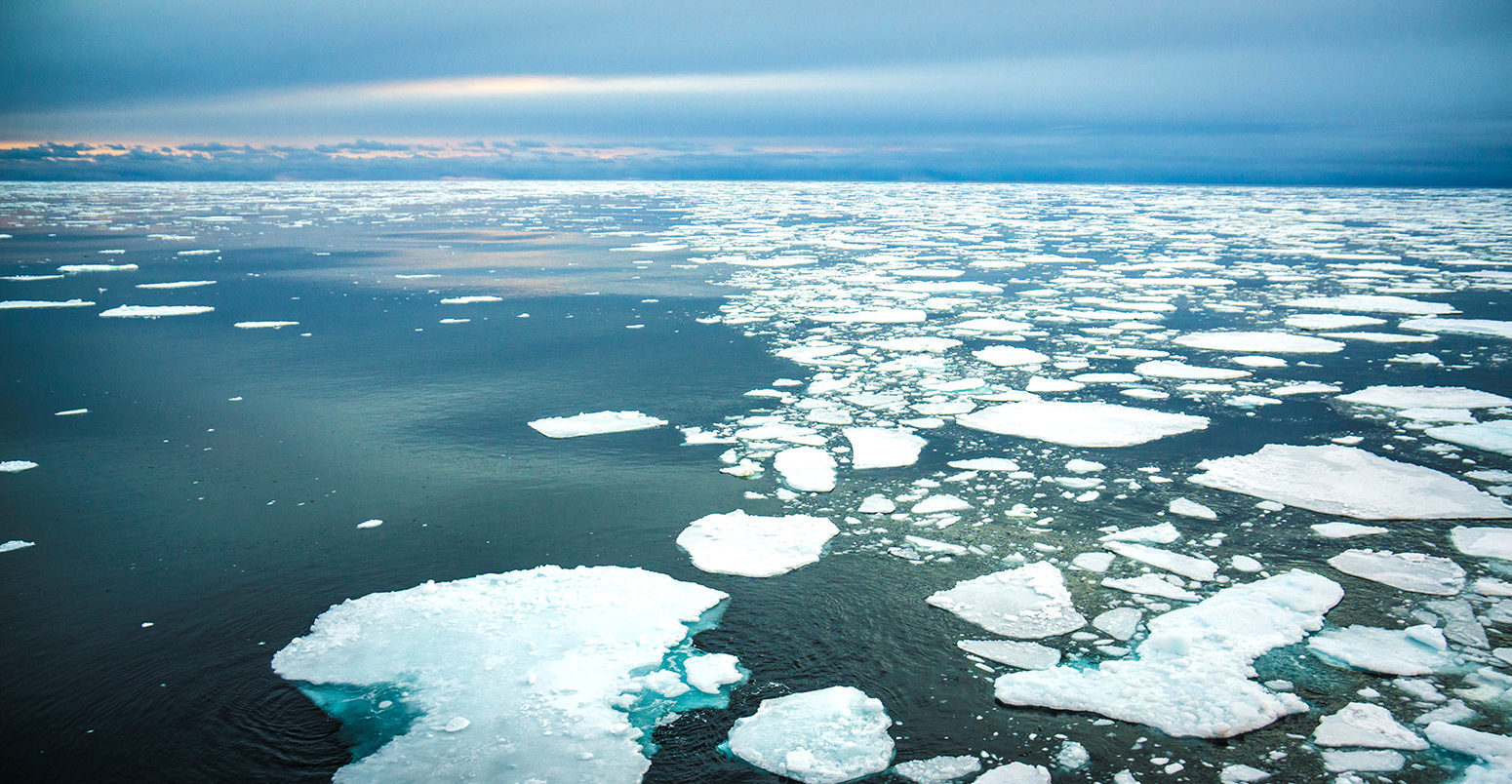
Over the last few decades, climate change has profoundly changed the shape and movement of the layer of sea ice covering the Arctic Ocean. As a result of a warming climate, melting sea ice has become more mobile. A new study conducted by McGill’s Department of Atmospheric and Oceanic Science in collaboration with the University of Colorado Boulder, Columbia University, and Arizona State University explored the effects of this increased mobility.

The researchers wanted to assess how transnational sea ice exchange in the Arctic will change during the 21st century. To do this, they used an earth system model called the Community Earth System Model, which tracks the movement of sea ice from the area where it formed to where it ultimately melts.

The team found that the movement of sea ice between Arctic countries will increase significantly in the next few decades. Between Russia and Canada, for example, the quantity of ice exchanged will triple. By mid-century, they predict that the average time it takes for sea ice to travel from one region to another will be about half of what it takes now.

Climate change is causing the sea ice cover to thin, which is in turn increasing the mobility of the ice.

“Thinner ice is weaker and moves faster under the action of the same winds,” Bruno Tremblay, an associate professor in the Department of Atmospheric and Oceanic Sciences at McGill, wrote in an email to The McGill Tribune.

However, the area of ice formed during winter is also increasing, especially along the Russian coastline and the Central Arctic, which could explain why the quantity of ice exchanged between these regions will triple.

Increasing sea ice mobility is especially worrisome because it could facilitate the spread of pollutants like microplastics and oil across the Arctic. According to Tremblay, such pollutants mostly originate from elsewhere.

“Pollutants get to the Arctic from any rivers draining into the Arctic,” Tremblay wrote. 

Ships are another transporter of pollutants. Unfortunately, the volume of ships in the Arctic is only rising due to increased economic activity in the region. As melting ice creates new shipping routes, there is growing demand for the Arctic’s mineral resources from emerging economies like China and India. New shipping lanes and increased nautical traffic will likely increase pollution in the Arctic.

“Increased traffic means higher pollutant release [from things like used water] in the Arctic, which then travels far distances and affects the local environment [and people] living in the North,” Tremblay wrote.

Increased shipping also raises the risk of oil spills and shipping accidents, which can add an immense quantity of contaminants to surface ice. The Central Arctic, located in the middle region of the Arctic Ocean, is particularly vulnerable to environmental issues associated with shipping. Since no country holds exclusive rights over this region, the lack of policies regulating the release of pollutants into international waters has left it especially vulnerable. 

For boat traffic, the Arctic remains a challenge, with a short operational season, large distances between ports, and severe weather. This makes ships more accident-prone, increasing the chance of releasing toxic pollutants into the water. According to Tremblay, the main way to mitigate this problem is to tackle its source.

“[We must] reduce carbon dioxide emissions,” Tremblay wrote. “[This means that we must] use energy more effectively, better insulate buildings, and move to renewable energy sources.”

Unfortunately, scientists predict that the Arctic sea ice will be in a dire state by the end of the century.

“We expect to lose the summer sea-ice cover within one to two decades,” Tremblay wrote. “By then, [the Arctic] will have a seasonal ice cover instead of a perennial ice cover.”

Commentary, Opinion

The virus that will change everything

My roommate looked up at me from across our dining room table. 

“I’m so ready for everything to go back to normal,” he said. 

Since March 13—the day McGill shut down for two weeks—I have thought about this idea every single day. After the two weeks had concluded, I thought that everything would go back to normal. 

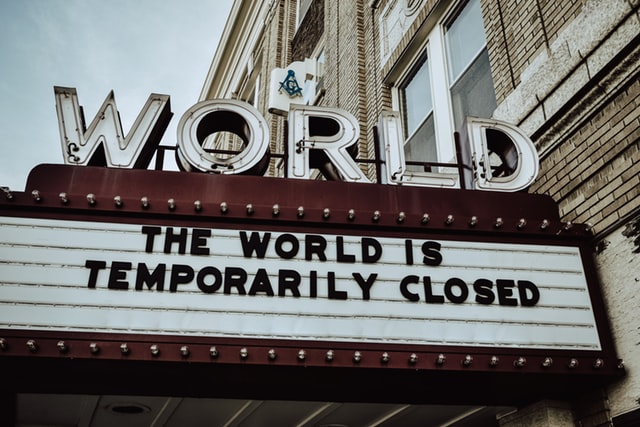
Then, COVID-19 began to tighten its grasp around North America. For my generation, there is no precedent for this pandemic: It undermines the lifetime status quo of every young person on earth. Whatever ‘normal’ was before this disease arose, there will be no returning to it. COVID-19 is going to change everything. It will shift economies, lives, and cultures; as a generation of individuals about to crest into adulthood, McGill students must accept the seriousness of this brave new world.

Consider the economy. On March 23, the provincial government of Quebec shut down all non-essential services until April 13. For anyone whose jobs are not immediately critical to people’s lives, this means a complete cessation of work. Even after non-essential services are allowed to resume, quarantine and frugality will impede the steady stream of customers that businesses rely on to survive. The picture in Quebec over the next several months looks like this: The demise of an entire class of independently owned and small businesses, steadily increasing unemployment for those who work in entry-level or non-trade sectors, and an increasing number of individuals who do work in essential services contracting COVID-19 because of heightened exposure to the virus. The ripples of these impacts are going to take years to recover from. 

The bigger picture is even more disheartening. In the United States, joblessness claims hit 10 million on March 28; the Government of Canada expects 4 million people to file for emergency financial aid. While talk of markets is somewhat of a black-box in terms of details for the average university student, the experts made one thing clear: the economic situation is really bad. The difference, however, between this financial crisis and those past is that governments appear entirely incapable of addressing this wave of financial distress. Whereas the 2008 recession was the consequence of rapacious and naïve investors—a malicious, albeit controllable force, as this New York Times article points out—the most powerful threat to the economy this time around is something much more entropic: An unpredictable and potent disease. 

Now, let’s think about global health. As of April 6, the virus has infected nearly 1.3 million people worldwide. For context, the 2003 SARS outbreak infected about 8,000; more than that many people have already died from COVID-19 in the US alone. The disease has claimed over 70,000 lives globally. In countries like Italy and Spain, healthcare workers are beginning to face impossible ethical decisions about prioritizing resources for younger sufferers who have a higher chance of survival. Countries thought to be staunchly prepared for a public health crisis are manifesting as woefully vulnerable. 

Changes as drastic as these in global health and economies are going to have unavoidable consequences. Some young people, who have consistently demonized older generations as egocentric for their unwillingness to address global climate change, have revealed themselves to be just as arrogant in refusing to take seriously a similarly wicked problem that requires collective action. Further, though beliefs about the invulnerability of young people to COVID-19’s most aggressive symptoms have abounded, we are discovering this is not the case. From Feb.12 to March 16, in the US, 38 per cent of individuals sick enough to be hospitalized by the virus were 55 years-old or younger. 

The cultural landscape is shifting before us as we observe an anthropocentric tradition of individualism in the West leading communities to shoot themselves in the foot, while more collectivism approaches allow places like Japan to stop the virus in its tracks. As governmental responses become more urgent, we are witnessing the necessity of socialist measures in reactive policies, and, uncomfortably, the success of authoritarian practices in mitigating the crisis.

I have thought long and hard about how to reconcile the reality of these circumstances, but I have realized that that is precisely the point: There is no modus operandi. The evolution of global systems demands that everyone be flexible in adopting new approaches not just to work or school, but to life. As we begin to chart this unknown territory, remember three things: First, those you love are your most important allies. Talk to your parents, your grandparents, your friends, your acquaintances, and be there for each other. Second, the forward march of time is inevitable. In the darkest moments, remember that this is not permanent. Finally, as bleak as the paragraphs above may seem, optimism and hope alone will allow us to endure. I believe in my family, I believe in my friends, and I believe in the ability of humans to be good to each other, and so should you. 


Read the latest issue

Read the latest issue