

Latest News

Album Reviews, Arts & Entertainment, Music

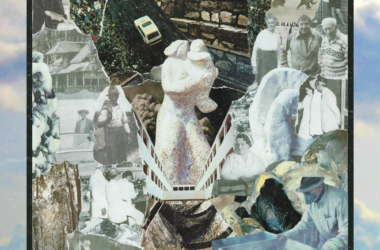
Pop as healing in Lady Gaga’s ‘Chromatica’

Lady Gaga has always been beset by her public image. Whether it’s the bombastic music videos and otherworldly costumes of her debut, or the earnest, style-shifted music of Joanne and A Star is Born, critics have always questioned the authenticity of Gaga’s persona. The long awaited Chromatica, released May 29, with its alien-punk aesthetics and house-inspired tracks, is an unabashed return to the theatricality of Gaga’s early music, though nevertheless sincere, with its lyricism that explores the personal tribulations of fame and artistry. 

Using house beats as a springboard for her vocals, Chromatica most often finds Gaga belting out her lyrics. Foregoing the polished acoustics of her recent cinematic ballads, Gaga instead embraces any imperfections—rasps, cracks, and screeches—that her raw vocals invite. Her voice comes across as an anthemic battle cry or, at times, a plea for help, heightening the emotion behind her words. In “Alice,” as Gaga works up to a falsetto with the lyric, “My name isn’t Alice / But I’ll keep looking, I’ll keep looking for Wonderland,” Chromatica’s mission, through solemn lyrics amidst loud and uptempo melodies, makes itself known: To heal through music.

The album’s metaphors never regress into the maudlin, but its deepest cuts come when Gaga ditches the figurative and confronts her mental health head-on. In “911,” verses of fast-paced robotic spoken word build up to its chorus, making it one of the album’s most danceable tracks. With lyrics like “Keep repeating self-hating phrases … My mood’s shifting to manic places” and “My biggest enemy is me, pop a 911” (with 911 as reference to her antipsychotic medication), it’s also Gaga at her most personal and vulnerable. Yet, the album retains sonic cohesion even when it becomes thematically muddled. Set to a piano and saxophone riff that’s unmistakably reminiscent of Madonna’s “Vogue,” “Babylon” is Chromatica’s lighthearted closing track about the gossip that fame invites, though it’s just as lively as the album’s preceding songs of much darker topics. 

Chromatica is an ardent evolution of the original type of pop that put Lady Gaga on the map. It is loud and boisterous, and simultaneously an honest exploration of the psyche behind the persona. As a healing tool meant for her fans as much as it is for Gaga, it is an unrelenting, upbeat escape from our worldly woes. 

Rating: ★★★★☆

McGill, News

Thousands protest against anti-Black racism and police brutality in downtown Montreal

Thousands of Montrealers gathered on May 31 in front of the Service de Police de la Ville de Montréal’s (SPVM) downtown headquarters to protest police brutality and anti-Black racism in Canada and the United States. The demonstrations were organized by Justice for Victims of Police Killings, Hoodstock, and Tout Le Hood En Parle, as an act of solidarity with victims of racialized police violence. The recent death of Regis Korchinski-Paquet in Toronto and murders of Ahmaud Arbery in Georgia and George Floyd in Minneapolis have sparked demonstrations around the world in support of the Black Lives Matter movement that aims to eradicate white supremacy and advocate against violence facing Black communities. 

Speakers at the demonstration stressed the need for continued resistance against systemic racism that discriminates Black and Indigenous peoples, and expressed hope that the current protests will enact systemic change. McGill social work graduate Vincent Mousseau (BSW ‘20) exhibited dismay at the Canadian government’s inaction and urged attendees to reflect on Canada’s legacy of colonialism and racial injustice.  

“It’s time to let this anger and unquenchable thirst for justice nourish our struggle and our movements,” Mousseau said. “Let it remind us of the necessity to always stand up against anti-Black racism, colonialism, and neocolonialism that [is] inherent to the Canadian and Quebecois nation-building project.” 

After several speeches at the Parterre du Quartier des Spectacles, protestors marched in separate groups through the city. One group went up Boulevard Saint-Laurent and through the Plateau while another proceeded west towards Dorchester Square. After chanting and marching throughout downtown Montreal, the crowds reconvened near the SPVM headquarters on Saint-Urbain street.

The Montreal demonstration remained peaceful from 5 p.m. to just after 8 p.m. when the SPVM deemed the protest illegal, citing property damage and vandalism. Law enforcement officers began firing tear gas and rubber bullets into crowds and the SPVM made 11 arrests over the course of the night. Mayor Valerie Plante denounced the violent acts by “looters,” and has yet to make a statement on the SPVM’s actions. 

At around 8:15 p.m., police began pepper-spraying protestors in the area around Place-des-Arts, and later used tear gas and rubber bullets on the crowds. While law enforcement officers forced demonstrators to disperse, the SPVM simultaneously prevented trains from stopping at the nearby Saint Laurent and Place des Arts metro stations. Protestors claimed that the actions of the SPVM contributed to tension and confusion at the scene. 

“I don’t understand why if [the SPVM] just wanted us to disperse […] they went out of their way to trap and chase people,” a protestor* told The McGill Tribune.

Students’ Society of McGill University (SSMU) Vice-President External Ayo Ogunremi condemned the law enforcement’s use of force against the protesters. 

“[It] has been documented that the SPVM, of its own accord, escalated the May 31 demonstration into one of grave danger for all civilians present, and that it is well known that this kind of repressive response is typical of demonstrations against police brutality in Montreal,” Ogunremi wrote in an email to the Tribune. “At one moment […], a projectile was thrown towards fully armoured police, who responded by tear gassing an entire crowd of non-violent civilian protesters.”

Ogunremi criticized the actions of some white protesters at the march that can ultimately harm the Black community.

“Video evidence [online] documented white protesters spraying graffiti in Creole to feign vandalism from Black protesters,” Ogunremi wrote. “This kind of activity reinforces the false notion of Black criminality and sharpens the focus of Black peoples as the target of police violence.”

In a collective statement to the Tribune, McGill’s Black Students’ Network (BSN) emphasized the need for continued action against racism in Canada.

“We must not cease our efforts to call attention to these acts of discrimination and brutality,” the BSN wrote in an email to the Tribune. “We must continue to demand that the politicians who represent us make it a point to take seriously issues of systemic racism which have subjugated people of Black and Indigenous descent for centuries.”

*Source was given anonymity for reasons of personal security.

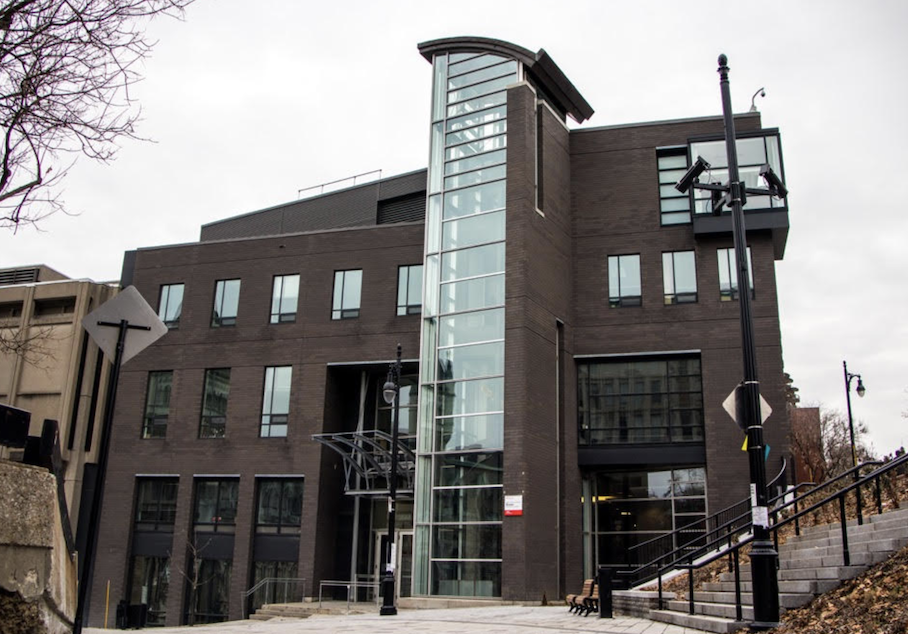
The Rossy student wellness hub.
McGill, News

McGill mental health services aim to meet student needs virtually

Following McGill’s May 11 announcement that the Fall 2020 semester will be offered online due to the COVID-19 pandemic, mental health services across campus are preparing to accommodate increased student needs while adapting to a virtual environment. The exact steps that will be taken to ensure this support, however, are still being discussed. 

Rahul Suresh, U4 Science, is the incoming Chair of Operations at McGill’s Peer Support Centre (PSC), a student-run service that provides non-judgemental peer support and resource referral. He explained that McGill is in the process of finding solutions to the barriers posed by remote learning. The goal is to ensure that all students have access to sufficient mental health support.

“[McGill mental health services] want to make sure that despite […] social distancing, […] no one is isolated,” Suresh said. “It’s important that we have a service that is receptive to […] different students who want to […] obtain support [and] referrals to other resources, [or] just to have a safe and non-judgemental space to talk.” 

Many students worry that additional stress caused by virtual learning will put strain on their mental health. The lack of face-to-face interaction, prospective unemployment, and difficult home environments may cause an increase in the demand for mental health services. Incoming PSC Chair of Support Services, Chloe Holmquist, U3 Arts, recognizes that online learning and social isolation make it difficult to predict the type of support students will seek

People are in isolation,” Holmquist said. “People are going to be experiencing new waves of emotion and different feelings that we’re going to [have to] start catering [to].” 

In previous years, McGill has appealed to widespread student needs by offering stress-relieving activities and workshops organized by faculties or on-campus groups, such as Student Life and Learning. Incoming Arts Senator Darshan Daryanani, U3 Arts, believes that it is important to find new ways to offer stress-relieving events while also fostering a sense of community off campus. 

“Frosh, mentoring events [and] career workshops […] are meant to […] to address the anxieties that students have about making friends on campus, meeting new people, or planning for […] future careers,” Daryanani said. “The AUS will have to move with the times […] by having virtual […] positive wellbeing events. It can also look at having an online essay centre, […] online francophone committee meetings, or community care by engaging [in] online workshops.” 

Differences in time zones present challenges for international students’ abilities to access virtual counseling. Fabrice Labeau, Deputy Provost (Student Life and Learning), emphasized that McGill’s International Student Services is continuing to support students from a distance while actively working on new supports for the coming semester. 

“We recognize that international students will face distinct challenges as we continue with remote instruction in the Fall, and we have begun exploring how we can best support student success in this new reality,” Labeau said. “Despite the campus closure, students […] can still always connect with an International Student Advisor via email to discuss their case and receive support.” 

In the meantime, both the Wellness Hub and PSC have promoted Keep.meSAFE, a virtual 24/7 mental health service offered in over 60 languages that links students to licensed counsellors through a variety of platforms. 

Considering the uncertainty of future provincial regulations and McGill’s administrative decisions, the possibility of virtual platforms and in-person support for students returning to Montreal remain in question. Going forward, there will be a heavy reliance on student feedback in order to improve the support that is offered by McGill’s mental health services. 

“In a lot of ways, this pandemic has proven how strong the McGill community is when it comes to solidarity and support,” Daryanani said. “At the same time, it shows the weaknesses that we have in terms of providing mental health and emotional support.” 


Arts & Entertainment, Books, Private

McGill hosts Montreal International Poetry Prize

The biennial Montreal International Poetry Prize is happening now, with submissions open until June 10, and this year, McGill’s Department of English is hosting. Known colloquially as the “Prize,” this competition was founded in 2010 as an initiative by Montreal poet and literary critic Asa Boxer. The Prize awards $20,000 for the best poem of 40 lines or fewer and will include its top 50 poems in an anthology published by Montreal’s Véhicule Press.

This year marks the first time that McGill’s Department of English will oversee the Prize. Professor Miranda Hickman notes that this is an important opportunity for the department.

“We’ve been working on this transfer of the prize to McGill English for quite some time,” Hickman said. “It’s an exciting opportunity for the department.” 

The spirit of the Prize is founded in Montreal’s rich literary history, with many distinguished poets A.J.M. Smith, Irving Layton, P.K. Page, and Leonard Cohen, to name a fewhaving called the city home. McGill holds a special place in that history: Many prominent writers have also served as faculty members, such as Sir Andrew Macphail and Louis Dudek, who also mentored and nurtured many aspiring poets. 

Led by Hickman, her fellow McGill professors Eli MacLaren and Michael Nicholson, and graduate students, the Prize strives to be accessible to everyone. The Prize’s digital application process distributes each applicant’s poem anonymously to one of 10 international jurors. Each juror picks their top five poems, then Pulitzer Prize winner Yusef Komunyakaa selects the winning poem anonymously. A new feature brought forth by this year’s Prize team is the option of sponsorship. As Professor Michael Nicholson of the Department of English notes, sponsorship builds an international poetry community by supporting new poetic styles and creative expression.

“For many, entering the Prize in itself is not only an [example of] community building and altruism in the arts, but also an endorsement of a digital poetry network collectively working to disregard the limits of status, border, and stratification so often constraining major national prizes in the arts,” Nicholson said.

These measures aim to create a welcoming, open environment for anyone who wishes to enter. McGill English Literature second year graduate student and Prize team member Zoe Shaw noted  that the Prize has an incredible incentive. 

$20,000 for one poem might have otherwise been an impossible dream for many, but the accessibility and openness of the Montreal Prize show that everyone has a chance to win,” Shaw said. 

Shaw noted that she has been pleasantly surprised by the amount of interest. There have been over 2,600 submissions from 75 countries worldwide. 

The Prize’s communal aspect has perhaps never been more important than in the present pandemic, where in a world of isolation and silence, one can have a voice. 

Poetry’s exploratory languages can help move past cliché for what we think and feel [and] towards new modes of expression that can feel like forms of sustenance,” Hickman said. 

Literature and art have always helped to bridge gaps between people from historically isolated societies. In the wake of the COVID-19 pandemic, poetry can alleviate silence and loneliness. 

In times of pandemic, poetry can be a mode of eloquence,” Hickman said. “We need extraordinary language for extraordinary times.” 

That is what the Prize seeks to do. It allows everyone the opportunity to have some agency in an increasingly chaotic world, and provides solidarity in a new type of community that breaks isolatory boundaries. McGill is proud to host the event, and hopes to expand an already rich poetic history into the present, helping to create poets and voices of the future.

More information can be found on the Montreal International Poetry Prize’s website, Facebook page, and Twitter.

Commentary, Opinion

McGill needs to rethink its mental health response to COVID-19

Living through a pandemic is mentally demanding, if not extremely jarring. Concerns over a parallel mental health epidemic have prompted international organizations and the Government of Canada to funnel resources into virtual mental health services. On May 3, Prime Minister Justin Trudeau announced a $240 million investment to support virtual mental health and well-being facilities. While virtual replacements for mental health care have also been the alternative of choice for McGill, the distressing uncertainty looming over students calls for a revised approach to student support during this time of crisis. 

Students, who are central in Canadian mental health policies, have been impacted by the pandemic in unique ways that include financial anxieties due to cancelled internships, recalled exchange semesters, reduced access to harm reduction care, and graduate education disruptions. These distinct problems are compounded in cases of domestic abuse, and worries related to the safety of family and friends who are exposed to or battling COVID-19, among other issues. Furthermore, international students face additional precarity because they are ineligible for government emergency benefits, and many find themselves stranded in Canada without the financial means or government permissions to safely travel back to their home countries. 

McGill’s strategy of shifting health services online precludes access to certain types of mental health care, such as addiction treatment. Moreover, McGill’s dismal track record in delivering accessible in-person mental health services foreshadowed an inadequate virtual revision in the wake of the pandemic. The McGill Student Wellness Hub is providing services in the form of webinars, group counselling, and meditation sessions, as well as free and unlimited access to online counselling for all undergraduate and postgraduate students through the mobile application, Keepme.SAFE

While deteriorating mental health is arguably the most common experience as students live through the pandemic, mere virtual replacements of mental health services cannot sufficiently handle the great volume and variety of mental health issues that have become prevalent with the COVID-19 outbreak. The problems caused by the pandemic are neither predictable nor easy to solve. This fact renders virtual alternatives imperfect replacements, and cases where students are dealing with abuse at home, dwindling motivation, unemployment, and other hard-to-resolve situations highlight their inefficiency.

Though many of the shortcomings of virtual care are inevitable, McGill has displayed patterns of institutional inadequacy in providing accessible mental health services. Insofar that equity applies to everything from internet access and the ability to safely self-isolate, it is worthwhile to devise solutions that do not leave anyone behind. McGill should seize this opportunity to permanently expand its existing resources instead of contracting them by continuing to provide free access to Keepme.SAFE, promoting mutual and community aid programs, and setting up student-run endeavours for issues such as anti-racism support. 

At the heart of this approach lies recognition that the responsibility of mental health exists beyond educational institutions. This is particularly true when the effects on individuals and communities seem palpable and more relatable. During such times of collective grief, mental health support needs to exist materially within communities, as individuals possess a greater capacity to alleviate the suffering of their community members. 

In a student context, this principle manifests in reaching out to teaching assistants and professors who have generously extended deadlines as you figured out where to live after April 30. It includes expressions of gratitude on r/mcgill and abandoning awkwardness toward bitter housemates. Likewise, it may entail offering to do groceries for neighbours who are fearful of venturing out of your apartment building, or even ordering take-out from your local Asian restaurants impacted by business closures and xenophobia

COVID-19 necessitates rethinking how mental health issues can be dealt with and, most importantly, who can provide mental health support. Student wellness at McGill should adapt and combine institutional and community responses to meaningfully mitigate the pressures of what are among the most mentally fatiguing times of our lives. 

Commentary, Opinion

Students deserve to choose distance learning after the pandemic ends

The recent announcement that the Fall 2020 semester will take place primarily through remote instruction was jarring news to students who have already experienced significant disruptions to their academic routines due to the COVID-19 pandemic. Although the switch to distance learning has been challenging for some programs, there are undeniable benefits to an online education format. Even after the transition back to in-person classes, McGill should maintain distance learning as an option whenever possible. 

Giving students the choice to learn online would make McGill more accessible to those who do not live near campus. The prices of housing and transportation can be a barrier to students attending McGill since, in addition to tuition, students in Montreal pay some of the highest rent in Canada. The option to learn online can also make a difference for students who would otherwise commute. This opportunity to choose would be most important during the winter, since McGill’s administration is often reluctant to cancel classes due to extreme weather. For instance, when the city was faced with 40 centimetres of snow in February this year, McGill simply urged students to be cautious when coming to campus and requested that professors be lenient about absences. The university can be more considerate of students facing treacherous storm conditions by giving them the choice to learn remotely instead. For a university that prides itself on accessibility and inclusivity, a complete return to in-person education with no option for online learning will be a disservice to present and future students who do not live near campus.

During the pandemic, some students have found online learning to be more conducive to learning than traditional education. Students can watch lectures at their own pace and stop recordings for more time to process the information. Some have raised concerns about cheating, but cheating could be prevented if professors adapt exams to the new medium. If more essay-based exams are introduced, it would allow students to exercise critical thinking skills and applied knowledge, rather than merely memorizing facts. In this manner, remote assessments would require students to engage with the material on a deeper level.

Admittedly, some types of courses are more suited to online learning than others. Remote laboratory courses, for example, will be challenging, but McGill plans to account for this next semester through advanced simulations that better recreate the laboratory experience. Some online courses may remain imperfect alternatives, but the past few months have proven that it is possible for lecture-based courses to be available online in their entirety. Professors could record lectures and post them on myCourses, and conferences and office hours could be offered both in-person and online. There would be little change in the quality of education that students receive through online lecture courses. 

Despite the success of remote instruction, many students have questioned McGill’s decision to maintain the same tuition prices for online classes as in-person ones, since many in-person services are currently unavailable. This attitude is understandable, but it overlooks the fact that while distance learning may be easier for some students, it is also more difficult for professors and administrators to offer. The time and effort that employees spend adapting their curriculums and services to a new format requires adequate compensation, which would financially account for the services that students would not be able to use while studying remotely. If students can choose their preferred method of study, it would enable them to decide between the benefits and drawbacks of each option for their personal learning styles. With tuition remaining the same, they could use online or in-person services as needed.

COVID-19 has presented McGill with a crucial opportunity. The university can draw positivity from this negative situation by rebuilding McGill as a more equitable institution once its campuses reopen. Now that McGill has proven able to offer many of its courses remotely, students deserve a choice to study either in-person or online.

Science research
Science & Technology

Soup & Science goes digital for “Sun & Science”

On May 22, the Faculty of Science offered students and community members their widely popular Soup and Science presentation series, where professors from various departments deliver short talks on their research. For the first time in its history, lectures were offered in the spring and online, prompting organizers to aptly rebrand the event as “Sun and Science.” The McGill Tribune brings you the highlights of the afternoon: 

Life at the edge: Understanding species geographic distributions

Anna Hargreaves, Assistant Professor in the Department of Biology, is a trained evolutionary ecologist. Her work centres around how species change over time in response to their environment. Yet, Hargreaves’ research takes these questions one step further, addressing how interactions between speciesand with them, emergent patterns of global biodiversityhave changed over the course of Earth’s history. 

“My lab thinks a lot about species distributions and why species occur where they do,” Hargreaves said. “Not only because they combine to shape global patterns of biodiversity but also because they are really fundamental to many pressing conservation issues.”

Hargreaves spoke about the different types of experiments her lab conducts in order to address some fundamental questions of evolutionary ecology. Their methods range from traditional field experiments to new and exciting work that models species interactions at large scales

“When we, as biologists, try to model [species distributions], where species occur now and where they will go in the future, we often treat species as though they exist in isolation,” Hargreaves said. “Of course, we know this is not true. Every species exists in a web of interactions with the species around it.” 

Presently, the Hargreaves lab is exploring new experimental methods that allow researchers to test hypotheses that are nearly impossible to assess in natural systems. One method, known as micro landscapes, involves the creation of habitats in miniature, allowing microorganisms to evolve, and tracking population level genetic and ecological changes over time. Hargreaves also noted that it is much easier to manipulate populations using the micro landscapes approach, making it possible to induce rapid changes in the environment, an important factor in addressing pressing conservation such as climate change.

Neutrinos: The universe’s most mysterious particle

Thomas Brunner, a professor in the Department of Physics, dove down to the smallest of scales in his talk titled “Understanding our Universe through neutrinos.”

Neutrinos are subatomic particles very similar to electrons, but have no charge. Though they are one of the most abundant particles in the universe, neutrinos are incredibly difficult to detect, due to their neutral charge, near-zero mass, and low probability of interacting with other matter. 

“Every second, you have about 50 billion neutrinos passing through [an area of one square centimeter],” Brunner said. “They pass through the body and through the earth.” 

However, Brunner emphasized that, though abundant, very little is known about the nature of neutrinos and their antimatter counterparts, antineutrinos.

In particle physics, antiparticles have opposite electric charges and magnetic movements when compared to regular particles. The positron, for example, has a positive charge, making it the antiparticle to an electron, which is negatively charged. Particles and antiparticles interact to produce energy through annihilation, the process by which particles collide and disappear, effectively cancelling out one another.

“Neutrinos are electrically neutral,” Brunner said. “This, however, now opens the possibility in quantum mechanics that neutrinos and antineutrinos may be the same particle.” 

Brunner went on to mention that some of the fundamental differences between particles and antiparticles may not exist between neutrinos and antineutrinos.

“To figure out if this is indeed the case, we are searching for a type of radioactive decay called neutrinoless double beta decay,” Brunner said. “This decay can only happen if neutrinos and antineutrinos are the same particle.”

If this decay were to be observed, it would classify neutrinos as a Majorana particle: A particle that is its own antiparticle.

According to Brunner, the discovery of this kind of decay could explain why our universe is matter-dominated, instead of antimatter-dominated, forcing physicists to rethink the standard model of particle physics.

Art, Arts & Entertainment, Internet, Music

All My Friends Fest offers a sweet escape from self-isolation

Cities across Canada are beginning to open up, and although the parks are slowly becoming busier and the weather hotter, no Montreal summer is complete without its signature cultural events. Event cancellations and venue closures due to COVID-19 are undoubtedly putting a damper on spirits, not only for city residents but especially for the local creatives whose livelihoods depend on these events. In spite of this, creatives are finding ways to connect with their community and share their work. One shining example is All My Friends Fest.  

All My Friends Fest, to be held on May 30, is a one-day digital festival that serves as a direct response to the challenges faced by artists in the time of COVID-19. Organized by Vice Versa Productions and partnered with Also Cool Mag and Canvas & Cassette, the festival’s goal is to showcase art from the queer community. Originally intended as an in-person event in  New York City before the pandemic hit, the festival includes a wide range of musicians and artists in its lineup.

“Every single person who’s a part of this festival is so talented and so passionate and so excited to connect with the community,” Malaika Astorga, co-founder of Also Cool Magazine and festival organizer, said in an interview with The McGill Tribune.  

Performances will include a variety of singer-songwriters and live visual artists, with about half of the artists based in New York City and the other half in Montreal. 

Aside from the variety of featured artists, the festival is a queer-femme-run initiative that directly compensates participating artists, which Astorga emphasizes as a reason to attend in itself. 

“We really want to support our musician [and artist] friends whose entire careers and livelihoods have been compromised,” Astorga said. 

The festival is divided into daytime and nighttime segments: The daytime lineup on Instagram Live starts at 12:00 p.m. and runs until 6 p.m., and includes a number of musical and visual artists.

“We wanted to keep in mind the screen exhaustion that everyone is feeling. Sometimes being on Zoom for three hours is a bit much,” Astorga said. “We wanted [Instagram Lives] to be a more passive way of interacting with the artists, but also a way to directly communicate with them, too [….] You can kind of tune in and out and comment.”

The nighttime lineup begins with a panel on organizing and hosting digital events and parties from 8:00-9:00 p.m., including panelists from Club Quarantine, Global Relations, and Club Hunhouse. Following the panel, a dance party hosted by BLUSH will feature live DJs and go-go dancers. All funds raised from this specific portion of the festival will be donated to ASSTTeQ Tio’Tiak:ke – Montreal and Taking What We Need, both organizations that support marginalized trans folks who are directly impacted by COVID-19.

Tickets to the festival are based on donations, and donors of 10 dollars or more will receive thank-you gifts from event organizers. 

Although the concept of a digital arts festival may feel unusual, it certainly has its perks. Due to it taking place in a virtual space, the festival will be able to include visual artists who utilize digital mediums in ways that would not have been possible in-person. Additionally, Astorga added that attending a show online can be less intimidating and more accessible.

Despite its unconventionality, All My Friends Fest offers the familiar comfort of connection through the arts.

“If you’ve been feeling lonely during quarantine or bummed out about the lack of community interaction, it’ll be a nice supplement until we’re able to [meet] in real life,” Astorga said. “All these people want is to make new friends on the internet and play music and hang out.” 

Information about tickets and the festival’s fund can be found on the event’s Facebook page.

Commentary, Opinion

McGill’s mixed communication regarding the S/U option was quick, but not careful

It’s a small disclaimer on every McGill course syllabus: “In the event of extraordinary circumstances beyond the university’s control, the content and/or evaluation scheme in this course is subject to change.” This year’s cohort of students finally fell prey to the mysterious “extraordinary circumstances” when on March 20, the McGill community received an email from Deputy Provost (Student Life & Learning) Fabrice Labeau confirming that students would be able to select the Satisfactory/Unsatisfactory (S/U) option after receiving their grades. Advisors, departments, and faculties emailed their students at different times with information about how and when to access the S/U option. Although McGill acted quickly to announce the S/U option, the discrepancies between each faculty’s decisions and the lack of clarity in messages posted by departments and the administration came at the expense of students’ emotional wellbeing. 

McGill has made errors throughout this crisis, not least in its failure to support students on exchange. Still, the early announcement of the S/U option served as slight reassurance and calmed the nerves of students whose course work has been affected by the pandemic. Labeau’s message, however, was vague: It simultaneously claimed that while students can S/U any course, they may not do so if it “runs counter” to their program or department requirements. The contradictory wording resulted in confusion and gave departments a high level of freedom, which meant that students in different programs received different instructions and specifications regarding the use of the S/U option. It should be up to the McGill administration to ensure that everyone receives the same level of communication to allow a level playing field for all students.

Some departments, like English, received detailed information from their department chairs outlining the specifics regarding the S/U option for required courses, elaborating on the option for Honours students, and highlighting the option of receiving an incomplete ‘K’ grade for more time. The communication was clear and concise. When presented like this, these notifications provided some stability, but students in other departments did not have the same support. For other majors, like Economics, the information was difficult to locate online (if posted at all), and there was no communication to students clarifying the S/U option. The lack of consistency was detrimental to students’ wellbeing. The administration should have enforced the same standard across all departments to avoid unnecessary stress on professors, advisors and students during an already tumultuous time. 

In a broader sense, graduate and professional schools have different standards when evaluating Winter 2020 grades, making the decision to S/U even harder for prospective applicants. Queens Medical School has decided to drop Winter 2020 grades, while Georgetown Medical School has stated that applying with grades instead of S/U is highly preferable. This will mean medical school applicants face a lack of consistency in their applications. Some students seem happy to S/U all their courses while others remain fearful that the option will be viewed negatively by professional schools. Cornell University, for example, has only allowed students to implement an S/U option before receiving their grades, perhaps giving students at universities like McGill an advantage‒‒or, conversely, a disadvantage, if the S/U option is to be viewed harshly by graduate schools and employers. 

The clarity provided by some departments at McGill relaxed some students, whereas the lack of communication from other departments only increased stress. Failures came from individual departmental communications‒‒perhaps the administration should have foreseen this issue, but we should also remember that they are human too, and are also dealing with a lot of stress during the pandemic. The university’s response could have been more beneficial to students under stress should departments have acted in a united manner in sharing departmental updates on the subject. It would have been helpful for departments to have provided reassurance earlier and in a more succinct manner, but truthfully, this is a difficult time for all members of the McGill community.

Off the Board, Opinion

Finding a new sense of American patriotism at McGill

I spent my last meal at McGill’s Bishop Mountain Dining Hall trying to rationalize going home to New York. With COVID-19 cases mounting, all of the jokes I had made about U.S. backwardness ceased to be funny. Instead, the America that I had tried to wish away became all too real, haunting me during strained phone conversations with my parents as we weighed my options. That America—the worldwide epicentre of the virus, with a government that does not believe in science and a president who fails to acknowledge the severity of the crisis—is an embarrassment that makes me want to run away. To top it all off, the American healthcare system is so flawed that some people are more afraid of unaffordable health insurance bills than COVID-19. Still, I came home in the end, as did most of the American students I know. 

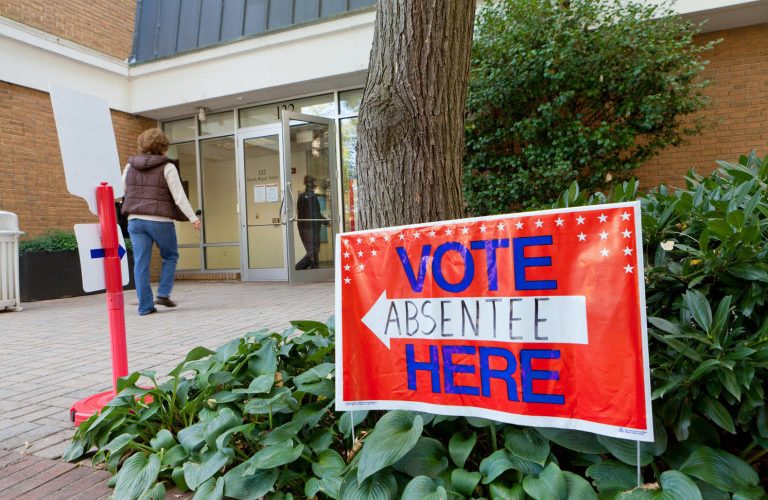
Returning was disillusioning. Of course, there’s the sad reality of social distancing and quarantine. But even worse is watching Donald Trump’s handling of the crisis. It’s like watching Monty-Python, except it is not funny because his most absurd remarks and decisions are likely to kill thousands of Americans. And for millions of progressive Democrats, no end seems to be in sight, now that Bernie Sanders has dropped out of the Primary. Sure, there’s former Vice President Joe Biden, but even some of his supporters are calling him a distasteful, utilitarian compromise. The mountain of misgivings seems insurmountable. Some students may become disillusioned with politics and consequently fail to engage in the election process. Lackluster candidates like Biden, certainly, are unlikely to galvanize young progressive voters from abroad. Besides which, voting while studying or working at McGill can be confusing, considering that voting from abroad requires one to obtain an absentee ballot and then mail it in according to state-specific rules. Nevertheless, American students must adopt a new sense of patriotism and recognize that apathy precludes ever giving the U.S. the chance to be the country Americans want and need.

Voting in U.S. elections is not just a basic civic duty but an imperative step to counteracting the Republican Party’s audacious authoritarianism. Trump’s administration is using COVID-19 as a distraction to accumulate broader emergency powers. Needless to say, this is concerning for a multitude of reasons, not least considering that he was impeached for obstruction of Congress and then acquitted because, apparently, a president can do anything if they feel that it is in the public interest. Experts agree: The Trump administration looks suspiciously like a Trump dictatorship. Considering the centrality of U.S. affairs in international politics, it stands to reason that all McGill students, regardless of national origin, have a stake in saving American democracy.

Reviving American patriotism is more vital now than ever, and it does not have to be tainted with some gilded, 1950’s facade of American exceptionalism or supremacy. It must be reimagined: It must recognize America’s shortcomings and require that Americans work towards a better country by educating themselves on political issues and by participating in the democratic process. That means voting in state primaries, congressional elections, and the general election—especially now, as apathy is eroding the last vestiges of democracy with a vitriolic fervour. 

American students are not absolved of that responsibility just because we go to school in Canada. If anything, it is more important for those who study abroad to be politically active, considering that studying abroad renders America’s shortcomings painfully obvious. Although these issues are easy to ignore in Canada, COVID-19 has forced American students to confront them like never before. Moreover, the economic tumult surrounding the crisis has been an unfortunate reminder of the economic problems that drove many U.S. citizens to McGill in the first place. Americans should not have to escape to Canada for an affordable education. American students should take this crisis as cause to re-engage in American politics, even after life returns to “normal.” McGill students should remain engaged by taking advantage of clubs like Democrats Abroad at McGill, which promote voting and provide resources to help students obtain absentee ballots.

Voters can wallow in national disgrace, or they can give democracy a chase. Even abroad at McGill, Americans have a duty to safeguard democracy by engaging in the process. Yes, Trump is a national embarrassment, and the U.S.’ reputation may never recover. But being proud to be American does not depend on what the president is doing in the White House. It depends on millions of Americans around the world believing that America can improve and taking action to build a better country.

Read the latest issue

Read the latest issue