

Latest News

McGill, News

Students report unprofessional treatment from Student Accessibility and Achievement

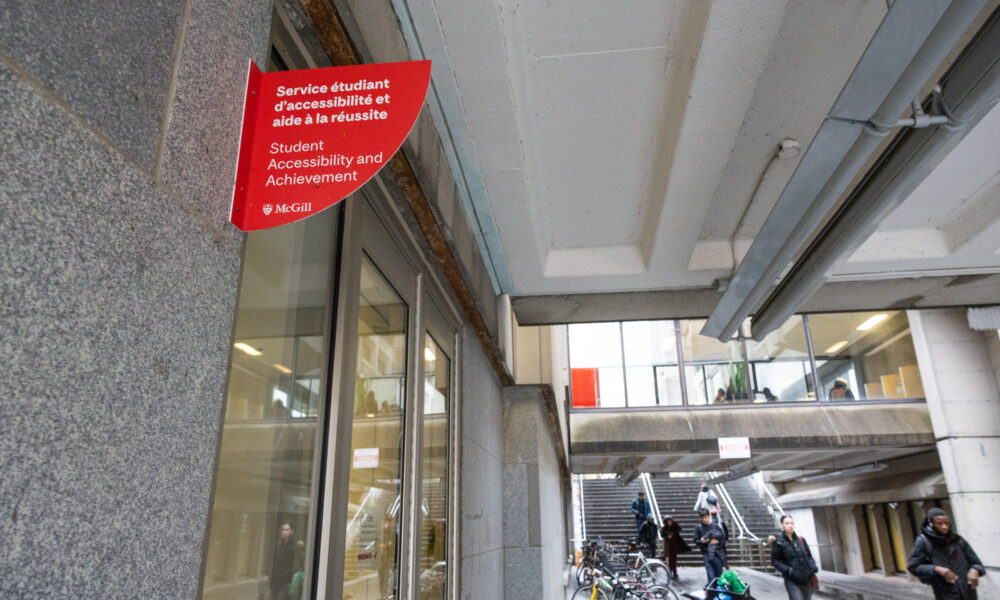
McGill students have reported unprofessional treatment from the staff at the McGill Student Accessibility and Achievement (SAA) Centre. SAA, as part of McGill’s Student Services, provides students experiencing learning challenges with a sanctioned area to take exams specific to their individual needs. Registered students with documented disabilities may take their final exams in the SAA centre and receive extra time. The SAA also provides services and amenities such as text enlargement in computer labs, earmuffs, and standing desks. However, many students have recently alleged that their SAA needs have not been properly met. 

In a written statement to The Tribune, a student who wished to remain anonymous explained that they noticed a rise in unprofessionalism this year, describing a lack of empathy from SAA invigilators during a recent exam. 

“I have been asked by invigilators in the past to start [my exam] without all of my accommodations being present,” they wrote. “My support person should not be more knowledgeable on the invigilation process than the invigilators themselves, and yet this is the case for every [SAA] exam. My support person has to follow up and ensure that my rights are being respected each time when my accommodations are not set up before I can begin.”

The student also recounted invigilators using mobile devices loudly in the SAA exam room, creating a distracting environment for themselves and other students. 

“I have had invigilators who played games on their phone with the volume on and […] speak the entire time loudly outside the door of my room, despite knowing that many students, including myself, are sound sensitive,” they reported.

This student’s experience is not an isolated instance. Another student shared about SAA neglecting their accommodation in a written statement to The Tribune

“The invigilator stopped me from completing my evaluation a minute early […] by continually speaking to me, telling me to hurry up and leave,” the student wrote. “This even went on till after the minute was up. I tried to fill in my student ID on the Scantron portion as it was the only thing I forgot […] and they got mad at me for that, even though it’s a short-digit code [….] This [experience] has made [the SAA seem] very unpleasant and dreadful.” 

Both students described these situations as having a significant impact on their exam performance. 

“Not being able to focus due to the invigilator [resulted] in lower-than-expected marks that are not my normal marks,” the first student wrote. “I have issues with refocusing once distracted and struggle significantly with focus and migraines due to noise.”

They also highlighted that their peers, who were also entitled to accommodations, had faced scrutiny from the SAA, describing how the SAA discounted their chronic condition diagnoses on file.

“An SAA accessibility advisor has told friends that they should return to their education when they are healthy,” they noted.

The first student affirmed that such an array of unprofessional behaviour has left students with accommodations, like themselves, feeling uncomfortable in testing environments. 

Both students called for change. The first described the professionalism they would expect from the SAA staff, and hope to see in the future. 

“Invigilators should have bias training and sensitivity training on the experiences of a wide range of disabled students, so that they have a strong understanding of what is appropriate to say and what is not,” they emphasized. “Invigilators should be aware that their job is to set up all accommodations listed, not to choose which ones they think may or may not be necessary for that assessment.” 

The Tribune did not receive a response to a request for a statement from the SAA, nor McGill’s Media Relations Office, in time for publication.

In a written statement to The Tribune, Dymetri Taylor, President of the Students’ Society of McGill University, provided students with an alternate way to report unprofessional behaviour from the SAA.
“While we aren’t involved in the accommodations themselves, we do relay feedback we receive to both SAA and to the Deputy Provost [or] Student Services Director,” he wrote. “We’re always looking for further information to avoid […] issues that may arise due to […] unprofessionalism [….] Concerns can be relayed to @ua.ssmu.ca.”


Arts & Entertainment, Comedy, Pop Rhetoric

Katy Perry and Justin Trudeau captivated the world. Who’s next?

A couple of weeks ago, Justin Trudeau was seen with American pop star Katy Perry outside a famed Paris cabaret for the latter’s 41st birthday, apparently keeping in line with his father’s own escapades—dating an American singer. The shocking union between the American musician and the former Canadian prime minister appears amid heightened tensions between the two North American nations, tying them together in a way politics cannot. In a world where cultural unity provides much-needed camaraderie between nations, The Tribune is doing its part to repair Canada-U.S. relations by shipping celebrities from both countries.

Sophie Grégoire and Tom Cruise

Trudeau’s ex-wife Sophie Grégoire would have been magnificently paired with Perry’s own ex, Orlando Bloom. Unfortunately, he’s English, so infamous Scientologist Tom Cruise will have to do. This unlikely coupling represents a union of distinct Canadian and American traditions: Grégoire, a daughter of Quebec and former member of the Trudeau family, and Cruise, the poster boy of Hollywood stardom and the embodiment of America’s zealous religiosity.

Cruise, skilled as many celebrities are in the art of relationship-jumping, would almost certainly be a great help to Grégoire in the transition from her first marriage to a new relationship. While the former First Lady of Canada might not vibe with the ‘Maverick,’ one could almost see these two setting aside their long-held beliefs and living a cozy life where their children explore their own religious paths.

Pamela Anderson and Anthony Ramos

Pamela Anderson, actress, model, and woman of many public relationships, meets Anthony Ramos, former fiancé of Hamilton co-star Jasmine Cephas-Jones and alleged cheater. Just as Ramos danced his way into the life of Alexander Hamilton, he might find himself in the heights of Anderson’s love. The actress has seen her fair share of less-than-ideal lovers, yet perhaps she might find something in the protégé of Lin-Manuel Miranda. Maybe, just maybe, Ramos can actually get married this time. Or maybe not.

Drake and Caitlin Clark

Pairing an athlete who can’t stop winning with a rapper who can’t stop losing might seem odd—but it works. Caitlin Clark, who recently shot to fame in the Women’s National Basketball Association, would not be the first athlete Drake has dated, with rumours circulating in the early 2010s of a romance with tennis champion Serena Williams. Drake, who has a son with French artist Sophie Brussaux, is due for another relationship, and what better way to mend his image than to court Caitlin Clark? Worst-case scenario, if the romance ends badly, we’ll at least get a new Drake album out of it.

If ever these potential lovebirds cross borders to hold each other in their arms, we should absolutely pay attention.

Shawn Mendes and Kim Kardashian

Kim Kardashian is no stranger to relationships with singers, having recently divorced from the musician Kanye West. Shawn Mendes, for his part, has also had a noteworthy dating life, most recently dating Sabrina Carpenter and Camila Cabello. This pairing would unite two icons of celebrity dating culture, guiding the popstar from the complicated Cabello-Carpenter love triangle into the arms of a Kardashian.

If Mendes is drawn to the Kardashian light, he should take note of his lover’s four children from her previous marriage—North, Saint, Chicago, and Psalm—who will certainly add liveliness to their household. Although Mendes does not have any kids of his own, his experience caring for his and Cabello’s golden retriever Tarzan will certainly help him navigate his new parental role.

In the spirit of Justin Perry, or perhaps Katy Trudeau, these ships can bring Americans and Canadians together to celebrate cultural unity in a time of division. While some of these celebrities might not actually get together in real life, magnificent unions like these can bring joy to both nations, tearing down the walls of politics through fits of laughter.

Commentary, Opinion

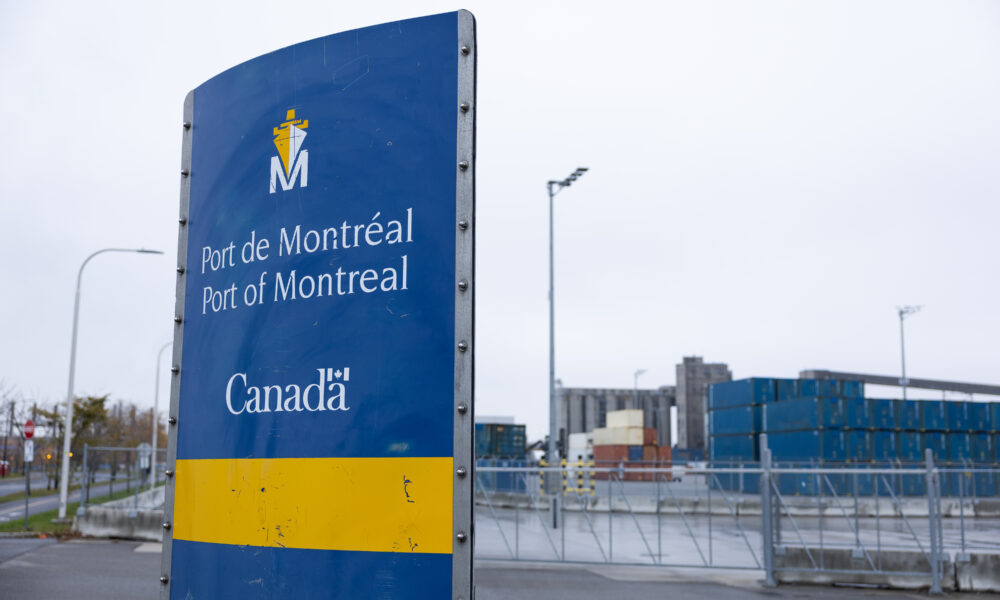
The Port of Montreal expansion can be great—if Carney listens to residents’ concerns

The long-planned Contrecœur Terminal Expansion Project aims to expand the Port of Montreal’s shipping container capacity by 60 per cent by building a new port 40 kilometres away from Montreal. At its core, this expansion is a good idea: It will create jobs and stabilize Canada’s American-skewed international trade dynamic. However, residents worry it will harm their quality of life, local ecosystems, and the broader environment, while others claim its increase in size is unnecessary

Critics’ ecological concerns, as well as their concerns about quality of life, are valid. Locals are the ones who will have to live with the consequences of this massive development. Prime Minister Mark Carney must give affected communities a voice in the planning process rather than steamrolling them. Incorporating community consultation into the expansion project will improve the benefits and sustainability of the port, while simultaneously strengthening public trust in government and its projects. 

Canada’s economic future looks uncertain after President Donald Trump abruptly ended trade negotiations and promised increased tariffs as retribution for an anti-tariff advertisement aired by Ontario Premier Doug Ford. Canada’s economy has historically relied on the U.S., but that trust has recently been frayed, meaning that it is fiscally prudent for Canada to diversify its trading portfolio.

Opponents to the legislation argue that the port expansion violates Bill C-5—which aims to increase Canadian economic autonomy by facilitating free trade between provinces—since it makes Canada’s economy less autonomous and more dependent on international trade. However, by broadening capacity for maritime trade across the Atlantic, the port expansion critically lowers dependence on one specific and increasingly unpredictable trading partner: The U.S. Even though the port expansion will bring external competition for Canadian producers, it boosts Canadian autonomy by diversifying trade partners to offer a safety net to Trump’s flip-flopping policies. Bill C-5 explicitly permits exceptions for certain projects deemed to be in the national interest of Canada, and this plan meets that criterion.

However, this project poses environmental concerns for locals: Over 1,000 cubic litres of river water will be used each day to clean machinery on-site, and it is very possible that dredging may harm the local copper redhorse fish. While minister of Environment and Climate Change Julie Dabsuran has approved the original plan under strict conditions, involving environmental impact mitigation and collaboration with some First Nations communities, the government’s environmental responsibilities cannot end there. It must continue to incorporate input from local residents about the new changes. 

One of the most blatant instances of neglect of community feedback is the project’s abrupt decision to allow construction work to continue late into the night. Instead of tailoring the project to address residents’ concerns, preliminary work began on the site almost immediately after the end of the comment period last month, sending a message to locals that their input is a low priority.

Residents’ environmental concerns about the port expansion are intimately tied to questions about Canadian autonomy. Some residents highlight that the port contributes to an economy fueled by international trade, which contributes more to global warming. However, an economy oriented towards international trade //can// coexist with a healthy environment. Surprisingly, studies have shown that trade within North America is actually more carbon-intensive than trade across the Atlantic or Pacific. Most goods traded between the U.S. and Canada are transported into Canada on trucks, which emit far more carbon than ships do. To be clear, however, a massive expansion in shipping capacity will undoubtedly increase emissions in the shipping sector; a better alternative would be a smaller expansion that accommodates a growing shipping sector without creating surplus capacity. 

Community concern about the effects of the port expansion on Canada’s sovereignty and the global environment is misplaced. However, local issues like water pollution, habitat destruction, and noise disturbance are real risks that the project planners have not clearly accounted for and have poorly communicated to residents under time pressure from the government. Carney’s administration must not let its ambition get in the way of due process. A smaller expansion could address constituent concerns by lowering water usage, requiring fewer construction hours, and curbing greenhouse gas emissions. 


Whatever the compromise the people of Contrecœur and the government of Canada end up finding, the best solution will ultimately be one reached through genuine collaboration.

Arts & Entertainment, Film and TV

Jafar Panahi breaks his enforced silence with a defiant new film

In 2010, police arrested the celebrated Iranian filmmaker Jafar Panahi on fabricated charges of ‘anti-government propaganda.’ After a brief imprisonment at the notorious Evin prison in Tehran, he staged a hunger strike to protest his detention, which drew global outrage. He was released and placed on house arrest with a 20-year ban on filmmaking and leaving the country. In 2022, Panahi was arrested again, prompting yet another hunger strike and his subsequent release. Nevertheless, these arrests and bans haven’t stopped the filmmaker from doing what he loves most: Making movies. 

Despite constraints, Panahi managed to smuggle his 2011 film This Is Not a Film into the Cannes Film Festival—hiding it famously on a USB drive inside a cake. In the years that followed, he secretly made four more acclaimed works while still officially banned: Closed Curtain in 2013, Taxi Tehran in 2015, 3 Faces in 2018, and No Bears in 2022.

Now, after years of secrecy and silence, Panahi has returned with his boldest statement yet: It Was Just an Accident, which was released this October.

The film begins with a routine late-night drive that sets off a thrilling chain of events. When a man strikes a dog with his car and seeks help near a remote mechanic’s garage, the mechanic—Vahid (Vahid Mobasseri), a former political prisoner—recognizes the sound of the man’s fake leg. Convinced that the stranger is Eghbal (Ebrahim Azizi), an interrogator who once tortured him, Vahid kidnaps the man and drags him into the desert, intent on enacting his revenge. But as the day stretches on and doubt creeps in, Vahid begins to question whether he’s punishing the right man or merely repeating the cruelty that once broke him.

As the film progresses, more eccentric characters enter the story, each complicating Vahid’s quest for certainty. Through their interactions, the film creates a deeply human tale of trauma, vengeance, and forgiveness in the face of violence. What starts as a simple revenge story becomes a meditation on how trauma perpetuates and reinvents itself, and whether true accountability is possible in a society haunted by its own political wounds. 

Part suspense-laden thriller, part dark comedy, and part psychological drama, It Was Just an Accident tackles multiple genres while maintaining Panahi’s typical political critique. Its bold themes and moral depth evoke the influence of Panahi’s fellow Iranian filmmakers, Abbas Kiarostami and Asghar Farhadi, while remaining true to his own voice. The film not only reflects his trauma from his imprisonment in Iran but also illuminates the stories of his fellow inmates from Evin prison. One of the film’s most striking moments occurs near the end when Panahi, in a single take, captures Vahid’s confrontation with his alleged torturer. The scene pulses with both rage and restraint. The characters’ resilience and shared grief clearly echo the real-life experiences of those who endured personal loss under state oppression, grounding the film’s suspense in a human reality. 

Distributed by the French company mk2 Films, the movie premiered at Cannes 2025, where Panahi, now permitted to travel outside Iran, appeared in person for the first time in over a decade. The film won the Palme d’Or, Cannes’ most prestigious award. Critics have hailed the film as Panahi’s most daring work yet, not just for its political defiance but for its raw, emotional poignancy and unflinching sincerity. While some might attribute this acclaim to solidarity with his defiance under censorship, It Was Just an Accident warrants its full praise for its masterful storytelling and innovative cinematography alone.

Although Panahi remains under sporadic surveillance in Iran, his renewed visibility signals a small but significant victory for artistic freedom. He continues to use film to advocate for Iranian artists and filmmakers who are silenced by the government, wielding his platform and popularity to amplify their voices on a global stage.

It Was Just an Accident isn’t just another arthouse drama. It is a courageous act of resistance disguised as a film. Its universal insight into human nature transcends national and cultural boundaries, resonating with audiences everywhere. Watching this film means bearing witness to Panahi’s refusal to be silenced, and to the resilience of creative truth in the face of repression. 

Science & Technology

How aspects of body image may predict self-injury in university students

Content warning: Self-injury

Nonsuicidal self-injury (NSSI) remains an urgent and often overlooked mental health concern, and one that demands greater attention from universities worldwide. As many as 44 per cent of those who engage in NSSI in adolescence continue to do so when they start university, and eight per cent of all university students report engaging in NSSI behaviours in the past year. 

The transition from secondary education to university represents a critical period of academic pressure, personal exploration, and increased social opportunities. During this timeframe, students face a heightened risk for mental disorders. Researchers have suggested that body regard—how one perceives, lives in, and cares for one’s body—plays a pivotal role in NSSI engagement.

In a recent publication in the Journal of Affective Disorders, Julia Petrovic, a recent PhD graduate of McGill’s Educational Psychology program and current post-doctoral fellow at Harvard University, explored binary gender differences in the domains of body regard and NSSI. Petrovic hopes that the results of her research can guide the types of resources and support institutions provide.

“The McGill community is very diverse, and so should be the mental health resources that are made available to its students,” Petrovic said in an interview with The Tribune. “It is my hope that my research eventually informs the way that student services at universities will respond to students’ mental health challenges.”

Petrovic’s study investigated four body regard domains—body acceptance, athleticism, body care, and body connection—among students reporting NSSI over the past year. Using a quantitative approach, her study examined 3,343 college students, with 12.7 per cent reporting NSSI history in the past year. Of this 12.7 per cent, 82.4 per cent were women. 

“We had a large sample with over 3,000 university students, so we can be confident in the results we found,” Petrovic said. “It was also the first study to explore body regard in its different domains, which really deepened our understanding of how aspects of body regard might contribute to the prediction of NSSI and how this differs by gender.”

Petrovic’s findings revealed that, on average, females were less accepting of their bodies and perceived themselves as less athletic relative to males. Furthermore, lower levels in the four domains of body regard were linked to a higher likelihood of self-injury in the last year among females, whereas in males, only lower levels in body care and body connection showed this effect. Despite these differences, both reported taking similarly good care of their bodies and felt similarly connected to them.

“We essentially found evidence that having a positive regard for one’s body played a protective role in relation to self-injury, as well as some nuances for gender,” Petrovic said.

Petrovic emphasized the importance of repeating the study with university students who report more diverse gender identities to achieve more inclusive and generalizable results.

“University students who did not identify with a binary gender were unfortunately excluded from our analyses because there were too few individuals to include in a statistically [significant] way,” she said.

Petrovic also noted that the levels of body regard domains in predicting NSSI should be explored through longitudinal research, which follows participants over a longer period of time.

“An important limitation is the study’s cross-sectional design, so our results are really a snapshot of how things are interrelated at a given moment,” she said.

Petrovic concluded by emphasizing the importance of moving away from a ‘one size fits all’ approach and tailoring interventions to more personalized strategies.

“Each individual’s history, whether they have lived experience of self-injury or unique ways in which they view themselves and their body, can impact what sort of mental health support would work best for them,” Petrovic explained. “The best we can do is try different strategies, like meditation, journaling, spending time in nature, exercising, talking to a friend or a mental health professional, so we could really find what works best for the individual.”

Commentary, Opinion

Reporting on the Garment District’s new bike path doesn’t tell the full story

Last spring, the borough of Ahuntsic-Cartierville installed a new bike lane, slicing through Montreal’s historic Garment District. Businesses claimed to suffer sales losses as customers who could not find parking started shopping elsewhere. At least, that’s the narrative that news outlets perpetuate. In reality, while controversy around new bike lanes is expected as they require a redistribution of public space, this controversy often finds itself in relentless opposition to much-needed infrastructure projects. 

The Garment District, a block of buildings along a narrow section of rue Chabanel, runs less than a kilometre east-west; to the north stand eight evenly spaced massive multi-storied glass and concrete cubes, the manufacturing hubs of Montreal’s historic fashion industry. To the south, mid-rise mixed-use storefronts open onto the street, behind which dense suburbs sprawl. The district can be walked in less than ten minutes. 

However, the effects of globalization—and the resultant shift towards international manufacturing—can be felt in the changing urban fabric, with garment stores, cafes, convenience stores, restaurants, and banks. Today the area is home to over 2,000 companies with tens of thousands of employees. And of course, a new bike lane.

Earlier this month, CTV News produced a breathless article reporting on the local uproar around the bike lane’s addition to the streetscape. Alongside interviews with cantankerous local business owners, the article uncritically recites the bullet points of a write-up by Société de developpement commercial District Central, a non-profit association of businesses in Ahuntsic-Cartierville that commissioned a survey of local businesses. The survey found almost 90 per cent of local businesses self-reported “difficulty accessing their facilities.” It also found 66 per cent believe their company is less competitive due to the path’s addition. 90 per cent of business owners in the area also reported they were not properly consulted on the case. 

This is especially apparent when one takes into account sampling bias. The survey’s vast majority loses rhetorical power once placed in the context of its meagre 16 per cent turnout, representing only 170 businesses out of the 1,048 surveyed. Assessing the study’s measurands through a series of opinion questions about a piece of infrastructure yet to see a single winter can hardly be considered reputable data on the issue.

A study that finds that an overwhelming 90 per cent of a given population shares alignment on niche local planning issues boasts a consensus enviable for even the world’s most sycophantic regimes. But especially considering Montreal’s diverse mix of business class apparently reflected in the results, it casts doubts as to the legitimacy of the sampling process. Regardless of whatever statistical findings it produces, a business lobbying group essentially surveying itself about a contentious new infrastructure addition is not expected to find anything but the result that best serves its own economic interests.

When considering the uproar, one may be reasonably deceived into believing the bike lane moves through rue Chabanel—the area that would typically be considered the Garment District. Far to the contrary, the path runs next to said Garment District: North-south down rue Meilleur before cutting one block over to continue down av. du Parc. One must walk the entire length of the Garment District just to glimpse the modest bike path, two thin strips bordered by green bollards on either side of the road. A single BIXI station sits on an otherwise wide sidewalk. After getting a sense for this supposedly problematic section of road, the criticisms around it begin to seem more disingenuous. 

A 2024 McGill study found bikes are underserved by allotted road space compared to their share of trips by 212 per cent. This outrage has little to do with genuine harm to local businesses; rather, it demonstrates how narratives of personal inconvenience and burdensome bureaucracy are mobilized to oppose even modest urban improvements. 

For those who may be interested, the Garment District is relatively easy to get to, even in spite of the STM strike. All one needs to do is grab a BIXI and ride it north. The bike paths are pretty much uninterrupted all the way up, and it’s a decently pleasant ride.

Student Life

Secret services: Five lesser known perks at McGill

As a student paying for rent, groceries, utilities, and a hefty tuition, bills can add up quickly, making the hunt for free activities and resources pertinent. With near-constant construction, pricey on-campus food, and expensive course materials, some may wonder where our tuition money really goes. With that in mind, The Tribune presents five ‘free’ perks that McGill offers students.

Unlock your inner engineer

Although many non-engineers may find 3D printing elusive and exclusive, it is available for free to every McGill student, regardless of program. Students, staff, and faculty can access 3D printing through the Schulich Library 3D Printing Service. To print something, you must first register and read the regulations, then create your print job and submit it to the 3D Printing Job Request Form. Shortly afterward, it will be ready for pickup at the Schulich Library Service Desk. This is a great opportunity to explore your creative side and produce a completely unique object using advanced technology.

Art, art, and please, more art!

Through the McGill digital libraries, students have access to thousands of films, television shows, musical pieces, and live performance recordings. Students can immerse themselves in curated media ranging from ballet performances by the Royal Ballet through the Naxos Video Library to popular new releases like Sinners on Criterion on Demand

Another excellent platform McGill grants students access to is Kanopy. Kanopy is a streaming service with a diverse film library including Hollywood classics, independent films, foreign features, and fascinating educational documentaries. Completely free to McGill students, Kanopy has something for everyone, whether you’re on the hunt for an underground movie or simply need a break from monthly streaming services.

To access McGill’s collection of streamable media, go to the homepage of the libraries website, click the instructional support tab, and then the class screenings tab. You will then see the downloadable and streaming media tab, which leads you to the list of databases McGill has access to.

Breathe in, breathe out, and try out Headspace

The SSMU grants all McGill students a Headspace account free of charge. Headspace is an app focused on restoring and building mental health and wellbeing through mindfulness, offering meditation plans and music for focus, restful sleep, and quiet mornings. On the Headspace website, simply activate your account using your student email. This resource is excellent for students who are struggling with stress or who want to practice mindfulness more generally. Enjoy this perk for free, and breathe out the pressure. 

The McGill genealogy genie

Many students are curious about their family history, but tracing your lineage can be challenging—and expensive. Through McGill, students have access to Ancestry, a genealogy company which allows you to search for ancestors through voting, immigration, and census records. Navigate the McGill libraries website to find the genealogy research resources page, and prepare to learn more about your family tree. 

A free winter wardrobe

Thrift McGill is an SSMU-funded shop where students can drop off and pick up clothes free of charge. The shop opened in the fall of 2024 through Student Life and Learning and Student Housing and Hospitality Services in partnership with the Sustainability Projects Fund. Thrift McGill is a way for students to sustainably declutter their closets and find stylish new pieces. Located at 3473 rue University, Thrift McGill is an excellent way to refresh your closet, help the environment, and give your wallet a much-needed reprieve. 

Montreal, News, The Tribune Explains

The ‘Trip’une Explains: The legality of psilocybin mushrooms in Montreal

Psilocybin mushrooms, colloquially known as ‘magic’ mushrooms or ‘shrooms,’ contain a psychedelic compound—either psilocybin or psilocin—and are considered Schedule 3 substances under Canada’s Controlled Drugs and Substances Act, alongside lysergic acid diethylamide (LSD)  and ketamine. The cultivation and distribution of all Schedule 3 substances, unless prescribed by Health Canada, are punishable with up to ten years of jail time. The Tribune explains how these legal constraints on ‘shrooms’ play out in Montreal.

Is taking ‘shrooms’ illegal?

Yes, possession or consumption of psilocybin is illegal everywhere in Canada, unless you have an exemption from the government for the purpose of performing clinical trials with ‘magic’ mushrooms. Possessing ‘shrooms’ is punishable with a $1,000 CAD fine and up to three years jail time, while their production holds a penalty of ten years in prison. 

Former Mayor of Montreal Valérie Plante has advocated for the decriminalization of simple drug possession and personal use of Schedule 3 substances, including ‘magic’ mushrooms,  since 2017. Still, the Service de police de la ville de Montreal (SPVM) has continued to pursue charges in both instances, with Plante telling the Canadian Broadcasting Corporation that the SPVM “will continue to enforce the law,” despite her cabinet’s stance. 

What constitutes a charge?

A first-time offence of possession of less than 200 grams of ‘shrooms’ is typically considered a misdemeanour and is punishable by a $1,000 CAD fine, jail time of up to a year, probation, or legally mandated enrollment in a drug treatment program. Charges can only be filed if the prosecutor can prove the defendant had prior knowledge and control of the drug’s whereabouts. 

Possession with intent to distribute, sell, or traffic ‘magic’ mushrooms is a felony which can be met with a fine from $10,000 CAD to $1 million CAD and a possible prison sentence of twenty years. Charges can be further escalated if offenders have prior criminal records, and based on the location of the offence: For example, a dispensary operating near a middle or high school can receive harsher penalties than one in a business district.

What about magic mushroom dispensaries?

Storefronts often avoid police scrutiny by marketing themselves as wellness or medical clinics instead of dispensaries, and sometimes sell journals and other therapeutic tools alongside ‘magic’ mushrooms. Storefront dispensaries can also sell growing kits by claiming that their product is for non-psychedelic purposes, such as educational, agricultural, or cooking uses. 

Many dispensaries operate online to avoid pressure from the SPVM to shut down. This allows them to doubly protect their employees and buyers, who may otherwise run the risk of being arrested during police raids of in-person stores. 

Which dispensaries get raided?

It is unclear how and why specific dispensaries in Montreal are targeted, while others operate freely. Funguyz, a franchise dispensary with several locations across Montreal and Toronto, has been raided several times by police in both provinces. 

Their first Montreal location was opened and raided on July 11, 2023, with the SPVM seizing its merchandise and making four arrests. The location reopened a week later and was again raided on July 21, coupled with simultaneous searches of the apartment above the store and at another location on the island. 

On Aug. 3, the SPVM conducted a third raid, making one more arrest and seizing four bulk kilograms, 753 grams of edible products, and 1,643 tablets of psilocybin. All those arrested were employees of the chain and faced varying charges of trafficking and possession. 

The frequent raids led FunGuyz to announce in November 2024 that their business was moving entirely online. Despite this, some storefronts have continued to service customers in person.

Editorial, Opinion

The student empire strikes back

Between Nov. 7 and 14, 28 departments will hold general assemblies (GAs) to vote on strike motions in support of Palestine for the week of Nov. 17. As of Nov. 10, three of the 28 passed a motion to strike. The motions, although independently submitted to each faculty, share four central demands. They call on McGill to divest from its holdings in companies complicit in Israel’s ongoing genocide and apartheid in occupied Palestine; disclose its financial holdings; drop disciplinary charges—such as injunctions—against students involved in popular organizing, political advocacy, and demonstrations; and end any research or financial partnerships involving organizations or individual donors that perpetuate or benefit from the sale of weapons or military technology. 

Departmental strikes represent an institutionally mandated and unified channel to hold the McGill administration responsible for its complicity in Israel’s genocide in Gaza. 

Though the university has yet to divest, McGill cannot remain obstinate forever if pressure from its students and faculty continues. Striking may feel futile, and the effort to do so exhausting, but as a student body, our commitment to action must persist. In this war of attrition, the question is whether sustained student pressure can outlast institutional intransigence—whether we can make the status quo more costly to maintain than to change.

Strikes at the departmental level are a testament to the incredible breadth of the pro-Palestine movement on campus and the diversity of contexts within which mobilization can emerge and prosper. By organizing within their own departments—rather than through Students’ Society of McGill University (SSMU) as in April’s and October’s centralized strikes—students and faculty show the movement is not confined to one demographic. It is a movement not only driven by students learning about politics and global conflict, but also by those studying computer science and physics alike. In breaking the stereotypes of political participation, everyone in the McGill community is implicated. Therefore, those who choose not to participate must confront their complicity. 

Due to its smaller scale, activism at the departmental level creates and sustains the interpersonal relationships necessary for successful mobilization much more effectively than under a single centralized organizational body, such as SSMU. 

Departments have the choice between hard-picket and soft-picket striking strategies, as well as the date and time of their respective strikes. Allotting agency to each department means that their subsequent strikes are rooted in an intrinsic motivation, as opposed to an externally imposed framework for activism. 

Meanwhile, disseminating action across dozens of departments and across a number of days disarms the administration’s ability to stifle the pro-Palestine movement in any one fell swoop. This structure nullifies McGill’s characteristic tactic for disabling centralized strike efforts, such as its severance of its memorandum of agreement with SSMU. With no single legal mechanism to delegitimize all striking departments, the administration will struggle to maintain its controlling grip that aims to vilify student activism

On a symbolic level, the widespread will to strike from students and faculty alike demonstrates a marked shift in campus attitudes towards pro-Palestine activism—and towards solidarity between activists. These strike motions follow hot on the heels of the historic resolution from the McGill Association of University Teachers’ landslide vote to endorse the academic and cultural boycott of Israel, demonstrating a new solidarity between faculty and students, and the universality of support for Palestine. 

If we don’t cede, the administration will have to—and participation is the first and most important step. The Religious Studies GA already failed to meet its department’s low quorum. Attend your departmental GA, petition if your department has not yet approved one, bring your friends with you, hold classmates and professors accountable, and use your vote. Striking is effective and only gains momentum as time goes on. 

McGill’s administration has remained stubborn and unyielding, and shown strong endurance in waiting for protests to tire. When striking feels pointless, and when we—as students and faculty—feel the fatigue of two years of our activism remaining unheard and repressed, we must remind ourselves that those in power count on the burnout of the activists that hold them accountable. We must not give them that satisfaction.  

Arts & Entertainment, Books, Film and TV

‘Lovely Day’ brings Alain Farah’s autobiographical novel to the screen

Lovely Day (Mille Secrets Mille Dangers), directed by Philippe Falardeau and based on an autobiographical novel by McGill’s own Alain Farah, weaves together Farah’s past as a young Lebanese Montrealer with the climactic moments of his wedding on the steps of St. Joseph’s Oratory. Although it starts and ends on the same day, the film meticulously unpacks the events of the last 20 years, jumping backwards and forwards in time to immerse the audience in Farah’s head as he wrestles with his past. 

At the request of McGill students, there was a special screening of the film at Cinéma du Musée on Nov. 4, featuring a question-and-answer session with Falardeau and Farah themselves. After the screening, The Tribune sat down with Farah to discuss his journey from writing his novel to co-writing the script for Lovely Day to seeing the finished movie. 

“It’s a process that produces a lot of ambiguity, but not from my point of view, because I am completely comfortable with the idea that we’re not just one thing,” Farah told The Tribune. “I’m able to be at the same time the character, the narrator, the co-script writer, the professor, the dad, the whatever.”

The novel itself, Mille Secrets Mille Dangers, published in French in 2021 with no English translation, stretches over 500 pages and draws stylistic inspiration from James Joyce’s Ulysses. Adapting such a complex book into a feature film posed a challenge for Falardeau, who had to juggle the timelines of Farah’s childhood, adolescence, and wedding day in just a two-hour film. To make this more manageable, Farah and Falardeau decided to remove an additional future storyline from the book, focusing instead on the past and present. 

Cutting between these different timelines, while cinematically complex, is crucial to the film’s deeper effect: Making the audience not just see, but empathize with Farah’s anxiety disorder, which manifests throughout the story in his panic attacks, and also in his climactic loss of consciousness during his own mother’s wedding toast. 

“[Falardeau] often said while we were prepping, that it’s not enough to just see a character that’s tense or sweating. He wanted the people in the theatre to feel that anxiety,” Farah said. “I think he reached that goal. We’ve seen some people looking pretty anxious coming out of the movie.”

By introducing the story of his parents’ divorce and the onset of his chronic illness as a young child, and painstakingly tracing these threads through the friendships and betrayals of his adolescence, the film succeeds in placing us in Farah’s shoes as he navigates his long wedding day—which, of course, comes with its own ups and downs.

All of these timelines are set against the backdrop of Montreal. However, Farah emphasized that this wasn’t the Montreal we see in so many films—seemingly composed solely of downtown and the Mile End. The majority of Lovely Day is filmed where Farah grew up, in Ville Saint-Laurent, with notable pit stops at St. Joseph’s Oratory and the Olympic Basin. While Montreal is the ‘city of a thousand steeples,’ for Lovely Day, the action revolves around its three great domes: The Oratory, the Biosphere, and (how could we forget) the Orange Julep. These three landmarks, built in different neighbourhoods and eras for very different purposes, anchor the film in a Montreal that feels dynamic, diverse, and above all, lived-in. 

“For me, a real concern was that kids from the community, or Montrealers at large, felt that this was our Montreal, and there was a sense of belonging to that city,” Farah said. “You see the traffic jams, and you see the haziness, and you see some neighbourhoods that you don’t see too often [in movies]. But for me, despite a certain ugliness, there is kind of a beauty. When you see all those towers, this is where we grew up, most of us immigrant kids.”
By filming these locations with care, Lovely Day shifts the emotional centre of Montreal away from the Mile End, bringing a new side of the city to the cinema as it delves into Farah’s very personal adventures.

Read the latest issue

Read the latest issue