Latest News

McGill, News

McGill alumnus Sally Armstrong returns to McGill for Massey Lecture

Content Warning: mentions of sexual assault


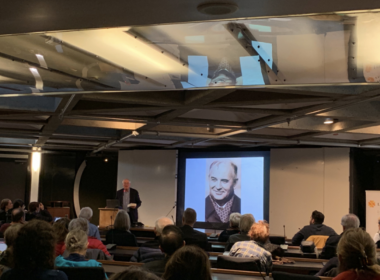
World-renowned journalist, celebrated author, and human rights activist Sally Armstrong presented  “The Mating Game,” the second installment of her Massey Lecture series, at McGill’s Max Bell School of Public Policy on Oct. 24. Armstrong was appointed CBC’s Massey Lecturer of 2019, a prestigious role given annually to a scholar who is well-versed in a pertinent current issue. They are then tasked with giving a series of lectures across Canada. As one of the first journalists to report on the lives of Afghan women under Taliban rule, Armstrong has continued to engage in activism for justice for women and girls across the globe. 

Armstrong argued that empowering women is essential for a society to thrive. She also discussed society’s continuous fixation on the Biblical Adam and Eve story, where Eve is portrayed as inferior to Adam, and how this anecdote perpetuates harmful stereotypes.

“Apart from the philosophical and emotional aspects of [women historically] being cast as less valuable, that dismissal builds societal systems and structures that reinforce the power imbalance we are trying to sort out today,”Armstrong said.

Although Armstrong acknowledged that conditions for women have improved in many ways, she emphasized how men continue to be seen as the default in some fields, which can put women in danger. For example, the dimensions of both crash-test dummies and construction equipment are modeled for a man’s proportions—calibrations that may prove fatal to women.

“The simplest truth is the data [that] we use for everything from medical tests to vehicle safety, office temperatures to snow removal, [are] hopelessly biased,” Armstrong said.

Whereas Canada and the US have fallen short in terms of gender equality in some respects, like gender equality in government, Armstrong pointed out that Scandinavian countries such as Norway and Sweden may serve as models for the rest of the world. She feels the success of these countries is due to a culture fundamentally based on equality.

“[Gender equality] is easier to build on rather than trying to play catch-up,” Armstrong said. 

Through her presentation, Armstrong detailed different instances of sexual assault against women as a means of asserting power and control, and highlighted the importance of recognizing and combatting rape culture and gender discrimination.

“The truly incredible part of these reports of rape, [such as] date rape, war-time rape, or genocidal rape […], is [that] the treatment of women is ubiquitous; it cuts across cultures, socio-economic status, age, and geography,” Armstrong said. “These are the issues we’ve known about and buried forever. And now they’re in the spotlight.”

Armstrong expressed hope in the new generation’s fight for equality, and offered some hard-earned advice to the audience.

“The next generation, that’s [young people], is demanding accountability,” Armstrong said. “Your voice is your most effective tool.”  

 Erika Moyer, a student at McGill’s Max Bell School of Public Policy, explained the importance of the talk.

“By promoting these events, Max Bell provides the public with a better understanding of major public policy issues,” Moyer said. “Facilitating discourse on important issues leads to better public policies, which translates into lasting change.” 

Denbeigh Whitmarsh, U3 Arts, commented on what she learned from the lecture regarding the double standards placed on women.

 “We’re really quick to point fingers to a lot of Middle Eastern cultures [regarding sexism], but we don’t often look back at ourselves and realize that it is the same thing here,” Whitmarsh said. “We turn a blind eye to [the unfair treatment of women], because it’s our own society [….] It’s a lot more difficult to change yourself than it is to change someone else.”

Armstrong finished her lecture with a powerful, poignant Mexican proverb she thinks all women should memorize: 

“They thought they could bury us. They didn’t know we were seeds,” Armstrong said.

Commentary, Opinion

“Made by McGill” disregards students’ ongoing concerns

Two years ago, McGill cut its Eating Disorder Program. Then, this fall, a change in policy left note-takers working for McGill’s Office for Student Disabilities without proper compensation. McGill has excused these cuts, and other functional problems, as tough decisions forced upon the administration by complex financial difficulties stemming from historical events and government decisions. The university has no direct power over how much government funding it receives, but the way that McGill markets and manages itself now is entirely under its control. Last month, McGill announced “Made by McGill,” a $2 billion fundraising campaign designed to improve the university’s global standing as it enters its third century of existence. Considering the university’s funding situation, fundraising is absolutely necessary. However, in light of recent services cuts and other problems, it is worth questioning the university’s priorities governing the distribution of what funding it does receive.

The university’s intentions with Made by McGill must be analyzed in the context of its actual funding problems. Recent cuts in funding from the government of Quebec are only the tip of the iceberg. The university has experienced financial trouble ever since the banks left Montreal for Toronto in the wake of the October Crisis in 1970, leading to decreasing provincial revenue and funding for universities. McGill has a disclaimer on its website where the administration explains that a lack of funding is the root of many problems on campus. 

McGill has few options for funding itself outside of government grants and donor investment, and students should certainly take this into account when complaining about mediocre services. However, in its spending and the way that Made by McGill was pitched, McGill appears to be much more focused on augmenting its image to encourage investment than serving its current student body. The premise for the fundraising campaign is to “propel McGill into its third century” primarily by fortifying financial aid and scholarship resources and reinforcing support for research and innovation. These are all great initiatives, but students who are already here have many gripes that need to be addressed. The university should consider addressing the concerns of the present student population as an equally viable way to improve its international stature as research investment.

Students are not “made by McGill,” and that wording can be characterized as careless. Considering that McGill is dependent on its student body for their tuition dollars, it is probably more accurate to say that McGill is made by its students. When the wording of Made by McGill is examined at face value, it would imply that by paying with our tuition to keep the Roddick Gates open, and by accomplishing things with the knowledge we obtain here by our own volition, we become a product of McGill, rather than its makers. The slogan is also tone-deaf considering all of the obstacles that McGill students have to deal with, in part because of the declining quality of some student services and utilities as a result of chronic underfunding. 

Students don’t make McGill by their tuition alone. Through participating in student-run programs such as SSMU and clubs, as much as by investing in academic pursuits, the student body is what gives McGill its distinctive character more than anything else. McGill isn’t ‘made,’ either; it is an ongoing project that administration and students alike commit themselves toward. Considering the hardships that the current lack of funding for student services and other functions places on students, McGill should be cautious when putting out a message like the one implicit in “Made by McGill.”


Features

This ain’t no way to make a living

At an academically rigorous institution like McGill, schoolwork is just one of many intersecting obstacles to success, especially for students in financially precarious situations. According to recent National College Health Assessment (NCHA) surveys, 26 per cent* of McGill students reported that their finances had been traumatic or difficult to handle in the past 12 months. For those students, finding a job outside of class time is imperative in assuaging these concerns. Yet, working while studying at university acts as a catch-22 of sorts: In the same NCHA surveys, 13.5 per cent* of McGill students reported that work had negatively impacted their academic performance. Even if having a job is necessary to sustain personal finances, it can come at a significant cost to one’s overall well-being.

Commentary, Opinion

Open letter on Indigenous affairs at SSMU

The “Redmen” name was a visible and constant reminder of McGill’s historical discrimination against Indigenous students. It is with great pride that I can say that, after years of Indigenous student activism, we have successfully changed the name. While the #ChangeTheName campaign demonstrated Indigenous resilience and strength, it also rallied a tremendous level of allyship and support from our non-Indigenous peers. Our campaign would have been significantly more difficult without the support of the Students’ Society of McGill University (SSMU) team in particular. I reflect on this last statement with both optimism and hesitation.

SSMU is an unreliable institution that fails to provide consistent support and allyship to Indigenous students. It only takes one oversight—like failing to send an email—from a SSMU executive to remind us, as an Indigenous student community, SSMU is still a body that we cannot readily depend on. Some may  argue that this single oversight, that this independent transgression by Vice-President (VP) Internal Sanchi Bhalla, may be insignificant enough that it fails to merit a response. However, regardless of the size or publicity of such an oversight, this lack of action serves to remind Indigenous students of the institutional barriers that force us to rely on non-Indigenous members of the SSMU executive. The failure of a SSMU representative to act in allyship reminds us of our own powerlessness within the institution, and leads us to question whether we can rely on SSMU in future circumstances, or not. While VP Bhalla has explained her lapse as a “technical error” and a simple reality of bureaucracy, what is important are not the causes of her actions but their result. This event, voluntary or not, reaffirms Indigenous students’ lack of trust in the SSMU executive, and accordingly, it must then fall to us as Indigenous students to take control over our own affairs without being forced to rely on student executives who are incapable of providing allyship.

I believe Bhalla when she explained that she was incapable of supporting Indigenous students with regards to our recent protest against the treatment of First Nations children in the child welfare system. I also believe that SSMU as an institution is not structured in a way that easily affords the executive the ability to provide the type of allyship that we require as Indigenous students. While we can understand Bhalla’s failure to provide allyship to Indigenous students as a symptom of a larger institutional issue, that merely explains, and does not excuse, the structural failures of SSMU that prevent it from prioritizing Indigenous student voices. As such, it is time that we reformed SSMU in a way that works to prioritize the needs of Indigenous and marginalized students. Indigenous student activists require a three-step reform to ensure our independence and autonomy in mobilizing to promote Indigenous issues at McGill. 

First, Indigenous student activism requires fiscal autonomy, distinct from discretionary funding provided by the SSMU executive. I began the #ChangeTheName campaign without any funding and consistently relied on discretionary support from SSMU. This structure meant that I, as the head of the campaign, couldn’t plan future action without being forced to ask ‘permission’ of a non-Indigenous student executive. Indigenous students should not have to rely on the charity of SSMU when challenging an institution, especially if that institution happens to be SSMU itself. As such, I am excited to announce our proposed Indigenous Equity Fund, which Indigenous students will campaign for in the upcoming Fall referendum period.

Second, power dynamics within SSMU need to be reformed in a way that makes the Indigenous Affairs Commissioner accountable to Indigenous students, rather than the SSMU executive. The role of the Indigenous Affairs Commissioner should be to respond to concerns of Indigenous students and represent those concerns within SSMU. The Indigenous Affairs Commissioner needs to be able to hold the SSMU executive accountable if Indigenous students become anxious or feel disrespected due to the conduct of the executive. Moreso, the Indigenous Affairs Commissioner needs the flexibility to challenge the institution without feeling pressure from SSMU executive. Subverting this power dynamic means shifting the Indigenous Affairs portfolio out from under a SSMU executive, and providing an independent platform where the Indigenous Affairs Commissioner can act without concern of retaliation from the SSMU executive team.

Finally, Indigenous students require access to resources that enable rapid mobilization on issues affecting our community. By reforming the SSMU Indigenous Solidarity Policy, we can ensure that useful tools such as the SSMU listserv, room booking privileges, and seats on administrative committees are allotted to Indigenous students without having to rely on a SSMU executive. With the understanding that SSMU is simply incapable of providing the allyship that Indigenous students need, it is necessary that we acquire the means we need to help ourselves. 

I firmly believe in the power of solidarity. Solidarity, community, and reciprocity are some of the most powerful methods that we have as students when challenging McGill as an institution and fighting for student rights. At the same time, I recognize that sometimes this solidarity is difficult to achieve. This fact should not bind or limit marginalized voices from acting on our own behalf. There will be those who perceive Indigenous student actions as unnecessarily divisive and overreaching. Those who make these claims simply seek to undermine and belittle the legitimate anxiety that Indigenous students feel on an everyday basis. 

Instead of promoting divisiveness on campus, our plan is to increase solidarity and allyship, to promote Indigenous student autonomy, and to provide increased support for future Indigenous students. We can achieve this by striving for an increase in financial autonomy, a shift in power dynamics, and establishing control over resources that SSMU withholds from Indigenous students.

Commentary, Opinion

How I watched my country’s revolution from McLennan

I am human. I am distraught, disorganized, and disillusioned. I can barely attenuate how exhausting and disorienting this week was into coherent words. On Friday, it was my birthday. My friends and I hosted a potluck on Sunday. The long weekend ended with a pleasant dinner at my roommate’s family’s house in west Quebec. Over 100 forest fires took ablaze the following days. 

There is no transition. I am engulfed by a demanding sadness. I close my laptop for an hour. Then there is revolution. Revolution smells like rubbing sunscreen into the rotting stench of trash in the heat. It smells like accumulated sweat because there isn’t enough electricity to turn on the AC. Revolution smells like a burnt valley. It reeks like the McLennan midterm feet-stink that I sit in as I pretend to preoccupy myself with miscellaneous tasks in an attempt to disentangle my thoughts from the knots on social media.

Lebanon began a collective march on Oct. 17. Over one million people are currently protesting the Lebanese government. These chants ring out from a multitude of districts, across religious sectarian divides, and political spheres. They demand those in office to resign. The Lebanese government functions as a confessionalism system; this means that they proportionally represent the religious distribution of the country. The Lebanese people have, for the first time in history, let go of all sectarian and religious divides to fight for a better living standard. The Western media coverage has done this revolution no justice. 

The country is drowning in a debt pool created by stealing and conniving criminals who have spent years pulling at the very last heartstrings of the vulnerable. We do not have clean drinking water. We do not have full-time electricity. We do not have basic public services like adequate firefighting fleets. Many parents find it difficult to fund their children’s education. Admirably, the Lebanese people have yet to stop dancing, singing, and supporting one another throughout the revolt. This revolution is an example of tenacity and luminosity that should be internationally esteemed. 

Sahat El-Nour is found in the centre of Tripoli, where a large amount of the population is unemployed. The city has a reputation for being dangerous and hostile, but I believe the country’s social structure is currently undergoing rapid, drastic change. Last Saturday, the mass crowd with a bad reputation demonstrated this change as they danced in numbers reaching the thousands as DJ Madi Karimeh vamped techno beats. I cannot stress this enough: I would much rather be there.

Last week, I walked home from Montreal’s protest in solidarity with Lebanon by myself. Hope taunts, and sometimes, hope hurts. I wondered what people on the street expected me to be crying about. I want so badly for this to keep going well: I want to go home to Lebanon. I graduate this December and have spent five and a half years separated from my family by country lines. I have missed too many of my younger brother’s birthdays, and now, he is a foot taller than me. I am tired, but, I have never been so hopeful for my country. My mom sent me a video of her at the protest in Tripoli; she is screaming at the top of her lungs to a chant with a crowd of thousands of voices; she stops for a second, turns to the camera and says “Hanouna, you are my heart.”

I am human; I am distraught, disorganized, and disillusioned. I will not regurgitate the history of Lebanon. Here is my dream the revolution has finally given me hope for. As an international student, watching the news is checking up on my family; I have to process, mourn, and resist on a foreign campus, two-plane rides from home.

Last summer, some friends from United World Colleges Dilijan and I gathered for the first time in two years. After high school, each of us had gone to separate corners of the world that promised us opportunity. Sipping coffee on a Beirut balcony, my friend says, “One day, we’ll be grown old, and you’ll be home here in a free Beirut and I’ll be in mine in a free Syria. We’ll visit each other, just a 30-minute drive away.”

Research Briefs, Science & Technology

Testing Darwin’s ecological questions

Rarely does the title of a scientific study live up to the aspirations of its authors. The BIG Project, however, is an exception. BIG, which stands for the Biotic Interaction Gradients experiment, is the first endeavour of its kind to explain one of Charles Darwin’s oldest theories: Species interactions play a greater ecological and evolutionary role in regions closer to the equator.

For decades, various research groups have tried to provide definitive, quantitative evidence for heightened inter-species activity in tropical and low-elevation environments. However, they struggled due to the limited geographic scale of their experiments. 

The brainchild of Anna Hargreaves, a professor in the McGill Department of Biology, the BIG project overcame such restrictions by employing a group of over a dozen researchers working from the High Arctic to the equator. Her team set up more than 7,000 seed depots—small caches of a few dozen sunflower seedsalong 18 mountains across the Americas. Researchers then observed how many seeds animals consumed and in what environment. In a paper published in February 2019, Hargreaves and her team provided conclusive evidence that latitude and elevation play an essential role in determining species interactions.

“The purpose of the project was to test this hypothesis directly,” Hargreaves said in an interview with The McGill Tribune. “If we did the same experiment everywhere, using the same material and analyzing the same interaction, we could actually see if the interaction was stronger in the tropics.” 

The authors found that seed predation, the metric that they used to test species interaction, was greatest toward the equator. Moving from north to south, seed consumption increased by 2.6 per cent for every 10 degrees of latitude. 

Whereas other meta-analytical studies use a variety of parameters to assess the relationship between biological diversity and latitude, the BIG project employed a much simpler methodology. For Hargreaves, it was important that the experiment was easily replicable so that researchers across the globe could follow a standard protocol. 

Hargreaves’s biggest concern was capturing latitudinal interaction while biological variation and other variables were at play. 

“One way to counter that is to reduce variation experimentally,” Hargreaves said. “If you take out the mammals and birds, you are looking at a smaller, more targeted group of species eating the seeds.” 

To limit the influence of variation, some seed depots were enclosed within cages, restricting the types of animals that could consume seeds. This modification allowed Hargreaves and her team to look at predation data from larger vertebrates and smaller invertebrates individually. 

The results were intriguing to the authors because the expected pattern of species interaction was driven largely by invertebrates. Excluding vertebrate species who fed upon grain reduced seed predation, but it did not change the overall geographic trends in interaction strength.

“It’s a huge, global, biogeographical pattern that is driven by the smallest animals we were looking at,” Hargreaves said. “It was quite unexpected.”

Santiago David, a UBC zoologist who placed seed depots for the project in South America, recounts some of the other challenges in completing an experiment of this scale. 

“We worked in Colombia along two separate transects that aren’t accessible by car at all elevations,” David wrote in an email to the Tribune. “That means we had to hike up trails that were 1,000 metres in elevation, two days in a row, carrying all the equipment and fighting against time to set everything up. It was hard work but also very rewarding.” 

Now, Hargreaves and her team are turning their attention to another Darwinian query that examines whether the strength of interactions lead to stronger competition. 

The BIG experiment represents a model way in which researchers can approach the largest questions of evolutionary ecology. As long as big questions remain about interactions of natural populations, the BIG experiment will be there to provide answers.

Martlets, Men's Varsity, Sports

McGill Swimming takes second at season-opening meet

McGill Swimming excelled in their first meet of the season on Oct. 26. The men’s team came first of the six teams competing, while the women took second. McGill finished second overall, only 37 points behind Université de Montréal (UdeM).

The meet is McGill’s only home competition of the season; it was originally scheduled to be the second contest of the year, but the Oct. 11 clash at the University of Ottawa was postponed. The change in schedule did not hurt McGill’s effort though, as the team held an in-house time trial in its place, competing against themselves for extra practice.

“We raced the events that [the team] did today two weeks ago, so then they got a chance to do it again, and I think that probably helped us,” Head Coach Peter Carpenter said.

McGill’s performance is even more impressive considering several swimmers on both the men’s and women’s rosters were unable to participate.

“We had a bit of adversity to overcome,” Women’s Team Captain Isabella Pittinger said. “But, we were still able to finish strong, and not only strong, but we also had a lot of best times on both sides.”

The team stayed focused on their own races and their strategy paid off. The men’s 4x50m freestyle relay came within 0.24 seconds of the RSEQ record, and McGill swimmers qualified for the U Sports National Championships in eight events. Among the qualifying athletes was second-year Clement Secchi, who was also named the Men’s Athlete of the Meet.

McGill’s athletes leveraged their familiarity with the home pool to the fullest.

“We know the walls better than anyone,” Men’s Team Captain Kade Wist said. “So we have that advantage. [With the starting] blocks, [it’s the] same thing.”

Carpenter believes that the home advantage was even greater at this meet than in previous seasons.

“I think it actually helped us a lot more this year than it has in the past,” Carpenter said. “We got new blocks this year, and that [makes a huge difference] for us.”

However, McGill’s swimmers are not content to sit back and coast. This early in the season, they are still looking to iron out technical issues, so that when Nationals arrive in February, they can focus on fine-tuning details.

Both captains are optimistic about their team’s potential going into the rest of the season, hoping to go farther than they have in 15 years.

“As a team overall, […] we’re looking to win the combined [RSEQ] banner,” Pittinger said. “We’re just trying to remember our purpose.”

McGill’s next meet is an invitational at Dalhousie University in Halifax from Nov. 15-17.


Moment of the Meet

First-year Daphne Danyluk remained steady throughout her 50-metre backstroke, finally pulling ahead to take first in an extremely close race. Her time of 28.86 seconds qualified her for Nationals. 

Quotable

“We have a really strong team this year [….] To be able to produce the results that we did produce this early in the season at our first meet is really impressive, so I think we’re looking pretty good.” – Third-year Women’s Captain Isabella Pittinger on her team’s performance.

Stat Corner

McGill athletes held the top three spots of men’s multiple-medal athletes and the number two spot in the women’s competition: Secchi won three gold medals and one silver, first-year Tengbo Yu won two golds and one silver, third-year Marius Collin won two golds and one bronze, and Danyluk won three golds and one silver. 

Science & Technology

Granting computers sight

If computers could tackle the difficult tasks of processing and understanding images, they could revolutionize how people shop, make movies, and driveor rather not drivecars. With artificial intelligence (AI), computers can actually ‘understand’ images. Within AI, one of the most promising methods of teaching computers to ‘see’ is deep learning, which gets its name from the many stages where the computer must make decisions when processing an image.  

At McGill, deep learning has been applied to computer vision and digital image processing, among other applications. James Clark is a professor in the Department of Electrical and Computer Engineering and general chair of the biennial International Conference of Computer Vision (ICCV) that will take place in Montreal in 2021. Clark outlined cutting-edge deep learning research at McGill and explained what computer vision and image processing entail. 

“Image processing is trying to improve the image or make it look different,” Clark said in an interview with The McGill Tribune. “Whereas in computer vision, we are trying to understand what is in the scene.”

Most people are likely more familiar with image processing, which is very commonly used in the film industry. Contemporary blockbuster movies often employ green screens, allowing objects in the foreground to be imposed on backgrounds that are filled in during post-production. Recent research at McGill’s Centre for Intelligent Machines has developed methods to move foreground objects without a green screen. For example, a person in front of a waterfall could be pasted onto an office background. The process involves making a rough cutout of a foreground object and cleaning up the edges of the object to blend it into the new scene. Clark noted that pasting objects can be challenging but that AI can play a role in alleviating such difficulties.

“Even with the green screen, it is a difficult problem,” Clark said. “Often, you would have artists go in and fix up the edges [.…] Now, you can have these AI techniques that do recognition and cutting out and then refining.” 

The recognition stage, a computer vision task that has become dramatically easier in recent years, is a key step in allowing computers to see. A common way to quantify this approach is to simply ask a computer to identify the main object in an image based on a large set of images that it has already seen. In 2010, humans could still recognize and categorize images much better than computers. Just two years later, with the application of deep learning techniques to a well-known image recognition challenge, computers were suddenly better than humans. Clark sees this as a turning point for computer vision. 

“Basically after three years of [deep learning techniques], the machines were better than humans at five per cent [error rate],” Clark said. “If it’s useful for this very difficult problem, it’s useful for a lot of problems.”  

Researchers are using deep learning as a starting point to develop new techniques for niche applications. For example, Clark recently developed a deep learning network that uses the social cues of eye movement to detect the important objects in an image. 

As the field grows over the next few years, McGill students may soon get a taste of these technologies firsthand. Clark is working with the Faculty of Management to create a lab for testing AI in retail. While an official announcement has not yet been made, Clark is excited for what could come out of the old Bronfman Cafeteria space. 

“There will be an element of the Amazon Go stores,” Clark said. “We’ll do a lot of things [….] Stay tuned.”

McGill, News

Samosa sales banned due to sanitation scandal

Samosa sales provide cheap on-campus food for McGill students every year. While the Students’ Society of McGill University (SSMU) has no record of receiving a fine from Montreal Inspection des Aliments for samosa sales before, inspectors shut down and fined a sale in the basement of Burnside Hall on Oct. 22. The inspectors were evaluating the nearby Soupe Café when they noticed the club McGill Students for China Care hosting a samosa sale fundraiser. The club executives requested anonymity in their comments to The McGill Tribune.

“The first thing I remember was asking the two men […] how many samosas they wanted,” a China Care executive said. “Then a badge came out, he waved his hand over the box and said ‘arrêt’. Before we even had the chance to react, they began to demand we cease our samosa sale, stating that the service was not up to regulations […] He threatened us with a fine of $300. I asked him where we could find these rules, because if we had known, we would have followed them. He didn’t have a straight answer, saying that we should look it up.”

The China Care executives described their shock after their interaction with the inspectors and questioned whether they were racially profiled.

“I wondered if they would have been more lenient and accepted our changes were we white and francophone as they were,” a China Care executive said. “But instead, we were three young women of East-Asian descent who didn’t speak French. As if looking down on us for not knowing, he barely bothered to explain who he was or what his purpose [was in] confronting us.”

Another executive member described the cause of their club and the impact that the inspectors left on them.

“I understand that this was a professional doing his job, but he really made this tiny student club raising money for orphans feel like criminals,” the China Care executive said. “I was texting someone and I turn around and this adult man is telling us to shut down; it was all very sudden. He flashed […] his ID, and it’s not like I knew what to look for on the badge. Having seamlessly done a dozen food sales for various clubs, this really caught me off guard and I feel like [the inspectors] didn’t respect that. Restaurants expect this, but we aren’t a restaurant.”

SSMU will be covering the fine, as they are the parent organization in charge of McGill Students for China Care. According to SSMU Vice-President (VP) Finance Sam Haward, the amount of the fine, which will be administered in about a month, will range between $2,250 and $54,000. Haward explained that the samosa sale violated safety regulations regarding hygiene and internal temperature. 

“The fact that anyone could put their hands into the cardboard box, and [that samosas] were served in a newspaper was unhygienic,” Haward said. “The samosas were well below 60 degrees, which is the law [for hot-food serving].” 

SSMU is working to advertise the newly enforced standards to student clubs hosting food-sale fundraisers in the future. 

“We have provided signage for groups that are having events this week,” Haward said. “[We reached out to] every club that we know of that is having a food sale this week [regarding] what we can do to help them have their sale.” 

To avoid another fine, SSMU has decided to suspend samosa sales until new procedures are implemented to address heating and serving requirements. 

“For the time being, bake sales will be okay, provided that the groups provide the proper signage for allergies [and use] gloves and napkins,” Haward said. “We will be releasing a guide next week [that] outlines the requirements for preparing and serving food [while at] events or [when] tabling.” 

SSMU VP Student Life Billy Kawasaki noted that the updated standards and policies will be enforced on a regular basis. 

“We will include [serving standards] in the club workshops going forward [and] talk about how clubs should conduct themselves while doing food sales,” Kawasaki said. “For the time being, we do not have procedures yet, so that is the first part we are addressing.”

Read the latest issue

Read the latest issue