
Latest News

PGSS Thomson House
McGill, News

Experts discuss threats to the international nuclear order

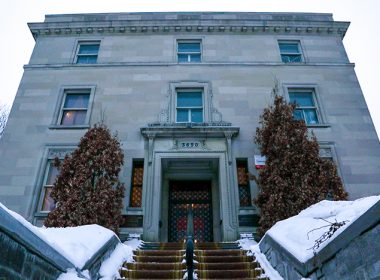
Experts convened to discuss threats to the global nuclear order on Nov. 1 at Thomson House. Hosted by McGill’s Centre for Peace and International Security Studies and moderated by Jennifer Welsh, Canada 150 Research Chair in Global Governance and Security at McGill, panellists discussed the shift in global power after the end of the Cold War.

T.V. Paul, James McGill professor of political science, emphasized the connection between global rising populism and the increasing acceptance of nuclear weapon use.

“Tradition has to be learned and socialized, and the new generation has to appreciate that this exists,” Paul said. “Unfortunately, our political leaders, including Mr. Trump, don’t give the impression that we’ve learned much from the past 70 years. The people who faced Hiroshima and Nagasaki […] are vanishing. And how can we teach our younger generation, especially when our leaders engage in cheap talk, and [use] this instrument for electoral purposes?”

The risk of populist leaders using nuclear weapons is present both in regional conflicts, such as rising hostility between India and Pakistan, as well as in global conflicts, like between the United States and Russia. Thomas Countryman, former United States Assistant Secretary of State for International Security and Nonproliferation, believes that the greatest risk to the latter relationship is miscommunication.

“Communications are so bad [between Russia and the US] that we could inadvertently get into an incident, which becomes a conflict, which becomes a conventional war, which becomes a nuclear war,” Countryman said. “[But], I think that a war between the US and Russia is less likely than a war between India and Pakistan. But a nuclear war between India and Pakistan can only destroy that part of the world. A [nuclear] war between the United States and Russia can literally destroy human civilization.”

Speakers also addressed rising Indian nationalism and its contribution to the current crisis in Kashmir. Vipin Narang, an associate professor at the Massachusetts Institute of Technology, said that escalating tensions between the two states can potentially destabilize the region.

“[There] is a flavour of nationalism and a nationalist government [in India] that we have not seen before,” Narang said. “[The Modi government] did say it was going to revoke article 370 in its constitution, [which grants Kashmir special status], but [this] managed to do what Pakistan not could not do for seven years, which is [to] internationalize the issue of Kashmir. You [now] have human rights subcommittees in [the American] Congress blasting the Government of India.” 

Countryman believed that treaties preventing the proliferation of nuclear weapons were effective. He drew a distinction between how arms control is perceived versus its strong benefits.

“Arms control should not be seen as a sign of weakness, but as a sign of smart cooperation,” Countryman said. “But, […] with growing mindless nationalism, the far right has demonized arms control. They have made [arms control] efforts  […] seem inappropriate for a strong leader. And it’s very hard because it plays well for certain audiences.”

Cindy Temorshuizen, director general of international security policy for Global Affairs Canada, briefly discussed China’s role as a rising nuclear power. 

“The Chinese mood is not one of arms control,” Temorschuizen said. “It’s a mood of very significant military modernization. However, there is a real interest on China’s side in at least being perceived as a serious multilateral player […] China just announced in September that it will be acceding to the arms trade treaty that the US withdrew from. And they are quite frank to say that their rationale is that ‘it will make us look good compared to the US.’ So there are some very complicated dynamics around China [right now].”

Chill Thrills, Student Life

‘A Space for Time’ is an opportunity for students to de-stress

One of the biggest day-to-day challenges that students face is time management. Between looming assignment deadlines, extracurriculars, and social events, it is easy to become overwhelmed. To help students make sense of their busy lives, collective sustainable living space ECOLE is hosting a recurring series of talks called ‘A Space for Time.’ The workshops are designed to give students an opportunity to talk to each other and brainstorm strategies for de-stressing and time management. They are set to take place every Saturday from 3:30–5 p.m. until April.

Easton Houle, a facilitator and event coordinator at ECOLE, explains that he started ‘A Space for Time’ to respond to a need he perceived for a forum where people could come together and sort through their responsibilities.

“I was constantly hearing from people that they were so busy [that] they couldn’t do the things […] that were important to them, which is almost paradoxical,” Houle said. “If we’re always running away from the feelings that are overwhelming us, such as the fear of deadlines or of [receiving] a bad grade, then that is probably not the direction of our goals and aspirations.”

‘A Space for Time’ begins with a short reading from CrazyBusy: Strategies for Handling Your Fast-Paced Life by Edward M. Hallowell, M.D., a psychiatrist who specializes in ADHD research. Hallowell found that many of the issues he dedicated his career to were also concerns for the general public, especially with the proliferation of technology that distracts us. Houle’s vision was to address some of these issues of stress and time management difficulties through discussion between students. So far, he has found these conversations to be successful.
“Each time, I’ve had lightbulb moments,” Houle said. “People share strategies and feelings about the pressure of things that they have to do, and we help each other in terms of telling one of our own stories about how we’re ordering our lives. Simply telling a story and talking about it makes us more self-aware.” 

One of the dangers of taking on many responsibilities is becoming cognitively overstimulated to the point of perpetual distraction. When faced with too many things to do, we have a tendency to switch between tasks in an attempt to cover all of the bases. For example, a student who is trying to work on an essay might easily get distracted by an upcoming exam they have and switch to looking at the exam material as a result. Psychologists have found that the cost of task switching is huge because the brain has to slow down and speed back up again every time it focuses and refocuses. To solve this problem, Houle suggests working on just one assignment at a time rather than perpetually moving back and forth.

“Once you hone in on one thing, you have the focus, motivation, and momentum to do a lot with the time you have,” Houle said.

By making these empowered decisions, productivity can go a long way. Houle suggests that students look at the time in front of them as a blank canvas, rather than stressing and trying to cram in as many different things as possible. It can be helpful to sit back, take a look at a calendar or schedule, and try to prioritize responsibilities based on what is most important and the time available. Houle also suggests trying to limit the number of responsibilities we take on.

“You should never, in good conscience, take on things past the capacity of what you think you’re able to handle, because that completely ignores the unexpected,” Houle said.

This balance is never easy but taking strides toward making more efficient use of our time can give us more time to do the things we love. 

Student Life, The Viewpoint

The samosa-shaped hole in my heart

On Wednesdays last semester, I often found myself frantically rushing to get through the day. I didn’t have a lunch break in my class schedule and, admittedly partially because of my own laziness, I frequently forgot to pack a lunch. It was precisely in this situation that campus samosa sales came in the nick of time. With only 10 minutes to make it to my next class and Peel Street construction making Super Sandwich a far-away dreamland, the crunch of the chutney-filled potato and vegetable pastries gave me just the boost that I needed. 

Unfortunately, the fate of this campus staple is now unclear. After Montreal Inspections des aliments inspectors shut down a samosa sale in the basement of Burnside Hall on Oct. 22, the Students’ Society of McGill University (SSMU) decided to suspend these fundraisers until an appropriate policy can be worked out to meet city health and food safety standards.

Don’t get me wrong, three lukewarm samosas by no means ever constituted a healthy meal on their own, let alone gave me something to look forward to on cold winter school days. Each time I had to eat a samosa lunch, I had some level of regret and would tell myself that I should just plan better and make time to cook a proper meal to bring for lunch. But the beauty of McGill’s samosa sales came from their simplicity—they might be mediocre, but they were cheap and always somewhere on campus. Even if I could definitely pack a tastier and healthier meal, samosas got the job done.

Beyond just satisfying my own hunger, samosa sales provided a platform for student groups to fund their own initiatives. Without steady funding from other sources, having an easy-to-run and well-loved fundraising opportunity provided student groups an accessible way to both raise money and get their name out to the campus community at large. Thus, the unclear fate of samosa fundraisers can be particularly worrying for more cash-strapped organizations.

The significant presence that the fried delicacy had on campus for so long will surely be missed. For the past two weeks, the tables throughout university buildings which once proudly held up greasy cardboard boxes from Pushap now remain empty. Campus newspaper stands are unsurprisingly even more full, and students’ empty stomachs grumble. Even if nobody ever genuinely thought a newspaperful of samosas was a phenomenal lunch option, they held a special place in all of our hearts. 

While we wait for SSMU and faculty associations to solidify the details of their new food sale policies, we can now only look back fondly on the past. From learning the secret of pouring chutney through an oily straw in first year to scrolling through the Samosa Search Facebook page to find where my go-to lunch would be, I will remember samosas with a nostalgic affection. Going into the future, campus life might never be the same.

Commentary, Opinion

A samosa ban could have been prevented

Samosas sales, not midterms, seem to be what is now giving many McGill students a hard time. On Oct. 22, Montreal Inspection des Aliments issued a warning to the Students’ Society of McGill University (SSMU) due to sanitation concerns over a samosa sale in the basement of Burnside Hall. If health codes are violated again, a future fine could be anywhere in the range of $2,250 to $54,000. While seeing the indefinite suspension of the much beloved samosa sale is sad, SSMU’s failure to ensure that clubs met health standards is one that could prove costly. That being said, the general norms of food sales at McGill make SSMU’s negligence understandable, though not excusable.

 In order for a student group to gain ‘club status’ and thus receive funding and approval for its various events, it needs direct confirmation from SSMU. Accordingly, SSMU oversees most student groups as it is the conduit for room-booking, ensuring student events can serve alcohol, and promote themselves at the annual Activities Night. Due to its heightened role in student group activities, SSMU’s negligence in educating groups about mandatory health and safety requirements for clubs to follow during food sales is irresponsible. Further, possible financial repercussions as well as the inability to fundraise properly could have extensive repercussions on student well-being.

 It is possible that the samosa sale might have been organized without formal consultation with SSMU. Many student groups commonly hold sales to get a little extra revenue outside SSMU’s funding which they can use for upcoming events. As this is an intra-group activity that isn’t too elaborate, SSMU may well have been completely unaware that the sale was happening. However, the problem here is not that the sale occurred, or did so in the periphery of SSMU, but rather that SSMU has not adequately ensured that the student groups are aware of a health and safety procedure. 

“SSMU’s negligence in educating groups about mandatory health and safety requirements for clubs to follow during food sales is irresponsible. Further, possible financial repercussions as well as the inability to fundraise properly could have extensive repercussions on student well-being.”

As one of the McGill Students for China Care executive members put it, “if we had known [about the rules], we would have followed them.”

 In the aftermath of the autumnal samosa scandal, it is important to consider the short-term effect this sanction would have on SSMU, and by association, all the student groups that it oversees. Last academic year, SSMU adopted a more iron-fisted approach in maintaining rules and regulations for its member clubs. This resulted in the sanctioning of over 100 clubs, some of which expressed frustration in how suddenly the constraints were applied, which gave them little time to make necessary adjustments before being penalized. With this rather abrupt tightening of regulations, the failure to ensure that its clubs were aware of health and safety guidelines, especially having the bulk of the summer to consider and disseminate such information, makes SSMU’s oversight that much worse.

While it is encouraging that SSMU was prepared to cover a potential fine, that does not soften the reality that SSMU’s failure to inform student groups in this instance has caused a lot of apprehension within clubs over what other guidelines they may be actively breaching. It is also important that a deeper investigation goes into how day-to-day practices that are often glossed over can better fall in line with legal requirements. Student groups are given considerable autonomy to pursue various activities, and this ultimately serves to enrich the student experience here at McGill. The samosa ban may certainly increase cautiousness in how student groups operate from now on, but more importantly, it casts a spotlight on SSMU to ensure that it prevents similar lapses in the future.

Campus Spotlight, Student Life

Down the Rabbit Hole Café

Every Friday at the Rabbit Hole Café, McGill students can be found huddled over Tupperware in the eclectic basement of the Yellow Door, seated at packed tables under a sprinkling of fairy lights. Serving up vegan lunches out of 3625 rue Aylmer for a suggested donation of around $3, the Rabbit Hole Café has enjoyed a long history while staying true to its original mandate to foster community through food. 

The café first began as part of the Food for Thought program funded by the McGill Office of Religious and Spiritual Life (MORSL). Within this program, the Rabbit Hole served food to accompany a Friday food bank that provided students with a free bi-weekly bag of groceries. The food bank, which has since ended, aimed to alleviate food insecurity and support students through financial difficulty. This compassionate approach toward community food provision has stayed within the café’s lifeblood in the years since, as the Rabbit Hole grew into a neighbourhood lunch staple that now draws consistent crowds. Despite recently losing funding, the café remains buoyed by a dedicated team of volunteers that continue the mission of offering students and Milton-Parc residents nutritious and affordable food. Menus are always vegan, often gluten-free, and stray away from common allergens in order to be accessible to a broad range of people. 

Rabbit Hole co-coordinator Kathryn Slomski, U3 Arts, believes that the weekly lunch fosters a unique sense of community between students and Yellow Door members. 

“A lot of people that come every week have been coming for a couple semesters or even a couple years, [so] you see familiar faces,” Slomski said. “It’s a good way to connect students and student volunteers with people outside the McGill community.” 

Slomski, who is now entering her second year as a coordinator, started volunteering at the café as a way to bridge her interest in cooking and a desire to get involved with the community outside of McGill.

Co-coordinator and dietician Nadia Alayoubi joined Rabbit Hole after running Community Hours, a series of interactive presentations and discussions about nutrition for seniors at the Yellow Door. Following a stage, a mandatory internship for dieticians, at the McGill Health Centre, Alayoubi was inspired to combine her work with students and seniors to offer Rabbit Hole patrons holistic health support through dietetic consultations that translate nutrition science into practical advice. 

“I’ve always kind of worked with this population,” Alayoubi said. “Since I live in the neighbourhood, [the Yellow Door and I] created a partnership, [so] I can provide some consultations here and do it at a reduced price to students [and community members].”

The Rabbit Hole Café is now one of the Yellow Door’s main programs and draws many students to the space for the first time. Kaitlin Fahey, the executive director of the Yellow Door, explained that the Rabbit Hole’s popularity with students has created a link between the café and other programming run by the community hub, including the Art Hive, the intergenerational reading group, and recurring yoga, woodcarving, and meditation events. 

“[Many of the Yellow Door’s] volunteers are students, and it’s not usually the same students who come to the Rabbit Hole,” Fahey said. “It appeals to a different group, and we like that because it allows people who usually wouldn’t come through our doors to come for lunch, [where] they learn about our other programs and services.”

In the future, Fahey hopes to incorporate the centre’s backyard garden into the lunch service, to support a more sustainable food system and work in tandem with the café and dietetic consultations.

The Rabbit Hole Café serves vegan lunches every Friday during the school year from 12:30-2 p.m. on the first floor of the Yellow Door, at 3625 rue Aylmer. Students and community members interested in volunteering or seeking an inexpensive meal can keep updated on the Rabbit Hole’s Facebook page.

Off the Board, Opinion

Exams belong in the past

Job interviews for entry-level positions in the technology sector are notorious for the use of whiteboard tests: Interviewers ask applicants to solve programming problems on a whiteboard, without access to reference materials or coded-checking tools that programmers would usually have access to when doing real work. Universally reviled by applicants, the process is slowly falling out of favour with employers as well, largely because whiteboard tests are so unlike ‘real life’ that they reveal nothing useful about a candidate. This may seem familiar to students who have just experienced the midterm exam crunch. Like whiteboard tests, most university exams don’t measure the most important skills for students’ long-term success, and their place in education needs reevaluating.

Typical exams rely heavily on a few cognitive skills: Memorization, long-term focus, and the ability to quickly process and categorize information. Exams often put less emphasis on skills like problem solving, though this is partially due to the nature of the humanities and social sciences, which do not feature problems with mostly objective solutions like many scientific subjects. Nevertheless, exams fail to measure the skill of finding and evaluating information that is becoming increasingly valued in many workforces. Memorization is of limited use in the information age; with modern technology, one is far more likely to find too much information about a subject than not enough. The ability to sort through and critically evaluate information is one of the most important skills that students learn during their time at university, making its absence from most exams all the more conspicuous.

For their ubiquity, whether exams actually measure what they intend to has been subject to almost no scientific scrutiny. A review in The BMJ in 2000 found that final exams in British undergraduate medical programs, though an important step toward achieving a medical licence, had only been subject to scientific review once, receiving a lukewarm assessment for reliability. The reason that testing ‘has always been this way’ is not reason enough to keep exams. Students spend significant amounts of time and money on their degrees— they deserve an education based on evidence, not tradition.

“A review in The BMJ in 2000 found that final exams in British undergraduate medical programs, though an important step toward achieving a medical licence, had only been subject to scientific review once, receiving a lukewarm assessment for reliability.”

Traditional testing is not the only feasible way to evaluate students. Dan Laitsch, an associate professor of education at Simon Fraser University, interviews each of his 35 students per class to agree upon an appropriate final mark, based off of the students’ coursework. While his particular approach may not scale well to classes of 300 or more students, other major research universities have managed to move away from the final exam: At Harvard, in the 2010 academic year, only 23 per cent of undergraduate courses incorporated them, with many courses that did not use them opting for more projects and take-home assignments instead. Even at McGill, PHIL 474 – Phenomenology, incorporates an oral exam in lieu of a written final.

Universities’ roles as educational institutions are changing, whether they are prepared for it or not. For many students, they are not places to gather knowledge for knowledge’s sake, nor the gateway to upper academia: A university degree is preparation—and a prerequisite—for employment. McGill has made encouraging steps toward providing a more practical, experiential learning experience by offering academic credit for internships and offering courses abroad, but institutions change slowly. At McGill and elsewhere, final exams are a relic from a past when undergraduate programs trained future academics, rather than employees. As enrolment rates steadily rise, universities at the leading edge of modern education will reap the benefits. McGill professors must update their course syllabi to meet the changing needs of the modern workforce.


Student Life

Alternative snacks near campus

Over the past two weeks, McGill students have been mourning the loss of their dear samosa sales with a candlelight vigil, social media conversations, and even a planned campus protest. With the apparent end of this campus food staple, students  are forced to either break their budgets or power through the hunger. The McGill Tribune knows that we cannot fix the samosa-shaped hole in your heart, but here are some alternative snack options to help ease the pain. 

For finger food on campus: Vinh’s Café

Vinh’s Café offers a perfect solution to students seeking handheld food to grab between classes. The campus staple offers an assortment of Vietnamese sandwiches, desserts, pork and vegetable bao, and an affordable variety of spring rolls, all of which make for a perfect on-the-go bite. They also serve a popular phở for those seeking for a warm, sit-down meal. With two locations right on campus, one on Dr. Penfield Avenue and another in Royal Victoria College residence, Vinh’s is a great spot to spend your Flex dollars when you are in need of a quick snack in between classes. 

To refuel near campus: Pikolo Espresso Bar

Along with their delicious rotating filter coffee and espresso options, Pikolo Espresso Bar has an assortment of pastries that provide a great on-the-go snack. The café offers a variety of scones with a unique savoury selection that rotates daily, including parmesan and pepper; curry, swiss, and chive; and roasted vegetable. They also carry more traditional sweet options like blueberry, apple, and peach. Triangular like a samosa, these flaky pastries can help students forget about the samosa crisis while getting their daily coffee fix.  

For when you’re grabbing groceries: Marché Eden

A trip to this grocery store can curb hunger while knocking out that long-overdue grocery run. Located just a five-minute walk from Milton Gates, Marché Eden has a variety of organic foods and produce, both raw and cooked; the ready-made food aisle includes an assortment of great vegetarian and non-vegetarian snacks. Additionally, the market provides samosa-like finger foods, with items such as the spicy chicken arancini, Spanakopita-esque spinach rolls, and Jamaican patties with chicken, veggie, or beef filling. Marché Eden also has an abundance of empanadas in several flavours as well as their triangular kimbap. Kimbap, like samosas, are an easy-to-carry and filling snack made of rice wrapped in seaweed with savoury fillings like tuna and spicy tuna. If these options still don’t curb your sadness, Marché Eden is also one of the few downtown spots that stocks samosas.

For snacking while you shop: Eva B

Last but not least, the funky famous downtown thrift shop offers more than just affordable vintage clothing. In addition to providing shoppers with free apple cider and popcorn at the door, Eva B has its own mini café with indoor and outdoor seating. The café has affordable coffee options and does not charge for milk substitutes. Eva B also serves a variety of foods including several vegan snack options, sandwiches, burritos, and grain salads. Their classic chocolate chip and vegan chocolate cookies make for a great on-the-go sugar fix and are adored by customers. Thankfully, Eva B also serves $1 samosas which can help students fulfill their much-needed samosa fix.

SSMU President at General Assembly
News, SSMU

44 students attend SSMU General Assembly

The Students’ Society of McGill University (SSMU) held its semesterly General Assembly (GA) on Oct. 28, with only 44 students in attendance. The GA, which failed to meet its 350 member quorum, ratified the Board of Directors and the Auditor. SSMU President Bryan Buraga joked about the pitiful attendance during his presentation.

“As you can see, we were so, so close to hitting [quorum] today,” Buraga said. “In the future, our goal is to definitely engage more students and bring forward resolutions that get many more people to attend. You can see this with the AUS GA with regards to the climate strike motion.”

Last week’s meeting marks the fourth consecutive GA that failed to meet quorum since Fall 2017. In a controversial move, the 2017/18 Board of Directors raised quorum from 100 to 350 members, which some SSMU members saw as an attempt to limit the power of GAs. Last year, Former SSMU President Tre Mansdoefer tried to lower the quorum to 150, however his motion ultimately failed at a Legislative Council meeting. 

In addition to raising two motions, SSMU Executives also took questions from the attendees. Medicine Senator Andre Lametti raised a question about the governance files available on SSMU’s website. 

“For several years, documents of the society have been titled ‘Jim Jones,’” Lametti said. “I’m not aware of who Jim Jones is, except for the notorious preacher involved involved in the massacre in South America. I was wondering when the SSMU executive is going to fix this issue.”

SSMU Vice-President (VP) Finance Sam Haward replied to the senator, saying that the title of the documents was not in reference to the leader of the infamous Peoples Temple cult, but instead is the name of a former SSMU employee.

“Many of the [governing] documents were created when Jim Jones was the General Manager [of SSMU], so all of the PDFs have the title ‘Jim Jones,’” Haward said. “I suppose it’ll be on the Executive to work with the President and the Governance Manager to […] remove the Jim Jones metadata.”

SSMU VP External Adam Gwiazda-Amsel asked a follow-up question to Lametti about what he thought the new name should be.

“I wonder if Andre Lametti would want to form an ad-hoc committee […] because this might be an interesting opportunity to have a commemorative name in the metadata,” Gwiazda-Amsel said.

After laughter from the crowd, Lametti refused the offer, saying it would be a bad use of SSMU resources. The next GA will be on Feb. 20, 2020. 

Flashback: 

The open letter sent to SSMU’s Executive by Indigenous student leaders last week was not mentioned during the Fall GA. However, VP Internal Sanchi Bhalla delivered an official statement at Legislative Council last week. According to Bhalla, the 12-hour delay in sending out a press release mandated by Indigenous student leaders happened because she did not have access to the SSMU MailChimp account, which contains the mailing list needed to send out mass emails. 

Sound Bite:

“Initially, I found out [about the letter] because Bryan posted on one of our groups [on Slack] asking “Hey, can we talk about the letter we received.” I [said] “What letter?” and then I checked my email [….] I had to leave the training [then] because I wasn’t in the state to handle it,” VP Bhalla said, on her reaction to receiving the letter asking for her resignation.

McGill, News

Prologue or epilogue: What’s next for the McGill Book Fair

Undeterred by a recent history rife with alternating closures and revivals, the McGill Book Fair opened its doors again for a three-day sale Oct. 29 – 31. Nearing its 50th anniversary, the fair sells tens of thousands of gently used books—ranging in genre from biographies to romance novels—along with an assortment of CDs, DVDs, vinyls, and sheet music. While book prices remain affordable at an average of $3 per book, the fair has raised a total of nearly $2 million for student scholarships and bursaries since 1975.

Created by the now-disbanded Women’s Associates of McGill in partnership with the McGill Women’s Alumnae Association in 1971, the event is entirely run by volunteers. Alumni Anne Johnston Williams and Susan Smith Woodruff have been co-coordinators for the past five years. With approximately 50,000 books sold annually, Woodruff estimates that about 65 per cent of all their supplies were sold this year.

“We had 802 boxes [of books], in 36 different genres,” Woodruff said. 

The fair has faced issues over the past decade. Operating with few volunteers, problems such as a lack of viable ways to transport books to campus are difficult to overcome. After expecting to close in 2011 due to the event’s physical toll felt by the few remaining volunteers, the fair was revived by students in 2012. Despite this new leadership, it experienced a hiatus in 2013 due to the construction on Redpath Terrace. The fair continued in 2014 with Willams and Woodruff taking over, but saw low turn-out due to a lack of advertising. In 2018, construction in Redpath Hall seemed to signal the permanent end of the fair. After marketing last year as the fair’s final run, they received new information from the administration.

“We really shocked people last year when we said we weren’t coming back,” Williams said. “We all said our goodbyes. [Then, the day after the fair], someone from [McGill] administration called to say there is no reason [that] you can’t have the Book Fair next year.”

This year, organizers continued to experience challenges that hindered efficiency when organizing the fair.

“As frequently happens, there [was] complication, personal changes and miscommunication,” Williams said. “When we came on Friday [to set up] of last week, there was still construction [equipment in the downstairs section].”

A total of 28 volunteers dubbed, ‘Book Fair-ies’, are tasked with administration duties year-round, while 75 others help during the fair itself. Suzie Slavin has been a volunteer  for over 12 years since her retirement as a librarian. As an avid book lover, Slavin explained the difficulties involved with running the fair. 

“It’s hard to get enough people,” Slavin said. “We work from February or March until [October], collecting books from people [and getting them] downtown. There are a lot of logistical issues. We do pricing and triage, [and other] preparatory work. And we communicate with the coordinators.”

Sustainability has always been a priority for the fair. Unsold books are given to local charity Renaissance, where donated goods are sold at accessible prices, and profits reinvested into the community.  Other organizations, like Books 2 Prisoners, purchase leftover materials. 

“We recycle and reuse [everything],” Woodruff said. “We’ve always shared as much as we can.” 

Woodruff and Williams are grateful for the work volunteers put into the fair, who work for months to collect, organize, price, and move countless boxes of donations. 

“We’ve had really great support from many, many people,” Williams said. “They have been phenomenal to us.”

After assuming the role of co-coordinators for five years, Woodruff and Williams are looking to pass on the torch. Currently, they are in the process of looking for a replacement coordinator, but have so far been unsuccessful.  

The revival of McGill’s book fair is part of a global trend: Data suggests that book sales have been on the rise since 2013. The Book Fair plays into this trend by repurposing old books that would have otherwise been forgotten or thrown out and giving them a second home with new readers. 

“The value of books waxes and wanes, and I think it’s the wax again, or so I hope,” Slavin said. “It’s important to bring old stuff to the attention of young readers.”

McGill, News

AUS Legislative Council ratifies Interfaculty Involvement Restriction Policy

The Arts Undergraduate Society (AUS) Legislative Council reconvened on Oct. 30 to discuss the Motion to Ratify the Interfaculty Involvement Restriction Policy (IRP). The policy aims to foster a safe environment by restricting individuals’ access to events if they have threatened the physical, mental, or emotional state of other individuals or groups involved. 

While each faculty has their own version of the IRP, the interfaculty policy extends the policies to cover individuals accused of harmful actions from different faculties’ events. 

Vice-President (VP) Social Kimberly Yang, who drafted the policy, spoke to the importance of its interfaculty component. 

“Often times, a lot of the survivors I work with want the ban extended further than just their faculty,” Yang said. “With this new IRP, survivors won’t have to go through the investigative process four times to get interfaculty results, which is extremely taxing for a [sexual violence] survivor.” 

Brent Jamsa, VP External of the Canadian Studies Association of Undergraduate Students (CSAUS), expressed concern over the lack of due process for appeals in the Interfaculty IRP. In response, Yang affirmed the need to pass the motion to begin investigative processes, and committed to adding an appeal process within the coming weeks. 

While an amendment to include a sunset clause was proposed, which would specify a time period for the policy’s repeal, the council later gave unanimous consent for its withdrawal at the request of Jamsa. The motion then passed.  

Afterwards, VP External Darshan Daryanani  reported that the Motion Regarding Support of University Governance Reform was discussed at the Students’ Society of McGill University (SSMU) Legislative Council meeting on Oct. 24, which proposes the removal and addition of seats on council. 

Alexandra Millar, VP External of the Bachelor of Arts and Science Integrative Council (BASiC), relayed BASiC’s unanimous dissatisfaction with the motion’s removal of an Arts and Science SSMU representative. 

“Although we get a say in AUS and SUS, it is important that someone advocates for students who are doing both,” Millar said. “If [the motion] does go through, and there is a referendum, we will be campaigning [for a] no.” 

Daryanani assured council that these concerns are being considered. 

“It was mentioned in the [SSMU Legislative] council [meeting] that [there was some] fear that taking away a seat because of overrepresentation may result in no representation at all,” Daryanani said. 

Jamal Tarrabain, AUS President, echoed the need to consider the diverse views of Arts & Science constituents. 

“BASiC students do have unique voices that are separate from Arts [students] and Science [students],” Tarrabain said. “I want to implore everyone at AUS Legislative Council to take those factors into consideration when we are looking at removing some of these positions.” 

Sound Bite

“Looking at the numbers of faculties is important, and ensuring that there is accurate representation is important; however, you also don’t want to enter the classification of tyranny of the majority,” Tarrabain said, in response to the proposed removal of the Arts and Science SSMU representative. 

Flashback

After receiving live updates from the Engineering Undergraduate Society (EUS) throughout the meeting, Yang announced to the council that EUS passed the Interfaculty IRP during their meeting, marking the motion successful in two out of four of the undergraduate societies so far.

Read the latest issue

Read the latest issue